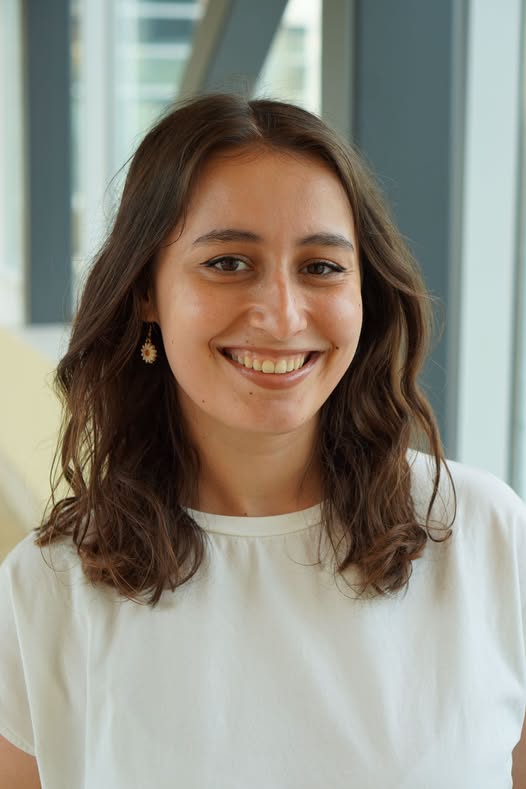
ALB Connection was born from a father-and-daughter vision to recognize, document, and promote Albanian-owned businesses across the United States, including those in small towns and rural communities far beyond the major metropolitan centers. ALB Connection highlights the entrepreneurial spirit, achievements, and economic contributions of Albanian families in America.
Interviewed by: Sokol Paja
1. Ms. Halimi, how did the idea of establishing ALB Connection come about? What is the story behind its creation, how has it evolved over the years, and what are its long-term goals?
ALB Connection started with a father and daughter who wanted to showcase all Albanian business owners in the United States. When people talk about Albanian success in America, they usually mean the big metropolitan centers: New York, Boston, Detroit, Chicago. But there are Albanian business owners in rural areas, small towns and places most people would never expect.
Our founders know this firsthand. Their family immigrated to a small farm town in Iowa, where they owned a restaurant. Over the years, they saw that many Albanian families had done the same thing, settling far from the big cities and building successful businesses there. Those stories were rarely told. ALB Connection was created so that every Albanian business owner, in every part of the country, gets the same visibility.
Since then the directory has grown to include businesses in 44 states and Washington, DC, plus businesses in Albania, Kosovo and across the diaspora. We have published more than 50 interviews with Albanian entrepreneurs and guides to Albanian culture, history and community life. Our long-term goal is to become one of the largest verified directories of Albanian-owned businesses. Anyone looking for an Albanian business should be able to find one, wherever they live, and the contribution of Albanian families to the American economy should be documented, not just assumed.
2. What role does ALB Connection play in promoting Albanian-owned businesses? How does the platform help entrepreneurs expand their market presence and strengthen the Albanian-American business community?
We make Albanian businesses easier to find. Many of them don’t advertise their heritage, and some well-known “Italian” restaurants are actually Albanian-owned. A customer who wants to support the community often has no way of knowing that. A listing with us gives a business a verified profile that customers, journalists and other entrepreneurs can find through search. Our interviews and guides add a second layer: they tell the story behind the business, which builds trust and brings in customers from both inside and outside the community. We also use our data to get Albanian businesses covered in American media, so the visibility reaches beyond the community itself.
3. Your report, The State of Albanian-Owned Business in America, documents 1,597 verified Albanian-owned businesses across 44 states and Washington, DC. How was this research conducted, what were the main challenges, and which findings surprised or impressed you the most?
The report is built from our directory. Every business in it was checked for a real Albanian link, such as an owner or founder, before it was counted. Then we analyzed the listings by state, city and sector. The biggest challenge is that no official database records the ethnic background of business owners. We had to verify ownership one business at a time, using public records, the businesses’ own websites and social media, interviews and going in person to the community itself. We also keep re-checking the data: closed businesses, duplicates and misfiled categories all have to be found and corrected, which means the numbers are always being updated.
What surprised us most was how far the community has spread. We found Albanian-owned businesses in 44 states, from Alaska to Florida, including states where you would hardly expect an Albanian community, such as Iowa, Montana, Wyoming and Hawaii. There are well-known clusters too, in Michigan, Illinois, Pennsylvania, New Jersey and Connecticut. The other surprise was the food sector: about one in three Albanian-owned businesses works with food, from restaurants and pizzerias to bakeries and coffee shops.
4. According to your report, New York State accounts for approximately 39% of the documented businesses, while the Bronx has 88 Albanian-owned businesses—roughly one for every 108 Albanian residents. How do you explain these statistics, and what do they reveal about the economic and social life of Albanians in New York?
(Our directory is constantly updated. As of November 2026, New York State has 576 of 1,524 documented businesses, about 38%, and the Bronx has 87, about one for every 110 Albanian residents.)
The numbers reflect history. New York, and the Bronx in particular, was where generations of Albanian immigrants first arrived, and businesses grew where families settled. New York State alone has more Albanian-owned businesses than the next three states combined. It shows how often Albanians choose to work for themselves: they open a restaurant, a construction company or a shop, often with relatives as partners. Places like Arthur Avenue, Morris Park and Pelham Parkway show the result. These businesses aren’t only a source of income. They are where the community meets, speaks Albanian and passes traditions to the next generation.
5. Your report highlights important achievements among Albanian-owned businesses. How have Albanian entrepreneurs managed to earn their customers’ trust and build sustainable businesses? Are Albanian entrepreneurs also expanding into other sectors of the economy?
Mostly through hard work, family and reputation. Many of these businesses started with people who had worked for years in kitchens, construction or building management before opening something of their own. They built the business with family and grew it by word of mouth, which is why quality and personal service matter so much to them.
Food is still the biggest sector, but the picture is getting broader. Today we document Albanian-owned law firms, real estate and construction companies, medical and therapy practices, insurance agencies, technology companies and fine-dining restaurants. The second generation in particular is entering professions and industries their parents didn’t have access to.
6. Beyond economic figures, how important is it for ALB Connection to document the success stories, sacrifices, and contributions of Albanian families in America? Is there a particular success story that has especially touched you throughout your work?
It matters a great deal. The numbers show where the businesses are, but the stories show why they exist. Behind almost every business is a family that left everything behind, started from nothing and built something lasting. If we don’t record these stories, they get lost with each generation.
One story that stayed with me is Aurora Shele DeAngelis, a hypnotherapist in Honolulu who is very likely the only Albanian business owner in Hawaii. She was born in Albania in 1988, studied telecommunications engineering in Tirana, earned a master’s degree in France and worked for eleven years as a data consultant before leaving that career in 2021 to practice full-time. What moved me is that she chose to work in Albanian, because so little of this kind of material existed in our language. She schedules her classes for 9 PM Tirana time, which is 9 AM in Hawaii, so that clients in Albania, Kosovo and the diaspora can join. She has worked with more than 1,200 clients. To me she shows exactly what ALB Connection is about: Albanian success isn’t only in New York or Boston. It reaches as far as an island in the middle of the Pacific, and it still stays connected to home.
7. How can this network of businesses become a greater opportunity for cooperation between Albanian entrepreneurs in the United States and businesses in Albania, Kosovo, and other Albanian-inhabited territories? What potential do you see for new investments and partnerships?
The potential is large, and it is already starting to show. Our directory also includes businesses in Albania, Kosovo and the wider diaspora, such as technology firms in Tirana and Prishtina, producers, wineries and travel companies. A restaurant owner in America could import directly from Albanian producers. A company in the U.S. could hire a development team in Tirana or Prishtina. Diaspora investors could find reliable partners at home. The first step is visibility: people can’t do business with someone they don’t know exists. We want ALB Connection to be the place where those connections start.
8. What are ALB Connection’s future plans, and what message would you like to share with young Albanians who aspire to start their own businesses in America? How can the younger generation contribute to further strengthening the Albanian economic presence in the United States?
We will keep expanding and verifying the directory, especially in smaller cities and rural areas where Albanian businesses are hardest to find. We’ll also update the report regularly so the community can track its own growth, and publish more interviews with entrepreneurs from every part of the country.
To young people, we would say: you have something your parents didn’t have when they started. They opened their businesses with almost no help, no network and often without speaking the language. Today there is a community of more than a thousand Albanian businesses across the country. Use it. Ask for advice, find mentors and work with each other. And don’t think you have to be in a big city to succeed. Our own founders’ family started in a small farm town in Iowa. The younger generation can take what our families built and carry it into new fields and new places, while keeping our name and identity visible.