The machinery of the Communist apparatus relied on whisper networks of compromised people, including situations where a “brother spied on his brother.”/

By Katie Engelhart/ NBCNEWS/
TIRANA, Albania — Not long after being arrested, the secret police offered Maks Velo a deal. Collaborate with us, they said, and we can let this whole thing go. It was 1978, the height of Albania’s dictatorship. Velo, then 43, knew that such deals were struck all the time. But “this was something I just couldn’t do,” he recalled.

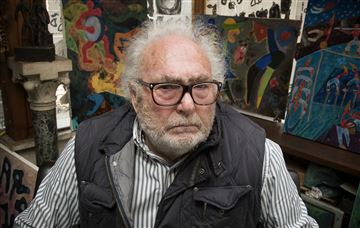


Velo, a painter, was told that his art was anti-Socialist, that it expressed “modernist tendencies.”
He was interrogated for six months and says he was held in isolation and secured with chains. Velo was later put on trial and sentenced to 10 years of hard labor under a Soviet-style “agitation and propaganda” law.
Velo was assigned to work in the copper mines and spent most of his seven years, three months and 10 days behind bars alongside other political prisoners in Spaç Prison — part of a network built to mirror Stalin’s gulags.
For the last four decades, Velo has wondered if he ended up in Spaç because someone he knew took a deal like the one he was offered — and gave information about him to the authorities. He even imagined what such a person might have said.
Last year, Albania’s government opened up the archives of its old secret police, the Sigurimi. Anyone who was spied on during the Communist period can get access to his or her file, allowing those who collaborated with the regime to potentially be identified.
Velo requested his file, but then struggled to get through it. Sometimes he would start reading but have to abandon a page halfway through. There had been, he learned, about 20 people who had informed on him, among them a close friend and his former mother-in-law.
“Maks Velo is a person of bourgeois beliefs,” she had written in a report to the secret police, according to the file. “He is a person with no character.”
‘Things that they need to forgive’
Most other former Communist countries opened up their Cold War-era files long ago.
But unlike many of its neighbors, Albania never carried out a policy of “lustration”: a systematic purge of government officials who had participated in crimes during Communist times.
Today, the Sigurimi files fill a series of small rooms in a government warehouse on the edges of Tirana. With files overflowing from metal shelves and in boxes stacked on the ground and windowsills, it’s hard to say exactly how complete the collection is. Sigurimi agents are thought to have destroyed thousands of files during the last years of the regime.
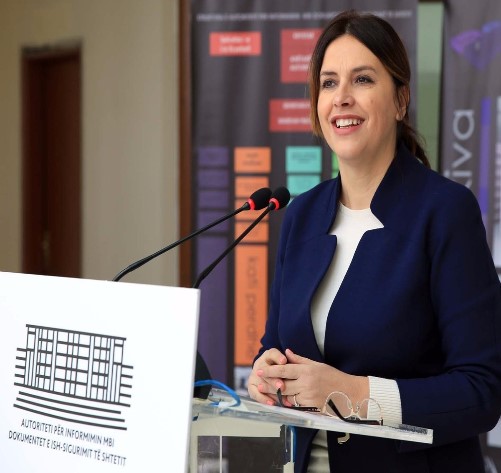
“Every day, people come here, typically with questions that haven’t been answered for a long time,” says Gentina Sula, the director of the agency that provides access to the files. “If there are things that they need to forgive, for themselves or for their parents, I think this is a good chance. Very often, you know, a collaborator and a victim were in the same circle.”
Sula’s own grandfather was among the Albanians who were “disappeared” by government agents during the dictatorship. Almost three decades later, around 4,000 people are still listed as missing.
The Balkan nation of around 3 million people was once home to one of the most brutal regimes in the world. Some experts have compared Communist-era Albania to North Korea, because its borders were sealed with electric fences and Albanians were executed for trying to escape.
Dictator Enver Hoxha came to power at the end of World War II and served as head of state until his death in 1985. Known for being paranoid, he erected thousands of concrete bunkers to protect against a foreign invasion that never came.
Under Hoxha’s leadership, religion, long hair, coarse language and private cars were banned, as was criticism of the regime. If a person was judged to be a dissenter, the whole family could be sent to toil in faraway factories or fields.
From 1946 to 1991, some 6,000 people were executed, according to Albania’s Association of Former Political Prisoners. Tens of thousands were imprisoned or sent to labor camps on political charges.
The Sigurimi secret police force was notoriously efficient.
Sigurimi agents were sometimes called “living microphones,” because they were always listening. But that reputation was made possible by thousands of ordinary Albanians who helped them, working as official collaborators, and thousands more who functioned as more casual informants, offering up intimate secrets about those they knew. The machinery of the Communist apparatus relied on whisper networks of compromised people.
The North Korea of Europe
Albania was ruled by Enver Hoxha for more than 40 years.
As the dictatorship crumbled in the early 1990s, most Sigurimi agents slipped into anonymity.
One former official, Nesti Vako, agreed to speak with NBC News at a café in central Tirana
“As the operational technical chief of the Sigurimi, I produced whatever technology they needed,” said Vako, who spent 25 years as a chief engineer. Vako says that Sigurimi agents had the whole country bugged, with listening devices in coffee shops, offices and throughout all foreign embassies. If the Sigurimi was targeting a woman, agents might study her shoes and then make a replica pair with a bug in the heel — and then swap them out without her noticing. Vako says he was sent to China once, to study surveillance techniques.
“I liked it a lot,” Vako says, of his role. “I feel very proud about my work. … I was lucky to have this job and I only applied the law.”
Asked what he thought about the public release of Sigurimi files, Vako shook his head.
“Look, opening the files, in my personal opinion, is tricky. It’s not a good thing,” he said. “The reason is that if you look at the files, there are cases where a brother spied on his brother.”
Patriots or traitors?
Velo’s Sigurimi file is 250-pages long, and it has taken him several months to understand it. Collaborators were given code names, so Velo has had to reverse-engineer the evidence — thinking back to events long ago, to figure out who the pseudonyms could refer to.
His friend’s collaboration haunts the 83-year-old Velo the most. The man was a fellow painter, someone Velo used to invite into his home. When Velo was arrested, authorities declared his works to be hostile and burned many of his paintings.
“How could I have imagined that discussing art works is a criminal offense?” he said.
After he got his file, Velo learned that the friend was still alive and living in Tirana, but he didn’t try to reach him.
Sula, the official in charge of the Sigurimi archives, said she’s concerned that people living in Albania today won’t understand the context in which choices were made, or not made, under the dictatorship. Her agency has received hundreds of requests for files.
“It was a society taken hostage,” she says. “There was a lot of propaganda.”
She said many collaborators believed they were “serving their country” and being “patriotic,” while others were coerced.
So does how does Sula think former collaborators should be treated today?
“Sympathy is a big word,” Sula says. “No, I wouldn’t say sympathy. But I call for people to do deep analysis.”
For his part, Velo says he doesn’t regret reading his file, but he doesn’t feel much sense of closure either.
“Americans say, ‘Sorry, sorry’ 100 times a day,” he says. “Here, nobody ever says, ‘Forgive me.’