• Home
  • Politics
  • Opinion
  • Culture
  • Sports
  • Economy
  • Interview
  • Reporting
  • Community
  • Vatra

Dielli | The Sun

Albanian American Newspaper Devoted to the Intellectual and Cultural Advancement of the Albanians in America | Since 1909

Eni Lena: Beauty Game Changer in Television Makeup

June 18, 2021 by dgreca

By Nora Kalaja/ Dielli Newspaper/
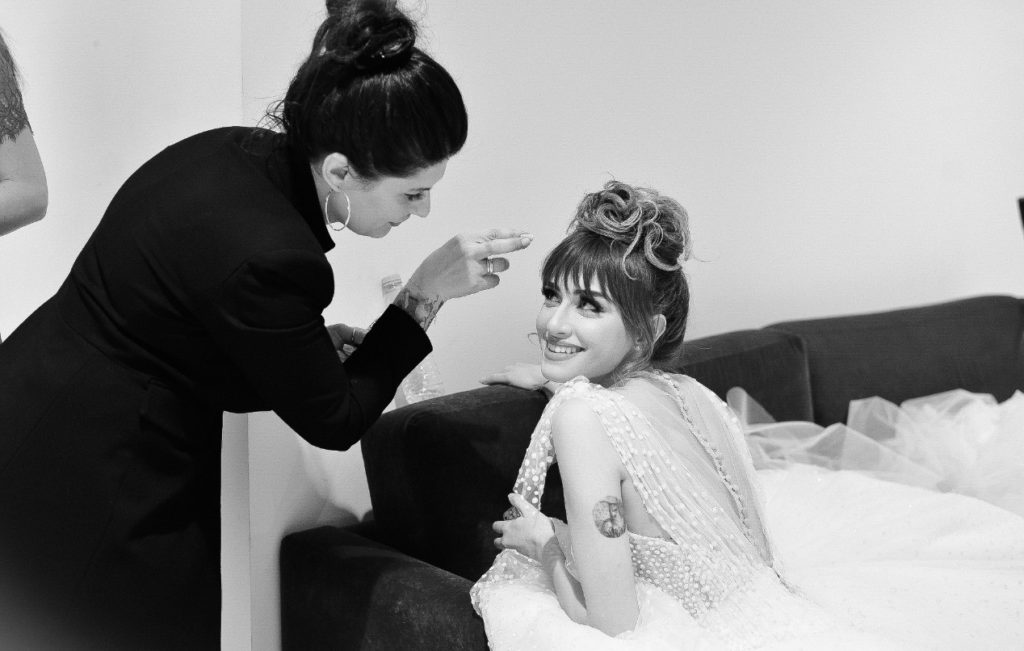
Successful top master makeup artist Eni Lena has had the power to influence game shows and television personalities by her iconic makeup looks. Known as a genius makeup artist, and one of the most influential artists in Albania, Eni Lena has become a household name, constantly getting shout-outs from her celebrity clientele.

Making her mark on the industry, Eni Lena is famous for creating novel beauty looks down fashion week runways, readying the leading ladies for the red carpet and for popular Albanian TV shows. You undoubtedly recognize Eni Lena’s name as a celebrity favorite from Miss Universe, The Voice Albania, and popular reality shows such as Beauty, E Diell, Want to Make you Happy, Big Brother, “Përputhen,” and many more. 

 “Being chosen the lead master makeup artist to work on iconic hosts and television personalities, beauty pageant contestants, or for renowned designers has been a dream come true. Working for over seventeen years on the big screen on TV as well as red carpet events, I’ve learned to create my own striking makeup looks that stand out. For me the beauty looks I create as a makeup artist are empowering. Whether it’s a natural look to show the beauty of a bare face or a red lipstick to boost up the confidence, I believe beauty is about being strong and fearless” said renowned makeup artist Eni Lena. 

Eni Lena has shaped how we view and connect with some of our favorite TV personalities. Her work has shaped the world of beauty and fashion, earning her many accolades including, “Top Master Make up Artist” by Geraldina Sposa Albanian Fashion Company, “Excellence and Outstanding Achievement in Beauty and Fashion Industry in Albania” by Metropolitan Theater, “Master of Profession” by the Albanian National Beauty Association, “Best Make Up Artist of 2021” by NY Elite Magazine, and “Most Influential Celebrity Makeup Artist” by NY Glamour Magazine in 2021.

 “I am very blessed to be working with amazing artists and models throughout my work. I feel blessed for all the recognition my work has received and I hope to continue to shape and revolutionize the beauty industry with my innovative and creative ideas. I am excited that my work has ventured from fashion shows to theatre and film as well. I hope that one day to open in New York Eni Lena Make Up and Hairstyling Salon and conquer the Big Apple,” added award-winning makeup artist Eni Lena for the Sun Newspaper “Gazeta Dielli” in New York. 

Filed Under: Featured Tagged With: Changer, Eni Lena: Beauty Game, in Television Makeup, Nora Kalaja

“8400” by Mentor Spahiu, the Most Anticipated Documentary of 2021

March 18, 2021 by dgreca

By Nora Kalaja/

Winner of “Best Foreign Film” and “Best Director Award”, Director and Writer Mentor Spahiu this new year is debuting with his first feature documentary film “8400” a production of Plisi, co-produced by Dera Film. The film completed shooting in 2020, so a festival debut in 2021 is very likely and highly anticipated. We have been hearing quite a new about the new film by Mentor Spahiu, since the film features the life story of Dr. Dr. Bernard Benedetti of “Médecins Sans Frontières” (Doctors Without Borders).

Dr. Besnik Bardhi with director Mentor Spahiu in Gjakova, Kosova…

In 2017 Mentor Spahiu became the subject of mainstream media attention with his feature documentary film “8400” initially named “Actors of Cannes”, which was shot in France, Croatia and Kosovo. At its center, the film highlights emotional aspects of sacrifice and heroism in the process of saving human life, as seen in the mass poisoning tragedy of 8,400 Kosovo school children in 1990.

Mentor Spahiu and Izet Morina founders of Plisi Film.

Mentor Spahiu is an accomplished award-winning filmmaker. His thought-provoking films have received awards and nominations in reputable film festivals around the world. Currently he is the co-founder of Plisi Film based in Prizren, Kosovo.

Director, writer Mentor Spahiu was born in Kosovo in 1988. He studied Artistic Film (BA) and Film / Documentary (MA) at the University of Prishtina and attracted international attention with his films.

In 2013 he directed the critically acclaimed short film “God’s Land” (Toka e Zotit) written by Luan Kryeziu. “God’s Land” (2013) screened at the See A Paris Film Festival, Albanian Film Week in New York, Nine Eleven Film Festival and Skena Up.

Mentor Spahiu received international fame with his film “The War” (2014), which he wrote and directed, produced by Izet Morina. The film has drawn praise from one of the world’s leading film festival, “Berlinale” and it earned the “Best Film” Nominee at the PiGrecoZen Film Festival in Italy. The War centers around human rights and the consequences of war.

Mentor Spahiu blends his cinematic style, artistic ambition with the art of storytelling to create emotionally powerful films. It was his next film “Tank on My Yard” (Tanku në oborrin tim, 2014) which made Mentor Spahiu a household name in Kosovo and overseas. The film won “Media Award” at the Dea Open Air International Film Festival in Albania. Together with producer Izet Morina, Mentor Spahiu owns Plisi Film, which produces films that have screened in over 30 countries worldwide.

Interview with Award-winning Director and Writer Mentor Spahiu

What projects are you currently working on? 

Mentor Spahiu: I am currently working on a full-length documentary film, titled “8400”. I started working on this project since 2017. For this documentary film, we took the needed time to do a lot of research so that the events are presented to the audience in a true factual and documented manner. We have gathered many key interviews and materials. Given the sensitivity of the topic and its social impact we had to do our due diligence when dealing with the subject matter. 

Documentary filmi “8400” is a production of my film company “Plisi Filmi” in collaboration with “Dera Film”. This film has been evaluated and supported by the Cinematographic Center of Kosovo – QKK, as a project of interest and opportunity for the cultural and social presentation of Kosovo in the international arena, through various high-level festivals, with special emphasis on the highest events of film in the world, such as category A festivals, as well as for national presentation. The film is also supported by the Municipality of Prishtina.

We are now in the post-production phase and we expect its release soon in January 2021. We plan to submit the film in many festivals around the world, as well as its world premiere at one of the largest documentary film festivals. 

Who is in your team for this project? 

Mentor Spahiu: I wrote and directed the film, produced by Izet Morina, co-produced by Latif Hasolli. DOPs are Latif Hasolli, Isak Duraku, and Dalmat Dobra. The Executive producers are: Çlirimtar Spahiu, Zërimi: Gëzim Rama. The documentary features in its lead roles Hazir Haziri and Nazmi Bajra. 

What is the new documentary film “8400” about?

Mentor Spahiu: The documentary film project “8400” deals with a painful part of our history. In Kosovo schools, over 8,400 pupils were poisoned in 1990, by the Serbian secret service. In this horrific tragedy more than 8400 students, teachers and citizens were poisoned, including children in pre-school institutions. The Serbian government declared that they are not poisoned, but are acting and called the poisoned children “Actors for the Cannes Film Festival”. 

The truth about the mass poisoning is revealed from laboratories in France through Dr. Bernard Benedetti of “Médecins Sans Frontières” (Doctors Without Borders). Further crucial evidence is presented from findings from toxicologist from Croatia and from laboratories in England, where toxicologist Aubin Hendricx had stated that Sarin poison was used on the Albanian children of Kosovo. Sarin is among the ten most deadly poisons in the world. 

This powerful project is a reminder of the bitter truth and injustices done against Kosovar Albanians during the 90s, and we should never forget such atrocities. 

What do you hope people will take away from the film?

Mentor Spahiu: In addition to exposing a hidden truth to the international community, the message of this documentary will be a novelty for the new generations that were born after the sarin poison tragedy. This documentary is a pillar of remembrance of what evil and war can do. And the message is to never forget the horror that our people in Kosovo have gone through.

We want to bring to the viewers around the world awareness about this mass crime and its crippling reality. We hope that this documentary will start a discussion in the international arena about inhume treatment, abuse of human rights and we hope that justice is served. 

The film also features, one of men who was poisoned, Nazmi Bajra, who at that time was a technical worker at the school. He was poisoned while helping students. The interview tells his struggles, and the health consequences 30 years after the poisoning. Nazmi is seeking justice today in the Strasbourg court against Serbia’s crime for the mass 1990s poisonings in Kosovo schools.

What has been your journey like with your films? 

Mentor Spahiu: I am very blessed that my films have been valued in many international festivals, wining awards in United States and other places. As a filmmaker getting the feedback from the audience and film critics lets me know how my films have influenced them. 

I am very excited about the feature documentary film, I feel ready and prepared after all the hard work and research that we put in. 

Do you express yourself creatively in any other ways?

Mentor Spahiu: Writing is one of my passions, where I find the space I need to express myself on whatever motivates and inspires me. To see the characters that I write and create come to life is such a special feeling. And seeing them on the big the big screen is even more exciting, especially seeing the reactions of audience on this artistic creation. The process from script to directing to screen has its beautiful moments and I enjoy all three very much. It’s a way for me to connect with the audience, the actors, and my artistic expression. 

Are you working on your next project now?

Mentor Spahiu: At the moment I am working on a script for a feature film. We are preparing to start shooting this film in the fall of 2021.

What are your personal goals for next year?

Mentor Spahiu: My focus is on soon releasing “8400” and to successfully complete the new film we are working on. We have that the documentary film “8400” will have a successful journey in major festivals around the world. We truly believe that the audiences and the international community will appreciate the authenticity and the truth this project brings.  

Filed Under: Featured Tagged With: “8400” by Mentor Spahiu, Nora Kalaja

Interview with Photographer Liridona Gjokaj

March 16, 2021 by dgreca

By Nora Kalaja/

Tell us a little about yourself.Where did you grow up?/

LiridonaGjokaj:I grew up in Montenegro, Tuzi and I was always passionate about photography, I remember I had my first film camera back in 1998 and I still have pictures that I took back in the days. As I grew up my passion for photography grew more and more. I had my first photographs exhibited at Times Square- digital exhibition in 2012, at Art Scope Miami in 2014, and a digital exhibition at Museum of Louvre in Paris 2015, and at the Beauty and Fashion gallery exhibition in New York 2018, and online international exhibition “Don’t Take Pictures” 2020.

It was an honor to be published at:“The Still Life Collection”, TheBeauty of Humanity – “A Select Collection of Work”. As well as be awarded “Photographer of the year” at the 8th International Filmmaker Festival of New York, 2019.

Also, my pictures were awarded for a photography-sharing community/ photo contest, CelebrityAward, Community Choice Award, Editor’s Choice, Beauty Photography Award, etc.

And then you landed in New York?

LiridonaGjokaj:At first for me everything was different and of course every beginning has its difficulties.  But over time and with lots of effort, a person gets adapted especially in a place like NY, a place that gives you possibilities and accepts everyone who strives to achieve something.

I moved in New York a few years ago and I knew a little bit about fashion photography, but it seemed to me that there was this huge hub of creative energy peaking at a certain time of the year and I wanted to be a part of it. So, I decided to try my hands-eyes at being a catwalk photographer. Each fall and spring, New York hosts Fashion Week, and my first season I spent as much energy getting into the shows as actually shooting them. It wasn’t that easy as I thought but I worked a lot on that, and I got the chance to get into the shows and now I’m part of the New York fashion week every season.

What do you consider your first break in the industry?

LiridonaGjokaj:In September 2018 it was my first time attending a fashion week as a runway photographer.

The first time I attended the fashion week, I had 15 shows to shoot that day. I shot every show back to back at Spring Studios, and that was the beginning of my fashion photography career and first break in that industry. 

In your idea, what makes a good photograph?

LiridonaGjokaj:Despite the talent, what leads you forward is the concentration (consideration) & dedication and technicalities that go with the profession as a photographer. When you combine: talent and work/study then you manage to create a unique style and a good photograph.

Are there any new exciting projects that you are working on or have coming up in the near future?

LiridonaGjokaj:Since my focus is fashion photography, I am working on some fashion editorial projects at the moment. And also, I’m working on a very special fashion project that will be published very soon.

What is the gear you have used in the past and present?

LiridonaGjokaj:When it comes to gear, I believe that to be irrelevant! In an artist’s repertoire gear is the least important thing. For me I try to stay up to date with the latest camera, but often the newest technology is not necessarily the best one. Currently I use Canon prime cameras & lenses. In runway photography zoom lenses are a must. I currently use the L series from Canon. A 24-70mm, 70-200mm, and of course the 100-400mm.

Besides photography, what else do you enjoy?

LiridonaGjokaj:Besides photography I like to read, explore new places, I like to go to the opera, and of course spend time with my family and friends. Visiting museums is also one of my favorite things to do in my free time.

Can you tell us about a memorable moment you had during your artistic career?

LiridonaGjokaj:There are a lot of memorable moments in my 10y artistic career, but I would say, one of the most memorable moments, was when I had my picture exhibited at the Louvre Museum in Paris. That was a special moment for me!

What has been your biggest accomplishment?

LiridonaGjokaj:I’ve been photographing NYFW for the 4th season now and I can say that the biggest accomplishment in my runway photography till now is being part of 15 accepted runway photographers for two of my favorite and well-known designers; Brandon Maxwell and Tory Burch.

What are your future goals and aspirations?

LiridonaGjokaj:It’s all about passion!When you truly want something, you must go after it and try to make it happen.“Look back and say – ‘I can’t believe I did that’ instead of ‘I wish I did that’.”

Filed Under: Featured Tagged With: Interview, Liridona Gjokaj, Nora Kalaja, with Photographer

The Inspiration behind the “The Shape of the Shadow” project…

March 14, 2021 by dgreca

Interview with Blerti Murataj: The Inspiration behind the “The Shape of the Shadow” project

By Nora Kalaja/

Well-known artist, colorist, and editor Blerti Murataj has created his own community space for artists, filmmakers, and musicians who are empowered and inspired by his creative vision. His art encourages the development of our inner sight and gives us a deeper appreciation for the world.

Blerti Murataj’s current art project is inspired by the game of absence, in this case, of the light, in a given urban and social environment. While the working title of the project is “the shape of the shadow”, its concept is a reflection of his innovative imagination that offers beauty in color and black and white.  

Blerti Murataj graduated from Art Academy in Tirana, in the department of Visual Arts in 1999. He continued his studies for Master of Fine Arts in Photography, Video and Related Media at the well known School of Visual Art (SVA) in NYC but dropped out of program in 2001 to pursue his professional dream. He has been living and working in New York City since 2000.

Blerti Murataj’s notable color grading works include: “Comedians in Cars Getting Coffee” of Jerry Seinfeld, Oprah’s “Master Class” series for OWN, “Bon Jovi: When we were beautiful” for ShowTime and Tribeca Film Festival, “Lady Gaga: Inside of the Outside” for MTV, and a list of commercial work for Nike, Verizon, McDonald, Honda, IBM, Sony, Grey Goose Vodka, just to name a few. Many of the projects he has worked on have received awards such as Emmy Award, The Clios, TED’s Ads Worth Spreading, NASA Honor Award etc., have aired in major US networks and have been part of official selection in film festivals throughout the United States.

In 2007 Blerti Murataj founded his own successful company “edit4 Inc.” dedicated to production, post-production, photography and design. (www.editfour.com)

Can you tell us a little bit about your career? How did you start your journey on this career path?

Blerti Murataj: Answering this question can take me forever to describe all my wonderful experiences. Many memories flow in my mind for each turn of the story in my life. Moving forward to film and video post-production, and lately color grading and finishing via edit4 Inc., my company, is for sure result of unavoidable desire to create and have that personal space, and the right team, to exercise it. 

Starting with production and then focusing more into editing the clips into a story and then applying finishing touches, developing the color palette like in paining, that is briefly my path.

What is most rewarding about what you do?

Blerti Murataj: It is working on projects that absorb you, traveling with them into areas of knowledge unknown before. For me this is a real treat. Also having the opportunity of viewing of what might be the highest quality of that artistic creation.

As a color grading artist or editor, which one of your previous projects do you consider your best work and why?

Blerti Murataj: Each project I have worked on has had its own challenges, concerning artistic expression or technical solutions, in terms of implementing pioneering technologies for the time of their production. Be it documentaries about Maya Angelou or Lady Gaga, journeying through American War of Independence or present-day America with comedians that make you think, visually tasting Grey Goose Vodka or fluid dancing of Honda robots, listening to “Living on the Prayer” in a surround sound or witnessing artists develop Tiffany unique masterpieces.

Can you tell us more about your involvement with the visual art projects?

Blerti Murataj: Sure. My education background is in visual arts. So, it is more than just involvement. It is a way I experience life.  Although I have to add that my work schedule has taken a toll in my creative process, not allowing me allocating more time on art projects. Therefore, many of the art projects I’ve worked on in the recent years, I feel, are more like archeological remains of a bigger work or vision.

What inspired the “The Shape of the Shadow” project concept?

Blerti Murataj: I would say it is the city of New York. The way the absence of light plays with architecture, urban environment and people. How invisible info, in a photo image for example, unlit part of it, not well defined, can alter the identity of the reality itself. It brings forth moments you can see stories developing in front of you. For this project I’ve mainly employed photography techniques.

What are your goals for the future?

Blerti Murataj: Firstly, my main desire is to make right the time allocation issue, providing more time for my visual art projects. Secondly, I hope that I can develop them to a point I, first of all, feel fulfilled or satisfied, which is a hard thing to do.

Filed Under: Interviste Tagged With: Blerti Murataj, Interview, Nora Kalaja

An Interview with Award-Winning Director and Writer Julian Biba, Director of New York True Venture Film Festival

March 11, 2021 by dgreca

By Nora Kalaja/

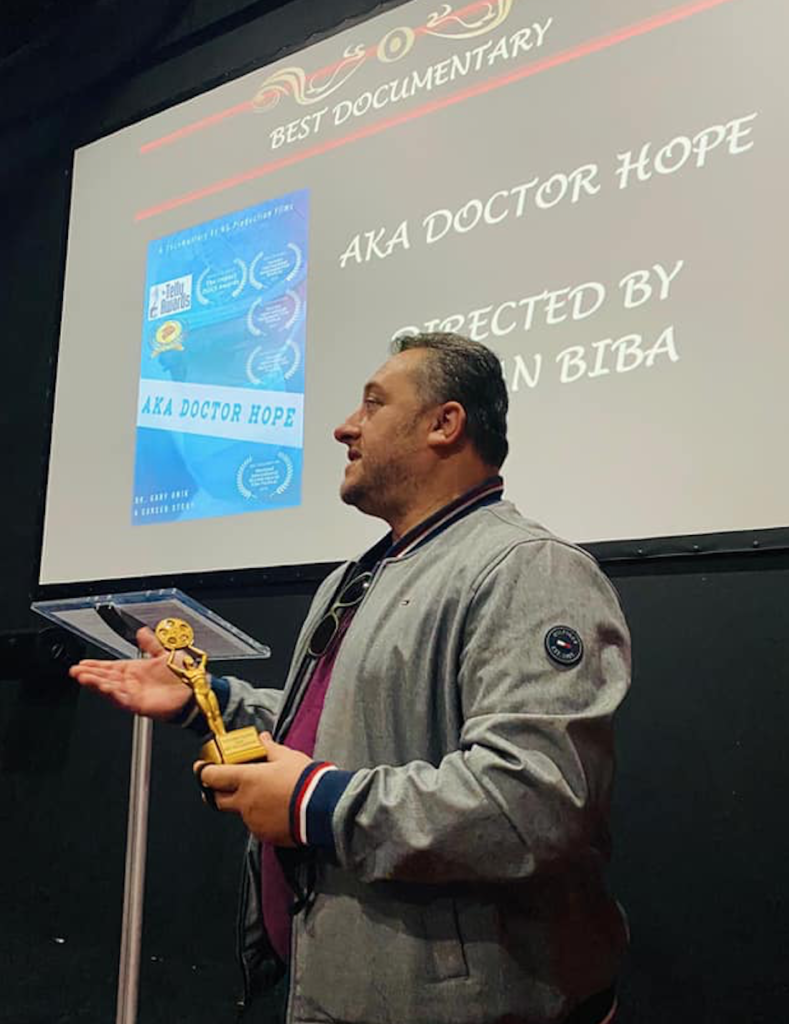
Julian Biba is the director of the documentary “Aka Dr. Hope” awarded: “Best Experimental”, “Best Documentary” and “Best Director” by TINFF; “Best Documentary” by MIWAFF and “Silver Winner” by Telly Awards.

He is the screenwriter, director and producer of  “The Red Rose” awarded: “Rising Filmmaker” by Montreal International Wreath Awards Film Festival; “Award of Recognition” by United International Film Festival and “Best NY Short” by International New York Film Festival.

Julian has co-written and co-produced the film “Paftuar” (Uninvited) that was screened on May 2016 at Cannes Festival Short Corner and also won “Best Cinematography” and “Best Production” awards at International Film Festival and Albanian Film Week in NYC.

Julian’s feature script “The Bright Future” was picked as 10 best scripts at the AlbaScript workshop organized in Pogradec, Albania by Cineuropa and Albanian National Cinematography Center.

Julian’s other feature script “Leap of Faith” was quarter-finalist at National Screenwriters Day Screenwriting Competition and 2018 Gold Reel Award Winners in Nevada Film Festival.

His short comedy script “Balkan Brothers” was the Official Selection of Oaxaca FilmFest 2017 while in March 2016 Julian Directed and Produced a music video for an Italian pop singer.

Julian has completed a few full features and short scripts while keeps on writing. In the meantime, he is experiencing a bit of an acting career in short films, TV series and documentaries like: “Mystery at the museum”, “Tough Day in NY”, “Hope of escape”, etc.

In August 2018 Julian graduated from the “Master Screenwriter Certificate Program” with ScreenwritingU.

At the age of 14, Julian went to military school and later on to Police Academy. He has been involved in Albanian police special operations and has worked as a bodyguard for politicians and people of arts from 1996 to 2012. Telling some unique life stories induced his friends to convince him to write a few of them.

What role have film festivals played in your life so far?

Julian Biba: The film festivals have been a great experience that enables the connection with other filmmakers and appreciation of their work. These connections often bring future cooperations that would give birth to new projects. A good festival creates a positive environment that makes filmmakers eager to participate with their films and personally as well.

Why are they necessary?

Julian Biba: The festivals are a necessity for filmmakers that want to show their work to a particular audience. The distribution of the films, especially short films, is too difficult, so the film festival remains the main solution for most filmmakers to introduce their work to the international audiences.

How do you get the most out of them?

Julian Biba: The film you present to a festival is basically the business card of the filmmaker. Once introduced, the filmmaker would be able to connect to other likeminded people, being directors, writers, producers, actors etc.

Tell us what inspired the New York True Venture Film Festival?

Julian Biba: I wanted to project that good vibe I received at some very positive festivals, where the filmmakers feel honestly welcomed. Providing this hospitality in New York has been a wish I have had for a long time. 

How would you characterize the identity of NYTVFF? 

Julian Biba: Film loving event open to all filmmakers with the opportunity of screening their films in New York City and connect with other likeminded filmmakers.

Audiences in general are playing a bigger role because they are more vocal in good ways and bad ways. How do you engage them in a conversation? 

Julian Biba: The constructive criticism of the audience is the best thing a film festival can wish for. That’s how you make sure you take care of things in the proper way. There is no such thing as perfect festival or anything for that matter, but honestly trying to make the festival a great experience for filmmaker and all the audience, should be the most important goal of the organizers, I think.

We will have film screenings for two days, where after each film the audience can communicate with the filmmakers during the Q&A sessions, and then the awards night that we have projected as a pleasant show for all audiences.

How did Covid affect the festival program this year? 

Julian Biba: We had booked a nice venue for our 2020 Edition where other than the awards would be displayed a show with songs and dances that the audience would have loved. Unfortunately, Covid19 made this impossible. Although, we had a great online show with trailers, posters, and announcements that was followed live by many people via Facebook and YouTube.

Our 2021 Edition we hope and believe would be live and pleasant event. 

What was the most important lesson you had to learn that has had a positive effect on your film?

Julian Biba: I believe the best one was that of humbleness.

How did that lesson happen?

Julian Biba: During my first involvement in the industry, I was the co-writer and co-producer of a short film we went to shot in Albania. After finishing his scene, a 70 year old well-known actor asked me “How did I do?” I responded: “I grew up watching you on TV and film; how can I judge your acting?” and he answered seriously “This is the story you wrote and you have been eyewitness to. Only you can tell me how close is my acting to the reality that you lived!”

For me this was great lesson on humility from a veteran of this profession. 

What scripts that you have written would you like to highlight?

Julian Biba: I keep writing although other obligations and working for the festival has been very time-consuming. I have finished a few full feature scripts like: “Leap of Faith”, “Hope Dies Last”, “Trust”, “Safe Ground” and I’m working on finishing soon two more. 

The Red Rose film got a lot of attention and won many awards. Can you tell us about the storyline and the lead actors of the film? 

Julian Biba: This is in general the story line of the film: “A dream in common leads a man with PTSD to save a politician’s life, whose enemies are too close for comfort.”

None of the people who acted in that film were professional actors, but they did their best and we had finally a film to submit to festivals. The awards we have received with that film are a great inspiration to continue working harder and raise the bar on our future projects.

What are some of the other film projects you have been involved in? 

Julian Biba: I was lucky and honored that Dr. Onik asked me to write and direct a documentary on his fantastic work on curing (especially) prostate cancer. This documentary has been received exceptionally well being awarded about 9 awards by several international film festivals.

Another short film we started submitting recently to festivals is “Departure” which was Semi-Finalist at Flickers’ Rhode Island International Film Festival; an Academy Award ® Qualifying festival. This film has been 3 times finalist and 2 times winner so far in film festivals all over the world.

What advice would you give to someone who wanted to have a life creating film?

Julian Biba: If you have a story to tell just write it down then find the people who believe in you and make this dream a reality. About this time you should have a pretty good idea if you want to continue doing this or listen to the negative voices around you that want to stop your progress. 

You see, I have been told a lot to stop doing what I do and if I would have listen to them, I would have felt sorry by now for my mistake. The negative energy people would try anything to stop you, but that’s a battle worth fighting. So, just follow your dream!

What’s next for you?

Julian Biba: I’m quite focused on our festival’s 2021 Edition while keep on writing. One of the scripts that started as a short comedy, I have it extended to a feature length and hope to be realized next year.

Filed Under: Featured Tagged With: Interview, Julian Biba, Nora Kalaja

  • 1
  • 2
  • 3
  • 4
  • Next Page »

Artikujt e fundit

  • NDJESHMËRIA SI STRUKTURË – NGA PËRKORËSIA TE THELLËSIA
  • Si Fan Noli i takoi presidentët Wilson the T. Roosevelt për çështjen shqiptare
  • TRIDIMENSIONALJA NË KRIJIMTARINË E PREҪ ZOGAJT
  • Kosova dhe NATO: Një hap strategjik për stabilitet, siguri dhe legjitimitet ndërkombëtar
  • MEGASPEKTAKLI MË I MADH ARTISTIK PAS LUFTËS GJENOCIDIALE NË KOSOVË!
  • Veprimtaria atdhetare e Isa Boletinit në shërbim të çështjes kombëtare
  • FLAMURI I SKËNDERBEUT
  • Këngët e dasmës dhe rituali i tyre te “Bleta shqiptare” e Thimi Mitkos
  • Trashëgimia shqiptare meriton më shumë se sa emërtimet simbolike të rrugëve në New York
  • “Unbreakable and other short stories”
  • ÇËSHTJA SHQIPTARE NË MAQEDONINË E VERIUT NUK TRAJTOHET SI PARTNERITET KONSTITUIV, POR SI PROBLEM PËR T’U ADMINISTRUAR
  • Dr. Evia Nano hosts Albanian American author, Dearta Logu Fusaro
  • DR IBRAHIM RUGOVA – PRESIDENTI I PARË HISTORIK I DARDANISË
  • Krijohet Albanian American Gastrointestinal Association (AAGA)
  • Prof. Rifat Latifi zgjidhet drejtor i Qendrës për Kërkime, Simulime dhe Trajnime të Avancuara Kirurgjike dhe Mjekësore të Kosovës (QKSTK) në Universitetin e Prishtinës

Kategoritë

Arkiv

Tags

albano kolonjari alfons Grishaj Anton Cefa arben llalla asllan Bushati Astrit Lulushi Aurenc Bebja Behlul Jashari Beqir Sina dalip greca Elida Buçpapaj Elmi Berisha Enver Bytyci Ermira Babamusta Eugjen Merlika Fahri Xharra Frank shkreli Fritz radovani Gezim Llojdia Ilir Levonja Interviste Keze Kozeta Zylo Kolec Traboini kosova Kosove Marjana Bulku Murat Gecaj nderroi jete ne Kosove Nene Tereza presidenti Nishani Rafaela Prifti Rafael Floqi Raimonda Moisiu Ramiz Lushaj reshat kripa Sadik Elshani SHBA Shefqet Kercelli shqiperia shqiptaret Sokol Paja Thaci Vatra Visar Zhiti

Log in

This website uses cookies to improve your experience. We'll assume you're ok with this, but you can opt-out if you wish. Cookie settingsACCEPT
Privacy & Cookies Policy

Privacy Overview

This website uses cookies to improve your experience while you navigate through the website. Out of these cookies, the cookies that are categorized as necessary are stored on your browser as they are essential for the working of basic functionalities of the website. We also use third-party cookies that help us analyze and understand how you use this website. These cookies will be stored in your browser only with your consent. You also have the option to opt-out of these cookies. But opting out of some of these cookies may have an effect on your browsing experience.
Necessary
Always Enabled
Necessary cookies are absolutely essential for the website to function properly. This category only includes cookies that ensures basic functionalities and security features of the website. These cookies do not store any personal information.
Non-necessary
Any cookies that may not be particularly necessary for the website to function and is used specifically to collect user personal data via analytics, ads, other embedded contents are termed as non-necessary cookies. It is mandatory to procure user consent prior to running these cookies on your website.
SAVE & ACCEPT