Albanian Byron Society/
When Lord Byron published The Bride of Abydos in 1813, Europe was captivated by the exoticism and mystery of the East. Written shortly after his travels through Albania, Greece, and the Ottoman Empire, the poem reflects Byron’s deep fascination with Oriental landscapes, heroic passions, and forbidden love.
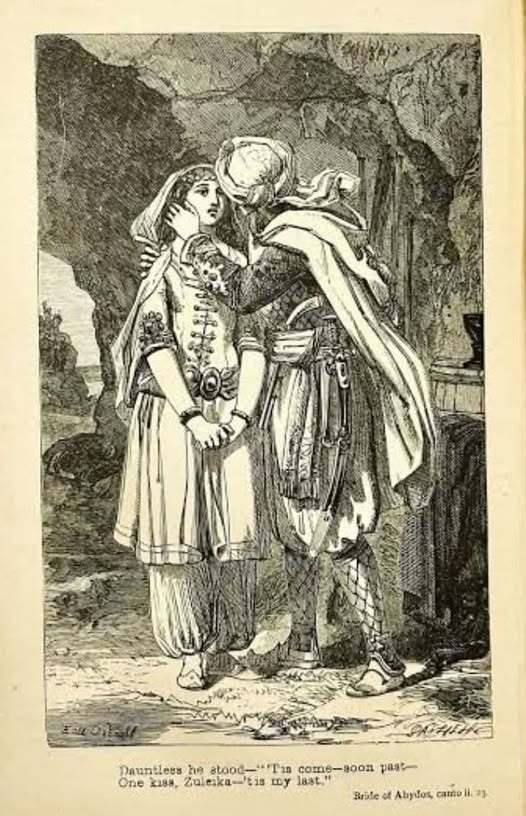
In this work, Byron blends classical themes with Eastern imagery — a poetic world where the call of freedom and the fire of desire merge beneath the moonlit waters of the Bosphorus. The poem’s hero, Selim, and his tragic love for Zuleika, embody not only a personal drama but also a symbolic dialogue between East and West.
Byron’s journey in the Balkans and the Levant shaped his imagination forever. The Albanian mountains, the hospitality of Ali Pasha, and the vivid costumes of the region gave his poetry a new language — sensual, heroic, and free. Through The Bride of Abydos, Byron introduced to Europe an image of the East that was at once romantic and revolutionary, a reflection of his own restless spirit.
—
 Nusja e Abidosit – Bajroni dhe magjia e Lindjes
Kur Lord Bajron botoi poemën Nusja e Abidosit në vitin 1813, Evropa u mahnit nga ekzotizmi dhe misteri i Lindjes. E shkruar menjëherë pas udhëtimeve të tij në Shqipëri, Greqi dhe në Perandorinë Osmane, kjo poezi pasqyron magjepsjen e thellë të Bajronit me peizazhet orientale, pasionet heroike dhe dashurinë e ndaluar.
Në këtë vepër, Bajroni ndërthur temat klasike me imazhet e Lindjes — një botë poetike ku thirrja e lirisë dhe zjarri i dëshirës përzihen nën dritën e hënës mbi ujërat e Bosforit. Heroi Selim dhe dashuria e tij tragjike për Zulejkën mishërojnë jo vetëm një dramë njerëzore, por edhe një dialog simbolik mes Lindjes dhe Perëndimit.
Udhëtimi i Bajronit në Ballkan dhe në Levant i dha përmasë të re imagjinatës së tij. Malet shqiptare, mikpritja e Ali Pashës dhe kostumet e gjalla të rajonit i dhanë poezisë së tij një gjuhë të re — ndjesore, heroike dhe e lirë. Përmes Nusja e Abidosit, Bajroni i solli Evropës një imazh të Lindjes romantik e njëkohësisht revolucionar, pasqyrë e shpirtit të tij të shqetësuar dhe të lirë.