by Linda Nikaj, Esq.
Albanians are survivors. Survival is an integral part of Kosova’s DNA: it is woven into its fabric and identity. Nevertheless, survival has too often been stifled by silence. Kosova recognized survivors of wartime sexual violence for the first time in 2014. The estimated 20,000 survivors is not a symbolic number—it comes from CDC documentation during refugee processing. Despite this scale, few, comparatively, come forward. Fear, stigma, and the threat of being ostracized by their own keep survivors—not just women but men and children who survived wartime sexual violence—silent and isolated in their continued suffering. Silence, especially when rooted in misplaced shame, only protects Serbian perpetrators of war crimes, including the crime of sexual violence.
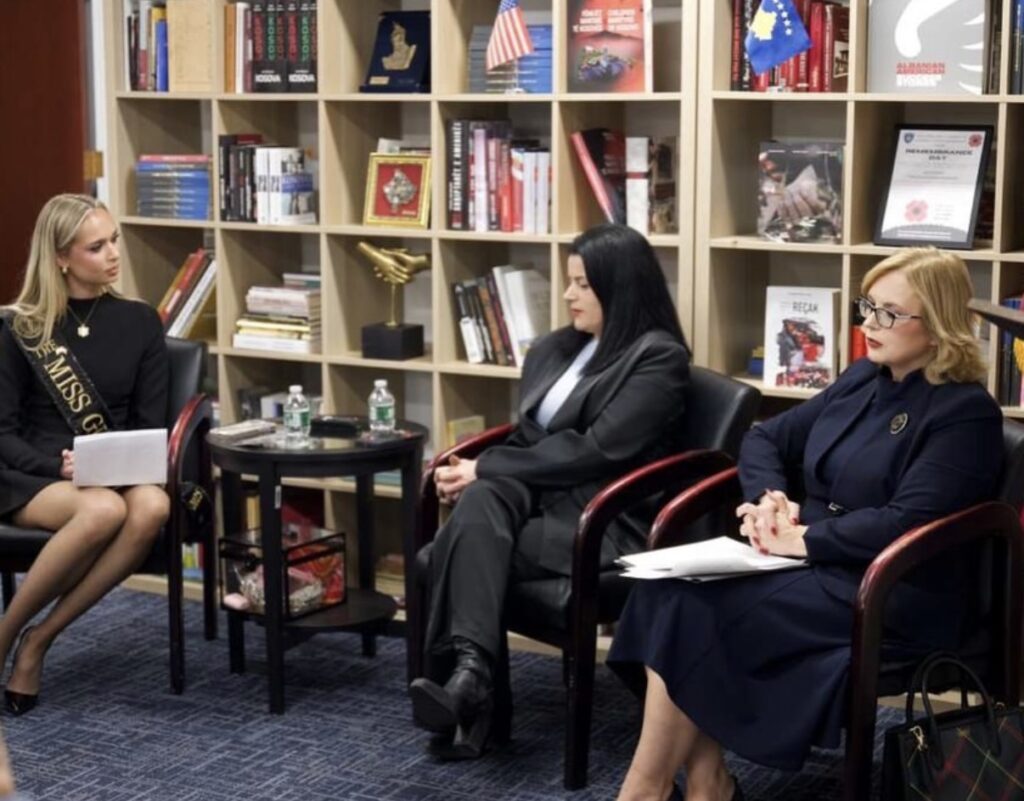
Last night’s “Women, War, and the Fight for Justice in the Republic of Kosovo” event at the Consulate General of the Republic of Kosova in New York, organized and moderated in conjunction with Shoqata Ulqini, made clear that our own misplaced shame as a community is a threat to healing and justice. In a room filled with diplomats, community leaders, and other members of the Albanian diaspora, survivor and activist Vasfije Krasniqi-Goodman spoke with clarity and courage that cut through decades of silence. Samantha Shkreli of Shoqata Ulqini moderated the conversation with compassion and precision. Vera Mjeku, Legislative Policy Analyst for the City of New York, provided critical insight into the legislative and policy landscape surrounding justice for survivors. The strength in the room was palpable—an intergenerational, collective insistence that the era of silence must end. The event served as a reminder that when survivors speak and a community chooses to truly listen, shame loses its power and the pathway to justice and healing clears.
The international community and political efforts remain inadequate in addressing wartime sexual violence. Jurisdictional limits, political failures, and avoidance leave survivors without justice. Serbia’s refusal to recognize Kosova shields perpetrators from extradition and prosecution. Survivors who seek help face a difficult verification process, high evidentiary standards, and layers of bureaucracy that retraumatize rather than support. Efforts to secure justice through legislation—both in Kosova and abroad—are repeatedly disrupted by political turnover, shifting priorities, and global crises. Resolutions calling for justice, accountability, and survivor support exist, but progress is slow. Despite these obstacles, there have been landmark convictions in Kosova courts in recent years, and survivor status now includes pensions and legal recognition. These are meaningful steps, but they remain insufficient without cultural transformation.
The paramount thread of last night’s event was the role of the family. Families often respond to survivors with silence, anger, blame, or judgment—reactions rooted in patriarchy, fear, and lack of emotional tools. Many families react this way because they carry guilt for their perceived failure to protect their loved ones. That guilt turns into avoidance. Avoidance is a coping mechanism that deepens generational trauma instead if healing it. This dynamic traps survivors in isolation and reinforces the idea that their trauma is something to hide rather than something the community must confront—together!
Survivors who come forward are required to retell their stories multiple times to institutions, committees, and officials. Each retelling reopens wounds. Many fear their stories will not remain confidential, especially in small communities where anonymity is impossible. Even accessing survivor centers can be dangerous—women often travel to centers outside their region to avoid being recognized. This should shock the conscience. We cannot heal when survivors are unable to seek help in their own communities without facing ostracization. Familial and community support is crucial to overcome these obstacles.
Healing begins at the most intimate level: the family. Families must confront their own shame and create safe spaces where survivors can speak without fear of judgment or ostracization. Community leaders must create platforms for open conversations about wartime sexual violence. Shame must be replaced with openness, dignity, empathy, and absolute, unwavering support.
Kosova cannot build a just future by burying the wounds of its past. Openness is not optional—it is the only path to healing and accountability. Only when our homes become safe spaces—free from judgment and fear—can we grow stronger and more successful as individuals and as a community.