


“I alone cannot change the world, but I can cast a stone across the waters to create many ripples.” – Mother Teresa
By Donald Leka
During the Cold War, many Albanian Americans were unable to visit their homeland or even communicate with their loved ones in Albania and Albanian citizens were not allowed to leave the country.
I can vividly recall childhood memories of my father’s attempts to call his mother and father in Albania which all but failed except on one occasion when an inexperienced telephone switchboard operator in Tirana put the call through. I remember hearing and feeling the surge of my father’s emotions as he spoke with his mother and father for the first time in decades, his voice quivering as he told his parents he loved them. I listened to the call outside the door to his office. When the call ended, I remember going into his office and seeing his eyes welling up with tears as he sat at his desk. I remember hugging him and saying “it’s okay daddy.” When the Albanian Government authorities became aware of what had transpired, they removed my grandparents’ phone from their home and reprimanded the telephone operator who had put the call through.
Albania was one of the most extreme and isolationist communist countries in the world restricting and monitoring travel and communications and often punishing dissenters and opponents of the regime and their families.
History records just how severe human rights conditions had become in Albania by the late 1960s. In 1966, the Albanian Government, already aligned with China after breaking with the Soviet Union, followed Chairman Mao Zedong’s lead by launching its own “Cultural and Ideological Revolution” forcing intellectuals, teachers and other professionals to work in the factories and fields and attacking writers, artists and dissidents. In 1967, all religious houses of worship were officially closed and Albania was declared the world’s first atheist state.
The advent of communism in Albania in 1944 came just 32 years after the creation of the modern Albanian state in 1912 which was followed almost immediately by occupation and destruction in World War I (1914 – 1918) and World War II (1939 – 1945). For the first major waves of Albanian immigrants who arrived in the United States in the 1920s and 1930s, the birth of the Albanian nation was a source of great pride. The struggles the small fledging nation faced to survive and develop were their struggles. As a result, the extreme separation from their homeland and families imposed by the communist government after World War II was more than a cruel twist of fate.
Albanian Americans assimilated well in their adopted country, proudly embracing their new American identity, adopting American values and helping new arrivals to assimilate. Many succeeded academically and economically and contributed to their new homeland. Yet, there remained a yearning to maintain a connection with their country of origin and pass on their cultural heritage including the Albanian language, history, music, art and other traditions to the next generation.
Despite the extreme separation from their culture and loved ones, the Albanian diaspora in the United States, like many other immigrant communities, took initiatives to build their own social and cultural organizations and support systems to retain their heritage while adopting the values of their new homeland.
One such initiative was the Albanian Language School at P.S. 60 in Woodhaven, Jamaica New York which was launched in 1967. Spearheaded by my parents, Dr. Agim Leka and Elizabeth Leka, the school was a beacon of light for the community where young Albanian Americans could learn about their culture and traditions even though they were largely cut off from Albania. The school was secular and catered to all ages K-12.
The school’s ethos of inclusion attracted families in the community from different regional and religious backgrounds. The school celebrated the cultural distinctiveness of every region of Albania, including regional dialects, history, cuisines, dress and other customs. This celebration of diversity embodied the message of unity and hope of the school.
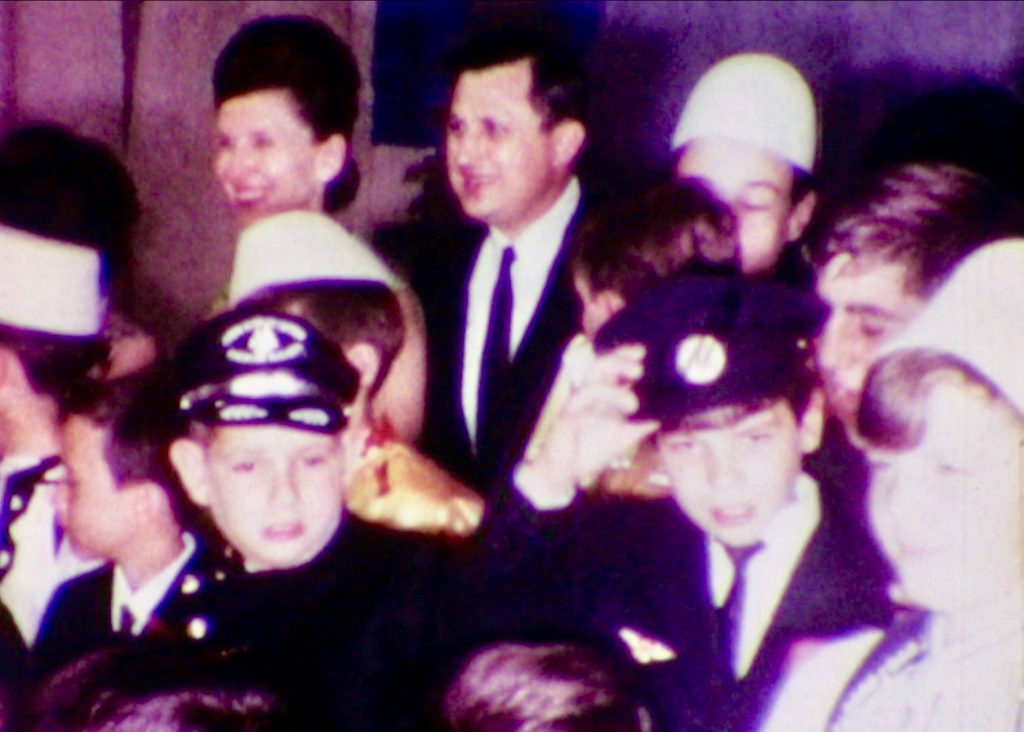
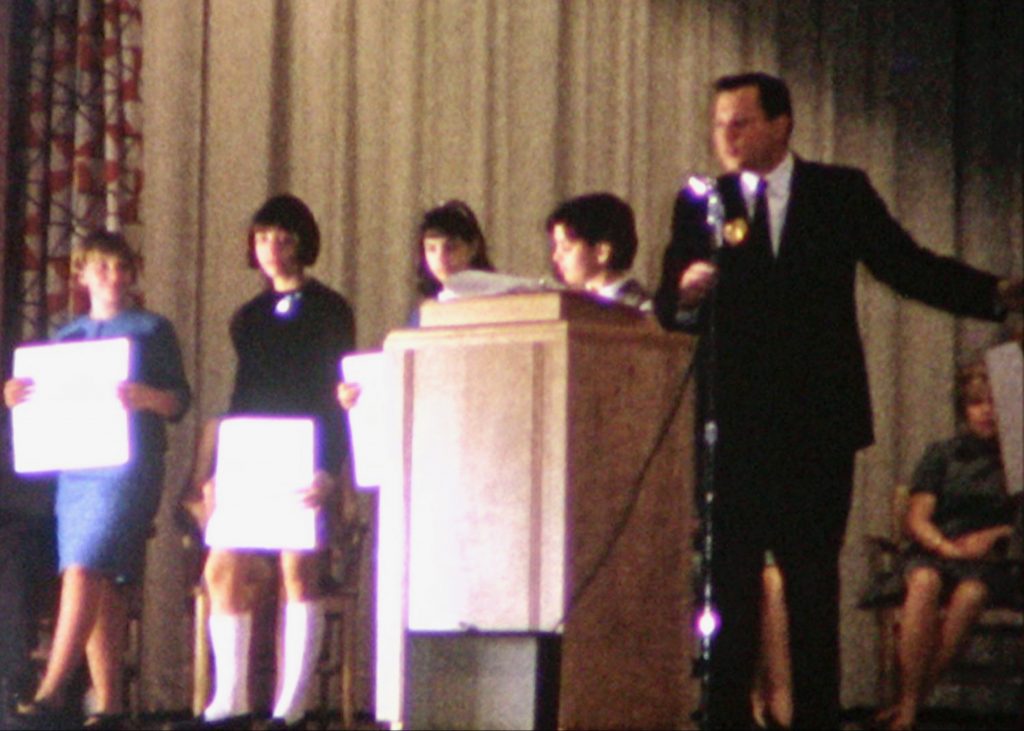
Remarkably, the history of this school is incredibly well preserved in recently unearthed photos and videos that have been carefully digitized, providing a window back in time into a thriving Albanian American community in the 1960s.
You will see students of all ages learning in the classroom, engaged in traditional dancing and participating in a school play with elaborate and colorful traditional costumes proudly representing different regions of Albania on stage sets that the students and school staff created.
“The young Albanians of today will love to see how their counterparts in the 1960s maintained their culture and traditions and learned the Albanian language, history, music and dances.” – Dr. Agim Leka, School Principal
And now they can. The important service the school provided to the community in helping to preserve the Albanian cultural heritage and the pride and joy it brought to the Albanian American community in a period of darkness in Albania is preserved, a treasure for generations to come. – Donald Leka