HISTORICAL PERSPECTIVE ON US ELECTIONS/
HAS THE US ELECTION BEEN STOLEN BEFORE?/
In considering the historical precedent of a “US Election Steal”, Dielli is bringing the view of the author Milan Simonich, a contributor of the Santa Fe New Mexican. Dielli has received permission by the author to reprint the article. The author’s argument is that Trump’s attempt to overturn the voters’ decision isn’t “unprecedented”. There is a nefarious playbook for what Trump wants. “Republicans in 1876 probably stole the presidency after their candidate conceded on election night” yet the Electoral College made Hayes president in one of the most contentious elections in US history. The 19th President of the United States, Rutherford B. Hayes (1877-1881), oversaw the end of Reconstruction Era, and efforts that led to civil service reform, while dealing with divisions inflicted by the Civil War.
Trump is no Rutherford B. Hayes, a loser who took the White House
It’s hard to do, but headline writers across the land are being unfair to President Donald Trump.
“Trump is putting this country through something unprecedented,” shrieked the title of a column in the Washington Post. The Hill bellowed in similar fashion: “International election observers rebuke Trump’s ‘unprecedented attempts to undermine public trust.’ “Yes, Trump is trying to steal a free and fair election that he lost to Joe Biden by a wide margin. But Trump’s attempt to overturn the voters’ decision isn’t “unprecedented” — the most overworked word of 2020.
A nefarious playbook exists for what Trump wants to do. Republicans in 1876 probably stole the presidency after their candidate conceded on election night.
The nominees were Democrat Samuel J. Tilden and Republican Rutherford B. Hayes. An equally important figure was John C. Reid, a rabid Republican who worked as a New York Times night editor.
Reid was vehement in his dislike of Tilden, the sitting governor of New York. Most newspapers called Tilden the winner on election night, but Reid cast doubt on the outcome.
Tilden led by 262,000 in the popular vote. More important, depending on who was counting, Tilden was either above or at the brink of winning the Electoral College.
In the worst case, Tilden had 184 electoral votes against 166 for Hayes. But at least 185 votes were needed to win. Reid checked the map and saw a path for a Republican victory. Four states — Oregon, Florida, Louisiana and South Carolina — were still in play or at least still counting votes.
The three remaining Southern states had a total of 19 electoral votes. If Hayes swept them, he would be elected by one vote.
Reid’s confidence was bolstered when the Times received a telegram in the predawn hours after the election. The New York state Democratic chairman wanted the newspaper’s estimate of Tilden’s electoral votes.
Inspired, Reid sent a wire of his own to Republican leaders.
“If they want to know the electoral vote total, that means they are not certain they have won. If they are still in doubt, then we can go on from here and win the election.”
Among those cabled by Reid was Zach Chandler, the Republican national chairman. Chandler had gone to sleep believing Tilden won the presidency. Reid persuaded him of the potential for a reversal.
With Chandler on board, Reid wrote another telegram to Republican Party leaders in the South.
“Hayes is elected if we have carried South Carolina, Florida and Louisiana. Can you hold your state? Answer immediately.” Reid sent the message under Chandler’s name. Republicans launched a renewed effort to bring in the Southern states for Hayes.
Reconstruction was underway in the South. Republicans empowered in the post-war effort were known as the Carpetbaggers. They teamed with Black residents to deliver votes for Hayes.
Tilden said he was unconcerned about fraud or selective tabulations.
“The fiery zealots of the Republican Party may attempt to count me out. But I don’t think the better class of Republicans will permit it,” he said.
In his idealism he underestimated the fervor Reid had ignited. Certifying boards in the contested Southern states were heavily Republican. The sitting Republican president, Ulysses S. Grant, ordered soldiers to the South to vouch for the Carpetbaggers’ count.
Gen. William Tecumseh Sherman was in charge of the troops. Sherman later wrote this assessment: “The probabilities were that Tilden was elected.”
Tilden might have received the most votes. He wasn’t elected, though.
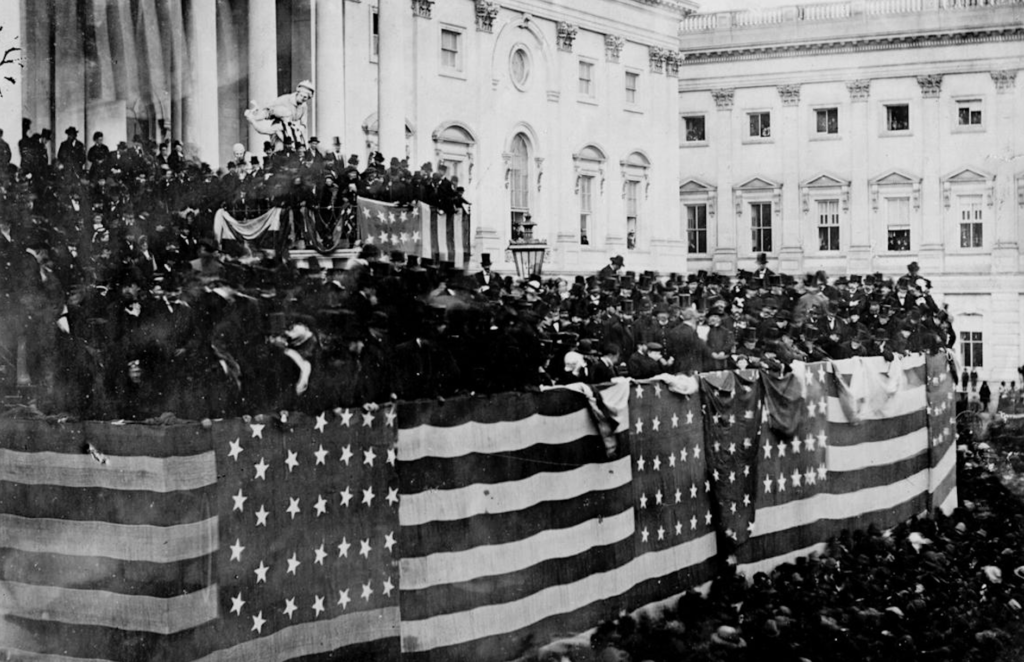
Republicans held the majority on the electoral commission. In a party-line vote on March 2, 1877, Hayes received 185 electoral votes — one more than Tilden and exactly enough to win. Tilden worried about the country splintering in a pitched political battle only 12 years after the Civil War had ended. He accepted the decision.
Hayes, who had conceded defeat on election night, was sworn in as president on March 4, 1877.
Roy Morris Jr. in 2003 wrote the authoritative book on that bitter and brutal election. He titled it Fraud of the Century.By Morris’ account, states Tilden carried went to Hayes. This chapter in presidential history might have given hope to Trump.
Trump, though, ran up against ethical secretaries of state who could demonstrate the accuracy of vote totals. And Republican governors in Arizona and Georgia refused to contest Biden’s close wins in those states, even as Trump harangued them.
Trump’s complaining won’t expire until he does. But this might be a pivotal day for Biden. Presidential electors will meet at 11 a.m. Monday to cast their ballots for president and vice president. It should be routine and swift — everything the election of 1876 was not.
*The article appeared in Ringside Seat column of the Santa Fe New Mexican.