• Home
  • Politics
  • Opinion
  • Culture
  • Sports
  • Economy
  • Interview
  • Reporting
  • Community
  • Vatra

Dielli | The Sun

Albanian American Newspaper Devoted to the Intellectual and Cultural Advancement of the Albanians in America | Since 1909

We Now Have the Face of That Special Love!

November 18, 2019 by dgreca

  • The American Jewish Daughter  of Albania, Dr. Anna Kohen,  continues to share with the world the masterpiece  of Albanian Virtue of  BESA /

By Merita B. McCormack- Washington DC/
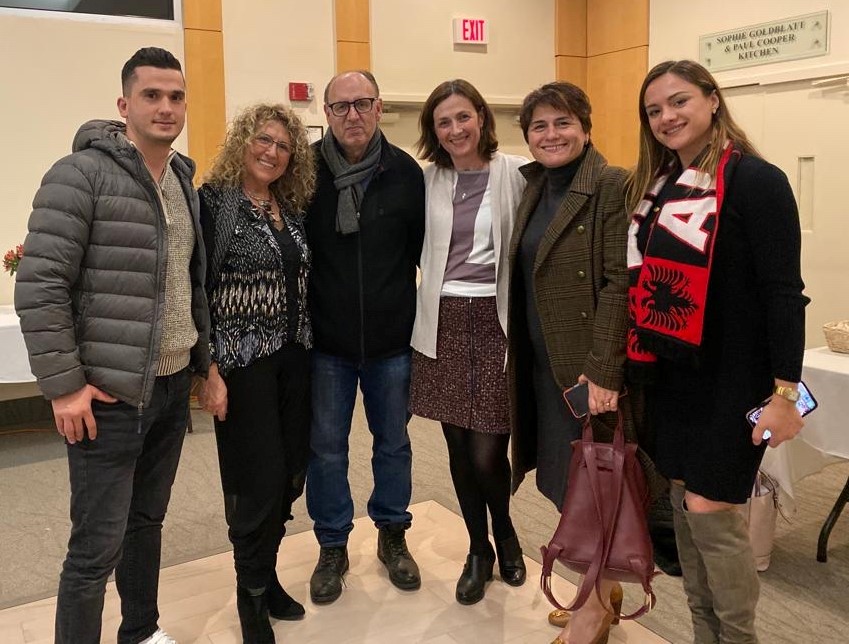
Sunday , November 17, 2019  was unique, as usual where there is involvement of our beloved Dr. Anna Kohen and her Jewish friends of DC Metro area. In a packed conference hall of  the  Conservative  Synagogue of the Congregation B’nai Tzedek in Potomac Maryland, there were hundreds of Americans, congregants, scholars, journalists, historians, politicians, business people and  among them many Albanian Americans of Metro DC Area as well.

As we know her, our  sister and daughter of Albania , the  former President of Motrat Qiriazi Organization and an all time Jewish Community leader, Doctor Anna Kohen was very busy welcoming every person and greeting everyone like there was no other one in the room, she was into something special.

With a fruitful collaboration of the  event Committee, comprised  of our Dr. Anna Kohen,  Ms. Gail Shirazi, Ms. Evie Stroller and Kosovar- Jewish diplomat, Ms.Ines Demiri , they put together a beautiful event that will not be forgotten any time soon. The sponsors of the event were Friends of the Jewish Museum of Kosovo together with American Sephardi Federation, Embassy of Kosovo and B’nai Tzedek Congregation. 

The participants were in for a special treat.  It started with heartwarming music played by our own, DC based , Internationally renowned ,  the  very  talented pianist Merzana Kostreci, playing “Lule Bore” and more, and then through  a series of speeches, testimonies, a movie screening, award giving and Q &A, people learned a lot about  the stories of Jewish people rescued and aided in the Albanian land. 

The event started with introduction by Ms. Gail Shirazi. The Welcome remarks were presented by Mr. Frymezim Isufaj, Charge D’Affairs, Embassy of Republic of Kosovo in Washington DC and followed by Her Excellency , Floreta Faber, Ambasador, Embassy of the Republic of Albania.

Mr. Isufaj , who was attending together with his wife Doruntina, spoke on behalf of the Embassy of republic of Kosova. He greeted the participants and thanked the organizers. He, speaking from his heart , but also on behalf of all Kosova people,  shared the strong bond that exists between our nations and elaborated on how both nations have helped each other throughout the history. He shared the  support of Kosovar people rescuing Jewish people and helping them to pass through to Albania and also he recognized the huge role of the Jewish Diaspora in USA and in Europe , who were among first to help  Kosova people  during the  Serbian ethnic cleansing at the end of last century and to support them in their fight for justice and independence. That help included the refugee taking of the state of Israel as well. He invited historians to do more so more light can be shed on the history of those two countries and nations, helping each other throughout the history.

Madam Ambassador Floreta Luli Faber  also  spoke  about the bond and the ties between the two nations, the history of Jewish being rescued in Albania and  she mentioned , among other things, the fact that there is a monument in Albania, which  is erected in honor of the Jewish people that managed to survive in Albania. She emphasized that this is the only monument in the world that is dedicated to living Jewish people. Both diplomats’  remarks were interrupted by applause.

The event continued with a greeting by Mr. Jason Steinbaum, from the Office of Congressman Eliot Engel, US Representative of New York’s 16th Congressional District. He shared a story involving President Rugova (now deceased) and the appreciation of Congresman Engel  noting  a  heartfelt gesture of  Pres.Rugova.  that was applied in honor of a Jewish  tradition honoring the dead. Congressman Engel was sorry that he could not be with us due to him being away in NY. Mr. Steinbaum mentioned that this Synagogue, hosting the event,  is the worship home of Congressman Engel when in DC. 

Ines shared the stories of Jewish in Kosova, the efforts to keep the legacy alive and to educate people on the truths about it. Her grandparents were of Albanian and Jewish background, Ruth Bachar and Gani Demiri, who met in the process of Albanians of Kosova helping Jewish people, which resulted in a beautiful marriage. She said that “sadly, the rescue of Jewish history by the Kosovo Albanian population, is not sufficiently promoted. This is mostly because Kosovo was not an Independent state yet and didn’t have the possibility of accessing the relevant archives. Consequently, these documents were not made known to the general public during that period of time.The Jews, wherever they go they fight to keep their history, culture and tradition alive. And as the Jewish Community of Kosovo, being a small community, we are not representing numbers or statistics but we are representing the history. A history where the Albanians have their role of bravery and rescuer” She went on and mentioned several names of distinguished individuals .Hasan Rrema Xerxa – provided transportation with his own vehicle for reallocating them to Albania. Arsllan Mustafa Rezniqi (His name is listed among the Righteous among nations in Yad Vashem) beside he protected them, he aslo provided safe transportation to Albania. Halim Spahija – Used his business premises to hide Jewssome of them were ordinary citizens and some of them were municipality officials, as in the case of Arif Musa Alickaj and Preng Uli and all of them did their moral duty, using the ancient code of honor BESA. In the case of Preng Uli, he wasn’t able to keep the record of the people that he saved, by giving false passports.Dr. Spiro Lito, an Albanian doctor who worked at the hospital of Pristina, in cooperation with the Mayor of Prishtina and other doctors they took out all the hospitalized people and create places for the Jews with the pretext that they were in quarantine and thereby avoided the risk of deportation. Ines said spoke of the Jewish community of Kosova today , the fact the Judaism is listed as one of the religions in Kosova and the plans for the Jewish Museum of Kosova and thanked all who are helping with this important project. Ines was one of the organizers of the event and was very grateful to the hosts and other co-organizers.  

Ines Demiri, the diplomat at the Consulate General of Kosova in NY , presented on History of Jews In Kosovo.

Part of the evening was also to dedicate an award to Preng Uli, the Secretary of Prishtina Town Hall from 1941-1944. He risked his life so others could live. Mr. Uli and others in the community , issued false passports or documents and arranged the passage of Jews to “safe places”, until the end of the War . George (Gjergj) Uli, the son, was able to receive that award which was a beautiful piece of art(mosaic) handmade by a child survivor of the holocaust, who lived in Ukraine. Her name is Masha Roth. She spoke on how she came to know Dr. Kohen and how she was delighted that her art was selected as an award for Mr. Preng Uli.  Upon its reception Gjergj Uli was very grateful and spoke about the honor bestowed upon his family and how this is a legacy to go down the generations.  

Afterwards Mr. Jakov Sedlar, a successful Croatia based movie maker, introduced the movie to be screened. He mentioned that after hearing the story of Ester he wanted to document it and he did . He made every effort to materialize this movie and spoke passionately about the history and the events. It is because of him, we now have this Face of Love, Hajrie Imeri-Mihajlovic.  The movie is about a a very touching story of a Jewish young child, who is still alive and lives in Tel Aviv. By being Jewish she had to suffer greatly. She was put in the camp with her grandma , and was lucky to have been cared for many years  by Hajrie Imeri-Mihajlovic, the gypsy lady from Kosova. Hajrie and her family, like her Jewish employees, were expelled from Serbia,  a country that  had put in effect a a law to rid of gypsies at the same time of Nazi persecuting the Jewish people. Hajrie took care of Ester, raised her as her own and told her the truth, as promised to grandma when the time came. Through many sad trails of life, Hajrie and Ester had different paths, but the bond was never lost. The journey of Ester Levy is one of the most poignant and so  beautifully shown in this movie titled “The Righteous Gypsy”. 

It is through these moving stories, history of gypsies, their culture, their humility, Ester’s sincere appreciation for the woman that raised her,  that an artist manages to draw a portrait of Hajrie which turns out to be very much the face of Hajrie that Ester knew. The moment of revealing it is very beautiful and very meaningful to ester and to the audience. A love that was always present, a woman that has died and no grave can be found, the invisible genuine love,  has now a face and a permanent memoir through this movie and also through the name carving in the Yad Vashem*  in Israel. It is a reminder that no matter what, genuine Love has lasting effects and eternal rewards.  Like the portrait of Hajrie drawn by the artist, the photo of Preng Uli too, is  inserted in the beautiful art piece created by Ms. Roth. And both these two people has revealed the face of  such beautiful. special Love. While Mr. Uli  was known and has descendants to acknowledge, Hajrie’s portrait is the only “relic”  we have  of her , adding to the memoir of Ester, and yet, a very powerful message is carried through that sweet face of this Righteous Gypsy. It doesn’t take much to love. You just have to do it in every small way. As long as one truly loves and does what it’s right, one can be sure that it  does reap fruits of eternal value as it has in the case of Ester and Harjia who really loved her. 

 The evening was one of tears and joy, of love and remembrance and there is no question why people have traveled from afar to attend. They  knew this was going to be good.  That beauty and that content perhaps had motivated even the world renowned photographer , Mr. Fadil Berisha to be there and very attentively watch the events unfold.  Also,  former   NAAC Executive Director  Mr.  Avni Mustafa, a figure that was staple in DC for many years,  was also present.  Many other known personalities of the Albanian American Diaspora attended as well. Surely it was a gratifying experience for all.

The food was delicious, a mix of Jewish and Albanian food, where baklava and byrek  was in abundance.

Ms. Keida Kostreci and her team from Voice of America, Albanian Section, covered the event .

*Yad Vashem (Hebrew: יָד וַשֵׁם; literally, “a monument and a name”)is Israel’s official memorial to the victims of the Holocaust. It is dedicated to preserving the memory of the dead; honoring Jews who fought against their Nazi oppressors and Gentiles who selflessly aided Jews in need; and researching the phenomenon of the Holocaust in particular and genocide in general, with the aim of avoiding such events in the future.

Established in 1953, Yad Vashem is on the western slope of Mount Herzl, also known as the Mount of Remembrance, a height in western Jerusalem, 804 meters (2,638 ft) above sea level and adjacent to the Jerusalem Forest. The memorial consists of a 180-dunam (18.0 ha; 44.5-acre) complex containing two types of facilities: some dedicated to the scientific study of the Holocaust and genocide in general, and memorials and museums catering to the needs of the larger public. Among the former there are a research institute with archives, a library, a publishing house, and an educational center, and the International School/Institute for Holocaust Studies; among the latter, the Holocaust History Museum, memorial sites such as the Children’s Memorial and the Hall of Remembrance, the Museum of Holocaust Art, sculptures, outdoor commemorative sites such as the Valley of the Communities, and a synagogue.

A core goal of Yad Vashem’s founders was to recognize non-Jews who, at personal risk and without a financial or evangelistic motive, chose to save Jews from the ongoing genocide during the Holocaust. Those recognized by Israel as Righteous Among the Nations are honored in a section of Yad Vashem known as the Garden of the Righteous Among the Nations.

Yad Vashem is the second-most-visited Israeli tourist site, after the Western Wall, with approximately one million visitors each year. It does not charge any fee for admission (From Wikipedia) 
Filed Under: Featured Tagged With: Merita Bajraktari McCormack-Besa- Dr. Anna Cohen

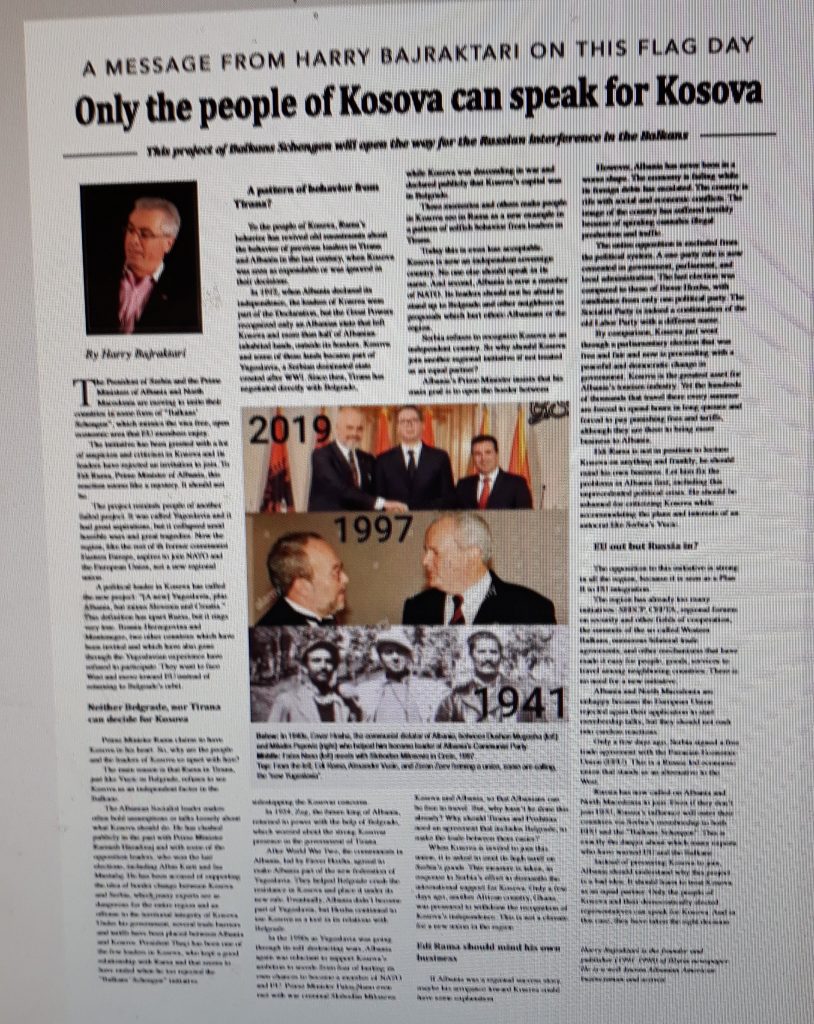
Only the people of Kosova can speak for Kosova

November 17, 2019 by dgreca

  • This project of Balkans Schengen will open the way for the Russian interference in the Balkans /

By Harry BAJRAKTARI/ DIELLI/

The President of Serbia and the Prime Ministers of Albania and North Macedonia are moving to unite their countries in some form of “Balkans’ Schengen”, which mimics the visa-free, open economic area that EU members enjoy.

The initiative has been greeted with a lot of suspicion and criticism in Kosova and its leaders have rejected an invitation to join. To Edi Rama, Prime Minister of Albania, this reaction seems like a mystery. It should not be.

The project reminds people of another failed project. It was called Yugoslavia and it had great aspirations, but it collapsed amid horrible wars and great tragedies. Now the region, like the rest of th former communist Eastern Europe, aspires to join NATO and the European Union, not a new regional union.

A political leader in Kosova has called the new project: “[A new] Yugoslavia, plus Albania, but minus Slovenia and Croatia.” This definition has upset Rama, but it rings very true. Bosnia-Herzegovina and Montenegro, two other countries which have been invited and which have also gone through the Yugoslavian experience have refused to participate. They want to face West and move toward EU instead of returning to Belgrade’s orbit.

Neither Belgrade, nor Tirana can decide for Kosova

Prime Minister Rama claims to have Kosova in his heart. So, why are the people and the leaders of Kosova so upset with him?

The main reason is that Rama in Tirana, just like Vucic in Belgrade, refuses to see Kosova as an independent factor in the Balkans.

The Albanian Socialist leader makes often bold assumptions or talks loosely about what Kosova should do. He has clashed publicly in the past with Prime Minister Ramush Haradinaj and with some of the opposition leaders, who won the last elections, including Albin Kurti and Isa Mustafaj. He has been accused of supporting the idea of border change between Kosova and Serbia, which many experts see as dangerous for the entire region and an offense to the territorial integrity of Kosova. Under his government, several trade barriers and tariffs have been placed between Albania and Kosova. President Thaçi has been one of the few leaders in Kosova, who kept a good relationship with Rama and that seems to have ended when he too rejected the “Balkans’ Schengen” initiative.

A pattern of behavior from Tirana?

To the people of Kosova, Rama’s behavior has revived old resentments about the behavior of previous leaders in Tirana and Albania in the last century, when Kosova was seen as expendable or was ignored in their decisions.

In 1912, when Albania declared its independence, the leaders of Kosova were part of the Declaration, but the Great Powers recognized only an Albanian state that left Kosova and more than half of Albanian-inhabited lands, outside its borders. Kosova and some of these lands became part of Yugoslavia, a Serbian dominated state created after WWI. Since then, Tirana has negotiated directly with Belgrade, sidestepping the Kosovar concerns.

In 1924, Zog, the future king of Albania, returned to power with the help of Belgrade, which worried about the strong Kosovar presence in the government of Tirana.

After World War Two, the communists in Albania, led by Enver Hoxha, agreed to make Albania part of the new federation of Yugoslavia. They helped Belgrade crush the resistance in Kosova and place it under its new rule. Eventually, Albania didn’t become part of Yugoslavia, but Hoxha continued to use Kosova as a tool in its relations with Belgrade.

In the 1990s as Yugoslavia was going through its self-destructing wars, Albania again was reluctant to support Kosova’s ambition to secede from fear of hurting its own chances to become a member of NATO and EU. Prime Minister Fatos Nano even met with war criminal Slobodan Milosevic while Kosova was descending in war and declared publicly that Kosova’s capital was in Belgrade.

These memories and others make people in Kosova see in Rama as a new example in a pattern of selfish behavior from leaders in Tirana.

Today this is even less acceptable. Kosova is now an independent sovereign country. No one else should speak in its name. And second, Albania is now a member of NATO. Its leaders should not be afraid to stand up to Belgrade and other neighbors on proposals which hurt ethnic Albanians or the region.

Serbia refuses to recognize Kosova as an independent country. So why should Kosova join another regional initiative if not treated as an equal partner?

Albania’s Prime Minister insists that his main goal is to open the border between Kosova and Albania, so that Albanians can be free to travel. But, why hasn’t he done this already? Why should Tirana and Prishtina need an agreement that includes Belgrade, to make the trade between them easier?

When Kosova is invited to join this union, it is asked to omit its high tariff on Serbia’s goods. This measure is taken, in response to Serbia’s effort to dismantle the international support for Kosova. Only a few days ago, another African country, Ghana, was pressured to withdraw the recognition of Kosova’s independence. This is not a climate for a new union in the region.

Edi Rama should mind his own business

If Albania was a regional success story, maybe his arrogance toward Kosova could have some explanation.

However, Albania has never been in a worse shape. The economy is failing while its foreign debts has escalated. The country is rife with social and economic conflicts. The image of the country has suffered terribly because of spiraling cannabis illegal production and traffic.

The entire opposition is excluded from the political system. A one-party rule is now cemented in government, parliament, and local administration. The last election was compared to those of Enver Hoxha, with candidates from only one political party. The Socialist Party is indeed a continuation of the old Labor Party with a different name.

By comparison, Kosova just went through a parliamentary election that was free and fair and now is proceeding with a peaceful and democratic change in government. Kosova is the greatest asset for Albania’s tourism industry. Yet the hundreds of thousands that travel there every summer are forced to spend hours in long queues and forced to pay punishing fees and tariffs, although they are there to bring more business to Albania.

Edi Rama is not in position to lecture Kosova on anything and frankly, he should mind his own business. Let him fix the problems in Albania first, including this unprecedented political crisis. He should be ashamed for criticizing Kosova while accommodating the plans and interests of an autocrat like Serbia’s Vucic.

EU out but Russia in?

The opposition to this initiative is strong in all the region, because it is seen as a Plan B to EU integration.

The region has already too many initiatives: SEECP, CEFTA, regional forums on security and other fields of cooperation, the summits of the so-called Western Balkans, numerous bilateral trade agreements, and other mechanisms that have made it easy for people, goods, services to travel among neighboring countries. There is no need for a new initiative.

Albania and North Macedonia are unhappy because the European Union rejected again their application to start membership talks, but they should not rush into careless reactions.

Only a few days ago, Serbia signed a free trade agreement with the Eurasian Economic Union (EEU). This is a Russia-led economic union that stands as an alternative to the West.

Russia has now called on Albania and North Macedonia to join. Even if they don’t join EEU, Russia’s influence will enter their countries via Serbia’s membership to both EEU and the “Balkans Schengen”. This is exactly the danger about which many experts who have warned EU and the Balkans.

Instead of pressuring Kosova to join, Albania should understand why this project is a bad idea. It should learn to treat Kosova as an equal partner. Only the people of Kosova and their democratically elected representatives can speak for Kosova. And in this case, they have taken the right decision.

Harry Bajraktari is the founder and publisher (1991-1998) of Illyria newspaper. He is a well-known Albanian-American businessman and activist.

Filed Under: Emigracion Tagged With: Harry Bajraktari-Only the people of Kosova- can speak for Kosova

Festat e Nëntorit Shqiptar në New York, Biografia e Kombit

November 17, 2019 by dgreca

Shoqëria dhe lidhja midis nesh, është respekti dhe vlerësimi për njeriun./

Nga Violeta Mirakaj/*

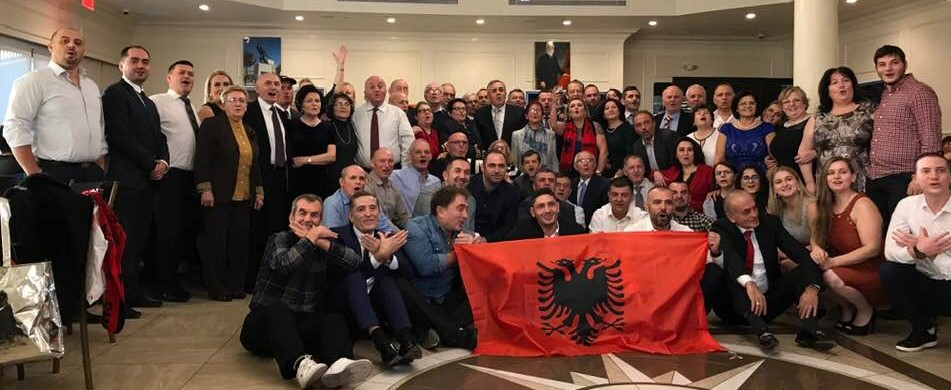
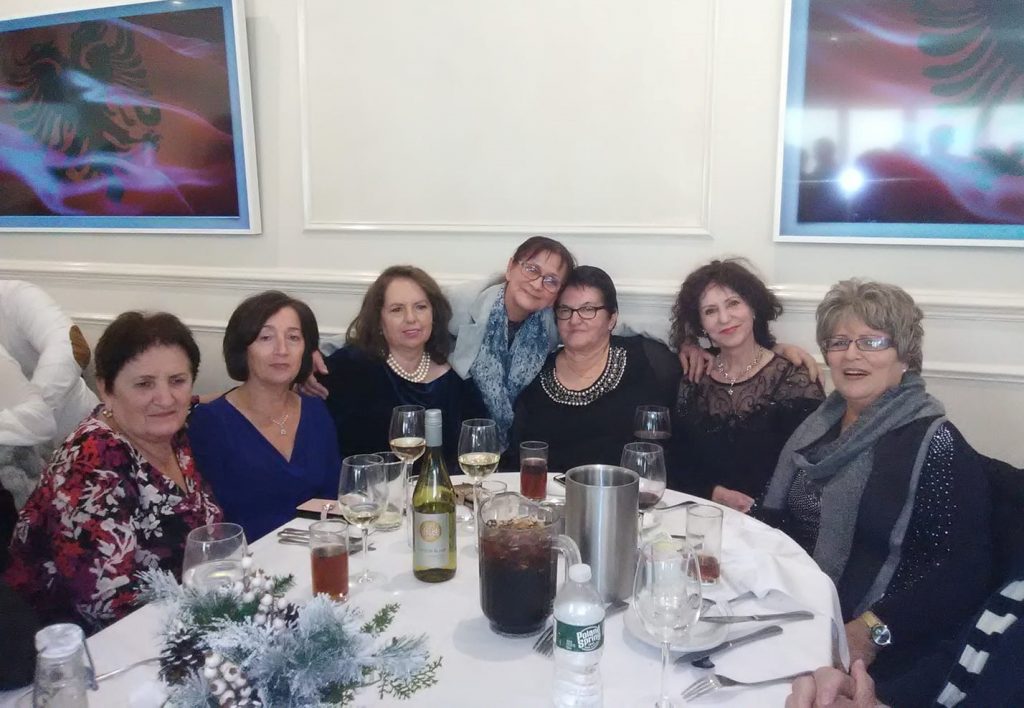
New York- New York, 16 Nëntor 2019 – Është një ditë  Nëntori me ftohtësinë  e zakonshme të një fillim dimri  Newyourkez… Grupime shoqërore, shoqata të ndryshme bëjnë organizime festive për festat e Nëntorit, festat e nëntorit shqiptar.  Edhe Association of “Skënderbej”organizon  një mbasdite, takim festiv  për këto ngjarje të rëndësishme të biografisë së kombit shqiptar si dhe për të kujtuar 4 Dhjetorin, 107  Vjetorin e krijimit të Forcave të Armatosura.

                                                                                                                                   Mjedisi festiv  fillon nën tingujt solemn te dy himneve, të atij Shqiptar dhe Amerikan … Vazhdon me ritualin protokollar të përshendetjeve të  rastit nga organizatoret  si dhe te ftuarit Z. Skënder Kodra, nga përfaqësuesit  ushtarakë të shoqatës  “Bijtë e Shqipes” Filadelfia e të tjerë.  Në respekt të  ish oficerëve të pranishëm u bënë  vlerësime  të veçanta për kuadrot e para ushtarake si Krisulla Prifti, Gëzim Mustafa,  Floresha L. Dergjini, B. Hasani, F. Zeka etj… tashmë të emigruar  në Amerikë  si shumë emigrantë të tjerë për një jetë më të mirë dhe më të sigurtë, të lirë për vete dhe familjet e tyre.  Disiplina, jeta e përditëshme ushtarake  me përgjegjësitë dhe privimet e saj bëri që ta përqafojnë lehtë jetën amerikane, me gjithë vështirësitë e fillimit për t’u akumuduar.  Po Amerika është një lumë që gurgullon pa i vënë vesh së shkuarës… dhe kjo e bën më të lehtë përqafimin e saj. Ku Liri nuk do të thotë as ditë të shkujdesura, jetë pa halle, por kur të gjitha këto janë të pranishme dhe njeriu del mbi to duke këputur zinxhirin me të cilin ka lidhur veten në agimin e kuptimit që i u duk  si orë mesdite. Këtë mesazh duket sikur e dha shumë bukur poetja Iliriana Sulkuqi në pak momente poetike të saj. “Për pak liri gjakosa dhimbjen./ Kur e fitova , e futa në pranga”…kjo troket  në aktualitetin shqiptar. Në këtë  mesditë festiv duken se troje të Shqipërisë janë këtu, me dashurinë për jetën, për lirinë, gëzimin, dashurinë, për mallin, brengën dhe gjithçka;  ndjehet në bisedat, në muzikën, në këngët, në vallet dhe meloditë  sa nga Jugu  dhe Veriu, sa nga Lindja dhe Perëndimi.  Vallja e kënduar Çame pasohet  nga melodia plot temp e Malësisë së Madhe dhe e Kosovës, nga vallja Tiranase dhe Vlonjate etj . Dukej sikur  aty ishte gjithë Shqipëria, gjithë shqiptarët.

Biseda rreth kujtimeve të ish  oficereve, nostalgjia për ato vite, më la mbresa. Krisulla Prifti tregon në lidhje me kujtimet, emocionet, luftën për “mbijetesë” në ambientet mashkullore të pacënuara më parë nga gjinia femërore, dhe është e sigurtë që gjithkush nga ne vajzat e kursit të 1967-tës vazhdon, mund të shkruajmë volume tëra; por ajo që do na shoqërojë duke nisur që nga vitet e kursit 2-vjeçar dhe gjatë gjithë ecurisë profesionale ndërvite: -Shoqëria dhe lidhja që do të krijonim me njera – tjetrën, respekti dhe vlerësimi për njeriun. E mbylla karrierën ushtarake në Mars të vitit 2006, por kjo nuk do të thotë se u mbyll miqësia mes ish kolegeve ushtarakë, kjo vazhdoi dhe vazhdon edhe nëpërmjet  shoqatës “Skënderbej” këtu në Amerikë. Bashkëbisedimi vazhdoi ndërmjet tyre duke kujtuar koleget e tyre officere, vështirësitë që hasën kur krijuan familje si dhe njëkohësisht të ndiqej karriera….Kuptohet shumë karriera u ndërprenë në mes pas viteve ’90, në emër të ashtuquajtura reforma, disa mbijetuan me vështirësi. Në këto vite historike të brishta për vendosjen e një sistemi demokratik në vendin tone , Shqipëri, në organizimin e ri të Ushtrisë  së re, si pjesë e NATO-s, janë në të gjitha hallkat komanduese. Përsëri oficeret ia dolën mbanë. Shembull, dhe të parat që i treguan shqiptarëve dhe mbarë botës janë këto zonja Krisulla, Violeta, Floresha dhe 67 shoqet e tyre, si të parat oficere të Ushtrisë 10 Dhjetor 2017, në  New York dhe New Jersey . Ishte nisma  e ushtarakëve në mërgim si Veri Talushllari, Gëzim Mustafa, Mihal Jano, Astrit Xhakolli etj e cila nga një kuvend me mbi 60 ushtarakë shqiptarë, emigrantë në SHBA,  u miratua dhe nga Departamenti i shtetit të NY më 28 Shkurt 2019 si një organizatë jo fitimprurëse.  Nën drejtimin e një bordi drejtues me në krye Bujar Hasani si dhe Gëzim  Shentolli, Gëzim Mustafa , Dirka Xhakolli , Flutura Zeka etj. ka mbledhur rreth vetes ish pjesëtarë të FA të RSH emigrantë  këtu në SHBA, si dhe pjesëtarë të familjeve të tyre, miq dhe simpatizantë për t’ju gjendur njeri – tjetrit në të mirë dhe në të keq , për të ruajtur dhe trashëguar në breza që vijnë traditat dhe zakonet më të mira të popullit tone si dhe përshtatjen me historinë, jetën dhe kulturën amerikane. Organizimet  janë të larmishme si dhe  në bashkëpunim me shoqata te ndryshme si ajo e “Bijtë e Shqipes” Filadelfia , “Albania American Civil League” e drejtuar nga Z. Jozef  Dioguardi, “SHKUR” në Tiranë etj. Më shumë se celebrimet dhe festimet për ditë të shënuara, kujdes është treguar solidaritet, kujdes për t’ju gjetur pranë familjeve ushtarake në raste fatkeqësish si vdekjeje, sëmundjeje, në vështirësi ekonomike, duke dhe ndihmuar sipas rastit me punësim të anëtarëve apo dhe familjarëve të tyre. Pra motoja që e drejton këtë shoqatë dhe që ndihmon në edukimin e të rinjve:- Shoqëria dhe lidhja midis nesh, është respekti dhe vlerësimi për njeriun. Duke kultivuar një personalitet të ngrohtë, zemërmirë, me një dashuri të sinqertë për njerëzit

Violeta Mirakaj

New York 16 Nëntor 2019

  • Per me shume fotografi shihni ne Facebook dielli vatra

Filed Under: Featured Tagged With: Violeta Mirakaj-Shoqata Skenderbej

Ilegal në Panairin e Tiranës

November 17, 2019 by dgreca

nga Shpend Sollaku Noé/

“Poetë disidentë” shqipërime të Maksim Rakipajt – paraprirje për një libër të dobishëm, një libër të munguar./

Në fushën e përkthimeve shqiptare janë të pashoqe antologjitë si kjo e porsasjellë e Maksim Rakipajt. Përzgjedhja tematike e poetëve të shqipëruar është sugjeruar natyrshëm prej ekperiencës së përkthyesit – një ish i përndjekur politik.

Kriteri politiko-shoqëror i kësaj përzgjedhjeje, sidoqoftë, nuk ka kompromentuar qëllimin e sjelljes në jetë të këtij libri: vërshimin e një poesie të madhe nëpërmjet përkthimesh mjeshtërore. Dhe është pikërisht ky nivel i lartë që i lejon kësaj antologjie të konsiderohet pasurim edhe i kulturës kombëtare shqiptare.

Lexuesi shqiptar ka njohje të cekëta për një pjesë të poetëve të përkthyer këtu prej Rakipajt, por pjesën tjetër, shpesh edhe të rëndësishme, nuk e njeh aspak. Në përmbushjen e boshllëqeve tek të parët dhe në nisjen e njohjes tek të dytët bazohet edhe vlera kumtuese e kësaj antologjie- një punë prej murgu e këtij shqipëruesi tashmë të mirënjohur.

Nisur nga historia vetiake e autorëve, me shumë mundim, Rakipaj ia ka dalë mbanë të zgjedhë in primis vlerat artistike duke i vënë biografitë e tyre në shërbim të veprës poetike, duke i shpëtuar mrekullisht grackës së rrezikshme të lavdërimit të ndonjë autori vetëm sepse viktimë e diktaturës, siç ndodh rëndom së fundi, tek serviren si poetë të mëdhenj viktima me talent të pakët.

Në një antologji të tillë shumëemërore i rëndësishëm është mesazhi i sjellë nga përkthyesi, sidomos kur kjo antologji është tematike: në rastin tonë vargje poetësh dizidentë. Vështirë të krijosh një përshtypje të plotë për poetë të veçantë me aq hapësirë sa lejon një përmbledhje e tillë. Por talenti është si vera e mirë, mjafton shpesh edhe një gllënkë për t’ia kuptuar cilësinë. Ashtu si edhe uthullës. 

Nga pikëpamja arkitektonike kjo antologji ka një ndërtim të thjeshtë: poetët janë vendosur fillimisht sipas vendit që përfaqësojnë dhe, brenda këtij grupimi, sipas rendit alfabetik. I takon lexuesit të zbulojë ata më të rëndësishmit. Atë jam përpjekur të bëj edhe unë, prandaj këtu nuk do të jem fanatik i listës alfabetike. Kriteri im, pasi i kam lexuar disa herë këto përkthime, është ai i përmendur më sipër: poetë të ndeshur në shqip edhe më parë nga lexuesi shqiptar përballë atyre pak ose aspak të njohur.

Ndër të njohurit zgjodha të përmend Ahmatovën, së pari për madhështinë, por edhe për personalitetin e asaj gruaje të madhe. Vargje si këto që të ngjethin tek ajo gjenden me shumicë: Shpërfillëse pranvera s’afrohet/Në varrin tim, në Leningrad. Apo më tej: Rrapëllimë kyçesh, heshtje varri/ Dhe hapat e rëndë të ushtarit. Me burrin Nikollaj të pushkatuar prej leninistëve, me djalin Lev të burgosur prej stalinistëve, nuk kish sesi të ndihej protesta e dhimbja e pafund në vargjet e saj – dukuri të sjella në dukje edhe prej Maksim Rakipajt në këto përkthime.

Cilin tjetër poet do të mund të vija në pah në këtë shkrim të shkurtër?

Ndër poetët e njohur, sigurisht nuk mund të anashkaloja të madhin Brodskij: Liria është të harrosh se tirani është yt atë,/ pështyma të ëmbëlsohet si hallvë Shirazi, s’ka gjë n’i patsh trutë spërdredhur si brirë dashi,/ pikë loti s’pikon më nga syt’e kaltër, të ndrin fati.

Qysh në vitin 1934, një tjetër poeteshë e madhe e lindur në Moskë, Marina Cvjetajeva, e detyruar të braktiste Bashkimin Sovjetik, shkruante: Ju mbeten nga trupat e shqyer/ Veç yjet e kryqet e thyer.

Më tej përplasemi me përfaqësuesen e simbolizmit rus Zinaida Gippius: Cilit qen i bëni qefin, cilit nga djajtë,/ Ç’ëndërr të rëndë tmerri po shihni,O njerëz të çmendur, lirinë tuaj vratë /Dhe para se ta vrisni, e rrihni?

Me këtë grua mornicëse nisa të përmend ata poetë disidentë pak ose aspak të njohur ndër shqiptarë. Pa dyshim që në të ardhmen do të mund të njihet më mirë edhe Nikollaj Gumiljov, i cili, së bashku me të shoqen, Ahmatovën, qenë figura qëndrore të lëvizjes akmeiste. Kështu shkruante poeti, që mori parasysh rrezikun dhe u kthye në atdhe, në të cilin sapo ishte shtruar këmbëkryq krimi i kuq, poeti i pushkatuar nga bolshevikët, poeti i mbetur pa varr: Jo ne, pemët e kanë atë fat,/Ta kalojnë jetën për bukuri;/Mbi tokën motër me yjet lart,/Ato në atdhe, ne në mërgim.

 Nuk mund të mos qëndroja edhe tek autori i këtyre vargjeve tronditëse: Nuk shkruaj vargje. Ata, shkruajnë histori,/Për mua, jetën time, gjer në të fundmin cak./ Ç’varg të shkruaj? Bie borë. Këtu po jap shpirt./ Dhe këta më varrosin të gjallë. Ja se ç’varg. Ky poet është Titsian Tabidze, përfaqësuesi më i madh i poezisë moderne gjerogjiane, vdekur në burgjet staliniste.

Është normale që në një antologji tematike si kjo hapësirën kryesore ta zënë poetë që kanë shkruar në rusisht, qoftë për madhështinë e shkruajtësve të asaj gjuhe, qoftë për sasinë e autorëve që, natyrisht, kanë sjellë edhe një numër më të madh poetësh antiregjim. Nga ish kampi socialist Rakipaj ka zgjedhur edhe poetë të Gjermanisë lindore, të Bullgarisë, Çekosllovakisë, Estonisë, Hungarisë, Lituanisë. Letonisë, Rumanisë, Polonisë por edhe autorë të tjerë vuajtës të diktaturave të ndryshme, si greku Panagulis: Muret e qelisë/ të fshehtën s’e nxjerrin/ spiunët rrëmojnë e gërmojnë/ por dot s’e gjejnë bojën.

Interesantë, sigurisht, kinezët Ai Qing Bei Dao, Ha Jin  Liu Xiaobo, Yang Lian. Pastaj i vjen radha anktheve në art të kroatit Ante Zemljar: “cicërij që të mos më thyejnë brinjët”. Nuk mund të lë pa përmendur poetin spanjoll Ramiro de Maeztu, viktimë e republikanëve spanjollë: Ndoshta ishin më mirë / Zemrat tona kur të brishta qenë/  Një dallgë deti, a një natë korriku/ Mund t’i hapte sërish plagët e vjetra…

Mjaft i populluar edhe grupi i poetëve kubanë.

Nuk mundem, ose më mirë nuk duhet të jap njoftim më të plotë të gjithçkaje që krijon emocione në këtë libër ngjethës, nuk duhet t’ju bjerr kureshtjen për ta lexuar deri në fund. Të shumtë janë autorët që nuk kam përmendur, edhe mjaft të rëndësishëm, por duhet të krijoni vetë një përshtypje të plotë pas leximit të faqes së fundit. Për një gjë të jeni të sigurtë: emri i Maksim Rakipajt tashmë është kthyer në një sinonim të punës së përkryer. Të merreni me të nuk ka për të qenë kohë e humbur, por plotësim i kulturës tuaj, mbushje e një boshllëku të rëndësishëm drejt njohjes.

Shenim: Në kopertinën e pasme gjendet një pjesë e parathënies që kam shkruar për këtë libër. Megjithatë nën të nuk është vënë emri im. Eshtë pak e çuditshme, po të kesh parasysh që qoftë përkthyesi, qoftë botuesi, janë miq të mi. Sidoqoftë më pëlqen kjo pjesëmarrje ilegale në Panairin e Librit në Tiranë.

Shpend Sollaku Noé

Filed Under: Ekonomi Tagged With: nga Shpend Sollaku Noé-Ilegal-Panairi i Tiranes

Kujtesë- Shtatë vite më parë, Kthimi i eshtrave të Mbretit Zog

November 16, 2019 by dgreca

NGA EKREM SPAHIU*/

Forcat komuniste në mëngjesin e 17 nëntorit 1944 shkatërruan mauzoleumin ku preheshin eshtrat e Nënës Mbretëreshë Sadije dhe hynë triumfalisht në Tiranë si çlirimtarë, “a thua se ai varr ishte gjermani i fundit”.

68 vjet më vonë, pikërisht më 17 nëntor 2012 me nismën e Partisë “Lëvizja e Legalitetit” dhe mbështetjen e gjithanshme të Kryeministrit z. Sali Berisha, u kthyen në atdhe eshtrat e Mbretit Zog I dhe u vendosën të prehen përjetësisht në mauzoleumin e rindërtuar nga qeveria, si një replikë e modernizuar e mauzoleumit origjinal, që ishte ndërtuar në dhjetor 1935. Kjo datë simbolike e ringritjes së tij dëshmon vullnetin e kombit shqiptar për ndreqjen e padrejtësive historike.

Ky moment shumë i rëndësishëm për autoritetin e shtetit shqiptar në demokraci u përzgjodh me rastin e 100-vjetorit të Pavarësisë së Shqipërisë për shkak se shumë vite të historisë së shtetit shqiptar lidhen me figurën e Ahmet Zogut.

Me VKM të posaçme, qeveria ngriti një komision ndërministror për kthimin e eshtrave të Mbretit Zog I dhe organizoi një ceremoni madhështore. Për zbatimin e VKM ishin përfshirë drejtuesit më të lartë të: Ministrisë së Brendshme, Ministrisë së Jashtme, Ministrisë së Mbrojtjes, Ministrisë së Financave, Ministrisë së Kulturës, Bashkisë së Tiranës dhe Istitutit të Monomenteve të Kulturës.

Mbreti Zog ndërroi jetë në Paris më 9 prill 1961 dhe eshtrat e tij preheshin te varreza “Thiais Parisien”. Më 14 nëntor 2012 në Paris, nëpërmjet një ceremonie zyrtare dhe nderime ushtarake organizuar nga Protokolli i Presidentit të Republikës franceze, në prani të Familjes Mbretërore Shqiptare, autoriteteve të larta të qeverisë franceze, delegacionit të qeverisë shqiptare, drejtuesve të PLL dhe shumë mbretërorëve të ardhur nga Shqipëria, Franca, Belgjika, Anglia, etj, u bë zhvarrimi dhe përgatitja e eshtrave të Mbretit Zog për t’i nisur në atdheun e vet.

Mëngjesi i 16 tetorit 2012 ishte shumë i veçantë në Rinas. Në respekt të figurës madhore të Mbretit Zog kishin dalë për të pritur eshtrat e Mbretit të Shqiptarëve, mjaft personalitete të larta të shtetit si dhe mijëra qytetarë. Gjithçka ishte organizuar me përpikëri nga Protokolli i Shtetit. Arkivoli, i vendosur në makinën mortore dhe i mbuluar me flamurin shqiptar, nën marshet funebre të bandës frymore, kalon në mesin e simpatizantëve të Mbretërisë që ishin vendosur në dy anët e rrugës dhe niset në drejtim të Tiranës.

Më 17 nëntor, në Pallatin Mbretëror u zhvilluan homazhet në nderim të Mbretit Zog I. Princi Leka II, e fejuara e tij zj.Elia Zaharia dhe anëtarë të tjerë të Familjes Mbretërore, pritën autoritetet më të larta të shtetit shqiptar dhe Kosovës, përfaqësues të familjeve mbretërore, Zëvendëskryeministrin e Hungarisë, gjithë drejtuesit e partive politike në Shqipëri, ambasadorë, përfaqësues të klerit, drejtuesit politik shqiptarë nga Maqedonia, Mali Zi, Lugina e Preshevës dhe mijëra vizitorë nga të gjitha trevat shqiptare, të ardhur për të nderuar figurën e Mbretit Zog.

Pas homazheve, arkivoli me eshtrat e Mbretit Zog u vendosën në shtratin e topit, për t’u përcjellë drejt mauzoleumit të Familjes Mbretërore.

Personalitetet më të larta politike të kombit, në të dy krahët  kufirit, shprehën vlerësimet maksimale për figurën e Mbretit Zog. Në fjalën e saj, Presidentja e Kosovës znj. Atifete Jahjaga, evidentoi kontributin e jashtëzakonshëm të Mbretit Zog në ndërtimin dhe në konsolidimin e shtetit modern shqiptar:

“Kthimi i eshtrave të ministrit, kryeministrit, presidentit dhe të naltmadhnisë së tij, mbretit të shqiptarëve Zog I, simbolizon drejtësinë hyjnore, paqen politike dhe pajtimin kombëtar. Shqipëria, nën udhëheqjen e Mbretit Zog, nga një vend i varfër dhe i pazhvilluar, fisnor dhe i përçarë, me kontradikta të shumta, u bë një vend modern i kohës, i unifikuar, me shtrirje të pushtetit dhe të administratës në çdo cep, me liri qytetare dhe me tolerancë fetare që ishte shembull për vendet e tjera”.

Presidenti i Republikës së Shqipërisë, z. Bujar Nishani, ndër të tjera tha: “Sot, në prag të 100-vjetorit të pavarësisë së Shqipërisë, është një gjest shumë fisnik, një detyrim historik, moral dhe patriotik, që eshtrat e Mbretit Zog të prehen në vendin, të cilit ai i kushtoi vitet më të mira të jetës. Ky akt nuk është thjesht një detyrë qytetare dhe njerëzore, por edhe mundësi për të shlyer një detyrim, jo vetëm ndaj një Njeriu, por ndaj një epoke të tërë. Epokës së shtetformimit të Shqipërisë që e deshi dhe nisi ta vinte në jetë Mbreti Zog. Rivarrimi i tij sot, pikërisht aty ku shteti-parti i Diktatorit hodhi në erë varrin e nënës së tij, Nanës Mbretneshë, është simbolika e Shqipërisë që nuk urren, por nderon, që nuk harron, por i jep secilit atë që meriton”.

Kryeministri z. Sali Berisha, theksoi se sot të gjithë shqiptarët përulen përpara veprës dhe kontributit të Mbretit Zog. “Sot mbarë kombi shqiptar, nderojnë e përulen para veprës dhe kontributit të njërit prej burrave më të shquar të historisë së tyre kombëtare, Mbretit Zog I, që rikthehet në Atdheun e tij pas mërgimit prej së gjalli dhe së vdekuri në dhera të tjera. Shqiptarët përulen me nderim të madh para burrit që jetësoi pavarësinë e Shqipërisë”.(…) “Ahmet Zogu nderohet sot për ndërtimin e shtetit shqiptar, kontributin historik që dha. Ahmet Zogu do të nderohet gjithnjë nga shqiptarët për kontributin e tij të jashtëzakonshëm, për vokacionin e tij perëndimor. Në këtë kontekst nëse do bënim një vlerësim në raport me rrethanat ku jetoi, përpjekjet e tij për zhvillimin e shqiptarëve janë mbinjerëzore”.

Princ Leka, në emër të Familjes Mbretërore falenderoi kryeministrin Berisha për kthimin e eshtrave të Mbretit Zog në atdhe dhe shprehu mirënjohje për personalitetet më të larta që vlerësuan  veprën dhe kontributin e madh të Mbretit, dhënë për Shqipërinë. Duke falenderuar pjesëmarrësit, Ai u shpreh: “Rishikimi i historisë së popullit tonë nuk fillon dhe mbaron sot. Eshtë një proces ende i gjatë dhe i vështirë për të zbuluar me objektivitet të vërtetat historike. Rindërtimi i mauzoleumit ka një rëndësi jo vetëm për Familjen Mbretërore, por për të gjithë kombin shqiptar”.

Pas fjalimeve të rastit, dy ushtarë të ceremonialit palosin flamurin kombëtar dhe ia dorëzojnë  në mënyrë ceremoniale Princ Lekës. Nën tre breshëri me armë dhe të shtëna me top, arkivoli vendoset nga ushtarët e ceremonialit në banesën e fundit dhe me këtë gjest mbyllet ceremonia e rivarrimit të eshtrave të Mbretit Zog I në mauzoleumin e Familjes Mbreterore.

Presidenti i Republikës z. Bujar Nishani shtroi një darkë në Pallatin Mbretëror, ku edhe i akordoi Naltmadhnisë së Tij Zogut I, Mbretit të Shqiptarëve “Urdhrin e Flamurit Kombëtar” (pas vdekjes), me motivacionin:

“Figurë madhore e qendrore e historisë së Shqipërisë, që hodhi themelet e ndërtimit dhe funksionimit të shtetit modern shqiptar, me orientim të qartë perëndimor europian. Ideator dhe realizues i administratës së parë të shtetit shqiptar, si dhe i një legjislacioni bashkëkohor të niveleve të larta, që do t’i hapte rrugë emancipimit shoqëror dhe zhvillimit të vendit. Personalitet që gjithë jetën e tij e lidhi me fatet e kombit, të Shqipërisë dhe të shqiptarëve”.

*ish-deputet & kryetar i PLL

Filed Under: Politike Tagged With: Ekrem Spahiu-Kthimi i Eshtrave- Mbreti Zog

  • « Previous Page
  • 1
  • …
  • 824
  • 825
  • 826
  • 827
  • 828
  • …
  • 5724
  • Next Page »

Artikujt e fundit

  • NDAA i SHBA-së dhe pozicioni i Kosovës në arkitekturën e sigurisë
  • Alis Kallaçi do të çojë zërin dhe dhimbjen e “Nân”-s shqiptare në Eurovision Song
  • Garë për pushtet…
  • Njëqind vjet vetmi!
  • “Shënime për historinë antike të shqiptarëve”*
  • Si funksionon sistemi juridik në Shqipëri dhe pse ai ka nevojë për korrigjim?
  • Emisionet postare festive të fundvitit në Kosovë
  • JAKOBSTADS TIDNING (1939) / MBRETI ZOG, SHUMË BUJAR ME BAKSHISHE. — EMRI I TIJ NUK DO TË HARROHET KAQ SHPEJT NGA PRONARËT DHE PERSONELI I HOTELEVE NË VARSHAVË.
  • HAFIZ SHERIF LANGU, DELEGATI I PAVARËSISË TË CILIT IU MOHUA KONTRIBUTI PËR 50 VJET ME RRADHË, KLERIKU DHE VEPRIMTARI I SHQUAR I ÇËSHTJES KOMBËTARE
  • RIPUSHTIMI I KOSOVËS – KUVENDI I PRIZRENIT 1945
  • Nikola Tesla, gjeniu që u fiksua pas pëllumbave dhe u dashurua me njërin prej tyre
  • Bahamas njeh Kosovën!
  • Legjenda e portës shkodrane, Paulin Ndoja (19 dhjetor 1945 – 16 prill 2025) do të mbushte sot 80 vjeç
  • “Roli dhe kontributi i diplomacisë shqiptare në Maqedoninë e Veriut nga pavarësia deri sot”
  • Marie Shllaku, kur një jetë e re u shndërrua në përjetësi kombëtare

Kategoritë

Arkiv

Tags

albano kolonjari alfons Grishaj Anton Cefa arben llalla asllan Bushati Astrit Lulushi Aurenc Bebja Behlul Jashari Beqir Sina dalip greca Elida Buçpapaj Elmi Berisha Enver Bytyci Ermira Babamusta Eugjen Merlika Fahri Xharra Frank shkreli Fritz radovani Gezim Llojdia Ilir Levonja Interviste Keze Kozeta Zylo Kolec Traboini kosova Kosove Marjana Bulku Murat Gecaj nderroi jete ne Kosove Nene Tereza presidenti Nishani Rafaela Prifti Rafael Floqi Raimonda Moisiu Ramiz Lushaj reshat kripa Sadik Elshani SHBA Shefqet Kercelli shqiperia shqiptaret Sokol Paja Thaci Vatra Visar Zhiti

Log in

This website uses cookies to improve your experience. We'll assume you're ok with this, but you can opt-out if you wish. Cookie settingsACCEPT
Privacy & Cookies Policy

Privacy Overview

This website uses cookies to improve your experience while you navigate through the website. Out of these cookies, the cookies that are categorized as necessary are stored on your browser as they are essential for the working of basic functionalities of the website. We also use third-party cookies that help us analyze and understand how you use this website. These cookies will be stored in your browser only with your consent. You also have the option to opt-out of these cookies. But opting out of some of these cookies may have an effect on your browsing experience.
Necessary
Always Enabled
Necessary cookies are absolutely essential for the website to function properly. This category only includes cookies that ensures basic functionalities and security features of the website. These cookies do not store any personal information.
Non-necessary
Any cookies that may not be particularly necessary for the website to function and is used specifically to collect user personal data via analytics, ads, other embedded contents are termed as non-necessary cookies. It is mandatory to procure user consent prior to running these cookies on your website.
SAVE & ACCEPT