How does a country without universal recognition play its way onto the world’s biggest stage?
Rafaela Prifti/
Kosova is on the brink of making history by securing a spot in the 2026 World Cup, the world’s premier sporting event. The country’s trajectory toward international standing through sports provides a rare roadmap worthy of analysis – one that Juan Manuel Montoro explores by highlighting a unique blend of talent, diplomacy and foresight.
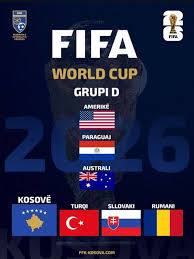
Kosova national team has reached the playoffs for the first time ever in only its third qualifying campaign. Kosova must win its next two matches: first, against Slovakia in Bratislava on March 26, then in Prishtina on March 31 against either Turkey or Romania. The magnitude of this moment cannot be overstated.
“Beyond the game, this moment marks a profound shift in the nation’s journey of external recognition with a powerful internal impact. Kosova symbols of identity, flag, anthem, team are no longer abstract representations of statehood – they are living shared experiences that define a new era for the country and its people,” says Juan Montoro, PhD candidate at the University of Lausanne, Switzerland.
He presented a write-up of his thesis at the 2025 ASEEES Conference in Washington DC, which caught my attention and prompted a few hours of phone conversations. Montoro believes that “the keyword missing in most of the narratives about Kosova is “its agency in sports.” “This matters because it challenges the idea that states first exist politically and only later symbolically. In Kosovo’s case, symbolic agency through sports preceded and helped consolidate political agency. There are at least two examples from world of sports such as Northern Cyprus and Western Sahara that have not been successful to get membership into international tournaments,” Montoro explains.
Adding that “Football, as a rule, is framed as a late byproduct of statehood. Kosovo is an exception. Sports in Kosovo functioned as a laboratory of agency long before political sovereignty was secured. Starting with parallel football leagues in the 1990s to strategic engagement with international federations, Kosova acted as a political subject even when it was denied formal recognition.”
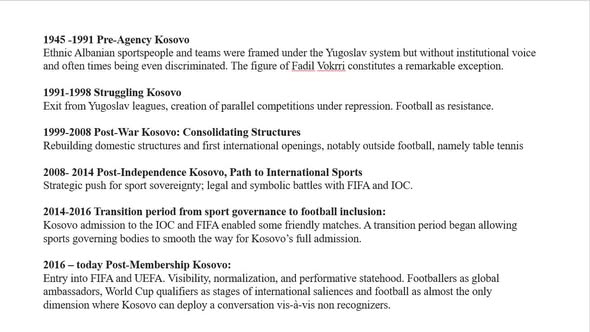
Originally, Montoro identified five phases of Kosova’s soccer history, but has added a sixth given the current developments, see chart.
Credit for where Kosova soccer is now belongs to several actors and figures across generations. The foundational courage of figures like Errol Salihu, who in 1991 broke away from the Yugoslav system and helped establish an independent Kosovar league under conditions of open threats, repression, and structural discrimination. Without that rupture, there would be no institutional memory to build upon. Secondly, the symbolic and political leadership of the late Fadil Vokrri was crucial in translating domestic resistance into international legitimacy. He understood that football was a diplomatic language. Thirdly, the current leadership deserves clear recognition. The Football Federation of Kosovo under Agim Ademi has provided institutional stability and long-term vision, while head coach Franco Foda has been remarkably effective in shaping a competitive team—strong both at home and away. His ability to scout, convince, and integrate diaspora players has been decisive in turning transnational identity into sporting strength. Clearly, the players themselves—many navigating complex diasporic trajectories—have transformed personal choices into collective achievement. Kosovo’s current position is the result of three decades of accumulated courage, strategy, and consistency.
Montoro’s interest in Kosovo sparked in 2019. He was part of team involved in a cultural relations project that explored how Kosovars perceived Spain and the Hispanic world, particularly in light of Spain’s non-recognition of Kosovo. It marked his first direct engagement with the country. Prior to that work, Montoro Master’s Thesis focused on Skopje and the construction of Macedonian national identity. What struck him about Kosovo, was that it was the first time I encountered a society where questions of recognition were lived realities, which means not finding your state, the country whose passport you carry with you in the international database of countries or even the airport,” says Montoro. Since 2019, he has collaborated on Kosovo-related projects, while seeing a gradual shift from cultural diplomacy to sports diplomacy. “In truth, by 2023, this line of research had stopped being just an academic interest and had clearly become a passion.” The engaging topic of conversation with his friends and colleagues gradually developed into his PhD thesis in Sport Sciences at the University of Lausanne. It focuses on Kosovo’s path to international agency through sport.
Montoro asserts that charting the history of Kosovo’s sporting history highlights some important takeaways:
Membership matters more than recognition, being in FIFA and UEFA transformed Kosovo from a contested case into a routine participant. Routine is powerful—it stabilizes legitimacy.
Agency is practiced, not granted. Kosovo acted as if it belonged long before it was formally accepted. Institutions eventually adapted to that persistence.
Symbolism outlasts political debates. Flags, anthems, fixtures, and rankings circulate faster and more durably than diplomatic statements.
Bonding with national symbols over time, initially viewed with skepticism by citizens, who favored attachments to Albanian symbols, over time, Kosovo’s state symbols developed precisely because those symbols had to be defended in international arenas, for instance when facing the protocols of non-recognition applied by countries like Spain. Repeated exposure and collective defense turn symbols into lived attachments.
Rooting for more than one national team. Dual loyalty is sports is a real thing. Speaking from personal experience, he says that as a Uruguayan with an Italian passport, father of Spanish children, and a PhD candidate in Switzerland, “I also feel represented by Kosovo.” Kosovo is a unique case in contemporary international sport and on that, the final whistle has been blown.
Juan Manuel Montoro, MA, Catholic University of Uruguay, is PhD Candidate at the University of Lausanne, Switzerland
Photo: Chart 6 phases of Kosovo Football
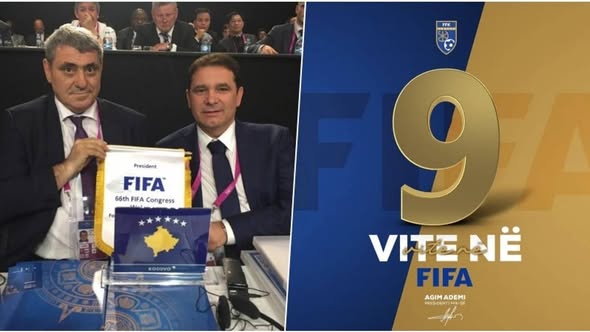
Fadil Vokrri Kosovo Full Membership at FIFA
FIFA Charter 2016: “Country – an independent state recognized by the international community”, FIFA Charter 2024: “Country – a state recognized as independent by a majority of members of the United Nations”.