• Home
  • Politics
  • Opinion
  • Culture
  • Sports
  • Economy
  • Interview
  • Reporting
  • Community
  • Vatra

Dielli | The Sun

Albanian American Newspaper Devoted to the Intellectual and Cultural Advancement of the Albanians in America | Since 1909

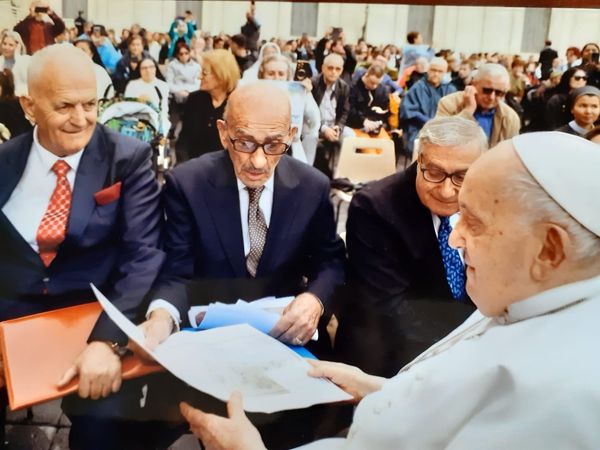
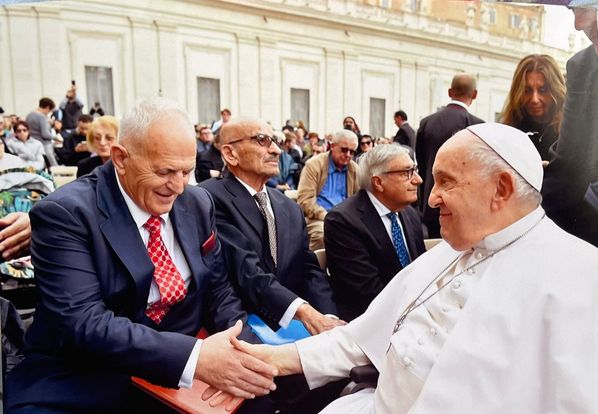
PAPA FRANCESKU PRITI NË VATIKAN PËRFAQËSINË E TË PËRNDJEKURVE POLITIKË SHQIPTAR ME 25 TETOR 2023 DUKE I FALENDERUAR DHE BEKUAR, DUKE U DHËNË MBËSHTETJE NDËRKOMBËTARE PËR KAUZËN E PAQES DHE DREJTSISË! 

October 30, 2023 by s p

Me datë 25 tetor 2023 një përfaqësi e të përndjekurve politikë personalitet të mbijetuarve të diktaturës komuniste u pritën në Vatikan nga miku i madh i shqiptarve Shenjtëria e tij Papa Francesku për martirizimin dhe përballjen me diktaturën enveriste  më të egër në Europë si dhe për kontributin e paqes që kjo klasë fisnike dha gjatë këtij tranzicjoni 32 vjeçar ku u përball me politika partiake antikombëtare, duke mbrojtur krimet e komunizmit dhe duke përçmuar sakrificat mbinjerzore të këtyre fisnikëve dhe Atdhedashësve.

Takimi ishte shumë  i përzemërt miqësor.Papa vlersoi qëndrimin tone paqësor si përçues të paqes gjatë këtij tranzicjoni të stërgjatur shqiptar. E njohtëm me krimet makabre të komunizmit dhe qëndresën tone heroike ndaj këtyre krimeve, ne i dorzuam hartën e burgjeve dhe kampeve të përqëndrimit  si dhe i sollëm në vëmendje se Shqipëria është i vetmi shtet në europë që jo vetëm nuk i ka denuar krimet por dhe sot kemi mbi 6000 shqiptarë të vrarë dhe të zhdukur kufomat nga  regjimi komunistë. Takimi zgjati 50 minuta dhe   ishte impresionues por dhe një qetsim shpirtnor për të zhdukurit e komunizmit.

Papa bekoi kombin shqiptar , dhe të gjithë të përndjekurit politikë për sakrificat,martirizimet ndaj diktaturës . Ai tregoi  një kujdesje dhe respekt  ndaj të përndjekurve politikë shqiptar dhe bekoi kauzën tone që ne si përçues të paqes dhe jo urrejtjes! Në mes kësaj bisede atërore i dorzuam letrën e At Patër Meshkallës që ja dërgonte Kryeministrit sadist dhe kriminel Mehmet Shehut kur ai shpallte Shqipërine si vend atesit në botë.  Kjo vizitë historike tregoi vëmendjen e Papës ndaj ish të përndjekurve politikë përball heshtjes  kriminale të politikbërjes  shqiptare për 32 vite pluralizëm, 

Jemi i vetmi vend në Europë që skemi denuar krimet staliniste të diktatorit Enver Hoxhës. Jemi i vetmi vend  në Europë që pa asnjë moral njerzor kombëtar nuk kemi ndërtuar shtet të së drejtës, As nuk u skuqet fytyra politikanëve shqiptar që i kan shërbyer me zell diktaturës dhe në pluralizëm marri ofiqe e kërkojmë me çdo kusht të i fshehin krimet e komunizmit dhe të rehabilitojnë diktaturën me metoda e forma të ashtuquajtura demokratike, Mesazhi i qartë Imoral ishte kur në samitin e Berlinit zhvilluar në Tiranë  kjo klasë politike  shëndrroi   objektete  e Enver Hoxhës , në qendër në Tiranë  në objekte arti e teknologjie të cilat nuk  shërbejnë aspakt lirisë , as demokracisë dhe nuk janë mesazhe  të triumfit  të lirisë mbi shtypjen  siç pretenduan politikanët udhëheqës shqiptar shqiptar mikpritsa të këtij samite. 

Por është një vertetim Imoral të kësaj  klase politike  dhe drejtsisë së re  shqiptare  që pas 30 e ca viteve  të shembejs së murit të berlinit  që Shqipëria , në të vertetë , po përjetson atë të keqe komuniste , kriminale  duke u përpjekur  ta zbusë kujtesën  e komunizmit:  një sistem  politik  një partiak  të dështuar  dhe një ekonomie, gjithashtu të dështuar  dhe të korroptuar vendimi i autoriteteve shqiptare për ti shëndrruar  ish objektete e Enverit në objekte arti culture  nuk është  qëndrim moral i prerë për tu distancuar  nga e kaluara terrroriste dhe nga krimet e Enver hoxhës para kombit shqiptar para Europës  por është një zbutje e asaj kujtese të tmerrrshme  për 100.000 familje shqiptar , që në të vertetë paraqet  një dështim  moral dhe një mungesë karakteri të kësaj klaase politike. Fatkeqësisht  gjatë 33 viteteve postkomunizëm  tregoni se ju si   klasa politike shqiptare  e këtij vendi , pa dallim , kini vendosur që në përjetsi  të kujtohet diktatori ma i egër i Europës Enver Hoxha në Shqipëri. Por ju siguroi se nuk do ta gëzoni.

Vizita historike  bekimi dhe mbështetja e shenjtërisë Papa Franceskut  për të përndjekurit  politikë shqiptar  është një këmbanë alearmi për ju politikan shqiptar që kërkoni përjetsimin e diktatorit. Bekimi i Papa  Franceskut  me 25 tetor për kombin shqiptar është lumturia shpirtnore  për të  demokracinë dhe paqen. Nuk ka paqe pa drejtsi , nuk mund të ketë drejtsi pa kërkuar t”falun  nuk mund të kete falje pa të verteten..Kështu na mësonte Papa Wojtila në vitin e pare të pluralizmit shqiptar 1993.

Presidenti

Besim NDREGJONI

Filed Under: Analiza

What makes a good leader?

October 28, 2023 by s p

Albin Kurti/

What makes a good leader? This short, five-word question seems simple on its surface. But that superficial simplicity masks the deep theoretical complexity and practical importance of the topic at hand. Since we’re in a university setting, we shouldn’t attempt to hide that complexity. Rather, we should embrace it. So I won’t try to give a conclusive answer to the question I have posed. I will instead offer some personal reflections on the topic, drawing on insights from the fields of philosophy and history. I will then close by talking about what our Government is doing to help our citizens — especially our young people — become even better leaders in the future, across a variety of fields.

The complexity of what makes a good leader stems in part from an ambiguity in the very concept of goodness. On the one hand, goodness can refer simply to effectiveness in achieving certain defined aims. So, for example, a good knife is one that can cut things effectively; a good watch is one that tells time accurately; and so on. But on the other hand, goodness can also refer to certain moral qualities, such as when we say that someone has a good character, or has performed a good act. This moral notion of goodness is conceptually distinct from the notion of goodness as effectiveness.

The concept of goodness is often applied not only to objects or personal qualities, but also to social roles. In the case of some of these roles, the two notions of goodness we identified above can clearly come apart. For example, a good spy is simply one that performs his or her intelligence-related tasks effectively. Whether the spy is a morally good person is a completely separate question. To answer it, we must evaluate the cause for which he or she works, as well as his or her motives for doing so.

But in the case of some other social roles, we cannot so easily separate effectiveness from moral qualities in our evaluations. For instance, being a good father or a good friend is not just about being effective at performing certain tasks. It also requires having certain moral qualities of character. These qualities are associated with the ethical ideals of what it means to be a good parent or a good friend.

So, what about being a good leader? One might initially think that leadership falls under the first category: A good leader is simply one who is effective at attracting and maintaining a set of followers. In this view, in order to judge whether someone is a good leader, there’s no need to evaluate the moral goodness or badness of the aims he or she pursues, or the methods used to achieve them.

This, I think, is a mistake. Some of the most destructive figures of the twentieth century — Hitler, Stalin, Pinochet, Mao, Milosevic — were certainly effective at attracting and maintaining followers. Indeed, their effectiveness in this regard was as terrible as it was devastating. But it would be incorrect to call them good leaders, precisely because they were moral failures. Just like friendship and parenthood, good leadership is a fundamentally ethical ideal.

But what precisely does that ethical ideal consist in? Or, to go back to our original question: What makes a good leader? The ethical ideal of a good leader brings together two essential qualities: a pragmatic effectiveness at attracting and maintaining followers, combined with a principled commitment to a just cause. On this account, both qualities are essential to good leadership: Pragmatism without principle is empty; principle without pragmatism is fruitless.

This ethical ideal of leadership — the unity of pragmatism and principle — is perhaps best exemplified in American history by the 16th President of the United States, Abraham Lincoln. Lincoln is, of course, best known — and most beloved — for his Emancipation Proclamation, issued in the midst of the Civil War. That Proclamation officially declared an end to slavery in the rebellious states.

Lincoln was a lifelong personal opponent of slavery. He once wrote that “if slavery is not wrong, nothing is wrong.” So you may be surprised to learn that as a political matter, he stood firmly against the elimination of slavery at the beginning of the Civil War. He did this for clear pragmatic reasons: If Lincoln had called for the end of slavery so early on in the war, he would have immediately lost the support of the loyal slave states, which were essential for military success. He would also have lost the backing of the majority of American voters — even in the North, where racism was still widespread. In other words, taking a strong stand against slavery from the beginning would have made it impossible to win the war — for both military and political reasons.

Thus, Lincoln was exceedingly careful to cast the war not as a quest to end slavery, but as a battle to preserve the Union and defend democracy. In his Message to Congress on July 4, 1861, he highlighted that the purpose of the war was “to demonstrate to the world that those who can fairly carry an election can also suppress a rebellion; that when ballots have fairly and constitutionally decided, there can be no successful appeal back to bullets; there can be no successful appeal except to ballots themselves at succeeding elections. Such will be a great lesson of peace, teaching men that what they cannot take by an election, neither can they take it by a war.”

Even the Emancipation Proclamation — which was issued more than a year and a half after the war began — was not explicitly based on slavery’s wrongness or injustice. Instead, Lincoln argued that the Proclamation was a measure that was necessary for winning the war: Freeing the slaves would motivate them to fight for the North, and it would also prevent the South from exploiting the slaves to sustain its own war effort. Again, this legal reasoning was offered for primarily pragmatic reasons: Lincoln knew that if he tried to end slavery purely on the grounds of its injustice, he would cripple democratic support for the war. And the Supreme Court would likely have blocked his measure anyway: At that time, the practice of slavery still enjoyed explicit constitutional protection. Casting the Proclamation as a necessity of war was designed to overcome that obstacle.

All of this shows that Lincoln was a brilliantly effective politician: He knew precisely how to attract and maintain enough democratic support to achieve his stated aims of preserving the Union and defending democracy. Calling for the end of slavery at the beginning of the war might have been morally satisfying. But paradoxically, it would have prolonged slavery’s existence indefinitely, by making the war impossible to win. Citing the wrongness of slavery as the legal basis for the Emancipation Proclamation would also have been satisfying. But doing so would have undermined both its legal justification and its political viability, thereby defeating the purpose of the Proclamation in the first place. The course that Lincoln took was — at least arguably — the most effective possible way to achieve his political aims. And that effectiveness was essential to his being a good leader. Without being effective at maintaining consistent political support for his cause, he would still have been a morally admirable person. But as a leader, he would have been a failure.

But as we have already noted, effectiveness is a necessary but not a sufficient condition for being a good leader. Lincoln’s example teaches us this as well. His embodiment of the ideal of leadership had a moral quality that went far beyond mere political effectiveness. Despite the purely instrumental grounds of the Emancipation Proclamation, Lincoln adamantly rejected the idea of returning the freed slaves back to servitude after they were no longer needed for the war. Thus, he wrote: “If [the slaves] stake their lives for us, they must be prompted by the strongest motive — even the promise of freedom. And the promise, being made, must be kept.” Lincoln kept his promise: In order to eliminate forever the possibility of re-enslavement after liberation, he lobbied heavily — and successfully — for the Thirteenth Amendment to the Constitution, which ended slavery in the United States, once and for all.

But imagine if Lincoln had not kept his promise. Imagine if he had sent the slaves back to their prior condition after they were no longer necessary for the achievement of his political aims. He would still have been a remarkably effective politician — effective at maintaining the popular support necessary to keep fighting the war, and eventually to win it. But the re-enslavement would have been a moral disaster — and, I would argue, a failure of leadership. Once again, both qualities are essential in a good leader: pragmatic effectiveness and moral principle.

If a good leader is one who is both pragmatically effective and morally principled, what makes a great leader? One might be tempted to say that a great leader is one who is even more effective and even more principled than a simply good one. That is accurate enough, but we can say more. For the truth is more profound: What makes a leader great, I would argue, is the willingness to sacrifice his or her own interests for a greater cause. In other words, great leaders are so dedicated to their principles — and so determined to defend those principles in the most effective way possible — that they are willing to damage their personal interests in order to do so.

Lincoln’s greatness as a leader manifests itself in precisely this way. As the presidential election of 1864 approached, he was clearly on track to lose. Barely two months before the vote, the President himself wrote the following dispiriting message to his Cabinet: “This morning, as for some days past, it seems exceedingly probable that this Administration will not be re-elected.” Some of Lincoln’s political allies urged him to postpone the election — and to cite the ongoing Civil War as a pretext for doing so. But Lincoln refused, as a matter of principle: How could he claim to be fighting a war to defend democracy, if he was himself unwilling to submit to the judgment of the people? By refusing to use the war as a convenient excuse to delay the election — by being prepared to accept his own defeat at the ballot box — Lincoln showed just how deep was his commitment to democratic principles. Of course, we now know that Lincoln’s political fortunes changed quickly for the better. He was decisively re-elected on November 8, 1864 — the first time in world history that a national election was organized in the midst of a civil war.

What, then, is our Government doing to produce pragmatically effective and morally principled leaders in the future? First and foremost, we are striving every day to set an example of what principled leadership looks like in a free, democratic society. In our two-and-a-half years in office thus far, we have made internationally recognized progress in the areas of human rights, democracy, and rule of law. This year, Freedom House ranked Kosova as third in the entire world for year-on-year democratic progress. The World Justice Project has ranked Kosova first in the Western Balkans on rule of law, and second in the world for the greatest improvement in rule of law, over the course of 2022. In Transparency International’s Corruption Perception Index, we have improved 20 places in the past two years. We’ve also improved 22 places in Reporters without Borders’ Press Freedom Index. And we’re ranked first in the Western Balkans in the V-Dem Institute’s Electoral Democracy Index. The 2022 country report of the EU Commission confirms that Kosova has stepped up its efforts to fight corruption and strengthen democracy and rule of law. In other words, now more than ever, we are demonstrating that it is possible to lead the country both effectively and morally.

At the same time, we’re ensuring that Kosova’s remarkable economic success — with a record 7.9% average GDP growth over two years — is shared as widely as possible. In doing so, we are improving social solidarity and fostering a society-wide notion that we all have an obligation to care for — and to even sacrifice for — one another. For example, the World Bank has ranked Kosova first in the Western Balkans for the largest fiscal package (as a percentage of GDP) to help citizens cope with the recent food and energy crisis. 842 million Euros have been redistributed through these schemes, as well as in support packages to help citizens deal with inflation. We’ve also increased public-sector salaries and significantly reduced the gap between the highest and lowest salaries from a ratio of 20 to 1, to 4.78 to 1. We’ve introduced child-care subsidies for families with children up to 16 years of age. And thanks to our “Government for Families” employment program, nearly 1,500 additional families have at least one member with a job — 603 of them women. We’re showing that leadership is not about exploiting political power to hoard benefits for oneself. Rather, it’s about harnessing that power for the benefit of all citizens — especially those most in need.

Aside from serving as a moral example for citizens, our Government has also made significant investments in Kosova’s education system. We want to ensure that all young people have a fair opportunity to develop into effective leaders in their chosen fields — especially young women and other traditionally disadvantaged groups. Thanks to our efforts, public higher education in Kosova is free of charge for the first time ever. Furthermore, we’ve disbursed approximately 4,000 scholarships for students, including 2,900 in STEM fields. In Kosova, women already make up half of all STEM students, compared to 17% in the European Union. We’ve also disbursed 500 scholarships for pupils from the Roma, Ashkali, and Egyptian communities. And we’ve successfully inaugurated a dual-education system, with 12 curricular profiles in 21 schools across 13 municipalities.

These investments and initiatives are only a limited sample of all that we are doing today to produce the leaders of tomorrow. But this is also just the beginning. With our ongoing and constantly improving efforts in the areas mentioned above, I am confident that Kosova’s best days — and its best leaders — lie ahead of it.

Filed Under: Analiza

Remarks by Ambassador Ferit Hoxha at the Security Council meeting on UNMIK – Kosova

October 24, 2023 by s p

23 October 2023/

I welcome the President of the Republic of Kosova, Vjosa Osmani, and the Prime Minister of the Republic of Serbia, Ana Brnabic, to this meeting.

I thank SRSG Ziadeh for her detailed briefing.

Mr. President,

Let me start with some good news, despite a somewhat blurred horizon during these last months.

In January of next year, the people of Kosova will, like every other nation in the continent, enjoy the freedom of movement in the Schengen area, a process long overdue.

Visa liberalization and increased human mobility have proven to have a huge transformative power everywhere. This is part of the rapprochement with the EU’s freedoms and its core values, which Kosova, a functioning and ever-strengthening democracy, has fully embraced.

Mr. President,

When we speak about the still unresolved relations between Kosova and Serbia, and after the divergent views expressed here, it is always important to put things in their right context.

In a not too distant past, Kosovo and Serbia have been part of an ensemble that no longer exists.

The dissolution of former Yugoslavia was cruel and brutal. The Kosova chapter, in 1999, had nothing in common with a difficult divorce.

The separation of Kosova and Serbia went through the worst, with war crimes and crimes against humanity; the death of countless civilians that mass graves continue to reveal to this day; through mass torture and widespread rape that can never be forgotten. It required an international intervention, to stop atrocities and open a new page for the entire region.

Needless to say, it has left behind bitter memories that are hard to erase, wounds not easy to heal, and scars that are still visible, including as many as 1,600 persons still unaccounted for.

It is undeniable, in the course of the last two decades, the region has gone a long way to overcome the demons of the past. It has largely succeeded, but there is still work to do.

I was surprised, to say the least, listening to the Prime Minister about her analysis of the situation in Kosova. I checked the title of the meeting to make sure that we were not by any twist of chance in a meeting about Syria.

None of those three key elements she mentioned is reflected in the report of Secretary General; none in the report of the OSCE or in the Eulex report.

There may be problems and issues like everywhere, including for lack of wearing the seatbelt or turning right on the signal, but no one can, in full honesty, deny that there are laws, modern laws; there are institutions, democratic institutions and there is due process, equally for anyone in Kosovo.

Colleagues

No matter how hard we may try, we cannot undo the past and its miseries.

But, despite everything, we must move on and be forward-looking, as President Osmani said, turning pain to strength.

This has been and continues to be Albania’s investment.

It is a fact that a quarter of a century later, the Western Balkans are no longer the Balkans; and balkanization has been replaced with Europeanisation. Because the region has reconnected with its core identity, Europe.

It is upon this conviction that I profoundly believe that despite the bitter past, the region has reached that transformative point when, in our part of Europe like elsewhere in the continent, there is only talk of progress, cooperation, compromise, free movement and open spaces, connectivity with little or no borders; talk of a common destiny with far more positive prospects than worrying aspects.

For the first time in our long and troubled history, there is a clear pathway to a common future, individually and collectively, which was once again confirmed in a very convincing and committing way last week in Tirana, during the 10th EU-Western Balkans Summit in the framework of the Berlin Process, the first ever organized outside the EU.

We need to hold firm to it, not let it slip, not waste it.

Precisely because if we don’t, the demons of the past or any incomprehensible of the present, may be tempted to jeopardize it.

Let me briefly share my worry.

It was mentioned, on 24 September, Kosova experienced what was thought inconceivable.

The SRSG called it a security incident. The European parliament qualified it a terrorist act.

A military commando carefully prepared and trained in Serbia, ready to fan the flames of the worst in the history of the Balkan, attacked Kosovo and its institutions, killing a police officer in the line of duty.

Thanks to the prompt and professional intervention by the Kosovo police, the damage was contained and the terrorist mob was quickly pushed back.

The more we learn about it, the more difficult it becomes not to see a pattern between these events and the déjà vu elsewhere, remember the story of heavily armed men in help of a fabricated narrative of a discriminated minority.

The enterprise failed miserably – and that is the positive side – but its intentions remain frightening nonetheless – and that is the deeply worrying side.

There were no fighting sides as we heard here. There was a terrorist mob on one hand, and the police of an independent country preserving law and order.

Critical questions regarding their plans, preparations, training, support, and financing need to be answered. Quickly and convincingly.

Because explanations provided so far, including today, fall short of credibility, even more so when criminals who should have been immediately condemned, were rushily honored.

Glorification of criminals, genocide denials, and efforts to revisit history are wrong and unacceptable. They undermine the principles of justice, ethics, and morality and have detrimental effects on the society of the countries concerned as they run against reconciliation efforts.

Therefore, a full and thorough investigation is needed, as called for by many, including a recent resolution of the European parliament, so that truth and responsibility are properly and clearly established, perpetrators held to account, and make sure that no one thinks again to go down that slippery and dangerous slope.

Mr. President,

This is the last meeting on this issue during our term in the Council.

Next year will mark a quarter of a century since Kosova and Serbia parted their ways and for good.

They will never be under the same roof again, but they will always be neighbors, and we hope, good neighbors.

Reconciliation is always an arduous and complex process. It must rely on good will and vision, but also on accountability and justice. It may be fragile, especially knowing that extremists, surfing on populist narratives, may try to derail it.

In February of this year, Kosova and Serbia agreed to normalize relations with a binding agreement brokered by the EU, concluded in Ohrid and Brussels.

While implementation has been slow, we welcome the establishment of a Joint Monitoring Committee. It should be fully functioning. We also welcome the Declaration on Missing Persons, a crucial process to bring closure to the pain of those concerned.

The agreement must be implemented, quickly and fully.

Those who stand in the way of the process of the dialogue of normalization between Kosovo and Serbia must be resisted.

Those who think that they can solve issues with manipulations, threats and war games must be sanctioned.

Those who want to gamble and hijack the future of Serbia and Kosova as neighbors leaving in peace and cooperation, which impacts the entire region, must be held to account.

It is imperative to look forward, project forward, and move forward.

Let me end by quoting John Fitzgerald Kennedy who has said that “Change is the law of life. And those who look only to the past are certain to miss the future”.

Too much time has been already lost; too much precious time has been wasted.

Failure to move on has a price, a price tag that will be billed to the next generation.

The EU mediated dialogue is therefore a priceless opportunity that is to the detriment of no one, but to the benefit of all:

Kosova, Serbia and the entire region.

Thank you.

Filed Under: Analiza

RREZIQE TË RINJ, PROVA E PARISIT

October 23, 2023 by s p

Nga ALDO CAZZULLO – “Corriere della Sera”, 19 tetor 2023  – Përktheu: Eugjen Merlika     

Një luftë në bregun lindor nuk mund të mos pasqyrohet në gjithë Mesdheun. Hapet balli evropian i krizës. E Vëndi kyç është Franca. Dhjetë aeroporte të mbyllura. Pallati mbretëror i Versajës i zbrazur tri herë nga alarmi terrorizëm, ashtu sikurse edhe Luvri. Mësuesi i Arras-it i goditur me thikë nga një terrorist islamik. Ndalimi I manifestimeve pro-Palestina. Ambasadat e kryeqyteteve të ish perandorisë koloniale, nga Tunizi në Beirut, të rrethuara nga manifestuesit; mbas grushteve të shtetit kundërfrancezë në Shtetet afrikanë, në të cilët ushtria kishte ndërhyrë për të luftuar Isis-in. Shënjat janë të gjitha. E gjëndja politike është po aq serioze.

Emmanuel Macroni ka në shtëpi gjashtë milionë myslimanë, shumë prej të cilëve mjaft të zemëruar për hesap të tyre, siç është parë në këtë verë me kryengritjen e rrethinave. Dhe ka një të djathtë skajore, ndërmjet Le Pen dhe Zemmour, përtej 30%. Mos të tallemi: mund të jenë edhe sovranistë (a thua se Macroni nuk është) dhe kundër globalistë; por karburanti i Marinës e i partisë së Erik Zemmour-it – që jo rastësisht quhet Ripushtim – është imigracioni, veçanërisht ai islamik.

E majta është e ndarë: socialistët kanë prishur aleancën me Jean-Luc Mélenchon, kundër perëndimor I bindur, që nuk pranon t’a quajë Hamasin një grup terrorist.

Një fitore e Marine Le Pen mbas tre vite e gjysmë do të ishte një shpërthim përfundimtar, veç fundit të Bashkimit Evropian. Kërkimi i një tjetër Macroni, në të djathtën republikane ose ndërmjet reformistëve, nuk është një gjë e lehtë: trashëgimtari i caktuar dukej se ishte kryeministri Eduard Filipi, por një sëmundje që e ka bërë të bardhë e pa qime i ka minuar, nëse jo fizikun, përfytyresën publike. Por piskama nuk është 2027, është e sotmja.

Makroni ka ndaluar manifestimet për të shmangur skenarë të luftës civile. Por kjo masë është edhe shenjë dobësie. Policia franceze është e stërvitur me sheshet. Në këta raste rrjeshtimet lejohen, përkufizohen, lihen të shfryjnë. Nëse ndalohen është sepse nuk ka siguri kontrollimi.

  Bashkësia hebraike franceze, shumë më e gjërë se ajo italiane, ka frikë. Prej kohësh ka filluar dyndja drejt Izraelit. E megjithë se ka shprehur një kryeministër – Larent Fabius – një ministër Ekonomie – Dominique Strauss – Kahn, që pa skandalin seksual do të ishte bërë president – dhe intelektualë të një prestigji të pamasë, nga Claude Lévi-Strauss tek André Glucsmann, po ndjehet gjithënjë e më shumë e lënë mënjanë nga Republika.

Islami francez  është I vështirë të deshifrohet. Nuk ka më një kryetar. Njëherej për t’a kuptuar shkonje në Xhaminë e Madhe të Parisit, të ndërtuar në stilin e Marrakeshit si një shpërblim për ushtarët myslimanë të rënë në luftën e parë botërore, pastaj strehë e sigurtë për qindra hebrej  sefarditë gjatë pushtimit nazist, e të ofronin një çaj me mente nga rektori Dalil Boubakeur, që sapo kishte qënë në Elize e përforconte miqësinë së pari me Mitterrandin pastaj me Chirakun (më shumë me të dytin se me të parin: Dalil Boubakeur ishte një votues i madh i së djathtës, ndërsa i ati Hamza, i lindur në një oaz të Saharasë algjeriane dhe rektor para tij, ishte socialist). Kur mbas Bataclanit shkuam të flasim me rektorin e xhamisë së Corcouronnes, periferia nga vinte njëri ndër masakruesit – i njohur nga një pjesë e gishtit tregues të majtë – gjetëm përballë një poncpilat që ngriti duart duke thënë: “Nuk kam qënë un që kam radikalizuar vrasësit, por një imam shumë më I fuqishëm”. Kush? “Imami Google”. Donte të thonte se propaganda e terrorit ose dhe vetëm e urrejtjes kundërperëndimore udhëton në Rrjetet.

Parisi tragjikisht është mësuar me terrorin islamik. Mbrëmjen e së premtes tre tetor 1980, në fillim të Shabbatit, një bombë vrau katër hebrenj në sinagogën e rrugës Kopernik; proçesi është nisur vetëm këtë vit e i pandehuri i vetëm Hasan Diab, ka ikur në Kanada. Më 9 gusht 1982, në orën e drekës, një grup i Abu Nidalit hodhi një granatë në restorantin hebraik më të famshëm të Marais, Jo Goldenberg, e pastaj hapi zjarr: gjashtë të vdekur, 22 të plagosur; sot n’atë vënd është një dyqan xhinsesh. Më 17 shtator 1986 një bombë përpara një magazine të madhe të Montparnasse lë shtatë të vdekur e 55 të plagosur. Në verën e vitit 2005, e para e Shirakut president, Gia algjeriane shkaktoi viktima në Harkun e Triumfit në sheshin e Bastijës, për të ndëshkuar mbështetjen franceze Algjerisë laike që me çmimin e shumë gjaku ka shtypur Algjerinë integraliste.

Më 19 mars 2012 masakrohen tre fëmijë të shkollës hebraike të Tuluzës nga Muhamed Merah, një ujk i vetmuar me një telekamera në gjoks, që vret edhe rabinin që u përpoq t’i mbronte; këtu vjen në mëndje ati  Zhak de Jesus , prifti katolik i filmit “Mirupafshim djema”, i internuar dhe i vrarë në Mauthausen sepse kishte fshehur fëmijtë hebrenj nga nazistët. Një tjetër meshtar, ati Zhak Hamel, u ther në altarin e Rouenit më 26 korrik 2016.

Dy ditë mbas masarës së redaksisë në Charlie Hebdo, fajtore sepse kishte qeshur me Muhametin, Amedy Coulibaly – ish grabitës e shpërndarës droge, i radikalizuar në burg – sulmon një supermerkat kosher, vret katër hebrenj e plagos katër të tjerë. Franca shkruan në Rrjet e në muret “Un jam Charlie”; komiku antisemite Dieudonné, i dënuar për shakatë e një shijeje tepër të keqe mbi Shoah-un, bën dinakun e shkruan “Un jam Charlie Coulibaly”; përfundon në burg për mbrojtje të terrorizmit, i dënuar me dy muaj burg, shmang atë por përzehet nga Facebooku dhe Instagrami.  

Gjithë këtyre Franca u ka qëndruar e është kundërpërgjigjur. Edhe Bataklanit, edhe plojës së 14 korrikut 2016 në Nica. Në disa vështrime, Parisi mbas goditjes  është bërë më njerëzor, më pak krenar, më i vetëdijshëm për caqet e tij. Houllebecq, shkrimtari i “Nënështrimi”, ka pranuar – në një intervistë me korrespondentin tonë Stefano Montefiori – se e ka tepruar me alarmin islamik; në fakt ideja e një presidenti mysliman të zgjedhur nga e majta që detyron sharian do të kishte qënë një gjetje e efektëshme letrare, por politikisht ishte marrëzi.

Tani Parisi përgatit një takim që lajmërohej shumë i bukur por që vërtetohet i ndërlikuar, në njëqind vjetorin e filmit “Çaste lavdie”. Ishte çështja Rusi, që mund të ishte zgjidhur me formulën  që më 1980 i lejoi Italisë të merrte pjesë në Lojrat e Moskës, të bojkotuara nga amerikanët: as hymne as flamuj; zyrtarisht skuadra ruse nuk ekziston, marrin pjesë atletët e veçantë. Por nëse lufta e Gazës vazhdon  e zgjerohet, si do të kundërveprojnë Vëndet arabe? Çfarëdo vetoje mbi Izraelin natyrisht nuk do t’ishte e pranueshme; por për Francën një tendosje me ish kolonitë e saj (Algjeria juridikisht nuk ishte një koloni, ishte një krahinë franceze, si Provenca dhe Borgonja) do t’i çonte Lojrat drejt një shkatërrimi, pa mbajtur parasysh shtrëngesat nevojshme për sigurinë. Dramat e vërteta të kësaj krize natyrisht janë të tjera; por shpresa e dialogut duhet të mbahet e ndezur në çdo mënyrë, e në muajt e ardhëshëm Parisi do të jetë ende një herë në qëndrën e luftës e të paqës.

“Corriere della Sera”, 19 tetor 2023                  Përktheu: Eugjen Merlika     

Filed Under: Analiza

T’kurrja e Shqipërisë, pa elitë, pa rini

October 20, 2023 by s p

Nga Agron Prebibaj/

Bisedë me Dr. Sokol Frroku.

Për mëse një shekull truri i kombit shqiptar, madje vetë kolosët tanë kanë emigruar drejt perendimit, kjo jo për luks, por më shumë mos përballja me trurin e klaneve politike të kohës, të cilat intelektualin e konsideronin si disident e armiqësor i politikës, të cilëve më parë ju thuhej edhe frigacak, por sot kombi me ata krenohet, ata të para viteve ’90-të i ka pishtarët për lirinë e kombit tonë, ata nga Amerika e Brukseli etj, me shikim e gjithçka për kombin.

Por akoma sot pas 33 vite demokraci, vëndi me pasuritë e jashtëzakonshme e cila nisën me 450 km vijë detare, me fusha, me kodra, male, me thesarin nëntoksor që nga minikodrat e myzeqesë, thesar nëntoksor i kudo ndodhur në veri, por vazhdon në kodra e male, deri në alpet shqiptare, duke specifikuar edhe turizmin detarë e promovuar fort atë malor.

Por sot Shqipria ndodhet nën hemoragji totale të elitës kombëtare, po na ikën truri i kombit, po na ikën rinia, duke parakaluar çdo vënd ballkanik.

Sot në Shqiperi, si në asnjë vend të Europës, kultura qytetare dhe profesionaliazmi, janë të urryerit e të sulmuarat nga klasa jonë politike, ndaj dhe largimi për të rinjēt u bë detyrim ose burg në Shqiperi për një shkelje të çfarë’doshme, ndërsa rrjedhja e trurit nga intelektuali që braktis vëndin vjen përballë mospëfilljes që bën zyrtari shqiptar ndaj qytetarit.

Po doktori i ekonomisë z.Sokol Frroku, çfarë kishte që iku familjarisht në Amerikë; mirë se erdhi me 8 vite vonesë në universitet, pasi ishte familje bajraktari-antikomuniste, por ai qysh student “Pishtar i demokracicë”, por pasuron me bollek diplomimin universitar; atë të Agronomisë, Juridikut, për ta pasuar me fakultetin e Ekonomikut i cili merr edhe titullin dr.i shkencave dhe pedagog që nga viti 2008.

Dr.Sokol Frroku në ekonomi, por edhe me zyrë ligjore si avokat, eksperti ekonomik e ligjor i Ministrsë se Shëndetësisë & Ekonomisë, pedagogu nga 2008- 2018-të, braktis gjithçka familjarisht, përtej Oqeanit, emigrim i cili më ka befasuar, pasi Dr.Frroku kishte të ardhura të mira, e një shtëpi vilë në Tiranë.

Ndërsa biseda e pyetja ime e vetme për dr.Sokol Frroku vjen, përse ti e more këtë vëndim, a ju vjen keq që po na ikën truri i kombit:

Ndërsa zoti Frroku vazhdon përgjigjen me xhentilesën e tij: –

“Ka qënë një vëndimmarrje mjaft e vështirë, kur investon vitet me te bukura dhe me vitale te jetës në atë vënd që Zoti e ka bërë të mrekullueshem, dhe një ditë detyrohesh ta braktisesh për faktin se politikat denigruese të bëjnë të ndihesh i huaj në vëndin tënd.

Realisht më vjen shumë keq jo vetem për vete, por dhe për mijra intelektualë të tjerë që në një menyre ose në një tjeter, te diktuar nga keq menaxhimi i qeverisjes se vendit, niveli i ulet i sigurise publike, korrupsioni dhe krimi i organizuar e lëne Shqiperinë duke gjetur nje strehë tjeter për të ndertuar të ardhmen e tyre.

Eshte tronditëse kur shikon shifrat e emigrimit te trurit nga Shqiperia te publikuara nga

“FDI Intellegjence”.

Shqipëria renditet e 8-ta në rang global. Ajo është i vetmi vënd jashtë Afrikes për nivelin më të lartë të emigrimit të trurit, duke u krahasuar me Xhamajken, Palestinen, Somaline e Haitin.

Ikja e trurit ndikohet gjerësisht nga presionet politike dhe ekonomike.

Unë mendoj se askush nuk ikën me deshirë nga vendi i tij duke lënë të afermit, miqtë, shoket, profesionin për të cilin investohet aq shumë, por eshte sistemi politik i ndërtuar dhe korrupsioni që ka mberthyer çdo qelizë të ekonomisë së vëndit, papunësia dhe mungesa e besimit që e bëjnë rinine dhe intelektualet të ikin në vënde të ndryshme, atje ku mëndojnë se ndihen të vlerësuar e mbase dhe të plotësuar.

Po tu referohemi shifrave të INSTAT-it, 43 mijë te rinj dhe intelektual u larguan nga Shqipëria vetëm në vitin 2022.

Ky fenomen tashmë është kthyer në plagë sociale për vëndin.

Largimi i intelektualve dhe sidomos rinisë ka pasoja të rënda dhe të pa riparueshme.

Shqiperisë, po i ikën pjesa më e mirë e kapitalit njerezor, lokomotiva e zhvillimit social dhe ekonomik të vendit.

Edhe ikja e njerzëve të arsimuar do të ketë një kosto të jashtezakonshme në progresin ekonomik dhe social të vendit. Por kur të mungojnë kushtet për të zhvilluar karrierën dhe për të ndjekur vokacionin tënd nuk të mbetet gjë tjeter vetëm të largohesh.

Çdo person që ka emigruar, po ta pyesësh të thotë se ka deshirë për t’u kthyer sa më shpejt në vëndin e tij por me shpresë që të ketë stabilitet politik dhe ekonomik, më shumë siguri, më pak korrupsion e më shumë barazi”. Kështu ka përfunduar prof. Frroku me opinion e tij të argumentar edhe me shifra.

Filed Under: Analiza

  • « Previous Page
  • 1
  • …
  • 120
  • 121
  • 122
  • 123
  • 124
  • …
  • 974
  • Next Page »

Artikujt e fundit

  • Nga cikli “Humanistë të shquar shqiptar shek XV-XVIII” Mikel Maruli (1451-1500)
  • PERSE SHQIPERIA MBYTET NE DIMER E DIGJET NE VERE?
  • Ohri dhe Diplomacia e Kosovës
  • DR. ATHANAS GEGAJ: GJERGJ KASTRIOTI-SKENDERBE
  • VENDI IM
  • RUGOVA E SHNDËRROI DURIMIN STRATEGJIK NË MEKANIZËM SHTETFORMUES
  • Shkolla Shqipe Vatra në Tampa zhvilloi takimin e radhës
  • FESTA E SHQIPTARËVE
  • Lekë Matrënga, jo vetëm poeti, por dhe mësuesi i parë i shqipes
  • BETIMI I VEDAT GASHIT I ADMINISTRUAR NGA PRESIDENTI CLINTON
  • GAZETA AUSTRALIANE (1929) / NJË RRËFIM PËR GRATË E SHQIPËRISË
  • VATRA SHPALL KUVENDIN E PËRGJITHSHËM ZGJEDHOR MË 25 PRILL 2026
  • VATRA, EMËR I SHENJTË, AMANET I BREZAVE, FLAKA QË NUK SHUHET KURRË…
  • Raif Hyseni, Merita Halili, Ansambli MSU ngrejnë peshë Festivalin e Artë të Muzikës dhe Valleve Ballkanase 2026
  • 17 janar, Gjergj Kastrioti Skënderbeu, forma që mban një komb, kur koha kërkon ta shpërbëjë!

Kategoritë

Arkiv

Tags

albano kolonjari alfons Grishaj Anton Cefa arben llalla asllan Bushati Astrit Lulushi Aurenc Bebja Behlul Jashari Beqir Sina dalip greca Elida Buçpapaj Elmi Berisha Enver Bytyci Ermira Babamusta Eugjen Merlika Fahri Xharra Frank shkreli Fritz radovani Gezim Llojdia Ilir Levonja Interviste Keze Kozeta Zylo Kolec Traboini kosova Kosove Marjana Bulku Murat Gecaj nderroi jete ne Kosove Nene Tereza presidenti Nishani Rafaela Prifti Rafael Floqi Raimonda Moisiu Ramiz Lushaj reshat kripa Sadik Elshani SHBA Shefqet Kercelli shqiperia shqiptaret Sokol Paja Thaci Vatra Visar Zhiti

Log in

This website uses cookies to improve your experience. We'll assume you're ok with this, but you can opt-out if you wish. Cookie settingsACCEPT
Privacy & Cookies Policy

Privacy Overview

This website uses cookies to improve your experience while you navigate through the website. Out of these cookies, the cookies that are categorized as necessary are stored on your browser as they are essential for the working of basic functionalities of the website. We also use third-party cookies that help us analyze and understand how you use this website. These cookies will be stored in your browser only with your consent. You also have the option to opt-out of these cookies. But opting out of some of these cookies may have an effect on your browsing experience.
Necessary
Always Enabled
Necessary cookies are absolutely essential for the website to function properly. This category only includes cookies that ensures basic functionalities and security features of the website. These cookies do not store any personal information.
Non-necessary
Any cookies that may not be particularly necessary for the website to function and is used specifically to collect user personal data via analytics, ads, other embedded contents are termed as non-necessary cookies. It is mandatory to procure user consent prior to running these cookies on your website.
SAVE & ACCEPT