BY PROF. DR. GENC XH. KORTSHA/*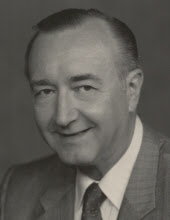 GENC X. KORTSHA – (16 FEBRUARY 1924 – 18 FEBRUARY 2016)
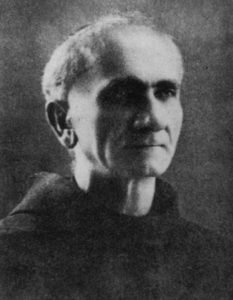 FATHER ANTON HARAPI, O.F.M. (5 JANUARY 1888 – 20 FEBRUARY 1946)/
Father Anton Harapi was a Franciscan of renown in Albania.
He was a distinguished man of letters, known for his integrity and love of people. He was loved in return by the poor and humble while the rich and powerful respected him and included him in their power calculations. When Germany invaded Albania after the Italian armistice of September 8, 1943, German authorities made a series of proposals. Albania could declare itself independent and neutral. It could determine its form of government without German interference. All Germany expected was free access to Greece that was time under German occupation. Should Albanians interfere in any way, the usual rules of German warfare would apply.
Albania adopted a form of government headed by a council of four regents representing the major geographic and religious groups in the country. Fr. Anton was asked to represent the Catholic portion of the population. He replied that he would accept the burden of office on condition that he received permission from the Holy See and would never be asked to sign a death sentence. Having received permission from the Vatican and given the exemption he had asked for, he accepted.
There was no guarantee, however, that he himself would be spared at the end of the war. In fact, several other Albanian personalities were asked to serve on the Council of Regents but had refused as they wanted no part of a political office that may earn them the enmity of the communists. Maintaining peace and order in Albania was a worthy cause – but not at their personal risk.
When the communists came into power and extended their control to the Albanian mountains, Fr. Harapi and Lef Nosi, another former member of the Council of Regents, sought refuge in Dukagjin. At one point, a Franciscan priest hid them in his rectory in Pult. Not long thereafter, a battalion of soldiers combed the area for enemies of the regime and pitched their tents in the church yard after searching it from top to bottom. For whatever reason, they skipped the corner room on the second floor occupied by Fr. Harapi and Lef Nosi. Following the search, several officers took up quarters on both sides of this corner room, unaware of their neighbors.
Then things got quite complicated. Communist troops tromped in and out of the rectory at all hours of the day and night but the food for the stowaways could be prepared only at regular mealtime lest anyone got suspicious. As it was dangerous to keep the food warm beyond mealtime, the housekeeper, who was in on the secret, would load trays with food, carry them to the corner room, and enter in view of anyone who happened to be in the hallway. Doing it quite openly and without apparent fear probably provided the best cover. This went on for as number of days. (Source: The Pastor of Pult, 1948-1949).
Finally, it was decided that for their own safety, the two ex-Regents had to leave, the sooner the better. A farmer was brought into the plot. He would come to the rectory with a mule and ask that a clergyman come to see the farmer’s wife who lay on her deathbed. Lef Nosi, who was an Orthodox layman, would mount the mule dressed as a Franciscan. Fr. Anton, disguised as a poor farmer, would walk the mule, while the real farmer would walk ahead to show them the way.
On the appointed day, the old farmer came in full daylight, tied his mule to a tree amidst the bivouacking soldiers, and entered the rectory. After a while, the farmer came out, followed by Lef Nosi and Fr. Anton in their disguises. Lef Nosi mounted the mule, Fr. Anton grabbed the reins and the strange procession left the courtyard undisturbed. Soldiers and officers alike made way for them and never asked any questions. The two ex-Regents, the mule, and their guide were on their way.
I don’t know how far they went or how many other hiding places the two fugitives visited afterwards. I know, however, that the day came when both Lef Nosi and Fr. Anton were somewhere in the mountains on a farm alone with a small boy. The rest of the family had gone to tend to their chores. The boy knew that the two elderly guests had to be protected from the communist forces. So, when he saw a communist patrol walking along the fence, he unleashed the dog. The dog attacked, and the soldiers shot the dog. Having become suspicious, they searched the premises. Except for the little boy, the house was empty. In one room, however, they found dentures soaking in a glass of water. They also found linen towels with the initials A.H. Could they stand for Anton Harapi?
Having found no one else in the house, the soldiers ran outdoors, fanned out and started combing the surroundings. A wooded area extended from the back of the house toward the mountains. If Fr. Anton had been hiding in the house, he could not have gone far. He would not have had time and, besides, he was an old man. The soldiers split into two groups and formed a large circle. Once they secured the perimeter, they began to move toward the center. Fr. Anton could hear them coming. Now they were within sight. When they were only about 100 ft. away, he stood up and threatened them, one hand grenade in each hand. The soldiers promptly disarmed him and arrested him.
During the summer of 1945, about nine months after Dad and I were jailed, the authorities brought Fr. Anton Harapi to Burgu i Ri (New Prison) in Tirana. About 12 of us were locked up in one room. Already in that room, seated on a simple field bed, was Fr. Anton Harapi.
Fr. Anton wore his Franciscan habit. He seemed rather short, with a thin, deeply lined face, a large bulbous nose, and two enormous ears. The dominant feature, however, were his deep sunk, light eyes that seemed to radiate with an inner light. In the days that followed, I would see these eyes question intently, brim with forgiveness, flash with contempt. Most of the time, they shone with friendliness. As we entered the room, he looked at us with his head tilted to one side, bird-like, calm, curious, and at peace. It was the peace of one who had seen and suffered much. It took a moment or two before he recognized Dad, Shuk Gurakuqi, and one or two others as we stood around in semidarkness. Fr. Anton, Dad, and Shuk Gurakuqi nodded to each other without words, as old friends who had fought the good fight for many years. Those who knew Fr. Anton less well gathered around him and made loud noises, as if to fill the gap that separated them with words.
Personally, I was delighted to see this legendary patriot but waited for Dad to introduce me. I did not know it then but we would spend 42 days together in that cell with Fr. Anton.
One advantage of being in isolation was that we had fewer spies among us. In our room we had only two, both former noncoms. Both were Catholics from Shkodër. And then, one day, something interesting happened. Fr. Anton had been celebrating daily Mass for a while. The nuns brought him bread and simple food every day. It always included boiled fruit except that now the fruit was in wine and not in water or syrup. When Fr. Anton celebrated daily Mass, all Catholics in the room attended except Shuk Gurakuqi, a former Secretary of Finance. One day, Fr. Anton asked him why he would not attend Mass. Shuk replied that he would not attend as long as the two informers participated and received Holy Communion. Fr. Anton called the two informers and read them the riot act! There would no longer be Mass for them until they repented, confessed, and stopped being informers. And all this was happening before Fr. Anton went to trial. It took courage to pit the helpless
Church against the relentless communist system. But Fr. Anton had plenty of courage.
I noticed from the beginning that Fr. Anton struggled three times a day trying to put drops into his ears. So, I offered help which he readily accepted. One day, as I was pulling his rather large ears before releasing the medication, I asked him teasingly whether he had ever suspected that the day would come when I would pull his ears three times a day. He looked up and said: “Why don’t you rather ask why I need these eardrops?” I had often wondered but had lacked the courage to ask. “All right, then, why do you need these eardrops?” That’s when he started to tell me the story when he and Lef Nosi had been hiding in the farm house and the little boy had unleashed the dog. He got to the point where he had confronted the soldiers with hand grenades in both hands. “Did you hurl them at the soldiers?” I asked. “How could I? I could not kill.” “Then why did you threaten them if you had no intention of following through?” I asked rather testily. “Because I hoped that they would shoot me on the spot and spare me what I knew would follow…” He stopped briefly. “Unfortunately, they jumped me and handcuffed me.”
He continued: ”Lef Nosi and I were arrested but separated almost immediately. I was brought to Shkodër and questioned repeatedly. At one point, they brought a generator into the interrogation room. They wrapped one lead around my genitalia and stuck the other one against one of my eardrums. They then turned on the electrical current. It hurt. Eventually, they perforated first one and then the other eardrum.”
That day he said no more. The rest of his tale came in bits and pieces over the next few days. ”I was questioned for quite a while,” Fr. Anton continued one day. “They wanted to know every detail of my stay in hiding. They wanted to know who had offered us refuge, who had taken us from one
hiding place to another, who had fed us, who had offered transportation or other support. Somehow, they forgot to ask about one man who had helped us and who is still alive and free. I fear that at my trial they will correct this oversight and ask me about him.”
“There is no need to tell them,” I blurted out. “Could you give them the name of someone who has died in the meantime?” “Are you saying that I should lie?” he challenged me. I kept my mouth shut but felt like saying: “What is such a lie compared to saving a human life?”
“There is no question that I will be killed,” Fr. Anton continued. My plan is to play dumb, offer myself as an easy target and make them forget about the farmer.”
In truth, I could not understand his reasoning. Not telling the truth under these circumstances did not appear sinful to me. But Fr. Anton had absolutely no doubt that this was the only way that he could save the life of a poor mountaineer who had sheltered him, at least for a while.
[After 42 days we were released from isolation and joined the rest of the prisoners. I was released from jail on December 17, 1945, after 13 months of incarceration, to the day.]
Meanwhile, toward the end of December or ion early January, Fr. Harapi was brought to public trial. As in the case of the Special Tribunal that had judged Dad and the first group of defendants, the court sessions were held at the Movie Theater Kosova. Admission was by special tickets available only to “true believers”. Depending on one’s viewpoint, those present were either the cream of the crop or the scum that had risen to the top of the revolutionary cauldron. Over the next few days and weeks, the audience would applaud or boo on cue, under the baton of the special prosecutor Bedri Spahiu.
While only a select few could attend the trial in person, everybody should be able to hear the proceedings. In fact, if anyone was anywhere on the streets in Tirana, loudspeakers at full blast made it impossible to avoid the communist rhetoric that blanketed the city center.
According to precedent, the trial would open based on a detailed script. The judges and the prosecutor would march on stage in military uniforms of subdued splendor, their splendor signifying the “glorious victory of the people” and the sartorial modesty to stress that these were no foreign conquerors but, rather, the worthy sons risen from the ranks of the people’s army who, single-handedly, had defeated the forces of Fascism and Nazism. Well, not quite, but that’s another topic. And now they were ready to mete out justice to the nation’s worst criminal, to Fr. Anton Harapi, representative of the treacherous Vatican, chief villain and architect of nefarious plans to rob the poor and give to the rich. True, the Franciscans were notoriously poor but they used religion, the opiate of the people, against the people themselves, i.e. the communists. All one had to do was look at the accused and hear the tale of his crimes. Anyone with a sense of
justice would rise to his feet demanding that the verdict be nothing less than death.
There were a few flaws in this scenario. When the judges and the prosecutor marched in, their uniforms were not exactly modest. After all, they were modeled after their Yugoslav counterparts who were no shrinking violets. More important was the court’s motivation, its political creed of how best to serve its masters in Belgrade who wanted Albanian patriots out of the way. And all this in the name of the Albanian people . . . When the members of the court climbed on stage, Chief Justice Koçi Xoxe was clearly identifiable by his golden rank insignia and his uniform that was bulging at the seams. Not so Bedri Spahiu, the prosecutor, who looked thin and bilious. Perhaps this came with the job.
Then they brought in the prisoner: Thin, ascetic looking in his simple Franciscan garb, with clear, luminous eyes. There was no sign of arrogance or false humility. Fr. Anton looked as he had lived, at peace with himself, with the serenity of one whose convictions and faith had coincided with his chosen life. Those in the theater could not help but notice the contrast between the accused and his judges. There was one major detail that did not fit into the official scenario. It became obvious from the very beginning, as soon as the prosecutor started to lay his traps.
“Fr. Anton, did Francesco Jacomoni ever visit your parish in Mirdita?”
“I am not sure.”
“Fr. Anton, I am not asking about some simple farmer. I am asking you about a visit by the Viceroy of Albania, the personal representative of King Victor Emanuel III, about the man who ran Albania for a number of years on behalf of the Italian invader.”
“I don’t seem to recall.”
The prosecutor decided to change his approach: “Have you seen this picture before? Isn’t this the viceroy with his sycophants? Aren’t you standing next to him, surrounded by the notables of Mirdita?”
“Well, I’ll be!”
The presiding judge started to laugh so hard that he hid his face behind the notebook in front of him, shaking silently, lest he appear undignified. The audience took the cue and erupted in loud laughter.
The prosecutor turned toward the public with a smirk on his face, as if he had slyly engineered the whole scene.
“So then, the viceroy did visit you, after all.”
Fr. Anton was following his script to the letter. It was painful to watch or rather, for us on the street, to listen to a dialog that portrayed the priest as a bumbling old man. He had told me before my discharge from prison that he would do anything to save the life of the one farmer who had sheltered him and whose name had escaped the communists so far. That he, Fr. Harapi, knew that he would be executed but that he would fight to the last on behalf of his farmer friend, even at the risk of incurring undeserved ridicule. And all this because he, Fr. Anton, could not lie, even to save a life.
Needless to say, the enemies of the communist regime, including the silent majority, were greatly disappointed in Fr. Anton’s stand in court. They had expected a courageous, a brilliant defense of the nationalist position. Instead, they heard a ‘feeble-minded’ old priest make a fool of himself. It hurt me that I could not speak up and tell the truth. What’s worse, even Mom who knew the truth, felt Fr. Anton had left everyone down. I tried in vain to point out Fr. Anton’s self-sacrifice. Here was a man whose sole treasure on earth was his reputation as a man of high integrity and intellect. And here he was ready to sacrifice his reputation to save a humble farmer’s life. Greater love has no man than to give his life for his friend. But Mom wanted no part of it. What she had wanted and expected was a splendid defense and a sharp attack, yes attack, against the communist pack of lies by a man of strong mind and unbending will, by someone
willing to die on his feet.
The trial ran its course. Fr. Anton and the other defendants, Lef Nosi and Maliq Bushati, were found guilty and were sentenced to death by a firing squad. There was the usual appeal for clemency and the equally expected denial of the appeal. A few days later, the sentence was carried out and all three defendants were executed on the outskirts of Tirana.
Thirty-two years later, Fr. Primus Ndrevashay told me what he had heard from Peter Freeman, commander of the firing squad that had executed Fr. Harapi and the other two prisoners. Peter Freeman, by the way, was the name the man had assumed when he started a new life ij Canada. Freeman had told him that when they shot the three prisoners, two had fallen into the pit while Fr. Anton had vanished from sight, surrounded by a cloud. The commanding officer had walked over to where the bodies lay and had drawn his gun to administer the coup de grace. The bodies of Lef Nosi and Maliq Bushati lay crumpled on the ground while Fr. Anton Harapi’s remained out of sight, surrounded by the cloud. It took several minutes for the cloud to dissipate. And then, and only then, did the soldiers see the body of the poor one of St. Francis lying in the majesty of death.
August 18, 2002 Genc X. Kortsha
Shenim nga Fritz Radovani:
Ky material asht nxjerrë nga “Korespondencë me z. Genc X. KORTSHA” pa asnjë ndryshim nga origjinali, per botim në ditlindjen e At Anton Harapit O.F.M.
Mendoj, se asht mirë, të njihen nga Rinia ynë Këta kolosë të Popullit Shqiptar.
Melbourne, 4 Janar 2017.