• Home
  • Politics
  • Opinion
  • Culture
  • Sports
  • Economy
  • Interview
  • Reporting
  • Community
  • Vatra

Dielli | The Sun

Albanian American Newspaper Devoted to the Intellectual and Cultural Advancement of the Albanians in America | Since 1909

Archives for February 2020

A jemi më të lumtur tani që e telendisëm edhe Henri Çilin?

February 29, 2020 by dgreca

Nga Enkel Demi/

Nuk e them dot që e kam shok Henri Çilin, megjithëse e kam hasur qysh në fund të viteve ’90 në gazetën “Koha Jonë”. Pavarësisht kësaj, e njoh mirë dhe ja kam vërejtur me vëmendje sipërmarrjen në fushën universitare në botime, në media.

Henri Çili është njeri i bërë vetë. Ai është i vetërealizuar nga thembrat në krye, gjë që shpesh mund t’ia ketë bërë të vështirë vetëkontrollin apo përmbajtjen në sinoret e të panjohurit. Për pasojë, kjo në Shqipëri ngjall urrejtje të verbër.

Shpesh kam patur dallime idologjike me të, meqenëse liberalizmin e kam parë përherë si lakmus majtist në gjirin e së djathtës. Nuk më kanë pëlqyer disa ide të tij për mandate vazhdimësie pushteti, kurse tani që është për ndërprerjen sak të këtij pushteti, për koiçidencë i vënë prangat.

Ani, këto janë ide, qëndrime, por asgjë e keqe. Nuk më ka lidhur kurrë puna me këtë njeri, por mendoj që nuk i ka bërë ndonjë gjëmë këtij vendi, as ka marrë kënd në qafë.

Lajmin e arrestimit të tij e mora qysh të enjten mbrëma dhe nuk e fsheh që u trondita. Në mëngjesin e së premtes pata fatin e keq të lexoja me detaje për çfarë e kanë ndaluar.

Këtu fillon arsyeja e këtij shkrimi; tek gjykimi që ne të tjerët marrim përsipër të bëjmë qysh në 24 orët e para të ndalimit. Kam vërejtur ngazëllim, mallkim, sharje, shfryrje dufi kudo që hap kompjuterin apo çoj telekomandën.

Lajmin e përhapi një pronar mediash, i cili për hir të së vërtetës të tërë katandinë e tij e ka vënë, sepse është në shërbim të qeverisë. Ai i çeli udhën “shtyllës së turpit”, në të cilën kujt i ra udha andej parí nuk ngurroi të pështyjë.

Henri Çili mund të ketë bërë faj, megjithëse nga ajo dosje të krijohet përshtypja se prej dëshpërimit i është futur një rruge të rrezikshme. Por, të paktën Henri Çili nuk ka shtënë pushkë, nuk ka bërë drogë, nuk ka thithur kokainë, nuk është bandit, nuk na del në ndonjë vend që t’ia shtrëngojë lakun në fyt shqiptarëve që t’i cysë të hyjnë në grevë urie për bukën e gojës.

Po more, i ka hyrë detit në këmbë dhe ai e di pse.

Gjithë kjo urrejtje ndaj tij me gjasë është valvul shkarkimi që gjindja ka ndaj pasunarëve në këtë vend. Shumica e tyre dërrmuese u ka hipur në shpinë, por a është Henri i këtillë?

Kjo pyetje për ca kohë duhet të mbesë pa përgjigje, se ku i dihet Çili mund të jetë përfshirë në një keqkuptim të madh ose duhet lënë të ndjekë fatin e tij.

Të gëzosh se hyn në burg një njeri i sipërmarrjes, medias, botimit është mjerim i madh shpirtëror.

Njeriu nuk mund të jetë i lumtur prej xhelozisë sikur me qenë hienë që zgërdhihet, kur luani rrëzon përtokë një antilopë.

Or’ kot me pyet tani që e mallkuam edhe Henri Çilin a ndjehemi më mirë? A i sosëm hallet?-Telegraf.

Filed Under: Analiza Tagged With: Enkel Demi

FENOMENI ÇILI DHE VEMJET INTELEKTUALE QË MBANTE ME BUKË

February 29, 2020 by dgreca

Nga Kolec P. Traboini/

        Le të paraqesim një vështrim ndryshe nga mediokriteti mediatik dhe kastat sunduese, të cilat pompojnë mediat me gërvima si teneqe të prishura për rastin e një arrestimi të bujshëm që më kujton shprehjen “Moj këmborë e madhe, qumështi gjysmë okare!”

Rasti Henry Çili, pronar i Universitetit Europian të Tiranës dhe botues i gazetës MAPO (në mjaft raste kritike e veprimeve të qeverisë socialiste), i arrestuar nga policia për tentativa korrupsioni të zyrtarëve të lartë të drejtësisë, pastrim parash e tjera llogje prokurorësh provincialë, është krejt ngjashëm si në një roman të famshëm të Honore De Balzakut “Iluzionet e humbura”. Një provincial me emrin Lysien Shardon kërkon të sfidojë qarqet e larta e shoqërinë mondane parazite në Paris; por krimbat parisienë e shfrytëzuan, e hëngrën, e varfëruan dhe e bënë për gijotinë.

       Henri Çili, ky emër ndërruar për lavdi, që ëndërronte të futej në rrethin e fisnikërisë intelektuale, ky Lysien Shardon shqiptar,  ato 750 mijë euro që do merrte nga një fshatar fatkeq nga Lazarati (që kërkonte të lehtësonte sadopak dy djemtë e vet në burg për vrasje),  nuk i donte për vete. Çili mbante një profesorat me bukë, ndër ta deputetë e njerëz të politikës së lartë, funksionarë partish, kalemxhi gazetash e portalesh, sofistë, deri dhe ish ministra, të cilëve ua botonte librat dhe u jepte para nga ai thesi,  që policia e quan në daljet e veta publike “para të pista”. Gruri i pistë pra paskan bërë bukë të bardhë për llafeologët e Tiranës. E këta e morën në qafë. A e dini sa thjeshtë vishej Çili? E keni parë nëpër Tiranë, apo në veprimtari kur bënte ato konkurset e letërsisë? Ashtu siç vishen sot në të gjithë fshatrat, apo njerëzit e thjeshtë në qytet, pa asnjë tendence për tu dukur, kur, ata që mbante me bukë, pedagogë-demagogët pra, pispilloseshin, ngrefoseshin e kakarisnin si gjeli mbi mullar të bajgave, veçmas nëpër panelet televizive, ku i jepet mend gjithë botës nën shembullin e ndritur të gjithologut tonë lavdimadh e mendjengecur. Ambicia e Henry Çilit nuk qe pasuria, por hyrja në rrethin e të zgjedhurve, në hollet e famës të këtij kryeqyteti këtu në një provincë të Europës, ku populli rron në breg të detit e në kulm të mjerimit. E ka thënë Noli aq mirë… Pra atij i duheshin parat për tu bërë i zgjedhuri i shoqërisë së lartë, i vip-rripave të Tiranës,  ku nuk mund të hysh aq lehtë nëse nuk je në agjendën e kryeujqërve të këtij vendi. Çili punoi e gaboi (nëse vërtetohet korrupsioni) për tu siguruar mirëqenie vemjeve intelektuale, të cilat dhe po e groposin sepse Çilit i mbaruan paratë. Kish kohë që thoshin është trokë. Mbyll gazetën e hap gazetën. Kësisoj lëkura e tij vlente vetëm për propagandë leshiste, kinse luftohet krimi në këtë vend, ku regjistrohen deputetë e ministra në bashkëpunim me njerëzit e hurit e litarit në vjedhje votash. Ku kriminelët, kryetar bandash, që kanë vrarë me dhjetëra njerëz, të dënuar për krimet me burgim të përjetshëm, lirohen dhe i punësojnë në Bashki. Hajt pra se po dënohet Çili. Të zërë vendin e atij kryekriminelit që u lirua nga burgimi i përjetshëm për vrasje të shumëfishtë dhe u punësua në Bashki.  E nga kush do dënohet? Nga vetë kriminelët aspak më të mirë se Çili që e anatemojnë pasi e ropën

Pyetjen se me kë po e bënte aferën e korrupsionit në drejtësi Henry-Naim Çili, mos e bëni se ai ( emri i të cilit nuk thuhet), po punon natë e ditë për reformën në drejtësi, ky yll karvani që kurrë s’po ndrin.

“Jalla shofero,  ku je tue shkue?!” thotë populli i thjeshtë në një këngë të vjetër vulgare mejhanesh. Gjithologu në timon nuk përgjigjet se mban mbi supe peshën e rëndë të gjithë globit, si Anteu…maje plehut.

Filed Under: Analiza Tagged With: Fenomeni Cili, Kolec Traboini

LETARGJI E PAPRANUESHME E KOMUNITETIT SHQIPTARO-AMERIKAN…

February 29, 2020 by dgreca

– PËR DIJENI SEKRETARIT TË SHTETIT TË SHBA, Z. MIKE POMPEO-/

Nga Elida Buçpapaj/

Dikur Komuniteti Shqiptaro-Amerikan ishte shembulli i veprimit dhe ndërgjegjesimit kombëtar!

Dikur Komuniteti Shqiptaro-Amerikan zjente nga veprimtaritë në të mirë të çështjes shqiptare.

Dikur Komuniteti Shqiptaro-Amerikan ishte i pari që sensibilizonte administratën Amerikane për çfarë ndodhte nën pushtimin serb në Kosovë.

Dikur Komuniteti Shqiptaro-Amerikan, në qershorin e vitit 1988, me në krye Joe DioGuardi ishte pjesmarrës nëpër tubimet masive të Shqiptaro-Amerikanëve në të gjithë SHBA, përpara Kombeve të Bashkuara në New York, në Washington DC përpara Shtëpisë të Bardhë dhe Kapitol, për të dëshmuar terrorin e shqiptarëve të Kosovës nën makinerinë e shtetit milosheviçian!

Mendoni, ishte viti 1988.

30 vjet më parë, pa u rrëzuar ende Muri i Berlinit, Komuniteti Shqiptaro-Amerikan kishte një ndërgjegjësim që të mbushte me krenari!

Komuniteti Shqiptaro-Amerikan e bëri të njohur Kosovën e panjohur në SHBA dhe ndikoi që administratat e SHBA dhe gjithë Presidentët e SHBA prej George Bush Senior të kthenin sytë nga çështja shqiptare, si çështje që lidhet jo vetëm me intersat Amerikane por edhe me parimet dhe vlerat e lirisë!

Komuniteti Shqiptaro-Amerikan ndikoi që Atij të cilit i ndrin sot shpirti në Parajsë, Presidenti George W.Bush Senior t’i bënte kriminelit Milosheviç, flakëvënësit të Ballkanit, Paralajmërimin e Krishtlindjeve!

Lidhja Qytetare Shqiptaro-Amerikane, pjesë e Komunitetit Shqiptaro-Amerikan e krijuar më 1989, sponsorizoi në Kongresin Amerikan Seancën e parë dëgjimore dhe historike të të Drejtave të Njeriut të shkelura në Kosovë nga Serbia, që u shoqërua me një drekë historike në Sheraton Hotel në NYC ku morën pjesë 2700 Shqiptaro-Amerikanë me sloganin “Liri dhe demokraci për Kosovën!”

Ish-Kongresmeni DioGuardi, 30 vjet më parë, në vitin 1990 bashkë me Kongresmenin Tom Lantosh vizituan Kosovën dhe e denoncuan terrorin e ushtruar si një Geto të Milosheviçit të kohëve moderne alla “Warsaw Ghetto” .

Komuniteti Shqiptaro-Amerikan, me emra të ndritur sollën në Washington DC gjithë elitën politike të trevave shqiptare, duke filluar prej Ibrahim Rugovës e me rradhë, po ashtu i çuan në Kosovë emrat më të spikatur të politikës Amerikane në Kongres dhe Senat si Bob Doll, John McCain, Joe Biden etj etj etj.

Prej rrëzimit të diktaturës në Shqipëri deri tek çlirimi i Kosovës, deri tek ndalja e segregacionit maqedono-sllav dhe Marrëveshja e Ohrit 2001 në Maqedoni, gjithçka që lidhet me lirinë dhe paqen afatgjatë në rajon dhe më gjatë, e ka burimin në SHBA, tek Komuniteti Shqiptaro-Amerikan!

Vdekja e Rugovës pati ndikim negativ në arritjet e SHBA dhe Perëndimit në Kosovë.

Pas shpalljes të pavarësisë më 2008, Kosova rezulton në stanjacion për shkak të lidërshipit, Hashim Thaçit, ose Gjarpërit, i përlyer me krime.

Në Shqipëri, po ashtu sistemi demokratik rezulton i kapur, kryeministri aktual Edi Rama ka uzurpuar të gjitha pushtetet, tani është duke shëtitur nga Washington DC në Moskë si kreu i OSBE-së, duke uzurpuar edhe rolin e Ministrit të Jashtëm të Republikës të Shqipërisë.

Ndërsa Komuniteti Shqiptaro-Amerikan fle.

Kur i del gjumi, Komuniteti Shqiptaro-Amerikan, nis e organizon gala qejfi alla Hollywood, ku ndan tituj e grada, sikur punët e shqiptarëve në Ballkan të shkojnë fjollë dhe Komunitetit Shqiptaro Amerikan tani i ka mbetur që të shpërndajë trofetë e fitores. Merreni me mend, nuk ka mbetur asnjë prej letargjikëve pa u dekoruar si “Nderi i Kombit”!

Ndërsa Joe Dioguardi, ai që është vërtetë Nderi i Kombit jo.

Nderi i Kombit ka qenë edhe Komuniteti Shqiptaro-Amerikan deri sa luajti rolin që i takonte!

Tani Komuniteti Shqiptaro-Amerikan është duke luajtur rol shumë negativ! Sepse nuk po vepron fare! Indiferenca, injorimi apo heshtja janë po aq të dënueshme sa ata që po i lënë shqiptarët në kaos, pa shtete të së drejtës, nën diktaturën e varfërisë dhe po i detyron që si zgjidhje të shohin vetëm ikjen nga Atdheu në emigracion.

****

Në Ballkan Shqiptarët nuk janë pushtues;

në Ballkan Shqiptarët nuk janë agresivë;

në Ballkan Shqiptarët nuk kërkojnë territoret e tyre që tashmë i ka shteti serb, sipas epikës historike shqiptare ku thuhet se Kosova fillon prej “Mollës së Kuqe”, në Nishin e sotshëm-

apo në Greqi, kur më tepër se një shekull më parë, Selaniku ishte pjesë e Shqipërisë;

në Ballkan shqiptarët të ndarë në gjashtë shtete, Shqipëri, Kosovë, Maqedoni, Mali i Zi, Serbi, Greqi

kërkojnë vetëm një gjë:

të jetojnë si popull i barabartë mes të barabartëve, në familjen e popujve europianë, të integruar në BE dhe NATO!

Në Ballkan Kombi Shqiptar është faktor paqeje, ndërsa Perëndimi ka një qasje aspak koherente me veprimet e veta, që kur ndërhynë në Kosovë prej 1999 deri në 2008 dhe Maqedoni, në 2001.

Serbia nga ana e vet, me oreksin mitoman për copëtim të Kosovës, ka organizuar diplomacinë serbe me apetitet e Milosheviçit dhe me aleatët e saj tradicionalë, duke iu kundërvënë vendimeve dhe angazhimeve të Perëndimit, SHBA, NATO, BE për çka kanë vendosur në Kosovë. Serbia e ka kthyer dialogun në farsë, pasi lobon për anullimin e njohjeve të shtetit të Kosovës. Por e keqja është se në krahun e vet ka dy liderë të komprometuar sikur janë Hashim Thaçi dhe Edi Rama, të cilët për të qendruar në pushtet, përdorin të gjitha mjetet dhe janë të gatshëm ta kthejnë Ballkanin rishtas në “fuçi Baroti”.

Megjithëse këtë skenar makabër serb e kuptojnë edhe fëmijët në barkun e nënave, Komuniteti Shqiptaro-Amerikan që merr atribute lidërshipi, bën ahengje dhe nuk do që t’ia dijë për rrezikun që i kanoset sot Ballkanit!

Komuniteti Shqiptaro-Amerikan nuk proteston kur në Washongton DC vjen Edi Rama, me kostumin e vjedhur të Ministrit të Jashtëm të Republikës të Shqipërisë!

Komuniteti Shqiptaro-Amerikan nuk proteston ndërsa Edi Rama pritet nga Sekretari i Shtetit i Shtetit i SHBA dhe kur kthehet në Shqipëri thotë, “unë e kam mik Vangush Dakon dhe nuk më bëhet vonë se DASH, Ministria që drejton mikpritësi i tij Mike Pompeo e ka shpallur non grata familjarisht.

E pra kjo nuk është fytyra liridashëse e Komunitetit Shqiptaro-Amerikan në SHBA!

Kjo nuk është fytyra e bukur që ka patur Komuniteti Shqiptaro-Amerikan që ne e njohim prej të paktën 30 vitesh.

Kombi shqiptar ka nevojë të përhershme që Komuniteti Shqiptaro-Amerikan të jetë në avantguardë për të ruajtur dhe mbrojtur integritetin territorial dhe sistemin demokratik në Shqipëri që rezulton i kapur, në Kosovë që sot të ngjall shpresë por i rrezikuar dhe në Maqedoni që rrezikon inercinë duke patur model Shqipërinë dhe Kosovën.

Komuniteti Shqiptaro-Amerikan duhet të zgjohet dhe të marri rolin që ka patur, duke e perfeksionuar atë rol!

Shqiptarët nuk janë kot populli më amerikandashës në botë!

Sepse duan lirinë dhe demokracinë e vërtetë!Po në Ballkan, historia ka treguar se ka zjarrvënës, lirivrasës dhe demokracivrasës!

Filed Under: Analiza Tagged With: Edi Rama, Elida Buçpapaj, Hashim Thaci, komuniteti shqiptaro-amerikan, Mike Pompeo, Serbia

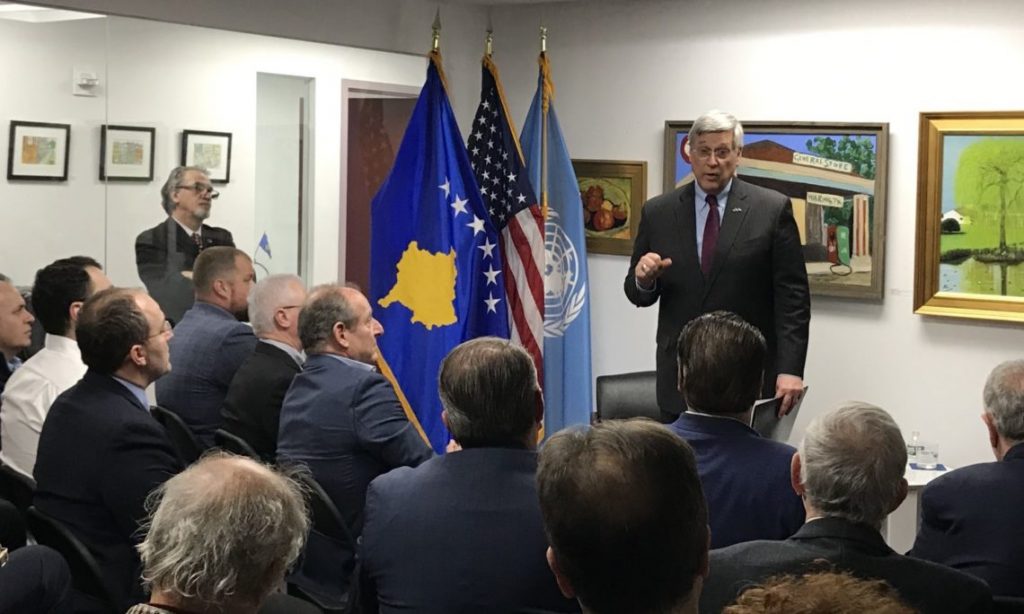
Ambassador Kosnett’s Remarks at the Kosovo Consulate General, New York…

February 29, 2020 by dgreca

Ambassador Kosnett’s Remarks at the Kosovo Consulate General, New York, February 28, 2020/

(As Prepared)/

Ladies and gentlemen, good afternoon.  Let me begin by thanking Consul General Teuta Sahatqija and her staff for hosting us today.  They do a tremendous job building ties between our two great countries.  It is a great pleasure to be here with old friends and new.

We are here today because we share an appreciation and respect for both Kosovo and the United States.   In this spirit, I would like today’s engagement to be an open conversation.  So I will try to keep my opening remarks short to allow more time for discussion.  I’d like to start us off by offering my perspective on three topics:  how I see Kosovo today; America’s priorities in the relationship; and, finally – how members of the Kosovo diaspora in the United States can support the effort to build a better future for all the people of Kosovo.

First, then, Kosovo today.  Some of you know that I first served in the U.S. diplomatic mission in Kosovo, all too briefly, in 2003.  When the opportunity arose to return to Ksovo in 2018, this time with my wife Alison, we jumped at it.  We’ve been back in Kosovo a little over a year now, and it has been a wonderful experience.  Last year on July 4, I was privileged to mark the 20th anniversary of our diplomatic presence in Kosovo by presiding at the opening of our new Embassy in Pristina – possibly the most advanced, most environmentally sound complex of buildings in Kosovo.  The Embassy is more than a modern office for the Americans and local staff who work there.  It is a meeting place for people of all communities – and a physical manifestation of America’s commitment to an enduring partnership with Kosovo.

Each year, the American people give millions of their tax dollars to support programs and activities in Kosovo.  These programs build the capacity of the government, ensure the rights of minority groups and the most vulnerable members of society, enhance the capacity of the legal system, and help businesses meet international product standards and gain access to new markets.  We also partner with the government on initiatives to encourage greater participation of women in the economy, support entrepreneurs from all Kosovo’s diverse communities, create a stable and secure supply of energy, and better prepare young people to be the engines of future growth.  We support the development of the courts and police as well as the Kosovo Security Force.

I know how appreciative Kosovo citizens are for the assistance they’ve received from the U.S. these past two decades.  But I’ve also learned that the relationship is very much a two-way street.  Kosovo, for example, has shown courage and leadership in its approach to combating terrorism and confronting violent extremism, often more than much larger and richer countries.

The United States is assisting Kosovo to build the capacities of the Kosovo Security Force not just for defense, but so Kosovo can make good on its promise to begin to pay back its allies for the military assistance it has received, and to reach its aspirations of becoming a peacekeeping force and security contributor.

Recently, Kosovo has shown to the world that this security force is able to provide aid to others in need.  When the tragic earthquake struck Albania, Kosovo’s emergency response corps worked hand-in-hand with our crisis response team, sending help to its neighbor within hours of the quake.  I see this as an example of how Kosovo is maturing into a supportive regional partner.

It is true that our governments will not always agree on every issue.  That is normal in a mature partnership.  There may be times when relations between governments become strained, and there are consequences.  I imagine we will get into some current topics during the discussion session.  And I’ll talk a bit about how our economic assistance is set to evolve.  But I have no doubt the fundamental bond between our two democracies is and will remain solid.

Let’s talk about our shared priorities.  When my Embassy colleagues and I talk about America’s priorities – and our hopes – for Kosovo, we group the issues into three categories: peace, justice, and prosperity.

By peace, I mean better relations between Kosovo and its neighbors, particularly Serbia, but also peaceful, neighborly ties among ethnic communities within Kosovo.  For all Kosovo’s citizens should have the right to live in freedom without fearing their neighbors – and also without fearing that if they reach out a hand of friendship to their neighbors from another community, someone from their own community will object.

And peace, by this definition, is closely related to justice.

When people in Kosovo raise the topic of justice, I find they they are usually talking about fighting corruption and building a judicial system and a police force people trust.  That is vital.

But I would broaden the definition of justice to include adherence to the rule of law; equal and respectful treatment for all citizens regardless of gender, ethnicity, or sexual orientation; and equal opportunity for all. Supporting those efforts is important to my government and to me – and we put a lot of energy into helping to improve Kosovo’s judicial and law enforcement institutions.  The results have been encouraging, but we have a long way to go, including in removing improper political influence from the judicial system.

This would be a good point to say that building a just society isn’t easy.  When I speak in Kosovo, I take pains to note that as America tries to build that just society – “a more perfect union,” to borrow another phrase from our founders –we are still struggling with the legacy of a long and painful history.  Both Kosovo and the United States are works in progress.  We need to work together and learn from each other to build societies dedicated to inclusion, to “liberty and justice for all.”  “Liberty and justice for all” also means economic opportunity for all – what our founders called “the pursuit of happiness.”

And that brings me to our third priority: supporting Kosovo on the road to prosperity.  The economic picture, many of us would agree, is mixed.  Too many of Kosovo’s people – in government offices, in some non-governmental organizations, and even in some corners of the private sector – have become overly reliant on foreign aid and remittances, imagining that the current high levels of assistance and remittances will last forever.  Too many times someone working in government or business has pitched a sound idea to me, then asked which U.S. Government agency is going to pay for it.

Let’s be clear – we are proud of the work we do in Kosovo and the programs we support, but U.S. Government efforts are focused on ensuring Kosovo can stand on its own two feet and on having governmental institutions deliver and respond to citizens’ needs.  America provides Kosovo with assistance not as a permanent subsidy, but to help institutions and sectors to become more self-sufficient.

In agriculture, for example, USAID focuses on investing in pilot projects to show farmers how to move up the value chain.  Even this sort of aid isn’t designed to last forever.  As USAID Administrator Green highlighted recently at the United Nations, the purpose of foreign assistance is to end the need for its existence.

There is also a fair amount of magical thinking about foreign direct investment.  People who should know better ask when the U.S. Government is going to make General Motors or Ford invest in Kosovo, sidestepping the question of how to make Kosovo a country businesses want to invest in.  This sort of complacency crosses political party lines and generational lines too.

As the youngest nation in Europe, Kosovo should be poised to benefit from a demographic dividend that contributes to a more prosperous future, as more and more citizens enter the work force and pay taxes that can be used to provide wide social benefits.  But an estimated 220,000 citizens left Kosovo during the last decade.  That is roughly 10 percent of Kosovo’s population.  Without making a concerted investment in retaining and building talent, and supporting private sector led growth, Kosovo can’t expect the change needed for a positive future.

Let’s talk about remittances.

At present, remittances from people like you are holding Kosovo’s economy together.  Twelve percent of Kosovo’s economy is derived from economic activity supported by money flowing in from outside.  But it’s not real investment.  Sadly, the vast majority of remittances are used to purchase goods manufactured abroad and imported into Kosovo.  Much diaspora money goes into building vacation homes.  Better, but still not the same as investing in an ongoing commercial activity.  And let’s be frank – the whole remittance structure is a house of cards.  America’s experience with other diaspora communities is that remittances fall sharply a generation after the initial wave of emigration.

So – Kosovo’s future is dependent on its ability to expand private sector growth and to begin to produce some of the goods it now procures from abroad with diaspora dollars.  Private sector growth will create jobs.  It will help keep Kosovo’s youth in Kosovo and offer real alternatives to seeking jobs in an already bloated public sector.

And all is not bleak.   First of all, while many talented people have left Kosovo – including people sitting in this room – many of the most talented have chosen to remain.  When I compare the Kosovo I knew in 2003 to the Kosovo of today, I am  especially impressed by a rising generation of young people – educated, multilingual – who could be successful anywhere in the world but are choosing to try to build a future at home in Kosovo.

Young people in the tech sector in particular speak of learning lessons from other small countries that have achieved economic success by unleashing their private sector – countries like Israel, Singapore, Estonia, Slovenia.  Many are reaching across community boundaries, even across borders,  to make friends and do business with people from other communities.   They are not afraid of seeking foreign money – but as investment capital, not aid.

Gjirafa is a great example.  A small investment from USAID coupled with the dynamism of its young founder, Mergim Cahani, had a catalytic effect.  Now Girafa is the leading online retail marketplace in Kosovo, and a leader in search as well.

It is the desire to see Kosovo develop its economy, and become more economically self-sufficient, that is driving our current effort – led by Special Presidential Envoy Ric Grenell – to inject energy into the process of improving Kosovo’s relations with Serbia.   By encouraging

initiatives to improve air, road, and rail links between Kosovo and Serbia, we hope to energize the economies and business opportunities on both sides of the border, improve the free movement of people, and build connections that will lead to greater human cooperation and economic growth.  We’ve developed these initiatives in consultation with business leaders in both countries.

And now I move on to my last point.  Kosovo’s future relies, in the end, on one factor alone—the commitment of its citizens to build that future.  I encourage you to think about how to structure your own support toward the goal of Kosovo’s self-sufficiency. 

So, what else can you do?  In fact, a lot.  I am not here to endorse particular programs or businesses, but rather to raise awareness about the plethora of opportunities out there for you to play a role in Kosovo’s future success.  So, with that caveat in mind…

You can also invest in an existing business, or even create your own.  Just look at the success of a diaspora’s investment in Jaha Solar.  The company not only created jobs in Kosovo but was also a smart business decision for investors.  Jaha’s German-quality solar panels produced in Kosovo compete on the European market with prices that are competitive with China.

You can follow in the footsteps of the Shkreli, Lukaj, and other families by sponsoring a scholarship for Kosovo’s youth.  You can support Kosovo non-profits, such as Teach for Kosovo – modeled after Teach for America – which is looking for funding, but also for fellows to work in Kosovo’s schools.  You can follow the example of BONEVET’s founder Vllaznim Xhiha, who built his fortune abroad but established a foundation with programs run by local youth, encouraging the success of Kosovo’s future generations.

Perhaps a more modest commitment?  Many diaspora members take extended vacations in Kosovo (and truth be told, at neighboring beaches).  Take some time from your vacation to mentor local businesses and organizations and provide them with expertise and innovative ideas.  One good place to start if you are looking for such opportunities is Germin, which puts diaspora around the world in touch with local businesses and organizations looking for services.  Sharing your knowledge and know-how can be priceless for a Kosovo business.  A small tech startup run by Kosovo youth won a contract with Lufthansa through contacts of a diaspora.  In fact, they report that 90 percent of their clients come from diaspora.

And your influence does not have to be constrained to charity or the economic sphere.  There are examples of how people like you who have spent time in other political and economic systems “send” back a component of these values when they return to or interact with their countries of origin and have a positive impact.  They contribute to changing outdated attitudes about issues such as gender equality, protection of civil rights, and inclusion of the LGBTI community.

Over time, as diasporas share new perspectives with those who remain in the country of origin, subtle shifts in the values those people hold may occur.  I encourage you to help advocate for the needs of wartime sexual violence survivors and other victims of violence and past trauma, including by helping to fill the gaps in mental health needs.

I spoke earlier about how the energy and commitment of Kosovo’s young entrepreneurs, and of the inspiring “Teach for Kosovo” project.  How about unleashing the youth of the diaspora to backstop them?   Know a young Kosovo-American citizen with a business or tech degree, or just a winning attitude?  Maybe a daughter, son, niece, nephew?

If you have the means, why not subsidize one to take a year off  to live in Kosovo and bring their education and their enthusiasm to support a local company, or municipality, or educational institution?  They will gain valuable experience in the process and give their language skills a workout.

In this room there are people who would do a brilliant job of organizing a corps of diaspora youth like that – who wants to volunteer?

Thank you for listening to my ideas about how we can help build a self-sufficient Kosovo.  Now I look forward to hearing your ideas, and I am happy to take questions on any topic.  Thank you for your attention.

Filed Under: Featured Tagged With: Ambasador Kosnett-Remarks at the Kosovo

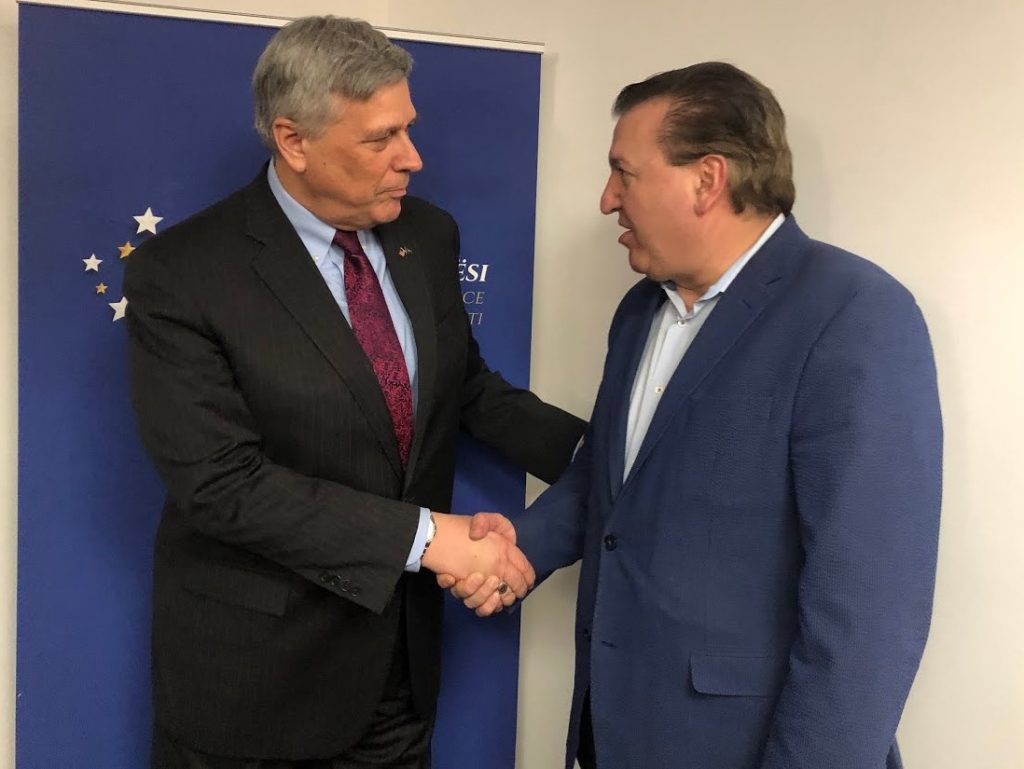
Ambassador Kosnett at the Kosovo Consulate General, New York

February 29, 2020 by dgreca

Ambassador Kosnett’s Remarks at the Kosovo Consulate General, New York, February 28, 2020/

By Rafaela PRIFTI/

Ladies and gentlemen, good afternoon.  Let me begin by thanking Consul General Teuta Sahatqija and her staff for hosting us today.  They do a tremendous job building ties between our two great countries.  It is a great pleasure to be here with old friends and new.

We are here today because we share an appreciation and respect for both Kosovo and the United States.   In this spirit, I would like today’s engagement to be an open conversation.  So I will try to keep my opening remarks short to allow more time for discussion.  I’d like to start us off by offering my perspective on three topics:  how I see Kosovo today; America’s priorities in the relationship; and, finally – how members of the Kosovo diaspora in the United States can support the effort to build a better future for all the people of Kosovo.

First, then, Kosovo today.  Some of you know that I first served in the U.S. diplomatic mission in Kosovo, all too briefly, in 2003.  When the opportunity arose to return to Ksovo in 2018, this time with my wife Alison, we jumped at it.  We’ve been back in Kosovo a little over a year now, and it has been a wonderful experience.  Last year on July 4, I was privileged to mark the 20th anniversary of our diplomatic presence in Kosovo by presiding at the opening of our new Embassy in Pristina – possibly the most advanced, most environmentally sound complex of buildings in Kosovo.  The Embassy is more than a modern office for the Americans and local staff who work there.  It is a meeting place for people of all communities – and a physical manifestation of America’s commitment to an enduring partnership with Kosovo.

Each year, the American people give millions of their tax dollars to support programs and activities in Kosovo.  These programs build the capacity of the government, ensure the rights of minority groups and the most vulnerable members of society, enhance the capacity of the legal system, and help businesses meet international product standards and gain access to new markets.  We also partner with the government on initiatives to encourage greater participation of women in the economy, support entrepreneurs from all Kosovo’s diverse communities, create a stable and secure supply of energy, and better prepare young people to be the engines of future growth.  We support the development of the courts and police as well as the Kosovo Security Force.

I know how appreciative Kosovo citizens are for the assistance they’ve received from the U.S. these past two decades.  But I’ve also learned that the relationship is very much a two-way street.  Kosovo, for example, has shown courage and leadership in its approach to combating terrorism and confronting violent extremism, often more than much larger and richer countries.

The United States is assisting Kosovo to build the capacities of the Kosovo Security Force not just for defense, but so Kosovo can make good on its promise to begin to pay back its allies for the military assistance it has received, and to reach its aspirations of becoming a peacekeeping force and security contributor.

Recently, Kosovo has shown to the world that this security force is able to provide aid to others in need.  When the tragic earthquake struck Albania, Kosovo’s emergency response corps worked hand-in-hand with our crisis response team, sending help to its neighbor within hours of the quake.  I see this as an example of how Kosovo is maturing into a supportive regional partner.

It is true that our governments will not always agree on every issue.  That is normal in a mature partnership.  There may be times when relations between governments become strained, and there are consequences.  I imagine we will get into some current topics during the discussion session.  And I’ll talk a bit about how our economic assistance is set to evolve.  But I have no doubt the fundamental bond between our two democracies is and will remain solid.

Let’s talk about our shared priorities.  When my Embassy colleagues and I talk about America’s priorities – and our hopes – for Kosovo, we group the issues into three categories: peace, justice, and prosperity.

By peace, I mean better relations between Kosovo and its neighbors, particularly Serbia, but also peaceful, neighborly ties among ethnic communities within Kosovo.  For all Kosovo’s citizens should have the right to live in freedom without fearing their neighbors – and also without fearing that if they reach out a hand of friendship to their neighbors from another community, someone from their own community will object.

And peace, by this definition, is closely related to justice.

When people in Kosovo raise the topic of justice, I find they they are usually talking about fighting corruption and building a judicial system and a police force people trust.  That is vital.

But I would broaden the definition of justice to include adherence to the rule of law; equal and respectful treatment for all citizens regardless of gender, ethnicity, or sexual orientation; and equal opportunity for all. Supporting those efforts is important to my government and to me – and we put a lot of energy into helping to improve Kosovo’s judicial and law enforcement institutions.  The results have been encouraging, but we have a long way to go, including in removing improper political influence from the judicial system.

This would be a good point to say that building a just society isn’t easy.  When I speak in Kosovo, I take pains to note that as America tries to build that just society – “a more perfect union,” to borrow another phrase from our founders –we are still struggling with the legacy of a long and painful history.  Both Kosovo and the United States are works in progress.  We need to work together and learn from each other to build societies dedicated to inclusion, to “liberty and justice for all.”  “Liberty and justice for all” also means economic opportunity for all – what our founders called “the pursuit of happiness.”

And that brings me to our third priority: supporting Kosovo on the road to prosperity.  The economic picture, many of us would agree, is mixed.  Too many of Kosovo’s people – in government offices, in some non-governmental organizations, and even in some corners of the private sector – have become overly reliant on foreign aid and remittances, imagining that the current high levels of assistance and remittances will last forever.  Too many times someone working in government or business has pitched a sound idea to me, then asked which U.S. Government agency is going to pay for it.

Let’s be clear – we are proud of the work we do in Kosovo and the programs we support, but U.S. Government efforts are focused on ensuring Kosovo can stand on its own two feet and on having governmental institutions deliver and respond to citizens’ needs.  America provides Kosovo with assistance not as a permanent subsidy, but to help institutions and sectors to become more self-sufficient.

In agriculture, for example, USAID focuses on investing in pilot projects to show farmers how to move up the value chain.  Even this sort of aid isn’t designed to last forever.  As USAID Administrator Green highlighted recently at the United Nations, the purpose of foreign assistance is to end the need for its existence.

There is also a fair amount of magical thinking about foreign direct investment.  People who should know better ask when the U.S. Government is going to make General Motors or Ford invest in Kosovo, sidestepping the question of how to make Kosovo a country businesses want to invest in.  This sort of complacency crosses political party lines and generational lines too.

As the youngest nation in Europe, Kosovo should be poised to benefit from a demographic dividend that contributes to a more prosperous future, as more and more citizens enter the work force and pay taxes that can be used to provide wide social benefits.  But an estimated 220,000 citizens left Kosovo during the last decade.  That is roughly 10 percent of Kosovo’s population.  Without making a concerted investment in retaining and building talent, and supporting private sector led growth, Kosovo can’t expect the change needed for a positive future.

Let’s talk about remittances.

At present, remittances from people like you are holding Kosovo’s economy together.  Twelve percent of Kosovo’s economy is derived from economic activity supported by money flowing in from outside.  But it’s not real investment.  Sadly, the vast majority of remittances are used to purchase goods manufactured abroad and imported into Kosovo.  Much diaspora money goes into building vacation homes.  Better, but still not the same as investing in an ongoing commercial activity.  And let’s be frank – the whole remittance structure is a house of cards.  America’s experience with other diaspora communities is that remittances fall sharply a generation after the initial wave of emigration.

So – Kosovo’s future is dependent on its ability to expand private sector growth and to begin to produce some of the goods it now procures from abroad with diaspora dollars.  Private sector growth will create jobs.  It will help keep Kosovo’s youth in Kosovo and offer real alternatives to seeking jobs in an already bloated public sector.

And all is not bleak.   First of all, while many talented people have left Kosovo – including people sitting in this room – many of the most talented have chosen to remain.  When I compare the Kosovo I knew in 2003 to the Kosovo of today, I am  especially impressed by a rising generation of young people – educated, multilingual – who could be successful anywhere in the world but are choosing to try to build a future at home in Kosovo.

Young people in the tech sector in particular speak of learning lessons from other small countries that have achieved economic success by unleashing their private sector – countries like Israel, Singapore, Estonia, Slovenia.  Many are reaching across community boundaries, even across borders,  to make friends and do business with people from other communities.   They are not afraid of seeking foreign money – but as investment capital, not aid.

Gjirafa is a great example.  A small investment from USAID coupled with the dynamism of its young founder, Mergim Cahani, had a catalytic effect.  Now Girafa is the leading online retail marketplace in Kosovo, and a leader in search as well.

It is the desire to see Kosovo develop its economy, and become more economically self-sufficient, that is driving our current effort – led by Special Presidential Envoy Ric Grenell – to inject energy into the process of improving Kosovo’s relations with Serbia.   By encouraging

initiatives to improve air, road, and rail links between Kosovo and Serbia, we hope to energize the economies and business opportunities on both sides of the border, improve the free movement of people, and build connections that will lead to greater human cooperation and economic growth.  We’ve developed these initiatives in consultation with business leaders in both countries.

And now I move on to my last point.  Kosovo’s future relies, in the end, on one factor alone—the commitment of its citizens to build that future.  I encourage you to think about how to structure your own support toward the goal of Kosovo’s self-sufficiency. 

So, what else can you do?  In fact, a lot.  I am not here to endorse particular programs or businesses, but rather to raise awareness about the plethora of opportunities out there for you to play a role in Kosovo’s future success.  So, with that caveat in mind…

You can also invest in an existing business, or even create your own.  Just look at the success of a diaspora’s investment in Jaha Solar.  The company not only created jobs in Kosovo but was also a smart business decision for investors.  Jaha’s German-quality solar panels produced in Kosovo compete on the European market with prices that are competitive with China.

You can follow in the footsteps of the Shkreli, Lukaj, and other families by sponsoring a scholarship for Kosovo’s youth.  You can support Kosovo non-profits, such as Teach for Kosovo – modeled after Teach for America – which is looking for funding, but also for fellows to work in Kosovo’s schools.  You can follow the example of BONEVET’s founder Vllaznim Xhiha, who built his fortune abroad but established a foundation with programs run by local youth, encouraging the success of Kosovo’s future generations.

Perhaps a more modest commitment?  Many diaspora members take extended vacations in Kosovo (and truth be told, at neighboring beaches).  Take some time from your vacation to mentor local businesses and organizations and provide them with expertise and innovative ideas.  One good place to start if you are looking for such opportunities is Germin, which puts diaspora around the world in touch with local businesses and organizations looking for services.  Sharing your knowledge and know-how can be priceless for a Kosovo business.  A small tech startup run by Kosovo youth won a contract with Lufthansa through contacts of a diaspora.  In fact, they report that 90 percent of their clients come from diaspora.

And your influence does not have to be constrained to charity or the economic sphere.  There are examples of how people like you who have spent time in other political and economic systems “send” back a component of these values when they return to or interact with their countries of origin and have a positive impact.  They contribute to changing outdated attitudes about issues such as gender equality, protection of civil rights, and inclusion of the LGBTI community.

Over time, as diasporas share new perspectives with those who remain in the country of origin, subtle shifts in the values those people hold may occur.  I encourage you to help advocate for the needs of wartime sexual violence survivors and other victims of violence and past trauma, including by helping to fill the gaps in mental health needs.

I spoke earlier about how the energy and commitment of Kosovo’s young entrepreneurs, and of the inspiring “Teach for Kosovo” project.  How about unleashing the youth of the diaspora to backstop them?   Know a young Kosovo-American citizen with a business or tech degree, or just a winning attitude?  Maybe a daughter, son, niece, nephew?

If you have the means, why not subsidize one to take a year off  to live in Kosovo and bring their education and their enthusiasm to support a local company, or municipality, or educational institution?  They will gain valuable experience in the process and give their language skills a workout.

In this room there are people who would do a brilliant job of organizing a corps of diaspora youth like that – who wants to volunteer?

Thank you for listening to my ideas about how we can help build a self-sufficient Kosovo.  Now I look forward to hearing your ideas, and I am happy to take questions on any topic.  Thank you for your attention.

Filed Under: Featured Tagged With: Ambasador Kosnett

  • 1
  • 2
  • 3
  • …
  • 38
  • Next Page »

Artikujt e fundit

  • NJЁ SURPRIZЁ XHENTЁLMENЁSH E GJON MILIT   
  • Format jo standarde të pullave në Filatelinë Shqiptare
  • Avokati i kujt?
  • MËSIMI I GJUHËS SHQIPE SI MJET PËR FORMIMIN E VETEDIJES KOMBËTARE TE SHQIPTARËT  
  • MES KULTURES DHE HIJEVE TE ANTIKULTURES
  • Historia dhe braktisja e Kullës së Elez Murrës – Një apel për të shpëtuar trashëgiminë historike
  • Lirizmi estetik i poetit Timo Flloko
  • Seminari dyditor i Këshillit Koordinues të Arsimtarëve në Diasporë: bashkëpunim, reflektim dhe vizion për mësimdhënien e gjuhës shqipe në diasporë
  • Ad memoriam Faik Konica
  • Përkujtohet në Tiranë albanologu Peter Prifti
  • Audienca private me Papa Leonin XIV në Selinë e Shenjtë ishte një nder i veçantë
  • PA SHTETFORMËSINË SHQIPTARE – RREZIQET DHE PASOJAT PËR MAQEDONINË E VERIUT
  • “Ambasador i imazhit shqiptar në botë”
  • “Gjergj Kastrioti Skënderbeu në pullat shqiptare 1913 – 2023”
  • Albanian American Educators Association Igli & Friends Concert Delivers Electrifying Evening of Albanian Heritage and Contemporary Artistry

Kategoritë

Arkiv

Tags

albano kolonjari alfons Grishaj Anton Cefa arben llalla asllan Bushati Astrit Lulushi Aurenc Bebja Behlul Jashari Beqir Sina dalip greca Elida Buçpapaj Elmi Berisha Enver Bytyci Ermira Babamusta Eugjen Merlika Fahri Xharra Frank shkreli Fritz radovani Gezim Llojdia Ilir Levonja Interviste Keze Kozeta Zylo Kolec Traboini kosova Kosove Marjana Bulku Murat Gecaj nderroi jete ne Kosove Nene Tereza presidenti Nishani Rafaela Prifti Rafael Floqi Raimonda Moisiu Ramiz Lushaj reshat kripa Sadik Elshani SHBA Shefqet Kercelli shqiperia shqiptaret Sokol Paja Thaci Vatra Visar Zhiti

Log in

This website uses cookies to improve your experience. We'll assume you're ok with this, but you can opt-out if you wish. Cookie settingsACCEPT
Privacy & Cookies Policy

Privacy Overview

This website uses cookies to improve your experience while you navigate through the website. Out of these cookies, the cookies that are categorized as necessary are stored on your browser as they are essential for the working of basic functionalities of the website. We also use third-party cookies that help us analyze and understand how you use this website. These cookies will be stored in your browser only with your consent. You also have the option to opt-out of these cookies. But opting out of some of these cookies may have an effect on your browsing experience.
Necessary
Always Enabled
Necessary cookies are absolutely essential for the website to function properly. This category only includes cookies that ensures basic functionalities and security features of the website. These cookies do not store any personal information.
Non-necessary
Any cookies that may not be particularly necessary for the website to function and is used specifically to collect user personal data via analytics, ads, other embedded contents are termed as non-necessary cookies. It is mandatory to procure user consent prior to running these cookies on your website.
SAVE & ACCEPT