• Home
  • Politics
  • Opinion
  • Culture
  • Sports
  • Economy
  • Interview
  • Reporting
  • Community
  • Vatra

Dielli | The Sun

Albanian American Newspaper Devoted to the Intellectual and Cultural Advancement of the Albanians in America | Since 1909

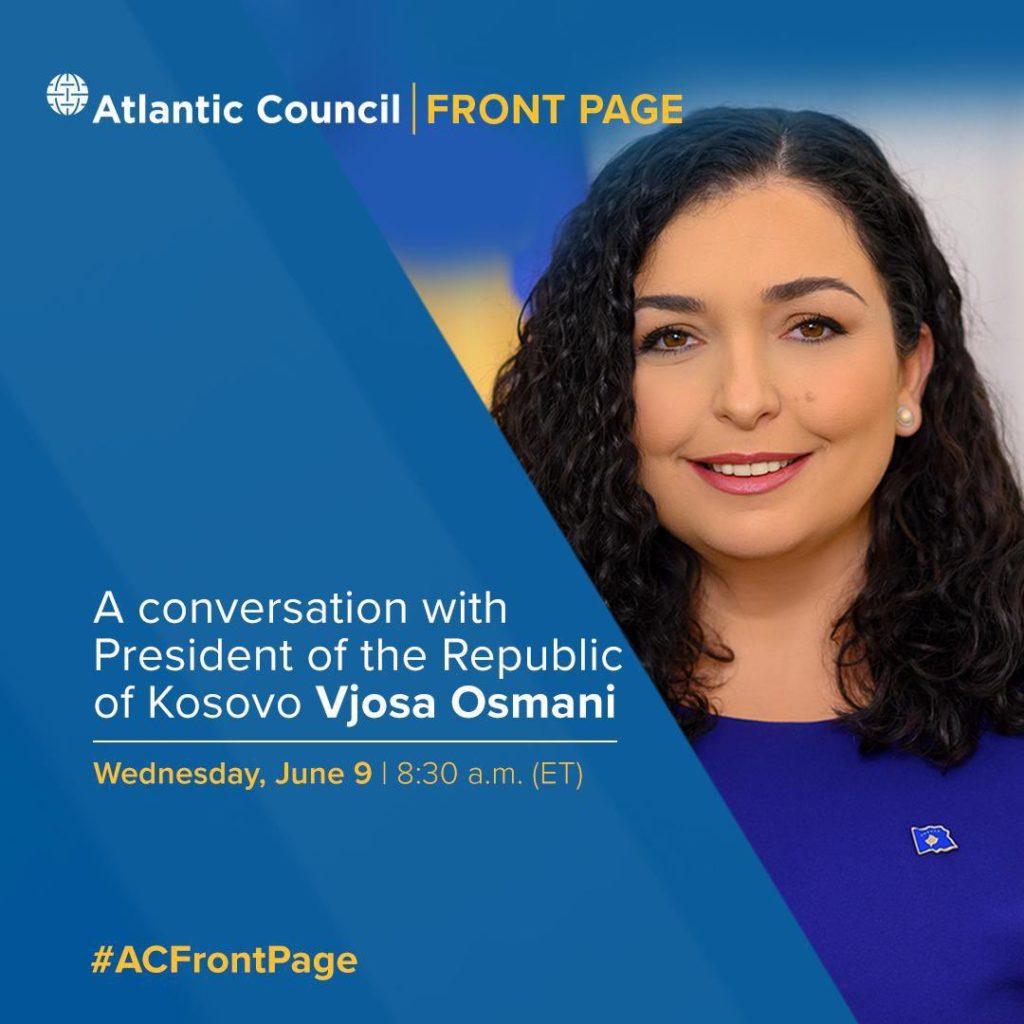
Kosovo President Vjosa Osmani joins the Atlantic Council Front Page

June 9, 2021 by dgreca

“We have been sitting at the negotiating table even though Serbia has never apologized. We have always been good neighbors,” said Kosovo President Vjosa Osmani as guest of the Atlantic Council.

June 9 – President Osmani discussed Kosovo’s domestic and foreign policy priorities and her agenda for achieving them as a guest of the Atlantic Council Front Page – a new virtual event series featuring top news makers across multiple digital platforms. President Osmani joined the Council for a candid conversation about Kosovo’s priorities and her agenda for achieving them. 

What role can the Biden Administration play alongside its EU allies in helping firmly anchor Kosovo in the Euro-Atlantic community? What are Kosovo’s expectations for the upcoming Berlin Process Summit? What is the outlook for the Belgrade-Prishtina Dialogue? And what opportunities does Kosovo see to promote post-pandemic recovery through regional economic cooperation?

Gazeta Express reports that in the virtual conversation, President Osmani addressed the mutual recognition issue and Serbia’s archives of the missing people. “Kosovo is prepared to go to talks to reach a mutual agreement that focuses on mutual recognition between Kosovo and Serbia. I think it will depend on how Serbia behaves in the dialogue, and what it really thinks about its EU membership – as it cooperates militarily and economically with Russia. As President of Kosovo, I think that multi-ethnic values are being implemented in all sectors in the country and I am proud of that. It is time for Serbia to decide what it wants, Kosovo has always shown constructiveness and we have extended the hand of cooperation. We are sitting at the negotiating table even though Serbia has never apologized. “We have always been good neighbors,” said Osmani. With reference to Kosovo’s priorities, Kosovo President pointed out membership to Interpol and NATO membership. “Kosovo’s membership in Interpol is one of the most important priorities to fight organized crime that goes beyond local goes beyond local dimensions,” Osmani said, adding that it is important to work with NATO members to convince them that membership of Kosovo is extremely important for the region.

“To work individually with NATO members to convince them why Kosovo’s membership in NATO is important for the security and stability of the Western Balkans. The KSF, which is our army, is becoming much more professional with the support of NATO and totally with NATO standards. “The KSF has recently participated in the NATO exercise” Defender Europe 21 “, said President Osmani, ends Gazeta Express reporting. 

More than a decade after its declaration of independence, the Republic of Kosovo continues to face a set of challenges, both at home and on its path toward integration in the Euro-Atlantic community and its core institutions of the European Union and NATO. While all Kosovars broadly agree on where they want to see their country end up, there remain significant barriers to achieving these goals. While daunting challenges like high youth unemployment, a sluggish economy, corruption, and polarized politics dominate at home, relations with Serbia loom large over almost all foreign policy concerns.

Harnessing the convening power and expertise of the Council’s thirteen programs and centers, #ACFrontPage leverages the Council’s capabilities in social media, press, and digital outreach to spotlight the world’s most prominent leaders and the most compelling ideas across sectors and engage new audiences eager for nonpartisan and constructive solutions to current global challenges. This widely promoted program features the Council’s most important guests and content serving as the highlight of its programming each week. 

This discussion is part of the Europe Center’s #BalkansForward Initiative, a coordinated effort to foster a democratic, secure, and prosperous Western Balkans firmly integrated into the Euro-Atlantic community.

Sources: Atlantic Council Front Page, Gazeta Express
Filed Under: Featured Tagged With: Joins the Atlantic Council, Vjosa Osmani

MJEKU SHQIPTAR NË SINGAPOR VIZITOI VATRËN

June 9, 2021 by dgreca

– Dr. Dashi gjendet në New York në një specializim në Rockefeller University mbi hulumtimin e qelizave të lëkurës së njeriut….

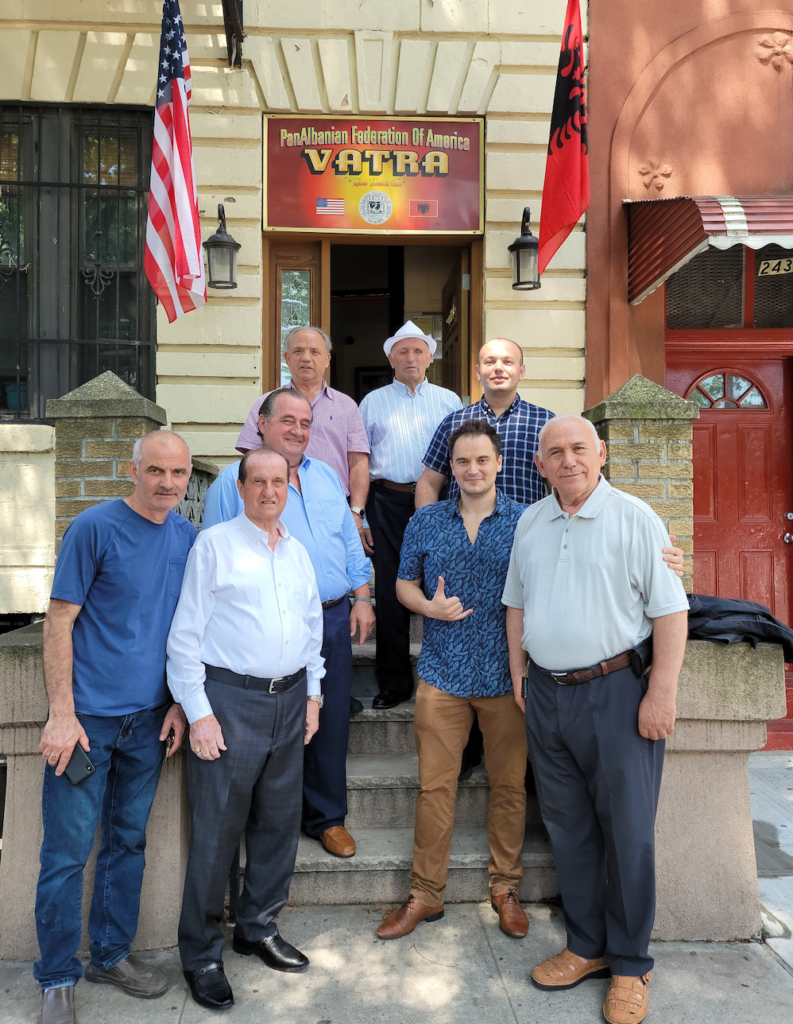
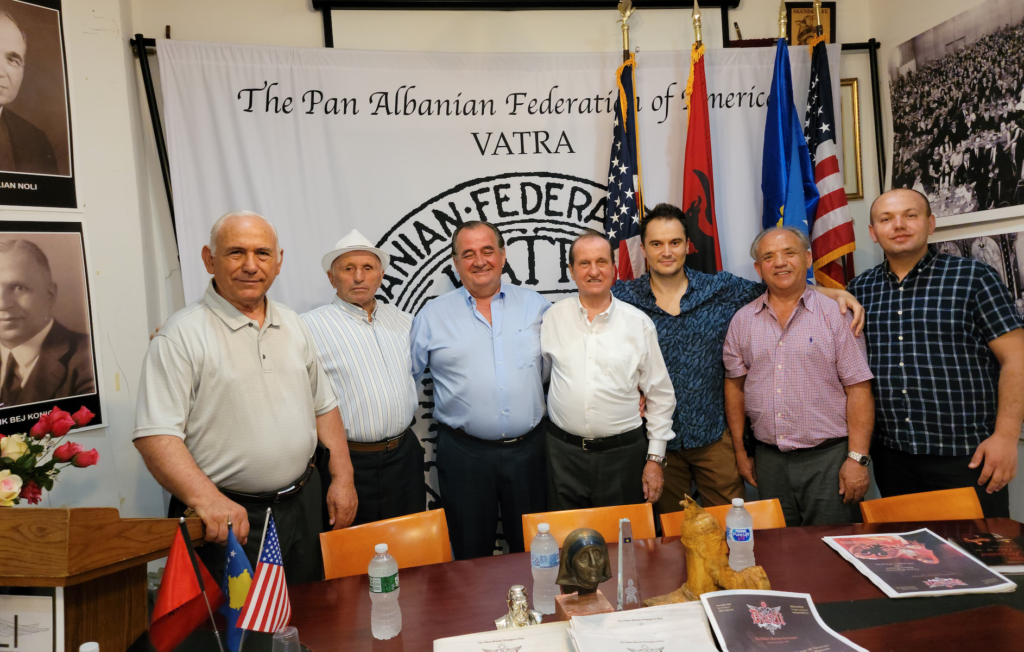
Dr. Albert Dashi, ekspert i bio-mjeksisë në Singapor vizitoi të mërkurën, 9 Qershor 2021, Federatën Panshqiptare të Amerikës “VATRA “ në New York. Ai u prit nga anëtari I Kryesisë, njëkohësisht arkëtari i Vatrës Marjan Cubi, anëtari i kryesisë së Vatrës Mark Mrnaçaj, ish nënkryetari i Vatrës Asllan Bushati, anëtarët e këshillit të Vatrës: Mëhill Gjuraj, Paulin Mrnaçaj, Drita Vushaj, gazetari i Diellit Sokol Paja dhe antikomunisti Palok Vushaj. Në fillim të vizitës vëllazërore në Vatër, Dr. Dashi u njoh nga gazetari i Diellit Paja mbi kontributin e Vatrës dhe të gazetës Dielli në dobi të kombit e shtetit shqiptar që nga koha e Pavarësisë e deri në ditët e sotme. Dr. Dashi u shpreh shumë i lumtur për vizitën në Vatër dhe falënderoi me mirënjohje të veçantë kontributin e Vatrës e vatranëve për kombin shqiptar dhe punën e shkëlqyer të shqiptarëve të Amerikës në mërgatën shqiptare në SHBA. Dr. Dashi gjendet në New York në një specializim në Rockefeller University mbi hulumtimin e qelizave të lëkurës së njeriut. Ai foli rreth rëndësisë së shkencës së diagnostikës së lëkurës në ditët sotme. Sipas Dr. Dashit Sequential Skin përdor teknologji të përparuar të sekuencave gjenetike për të kuptuar se si gjenet e njeriut, mikrobioma e lëkurës sonë dhe si ndërvepron mjedisi jonë, për t’i dhënë lëkurës së njeriut karakteristikat që ajo ka. Dr. Dashi në përfundim të takimit vëllazëror premtoi se do ta vizitojë Vatrën sa herë të vijë në New York dhe u bëri thirrje dhe të rinjve të tjerë profesionistë shqiptarë kudo në SHBA dhe në botë që të bashkohen me Vatrën për të kontribuar në interes të kombit shqiptar.(Dielli)

Filed Under: Featured Tagged With: Dr.Albert Dashi, vizite ne Vater

Parlamenti voton Pro shkarkimit të Presidentit Meta

June 9, 2021 by dgreca

Në Shqipëri parlamenti votoi sot në favor të shkarkimit të presidentit Iir Meta. Vetëm një numër i vogël deputetësh votuan kundër. Nisma për shkarkimin e kreut të Shtetit u ndërmorr nga socialistët të cilët e akuzuan atë për qëndrimet e mbajtura përpara dhe gjatë fushatës elektorale. Edhe Komisioni hetimor i ngritur posaçërisht arriti në përfundimin se zoti Meta ka kryer shkelje të rënda të Kushtetutës. Presidenti nga ana e tij e ka quajtur të paligjshme nismën e ndërmarrë nga parlamenti, Vendimi i parlamentit do të kalojë tani në duart e Gjykatës Kushtetutese.

Në favor të shkarkimit të të presidentit Meta votuan 104 deputetë, ndërsa 7 ishin deklaruar Kundër dhe 3 të tjerë kishin abstenuar. Për shkarkimin e zotit Meta, nevojiteshin, dy të tretat e parlamentit, ose 94 vota.

Në 30 vite pluralizëm në Shqipëri, vendimi sotëm shënon rastin e parë të shkarkimit nga ana e parlamentit të presidentit të vendit.

Procedurat e parlamentit u zhvilluan me shpejtësi dhe Komisioni hetimor e mbylli aktivitetin e tij për tre javë. Komisioni mori në shqyrtim të gjitha deklarimet publike të zoti Meta për të vërtetuar përfshirjen e tij në fushatën për zgjedhjet e 25 Prillit. Sipas raportit të miratuar prej tij, Kreu i Shtetit rezulton të ketë kryer së paku 9 shkelje, duke nisur që nga betimi i tij si president të cënimi i procesit zgjedhor, i marrëdhënieve me partnerët strategjikë të Shqipërisë, imazhit dhe reputacionit të vendit, figurës së vetë institucionit të Presidentit apo dhe abuzim me kompetencat kushtetuese të Presidentit.

Të gjithë këto shkelje janë vlerësuar nga komisioni se “shkelje të rënda të Kushtetutës”.

Në ndryshim nga ndërhyrjet e tij tejet të gjata në parlament, kryeministri Edi Rama foli shumë shkurt duke preferua të rendiste shkaqet që çuan në vendimin e sotëm: “Ilir Meta ka tradhtuar misionin e Presidentit të Republikës së Shqipërisë. Ilir Meta ka poshtëruar Kushtetutën e Republikës së Shqipërisë. Ilir Meta ka shembur institucionin e garantit të unitetit kombëtar. Ilir Meta ka dhunuar kufirin jetik të ndarjes së pushteteve në demokracinë tonë parlamentare. Ilir Meta ka turpëruar Shqipërinë dhe popullin shqiptar në marrëdhënien krejt speciale me Shtetet e Bashkuara të Amerikës. Ilir Meta ka shkarravitur fytyrën e shtetit shqiptar në marrëdhënie me përfaqësitë e bashkësisë demokratike ndërkombëtare në Shqipëri”, u shpreh zoti Rama.

Duke deklaruar se sipas tij zoti Meta i ka humbur shanset që i janë ofruar, kryeministri tha se Shqipëria nuk mund të mbajë më atë në kurriz.

Presidenti Meta nga ana e tij ka folur gjatë gjithë kohës për një “nismë ilegjitime të parlamentit”. Ai nuk u paraqit të mbronte pozicionin e tij as në Komisionin hetimor dhe nuk shfrytëzoi as të drejtën që i njihet për t’u paraqitur dhe në seancën e sotme. Si për të dëshmuar indiferencën e tij ndaj vedimmarrjes së sotme, ndërsa në parlamenti vijonte me diskutimet, ai organizoi në presidencë një aktivitet kulturor me këngë e valle nga Ansambli Folklorik i Dibrës “Hazis Ndreu”.

Menjëherë pas votimit, Presidenti Ilir Meta reagoi përmes zëdhënësit të tij Tedi Blushi, duke përdorur tone të forta dhe akuza ndaj parlamentit. Në një postim në Facebook, të shoqëruar me një fotomontazh të sallës së parlamentit mbuluar nga mbeturinat, zëdhënësi shkruan se “nuk ka asnjë shqetësim nga vendimi antikushtetues dhe qesharak i landifillit parlamentar monist”. Ai shton se “nuk ka asnjë surprizë nga tregtari I kufijve të Shqipërisë dhe të Kosovës”, duke ju referuar kështu Kryeministrit Edi Rama ndërsa thekson se “Presidenti Meta është më i motivuar se kurrë për mbrojten e sovranitetit dhe integritetit të Shqipërisë nga çdo përpjekje e tradhëtarëve, bashkëpunëtorëve dhe tutorëve të tyre që prej vitesh punojnë kundër Shqipërisë”.

Nga ana e saj dhe Partia demokratike, përmes një deklarate, “e konsideron antikushtetues vendimin e parlmentit njëpartiak për shkarkimin e Presidentit të Republikës dhe kërkon nga Gjykata Kushtetutese të ruajë paanësinë dhe të garantojë pavarësinë e institucioneve kushtetuese, duke refuzuar farsën për shkarkimin e Presidentit”, thekson deklarata e Partisë Demokratike.

Gjykata Kushtetuese, është ajo që do të thotë fjalën e fundit duke i dhënë të drejtë ose jo parlamentit.(Sinas Zerit te amerikes)

Filed Under: Politike Tagged With: Parlamenti, president, Shkarkon Ilir Meten

SHBA: Urdhër i ri Ekzekutiv për sanksione në Ballkan, shtohet Shqipëria…

June 9, 2021 by dgreca

-ShBA intensifikojnë përpjekjet kundër korrupsionit në Ballkanin Perëndimor/

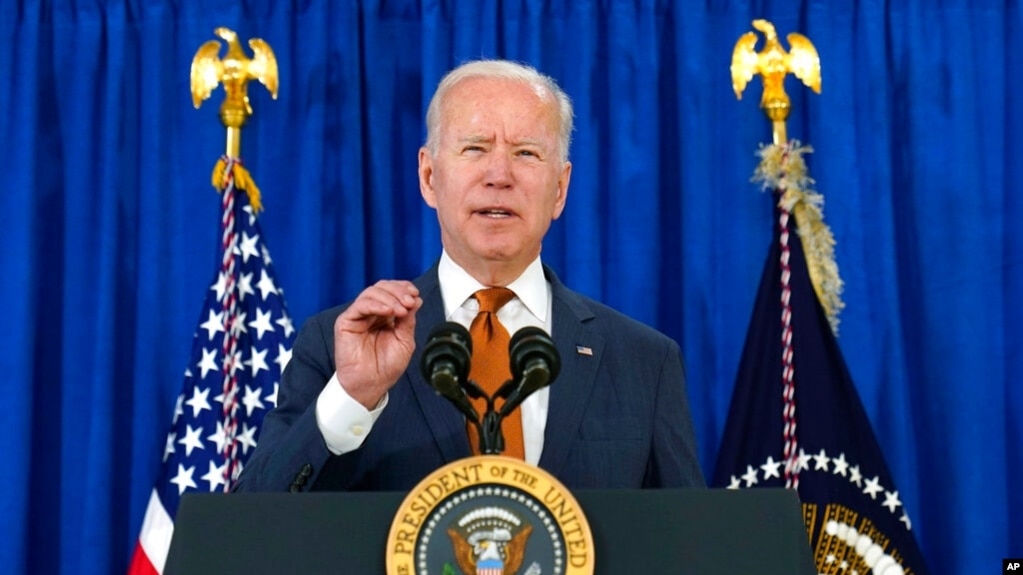
Një urdhër ekzekutiv i Presidentit Joe Biden për bllokimin e pasurive dhe pezullimin e hyrjes në Shtetet e Bashkuara të personave që kontribuojnë në destabilizimin e Ballkanit Perëndimor, përfshin tashmë edhe Shqipërinë dhe zgjeron objektin e saj, duke përfshirë personat që kryejnë korrupsion dhe minojnë institucionet demokratike.

“Urdhri zgjeron hapësirën gjeografike të regjimit ekzistues të sanksioneve, duke përfshirë edhe Shqipërinë dhe zgjeron kriteret për kërcënimet aktuale ndaj sigurisë kombëtare të Shteteve të Bashkuara dhe interesave të politikës së jashtme në rajon, duke përfshirë pengimin e proceseve demokratike dhe gjyqësore, korrupsionin dhe krimin e organizuar”, thuhet në një njoftim të Shtëpisë së Bardhë.

Ky Urdhër Ekzekutiv i cili është vazhdim i atij fillestar të vitit 2001, që parashikon sanksione për individë të Ballkanit Perëndimor që shihen si rrezik për sigurinë kombëtare të Shteteve të Bashkuara, për herë të pare përfshin Shqipërinë, i cili është shteti i vetëm që përmendet me emër.

Sipas urdhrit, veprimet që minojnë marrëveshjet dhe institucionet e pasluftës pas shpërbërjes së ish-Jugosllavisë, si dhe korrupsioni i përhapur brenda qeverive të ndryshme dhe institucioneve në Ballkanin Perëndimor, pengojnë përparimin drejt qeverisjes demokratike dhe integrimit të plotë në institucionet transatlantike.

Për këtë arsye, vazhdon urdhri ato “përbëjnë një kërcënim të jashtëzakonshëm për sigurinë kombëtare dhe politikën e jashtme të Shteteve të Bashkuara”.

Sipas Shtëpisë së Bardhë, korrupsioni dëmton drejtpërdrejt politikën e jashtme dhe sigurinë kombëtare të Shteteve të Bashkuara dhe të partnerëve e aleatëve të tyre. tanë.

“Shtetet e Bashkuara janë të përkushtuara për të nxitur llogaridhënien dhe për të luftuar korrupsionin në Ballkanin Perëndimor dhe në të gjithë botën”, thuhet në njoftimin e Shtëpisë së Bardhë.

Presidenti Biden shprehet në urdhrin ekzekutiv se “është e nevojshme të bllokohen pronat dhe interesat mbi pronat e çdo personi për të cilin Sekretari i Thesarit, në konsultim me Sekretarin e Shtetit, ka arritur në përfundimin se minon proceset ose institucionet demokratike, apo marrëveshjet ose kornizë rajonale për sigurinë, paqen, bashkëpunimin, njohjen reciproke, ose mekanizmat e llogaridhënies, janë të përfshirë në shkelje serioze të të drejtave të njeriut, apo të përfshirë drejtpërdrejt ose indirekt në korrupsion”.

Shtëpia e Bardhë thotë se Departamenti i Thesarit, në konsultim me Departamentin e Shtetit do të vazhdojë të përditësojë listën e individëve që u nënshtrohen sanksioneve sipas këtij urdhri.

“Garantimi i sigurisë dhe stabilitetit politik të rajonit të Ballkanit Perëndimor është në përputhje me angazhimin e administratës Biden për avancimin e interesave thelbësore të sigurisë kombëtare të SHBA, përfshirë mbrojtjen e institucioneve demokratike”, thotë Shtëpia e Bardhë.

Urdhri që zgjeron kompetencat për të marrë masa ndaj personave që janë të përfshirë në këto kategori, pason vendimin e Shtëpisë së Bardhë javën e kaluar për ta shpallur luftën kundër korrupsionit si një përparësi themelore të interesave të sigurisë kombëtare të Shteteve të Bashkuara.

Urdhri fillestar ekzekutiv i vitit 2001 nga ish-Presidenti George W. Bush, pas luftrave në Ballkan, parashikonte sanksione në lidhje me ekstremizmin e dhunshëm, shkeljen e Marrëveshjeve të Dejtonit dhe Rezolutën 1244 të OKB-së për Kosovën dhe kërcënonte stabilitetin në rajon.

Ky urdhër është rinovuar çdo vit që atëherë nga Presidentët amerikanë.

****.

ShBA intensifikojnë përpjekjet kundër korrupsionit në Ballkanin Perëndimor

Sekretari amerikan i Shtetit Antony Blinken ripohon angazhimin e Uashingtonit për të luftuar korrupsionin në vendet e Ballkanit Perëndimor.

“Shtetet e Bashkuara janë të ndërgjegjshme se korrupsioni kërcënon barazinë ekonomike, luftën kundër varfërisë, përpjekjet për zhvillimin ekonomik, si dhe vetë demokracinë. Korrupsioni, kudo që të jetë, dëmton drejtpërdrejtë politikën e jashtme, sigurinë kombëtare dhe ekonominë e Shteteve të Bashkuara, si dhe aleatët e partnerët tanë”, thekson zoti Blinken, në një deklaratë të lëshuar pas Urdhërit Ekzekutiv të Presidentit Biden për të zgjeruar hartën dhe kriteret e vendosjes së sanksioneve ndaj individëve dhe organizatave që përfshihen në korrupsion dhe krim të organizuar në Ballkanin Perëndimor. 

“Shtetet e Bashkuara”, thekson zoti Blinken, “janë të angazhuara për të nxitur llogaridhënien si dhe për të luftuar pandëshkueshmërinë ndaj atyre që janë përfshirë në raste madhore korrupsioni në Ballkanin Perëndimor dhe kudo në botë”.

Duke e shpallur luftën kundër korrupsionit si një prioritet të sigurisë kombëtare të Shteteve të Bashkuara, administrata Biden duket se është e përgatitur të mbajë ndaj individëve, që beson se përfshihen në akte madhore korrupsioni dhe që minojnë shtetin ligjor, të njejtin qëndrim si ndaj atyre që kanë rrezikuar paqen në Ballkanin Perëndimor.

Sipas zotit Blinken, urdhëri i fundit ekzekutiv i Presidentit Biden zgjeron hartën e sanksioneve në Ballkanin Perëndimor duke përfshirë disa marrëveshje të viteve të fundit, siç është ajo e Prespës e vitit 2018, apo zgjatja e mandatit të Gjykatës së Hagës për Krimet e Luftës në ish Jugosllavi.

Veç atyre që rrezikojnë paqen e sigurinë, sanksione mund të vendosen tani edhe ndaj individëve që destabilizojnë rajonin duke minuar insitucionet demokratike dhe shtetin ligjor, ose që shkelin të drejtat e njeriut.

Për të goditur në mënyrën më të mirë rrjetet e korrupsionit të shtrira në Ballkanin Perëndimor, thekson Sekretari Blinken, Urdhëri Ekzekutiv përfshin tani edhe Shqipërinë. 

Deri tani, Urdhëri Ekzekutiv, një vazhdimësi në vite e qëndrimeve të administratave të ndryshme amerikane që nga viti 2001, përfshinte vetëm vendet e dala nga shpërbërja e dhunshme e ish Jugosllavisë.

Sipas Sekretarit Bliken “Urdhëri Ekzekutiv autorizon vendosjen e sanksioneve ndaj individëve, apo enteve, që janë përgjegjëse për korrupsion në rajon, që janë përfshirë në përvetësim fondesh publike, tjetërsim pronash private për përfitime personale apo politike, ose të përfshirë në ryshfete. Pronat, ose interesat në prona të ndryshme, që personat e përcaktuar në bazë të Urdhërit Ekzekutiv, kanë në Shtetet e Bashkuara, ose që kanë lidhje me Shtetet e Bashkuara, apo bien në duar të personave në Shtetet e Bashkuara, do të bllokohen dhe shtetasit amerikanë janë të ndaluar të kryejnë transaksione me ta. Veç kësaj, individët, që përcaktohen në bazë të këtij urdhëri, nuk do të lejohen të hyjnë në Shtetet e Bashkuara”, thekson Sekretari Blinken.

Filed Under: Opinion Tagged With: President Biden, SHBA-SHQIPERI, Urdher Ekzekutiv

Judiciary Ranked as Most Corrupt, Political Parties Rank Lowest in Trust

June 9, 2021 by dgreca

IDM Opinion Poll 2020/

Judiciary Ranked as Most Corrupt, Political Parties Rank Lowest in Trust /

By Rafaela Prifti/

The Institute for Democracy and Mediation has issued the findings of its “Trust in Governance” opinion poll. The public survey was conducted in November–December 2020 across the 61 municipalities of Albania, using a randomly selected and nationally representative sample of 2,500 citizens, write the report authors Leonie Vrugtman and Marsela Dauti. 

The publication is part of a Public Service project made possible by “a donor pool fund implemented by the Government of Albania in partnership with the United Nations Development Program (UNDP), and with Austrian Development Cooperation (ADC) as key contributor, together with UNDP,” the report states. The disclaimer is that “the content of the report is the responsibility of the authors, and does not necessarily reflect the official policy or position of the Albanian Government, UNDP, or ADC.” 

The 137-page report issues findings on public trust in governance, accountability, corruption, citizen engagement etc. The authors disclose the impact of the November 2019 earthquake in Albania, and the COVID-19 pandemic in all government and civil sectors, reflected in their report. 

Among the top listed findings are: 

International organizations like NATO, the UN and the EU, rank as the most trusted institutions, 

84.1% reported ‘grand’ or high-level corruption to be widespread. Judicial institutions ranked as the most corrupt in 2020, followed by healthcare institutions, law enforcement, and parliament, as 7 in 10 Albanians reported they do not have confidence in the prosecution of grand corruption cases. 

There are disturbing findings with regard to immigration. According to the survey: “The percentage of the Albanian population wanting to move to another country remains high: 44% of respondents reported that they want to emigrate.” In terms of safety, the report states that “70% of the Albanian population surveyed did not feel safe in everyday life. The main reasons for feeling unsafe were crime, health-related concerns, employment insecurity and injustice.” With reference to the primary source of news on current affairs for the Albanian population, the IDM report indicates that while “social media (36%) and portals (15%) are becoming more popular, television (58%) remained the most popular media outlet in Albania.” 

Below are the IDM findings grouped and summarized by the authors of the report.

Trust in Governance 2020 at a Glance

In its eighth annual edition, the ‘Trust in Governance’ opinion poll was conducted by the Institute for Democracy and Mediation (IDM) in November–December 2020 across the 61 municipalities of Albania, using a randomly selected and nationally representative sample of 2,500 citizens. The year was marked by the aftermath of the devastating earthquake in Albania in November 2019, and the COVID-19 pandemic which caused major disruption to all facets of life in the country including governance, citizen engagement, and public service delivery. This affected the findings of the annually recurring sections, and also resulted in the inclusion of a new section: natural disasters. The findings are grouped into nine main sections and summarized as follows:

Trust in Institutions

→International organisations like NATO, the UN and the EU, ranked as the most trusted institutions

→Religious institutions (69.8%) were the domestic institutions most trusted by the Albanian population, followed by educational institutions (54.1%), the armed forces (54.0%), and civil-society organisations (52.6%).

→Political parties (20.4%), the courts (23.8%), the president (23.9%), parliament (24.1%), and the prosecution (24.3%) were among the lowest ranking institutions in terms of trust. 

→Compared to 2019, trust in the police, healthcare institutions, the media, central government, and the army has decreased, while trust in religious institutions has increased. 

→A mere 28.7% of the Albanian population surveyed believed that judicial reform is being implemented correctly and 52.8% of respondents believed that judicial reform will have a positive impact on the development of the country. 

→Although social media (36%) and portals (15%) are becoming more popular – even among people over 65 years old – as the primary source for news on current affairs for the Albanian population, television (58%) remained the most popular media outlet in Albania. 

→One in three Albanian citizens believed that the information provided by Albanian media is accurate/true

Transparency and Accountability

→The majority of Albanians surveyed perceived the central government (64.3%) and municipality (62.2%) as not transparent, though this is an improvement of 2 and 1 percentage points (p.p.), respectively, compared to 2019. 

→The majority of the Albanian population polled (64.1%) were aware that the right to information is guaranteed by law. Albanians over 65 years old or with an income of 50,001–70,000 ALL were more likely to be aware of this legislation.

→Compared to 2019, the proportion of Albanian citizens that perceived local government as accountable increased by 6 p.p. to 37% in 2020 and for central government the proportion increased by 4 p.p. to 35% in 2020.

→The Albanian population surveyed tended to believe that the most effective domestic accountability mechanism is the Albanian Supreme State Audit Institution (60.7%), followed by the media (52.8%), parliament (48.1%), civil society (44.8%), and the Ombudsman (44.3%).

→On the whole, the Albanian population believed that international organisations hold the government to account better than the organizations listed.

Corruption in Public Institutions

→86.7% of Albanian citizens reported that they perceive ‘petty’ corruption to be widespread, while 84.1% reported ‘grand’ or high-level corruption to be widespread. 

→Judicial institutions were ranked as the most corrupt in 2020, followed by healthcare institutions, law enforcement, and parliament.

→Compared to last year, the percentage of the Albanian population that did not have confidence in the prosecution of petty corruption increased – from 61.1% in 2019 to 64.5% in 2020. 

→7 in 10 Albanians reported they do not have confidence in the prosecution of grand corruption cases.

→The proportion of Albanians that reported having paid a bribe to receive a service from the central government increased from 19% in 2019 to 32% in 2020. More Albanians reported to have received a service from the central government in 2020, 41% compared to 32% in 2019

Citizen Engagement

→In 2020, a smaller percentage (49%) of the Albanian population was interested in participating in the decision-making process of public institutions than in 2019 (57%).

→Albanians with a university degree (or higher), students, public sector employees, and members of political parties were more likely to report being interested in participating in the public decision-making process. 

→Most Albanians felt that they do not have sufficient opportunities to participate in the decision-making of public institutions.

→Approximately 1 in 8 Albanian citizens reported that they used the online portal ‘www.konsultimipublik.gov.al’ in 2020 to obtain information or give their opinion on draft legislation or draft strategies/action plans.

→The majority of the Albanians surveyed believed that ‘citizens have sufficient knowledge to understand government decisions’ (71%).

→Although 38% of respondents believed that suggestions from civil society are taken into consideration, 65% felt that local public hearings are formal events. Meanwhile, 35% agreed with the statement ‘municipal councilors represent local communities’.

→22% of the respondents attended a demonstration/rally or signed a petition in 2020. →67% were willing to engage in voluntary work, particularly those younger than 45 years old, attending a university, working in the public sector, or living in rural areas.

→The percentage of the Albanian population wanting to move to another country remains high: 44% of respondents reported that they want to emigrate.

Satisfaction with Public Service Delivery

→38% of Albanian citizens, on average, were satisfied with the delivery of core public services. The delivery of education services (49%) and cleaning services (49%) were perceived as most satisfactory.

→45% of Albanian citizens that had used an administrative service in 2020 were satisfied or very satisfied with the delivery of this service. Particularly the delivery of civil registry (68%), road transportation (56%), and social insurance (54%) services received higher ratings.

→Compared to last year, a smaller percentage of respondents submitted a complaint to institutional public service providers (12% in 2020 versus 17% in 2019). 

→12.4% of the citizens surveyed directed complaints to the online platform shqiperiaqeduam.al. Albanians with an income of over 70,001 ALL/month were more likely to have submitted complaints to the platform.

→Similar to 2019, approximately 1 in 4 Albanians believed that institutions ‘listen to’ and properly address citizens’ complaints.

→57.2% of respondents said that the quality of social services delivered by the municipality had not changed, while 23.6% said that the quality of social services had improved and 19.2% said that it had worsened. Compared to 2019, a higher percentage of the Albanian population reported visiting an Agency for the Delivery of Integrated Services (ADISA) service window (29% versus 24%). Among those who visited an ADISA service window, 73.4% indicated that they were ‘satisfied’ or ‘very satisfied’ with the service they received, an increase of more than 4 p.p. compared to last year. 

→70% of the Albanian population surveyed did not feel safe in everyday life. The main reasons for feeling unsafe were crime, health-related concerns, employment insecurity and injustice. 

Use of Information and Communications Technology (ICT)

→63% of the Albanian population were aware that their municipality had a website, an increase of 20 p.p. compared to 2015.

→The main reason for using the website of the municipality was ‘to receive information on available services and where and how to access them’.

→Compared to 2019, a higher percentage of the Albanian population indicated that they are aware that the government administration offers electronic services through the e-Albania portal (93% in 2020 versus 71% in 2019) 

→74.3% of the citizens that were aware of the existence of e-Albania indicated that they have received electronic services through the portal in 2020. 

→Compared to 2019, a smaller percentage of Albanians assessed electronic services as being functional, easy to use, and providing citizens the opportunity to express comments/suggestions. 

Gender and Social Inclusion

→50% of men and 39% of women agreed that there is equality between men and women, as did a smaller overall proportion of respondents than last year (45% in 2020 versus 54% in 2019).

→74.5% of men and 68.2% women believed that men and women have the same access to public services, which represents a slight increase on 2019 when 71.1% of the men and 66.4% of the women agreed with the statement.

→A majority of the Albanian population surveyed (67.8%) believed that public servants serve with the same devotion and ethics to women and men.

→1 in 8 Albanians reported being treated differently by an institution or public official on the basis of gender, age, ethnicity, sexual orientation, a disability, or something else. Of those that had suffered discrimination in 2020, most were treated differently because of their age or gender.

→80% of the Albanian population surveyed thought that women and men are equally capable of holding any public position. Women, younger people, and those with university degrees (or higher) were more likely to indicate that women and men are equally capable of holding any public position.

→Similar to 2019, in 2020 around 6 in 10 Albanians thought that an increased number of women in municipal councils has a positive impact on local governance.

Filed Under: Opinion Tagged With: IDM Opinion Poll 2020, Rafaela Prifti

  • « Previous Page
  • 1
  • …
  • 50
  • 51
  • 52
  • 53
  • 54
  • …
  • 5724
  • Next Page »

Artikujt e fundit

  • Kontributi shumëdimensional i Klerit Katolik dhe i Elitave Shqiptare në Pavarësinë e Shqipërisë 
  • Takimi i përvitshëm i Malësorëve të New Yorkut – Mbrëmje fondmbledhëse për Shoqatën “Malësia e Madhe”
  • Edi Rama, Belinda Balluku, SPAK, kur drejtësia troket, pushteti zbulohet!
  • “Strategjia Trump, ShBA më e fortë, Interesat Amerikane mbi gjithçka”
  • Pse leku shqiptar duket i fortë ndërsa ekonomia ndihet e dobët
  • IMAM ISA HOXHA (1918–2001), NJË JETË NË SHËRBIM TË FESË, DIJES, KULTURËS DHE ÇËSHTJES KOMBËTARE SHQIPTARE
  • UGSH ndan çmimet vjetore për gazetarët shqiptarë dhe për fituesit e konkursit “Vangjush Gambeta”
  • Fjala përshëndetëse e kryetarit të Federatës Vatra Dr. Elmi Berisha për Akademinë e Shkencave të Shqipërisë në Seancën Akademike kushtuar 100 vjetorit të lindjes së Peter Priftit
  • Shqipëria u bë pjesë e Lidhjes së Kombeve (17 dhjetor 1920)
  • NJЁ SURPRIZЁ XHENTЁLMENЁSH E GJON MILIT   
  • Format jo standarde të pullave në Filatelinë Shqiptare
  • Avokati i kujt?
  • MËSIMI I GJUHËS SHQIPE SI MJET PËR FORMIMIN E VETEDIJES KOMBËTARE TE SHQIPTARËT  
  • MES KULTURES DHE HIJEVE TE ANTIKULTURES
  • Historia dhe braktisja e Kullës së Elez Murrës – Një apel për të shpëtuar trashëgiminë historike

Kategoritë

Arkiv

Tags

albano kolonjari alfons Grishaj Anton Cefa arben llalla asllan Bushati Astrit Lulushi Aurenc Bebja Behlul Jashari Beqir Sina dalip greca Elida Buçpapaj Elmi Berisha Enver Bytyci Ermira Babamusta Eugjen Merlika Fahri Xharra Frank shkreli Fritz radovani Gezim Llojdia Ilir Levonja Interviste Keze Kozeta Zylo Kolec Traboini kosova Kosove Marjana Bulku Murat Gecaj nderroi jete ne Kosove Nene Tereza presidenti Nishani Rafaela Prifti Rafael Floqi Raimonda Moisiu Ramiz Lushaj reshat kripa Sadik Elshani SHBA Shefqet Kercelli shqiperia shqiptaret Sokol Paja Thaci Vatra Visar Zhiti

Log in

This website uses cookies to improve your experience. We'll assume you're ok with this, but you can opt-out if you wish. Cookie settingsACCEPT
Privacy & Cookies Policy

Privacy Overview

This website uses cookies to improve your experience while you navigate through the website. Out of these cookies, the cookies that are categorized as necessary are stored on your browser as they are essential for the working of basic functionalities of the website. We also use third-party cookies that help us analyze and understand how you use this website. These cookies will be stored in your browser only with your consent. You also have the option to opt-out of these cookies. But opting out of some of these cookies may have an effect on your browsing experience.
Necessary
Always Enabled
Necessary cookies are absolutely essential for the website to function properly. This category only includes cookies that ensures basic functionalities and security features of the website. These cookies do not store any personal information.
Non-necessary
Any cookies that may not be particularly necessary for the website to function and is used specifically to collect user personal data via analytics, ads, other embedded contents are termed as non-necessary cookies. It is mandatory to procure user consent prior to running these cookies on your website.
SAVE & ACCEPT