• Home
  • Politics
  • Opinion
  • Culture
  • Sports
  • Economy
  • Interview
  • Reporting
  • Community
  • Vatra

Dielli | The Sun

Albanian American Newspaper Devoted to the Intellectual and Cultural Advancement of the Albanians in America | Since 1909

UN Assembly Albanian Minister Promises Fight against Corruption on Top of Agenda

June 5, 2021 by dgreca

by Eduart Halili */

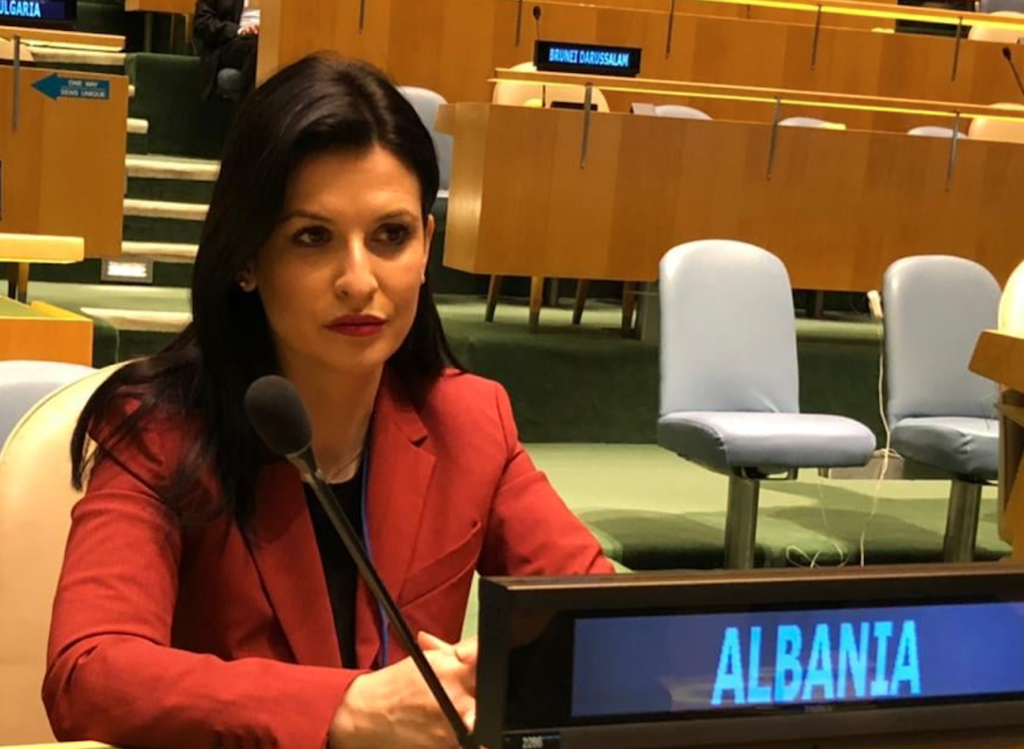
The Minister of Justice Etilda Gjonaj participated in the special session of the UN General Assembly for the fight against corruption, from where she emphasized that the Albanian government has put the fight against corruption on top of its agenda.

In her speech, Gjonaj said that it is a great privilege to be present in the capacity of the Minister of Justice of Albania, in the session “On challenges and measures to prevent and fight corruption”.

“This meeting serves as a reminder to advance our efforts in preventing and combating corruption, but above all, to renew our commitment at the national and international level to find new ways and means to fight corruption,” she said.

Referring to the topic, the fight against corruption, Gjonaj said that corruption undoubtedly violates the principles of democracy and the rule of law. It touches on the essence of the trust that the citizen gives to the government in order for the latter to fulfill its responsibilities. 

“Albania has suffered extensively from the existence of corruptive phenomena in recent decades, which has hindered the process of democratization, economic growth, quality of service delivery and the performance of the whole society as a whole. For this reason, the Albanian Government has placed the fight against corruption at the top of its political agenda, taking concrete steps through cross-cutting policies, as well as multi-level mechanisms to combat it. We are determined to eradicate corruption and strengthen the rule of law and democracy in our country. IN this context, we saw the acute need for Albania to begin cleansing the Palace of Justice, in order to guarantee the effectiveness of its further anti-corruption efforts in all areas of government action,” she said.

She added that during the last five years, as never before, Albania has undertaken the most radical reform in the justice system, which aimed to restore citizens’ trust in a judicial system based on integrity, transparency, professionalism, efficiency and above all, independence.  

“Justice reform has marked a turning point in terms of intensifying efforts in the fight against corruption and organized crime. In order to crack down on endemic corruption in the judiciary, a unique system of vetting judges was built. In addition, an entire institutional architecture in the fight against corruption and organized crime has already become operational, including a Special Prosecutor for the Fight against Corruption and Organized Crime, special courts, and the National Bureau of Investigation. Such an institutional architecture enables the channeling of punitive efforts, excluding corrupt judges and prosecutors from the system, and ensuring that their corrupt practices are investigated and punished. Now that the justice reform is at an advanced stage of its implementation, we proudly affirm that the results of such a reform have been extremely rewarding and encouraging. “For the first time, senior officials have been fired, prosecuted and convicted of corruption, their assets confiscated and important criminal cases are now being reopened,” she said. 

Also, Gjonaj added that implementing the justice reform in Albania has been a very challenging effort. Nevertheless, through the invaluable support of our intentional partners, the EU and the US, we have managed to rise to a level worthy of this challenge.

“The support of our international partners has been crucial in enabling us to remain firm and faithful to our vision: building a justice system that will end impunity in Albania. It is precisely this renewed justice system that will serve as the basis for building strong and sustainable institutions. The Albanian government, through the full digitalization of public services and through the implementation of accessible reporting mechanisms, has built sustainable instruments that provide citizens with their own protective guard against corruption. Throughout the implementation of our anti-corruption agenda, we have established meaningful cooperation with civil society and the business community in order to understand the types and forms of corruption and to adapt our anti-corruption policies to combat them. Also, we have substantially improved our anti-corruption practices, taking very seriously the recommendations of GRECO and MONEYVAL and we have made significant progress in our joint efforts,” said Gjonaj. 
Albanian Daily News.

*(U perzgjodh nga Rafaela Prifti)

Filed Under: Analiza Tagged With: Albanian Minister Promises, Fight against Corruption, UN Assembly

IMUNITETI I NJERIUT NDAJ COVID-19 I PËRKOHSHËM APO I PËRJETSHËM?

June 4, 2021 by dgreca

Nga: Dr. Pashko R. Camaj, Doktor i Shkencave të Shëndetit Publik */

Në Shtetet e Bashkuara (SHBA), mesatarja ditore e rasteve të reja të Covid-19 ka vazhduar në rënie të vazhdueshme duke shënuar një pikë të tërëndësishme në rrugën për t’i dhënë fund pandemisë globale. Mesatarja shtatë-ditore e rasteve të reja të Covid-19, e 1 qershorit, ra në 11,239, sipas të dhënave të Universitetit Johns Hopkins. Nisur nga numri i javëve të fundit, është hera e parë që mesatarja shtatë ditore e rasteve të reja të Covid-19 në Shtetet e Bashkuara ishte nën 20,000 shifër kjo që nuk shënohej që nga marsi i kaluar. Përveç kësaj, të dhënat e Qendrave për Kontrollin e Sëmundjeve kohët e fundit konfirmuan se më shumë se gjysma e të rriturve amerikanë tani janë vaksinuar plotësisht ndaj Covid-19.  Këto numra të rinj vijnë në kohën kur qyteti i Nju Jorkut, i cili ishte epiqendra e pandemisë Covid-19 në SHBA, javën e kaluar nuk regjistroi vdekje të reja nga Korona Virus dhe pa rënien e normës së tij të pozitivitetit në nivelin më të ulët të regjistruar që kur filloi pandemia. Të gjitha këto janë lajme të mira dhe përputhen me analizat e mia të mëparshme se pandemia në SHBA do të përfundojë këtë verë.  Kjo kthesë në rezultate mund t’i atribuohet suksesit të parashikuar të vaksinimit. Në një kohë që shumë shtete të botës vazhdojnë të përmbajnë infeksionet dhe të përmirësohen në qasjen dhe shpërndarjen e vaksinave, këtu në SHBA dy pyetje janë ende në nevojë për përgjigje: a është arritur imuniteti i tufës dhe sa kohë do të zgjasë imuniteti ndaj Covid-19. 

IMUNITETI I TUFËS, ÇFARË ËSHTË DHE ÇFARË DO TË THOTË NË TËVËRTETË?

Për shumicën e komunitetit shkencor, fundi i kësaj pandemie përfshihet në dy fjalë: imuniteti i tufës. Në kohën kur një debat akademik shtjellon se kur ose edhe nëse SHBA mund të arrijë në një përqindje të mjaftueshme të njerëzve me imunitet për të arritur këtë qëllim, disa shkencëtarë thonë se është koha që publiku të mos shqetësohet më për këtë dhe të ndjekë një këshillë të thjeshtë: Vaksinohuni. Kjo pandemi do të marrë fund kur mjaftueshëm njerëz të mbrohen nga sëmundjet e rënda dhe si pasojë hiqen nga “zinxhiri i infeksioneve”. Vaksinimi i bën të dyja, ndihmon juve dhe ndihmon komunitetin tuaj të arrijë qëllimin për t’u kthyer në normalitet. 

Pra, çfarë është imuniteti i tufës?  Ideja e imunitetit të tufës filloi në mënyrë të çuditshme me lopët dhe jo me njerëzit, prandaj përdoret fjala “tufë”. Në vitin 1916, veterineri Adolph Eichhorn dhe kolegët vunë re se një kope (tufë) lopësh mund të bëhej e imunizuar kolektivisht nga një sëmundje, nëse shumica e kafshëve do t’i mbijetonin infeksionit fillestar. Që nga ajo kohë, imuniteti i tufës është bërë një term i përdorur zakonisht në epidemiologji dhe shëndetin publik për t’iu referuar pikës së fundit matematikore të një epidemie sëmundjesh infektive. Kur një përqindje e caktuar e njerëzve janë të imunizuar, ose nëpërmjet infeksionit ose vaksinimit, virusi nuk ka vende për t’u përhapur. Epidemia – ose, në këtë rast, pandemia – venitet dhe jeta kthehet në normalitet. Pragu i imunitetit të tufës mund të ndryshojë gjerësisht nga sëmundje në sëmundje. Me kaq shumë të panjohura për Korona Virusin që shkakton Covid-19, ka qenë një temë e shumë diskutuar. Gjatë rrjedhës së pandemisë, vlerësimet për pragun e nevojshëm për të arritur imunitetin e tufës janë luhatur nga 20% deri në 90% ose dhe më shumë. Për shumicën e komunitetit shkencor dhe studiuesve, duke përfshirë edhe mua, 60-70% dukej si numri magjik për t’u kthyer në normalitet. Deri në pranverën e vitit 2020, termi imuniteti i tufës ishte term i rretheve akademike. Ndërsa Korona Virusi u përhap nëpër Azi, Evropë, dhe më në fund në SHBA, disa modele parashikimesh fillestare treguan se kjo ishte e pa ndalshme dhe e pa kontrollueshme. Kjo çoi në këtë qasje të “imunitetit të tufës”, që do të thoshte “lëre virusin të shkojë”, lëre natyrën të marrë drejtimin e saj. Por kjo nuk u fut kurrë në fuqi pasi u pranua gjerësisht se lënia e Korona Virusit të lirë të veprojë në një popullsi të caktuar do të kishte çuar në një numër edhe më të madh vdekjesh, ndoshta 1-2 milion të vdekur ne SHBA, disa vlerësime madje edhe e dyshifojnë ose trefishojnë këtë numër. Kjo ishte e pa pranueshme. 

IMUNITETI NGA VAKSINAT APO INFEKSIONET NATYRORE, SA KOHË DO TË ZGJASË?

Ne e dimë se vaksinat punojnë në dy mënyra: së pari, ato sigurojnë imunitet duke stimuluar antitrupat ndaj virusit i cili mund të ketë vetëm një përgjigje të përkohshme mbrojtëse. Së dyti, dhe shumë të rëndësishme, ato fillojnë një formacion të “kujtesës” – T dhe B – qelizave, që ofrojnë mbrojtje më të gjatë nga ri-infeksioni viral. Pasi sistemi imunitar përshtatës e ka mundur pushtuesin, bëhen një pellg qelizash T dhe B që kanë jetë të gjatë. Këto limfocite të kujtesës mbeten të “fshehura” deri në herën tjetër që hasin të njëjtin patogjen. Megjithatë, këtë herë, ato prodhojnë një reagim imun shumë më të shpejtë dhe më të fortë. Kujtesa është tipari kyç i sistemit imunitar përshtatës, duke bërë të mundshme mbrojtjen afatgjatë dhe prodhimin e antitrupave. Ka një shtim të literaturës që sugjeron se imuniteti Covid-19 pas infeksionit mund të zgjasë një vit, por disa që tregojnë një mbrojtje shumë më të gjatë, ndoshta një imunitet gjatë jetës, duke u përmirësuar me kalimin e kohës veçanërisht pas vaksinimit.  Kur merren së bashku, studimet sugjerojnë se shumica (por jo të gjithë) individët e vaksinuar që ishin infektuar më parë me SARS-CoV-2 nuk do të kenë nevojë për nxitje shtesë të vaksinës. Ata që u vaksinuan pa e kontraktuar më parë virusin ka të ngjarë të kenë nevojë për dozë shtesë në një moment në të ardhmen, ndoshta në disa vjet. Duket se imuniteti te këta individë luan shumë ndryshe, pasi “kujtesa imunitare” mund të duket ndryshe pas vaksinimit në krahasim me infeksionin natyror. Ky informacion i kohëve të fundit me shpresë do të ndajë frikën e zvarritur se mbrojtja kundër virusit do të jetë jetëshkurtër.  

IMUNITETI NDAJ VIRUSIT COVID-19 A MUND TË JETË I PËRJETSHËM?

Imuniteti ndaj virusit që shkakton Covid-19 mund të jetë i përjetshëm, në kundërshtim siç është rasti me Korona Viruse të tjera që ndodhin natyrshëm dhe që shkaktojnë ftohje të zakonshme. Ndryshimi është se këto viruse ndryshojnë ndjeshëm çdo disa vjet. Pra, arsyeja pse ne infektohemi me virus të zakonshëm herë pas here gjatë gjithë jetës mund të ketë shumë më tepër të bëjë me variacion të këtyre viruseve dhe jo imunitetit tonë. Në fakt, qelizat e kujtesës B të prodhuara në përgjigje të infeksionit me SARS-CoV-2 dhe të rritura me vaksinimin janë aq të fuqishëm sa që pengojnë edhe variantet e virusit, duke mohuar nevojën për vaksina nxitëse. Njerëzit që u infektuan dhe u vaksinuan kanë një reagim të fuqishëm, sepse ata vazhdojnë të evoluojnë antitrupat e tyre, që mund të zgjasin për një kohë të gjatë.  Është interesante se rezultati mund të mos zbatohet për mbrojtjen që vjen vetëm nga vaksinat, sepse kujtesa imunitare ka të ngjarë të organizohet ndryshe pas imunizimit, krahasuar me atë që pason infeksionin natyror. Në fund, nëse jeni infektuar me SARS-CoV-2 apo jo, vaksinat do të sigurojnë një mbrojtje të nevojshme dhe ndoshta afatgjatë kundër Covid-19, kështu që vaksinohuni. 

* Nënkryetar i Federatës Pan-Shqiptare të Amerikës –VATRA. 

Filed Under: Analiza Tagged With: COVID-19, Dr.Pashko Camaj, Imuniteti

Dielli Talks With Father Nikodhim The Interim Chancellor of the Albanian Archdiocese

June 4, 2021 by dgreca

By Rafaela Prifti/

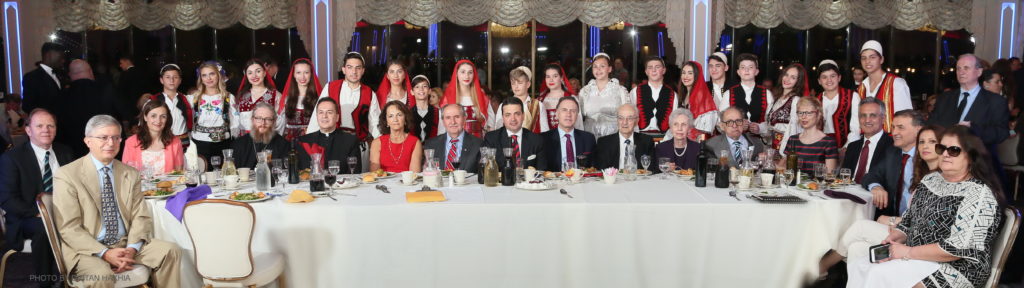
June 2018, 106th anniversary of Vatra./

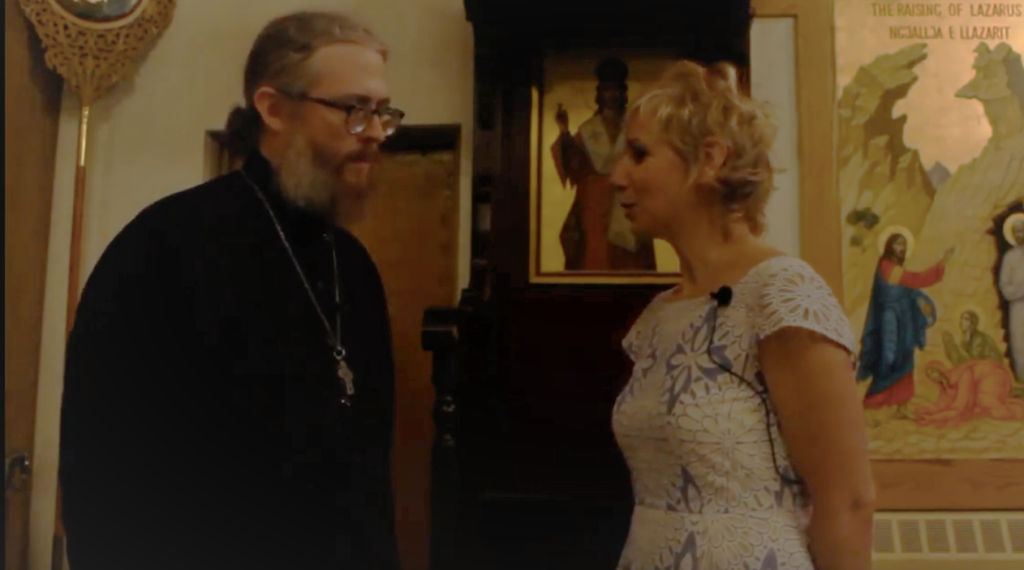
Following the retirement of Very Reverend Arthur Liolin at Saint George Cathedral in Boston, Father Nikodhim has accepted the appointment of the Interim Chancellor of the Albanian Archdiocese. Before the start of the interview, he makes an important point of clarification on this topic. We continue the interview with questions regarding the significance of this moment including constraints on the church’s practices in the course of the pandemic. We talk about the historical connection between the Albanian national movement in America and the Albanian Orthodox Church. On that point, I emphasize that key activists and protagonists of the movement and Church, who were patriots of all faiths, went on to establish Vatra as the Pan-Albanian Federation of America. On the theme of religious unity among Albanians, Father Nikodhim wonders in admiration: “Where else will we see pastor and hoxha, priest and imam, seated together as brothers.” His own story is a testament of Father Nikodhim’s appreciation of inclusiveness in faith, culture, nationality. Born Nathan Preston in the northern sliver of Idaho, in the foothills of the Rocky Mountains, he was ordained to the priesthood at St. Nicholas Albanian Orthodox Church by the late Archbishop Nikon (Liolin) in 2010. In 2017, His Eminence, the Archbishop, called Father Nathan to embrace the monastic life, tonsuring him with the new name Nikodhim in honor of the Holy Martyr Nikodhim of Vithkuq and Berat. I am thankful to him for the interview, which provides insights into the endeavors that have been undertaken as well as presents a view into what’s to come.

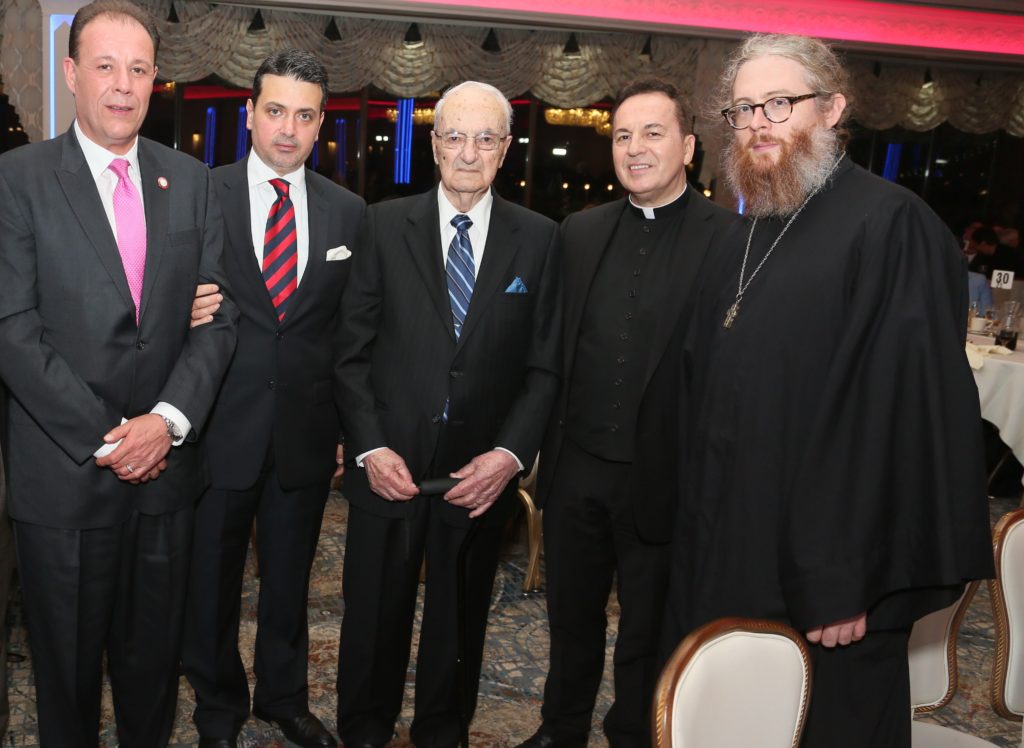
Photo from the 106th anniversary of Vatra.

Fr. Nikodhim – The appointment of the diocesan chancellor is the prerogative always of the archdiocesan bishop. Indeed, as I was asked to step into this role, I found that even those tasks and responsibilities of the chancellor are defined in our constitution and bylaws as being identified explicitly and exclusively by the hierarch. I raise this now as a point of clarification but also to acknowledge that I am in no way an apt successor to the long decades of leadership, wisdom, and profound knowledge of my predecessor, Fr. Arthur Liolin. I do not pretend otherwise—I don’t know that I could sleep well at night under such heavy responsibility and expectation. Rather, I am a stopgap; I am, I pray, a man for this moment as we look as an archdiocese into the future and try to meet the needs of the present. And, at the appointment of our next hierarch and archpastor, I hope that he will feel free to select his own chancellor who will best work with him to guide our archdiocese into many more years of faith, growth, and care for those who call it home. Among those priests I am proud to call my brothers, there are certainly many more qualified than I.

  1. Thank you for making time for our interview!
    Let’s start with the Pashka. The Albanian Orthodox community joined the Orthodox Christianity around the globe to observe the Holy Week of Pashka on May 2. I couldn’t help going back to read the church’s message last year during the Pashka in April of 2020. It was the start of the pandemic. The message from church invited parishioners to attend Pascha Services from home and to follow the curfew hours and other guidelines put in place since the parishes would close on April 1. What followed were lockdowns and more restrictions. And to facilitate attendance from afar, live services were made available to allow participation by phone, computer, or tablet. What was Pashka like a year ago? Can you draw some comparisons from last year to now?

Fr. Nikodhim – I struggle to answer this question with any semblance of justice because, for those of us in this country, last year was without any precedent. Even in the memories of my oldest parishioners, the Church was never closed like this here. What we were called to do, particularly in areas so hard hit at that time as all of New York was but Queens most especially, was simply to stop. The lights went out; the doors were bolted shut. I say that this was without any precedent in our memory as Americans. Certainly for the faithful of St. Nicholas who remember the privations and outright prohibitions of religious practice in Albania during the Communist regime, the terrors of absence were somehow familiar. While I could never equate the necessities of public health and safety in the face of a virus with the atrocities of a totalitarian regime, we drew strength from the witness of our brothers and sisters who lasted, faithfully and prayerfully, to see the end of Hoxha’s twisted vision of progress. Hearkening our people back to those stories of clandestine red eggs and radios tuned low to Easter broadcasts, the stories I have personally been told from the lips of our own folks, we remembered that they had outlasted and we, too, could outlast. This year is pure joy in comparison, and we experience each service with gratitude as something returned to us again. And it is this joy that we have tried to communicate with our now necessary online presence. Whether they are ready to be back in Church in person, we want—we need—to make sure everyone knows that they are welcome and remembered wherever they are. Numerically, we were at about half our accustomed crowd for most services of Holy Week and Pascha. Half our normal body of people. I don’t know, frankly, how many were watching online or the breakdown between those who “tuned in” live and those who viewed and view the archived material. During the services, we plug in the camera and keep it running. Most everyone here consistently has a job these days, and monitoring our numbers online has yet to be prioritized.

  1. Let’s stay back in time for a bit longer, as it were. I recall the Newsletter message issued on March 18, 2020, asking to protect the most vulnerable and taking steps to be good neighbors and citizens in all our communities. It said that turning “our attention to those whose needs may be different than our own is also part of our Christian life.” On a personal level, I am part of a generation of Albanians who grew up as non-religious in communist Albania, yet the message of encouraging good citizenry in the face of unprecedented pandemic touched me. Every week of the pandemic year, your message of hope came in the mailbox with an image attached to it symbolizing the idea of resilience and strength. I note that for parishioners, the full service schedule and Pascha letter in both English and Albanian are available on the website as are streaming of the prayers. What has stood out most for you during this year?   
    Fr. Nikodhim – Two things come to mind when you ask about this last year and what has stood out. First, it is truly remarkable how creative we have been able to become. While we have all suffered through technological hiccoughs and a steep learning curve and we all can certainly embark on long litanies of complaints about the many media we now use almost daily, we have been able to be remarkably present for each other. There is a fundament of kindness and care for strangers and friends alike that has been revealed and been recognized as good. So we have witnessed a strange dawn in our culture as care for others has been given pride of place anew, the virtue of compassion lionized in these months of need. Second, as you know, I am a monastic priest. While most of my peers and clergy brothers are married and with families, I am not. I observe my siblings and my friends in the pride they so rightly take in the growth of their children at those milestone moments, at graduations and inductions and rites of passage. There is a sense of movement and consistency and the passing of generational honor in these things. I have sensed something similar to this as we progress forward more and more into the reopening of our society. Thanks be to God and thanks be to the scientists and brave doctors and nurses and wise civil leaders, we have tasted victory, and we must always pause to celebrate this with thanksgiving. I do not know if it will be possible to continue to be grateful in the same way as the novelty of victory recedes, but I hope we will remember proudly the small things that we were able to take back piece by piece. These graduations deserve our memory and esteem.
    3 – The newsletters recognized that “we are all now being challenged to find new ways to reach out and be present for each other…” How do you do that? Especially when everything moved online?

Fr. Nikodhim – For the time being and until we can safely be back in each other’s presence, yes, most of our groups have shifted to online. Our Church School has been remarkably successful in this period thanks to the hard work of our Sunday School administrator and parent volunteers. While our kids meet online and are glad to see friends and cousins there, they are wearying of online education as it has become ubiquitous in some form or another for nearly all. To remedy this, we send monthly materials to each enrolled household so that something tactile and accessible is there at home. Personally, I can’t wait to hear the hubbub of children’s voices crying and yelling and embarrassing their parents at Church again.
4 – This is a two part question: Saint George Cathedral is integral to the Albanian-American community and the history of modern Albania. Furthermore, it represents the birthplace of Vatra and Dielli for many generations of Vatrans. Father Liolin has described it as “a spiritual hill on a peninsula, most notably known for its independent spirit, freedom of thought and veneration,” that, he says, has welcomed many in the past and by the grace of God, is going to welcome even more in the future. How do you see the role and place of St. George’s? Last February, Saint George’s Cathedral in Boston issued a special announcement regarding Very Reverend Arthur Liolin. It read, in part, that “Father Arthur who has served with excellence for more than fifty years, now assumes the position of Chancellor Emeritus and Senior Pastor of Saint George Albanian Orthodox Cathedral.” Further, it said that that in the coming months, you, would be serving as Interim Chancellor of the Albanian Archdiocese. Can you describe what that has meant for you?

Fr. Nikodhim – St. George Cathedral is, as you quote Fr. Arthur in saying, a “spiritual hill”. It has long been a beacon whose light shines far beyond Boston or even America. And following upon a legacy of service more than five decades deep cannot help but be a challenge for its next pastor. In what is undeniably an uncomfortable moment of need and transition, His Beatitude, Metropolitan Tikhon, the locum tenens (interim hierarch) of this diocese is exercising a great deal of care. Certainly it is tempting to try to find someone with bright charisma and the dynamism for which Fr. Arthur is not just remembered but beloved. Certainly there are needs for this next incumbent to know and esteem the history of Boston’s place in Boston and Albania. Certainly fluencies of language and culture and memory are also needed. Yet exceeding all these things and binding them into purpose is love for the people who call the Cathedral home. For his skill, for his memory, for his manifold accomplishments on behalf of Albanians both Orthodox and non-Orthodox, Fr. Arthur is well known, but it is because of his unreserved love for us that we have followed him. Only by this same virtue will a true successor be known. And we are praying that a true successor will be known soon. As you state, now is a moment of transition, yet not for our clergy alone, but for us all. In this time, it is my conviction that we will be best served not by fleeing from a pain that is real, this pain of change and loss, but by choosing not to be mastered by this. Birthed amid chaos and oppression, this diocese has yet offered its clarion voice generation by generation, unyielding to convenience, unmuted in its call to all for justice, peace, and love.
5 – In November of 1969, Vatra’s commemoration of Dielli’s 60th anniversary saw thousands of Albanians and clergy representatives of three main religions gather at Saint Patrick Cathedral in New York city, with his Eminence Terence Cardinal Cooke as the guest of honor joined by the church leaders, ministers, parishioners and Arberesh faithfuls of the Byzantine ritual who had traveled from Italy. It is well documented as a moment of pride and gratification for Vatra and the community. To this day, the rotation of presiding over prayers and invocations by Catholic, Orthodox, Muslim or Bektashi clergy at various functions and festivities might be a reminiscent of that time. What are your thoughts on religious unity?

Fr. Nikodhim – Citing the tremendous witness of our religious unity and diversity in years past, you have asked about invocations at meetings these days. I am proud—very proud—to be but one of those more recent voices offering prayers, and I am humbled each time I come forward to do this both by those great figures of faith who have informed and inspired our people in times past and by those others who do so now and with an eloquence I can but aspire to. To be honest, I do not know whether these invocations should rightly continue or what events or convocations are appropriate for their inclusion. This is something better left to the discretion of the leaders of Vatra and to those who have entrusted this leadership to them. For myself, I hope it will continue, and I hope it will continue to call forward all the richness we possess, faith by faith yet one in life. In truth, where else will we see pastor and hoxha, priest and imam, seated together as brothers? Conflict is too often the driving force soliciting solidarity. We are blessed to be united in advance, warmed and sustained by the knowledge that, if and when conflict does come, we will weather it together. So in short, yes, it is my hope that Vatra will continue to bring us all together, and by this continue to bear that great witness to our world of faiths and people at peace.

  1. In the span of the last two years, we have paid tribute to a number of prominent and valuable members of the community. Last April, I paid condolences to the Foundos family for the passing of Albert, a greatly respected figure at the parish and in the community. You wrote “Throughout his life, Al devoted himself to the Orthodox faith and to forging opportunities for this to grow both in himself and in the lives of others, consistently committed to religious education and to ensuring that the Church live up to Christ’s high mandate to care for those in need.” Are we at a point of transition regarding Albanian church and its pastors here? Can you share your thoughts on this point?
    Fr. Nikodhim – Thank you for your condolences. Albert’s falling asleep in the Lord was and is a very real loss. His repose just prior to Holy Week, at that time we each year remember Christ’s calling His friend Lazarus forth from the tomb, was particularly poignant as those themes of friendship and loss and hope were so present in Al’s life also. It would be a mistake as well as a gross impossibility to speak of replacing members of our community. We are all terribly irreplaceable, and I suspect Al would not hesitate to correct us should we be tempted to think him otherwise. What we can do is to pick up where others have left off. In different ways and with different talents, we can make common cause with those who have gone before us into the mystery of death. We can share something even now with them. At St. Nicholas, it has been so gratifying to me and to others whose service here is much longer than my own to see the average age of our parish council members begin to fall. New voices and new faces have arisen, arriving as they so often do providentially and outside the parameters of our insistent plans. To us belongs only the means to make ready, to prepare an invitation, and to choose to welcome. These are the tools with which we ensure the success of our successors.
  2. The Albanian national movement in America was founded and sprang to a great degree from the Albanian Orthodox Church. Indeed, its key activists and protagonists as well as patriots of all faiths, three years later, went on to establish Vatra as the Pan-Albanian Federation of America. At the head of these two important institutions, Orthodox Church and Vatra were the same leaders who steered the efforts and movement of members of all faiths to protect Albanian national interests. According to some accounts by most senior members who are New York residents, some fifty years ago Vatra’s meetings were held at the cultural hall of the Orthodox Church located on 48th street in the city. How do you view the connection, the past and now?
    Fr. Nikodhim – It has long been my privilege to be in attendance regularly at the events of Vatra, and I have been honored to be included in so many of their meetings. Though my involvement at St. Nicholas precedes my appointment as the pastor here by some several years, it is no secret that I am not Albanian by ethnicity, history, or mother tongue. To be invited and—more than this—to be accepted nonetheless into the heart (and hearth) of the Albanian community is to me a great offering of trust and friendship, both personally as an individual and corporately as I stand in for my people. I hope that the Albanian community and Vatra in particular know how beautiful and even rare this can be: how they have a tremendous and even, I would say, divine gift of grace in offering hospitality that transcends mere formality. It is one thing to be an attendee or an interloper and quite something else to be a member of a family. I believe and it has been my experience that the latter, the invitation into family, is a point of fierce and worthy pride for Vatra, for our Albanian people, and between the leaders of our faith communities.
    Regarding the specific interactions of Vatra and the Albanian Orthodox community here in New York, your knowledge of the history is far greater than my own. Within our archdiocese, we are one of the youngest parishes, and we were, for many years, on the smaller side of the middle range of our communities. Certainly, the involvement of the Archdiocese was curtailed at Vatra’s relocation to New York but this out of geographical distance rather than any disinterest or separation. We at St. Nicholas know also that, while we are now the oldest of the Albanian religious bodies in New York City, we are also the smallest, simply given the demographic and immigration patterns from Albania and neighboring countries into different regions of the United States. As a further note, let me also include that I have heard repeatedly in the years of my pastorate that St. Nicholas was founded not only through the generosity of people of diverse faiths but also that funds from an Albanian xhami, which had had to close, were offered to help us at the time of that first establishment. I have not been able to locate documents attesting to this, so much seems either not to have been recorded or preserved, but I do have faith in the memories of those older folks who have shared the same story again and again.
    Over the years, I have been proud to share meals with other members of the clergy, and Vatra has ensured that this happens routinely. From those first meetings at festivities for Ditën e Flamurit and anniversaries and celebrations, relationships have blossomed. I know I am not alone in wishing for more hours in each day, more days in each week, but as our often too busy schedules do permit, it has been a joy and a privilege to get to spend time with the other spiritual fathers who serve our people. I feel at home in the embrace of their welcome and their peoples’ welcome on each visit, and I trust and pray that they, too, feel that they have come home each time they enter the doors of St. Nicholas Church. In these days and months that we have all been weathering this terrible affliction of sickness and separation, I believe we are holding fast as we can to all the small grains of hope we have. For me, the joy of return and the embrace of our community after this year of fracture is one of these seeds. I count on it.
  3. I recall that three years ago, in May 2018, a delegation of senior Vatra representatives composed of then-Chairman and several Board Members joined you to celebrate three quarters of a century of prayer at St. Nicholas Orthodox Church led by his late Eminence Archbishop Nikon. At his passing in 2019, a Vatra delegation did attend services and Dielli has covered events in a sign of appreciation for the Church’s lasting legacy. Can you share some thoughts? Also is there an update on the renewal project of the church?
    Fr. Nikodhim – In May of 2018, three years ago exactly, my home of St. Nicholas inaugurated a year of rejoicing, feting our 75th anniversary of prayer and presence. We were honored and gratified and continue to be grateful to all who helped us celebrate. For those from St. Nicholas, the presence of guests from outside our regular ranks helped to note the day and to remind us of our place inside a broader community. Running and sustaining any corporate body can be difficult. For houses of worship and non-profits alike, it can sometimes seem a thankless and exhausting task simply to continue to exist, and it can be easy therefore to get lost in all those mundane though necessary responsibilities existence demands. For those who work at St. Nicholas and by this I don’t mean just the priest but all those who give their time, their talents, their support to this Church, having guests blessed us with a reminder of how much others love what we love and struggle for. Having guests located us again inside that broader community. It recalled us back into a shared rather than parochial life. We are grateful to the esteemed representatives of Vatra and to everyone else who showed up for us on that day and throughout that year for this reminder, for helping to keep us catholic. And in these intervening years, which have been at times very hard, I and the people of St. Nicholas have held as precious those memories of joy and celebration. At the loss of our archbishop in 2019, again a delegation from Vatra showed up for us, to grieve, to pray, to stand beside this archdiocese and its people as family while we mourned His Eminence Nikon, a native son of both New York and St. Nicholas Church.
    You have asked quite rightly about the progress of our renewal and the life of our community since those days of joy in 2018. This is a process that needs to be renamed, remade, and celebrated periodically; we are strengthened by these reminders. But the process itself must continue always apace and unabating at each new day, for life without growth or change is but bare survival. This last year has been a formidable reminder of this as our world, country, state, and city closed down and our religious bodies within them fought to find new ways to bring hope and restore faith to those who could often be seen only amid a swirl of pixels. Whatever change or growth we envisioned entering our fourth quarter century at St. Nicholas those three short years ago, it did not include any conception of greater online outreach, live-streaming, caches of prayer housed on social media, or the now ubiquitous Zoom links that have all become so familiar. But here we are, and when I look to my right and look to my left I may have to tilt the camera to see what I know is there—my brothers and sisters stalwart at my side—but there they remain.
    What the future holds for us now is not return but resurrection, daily growing more grateful as what we once assumed would always be there slowly and cautiously sometimes come back. What returns will surprise us with difference, and what the future holds for St. Nicholas Church or the Albanian Archdiocese promises no less. In our prayers at each divine service as the priest turns from the altar to offer the holy gifts to the people present in worship, he sings: Me frikë Perëndie, besim dhe dashuri, afrohuni! In the awe of God, with faith and love, we draw near!
  4. Lastly, how did Nathan Preston, later Father Nathan, become Father Nikodhim of the Saint Nicholas Albanian Orthodox Church?
    Born Nathan Preston in the northern sliver of Idaho between Washington State and Montana, and raised there, in the foothills of the Rocky Mountains, I completed my elementary and secondary education within the warm embrace of a large family. After graduation, I attended university nearby, majoring in Music and Classical Languages. Thereafter, I moved east to Chicago, attending the University of Chicago and graduating with a Master’s degree in comparative religion. I then moved east again to begin priestly studies and formation at St. Vladimir’s Seminary in Westchester County, concluding these in 2007. For two years I served as pastoral assistant and cantor at St. Nicholas Albanian Orthodox Church while working in direct care as a social worker in Newark, New Jersey. Ordained to the diaconate in 2009, I continued for one more year to commute between St. Nicholas in Queens and the homeless shelter of my employ in Newark. Ordained to the priesthood at St. Nicholas by Archbishop Nikon (Liolin) of blessed memory in 2010, I have been the rector there since and remain its sole cleric. In 2017, His Eminence, the Archbishop, called Father Nathan to embrace the monastic life, tonsuring me with the new name Nikodhim in honor of the Holy Martyr Nikodhim of Vithkuq and Berat. In 2020, I was elevated to the honorary rank of Igumen (Abbot) by Metropolitan Tikhon, Primate of the Orthodox Church in America and locum tenens of the Albanian Archdiocese.
    I thank you! Look forward to future talks!

Filed Under: Politike Tagged With: Father Nikodhim, of the Albanian Archdiocese, Rafaela Prifti, The Interim Chancellor

VATRA PRITI JURISTIN E NJOHUR JORDAN DACI, EKSPERT I SË DREJTËS KUSHTETUESE

June 4, 2021 by dgreca

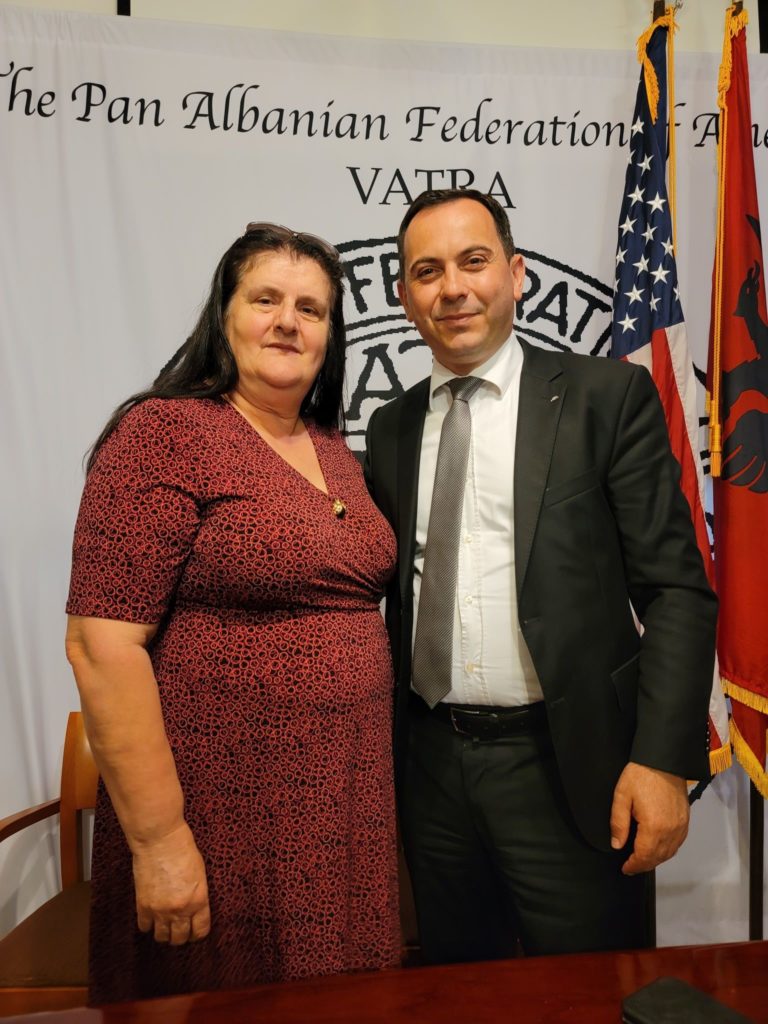
Ditën e premte më 4 qershor 2021 në New York, juristi i mirënjohur, eksperti i së Drejtës Kushtetuese Jordan Daci, vizitoi Federatën Panshqiptare të Amerikës Vatra. Ai u prit nga sekretarja Nazo Veliu, arkëtari i Vatrës Marjan Cubi, kryeredaktori i Diellit Dalip Greca, anëtari i Kryesisë së Vatrës Mark Mrnaçaj, ish Nënkryetari i Vatrës Asllan Bushati, anëtarët e Këshillit të Vatrës dr. Paulin Marku e Sokol Paja, vatrani Saimir Burgaj dhe gazetari Orest Çipa. Fjalën e mirëseardhjes e mbajti sekretarja Nazo Veliu, ndërsa dr. Paulin Marku bëri një prezantim rreth aktivitetit profesional të mikut të ri të Vatrës z.Daci. “Është një nder i veçantë të jesh në Vatër. Atë që ka bërë Vatra nuk e ka bërë asnjë organizatë tjetër shqiptare. Vatra ka qenë lidhje e fortë e shqiptarëve me Amerikën. Ju faleminderit për punën e jashtëzakonshme që bëni në Vatër. Shqiptarët i kanë sytë te Vatra dhe Uashingtoni” – deklaroi në fjalën përshëndetëse z.Daci. Shqiptarët rrezikojnë të mos jenë më faktor në Ballkan pas shpopullimit të Shqipërisë si pasojë e keqqeverisjes ku më shumë se 300 mijë familje nuk kanë të mundur miniumin jetik në Shqipëri – u shpreh i shqetësuar juristi Jordan Daci. Ai kërkoi që vatranët dhe shqiptarët e Amerikës të jenë sa më aktiv pasi situata në Shqipëri po përkeqësohet çdo ditë. Sipas Dacit, në Shqipëri ka filluar një frymë antiamerikanizmi që shqiptarët i dëmton. Kontributi juaj është jetik për Shqipërinë. Shpopullimi dhe pakësimi i popullsisë na defaktorizon si shqiptarë në Ballkan. Është domosdoshmëri ndalja e shpopullimit të Shqipërisë përsëriti me shqetësim juristi Jordan Daci. Shoqëria shqiptare ka nevojë politikisht për përfshirje dhe ekuilibra interesash. Prania amerikane në Shqipëri është më e madhe dhe më e fortë se kurrë. Ata kanë ardhur për të mos ikur më nga Shqipëria si pasojë e investimeve strategjike në fushën e sigurisë kombëtare, rajonale dhe globale – përfundoi fjalën e tij juristi Daci. Kryeredaktori i gazetës Dielli z.Dalip Greca e pyeti profesor Dacin për Zgjedhjet Lokale të vitit 2019, Zgjedhjet Parlamentare të 2021 dhe Komisionin Parlamentar të shkarkimit të Presidentit të Republikës Meta. “Zgjedhjet u projektuan që më përpara për tu manipuluar. Vota u ble dhe u manipulua. Në Shqipëri ka 30 vjet që nuk njihen zgjedhjet. Ne jemi larg standardeve për të bërë gjykatat hetime për zgjedhjet. Opozita duhet të bindë njerëzit se zgjedhjet u manipuluan dhe opozita duhet të frymëzojë njerëzit që ta votojnë. Kreu i shtetit Meta edhe pse kishte të drejtë përballë një sistemi të tërë, disa deklarata dhe sidomos përplasja me ambasadoren amerikane ishin të tepruara. Nuk ka shkelje për ta shkarkuar presidentin Meta. Nuk ka shkelje të rënda. Parlamenti është legjitim dhe Komisioni i Venecias në rastin e anullimit të dekretit e dha opinionin e saj se nuk kishte shkelje të rënda të kryera nga Presidenti – saktësoi juristi Daci. Më tej eksperti i të Drejtës Kushtetuese Daci bëri thirrje që figura të larta kombëtare si At Gjergj Fishta të studiohen dhe të promovohen sa më shumë nga shqiptarët e Amerikës pasi janë personalitete që na lartësojnë si komb. Z.Burgaj diskutoi mbi kushtetutshmërinë e shkarkimit të Presidentit Meta, z.Bushati diskutoi rreth çështjes së sigurisë kombëtare në tërë shqiptarinë, z.Cubi zgjoi interesin e diskutimit rreth antiamerikanizmit në Shqipëri. Z.Mrnaçaj dhe z.Çipa diskutuan rreth atmosferës politike në Shqipëri me sfond situatën e shkarkimit të Presidentit të Republikës Meta. Në fund të takimit miqësor z.Greca i bëri një ekspoze të gjerë rreth rolit të Vatrës në çështjen kombëtare që nga shpallja e Pavarësisë e deri në ditët e sotme.

Filed Under: Featured Tagged With: Juristi Jordan Daci, vizitoi Vatren

AMERIKA, ÇEREK SHEKULLI PRANIE NË KOSOVË

June 4, 2021 by dgreca

-Në një ditë historike – në 5 Qershor 1996 në hapjen e Zyrës së Shteteve të Bashkuara të Amerikës në kryeqytetin e Kosovës Prishtinë Nënsekretari Amerikan i Shtetit, Xhon Kornblum: Jemi zotuar për të ardhem dhe lirinë tuaj… Presidenti historik Ibrahim  Rugova: Kjo është ditë historike për Kosovën…/

-I pranishëm në festën e hapjes sëZyrës Amerikane në Prishtinë shkruaja edhe kronikën: Flamur i shpresës për Kosovën…Shkruaja për gazetën e rezistencës “Bujku”, të vetmes të përditshme shqipe në atë kohë në Kosovë që nisi të dalë nga 18 Janari 1991, kryeredaktor i parë-themelus i së cilës isha e që sfidonte ndalimin e dhunëshëm nga Serbia okupatore të gazetës tradicionale Rilindja, raportoja për Agjencinë Shtetërore-Zyrtare të Lajmeve të Shqipërisë, korrespondent i saj që nga 24 Maji 1992 i zgjedhjeve të para pluraliste në Kosovë/

-Shtetet e Bashkuara të Amerikës, vendi i parë nga gjithë bota me prani diplomatike në Kosovë/

-Në 12 Janar 1996, Presidenti historik i Kosovës Ibrahim Rugova përshëndeste paralajmërimin e atëherë Ndihmës-Sekretarit të Shtetit të SHBA, Riçard Hollbruk, për hapjen e një Zyre Amerikane në Prishtinë/

-Në 22 Maj 1996,  Zyrtari i USIA-as (Agjencia Informative Amerikane), Majkëll Mekllellën (Michael McClellan) ka mbërritur në Prishtinë për të udhëhequr punët në hapjen e Zyrës së këtij shërbimi në kryeqytetin e Kosovës/

-Diplomatët Amerikanë në Kosovë për gazetën tradicionale të Kosovës Rilindja, kryeredaktor i së cilës isha: Në 12 Shkurtin 2002 editorial dhe fjalë përshëndetëse në festën e 57 vjetorit,  intervistë ekskluzive që kam zhvilluar në prag të Vitit të Ri 2005 të jubileut të 60 vjetorit/

SPECIALE-Gazeta DIELLI nga korrespondenti në Kosovë Behlul JASHARI

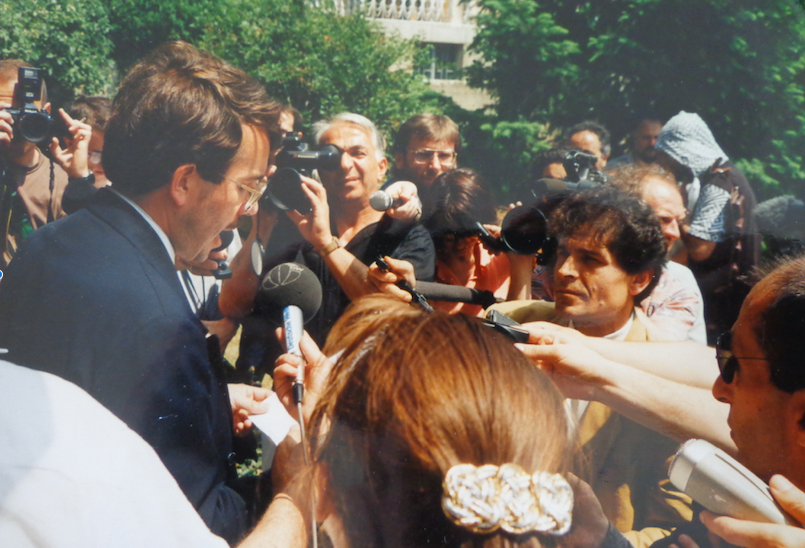
PRISHTINË,  4 Qershor 2021/Në 5 Qershor 2021 bëhet çerek shekulli nga dita historike e të mërkurës së 5 Qershorit 1996 kur u bë hapja në Prishtinë e Zyrës së Shteteve të Bashkuara të Amerikës – vendit të miqësisë së përjetshme dhe raporteve të veçanta, të parit nga gjithë bota me prani diplomatike në Kosovë dhe që shtetin kosovar e ka njohur që në ditën e parë pas shpalljes së pavarësisë para 13 viteve në 17 Shkurtin historik 2008.

Më parë,  në 12 Janar 1996, Presidenti historik Ibrahim Rugova përshëndeste paralajmërimin e atëherë Ndihmës-Sekretarit të Shtetit të SHBA, Riçard Hollbruk, për hapjen e një Zyre Amerikane në kryeqytetin e Kosovës, në Prishtinë. “Ky është një moment i rëndësishëm në marrëdhëniet e shkëlqyera midis Shteteve të Bashkuara të Amerikës dhe Kosovës dhe tregon kujdesin e vazhdueshëm Amerikan për gjendjen në Kosovë dhe çështjen e Kosovës”, theksonte Rugova dhe shfaqëte shpresën se edhe vende të tjera, nga Evropa, do të hapnin zyra në Kosovë.

Fillimisht, Zyrtari i USIA-as (Agjencia Informative Amerikane), Majkëll Mekllellën (Michael McClellan) në 22 Maj 1996 ka mbërritur në Prishtinë për të udhëhequr punët në hapjen e Zyrës së këtij shërbimi.

Hapja e Zyrës Amerikane në Prishtinë  në 5 Qershor 1996 u bë nga Nënsekretari Amerikan i Shtetit, Xhon Kornblum. Në hapjen solemne ishte edhe Presidenti historik i Kosovës Ibrahim Rugova bashkë me familjen.

Gazeta e rezistencës “Bujku” e ditës së enjte të 6 Qershorit 1996 në ballinë  shkruante:

Dje në Prishtinë u hap Zyra e Agjencisë Informative Amerikane

“Jemi zotuar për të ardhem dhe lirinë tuaj”

-tha ambasadori Xhon Kornbllum, ndihmëssekretar amerikan i Shtetit, i cili zyrtarisht e hapi zyrën, duke shtuar se kjo është një provë e interesimit të vazhdueshëm amerikan e një kontribut për nxitjen e dialogut. – Dr. Ibrahim  Rugova: “Kjo është ditë historike për Kosovën”.

Raportimi vijonte në faqen 2, ku botohej e plotë deklarata që e kisha marrë nga Presidenti historik i Kosovës Dr. Ibrahim Rugova:

“Deklaratë e Presidentit Rugova

Ditë historike për Kosovën

Në deklaratën e tij me rastin e hapjes së Zyrës së USIS në Prishtinë, presidenti i Republikës së Kosovës, dr. Ibrahim Rugova, tha se kjo është një ditë historike për Kosovën, për çështjen madhore të Kosovës, për popullin e Kosovës, për një zgjidhje paqësore dhe politike të çështjes së Kosovës në bazë të vullnetit politik të popullit. Falënderoj SHBA-të, presidentin Klinton, nënpresidentin Al Gor, sekretarin e Shtetit Kristofer, Kongresin Amerikan dhe të gjithë miqtë tanë në SHBA për këtë dhuratë të madhe për Kosovën dhe për rajonin në përgjithësi.”

Në faqen e parë botohej edhe raportimi  me mbititull “Kryetari i Republikës së Kosovës  Dr. Ibrahim Rugova priti Xhon Kornbllumin” dhe me titull e nëntitull: “SHBA-të do të angazhohen për të drejtat e popullit të Kosovës – tha Kornbllum duke ia përcjellë kryetarit Rugova zotimin e presidentit amerikan Bill Klinton.

E në faqen 3 të gazetës sërezistencës  “Bujku”, kryeredaktor i parë-themelues i së cilës isha e që dilte nga 18 Janari 1991 me orientim e përcaktim të fuqishëm properëndimor euroatlantik e që ishte pjesë e lëvizjes e luftës për liri e pavarësi dhe sfidonte ndalimin e dhunëshëm nga Serbia okupatore të gazetës tradicionaleRilindja, atëherëtë vetmen të përditshme në gjuhën shqipe nëKosovë, me titullin dhe nëntitullin

“Flamur i shpresës për Kosovën

(Kronikë e viteve që i paraprinë hapjes së Zyrës Amerikane në Prishtinë)”, shkruaja mes tjerash:

“Amerika në Kosovë, nga kjo e mërkurë, është e pranishme edhe me Zyrën e USIA-s.

Kjo për Kosovën ka shumë rëndësi e domethënie, prandaj shpesh quhet përfaqësi e mision diplomatik. Kështu, prezenca amerikane në Kosovë mori një formë institucionale dhe vlerësohet se kjo është shumë e rëndësishme për njohjen dhe afirmimin edhe më të madh të çëshjtes së Kosovës.

Flamuri amerikan, i shtetit më të fuqishëm në botë, vendit mik, dashamirës e përkrahës të shqiptarëve, prej dje valon në kryeqytetin e Kosovës, Prishtinë, i ngritur lart e solemnisht në selinë e Zyrës së USIA-s, në një godinë të bukur të lagjes së Dragodanit, duke sjellë mesazhet më të mira të aspiratave të zgjidhjes e të paqes për Kosovën e rajonin.

Zyra e USIA-s në Prishtinë shënon edhe një hap përpara në konkretizimin e interesimit të vazhdueshëm amerikan për Kosovën dhe të pranisë së SHBA-ve në këtë zonë të rrezikshme të konflikteve politike dhe jo vetëm politike në Evropën Jugore….

Flamuri amerikan në Prishtinë, që valon prej dje, është flamur i shpresës për Kosovën. Deri tash të gjithë flamujt e vendeve të huaja janë ngritur si flamuj të okupatorëve.”

Nëceremoninë festivetë hapjes së Zyrës Amerikane në Kosovë, në 5 Qershor 1996, isha edhe për të raportuar për Agjencinë Shtetërore-Zyrtare të Lajmeve të Shqipërisë – Agjencinë Telegrafike Shqiptare, korrespondent i cilës isha që nga 24 Maji 1992 i zgjedhjeve të para pluraliste në Kosovë. Hapja e përfaqësisë amerikane në kryeqytetin e Kosovës ishte festë për kosovarët dhe u përjetua si një moment shumë i rëndësishëm dhe historik për të ardhmen, raportoja atëherë nga Prishtina në Tiranë…

Pas 24 vjetëve – në 4 Korrik 2020, raportoja për Gazetën DIELLI të Federatës Pan-Shqiptare të Amerikës VATRA, se Ambasadori i SHBA-ve në Kosovë, Philip Kosnett, dhe Zonja Alison Kosnett, ishin nikoqirë të pritjes për nder të Ditës së Pavarësisë së SHBA-ve, kur u zhvillua edhe  ceremonia e përurimit të ndërtesës së re të Ambasadës Amerikane në Kosovë.

E në 1 Korrik 2009 Prishtina ndau truall për ndërtimin e objektit të ri të Ambasadës së SHBA-ve në Kosovë, ndërsa në 5 Maj 2015 u zhvillua ceremonia e përurimit të fillimit të ndërtimit.

Ndërsa, në mëngjesin e pas mbrëmjes historike të 24 Marsit 1999 të ndërhyrjes shpëtimtare të NATO-s  prirë nga Shtetet e Bashkuara të Amerikës për Kosovën e popullin e saj, kam raportuar edhe se, forcat serbe gjatë natës kishin bërë sulme dhe vrasje të tjera në familjet dhe vendbanimet shqiptare, kishin djegur edhe zyrat që ndodheshin në një shtëpizë shkrimtarësh që ishte bërë seli e Presidencës dhe e institucioneve tjera të Republikës së Kosovës, atëherë të panjohur ndërkombëtarisht, dhe Zyrën Amerikane në Prishtinë.
Pas përfundimit të luftës në Kosovë, Zyra e SHBA-ve në Prishtinë (USOP) filloi të punojë në shtator të vitit 1999.

USOP përfaqësonte Departamentin e Shtetit të SHBA-së, Agjencinë për Zhvillim Ndërkombëtar të SHBA-së (USAID), Departamentin për Drejtësi dhe Departamentin për Mbrojtje.

Më pak se dy muaj pas shpalljes së Pavarësisë, para 13 viteve, Zyra e SHBA-së në Prishtinë u bë Ambasadë në 8 Prill 2008, ndërsa, po atë vit historik, në 18 Korrik, Tina Kaidanow është betuar si ambasadore e parë Amerikane për Republikën e Kosovës.

Pak ditë pasi u konfirmua nga Departamenti Amerikan i Shtetit si ambasadore Kaidanow solli letrat kredenciale të emërimit e pritur në takim në 25 Korrik 2008 atëherë nga Presidenti i Kosovës Fatmir Sejdiu.

Ndërkohë,ushtarët amerikanë mbështesin KFOR-in qe 22 vjet. Trupat amerikanë kontribuojnë në misionin e NATO-KFOR-it për të garantuar mjedis të qetë e të sigurtë dhe lirinë e lëvizjes për të gjitha komunitetet në Kosovë.

Në 17 Maj 2021 është prezantar projekti për sheshin dhe shtatoren e Presidentit të Shteteve të Bashkuara të Amerikës Joe Biden, që do jenë në fshatin Sojevë të Ferizajt, pranë Kampit Ushtarak Amerikan “Bondsteel” në Kosovë.

Tradicionalisht në Kosovë festohet 4 Korriku, Dita e Pavarësisë së Shteteve të Bashkuara të Amerikës.

PRISHTINA ME TRE SHTATORE TË PERSONALITETEVE TË SHTETEVE TË BASHKUARA TË AMERIKËS

Në Prishtinë – kryeqytetin e Kosovës janë ngritur tre shtatore të personaliteteve të Shteteve të Bashkuara të Amerikës, është edhe Bulevardi me emrin e Presidentit Amerikan George Bush, te Katedralja Shën Nëna Terezë.

Në 1 Nëntor 2009 është përuruar  Shtatorja e Presidentit Amerikan Bill Clinton në bulevardin me emrin e tij.

Në 12 Qershor 2019 në festimet e 20 vjetorit të lirisë së Kosovës u bë edhe përurimi i Shtatores së Sekretares Amerikane të Shtetit, Madeline Albright në sheshin me emrin e saj.

Shtatorja e Senatorit Amerikan Bob Dole është përuruar në sheshin me emrin e tij në 30 Gusht  2020 në 30 vjetorin e vizitës historike në Kosovë të delegacionit të Senatit të Shteteve të Bashkuara të Amerikës.

NË ZYRËN E SENATORIT ROBERT DOLE  – PËRFAQËSUESI I KOSOVËS NË SHBA ELMI BERISHA, TANI KRYETAR I FEDERATËS PAN-SHQIPTARE TË AMERIKËS VATRA

Presidenti historik i Kosovës Ibrahim Rugova kishte të emëruar Përfaqësues të Kosovës në Shtetet e Bashkuara të Amerikës – në Zyrën e Senatorit Robert Dole, mikut të madh të tij e të gjithë shqiptarëve, të cilin edhe e ka dekoruar. I emëruari ishte Elmi Berisha, tani kryetar i Federatës Pan-Shqiptare të Amerikës VATRA, i cili ishte edhe ceremoninë kur Senatorin Amerikan Robert Dole e dekoroi Presidenti i Kosovës  Ibrahim Rugova, ku ishin bashkë…

Në pranverën e vitit 2004 në vizitën në Shtetet e Bashkuara të Amerikës, në 27 Prill, në selinë e OKB-së në Nju Jork, Presidenti historik Ibrahim Rugova takohet me Sekretarin e Përgjithshëm të OKB-së, Kofi Anan, kërkon njohjen e pavarësisë së Kosovës. Rugova gjatë kësaj vizite takon edhe guvernatorin e Nju Jorkut, Xhorxh Pataki dhe 20 ambasadorë të shteteve anëtare të OKB-së.

Nga raportimet e medias për vizitën e Presidentit Rugova në Nju Jork citohet edhe Elmi Berisha si person i veçantë kontaktues në Shtetet e Bashkuara të Amerikës. 

DIPLOMATI I PARË DHE AMBASADORË AMERIKANË NË KOSOVË  NË GAZETËN RILINDJA

Diplomati i parë i Shteteve të Bashkuara të Amerikës në Kosovë Majkëll Mekllellën (Michael McClellan), për të cilin kam raportuar që nga dita e parë e ardhjes në 22 Maj 1996 duke qenë edhe në konferencat e tij për shtyp, ishte edhe në festën e 57 vjetorit të gazetës tradicionale të Kosovës Rilindja në 12 Shkurt 2002, ku e kam shumë mirëpritur si kryetar i Këshillit Drejtues e kryeredaktor i gazetës, e ku ishin edhe Shefi i Zyrës së Gjermanisë, Michael Schmunk, shefi i Zyrës së Shqipërisë Vladimir Prela dhe shumë pjesëmarrës të tjerë, mes të cilëve edhe simboli i rezistencës kombëtare shqiptare Adem Demaçi.

Në numrin festiv të Rilindjes së 12 Shkurtit 2002 në faqen e parë “‘Sundimi i Ligjit’ apo ‘Sundimi i Bandave’? Kosova Duhet të Vendosë”, ishte titulli i shkrimit ekskluziv nga Ambasadori Xhon Menzis (John Menzis), Shef i Misionit – Zyrës së Shteteve të Bashkuara të Amerikës në Prishtinë.

“Sot shënohet 57 vjetori i gazetës ditore ‘Rilindja’, gazetës më të vjetër në gjuhën shqipe në Kosovë”, niste ambasadori amerikan shkrimin-editorialin, ku mes tjerash theksonte edhe se, “si shef i misionit të Zyrës së SHBA-ve në Prishtinë, unë e di mirë rolin që  e ka ‘Rilindja’ në shoqërinë demokratike që është duke u krijuar në Kosovë”.

“Në këtë përvjetor të 57-të të gazetës ‘Rilindja’, e uroj Z. Behlul Jashari, Z. Ramush Tahiri dhe gjithë kolektivin për punën e mirë qëe bëjnë me shkrimet mbi çështjet e ndërlikuara politike në Kosovë, shkrime këto të drejta dhe të balancuara. Nuk është punë e vogël të botohet një gazetë për 57 vite me radhë dhe ju mund të jeni krenarë që e keni arritur këtë. Ne duhet të punojmë së bashku duke përdorur fuqinë e penës, fuqinë e diplomacisë dhe fuqinë e opinionit publik në mënyrë që të sigurojmë mosndryshimin e vazhdimësisë së përparimit demokratik të Kosovës, dhe që sundimi i ligjit do të mbizotërojë gjithnjë mbi sundimin e bandave”, theksonte në përfundim të editorialit Ambasadori Amerikan Menzis. 

Në akadminë solemne të  festës së gazetës  tradicionale e historike të Kosovës Rilindja në emër të Zyrës Amerikane dhe Ambasadorit Amerikan  John Menzis përshëndeti diplomati i parë i SHBA në Kosovë Majkëll Mekllellën (Michael McClellan).

Ai fillimisht tha: “Zonja dhe zotrinjë, është nder i madh për mua të marrë pjesë në përvjetorin e 57-të të ‘Rilindjes’. Në emër ta ambasadorit Menzis, të SHBA-ve në Kosovë, ju përgëzoj për punën tuaj që keni bërë në gazetën e parë në gjuhën shqipe në Kosovë…”

Diplomati Amerikan Mekllellën pasi foli edhe për përvojat e vendit të tij dhe rolin e rëndësishëm të gazetës Rilindja dhe mediave tjera në Kosovë,  u shpreh se,  “…sikurse Ambasadori Menzis në artikullin e ballinës së ‘Rilindjes’, mediat po ashtu duhet të mbështesin vizionin demokratik për përpjekjet e sundimit të ligjit në tërë Kosovën”

Dhe, duke përfunduar  fjalën në festën  e 57-vjetorit të gazetës Rilindja diplomari i parë Amerikan në Kosovë, Mekllellën theksoi:

“Zonja dhe zotrinjë, në emër të Ambasadorit John Menzis dhe të Zyrës së SHBA-ve, ju uroj këtë përvjetor të lartë e të rëndësishëm. Edhe pse ‘Rilindja’ është më e vjetra në Kosovë, ajo është e re në zemër dhe në rolin e saj në Kosovë, është e freskët dhe plot jetë. Jam shumë i lumtur që mund ta them ketë: Në të ardhmen do të përpiqemi të bashkëpunojmë me ‘Rilindjen’ edhe shumë dekada në Kosovë”.

Diplomati Amerikan Mekllellën citohej kështu në raportin e gjerë të gazetës nga festa me titull “‘Rilindja’ – laborator i gazetarisë shqiptare në Kosovë”.

“Kosova pret Vitin e Pavarësisë”, ishte kryetitulli në ballinën e gazetës Rilindja të 31 Dhjetorit 2004, ku në numrin special të festës së Vitit të Ri 2005 botohej edhe intervista ekskluzive e Shefit të Misionit të Zyrës Amerikane në Prishtinë, Philip Godlberg (Filip Golldberg) që më dha për gazetën tradicionale të Kosovës Rilindja në jubileun e saj të 60 vjetorit.

“Shtetet e Bashkuara të Amerikës vazhdojnë ta mbështesin një Kosovë demokratike dhe tolerante”, citoja diplomatin amerikan në ballinën e gazetës Rilindja e në titull të intervistës,  ku Ambasadori Amerikan Godlberg theksonte: “Standardet, të cilat i ka specifikuar komuniteti evroatlantik janë idealet dhe vlerat me të cilat ne jetojmë çdo ditë dhe në të cilat ne thellësisht besojmë. Këto janë idealet të cilat e përfaqësojnë Evropën e shekullit 21”.

“Viti 2005 do të mund të ishte një vit shumë vendimtar për Kosovën pasi që është vit kur ne do të lëvizim drejt një faze të re të procesit në Kosovë. Në kuptimin që mesi i vitit 2005 është koha kur do të bëhet Shqyrtimi Gjithpërfshirës i progresit në standarde, dhe me shpresë se prej kësaj do të rezultojë edhe fillimi i bisedave për statusin”, shprehej diplomati Amerikan Godlberg në intervistën ekskluzive që për gazetën Rilindja e zhvillova i shumë mirëpritur në Zyrën Amerikanë në Kosovë.

Intervista pas 8 pyetjeve e përgjigjeve përmbyllej kështu:

“9.    RILINDJA: Z. Golldberg, Ju falenderojmë shumë për këtë intervistë, që e vlerësojmë edhe si përkrahje për gazetën tradicionale të Kosovës “Rilindja”, e cila për shkaqet që dihen ndodhet në situatën çfarë është, dhe që Jubileun e vet të 60-vjetorit në Vitin e Ri 2005 pret ta ketë edhe festë të ridaljes. Kemi nderin dhe kënaqësinë të Ju ftojmë në këtë festë, e cila urojmë të ndodhë sa më shpejt.

GOLLDBERG:  Dëshiroj të falënderoj “Rilindjen” që ka kërkuar intervistë nga unë, e edhe më shumë dëshiroj që lexuesve tuaj t’u them URIME FESTA (e thotë në shqip). Dhe, ju uroj juve dhe gjithë njerëzve në Kosovë Kërshëndellat  dhe Vitin e Ri dhe vitin 2005 plot paqe, përparim dhe shpresë për të ardhmen.”

Nën kryetitullin “Kosova pret Vitin e Pavarësisë” gazeta Rilindja në ballinë botonte edhe foto e shkrim nga takimi i fundvitit 2004 që kisha me Presidentin historik të Kosovës Dr. Ibrahim Rugova. Në pritjen tradicionale të fundvitit, Presidentit Rugova i dhurova ekzemplarët e parë të Kalendarit të Rilindjes me simbolet e Vitit historik të Pavarësisë së Kosovës dhe të 600 vjetorit të Kryeheroit të Kombit Shqiptar Gjergj Kastriotit – Skënderbeut, të vitit 2005 të jubileut të 60 vjetorit të gazetës tradicionale, siç theksohet në shënimin nën foton në ballinë. Presidenti Rugova përgëzoi në këtë rast Rilindjen në Jubileun e saj dhe siguroi për zgjidhjen që do të bëhet për gazetën, kryeredaktor dhe kryetar i Këshillit Drejtues i së cilës isha.

“Sigurt do të arrijmë suksesshëm në vlerësimin pozitiv të standardeve”, ishte titulli po në ballinë të Rilindjes i një interviste që kam zhvilluar në fundvitin 2004 me Ramush Haradinaj, në kohën kur ishte Kryeministër – gjatë 100 ditëve të qeverisjes, ku shprehte besimin se pavarësia e Kosovës do të shënojë edhe një fillim të ri për shumë çështje që e preokupojnë rajonin sikurse që është integrimi i shpejtë në strukturat evropiane dhe ato veriatlantike.

**********

Speech on the Occasion of 57 Years of “Rilindja” Newspaper in Kosovo

By: Michael McClellan
Public Affairs Officer, USOP
Delivered 12 February 2002
Pristina

Ladies and Gentlemen, it is a great honor for me to be here with you today on the occasion of Rilindja’s 57th anniversary. On behalf of Amb. John Menzies and the entire U.S. Office Pristina, I congratulate each and every one of you for the work and success that the first and oldest Albanian-language newspaper in Kosovo has had in publishing continuously since 1945.

In the United States, our system of government has three branches – the Executive branch, that is the White House and the various Departments or Ministries, the Congress, composed of the House of Representatives and the Senate, and the Judiciary, that is the federal courts and the Supreme Court. But we often speak of the press as being the “fourth branch” in the sense that it speaks for the people in watching over the functions and activities of the three branches of government.

Here in Kosovo, the role of the media as the “watchdog of government” is more important than ever. Once the people have expressed their democratic will in the elections, it is up to the media and civic organizations to work day-to-day to ensure that the voice of the people continues to be heard and to hold the elected leaders responsible to the people who put them in office. But, as Amb. Menzies said on the front-page of today’s Rilindja, the media must also uphold the democratic vision of society and support efforts to establish the rule of law and civil society throughout Kosovo. In other words, the media must be a watchdog not only on the government, but also on those elements of society that would seek to undermine the democratic values that Kosovars are working so hard to establish.

The role of Rilindja and other media in Kosovo is vital, perhaps more so today than ever before. The media must be a forum for the exchange and expression of responsible opinion and a means for educating the population about the practices and values of democracy and civil society. As building blocks of society, the media play a vitally important role in establishing good, responsible institutions of self-rule in Kosovo.

Again, ladies and gentlemen, on behalf of Amb. John Menzies and the U.S. Office, I congratulate you on this highly important anniversary. Even if Rilindja is the oldest paper in Kosovo, it is still young at heart and its vision of its role in Kosovo should always be fresh and vigorous and full of life. I am very happy to say that it is.

Thank you for your kind invitation to join you on this special occasion and we look forward to many more decades of cooperation with Rilindja in Kosovo!

RAPORTIME QË KAM BËRË PARA ÇEREK SHEKULLI, NË 4, 5 E 6 QERSHOR 1996, PËR AGJENCINË SHTETËRORE-ZYRTARE TË LAJMEVE TË SHQIPËRISË:

http://www.hri.org/news/balkans/ata/1996/96-06-05.ata.html

[01] CORNBLOOM TODAY IN PRISHTINE

PRISHTINE, JUNE 4 (ATA) – A U.S. high-ranking delegation led by Assistant Secretary of State John Cornbloom, is expected to go to Pristine today, said ATA correspondent in Prishtina.

The delegation will also attend the ceremony for the opening of USIA Office in Prishtine for which all preparations are made.

USIA headquarters will be established in a building in Dragodani quarter of Prishtine.

The opening of the office also marks a step forward in the U.S. interest for Kosova and its presence in that dangerous zone of conflicts. bj/aca/gen/xh/k

Albanian Telegraphic Agency

[07] U.S. HIGH RANKING DELEGATION ARRIVES IN KOSOV

PRISTINA JUNE 5 /ATA/ – A U.S. high ranking delegation headed by assistant secretary of State John Cornbloom arrived Wednesday in Prishtina, capital of Kosova.

Cornbloom was received by Kosova’s President Ibrahim Rugova. They had a tete-tete meeting, without the presence of journalists.

The U.S. delegation also includes the deputy Secretary State, Rudolf Perina. Many foreign diplomats are actually in Prishtina as well.

The U.S. office is expected to be opened up this afternoon in the capital of Kosova, as a first step in establishing foreign missions in Kosova. The office is being opened after the April armed incidents, which date back to the killing of a 20 year-old Albanian student by a Serb civilian.

Diplomats from U.S., German and Swedish embassies are going to attend Wednesday’s ceremony, as well.

The Albanian charge d’affaires in Belgrade, Besnik Konci, and other Albanian embassy members will also be present. b.j/a.ca/g/lm

Albanian Telegraphic Agency

[09] “WE HAVE PLEDGED YOUR FUTURE AND FREEDOM” – Kornblum

PRISTINA, JUNE 5 (ATA)- U.S. Assistant Secretary of State John Kornblum said they have pledged the future and freedom of the Kosova people, during the ceremony of the opening of the U.S. Information Service Office in Pristina on Wednesday.

“The opening of this office in Pristina is concrete evidence of the continuing U.S. interest,” said Kornblum.

“The United States have for years promised the establishment of the fundamental human rights and of the democratic foundations in Kosova. Our presence here is also an opening to the world of information and a sign of U.S. commitment to the people of Kosova and their future,” he said.

“We consider this center a meeting point and a place for references and talks for all the Kosova citizens, irrespective of their national and political convictions,” said Kornblum.

“We have been constantly negotiating with all parties aiming at a standing and democratic peace. We have been constantly negotiation with all authorities in Yugoslavia to secure a brilliant future in Kosova like in the rest of the world. We have promised your future and freedom and hope that through its cultural and information activity this center can considerably render its contribution,” said Korblum.

Anne Sigmund, USIA Director for East European Affairs, informed the participants of the nature of this office.

“We hope this office will lay the foundations to embark on a new age,” she said.

Sigmund made known the aims of this office stressing that: “We want that in the American center in Pristina the Kosova citizens feel themselves at home; we want to contribute to the prosperity of the cultural and information life in Pristina and Kosova as a whole. This office is foreseen as the place where people can exchange ideas and enter the new century in which information is the key to progress for all”.

The director of the U.S. office in Pristina will be Michael McLallen.

Attending the inauguration of the Information office which was symbolically marked with the hoisting of the American flag in Pristina, was the president of the Republic of Kosova, Ibrahim Rugova, and other leaders of state, political institutions and associations of Kosova. Also attending was an Albanian delegation headed by the charge d’affaires of the Albanian embassy in Belgrade, Besnik Koci.

President Rugova thanked the U.S. government for this great donation to Kosova and the region and stressed that “this is a historic day for Kosova, for its major cause, for the people of Kosova, and for a peaceful and political solution to the Kosova issue based on the peaceful and political will of the people”. a.ca/ksh/lm/k

Albanian Telegraphic Agency

[10] ASSISTANT SECRETARY OF STATE DECLARES U.S OFFICE IN PRISTINA OPEN

TIRANA, JUNE 5 9ATA)- By B.Jashari, U.S. Assistant Secretary of State John Korblum declared the opening of the United States Information Office in Pristina on Wednesday at noon.

Korblum leads a U.S. high ranking delegation including the Chief of Mission of the U.S. Embassy in Belgrade, Rudolf Perina, and the USIA Director for East European Affairs, Anne Sigmund.

Attending the inauguration of the Information office which was symbolically marked with the hoisting of the American flag in Pristina, was the president of the Republic of Kosova, Ibrahim Rugova, and other leaders of state, political institutions and associations of Kosova.

Also attending was an Albanian delegation headed by the charge d’affaires of the Albanian embassy in Belgrade, Besnik Koci. a.ca/n/lm

Albanian Telegraphic Agency

[11] PRESIDENT OF KOSOVA MEETS U.S. ASSISTANT SECRETARY OF STATE

PRISTINA, JUNE 5 (ATA)- By B.Jashari, The President of the Republic of Kosova, Dr.Ibrahim Rugova, received today the U.S. Assistant Secretary of State, John Korblum, the Deputy Assistant Secretary of State, Rudolf Perina, and the U.S. Assistant Secretary of Defence, Jane Lodal.

Korblum stressed that the United States would continue to engage in the solution of the Kosova issue through a pragmatic policy. He expressed to President Rugova the commitment of President Clinton that the U.S. administration would engage in the realisation of the rights of the Kosova people and of peace and prosperity in this part of the region.

In a briefing with reporters after the meeting, Kornblum said that the U.S. Office, through its activity, will reflect the U.S. presence and interests, a significant aspect to carry dialogue ahead, and, through its performance, it will try to secure a peaceful and democratic future for all the people in Kosova.

President Rugova briefed Mr. Korblum on the general situation in Kosova. Due to the Serb regime systematic repression, the situation in Kosova continues to be grave and tense. But despite constant violence and repression, Albanians organised themselves in a powerful peaceful resistance and created the independent democratic institutions.

Rugova referred to the political solution of the Kosova issue and reminded that the people of Kosova declared themselves by referendum for independence and are determined to realise independence through peaceful and political means and through a democratic organization.

Rugova stressed that Kosova an independent and neutral state, open to Albania and Serbia, is the most optimal political and ethnic solution in the region.

Rugova reiterated that the Kosova leadership has asked a temporary international civic administration in order to calm down the situation and create the preliminary conditions for the solution of the Kosova issue through dialogue, in the presence of an authorised party.

“The Kosova people, through peaceful resistance and great sacrifices, avoided the open conflict in Kosova,” Rugova said adding that he was expecting the International Community to reward this resistance and the unprecedented sacrifices of Albanians.

“Our people greatly trusts in the United States for their continuous concern and engagement in the Kosova issue,” Kosova’s President said. a.ca/lm/k

Albanian Telegraphic Agency
http://www.hri.org/news/balkans/ata/1996/96-06-06.ata.html


[04] U.S. PRESENCE IN KOSOVA INSTITUTIONALISED

TIRANA, JUNE 5 (ATA)-The USIS Office in Pristina on Wednesday afternoon. The opening of this offices institutionalises the U.S. presence in Kosova, the ATA correspondent in Pristina reports.

The report underlines that the U.S.interest and support for the Albanian cause date back to early times and that Albanians recall with respect the interference in favour of Albanians of the U.S. President Wilson against Albania’s division in 1920.

The U.S. interest in the Kosova Albanians’ issue has been increasing in the last years, the report of the ATA correspondent says. It also also provides the following chronology of the increasing U.S. ties with representatives of the Albanian people of Kosova.

“In June 1990, the first delegation of the Kosova Albanians led by Ibrahim Rugova visited Washington upon invitation to provide for the first time testimony in the U.S. Congress. In the same year, in August, a delegation of seven senators headed by Bob Dole visited Pristine. The delegation was welcomed by thousands of Albanians who expressed trust in America against the terror exerted by the Serbs to break them up.

Rugova’s frequent contacts with the U.S. ambassador Zimmerman in the years 1988-1990 were followed by higher level contacts in the U.S. administration and Congress.

In the spring of 1991, the U.S. secretary of State, James Baker, at a meeting in Belgrade with the delegation of the Kosova Albanians headed by Ibrahim Rugova, expressed the U.S. position that Albanians and Kosova will have their own place at the negotiation table about the solution to the Yugoslav crisis.

During these years the U.S. interest in Kosova has been constant.

In 1992, George Bush, pressuring the Belgrade regime, said that they would be responsible in case they provoked a conflict in Kosova and if so the Americans would intervene against Serbia. The reconfirmation of this “red line of danger” by the administration of President Clinton testified to the long-term and constant U.S. policy in the Balkans and in Kosova”.

In 1994 President Rugova met with President Clinton and Vice President Al Gore and last year had two meetings with the U.S. secretary of State Warren Christopher.

The same year, President Rugova asked in Washington the U.S. leading role for the solution of the Kosova question. On this occasion, Washington issued the decision of the opening of the Kosova office in Washington and expressed the possibility of the opening of the U.S. Office in Pristina.

The U.S. Secretary of State, Warren Christopher, during a visit to Belgrade several months ago discussed the Kosova issue with Serb officials and proclaimed the decision of the opening of the U.S. Information Office.

The U.S. Deputy Assistant Secretary of State, Rudolf Perina, in a visit to Pristina last month said that the opening of this office would be followed by other steps of U.S. engagement in Pristina”. b.j/a.ca/lm/Z/

Albanian Telegraphic Agency

[09] U.S ROLE IN KOSOVA WILL NOT END WITH OPENING OF INFORMATION OFFICE-Engel

PRISTINA, JUNE 6 (ATA)-The office of U.S. congressman Eliot Engel addressed a statement to President of the Republic of Kosova Ibrahim Rugova on Wednesday about the opening of the U.S. office in Kosova, the Kosova Center of Information reports.

“As the author of the law through which the U.S. government was asked to open an office in Kosova, I powerfully support the founding of the USIS Center in Pristina. This is a decisive step testifying to the U.S. support for the people of Kosova.

“I hail the engagement of secretary Christopher who persuaded Milosevic to allow the opening of this diplomatic post,” the statement says.

“The U.S. role in Kosova will not end with this,” the statement says. “We should persuade the Serbs to allow the return of human rights observers, to stop the silent ethnic cleansing of the Albanian population, to allow the Albanian government to hold meetings and respect the Kosova people’s self-rule,” Engel says stressing: “We will not dare lift ‘the outer wall of sanctions’ on Belgrade without meeting the aforesaid conditions”. a.ca/jz/lm

Albanian Telegraphic Agency

Me shume fotografi i gjeni ne FB

Filed Under: Featured Tagged With: 25 Vjet ne Kosove, amerika, Behlul Jashari

  • « Previous Page
  • 1
  • …
  • 56
  • 57
  • 58
  • 59
  • 60
  • …
  • 5724
  • Next Page »

Artikujt e fundit

  • Kontributi shumëdimensional i Klerit Katolik dhe i Elitave Shqiptare në Pavarësinë e Shqipërisë 
  • Takimi i përvitshëm i Malësorëve të New Yorkut – Mbrëmje fondmbledhëse për Shoqatën “Malësia e Madhe”
  • Edi Rama, Belinda Balluku, SPAK, kur drejtësia troket, pushteti zbulohet!
  • “Strategjia Trump, ShBA më e fortë, Interesat Amerikane mbi gjithçka”
  • Pse leku shqiptar duket i fortë ndërsa ekonomia ndihet e dobët
  • IMAM ISA HOXHA (1918–2001), NJË JETË NË SHËRBIM TË FESË, DIJES, KULTURËS DHE ÇËSHTJES KOMBËTARE SHQIPTARE
  • UGSH ndan çmimet vjetore për gazetarët shqiptarë dhe për fituesit e konkursit “Vangjush Gambeta”
  • Fjala përshëndetëse e kryetarit të Federatës Vatra Dr. Elmi Berisha për Akademinë e Shkencave të Shqipërisë në Seancën Akademike kushtuar 100 vjetorit të lindjes së Peter Priftit
  • Shqipëria u bë pjesë e Lidhjes së Kombeve (17 dhjetor 1920)
  • NJЁ SURPRIZЁ XHENTЁLMENЁSH E GJON MILIT   
  • Format jo standarde të pullave në Filatelinë Shqiptare
  • Avokati i kujt?
  • MËSIMI I GJUHËS SHQIPE SI MJET PËR FORMIMIN E VETEDIJES KOMBËTARE TE SHQIPTARËT  
  • MES KULTURES DHE HIJEVE TE ANTIKULTURES
  • Historia dhe braktisja e Kullës së Elez Murrës – Një apel për të shpëtuar trashëgiminë historike

Kategoritë

Arkiv

Tags

albano kolonjari alfons Grishaj Anton Cefa arben llalla asllan Bushati Astrit Lulushi Aurenc Bebja Behlul Jashari Beqir Sina dalip greca Elida Buçpapaj Elmi Berisha Enver Bytyci Ermira Babamusta Eugjen Merlika Fahri Xharra Frank shkreli Fritz radovani Gezim Llojdia Ilir Levonja Interviste Keze Kozeta Zylo Kolec Traboini kosova Kosove Marjana Bulku Murat Gecaj nderroi jete ne Kosove Nene Tereza presidenti Nishani Rafaela Prifti Rafael Floqi Raimonda Moisiu Ramiz Lushaj reshat kripa Sadik Elshani SHBA Shefqet Kercelli shqiperia shqiptaret Sokol Paja Thaci Vatra Visar Zhiti

Log in

This website uses cookies to improve your experience. We'll assume you're ok with this, but you can opt-out if you wish. Cookie settingsACCEPT
Privacy & Cookies Policy

Privacy Overview

This website uses cookies to improve your experience while you navigate through the website. Out of these cookies, the cookies that are categorized as necessary are stored on your browser as they are essential for the working of basic functionalities of the website. We also use third-party cookies that help us analyze and understand how you use this website. These cookies will be stored in your browser only with your consent. You also have the option to opt-out of these cookies. But opting out of some of these cookies may have an effect on your browsing experience.
Necessary
Always Enabled
Necessary cookies are absolutely essential for the website to function properly. This category only includes cookies that ensures basic functionalities and security features of the website. These cookies do not store any personal information.
Non-necessary
Any cookies that may not be particularly necessary for the website to function and is used specifically to collect user personal data via analytics, ads, other embedded contents are termed as non-necessary cookies. It is mandatory to procure user consent prior to running these cookies on your website.
SAVE & ACCEPT