• Home
  • Politics
  • Opinion
  • Culture
  • Sports
  • Economy
  • Interview
  • Reporting
  • Community
  • Vatra

Dielli | The Sun

Albanian American Newspaper Devoted to the Intellectual and Cultural Advancement of the Albanians in America | Since 1909

Skënderbeu në filatelinë shqiptare ndërmjet artit, propagandës dhe kujtesës kombëtare

September 29, 2025 by s p

Besnik Fishta


Figura e Gjergj Kastriotit Skënderbeut është një nga më të pranishmet dhe më të dendurat në filatelinë shqiptare, sidomos në dekadat e para pas shpalljes së pavarësisë. Ky fenomen nuk ishte i rastësishëm. Një shtet i ri dhe ende i brishtë kishte nevojë të dëshmonte se nuk ishte një krijesë artificiale e shekullit XX, por pasardhës i një tradite të lashtë historike, ndër më të vjetrat në Ballkan. Përmes pullës postare, që shërbente jo vetëm si dokument postar, por edhe si “kartëvizitë” diplomatike, Shqipëria e paraqiti Skënderbeun si dëshmi të lavdisë së saj, duke afirmuar trashëgiminë historike në sytë e brendshëm dhe të jashtëm. Megjithatë, mënyra e trajtimit të figurës së heroit ka ndryshuar sipas periudhave historike. Gjatë monarkisë së Zogut (1928–1939), bie në sy mungesa e imazhit të plotë të Skënderbeut në pulla. Me gjasë, kjo ishte një zgjedhje e qëllimshme për të mos eklipsuar figurën e Mbretit Zog, i cili kërkonte të projektohej si simbol i vetëm i shtetit dhe kombit. Kështu, heroi kombëtar përfaqësohej vetëm në mënyrë të tërthortë përmes përkrenares apo statujës së kalit duke u ruajtur një lidhje simbolike me të kaluarën, pa u vendosur në rivalitet ikonografik me monarkun. Gjatë periudhës së pushtimit nazi-fashist është e kuptueshme që nuk mund të emetoheshin pulla me tematikë kombëtare, përfshirë edhe ato që lidhen me heroin tonë kombëtar, Skënderbeun. Kjo ndodhi sepse sistemi postar dhe politika e emisioneve ishin të kontrolluara drejtpërdrejt nga pushtuesit. Në vend të figurave kombëtare, pullat e kohës mbartnin simbolet e shtetit italian dhe më pas të atij gjerman, duke u përdorur si instrument propagandistik për të legjitimuar praninë e tyre në Shqipëri. Përdorimi i Skënderbeut ose i figurave të tjera të historisë shqiptare do të kishte nxitur ndjenja të forta patriotike dhe do të rrezikonte të kthehej në një thirrje për rezistencë.  Në periudhën socialiste (1945–1990), paraqitja e Skënderbeut u ndikua drejtpërdrejt nga prioritetet ideologjike të regjimit. Në fillim, ai u përdor për të krijuar paralele mes rezistencës së shekullit XV dhe luftës antifashiste, por më vonë u zhduk për periudha të gjata nga pullat, sepse hapësira u mbush me liderë idologjike botërorë. Megjithatë, duhet theksuar se pavarësisht këtyre kufizimeve ideologjike, kjo periudhë solli disa nga arritjet më të larta artistike të filatelisë shqiptare. Emisionet e viteve 1967 dhe 1968 spikasin për cilësinë e jashtëzakonshme të vizatimit dhe për individualitetin e imazhit te heroit tone, ku dallohen emra si Shadan Toptani, dizenjatori më prodhimtar i pullave shqiptare. Këto krijime, përtej ideologjisë, përbëjnë një trashëgimi artistike me vlera të qëndrueshme. Pas viteve 1990, filatelia shqiptare rifitoi lirinë tematike dhe kishte mundësinë të sillte një qasje më të gjerë e pluraliste ndaj figurës së Skënderbeut. Megjithatë, kjo mundësi nuk u shfrytëzua gjithmonë siç duhet. Pulla e vitit 1997, ndonëse me qëllim të shpallur për një imazh “modern”, nuk arriti të përmbushte pritshmëritë, duke humbur në vlera artistike dhe kompozicion. Në të kundërt, emisioni i vitit 2018 doli me  mbresëlënës si për nga përmasat, ashtu edhe për mënyrën e realizimit, duke dëshmuar se Skënderbeu vazhdon të mbetet një figurë frymëzuese për krijimtarinë filatelike.

       Emisioni pare per Skenderbeun 1 dhjetor 1913

          Zarf i qarkulluar,1914

Emisioni “Skenderbeu dhe shqiponja” i paqarkulluar, 1922   


Pulle me elemente nga figura Skenderbeut, 1938   

  Emisioni : ‘’483 vjetori vdekjes Skenderbeut‘’, 1951

Figura e Skënderbeut në filatelinë shqiptare eshte pjesë e një praktike të gjerë ndërkombëtare ne fushen e filatelise, ku shtetet kanë përdorur pullat postare për të afirmuar heronjtë e tyre kombëtarë dhe për të treguar sejcili prej tyre identitetin kombëtar. Disa nga shembujt te prezantimeve te tilla ne shtete te huaja sjellim me poshte :

  • Franca : Jeanne d’Arc (Zhan d’Ark): që nga vitet 1929 e 1945, është përdorur si simbol i rezistencës dhe besimit kombëtar.
  • Italia: Giuseppe Garibaldi: i pranishëm që nga 1910, si figurë qendrore e bashkimit kombëtar.
  • Polonia: Józef Piłsudski: i vendosur menjëherë pas pavarësisë në 1918, si simbol i rilindjes së shtetit.
  •  Greqia: Theodoros Kolokotronis: i paraqitur në 1971, si strateg i revolucionit të 1821.
  • SHBA: George Washington dhe Abraham Lincoln: të pranishëm që nga emisionet më të hershme, si figura themeluese dhe bashkuese.
  •  Gjermania – Otto von Bismarck: i përkujtuar si unifikues i shtetit pas Luftës së Dytë Botërore.

Në dallim nga këto raste, ku përdorimi i heronjve kombëtarë është shpesh i kufizuar në përvjetorë të veçantë, filatelia shqiptare ka krijuar një narrativë të vazhdueshme dhe të larmishme rreth Skënderbeut. Me mbi 150 pamje të ndryshme në periudhën 1913–2025, ai është jo vetëm figurë përkujtimore, por një ikonë e përhershme e pullës shqiptare. Kjo e veçon filatelinë tonë nga shumë vende të tjera: Shqipëria ka arritur të ndërthurë historinë, artin përmes figurës së një heroi që përbën simbolin më të fuqishëm të identitetit dhe unitetit kombëtar. Në këtë aspekt, filatelia shqiptare ka meritën të kthehet jo vetëm në një pasqyrë të politikave të kohës, por edhe në një mjet të vazhdueshëm për kultivimin e kujtesës historike dhe të krenarisë kombëtare.

Filed Under: Opinion

Besa Tafilaj Pinchotti në listën prestigjioze “The Mighty 25”, Zëri i fuqishëm i familjeve ushtarake amerikane

September 28, 2025 by s p

Nga Adem Lushaj/

Në mesin e emrave të shquar që formësojnë të ardhmen e komunitetit ushtarak dhe atij të veteranëve në Shtetet e Bashkuara, këtë vit është renditur edhe një shqiptare me rrënjë të thella në Kosovë – Besa Tafilaj Pinchotti. Në Konferencën e Influencuesve Ushtarakë (MIC), të mbajtur në Atlanta, Georgia, ajo u nderua si pjesë e klasës 2025 të listës vjetore “The Mighty 25” – një përzgjedhje që nderon liderët të cilët, me vizionin, guximin dhe ndikimin e tyre, i japin formë një komuniteti që ka dhënë aq shumë për lirinë dhe paqen botërore.

Ky nderim e vendos emrin e saj përkrah personaliteteve të shquara si senatorja Elizabeth Dole, ish-presidenti George W. Bush dhe Princi Harry – një dëshmi e peshës që zëri dhe puna e saj kanë sot në mbrojtjen e të drejtave dhe mirëqenies së familjeve ushtarake.

Historia e Besës është e mbushur me sakrifica dhe frymëzim. Ajo lindi e u rrit në një familje shqiptare dhe patriotike nga Kosova, ku lufta mori jetë njerëzish të dashur dhe detyroi shumë të tjerë të linin shtëpitë. Frymëzimin dhe ndjenjat e para të patriotizmit për popullin amerikan dhe atë shqiptar – veçanërisht për Kosovën – ajo i mori nga babai i saj, z. Ramiz Tafilaj. Në ato vite të errëta për Kosovën, ndërhyrja e forcave amerikane jo vetëm që solli shpresë për popullin shqiptar, por ndezi në zemrën e saj një respekt të thellë për ushtarakët që shërbenin larg shtëpisë.

Më vonë, si gazetare televizive, ajo raportoi nga kampi amerikan Bondsteel në Kosovë. Aty, për herë të parë, u përball me historitë njerëzore të ushtarakëve. “Ata nuk donin të flisnin për misionin,” kujton ajo me emocion. “Ata flisnin për ditëlindjet e humbura, për garat sportive të fëmijëve që nuk mund t’i ndiqnin. Atëherë kuptova – historia e vërtetë ishin familjet.”

Ky moment u bë busull për jetën e saj. Pas martesës me një marins amerikan dhe përjetimit të drejtpërdrejtë të sfidave të jetës ushtarake, ajo la pas karrierën në sektorin korporativ për t’iu përkushtuar misionit të madh: mbrojtjes dhe fuqizimit të familjeve ushtarake përmes Shoqatës Kombëtare të Familjeve Ushtarake (NMFA).

Që prej vitit 2013, kur Besa iu bashkua NMFA-së, dhe veçanërisht që nga viti 2021 kur mori drejtimin ekzekutiv, ajo ka transformuar këtë organizatë me traditë 55-vjeçare. Ajo ka zgjeruar programet për fëmijët dhe adoleshentët, ka investuar miliona dollarë në bursa për bashkëshortët e ushtarakëve dhe ka ngritur në nivel kombëtar debatin për cilësinë e jetës së këtyre familjeve.

Vetëm disa nga arritjet e saj përfshijnë:

• Zgjerimin e kampeve “Operation Purple” dhe përfshirjen e programit Bloom: Empowering the Military Teen, duke krijuar hapësira të sigurta dhe edukative për fëmijët e ushtarakëve.

• Dhënien e mbi 10 milionë dollarëve në bursa për bashkëshortët e ushtarakëve që ndjekin rrugën e arsimit dhe karrierës.

• Angazhimin e saj si dëshmitare dhe këshilltare pranë politikëbërësve, duke trajtuar tema jetike si kujdesi për fëmijët, shëndetësia dhe mbështetja psiko-sociale.

Besën tashmë e njeh i gjithë kombi amerikan, por edhe shqiptarët anembanë. Ajo ka qenë e pranishme në platformat më të mëdha mediatike si CNN, CBS, NBC, NPR dhe Military Times. Në vitin 2022, ajo iu drejtua audiencës së zgjedhur të First Lady’s Luncheon, krijoi një partneritet me Congressional Club dhe u nderua në nivel ndërkombëtar për avokimin e saj.

Me pasionin për të ngritur lart zërat e familjeve, bashkëshortëve dhe fëmijëve të ushtarakëve, Besa kthen përvojën e jetuar nga lufta në Kosovë në zgjidhje konkrete. Ajo është po aq e fuqishme duke dëshmuar në Kongres, sa edhe kur ulet pranë një nëne ushtarake në kampet verore të NMFA-së. Për të, çdo histori individuale është një gur i çmuar në ndërtimin e një vizioni të madh.

Përfshirja e Besës në listën prestigjioze “The Mighty 25” nuk është vetëm një nder personal. Ajo është një kujtesë e fuqishme për sakrificat e shumta e shpesh të padukshme të familjeve ushtarake. Është një homazh për nënat që rrisin fëmijët vetëm, për bashkëshortët që sakrifikojnë karrierat, për fëmijët që rriten me mungesën e një prindi.

Për komunitetin shqiptar në SHBA dhe Kosovë, ky vlerësim është gjithashtu një krenari e madhe kombëtare. Ai tregon se bijat dhe bijtë e kësaj toke, edhe pse larg atdheut, po lënë gjurmë të thella në shoqërinë amerikane dhe botërore.

Besa Tafilaj Pinchotti është më shumë se një emër në një listë. Ajo është një shembull se si dhimbja mund të kthehet në forcë, si kujtesa mund të bëhet vizion dhe si një zë i vetëm mund të ngrejë në këmbë mijëra të tjerë.

Filed Under: Opinion

This is our moment, this is our chance…

September 27, 2025 by s p

Martin Vulaj

President of AARC/

Honorable Dignitaries, Members of the Board, distinguished guests, ladies and gentleman, I remember standing on this stage 23 years ago, as the Executive Director of NAAC, when we honored President Bill Clinton for his leadership in stopping the Serbian genocide in Kosova. It feels like both yesterday — and a lifetime ago.

Back then, the stakes were urgent. The community was united. Our voices — though still young — carried weight in the halls of power. And we stood side by side, not just as individuals, but as one people, determined to fight for justice, recognition, and peace.

The Albanian-American community has a rich history of making a meaningful impact. Vatra was so instrumental in the creation of the Albanian state over a hundred years ago. In the early 90s, The Albanian American Civic League brought the case of Kosova to the halls of Congress. Then, many of the same people who helped create the Civic League, Jim Xhema, Harry Bajraktari, Rexh Xhakli, Ekrem Bardha, Dino Erbeli, Dino Asanaj and others, decided that they wanted to professionalize our advocacy and create a fully staffed full time office in Washington DC and the National Albanian American Council was born. The call has been made over and over again and our people have always risen when history demanded it. We have answered the call to fight injustice with the unwavering principles of freedom, liberty, and human dignity.

And we saw extraordinary progress. Kosova is free and independent. Albania is in NATO and firmly on her European path. Albanians in North Macedonia, Montenegro, and beyond have made important gains and, by doing so, have helped those countries democratize and move west. And here in America, our diaspora has thrived — in business, politics, academia, and civic life.

We were there when NATO bombs fell on Belgrade. We were there when the Ohrid peace agreement was signed to end the aparteid in Macedonia (in fact we dispatched Dr. Paul Williams who drafted the first version of the Agreement. Elmi Berisha, who is now the President of Vatra also accompanied Paul and myself to deliver the first draft Constitution of Kosova to President Rugova). We were there….and then we weren’t.

Because with progress came something dangerous: complacency. And comfort led to quiet. We told ourselves the work was done. We allowed our institutions to fade. NAAC, once a force in Washington, closed its doors, our voice went quiet and the seat at the table — our seat — was left empty.

And in that vacuum, others rushed in. With different goals. Different agendas. In some cases, with the intent to erase or distort our truth. And today, we see the result: Serbia spending Millions in Washington trying to rewrite history portraying Kosova as unstable and dangerous, when, as the Gallup poll showed just yesterday that it’s the safest country in Europe The Kosovo Liberation Army — once celebrated by American leaders as freedom fighters — now being dragged into courtrooms as criminals. History is being rewritten. Our story is being manipulated because we were no longer in the room to defend it.

This is what happens when we stop showing up. This is what happens when silence replaces advocacy.

But tonight is not about what we’ve lost. Tonight is about what we can rebuild — together. Because in recent years, we have seen a reawakening. Veterans of our struggle are stepping back in: Harry Bajraktari, Rich Lukaj, Nik Mehmeti, Bruno Ceka in Dallas, Ismet Smaili, and of course Sal Rusi — who does so much and asks for nothing in return. Sal, where are you? From the bottom of my heart: we need a lot of money. Like a lot! (humor)

These leaders have shown that our community still has power, still has access, still has influence. But let’s be clear: a fundraiser here, a gala there, a tweet of support — that is not advocacy. Advocacy is showing up. Advocacy is staying in the room when decisions are made. Advocacy is shaping policy — not reacting to it.

That is why the Albanian American Relations Council — AARC — was formed. Not to replace the past, but to build on it. Not to compete, but to collaborate with all who share this mission. AARC was born out of necessity: to fill the vacuum with a permanent, professional, strategic voice for Albanian-Americans in Washington.

But let me pause here and underline something critical: Our diaspora is different from the rest — because America is different from the rest.

When America was founded, the world was ruled by kings, warlords, and despots — where a man’s fate and possessions could be taken in an instant. But our Founding Fathers created something radical: a system rooted in liberty, human dignity, and the rule of law. They didn’t just create a nation — they built a civilization.

Unlike Europe’s parliamentary systems, where power often concentrates in the hands of party leaders, America put power in the hands of the citizen. Here, the citizen can walk into a Congressman’s office. Here, the citizen can demand accountability. Here, the citizen is not just a voter — but an advocate.

And that is why our diaspora is powerful. Because America makes us powerful. It turns us from immigrants into advocates. It transforms us from bystanders into stakeholders.

Here is the most recent example:

Three ordinary Albanian-Americans in Texas — Gino Mulliqi, Doc Vranici and Gezim Rushiti — decided to act. They reached out to Congressman Keith Self. They told him the truth about the Balkans. They brought him to New York, where we showed him why America’s interests and Albanian interests are aligned: to stop Russia, China, and Iran from spreading their influence in the region. And only months later, because three citizens acted, because Congressman Self listened, Chairman Brian Mast introduced language in Congress that:

· Reaffirms Kosova’s independence,

· Calls for her membership in NATO, and

· Exposes Serbia’s ties to Moscow, Beijing, and Tehran.

THAT is advocacy. That is the power of the active citizen. That is the power of the Albanian-American community when we show up and speak out.

And let’s be clear: the world has grown dangerous. Powder kegs are everywhere. Old lines are being redrawn, and new ones are being carved across the globe.

But finally — finally — Albanians stand clearly in the West. Our destiny is not in doubt. Our place is with the free world. And we must stand shoulder to shoulder with the United States, with our interests fully aligned.

And here is the most important lesson: this was not luck. This was not a miracle. This is a technology. The technology of advocacy and influence and our community is well versed in it.

This is our moment. This is our chance. We don’t need permission. We don’t need to wait. The tools are in our hands. The responsibility is on our shoulders. And the future is ours to shape.

So tonight, I ask you — support the work of AARC. With your time, with your talent, with your resources, and with your networks. Help us rebuild what we once had — and create something even stronger for the generations to come.

Let us ensure that Kosova’s freedom is never questioned. That Albania’s future is never sidelined. And that the voice of our people is never again absent from the rooms where decisions are made.

But before I close, I need to say this: advocacy takes sacrifice. It takes time, energy, resources — and a willingness to keep fighting even when it’s hard.

And while we sacrifice, those standing behind us often sacrifice even more.

Suzy… sometimes you come to me with challenges you face at work, and you tell me I’m good with words. But the truth is — all the words I have are not enough to thank you. Thank you for the love and support you give me to be able to do this. Thank you for the love and support you give our family.

We are coming up on our 10th anniversary. And once, Suzy asked me if I wanted to renew our vows. I said no! I figured it was a trap — that she’d say no at the altar! (humor)

But in all seriousness — none of this work is possible without her, and without the families who stand behind all of us as we serve. So tonight, as much as we honor our community, I honor her — and all the families who make this possible.

We are one people — from the mountains of Tropoja to the plains of Drenica, from Tirana to the Bronx, from Detroit to Dallas. Our strength is in our unity. Let us reclaim it — together.

Thank you. May God bless the Albanian people. And may God bless the United States of America.

Filed Under: Opinion

A historic moment for the Albanian American community

September 26, 2025 by s p

Mark Gjonaj/

A historic moment for the Albanian American community as the first Albanian Transitional Bilingual Educational program in NYC has opened at PS/MS 108 in the Bronx. We were pleased to celebrate this occasion with students, families, teachers, as well as President of the Republic of Albania, Bajram Begaj, Minister of Foreign Affairs of the Republic of Kosova, Donika Gervalla, elected officials, and other guests. This dual language school program will preserve our language, culture and traditions for generations to come. Thank you to all who fought along the way to make this happen.

Filed Under: Opinion

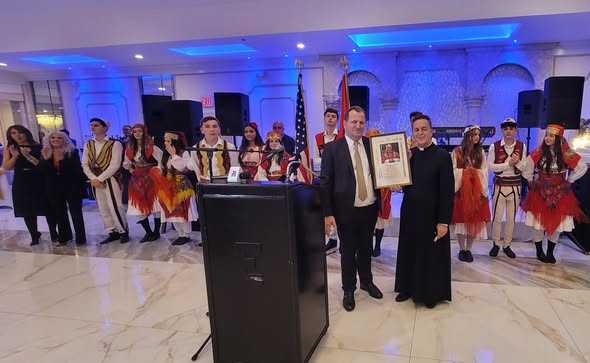
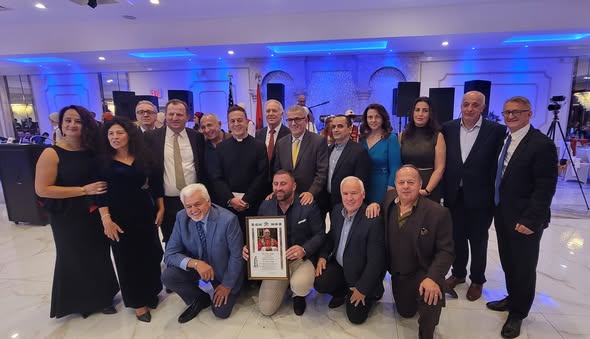
AARC Outstanding Contribution Award for Jimmy Xhema accepted on his behalf by Vatra President Elmi Berisha

September 25, 2025 by s p

Rafaela Prifti
Foto: Dritan Haxhia/

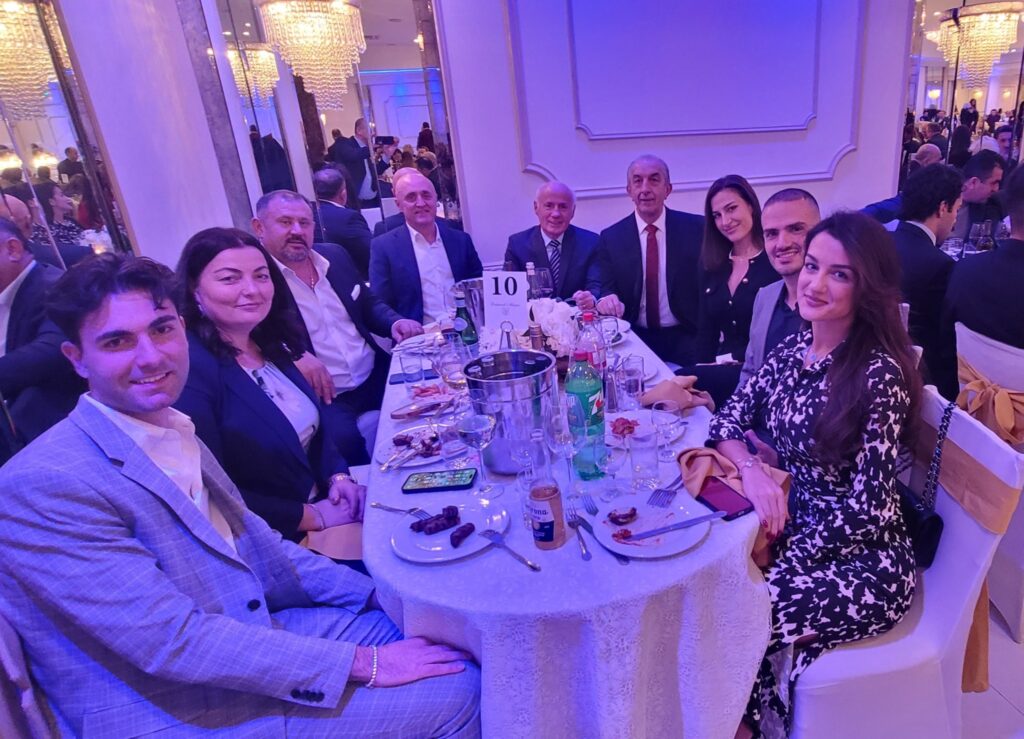
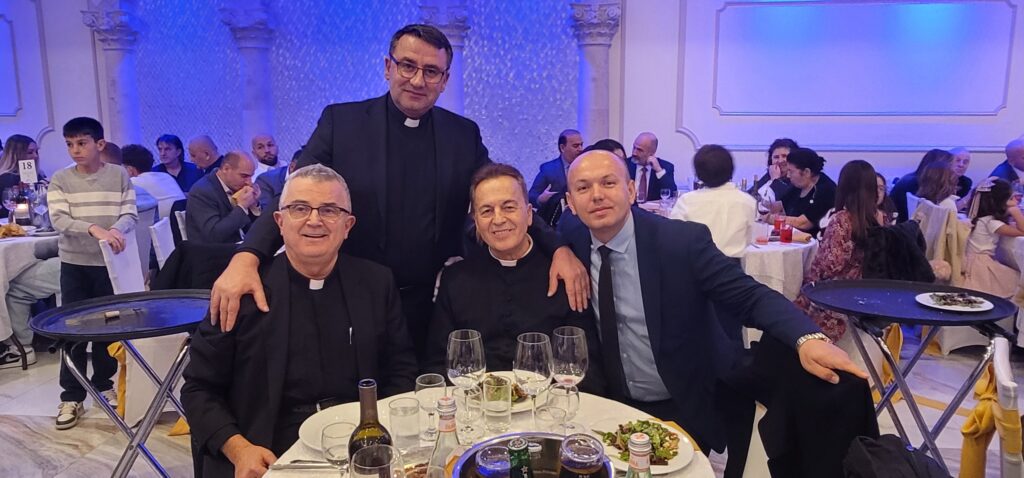
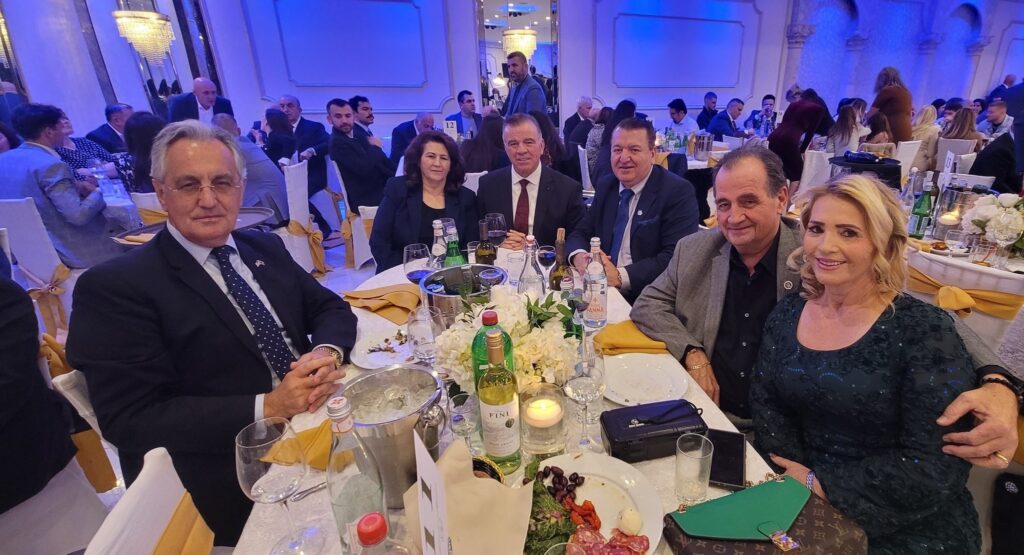
The Gala evening hosted by Albanian American Relations Council (AARC USA) last night at Gotham Hall in New York City was a tribute to the resilient spirit and remarkable achievements of the Albanian community in diplomacy, business and culture but primarily, a call to action. “We have seen the cost of complacency,” remarked Martin Vulaj, President of AARC, placing emphasis on the inactivity of the community at large following the victories of independence of Kosova and US recognition of its statehood in 2008.

The event drew a distinguished crowd of international dignitaries, Presidents of Albania and Kosova, US Congressman, business magnates and influential public figures, and other notables. The evening honored a number of prominent and leading figures in the community.

“Jimmy Xhema was our model of how to make things happen,” said Martin in his introduction of the Outstanding Contribution Award Kaloresi i Skenderbeut. Accepting the word on Jimmy’s behalf, his friend of 36 years and protégé, President of Vatra, Dr. Elmi Berisha called him a powerful force, “the second Konica” of the modern era. “Following the war and years of involvement in foreign policy, I now am clear-eyed about never ceasing our work in the national interests of Albanians.”

The Pan Albanian Federation of America Vatra proudly supports the vital importance of advocacy by the Albanian American Relations Council. As the oldest organization of Albanians, with a proud historic legacy, Vatra has a deep understanding not only of the involvement of the Albanian Americans in the US, but also of the work it takes to foster strong relationships between our countries and the need for a growing political engagement.

Filed Under: Opinion

  • « Previous Page
  • 1
  • …
  • 10
  • 11
  • 12
  • 13
  • 14
  • …
  • 856
  • Next Page »

Artikujt e fundit

  • NDJESHMËRIA SI STRUKTURË – NGA PËRKORËSIA TE THELLËSIA
  • Si Fan Noli i takoi presidentët Wilson the T. Roosevelt për çështjen shqiptare
  • TRIDIMENSIONALJA NË KRIJIMTARINË E PREҪ ZOGAJT
  • Kosova dhe NATO: Një hap strategjik për stabilitet, siguri dhe legjitimitet ndërkombëtar
  • MEGASPEKTAKLI MË I MADH ARTISTIK PAS LUFTËS GJENOCIDIALE NË KOSOVË!
  • Veprimtaria atdhetare e Isa Boletinit në shërbim të çështjes kombëtare
  • FLAMURI I SKËNDERBEUT
  • Këngët e dasmës dhe rituali i tyre te “Bleta shqiptare” e Thimi Mitkos
  • Trashëgimia shqiptare meriton më shumë se sa emërtimet simbolike të rrugëve në New York
  • “Unbreakable and other short stories”
  • ÇËSHTJA SHQIPTARE NË MAQEDONINË E VERIUT NUK TRAJTOHET SI PARTNERITET KONSTITUIV, POR SI PROBLEM PËR T’U ADMINISTRUAR
  • Dr. Evia Nano hosts Albanian American author, Dearta Logu Fusaro
  • DR IBRAHIM RUGOVA – PRESIDENTI I PARË HISTORIK I DARDANISË
  • Krijohet Albanian American Gastrointestinal Association (AAGA)
  • Prof. Rifat Latifi zgjidhet drejtor i Qendrës për Kërkime, Simulime dhe Trajnime të Avancuara Kirurgjike dhe Mjekësore të Kosovës (QKSTK) në Universitetin e Prishtinës

Kategoritë

Arkiv

Tags

albano kolonjari alfons Grishaj Anton Cefa arben llalla asllan Bushati Astrit Lulushi Aurenc Bebja Behlul Jashari Beqir Sina dalip greca Elida Buçpapaj Elmi Berisha Enver Bytyci Ermira Babamusta Eugjen Merlika Fahri Xharra Frank shkreli Fritz radovani Gezim Llojdia Ilir Levonja Interviste Keze Kozeta Zylo Kolec Traboini kosova Kosove Marjana Bulku Murat Gecaj nderroi jete ne Kosove Nene Tereza presidenti Nishani Rafaela Prifti Rafael Floqi Raimonda Moisiu Ramiz Lushaj reshat kripa Sadik Elshani SHBA Shefqet Kercelli shqiperia shqiptaret Sokol Paja Thaci Vatra Visar Zhiti

Log in

This website uses cookies to improve your experience. We'll assume you're ok with this, but you can opt-out if you wish. Cookie settingsACCEPT
Privacy & Cookies Policy

Privacy Overview

This website uses cookies to improve your experience while you navigate through the website. Out of these cookies, the cookies that are categorized as necessary are stored on your browser as they are essential for the working of basic functionalities of the website. We also use third-party cookies that help us analyze and understand how you use this website. These cookies will be stored in your browser only with your consent. You also have the option to opt-out of these cookies. But opting out of some of these cookies may have an effect on your browsing experience.
Necessary
Always Enabled
Necessary cookies are absolutely essential for the website to function properly. This category only includes cookies that ensures basic functionalities and security features of the website. These cookies do not store any personal information.
Non-necessary
Any cookies that may not be particularly necessary for the website to function and is used specifically to collect user personal data via analytics, ads, other embedded contents are termed as non-necessary cookies. It is mandatory to procure user consent prior to running these cookies on your website.
SAVE & ACCEPT