• Home
  • Politics
  • Opinion
  • Culture
  • Sports
  • Economy
  • Interview
  • Reporting
  • Community
  • Vatra

Dielli | The Sun

Albanian American Newspaper Devoted to the Intellectual and Cultural Advancement of the Albanians in America | Since 1909

PARTITOKRACIA – VIRUS I SHOQËRISË PLURALISTE

July 22, 2022 by s p

Nail  Draga/

Ndonëse është pritur se do të kemi ndryshime cilësore në pluralizëm qytetarët janë të zhgënjyer sepse koncepti i depolitizimit të pushtetit edhe  në pluralizëm  mbetët mision i dëshiruar me pengesa nga partitë politike të cilat janë në qeverisjet lokale apo ate shtetërore, nga del se kemi të bëjmë me partitokracinë që  është në kundërshtim me vlerat e demokracisë pluraliste, duke  dëshmuar  se kemi të bëjmë me shoqëri të pakonsoliduar dhe kundër parimeve demokratike.

Nëse në monizëm për kuadrat udhëheqëse vendoste partia ku si kriter bazë ishte përshtatshmëria politike e pastaj ajo profesionale, në pluralizëm me të drejtë është pritur që në këtë aspekt të bëhën ndryshime pozitive. Por, ndodhi e kundërta sepse edhe në pluralizëm fusha e punësimit mbeti iluzion, sepse infektimi i monizmit  është bartur me besnikëri  edhe në pluralizëm. 

Në vend që të respektohet sistemi i vlerave , ka ndodhur e kundërta ku parësore është përkatësia partiake, duke vendosur aty kuadra partiakë pa marrë parasysh përgatitjen  etyre partiake, meritokarcinë apo autoritetin shoqëror në mjedisin përkatës. Në këtë aspekt përjashtim nuk bëjnë as subjektët politike të shqiptarëve në Mal të Zi, çështje e cila nuk është në favor të vlerave shoqërore dhe demokracisë pluraliste.

Depolitizimi mision i parealizuar 

Kemi të bëjmë me ambiciet e partive politike për të vendosur në struktura të qeverisjës lokale apo shtetërore individët partiak të cilët kanë qenë të angazhuar në fushatën zgjedhore apo i kanë mbeshtetur në forma të ndryshme. Një veprim i tillë ka marrë përmasa shqetësuese sepse në këtë drejtim janë angazhuar të gjitha partitë politike të cilat janë pjesë e koalicionëve qeverisëse.

Ndonëse në Mal të Zi, në sajë të rotacionit të pushtetit  në sajë të zgjedhjeve parlamentare të mbajtuara me 30 gusht 2020, është pritur qe qeverisja e re te dallohej  nga ajo e shkuara, ndodhi pikërisht e kundërta, sepse partitë politike fituese të zgjedhjeve në strukturat  e pushtetit vendosën kuadrat partiake. I njëjti veprim është duke ndodhur  edhe pas dekompozimit të shumicës parlamentare dhe formimit të qeverisë së pakicës(28 prill 2022). Sepse, tradita e trashëguar në këtë aspekt  është vështirë të ndryshojë, pavarësisht deklaratave politike, nga del  se depolitizimi i sistemit mbetën mision i parealizuar, që nuk është në favor të parimeve demokratike.

Përkatësia partiake e jo ajo shkollore

Nuk është çështje e panjohur se përkatësia partiake është parësore në fushën e punësimit e jo të përgatitjes shkollore. Madje resor të ndryshëm qeveritar si arsimi, shëndetësia e administrata publike janë bërë veprimtaritë kryesore duke qenë bazat e elektortatit votues të partive politike. Kemi të bëjmë me dukurinë e politizimit  ku në veçanti dallohet fusha e arsimit. Madje disa shkolla partitë politike i trajtojnë si bastione të tyre, që dëshmohet përmes emërimit të drejtorëve sipas marrëveshjeve të pjesëtarëve të koalicionit  në nivel qeveritar. 

Duket paradoksale, por as në vendin e punëtorit sanitar nuk mund të punësohej nëse nuk i përket partisë politike, nga del se është politizuar çdo veprimtari publike shoqërore. Një veprim i tillë dëshmon se nuk vlerësohen vlerat profesionale apo shoqërore por përkatësia partiake,  dukuri  me pasoja shoqërore tash dhe në të ardhmën.

Përfaqësimi dhe prezantimi

Në vendet e ish kampit socialist ku ekzistonte kulti i individit pa kufizime të mandatit, në pluralizëm në sajë të zgjedhjeve  mandati  i pushtetit është i kufizuar  duke respektuar vullnetin e qytetarëve  që paraqet vlerë të demokracisë pluraliste. Në rrethana të reja kemi të bëjmë me mundësi që qytetarët përmes procesit të zgjedhjeve duke mbeshtetur subjektet politike sipas preferencës së tyre të ofrojnë ndryshime shoqërore.

Nëse e trajtojmë në këtë aspekt Ulqinin, përkatësisht qeverisjën lokale me keqardhje themi ndonëse janë mbajtur zgjedhjet lokale me pjesëmarrje me parti të ndryshme është përshtypje e përgjithshme se qeverisja lokale ka pasur pengesa subjektive si nga kuadrat përgjegjëse, korrupsioni,, nepotizmi, shpërdorimi i pozitës zyrtare si dhe nga mos funksionimi i pushtetit ligjor. Dhe një situatë e tillë është mbeshtur nga pushteti qendror të cilët këtu kanë realizuar objektivat e tyre që dëshmohet me dështimin e privatizimit, papunësinë dhe emigrimin e popullsisë në botën e jashtme.Kemi të bëjmë me dështimin e përgjithshëm për tre dekada, që dëshmon dështimin e individëve në përfaqësim dhe prezantim në strukturat të qeverisjës lokale e asaj qendrore.

Qytetarët e Ulqinit presin ndryshime 

Ulqini ka nevojë për ndryshime  me një pushtet lokal të përgjegjshëm e profesional që punon në favor të qytetarëve e jo të idividëve apo klanëve të ndryshme. Pas zgjedhjeve lokale të mbajtura me 28 mars 2022 dhe formimit të shumicës parlamentare(Koalicioni “Fillimi i ri” dhe Forca) me 19 këshilltarë qytetarët presin  ndryshime në nivelin lokal sidomos kur nga Ulqini është edhe kryeministri i Qeverisë  së Malit të Zi(D.Abazoviqi). Është ky një moment që duhet të shfrytëzohet, sidomos në investimet e munguara vite me radhë në Ulqin nga pushteti qendror. Andaj, të gjithë qytetarët me kureshtje presin të fillojnë të realizohen në praktikë premtimet pazgjedhore. që do të jetë në favor të qytetarëve të këtij mjedisi.

Duhen profesionist  të guximshëm 

Nuk ka dilemë se për ndryshime pozitive duhet angazhim konkret me individë të përgatitur dhe të guximshëm pa hipoteka për tu ballafaquar me realitetin i cili për tre dekada ka qenë degradues për Ulqinin. Por, duhet të jemi realistë se Ulqini vite me radhë ka pasur pushtet të pakonsoliduar  në sajë të raportëve jo parimore  me pushtetin qendror. Ndërsa tash egzitojnë gjasat të eliminohen këto divergjenca duke u konsoliduar jo vetëm  në aspektin financiar, sepse nuk mund të arsyetohet e dhëna se qyteti i Ulqinit është me i varfëri në regjionin bregdetar, kur dihet se këtu janë resurse të mëdha për zhvillim ekonomik. 

Andaj, ka ardhur koha për  një qasje tjetër me strategji zhvillimore dhe përgjegjësi personale e institucionale e kuadrave udhëheqëse, e jo si deri më tash që pushteti lokal është trajtuar sipas interesit të individëve lokal dhe oligarkëve  në nivel shtetëror.     

Filed Under: Politike Tagged With: Nail Draga

Boston- Worcester, “Head and Heart” * of the Independent, Spiritual and Educational Movement within Albanian First Organized Émigré Community in the New World

July 21, 2022 by s p

Neka DokoA person wearing glasses

Description automatically generated with medium confidence

Albanian Orthodox Archdiocese

Fan Noli Library & Cultural Center

Interdisciplinary Research

& Digital Archival Projects

South Boston, MA

July 2022

Introduction:

This research paper has been compiled after years of historic interest in the oldest Albanian community existence in America. From the beginning of March 2004 when I was appointed as the archivist of the Fan Noli Library with honor and responsibility I embarked in the terrain of firsthand documents to fulfill an identity quest. Following my own work ethic for meticulous analysis based on steady observation and archival work for more than a decade I felt the inner joy to discover data and start connecting dots. I was curious to see more behind what I was hearing from St George’s churchgoers’ words of mouth reiterating how Bishop Noli had baptized Boston and Worcester special connection respectively as the “head and heart” (1) of the first Albanian émigré community of Massachusetts. Energetically, I sensed the veracity of Noli’s words in the vivid expressions and feelings of the oldest generation of Saint George, when talking in person during Sunday post liturgy reunions. I went on however, to see how real the word of mouth would have sounded if documented from archival data about two cities subtle variables hypothetically both considered as the oldest immigrant settlement of Albanian urban sites. Upon providing further evidence, the Massachusetts community could be symbolically remembered as the Mayflower history of Albanians in the new continent. Also, sincere efforts and feelings were aligned with logic into spiritual lane, as a holistic connection of body-mind-heart and soul of my paper to energy work. 

Since Bishop Noli himself was a brilliant scholar so are Prof Nicholas Pano and Very Rev. Arthur E. Liolin, I had peace in my mind to lean into their legacy and continue my researching work. Their inspiration had motivated me personally to put in good use direct historic facts from Fan Noli archive to new search and research for almost 15 years now. Some 20 years ago when I was working with my PhD, thesis of interdisciplinary education on the linguistic, sociocultural and emotional intelligence shift of Albanian families settled in Paris, what I struggled to seek down there I all found it up here in the community of Saint George in the first cell of ever organized Albanian state in the Western World. I didn’t even dream about it, God gifted to me. Right here in Boston, some 100 + years after the first settlement of Albanians in America, I am living my life among books of the non-Albanian and Albanian alike best scholars of the world who had poured their mind and soul into the Albania’s history from the ancient era to the modern time, something the communist regime in our homeland had never allowed us to have at hand. In addition, that was a keen motivation of lifetime dedication to an unknown experience I was eager to live in. 

The first source I was advised by Prof. Pano to consult was “The Albanian Struggle in the Old World and New”, a 1939 published book by The Writers, INC., in Boston, a solid and sole data content for the beginning of the Albanian experience in America, that has been recently translated into Albanian with the foreword of Prof. Nicholas Pano in 2019.

“It was in Boston that the first Albanian organizations took root. To Boston came Albanian emissaries from overseas with messages for American compatriots. From Boston were sent those earnest, labored cablegrams by which American Albanians aspired to influence the Near Eastern policy of Sir Edouard Grey and other potentates no less august. Massachusetts which received the first pioneers and has kept the largest concentration, is the focal point of the Albanian American history in the New World. Who opened America may his soul shine and shine; A fellow from Korcha and one from Katundi, may their souls shine and shine. Thus have Albanians expressed their gratitude to the first two of their compatriots who came to America. The man from the city of Korcha arrived in 1876, but he soon left for the Argentine. More important was the man from Katundi who settled in Massachusetts in 1886. His name was Nicholas Christopher. This was the man who carried the vision of America back to Albania.” (2) 

Shortly after the list of brisk issues and vast differences between two worlds the old and the new for all Albanian immigrants was revealed without hesitations, “The Albanian coming from a semi-feudal Balkan country to highly industrialized Massachusetts, was not prepared to struggle for existence in the New World. In crossing the Atlantic he seemed suddenly to be spanning centuries of economic and social development. The Albanian Immigrant to America was not only facing a complete shift in environment, but he was also actually being projected from one epoch of civilization to another.” (3)

And something has been crossed there with our own approach of research in the field.

The transatlantic sociologistic gap, as the first phenomenon due to socio political, cultural and psychological differences between two countries in the beginning of the 20th century, I assume has been viewed as a personal, group and cultural shock by all Albanian immigrants here and there because of the wide range of social and economic factors that have separated them from the originated lifestyle back in their homeland identified with a place of lack of almost everything. (4)

While attempting to connect historical dots in the context within two first decades of the last century on urban establishment of the Albanian immigration cell in Massachusetts, the scope of this paper makes sense to be focused on the educational and sociocultural component of the Albanian independent of émigré movement lead by Boston – Worcester bond. Trying to advance the quest on that proactive component trajectory since the beginning, the reader will acknowledge its pivotal role in the essence of independent and spiritual self-determination of the very first newcomers in Massachusetts among whom the majority didn’t know yet to read or write in their own tongue. Moreover, to trace the identity through archival data of the first brave and intelligent Albanians who no matter the odds, difficulties, and struggles, succeeded to lead an anti-illiterate massive education campaign to enlighten their compatriots’ mind to find their own way for straitening the gap and fulfilling their families dreams, with the price of leaving an occupied and outsourced homeland for freedom in worship, trust in law structure and economic progress and a better future for their children. Finally, to recognize the first generation of grandparents and parents who sacrificed their own lives by working very hard and putting their heart and soul into it while never forgetting where they came from but kept giving the best they earned in mindset and economy to Albanian independence cause, through financial aid, educational and cultural influence. Pointing out all this during this year of the 100th anniversary of the Albanian American diplomatic relation celebration it does justice to the cause while recording in print their inheritance and a unique deserved legacy to the New World, Albania and diaspora.

First Things First: Education in Albanian and then in English 

The illiterate gap above all couldn’t have been narrowed with time if the immigrants of Albanian elite made up of intellectuals and patriots did not lead the mass education movement from the beginning. 

From the Albanian intelligentsia, of the late of 19th century spread all over the Balkan’s region and Egypt only a few who had the patriotic stamina and missionary spirit to support and direct the Albanian nationalist movement were up to the task for that purpose in the beginning of the 20th century to America. 

As documented, (5) among the first was Sotir Peci who came to Boston in 1905 and established the weekly Kombi (Nation) newspaper on June 12, 1906. Financially assisted by his fellow countrymen Peci began the publication with the fear that the most of immigrant Albanians would not have given a try to read it for several reasons. Primary, they never had seen their native language in print, since neither the Albanian schools nor the Albanian periodicals were allowed to exist in Albania because all were banned by Turks or Greeks. 

“Hence the nationalist leaders first preoccupation was to teach their compatriots the rudiments of reading and writing. “(6) 

The contextual auditorium of the Albanian literacy campaign was set up in the “konak”- the collective home of the old émigré waves the first groups could ever afford to reside without in the city. “The arrival of the Albanian newspaper was eagerly awaited by members of the konak. In a new world, still foreign to them, the appearance of an Albanian paper seemed to give them something of their own.” (7) 

Several books of “patriotic poems, political pamphlets and translations from foreign languages” some old and sample of the kind preserved and catalogued in Fan Noli archive under rare books category written in Albanian with Greek and Slavic letters were published before the Congress of Monastir (8) which marked the beginning of the unified written Albanian with Latin letters. Presumably these publications were the primary education source that was provided to the konak’s school by the abroad colonies of Egypt, Romania and Bulgaria.

“In the years following the establishment of Kombi in Boston, the metropolitan district became the working center of a number of Albanian intellectuals whose sole mission in life was the education of their own people.” (9) 

From the same source and from “Ylli I Mengjesit” (10) we learn that Christo Dako was one of them. Educated in Bucharest, he came to Boston in 1907 to pursue his studies at Oberlin College. Influential as educator in Massachusetts through his free Albanian and English evening courses to his compatriots in Boston and Natick. Mr. Dako had shown a concrete example of the value and the virtues of education to his students. Thanks to a successful campaign of education lead by this patriotic and intellectual men in both languages to the young workers in Massachusetts industry, one could even read at the time bilingual adages in the headlines of the Albanian newspapers. “The Pen is Mightier than the Sword.” “Education spells Success”. 

In the same year of the first issue of Kombi, another Albanian nationalist came to Massachusetts. Fan Stylian Noli, who came from Egypt supported and incited by the nationalist old movement there.

Fan S Noli came to America because his prime calling was both religion and patriotic. As Arshi Pippa in his paper “Fan Noli as National and International Figure” Sudost Forschungen 1984, had emphasized Fan Noli’s decision to become a priest was primarily patriotic.” (11) 

Nevertheless, the arrival in 1909 of Faik Konitza from England to Boston invited by Fan S Noli to work for Dielli’s first editorial ship after 9 years’ experience of his own “Albania” first multilingual historic and national review in the world, was another crucial event to Boston’s movement for independence and Albanian international cultural education.

Between Worcester and Boston: An Albanian Liturgy Founder, Orator, Leader and Educator

As the historic data shows the multidimensional role of the young Fan S. Noli started to be recognized, supported and honored by a growing group of Massachusetts Albanian worshipers and patriots from the beginning for his clear vision toward the Independence of the National Orthodox Church and Cause, for his oratory skills of a natural educator and strong leader when listening his speeches in public. In 1907- 1908 Hudson, Marlborough, Worcester and Southbridge were in the heart of the Albanian Nationalist Movement against the Greek church of Hudson, which refused to officiate the burial for the first Albanian Christian immigrant who died in 1907. The movement started in the Worcester’s County and the Albanian church foundation ended up in Boston in 1908.

“The year 1908 was momentous in American Albanian life. Fan Noli jumped to the head of the movement for religious separatism and called a convention of Christian Albanians from settlements throughout new England. The delegates resolved to abandon the unpatriotic church and to create an Albanian Autocephalous Orthodox church with Fan Noli as their first Shephard. Platon, Archbishop of New York ordained Fan Noli as a priest; a hall on Tremont Street became the tabernacle; and the National Church Association was founded to protect the rights of the newly formed body. Never before, not even in Albania, had Albanians worshiped in an autocephalous church. In March 1908, the mother church of Saint George in Boston was organized, the young Albanian priest Fan Noli officiated from there the first Albanian Orthodox liturgy in Boston on March 22, 1908. After the first independent achievement for the Albanian church history in America, from the mother church, many daughter-churches were born one after the other. In this context, in 1915 Saint Mary of Worcester was established.” (12) 

During the second archival search and research we noticed that the beginning of Saint Mary’s Assumption history has been clearly influenced by two main educational and cultural cities, Boston and Korcha. In terms of direction and organization data show that the church’s life has been inspired by the leadership of Saint George’s Cathedral- the Albanian Mother Church in Boston. And on the other hand, in terms of the internal structure and design of their church, other data show that the church of Saint Mary has been inspired by the architecture of Saint George in Korcha. (13)

In the Anniversary book of Saint Mary’s Assumption Albanian Orthodox Church, 1915-1990, for the 75th Diamond Jubilee, when the history of the Albanians legacy of the church in Worcester was written and published by themselves, it sounds that the special bond between two churches and communities was celebrated. 

“On August 13, 1911, the Albanian of Worcester organized a Chapter of Saint George Cathedral of Boston Four years later, in 1915 this branch was organized into the Church of Saint Mary’s of Assumption.” (14) 

From the same source other data show the Albanian efforts to find an appropriate and definite location because from 1911-1917, services were held in various halls. The situation changed when in 1918 a German Presbyterian Church on 63 Wellington Street was purchased.” The church was designed and styled to be a replica of Saint George in Korce, Albania. The icons were painted by the Rev. Naum Cere who had studied iconography in Odessa.” (15) 

In addition, Louis Pero, historian. writer of Saint’s Mary history, and member of the 75th Diamond Jubilee Committee concludes the “History of Our Church”- chapter with this message, “ We are the children, grandchildren, and great grandchildren of these dedicated pioneers who established St Mary’s Assumption Albanian Orthodox Church under the leadership of Bishop Fan S, Noli, They installed in us a deep love of God, country- America, and our ancestral roots- Albania.” (16) 

However, under Fan Noli’s leadership a second important independent movement and organization of the Albanian community in America after the establishment of the Orthodox church occurred again in Boston, Massachusetts. The Pan Albanian Organization in America, Vatra- the Hearth, was founded on April 28, 1912, in Boston, by Fan S. Noli, Faik Konitza, and many others whose names are identified at the first photo of the Vatra’s meeting in Boston. (17) 

Some interesting organizational changes came along with the event. During the Vatra’s first meeting, the same day the organization’s committee had to suspend all Albanian running social or political societies under the Massachusetts state law.

For instance, whereas Boston was scrupulous to abide by the law, Worcester where the Hearth’s operation started after May 19th, namely known as Vatra Branch N. 5, the social organizations dynamic itself went a different direction. In Boston where Vatra had the seat, the legitimate organization entirely took the center of the stage having merged the existing Albanian societies, in other cities like in Worcester, many societies coexisted with Vatra and even flourished under the Saint Mary’s hospice.

As the Saint Mary’s church anniversary books show the figure of Bishop Noli has been thoroughly supported recognized and cheered by the Worcester community leaders and worshippers from the beginning to the very last decade of his life.

Through book dedications or even handwriting sentiments we have seen messages of praise and gratitude toward his missionary patriotic, educational and intellectual service each step of his work with byzantine clergy literature to fulfill old and new Albanian churches needs in prayers books, hymnal music, and orthodox bible translations and research books. No one like him could have dedicated years of systematic and academic work in service for educational and spiritual enlightenment to the Albanian Orthodox compatriots in America and abroad. 

One of them was mentioned personally by the Worcester elderly priest named P. T Sinica, the translator and publisher of his own produced “Wishes Booklet for Evening Services” he had translated from Greek into Albanian “Urimtore e Sherbeses Mbremesore” and published in 1920 in Worcester by the Publishing House of Sinica. In his book’s introduction the veteran priest states with clear intention to whom was dedicated the issue. In the last paragraph of his foreword, he mentioned that the booklet was sent directly to Bishop Fan Noli for his mastery corrections and advice. In the next page the author writes a personal dedication to the Grace Bishop and Father, Imzot Theophan, the founder of the National Church as a sign of love and gratitude. (18) 

Worcester: an Albanian Urban City in Massachusetts ahead of Boston

Although Boston is considered the oldest capital of the Albanian Immigrants in the United States, data show there was a Worcester criterion that clearly identified a new urban choice of newcomers that separated in a way the former to the latter. Connecting the data, it seems that this criterion was related to the Albanian newly married couple preferring their family reside the urban city of Worcester rather than the Boston’s extended urban area. That became a social phenomenon for Albanian families that grew in number as ‘urban’ during two waves of immigration movement. In the first decade of the start of the century after 1910 and again after 1990 during the last decade of the 20th century when new immigrants were heading to the urban city of Worcester rather than to the same areas of Boston, the social shift differentiated the two respectively Albanian communities from one another. While choosing Worcester urban city over Boston’s larger area the first urban Albanians originated from the southern cities of Korcha and by nearby towns, data show they were mostly young women that brought along the criterion of education and cultural lifestyle of their hometown and preserve it in the New World émigré journey. From many sources including the Albanian Struggle book, the first dominant criterion was related to the single male house affordability. (19) When the migrant men returned to homeland and married Albanian educated women things changed and the new criterion of urban residency emerged as definitive. Since the urban aria of Boston was too expensive to be afforded by male konaks, the family cell led this time by educated brides left Boston behind to establish their future family plans in a city who welcomed Albanians and many other immigrants to live in more affordable larger family homes near facilities of workplace, public transportation, schools and hospitals all located near one another and not far from the heart of the city. The best city located in the center of Massachusetts that fulfilled these two criteria for the urban Albanian category of affordable near city family houses, when fulfilling their sociocultural lifestyle, was Worcester. (20)

With that variable of educated women in the equation, a remarkable social and cultural urban movement, fully flourished in Worcester turning that point into a female influence phenomenon ahead of Boston.

As a result, no wonder like the “champignons après la pluie”, between 1911 the year of the first mission of Worcester’s Chapter in Boston and 1915 when the church was established, blossomed numerous social and cultural societies and groups all female oriented with educated women’s participation that outnumbered those in Boston. All started in 1910 under the name of Korche and other towns where the immigrants originated from, such as Drenovare Society Bashkimi, Lulezimi Boboshtare, Korcare Arsimi, Albanian American Women of Worcester, Gruaja Shqiptare, Women of Drenova, Daughters of Korce. (21)

Another viable source of supporting our point of view is what Very Rev. Arthur E. Liolin emphasized during the two last year interviews about Worcester’s urban development of the Albanian community. He precisely answered our questions by providing many data and details while observing firsthand of old photographs describing the Albanian School of Worcester of 1926-7 and the “Voice of Albania”, recognizing the logo of that Local Radio of Worcester where his mother Helena Shoqo- Peter was among other ladies as artists and members of a male directory team.

In his relevancy of thoughts and sentiments, he enlightened an important point that Women of Worcester represented the pioneers of the Albanian Women Liberation Movement, occurring in America in the beginning of the 20th century, an affirmation supported by the data and arguments we have discovered in many digital and documentary sources for the matter. (22)

To make the above arguments stronger, to our pending question, “Where and when was founded the First Albanian School in Massachusetts?” I started to believe that an answer was on the way. When consulting for this file, the history college paper of Dennis Paul Philips “The Albanian Orthodox Church in America- A History, a Parish, a Future”, his last point shed more lights to the question. “Boston found a great number of its Albanian residents formerly from the Vakefet, the parishes, five villages, that surrounded the large Albanian city of Korce. On the other hand, Worcester had a great many settlers from Korce inhabit its community. These people were the most educated of the Albanian Americans having lived in the cultural capital of the mother country. Thus, it was no surprise to see the Worcester Albanians organize the first Albanian school in America. (23)

Since last sentence only touched up the surface of my long-term search and research about the year of the first Albanian school foundation in Massachusetts, a more specific question had arrived, “Where in Worcester and when that happened?”

Worcester Albanian School Prior to Boston Sunday School of Saint George

The Interviews with Fr Arthur on May 20 and August 26, 2021, had two panel questionaries that were both centered on the first Albanian school foundation in place and time.

In the first meeting organized at the Albanian chancery Garden Room a spiritual space gifted by the late generous +Archbishop Nikon, the Liolin family, Fr Arthur, Prifteresha Margaret and their son Evans, were keenly received in the sacred place for a first audio interview. 

I had all questions written and tried to not to ask for all of them, using my energy work to let Fr Arthur and family enjoy the reception above all. It was the first come back for him to the office after Covid second shut down time. I was very cautious to treat this first meeting as a casual and smooth conversation with Fr Arthur although around an unknown quest related to Worcester history on urban cultural and educational characteristics that had distinguished that highly demanded immigrant city compared to our Boston’s denotation as the first ever capital of Albanians.

I showed Fr Arthur the old photograph of 1926-7 (24) where a photo of Sunday School framing a larger contingent of the institution lead by the staff of the founder and co-founders, teachers and children who practically are categorized in different group ages seat or standing in three- four rows, an old, rare and fairly well-preserved photograph taken at the backyard of their former church of Saint Mary in Worcester.

The first-person Fr Arthur recognized right away and mentioned the name was Mr. Peter Kolonia, who was in his words the founder and the director of the school in company of his wife and children among other women teachers and students. 

I had known this name from Professor Pano’s advice to look up on Fan Noli’s correspondence with Peter Kolonia over the years. I had a smiling face and a yes confirmed in place about the name of a significant leader of the earliest Albanian educational movement.

One of the puzzle’s pieces about the Albanian School in Worcester file just had been shaffled on the table. We know now the place, at Saint Mary and the director, Mr. Peter Kolonia, who in addition, was a close collaborator of Bishop Noli. With all that unexpected data connection, a released ‘yes’ came out, “So far so good.”

I stopped going into getting other names that day, but I got the feeling that photograph couldn’t represent the first year of the school foundation. My intuition directed a further search to see if I would find an older photograph about the event. I was satisfied with the answers I raised and well received that day about the features of Albanian life in two cities of Boston and Worcester that could influence an educational movement to lead to the Albanian school foundation. Both Fr Arthur and Margaret gave some clear perspective and advice on family memory recollection and all that was very much appreciated and insightful. Now I knew that this event had more chances to have happened in Worcester before Boston. The conversation- audio interview was an accomplished mission, and all were happy at the end of the day.

Meanwhile I presented all the data to the WHM project team where we as Fan Noli Library archive and Saint George’s history were involved in during this event of 2020 and 2021, over the zoom meetings.

However, our digging quest for finding the year of the first Albanian School foundation in Worcester Massachusetts had a long way to go.

In the second video interview that had taken place in the house of Very Rev Arthur E Liolin, on August 26, 2021, we learned more about the two generational Peter family business and educational history in Worcester Massachusetts the birthplace of Fr Arthur’s mother and Peter’s brotherhood siblings whose business success played a crucial role in that community independent cause and prosperity, that we were pleased to collect data with enlightening conversation through these old photographs history and memorability. (25)

However, it had to come another project for celebrating this year of 2022 the 100th anniversary of the American Albanian diplomatic relations establishment that activated my further search on a large-scale firsthand document, without it the data for the year of the event I was looking for a year ago wouldn’t have seen the light right now.

This is an interesting turn I never thought of when I started this work. Then, during last month thorough search over all periodicals of the year of 1922 about all what was written on the event, I found in Dielli of August 26, 1922, the photo I was eager to discover long time ago but happy to locate and get used on time. (26)

They are both now displayed here in the row, based upon the year criterion of the school foundation time and place. The first one represents from the text below the photo’s atmosphere this event has brought to the community around Saint Mary’s cheering the news of the ALBANIAN SCHOOL OF WORCESTER, the first one in Massachusetts opened to public in August 1922. The date of the Dielli issue, in the front page printed was well noted as August 26, 1922 marked the day of school foundation. 

A picture containing text, book

Description automatically generatedA group of people posing for a photo

Description automatically generated with medium confidence(1,2)

 Worcester Historical Museum Project on the Albanian community history: What’s next?

If the approach of next exhibit will be focused on the family history, we have been honored to receive over the years people from second and third generation representatives who had preserved in their personal libraries their family’s history firsthand documentation. With emotions they have submitted to the Fan Noli Library and archive a piece from their own family history believing that may contribute somehow to link their stories to other families and create the puzzle of the entire family of the Albanian generations of old and new immigrants in America.

There is a list of few cases as below:

  1. Peter Brothers Family through Helena Shoqo- Liolin and Fr Arthur Liolin collective and transmitted data, displayed respectively as daughter and grandson of Kosta Shoqo- Peter of Worcester, who represented a successful brotherhood business and patriotic family.
  2. Chani & Chico families through John Chani, the grandson of both Van Chani and Harry Chico, of Worcester and Boston, great independent church and identity cause leaders in Vatra and Albanian Orthodox Archdiocese in Boston and Massachusetts.
  3. Kirka & Lito families, through John Lito, former President of Worcester Vatra’s branch, the grandson of Kristo Kirka one of the imminent leaders of the independent Albanian cause of Worcester and Boston. 
  4. Morcka family through Lidiana Morcka the granddaughter of Zisi Morcka, flute musician and one of the co-founders of Vatra’s band of Worcester in 1925.

The list is open to other cases. The time is working in favor of this interesting project one of the kind historic and cultural enterprise for the Albanian immigration history in the United States. We take a moment here to express our gratitude towards all the participants who organized, and lead the event, while thanking all people who provided their family’s history materials to celebrate together in this first venue of the Fan Noli Library involvement in the central Massachusetts Worcester Historical Museum pioneer project, as a legit partner and professional collaborator.

References and notes

  1. “Head and Heart” * Concept of Neuroscience and our Energy Work referring to how Bishop Noli had baptized the organic bond between Boston and Worcester considering their pivotal role for the Albanian Orthodox church foundation, independent worship and national cause in America. The concept is our research paper denotation symbolically linking two epithets Imzot Noli used in comparison to spiritual status of Boston as the Head of the Albanian Independent Movement and Worcester as the Heart of it.
  2.  “The Albanian Struggle in the Old World and New”, a 1939 published book by The Writers, INC., Boston. P. 5-6
  3. Ibid, p. 8
  4. Albanian American Intercultural Research & Documentary dedicated to Fan S Noli on the 100th anniversary of Noli’s graduation from Harvard. (2012, Doko, N. in Fan Noli Archive file)
  5. File of the Albanian American Community History Bibliographical Sources. Mentioned by S. Skendi, in Beginnings of the Albanian Nationalist Trends in Culture and Education, p.365

(In Fan Noli Library)

  1. “The Albanian Struggle in the Old World and New”, a 1939 published book by The Writers, INC., Boston. p. 38- 39
  2. Ibid p. 39
  3. Stavro Skendi, in Albanian Political Thought and Revolutionary Activity, 1881 -1912, München 1954
  4. The Albanian Struggle… p. 40
  5. Ylli I Mengjezit (The Morning Star) Monthly Albanian Review, N. 4, July 1918. Published by Miss Paraskevi D. Kyrias in collaboration with Christo Dako
  6. Arshi Pippa “Fan Noli as National and International Figure” Sudost Forschungen 1984, p. 242
  7. “The Albanian Struggle in the Old World and New”, a 1939 published book by The Writers, INC., Boston. P. 43
  8. Oral data collection in FN Library File compiled during our tour visit at Saint Mary Church in Worcester in 2018
  9. Anniversary book of Saint Mary’s Assumption Albanian Orthodox Church, 1915-1990, for the 75th Diamond Jubilee, Worcester, MA, 1990, p. 21
  10. Ibid p. 22
  11. Ibid, p.23
  12. In the “Kalendari of Vatra” Published by Vatra, Boston, 1918
  13. “Urimtore e Sherbeses Mbremesore” Translated and compiled in Albanian by P.T Sinica in 1920 in Worcester by Sinica Publishing House. Hyrje.
  14. Albanian Struggle & al
  15. Our thesis approaches on Boston – Worcester organic bond and urban differences on the Albanian American Community History and Lifestyle (Worcester Historical Museum Project file, 2021-22)
  16. Directory of Ethnic Organizations in Massachusetts- Massachusetts Bicentennial Commission. P. 7
  17. Audio Interview Text with Fr Arthur Liolin on May 20, 2021, on Worcester family roots, in Albanian Archdiocese in South Boston
  18. Dennis Paul Philips “The Albanian Orthodox Church in America- A History, a Parish, a Future”, Boston, 1973, p. 13
  19. Second photo in the row of the Albanian School in Saint Mary, Worcester, 1926-1927
  20. Historic Video about Worcester family cases file on Albanian Émigré history and legacy, of Very Rev Arthur E. Liolin, Saint George’s Emeritus Chancelor on August 26, 2021. Produced on behalf of Fan Noli Library Digital Projects for WHM of the Albanian Community History Panel, by N. Doko with E. Liolin’s assistance.
  21. Firsthand historic in print photograph of the Albanian School in Worcester, representing a milestone educational cultural and spiritual event that have happened at Saint Mary’s church in summer 1922. 

Photos

  1. The first Albanian Sunday School of Saint Mary’s photo featured by the frontpage of Dielli on August 26, 1922, along with a bellow’s text written in Albanian that congratulates and cheers the founder and teachers at the school for the beautiful gift to all of Worcester Albanian community. (Source: Fan Noli Archive in Dielli’s 1922 collection)
  2. The second so far in the row photograph of Albanian Sunday School in Worcester, a photo we previously had used as the first digital data document of the Worcester Albanian School History.

(Source Fan Noli Library old and rare photographs collection in the Archive’s Artefacts File)

Filed Under: Politike Tagged With: Neka Doko

Roman për përmasën e krimit serb në Kosovë

July 20, 2022 by s p

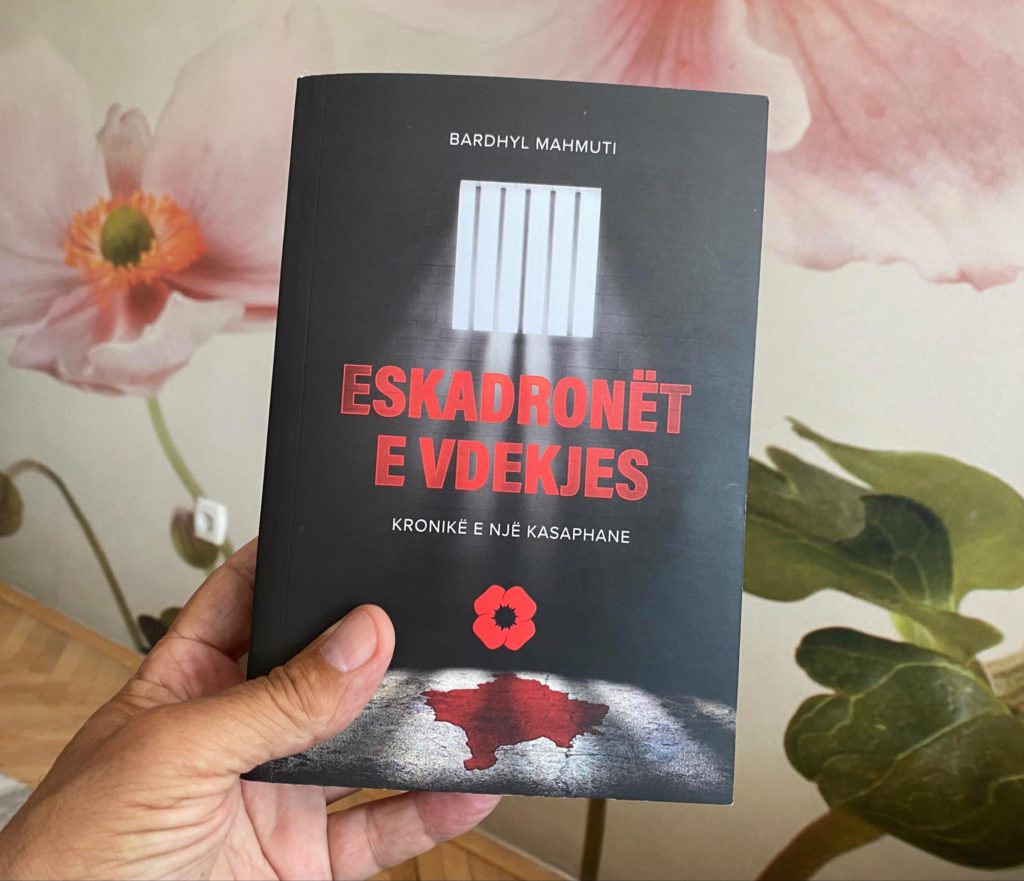
(Bardhyl Mahmuti, Eskadronët e vdekjes, roman, Prishtinë, 2022)

                               ‘‘ Për mua, romani është si historia dhe si protagonisti               

                                    i saj, njeriu: një zhanër i papastër në shkallën më të       

                                    lartë. I qëndron çfarëdo qartësimi dhe shkon përtej 

                                    çdo kufizimi. Sa për teknikën, e konsideroj të   

                                    ligjshme çdo gjë të dobishme për qëllimet që ndiqen 

                                    dhe i konsideroj të paligjshme ato risi që bëhen vetëm 

                                    për hir të risisë.

                                                                                              Ernesto Sabato

Prof. dr. Nusret Pllana

Universiteti ‘‘Hasan Prishtina’’

Prishtinë

Fjalë përmbledhëse

Roman që jep kronologjinë e gjenocidit serb përmes atyre që e kanë shkaktuar këtë gjenocid, duke i besuar një ideologjie fashiste.

Roman që vjen, edhe si kronikë dokumentare, pa e humbur gjuhën e rrëfimit artistik, kur përveç të tjerash shpalohet edhe bota psikologjike e personazheve, të të dy grupimeve, thënë për të dalluar përkatësitë ideologjike të atyre që bëjnë krime, dhe të atyre që i bëjnë publike këto krime.

Roman që shtresimin e rrëfimit artistik e krijon edhe me deklaratat policore, por gjuha e rrëfimit nuk ruan asgjë nga rrëfimi i skenarëve policorë.

Këto anë vështrimesh, marrë në tërësinë e shtjellimit të ngjarjeve në romanin Eskadronët e vdekjes të Bardhyl Mahmutit, mundësojnë krijimin e shtratit të ndërtimit të strukturës së rrëfimit në këtë vepër të veçantë artistike, e cila, thënë më së qarti, i ka munguar letërsisë sonë.

Hyrje

Autori i romanit Eskadronët e vdekjes, Bardhyl Mahmuti, në një mënyrë, apo në një tjetër, ka përplotësuar analizën shkencore që u ka bërë ngjarjeve, me të cilat është marrë Dik Marti dhe Këshilli i Evropës për të akuzuar krerët e Luftës së Ushtrisë Çlirimtare të Kosovës në veprën lapidare Mashtrimi i madh. 

Në strukturën e romanit, përvijohen aq shumë aspekte të raportit, të cilin Këshilli i Evropës e ka miratuar si hulumtim të vetin, për të fajësuar një luftë çlirimtare dhe ushtarët e saj, gjë që nuk ka ndodhur asnjëherë deri tashti, së paku jo në Evropë, qe më shumë se 75 vjet, që kur ka përfunduar Lufta e Dytë Botërore. 

Andaj, nuk është asgjë e rastit, se autori e ka filluar romanin me një përkujtesë nga koha e Hitlerit, nga veprimtaria e eshalonëve të ushtrisë së tij për të zhdukur hebrenjtë, pra për të zgjidhur njëherë e përgjithmonë çështjen e ekzistencës së tyre.  

Në romanin Eskadronët e vdekjes të Bardhyl Mahmutit, po ashtu shtrihet nëpër gjithë rrëfimin e tij, ankthi i ndëshkimit të kryerësve të krimeve, të atyre që kishin bërë gjenocid, gjë që nuk ndodh, kurse shtresimet e rrëfimit të ngjarjeve, përmes deklaratave policore, që protagonisti kryesor i romanit, Mifi L., i cili është dhe bartës kryesor i krijimit të atmosferës së ngjarjeve në roman, jep deklarata me shkrim para atyre organeve të hetuesisë, shpalon, si mbishtresë të rrëfimit, gjithë përmasën e tragjedisë së gjenocidit serb në Kosovë. 

Rastet janë konkrete, të ditura me emër dhe mbiemër, të njohura botërisht si krime kundër njerëzimit, të cilësuar nga organet e drejtësisë botërore si formë e gjenocidit, siç janë Pokleku e Abria, Likoshani e  Qirezi, Prekazi e Reçaku, maskara që as sot nuk i pranon politika e regjimit serb, edhe për faktin se është pjellë e sistemit qeveritar të Millosheviqit, si dhe shumë vende të tjera anë e mbanë Kosovës, ku është bërë gjenocid, por gjuha e shkrimit të këtyre deklaratave policore, shpalon, në bërthamë, gjithë përmasën e tragjedisë shqiptare të shkaktuar nga një regjim fashist, që nuk është dënuar asnjëherë.    

Ngjarje që tronditin ndjeshmërinë njerëzore

Rrëfimi i ngjarjeve bëhet përmes personazheve të proviniencës serbe, gjë që autori e ka shpaluar që në hapje të romanit, kur i nderon me përkushtimin që u ka bërë veprimtarëve dhe veprimtareve serbe, të cilët kishin guximin intelektual dhe brejtjen e ndërgjegjes për rrugën që kishte ndjekur kombi i tyre, me gjenocidin më çnjerëzor që kishin bërë kundër shqiptarëve. 

Herë pas here në zhvillimin e ngjarjeve dalin edhe të burgosur shqiptarë, me emër dhe të njohur për opinionin, jeta dhe vuajtjet e të cilëve shpalohen përmes rrëfimit të personazheve me përkatësi serbe, siç është burgu dhe torturat çnjerëzore ndaj veprimtarit të çështjes kombëtare dhe luftëtarit të lirisë, Sadik Zeqirit e ndonjë tjetër. 

Kjo mënyrë e rrëfimit të ngjarjeve, kjo bartje e mënyrës së rrëfimit, i ka dhënë dorë autorit që të jetë i natyrshëm në përshkrimin e ngjarjeve, qoftë edhe përmes gjuhës së deklaratave që bën para organeve të shërbimit sekret dhe shërbimit ushtarak serb. 

Në njërën nga deklaratat e tij, para atyre organeve, të cilat ruanin drejtësinë e proklamuar nga strukturat e shtetit, autori shpalon gjithë atmosferën e përmasës së gjenocidit që ishte kryer në Kosovë. 

‘‘Bombat e para të NATO-s krijuan kontekstin e shumëpritur që shërbeu si kallëp i farkëtarisë, për të vënë në jetë aq patkonj sa ç’kishte vendbanime shqiptare… Na u tha qartë, se ishte moment historik, ku njëherë e përgjithmonë do të spastronim tokën e shenjtë serbe: Kosovën.’’ (B. Mahmuti, aty, fq. 70). 

Pa marrë parasysh se një deklaratë e këtillë jepet nga një ushtarak që ka vepruar në Kosovë, del qartë logjika shfarosëse e veprimit të një shteti kundër një populli, duke ruajtur edhe elementin e propagandës së kishës sllave për tokën e shenjtë të Kosovës.  

Në funksion të rrëfimit të ngjarjeve, ka pasur kujdes që të zbërthejë deri në përbërësit më të vegjël gjithë hapësirën ku zhvillohen ngjarjet. 

Do të thotë, bartësit e ngjarjeve në këtë roman, të akuzuar për tradhti kundër shtetit, akuzohen siç ka ndodhur përherë gjatë historisë, me bëmat dhe të pabërat, me përmbysjen e fakteve me kokë poshtë, me këmbënguljen për ta lakuriqësuar të vërtetën e tjetrit, sepse nuk ishte e vërtetë e shtetit dhe e organeve të tij të ndjekjes, me përdorimin e metodave më çnjerëzore, në mënyrë që të detyrohej i akuzuari të pranonte faktet që thoshte shteti dhe organet e tij të ndjekjes, mbi të gjitha, në planin e rrëfimit, me shpalimin e botës së brendshme të këtyre ekzekutorëve, që jo rastësisht ishin pagëzuar eskadronët e vdekjes.   

Roman që shpalon veprimin e mekanizmit nëntokësor të shtetit fashist

Pasi e gjithë struktura e rrëfimit ndërtohet përmes jetës dhe veprimtarisë së  Mifi L., në njërën anë, si e kundërta e politikës së shtetit që kishte kryer gjenocid në Kosovë, si dhe organeve të atij shteti, të cilët asgjë nuk i tmerron më shumë se kur e vërteta që është e kundërt me ideologjinë e tyre shfarosëse, bëhet publike në organet e shtypit të huaj, të vendeve që, sipas gjuhës së atyre organeve torturuese, e kishin bombarduar shtetin e tyre dhe kishin vrarë njerëz të pafajshëm. 

Askund nuk përmenden ushtarët, eprorët ushtarak, që kishin udhëhequr eskadronët e vdekjes, askund nuk zihen në gojë shtabet komanduese për shfarosjen e një populli, siç ishin shqiptarët, rasti i dytë në Evropën demokratike pas hebrenjve gjatë Luftës së Dytë Botërore. 

Qoftë edhe vetëm për këtë rrafsh krahasimi që është shtresuar në strukturën e rrëfimit të romanit krejt të veçantë Eskadronët e vdekjes, gjë që autorit Bardhyl Mahmuti, i ka dhënë dorë për të shpaluar psikologjinë e frikës tmerruese të masës së njerëzve në qytetet dhe fshatrat serbe, ku secili njeri ishte i dyshimtë, si dhe ku në secilin rast e kishin jetën të rrezikuar. 

Në literaturën e popujve që kishin qenë viktima të luftës pushtuese, edhe mund të konceptohet drejtë, psikologjia e tillë e tmerrit masiv, por te një popull që e konsideronte veten popull hyjnor, si dhe luftën që kishte bërë për zhdukjen e shqiptarëve në Kosovë, e kishte shpallur luftë të drejtë për shenjtërinë e Kosovës së tyre, ajo gjendje e tmerrit, kur secili ishte kundër secilit, në të parë duket e pakuptueshme. 

Por, kur lexuesi shpalos, edhe përmes rrëfimit në deklaratat e hetuesisë policore, e ka të qartë gjithë përmasën e gjenocidit që ia kanë shkaktuar një populli, në njërën anë, si dhe gjithë shtresimin e pasigurisë jetësore të qytetarëve të atij shteti me ideologji fashiste, kur dihej se fashizmi kishte mbyllur kapitullin historik të ekzistencës, në Luftën e Dytë Botërore. 

Në planin e rrëfimit të ngjarjeve dhe të pjesëmarrësve në ato ngjarje, në përgjithësi të atyre që kryenin vepra gjenocidi, autori ka krijuar atmosferën e atyre ngjarjeve, qoftë edhe vetëm përmes një fjalie të vetme: 

‘‘Po shoh se ti nuk e di se çfarë janë në gjendje të bëjnë’’. (Po aty, fq. 79). Një përkufizim të këtillë e gjen në të gjithë galerinë e personazheve të autorit të këtij romani, e gjen te ushtarët e thjeshtë që duhet të zbatojnë urdhrat e eprorëve, e gjen te eprorët e njësive vdekjeprurëse kudo nëpër qytetet dhe fshatrat e Kosovës, e gjen në urdhërat që u jepen njësive ushtarake për pastrimin e vendeve të krimit, duke bartur kufomat e të vrarëve, e gjen në shtabet komanduese të ushtrisë dhe formacioneve të tjera kriminele, e gjen në strukturat e shërbimit sekret serb, që marrin në pyetje dhe torturojnë, jo vetëm shqiptarët e burgosur, por edhe qytetarët serbë, doemos, ndonjë intelektualë aty-këtu, siç është rasti i Mifi L, të romanit të Bardhyl Mahmutit Eskadronët e vdekjes.

Atmosfera e rrëfimit të ngjarjeve dhe vërtetësia historike e tyre

Romani Eskadronët e vdekjes, përkundër pranisë së dokumentit, pra është një vepër me karakter dokumentar, ka ruajtur cilësinë e rrëfimit artistik, andaj ka arritur të krijojë atmosferën e ngjarjeve, pa e tjetërsuar vërtetësinë historike të tyre. 

Kjo, mendoj, është vlera themelore e romanit. Përkundër faktit se në roman janë ruajtur gjithmonë kufijtë e asaj që quhet përjetim i realitetit, në njërën anë, si dhe ndjeshmëria e rrëfimit artistik, në anën tjetër, autori Bardhyl Mahmuti, duke rrëfyer, si dhe duke dhënë dëshmi para organeve të ndjekjes së sigurimit të shtetit serb të kohës së luftës në Kosovë, i ka afruar lexuesit fakte që dihen botërisht, por tashti ato i rrëfejnë njerëz që janë ngritur kundër sistemit të shtetit të tyre. 

Si të tillë, këta njerëz, janë akuzuar për tradhti kombëtare. Në deklarimin e Mifit L., para organeve të hetuesisë serbe, që e zhvillonin organet ushtarake dhe sigurimi i tyre, duke dëshmuar me shkrim se çka i kishin treguar shokët dhe miqtë e tij, ai shpalon ecurinë e zbulimit të krimeve serbe ndaj shqiptarëve, me përmasë gjenocidi. 

Mënyra e deklarimit për gjetjen e dy kamionëve në dy anë të ndryshme të Serbisë së asaj kohe, flet në radhë të parë për vetëdijen e atyre ushtarëve, që ishin ngarkuar të bartnin kufoma të shqiptarëve, pa e ditur se çka kishte në ata kamionë, si dhe duke besuar se bartnin mish për kuzhinat e ushtarakëve.   

‘‘Dhe ashtu kishin vepruar: mbi pedalin e gazit të kamionit, me të cilin kishin pasur telashe gjatë rrugës, kishin vendosur një gur përafërsisht 5 kg dhe i kishin dhënë  tatëpjetën. Përkundër asaj që vendi kishte një pjerrtësi më të vogël, përplasja e kamionit me sipërfaqen e ujit ishte shpërndarë si bubullimë. Pastaj kishin vazhduar rrugën në drejtim të Beogradit, të Uzhicës dhe rreth orës 2 pas mesnatës kishin mbërritur te liqeni i Peruqacit, në kufi me Bosnjën. Ishin larguar disa kilometra nga diga e hidrocentralit ‘‘Bajna Bashta’’, dhe e kishin lëshuar kamionin në  tatëpjetën e lumit Drina, e kishin kaluar në këmbë në Republikën Serbe të Bosnjës...’’. (Bardhyl M., po aty, fq. 113).  

Për daljen e kufomave të shqiptarëve të vrarë, në të dy liqenet, di i gjithë opinioni botërorë, përveç atij të qeverisë serbe, që nuk ka gjetur forcë morale për ta pranuar krimin dhe për të kërkuar falje.  

Jeta e burgut dhe gjuha e rrëfimit në roman

Përmes personazhit të tij, Mifi L., autori i romanit Eskadronët e vdekjes, Bardhyl Mahmuti, me gjuhën e rrëfimit, qoftë si  dialog me bashkëvuajtësit e dhomës, ku kishte edhe shqiptarë, qoftë përmes shkrimeve që përcillte shtypi i kohës, ka shpaluar gjendjen e të burgosurve, ka prekur anë të ndryshme të raporteve, pushteti dhe njerëz që kanë humbur lirinë, ka rrëfyer gjendjen e tyre psikologjike, por edhe anët e karakterit të të burgosurve, që dallonin aq shumë, sa ndonjëherë, vetëm me një fjali është thënë e gjithë përmasa e drejtësisë serbe, në njërën anë, si dhe gjithë qëndresa shekullore e të burgosurve shqiptarë, në anën tjetër: 

‘‘Monotoninë e jetës në burg e thyenin letrat që merrja dhe ato që shkruaja. Ndodhte të merrja dy-tri letra përnjëherësh, në varësi të kohës kur u kishin dhënë leje hetuesit. (…), ndërkaq për ashikun dhe Bekimin as letra, as vizita, as numërim pakosh dhe asgjë tjetër nuk e prishnin monotoninë e ‘‘rendit shtëpiak’’! Ishin pengje të rrëmbyera nga pushteti dhe askush nuk dinte çmimin që u kishin vënë kusarët’’! (Bardhyl M. Po aty, fq. 359)

Autori i romanit Eskadronët e vdekjes, Bardhyl Mahmuti, ngjarjet i ka shtrirë brenda një periudhe kohore shumë të veçantë. Në Kosovë kishte përfunduar përgjakja dhe spastrimit etnik. Forcat ndërkombëtare të NATO-s kishin hyrë në Kosovë, mirëpo forcat ushtarake dhe policore serbe, duke u tërhequr nga Kosova, kishin marrë pengje, si mburojë, siç thotë autori, aq shumë të burgosur politikë, sa thuajse askush nuk kujtohej për ta, përveç të tjerash, edhe pse nuk kishin asnjë të drejtë. 

Prandaj, rrëfimi i ngjarjeve, tashti vetëm herë pas here ka për temë Kosovën dhe tragjedinë e saj. 

Vetëm kur të burgosurit Sadiku dhe Bekimi, ndonjëherë ndërhynin në bisedat me Mifin L., qoftë duke komentuar ngjarje të caktuar që rridhnin, thuajse si me skenarë në politikën e Beogradit, ku në radhë të parë ishte zhdukja e njerëzve që shprehnin hapur mendimin kundër nga qeveria e Millosheviqit. 

Gjatë shtjellimit të ngjarjeve, të kësaj periudhe kohore, qershor 1999, fund viti 2000, kur bie nga pushteti sistemi i Millosheviqit, Mifi L., në strukturën e rrëfimit të tij, ka sjellë një dorë personalitetesh, që kanë bërë dhe kanë zbatuar politikën e gjenocidit serb edhe në Kosovë,  duke paralajmëruar shenjat e para, se pushtetarët edhe mund të ndërrohen, por logjika pushtuese do të vazhdojë edhe për shumë kohë. 

Andaj, kur lirohet nga burgu, pasi është ndërruar pushteti, atij i vjen keq që bashkëvuajtësit e tij, Sadiku dhe Bekimi, kishin mbetur në qelitë e burgut, pa pasur asnjë të drejtë, as të shkruajnë e të marrin letra, as t’i vizitojë kush nga familjarët, si dhe, as të të dihej se cila do të ishte dita e nesërme e tyre.

Përfundim

Shtresimi i të dhënave të shumta për gjenocidin që ka ndodhur në Kosovë, për mënyrën e kryerjes së tij, për urdhrat që ishin dhënë, për zbatuesit e atyre urdhrave, për lëvdata që kishin marrë nga eprorët e tyre, por edhe për gjendjen e tyre psikologjike, pasi ishin liruar nga detyra, sa nuk bënin gjumë të qetë natën, dëshmon se edhe në qendrën serbe të qeverisjes së asaj kohe, kishte njerëz, edhe intelektualë, që ishin kundër politikës zyrtare të Serbisë fashiste.

Po ashtu, autori i romanit Eskadronët e vdekjes, Bardhyl Mahmuti, ka arritur përmes gjuhës së rrëfimit në roman, që të krijojë atmosferën e ngjarje, që është vlera themelore e një vepre artistike, sa lexuesi e ka përshtypjen se është edhe vetë pjesëmarrës në ato ngjarje.

Romani i Bardhyl Mahmuti, Eskadronët e vdekjes, përmbush mrekullueshëm atë mësimin madh në teorinë e shkrimit të romanit, siç e ka përkufizuar edhe Ernesto Sabato, sa i bën nder letërsisë shqipe, jo vetëm për temën e zgjedhur, jo vetëm për ngjeshjen e strukturës së romanit me aq shumë të dhëna, edhe të burimeve të huaja, por edhe për zhdërvjelltësinë e gjuhës së rrëfimit në punët e ndërtimit të karaktereve të bartësve të ngjarjeve, andaj edhe është një vepër e veçantë me temën që ka sjellë në letërsinë tonë. 

Prishtinë, qershor-korrik 2022

Filed Under: Politike Tagged With: Nusret pllana


Presidenti Meta reagon pas hapjes së negociatave: Dokumenti i miratuar nga BE na zbulon punët e pabëra! U bëj thirrje institucioneve të reflektojnë

July 19, 2022 by s p

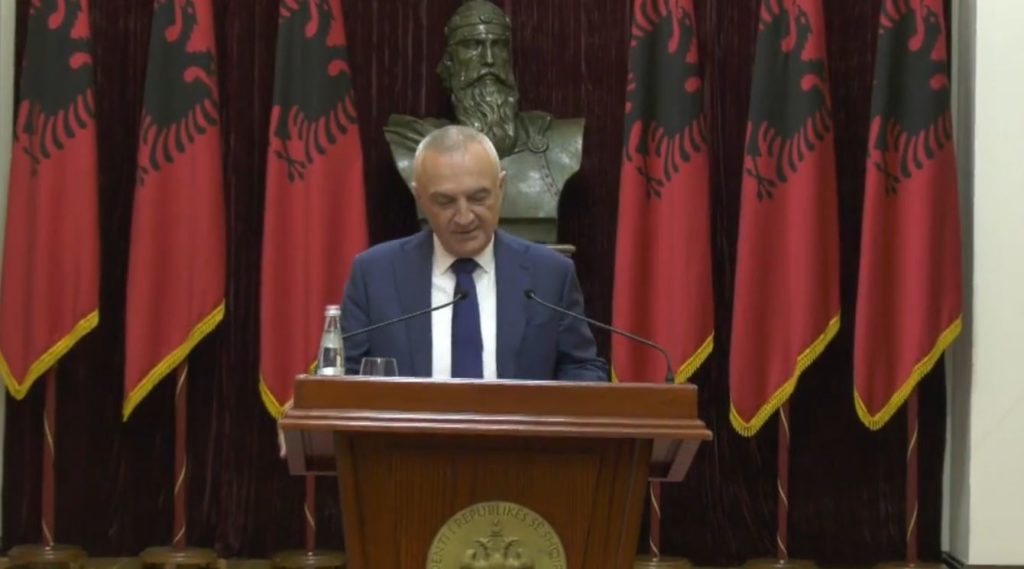
Presidenti Ilir Meta ka reaguar pas hapjes së negociatave për Shqipërinë në rrugën e anëtarësimit drejt Bashkimit Europian.

Meta u shpreh se e sotmja është një ditë e vonuar për Shqipërinë ndërsa shtoi se dokumenti i miratuar nga BE zbulon të metat dhe punët e pabëra.

“Dua të përshëndes vendimin për nisjen e negociatave të anëtarësimit me Shqipërinë dhe RMV. E sotmja edhe pse një ditë e vonuar është e shkëlqyer për Shqipërinë. Ky është një gur kilometrik. E sotmja është një ditë e shkëlqyer edhe për rajonin tonë. Perpsektiva europiane e rajonit është e gjallë. Sot është një ditë vendimtare për të ardhmen. E vërteta është se kemi humbur shumë kohë.

Dokumenti i miratuar nga BE na zbulon të gjitha të metat dhe punët e pabëra ose të bëra keq. Korniza e Bundestagut përmban të gjitha shqetësimet e shprehura në rezolutën e fundit të PE. U bëj thirrje qytetarëve shqiptarë të mos bien pre e fushatave që duan të minojnë rrugën tonë europiane.

Anëtarësimi në BE është e vetmja rrugë që garanton aq paqe. Siguri dhe begati që qytetarët tanë e kërkojnë në vendet e tjera. U kërkoj institucioneve të reflektojnë pa vonesë në detyrat që kërkon ky proces. Urime shqiptarëve dhe mirënjohje miqve tanë që sot i kemi më të shumtë dhe më të afërt se dje”, tha Meta.

© Panorama.al

Filed Under: Politike

“Shqipëria duhet të jetë e mirëpërgatitur për këtë rrugë”, Varheley mesazh shqiptarëve: Duam që të jeni pjesë e BE

July 19, 2022 by s p

BALKANWEB

Konerenca

Komisioneri për Zgjerim Oliver Varheley pas çeljes zyrtarisht të negociatave të Shqipërisë me BE-në pohoi se vendi ynë ka një rrugë të gjatë përpara.

Gjatë fjalës së tij në një konferencë të përbashkët me kryeministrin Edi Rama, Varheley tha se roli i BE është që Shqipëria të jetë e mirëpërgatitur në këtë rrugë.

“Jam i kënaqur që jam pranë jush për të festuar. Sot festohet një fazë e re, duke përmbyllur fazën e 2020-ës. Përgëzoj përfshirjen e të gjithë anëtarëve të BE për procesin që na kanë ndihmuar për të mbërritur këtu ku jemi.Ky veprim i të sotmit dërgon një sinjal të fortë në Ballkanin Perëndimor. 8 vite pas statusit të vendit kandidat dhe 6 vite nga hapja, sot shënohet një rrugëtim i ri. Mesazhi im drejt qytetarëve të Shqipërisë është i thjesht; ne duam që të jemi pjesë e familjen europane. Kjo nuk as diskutohet. Roli ynë është që Shqipëria të jetë e mirëpërgatitur për këtë rrugë. Sot pasdite do të nisin procesin e shkrimit të kuadrit ligjor. Kjo do të përfitojë nga puna. Jam besimplotë se Shqipëria është e vendosur t’i bashkohet BE dhe që të punojë fort për këtë siç ka bërë deri më sot, dhe pas vendimit të 2020-ës për të krijuar mundësinë e hapjes së negociatave, ndaj na duhet konsensus mbarëndërkombëtar. Na duhen të tërë në Shqipëri. Na duhen veprime gjithëpërfshirëse dhe shteruese. Negociatat kanë natyrë shtrënguese. Do ketë një ndikim madhor, pozitiv te shoqëria dhe na duhet që gjithsecili të bëhet pjesë e kësaj rruge. Rruga e Shqipërisë drejt anëtarësisë në BE sapo ka nisur.”, tha ai.

Filed Under: Politike

  • « Previous Page
  • 1
  • …
  • 213
  • 214
  • 215
  • 216
  • 217
  • …
  • 668
  • Next Page »

Artikujt e fundit

  • Racionaliteti erotik i pushtetit shqiptar
  • Hapet dega e 7-të e kursit të gjuhës shqipe në Lesvos të Greqisë
  • Besimi ndaj së mirës…
  • VATRA, NDERIM E RESPEKT PËR XHIM XHEMËN NË 84 VJETORIN E LINDJES
  • “Themeluesi – Lidershipi i Ismail Qemalit”
  • Rasim Juniku, një jetë mes filatelisë dhe dashurisë për Kosovën
  • Shpirti arvanitas në Rilindjen Europiane për atdheun e humbur
  • “Saint Paul in Dyrrach”
  • THEMELIMI I “ALBLIBRIS” – LIBRI SHQIP NË SHTETET E BASHKUARA TË AMERIKËS
  • Dy kryeqytete, një komb
  • Dashamir Gurabardhi: “Arti si zhvillim dhe emancipim kombëtar”
  • SHUMËSIA STILORE-LIGJËRIMORE NË PROZËN DOKUMENTARE TË REXHEP QOSJES
  • Atë Arthur Liolin, kleriku, studiuesi dhe shërbestari i shquar i komunitetit shqiptar në Shtetet e Bashkuara të Amerikës
  • FEDERATA VATRA URON: GËZUAR FITËR BAJRAMIN
  • Gjykata: Mbyllja e “Zërit të Amerikës” e paligjshme, urdhërohet rikthimi i 1,000 punonjësve

Kategoritë

Arkiv

Tags

albano kolonjari alfons Grishaj Anton Cefa arben llalla asllan Bushati Astrit Lulushi Aurenc Bebja Behlul Jashari Beqir Sina dalip greca Elida Buçpapaj Elmi Berisha Enver Bytyci Ermira Babamusta Eugjen Merlika Fahri Xharra Frank shkreli Fritz radovani Gezim Llojdia Ilir Levonja Interviste Keze Kozeta Zylo Kolec Traboini kosova Kosove Marjana Bulku Murat Gecaj nderroi jete ne Kosove Nene Tereza presidenti Nishani Rafaela Prifti Rafael Floqi Raimonda Moisiu Ramiz Lushaj reshat kripa Sadik Elshani SHBA Shefqet Kercelli shqiperia shqiptaret Sokol Paja Thaci Vatra Visar Zhiti

Log in

This website uses cookies to improve your experience. We'll assume you're ok with this, but you can opt-out if you wish. Cookie settingsACCEPT
Privacy & Cookies Policy

Privacy Overview

This website uses cookies to improve your experience while you navigate through the website. Out of these cookies, the cookies that are categorized as necessary are stored on your browser as they are essential for the working of basic functionalities of the website. We also use third-party cookies that help us analyze and understand how you use this website. These cookies will be stored in your browser only with your consent. You also have the option to opt-out of these cookies. But opting out of some of these cookies may have an effect on your browsing experience.
Necessary
Always Enabled
Necessary cookies are absolutely essential for the website to function properly. This category only includes cookies that ensures basic functionalities and security features of the website. These cookies do not store any personal information.
Non-necessary
Any cookies that may not be particularly necessary for the website to function and is used specifically to collect user personal data via analytics, ads, other embedded contents are termed as non-necessary cookies. It is mandatory to procure user consent prior to running these cookies on your website.
SAVE & ACCEPT