• Home
  • Politics
  • Opinion
  • Culture
  • Sports
  • Economy
  • Interview
  • Reporting
  • Community
  • Vatra

Dielli | The Sun

Albanian American Newspaper Devoted to the Intellectual and Cultural Advancement of the Albanians in America | Since 1909

HARADINAJ: RUGOVA NË TË GJITHA LUFTËRAT E SHQIPTARËVE

April 21, 2019 by dgreca

-Kryeministri Haradinaj: Njerëzit e Rugovës ishin në të gjitha vendluftimet e njësitë, duke u bërë shembull edhe të luftëtarit të zot por edhe të trimave shqiptarë/


PEJË, 20 Prill 2019-Gazeta DIELLI/ “Rruga jonë deri sot nuk ka qenë pa ndërskamca e pa përçarje dhe nuk ka shqiptarë që del fitues kur përçahet me të vetin, por i vetmi fitues ndaj kësaj është armiku ynë. Është detyrë e jona që mos të lejojmë të na përçajë askush në tema për atdheun”. Kështu tha Kryeministri i Republikës së Kosovës, Ramush Haradinaj, gjatë fjalës së tij, në Akademinë Përkujtimore në 20-vjetorin e rënies së Dëshmorëve të Brigadës 136 “Rugova”.Në këtë shënim të rëndësishëm, kryeministri Haradinaj tha se për të sot është një moment i mirë, duke shprehur falënderim për të gjithë Rugovën, por edhe ata që sot nderuan me pjesëmarrje.Në fjalën e tij para të pranishmëve, kryeministri Haradinaj tha se Rugova si trevë është prej trevave që ka namin e madh tek shqiptarët, një nder jo veç në shekuj, por në mijëra vjet.
“Është prej trevave dhe njerëzve që çdo gjë e kanë paguar shtrenjtë. Të gjithë bashkëkombësit kudo që jetojnë në trojet tona, por edhe në Ballkan, duhet ta dinë se djemtë e Rugovës, njerëzit e Rugovës nuk ishin ndal asnjëherë për ta parë veten të lirë, kombin e atdheun e lirë. Nuk ka luftë të shqiptarëve që ka ndodh e që këta nuk i gjejmë”, tha kryeministri Haradinaj, duke theksuar se  nuk duhet harruar që nuk ka përballje të kombit tonë që ka provuar të arrijë tek shqiptarët nëpër Rugovë e që këta nuk e kanë kryer punën e vet.


Teksa flet për luftëtarët e pjesës së Rugovës, kryeministri Haradinaj tha se i ka njohur një pjesë të djemve të Rugovës, dhe se ata kanë ardhur herët jo vetëm në Brigadën Rugova, por në të gjitha vendluftimet, në të gjitha njësitë, duke u bërë shembull edhe të luftëtarit të zot, por edhe të trimave shqiptarë ashtu siç edhe i njohim.
“Formimi i Brigadës 136 ka qenë po ashtu një porosi se kemi hyrë seriozisht në luftën tonë deri në liri dhe në këtë luftë deri në liri jemi të vendosur. Në vendluftime i pamë trimat e Rugovës”, shtoi kryeministri Haradinaj.
Në emër të familjeve të dëshmorëve të pranishmit i përshëndeti, Dren Brahimaj. 

OVL e UÇK dega në Pejë, ndau mirënjohje për kontributin e Brigadës 136 “Rugova”, ndërsa në emër të Brigadës 136 “Rugova”, iu nda mirënjohje gjeneralit, Kudusi Lame./b.j/

Filed Under: Politike Tagged With: Kryeministri Haradinaj-Rugova-Brigada 136

SHTETI DHE FEJA JANË DY ENTE ME ROLE TË NDRYSHME

April 19, 2019 by dgreca

Nga Frank Shkreli/

Njoftohet se këtë javë, qeveria e Kryeministrit të Shqipërisë, Z. Edi Rama miratoi fonde nga buxheti i shtetit për vitin 2019, për pesë komunitetet fetare në Shqipëri.  Vendimi i qeverisë përcakton se si duhet të shpërndahen këto fonde në mbështetje të komuniteteve fetare në vend, mos qofsha gabim, përfshirë edhe ndarje rrogash për disa nëpunës fetarë.  Unë jam besimtar dhe mbroj të drejtat dhe lirinë e të gjitha enteve fetare dhe të secilit person që të ushtrojë lirinë e fesë, sipas ndërgjegjes së vet.  Ndoshta është përvoja ime prej një gjysëm shekulli në Amerikë dhe trajtimi i marrëdhënieve midis fesë dhe shtetit këtu në Shtetet e Bashkuara, ato që influencojnë pikëpamjen time në lidhje me këtë çështje, por them se vendimi i qeverisë shqiptare, për të ndarë fonde për bashkësitë fetare, është një ide e keqe dhe pranimi i këtyre fondeve nga përfaqësuesit e komuniteteve fetare në Shqipëri, që kanë nënshkruar marrëveshje me të,  është i gabuar. 

Është detyrë dhe obligim moral dhe ligjor, bazuar edhe në konventat ndërkombëtare të të drejtave të njeriut — që qeveria të garantojë lirinë e fesë për të gjithë qytetarët e vet, pa dallim dhe në rastin e Shqipërisë, që qeveria t’ua këthej komuniteteve fetare pronat e konfiskuara nga regjimi komunist i Enver Hoxhës.  Vende të ndryshme anë e mbanë botës, sipas kushetutave dhe strukturave ligjore të tyre, historikisht, kanë marrëdhënie dhe përvoja të ndryshme midis shtetit dhe enteve fetare që veprojnë në to.  Disa e konsiderojnë veten shtete laike, (laicite ose secular) ndërsa vende të tjera njohin, në një mënyrë ose një tjetër, një fe zyrtare shtetërore.   Shqipëria është një shtet shekullor, laik, që në parim dhe në kuptimin e plotë të fjalës, qeveria e saj duhet të mbajë një distancë politikedhe duartë larg nga entet fetare dhe përfaqsuesit e tyre, por, ama gjithmonë duke garantuar lirinë e fesë dhe të veprimit të këtyre enteve në shoqërinë shqiptare, sipas besimit dhe ndërgjegjës së tyre.  

Kjo nuk do të thotë se feja dhe entet fetare nuk duhet të kenë ndonjë rol shoqëror së bashku.  Përkundrazi!   Në besimin e tyre, fetë kryesore të shqiptarëve në thelb kanë dashurinë për njëri tjetrin dhe ndihmën për të varfërit, si një aktivitet njerëzor, shoqëror dhe hyjnor.  Gjëja që politikanët dhe përfaqsuesit fetarë duhet të kenë të përbashkët është  roli dhe përgjegjësia e tyre prej udhëheqsish politikë e fetarë — se përveç kujdesit dhe ndihmave që duhet tu ofrojmë, “të varfërve më të varfër” në shoqëri, siç i ka cilësuar Shën Nëna Tereze më të nevojshëmit midis nesh — është urdhëri më domethënës i Perëndisë,  që të duam dhe të respektojmë njëri tjetrin, si nga pikëpamja politike ashtu edhe fetare.  Në këtë fushë, politikanët mund të marrin pak shembull nga udhëheqsit fetarë shqiptarë dhe të tregojnë më shumë respekt ndaj njëri tjetrit, në diskursin e tyre politik dhe në komunikimet e përditshme midis tyre, duke u bërë më të njerëzishëm e më të kuptueshëm edhe ndaj nevojave njerëzore dhe problemeve të mëdha me të cilat përballen bashkatdhetarët e tyre, pa marrë parasyshë përkatësitë fetare, ose qëndrimet politike ose partiake.

Por duke pasur gjithmonë parasyshë dallimet e roleve të ndryshme që shteti dhe feja duhet të luajnë në një shoqëri moderne dhe demokratike.  “Sigurisht që feja dhe qeveria janë dy ente krejtësisht të ndryshme nga njëra tjetra”, ka shkruar në vitin 1768, John Dickinson, njëri prej baballarëve të Kombit Amerikan.  “Qëllimi i njërës (qeverisë) është që të promovojë mirëqenjen shoqërore dhe kënaqësinë e përkohshme në këtë botë, ndërsa objektivi i tjetrës (fesë) është që të promovojë mëshirat dhe dashurinë e Perëndisë për njerëzit, me qëllim të amëshimit të shpirtit dhe të sigurimit të jetës së pasosur.  Nëqoftse këto dy ente janë të ndara nga njëra tjetra, me role të ndryshme, atëherë në përgjithësi mbrohet paqëja midis njerëzve dhe mirëqenja shoqërore, do të ruhet.  Por, nëqoftse ngatërrohet roli i tyre duke përzier detyrat dhe përgjegjësitë e shtetit me fenë, atëherë midis shtetit dhe komuniteteve fetare do të lindin konflikte, armiqësi dhe persekutime, të cilat kanë mbuluar botën me gjak dhe kanë turpëruar natyrën njerëzore”, ka shkruar John Dickinson në vitin 1768.  

Historia e marrëdhënieve midis shtetit dhe enteve fetare në Shqipëri, gjatë shekullit të kaluar, dhe persekutimi i fesë dhe përfaqsuesve të tyre nga regjimi komunist i Enver Hoxhës, duhet të bëjë më të kujdeshëm përfaqsuesit fetarë dhe qeverinë aktuale si dhe ato në të ardhmen, se si duhet të trajtohen marrëdhëniet midis fesë dhe shtetit në radhët e shqiptarëve, ashtuqë të mos përziejnë rolet dalluese që duhet të ekzistojnë në shoqëri.  A është ndarja e buxhetit nga qeveria për bashkësitë fetare në Shqipëri e njoftuar këtë javë, një ndihmë a po një shpërblim?  Kjo mbetet për tu parë, por një gjë është e sigurt.  Asgjë e mirë nuk vjen nga kjo përzierje rolesh midis fesë dhe shtetit.  Mund të jem gabim por kështu mendoj unë.  Shikoni përvojën e Greqisë fqinje në këtë mes, ku në fund të vitit që kaloi qeveria e Kryeminsitrit Tsipras nënshkroi një marrveshje me Kishën Ortodokse greke për t’i dhënë fund statusit të nëpunsit pubik për priftërinjtë ortodoksë.  Ndonëse kjo nismë e Athinës nuk ka giasë që të ndajë rolin e Kishës dhe shtetit në Greqi, edhe ata kanë parë se roli që luan Kisha Ortodokse greke në punët e shtetit është diçka anakronike për shekullin e 21.

Këtu në Shtetet e Bashkuara, ndarja e qartë e roleve midis fesë dhe shtetit, për më shumë se dy shekuj, është bërë pjesë e strukturave ligjore, qeveritare dhe shoqërore.  Si e tillë, kjo ndarje konsiderohet si një prej gur-themeleve bazë të vlerave demokratike të këtij vendi.  Qeveria ose shteti, duartë larg nga feja dhe feja duartë larg nga qeveria dhe shteti!  Ky është muri që duhet të ekzitojë midis tyre.  Shqipëria është një republikë kushtetuese dhe jo një teokraci.  Bashkësitë fetare që saksionohen dhe që mbështeten nga shteti, financiarisht dhe politikisht, heret ose vonë, bëhen kukëlla të shtetit e të qeverisë në fuqi.  Le të kujdeset qeveria për sigurinë kombëtare, për ndërtimin e infrastukturës dhe mirëqenjes ekonomike, ndërsa udhëheqsit fetarë le të predikojnë fjalën e Zotit dhe dashurinë midis njerëzve nga mjediset e kishave dhe të xhamive.

Filed Under: Politike Tagged With: FRANK SHKRELI-SHTETI _FEJA

WHAT NOTRE-DAME MEANS TO ME

April 18, 2019 by dgreca

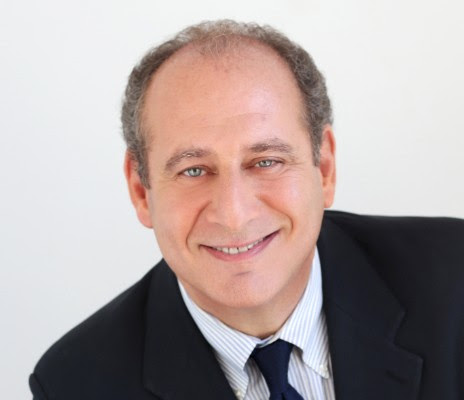
by David L. Phillips/

Thursday, April 18, 2019/

Memory and continuity. Hope for a better world. Notre-Dame is not just an edifice. It is a symbol of our shared humanity, a sanctuary of dreams, a safe haven for our better angels. Restoring the fire damage must be accompanied by a pledge to heal the world.

My first memory of Notre-Dame is as a small boy. I sat with my mother and sister on a stone pillar in the plaza facing the cathedral. Mom brought markers and a sketch pad. I was never a very good artist, but my drawing captured the glorious colors of Notre-Dame’s stained-glass façade, and the strength of saints at its main entrance.

Later in my young life, my parents showed me a stone right in front of Notre-Dame. The embedded stone, depicting a sun with seven rays, reads “Point Zero.” It represents the center of Paris, of civilization. “Des routes de Paris” – “The roads of Paris” is inscribed. Weathered by centuries, the stone is a reminder of life’s timeline, connecting past to present and future.

After my twin daughters were born, I took my family to Notre-Dame. We savored a crepe Suzette from a vendor adjacent to the cathedral’s back corner, overlooking Isle St. Louis. We lit a candle inside the church and silently said a prayer. I typically pray for world peace.

I showed the stone to my daughters and explained its significance. I told them the story of my first visit to Notre-Dame with my parents. Standing there with my daughters, the moment transcended generations. I shared memories with my girls; told them they’d visit that same spot with their children and urged them to remember our moment there together. We spoke about the importance of continuity.    

Notre-Dame is a national treasure of France. It is, however, an icon to which many human beings feel an emotional and spiritual connection. As a house of worship, Notre-Dame’s cross and statues remind us of Christian values, sacrificing for others inspired by love for human kind.

Notre-Dame is also a reminder of the ideals of the French revolution. “Liberte, egalite, fraternite” – liberty, equality, and fraternity – is the motto of France. They are also foundational principles of the Enlightenment and the modern human rights movement.

In my capacity as a human rights professional, I have occasionally testified in the French Senate and National Assembly. When U.S. leadership lapsed, France reminded us of right and wrong. Before the Iraq War, I recall the searing admonishment of France’s Foreign Minister Dominique de Villepin at the United Nations: “War is always an acknowledgement of failure.” 

The fire at Notre-Dame comes at a critical moment in human history. International cooperation is under siege by President Donald Trump’s “America First” doctrine, attacking shared institutions created after the Second World War. Trump’s hubris undermines U.S. interests and trans-Atlantic cooperation upon which the peace and prosperity of the 20th Century were based. We can barely survive four years of the Trump administration. Eight years would be fatal to our alliances and partnerships.

President Emmanuel Macron has pledged to rebuild Notre-Dame. France has the know-how and resources to restore its national treasure.  

However, it will take more than bricks and mortar to restore the principles represented by Notre-Dame. It will require leadership that sets aside personal and national self-interest in service of a greater good.    

From the ashes of the old tower, a new structure will emerge. I fervently hope that it will inspire our better angels, moving each of us to take action and help heal the world.

I learned humanitarian values from my parents and have made a point to share them with my children. Healing the world is a huge task and a generational endeavor.

David Phillips is Director of the Program on Peace-building and Rights at Columbia University’s Institute for the Study of Human Rights.

Filed Under: Politike Tagged With: David L Phillips

Dielli and the Challenges of Albanian Democratic Consolidation

April 15, 2019 by dgreca

By Dr. Elez Biberaj – Director, Eurasia Division
Voice of America* /

Presentation at the 110th Anniversary Celebration of Dielli[1]

New York, April 6, 2019/

Thank you very much for the invitation to participate in this important conference on the 110th anniversary of the publication of Dielli.  Congratulations to VATRA’s membership, leadership, and particularly to Dielli’s editor Dalip Greca, for achieving such a historic milestone. 

Dielli has played a critical role in faithfully chronicling the troubled history of the Albanian nation, supporting the Albanian national cause, highlighting the developments in our great Albanian-America community, and promoting the creation of democratic, just and prosperous Albanian societies. Like every media outlet and institution, Dielli has had its ups and downs over its long history.  But, with its multifaced contributions, Dielli has rightfully earned a cherished place in the annals of the Albanian history.

            Recently, the Voice of America also marked an important milestone: the 77th anniversary of its establishment in February 1942.  On May 13, 2019, VOA will mark the 76th anniversary of its first Albanian-language broadcasts. The Voice of America is a well-known and influential brand and prides itself in consistently producing journalism of exceptional value in support of freedom and democracy. While the last seven decades have witnessed dramatic changes, one thing that fundamentally has not changed is VOA’s mission – to empower its audiences with accurate, objective and balanced news and information so that they may make informed decisions about their societies and governments.

Dielli and VOA, of course, have different missions.  But they share common objectives of providing coverage of the Albanian-American community, its many contributions to the American society, the strengthening of bonds between American and Albanian peoples, and promoting democratic values in the Albanian lands.

Throughout the decades, we have had a very close relationship. Dielli’s and VATRA’s activities have been prominently featured in VOA programs.  Hours of original recordings of VATRA’s conventions and meetings as well as speeches by Fan Noli and other prominent Albanian-Americans, professionally recorded by VOA’s Lou Prifti, were given to VATRA’s president Anthony Athanas and the Albanian Orthodox Church in Boston.  My understanding is that these were delivered in the 1980s to the National Library in Tirana. Three prominent VOA journalists have served as editors of Dielli – Piro Tyko, Nelo Drizari, and Xhevat Kallajxhi.  And my former VOA colleague Rafaela Prifti now serves with distinction as Dielli’s English-language editor. Many other VOA journalists – Fehime Pipa, Frank Shkreli, Gjek Gjonlekaj, Idriz Lamaj, Ilir Ikonomi, and Astrit Lulushi – have collaborated with Dielli.  

I personally have had the fortune of a long relationship with VATRA and Dielli and am very proud of the fact that my first writings were published in Dielli. I had the honor and the great pleasure of interacting with many prominent VATRA and Dielli personalities, but on this occasion, I would like to pay tribute to Xhevat Kallajxhi.

            Mr. Kallajxhi became editor of Dielli after his distinguished, three-decade carrier with the Voice of America and served in that position from 1976 to 1986.  He revived Dielli, raised its journalistic standards, broadened its scope of coverage, and focused prominently on the challenges facing the diaspora, Albania, Kosova, and Çamëria.

Mr. Kallajxhi was particularly interested in bridging the gap between the older and younger generations of Albanian-Americans.  He provided a wide range of young journalists and scholars with an outlet for their articles and informed comments. Mr. Kallajxhi was a person of high integrity, was widely respected, and had a great appreciation for the importance of objectivity and fairness, which are closely tied to credibility – the most cherished asset of any media outlet. While he encouraged the expression of different perspectives and welcomed passionate debates, Mr. Kallajxhi had no tolerance for those who engaged in malicious allegations, character assassination, self-promotion and phony patriotism.

I first became acquainted with Mr. Kallajxhi during one of his visits to New York, soon after he became editor of Dielli. At that time, I was pursuing my doctoral studies at Columbia University.  Mr. Kallajxhi encouraged me to write for Dielli and to speak at events organized by VATRA.  Thus, I participated in the conference on the occasion of the 100th anniversary of the Albanian League of Prizren and at the Flag Day celebration.

I am grateful to Mr. Kallajxhi for prominently featuring my articles in Dielli, and, on several occasions, publishing them as guest editorials.  My writings focused on communist Albania’s foreign and domestic politics, the prospects for reform, and the plight of Albanians in Kosova.

I am particularly proud of two pieces I published during Mr. Kallajxhi’s tenure.  The first, written with the pseudonym Albanicus and published on January 1, 1979, was an attempt by me to address frankly some of the problems that our community and our nation faced.  The article caused quite a stir in the community.

The second was devoted to U.S. Ambassador Herman Bernstein’s collection on Albania, which is deposited at the Yivo Institute for Jewish Research in New York.  Bernstein, a prominent writer, journalist, and an authority on the Jewish question, was America’s ambassador to Tirana from 1930 to 1933. The existence of the collection was discovered by coincidence.  My brother Hasan, while doing graduate work in history at Columbia University, met a classmate who had come across Bernstein’s collection while doing research on the persecution of Jews in Eastern Europe.  The collection is a valuable source for scholars interested in Albanian developments and U.S.-Albanian relations in the early 1930s. My article, disclosing the existence of this collection and summarizing its contents, was published on October 15, 1980.

             Mr. Kallajxhi set a high bar for Albanian journalists and has left us a rich legacy – a legacy of high commitment to journalistic standards, objectiveness, fairness and respectability, and strong democratic and patriotic convictions.

On such significant anniversary occasions as this one, it is only natural that we dwell on past achievements.  But it is also important to look to the future.

The Albanian-American community has played a remarkable role in efforts to influence U.S. foreign policy on Albanian issues. After the peak of the euphoria that followed Kosova’s independence, Albanian-American activism, however, has declined significantly.  The community now seems largely demobilized.  It is important that the community remain engaged.  Dielli, as well as the other major Albanian-American newspaper, Illyria, is well positioned to promote community activism.

Let us be realistic: the potential role of diaspora newspapers on developments in Kosova and Albania is likely to be limited for many, and objective reasons.  Nevertheless, Dielli and Illyria can contribute by pursuing a fact-based approach to news and information, offering a wide range of spectrum of opinion on top issues, and providing a forum for public debate.

Albanians in Kosova, Albania, Macedonia, Montenegro and Eastern Kosova rightfully should be proud of their national, political, economic and social achievements in recent decades. Nevertheless, this progress is now being threatened by negative political, social and economic trends, which are corrosive for the establishment of a prosperous and truly democratic society. Albanian societies suffer from dangerous political polarization, poor governance, pervasive corruption, and lack of a credible voice for compromise and moderation. 

            Twenty years after its liberation, Kosova has made lots of progress, but remains a fragile state. Prishtina seems consumed with the issue of negotiations with Serbia, making it difficult for the leadership to focus seriously on pressing domestic issues.  Recently Kosova’s position has been undermined by Prishtina’ s grievous missteps and ugly leadership squabbles.

The lack of consensus on fundamental issues, such as negotiations with Serbia, have damaged Kosova’s international standing and created ill will among Kosova’s strongest supporters, including the United States.  These self-inflicted wounds are the result of the failure of key actors to participate in a joint policy development, coordination and implementation process.

            President Hashim Thaçi appeared confident that he could reach a deal with his Serbian counterpart for a “border adjustment,” in return for Belgrade’s recognition of Kosova. His plan seems to have backfired because he failed to engage other key actors, particularly Prime Minister Ramush Hajredinaj, or secure buy-in from the public, for a land swap. This caused serious problems within the political elite and undermined Kosova’s position in future negotiations with Serbia.  The public airing of policy disagreements in Prishtina gave ammunition to those who question the very idea of a Kosova state – and this at a time of significant changes in the international political landscape, most of them favorable to Serbia.

The continuation of the current political stalemate, dysfunctional relationship between key actors, and decision-making paralyses could lead to Kosova’s progressive decline, domestically and internationally. Kosova’s leaders must find ways to bridge the political divide and map out a way forward.  They cannot afford to be complacent or to take for granted America’s commitment.  And Albanian-Americans cannot be oblivious to actions that might damage the special relationship with the United States.

            Meanwhile, Albania is facing its most serious predicament since its implosion in 1997 – a deteriorating political situation, the practical dismantling of the check-and-balance system, and a seemingly collapsed judiciary.  Institutions that sustain a rational, all-inclusive, democratic decision-making process are weak. Polarization is striking and there is no political center, which makes compromise very difficult.

Albania finds itself in the unenviable position of being one of Europe’s poorest and most corrupt countries. Although Albania has averaged an annual real GDP growth of 4 percent, one third of the population still lives in extreme poverty, subsisting on less than one dollar per day. Many Albanians believe the current system is rigged against them.  They have lost hope, seeing little opportunity to shape their country’s future.  According to recent Gallup surveys, some 60 percent of Albanians would like to emigrate. Since the early 1990s, more than a million-and-a-half Albanians have emigrated, with those between the ages of 20 and 40 leaving in the largest number.  Albania’s population today is estimated at 2.9 million – the same as it was in 1989 – and within the next thirty years is expected to decline to 2.6 million.

Having won a clear mandate in the 2017 elections, Prime Minister Edi Rama has been riding high. But his rule has been tarnished by poor governance, pervasive corruption, and economic mismanagement, and his leadership style has alienated many.

As is the case with some other East European leaders, Rama has become decidedly more authoritarian, corrupt, arrogant, and less transparent. He has attempted to maximize his power, shrinking public space, undermining independent institutions, stacking the judiciary with loyalists under the guise of reforms, and marginalizing the opposition. Rama has instituted a kleptocratic model of governance, granting no-bid contracts worth hundreds of millions of dollars to companies close to the government.  The patron-client relationship between government officials and prominent businessmen has deformed the government decision-making process, violating the basic rules of the game, distorting market competition, and leaving ordinary Albanians without meaningful ways of effecting change.

The media environment has become less free and independent. The Prime Minister has steadily challenged the very notion of an independent media, launching his own, online outlet, ERTV.  He has steadily undermined the media, using an increasingly aggressive and threatening rhetoric, and characterizing them as “trashcan media.”  His recent attacks on the VOA, for airing a report on collusion between Socialist Party officials and organized crime groups during the 2017 elections, were breathtaking in their audacity.

Many journalists, vulnerable to political and economic pressure, practice self-censorship and avoid reporting about taboo topics. It is troubling that in 2019, the Albanians must rely on the international media, including the VOA, for reporting on sensitive issues.

Rama has refused to address the many scandalous revelations of corruption, including the publication of wiretaps revealing the involvement of senior Socialist officials with organized crime groups in vote buying during the 2017 elections. He has unabashedly provided impunity to high officials despite clear evidence of corruption and collusion with organized crime groups and drug traffickers.

The State Department’s 2019 International Narcotics Control Strategy Report, released in March 2019, identified Albania as a key transit country for narcotics distribution and “a base of operations for organized crime organizations operating in the United States, Europe, the Middle East, and South America.”  The report listed Albania as a major money-laundering country, and added that, “Official corruption is pervasive and fosters an environment in which drug traffickers are largely able to operate with impunity.” The State Department report noted that justice reforms were undermined by “pervasive corruption.”

It was against this background that the Democratic Party-led opposition decided, in February 2019, to withdraw its deputies from parliament.  This unprecedented step pushed Albania into a state of increased tensions, which risks violence, governance breakdown, and the postponement of Albania’s EU integration. Rama has dismissed Democratic Party leader Lulzim Basha’s demands to resign and create a technical government as simply an attempt to grab power. Despite the urgency of the situation, the Prime Minister has thus far made no serious effort to reach out to the opposition.

There is no question that the Democratic Party and other opposition parties had a litany of legitimate grievances.  But by withdrawing from parliament, they simply abdicated their responsibilities to their electorate and made it easier for Rama to move in a more authoritarian way.  Arguably, Basha could have pursued a two-track policy: remain in parliament and challenge Rama’s governance and power structure, while at the same time mobilize support for nation-wide protests, develop an alternative platform, and work to position his party as best as possible to win the next local and parliamentary elections.  While Albania’s elections have in general been problematic, they offer the best and most realistic opportunity for the opposition to dislodge the governing party.

Basha took this hugely important decision in the absence of a real, honest debate about the rationale and potential risks of such a course and without any serious effort to enlist international support. Few Democrats had the courage and opportunity to question the assumptions under which the decision was made.  As should have been expected, the United States and the European Union expressed support for the government and criticized the opposition.

While Basha has been able to organize large protests in Tirana, it is not clear to what extent the opposition’s message has resonated with the populace.  There has not yet been a critical mass of public pressure that would force Rama to resign or radically adjust his position. The society at large seems disillusioned and increasingly disinterested in politics and unwilling to act. Despite growing discontent with government policies, ordinary Albanians have displayed little enthusiasm for societal activism that would bring much desired changes, apparently believing that they have no influence over the political system.  It is not clear if Basha has a strategy to broaden his party’s appeal and engage the civil society, which would help the opposition sustain the protests and convince Rama to compromise. There is a huge disconnect between the means at his disposal and his desired ends. Lack of a road map and Rama’s staying power could lead to an erosion of support for Basha and fragmentation of the opposition bloc.

Rama does not seem to comprehend the magnitude of the challenges his country faces and has adopted an uncompromising position.  The international community’s criticism of Basha’s decision and reluctance to seriously scrutinize the government’s policies and actions, have emboldened Rama, giving him confidence in his grip on power. His strategy has been to portray a sense of normalcy, embark on the offensive with his own rallies, hoping that in due time support for the opposition will vanish.

This is a short-sighted policy.  The longer the crisis continues, the greater the risk that Albania will face a potentially combustible situation.

            Albanians today appear dangerously adrift and without a clear vision for the future.  They seem to have lost trust and confidence in their leaders and in themselves.  They are likely to suffer further setbacks unless they make some critical choices and develop a strategy that will not only reverse their current backsliding but will set their country on a clear democratic path.

In past crisis, Albanian leaders were able to forge, at the last minute, unexpected and face-saving deals.  While there has been a serious breakdown in trust and communication between the government and opposition, there is still time for a compromise to end the cycle of escalation that is essential for maintaining the nation’s social cohesion.  But this requires political will on both sides to deescalate the conflict and pull back from maximalist demands. Thus far, political will has been missing and the current situation could easily settle into a prolonged stalemate.

However, unless Albanian leaders make serious efforts to find a compromise, Albania will likely descend into a quagmire.  An early test will be the local elections, scheduled for June.  It is in the interest of both sides, that the opposition takes part in the elections.  If Basha boycotts the elections, the opposition will deprive its supporters of representation and face the risk of being further marginalized.  On the other hand, it would be shortsighted for Rama to go ahead with the elections in the absence of the opposition’s participation or to attempt to create his own opposition to dislodge the official one.

Current Albanian leaders are facing a crisis of their own making.  Clearly, they have a responsibility to their nation to find ways to de-escalate the conflict and alter their country’s dysfunctional trajectory before Albania slides into a full-blown national emergency, with a high probability of civil conflict. The crisis could be defused with an agreement on the local elections, followed by changes in the electoral code and a deal on holding early parliamentary elections. It has become imperative that the 2008 constitutional changes be revisited with the objective of strengthening independent institutions and empowering the parliament. The current electoral law, which has led to a dangerous distance between the people and their elected representatives, must be changed. There is an emerging consensus that Albania should return to a mixed or winner-take-all system and shift away from the current proportional system.

But ultimately, any arrangement in the absence of a complete national overhaul and real, fundamental reforms will not necessarily deliver a clean break or revitalize the country’s political system.  Albania desperately needs a restart and a national compact – an agreement on shared national goals, and principles of good governance – that would reshape the country’s political order.

The next phase could determine if Albania will evolve into a consolidated democracy or take a pro-authoritarian, one-party direction. The established political leaders, which have dominated the country’s politics since the early 1990s and are responsible for Albania’s lagging behind, have run out of steam and can no longer serve as a catalyst for fundamental change.  Let us hope that three decades after the demise of communism, the Albanian society is able to produce new elites that will display the real statesmanship that the road ahead demands.

***

* www.gazetadielli.com


* The views expressed herein are the author’s and do not represent the position of the Voice of America.

Filed Under: Politike Tagged With: Dr. Elez Biberaj

IKJA E TEKI GJONZENELIT, LAMTUMIRA E TË BIRIT, FATMIRIT!

April 15, 2019 by dgreca

NGA FATMIR GJONZENELI*/

Jeta e Tekiut qe si e shumë njerëzëve të asaj gjenerate; qe e vuajtur, por edhe e pasur me dashuri. Tekiu u rrit me 6 motra e vëllezër në rrugët e Skelës në vitet 40-50. Me babain në burg politik, edhe nënën në punë të rënda, Gjonzenelajt u rritën si karakteret në novelat e Dikensit. U rritën rrugëve, edhe u doli nami në Skelë si të zotët për punë e mbijetesë.

Dhuna komuniste nuk i linte ta nxjirrnin veten nga kjo gjendje e rëndë. Qamili, vëllaji i madh notoi deri në Korfuz për të përmisuar fatin e ti. Kurse tre vëllezërit e tjerë të gjithë i panë qelitë e hetuesisë dhe ferrin e burgjeve socialiste. Por këto vuajtje ushqyen lidhje të forta familjare që akoma vazhdojnë dhe nuk u  çanë as nga persekutimi, as nga emigrimi.

John F. Kennedy, të cilin babi e respektonte shumë pat thënë: “ai që ka mundësi të ndimojë, e ka detyrë të ndimojë.” Tekiu kështu veproi, jetoi me këtë moto. U mundua ta ngrinte veten nga errësira që jeta i dha; por nuk e shijonte dritën në qoftë se s’merrte edhe shokun me vete.

Nje dite, Teku qe me fat; takoi nje vajze te bukur, e cila ishte nga rethanat jetësor me jete te ngjashme, si e tij. Ekuptoi menjehere qe kjo grua qe partnere e pershtatshme per te ngritur nje jete se bashku. E ngriten jeten bashke neper  çdo vuajtje. Ata sakrifikuan per njeri tjetrin, edhe punuan fort, kudo. 

Me shume pune, zgjuarsi, edhe humor, ndërtuan një jetë të mirë për atë kohë.  Por nga fundi i viteve ’80, vajzat po rriteshin edhe po bëheshin gra. Tekiu e dinte mirë  çfar lloj fati i priste fëmijët e tij në Shqipëri, ndaj me Didin për dore, e  çmontuan jetën edhe gjithë “pasurinë” që kishin bërë në Tragjas. Sakrifikuan pleqërinë, edhe rehatinë e tyre, për të ardhmen e fëmijve.

Si emigrantë të rinj e ndërtuan jetën prap nga e para. U munduan, punuan, edhe krijuan  çdo oportunitet që mundeshin për fëmijët e tyre. Por edhe ndimuan emigrantë të tjerë kur mundeshin.

Vdekja e Tekiut, imitoi jetën e ti; qe plot me dhimbje, por edhe plot me dashuri. Kanceri është një sëmundje e tmerrshme!  Çdo ditë të vjedh mundësitë. Por Tekiu e përballoi me vullnet dhe humor. Një ditë, i lodhur e me dhimbje, e pyeti infermjeren:

– “Kur do vdes?” 

Ajo ju përgjigj, “Zoti s’është gati për ty. Akoma është duke përgatitur dhomën për ty…”

Tekiu iu  përgjigj: “Thuaj të fillojë me bajnën të parën.”!….

…..- Baba,-  do të na marrë malli  çdo ditë! Do na mungosh në momentet me gëzime dhe hidhërim që jeta ka.  Dhe  çdo herë që nipërit e mbesat e tu, arrijnë një lartësi të re jetësore; në do themi, “Oh sa qejf do të kishte babi ta shikonte!”  Edhe sigurisht, lojërat e futbollit s’do jenë njësoj.  Besoj se edhe Mesi “qanë” sot për Ty. 

Babi, doje të vdisje në ditë me diell, dhe në ditë me diell shkove. Shpresoj se  çdo ditë të jetë me diell aty ku je!

Mos ki merak për ne. Ne kemi trashëguar ngulmimin, fisnikërinë, dhe dashurinë tënde. Këto janë gurët e fondacionit të jetëve tona.

Mirupafshim Toti. Të duam për JETË!!

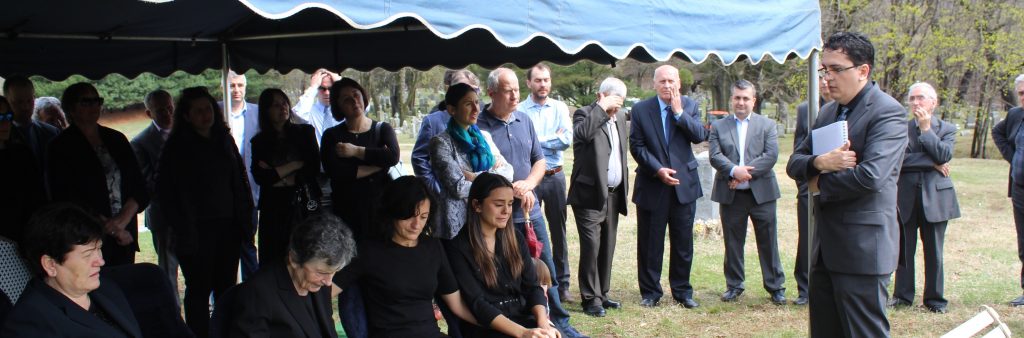
*Fjala e Lamtumirës në përcjelljen e të atit, Teki Gjonzenelit, prej të birit Fatmir Gjonzeneli.

Totowa, NJ, 13 Prill 2019

Filed Under: Politike Tagged With: Fatmir- TEKI GJONZENELI

  • « Previous Page
  • 1
  • …
  • 428
  • 429
  • 430
  • 431
  • 432
  • …
  • 670
  • Next Page »

Artikujt e fundit

  • KOSOVA DHE PAVARËSIA E SAJ NË KËNGËT E ARIF VLADIT
  • Masakra e Tivarit – Një e vërtetë e shtypur për shumë kohë
  • Pasqyrimi në filateli i mbështetjes amerikane ndaj Shqipërisë gjatë L2B
  • MASAKRA E TIVARIT, 1945: HESHTJA ZYRTARE QË VAZHDON TË VRASË
  • DR.ATHANAS GEGAJ, EDITORI I “DIELLIT” NË OPTIKËN E DOKUMENTEVE ARKIVORE TË VATRËS (1963-1971)
  • Kujtojmë në ditën e lindjes patriotin e shquar Kostandin Çekrezi, figurë e rëndësishme e historisë dhe publicistikës shqiptare
  • Vasil Rakaj, malësori që ngjizi me shkëmb, metal, dru, baltë dhe shpirt, altarin e përjetësisë
  • “Ajo që pashë në Raçak më ndryshoi jetën”, ambasadori Walker rrëfen në Boston çfarë ndodhi në Kosovë
  • VATRA Boston dhe Kisha “Holy Trinity” promovuan librin “Saint Paul in Dyrrach” të profesor Thanas Gjikës
  • A KA PASUR LIBRA SHQIP PARA PUSHTIMIT OSMAN?
  • NGA FUSHA E SPORTIT TE ARKITEKTURA E SHTETIT
  • Pasqyrimi i gjendjes në Kosovë në fund të viteve ’80 sipas dokumenteve të Arkivit të Ministrisë për Evropën dhe Punët e Jashtme të Shqipërisë
  • Fondacioni “Kalo” ringjall Luzatin e hershëm në Tepelenë
  • SALIH ZOGIANI – ERUDITI QË SHNDËRROI ANEKDOTËN NË THESAR TË KOMBIT
  • 115-VJET NGA KRYENGRITJA E MALËSISË SË MADHE: NGA PUSHKA TE SHTETI

Kategoritë

Arkiv

Tags

albano kolonjari alfons Grishaj Anton Cefa arben llalla asllan Bushati Astrit Lulushi Aurenc Bebja Behlul Jashari Beqir Sina dalip greca Elida Buçpapaj Elmi Berisha Enver Bytyci Ermira Babamusta Eugjen Merlika Fahri Xharra Frank shkreli Fritz radovani Gezim Llojdia Ilir Levonja Interviste Keze Kozeta Zylo Kolec Traboini kosova Kosove Marjana Bulku Murat Gecaj nderroi jete ne Kosove Nene Tereza presidenti Nishani Rafaela Prifti Rafael Floqi Raimonda Moisiu Ramiz Lushaj reshat kripa Sadik Elshani SHBA Shefqet Kercelli shqiperia shqiptaret Sokol Paja Thaci Vatra Visar Zhiti

Log in

This website uses cookies to improve your experience. We'll assume you're ok with this, but you can opt-out if you wish. Cookie settingsACCEPT
Privacy & Cookies Policy

Privacy Overview

This website uses cookies to improve your experience while you navigate through the website. Out of these cookies, the cookies that are categorized as necessary are stored on your browser as they are essential for the working of basic functionalities of the website. We also use third-party cookies that help us analyze and understand how you use this website. These cookies will be stored in your browser only with your consent. You also have the option to opt-out of these cookies. But opting out of some of these cookies may have an effect on your browsing experience.
Necessary
Always Enabled
Necessary cookies are absolutely essential for the website to function properly. This category only includes cookies that ensures basic functionalities and security features of the website. These cookies do not store any personal information.
Non-necessary
Any cookies that may not be particularly necessary for the website to function and is used specifically to collect user personal data via analytics, ads, other embedded contents are termed as non-necessary cookies. It is mandatory to procure user consent prior to running these cookies on your website.
SAVE & ACCEPT