• Home
  • Politics
  • Opinion
  • Culture
  • Sports
  • Economy
  • Interview
  • Reporting
  • Community
  • Vatra

Dielli | The Sun

Albanian American Newspaper Devoted to the Intellectual and Cultural Advancement of the Albanians in America | Since 1909

Living heritage of Tropoja: A unique blend of stunning natural beauty and a vibrant cultural heritage

October 17, 2024 by s p

Authors: 

Armela Xhaho

Azgan Berbati

Lulzim Logu

Tropoja is considered one of the most remarkable regions of Albania, combining a unique blend of natural beauty and rich cultural heritage. Its landscape is incredibly spectacular and enormous. It combines largely untouched natural forest and a wealth of rare biodiversity with a history of settlements dating back to the Palaeolithic, ancient culture and traditions embedded in a transhumant way of life.  Tropoja is considered a hidden treasure of northern Albania or the land of legends, poetry, chestnut trees, cultural and living heritage.  The cultural identity of Tropoja is deeply intertwined with its oral traditions, performing arts, and social practices, which have been passed down through generation. 

Tropoja has a rich history dating back to the Illyrian period. Rosuja – the 3000-year-old Ilyian settlement almost forgotten on the mountainside above Bujan. One of the oldest settlements from the 4th century BC, traces of which can be seen to nowadays, belong to the fortress of Rosuja. During the 20th century, it played a significant role in Albania’s resistance against foreign occupation. Archaeological excavations in Rosujë between 1963 and 1964 revealed crucial insights into the town’s origins and development. From the 4th century BC, Rosujë emerged as the region’s primary artisanal, trading, and administrative hub. The discovery of coins from Shkodra, Durrës, and Apollonia highlights the trade links between this area and other Illyrian cities. Additionally, by the 4th-3rd centuries BC, the region had achieved a high level of agricultural development. The fortifying walls constructed over time, along with a substantial layer of ash dating back to the 2nd century BC, provide evidence of the resilience of our Illyrian ancestors in the face of foreign invasions.

Within the territory of Tropoja Municipality, there are approximately 19 cultural monuments (counting for almost half of cultural monuments   for the region) and 30 natural monuments, categorized as biomonuments, geomonuments, and hydromonuments. The region is also home to significant historical sites, such as ancient fortresses and traditional Albanian houses – type of dwelling known as “kulla”.

 House towers in Tropoja   are Important historical landmarks.  Highland towers in Tropoja are categories as Memorial landscapes – places that speak the memory of very important historical events and well known  historical persons. Such landscapes hold a historical and architectural value of traditional buildings in Albania which have a special ethnographic, cultural and historical values. For Albanians, the concept of home has always held a sacred significance, underscoring its profound importance throughout history. Among various types of traditional Albanian dwellings, towers stand out due to their extensive geographical presence. Constructed across different social strata, these towers were not only residential but also served defensive purposes. They embody the spirit of generosity and hospitality that characterizes our culture. The essence of Albanian hospitality, encapsulated in the saying “Bread, salt, and heart,” is deeply intertwined with these towers.  The Towers of Mic Sokoli and Sali Mani are two traditional towers located in the village of Bujan, a few kilometers south of Bajram Curri. The village of Bujan has been mentioned as a dwelling place since the 14th century CE. The tower of  Mic Sokolit: A historic tower house, symbolizing Albanian resistance. Mic Sokoli, born in Bujan, was a notable fighter of the Albanian League of Prizren. He died in battle fighting against the Ottoman forces in 1881 CE. The tower has seen many battles and survived many attacks. As such, it has special patriotic value, not only for the town but the entire country. In fact, the exhibits within the tower-museum focus not only on Sokoli but on exposing the national resistance against invaders. The tower was declared a monument of culture in 1978. The tower of Sali Mani is the place where the Conference of Bujan was held during the Second World War. This is also a building of high patriotic significance for Albania as Sali Mani, uncle to Mic Sokoli and leader of the resistance of 1912, lived there. As such, these towers have special patriotic value, not only for the town but the entire country. 

Bajram Curri Mill: This gorgeous mill was built more than 120 years ago along the beautiful Valbona River. Among locals, it is known simply as Mulliri i Currit. This small center of history and culture is located only 4 km away from the town of the same name. Quite fortunately, the trip is quite worthwhile as the tower stands in one of the most beautiful areas of the entire country. The nature surrounding the tower is simply stunning! This two-story building, typical of the old architecture of the area, was declared a monument of the first category in 1979.

Although not well documented, many natural sites in the area are held to be sacred, testifying to the fact that Tropoja has been considered a place for spiritual inspiration and a life-giving region. Cultural landscapes evoke some of the deepest feelings in human beings. It is here that were these people have experience the annual cycle of nature and belongings. All these functions and experiences taken as a whole make the cultural landscape of Tropoja a living experience of primary territorial identity. It is where they belong, where they feel in a very personal way. 

As regards the intangible cultural heritage, Tropoja is known for its deep-rooted cultural traditions, including folk music, dance, epic poetry, traditional crafts.  Epic poetry in the area is being considered as a map or a document of an ancient cultural heritage that has survived in one form or another through centuries. “Epos of the Kreshniks“, a cycle of legendary epic songs, which is considered one of the most important artistic pillars of the spiritual culture of Albanians.  Local rhapsodies, historians and community member are engaged in narrative performance and interpretation of northern epic cycle “Epos of Kreshniks” – the  “Songs of the Frontier Warriors”, that are  Albanian traditional songs  of the heroic legendary cycle of Albanian epic poetry. North Albanians call the songs “Old Songs”, “Lute Songs”, as they were sung with lute, or the “Songs of Brave Men”. This  masterpiece of spiritual heritage were proposed to UNESCO for inclusion in the world cultural heritage list, along with the lute   They are the product of Albanian culture and folklore orally transmitted down the generations by the Albanian lahutarë (‘rhapsodes’ or ‘bards’) who perform them singing to the accompaniment of the lahutë.  The Albanian traditional singing of epic verse from memory is one of the last survivors of its kind in modern Europe, and the last survivor of the Balkan traditions. The poems of the cycle belong to the heroic genre, reflecting the legends that portray and glorify the heroic deeds of the warriors of indefinable old times. Important research was carried out by foreign scholars like Lord’s remarkable collection of over 100 songs containing about 25,000 verses is now preserved in the Milman Parry Collection at Harvard University.   Due to rapid technological development, this national heritage is in danger of disappearing and in need  for being preserved. Despite the decline and negligence, however, there is still time left to save and preserve this heritage. Throughout northern Albania, old people still perform epic songs of frontier warriors. Modern influences and  high level of corruption are influencing the art, but the tradition is still alive. The songs of frontier warriors that are sung today in late nights throughout far flung hamlets and villages are tunes and echoes from a deep past that we should all try to preserve with pride, cherish them.  

The traditional Tropojan folk dance “Kcimi of Bjeshka” with Tupan of Tropoja, is performed  as a spiritual reminiscence of Ancient Dardanian dances. These Tropoian movements come from early times to the present day, passing this indisputable value of national intangible cultural heritage from generation to generation.This type of dance creates two natural gender extremes “girlish lyricism” and “masculine epicism”, based on the nature of the Albanian Alps, such as the steep slopes of Valbona and its crystal water, showing the mentality that characterizes this area, the temperament and all the characteristics others, which easily belong to this genre of folklore, being one of the main components of national identity. Tropoja Municipality and a working group of artists, performers, folklore carriers, professors, lecturers, etc., have submitted a proposal to the National Committee of Spiritual Heritage at the Ministry of Culture to announce ” The raising of the tropoja drum” as a “Masterpiece of the national spiritual heritage”. The Tropoja dance has been submitted to UNESCO as a protected heritage.

 The harmonic composition and visual integrity of natural and man-made features of the landscape evokes a strong sense of beauty, and the visible interrelatedness of human life with its natural environment is an image of a world in harmony. Tropoja  has an extraordinary cultural and historical wealth showcases traditional Albanian life and artifacts. In such a small space you find such a diverse combination of historical, cultural and spiritual heritage. Like very few other regions in Europe, Tropoja represents such a system as a living way of life in its full complexity and integrity and therefore merits thorough consideration as a world heritage cultural landscape. 

C:\Users\User\Desktop\bashkia tropoje\Bujan.jpg

Bujan, Tropojë

C:\Users\User\Desktop\bashkia tropoje\Bujan, Valbone.jpg

Bujan, Tropojë

C:\Users\User\Desktop\bashkia tropoje\Bujan,_Tropojë,_Albania_–_Mani_Kulla_2018-05_01.jpg

Tower of Sali Mani 

C:\Users\User\AppData\Local\Temp\{0EFFFCFD-DD12-4E73-B66E-BCC01F22EF5F}.tmp

Tower of Mic Sokoli

Tropojë

Authors: 

Armela Xhaho

Armela Xhaho has been awarded a fellowship at the University of Groningen, the Netherlands, where she completed her PhD research on migration issues. Throughout her career, Armela has offered expertise to various global organizations, including IOM; GI-TOC; GIZ; World Vision; CoE; ICMPD; UNICEF; UNODC, etc. Her research work spans multiple countries and includes significant contributions to social sciences, gender, migration and policy advocacy.

Azgan Berbati

Azgan Berbati holds a Bachelor’s and a Master’s degree in Environmental Engineering and Ecology. He has served as a representative for students within the University Government (academic senate) and on the Institutional Electoral Commission. He was awarded the “Best Poetry” prize in 2017 and published his collection “The Scream of Silence” in 2019. Additionally, he has co-authored several literary works and is a member of the Albanian-American Writers Association in the United States.

Lulzim Logu

Lulzim Logu has been graduated in Biology since 1984. He has long served as the head of the Writers’ Association, Tropojë branch, and the Literary Club “Tropoja,” and currently leads the the Writers and Artists Club of Tropoja. He is a member of the International Poets’ League, W.P.S, and has been published in across several poetry collections. Logu began writing early on, producing publicist articles, poetry cycles for both children and adults, prose, and literary criticism, and he has published several books.

Filed Under: Reportazh

The 80th anniversary of the Albanian Orthodox Church of Saint Nicholas!

October 15, 2024 by s p

Ardit Breznica/

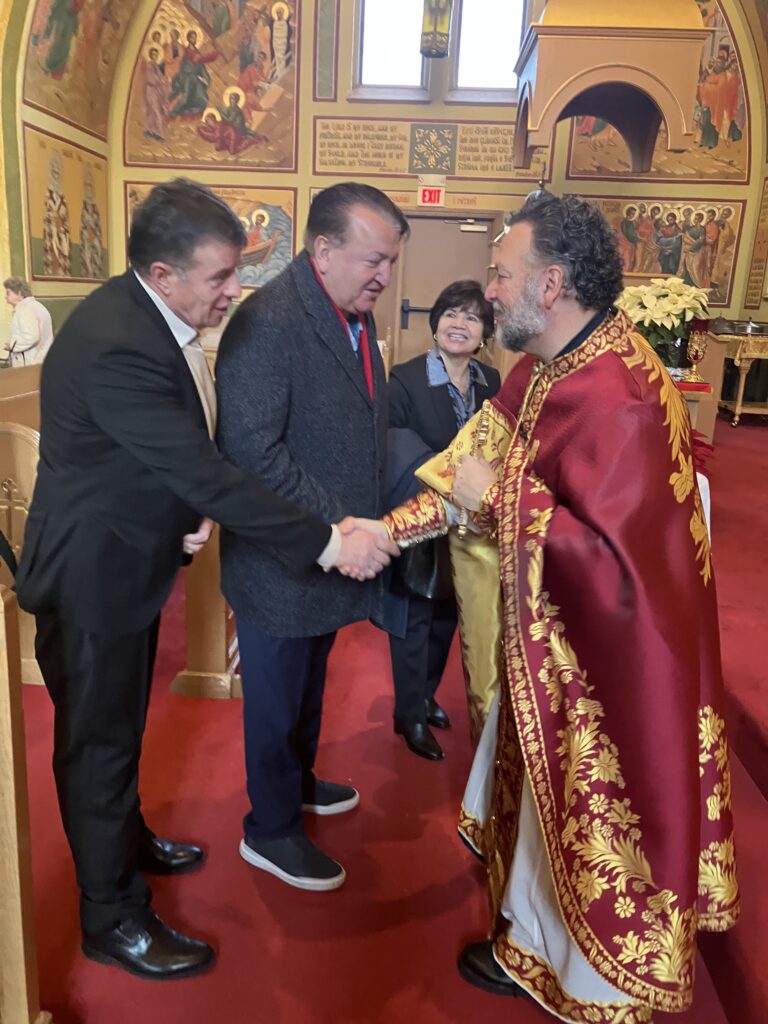
Last night, the talented dancers of Grupi Arbëria lit up the stage at St. Nicholas Albanian Orthodox Church – Chicago, IL 80th Anniversary Celebration! The crowd was amazed at how much the kids accomplished after only three practices, showcasing their dedication and pride for their Albanian heritage.

A special highlight of the evening was a visit from Jim Belushi, who congratulated the young dancers and joined them for a group photo.

It’s not too late to have your kids join Grupi Arbëria! We welcome children aged 6 and up, regardless of experience. Practices are held every other Sunday from 1-2 p.m. Message us for more information—let’s keep the tradition alive!

🇦🇱
🇦🇱
🇦🇱

Mbrëmë, valltarët e talentuar të Grupit Arbëria ndezën skenën në Festën e 80-vjetorit të Kishës Ortodokse Shqiptare të Shën Nikollës! Publiku u mahnit me sa shumë kanë arritur fëmijët pas vetëm tre provave, duke treguar përkushtimin dhe krenarinë e tyre për trashëgiminë shqiptare.

Një moment i veçantë i mbrëmjes ishte vizita e Jim Belushit, i cili përgëzoi valltarët e rinj dhe u bashkua me ta për një foto grupi.

Nuk është vonë që fëmijët tuaj të bashkohen me Grupi Arbëria! Ne mirëpresim fëmijë të moshës 6 vjeç e lart, pavarësisht nga përvoja. Klasat e valles, mbahen nje here ne 2 jave, te djelave nga ora 1-2 pasdite. Na shkruani për më shumë informacion — le të mbajmë gjallë traditën!

Filed Under: Reportazh

AALEA Showcases the Albanian American Diaspora as a Model of Unity, Professionalism, and Civic Pride

October 14, 2024 by s p

Dritan Lazami/

Human Trafficking Detective for the Dane County Sheriff’s Office

The Albanian law enforcement diaspora is growing globally, with Albanians increasingly entering law enforcement professions in various countries, particularly in the United States, Germany, Switzerland, and other parts of Europe. These officers are building bridges between their respective communities and local law enforcement agencies, while maintaining a strong connection to their Albanian heritage.

In the United States, organizations like the American Albanian Law Enforcement Association (AALEA) play a significant role in uniting Albanian-American law enforcement officers from across the country. AALEA focuses on promoting cultural pride, supporting officers of Albanian descent, and fostering connections between Albanian communities and law enforcement agencies. Officers in these roles include suburban police officers, deputy sheriffs, special agents, investigators, and state troopers.

In countries like Germany and Switzerland, the Albanian diaspora has also made significant strides in law enforcement, with Albanians serving as police officers, detectives, and other roles in public safety. Polizeikommissar Morina from Bielefeld, Nordrhein-Westfalen, for example, is an inspiring figure for the younger Albanian generations in these regions.

This growing involvement of Albanians in law enforcement not only strengthens ties between the diaspora and their host countries but also helps in promoting a positive image of the Albanian community abroad. It reflects a commitment to service, law, and order while maintaining pride in their Albanian roots.

Filed Under: Reportazh

NË MONTREAL…

October 9, 2024 by s p

Ilir Ikonomi/

Kthehem në Uashington pas disa ditëve të mrekullueshme që kalova në Montreal të Kanadasë me komunitetin shqiptar.

Gjeta shqiptarë të kulturuar dhe dinjitozë, që e kanë ndërtuar jetën me punë të palodhur, që zbatojnë me dëshirë ligjet dhe nuk i mbajnë sytë nga qielli për të pritur se ç’do t’u sjellë fati. Përshtypja ime ishte se njerëzit ndiheshin të respektuar e të trajtuar me drejtësi, në bisedat e përditshme ndjeje shumë pozitivizëm, asnjë frymë ankese apo cinizmi.

Folëm për librat, për historinë, për të shkuarën dhe të tashmen. Si na ndihmon njohja e historisë? Ç’mësime nxjerrim prej saj? Përse na ndihmon studimi i Fan Nolit dhe i figurave të tjera? Sa vlerë ka edukimi i fëmijëve të diasporës me gjuhën dhe kulturën amtare? Këto ishin vetëm disa nga gjërat që diskutuam të dielën në Bibliotekën e Madhe të Montrealit (BAnQ), ku kaluam disa orë.

Më bëri përshtypje se sa shumë pyetje pati gjatë diskutimit, pas shfaqjes së një dokumentari për Fan Nolin. Besoj se kjo ka lidhje me mënyrën e të menduarit analitik dhe me cilësinë e lartë kulturore të këtij komuniteti që lexon. Njerëzit pyesnin pa komplekse, me dëshirën e sinqertë për të mësuar diçka të re.

Edhe pse jo të gjithë e kishin lexuar librin Fan Noli – Apostulli, kishte një kërshëri të natyrshme për të ditur se si i zgjidhnin problemet shqiptarët e diasporës 100 vjet më parë dhe për të bërë krahasime me të sotmen. Më pyetën edhe për librin e ri në serinë e biografisë së Fan Nolit që do të nxjerr së shpejti.

Montreali është kryesisht frengjishtfolës dhe më afër stilit evropian. Është i pastër dhe pa zhurma të panevojshme. S’ka nevojë ta them se qytetari ndihet i respektuar. Është vend i gjelbëruar, ka pyje, lumenj dhe liqene. Vërtet dimri është i ftohtë, por cilësia e jetës është e mirë, mjafton të duash dhe të dish të punosh.

Blerina Ruka e portalit Albanian Montreal Press dhe Ermir Dardha nga Shoqata Kulturore Shqiptare Montreal-Albanian Cultural Association Montreal, që ishin edhe mikpritësit e mi, patën mirësinë të më tregojnë qytetin. Bëra miq të tjerë të mirë, si Glen Kasneci, Anila Hasko Kurti dhe Korab Xharra. Kur u ndamë, mu duk sikur i njihja prej kohësh.

Marsel Fregjaj, me shumë bujari, më dhuroi një vizatim që kishte bërë posaçërisht meqë unë do të shkoja në Montreal. Çfarë privilegji për mua!

Kjo ishte vizita e dytë në Kanada, pas një promovimi në Toronto, ku gjeta një komunitet po aq kompakt dhe të interesuar.

Kur je i rrethuar nga njerëz të mirë, bëhesh vetë më i mirë në shpirt. Në rastin tim, kjo më përmirëson edhe në kuptimin e cilësisë së asaj që do të shkruaj në të ardhmen.

Prandaj bëji vetes një dhuratë, shko tako shqiptarët e Montrealit!

Filed Under: Reportazh

DY VJET PA MITROPOLIT ILIA KETRIN

October 8, 2024 by s p

Screenshot

-Në këtë ditë grupimi i grave “Bijat e Shën Trinisë” mblodhën donacione për t’ja dërguar mencës së të varfërve në Mitropolinë e Korçës.

Nga Fuat Memelli-Boston

E diela e datës 6 tetor, ishte një ditë e veçantë për besimtarët e kishës Shën Trinia në Boston. Krahas ritualit të zakonshëm fetar, u përkujtua edhe Hirësia e tij, Mitropolit lia Ketri, me rastin e dy vjetorit të ndarjes së tij nga jeta. Krahas kishave të tjera si ajo e Shën Kollit në Chicago, etj, ai ka shërbyer për vite me radhë në kishën Shën Trinia në Boston, e cila ishte bërë si shtëpia e dytë e tij. Kujtimet për Ilia Ketrin  shpalosi në fund të meshës peshkopi Theofan Koja. Ndër të tjera ai vlerësoi njohuritë e tij të thella teologjike, përkushtimin ndaj fesë, humorin dhe të qeshurën e tij “ngjitëse”etj. Më gjerësisht për figurën e Mitropolit Ilia Ketrit , u fol nëpjeswn e dytë në hollin e kishës. Alba Profi, një ndër veprimtaret e grupimit të grave “Bijat e Shën Trinisë” ftoi pjesëmarrësit të shohin një videomontazh kushtuar Hirësi Ilias. Ishin fragmente të bukura kujtimesh nga jeta e tij, një pjesë e mirë nga të cilët ishin me besimtarët e kishës  Shën Trinia ku shërbeu për vite me rradhë. Me këtë rast gratë e grupimit “Bijat e Kishës së Shën Trinisë” kishin organizuar një drekë të veçantë në kujtim të tij dhe mblodhën donacione për t’ja dërguar mencës së të varfërve në Mitropolinë e Korçës. Kryetarja e këtij grupimi, Doriana Andrea  na tha: “Në këtë përvjetor të Hirësi Ilias, menduam të japim një kontribut për njerëzit në nevojë të mencës së të varfërve në Mitropolinë e qytetit të Korçës. Zgjodhëm këtë qytet, pasi ai ishte shumë i lidhur më Korçën. Siç ka thënë Nënë Terëza “ne nuk mund të bëjmë dot gjëra të mëdha, por mund të bëjmë gjëra të vogla me dashuri të madhe”. Në këtë përvjetor të ndarjes nga jeta të Mitropolit Ilia Ketrit morëm disa mendime nga besimtarët për figurën e tij. 

Gjergji Nini na tha: “Hirësi Ilian e kishim si baba të dytë. Ishte i kudondodhur në gëzimet dhe hidhërimet e besimtarëve. Largimi i tij nga jeta, na ka lënë një boshllëk të madh.”

Bruna Shosho: “Kam shumë kujtime me Hirësi Ilian. Ai më ka martuar fëmijët. Ishte njeri babaxhan, me zemër të madhe. Nuk do ta harroj sa të jem gjallë”.

Sterjo Shkodrani: “Ai të jepte dashuri, të jepte këshilla për jetën, për punën. Ishte i thjeshtë dhe i dashur me të gjithë”.

Elena Vjero: “Mitropolit Ilia do të kujtohet gjithmonë për shpirtin e tij paqësor, për veprën që la pas.”


Filed Under: Reportazh

  • « Previous Page
  • 1
  • …
  • 31
  • 32
  • 33
  • 34
  • 35
  • …
  • 172
  • Next Page »

Artikujt e fundit

  • DIAMANT HYSENAJ HAP FUSHATËN PËR KONGRESIN AMERIKAN – FJALA E MBAJTUR PARA KOMUNITETIT SHQIPTARO-AMERIKAN
  • Nga Besa në New York: Shoqata Besi organizoi një mbrëmje të veçantë për Festën e Flamurit
  • Në 90 vjetorin e lindjes së poetit Faslli Haliti
  • Dilemat e zgjedhjeve të parakohshme parlamentare në Kosovë
  • Nga Shkodra në Bejrut…
  • Faik Konica, fryma e pavdekshme e një atdhetari dhe dijetari shqiptar
  • Abetaret e para të shkrimit të shqipes, fillesa të letërsisë shqipe për fëmijë
  • Valon Nikçi, një shqiptar pjesë e ekipit të Kongresistit George Latimer në sektorin e Task-Forcës për Punësimin dhe Ekonominë
  • Dega e Vatrës në Boston shpalli kryesinë
  • VATRA NDEROI KRYETARIN E KOMUNËS SË PRISHTINËS Z. PËRPARIM RAMA
  • NDJESHMËRIA SI STRUKTURË – NGA PËRKORËSIA TE THELLËSIA
  • Si Fan Noli i takoi presidentët Wilson the T. Roosevelt për çështjen shqiptare
  • TRIDIMENSIONALJA NË KRIJIMTARINË E PREҪ ZOGAJT
  • Kosova dhe NATO: Një hap strategjik për stabilitet, siguri dhe legjitimitet ndërkombëtar
  • MEGASPEKTAKLI MË I MADH ARTISTIK PAS LUFTËS GJENOCIDIALE NË KOSOVË!

Kategoritë

Arkiv

Tags

albano kolonjari alfons Grishaj Anton Cefa arben llalla asllan Bushati Astrit Lulushi Aurenc Bebja Behlul Jashari Beqir Sina dalip greca Elida Buçpapaj Elmi Berisha Enver Bytyci Ermira Babamusta Eugjen Merlika Fahri Xharra Frank shkreli Fritz radovani Gezim Llojdia Ilir Levonja Interviste Keze Kozeta Zylo Kolec Traboini kosova Kosove Marjana Bulku Murat Gecaj nderroi jete ne Kosove Nene Tereza presidenti Nishani Rafaela Prifti Rafael Floqi Raimonda Moisiu Ramiz Lushaj reshat kripa Sadik Elshani SHBA Shefqet Kercelli shqiperia shqiptaret Sokol Paja Thaci Vatra Visar Zhiti

Log in

This website uses cookies to improve your experience. We'll assume you're ok with this, but you can opt-out if you wish. Cookie settingsACCEPT
Privacy & Cookies Policy

Privacy Overview

This website uses cookies to improve your experience while you navigate through the website. Out of these cookies, the cookies that are categorized as necessary are stored on your browser as they are essential for the working of basic functionalities of the website. We also use third-party cookies that help us analyze and understand how you use this website. These cookies will be stored in your browser only with your consent. You also have the option to opt-out of these cookies. But opting out of some of these cookies may have an effect on your browsing experience.
Necessary
Always Enabled
Necessary cookies are absolutely essential for the website to function properly. This category only includes cookies that ensures basic functionalities and security features of the website. These cookies do not store any personal information.
Non-necessary
Any cookies that may not be particularly necessary for the website to function and is used specifically to collect user personal data via analytics, ads, other embedded contents are termed as non-necessary cookies. It is mandatory to procure user consent prior to running these cookies on your website.
SAVE & ACCEPT