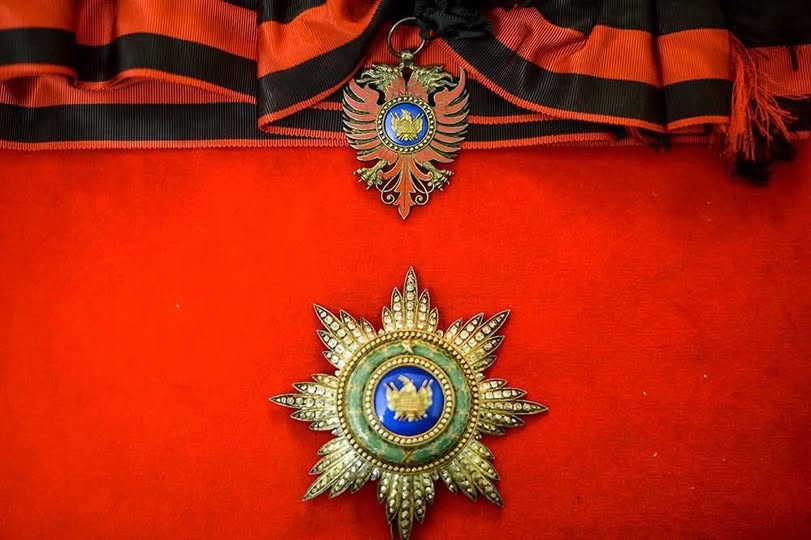
Oborri Mbretëror Shqiptar/
Në përvjetorin e 100-të të themelimit të Urdhrit Mbretëror të Skënderbeut, nderojmë një shekull tradite historike, simbolike dhe dinastike. I themeluar në vitin 1925 nga Madhëria e Tij Mbreti Zog I, ky urdhër u krijua si një nga dekoratat më të larta të Shtetit Shqiptar, me qëllim vlerësimin e shërbimeve të jashtëzakonshme ndaj kombit dhe për të përjetësuar figurën e Heroit Kombëtar, Gjergj Kastriot Skënderbeut.
Familja Mbretërore Shqiptare shpreh mirënjohjen e saj ndaj Shtetit për krijimin e Kancelarisë së Urdhrave dhe Medaljeve të Republikës, një institucion ku simbolet e monarkisë trajtohen me respekt dhe mund regjistrohen në përputhje me legjislacionin e shtetit, ashtu siç praktikohet në vendet e tjera evropiane, plotësisht në harmoni me urdhrat e Republikes.
Historiku dhe Legjitimiteti Dinastik
Edhe pse monarkia shqiptare u ndërpre në vitin 1939, familja mbretërore nuk e ka hequr kurrë dorë nga përgjegjësitë e saj historike. Sipas parimit të njohur ndërkombëtar “fons honorum”, urdhërat mbretërorë të themeluar nga një sovran legjitim mbeten pjesë e trashëgimisë së dinastisë, pavarësisht ndryshimeve politike në shtet.
Urdhri Mbreteror i Skënderbeut hyn pikërisht në këtë kategori dhe vazhdon të administrohet nga Kreu i Shtëpisë Mbretërore të Zogut.
Legjitimiteti i tij mbështetet në:
1. Aktet dhe prerogativat e Kurorës së vitit 1928, që i njihnin Mbretit Zog I të drejtën për krijimin dhe administrimin e urdhërave mbretërorë;
2. Precedentët evropianë të urdhërave dinastikë;
3. Vazhdueshmërinë e pandërprerë të dinastisë, që sot përfaqësohet nga Lartmadhëria e Tij, Princi i Kurorës Leka II Zogu.
Vlera e Përvjetorit
Shekulli i Urdhrit të Skënderbeut nuk shënon vetëm një datë historike, por ripërtërin misionin e tij: nderimin e atyre që mishërojnë virtytet e guximit, atdhedashurisë dhe shërbimit ndaj kombit. Ky urdhër mbetet një element i rëndësishëm i trashëgimisë sonë kulturore.
————————————————-
On the 100th Anniversary of the Founding of the Royal Order of Skënderbeg
As we mark the centenary of the Royal Order of Skënderbeg, we honor a century of historical tradition, national symbolism, and dynastic continuity. Established in 1925 by His Majesty King Zog I, the Order was conceived as one of the highest decorations of the Albanian State, created to recognize exceptional service to the nation and to uphold the legacy of Gjergj Kastrioti Skënderbeg, the national hero whose name it proudly bears.
From its inception, the Order was structured in accordance with European standards of state and dynastic honors, with clearly defined statutes, classes, and insignia. King Zog I intended the Order not only as a state decoration but as a moral institution, one that reflected the courage, patriotism, and civic virtue embodied by Skënderbeg. During the period of the Albanian Kingdom (1928–1939), it was awarded to prominent Albanian citizens and distinguished foreign personalities whose actions advanced the interests, security, and reputation of Albania.
Historical and Legal Foundations of Legitimacy
Although the Albanian monarchy was interrupted in 1939, the Royal Family has never renounced its historical duties or its dynastic responsibilities. In accordance with international norms governing dynastic and historical orders, particularly those recognized in European royal jurisprudence and custom….orders established by a sovereign and tied to a reigning dynasty remain part of that dynasty’s patrimony, even after political changes in the state.
The Royal Order of Skënderbeg falls specifically into the category of fons honorum held by the House of Zogu. The principle of fons honorum—the “source of honor”, establishes that legitimate dynasties retain the right to confer their historical orders regardless of changes in regime, as long as the dynasty itself continues to exist and its head of house remains recognized. This principle has long been accepted in monarchic and chivalric legal tradition and extends to all royal houses formerly or currently reigning in Europe.
The Albanian Royal Family’s legitimacy is further reinforced by:
1. The Act of Recognition of 1928, which established King Zog I as the constitutional monarch of Albania and vested all prerogatives of the Crown: including the creation and governance of royal orders, in the person of the Sovereign and his heirs.
2. International Precedent, whereby dynastic orders created by rightful sovereigns continue to be administered by their successors.
3. Uninterrupted Dynastic Continuity, preserved through the succession of the Head of the House of Zogu, culminating today in His Royal Highness Crown Prince Leka.
Therefore, the Royal Order of Skënderbeg, as a dynastic order of the House of Zogu, retains full historical legitimacy. While the post-1991 Albanian Republic maintains its own system of state decorations, the Royal Order of Skënderbeg remains a distinct institution, rooted in the lawful prerogatives of the Albanian Crown and preserved as part of the national and cultural heritage of Albania.
A Century of Meaning
The 100th anniversary of the Order is not merely a celebration of its founding, but a renewal of its purpose. It stands as a reminder of Albania’s historic aspirations, dignity, unity, courage, and service to the nation. The Order continues to symbolize the values that Skënderbeg defended and that King Zog I sought to instill in the modern Albanian state.
On this centenary, the Royal Family pays tribute to all those who, over the past century, have exemplified these ideals. The preservation and continuation of the Royal Order of Skënderbeg ensures that Albania’s historical legacy remains alive, respected, and transmitted to future generations.