• Home
  • Politics
  • Opinion
  • Culture
  • Sports
  • Economy
  • Interview
  • Reporting
  • Community
  • Vatra

Dielli | The Sun

Albanian American Newspaper Devoted to the Intellectual and Cultural Advancement of the Albanians in America | Since 1909

ALBANIA AFER AFGANISTANIT

August 16, 2021 by s p

Nga: Perparim Gjeka/


Sa herë kërkoja vendin tonë në radhitjen alfabetike të shteteve dhe me dilte i pari Afganistani, aq herë mendoja se sikur të mos ekzistonte ky shtet Albania do ishte e para, prandaj e kisha marre inat. Pastaj kur u poqa pak me shumë, dhe kuptova se ky vend jo vetëm është afër nesh në rend alfabetik, por edhe në rende të tjera ekonomike si një nga vendet me pasuri të mëdha e me varfëri të madhe, mendoja sa mirë që ka edhe shtete poshtë nesh si Afganistani, si nje lloj vetngushellimi. Kjo afërsi vitet e fundit u shtua sepse Afganistani zinte vendin e parë në botë si prodhues i një lloj droge, kurse Albania vendin e parë në Europe në një lloj tjetër droge. Afërsi të tjera të ngjashme ka plot si përshembull vendi atje kontrollohet faktikisht nga katër klane ose shure kurse Albania sipas ambasadorit amerikan Lu nga ekzaktesisht katër familje mafioze. Por afërsia më serioze nuk është përmendur nga askush seriozisht publikisht dhe po e ndiej detyrim moral ta ndaj me publikun shqiptar. Le ta trajtojmë si gjithmonë logjikisht situaten e tërheqjes amerikane dhe fitoren e talebaneve. Ushtria dhe fuqia amerikane bashkë me ate qeveritare afgane nuk ka asnje mundesi teorike dhe praktike të jetë më pak e fortë se në vitin 2001 kur u hap kjo luftë dhe Talebanet e tanishem nuk ka asnje mundesi teorike dhe praktike të jenë më të fortë se sa ishin ateherë kur kontrollonin vendin dhe kishin mik Bin Ladenin. Pra Amerika nuk mund ta humbte këtë luftë, por e ka braktisur atë kryesisht sepse u arrit qëllimi kryesor; të ndeshej me terroristët në vendet e tyre dhe jo të mbrohej nga ata në vendet e veta, keshtu që Sekretari Blinken nuk gabon kur thotë se ajo lufte ishte sukses në prizmin amerikan. Dhe këtë arsye e thonë hapur. Ajo që nuk thonë është arsyeja pse e lanë qeverinë afgane vetëm edhe kur u kuptua qartë që talebanët ishin më të fortë ushtarakisht e organizativisht se sa qeveria. Dhe këtu vijmë te afërsia e neveritshme e sjelljes së qeverive e liderve afgane në 20 vjet me qeveritë tona në Shqipëri e Kosovë; korrupsion galopant, bashkepunim me krimin e organizuar, flirtim me kundërshtarët, shtypje e shfrytëzim për masat popullore, luftë bërrylash për dominim tarafesh brenda pushtetit, kaos në çdo hapësirë të jetës shoqërore, e mbi të gjitha dyfytyrësi, hilera, mashtrime, “grid” dhe mosmirënjohje me amerikanet. Ajo që mund t’i ketë vënë vulën “fed up-it” amerikan ose shqip tejlodhjes me këta mosmirenjohës e plangprishës është mosdakordimi në bisedime për bashkëqeverisje me talebanet, bisedime te cilat u ndermjetësuan nga amerikanet e ndoshta përgjegjësia ka rënë mbi kapadaillekun e liderve qeveritarë. Dhe amerikanet i lanë në meshirë të fatit për të parë sa u vlen lëkura pa ndihmen amerikane me të cilën u mesuan dhe e patën pa kursim. Këta njerëz të vegjel me orekse të medha, këta funderrina morale të një Kombi luftëtar si ai afgan janë përgjegjësit kryesorë të tragjedisë së sotme afgane bashkë me talebanet. Sa afër me dy shtetet tona, sa afër po na e sjellin tejlodhjen e braktisjen e mbrojtjes amerikane këta liderucat tanë, në qeveri e opozitë, me cic micet e tyre të pështira, duke kujtuar se ua hedhin amerikaneve, duke kujtuar se vetëm këta janë të zgjuar, vetëm këta janë të pafajshëm, gjithë faji është i kundershtarit politik e në mos i popullit të paemancipuar sa të kuptojë këta. Dhe mos më thoni që është faji i Amerikës se jemi tejlodhur. Se Amerika çliroi, ndihmoi e njohu shtet edhe Gjermaninë, Korenë e Japoninë, jo vetëm Kosoven, Shqipërinë e Afganistanin. Pse ne nuk zgjedhim të jemi afër me Gjermaninë por jemi afër me Afganistanin?
Filed Under: Analiza Tagged With: albania, Perparim Gjeka

With More Freedom, Young Women in Albania Shun Tradition of ‘Sworn Virgins’

August 10, 2021 by s p

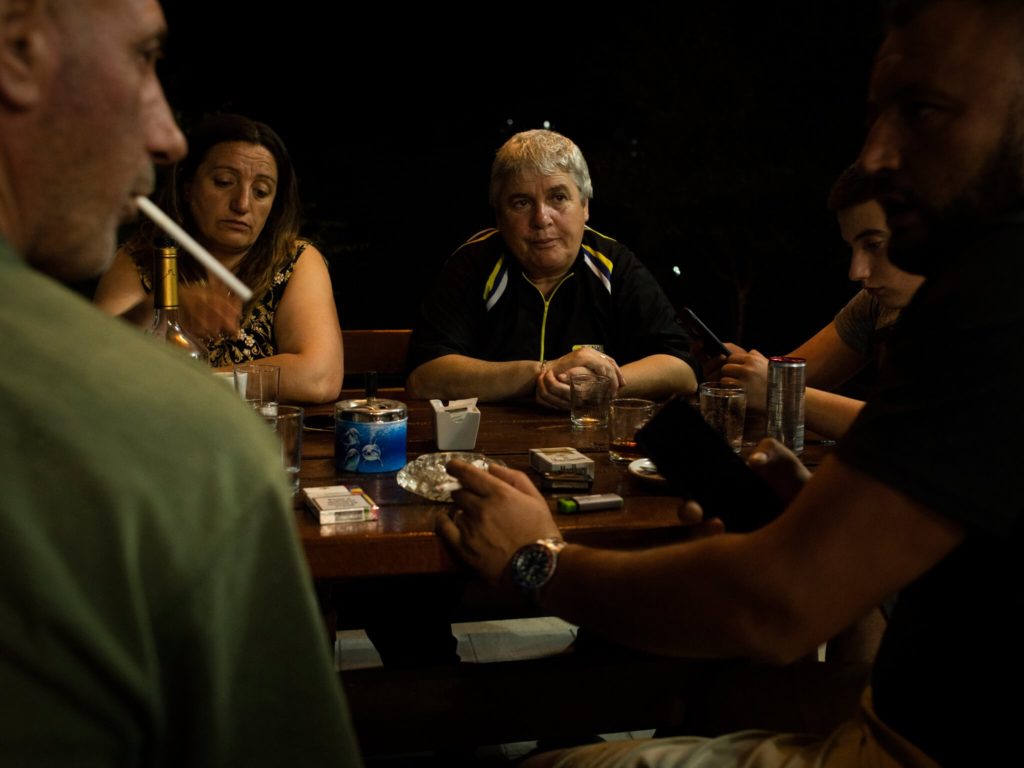
Duni having drinks with relatives. A woman who becomes a “sworn virgin” enjoys male privileges, like the right to make family decisions, smoke, drink and go out alone.
“I always felt like a man, even as a boy,” said Diana Rakipi, a burrnesha in the coastal city of Durres.

NEW YORK TIMES

Text by Andrew Higgins

Photographs by Laura Boushnak

A centuries-old tradition in which women declared themselves men so they could enjoy male privilege is dying out as young women have more options available to them to live their own lives.

LEPUSHE, Albania — As a teenager locked in a patriarchal and tradition-bound mountain village in the far north of Albania, Gjystina Grishaj made a drastic decision: She would live the rest of her life as a man.

She did not want to be married off at a young age, nor did she like cooking, ironing clothes or “doing any of the things that women do,” so she joined a gender-bending Albanian fraternity of what are known as “burrneshat,” or “female-men.” She adopted a male nickname — Duni.

“I took a personal decision and told them: I am a man and don’t want to get married,” Duni recalled telling her family.

Few women today want to become what anthropologists call Albania’s “sworn virgins,” a tradition that goes back centuries. They take an oath of lifelong celibacy and enjoy male privileges, like the right to make family decisions, smoke, drink and go out alone. Duni said her choice was widely accepted, though her mother kept trying to get her to change her mind until the day she died in 2019. Like other burrneshat, Duni — who remains Gjystina Grishaj in official documents — is still universally referred to in a traditional way, with female pronouns and forms of address, and does not consider herself transgender.

The fraternity that Duni joined nearly 40 years ago is dying out as change comes to Albania and its paternalistic rural areas, allowing younger women more options. Her village, which is Christian, like much of the northern part of the country, has in recent years started to shed its claustrophobic isolation, thanks to the construction of a winding road through the mountains that attracts visitors, but that also provides a way out for strong-willed local women who want to live their own lives.

Many, like Duni, took the oath so that they could escape forced marriages; some so that they could take on traditional male roles — like running a farm — in families where all of the men had died in blood feuds that plagued the region; and others because they just felt more like men.

“Society is changing, and burrneshat are dying out,” said Gjok Luli, an expert on the traditions of northern Albania. There are no precise figures for how many remain, but of the dozen or so who do, most are elderly. Duni, at 56, is perhaps the youngest, he said.

“It was an escape from the role given to women,” Mr. Luli said, “but there is no desperate need to escape anymore.”

Among those now able to choose different paths in life is Duni’s niece, Valerjana Grishaj, 20, who decided as a teenager to leave the mountains and move to Tirana, Albania’s relatively modern-minded capital. The village, Ms. Grishaj explained over coffee in a Tirana cafe, “is not a place for me.”

“All my friends there have been married since they were 16,” she said.

But Ms. Grishaj said she understood why her aunt made the decision she did. “There were no strong, independent women up there,” she said. “To be one, you had to become a man.”

She praised her parents for letting her make her own choices. “I was very lucky, but parents like mine are rare,” Ms. Grishaj said, noting that most still pressure their daughters to marry as teenagers.

Albania, which was isolated under a communist dictatorship until 1991, has seen its economy and social mores develop rapidly in recent years, and the country has become increasingly connected to the rest of Europe. But Tirana, to which Ms. Grishaj moved at 17 to study theater directing, can still be a difficult place for a young woman trying to make her own way.

“The patriarchy still exists, even here in Tirana,” Duni’s niece said. Young women who live alone, she lamented, stir nasty gossip and “are often seen as whores.”

The difference now though, she said, is that “women today have much more freedom than before, and you don’t need to become a man to live your own life.”

By declaring herself a man, Duni was not striking at conventional gender norms, but submitting to them. She also shares the strongly transphobic and homophobic views that are prevalent in Albania.

Men, everyone in her remote alpine hamlet of Lepushe believed, would always have more power and respect, so the best way for a woman to share their privilege was to join them, rather than trying to beat them.

“As a man, you get a special status in society and in the family,” Duni said, looking back on nearly four decades of dressing, behaving and being treated like a man. “I have never worn a skirt and never had any regrets about my decision,” she said.

Underpinning this tradition was the firm grip in northern Albania of “the Kanun,” a set of rules and social norms that classify women as chattel whose purpose was to serve men.

The low status afforded women did give them one advantage, though: It exempted them from the battles that for centuries decimated northern Albanian families as men from feuding clans died in a never-ending cycle of vengeance killings. Parents whose sons had all been killed often urged a daughter to take on a male identity so there would be a man to represent the family at village meetings and to manage its property.

A woman who became a sworn virgin was viewed as not entirely male, did not count in blood feuds and therefore escaped being targeted for murder by a rival clan.

Mr. Luli, the expert on local traditions, said one of his cousins, who went by the nickname Cuba instead of her original name, Tereza, was an only child and became a sworn virgin so she could avoid being married off and leaving her parents to fend for themselves. She died of old age in 1982.

He compared Cuba with a “woman who decides to become a nun.”

“It is the same kind of devotion,” Mr. Luli said, “only to the family instead of God.”

For Albanians pushing for gender equality, such devotion stirs mixed feelings. “Saying I will not take orders from a man is feminist,” said Rea Nepravishta, a women’s rights activist in Tirana. “Saying I own myself and will not be owned by a man is feminist.”

But, she added, “being forced to be a man instead of a woman is totally anti-feminist — it is horrible.”

Inequalities enshrined by the Kanun, Ms. Nepravishta said, gave women a choice “between either living like a semi-animal or having some freedom by becoming a man.” While still strong, patriarchy, she added, has lost some power and no longer confronts women with such stark choices.

Some burrneshat said they declared themselves men simply because they never felt like women. Diana Rakipi, 66, a burrnesha in the coastal city of Durres, said, “I always felt like a man, even as a boy.”

Aggressively masculine in manner, Ms. Rakipi delights in being bossy. On a stroll near her tiny one-room apartment, she kept stopping passers-by who she thought were acting improperly — like a boy she saw hitting his brother — and berated them.

Ms. Rakipi, who was raised in the north before moving south to Durres, said she took an oath of celibacy as a teenager in front of dozens of relatives and vowed to serve the family as a man. Born after her parents’ only son died from illness, Ms. Rakipi said she had grown up being told she had been sent by God to replace her dead brother.

“I was always considered the male of the family. They were all so upset by the death of my brother,” she said, sitting in a cafe where all of the other customers were men. She wore a black military beret, a red tie, men’s trousers and a safari vest, its pockets stuffed with talismans of her eclectic beliefs, including a Christian cross and a medallion with the face of Albania’s onetime dictator, Enver Hoxha.

Ms. Rakipi snorted with contempt when asked about people who undergo transition surgery. “It is not normal,” she said. “If God made you a woman, you are a woman.”

Duni, from Lepushe village, also has strong views on the subject, saying that altering the body goes “against God’s will,” and that people “should be put in jail” for doing so.

“I have not lived as a burrnesha because I want to be a man in any physical way. I have done this because I want to take on the role played by men and to get the respect of a man,” she said. “I am a man in my spirit, but having male genitals is not what makes you a man.”

Locals in Lepushe, including Manushaqe Shkoza, a server at a cafe in the village, said Duni’s decision to become a man initially came as a surprise, but it was accepted long ago. “Everyone sees it as normal,” Ms. Shkoza said.

Duni said she was sad that the tradition of sworn virgins would soon die out, but noted that her niece in Tirana had shown that there were now less drastic ways for a woman to live a full and respected life.

“Society is changing, but I think I made the right decision for my time,” Duni said. “I can’t resign from the role I have chosen. I took an oath to my family. This is a path you cannot go back on.”

Fatjona Mejdini contributed reporting.

Filed Under: Reportazh Tagged With: ‘Sworn Virgins’", albania, The New York Times

The Path Ahead for the U.S.- Albania Relationship

August 4, 2021 by s p

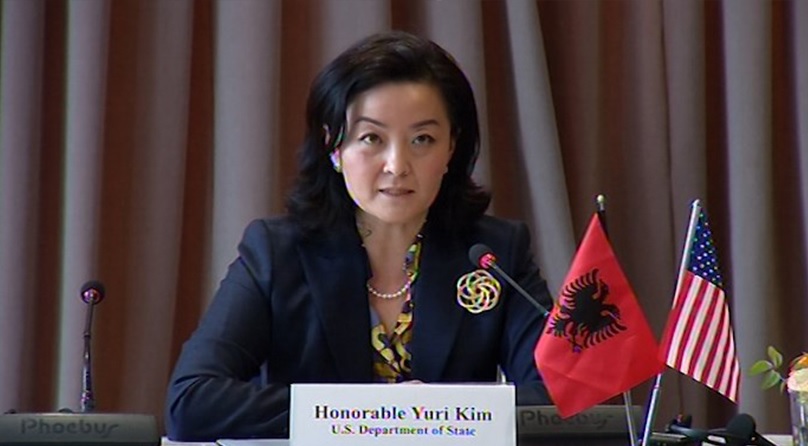
By Ambassador Yuri Kim

August in Albania is a time for well-earned rest and relaxation, and like many of you, I will also be taking a break from work.

At the same time, August this year is not the usual August of years past.  It comes after a year of unprecedented challenge, as Albania, has worked to chart a steady course through the COVID pandemic and continued its recovery from the November 2019 earthquake.

Albania has concluded an election that will mark the return of the opposition to Parliament, a critical event.  As ODIHR has noted in its final report, the April 25 election was good, but not perfect, and the United States looks forward to working with the majority and opposition in Parliament to address persisting problems in elections as they engage in serious, bipartisan work to ensure that the next elections meet the highest standards.  Likewise, the United States will continue to strongly support reforms that will bring Albania fully into the European family.  Five years after laws were passed, justice reform is delivering real results that will help end impunity.

Albania’s role in the region and relationship with the United States are stronger than ever.  Albania successfully navigated its term as Chair-in-Office of the OSCE in 2020 despite the COVID 19 pandemic. In March last year, the EU invited Albania to join the accession path to become an EU member.  Earlier this year, Albania was the main host of the largest U.S.-led military exercise in the Balkans since World War II.  Since the United States and Albania signed an historic Memorandum on Economic Cooperation in October 2020, plans to build the Skavica hydropower plant and bring Liquefied Natural Gas (LNG) through Vlora are moving forward swiftly.  This will mean more energy to power a growing economy, more jobs for Albanians as well as Americans, and more U.S. investment in Albania.

But the United States and Albania should not be satisfied merely to look back in satisfaction.  We must look forward with hope and determination to make even more progress in democracy, defense, and business.

Thirty years after the Albanian people – with full support from the United States – threw off the shackles of communist dictatorship, Albania has arrived at a new moment of historic opportunity.  In this respect, August this year is not only a time for rest and relaxation, it is a time for reflection and planning, to learn from the past and seize the opportunities ahead.

On January 1, 2022, Albania will take on its most significant role ever on the world stage, sitting alongside the United States, the UK, China, Russia, and France on the UN Security Council.  As Albania continues to implement necessary reforms, the country moves closer, day by day, to the first Intergovernmental Conference that will formally begin negotiations for EU membership – a process and goal that the United States strongly supports.  Building on Defender Europe 21, we are looking forward to significantly enhancing our defense cooperation.  We also expect that more U.S. investment will come to Albania.

Much will depend on the demands of the Albanian people and the choices of Albanian leaders.

We look forward to seeing Parliament return with full participation so that Albanians across the political spectrum are represented.  We urge leaders on all sides to return with renewed determination to work hard on behalf of the Albanian people.  This will require change, vision, and real leadership to eradicate crime and corruption so that everyone has a fair shot and a better future.  It will require Edi Rama, Lulzim Basha, and other leaders to review their rosters once again to ensure that when they return to Parliament, people can be truly proud of their representatives.  It will also require parties to rise above their partisan interests and find ways to compromise and cooperate with each other for a higher cause, for the future of Albania.

For too long, corruption has been weaponized by state and non-state actors to buy off politicians, win contracts, and interfere in democratic processes.  President Biden and Secretary Blinken have made clear through their words and actions that fighting corruption is a national security priority for the United States.  We want an Ally that is strong, capable, and prosperous.  We want a partner, not a problem.

In the last year and a half, I have had the opportunity to travel around this beautiful country and try to meet as many people as I can.  Bajram Curri, Shkodra, Kukësi, Tirana, Durres, Korca, Pogradec, Elbasan, Gjirokaster, Himara, Saranda, Vlora – every city, town, and village – has its distinct flavor, but they are united in one thing: People are sick and tired of the old ways; they want real change; they want an end to corruption; they want a justice system in which no one is above the law; they want criminals out of government and politics; they want a country that attracts young people to stay for the opportunities; they want a country that is moving forward, not backwards.

It is time for leaders to reflect and take courageous action.  It is time for leaders to show who you are and what you think this country deserves.  It is time to lead.

As we take a break this summer, my colleagues and I at the American Embassy will be reflecting and planning for how best to intensify our efforts on democracy, defense, and business.  We hope Albania’s leaders – those in power and those who hope one day to be in power – will likewise reflect and plan for the future, for a more democratic, secure, and prosperous Albania.

Filed Under: Featured Tagged With: albania, Ambassador Yuri Kim, USA

US, Albania, Welcome Agreement on ‘Trustworthy’ 5G

June 14, 2021 by dgreca

rime Minister Edi Rama and Secretary of State Antony Blinken, after signing the agreement on 5G between Albania and US. Photo: Edi Rama/Facebook./

Albania has become the next Western Balkan country to pledge close coordination with the US on the development of 5G technology networks in a deal that US Secretary of State Blinken said set an important example.

By Fjori SINORUKA- BalkanInsight/

Albania is the latest country to join the queue in the region for reliable 4G and 5G networks after Prime Minister Edi Rama signed a memorandum with the US Secretary of State Antony Blinken in Brussels on Sunday.

Without explicitly mentioning the Chinese giant, the agreement likely excludes China’s Huawei from the competition.

The deal comes a week after Romania promulgated a law that prohibits ties with China’s 5G network and after both Serbia and Kosovo committed themselves to former US President Donald Trump in September 2020 to “prohibit the use of 5G equipment supplied by untrusted vendors in their communications networks”.

Last October, the US signed a document with North Macedonia, emphasizing “the importance of encouraging the participation of reliable and trustworthy network hardware and software suppliers in 5G markets, taking into account risk profile assessments, and promoting frameworks that effectively protect 5G networks from unauthorized access or interference”.

Secretary of State Blinken said the agreement with Albania was important and sent a message to others.

“I think we’re setting a very strong example together here today, particularly on the need to make sure that when it comes to our most sensitive technology and networks we have, we’re working with trusted vendors. That’s particularly important now and a strong message to send out,” Blinken said.

He added that the partnership between the two countries was becoming stronger and that he appreciated Rama’s leadership in this.

Rama said the moment was an important one, and that he worked for this initiative for years and had also asked other countries in the region to join it.

“For me and for us, in Albania, it is a very important moment because … we have undertaken this initiative on our part for several years and asking other countries in the region to become part of that altogether, to make efforts for a secure communication corridor and put this communication corridor of very critical services in the hands of the citizens of Albania, Albanian institutions, security forces and not to allow it to be compromised by third actors who are sometimes malicious actors,” he said.

According to a National Plan for the sustainable development of digital broadband infrastructure, by the Ministry of Infrastructure and Energy, Albania plans to implement a 5G network between 2020 and 2025.

Implementation of the 5G network was first spoken about in Albania in 2019, when the US embassy was involved in the discussions, claiming that, “China would like to capture the digital lifestyle of the Western Balkans to absorb information from them and suffocate networks of US allies”.

China’s Huawei reacted to the deal saying it had not tested anything related to 5G in Albania and had not had any contracts on that matter.

Albania’s High State Control (Audit Office), in a report in 2020 said: “Chinese products, like Japanese ones in the 1980s, are already making the big leap, from quantity without quality, to quality below cost. Under these conditions, driven by the low level of income for both the individual and the government, Albanians find it difficult to resist the temptation to flirt technologically with the Chinese. It took continued US intervention last December to remind us that as a NATO member, our priority should not be simply 5G technology, but 5G security”.

Filed Under: Ekonomi Tagged With: albania, on ‘Trustworthy’ 5G, US, Welcome Agreement

Albania plus 4 elected as UN Security Council non-permanent members

June 12, 2021 by dgreca

Albania, Brazil, Gabon, Ghana, UAE Elected To UN Security Council For 2022-23 Term ….

The 193-member UN General Assembly held elections to elect five non-permanent members who will take their seats on the 15-nation Council for a two-year term beginning January 1, 2022. 

United Nations:

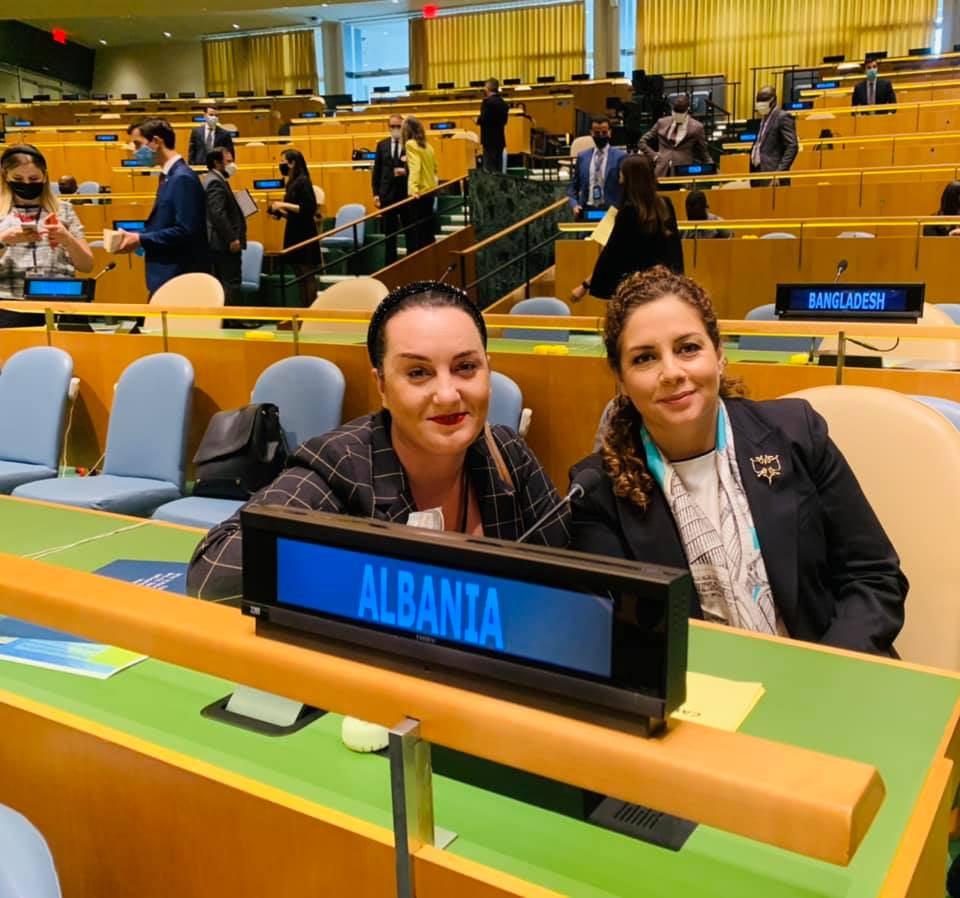
Albania, Brazil, Gabon, Ghana and the United Arab Emirates were elected unopposed to the powerful UN Security Council on Friday as non-permanent members for the 2022-23 term.

The 193-member UN General Assembly held elections to elect five non-permanent members who will take their seats on the 15-nation Council for a two-year term beginning January 1, 2022.

All the five countries won the elections unopposed as they were the only candidates from their respective regional groups vying for the allotted seats on the Council.

As per regional distribution for the 2021 election, three seats were available from the African and Asian States that went to Gabon, Ghana and the United Arab Emirates, one Latin American and Caribbean Group seat to which Brazil was elected and the Eastern European Group seat that went to Albania.

Ghana obtained 185 votes out of the valid 190 ballots, Gabon 183 and the United Arab Emirates 179.

Albania got 175 votes out of the 189 valid ballots with 14 abstentions, while Brazil garnered 181 votes of the total 190 valid ballots with 8 abstentions.

Estonia, Niger, Saint Vincent and the Grenadines, Tunisia and Vietnam will complete their two-year terms on the Council this year and the five newly elected members will sit at the horse-shoe table along with five permanent members China, France, Russia, the United Kingdom and the United States as well as the five non-permanent members India, Ireland, Kenya, Mexico and Norway, whose terms at the Council will end December 31, 2022. India will assume the rotating Presidency of the Security Council in August.

India’s Permanent Representative to the UN, Ambassador TS Tirumurti tweeted: “Congrats to all five newly elected members to the UN Security Council. India looks forward to working closely with you all.”

The election for the non-permanent members of the Security Council is held by secret ballot and candidates require a two-thirds majority in the General Assembly to be elected.

Every year, five countries are elected to the 15-member Council as non-permanent members for a two-year term, according to a geographical rotation set by the General Assembly in 1963, to ensure fair regional representation: five from African and Asian and Pacific States; one from Eastern Europe; two from Latin American States; and two from Western European and Other States 

(WEOG) Syndicated Feed

Filed Under: Politike Tagged With: albania, as UN Security Council, plus 4 elected

  • 1
  • 2
  • 3
  • Next Page »

Artikujt e fundit

  • NDJESHMËRIA SI STRUKTURË – NGA PËRKORËSIA TE THELLËSIA
  • Si Fan Noli i takoi presidentët Wilson the T. Roosevelt për çështjen shqiptare
  • TRIDIMENSIONALJA NË KRIJIMTARINË E PREҪ ZOGAJT
  • Kosova dhe NATO: Një hap strategjik për stabilitet, siguri dhe legjitimitet ndërkombëtar
  • MEGASPEKTAKLI MË I MADH ARTISTIK PAS LUFTËS GJENOCIDIALE NË KOSOVË!
  • Veprimtaria atdhetare e Isa Boletinit në shërbim të çështjes kombëtare
  • FLAMURI I SKËNDERBEUT
  • Këngët e dasmës dhe rituali i tyre te “Bleta shqiptare” e Thimi Mitkos
  • Trashëgimia shqiptare meriton më shumë se sa emërtimet simbolike të rrugëve në New York
  • “Unbreakable and other short stories”
  • ÇËSHTJA SHQIPTARE NË MAQEDONINË E VERIUT NUK TRAJTOHET SI PARTNERITET KONSTITUIV, POR SI PROBLEM PËR T’U ADMINISTRUAR
  • Dr. Evia Nano hosts Albanian American author, Dearta Logu Fusaro
  • DR IBRAHIM RUGOVA – PRESIDENTI I PARË HISTORIK I DARDANISË
  • Krijohet Albanian American Gastrointestinal Association (AAGA)
  • Prof. Rifat Latifi zgjidhet drejtor i Qendrës për Kërkime, Simulime dhe Trajnime të Avancuara Kirurgjike dhe Mjekësore të Kosovës (QKSTK) në Universitetin e Prishtinës

Kategoritë

Arkiv

Tags

albano kolonjari alfons Grishaj Anton Cefa arben llalla asllan Bushati Astrit Lulushi Aurenc Bebja Behlul Jashari Beqir Sina dalip greca Elida Buçpapaj Elmi Berisha Enver Bytyci Ermira Babamusta Eugjen Merlika Fahri Xharra Frank shkreli Fritz radovani Gezim Llojdia Ilir Levonja Interviste Keze Kozeta Zylo Kolec Traboini kosova Kosove Marjana Bulku Murat Gecaj nderroi jete ne Kosove Nene Tereza presidenti Nishani Rafaela Prifti Rafael Floqi Raimonda Moisiu Ramiz Lushaj reshat kripa Sadik Elshani SHBA Shefqet Kercelli shqiperia shqiptaret Sokol Paja Thaci Vatra Visar Zhiti

Log in

This website uses cookies to improve your experience. We'll assume you're ok with this, but you can opt-out if you wish. Cookie settingsACCEPT
Privacy & Cookies Policy

Privacy Overview

This website uses cookies to improve your experience while you navigate through the website. Out of these cookies, the cookies that are categorized as necessary are stored on your browser as they are essential for the working of basic functionalities of the website. We also use third-party cookies that help us analyze and understand how you use this website. These cookies will be stored in your browser only with your consent. You also have the option to opt-out of these cookies. But opting out of some of these cookies may have an effect on your browsing experience.
Necessary
Always Enabled
Necessary cookies are absolutely essential for the website to function properly. This category only includes cookies that ensures basic functionalities and security features of the website. These cookies do not store any personal information.
Non-necessary
Any cookies that may not be particularly necessary for the website to function and is used specifically to collect user personal data via analytics, ads, other embedded contents are termed as non-necessary cookies. It is mandatory to procure user consent prior to running these cookies on your website.
SAVE & ACCEPT