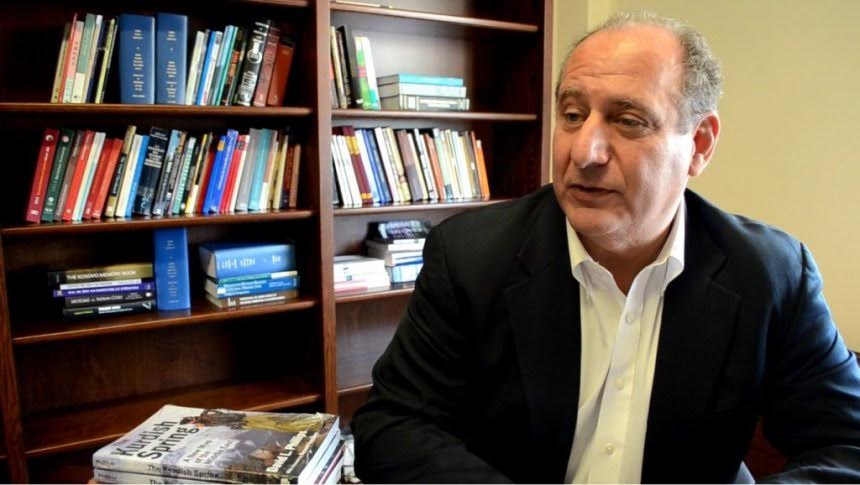
By David L. Phillips- The Washington Times/

The Kurdistan Worker’s Party (PKK) entered into a unilateral ceasefire prior to Turkey’s elections on June 24. Though Turkish armed forces repeatedly attacked the PKK headquarters in the Qandil Mountains of northern Iraq, the PKK refused to take the bait. It understood that renewed conflict would be used by President Recep Tayyip Erdogan to rally his nationalist base and justify an even more intense crackdown.
Kurds in Turkey preferred to show their power at the ballot box. They hoped to deprive Mr. Erdogan of a majority in the election for president, thereby forcing a second round. Furthermore, the pro-Kurdish People’s Democratic Party (HDP) would pass a critical threshold and be seated in parliament if it gained more than 10 percent of the popular vote.
The election was no surprise. Mr. Erdogan won the presidency with 52 percent, while the HDP’s charismatic presidential candidate, Selahattin Demirtas, received less than 9 percent. Though conditions were stacked against the HDP, it still got 12 percent. In a free and fair elections, the HDP would have dome much better.
Mr. Demirtas conducted his campaign from jail, imprisoned on trumped-up terrorism charges. He communicated with voters via his lawyers and social media.
Turkey’s state-controlled media gave Mr. Erdogan 181 hours of coverage during the six weeks prior to elections. Mr. Demirtas received less than one hour.
The government declared a state of emergency, which prevented campaign rallies. Police checked identification cards at polling stations. The presence of armed pro-government paramilitary groups intimidated Kurdish voters. The heavy security presence deterred Kurdish voters.
International election monitors were obstructed from Kurdish areas. More than 300,000 ballots in the mostly Kurdish southeast were invalidated.
Kurdish voters also faced logistical challenges. Ballot boxes were relocated from Kurdish communities, forcing Kurds to travel up to 20 miles from their homes. Hundreds of thousands of Kurdish voters were displaced and ineligible to vote because their homes were destroyed by the Turkish military and they could not register at an address.
The Kurdish leadership was incapacitated. In addition to Mr. Demirtas, the Turkish government jailed 12 Kurdish members of parliament and took direct control of 82 Kurdish municipalities, incarcerating elected mayors. It arrested 5,000 local Kurdish activists.
Elections can either advance national reconciliation, or intensify polarization based on how the election is conducted. Democratic elections allow voters to express dissent, giving them an opportunity to manifest their grievances through a political process. Turkey’s recent elections did not heal wounds. It worsened divisions, serving as a vehicle for Mr. Erdogan to consolidate his dictatorship.
When voters objected, Mr. Erdogan threatened violence targeting dissenters. What’s done is done. Mr. Erdogan was recently inaugurated with great fanfare and is ensconced in the presidency for another five years.
Mr. Erdogan promised a security solution to the Kurdish conflict. He pledged to drain the swamp by targeting Kurdish communities. As evidenced by more than 40 years of conflict, there is no military solution to Kurdish aspirations for greater political and cultural rights. The PKK enjoys broad popular support because its struggle gives dignity to the Kurds.
Kurdish leaders warn that the PKK will renew its insurgency. They have been pushed by Turkey’s bogus election and Mr. Erdogan’s bellicose rhetoric. The resumption of armed conflict will mark a new phase in Turkey’s civil war with regional implications, as armed Kurdish groups in Syria and Iran join the fray to support their Kurdish brethren.
Turkey is at a fork in the road. Mr. Erdogan can intensify his authoritarian rule and intensify Turkey’s war against the Kurds, or he can seek to rule inclusively and solve Turkey’s ethnic strife through negotiations. Stakes are high. If Mr. Erdogan foregoes peace talks with the PKK, the ensuing spiral of deadly violence could consume Turkey itself.
David L. Phillips is director of the Program on Peace-building and Rights at Columbia University’s Institute for the Study of Human Rights. His most recent book is “An Uncertain Ally: Turkey Under Erdogan’s Dictatorship” (Routledge, 2017).