• Home
  • Politics
  • Opinion
  • Culture
  • Sports
  • Economy
  • Interview
  • Reporting
  • Community
  • Vatra

Dielli | The Sun

Albanian American Newspaper Devoted to the Intellectual and Cultural Advancement of the Albanians in America | Since 1909

Pas Panairit te Pare Ekologjik, Dielli dhe Neka Doko biseduan per temat, pritshmerite dhe ardhmerine

September 26, 2022 by s p

Dielli: Duke filluar nga dërgimi i ftesave te fazat përgatitore dhe gjatë gjithë panairit shqiptar në Shën Gjergj, ti, si nismëtare dhe nikoqire, theksove karakterin ekologjik të tij si veçori dalluese dhe bashkëkohore. Në ditët pas panairit, si të duket se u manifestua ky tipar nga një vështrim i shpejtë pas? 

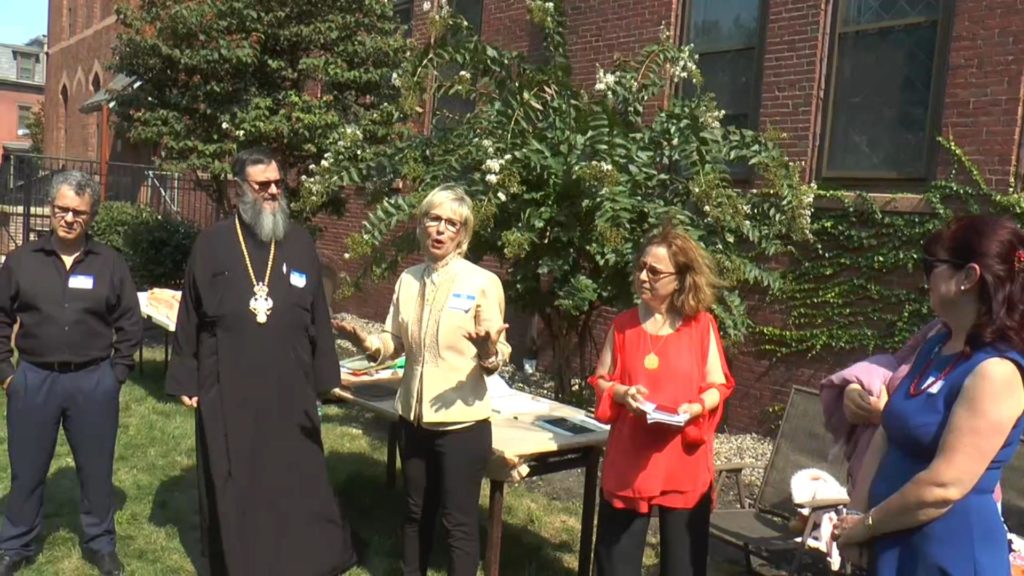
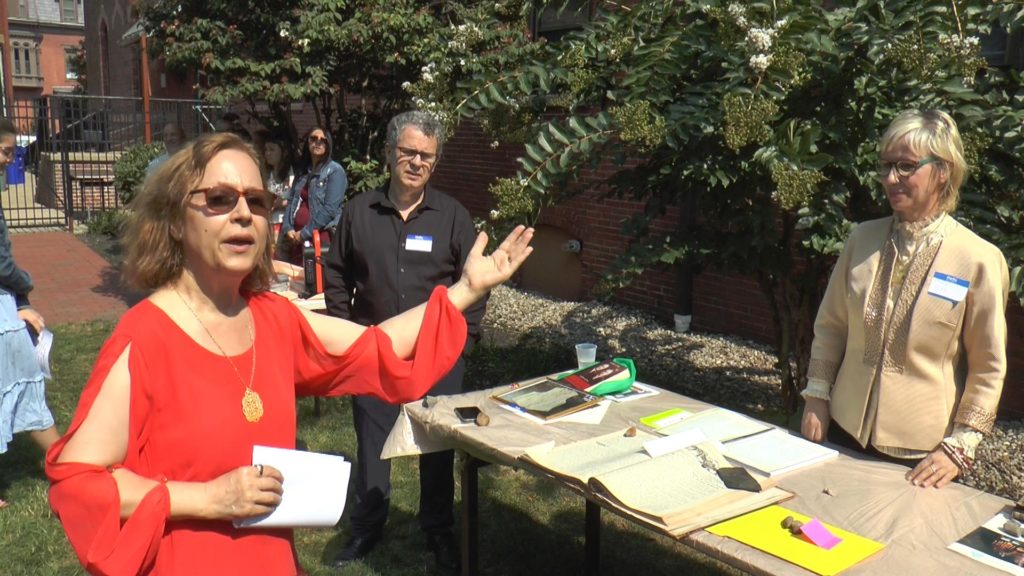
Neka Doko: I konceptuar si një panair shqiptar me prurje ekologjike të ingranuara në detaje si Kopshti i Meditimeve, produktet natyrale në shitje dhe porositë në tryezat e bisnesit familiar, lokal ose global, dreka e servirur në tri pjesë me gjithë përbërësit natyral e biologjik si përgatitja e gatimi, pra secila pjesë dhe tërësia e tij ishte funksion i kësaj qasje. Edhe data 18 ishte epilog i një nisme dhe provë për të shpërndarë energji shpirtërore komunitetit të Shën Gjergjit dhe miqve të energjive në natyrë. Personalisht isha e privilegjuar të hap për 8 ditë nga data 8 deri 16 shtator një paketë instruktive me energjitë dhe qasje ekologjike. Rrjedhimisht edhe konceptimi i panairit u mbështet tek energjitë e përmbledhura deri në atë ditë. Përsëri nën efektin e tyre u aplikua vendosja e tetë tavolinave në të dy anët e kopshtit me distancë edhe energjetikisht të balancuara nga njëra tjetra që secili përqafësues i tryezës të kishte aureolën e tij postkovid të njësuar tashmë me një zakon të ri shëndetsor global dhe ekologjik në një dimension shtesë të komunikimit më të ndërgjegjësuar midis njëri-tjetrit në hapësirë dhe kohë. Së fundi, përzgjedhja dhe vendosja e tryezave në varësi të përmbajtjes së produkteve dhe objekteve me vlera historike kishte veçanësi ambjentaliste e kulturore. Të gjitha elementet përbërëse të tij në formë a përmbajtje janë natyrale-biologjike dhe për rrjedhojë sensitivisht ambjentaliste.

Dielli: Tema e panairit ishte 100 vjetori i lidhjes diplomatike midis Amerikës dhe Shqipërisë. Si tu duk shtjellimi tematik nga ana juaj si ideatore dhe nikoqire e veprimtarisë?

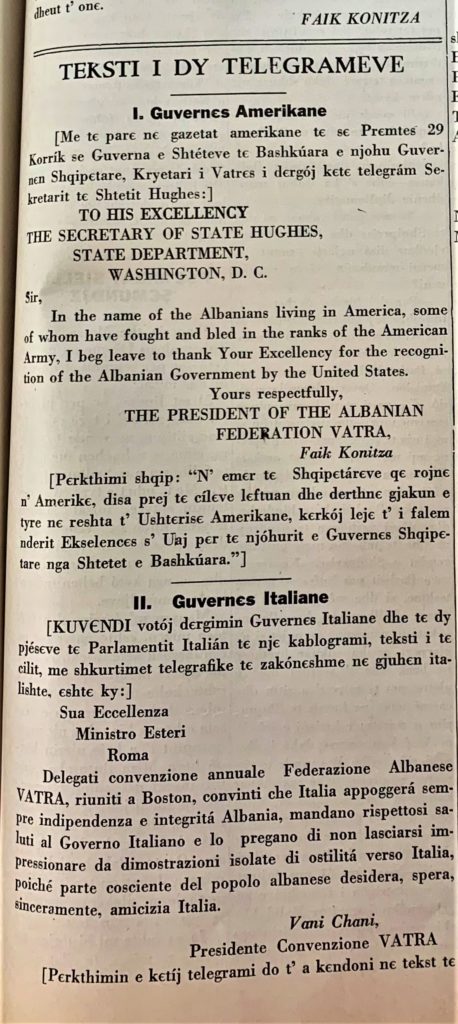
Neka Doko – Tema qendrore si edhe boshti për panairin ishte festimi i 100 vjetorit të vendosjes së marrëdhënieve diplomatike amerikane shqiptare. Ato nisën këtu në shtetin e Massachusetts dhe u zyrtarizuan në Washington – një ngjarje historike e dokumetuar në faqen kryesore kushtuar njohjes zyrtare të qeverisë shqiptare nga qeveria e Shteteve të Bashkuara në një protokoll të drejtuesve të Vatrës Faik Konitza dhe Vani Chani në gazetën Dielli, një shekull më parë në Boston në 29 korrik të vitit 1922. Nga këndvështrimi i energjive eko shpirtërore them se shërben edhe për shërimin e plagëve të shkaktuara nga goditja e ndarjes 50 vjeçare midis dy vendeve. Nuk kishte si të ndodhte ndryshe, e të mos e festonim këtë përvjetor të artë përmbyllës pas Nju Jorkut dhe Usterit në vendin ku nisi lëvizja për pavarësi kombëtare dhe shpirtërore këtu në Shën Gjergj, te Vatra me Fan Nolin dhe patriotë shqiptarë të imigruar në tokën e re. Çështja kombëtare, pavarësia, liria dhe përparimi komunitar, familjar dhe individual si tema të ditës sot janë shkrirë me edukimin për vetëzhvillim personal të potencialeve dhe talenteve të çdo pjesëtari të komunitetit shqiptaro amerikan, për të njohur dhe ndihmuar më mirë njëri tjetrin, veten dhe vendin nga erdhëm. 

Dielli: Çfarë manifestoi dhe cfarë arriti të përcillte panairi në linjën e “Mission Driven Entreprenship” të Shkollës së Jetës?

Neka Doko: Së pari, lidhja me traditën. Panairet për librin por edhe për artin kanë qenë dy sezonale, në pranverë dhe vjeshtë çdo vit këtu në Shën Gjergj, të organizuara dhe drejtuara nga biblioteka noliane, me At Liolinin si inisiator. Në këtë aspekt të dielën u përfaqësuam me një tryezë me libra të autorit dhe kontribuesit të bibliotekës Fan Noli, z. Namik Selmani.

Krahas traditës, u përpoqëm të nderonim dhe rivlerësonim një faktor të domosdoshëm përcjellës siç është biznesi. Mos harrojmë se nëse nuk do ishte vizioni i Nolit dhe përfaqësuesve të Vatrës për prosperitet ekonomik komunitar në Amerikë asgjë nuk do realizohej në planin pavarësi.Vetë blerja e një kompleksi arkitektural e historik në qendër të South Bostonit si është Katedralja e Shën Gjergjit vërteton vizionin e misionit kombëtar, shpirtëror e ekonomik të harmonizuara një shekull më parë nga ana e themeluesve të komunitetit të parë të organizuar shqiptar në Amerikë. Ishin bizneset shqiptare ato që në atë kohë mbështetën krijimin e shtetit shqiptar dhe institucioneve demokratike në Shqipëri. Ne po kthejmë traditën. Po kapim atë pikë që u këput nga komunizmi. 

Së dyti, është e vërtetë që Shkolla e Jetës ka marrë përsipër të ndihmojë, edukojë bizneset e rinj të brezit të emigrantëve të ardhur në Amerikë me kulturën e sipërmarrjes me drejtimin misionar që si thekson formuesja e saj Elona Lopari “një ditë, mbasi janë vetërealizuar të kthehen të ndihmojnë bashkëkombësit e tyre këtu dhe vendlindje.” Dhe së treti, përhapja e rrjeti i biznesit shqiptar amerikan në veri dhe jug që të lidhen me njëri-tjetrin nga tradita e të parëve deri te të rinjtë e talentuar në fusha të reja. Duke qenë më të fortë edhe në fushën e sipërmarrjes me drejtim misionar së bashku mund të bëjmë më mirë për njëri-tjetrin dhe për Shqipërinë.

Dielli: Po të marrim si shembull stendën e Vatrës, për ta konkretizuar në këtë rast misionin e Shkollës së Jetës, si ishin gërshetuar tradita dhe fryma krijuese e biznesit?

Neka Doko: Vatra e para si institucion ndërshqiptar demokratik 110 vjeçar ka në themel edukimin mbarëshqiptar me misionin patriotik, identitar, kulturor nëpërmjet investimit edukativ dhe mbështetës në biznes krijues e unik. Mund të përmend se në panair tërhoqi vëmëndjen fotoja e jelekut personal të një nga themeluesve të Vatrës Faik Konitza që Andrea Pani paraqiti para të gjithëve si një dhuratë të trashëguar nga brezat e familjes patriotike të Vasil Panit, mik i ngushtë me Konitzën. Ky artikull përfaqësonte në panairin ekologjik vlera historike dhe monetare të panjohura më parë si ato në tregun e pengjeve, qē kërkon ekspertë në fushën e rivlerësimit të mallrave me bonuse origjinale në rritje. Artikuj të kësaj natyre mund të vinë nga artifakte arkivore dhe muzeale të cilat kësaj rradhe u prezantuan në tavolinën e Vatrës te një familje e Shën Gjergjit dhe të muzikës së vjetër shqiptare në tavolinën e arkivës noliane. Një sipërmarrje e tillë mund të promovohet me sende me vlerë historike monetare që përfaqësojnë njëherazi qëllimin e Shkollës sē Jetës për aplikimin e edukimit sipërmarrës me orientim misionar në biznes historik e kulturor, dhe faktikisht të dyja burojnë nga tradita e memorabilia në Vatër dhe në bibliotekë. Pra janë të shkrira universalisht e pragmatisht nē një të vetme.

Përfaqësimi me dinjitet i Presidencës së Vatrës dhe gazetës Dielli nga ana juaj është shprehje e lidhjeve organike midis misionit të Vatrës, të Bibliotekës noliane dhe të Shkollës së Jetës. Kujtoj se takimi i parë i këtij “trinjakëzimi” nëse mund ta quaj kështu, u bë në nëntorin e vitit të kaluar në Katedralen e Shën Gjergjit. 

Dielli: Merret me mend se disa prezantime në panair kishin ngjashmëri në artikuj dhe përmbajtje. Të tilla ishin Vatra, Shën Gjergji, Biblioteka Fan Noli, familja Pappas. Por ato kishin edhe tiparet e veta. A mund t’i cekni shkurtimisht?

Neka Doko: Tryezat e vlerave dokumentare kishin emërues të përbashkët por edhe veçori specifike. Për shembull, tryeza e familjes Papa përcolli një mozaik të vlerave historike e kulturore të komunitetit të Shën Gjergjit me libra, artifakte e librete përvjetorësh nga origjina e krijimit dhe përvjetorëve historik të tij. Çdo gjë ishte përgatitur e prezantuar me disiplinë epistolare dhe nderim memorabiliar. John Papas u përfaqësua me dinjitet në këtë panair unikal në planin dokumentar familiar e komunitar. Një nga të papriturat ishte prezantimi nga Anila Hasko Kurti e cila mbante “tre kapele” në këtë panair ekologjik, historik dhe ekonomik. Anëtare e Shkollës së Jetës dhe Arbonne International, zonja Hasko Kurti gjeti në kalendarin e Vatrës 1918 foton ku gjyshi dhe xhaxhai me origjinë nga Gjirokastra ishin në grupin e themeluesve të Vatrës që në formimin e saj.

Dielli: Çfarë sillte pjesëmarrja në panairin e vjeshtës për biznese të njohura si Arbonne International dhe të tjera me më pak kohë në treg si psh Vinny Santal. Për disa prej tyre si Valbona Valdari dhe Silva Hani ishte debutimi i parë në panair të tillë. 

Neka Doko: Shkolla e Jetës erdhi në këtë panair eko shpirtëror me misionin për të mbështetur anëtarët e saj në Boston tashmë të integruar në biznesin e sipërmarrjes edukuese dhe trajnuese në terren. Drejtuesja e Shkollës zonja Lopari e përmendi fokusimin e Shkollës së Jetës tek vetëzhvillimi i brezit më të ri dhe familjeve të ardhura rishtas ose ende të paintegruara në komunitetin e shtetit tonë e më gjerë. Paralelisht, zonjat e Shkollës së Jetës janë konsulente biznesi për firmën e njohur Arbonne International, për promovimin dhe shitjen e produkteve biologjike për ushqim dhe mirëmbajtje trupi në mënyrë të shëndetshme për vete, familjen dhe mjedisin. Charlote B., me origjinë kanadeze, më shprehu se në panairin ekologjik ato ndiheshin si në shtëpinë e tyre. 

Tryeza e bisnesit global u plotësua me prezantimin pasionant nga Valbona Lavdari, e cila i njohu pjesëmarrësit me të rejat më të fundit si agjente shitblerje shtëpish dhe vlerat e një kopshti ekologjik me bonuse shpirtërore, një të tillë e ka ndërtuar edhe ajo vetë, si aspekt i vlerësuar në një industri që kalon një cikël krize herë pas here. Dua të përmend se Valbona ishte kontribuese edhe për pjesën e tretë të drekës, me kosin e saj natyral të shijshëm. Një tryezë interesante dhe origjinale e prezantimit të produkteve organike me përqasje individuale e familjare ishte edhe ajo e apikulturēs të rritjes së bletëve dhe prodhimit të mjaltit këtu në shtetin tonë nga familja Hani. Silva Hani si anëtare e Shkollës së Jetës në Boston është konsulente e sigurimeve jetike në profesion por hobi i saj është mbajtja e bletëve në Framingham dhe prodhimi i mjaltit me lulet e shtetit tonë, një pasion që ajo e ka të ushqyer e trashëguar nga i jati. Pranë mjaltit ekologjik shihje një shportë të bukur me ballakume Elbasani të gatuara me art dhe zemër nga një zonjë dhe mike e vjetër Irma që erdhi nga Uster për të marr pjesë në panair. 

Përsa i takon tryezave me orientim biznes familiar e global Vinny Santal dhe A& L Abruzzo që prezantuan produkte të freskëta ushqimore frutore, bulmetore, vajore, bazuar në lëndën e parë dhe përpunimin artisanal në vendlindje, u pëlqyen dhe blenë nga pjesëmarrësit në panair. Kur shijoje ullinjtë e Beratit dhe vajin e tyre, pranë sardeleve të Vlorës e djathit të Gjirokastrës, emocionet të çonin larg përtej oqeanit. Kështu u pranua në panair Ervini duke e mbështetur shitjen dhe shpërnadrjen e produkteve të tij bio jo vetëm aty por kudo ku ka shqiptarë në Amerikë. Biznesi tjetër përfaqësonte një çift të pasionuar për verë italiane në tregtimin e saj të përzgjedhur këtu në Massachusetts në mënyrë të specializuar e me kritere prove dhe konsumimi të përcaktuara me standarte të kontrolluara me ligj. Ndërsa bisnesmeni i ushqimeve vinte për herë të parë në Shen Gjergj, çifti Hima e Ballauri treguan një nivel të lartë komunikimi dhe transmetimi i vlerave të biznesit enologjik në komunitetin tonë dhe në panair, aq sa mendoje se ishin bisnesmenë të përhershëm në gjirin tonë. Në mbyllje dëshiroj t’i falenderoj me radhë pjesëmarrësit dhe vullnetaret e renditur në listë:

I- Tryeza e Shen Gjergjit

1- Arkimadrid Theophan Koja

2- Neka Doko Biblioteka Fan Noli- organizatore dhe prezantues e veprimtarise

II- Tryeza e Vatres

3- Rafaela Prifti- perqafesuese e Vatres dhe Diellit

4- Adrea Pani- nga brezat Vasil e Sotir Pani

5- Anila Hasko- Kurti – nga Shkolla e Jetes ne tryezen e Vatres prezantoi gjyshin dhe xhaxhain e te jatit vllezerit Kurti 

III- Tryeza e Shkolles se Jetes –  Arbonne International

6- Elona Lopary NY Founder of Life School

Anila H-K, 7- Julinda Basha e 8- Charlotte Burkovsky nga Montreal, Quebec

IV-  Shkolla e Jetes Boston, Vajzat e Bostonit, MaasBesa

9- Valbona Lavdari

10- Silva Hani

11- Irma Abdiu

12- Enkelejda Klosi

13- Albana Qenami

14- Ida Shkurti

15- Adelina Bano

V- Tryeza e Pervjetoreve historike : Artecafts & Memorabilia – Saint George Community

16- John Pappas

VI- Tryeza e produkteve ushqimore artizanale nga Shqiperia

17- Ervin Cifliku

VII- Tryeza e librave te autorit dhe kontribuesit te bibliotekes noliane

18- Namik Selmani dhe e muzikes tradicionale shqiptare nga arkiva noliane

VIII- Tryeza e A & L Abruzzo

19- Adriatik Hila

20- Luljeta Batelli

Ne hyrje te kopshtit ne tryezen e biletave dhe ID te pjesmarresve

1- Julia Japo sekretare 2- Rea Kondi- vullnetare

Dielli: Falemnderit për bisedën. Mesa duket panairi i vjeshtës i cili gërshetoi traditën dhe frymën bashkëkohore krijuese në kontekstin e gjerë ekologjik mund t’i paraprijë panaireve të ardhshme në komunitetin tonë. Suksese të mëtejshme!

Fotot Kortezi nga Ardian Murraj 

Njoftimi i Diellit nga Arkiva Biblioteka Fan Noli, Boston, Dielli Collections 1922

Fotografuar dhe dërguar gazetës Dielli nga Neka Doko

Filed Under: Analiza Tagged With: Neka Doko, Rafaela Prifti

Boston- Worcester, “Head and Heart” * of the Independent, Spiritual and Educational Movement within Albanian First Organized Émigré Community in the New World

July 21, 2022 by s p

Neka DokoA person wearing glasses

Description automatically generated with medium confidence

Albanian Orthodox Archdiocese

Fan Noli Library & Cultural Center

Interdisciplinary Research

& Digital Archival Projects

South Boston, MA

July 2022

Introduction:

This research paper has been compiled after years of historic interest in the oldest Albanian community existence in America. From the beginning of March 2004 when I was appointed as the archivist of the Fan Noli Library with honor and responsibility I embarked in the terrain of firsthand documents to fulfill an identity quest. Following my own work ethic for meticulous analysis based on steady observation and archival work for more than a decade I felt the inner joy to discover data and start connecting dots. I was curious to see more behind what I was hearing from St George’s churchgoers’ words of mouth reiterating how Bishop Noli had baptized Boston and Worcester special connection respectively as the “head and heart” (1) of the first Albanian émigré community of Massachusetts. Energetically, I sensed the veracity of Noli’s words in the vivid expressions and feelings of the oldest generation of Saint George, when talking in person during Sunday post liturgy reunions. I went on however, to see how real the word of mouth would have sounded if documented from archival data about two cities subtle variables hypothetically both considered as the oldest immigrant settlement of Albanian urban sites. Upon providing further evidence, the Massachusetts community could be symbolically remembered as the Mayflower history of Albanians in the new continent. Also, sincere efforts and feelings were aligned with logic into spiritual lane, as a holistic connection of body-mind-heart and soul of my paper to energy work. 

Since Bishop Noli himself was a brilliant scholar so are Prof Nicholas Pano and Very Rev. Arthur E. Liolin, I had peace in my mind to lean into their legacy and continue my researching work. Their inspiration had motivated me personally to put in good use direct historic facts from Fan Noli archive to new search and research for almost 15 years now. Some 20 years ago when I was working with my PhD, thesis of interdisciplinary education on the linguistic, sociocultural and emotional intelligence shift of Albanian families settled in Paris, what I struggled to seek down there I all found it up here in the community of Saint George in the first cell of ever organized Albanian state in the Western World. I didn’t even dream about it, God gifted to me. Right here in Boston, some 100 + years after the first settlement of Albanians in America, I am living my life among books of the non-Albanian and Albanian alike best scholars of the world who had poured their mind and soul into the Albania’s history from the ancient era to the modern time, something the communist regime in our homeland had never allowed us to have at hand. In addition, that was a keen motivation of lifetime dedication to an unknown experience I was eager to live in. 

The first source I was advised by Prof. Pano to consult was “The Albanian Struggle in the Old World and New”, a 1939 published book by The Writers, INC., in Boston, a solid and sole data content for the beginning of the Albanian experience in America, that has been recently translated into Albanian with the foreword of Prof. Nicholas Pano in 2019.

“It was in Boston that the first Albanian organizations took root. To Boston came Albanian emissaries from overseas with messages for American compatriots. From Boston were sent those earnest, labored cablegrams by which American Albanians aspired to influence the Near Eastern policy of Sir Edouard Grey and other potentates no less august. Massachusetts which received the first pioneers and has kept the largest concentration, is the focal point of the Albanian American history in the New World. Who opened America may his soul shine and shine; A fellow from Korcha and one from Katundi, may their souls shine and shine. Thus have Albanians expressed their gratitude to the first two of their compatriots who came to America. The man from the city of Korcha arrived in 1876, but he soon left for the Argentine. More important was the man from Katundi who settled in Massachusetts in 1886. His name was Nicholas Christopher. This was the man who carried the vision of America back to Albania.” (2) 

Shortly after the list of brisk issues and vast differences between two worlds the old and the new for all Albanian immigrants was revealed without hesitations, “The Albanian coming from a semi-feudal Balkan country to highly industrialized Massachusetts, was not prepared to struggle for existence in the New World. In crossing the Atlantic he seemed suddenly to be spanning centuries of economic and social development. The Albanian Immigrant to America was not only facing a complete shift in environment, but he was also actually being projected from one epoch of civilization to another.” (3)

And something has been crossed there with our own approach of research in the field.

The transatlantic sociologistic gap, as the first phenomenon due to socio political, cultural and psychological differences between two countries in the beginning of the 20th century, I assume has been viewed as a personal, group and cultural shock by all Albanian immigrants here and there because of the wide range of social and economic factors that have separated them from the originated lifestyle back in their homeland identified with a place of lack of almost everything. (4)

While attempting to connect historical dots in the context within two first decades of the last century on urban establishment of the Albanian immigration cell in Massachusetts, the scope of this paper makes sense to be focused on the educational and sociocultural component of the Albanian independent of émigré movement lead by Boston – Worcester bond. Trying to advance the quest on that proactive component trajectory since the beginning, the reader will acknowledge its pivotal role in the essence of independent and spiritual self-determination of the very first newcomers in Massachusetts among whom the majority didn’t know yet to read or write in their own tongue. Moreover, to trace the identity through archival data of the first brave and intelligent Albanians who no matter the odds, difficulties, and struggles, succeeded to lead an anti-illiterate massive education campaign to enlighten their compatriots’ mind to find their own way for straitening the gap and fulfilling their families dreams, with the price of leaving an occupied and outsourced homeland for freedom in worship, trust in law structure and economic progress and a better future for their children. Finally, to recognize the first generation of grandparents and parents who sacrificed their own lives by working very hard and putting their heart and soul into it while never forgetting where they came from but kept giving the best they earned in mindset and economy to Albanian independence cause, through financial aid, educational and cultural influence. Pointing out all this during this year of the 100th anniversary of the Albanian American diplomatic relation celebration it does justice to the cause while recording in print their inheritance and a unique deserved legacy to the New World, Albania and diaspora.

First Things First: Education in Albanian and then in English 

The illiterate gap above all couldn’t have been narrowed with time if the immigrants of Albanian elite made up of intellectuals and patriots did not lead the mass education movement from the beginning. 

From the Albanian intelligentsia, of the late of 19th century spread all over the Balkan’s region and Egypt only a few who had the patriotic stamina and missionary spirit to support and direct the Albanian nationalist movement were up to the task for that purpose in the beginning of the 20th century to America. 

As documented, (5) among the first was Sotir Peci who came to Boston in 1905 and established the weekly Kombi (Nation) newspaper on June 12, 1906. Financially assisted by his fellow countrymen Peci began the publication with the fear that the most of immigrant Albanians would not have given a try to read it for several reasons. Primary, they never had seen their native language in print, since neither the Albanian schools nor the Albanian periodicals were allowed to exist in Albania because all were banned by Turks or Greeks. 

“Hence the nationalist leaders first preoccupation was to teach their compatriots the rudiments of reading and writing. “(6) 

The contextual auditorium of the Albanian literacy campaign was set up in the “konak”- the collective home of the old émigré waves the first groups could ever afford to reside without in the city. “The arrival of the Albanian newspaper was eagerly awaited by members of the konak. In a new world, still foreign to them, the appearance of an Albanian paper seemed to give them something of their own.” (7) 

Several books of “patriotic poems, political pamphlets and translations from foreign languages” some old and sample of the kind preserved and catalogued in Fan Noli archive under rare books category written in Albanian with Greek and Slavic letters were published before the Congress of Monastir (8) which marked the beginning of the unified written Albanian with Latin letters. Presumably these publications were the primary education source that was provided to the konak’s school by the abroad colonies of Egypt, Romania and Bulgaria.

“In the years following the establishment of Kombi in Boston, the metropolitan district became the working center of a number of Albanian intellectuals whose sole mission in life was the education of their own people.” (9) 

From the same source and from “Ylli I Mengjesit” (10) we learn that Christo Dako was one of them. Educated in Bucharest, he came to Boston in 1907 to pursue his studies at Oberlin College. Influential as educator in Massachusetts through his free Albanian and English evening courses to his compatriots in Boston and Natick. Mr. Dako had shown a concrete example of the value and the virtues of education to his students. Thanks to a successful campaign of education lead by this patriotic and intellectual men in both languages to the young workers in Massachusetts industry, one could even read at the time bilingual adages in the headlines of the Albanian newspapers. “The Pen is Mightier than the Sword.” “Education spells Success”. 

In the same year of the first issue of Kombi, another Albanian nationalist came to Massachusetts. Fan Stylian Noli, who came from Egypt supported and incited by the nationalist old movement there.

Fan S Noli came to America because his prime calling was both religion and patriotic. As Arshi Pippa in his paper “Fan Noli as National and International Figure” Sudost Forschungen 1984, had emphasized Fan Noli’s decision to become a priest was primarily patriotic.” (11) 

Nevertheless, the arrival in 1909 of Faik Konitza from England to Boston invited by Fan S Noli to work for Dielli’s first editorial ship after 9 years’ experience of his own “Albania” first multilingual historic and national review in the world, was another crucial event to Boston’s movement for independence and Albanian international cultural education.

Between Worcester and Boston: An Albanian Liturgy Founder, Orator, Leader and Educator

As the historic data shows the multidimensional role of the young Fan S. Noli started to be recognized, supported and honored by a growing group of Massachusetts Albanian worshipers and patriots from the beginning for his clear vision toward the Independence of the National Orthodox Church and Cause, for his oratory skills of a natural educator and strong leader when listening his speeches in public. In 1907- 1908 Hudson, Marlborough, Worcester and Southbridge were in the heart of the Albanian Nationalist Movement against the Greek church of Hudson, which refused to officiate the burial for the first Albanian Christian immigrant who died in 1907. The movement started in the Worcester’s County and the Albanian church foundation ended up in Boston in 1908.

“The year 1908 was momentous in American Albanian life. Fan Noli jumped to the head of the movement for religious separatism and called a convention of Christian Albanians from settlements throughout new England. The delegates resolved to abandon the unpatriotic church and to create an Albanian Autocephalous Orthodox church with Fan Noli as their first Shephard. Platon, Archbishop of New York ordained Fan Noli as a priest; a hall on Tremont Street became the tabernacle; and the National Church Association was founded to protect the rights of the newly formed body. Never before, not even in Albania, had Albanians worshiped in an autocephalous church. In March 1908, the mother church of Saint George in Boston was organized, the young Albanian priest Fan Noli officiated from there the first Albanian Orthodox liturgy in Boston on March 22, 1908. After the first independent achievement for the Albanian church history in America, from the mother church, many daughter-churches were born one after the other. In this context, in 1915 Saint Mary of Worcester was established.” (12) 

During the second archival search and research we noticed that the beginning of Saint Mary’s Assumption history has been clearly influenced by two main educational and cultural cities, Boston and Korcha. In terms of direction and organization data show that the church’s life has been inspired by the leadership of Saint George’s Cathedral- the Albanian Mother Church in Boston. And on the other hand, in terms of the internal structure and design of their church, other data show that the church of Saint Mary has been inspired by the architecture of Saint George in Korcha. (13)

In the Anniversary book of Saint Mary’s Assumption Albanian Orthodox Church, 1915-1990, for the 75th Diamond Jubilee, when the history of the Albanians legacy of the church in Worcester was written and published by themselves, it sounds that the special bond between two churches and communities was celebrated. 

“On August 13, 1911, the Albanian of Worcester organized a Chapter of Saint George Cathedral of Boston Four years later, in 1915 this branch was organized into the Church of Saint Mary’s of Assumption.” (14) 

From the same source other data show the Albanian efforts to find an appropriate and definite location because from 1911-1917, services were held in various halls. The situation changed when in 1918 a German Presbyterian Church on 63 Wellington Street was purchased.” The church was designed and styled to be a replica of Saint George in Korce, Albania. The icons were painted by the Rev. Naum Cere who had studied iconography in Odessa.” (15) 

In addition, Louis Pero, historian. writer of Saint’s Mary history, and member of the 75th Diamond Jubilee Committee concludes the “History of Our Church”- chapter with this message, “ We are the children, grandchildren, and great grandchildren of these dedicated pioneers who established St Mary’s Assumption Albanian Orthodox Church under the leadership of Bishop Fan S, Noli, They installed in us a deep love of God, country- America, and our ancestral roots- Albania.” (16) 

However, under Fan Noli’s leadership a second important independent movement and organization of the Albanian community in America after the establishment of the Orthodox church occurred again in Boston, Massachusetts. The Pan Albanian Organization in America, Vatra- the Hearth, was founded on April 28, 1912, in Boston, by Fan S. Noli, Faik Konitza, and many others whose names are identified at the first photo of the Vatra’s meeting in Boston. (17) 

Some interesting organizational changes came along with the event. During the Vatra’s first meeting, the same day the organization’s committee had to suspend all Albanian running social or political societies under the Massachusetts state law.

For instance, whereas Boston was scrupulous to abide by the law, Worcester where the Hearth’s operation started after May 19th, namely known as Vatra Branch N. 5, the social organizations dynamic itself went a different direction. In Boston where Vatra had the seat, the legitimate organization entirely took the center of the stage having merged the existing Albanian societies, in other cities like in Worcester, many societies coexisted with Vatra and even flourished under the Saint Mary’s hospice.

As the Saint Mary’s church anniversary books show the figure of Bishop Noli has been thoroughly supported recognized and cheered by the Worcester community leaders and worshippers from the beginning to the very last decade of his life.

Through book dedications or even handwriting sentiments we have seen messages of praise and gratitude toward his missionary patriotic, educational and intellectual service each step of his work with byzantine clergy literature to fulfill old and new Albanian churches needs in prayers books, hymnal music, and orthodox bible translations and research books. No one like him could have dedicated years of systematic and academic work in service for educational and spiritual enlightenment to the Albanian Orthodox compatriots in America and abroad. 

One of them was mentioned personally by the Worcester elderly priest named P. T Sinica, the translator and publisher of his own produced “Wishes Booklet for Evening Services” he had translated from Greek into Albanian “Urimtore e Sherbeses Mbremesore” and published in 1920 in Worcester by the Publishing House of Sinica. In his book’s introduction the veteran priest states with clear intention to whom was dedicated the issue. In the last paragraph of his foreword, he mentioned that the booklet was sent directly to Bishop Fan Noli for his mastery corrections and advice. In the next page the author writes a personal dedication to the Grace Bishop and Father, Imzot Theophan, the founder of the National Church as a sign of love and gratitude. (18) 

Worcester: an Albanian Urban City in Massachusetts ahead of Boston

Although Boston is considered the oldest capital of the Albanian Immigrants in the United States, data show there was a Worcester criterion that clearly identified a new urban choice of newcomers that separated in a way the former to the latter. Connecting the data, it seems that this criterion was related to the Albanian newly married couple preferring their family reside the urban city of Worcester rather than the Boston’s extended urban area. That became a social phenomenon for Albanian families that grew in number as ‘urban’ during two waves of immigration movement. In the first decade of the start of the century after 1910 and again after 1990 during the last decade of the 20th century when new immigrants were heading to the urban city of Worcester rather than to the same areas of Boston, the social shift differentiated the two respectively Albanian communities from one another. While choosing Worcester urban city over Boston’s larger area the first urban Albanians originated from the southern cities of Korcha and by nearby towns, data show they were mostly young women that brought along the criterion of education and cultural lifestyle of their hometown and preserve it in the New World émigré journey. From many sources including the Albanian Struggle book, the first dominant criterion was related to the single male house affordability. (19) When the migrant men returned to homeland and married Albanian educated women things changed and the new criterion of urban residency emerged as definitive. Since the urban aria of Boston was too expensive to be afforded by male konaks, the family cell led this time by educated brides left Boston behind to establish their future family plans in a city who welcomed Albanians and many other immigrants to live in more affordable larger family homes near facilities of workplace, public transportation, schools and hospitals all located near one another and not far from the heart of the city. The best city located in the center of Massachusetts that fulfilled these two criteria for the urban Albanian category of affordable near city family houses, when fulfilling their sociocultural lifestyle, was Worcester. (20)

With that variable of educated women in the equation, a remarkable social and cultural urban movement, fully flourished in Worcester turning that point into a female influence phenomenon ahead of Boston.

As a result, no wonder like the “champignons après la pluie”, between 1911 the year of the first mission of Worcester’s Chapter in Boston and 1915 when the church was established, blossomed numerous social and cultural societies and groups all female oriented with educated women’s participation that outnumbered those in Boston. All started in 1910 under the name of Korche and other towns where the immigrants originated from, such as Drenovare Society Bashkimi, Lulezimi Boboshtare, Korcare Arsimi, Albanian American Women of Worcester, Gruaja Shqiptare, Women of Drenova, Daughters of Korce. (21)

Another viable source of supporting our point of view is what Very Rev. Arthur E. Liolin emphasized during the two last year interviews about Worcester’s urban development of the Albanian community. He precisely answered our questions by providing many data and details while observing firsthand of old photographs describing the Albanian School of Worcester of 1926-7 and the “Voice of Albania”, recognizing the logo of that Local Radio of Worcester where his mother Helena Shoqo- Peter was among other ladies as artists and members of a male directory team.

In his relevancy of thoughts and sentiments, he enlightened an important point that Women of Worcester represented the pioneers of the Albanian Women Liberation Movement, occurring in America in the beginning of the 20th century, an affirmation supported by the data and arguments we have discovered in many digital and documentary sources for the matter. (22)

To make the above arguments stronger, to our pending question, “Where and when was founded the First Albanian School in Massachusetts?” I started to believe that an answer was on the way. When consulting for this file, the history college paper of Dennis Paul Philips “The Albanian Orthodox Church in America- A History, a Parish, a Future”, his last point shed more lights to the question. “Boston found a great number of its Albanian residents formerly from the Vakefet, the parishes, five villages, that surrounded the large Albanian city of Korce. On the other hand, Worcester had a great many settlers from Korce inhabit its community. These people were the most educated of the Albanian Americans having lived in the cultural capital of the mother country. Thus, it was no surprise to see the Worcester Albanians organize the first Albanian school in America. (23)

Since last sentence only touched up the surface of my long-term search and research about the year of the first Albanian school foundation in Massachusetts, a more specific question had arrived, “Where in Worcester and when that happened?”

Worcester Albanian School Prior to Boston Sunday School of Saint George

The Interviews with Fr Arthur on May 20 and August 26, 2021, had two panel questionaries that were both centered on the first Albanian school foundation in place and time.

In the first meeting organized at the Albanian chancery Garden Room a spiritual space gifted by the late generous +Archbishop Nikon, the Liolin family, Fr Arthur, Prifteresha Margaret and their son Evans, were keenly received in the sacred place for a first audio interview. 

I had all questions written and tried to not to ask for all of them, using my energy work to let Fr Arthur and family enjoy the reception above all. It was the first come back for him to the office after Covid second shut down time. I was very cautious to treat this first meeting as a casual and smooth conversation with Fr Arthur although around an unknown quest related to Worcester history on urban cultural and educational characteristics that had distinguished that highly demanded immigrant city compared to our Boston’s denotation as the first ever capital of Albanians.

I showed Fr Arthur the old photograph of 1926-7 (24) where a photo of Sunday School framing a larger contingent of the institution lead by the staff of the founder and co-founders, teachers and children who practically are categorized in different group ages seat or standing in three- four rows, an old, rare and fairly well-preserved photograph taken at the backyard of their former church of Saint Mary in Worcester.

The first-person Fr Arthur recognized right away and mentioned the name was Mr. Peter Kolonia, who was in his words the founder and the director of the school in company of his wife and children among other women teachers and students. 

I had known this name from Professor Pano’s advice to look up on Fan Noli’s correspondence with Peter Kolonia over the years. I had a smiling face and a yes confirmed in place about the name of a significant leader of the earliest Albanian educational movement.

One of the puzzle’s pieces about the Albanian School in Worcester file just had been shaffled on the table. We know now the place, at Saint Mary and the director, Mr. Peter Kolonia, who in addition, was a close collaborator of Bishop Noli. With all that unexpected data connection, a released ‘yes’ came out, “So far so good.”

I stopped going into getting other names that day, but I got the feeling that photograph couldn’t represent the first year of the school foundation. My intuition directed a further search to see if I would find an older photograph about the event. I was satisfied with the answers I raised and well received that day about the features of Albanian life in two cities of Boston and Worcester that could influence an educational movement to lead to the Albanian school foundation. Both Fr Arthur and Margaret gave some clear perspective and advice on family memory recollection and all that was very much appreciated and insightful. Now I knew that this event had more chances to have happened in Worcester before Boston. The conversation- audio interview was an accomplished mission, and all were happy at the end of the day.

Meanwhile I presented all the data to the WHM project team where we as Fan Noli Library archive and Saint George’s history were involved in during this event of 2020 and 2021, over the zoom meetings.

However, our digging quest for finding the year of the first Albanian School foundation in Worcester Massachusetts had a long way to go.

In the second video interview that had taken place in the house of Very Rev Arthur E Liolin, on August 26, 2021, we learned more about the two generational Peter family business and educational history in Worcester Massachusetts the birthplace of Fr Arthur’s mother and Peter’s brotherhood siblings whose business success played a crucial role in that community independent cause and prosperity, that we were pleased to collect data with enlightening conversation through these old photographs history and memorability. (25)

However, it had to come another project for celebrating this year of 2022 the 100th anniversary of the American Albanian diplomatic relations establishment that activated my further search on a large-scale firsthand document, without it the data for the year of the event I was looking for a year ago wouldn’t have seen the light right now.

This is an interesting turn I never thought of when I started this work. Then, during last month thorough search over all periodicals of the year of 1922 about all what was written on the event, I found in Dielli of August 26, 1922, the photo I was eager to discover long time ago but happy to locate and get used on time. (26)

They are both now displayed here in the row, based upon the year criterion of the school foundation time and place. The first one represents from the text below the photo’s atmosphere this event has brought to the community around Saint Mary’s cheering the news of the ALBANIAN SCHOOL OF WORCESTER, the first one in Massachusetts opened to public in August 1922. The date of the Dielli issue, in the front page printed was well noted as August 26, 1922 marked the day of school foundation. 

A picture containing text, book

Description automatically generatedA group of people posing for a photo

Description automatically generated with medium confidence(1,2)

 Worcester Historical Museum Project on the Albanian community history: What’s next?

If the approach of next exhibit will be focused on the family history, we have been honored to receive over the years people from second and third generation representatives who had preserved in their personal libraries their family’s history firsthand documentation. With emotions they have submitted to the Fan Noli Library and archive a piece from their own family history believing that may contribute somehow to link their stories to other families and create the puzzle of the entire family of the Albanian generations of old and new immigrants in America.

There is a list of few cases as below:

  1. Peter Brothers Family through Helena Shoqo- Liolin and Fr Arthur Liolin collective and transmitted data, displayed respectively as daughter and grandson of Kosta Shoqo- Peter of Worcester, who represented a successful brotherhood business and patriotic family.
  2. Chani & Chico families through John Chani, the grandson of both Van Chani and Harry Chico, of Worcester and Boston, great independent church and identity cause leaders in Vatra and Albanian Orthodox Archdiocese in Boston and Massachusetts.
  3. Kirka & Lito families, through John Lito, former President of Worcester Vatra’s branch, the grandson of Kristo Kirka one of the imminent leaders of the independent Albanian cause of Worcester and Boston. 
  4. Morcka family through Lidiana Morcka the granddaughter of Zisi Morcka, flute musician and one of the co-founders of Vatra’s band of Worcester in 1925.

The list is open to other cases. The time is working in favor of this interesting project one of the kind historic and cultural enterprise for the Albanian immigration history in the United States. We take a moment here to express our gratitude towards all the participants who organized, and lead the event, while thanking all people who provided their family’s history materials to celebrate together in this first venue of the Fan Noli Library involvement in the central Massachusetts Worcester Historical Museum pioneer project, as a legit partner and professional collaborator.

References and notes

  1. “Head and Heart” * Concept of Neuroscience and our Energy Work referring to how Bishop Noli had baptized the organic bond between Boston and Worcester considering their pivotal role for the Albanian Orthodox church foundation, independent worship and national cause in America. The concept is our research paper denotation symbolically linking two epithets Imzot Noli used in comparison to spiritual status of Boston as the Head of the Albanian Independent Movement and Worcester as the Heart of it.
  2.  “The Albanian Struggle in the Old World and New”, a 1939 published book by The Writers, INC., Boston. P. 5-6
  3. Ibid, p. 8
  4. Albanian American Intercultural Research & Documentary dedicated to Fan S Noli on the 100th anniversary of Noli’s graduation from Harvard. (2012, Doko, N. in Fan Noli Archive file)
  5. File of the Albanian American Community History Bibliographical Sources. Mentioned by S. Skendi, in Beginnings of the Albanian Nationalist Trends in Culture and Education, p.365

(In Fan Noli Library)

  1. “The Albanian Struggle in the Old World and New”, a 1939 published book by The Writers, INC., Boston. p. 38- 39
  2. Ibid p. 39
  3. Stavro Skendi, in Albanian Political Thought and Revolutionary Activity, 1881 -1912, München 1954
  4. The Albanian Struggle… p. 40
  5. Ylli I Mengjezit (The Morning Star) Monthly Albanian Review, N. 4, July 1918. Published by Miss Paraskevi D. Kyrias in collaboration with Christo Dako
  6. Arshi Pippa “Fan Noli as National and International Figure” Sudost Forschungen 1984, p. 242
  7. “The Albanian Struggle in the Old World and New”, a 1939 published book by The Writers, INC., Boston. P. 43
  8. Oral data collection in FN Library File compiled during our tour visit at Saint Mary Church in Worcester in 2018
  9. Anniversary book of Saint Mary’s Assumption Albanian Orthodox Church, 1915-1990, for the 75th Diamond Jubilee, Worcester, MA, 1990, p. 21
  10. Ibid p. 22
  11. Ibid, p.23
  12. In the “Kalendari of Vatra” Published by Vatra, Boston, 1918
  13. “Urimtore e Sherbeses Mbremesore” Translated and compiled in Albanian by P.T Sinica in 1920 in Worcester by Sinica Publishing House. Hyrje.
  14. Albanian Struggle & al
  15. Our thesis approaches on Boston – Worcester organic bond and urban differences on the Albanian American Community History and Lifestyle (Worcester Historical Museum Project file, 2021-22)
  16. Directory of Ethnic Organizations in Massachusetts- Massachusetts Bicentennial Commission. P. 7
  17. Audio Interview Text with Fr Arthur Liolin on May 20, 2021, on Worcester family roots, in Albanian Archdiocese in South Boston
  18. Dennis Paul Philips “The Albanian Orthodox Church in America- A History, a Parish, a Future”, Boston, 1973, p. 13
  19. Second photo in the row of the Albanian School in Saint Mary, Worcester, 1926-1927
  20. Historic Video about Worcester family cases file on Albanian Émigré history and legacy, of Very Rev Arthur E. Liolin, Saint George’s Emeritus Chancelor on August 26, 2021. Produced on behalf of Fan Noli Library Digital Projects for WHM of the Albanian Community History Panel, by N. Doko with E. Liolin’s assistance.
  21. Firsthand historic in print photograph of the Albanian School in Worcester, representing a milestone educational cultural and spiritual event that have happened at Saint Mary’s church in summer 1922. 

Photos

  1. The first Albanian Sunday School of Saint Mary’s photo featured by the frontpage of Dielli on August 26, 1922, along with a bellow’s text written in Albanian that congratulates and cheers the founder and teachers at the school for the beautiful gift to all of Worcester Albanian community. (Source: Fan Noli Archive in Dielli’s 1922 collection)
  2. The second so far in the row photograph of Albanian Sunday School in Worcester, a photo we previously had used as the first digital data document of the Worcester Albanian School History.

(Source Fan Noli Library old and rare photographs collection in the Archive’s Artefacts File)

Filed Under: Politike Tagged With: Neka Doko

PRIFTERESHA MARGARET’S 80’S BIRTHDAY: RECOGNITION TOWARD ONE OF THE KIND FIRST LADY OF SAINT GEORGE

May 8, 2022 by s p

A person wearing sunglasses

Description automatically generated with low confidence

Neka Doko

Albanian Archdiocese

Fan Noli Library & Cultural center

Ethnographic cross-cultural communication & research

Life School of New York

Photo (1)

PRIFTERESHA MARGARET’S 80’S BIRTHDAY: RECOGNITION TOWARD ONE OF THE KIND FIRST LADY OF SAINT GEORGE

We never know how high we are, until we are called to rise

Emily Dickinson

Introduction

When working with the 50th anniversary archival project of the Fan Noli Library foundation and legacy last year, I referenced several sources and data collections of photographs, movies, documentaries, journalistic and research papers. Next to the Fr Arthur’s Master file a new subfile with the name of Margaret came to mind. I put the file aside to fill it with time for future projects. This is the beauty of an archival research: opening something new while connecting the dots from the past to the present and revealing history of our community at the ‘here and now’ from different times and spaces. And when the timing clicks, putting things together for creating a unique piece of oldish-new emerged experience. 

Here is a source of inspiration.

In the 60th birthday documentary dedicated to Very Rev Arthur E Liolin, I was struck by the testimony of Prifteresha Margaret about her husband and our Cathedral Priest, Chancellor and Fan Noli Library founder and executive director, about Fr Arthur’s character. If there was a word to describe the God’s man and leader of our community, that would have been INTEGRITY, in her statement she resumed it all. Thank you, Margaret, I silently felt and undoubtedly approved of her words, especially after working with Father Arthur for more than 18 years for the Fan Noli Library research archival work and digital projects along with many memorable historical and cultural milestone events at Saint George Cathedral and the Albanian Archdiocese.

On the other hand, I was honored to meet and know over the years our Prifteresha’s character even closely when working together after liturgy events at Saint George’s reception room for anniversaries or book fair co organized activities. Through our genuine communication, a sincere spiritual and artistic friendship was built. 

This article is not intended to feature an archival research work. The initial idea was clearly simple to write a brief substantial birthday message on behalf of Daughters of Saint George, Fan Noli Library and Cultural center and then sent to Margaret Liolin toward the end of the first week of April when she was about to celebrate her 80th birthday. Nevertheless, considering her history of the longest first lady of Saint George and Albanian Archdiocese, I had another idea which coincided with her family’s suggestion to put the project off until Mother’s Day. With that in my focus, I extended the approach to collect more family and Fan Noli Archives data with the aim to bring a unique case of reflection and recognition besides birthday wishes which all were properly delivered on time. This was the moment I thought to set a backward step and begin to fill Margaret’s biographical file with this dedication work for the Fan Noli Library and Archive.

The new idea sent me back to cross-cultural ethnographic of communication studies and research, my soft spot for writing interpersonal and cultural papers on any ethnographically interesting and unique case study in our community. Hopefully this paper will do justice to her uniqueness and fulfill any expectations on that matter. 

Consequently, I kindly asked Margaret’s family to provide emic data through vivid testimonies, thoughts and reflections about the woman and the mother behind her role of one-of-the kind first lady of Saint George on the crossroad between birthday, anniversaries, and Mother’s Day, for my research in a 4 D time space extension. The way the keen collaboration turned out is now a family/community recognition research paper out of observant participation and testimony method and approach from an ethnographic emic/etic perspective of the Albanian American written history of Saint George, digital data, of personal, religious, and cross- cultural communication. 

The last but not the least, when working for this paper I felt enlightened to open the category of female cross- cultural research about Saint George’s community leading women in history with this recognition and dedication Dielli’s article to Margaret Liolin and to her whole family. I extend my gratitude and many thanks to all of them, for their generous collaboration to make this first project on the field happening. In a special way I am honored to be on time helped by Elena Liolin for the proofreading and a scrupulous American editing work throughout my cross-lingual and cultural structure and writing style. Without her diligent and enormous assistence this blessed common gift couldn’t have seen the light.

In that 4 D space-time of 50+ years’ service at Saint George Cathedral and Albanian Archdiocese, while standing tall beside Father Arthur’s God’s calling, leadership, and family, what was like to be a Prifteresha, the woman and the mother and yet being herself within a cross-cultural transition?

At interpersonal level: 

Although with some semantic differences in cultural nuances, I have often heard on my own crossroad, various locutors saying, “Behind an outstanding man, lies an amazing woman.”  

Whereas from the American predominantly individualistic culture, another saying sounds to me now more realistic.

“While a man is judged by what he does in life with precedence during transition times, the woman is always evaluated for being who she is and stands for.”  (1) 

At cross-cultural level:

We found a vivid interest in collecting observation data, thoughts, and reflections on Margaret’s unique profile for another reason. Personally, when working in my hometown I have encountered two times the cross-cultural experience while welcoming other cultures to the host culture. Almost three decades of work, studies, and research in two countries other than my own, I have been constantly interculturally and personally open to and interested in unique cross-cultural experiences, profiles, and characters. However, my intercultural perspective has been spiritually tested when living with new cultures and life philosophies after leaving Albania for western Europe and then moving to America at the turn of the 21st century. During the first and mostly the second transition here I have experienced rich moments when my interpersonal and cross-cultural boundaries were shaking to the core.

At spiritual level: 

As a human gift of God, and citizen of the planet, I see no boundaries to anyone despite the religious, cultural, gender, professional backgrounds, or personal preferences when it comes to the spiritual level. However, honoring my paternal ancestor’s tradition, I go back to Ardenica’s Monastery where our family old byzantine roots of my father’s great, great parents sacrificed generational lives and even property or boundless lands and chose a new path to leave anything behind with the price to set themselves free from Greek and Turkish tyranny. Four centuries later here in Boston at Saint George Cathedral for the first time I feel I am returned home where I belong. Again, honoring my great and grandfather’s pathway to seek education in Alexandria, Egypt for spiritual and holistic healing to serve themselves and others, I am finally picking up broken pieces in the deepest level of my soul. As a result, during Covid time I earned holistic education certificates (mind-body- spirit balance) from Mindvalley Academy. Since then, I work for interdisciplinary research and education at Life School of New York, while teaching and training energies for self-healing, wellness, and self-realization. Although I am not fully immersed in the American culture, I keep bringing home to the Albanian American families the Albanian, Mediterranean, and French roots with openness toward Eastern/Western universal spirituality with the Japanese approach to eco healing arts and energy that I silently apply each morning for my family and Saint George’s people. This is my chosen bread of spirituality in action that with my mother’s blessings inspires me to serve the Albanian American community of Saint George history and archival digital projects, on a voluntary basis for 19 years from where I have valued more than ever the richness of living a holistic experience with purpose.

Upon these levels of self-awareness, I both intellectually and spiritually feel humble in tracing records about Saint George’s unique women’s profiles who have been pioneers and leading figures over the decades to the oldest Albanian- American organized congregation here in the new continent. Margaret’s profile can hopefully break the ice of recognition toward credited women in our history who have been proven to gracefully stand by their men’s life mission to the end. 

Saint George’s Prifteresha- Woman of Character 

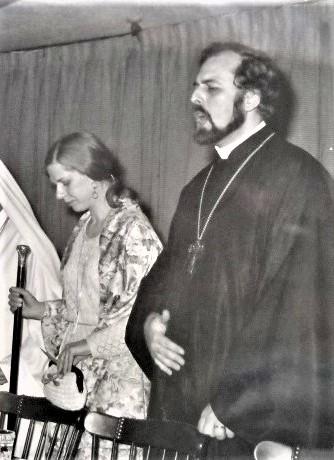
According to Saint George’s Archival Master File, during the long journey of the Very Rev. Arthur E Liolin’s devotion to the faith, since the beginning when he had God’s calling for the young chancellor and pastor positions, but also for the lead man of many hats he wore during 50 years at Saint George Cathedral and Albanian Archdiocese, the role of his wife was as much crucial as his in the long run. From this digital photograph showing the tenure of her, while standing humble and ready on call next to her God’s man, her body language can tell how equanimous and fit, she was for this role. In this context, a powerful statement in the spiritual realm emphasizes the special status of the couple after “God’s calling the whole man, both husband and wife becoming one flesh. And a threefold cord is not quickly broken” (2)  A picture containing person

Description automatically generated

Photo (2)

Within the couple’s special religious status, a unique female interpersonal, cultural, and spiritual profile and case study is opened. Margaret was not originally Albanian, neither a born American Orthodox woman from German culture, but spiritually, interpersonally, and culturally, she happened to take with courage a new path to have challenged and outsmarted the past. She has shown bravery and open mindedness since the beginning when by marriage to an Albanian American young priest, had heartly accepted the religious title in Albanian “Prifteresha” and then continued to prove that she had consciously taken the life direction she wanted by choice of love. (3)

No one on the outside can imagine the early 70’s when married to the Subdeacon Arthur Liolin, the most important duty of the young pastor’s wife was sustaining the balance between church and family. A delicate role for Prifteresha Margaret to understand and continuing support her husband’s busy pastoral service dedication to help and give out non counting hours to his parishioners while often neglecting family life and personal time with wife and children. (4) 

Exceptional Role Model of Mother and Grandmother

In one hand, according to the oldest daughter Elena, Margaret was born to become a mother, and to have joyfully devoted her time to raise and educate three children, while supporting Father Arthur at the church with love, patience, enlightenment, and sense of humor.

Reading her two daughters thoughts Margaret had naturally synergized the role of Prifteresha and mother that had inspired either girl to follow their mothers’ steps, looking up to their role model and becoming like her.

Elena summarized her comments, “Our mother knew she wanted kids since she was about 8 years old and has always had an incredible sense of how to deal with them, no matter the age. My mom has always been and continues to be one of the strongest people I know. She has always supported my father and his work with the church and all 3 of us kids. I never felt like an after-thought, and I can only hope to be as amazing a mother as she has been to me.” (5a)

On the other hand, Emily, the youngest daughter of Father Arthur and Margaret, a fine observer since she was a child brings her thoughts and reflections on her mother’s 80th birthday, providing some succinct answers to our questions. She reveals the uniqueness of her mother’s character and personality to influence her when growing up between home and church. She identifies herself now with her own mother while being cultivated, focused on her child intercultural education, while becoming dedicated in her family, and being herself. 

“When I was young, she was home with us kids until I was about 10. She had been a substitute teacher for a few years while we were young, but primarily she was our mom, and everyone else’s Prifteresha. If we weren’t by her side singing in the choir at St. George on Sundays, she was beside us in the pews, harmonizing in her beautiful alto voice.” (6a)

And then even more subtle data, that had anticipated rich points to our main question, came from Emily’s internalized cross-cultural education, which seem to be rooted by a strong influence of Margaret immersing her children in the diversity of inter family-community cultures at a very early stage of their lives.

“I always admired the way she walked as a German American in our Albanian Orthodox community so graciously, learning Albanian and helping us to know our culture on both our dad’s and her sides. (6b)

“As I grew older, I could really appreciate the depth of her service as Prifteresha, with the Ladies Guild and Daughters of Saint George memorial coffee hours, bake sales, when during annual Church Bazaars for the public, helping at the cathedral’s religious store, and of course all the many special occasions for luncheons, as well as keeping our home available for parishioners in need of our father’s council at any time. My mother has always been very humble in her service, but she was and continues to be incredibly generous of heart and spirit.” (6c)

Again, Elena’s testimony about her mother’s character, personality, and interpersonal communication’s skills reveals more interesting rich points with reference to the next generation.A person kissing a child

Description automatically generated with low confidence

“Her sense of humor and general light is contagious to anyone who’s ever met her.

Photo (3)

Her listening skills are top notch. If you’re lucky enough to speak with her, you know, without a doubt, you are being heard. Her patience never seems to run out. Her relationship with her grandchildren is so beautiful to witness. That same patience and sense of humor comes into play and therefore providing such an ease for the kids to feel connected.” (5b)

And then Emily, while providing a photo worth a thousand words, where I can add something in the realm of energies, – a picture intuitively capturing a precious moment of an energetically magnetic exchange between grandmother and granddaughter, – emphasizes her older sister’s statements with an open heart:

“I can’t imagine a better mother for myself, and grandmother for my daughter. To this day, she is loving, reassuring, kind, patient, understanding, and ready to find laughter and lightness in the inevitable hard moments of life. 

As a mom now myself, I feel her presence with me whenever I remember to stop what I’m doing and be present with my daughter and whatever she’s going through. And when I encourage her creativity and follow her passion, whatever that may be. Above all else, I will always treasure my mom’s incomparable, unconditional love and support.” (6d)

Ever Ready as Always as Saint George’s First Lady

These days, as the strong woman she is known for, Margaret has more credits to collect when it comes to be herself as the First lady of the Very Rev. Arthur E. Liolin, Emeritus Chancellor of Saint George’s Cathedral and Albanian Archdiocese. With an observant participation emic/etic eye, I have noticed her yesterday at the Sunday School Closing ceremony coming back with authority and joy to our community events when from the meditation garden table, she honored everyone with her presence and delicacy of words.

 I also have been pleased to meet another member of Liolin’s family. When tackling a chancery main event project along with Lauren Toli I happened to work with Evans, sole son of Father Arthur and Prifteresha since the beginning of last year for teaming up to collect, look and search among hundreds of digital files and archival data for the chosen photographs of the day of June 26, 2021, when the ceremony of the 50 years of Devotion to the Faith of the Very Reverend Arthur E Liolin, Chancellor Emeritus, for the Unveiling of Father Arthur’s Portrait successfully occurred. 

From my own observation, besides that he adores his mother, and deeply cares for his father, I have seen nothing but the most honest work ethic skills, kindness, efficiency, and dedication to the duty from him.

Like in the past nothing has changed during that unforgettable and moving community celebration, when many of us at Saint George had keenly observed and experienced moments of mind- heart and soul coherence between the couple. Once Fr Arthur had enlightened a main point, Margaret in return had simply confirmed her pivotal role to be herself, keeping grounded and internally set the prayer for the church spiritual health and sustainability. She never passed up the chance to show up and stand for what she had believed the most and shined through with her undisputable patience of legacy when supporting, encouraging, and uplifting her husband’s devotion to faith and service through his generational work with passion and integrity. 
A group of people posing for a photo

Description automatically generated

Photo (4)

Photo courtesy of Fan Noli Library Digital Projects

Very Rev. Arthur E Liolin surrounded by his close and extended family.

June 26, 2021

There is enormously data to reveal and recognize about Margaret’s education, charity work, writings, creative cards, and more about her ever-ready personality to serve and touch other souls. Like Father Arthur, she is so easy to be in the flow of communication with anyone and express next to him a soft spirit and beautiful soul. Over the years I have noticed nothing, but a generous Prifteresha who is always there no matter where, when and what to advice, support, help, give and contribute for Saint George’s congregation after liturgy services and events. The Fan Noli Library and archival project team will be working with her biographical file completion, with time and professionally will cover all.

Everyone in our community has realized that she has been a natural educator, teacher, artist, and poet. During our recent conversation, I heard that Margaret has given in the past years many hours of teaching in person, and co-teaching with Elena at Sunday School.

During meeting with Daughters of Saint George, the audience and myself have witnessed her kind participation in the discussion of the group as the one who has to say the last word when others were looking forward to her piece of advice. With smile she had joyfully shared with all ladies, her one of the kind artistic hand- made Peg cards which have continuously ignited in others the best enlightened spirit, inner heart, and deep soul. Her creative ecological friendly cards exhuming with care and personal style written messages, heartfelt notes, and candid humorous poems, had ever moved any woman or couple of Saint George’s recipients when going through difficult transitions. Prifteresha has been often appreciated as the messenger of light and comfort at the very hardest moments of their lives.

Within this special Spring of Margaret’s 80th birthday and Mother’s Day celebration, on behalf of all mothers, Saint George Daughters, and the rest of our community we are privileged to address to Prifteresha and to her wonderful daughters, being mothers themselves, a special and rewarding Mother’s Day collective wish to share with family and for many years to come.

A picture containing text

Description automatically generated Photo (5)

HAPPY BIRTHDAY AGAIN AND MOTHER’S DAY OUR PRIFTERESHA MARGARET!

GEZUAR PER SHUME VJET!!

References & Notes

  1. (1) Alexandra Stoddard book “Grace Notes” – A book of daily Meditation.
  2. (2) (Ecclesiastes 4:12) 
  3. (3) Fan Noli Archive, Margaret Liolin’s File
  4. (4) From Father Arthur’s File & testimonies
  5. (5a), (5b) From Elena Liolin on her mother’s 80th birthday thoughts and reflections
  6. (6a), (6b), (6c), (6d) From Emily Liolin’s thoughts and reflections on her mother’s birthday

Digital Photography

  1. A-E-ND- Self-portrait at the Meditation Garden on April 22, 2022
  2. Photo courtesy of Fr Arthur & Prifteresha opening prayer at Pier Four Restaurant Saint George event in the early of 70’s – in Saint George & Albanian Archdiocese Digital File of the Fan Noli Library Archive
  3. Margaret and her granddaughter Vivian, in 2015? – photo courtesy of Emily Liolin to this project
  4. June 26, 2021, event of Very Rev. Arthur E Liolin’s Unveiling Portrait- family photograph, by N. D, on behalf of the Fan Noli Library Digital Projects
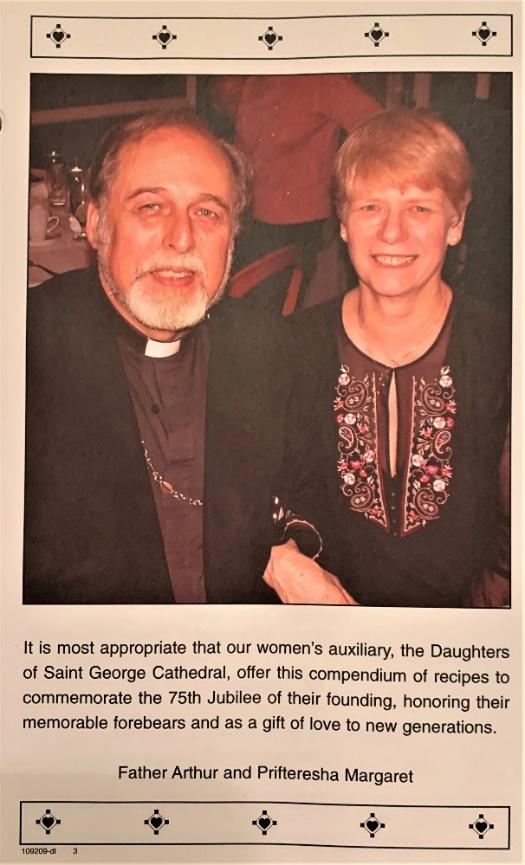
  5. The 75th Anniversary of the Daughters of Saint George -Cook Book- Introduction photograph of Father Arthur and Prifteresha Margaret, 2010

Filed Under: Komunitet Tagged With: Neka Doko

Biblioteka Noliane në 50 vjetorin e saj

September 14, 2021 by s p

Sokol Paja

Një bashkëbisedim i përzëmërt me zonjën Neka Doko Arkivisten e Bibliotekës Noliane në Boston pranë Kancelarisë Ortodokse Shqiptare në Amerikë.

Boston më 13 Shtator 2021- Biblioteka Memoriale e Metropolitanit At Fan Noli nisi rrugëtimin e saj për në dekadën e gjashtë. Ideja e parë e Bibliotekës Noliane u krijua kur At Arthur Liolin u emërua Drejtor Ekzekutiv i Kishës së Shën Gjergjit në vitin 1969. U bë fakt në pranverë të vitit 1970 kur dolën botimet e para tek revista “Vreshta”. At Arthur Liolin e krijoi Bibliotekën duke mbledhur të gjithë librat e lënë amanet nga At Noli me qëllim që t’ia dhuronin Bibliotekës Publike të Bostonit, Bibliotekës Universitare në Tiranë dhe Arkivin e Shtetit në Shqipëri. Librat që u dërguan në Tiranë nga Meri Xhons sekretarja e At Fan Nolit u pranuan me nderim, ndërsa librat për në Bibliotekën Publike të Bostonit për arsye fondesh u mbajtën për një periudhë dhe u kthyen mbrapsht duke pranuar vetëm një pjesë të vogël të tyre në Bibliotekë. Me këtë rast At Arthur Liolin, fondin e Bibliotekën së Nolit e mblodhi dhe krijoi Bibliotekën Zyrtare At Fan Noli duke pritur librat dhe kontributet e familjarëve të dhuruara nga ata ndër vite. Një zë i veçantë për pasurimin e Bibliotekës së At Nolit erdhi nga punimet e studentëve shqiptarë në USA nëpërmjet punimeve të tyre për çështjen shqiptare në fusha të ndryshme si Prof Nikola Pano, Stavro Skendi, Peter Prifti, Gregori Pano etj, si edhe të studiuesve të huaj që kishin mbrojtur teza universitare për çështjen shqiptare dhe për komunitetin shqiptaro-amerikan në Boston në fushën e liturgjisë, religjionit, historisë së komunitetit të parë shqiptar në Amerikë dhe të Shën Gjergjit dhe fusha të tjera. Figura e At Nolit ishte një nga temat kryesore të studimeve historike dhe më gjërë nga Studiues shqiptarë dhe të huaj pas vdekjes e deri në vitet 80-të. Kjo Bibliotekë është quajtur nga Specialistë të Harvardit si pasuria më origjinale albanologjike në hemisferën perëndimore të Amerikës dhe Europës. Kjo ka qenë një bibliotekë me zanafillë Kishën Noliane e Kryedioqezën Ortodokse Shqiptare në Amerikë, por me kalimin e viteve u pasurua me zëra studiuesish universitarë dhe botërorë për gjuhën shqipe, historinë dhe kulturën e saj. Biblioteka Noliane është në rritje çdo ditë, ajo ka më shumë se 50 mijë zëra.Pjesa origjinale e librave antikë të Nolit që në vitet 1800 dhe librat universitarë, studiues origjinale janë të kataloguar jo vetëm në sistemin e vjetër manual por edhe digjital që është lidhur me websajtin e Bibliotekës Noliane. Dixhitalizimi i Bibliotekës filloi pas vitit 2010 me hapjen e dy faqeve në Facebook: Fan Noli Library Digital Archive dhe Miqtë e Bibliotekës Noliane të cilat u kordinuan me websajtin dhe sistemin online të Bibliotekës Onlinë të ngritur me rastin e 50 vjetorit të Bibliotekës Noliane. Kjo bibliotekë ka: Literaturë Ortodokse dhe Fetare Kristjane dhe e feve të tjera për shqiptarët në Amerikë dhe Diasporë e pasuruar vitet e fundit me punime studimore në fushën e religjionit në shqip, anglisht dhe gjuhë të tjera. Kjo Bibliotekë ka punime të historisë shqiptare, gjeopolitikës shqiptare në rajon dhe Europë dhe libra studimore për shqiptar në botë si vëllezërit Frashëri, Motrat Qiriazi, Kristo Dako, Nelo Drizari, Faik Konica, Martin Camaj, Ernest Koluqi e studiues të tjerë europianë dhe sidomos anglez. Dixhitalizimi i Bibliotekës Noliane ndryshoi praktikën e vjetër të të qenit të saj për punimet e brendshme dhe tani kjo Bibliotekë është institucion kulturor dhe studimor në të gjitha fushat dhe veprimtaritë si fetare dhe albanologjike e lidhur me disa biblioteka universitare si e Harvardit, Boston University, Shën Pali në Minesota, degën e Albanologjisë në Arizona etj. Zemra dhe identiteti i Bibliotekës Noliane janë veprat origjinale të At Fan Nolit si: Literaturë Themelore Kishtare, përkthimet origjinale të botuara në vitet e para në shqip, libra nga greqishtja e vjetër në shqip, shërbimet fetare në Shën Gjergj dhe të pasuruar me disiplinat e ortodoksisë jo vetëm si praktikë por edhe si studim i gjërë dhe i thelluar i ortodoksisë në lindje të Europës dhe Amerikës. Në Bibliotekën e Nolit zënë një vend të veçantë përkthimet e klasikëve Shekspir, Servantes, Ibnes, Khajam, Edgar Po dhe Henry Longfellow poemën e Skënderbeut. Në arsenalin e punimeve të Nolit, një vend të veçantë zënë studimet e Nolit nga Universiteti i Harvardit, Bostonit dhe Konservatori i Muzikës si: Bethoven dhe Revolucioni Frëng, Teza në fushën e historisë për Skënderbeun më 1945 në Universitetin e Boston. Kjo vepër mbeti një nga referencat kryesore në fushën e historisë për Skënderbeun në botë pasi At Noli për të realizuar këtë kryevepër përdori referenca në 11 gjuhë të botës. Në botimet e këtij karakteri Noli u bë qëndra e seminareve dhe edukimit liturgjike të priftërinjve shqiptarë dhe jo vetëm pasi punimet studimore të At Nolit ishin ndër disiplinore dhe në gjuhën angleze. Himnet muzikore të At Nolit zënë një vend të veçantë pasi i botoi në shqip si korale për kishën, më pas i përpunoi dhe i ktheu himne muzikore bizantine pas studimit të At Nolit në konservatorin e Muzikës në Anglinë e Re në Boston. Më 1937 Noli mbrojti diplomën me sonatën “Pranvera” për violinë dhe piano që ia kushtoi komunitetit dhe artistëve Shqiptaro- Amerikanë në Boston. Studiuesi amerikan Bernard Shaw e cilësoi veprën e At Nolit një ndër studimet më të arrira në historinë muzikologjike për Beethovenin. “Në këtë festim jubilar te disa përvjetorëve të artë në Shën Gjergj dhe Bibliotekën Noliane këtë shkrim do t’ja dedikoja me mirënjohje të thellë At Artur Liolinit si ideator, themelues, e drejtues i bibliotekës memoriale Fan S Noli si edhe studjues kërkues e përcjellës në vazhdim të veprës dhe trashëgimisë noliane kudo në botë – u shpreh për Diellin e Vatrës, Neka Doko, arkiviste dhe studjuese shkencore në Bibliotekën Memoriale Fan S. Noli Boston.

Filed Under: Komunitet Tagged With: At Fan Noli, Neka Doko, Sokol Paja

Fan S. Noli as the Unmatched Multilingual and Cross-Cultural Communicator

February 2, 2016 by dgreca

Part 2/
Low and high context of cultures on the Albanian language/
By Neka DOKO- Metropolitain “Fan Noli” Library/ Archive & Cultural Center/
Multilingual and Cross Cultural Communication Research/
Acknowledgments/ Reconnaissance/
Anthropologist E. Hall in the early 80’s identified two distinct cultural ways of using language.
Low context cultures use language primarily to express thoughts, feelings, and ideas as clearing as logically as possible. To low context communicators, the meaning of a statement is in the words spoken. North American culture falls toward the low-context end of the scale. By contrast, high context cultures value language as a way to maintain social harmony. Most Asian and Middle eastern cultures fit the high context pattern. According to Hall (1983), complex societies organize time in at least two different ways: – one thing at a time- as in North Europe and America, and -many things at once- as in Mediterranean countries, the Asian and South America societies. The first category is identified as a Monochronic Time (M-time), and the second known as Polychronic or P-Time.
Even though the Albanian culture belongs to the Mediterranean patterns of high context and Polychronic time and people, the Albanian language seems to stay in between the scale, featuring elements from high and low context cultures. I would prefer using the “motion picture” of Whorf- Sapir hypothesis to explain how the Albanian language culture has been evolved in century. As Albania is situated for good or bad luck in the heart of west coast of Balkans, war and civilization winds either from sea or mountains, have brought into our small landin different times many western and eastern influences. Since the Turkish was the longest and harshest in time, it happened that the high context cultures of the eastern Mediterranean stream dominated the low context ones of scattered waves winded from the Western part.
Based on the situation the language is used, both contexts seem to coexist in variances irregularly moving in specific places and time, depending on where and when the Albanian is the most used, switched and mixed with other languages (Doko, 2006, a). However, in the today “motion picture” of the Albanian language uses in and outward the country, no native speaker of it, clearly fit either one of these distinctive categories.
Noli’s dynamic relationship with languages: variables of context and time
Fan Noli’scase of relationship with languagesif culturally studied would have been fit into the high context and the Polychronic time of places and people who, himself originally came from. Whereas, the Noli’s relationship with Albanian language seems to fall into a special group of cultures, time and a more personal category.Within Noli’s ‘motion picture’ of the case, his first spoken language uses with timeappears to incline from the high context culture of his birthplacetowards the low context communication of the North American culture, where he lived and worked for Albanian identity the most part of his life. Along with this contextual change, the time category of his ‘motion picture’ changed as well. From the Polychronic Time of his language interaction and uses in the Eastern Turkey, Greece and Egypt, when landing in North America, he must have adjusted with extra efforts into the Monochronic Time of interaction with the new culture.
Documents show that Fan Noli’s first lingual expectations insidethe high cultural context didn’t
seem to work well for his-soft spot mother tongue- Albanian. Unless Noli himself as a
self-taught student and a dedicated genotype had to work hard and challenge odds of
Polychronic stereotypes against many encounters denial on the Albanian language existence.
More biographical evidence (N. Jorgaqi, 2005,) emphasize that either Noli’s paternal grandmother or parents would have loved to send their young teenage great son and boy to learn Albanian in school, especially beingtaught by their own teachers of the Albanian colony. Noli’s family patriotic hopes to educate him at the same time in Albanian and Greek unfortunately may have fell short in that context, due to the anti- Albanian language teaching policy, conjunctures and propaganda of the ‘High Porte’ throughout Albanian colonies of Mediterranean basin and Thrace.
“The Patriarchate of Constantinople opposed Albanian language and education, because they meant the loss of its influence and subsequently the constitution of an Albanian independent church.” (S. Skendi, 1964)
Thus, following the family roots religion and the main language of the Orthodox doctrine, the Ancient and Modern Greek were meant for young Noli asthe primary and fundamental language of education,debuting in Ibrik Tepe and keeping on in Adrianople.This lingual and contextual variable marks the first shift from a dialectal spoken Albanian, viewed as a ‘barbarian’ language fueled by cultural bias to a “civilized language” in the way the Greek ‘linguaculture’ was perceived for century in the Mediterranean region and around world.
Moreover,the prohibition of the Albanian use for education was the common rule everywhere. By the time when the young boy started school in his hometown, in the south of Albania, where his family migrated from“the schools were Turkish for the Moslem and Greek for the orthodox Albanians. Only among the Catholics of the north there existed toward the end of the 19th century a few schools, under the Austro-Hungarian Kultusprotektorat, where Albanian was taught.” (S. Skendi, 64, ibid)
It became clear that the Albanian linguistic question couldn’t have been resolved at the time differently but through religious acculturation to the Albanian intellectuals educated and graduated from Western and Eastern doctrinal universities.
Thus, many Albanian Catholics formed in Vatican could have brought in their hometown of Shkodra and its northwestern region, a few “abece” booklets called “Abeceja Katolike” and many bilingual Latin Albanian dictionaries edited by groups of Albanian Italian scholars who could serve their linguistic question only through Catholic acculturation.
In the central and south east of Albania, of Orthodox clerics and scholars, much later than Catholics in the north, through the cultural Greek center of Moskhopolis several multilingual vocabularies were edited; the first documented one by Kavaliotti of Voskopoje in 1710, the second a Phoenician-Albanian Abece byTheodor H of Elbasan in 1806, followed by two well – known Greek- Albanian Alphabets and biblical bilingual works respectfully edited by Kristoforidhi of Elbasanin 1866, and the pure golden codex of Berat by Konstantin Berati in 1868.
Since in the Thracian settlement of Albanians, The High Porte of Constantinople had sabotaged any further linguistic movement inspired by the Albanians Orthodox scholars of Athens who wrote by the time many Abeces in their own language with Greek letters, to Noli’s family one thing became clear. Their son’s education would have been fulfilled through the Eastern Byzantine acculturation right in the heart of the cross road of civilizations.Right there where Noli himself although very young would have felt the heaviest prejudices about his own languagethat had been circulated among the high context cultural “educated” and polychronic teachers.
From the beginning, the teenage Noli wouldn’t have easily accepted the whole exclusive education in Greek while growing up within an Albanian colony in mind and spirit. Especially, when hearing his Greek teacher trying to convince him that Albanian language didn’t have existed at all. How many times he had to return home with his broken heart because he couldn’t agree with his Greek teacher who kept stereotyping his mother tongueculture as a “barbarian” one. And mostly while these voices kept pressuring the child that no one knew about his language, since without an alphabet neither writings. He strongly felt that something was misleading there.
Although the boy had heard so many times that “the written Albanian was prohibited and oppressed during the period of Turkish rule, their literary language could not be built but on the language spoken by the people” (S. Skendi, ibid) he still wanted to prove to his teacher that he was wrong. Along with these feelings, since the beginning a strong character and brilliant mind was forged out there; as much rebellious as the first to excel in Greek language, hebecame the best student of the class. (N. Jorgaqi, “Jeta e Fan Nolit”, 2002)
For the infant Noli his mother tongue was illuminated by two lights, the first by love for Christ, the second by love for Albania. Naturally he was brought up hearing ancestor poems and legends inspired by the Albanian fighters for faith and freedom through his paternal grandmother lullabythat would have accompanied him to fall asleep.
All signs seemed to come together. Noli was only 10 years old when with the greatest interest read the Albanian translation of the New Testament by Kristoforidhi. It was not a coincidence that his uncle noticed the boy’s sparkle out it, and then suggested that he use Christ’s life as a guide for his own.” (Fiftieth Anniversary Book, 1960)
In addition, the ancestral patriotic and educational flame of all Noli’s from Qyteza to the Thracian settlement would have fueled the Young Noli vision to make a dream of fulfilling the Albanian language in an independent nation and church. Here there are two other geno and ontotypical variables that emergeat once to mark the Noli’s evolving ‘motion picture’ of relationship with Albanianwithin his faith in the future.
With this goal he was sent to the Adrianople high school, toexplore, reach his potential and then attain his family expectations. The first cultural shift from a strictly bilingual environment (spoken Albanian at home, Greek in school) into a multilingual and cultural context occurred at the moment. For four years the young Noli had the chance to get immersed into more other languages.
With Albanian in mind, however, the Greek and Latinwould have remained his fundamental, scholastic broad and the most used languages to make personal research for future liturgical translation into his mother tongue.
When excelling inother languages he renewed with the Albanian spirit of survival and self-determination. As a student Noli had leaned about the Albanian intellectuals and patriots organized in societies in secret places of Mediterranean countries when simultaneously working on Albanian literacy by publishing books and manuscripts in better versions of their language.
In Greek Gymnasium and from the intellectual contacts with professors, the very perceptive Noli sensed that his own language was so unfairly persecuted, and because sounded different from others had to be often biased or even completely rejected such as when manuscripts were published. He still believed that Albanian always existed as a unique language in the south east basin of the Mediterranean civilization. From the map of the crossroad of people and languages of Western Asia, North Africa and Southern Europe, he intuitively situated it somehow among the minority and rare languages such as Mesopotamian, Phoenician, Canaanite, Carthaginian. (from Noli’s personal notes in the 40’s)
A year later in Constantinople, besides Greek, French, Turkish, Arabic and other religious cultures, he added more Latin and Italian to his previous repertoire of languages at the Italian Royal Institute in 1901 (see the doc #1, 2)With this, Noli tried to complete his multilingual cultural and biblical education as a foundation for a future path toward the western world. It seems that during this period, the second shift of Noli’s ‘motion picture’may have occurred at least enthusiastically from his old high contexttoa new low context languages and cultures.
Above all, however, the most crossed mind of languagesto work on,was Albanian. From others, the more he learned, the better he knew about his mother tongue roots and cultural trails through readings. He learned nothing but to be a patient and long life student to unearth the mystery of his own language. From Phoeniciansliterature and Etruscan manuscript, he read somewhere that Albanian happened to be one of the most ancient spoken language during the Roman epoch. Later on, scholars and researchers on the Antiche Civilta Mediterranee studies would have found out that Albanian was documented earlier in Latin and later in Italian as being the main language of conversation within the court when Latin served as the written and administrative language of the Roman Empire, (N. Vlora- Falaschi, 1978, 1984). The geopolitical statureand sociolinguistic trait of his spoken mother tongue cameinto light throughthe Albanian cavalry vocabulary and code switching messages gathered from the Roman soldiers remains,during the empire wars against Greeks and Egyptians.
In that context, Fan Noli’s first literary piece of work in Albanian, written and published in two different countries seemed to mark a double edged sword start. One century this year, since his publication in America, time proved that this had broughtnothing but a great Albanian and cross cultural contribution.
Clearly inspired by Shakespearian tragedy studied in school and then played when working as a prompter in a moving theater in Athens, Fan Noli wrote the first literary work in Albanian in 1902, a drama he entitled “Israilite e Filistine”. The drama was published by the “Kombi” newspaper in 1906- 1907, few months after he arrived in Boston.
In his epilog written in Boston in 1907, Fan Noli called his cross cultural audience attention to find out why he had chosen to let his Philistines characters enter and play with Israelis in their own Synagogue or in the Baal Temple in Gaza. (Act I & III)
The synthesized along with analytical results of this work are cross cultural, linguistic and philosophic. Fan Noli’s cognitive anthropological sense turned alert when he put into question many of cultural irreconcilable differences between his drama people. From Boston Noli asked his broad circle of compatriots in the region to understand why he had opted to write this subject in the first place (see the digital doc #3) and never touched it later to make any further improvements or needed adjustments.
Fan Noli’s first contribution to the Albanian renaissance literary heritage at the timetestified his broad knowledge of the Mediterranean diversity of languages and cultures through contacts and even conflicts with one another. In addition, the linguistic contribution of this first work is pioneering and remarkable. Originally written through a Tosk variances language, the text transcends a Shakespearian plot that adds a modern genre to the Albanian revival literature in the beginning of the 20th century. Besides, phonetically and structurally pertaining a daring exercise and complete task, at large provides with a legible long writing work made out of all Albanian letters. Comparing that with many literary works of the time written in Albanian with partial Greek, Latin or Slavic letters, the drama makes a great achievement for the Albanian literature produced in two different countries, Greece and America between 1902and 1906. From the perspective of such contemporary literature at the time, this has to be considered as a cross cultural literary piece of work written in complete Albanian letters,with credits to come to readersmore than two years before the unified Albanian AlphabetCongress of 1908 in Manastir.
Then finally, the young dramaauthor, with an open minded multilingual and cross cultural observation, based on his own encountering, education and interactions with people in the region, through his broad intuitive and visionary work had warned ahead in time that something tragic between these two cultures and religions unfortunately born within them will never go away.From here a new anthropological variable of Noli’s ‘motion picture’ of consciousness about high and low cultural clashes in the Middle East context, marks his unique case of other languages understanding and uses for philosophic and humanistic purpose.
On the other hand, he had felt more optimistic when working on his own language and culture. Noli saw in the Mediterranean basin of languages contacts, although immersed within a high context ofcultural differences, a good placefor his compatriots tocompare and find a common ground for makinga united written Albanian deal. Historical records into the Albanian Alphabet identity, proved that. During the second part of the 19th century, in the realm of the Eastern and Western contacts, many Mediterranean countrieshad turned into new homelands and work places for the exiled Albanian intellectuals and patriots. When studying in Constantinople, hiscompatriots formed a society composed of intellectuals graduated from Western and Eastern universities and of three faiths, “who undertook the publication of books in the Albanian language.” (Skendi, ibid, 316)
Whereas Fan Noli’s worldview and value system remained rooted into Christian Orthodox faith of the south central and east of the Mediterranean tradition, the young student kept deeply inspired by European renaissance and Descartes – Kant concepts of Western beliefs in human progress.
Along with a bigger frame of renaissance mentality Noli, variables would have been almost there to solve his equationfor the independence of nation, religion and individual success. He believed that although he had put all piecestogether, they could take place only at one place and time where his triple dream could be promoted. Again the third lingual shiftfrom the Mediterranean culture to the North American context would have been plausible only if he joined a day the new continent.
When Noli arrived in Boston, he found himself experiencing three shifts at once. He startedwriting and publishing in Albanian papers (Kombi in 1906 and in Dielli, since 1909), organizing the Albanian church in 1908, while translating the biblical literature from Greek into Albanian and studying English in evenings courses. In three years he had to dig back and forth into the world philosophy and languages with the goal to complete his missing high school records before submitting his request to Harvard admission in 1909. Was he really shifting from his rooted Polychronic time and culture into the Monochronic new context, that fast?
Definitely not. The time either Polychronicor Monochronic or somehow between, was running up and he had so many things to do.
Fan Noli’ s dynamic communication with Albanians on Albanian language: Faik Konitza
If was there someone landing in Boston as a complete linguist among all Albanian patriots that Noli would have highly estimated since the beginning, that person would have been Faik Konitza. It occurred that Konitza persisted as one of the closest Albanian friend and collaborator to Noli’s cause on Albanian Independence and language. Their mutual respect and work for years in Boston was not a mere occasion or coincidence. Both men came to America with a solid family and personal inheritance for seeking independenceand progress through national, cultural and linguistic integrity.
Interestingly, this article on them happened to come on time, since2016 is agreed to be calledthe Faik Konitza year for Dielli’s legacy and to honor his co- founder anniversaries.
The organic duo Konitza –Noli so close to make the most Albanian cross cultured coupleof their time, Noli– Konitza, although with personal and cultural differences on many questions they had discussed together, undoubtedly on the Albanian cause and language they found one another and openly remained on the same side.
As the Very Rev. Fr. Arthur Liolin decrypted the Noli- Konitza universal metrics through a contrastive approach, at Harvard University, Dudley House, Seminar on Faik Konitza: An Albanian Luminary, on 28 April 2009
‘Both men are often considered columnar twins of the Albanian national awakening. Both studied here at Harvard, albeit under different economic circumstances: Konitza with an imperial air, Noli as a mendicant monk. Both had a deep admiration for one another – despite an on-again and off-again relationship owing principally to differing points of view when it came to the political leadership in the homeland of the late 1920s and 30s.
Of Noli, Konitza would write: “The day on which Noli celebrated the first liturgy in the Albanian language was a turning point in the history of the Albanian Renaissance. We cannot forget it, nor let anyone else to forget it.” Conversely, of Konitza, Noli had said of him: “he was my first real mentor and role model.”
Thus, Konitza’s direct contribution and cross cultural approach on the Albanian language identity when working for a common language was pointed out by Prof. Stavro Skendi, in The Emergence of the Modern Balkan Literary Languages- a Comparative Approach,
Faik Konitza himself an atypical cross-cultural scholar of his time, “who among the men of the Albanian revival was perhaps the most cultured and with a broad philological formation, proposed in 1898that the best solution would be to create a grammar approved by the cultured Albanian and foreign Albanologists in which all the dialectal elements grouped together, reconciled, coordinated, according to a national and scientific method, would give origin to a common language to all the Albanians, as the Greeks had the Koine.” (Skendi, ibid, 316) The two Albanian dialects Geg and Tosk developed together out of the literary works of the two great poets of the Albanian Renaissance. Naim Frasheri and Gjergj Fishta, the former a Bektashi and representative of a high context of languages and cultures, the latter of a Catholic and Roman low context culture. Others like them were able to use the best of their lingual and cultural differences for the sake of a common mother tongue phonetic andcreated in 1908in Manastir the first Albanianunified alphabet out of many previous versions of alphabets partially written with Greek, Latin and Slavic letters.
Since then, the Albanian language and culture has been steadily in the process of formation through comparisons and communication with other languages of the region, through many comparative research in the context of Balkan and Southeast European studies. Faik Konitza as a pioneer of the cross cultural approach on the Albanian language identity and stylistic evolution, achieved few but very refined works on that matter written in French, Albanian and English. Noli himself in several times recognized his friend Faik Konitza writing attributes as a mastery of style and originality, to a great author with a tendency to write in a brief, selective and concise Albanian. In French and English as well. Noli recalled an interesting moment when both friends despite different nuances, agreed to translate Shakespeare after their graduation from Harvard in 1912. “Then one day a friend of mine, the late Faik Konitza, who had a master’s degree from Harvard, made a suggestion that we two should divide all Shakespeare’s plays between us and translate him into Albanian. He made only one reservation, that Romeo and Juliet belonged to him. I accepted at once on the condition that Hamlet should belong to me. So we both started.” (F. Noli: “Shakespeare and I” ibid, 5)
Within an indefinite time, thanks to a differential cross cultural approach, and specially to no Albanian scholars’ remarkable contributions for a richer Albanian language and culture, the latterhas developed as a unique vernacular for all Albanians in spoken and written literature, until today. In the present time when new ‘motion pictures’ of lingual variances through spoken and written works, abundantly appearing within Albania borders and outside the country, many efforts are yet to be attempted to reconcile and coordinate cultural differences between the modern language developments and the old structures of the pastwith the aim to bringinto the evolving common language moreopenness, originality, style and integrity.
(to be continued)

Filed Under: ESSE Tagged With: as the Unmatched Multilingual and Cross-Cultural, Communicator, Fan S Noli, Neka Doko, Part II

  • 1
  • 2
  • Next Page »

Artikujt e fundit

  • NDJESHMËRIA SI STRUKTURË – NGA PËRKORËSIA TE THELLËSIA
  • Si Fan Noli i takoi presidentët Wilson the T. Roosevelt për çështjen shqiptare
  • TRIDIMENSIONALJA NË KRIJIMTARINË E PREҪ ZOGAJT
  • Kosova dhe NATO: Një hap strategjik për stabilitet, siguri dhe legjitimitet ndërkombëtar
  • MEGASPEKTAKLI MË I MADH ARTISTIK PAS LUFTËS GJENOCIDIALE NË KOSOVË!
  • Veprimtaria atdhetare e Isa Boletinit në shërbim të çështjes kombëtare
  • FLAMURI I SKËNDERBEUT
  • Këngët e dasmës dhe rituali i tyre te “Bleta shqiptare” e Thimi Mitkos
  • Trashëgimia shqiptare meriton më shumë se sa emërtimet simbolike të rrugëve në New York
  • “Unbreakable and other short stories”
  • ÇËSHTJA SHQIPTARE NË MAQEDONINË E VERIUT NUK TRAJTOHET SI PARTNERITET KONSTITUIV, POR SI PROBLEM PËR T’U ADMINISTRUAR
  • Dr. Evia Nano hosts Albanian American author, Dearta Logu Fusaro
  • DR IBRAHIM RUGOVA – PRESIDENTI I PARË HISTORIK I DARDANISË
  • Krijohet Albanian American Gastrointestinal Association (AAGA)
  • Prof. Rifat Latifi zgjidhet drejtor i Qendrës për Kërkime, Simulime dhe Trajnime të Avancuara Kirurgjike dhe Mjekësore të Kosovës (QKSTK) në Universitetin e Prishtinës

Kategoritë

Arkiv

Tags

albano kolonjari alfons Grishaj Anton Cefa arben llalla asllan Bushati Astrit Lulushi Aurenc Bebja Behlul Jashari Beqir Sina dalip greca Elida Buçpapaj Elmi Berisha Enver Bytyci Ermira Babamusta Eugjen Merlika Fahri Xharra Frank shkreli Fritz radovani Gezim Llojdia Ilir Levonja Interviste Keze Kozeta Zylo Kolec Traboini kosova Kosove Marjana Bulku Murat Gecaj nderroi jete ne Kosove Nene Tereza presidenti Nishani Rafaela Prifti Rafael Floqi Raimonda Moisiu Ramiz Lushaj reshat kripa Sadik Elshani SHBA Shefqet Kercelli shqiperia shqiptaret Sokol Paja Thaci Vatra Visar Zhiti

Log in

This website uses cookies to improve your experience. We'll assume you're ok with this, but you can opt-out if you wish. Cookie settingsACCEPT
Privacy & Cookies Policy

Privacy Overview

This website uses cookies to improve your experience while you navigate through the website. Out of these cookies, the cookies that are categorized as necessary are stored on your browser as they are essential for the working of basic functionalities of the website. We also use third-party cookies that help us analyze and understand how you use this website. These cookies will be stored in your browser only with your consent. You also have the option to opt-out of these cookies. But opting out of some of these cookies may have an effect on your browsing experience.
Necessary
Always Enabled
Necessary cookies are absolutely essential for the website to function properly. This category only includes cookies that ensures basic functionalities and security features of the website. These cookies do not store any personal information.
Non-necessary
Any cookies that may not be particularly necessary for the website to function and is used specifically to collect user personal data via analytics, ads, other embedded contents are termed as non-necessary cookies. It is mandatory to procure user consent prior to running these cookies on your website.
SAVE & ACCEPT