A final agreement should be based on devolving power to Serb-majority municipalities – not on territorial swaps that will only create further regional instability./
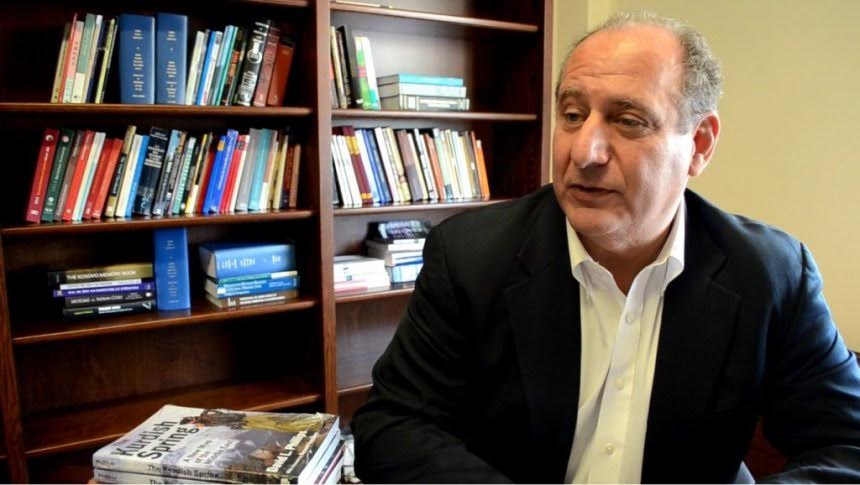
By David L. Phillips/*
Kosovo and Serbia are rushing to an agreement, adjusting borders as the basis for normalizing relations. There is, however, an alternative to adjusting borders. In exchange for Serbia’s recognition of its sovereignty, Kosovo would address the core concerns of the Kosovo Serbs by devolving power to Serbian municipalities and pro-actively preserving Serbian cultural heritage.
The international community would establish a $1 billion peace-building fund to consolidate the deal.
An agreement to establish the Association of Serb Municipalities, ASM, was reached by Serbia’s President Aleksandar Vucic and Kosovo President Hashim Thaci in 2015. The ASM was envisioned as a self-governing association of Kosovo municipalities where Serbs are the majority. But the ASM was never implemented.
Serbia poisoned the process by failing to address critical concerns of Kosovo, making a mockery of negotiations.
Serbia’s goal all along was to realize Slobodan Milosevic’s project and partition Kosovo. It has used the lack of progress implementing agreements in EU-facilitated talks to justify a new negotiating tactic, focused on partition and territorial swaps.
The government of Kosovo has tried to keep talks going by staking out a middle ground on the ASM. It accepted the principle of decentralization, while rejecting “executive powers” for Serb-controlled local government entities.
Instead of adjusting borders, Kosovo can normalize relations with Serbia, in accordance with its constitution, by devolving powers except for those explicitly retained by the government. Per the 2013 Brussels agreement on police and judiciary, Kosovo would provide local police, while incorporating Serbian-language police officers into the local security.
It would control the local judiciary, while allowing court proceedings and the publication of judicial notices in Serbian.
Environmental issues would be managed by the Kosovo government, with advice from a Serbian-led council. Urban planning would remain a government function.
Cultural heritage is another critical issue. Orthodox monasteries in Kosovo have mythical importance. Serbs believe that the organ at Decani monastery, for example, was forged from the swords of Serbian knights who fell fighting the Ottomans in the 1389 Battle of Kosovo. Decani, Gracanica and Banjska monasteries are integral to the identity of Kosovo Serbs.
Some monasteries are just empty buildings today. However, in accordance with the agreement on Special Protected Zones, the monasteries would be animated when Serbs celebrate Orthodox religious festivals there. Pilgrims should travel to cultural heritage sites without hindrance.
The Kosovo government must recommit itself to the minority rights embodied in the Ahtisaari principles and enshrined in Kosovo’s constitution. Good governance has costs.
Austria, which currently chairs the rotating EU Presidency, should initiate a $1 billion peace-building fund. Assistance would focus on improving Kosovo’s democracy, strengthening Kosovo civil society and independent media.
Funds would also be used for economic connectivity between Kosovo Serbs and other Kosovo citizens, as well as for joint projects involving Kosovars and Serbs from Serbia.
Kosovo is at a fork in the road. Thaci and Vucic can pursue a perilous path by swapping territories, which risks stoking instability and violence not only in Kosovo and Serbia, but in other fragile states of the Western Balkans.
Or they can reach an agreement whereby Serbia recognizes Kosovo as a sovereign and independent state within its current frontiers, with verifiable measures to increase the quality of life for all Kosovars including Kosovo Serbs.
Though the US is not a formal party to the Kosovo-Serbia Dialogue, it still has enormous clout. When US officials meet with Thaci and Vucic at the UN General Assembly in September, they should endorse a package of incentives sufficient to compel an agreement that obviates the messy prospect of partition.
Then, US and European officials would participate in a signing ceremony, echoing calls by Thaci and Vucic for all EU member states to recognize Kosovo and for Russia and China to allow Kosovo to join the UN.
Both Thaci and Vucic would gain a legacy through a deal that safeguards Serbs, preserves Kosovo’s territorial integrity, and fast-tracks the EU integration of both countries.
Negotiations would never have reached this point if Serbia had not obstructed progress towards normalization. After losing Kosovo, Serbia created a frozen conflict and launched campaign to block Kosovo’s integration with the international system.
Twenty years after NATO intervened to prevent the genocide of Kosovo Albanians, it is time for hard choices.
ASM is preferable to adjusting borders, which would reward Serbia’s bullying and risk a renewed spiral of deadly violence.
*David Phillips is Director of the Program on Peace-Building and Rights at Columbia University’s Institute for the Study of Human Rights. He worked as a Senior Adviser to the State Department under Presidents Clinton, Bush, and Obama. He is author of ‘Liberating Kosovo: Coercive Diplomacy and US Intervention’ (The Kennedy School at Harvard University).