• Home
  • Politics
  • Opinion
  • Culture
  • Sports
  • Economy
  • Interview
  • Reporting
  • Community
  • Vatra

Dielli | The Sun

Albanian American Newspaper Devoted to the Intellectual and Cultural Advancement of the Albanians in America | Since 1909

Archives for October 2020

DAFINA

October 7, 2020 by dgreca

NGA JULIA GJIKA-

Unë jam e gjitha,-

shekujt i lashë të ikin një nga një.-

Herë si retë e bardha, të panumurta, herë të hirta,-

Ngarkuar me furtuna, me stinë të begata.-

Jeta ime ishte e pasur, përderisa isha e lirë.

Vrapoja e lumtur nëpër pyje të virgjër,

anës lumenjve që më gëzonin shpirtin.

Më quajtën hyjneshë e ujrave të kristalta,

mbeta e përqafuar me dritën, e mira e saj,

më dha shkëlqimin, muzikë, jetë.

Kanë shkuar më shumë se tridhjetë shekuj.

Thonë se isha një nimfë e mahnitëshme

në atë botë të lashtë, vrapoja në natyrë,

lirinë kisha në gjak. Gjithcka e imja,

e tërhoqi si me magnet Perëndinë e Diellit,

Apolloni u trullos pas meje, por unë nuk e doja.

Ai ish tallur me Perëndinë e dashurisë, Erosin,

ai i dërgoi një shigjetë me majë të artë,

e goditi në zemër. Mua më dërgoi një tjetër shigjetë

me majë plumbi, e më dha urrejtje për Apollonin.

Më ndiqte, një ditë më ndoqi deri sa më ariti,

më shtrëngoi, të zura më në fund – tha me krenari,

sa nuk më theu kockat!

I ndjeva dihatjen, frymën në flokët e mij,

pastaj gishtërinjtë si gozhdë në mish e kudo.

Sytë e tij më përfshinë të tërën, nga fija e flokut

deri në thonjtë e këmbës.

Zëri i tij ishte urdhër, që nuk ju binda.

Nuk ju dhashë, i thashë jo forcës, jo nënështrimit.

Në ndihmë më erdhi Lutja:

O Atë, të lutem, më shpërbë!

Kështu dashuron dashuria, me forcë?

Si të jap vehten nga dhuna?

Lutja sakaq u dëgjua. Muskujt e këmbëve pushuan lëvizjet.

Nuk do të bëhem gruaja jote! Isha gjahu dhe ti gjahtari,

unë nën harkun e shigjetës, ti gishtin në shqekëz.

Mëma Tokë u hap, këmbët u kthyen në rrënjë, u fundosën.

Duart u bënë degë ,lulezonte gjethnajë e blertë.

Ti do të jesh pema ime!- ai foli me zë të lartë.

Tani, unë pema fisnike, kisha degë, fletë, rrënjë, aromë dafine.

Apolloni këputi një degë dhe e vendosi në kokë si kurorë.

Kështu ai u quajt i kurorëzuar, unë nga lutja e shpëtuar.

Do të të gjej edhe në këtë trung!

edhe në këto degë!- ngulmonte ai.

Nëse nuk do të mbaj në këto krahë, jam i humbur që tani.

Ti më thua se nuk egziston, ti s’më ndalon dot të ëndërroj!

Unë do të provoj të tregoj dashuri, unë kam nevojë për ty.

Nga bukuria e saj kish mbetur vetëm shkëlqimi, blerimi

Dafina e kish mundur Apollonin.

Perënditë e tjera, kishin derdhur një lumë bekimesh mbi të.

Tufa zogjsh uleshin mbi degët i bënin shoqëri.

Jo, kjo nuk është e vërtetë, c’farë mund të bëj? – fliste me vehte ai

Prej asaj bote të lashtë erdhi ajo hyjni, Dafinë e mahnitëshme.

Gjethet e saj vajzat në shekuj i mbajnë nën jastëk

për të parë ëndrra të bukura, kurse gjyshet dhe nënat,

gjethet e gjelbra i përdorën ilace kundër epidemive,

ka një rini të përjetëshme në ato gjethe të blerta.

Në shekuj burrat i dashuruan gratë,

më parë duke u lënë hijen e rrëndë,

pastaj kërkuan t’u jepen nga forca që ushtruan mbi to:

Dafina i tha jo forcës, ajo gëzoi lirinë, mbeti plotësisht e lirë.

Toka e ushqeu me dashurinë e mëmës dhe kjo i mjaftoi

për të qënë në paqen e përjetshme.

erdhi në ditët tona me mbrekullinë e egzistencës së saj,

portreti më i bukur, që ka bota.

në fshehtësi cel në cift lulen e verdhë

ngarkuar me shkëlqim dhe aromën dehëse .

SHTATOR-  2020

Filed Under: Sofra Poetike Tagged With: Dafina, Julia Gjika

OVERSPREADING – KEY FACTOR TO THE PANDEMIC AND PREVENTIVE PRACTICES

October 7, 2020 by dgreca

By Rafaela Prifti- Today’s confirmation by the CDC that the pathogen is airborne brings together the science of overdispersion with the recognition of airborne aerosol transmission. Overdispersion is a key factor that should inform the approach to the pandemic and the preventive practices. Although much is still unknown about the super-spreading of SARS-CoV-2, nine months of epidemiological data shows that it is an overdispersed pathogen. It tends to spread in clusters, whereby one person tends to infect many or all that once, making them super-emitters of the virus. After months of extensive research by the global scientific community, many questions remain open about the substantial death toll suffered by a few cities compared to many others with similar density, household composition, weather, age distribution, and travel patterns in the spring of 2020. As the rest of Europe experiences a second wave, there are many explanations of variables such as weather, elderly populations, prior immunity, herd immunity—but there is a potentially overlooked way of understanding one factor: the measure of the dispersion of the pathogen. Overdispersion and super-spreading of this virus are found across the globe. A study found that in Hong Kong, which had extensive testing and contact tracing, about 19 percent of cases were responsible for 80 percent of transmission, while 69 percent of cases did not infect another person. In some cases of COVID-19 a single person did infect in excess of 80 percent of the people in the room in just a few hours, yet in other incidents COVID-19 is surprisingly much less contagious, even zero transmission. Multiple studies show that as few as 10 to 20 percent of infected people may be responsible for as much as 80 to 90 percent of transmission, and that many people barely transmit it.
SARS-CoV that caused the 2003 SARS outbreak was overdispersed in the same pattern. The majority of infected people did not transmit it, but a few super-spreading events caused most of the outbreaks. MERS appears overdispersed, but does not transmit well among humans.
The alternating between being super infectious and fairly noninfectious presents a huge challenge for health officials especially if we take into consideration that the pandemic playbook is based on the flu. Although a genuine threat, influenza does not have the same level of clustering behavior. Using a flu-pandemic playbook, won’t necessarily work well for an overdispersed pandemic.  To fight a super-spreading disease effectively, policymakers need to understand why super-spreading happens, its effects on testing regime and how to conduct effective contact-tracing methods.Experts divide the disease patterns into deterministic or stochastic: In the former, an outbreak’s distribution is more linear and predictable; in the latter, randomness plays a much larger role and predictions are hard, if not impossible. That means that the same inputs don’t always produce the same outputs.
Super-spreading clusters of COVID-19 almost overwhelmingly occur in poorly ventilated, indoor environments with over time congregations such as—weddings, churches, choirs, gyms, funerals, restaurants, loud talking, no masks. Studies show that the risk varies in every setting and activity. Infectious disease experts identify four key elements of super–spreader events: “prolonged contact, poor ventilation, highly infectious person, and crowding” as the key elements for a super-spreader event. Super-spreading can occur indoors beyond the six-feet guideline, because SARS-CoV-2, the pathogen causing COVID-19, can travel through the air particularly if ventilation is poor.
Given that some people infect others before they show symptoms, or when they have very mild or even no symptoms, it’s not always possible to know if we are highly infectious ourselves. There may be more factors but understanding the known elements of the pathogen’s behavior means that targeting clusters would be a very effective way in bringing down the transmission numbers. The health experts maintain that overdispersion should also inform our contact-tracing efforts. Right now, many states and nations engage in what is called forward or prospective contact tracing. Once an infected person is identified, we try to find out with whom they interacted afterward in order to warn, test, isolate, and quarantine these potential exposures. Backward tracing or retrospective contact tracking means identifying who was the first infected person. This approach is based in the nature of overdispersion since only a small percentage of people infect many at a time, whereas most others infect zero or maybe one.  Doing backward tracing to find the person who infected our patient, and then trace the forward contacts of the infecting person, rather than identify potential exposures, many of which will not happen anyway, because of the declining pattern of most transmissions    .
TEST AND TRACE METHODS
Public Health authorities consider that it doesn’t make sense to do forward tracing while not devoting enough resources to backward tracing and finding clusters, which cause so much damage. This point underlines the importance of rapid testing. The current dominant model of test and trace is not the best way when clusters are so important in spreading the disease, in terms of identifying people who are not infected and those who are infected. Although slow and expensive, PCR tests are highly accurate for both dimensions. However, PCR tests are slow, expensive and require a long uncomfortable swab, they are very accurate. Meanwhile, some rapid tests that are very accurate for ruling out individuals who are not infected with the disease but not as good at identifying infected individuals, are particularly valuable for cluster identification during an overdispersed pandemic. According to the specialists, this is helpful because some of these tests can be administered via saliva and be distributed outside medical facilities. Also increase the utility of wastewater testing which is effective for population-screening purposes, researchers say.
Because of the cluster behavior, identifying transmission events (someone infected someone else) is more important than identifying infected individuals using PCR testing. The most recent example of such a cluster was the Rose Garden event at the White House. Such cheap tests that could have been useful for the overdispersed pathogen. Yet these have been held up by regulatory agencies in the United States, due to the concern with their relative lack of accuracy in identifying positive cases compared with PCR tests.
ASSESSING DIFFERENT STRATEGIES
Many countries are now experiencing widespread rises in cases despite Europe’s relative level of success with containment rules this summer. The polarized debates about the pandemic bring up Sweden as an example to make a point about the efficacy of lockdowns. Studies show that Sweden like many other countries failed to protect elderly populations in nursing facilities, yet it has enforced stricter measures directed at super-spreading compared to other European countries – 50-person limit on indoor gatherings in March. Sweden encouraged social distancing and moved to online classes for higher-risk high-school and university students, while bringing the young children with a low transmission rate to schools—the opposite of the approach in the United States. Specialists say that “the most informative case studies may well be those who had terrible luck initially, like South Korea, and yet managed to bring about significant suppression.” In an overdispersion regime, the transmission level may be misleading. Just a few events can reignite massive numbers.
Japan did not impose a full lockdown, or interrupt mass transit. Like the US, Japan did not initially have the PCR capacity to do widespread testing. Recognizing the overdispersion characteristic of the pathogen, Japan strategy focused on cluster-busting including undertaking aggressive backward tracing to uncover clusters and counseling its population on ventilation. Japanese health experts say that restrictive rules are much more effective when they target the right key factor of the pandemic and work in combination with cheap testing and backward tracing to identify and limit the super-spreading events.

Filed Under: Analiza Tagged With: OVERSPREADING - KEY FACTOR, Rafaela Prifti

Relations between Kosovo and the Vatican

October 7, 2020 by dgreca

Establishing diplomatic relations between two countries would enable deeper cooperation on issues of mutual concern…

By ALUSH GASHI – DAVID L. PHILLIPS*-

Kosovo and the Vatican share strategic interests, including conflict resolution, preventing violent extremism and promoting interreligious understanding. Establishing diplomatic relations between Kosovo and the Holy See would enable deeper cooperation on issues of mutual concern. The recent agreement to normalize relations between Israel and Kosovo sets an important precedent.

Kosovo is mostly Muslim. However, Kosovars are secular, progressive, and overwhelmingly tolerant. Mother Teresa, honored in the Catholic Church as Saint Teresa of Calcutta, was an ethnic Albanian. Jews were given sanctuary in Albania during World War Two. More Jews lived on Albanian lands after the war than before. Today, Kosovo is a buttress between Islamist extremism and other countries in continental Europe.

Kosovo Albanians have a track record of helping the needy. As Serbia’s repression intensified in the 1990s, Mother Teresa charitable clinics served the suffering. The clinics worked with communities to resolve conflict through the “Forgiveness Campaign.” 

When Serbia abolished Kosovo’s self-governing institutions and prevented students from entering school premises, the Trastevere-based Community of Sant Egidio, encouraged by Pope John Paul II, brokered an agreement to normalize Kosovo’s education system in 1996. At the time, the agreement was considered a significant step towards a peaceful resolution of the conflict. 

More recently, Kosovo has been active preventing violent extremism (PVE). When some Kosovo Albanians joined the Islamic State, the Government of Kosovo developed a PVE response focused on the grass-roots. Deradicalization efforts engaged mothers and family members, as well as local imams, focusing on education and economic development. 

Discussions are underway to establish a PVE academy, codifying best practices and transferring them to other countries challenged by violent extremism. Kosovo envisions the Holy See as a partner on this project.

Kosovo is committed to dialogue and conflict resolution. Islam, Orthodoxy, and Catholicism have long coexisted in Kosovo, which has become a laboratory for interreligious dialogue and understanding. 

Beginning in 1999, the World Conference on Religion and Peace facilitated relations between faith-leaders across Kosovo. Kosovo Albanians protected the sacred Orthodox monastery at Decan from communal strife in 2004. Interreligious peace and minority rights were enshrined by the Ahtisaari principles, as well as Kosovo’s constitution of 2008. 

Kosovo religious leaders were recognized by the New York-based Tanenbaum Center for Interreligious Understanding with its Religious Peacemakers Award. Father Sava Janjic and Albanian counterparts were celebrated as advocates for reconciliation, going beyond dialogue to develop activities with practical cross-communal benefits.

Former Kosovo President Ibrahim Rugova admired the humility and wisdom of John Paul II. After they prayed together, Rugova pledged to build a cathedral in Prishtina, Kosovo’s capital, dedicated to Mother Teresa. In Rugova’s last public appearance before passing away, he laid the cathedral’s cornerstone.

Diplomatic relations between the Holy See and Kosovo would encourage collaborative activities on other issues of mutual interest – peace, human rights, poverty eradication, environmental protection, and assisting migrants.  The Holy See, which already has diplomatic relations with 183 countries and the European Union, can strengthen goodwill towards Kosovo through diplomatic relations.

So far, 112 countries have recognized Kosovo as an independent and sovereign state. When Serbia challenged the legality of Kosovo’s independence declaration, the International Court of Justice found that Kosovo’s declaration conformed to international law, as well as UN Security Council resolution 1244, which provided a path for Kosovo’s independence. 

Cardinal Parolin, the Vatican Secretary of State, travelled to Kosovo in 2019. His visit was affirmation that the Holy See has serious interest and was carefully considering the situation. At the time, the Holy See demured from recognizing Kosovo for some diplomatic opportunity reasons. 

The Holy See is the world’s foremost moral authority. Its recognition of Kosovo would boost EU-facilitated talks between Kosovo and Serbia, strengthening Kosovo as a source of stability and a peace partner. 

Just as Kosovo warmly welcomed Cardinal Parolin last year, Kosovo looks forward to the day when Pope Francis will visit. The occasion will be a celebration of the commitment to peace and humanitarian action shared by Kosovo and the Holy See. We hope his visit also marks a milestone in mutual recognition between Kosovo and Serbia.

* Alush Gashi is a Political and Foreign Policy Adviser to Kosovo Prime Minister Avdullah Hoti. He previously served as Health Minister and a Member of Parliament.

*David Phillips is Director of the Program on Peacebuilding and Human Rights at Columbia University. He served as a senior adviser to the US State Department. Phillips is the author of Liberating Kosovo: Coercive Diplomacy and US Intervention (Harvard’s Kennedy School).

Filed Under: Politike Tagged With: Alush Gashi, David L.Phillips, Kosovo-Vatican

Personalizimi i dialogut 

October 7, 2020 by dgreca

Nga Alfons GRISHAJ-

Mendimtarët jetojnë një botë të thellë shumë dimensionale,  kanë  pak fjalë e shumë punë. I shoqëron një ndrojtje natyrale dhe një leksik i zgjedhur. Ndryshe prej tyre, pjesa dërmuese e opinionistëve, debatuesve të sotëm televiziv ngjajnë me grethat që kanë të njëjtën strukturë, të njëjtën ngjyrë dhe të njëjtën zukamë, për çka dhe kurrë nuk mund t’ua gjesh dallimin. Prandaj dhe dialogu, si pjesë përbërëse e zhvillimit të  arsyes superiore ndaj mendimit të varfër, pëson atë frakturë karikatureske që shihet dhe dëgjohet rëndom. Për të mos përmendur pastaj etikën intelektuale apo dhe thjesht profesionale. Jo rrallë polemistët zelltarë e ngatërrojnë ekranin blu me “elektrik blu”.

Debatuesit, në paraqitjen prezantuese  duken të qetë, pozantë dhe dikushi që ka tagër të posedojë një auditor të gjerë, por pas fillimit të dialogut, arena e rrahjes së mendimeve degjeneron (siç theksova më lart) në rrahje zërash apo zhurmash duke vënë në punë dhe teknikat e provokimit, ku nuk mungojnë thumbimet, fyerjet, sharjet deri dhe kërcënimet. Instikti ia kalon arsyes, duke e shndërruar debatuesin në një karakter statik dhe njëkohësisht qesharak. 

Degradimi i replikave, i ballafaqimit të ideve “intelektuale” zhvillimore, politike apo shoqërore, e kthen banalisht debatin nga fokusi i një çështjeje me vlerë apo interes publik në një konflikt personalizues. Për mendimin tim, personalizimi i debatit ka të bëjë me pjesën thelbësore epistemologjike, por dhe të genit. Personalizimi i debatit, nga njëra anë është shndërruar në një armë militanteske e vrastare e mendimit të pavarur dhe, nga ana tjetër mjeti më i përdorur në fushatën e bombardimit të veshit kolektiv publik. 

Nëse dikush shkruan një shkrim, jep një mendim, një sugjerim, apo mban publikisht një qendrim kritik sipas bindjeve personale, apo thënë më saktë jashtë kodekseve të strukturuara të establishmentit, del “dikush” që idenë pozitive të një subjekti të pavarur ta tërheqë në skenën e përballjes personalizuese, vetëm e vetëm që thelbi i propozimit të sfumohet nga sfida e grindjes thua se arena e ballafaqimit të ideve duhet të ngjallë të njëjtat përjetime histerike që shkaktonte në antikitet arena e gladiatorëve. Personalizim! Një “sëmundje” që shfaqet tek personat me amigdala të dobët.

Kjo tregon se  “inteligjenca” jonë është e dobët, irelevante  pa sensin e frymëmarrjes  dialoguese, pa reflektimin e logjikës objektive, pa respektimin e bashkëfolësit, mendimdhënësit apo rregullave të lojës, të cilat janë empirike në kodin etik. Rrapëllima e nonsensit dhe defiçenca e intelektit nuk ka lidhje me të ashtëquajturën diplomë e cila është  një copë letër, por me formimin e vetëdijes dhe dijes, ku sjellja pasqyron realitetin e pasurisë shpirtërore dhe intelektuale. 

Kur diferenca e dijes dhe vetëdijes është e vogël, dialogu dhe mirëkuptimi i ka portat hapur. Kur dija dhe pseudodija ndeshen, shihet diferenca… dhe honi bëhet i pakapërcyeshëm. 

Dialektika Hegeliane është e qartë, “Shpirt Absolut!”… teza dhe antiteza, jo gjëagjëza dhe “ofeza”! Debati i fundit presidencial Trump dhe Biden qe një tregues i pakontenstueshëm i “Shpirtit Absolut” dhe  defleksionit grotesk.

Paraqitja e jashtme e shumë njerëzve të gënjen përkohësisht, sepse fallsiteti është vetëm një leskër e destinuar për të rënë sapo realiteti nis të stazhionohet para syve të shoqërisë. E në këtë rast, nuk vlen dhe aq metoda e Sokratit sepse nuk mund të pyesësh më për subjektin kur është lakuriq para teje. 

Shoqëria jonë retorike-egoiste për sa kohë që nuk ka një liman shpirtëror ku të ankorohet për të reflektuar do  vazhdojë të shformohet si pjatë plastike nga fuqia e mikrovalëve të kohës dhe ultratingujve dimensionalë… 

Filozofia gjithnjë ka si ligj t’i shkojë gjërave deri në fund me anë të pyetjes dhe përgjigjes. Si përfundim, për të qetësuar nonsensin e personalizimit që sjell dhimbje dhe shformim, do thoja që “shërimi” i kësaj sëmundje deformuese,  vjen nëse ne respektojmë  shpirtin si frymë  në trupin tonë, dhe ushqejmë pareshtur mendimet e bukura rreth të vërtetave. Nëse ato janë të ndara, somatopsikika bëhet pjesë e jetës së përditëshme. Disa doktorë mendojnë se duke shëruar mendjen shërojnë dhe trupin, kjo ka arsyet e veta mjekësore, por mendja dhe trupi shkojnë në unison vetëm nëse njohin shpirtin si çelës i fuqisë së njeriut. Mendimet e tjera duhet të diskutohen. Dialogu për të qënë i frutshëm  duhet të qëndrojë në thelbin e subjektit pa rënë në batakun e Cognitive Bias. Gjithashtu do  këshilloja “inteligjencën” që të mos luftojë për kupën e mençurisë sepse sillogjizma e Aristotelit është ende lapidare: “Të gjithë burrat janë mortalë dhe të gjithë  mortalët  kanë frikë  vdekjen”. 

Filed Under: Opinion Tagged With: Alfons Grisha, Personalizimi i dialogut

KOSOVA, ÇMIME NË FUSHËN E MUZIKËS

October 6, 2020 by dgreca

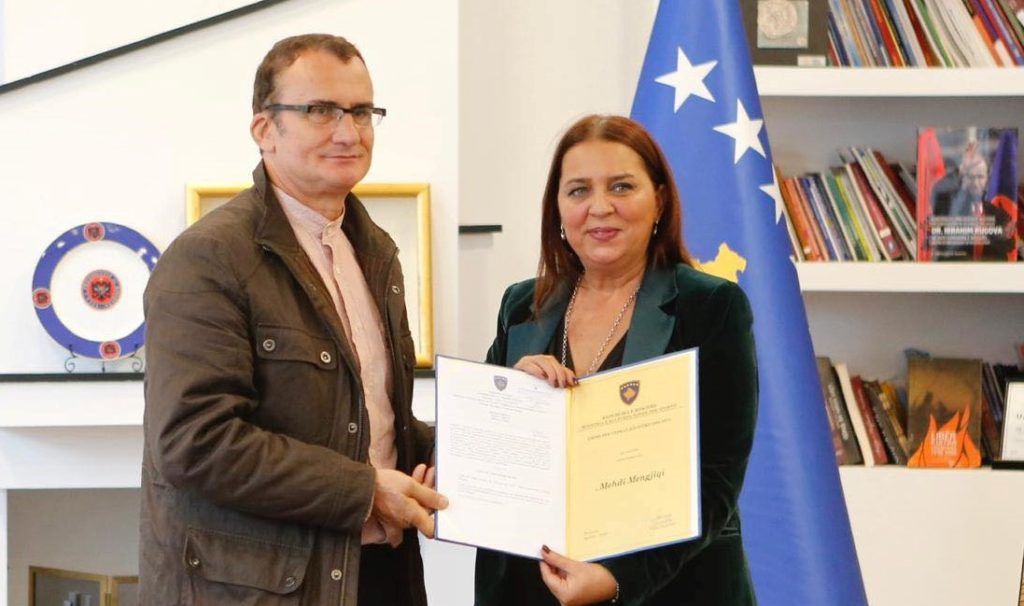
-Çmimi Kombëtar për Vepër Jetësore “Niketë Dardani” i është dhënë kompozitorit Vinçenc Gjini, me motivacionin “Profesionist i shumanshëm dhe me kontribute të shquara gjysmëshekullore në muzikë, me vështrim kozmopolit”. Në një ceremoni sot në Ministrinë e Kulturës, Rinisë dhe Sportit janë ndarë edhe çmime tjera në fushën e muzikës/ 

PRISHTINË, 6 Tetor  2020-Gazeta DIELLI/ Në Kosovë, në një ceremoni të organizuar sot, në kabinetin e Ministres së Kulturës, Rinisë dhe Sportit, Vlora Dumoshi, janë ndarë çmimet në fushën e muzikës.

Çmimi Kombëtar për Vepër Jetësore “Niketë Dardani” i është dhënë kompozitorit Vinçenc Gjini, me motivacionin “Profesionist i shumanshëm dhe me kontribute të shquara gjysmëshekullore në muzikë, me vështrim kozmopolit”, vlerësim ky që është bërë nga Juria Profesionale në përbërje të: Prof. dr. Vasil Tole, kompozitor, kryetar i jurisë, Prof. Rafet Rudi, kompozitor dhe Baki Jashari, kompozitor dhe dirigjent, të dy anëtarë.


Çmimet e tjera vjetore u ndanë për laureatët: 


Valton Beqirit iu dha çmimi për vepra vokalo-instrumentale, konkretisht për veprën “Rrugëtimi”, e cila e trajton motivin e qëndresës përmes larmisë muzikore të etnosit shqiptar; 


Kreshnik Aliçkajt iu dha çmimi për veprën “Koncert” për kitarë dhe orkestër, me motivacionin e krijimit të marrëdhënies dinamike mes instrumentit dhe orkestrës, në fushën e veprave orkestrale-simfonike dhe koncertante;

 
Për vepra kamertale, çmimi iu nda Drinor Zymberit për veprën “Trance” për orkestër harqesh, për kompaktësinë dhe gjetjen kompozicionale; 


Çmimi për vepër korale iu dha Hajrullah Sylës për veprën “Ubi Caritas” për kor miks me motivacionin e evidentimit të thelbit antifonal të krijimit përmes strukturave kompozicionale të thjeshta dhe emocionale;


Dhe çmimi për veprat solistike dhe duo iu dha kompozitorit Mendi Mengjiqi për veprën “Discantus” për risjelljen e stilit mesjetar të të kënduarit në kohën moderne duke zbuluar tingëllimat e reja. 


Në rolin e nikoqires së ceremonisë, ministrja Vlora Dumoshi, i uroi laureatët për krijimet dhe punën e tyre, duke pohuar se çmimet e ndara nga MKRS-ja janë vetëm një vlerësim modest institucional për vlerat e mëdha të cilat i përçojnë veprat e kompozitorëve dhe muzikantëve të Kosovës.


“Kosova ka krijues të talentuar në fushën e artit e të kulturës, e posaçërisht në fushën e muzikës dhe si shoqëri ne krenohemi me vlerat që kemi, ndonëse si popull me një të kaluar të vështirë historike, kemi arritur të nxjerrim gjithherë vepra të mëdha. Si ministre, jam e nderuar dhe e përkushtuar të përkrah dhe të shtyjë përpara veprat që kanë vlera të mirëfillta e të cilat vlerësohen nga profesionistët dhe kritikët e fushave përkatëse të artit”, tha ndër të tjera ministrja Dumoshi, duke e falënderuar edhe Jurinë Profesionale për vlerësimin dhe punën e tyre.

 
Baki Jashari pjesë e jurisë, tha se “Gjini pa dyshim e meriton çmimin për veprimtarinë e tij dhe për kontributin e tij shumëvjeçar në muzikë.”

Ndërkaq motra e kompozitorit Viçenc Gjinit, Maria Gjini Kurti tregoi se për arsye shëndetësore ai sot nuk ishte i pranishëm në ndarjen e çmimeve.

Kompozitori Valton Beqiri fitues për veprën orkestrale-instrumentale për vitin 2019 për veprën “Rrugëtimi” falënderoi ministren Dumoshi për angazhimin e saj si dhe jurinë për vlerësimin.

“Kjo dëshmon se çmimi është duke e dhënë rezultatin e vet dhe falënderoj ministren për angazhimin e saj dhe shpresoj që në të ardhmen të ketë vepra më të mëdha”, ka thënë ai.

Filed Under: Kulture Tagged With: Behlul Jashari, ÇMIME, Muzike

  • « Previous Page
  • 1
  • …
  • 28
  • 29
  • 30
  • 31
  • 32
  • …
  • 37
  • Next Page »

Artikujt e fundit

  • Kontributi shumëdimensional i Klerit Katolik dhe i Elitave Shqiptare në Pavarësinë e Shqipërisë 
  • Takimi i përvitshëm i Malësorëve të New Yorkut – Mbrëmje fondmbledhëse për Shoqatën “Malësia e Madhe”
  • Edi Rama, Belinda Balluku, SPAK, kur drejtësia troket, pushteti zbulohet!
  • “Strategjia Trump, ShBA më e fortë, Interesat Amerikane mbi gjithçka”
  • Pse leku shqiptar duket i fortë ndërsa ekonomia ndihet e dobët
  • IMAM ISA HOXHA (1918–2001), NJË JETË NË SHËRBIM TË FESË, DIJES, KULTURËS DHE ÇËSHTJES KOMBËTARE SHQIPTARE
  • UGSH ndan çmimet vjetore për gazetarët shqiptarë dhe për fituesit e konkursit “Vangjush Gambeta”
  • Fjala përshëndetëse e kryetarit të Federatës Vatra Dr. Elmi Berisha për Akademinë e Shkencave të Shqipërisë në Seancën Akademike kushtuar 100 vjetorit të lindjes së Peter Priftit
  • Shqipëria u bë pjesë e Lidhjes së Kombeve (17 dhjetor 1920)
  • NJЁ SURPRIZЁ XHENTЁLMENЁSH E GJON MILIT   
  • Format jo standarde të pullave në Filatelinë Shqiptare
  • Avokati i kujt?
  • MËSIMI I GJUHËS SHQIPE SI MJET PËR FORMIMIN E VETEDIJES KOMBËTARE TE SHQIPTARËT  
  • MES KULTURES DHE HIJEVE TE ANTIKULTURES
  • Historia dhe braktisja e Kullës së Elez Murrës – Një apel për të shpëtuar trashëgiminë historike

Kategoritë

Arkiv

Tags

albano kolonjari alfons Grishaj Anton Cefa arben llalla asllan Bushati Astrit Lulushi Aurenc Bebja Behlul Jashari Beqir Sina dalip greca Elida Buçpapaj Elmi Berisha Enver Bytyci Ermira Babamusta Eugjen Merlika Fahri Xharra Frank shkreli Fritz radovani Gezim Llojdia Ilir Levonja Interviste Keze Kozeta Zylo Kolec Traboini kosova Kosove Marjana Bulku Murat Gecaj nderroi jete ne Kosove Nene Tereza presidenti Nishani Rafaela Prifti Rafael Floqi Raimonda Moisiu Ramiz Lushaj reshat kripa Sadik Elshani SHBA Shefqet Kercelli shqiperia shqiptaret Sokol Paja Thaci Vatra Visar Zhiti

Log in

This website uses cookies to improve your experience. We'll assume you're ok with this, but you can opt-out if you wish. Cookie settingsACCEPT
Privacy & Cookies Policy

Privacy Overview

This website uses cookies to improve your experience while you navigate through the website. Out of these cookies, the cookies that are categorized as necessary are stored on your browser as they are essential for the working of basic functionalities of the website. We also use third-party cookies that help us analyze and understand how you use this website. These cookies will be stored in your browser only with your consent. You also have the option to opt-out of these cookies. But opting out of some of these cookies may have an effect on your browsing experience.
Necessary
Always Enabled
Necessary cookies are absolutely essential for the website to function properly. This category only includes cookies that ensures basic functionalities and security features of the website. These cookies do not store any personal information.
Non-necessary
Any cookies that may not be particularly necessary for the website to function and is used specifically to collect user personal data via analytics, ads, other embedded contents are termed as non-necessary cookies. It is mandatory to procure user consent prior to running these cookies on your website.
SAVE & ACCEPT