• Home
  • Politics
  • Opinion
  • Culture
  • Sports
  • Economy
  • Interview
  • Reporting
  • Community
  • Vatra

Dielli | The Sun

Albanian American Newspaper Devoted to the Intellectual and Cultural Advancement of the Albanians in America | Since 1909

Archives for July 2024

REUTERS: Albania’s best-known novelist Ismail Kadare dies at 88

July 1, 2024 by s p

By Aleksandar Vasovic

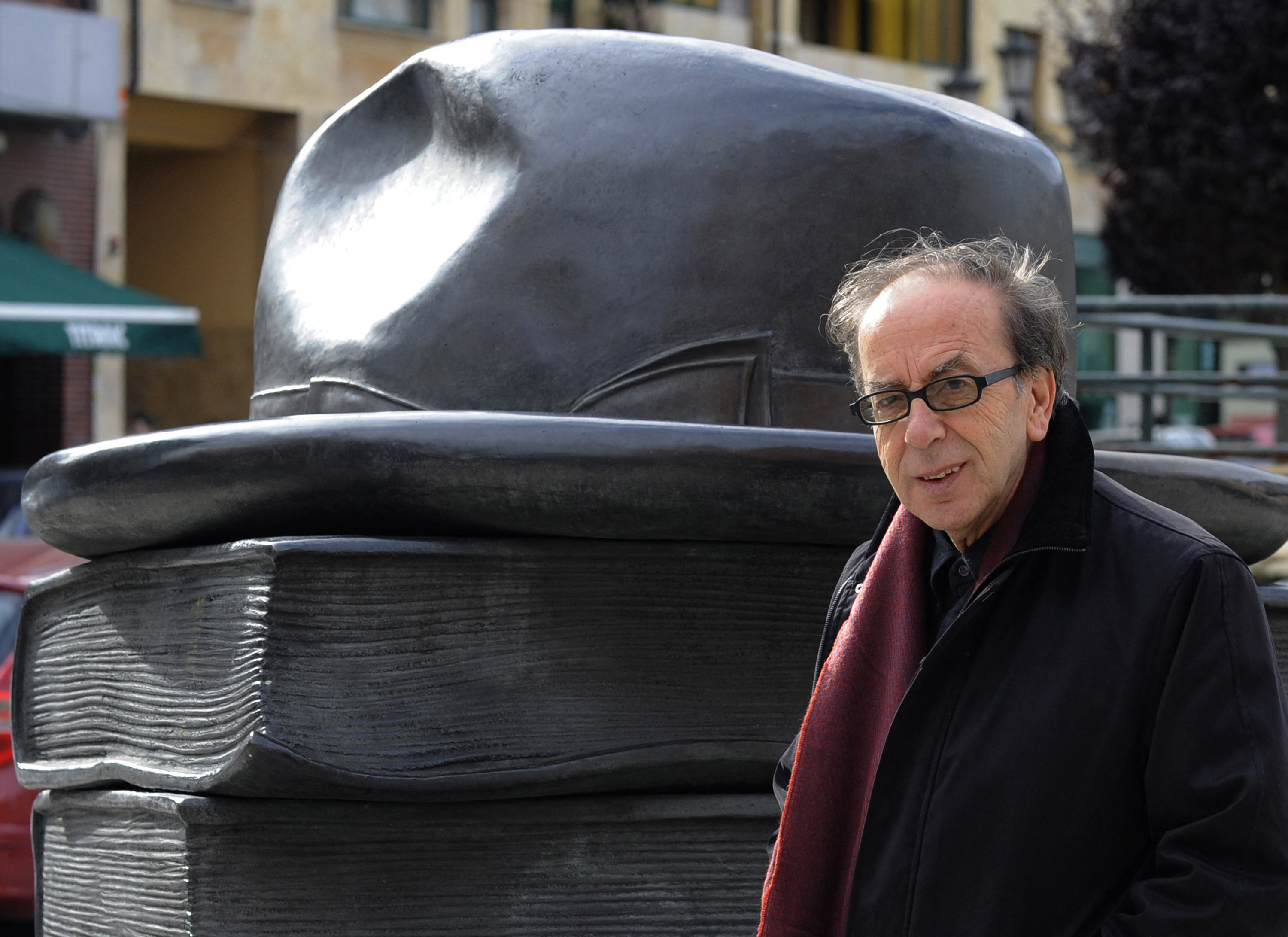
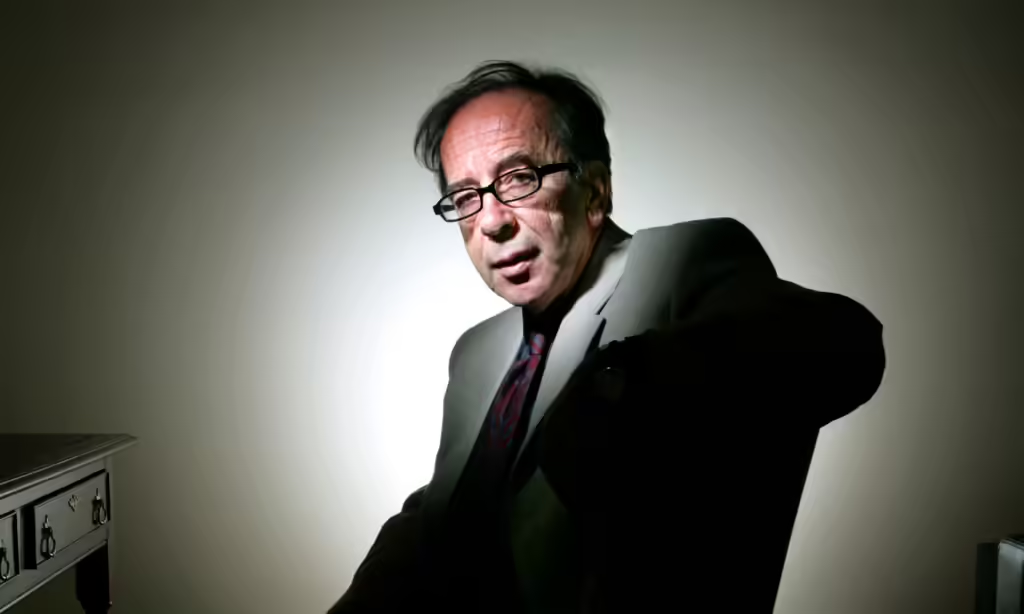
Albanian writer Ismail Kadare poses for photographers in Oviedo

Item 1 of 2 Albanian writer Ismail Kadare poses for photographers in Oviedo October 22, 2009. REUTERS/Eloy Alonso/File Photo

[1/2]Albanian writer Ismail Kadare poses for photographers in Oviedo October 22, 2009. REUTERS/Eloy Alonso/File Photo Purchase Licensing Rights, opens new tab

BELGRADE, July 1 (Reuters) – Ismail Kadare, an acclaimed Albanian novelist and playwright who defied his country’s longtime Communist rulers through his writing, has died in a Tirana hospital after having a heart attack, local television cited his editor as saying. He was 88.

Kadare, a prominent figure in Albanian and international literature, gained recognition in 1963 with his novel “The General of the Dead Army”, which drew praise from literary critics around the world.

Advertisement · Scroll to continueReport this ad

Prime Minister Edi Rama paid tribute to Kadare in a message on Facebook, hailing him as a “monument of Albanian culture”.

Kadare received numerous global awards, including the Man Booker International Prize in 2005, the Prince of Asturias Prize for the Arts in 2009, the Jerusalem Prize in 2015 and the America Award in Literature for a lifetime contribution to international writing in 2023.

He also produced poems, essays and screenplays, and was nominated for the Nobel Prize in Literature 15 times, once saying that media reports tipping him as a potential winner meant “many people think that I’ve already won it”.

Advertisement · Scroll to continueReport this ad

Kadare, who split his time between Albania and France, was the Balkan country’s best-known novelist and his works have been published in 45 languages, but he repeatedly irked his homeland’s former Communist rulers.

In 1975, after publishing a satirical poem called “The Red Pasha”, which took aim at Albania’s Communist bureaucracy, Kadare was sent to do manual labour in a remote village in central Albania.

Three of his books fell foul of Albanian censors, and in 1990 he sought political asylum in France after receiving threats following his criticism of the government and calls for democracy.

Last year, French President Emmanuel Macron awarded him the title of Grand Officer of the Legion of Honour.

Born in the town of Gjirokaster in 1936, in the-then Kingdom of Albania, Kadare was the son of a post office employee and a housewife. After World War II, he graduated in languages and literature from the University of Tirana.

He is survived by his wife, the author Helena Kadare, and their two daughters.
Filed Under: Komente

THE GUARDIAN: Ismail Kadare, giant of Albanian literature, dies aged 88

July 1, 2024 by s p

His allegorical stories, informed by life under state communism, drew international praise but he insisted that he was not a political writer

  • A life in quotes: Ismail Kadare

Richard Lea

Ismail Kadare, the Albanian writer who explored Balkan history and culture in poetry and fiction spanning more than 60 years, has died aged 88, his publisher has said.

Bujar Hudhri, Kadare’s editor at Tirana-based publishing house Onufri, said Kadare died on Monday after being rushed to hospital, with Reuters reporting the writer had suffered cardiac arrest.

Writing under the shadow of Albanian dictator Enver Hoxha, Kadare examined contemporary society through the lens of allegory and myth in novels including The General of the Dead Army, The Siege and The Palace of Dreams. After fleeing to Paris just months before Albania’s communist government collapsed in 1990, his reputation continued to grow as he kept returning to the region in his fiction. Translated into more than 40 languages, he won a series of awards including the Man Booker International prize.

symbol

Born in 1936 in Gjirokastër, an Ottoman fortress city not far from the Greek border, Kadare grew up on the street where Hoxha had lived a generation before. He published his first collection of poetry aged 17. After studying at Tirana University, he won a government scholarship to study literature at the Gorky Institute in Moscow. He returned to Tirana in 1960 with a novel about two students reinventing a lost Albanian text. When he published an extract in a magazine, it was promptly banned.

“It was a good thing this happened,” he told the Guardian in 2005. “In the early 60s, life in Albania was pleasant and well-organised. A writer would not have known he should not write about the falsification of history.”

Three years later he made it past the censors with The General of the Dead Army, a novel about an Italian general who travels across Albania in the 1960s to recover the remains of Italian soldiers who died during the second world war. The unnamed general trudges through dismal villages and muddy fields, questioning the point of his gloomy mission: “When all is said and done, can a pile of bones still have a name?”

Albanian critics attacked a novel that was a world away from the socialist realism required by Hoxha’s regime, but when it was published in France in 1970 it caused a sensation. Le Monde hailed it as “astonishing and full of charm”.

While his international profile offered some protection, Kadare spent the next 20 years charting a course between artistic expression and survival. After his political poem The Red Pashas was banned in 1975, he painted a flattering portrait of Hoxha in his 1977 novel The Great Winter. In 1981 he published The Palace of Dreams, an allegorical attack on totalitarianism in which a young man discovers the dangerous secrets of a government office that studies dreams. It was banned within hours. Despite these reverses, Kadare became an important figure in the Albanian writers’ union and served as a delegate in the People’s Assembly. He was also able to publish and travel abroad.

When Hoxha died in 1986, the new president, Ramiz Alia, began to take tentative steps towards reform. When the Berlin Wall came down in 1989, Kadare met with the president to argue for change. But by October 1990, he had come to the conclusion that there was “no possibility of legal opposition in Albania” and that “more than any action I could take in Albania, my defection would help the democratisation of my country”.

Citing a list of 100 intellectuals targeted for arrest by the Albanian secret police, the Sigurimi, Kadare fled to Paris and claimed political asylum in France.

“The final thrust,” he told the New York Times, “was the direct or indirect threats from the Sigurimi, which wanted to settle old scores. The Sigurimi would have used the first signs of unrest to settle those scores.”

Safely settled in Paris, Kadare began to publish work tackling totalitarianism more directly. The novella The Blinding Order explores an Ottoman sultan who decrees that subjects who carry “the evil eye” must be made blind, while The Pyramid paints the construction of the Pyramid of Giza as a megalomaniac pharaoh’s tool of control and suppression.

As his reputation grew, he received the Légion d’Honneur as well as the inaugural Man Booker International prize, then a lifetime achievement award, in 2005. But this garland provoked a host of uncomfortable questions, with the Romanian writer Renata Dumitrascu saying that his career was “built on a dubious premise”, declaring “Kadare is no Solzhenitsyn and never has been”.

“Like most of his homologues in other communist countries,” Dumitrascu wrote, “Kadare was an astute chameleon, adroitly playing the rebel here and there to excite the naive westerners who were scouting for voices of dissent from the east. But there is absolutely no question about what kind of animal he was and what pack he ran with; in fact, his résumé screams careerism and conformity.”

Kadare rejected the accusation that he had traded on false credentials, suggesting that his detractors should focus on his work instead.

“I have never claimed to be a ‘dissident’ in the proper meaning of the term,” he told the Jerusalem Post. “Open opposition to Hoxha’s regime, like open opposition to Stalin during Stalin’s reign in Russia, was simply impossible. Dissidence was a position no one could occupy, even for a few days, without facing the firing squad. On the other hand, my books themselves constitute a very obvious form of resistance to the regime.”

As Kadare continued publishing his subtle fiction, the controversy began to fade. When his novel of an Albanian fortress resisting the Ottoman Turkish army in the 15th century appeared in English in 2008, the LA Times suggested the author was “among the most problematic of major writers in contemporary western letters. But that shouldn’t prevent readers from savouring The Siege for what it is, a significant work by an important, fascinating author.” A year later, Kadare insisted that he was “not a political writer, and, moreover, that as far as true literature is concerned, there actually are no political writers. I think that my writing is no more political than ancient Greek theatre. I would have become the writer I am in any political regime.”

Returning to Tirana to mark the opening of a museum on the site of his former apartment in 2019, Kadare told France 24 that his work “obeyed only the laws of literature, it obeyed no other law”.

“The people who lived through this period were unhappy,” he said, “but art is above all that. Art is neither unhappy nor happy under a regime.”

Filed Under: Opinion

Iku profesori që na mësoi se çfarë ishte cilësia në sport dhe karakteri në jetë

July 1, 2024 by s p

Nga ROLAND QAFOKU/

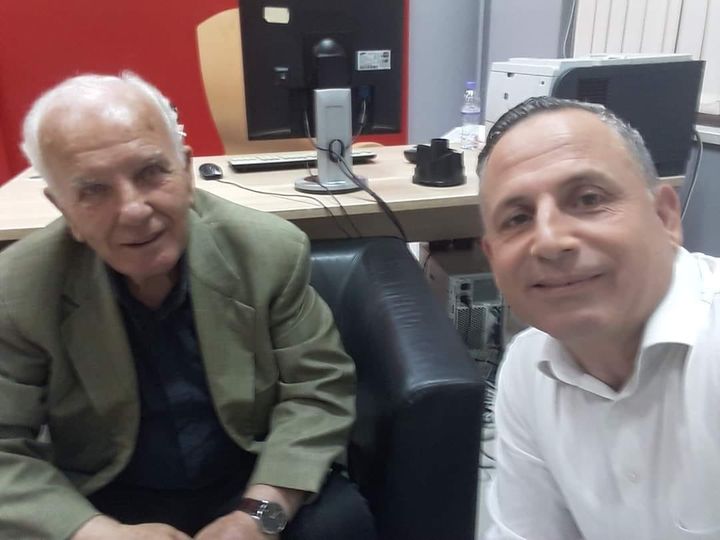
Kurrë nuk merrte mungesat, por asnjë nuk mungonte në orën e tij. I urrente klishetë e atij regjimit dhe tallej në forma nga më të ndryshme me komunistët. Për shumë nga nxënësit e tij, ai ishte idhull në sport. Bejkush Birçe u nda nga jeta sot dhe për mua ky është një lajm i trishtë. Ai ishte një nga profesorët që ka ndikuar më shumë në jetën time në marrjen e një kulture fizike të veçantë, por edhe për karakterin e fortë që ai zotëronte. Mua dhe klasës sime na ka dhëmë mësim fiskulturën në shkollën e mesme “Skënderbej” në Tiranë. Quheshim me shumë fat ne të klasës A që trajneri i Partizanit dhe më pas Dinamos, paradite na jepte ne mësim dhe pasdite stërviste yjet e futbollit shqiptar. Me profwsor Birçen, fiskultura nuk ishte një orë e lehtë për ta bërë gjysmë pushim. Ai na shtrydhe mirë e mirë në 45 minuta, që ne e kishim çdo ditë, por mënyra se si na e bënte lëndën na e bënte tejet tërheqëse. Larg klisheve dhe programit mediokër mësimor, prej tij njohëm për herë të parë jo vetëm çfarë ishin sporte si regbi, tenis, ski dhe boks, por edhe ti ushtronim ato. Klasa jonë ishte ndër të rrallat që arriti të bënte 10 kilometërshin e famshëm në Kodrat e Liqenit Artificial dhe me këtë “trofe” në dorë ai u thoshte në stërvitje futbollistëve se “normat i kanë kapur begsat 17-vjeçarë dhe nuk ka shanse mos t’i kapni ju”. Kishte studiuar në Moskë dhe vetë kishte ushtruar disa sporte, përveç futbollit, por ama mbetet një nga trajnerët më të mirë të futbollit shqiptar në histori. Kishte një kulturë perëndimore dhe në sqetull përherë mbante revistën “France Football”. Lexonte vetë dhe na e tregonte edhe ne nxënësve të tij. Për herë të parë prej tij kam parë atë revistë që ishte media më e rëndësishme botërore print për futbollin. Profesorin tim e kisha të ftuar më 17 qershor 2018 në studion e emisionit tim “Debati” për ndeshjet e Botërorit në Rusi në atë kohë. Nuk lëshoi asnjë mburrje se e njihte aq mirë atë sport, madje edhe Moskën, qytetin kur kishte harxhuar një pjesë të rinisë së tij. Por veçse seç më ngjallte të njëjtën autoritet që kishte kur më jepte mësim. Kishte një karakter hekur fare dhe nuk guxonte kush atje në stafin e shkollës t’i kërkonte llogari për revista të huaja që mbante, programin ndryshe dhe marrëdhënie të afërta me nxënësit. Ne vetëm e imagjinonim se çfarë marrëdhëneesh kishte profesori ynë me futbollistët. Në trup ishte sa gjysma e disave, por kishte një autoritet të tipit napolonian. Një personalietet të krijuar me cilësi profesionale dhe karakter të fortë. Ky ishte profesori im dhe i shumë e shumë nxënësve që besoj janë trishtuar po si unë me lajmin nga ikja nga kjo botë e tij. Do mbahesh mend përherë për cilësitë e forta dhe sukseset në sport profesor! Dhe për gjithçka që më mësove! Qofsh i parajsës!

Filed Under: Sport

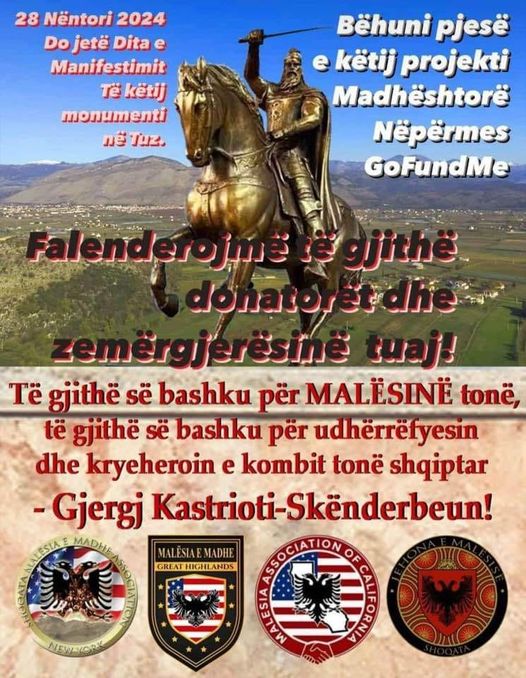
Më 28 Nëntor 2024, Gjergj Kastrioti bashkon shqiptarët në Tuz të Malësisë

July 1, 2024 by s p

https://gofund.me/8b715bab

Të nderuar bashkatdhetarë,

Në emër të shoqatave “Malësia e Madhe NY”, “Malësia e Madhe Michigan”, “Malësia në Kaliforni” dhe shoqatës “Jehona e Malësisë”, në bashkëpunim me Komunën e Tuzit, ju njoftojmë se permendorja e mbretit dhe kryeheroit tonë shqiptar Gjergj Kastriotit-Skënderbeut po merr formë dhe është hapur rruga që edhe Malësia-Tuzi t’i bashkohet kryeqendrave shqiptare me vendosjen e shtatorës së Krye heroit të kombit.

Duke ditur që si ne në diasporë, ashtu edhe populli autokton shqiptar i Malësisë, e kemi pritur shumë gjatë ardhjen e kësaj dite, shoqatat e lartpërmendura vendosën njëzëri që të mbledhim fondet për punimin e shtatores përmes një forumi të hapur ku të gjithë shqiptarët pa dallim mund të kontribuojnë për të kompletuar shumën e fondeve të nevojshme në bazë të kontratës së punës me dy skulptorë me reputacion, ekspertizë dhe përvojë.

Krye heroi Gjergj Kastrioti-Skënderbeu po vjen edhe në Malësi-Tuz me ç’rast përzemërsisht ju ftojmë që të bëhëni pjesë e realizimit të këtij projekti me rëndësi të veçantë kombëtare, atdhetare dhe njerëzore.

Për tu bërë pjesë e këtij projekti madhështor nëpërmes kontributit monetarë dhe zemërgjërsis tuaj që emri juaj të shënohet me shkronjat e arta në ruajtjen e historisë dhe identitetit tonë Shqiptar, klikoni më sipër në linkun e GoFundMe!

https://gofund.me/8b715bab

Filed Under: Sofra Poetike

Plenumin i Brioneve në fokus të Shërbimit Inteligjencës Amerikane

July 1, 2024 by s p

Dr. Lulzim Nika/

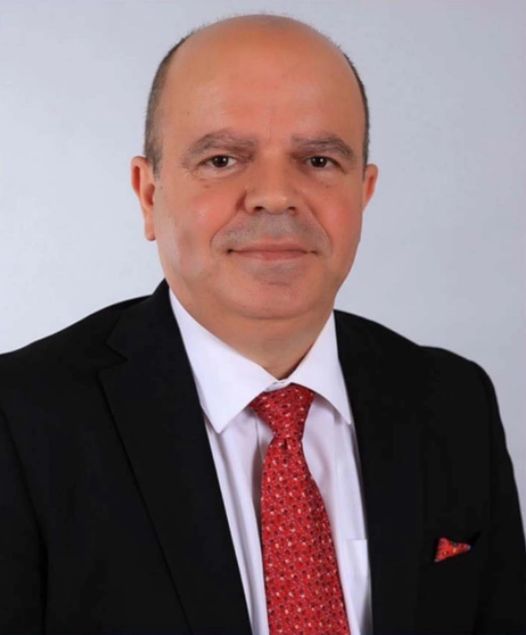
Vitet 1960-70, shënojnë kulmin e luftës së dy superfuqive për të treguar fuqinë ushtarake dhe shtrirjen e ndikimit të tyre ne gjithë globin (siç ishte rasti i Kubës dhe pushtimi i Çekosllovakisë nga ana e BRSS-së). SHBA-të në mënyrë të veçantë vëzhgonin zhvillimet politike në Jugosllavi, duke u angazhuar në pengimin e rrymave pro BRSS-së. Alekasander Rankoviqi, personaliteti i dytë më i fuqishëm në partinë Komuniste të Jugosllavisë, pas Tito-s, i cili nga shumë kush konsiderohej edhe si pasardhës i Tito-s, që Jugosllavinë do ta anëtarësonte në paktit e Varshavës. Në korrik të vitit 1966, me Vendimet e marra nga Josip Broz Tito në Plenumin e Brioneve, Rankoviqi shkarkohet nga postet e tij udhëheqëse në Federatën Jugosllave, ngase Tito në vazhdimësi, rrezikun e shihte nga Serbia e Madhe me përkrahjen e BRSS–së. E kaluarën hegjemoniste e Serbisë dhe pozicionimi i Rankoviqit në strukturat më të larta dhe më të rëndësishme në udhëheqësin e Federatës Jugosllave, diktatori Tito ishte i rrezikuar nga A. Rankoviqi, i cili me ndihmën e rusve do të vihej në krye të Federatës Jugosllave. Rankoviqi njihej për brutalitetin e pa parë ndaj popullin shqiptarë të Kosovës, duke sajuar edhe aksionin e grumbullimit të armëve vetëm e vetëm për të ushtruar dhunë dhe presion ndaj shqiptarëve për t’i lëshuar trojet e tyre stërgjyshore dhe për t’ia mësyrë Turqisë. Ky qëndrim fashist dhe shkatërrues ndaj shqiptarëve ka qenë i shprehur në të gjitha segmentet e jetës: ekonomi, shëndetësi, arsim, punësim etj., duke i përdorur të gjithë mekanizmat shtetërorë për të shkatërruar ekonomikisht, politikisht dhe kombëtarisht. Këtë fakt e pohon edhe vetë kreu i asaj kohe, diktatori J. B. Tito, i cili, duke folur në Kongresin IX-të të LKJ, ndër të tjera, kishte theksuar edhe këtë: “Jugosllavia e Re ka ndërmarrë masa të rëndësishme për të mënjanuar gjendjen e vështirë në Kosovë… Aktiviteti që u zhvillua në Kosovë lidhur me Plenumin e Brioneve, krijoi një atmosferë, me kërkesën që statusi i Kosovës të avancohet në Republikë, një kërkesë shumë e drejtë si populli i tretë më i madh në Jugosllavi, e cila ide u përkrah edhe nga inteligjenca shqiptare e Kosovës. I pyetur për vite që po i trajtojmë, Ukshin Hoti kishte deklaruar: ”Ç’është e vërteta qysh pas viteve 1968 edhe udhëheqja politike e Kosovës ka qen e bindur që edhe Kosova duhet të jetë Republikë në Federatën Jugosllave, mirë po ajo nuk kishte as forcë dhe nuk ishte as e aftë për ta bërë një gjë të tillë … dhe këtë akt madhorë e lanë në duart e të tjerëve që të angazhohen për ta kërkuar Republikën e Kosovës.

Këto dokumente të shërbimit inteligjent amerikan dëshmojnë për dhunën dhe brutalitetin e ushtruar ndaj shqiptarëve të Kosovës dhe viseve të tjera të banuara me shqiptarë, nga ana e shtetit jugosllave. Po ashtu dokumentet e shërbimit inteligjent amerikan tregonin edhe interesimin e shtetit amerikan për reformën kushtetues të viteve ‘70 e në veçanti për ngritjen e statusit të autonomisë së Kosovës. Kjo dëshmon së SHBA-të ndikuan drejtpërdrejtë në politiken Jugosllave, për pengimin e ardhjes në pushtet të rrymave radikale, që ndihmoheshin nga BRSS-ja. Njëra nga përpjekjet e pengimit të forcimit të rrymave radikale dhe anëtarësimin e Jugosllavisë në Paktin Ushtarak të Varshavës është edhe formimi i Lëvizjes së Mosinkuadrimit, me përkrahjen e amerikanëve ku njëri nga ideoret e kësaj lëvizje ishte edhe vetë diktatori Tito.

Filed Under: Emigracion

  • « Previous Page
  • 1
  • …
  • 52
  • 53
  • 54
  • 55
  • 56
  • Next Page »

Artikujt e fundit

  • IMAM ISA HOXHA (1918–2001), NJË JETË NË SHËRBIM TË FESË, DIJES, KULTURËS DHE ÇËSHTJES KOMBËTARE SHQIPTARE
  • UGSH ndan çmimet vjetore për gazetarët shqiptarë dhe për fituesit e konkursit “Vangjush Gambeta”
  • Fjala përshëndetëse e kryetarit të Federatës Vatra Dr. Elmi Berisha për Akademinë e Shkencave të Shqipërisë në Seancën Akademike kushtuar 100 vjetorit të lindjes së Peter Priftit
  • Shqipëria u bë pjesë e Lidhjes së Kombeve (17 dhjetor 1920)
  • NJЁ SURPRIZЁ XHENTЁLMENЁSH E GJON MILIT   
  • Format jo standarde të pullave në Filatelinë Shqiptare
  • Avokati i kujt?
  • MËSIMI I GJUHËS SHQIPE SI MJET PËR FORMIMIN E VETEDIJES KOMBËTARE TE SHQIPTARËT  
  • MES KULTURES DHE HIJEVE TE ANTIKULTURES
  • Historia dhe braktisja e Kullës së Elez Murrës – Një apel për të shpëtuar trashëgiminë historike
  • Lirizmi estetik i poetit Timo Flloko
  • Seminari dyditor i Këshillit Koordinues të Arsimtarëve në Diasporë: bashkëpunim, reflektim dhe vizion për mësimdhënien e gjuhës shqipe në diasporë
  • Ad memoriam Faik Konica
  • Përkujtohet në Tiranë albanologu Peter Prifti
  • Audienca private me Papa Leonin XIV në Selinë e Shenjtë ishte një nder i veçantë

Kategoritë

Arkiv

Tags

albano kolonjari alfons Grishaj Anton Cefa arben llalla asllan Bushati Astrit Lulushi Aurenc Bebja Behlul Jashari Beqir Sina dalip greca Elida Buçpapaj Elmi Berisha Enver Bytyci Ermira Babamusta Eugjen Merlika Fahri Xharra Frank shkreli Fritz radovani Gezim Llojdia Ilir Levonja Interviste Keze Kozeta Zylo Kolec Traboini kosova Kosove Marjana Bulku Murat Gecaj nderroi jete ne Kosove Nene Tereza presidenti Nishani Rafaela Prifti Rafael Floqi Raimonda Moisiu Ramiz Lushaj reshat kripa Sadik Elshani SHBA Shefqet Kercelli shqiperia shqiptaret Sokol Paja Thaci Vatra Visar Zhiti

Log in

This website uses cookies to improve your experience. We'll assume you're ok with this, but you can opt-out if you wish. Cookie settingsACCEPT
Privacy & Cookies Policy

Privacy Overview

This website uses cookies to improve your experience while you navigate through the website. Out of these cookies, the cookies that are categorized as necessary are stored on your browser as they are essential for the working of basic functionalities of the website. We also use third-party cookies that help us analyze and understand how you use this website. These cookies will be stored in your browser only with your consent. You also have the option to opt-out of these cookies. But opting out of some of these cookies may have an effect on your browsing experience.
Necessary
Always Enabled
Necessary cookies are absolutely essential for the website to function properly. This category only includes cookies that ensures basic functionalities and security features of the website. These cookies do not store any personal information.
Non-necessary
Any cookies that may not be particularly necessary for the website to function and is used specifically to collect user personal data via analytics, ads, other embedded contents are termed as non-necessary cookies. It is mandatory to procure user consent prior to running these cookies on your website.
SAVE & ACCEPT