• Home
  • Politics
  • Opinion
  • Culture
  • Sports
  • Economy
  • Interview
  • Reporting
  • Community
  • Vatra

Dielli | The Sun

Albanian American Newspaper Devoted to the Intellectual and Cultural Advancement of the Albanians in America | Since 1909

Eliot Engel, miku i shqiptarëve, jo i politikanëve, u prit me respekt në Vatër

March 1, 2020 by dgreca

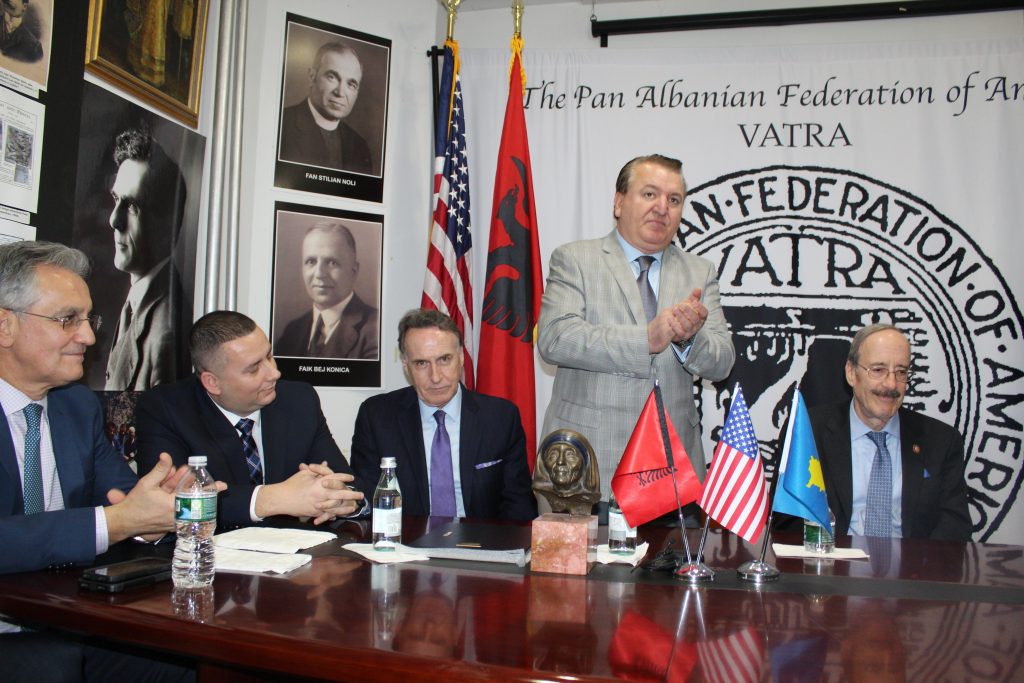
– Federata Pan Shqiptare e Amerikës ” Vatra” e nderoi mikun e shqiptarëve, Kongresmenin Eliot Engel, me Mirënjohje për Kontributin e dhënë për Pavarësinë e Kosovës, demokratizimin e Shqipërisë dhe avancimin e shqiptarëve në Ballkan-
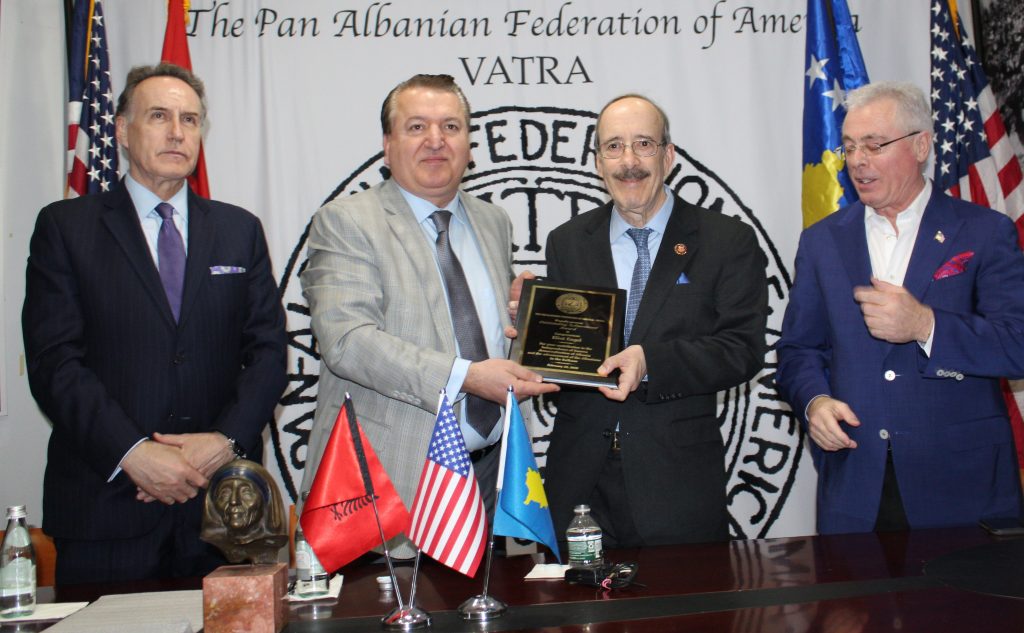
– Kryetari i Vatrës, z. Elmi Berisha, i kërkoj  Z.Engel, nësë është e mundur ,që ai të bëjë më shumë lobim për sistemin e vizave të punës për Shqiptarët. Z.Engel e priti më shumë kënaqësi këtë gjë dhe premtoi se do bëjë të pamundurën. 

Nga Ilirjan Blloshmi*/

Në datë 29 shkurt, Vatrën e vizitoi një mik i  njohur i shqiptarëve, kongresmeni Eliot Engel, mbrojtës i njohur i çështjes tonë Kombëtare, veçanërisht asaj të Kosovës, por edhe “avokat i njohur” për  të gjithë Kombin Shqiptar, Kongresmeni Eliot Engel, aktualisht Kryetar i Komisionit për Politikën e Jashtme të Kongresit Amerikan.

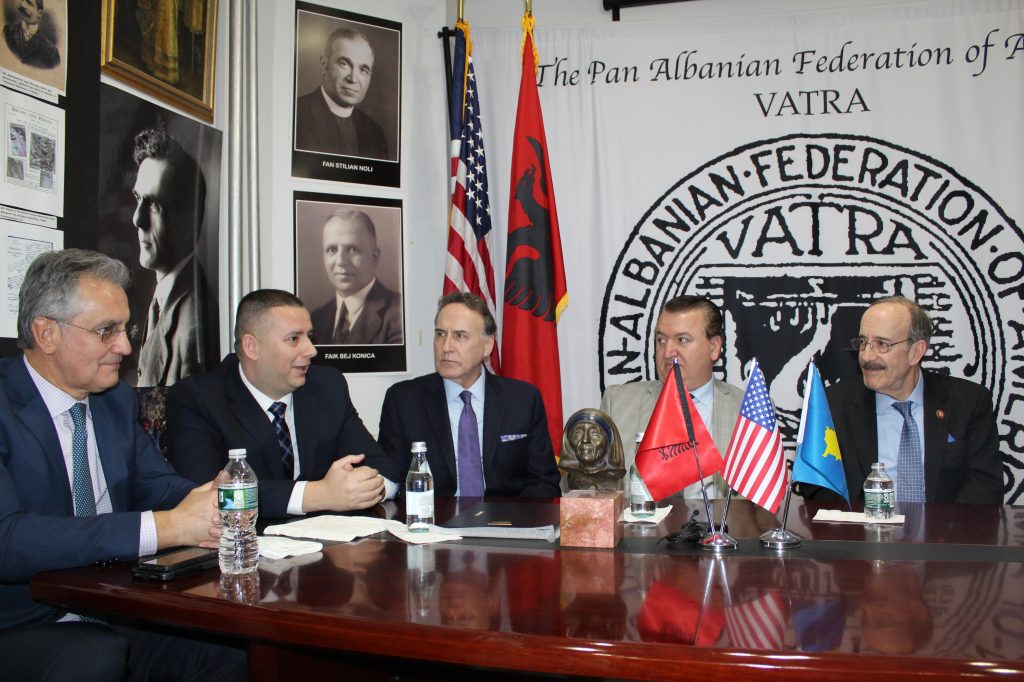
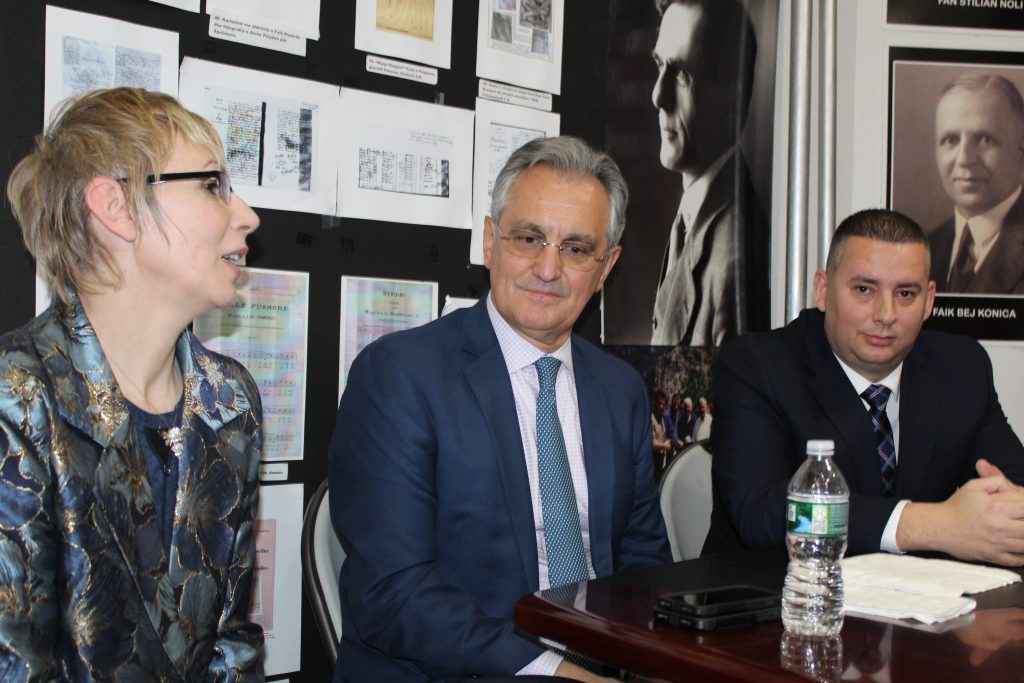
        Z.Engel,- i shoqëruar nga biznesmeni i njohur dhe veprimtar i diasporës shqiptare, një lobues i fuqishëm për çështjen shqiptare në SHBA, mik i kongresmenit, Harry Bajraktari,-  u prit nga kryetari i Vatrës Elmi Berisha, presidenti i nderit i Vatrës Agim Rexhaj, nën/kryetarët Ervin Dine dhe dr. Pashko Camaj, si dhe nga anëtarë të kryesisë dhe Këshillit të  Vatrës. Në fjalën tij, Kongresmeni Engel, foli për punën që është bërë për çështjën e Kosovës dhe Shipërise. Gjithashtu ai tregoi edhe për “kapriçot e politikanve” të Tiranës zyrtare dhe Prishtinës zyrtare. Në sytë e tij kishte një dashuri të admirushme për shqiptarët, por jo për ata që drejtojnë. 

Më pas Z.Engel, mirëpriti pyetjet nga të pranishëmit, të ciliat ishte nga më të ndryshmet. Gjatë këti bashkëbisedimi kryetari i Vatrës, z. Elmi Berisha, i kërkoj  Z.Engel nësë është e mundur që ai të bëjë më shumë lobim për sistemin e vizave të punës për Shqiptarët. Z.Engel e priti më shumë kënaqësi këtë gjë dhe premtoi se do bëjë të pamundurën për këtë kërkesë.

Bashkëbisedimi me kongresmenin ka vazhduar për rreth dy orë dhe ai i ka dëgjuar të gjitha shqetësimet e vatranëve për bisedimet Kosovë-Serbi, për agresivitetin e diplomacisë serbe, që ka synuar barazimin e agresorit me viktimën, për presionin që i bëhet qeverisë së Kosovës, për deklaratat e Serbisë se kurrë nuk do ta njohë Kosovën, për veriun e Kosovës ku dikton Serbia, për totalitarizmin e rilindur në Shqipëri, ku është vënë në pikëpyetje demokracia, kapja e të gjithë pushteteve nga një forcë politike, të drejtat e mohuara të shqiptarëve nën Serbi-Luginën e Preshevës, dhe në rajonin e Ballkanit, për çështjen çame etj.

Kongresisti Engel është Njeriu që të  “inponon” respekt dhe ka bërë shumë për çështjen shqiptare, prandaj duhet ta mbështesim. 

Eliot Engel kandidon për kongres në Brox, në Distriktin 16 në Bronx, New York, Zonë që ka komunitet shqiptar, ajo që mua më bëri përshtypje ishte se ai nuk kërkojë, që ne ta ndihmonim, përkundrazi as që e përmendi këtë gjë. Por duke parë se çfarë ka bërë, dhe po bën për Shqiptarët ky njeri të inponon respekt dhe dashuri. Parandaj unë kam një thirrje për gjithë bashkëkombasit e mij. Mbështeteni këtë burrë që dashuron pa limit Kosovën dhe Shqipërinë! Le të tregohemi falenderues ndaj një njëriu që është marrë me Shqipërinë dhe Kosovën për më shumë se 30 vite. Le ti lëmë anash bindjet tona politike dhe të bashkohemi për të mirën e kombit tonë. 
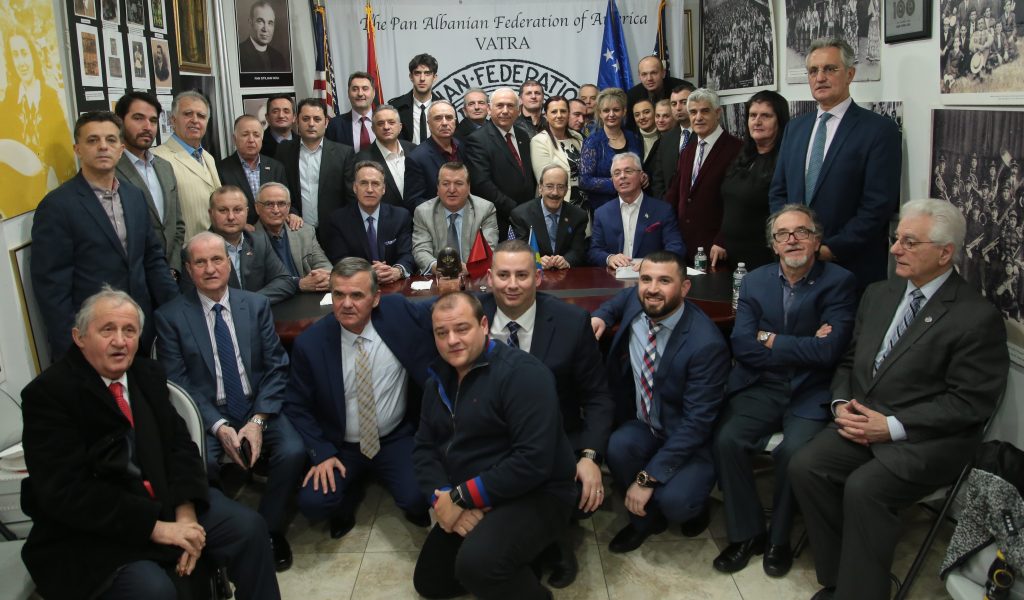
Një falenderim! 
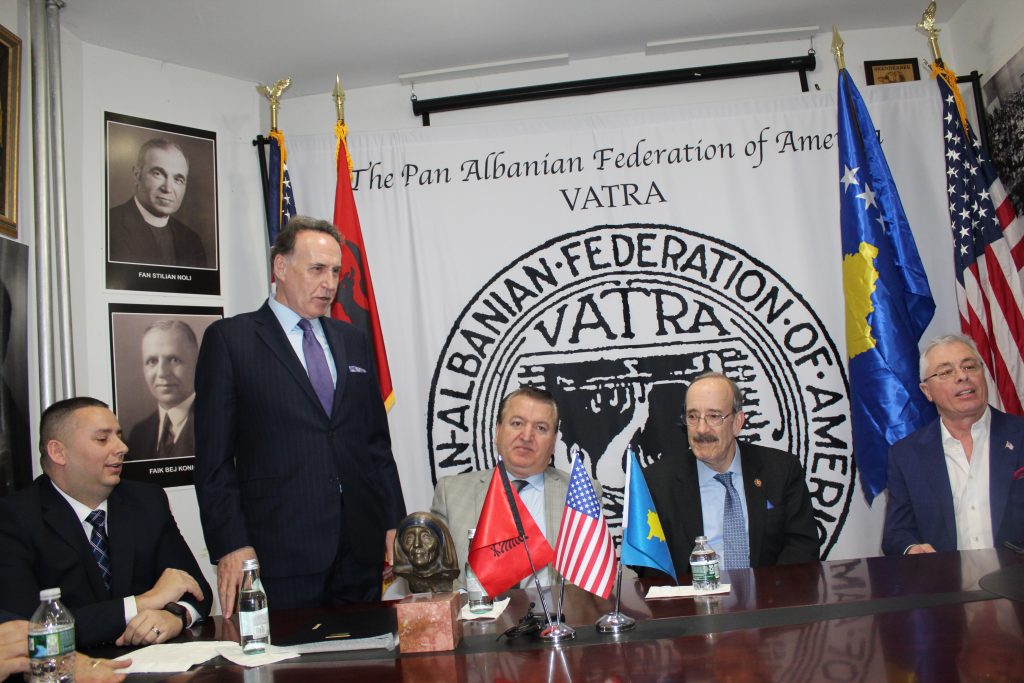
Si përfundim duhet të falenderoj gjithë organizuesit e këti takimi, duke filluar nga kryesia e Vatres, Herry Bajraktarin, të pranishmit, ata që e informuan Z.Engel për realitetin në Shqipëri dhe Kosovë. Zoti e bekoftë Shqiperinë,Kosovën dhe Amerikën! 
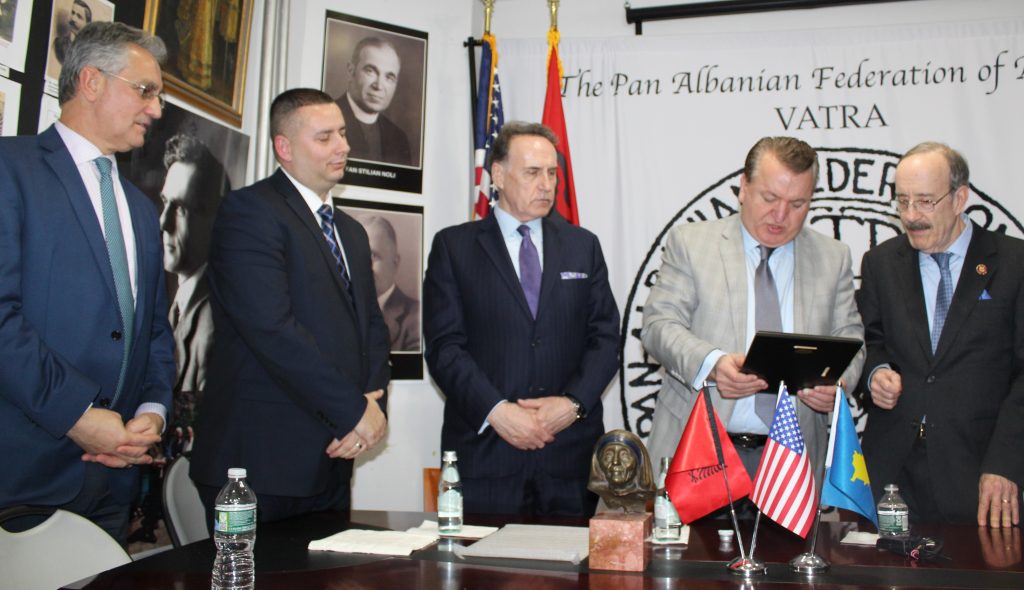
                   Federata Pan Shqiptare e Amerikës ” Vatra” e nderoi mikun e shqiptarëve, Kongresmenin Eliot Engel, me Mirënjohje për Kontributin e dhënë për Pavarësinë e Kosovës, demokratizimin e Shqipërisë dhe avancimin e shqiptarëve në Ballkan.
*Autori është anëtar i këshillit të Vatrës
Filed Under: Featured Tagged With: ne Vater

Kosova, se shpejti nderon Senatorin Dole, mikun e saj të madh

March 1, 2020 by dgreca

Disa ditë më parë, Ambasadori i Shteteve të Bashkuara në Republikën e Kosovës, z.. Filip Kosnett, e vizitoi ish-Senatorin amerikan, z.. Robert Dole, në zyrën e tij në Washington. Kryediplomati amerikan në Prishtinë njoftoi se së shpejti në Prishtinë do të ngritet shtatorja e z. Dole.

“Ishte kënaqësi për mua t’ia dorëzoja personalisht Senatorit Dole fotografinë e shtatores së tij që do të zbulohet së shpejti në Prishtinë, (punuar nga skulptori Luan Mulliqi), për këtë burrë të shquar e plot merita”, shkroi ambasadori Kosnett.

Senatori Dole, nga ana e tij, shprehu kënaqësinë për ngroitjen e shtatores së tij në Prishtinë dhe e falënderoi përfaqësuesin e lartë diplomatik amerikan në Kosovë për vizitën. Ai e lavdëroi ambasadorin për punën e tij në Kosovë.

“Po bën një punë të mrekullueshme, si përfaqësues i Shteteve të Bashkuara në Kosovë”, shkroi Z. Dole në portalin e tij.

Ambasadori i Shteteve të Bashkuara në Prishtinë, Philip Kosnett, duke i dorëzuar ish-Senatorit Robert Dole fotografinë e shtatores së tij që do të ngritet në Prishtinë./

Autoritetet e Republikës së Kosovës kishin marrë vendim për t’i ngritur shtatore ish-Senatorit republikan Bob Dole në Prishtinë, në vitin 2018, me rastin e 95-vjetorit të ligjvënësit amerikan, njërit ndër politikanët më të respektuar amerikanë të fund shekullit të kaluar, për përpjekjet e tij në mbështetje të çlirimit dhe të pavarësisë së Kosovës. Shtatorja e Senatorit Dole do të vendoset në cep të Rrugës Bob Dole dhe Bulevardit Bill Clinton, rrugë këto që, siç tha ambasadori amerikan Kosnett, janë emërtuar sipas dy kundërshtarëve politikë amerikanë, përfaqësues të dy partive të ndryshme politike, njëri republikan e tjetri demokrat, që me gjithë dallimet e tyre në rrafshin e zhvillimeve politike në Amerikë, ishin miq të ngushtë me njëri-tjetrin. Ambasadori Kosnet tha se ata (Dole dhe Clinton) kishin të njëjtën dashuri për Atdheun e tyre dhe ishin të përkushtuar ndaj shërbimit për të tjerët, ndërkohë që përpiqeshin të bashkëpunonin kurdoherë që ishte e mundur.

“Do të bënim mirë të gjithë, në qoftë se do ta përqafonim filozofinë e Senatorit Bob Dole, sepse në politikë kemi kundërshtarë, por jo armiq”, u shpreh Kosnett.

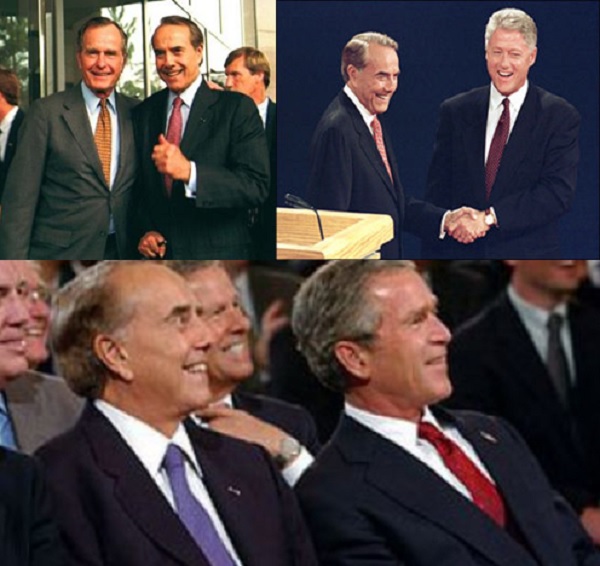
Senatori Robert Dole me tre ish-presidentët amerikanë, Xhorxh Bushin e vjetër, Bill Klinton dhe Xhorxh Bushin e ri, mbështetësve të mëdhenj për lirinë dhe pavarësinë e Kosovës. Bushi i vjetër e tërhoqi “vijën e kuqe”për Serbinë,Clintoni e mobilzoi NATO-n për çlirimin e Kosovës, kurse Bushi i ri e publikoi vendimin për shpalljen e pavarësisë së Kosovës në Tiranë…

Senatori Robert Dole, ish-veteran i Luftës së Dytë Botërore, Kongresmen dhe Senator nga shteti Kansas, udhëheqës i republikanëve në Senat dhe kandidat i Partisë Republikane për President të Shteteve të Bashkuara, e kishte bërë çështjen e Kosovës kauzë të tij, që në fillim të viteve 90 të shekullit të kaluar.

Në një letër dërguar Dr. Ibrahim Rugovës, më 19 shtator 1991, Senatori Dole, në atë kohë udhëheqës i republikanëve në Senat dhe kryetar i Komisionit të Senatit për Punë të Jashtme dhe Senatori demokrat Claiborne Pell, shprehnin shqetësimin për gjendjen e rëndë në Kosovë.

“Siç e dini, ne jemi shumë të shqetësuar për gjendjen në Kosovë. Për vite të tëra popullsia shqiptare në Kosovë është objekt shtypjesh dhe mohimesh të të drejtave të njeriut nga regjimi i egër komunist i Republikës së Serbisë…”, shkruanin ata.

Senatorët amerikanë e kuptonin se situata në Kosovë ishte e rrezikshme dhe e paparashikueshme.  Ata e ftonin Dr. Ibrahim Rugovën që të vizitonte Washingtonin, sa më parë që të ishte e mundur për, siç shkruanin, “për t’u takuar me ta dhe me senatorë të tjerë të interesuar për gjendjen në Kosovë, për t’u këshilluar me ju për hapat më të mirë që duhet të merren, individualisht dhe në bashkëpunim me njëri-tjetrin”.

Kështu filloi edhe ndërkombëtarizimi i çështjes së Kosovës, fillimisht me sensibilizimin e popullit amerikan dhe të përfaqësuesve të tij në Kongres. Senatori Bob Dole, me letrat e tij të shumta dërguar udhëheqësve të botës, tërhiqte vërejtjen për gjendjen në Kosovë. Kështu ai e sensibilizoi edhe opinionin ndërkombëtar për shkejljen e të drejtave të shqiptarëve të Kosovës dhe për aspiratat e tyre për një Kosovë të lirë dhe të pavarur.

Angazhimi dhe roli i tij, brenda dhe jashtë vendit, në atë kohë, ishte krucial për zhvillimin e punëve në favor të Kosovës, sidomos gjatë dekadës së fundit të shekullit të kaluar, që kulmuan me çlirimin e Kosovë dhe më pas edhe me pavarësinë e saj.

Shtatorja e Senatorit republikan Robert Dole në Prishtinë u bashkohet shtatores së ish-presidentit amerikan demokrat Bill Klinton dhe bustit të bashkëpuntores së tij të ngushtë, ish-Sekretares së Shtetit, Madeleine Albright. Kjo është edhe një simbolikë e frymës së bashkëpunimit të dy partive kryesore amerikane në mbështetje të aspiratave të Kosovës për liri e pavarësi.  Kjo frymë bashkëpunimi midis liderëve e përfaqësuesve të dy partive amerikane, republikanëve dhe demorkatëve, përsa i përket Kosovës, vazhdon edhe sot.

Ambasadori Philip Kosnett në ceremoninë e inaugurimit të vendit ku do të ngritet shtatorja e Senatorit Dole, Prishtinë, 22korrik, 2019..

Duke folur për angazhimin e ish-Senatorit Bob Dole për lirinë dhe të drejtat e poullit të Kosovës, gjatë inaugurimit të vendit ku do të ngritet shtatorja e Senatorit Dole, Ambasadori Kosnett zgjodhu fjalët më të mira për Z. Dole.

“Një udhëheqës në promovimin e kauzës së lirisë anembanë botës. Nuk është për t’u çuditur që ai u bë një mbështetës i pazevëndsueshëm i Kosovës, duke qëndruar pranë dhe në mbështetje të popullit të këtij vendi, në përpjekjet e tij për të ndërtuar një shtet të fortë dhe të lirë”, ka thënë me atë rast kryediplomati amerikan në Prishtinë.

Duhet thënë se kjo frymë bashkëpunimi është njohur dhe vlerësuar shumë prej popullit të Kosovës, ndihma e burrave dhe grave amerikane në mbështetje të Kosovës gjatë dekadave.  Siç është shprehur edhe Ibrahim Rugova, shpresojmë që, më në fund, kjo frymë bashkëpunimi të sigurojë një miqësi të përhershme, jo vetëm midis Shteteve të Bashkuara e Kosovës, por edhe midis Kombit Amerikan dhe Kombit Shqiptar, në përgjithësi.

Me gjithë grindjet dhe mosmarrëveshjet midis partive të ndryshme politike në Kosovë dhe në Shqipëri, duket se kjo miqësi është e pacenueshme dhe ngritja e shtatores së ish-Senatorit Republikan Robert Dole në Prishtinë e shpreh mirënjohjen e gjithë klasës politike shqiptare dhe të popullit të Kosovës ndaj burrave të shtetit amerikan që kontribuan në thememlimin e shtetit të pavarur e të lirë të Kosovës.

Ambasadori amerikan në Prishtinë, Filip Kosnett, me rastin e inaugurimit të vendit ku do të vendoset shtatorja e Senatorit Dole në Prishtinë, ka theksuar se miqësia e Kosovës me Shtetet e Bashkuara nuk varet nga një parti apo nga një individ, sepse ajo është miqësi mes dy popujve.

“Qeveritë tona nuk do të pajtohen gjithmonë për politikat e ndryshme dhe do të nevojitet punë serioze për të mbajtur qëndrimet tona në përputhje me njëra-tjetrën, ndërsa partneriteti i Kosovës me Shtetet e Bashkuara rritet.  Por, një gjë është e qartë: miqësia e qëndrueshme midis popullit të Kosovës dhe popullit të Shteteve të Bashkuara nuk varet nga ndonjë parti politike apo nga ndonjë individ, në veçanti, sepse janë lidhje ndërmjet dy popujve tanë”, është shprehur ambasadori amerikan në Prishtinë.

Po e përfundoj këtë shkrim me fjalët e ambasadorit amerikan në Prishtinë, Z. Kosnett që i tha në inaugurimin e vendit ku do të ngritet së shpejti shtatorja e Senatorit Dole në Prishtinë, me shpresë që zbulimi i shtatores së Senatorit Amerikan Robert Dole në Prishtinë do të jetë një moment që të fokusohemi në vlerat që i kanë bashkuar popullin e Shteteve të Bashkuara dhe popullin e Kosovës.

“Le të frymëzojë ky monument i Bob Dolit për përpjekje të reja për të ndërtuar një atdhe që e meritojnë fëmijët e Kosovës, një Kosovë që do të jetojë në paqe me fiqnjët e saj, një vend me drejtësi dhe mundësi të barabarta për të gjithë, pa dallim”, është shprehur ambasadori amerikan në Kosovë, Filip Kosnett.

Shpresojmë që ashtu do të jetë!

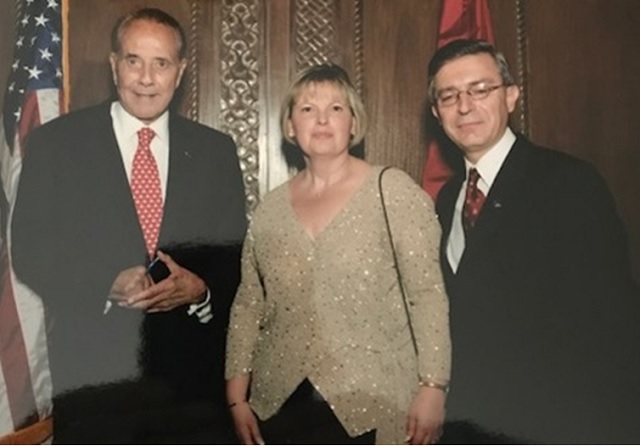
Autori (Frank Shkreli) me Senatorin Robert Dole, në darkën e dekorimit të tij me çmimin “Duart e Shpresës”, nga Këshilli Kombëtar Shqiptaro-Amerikan, Washington, shtator, 2005

Filed Under: Featured Tagged With: Bobe Dole, Philip Kosnett

Ambassador Kosnett’s Remarks at the Kosovo Consulate General, New York…

February 29, 2020 by dgreca

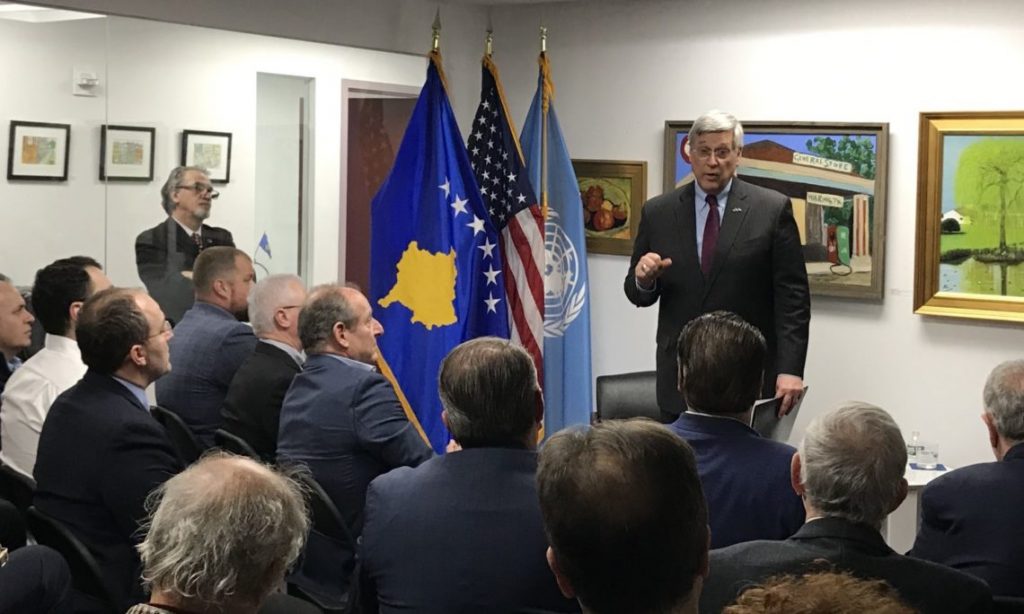
Ambassador Kosnett’s Remarks at the Kosovo Consulate General, New York, February 28, 2020/

(As Prepared)/

Ladies and gentlemen, good afternoon.  Let me begin by thanking Consul General Teuta Sahatqija and her staff for hosting us today.  They do a tremendous job building ties between our two great countries.  It is a great pleasure to be here with old friends and new.

We are here today because we share an appreciation and respect for both Kosovo and the United States.   In this spirit, I would like today’s engagement to be an open conversation.  So I will try to keep my opening remarks short to allow more time for discussion.  I’d like to start us off by offering my perspective on three topics:  how I see Kosovo today; America’s priorities in the relationship; and, finally – how members of the Kosovo diaspora in the United States can support the effort to build a better future for all the people of Kosovo.

First, then, Kosovo today.  Some of you know that I first served in the U.S. diplomatic mission in Kosovo, all too briefly, in 2003.  When the opportunity arose to return to Ksovo in 2018, this time with my wife Alison, we jumped at it.  We’ve been back in Kosovo a little over a year now, and it has been a wonderful experience.  Last year on July 4, I was privileged to mark the 20th anniversary of our diplomatic presence in Kosovo by presiding at the opening of our new Embassy in Pristina – possibly the most advanced, most environmentally sound complex of buildings in Kosovo.  The Embassy is more than a modern office for the Americans and local staff who work there.  It is a meeting place for people of all communities – and a physical manifestation of America’s commitment to an enduring partnership with Kosovo.

Each year, the American people give millions of their tax dollars to support programs and activities in Kosovo.  These programs build the capacity of the government, ensure the rights of minority groups and the most vulnerable members of society, enhance the capacity of the legal system, and help businesses meet international product standards and gain access to new markets.  We also partner with the government on initiatives to encourage greater participation of women in the economy, support entrepreneurs from all Kosovo’s diverse communities, create a stable and secure supply of energy, and better prepare young people to be the engines of future growth.  We support the development of the courts and police as well as the Kosovo Security Force.

I know how appreciative Kosovo citizens are for the assistance they’ve received from the U.S. these past two decades.  But I’ve also learned that the relationship is very much a two-way street.  Kosovo, for example, has shown courage and leadership in its approach to combating terrorism and confronting violent extremism, often more than much larger and richer countries.

The United States is assisting Kosovo to build the capacities of the Kosovo Security Force not just for defense, but so Kosovo can make good on its promise to begin to pay back its allies for the military assistance it has received, and to reach its aspirations of becoming a peacekeeping force and security contributor.

Recently, Kosovo has shown to the world that this security force is able to provide aid to others in need.  When the tragic earthquake struck Albania, Kosovo’s emergency response corps worked hand-in-hand with our crisis response team, sending help to its neighbor within hours of the quake.  I see this as an example of how Kosovo is maturing into a supportive regional partner.

It is true that our governments will not always agree on every issue.  That is normal in a mature partnership.  There may be times when relations between governments become strained, and there are consequences.  I imagine we will get into some current topics during the discussion session.  And I’ll talk a bit about how our economic assistance is set to evolve.  But I have no doubt the fundamental bond between our two democracies is and will remain solid.

Let’s talk about our shared priorities.  When my Embassy colleagues and I talk about America’s priorities – and our hopes – for Kosovo, we group the issues into three categories: peace, justice, and prosperity.

By peace, I mean better relations between Kosovo and its neighbors, particularly Serbia, but also peaceful, neighborly ties among ethnic communities within Kosovo.  For all Kosovo’s citizens should have the right to live in freedom without fearing their neighbors – and also without fearing that if they reach out a hand of friendship to their neighbors from another community, someone from their own community will object.

And peace, by this definition, is closely related to justice.

When people in Kosovo raise the topic of justice, I find they they are usually talking about fighting corruption and building a judicial system and a police force people trust.  That is vital.

But I would broaden the definition of justice to include adherence to the rule of law; equal and respectful treatment for all citizens regardless of gender, ethnicity, or sexual orientation; and equal opportunity for all. Supporting those efforts is important to my government and to me – and we put a lot of energy into helping to improve Kosovo’s judicial and law enforcement institutions.  The results have been encouraging, but we have a long way to go, including in removing improper political influence from the judicial system.

This would be a good point to say that building a just society isn’t easy.  When I speak in Kosovo, I take pains to note that as America tries to build that just society – “a more perfect union,” to borrow another phrase from our founders –we are still struggling with the legacy of a long and painful history.  Both Kosovo and the United States are works in progress.  We need to work together and learn from each other to build societies dedicated to inclusion, to “liberty and justice for all.”  “Liberty and justice for all” also means economic opportunity for all – what our founders called “the pursuit of happiness.”

And that brings me to our third priority: supporting Kosovo on the road to prosperity.  The economic picture, many of us would agree, is mixed.  Too many of Kosovo’s people – in government offices, in some non-governmental organizations, and even in some corners of the private sector – have become overly reliant on foreign aid and remittances, imagining that the current high levels of assistance and remittances will last forever.  Too many times someone working in government or business has pitched a sound idea to me, then asked which U.S. Government agency is going to pay for it.

Let’s be clear – we are proud of the work we do in Kosovo and the programs we support, but U.S. Government efforts are focused on ensuring Kosovo can stand on its own two feet and on having governmental institutions deliver and respond to citizens’ needs.  America provides Kosovo with assistance not as a permanent subsidy, but to help institutions and sectors to become more self-sufficient.

In agriculture, for example, USAID focuses on investing in pilot projects to show farmers how to move up the value chain.  Even this sort of aid isn’t designed to last forever.  As USAID Administrator Green highlighted recently at the United Nations, the purpose of foreign assistance is to end the need for its existence.

There is also a fair amount of magical thinking about foreign direct investment.  People who should know better ask when the U.S. Government is going to make General Motors or Ford invest in Kosovo, sidestepping the question of how to make Kosovo a country businesses want to invest in.  This sort of complacency crosses political party lines and generational lines too.

As the youngest nation in Europe, Kosovo should be poised to benefit from a demographic dividend that contributes to a more prosperous future, as more and more citizens enter the work force and pay taxes that can be used to provide wide social benefits.  But an estimated 220,000 citizens left Kosovo during the last decade.  That is roughly 10 percent of Kosovo’s population.  Without making a concerted investment in retaining and building talent, and supporting private sector led growth, Kosovo can’t expect the change needed for a positive future.

Let’s talk about remittances.

At present, remittances from people like you are holding Kosovo’s economy together.  Twelve percent of Kosovo’s economy is derived from economic activity supported by money flowing in from outside.  But it’s not real investment.  Sadly, the vast majority of remittances are used to purchase goods manufactured abroad and imported into Kosovo.  Much diaspora money goes into building vacation homes.  Better, but still not the same as investing in an ongoing commercial activity.  And let’s be frank – the whole remittance structure is a house of cards.  America’s experience with other diaspora communities is that remittances fall sharply a generation after the initial wave of emigration.

So – Kosovo’s future is dependent on its ability to expand private sector growth and to begin to produce some of the goods it now procures from abroad with diaspora dollars.  Private sector growth will create jobs.  It will help keep Kosovo’s youth in Kosovo and offer real alternatives to seeking jobs in an already bloated public sector.

And all is not bleak.   First of all, while many talented people have left Kosovo – including people sitting in this room – many of the most talented have chosen to remain.  When I compare the Kosovo I knew in 2003 to the Kosovo of today, I am  especially impressed by a rising generation of young people – educated, multilingual – who could be successful anywhere in the world but are choosing to try to build a future at home in Kosovo.

Young people in the tech sector in particular speak of learning lessons from other small countries that have achieved economic success by unleashing their private sector – countries like Israel, Singapore, Estonia, Slovenia.  Many are reaching across community boundaries, even across borders,  to make friends and do business with people from other communities.   They are not afraid of seeking foreign money – but as investment capital, not aid.

Gjirafa is a great example.  A small investment from USAID coupled with the dynamism of its young founder, Mergim Cahani, had a catalytic effect.  Now Girafa is the leading online retail marketplace in Kosovo, and a leader in search as well.

It is the desire to see Kosovo develop its economy, and become more economically self-sufficient, that is driving our current effort – led by Special Presidential Envoy Ric Grenell – to inject energy into the process of improving Kosovo’s relations with Serbia.   By encouraging

initiatives to improve air, road, and rail links between Kosovo and Serbia, we hope to energize the economies and business opportunities on both sides of the border, improve the free movement of people, and build connections that will lead to greater human cooperation and economic growth.  We’ve developed these initiatives in consultation with business leaders in both countries.

And now I move on to my last point.  Kosovo’s future relies, in the end, on one factor alone—the commitment of its citizens to build that future.  I encourage you to think about how to structure your own support toward the goal of Kosovo’s self-sufficiency. 

So, what else can you do?  In fact, a lot.  I am not here to endorse particular programs or businesses, but rather to raise awareness about the plethora of opportunities out there for you to play a role in Kosovo’s future success.  So, with that caveat in mind…

You can also invest in an existing business, or even create your own.  Just look at the success of a diaspora’s investment in Jaha Solar.  The company not only created jobs in Kosovo but was also a smart business decision for investors.  Jaha’s German-quality solar panels produced in Kosovo compete on the European market with prices that are competitive with China.

You can follow in the footsteps of the Shkreli, Lukaj, and other families by sponsoring a scholarship for Kosovo’s youth.  You can support Kosovo non-profits, such as Teach for Kosovo – modeled after Teach for America – which is looking for funding, but also for fellows to work in Kosovo’s schools.  You can follow the example of BONEVET’s founder Vllaznim Xhiha, who built his fortune abroad but established a foundation with programs run by local youth, encouraging the success of Kosovo’s future generations.

Perhaps a more modest commitment?  Many diaspora members take extended vacations in Kosovo (and truth be told, at neighboring beaches).  Take some time from your vacation to mentor local businesses and organizations and provide them with expertise and innovative ideas.  One good place to start if you are looking for such opportunities is Germin, which puts diaspora around the world in touch with local businesses and organizations looking for services.  Sharing your knowledge and know-how can be priceless for a Kosovo business.  A small tech startup run by Kosovo youth won a contract with Lufthansa through contacts of a diaspora.  In fact, they report that 90 percent of their clients come from diaspora.

And your influence does not have to be constrained to charity or the economic sphere.  There are examples of how people like you who have spent time in other political and economic systems “send” back a component of these values when they return to or interact with their countries of origin and have a positive impact.  They contribute to changing outdated attitudes about issues such as gender equality, protection of civil rights, and inclusion of the LGBTI community.

Over time, as diasporas share new perspectives with those who remain in the country of origin, subtle shifts in the values those people hold may occur.  I encourage you to help advocate for the needs of wartime sexual violence survivors and other victims of violence and past trauma, including by helping to fill the gaps in mental health needs.

I spoke earlier about how the energy and commitment of Kosovo’s young entrepreneurs, and of the inspiring “Teach for Kosovo” project.  How about unleashing the youth of the diaspora to backstop them?   Know a young Kosovo-American citizen with a business or tech degree, or just a winning attitude?  Maybe a daughter, son, niece, nephew?

If you have the means, why not subsidize one to take a year off  to live in Kosovo and bring their education and their enthusiasm to support a local company, or municipality, or educational institution?  They will gain valuable experience in the process and give their language skills a workout.

In this room there are people who would do a brilliant job of organizing a corps of diaspora youth like that – who wants to volunteer?

Thank you for listening to my ideas about how we can help build a self-sufficient Kosovo.  Now I look forward to hearing your ideas, and I am happy to take questions on any topic.  Thank you for your attention.

Filed Under: Featured Tagged With: Ambasador Kosnett-Remarks at the Kosovo

Ambassador Kosnett at the Kosovo Consulate General, New York

February 29, 2020 by dgreca

Ambassador Kosnett’s Remarks at the Kosovo Consulate General, New York, February 28, 2020/

By Rafaela PRIFTI/

Ladies and gentlemen, good afternoon.  Let me begin by thanking Consul General Teuta Sahatqija and her staff for hosting us today.  They do a tremendous job building ties between our two great countries.  It is a great pleasure to be here with old friends and new.

We are here today because we share an appreciation and respect for both Kosovo and the United States.   In this spirit, I would like today’s engagement to be an open conversation.  So I will try to keep my opening remarks short to allow more time for discussion.  I’d like to start us off by offering my perspective on three topics:  how I see Kosovo today; America’s priorities in the relationship; and, finally – how members of the Kosovo diaspora in the United States can support the effort to build a better future for all the people of Kosovo.

First, then, Kosovo today.  Some of you know that I first served in the U.S. diplomatic mission in Kosovo, all too briefly, in 2003.  When the opportunity arose to return to Ksovo in 2018, this time with my wife Alison, we jumped at it.  We’ve been back in Kosovo a little over a year now, and it has been a wonderful experience.  Last year on July 4, I was privileged to mark the 20th anniversary of our diplomatic presence in Kosovo by presiding at the opening of our new Embassy in Pristina – possibly the most advanced, most environmentally sound complex of buildings in Kosovo.  The Embassy is more than a modern office for the Americans and local staff who work there.  It is a meeting place for people of all communities – and a physical manifestation of America’s commitment to an enduring partnership with Kosovo.

Each year, the American people give millions of their tax dollars to support programs and activities in Kosovo.  These programs build the capacity of the government, ensure the rights of minority groups and the most vulnerable members of society, enhance the capacity of the legal system, and help businesses meet international product standards and gain access to new markets.  We also partner with the government on initiatives to encourage greater participation of women in the economy, support entrepreneurs from all Kosovo’s diverse communities, create a stable and secure supply of energy, and better prepare young people to be the engines of future growth.  We support the development of the courts and police as well as the Kosovo Security Force.

I know how appreciative Kosovo citizens are for the assistance they’ve received from the U.S. these past two decades.  But I’ve also learned that the relationship is very much a two-way street.  Kosovo, for example, has shown courage and leadership in its approach to combating terrorism and confronting violent extremism, often more than much larger and richer countries.

The United States is assisting Kosovo to build the capacities of the Kosovo Security Force not just for defense, but so Kosovo can make good on its promise to begin to pay back its allies for the military assistance it has received, and to reach its aspirations of becoming a peacekeeping force and security contributor.

Recently, Kosovo has shown to the world that this security force is able to provide aid to others in need.  When the tragic earthquake struck Albania, Kosovo’s emergency response corps worked hand-in-hand with our crisis response team, sending help to its neighbor within hours of the quake.  I see this as an example of how Kosovo is maturing into a supportive regional partner.

It is true that our governments will not always agree on every issue.  That is normal in a mature partnership.  There may be times when relations between governments become strained, and there are consequences.  I imagine we will get into some current topics during the discussion session.  And I’ll talk a bit about how our economic assistance is set to evolve.  But I have no doubt the fundamental bond between our two democracies is and will remain solid.

Let’s talk about our shared priorities.  When my Embassy colleagues and I talk about America’s priorities – and our hopes – for Kosovo, we group the issues into three categories: peace, justice, and prosperity.

By peace, I mean better relations between Kosovo and its neighbors, particularly Serbia, but also peaceful, neighborly ties among ethnic communities within Kosovo.  For all Kosovo’s citizens should have the right to live in freedom without fearing their neighbors – and also without fearing that if they reach out a hand of friendship to their neighbors from another community, someone from their own community will object.

And peace, by this definition, is closely related to justice.

When people in Kosovo raise the topic of justice, I find they they are usually talking about fighting corruption and building a judicial system and a police force people trust.  That is vital.

But I would broaden the definition of justice to include adherence to the rule of law; equal and respectful treatment for all citizens regardless of gender, ethnicity, or sexual orientation; and equal opportunity for all. Supporting those efforts is important to my government and to me – and we put a lot of energy into helping to improve Kosovo’s judicial and law enforcement institutions.  The results have been encouraging, but we have a long way to go, including in removing improper political influence from the judicial system.

This would be a good point to say that building a just society isn’t easy.  When I speak in Kosovo, I take pains to note that as America tries to build that just society – “a more perfect union,” to borrow another phrase from our founders –we are still struggling with the legacy of a long and painful history.  Both Kosovo and the United States are works in progress.  We need to work together and learn from each other to build societies dedicated to inclusion, to “liberty and justice for all.”  “Liberty and justice for all” also means economic opportunity for all – what our founders called “the pursuit of happiness.”

And that brings me to our third priority: supporting Kosovo on the road to prosperity.  The economic picture, many of us would agree, is mixed.  Too many of Kosovo’s people – in government offices, in some non-governmental organizations, and even in some corners of the private sector – have become overly reliant on foreign aid and remittances, imagining that the current high levels of assistance and remittances will last forever.  Too many times someone working in government or business has pitched a sound idea to me, then asked which U.S. Government agency is going to pay for it.

Let’s be clear – we are proud of the work we do in Kosovo and the programs we support, but U.S. Government efforts are focused on ensuring Kosovo can stand on its own two feet and on having governmental institutions deliver and respond to citizens’ needs.  America provides Kosovo with assistance not as a permanent subsidy, but to help institutions and sectors to become more self-sufficient.

In agriculture, for example, USAID focuses on investing in pilot projects to show farmers how to move up the value chain.  Even this sort of aid isn’t designed to last forever.  As USAID Administrator Green highlighted recently at the United Nations, the purpose of foreign assistance is to end the need for its existence.

There is also a fair amount of magical thinking about foreign direct investment.  People who should know better ask when the U.S. Government is going to make General Motors or Ford invest in Kosovo, sidestepping the question of how to make Kosovo a country businesses want to invest in.  This sort of complacency crosses political party lines and generational lines too.

As the youngest nation in Europe, Kosovo should be poised to benefit from a demographic dividend that contributes to a more prosperous future, as more and more citizens enter the work force and pay taxes that can be used to provide wide social benefits.  But an estimated 220,000 citizens left Kosovo during the last decade.  That is roughly 10 percent of Kosovo’s population.  Without making a concerted investment in retaining and building talent, and supporting private sector led growth, Kosovo can’t expect the change needed for a positive future.

Let’s talk about remittances.

At present, remittances from people like you are holding Kosovo’s economy together.  Twelve percent of Kosovo’s economy is derived from economic activity supported by money flowing in from outside.  But it’s not real investment.  Sadly, the vast majority of remittances are used to purchase goods manufactured abroad and imported into Kosovo.  Much diaspora money goes into building vacation homes.  Better, but still not the same as investing in an ongoing commercial activity.  And let’s be frank – the whole remittance structure is a house of cards.  America’s experience with other diaspora communities is that remittances fall sharply a generation after the initial wave of emigration.

So – Kosovo’s future is dependent on its ability to expand private sector growth and to begin to produce some of the goods it now procures from abroad with diaspora dollars.  Private sector growth will create jobs.  It will help keep Kosovo’s youth in Kosovo and offer real alternatives to seeking jobs in an already bloated public sector.

And all is not bleak.   First of all, while many talented people have left Kosovo – including people sitting in this room – many of the most talented have chosen to remain.  When I compare the Kosovo I knew in 2003 to the Kosovo of today, I am  especially impressed by a rising generation of young people – educated, multilingual – who could be successful anywhere in the world but are choosing to try to build a future at home in Kosovo.

Young people in the tech sector in particular speak of learning lessons from other small countries that have achieved economic success by unleashing their private sector – countries like Israel, Singapore, Estonia, Slovenia.  Many are reaching across community boundaries, even across borders,  to make friends and do business with people from other communities.   They are not afraid of seeking foreign money – but as investment capital, not aid.

Gjirafa is a great example.  A small investment from USAID coupled with the dynamism of its young founder, Mergim Cahani, had a catalytic effect.  Now Girafa is the leading online retail marketplace in Kosovo, and a leader in search as well.

It is the desire to see Kosovo develop its economy, and become more economically self-sufficient, that is driving our current effort – led by Special Presidential Envoy Ric Grenell – to inject energy into the process of improving Kosovo’s relations with Serbia.   By encouraging

initiatives to improve air, road, and rail links between Kosovo and Serbia, we hope to energize the economies and business opportunities on both sides of the border, improve the free movement of people, and build connections that will lead to greater human cooperation and economic growth.  We’ve developed these initiatives in consultation with business leaders in both countries.

And now I move on to my last point.  Kosovo’s future relies, in the end, on one factor alone—the commitment of its citizens to build that future.  I encourage you to think about how to structure your own support toward the goal of Kosovo’s self-sufficiency. 

So, what else can you do?  In fact, a lot.  I am not here to endorse particular programs or businesses, but rather to raise awareness about the plethora of opportunities out there for you to play a role in Kosovo’s future success.  So, with that caveat in mind…

You can also invest in an existing business, or even create your own.  Just look at the success of a diaspora’s investment in Jaha Solar.  The company not only created jobs in Kosovo but was also a smart business decision for investors.  Jaha’s German-quality solar panels produced in Kosovo compete on the European market with prices that are competitive with China.

You can follow in the footsteps of the Shkreli, Lukaj, and other families by sponsoring a scholarship for Kosovo’s youth.  You can support Kosovo non-profits, such as Teach for Kosovo – modeled after Teach for America – which is looking for funding, but also for fellows to work in Kosovo’s schools.  You can follow the example of BONEVET’s founder Vllaznim Xhiha, who built his fortune abroad but established a foundation with programs run by local youth, encouraging the success of Kosovo’s future generations.

Perhaps a more modest commitment?  Many diaspora members take extended vacations in Kosovo (and truth be told, at neighboring beaches).  Take some time from your vacation to mentor local businesses and organizations and provide them with expertise and innovative ideas.  One good place to start if you are looking for such opportunities is Germin, which puts diaspora around the world in touch with local businesses and organizations looking for services.  Sharing your knowledge and know-how can be priceless for a Kosovo business.  A small tech startup run by Kosovo youth won a contract with Lufthansa through contacts of a diaspora.  In fact, they report that 90 percent of their clients come from diaspora.

And your influence does not have to be constrained to charity or the economic sphere.  There are examples of how people like you who have spent time in other political and economic systems “send” back a component of these values when they return to or interact with their countries of origin and have a positive impact.  They contribute to changing outdated attitudes about issues such as gender equality, protection of civil rights, and inclusion of the LGBTI community.

Over time, as diasporas share new perspectives with those who remain in the country of origin, subtle shifts in the values those people hold may occur.  I encourage you to help advocate for the needs of wartime sexual violence survivors and other victims of violence and past trauma, including by helping to fill the gaps in mental health needs.

I spoke earlier about how the energy and commitment of Kosovo’s young entrepreneurs, and of the inspiring “Teach for Kosovo” project.  How about unleashing the youth of the diaspora to backstop them?   Know a young Kosovo-American citizen with a business or tech degree, or just a winning attitude?  Maybe a daughter, son, niece, nephew?

If you have the means, why not subsidize one to take a year off  to live in Kosovo and bring their education and their enthusiasm to support a local company, or municipality, or educational institution?  They will gain valuable experience in the process and give their language skills a workout.

In this room there are people who would do a brilliant job of organizing a corps of diaspora youth like that – who wants to volunteer?

Thank you for listening to my ideas about how we can help build a self-sufficient Kosovo.  Now I look forward to hearing your ideas, and I am happy to take questions on any topic.  Thank you for your attention.

Filed Under: Featured Tagged With: Ambasador Kosnett

Majlinda Kelmendi, heroina e gjallë e Kosovës, SHTATORE NE PEJE

February 28, 2020 by dgreca

-Shtatorja e kampiones olimpike në xhudo, Majlinda Kelmendi, përurohet në vendlindjen e saj – Pejë/

PEJË, 28 Shkurt 2020-Gazeta DIELLI/ Në qytetin e Pejës, në vendlindjen e saj, është bërë përurimi i shtatores së kampiones olimpike në xhudo, Majlinda Kelmendi, e cila është mbështetur e realizuar nga Federata Ndërkombëtare e Xhudos.
Në ceremoni të organizuar enkas për këtë ngjarje morën pjesë personalitete të shumta të jetës sportive e politike të vendit, ndër ta Kryetarja e Kuvendit, Vjosa Osmani, Ministrja e Kulturës, Rinisë dhe Sportit, Vlora Dumoshi, kryetari i Komitetit Olimpik të Kosovës, Besim Hasani dhe ka nderuar me pjesëmarrjen e tij edhe vet kryetari i Federatës Ndërkombëtare të Xhudos, Marius Vizer, i cili ka ardhur për të përuruar shtatoren e xhudistes Majlinda Kelmendi.
Në fjalën e saj, Ministrja Dumoshi, tha se me punën e tyre, Majlinda Kelmendi e Driton Kuka na kanë bërë krenarë të gjithëve, dhe uroi xhudisten Kelmendi për shtatoren e saj, duke e vlerësuar si heroinë të gjallë.
“Ne si Ministri e Kulturës, Rinisë dhe Sportit, në bashkëpunim me Komunën e Pejës, shumë shpejtë do të fillojmë ndërtimin e Qendrës Nacionale të Xhudos” duke marrë premtime për përkrahje edhe nga Federata Ndërkombëtare e Xhudos, me ç’rast edhe e falënderoj kryetarin Vizer për këtë gjë. Po ashtu, të gjithë xhudistëve e xhudisteve që do të marrin pjesë në Lojërat Olimpike u dëshiroj sukses dhe uroj që të gjithë të kthehen me medalje nga Tokyo”, tha mes tjerash ministrja, duke konsideruar se suksesi ynë në xhudo nuk është i rastësishëm për shkak të shpirtit luftarak që na karakterizon.
Ndërsa kryetarja Osmani theksoi se “pavarësisht sfidave dhe problemeve që mund të hasin na kanë dëshmuar se mund të rrezohemi, edhe si popull dhe të ringritemi edhe 1 mijë herë nëse është nevoja. Ngrite vendin aty ku ne si politikan nuk mundëm kurrë. Rinia ka qenë shumë hapa para nesh. Ka ardhur koha që edhe institucionet të vijnë në hapin tënd e ta bëjnë krenar vendin”.
Kryetari i Federatës Ndërkombëtare të Xhudos, Marius Vizer, tha se Majlinda është mënyra më e mirë e inspirim për sportin, prandaj sipas tij, duhet të jemi krenarë të gjithë./b.j/

Filed Under: Featured Tagged With: Behlul Jashari, Majlinda Kelmendi, Shtatore ne Peje

  • « Previous Page
  • 1
  • …
  • 271
  • 272
  • 273
  • 274
  • 275
  • …
  • 902
  • Next Page »

Artikujt e fundit

  • VATRA URON BESIMTARËT ORTODOKSË: GËZUAR DHE PËRSHUMËVJET PASHKËT
  • Fan Noli, apostull i ringjalljes shqiptare
  • KOSOVA NË NATO DHE ASNJËHERË ASOCIACION SERB
  • ELIOT ENGLE DHE HARRY BAJRAKTARI: NJË BASHKËPUNIM QË FUQIZOI ZËRIN SHQIPTAR NË SHTETET E BASHKUARA TË AMERIKËS
  • “Ngërçi Presidencial në Kosovë Zbulon një Dobësi të Kushtetutës”
  • KUJTIME PER ITALIANIN DOM ANTONIO SHARRA
  • MASAKRA E TIVARIT MARS-PRILL 1945
  • Kuptimi i Pashkëve Ortodokse – midis ritualit dhe ringjalljes së ndërgjegjes
  • RIKTHIMI I MUSTAFA MAKSUTIT NË FAQET E HISTORISË
  • Shqipëria në politikën ballkanike të Austro-Hungarisë
  • Eliot Engel, in memoriam…
  • VATRA TELEGRAM NGUSHËLLIMI PËR NDARJEN NGA JETA TË ELIOT ENGEL, MIKUT TË MADH TË KOMBIT SHQIPTAR
  • Përkujtojmë në përvjetorin e lindjes një nga figurat e Rilindjes Kombëtare, Aleksandër Stavre Drenova
  • GËRSHËRA E ARGJENDTË
  • Përgjithmonë vetëm mirnjohës për Kongresmenin Eliot Engel

Kategoritë

Arkiv

Tags

albano kolonjari alfons Grishaj Anton Cefa arben llalla asllan Bushati Astrit Lulushi Aurenc Bebja Behlul Jashari Beqir Sina dalip greca Elida Buçpapaj Elmi Berisha Enver Bytyci Ermira Babamusta Eugjen Merlika Fahri Xharra Frank shkreli Fritz radovani Gezim Llojdia Ilir Levonja Interviste Keze Kozeta Zylo Kolec Traboini kosova Kosove Marjana Bulku Murat Gecaj nderroi jete ne Kosove Nene Tereza presidenti Nishani Rafaela Prifti Rafael Floqi Raimonda Moisiu Ramiz Lushaj reshat kripa Sadik Elshani SHBA Shefqet Kercelli shqiperia shqiptaret Sokol Paja Thaci Vatra Visar Zhiti

Log in

This website uses cookies to improve your experience. We'll assume you're ok with this, but you can opt-out if you wish. Cookie settingsACCEPT
Privacy & Cookies Policy

Privacy Overview

This website uses cookies to improve your experience while you navigate through the website. Out of these cookies, the cookies that are categorized as necessary are stored on your browser as they are essential for the working of basic functionalities of the website. We also use third-party cookies that help us analyze and understand how you use this website. These cookies will be stored in your browser only with your consent. You also have the option to opt-out of these cookies. But opting out of some of these cookies may have an effect on your browsing experience.
Necessary
Always Enabled
Necessary cookies are absolutely essential for the website to function properly. This category only includes cookies that ensures basic functionalities and security features of the website. These cookies do not store any personal information.
Non-necessary
Any cookies that may not be particularly necessary for the website to function and is used specifically to collect user personal data via analytics, ads, other embedded contents are termed as non-necessary cookies. It is mandatory to procure user consent prior to running these cookies on your website.
SAVE & ACCEPT