• Home
  • Politics
  • Opinion
  • Culture
  • Sports
  • Economy
  • Interview
  • Reporting
  • Community
  • Vatra

Dielli | The Sun

Albanian American Newspaper Devoted to the Intellectual and Cultural Advancement of the Albanians in America | Since 1909

GËZUAR DHE PËRSHUMËVJET PASHKËT

April 4, 2021 by dgreca

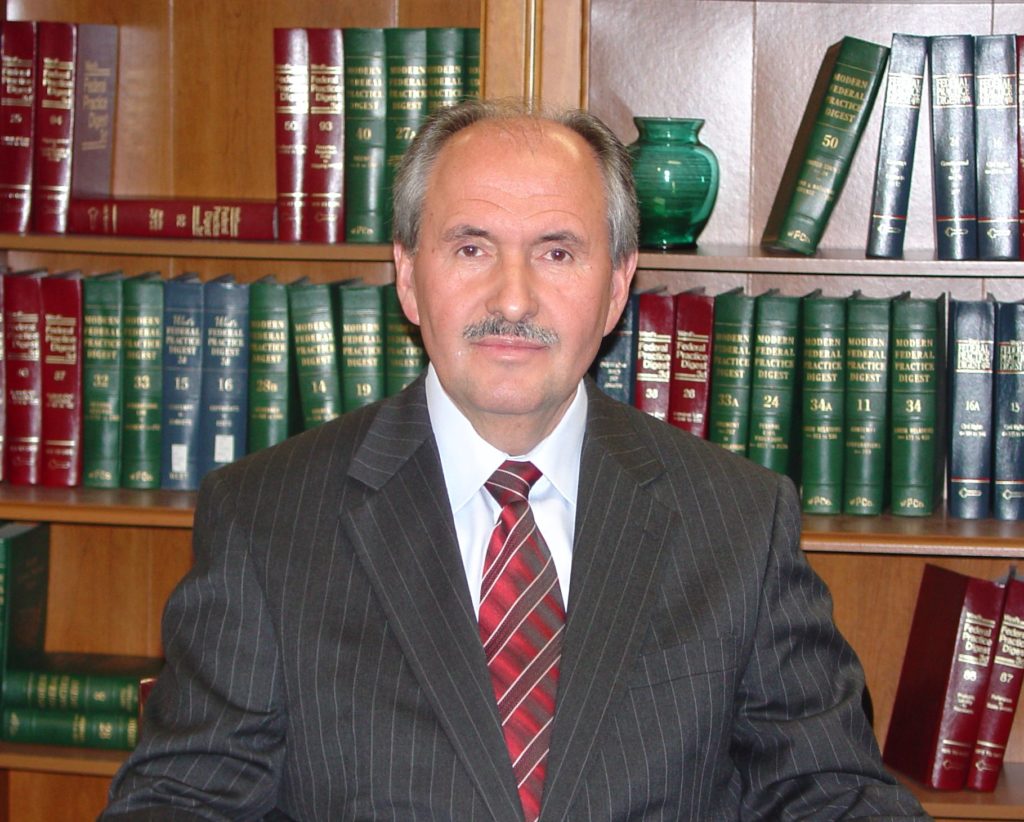
Të dashur bashkombas të Krishterë Më lejoni që në emër të Federatës Panshqiptare të Amerikës VATRA, të familjes sime dhe në emrin tim personal t’ju uroj përzemërsisht: Gëzuar dhe Përshumëvjet Pashkët. Ardhshin të bardha, të bukura dhe të gëzuara për ju e familjet tuaja. Pashkët, ngjallja e Krishtit, festa më e madhe në besimin e Krishterë, na kujton dhe një herë që jeta e mund gjithmonë vdekjen, e mira fiton ndaj të keqes, drita e mposht errësirën dhe e vërteta triumfon përherë ndaj gënjeshtrës. Simbolika e fuqishme që përcjell kjo festë le të përcjellë për të gjithë ne më shumë optimizëm, shpresë, prosperitet, paqe dhe dashuri për çdo shqiptar anëkënd botës. Uroj lumturi për ju dhe paçi bekimin e të madhit Zot në çdo ditë të jetës suaj. Kjo festë e madhe, qoftë për secilin prej nesh një moment reflektimi, pastrimi e kthese në rrugën e drejtë të arsyes, besimit e shpresës për ditë më të bukura e më të lumtura në jetën tonë. Sot më shumë se kurrë duhet të jemi të bashkuar dhe të punojmë fort për një të ardhme më të ndritur për familjet tona dhe atdheun tonë. Zoti ju bekoftë të gjithëve.

Me respekt e gëzim

Kryetari i VATRËS Elmi BERISHA
Filed Under: Opinion Tagged With: Elmi Berisha, PËRSHUMËVJET PASHKËT

KUJTOJME JONUZ NDREUN

April 3, 2021 by dgreca

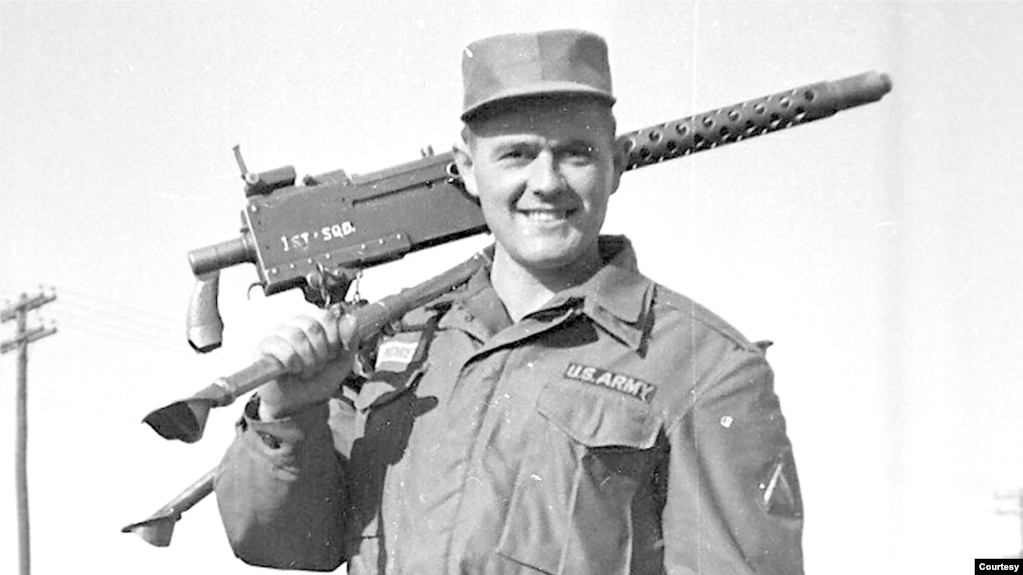
3 PRILL 2020- 2021- KUJTOJME VATRANIN SHEMBULLOR, NENTOGERIN E USHTRISE AMERIKANE,FISNIKUN E DIBRES- JONUZ NDREU/

Sot në 1 vjetorin e ndarjes nga jeta, 3 Prill 2020, kujtojmë JONUZ NDREUN, vatranin shembullor, veteranin e ushtrisë amerikane, nipin heroit të Kombit Elez Isufi, të birin e qendrestarit antikomunist Cen Elezi!, 
Jonuz Cen Elezi u përcoll në kohë pandemie të Martën e 7 Prillit 2020, në orën 10 të paraditës, në Laurel Grove, në Totowa, New Jersey. Familja humbi njeriun e saj të dashur, Vatra humbi atdhetarin e përkushtuar, Ushtria ameriakne humbi nëntogerin e dekoruar për merita të veçanta.

I pa harruar Kujtimi i Jonuz Ndreut!

Filed Under: Opinion Tagged With: 1 Vit nga ndarja, Jonuz ndreun

Liria vetjake dhe të drejtat e individit- gjurmë e një tradite të lashtë…

April 2, 2021 by dgreca

“Liria e secilit ndalet aty ku fillon liria e tjetrit.”/

Karta e të Drejtave të Njeriut/

            Nga Anton Çefa/*

Liria është atribut i patjetërsueshhëm që lind me njeriun dhe është pajë e qenësishme shpirtërore e tij, i takon atij dhe nuk ka të drejtë kush t’ia mohojë, t’ia grabisë, t’ia dhunojë.

Kuptimësinë e lirisë vetjake, kultura jonë e pati përkufizuar që heret, në kohën e Rilindjes Kombëtare. Konica na e pati sqaruar: “Liria është të mundet njeriu të besojë ç’i do zembëra, të thotë ç’i do zembëra, të shkrojë ç’i do zembëra, të bëjë ç’i do zembëra, veç ato që janë kundra lirisë tjetër njeriu.” Me këtë stil të shkruari kaq të hijshëm, ai ka vënë qartë në dukje lirinë e besimit, të fjalës, të shtypit dhe të veprimit si dhe kahun etik të vënies në jetë të tyre. 

Konceptimi i lirive individuale siç e kuptojmë sot është i kohëve të vona. Vetëm mendimi filozofik i fundit të shek. XIX dhe fillimit të shek. XX, ka dhënë një trajtim të plotë të tijin, duke shpallur individin si realitet primar dhe si vlerë e vërtetë shpirtërore. Në hullinë e realizimit politik, elemente të tij janë ligjësuar dhe kanë filluar të vihen në jetë në SHBA që me Deklaratën e Pavarësisë, në vitin 1776, dhe kanë ardhur duke u plotësuar dhe përsosur me kalimin e kohës. Kështu shumë më vonë janë vënë në jetë të drejtat e zezakëve dhe të grave.

Liria individuale përfshin lirinë e mendimit, të fjalës, të shtypit, të besimit, të mbledhjes, të manifestimit publik. Për t’u realizuar liria në gjithë hapësirën e saj konceptuale duhet pa tjetër të burojë dhe të mbështetet në një bazë të shëndoshë morale, çka nënkupton përgjegjësinë e individit përballë të tjerëve. Vetëm kështu mund të realizohet plotësisht qenësia e njeriut. Në Kartën e të Drejtave të Njeriut thuhet: “Liria e secilit ndalet aty ku fillon liria e tjetrit.”

Termat liritë dhe të drejtat individuale të njeriut, ose thjesht, të drejtat e njeriut, përdoren në rrafsh sinonimik, por duhet bërë dallimi i tyre me të drejtat civile (e drejta e pronës, e votës, etj.), të cilat nuk janë të patjetërsueshme, por sigurohen nga qeveritë. Është fjala këtu për qeveritë që kanë të drejtën morale të qeverisin. 

*   *   *

Ne shqiptarët, si popull i lashtë me një të drejtë zakonore të hershme, trashëgojmë një traditë të vyer në lëmin e lirisë, të barazisë dhe të të drejtave të individit në organizimin shoqëror. Pavarësisht primtivizmit, në të cilin kanë jetuar malësorët tanë të zonave kanunore, ata kanë qenë të lirë dhe të barabartë mes tyre. 1). Të lexojmë çfarë shkruan Koliqi për këtë problem: “E páshprehme e pothue gadi e lânun pá nji emën të vet (si kuptim fare paranik) mbet ndjesija e liris personale në shkallë të ndryshme (grueja, djali, burri i martuem, i zoti i shtëpís) . . . I vorfën o i pasun, sherbtuer, shegert, barí, puntuer, zot shtëpije, çdo shqipëtár âsht pikë mâ së pari nieri i lirshëm si çdo shqiptár tjetër.” 2)  Në ndryshim me shoqërinë fisnore shqiptare në shoqërinë romake ekzistonte skllavëria.

Rrjedhim i kësaj lirie dhe barazie vjen trajtimi i individit, i të drejtave të tij, respektimi i dinjitetit të tij, që kanë qenë atribute të siguruara me një mori ligjesh kanunore. 3). Natyrisht brenda suazës së shoqërisë patriarkale, në të cilën të drejtat individuale i gëzon vetëm burri, nuk mund të ketë një barazi absolute.

Gjithsesi, kjo mungesë barazie absolute nuk pengon a mohon barazinë ndërmjet njëri-tjetrit: “Në Kanun të Lekë Dukagjinit, djali me djalë, burri me burrë, çika me çikë e grueja me grue njihen barabar ndër vedi si të jenë të nji shpije a të nji fisi, si të jenë fisesh të ndryshme.” 4).

Burrat e dheut, siç janë quajtur të zotët e shtëpive që kanë pasur të drejtë dhe detyrë të marrin pjesë në kuvend, kanë gëzuar të drejta të barabarta para ligjit, pa kurrfarë dallimi të shtresës shoqërore, të pronës e të pasurisë, të pozitës shoqërore, të fisnikërisë, të paraqitjes fizike, etj.5).

Fisnikëria shpirtërore e kanunësisë së maleve, në trajtimin e barabartë të individit mashkull dhe lidhur me të drejtat e tij në rrafshin psikologjik, dëshmohet në çështjet më të ndryshme, në shumë raste, në marrëdhëniet mes njërri-tjetrit, në marrëdhëniet e zotërisë me rogtarin, etj.6). Valentini ka shkruar: “edhe sherbëtorët . . . kur janë jashta kohës në të cilën kanë detyrimin e punës, e mbajnë veten të barabartë me zotninë.” 7).

*   *   *

Është shprehur mendimi se shkak i emigrimit të shqiptarëve jashtë trojeve amtare ka qenë natyra e tij individualiste, “koncepti individualist për lirinë”. Me fjalë tjera, shqiptari në emër të lirisë individuale, ka braktisur vendin, d. m. th. lirinë kolektive. Mjerisht duhet thënë se në periudhën e sundimit osman nuk mund të bëhëj fjalë për liri, po kështu, në periudhën e diktaturës kur liria individuale qe mohuar plotësisht dhe liria kolektive qe falso. Këtë gjë e dëshmoi edhe emigrimi në masë i popullit tonë fill mbas përmbysjes së diktaturës.

Përdhunimin e të drejtave të individit, çka është karakteristikë e regjimeve totalitare, diktatura në vendin tonë e çoi deri në skajet më ekstreme. Nuk mund të bëhej fjalë fare as për të drejtën e fjalës së gojës, jo më për të drejtën e fjalës së shtypur, dhe për të drejtat e tjera. Si në çdo shtet totalitar, në vendin tonë u mohua individi si entitet shoqëror dhe u nëpërkëmb dinjiteti i tij, dukuri që e ka shprehur aq mirë sociologu italian Mario Tesini: “Gabimi i fundit që ka sjellur degjenerimin më ekstrem të totalitarizmit ka qenë në analizë të fundit ekzaltimi i entiteteve kolektive të rreme – racës, klasave, kombit, partisë së vetme – në dëm të realitetit të vetëm, që është në të vërtetë depozituesi i çdo vlere dhe i një dinjiteti të pamposhtshëm: individit.”8).

Ndërsa, mendësia popullore e ka vlerësuar në shkallët më të larta njeriun, individin, karakterin e tij të pamposhtshëm, qëndresën me durim dhe gjakftohtësi para fatkeqësivë, sprovave e vështirësive të jetës. Në një varg të gjatë fjalësh të urta është gdhendur kjo psikologji stoike. Ja disa prej tyre: “Ia dha pemës, u tha; ia dha gurit, plasi; ia dha njeriut, duroi” , “I ra gurit e u ça, i ra robit e duroi”, “Burri ma i fortë se guri”,”Pëlset guri, s’pëlset burri”, “Ç’kusur që të ketë njeriu, do ta heqë”.  Të bën përshtypje të veçantë fjala e urtë: “Armikun mos e duaj, por nderin ia ruaj!”, që dëshmon respektin për personalitetin dhe një ndjenjë humane të fisme për njeriun, edhe kur e ke armik e nuk e don.

Në vitet pas rënies së diktaturës, ishin të gjitha kushtet për realizimin e të drejtave të njeriut, por mjerisht për shkak të korupcionit të skajshëm, të ushqyer dhe të praktikuar nga klasa politike dhe nga vetë sistemi i drejtësisë, shoqëria shqiptare është zhytur në një batak të tillë moral, që përbën pengesën kryesore për realizimin e tyre. Ai segment i shoqërisë që vuan më shumë janë gratë. Dhuna në familje dhe diskriminimi janë dukuri të shpeshta shoqërore.

Referenca dhe sqarime

1). Në pjesën e parë të librit të kujtimeve, At Zef Pllumi, në emër të fratit filozof At Gjon Shllaku, ndër të tjera shkruan për banorët e fshatit Lekbibaj, në vitin 1945: “Vetëm këtu asht i saktë koncepti i njeriut të lirë. Kjo asht madhështia e këtyne: që janë të gjithë të barabartë si njerëz të lirë.” (“Rrno vetëm për me tregue” Pjesa e parë 1944-45, botues “Hylli i Dritës”, v. 1995, f. 61).

2). Ernest Koliqi,“E Drejta e Kanunit tonë dhe e Drejta Romake”, cituar simbas “albanova online.com”.

3). “Kanuni i Maleve të Shqypnis nuk e veçon nierin prej nierit. ‘Shpirt per shpirt, se duken e falë Zoti.” (neni 593, f. 129). “I miri e i keqi kan nji çmim: Kanuni i mban per burra: ‘Del i miri prej të keqit e i keqi prej të mirit’. ‘Në kandar të vet sicilli peshon katerqind derhem.” (neni 594, f. 129). “Në kanu të Maleve të Shqypnis gjithsa djelm të lejnë, njehen të mirë e nuk veçohen njani prej tjetrit”, (neni 886, f.169). “Çmimi i jetës së nierit asht nji, si per të mirin si edhe per të keqin”, (neni 887, f. 169). “Sejcilli mbahet i mirë edhe i thotë vedit: ‘Jam burrë’ e i thonë: ‘A je burrë!’, (neni 888, f. 169). (Referencat janë marrë nga “Kanuni i Lekë Dukagjinit- The Code of Lekë Dukagjini”, Gjonlekaj Publishing Company, N. Y. 1989.

4). Xhemal Meçi, “Kanuni i Lekë Dukagjinit, Varianti i Pukës, Shtëpia botuese “Çabej MÇM, Tiranë, 1997, f. 72, & 162.

5).Një element i tillë i barazisë, që dëshmon jo vetëm frymën demokratike, por edhe fisnikërinë shpirtërore, mungon në disa kanune të lashta dokësore dhe jodokësore. Në ligjët e Hamurabit, në nenet 196, 197, 198, bëhen dallime në përcaktimin e dënimeve, duke u nisur nga shtresa shoqërore, së cilës i përket fajtori. Kështu, atje thuhet: “Nëse ndonjëri i nxjerr syrin ose i thyen një gjymtyrë një patrici (kështu po emërtojmë pjesëtarin e shtresës më të lartë të shoqërisë babilonase të atëhershme), atij, përkatësisht, do t’i nxiret syri ose do t’i thyhet gjymtyra; por në qoftë se ndonjëri i nxjerr syrin ose i then dorën një plebeu, ai dënohet vetëm me gjobë. (Sipas: “Perry, Peden, Von Laue “Sources of the Western Tradition”, Fourth edition, Copyright, 1999, by Houghton Mmifflin Company, p. 10, (“Burime të traditës perëndimore”. Përkthimi im, A. Ç.).

6). Tek nenet e marrëdhënieve mes zotërisë dhe rrogtarit pasqyrohet qartë barazia humane mes tyre: “Po s’i eci mbas andes së zotnis rrogtari, mund ta dajë, porse me vu gojë keqas mbë te e me vu dorë nuk mundet.” (Kanuni i Lekë Dukagjinit-The Code of Lekë Dukagjini, f. 57, & 128). “Me sha keqas a me rrafë rrogtarin zotnija, e per n’u daftë ky para vadjet, per të rrafme e per të shame do t’i ligjohet.” (I njëjti botim, f. 57, & 129).

7). Cituar sipas, Willy Kamsi-t, “Elementa të traditës në veprën e At Zef Valentinit”, në “Seminnari i Katërt Ndërkombëtar ‘Shkodra në Shekuj”,  Vëllimi I, Shkodër, 2002”, f. 128

8). Mario Tesini, “L’ Albania post-totalitaria e le incertezze della democrazia”, në revistën “Hylli i Dritës”, viti 1993, nr. 4, f. 61. (Përkthimi im).

*Dielli-arkiv

Filed Under: Opinion Tagged With: Anton Cefa, Liria vetiake, te drejtat e individit

Adem Demaçi përjetëson amanetin e tij në VATËR

April 2, 2021 by dgreca

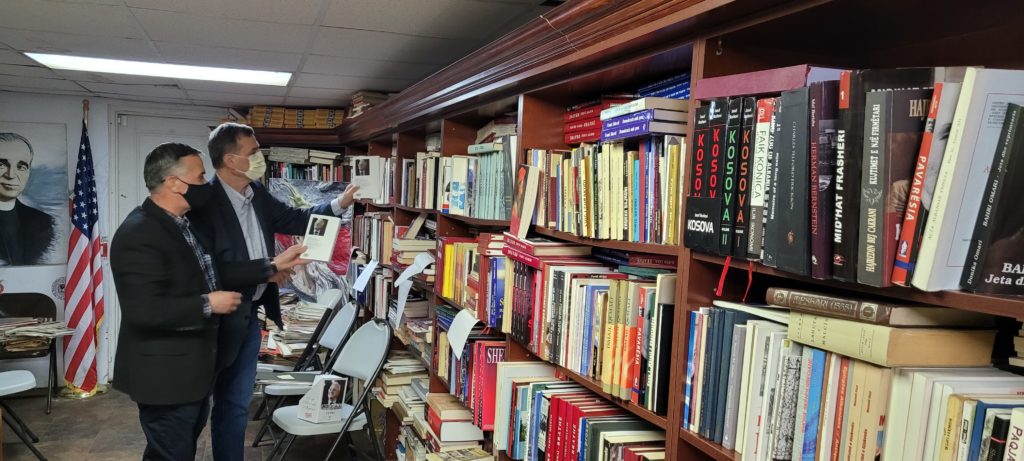
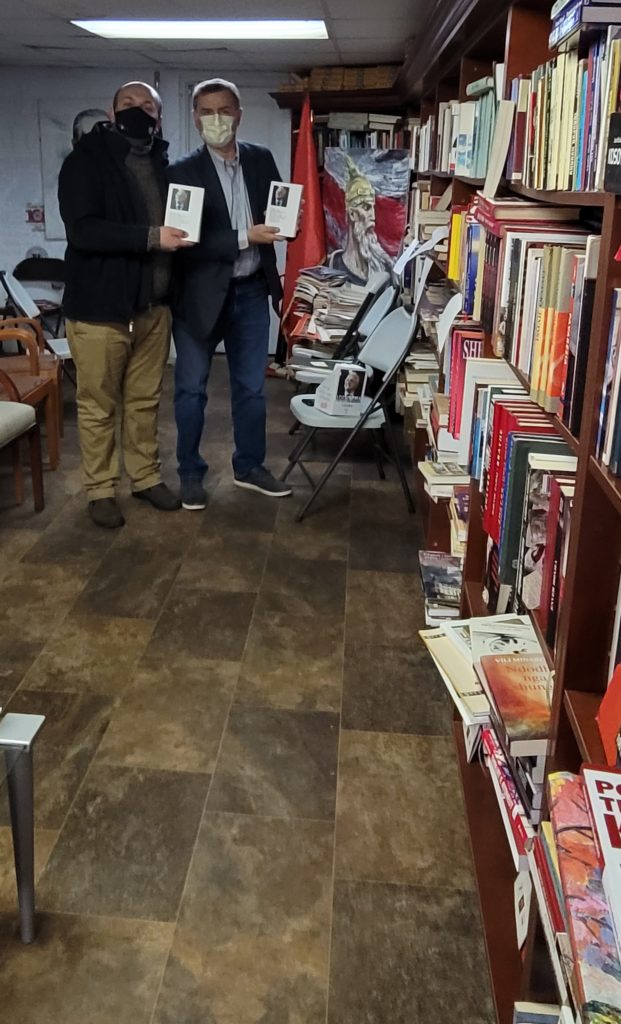
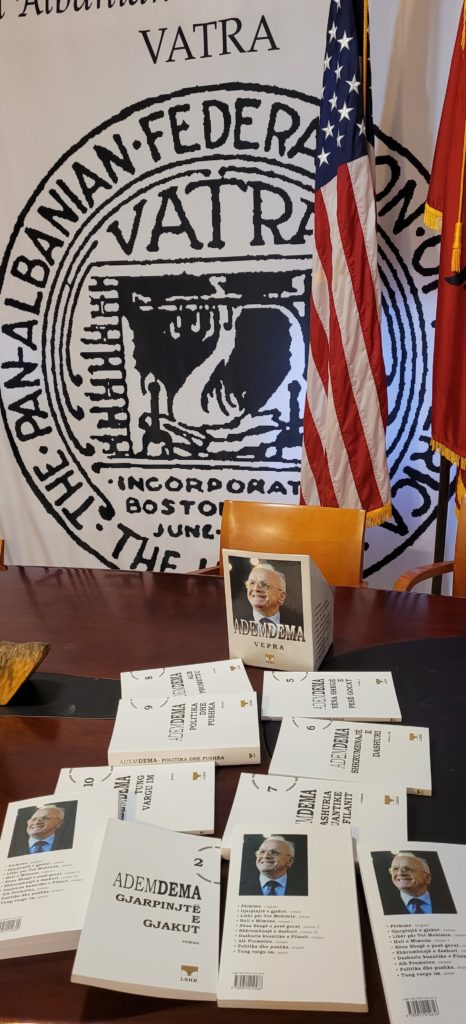
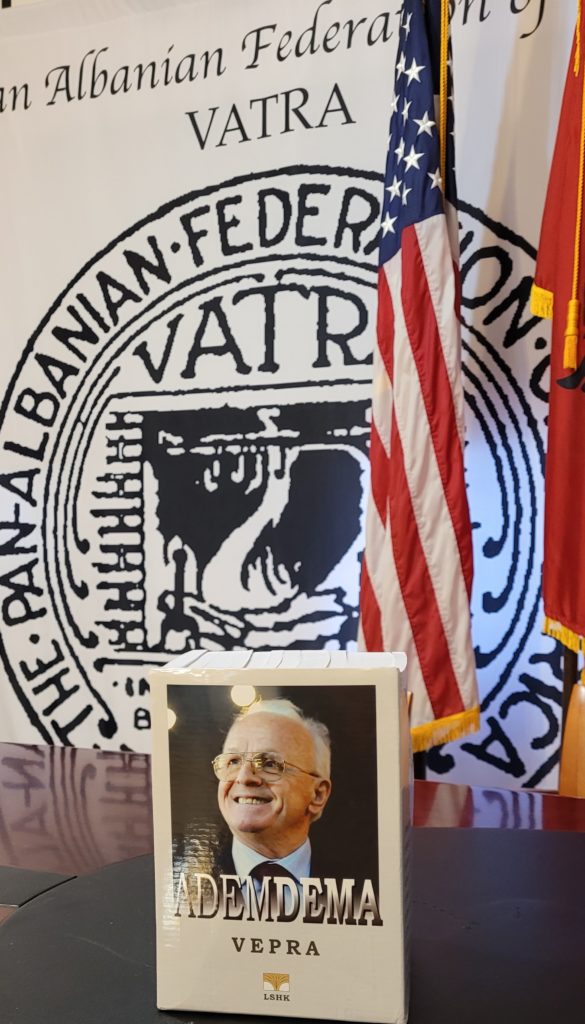
-Kolana e veprave të zgjedhura të Adem Demacit, lënë amanet nga vetë ai përmes të birit Shqiptar Demaci, u përcoll sot në Vatër nga Dr. Skënder Murtezani, kryetar i degës së Vatrës në Queens, NY.

Adem Demaçi përjetëson amanetin e tij në VATËR. Pak para se të mbyllte sytë z.Demaçi la një amanet që e tërë krijimtaria e tij letrare, politike dhe filozofike të prehet në VATRËN shqiptare të Amerikës. Shqiptar Demaçi i biri Adem Demaçit i dorëzoi përmes mikut të tij, Doktor Skënder Myrtezanit tërë krijimtarinë e tij të çmuar. Kjo është një pasuri e jashtëzakonshme për komunitetin shqiptar në USA e cila do jetë e aksesueshme edhe për studjues, historianë e albanologë e kërkues shkencorë nga Universitetet perëndimore dhe e gjithë hapsira shqipfolëse. Kjo pasuri kulturore e letrare e bën të pavdekshëm kujtimin e veprës dhe idealeve të Adem Demaçit.

 Ja lista e librave që këtu e tutje do të jenë në dispozicion jo vetëm të vatranëve:

  1. FERKIME
  2. Gjarpërinjtë e Gjakut
  3. Libër për Vet Mohimin
  4. Heli e Mimoza
  5. Nëna Shegë e pesë gocat.
  6. Shkrumbnajë e Dashuri
  7. Dashuri Kuantike e Filanit
  8. Alb Prometeu
  9. Politika dhe Pushka
  10. Tung vargu im

Filed Under: Opinion Tagged With: Adem Demaci, Dr. Skender Murtezani, vepra ne Vater

America and Albania: From Arch Adversaries to Strategic Partners

March 31, 2021 by dgreca

By Dr. Elez Bibera- Director  Eurasia Division Voice of America/

Keynote address at the Conference on the 30th Anniversary of the Reestablishment of U.S.-Albania Relations The Albanian Institute for International Studies/

March 31, 2021/

Thank you very much. 

Thank you for the invitation and for that very generous introduction.

            I am honored to be with you on this extraordinary occasion – the 30th anniversary of the restoration of U.S.-Albania ties.

            On a personal note, I had the honor and great privilege to attend the signing ceremony at the Department of State on March 15, 1991, in the company of senior American officials, members of Congress, prominent members of the Albanian-American community, Albania’s delegation led by Foreign Minister Muhamet Kapllani, and the leaders of the Democratic Party, Sali Berisha and Gramoz Pashko.  I must say that March 15th was one of best days in my professional life.

            I am pleased to share with you some thoughts on U.S.-Albanian relations and America’s consistent and critical role in supporting and advancing Albania’s democratic reforms and integration into Euro-Atlantic institutions.

While we today mark the 30th anniversary of the reestablishment of ties, the friendship between Albanians and Americans is much deeper. 

Thousands of Albanians emigrated to the United States in the late 19th century and the beginning of the 20th century.  They were inspired by America’s democratic ideals.  From here, they fought for the independence of their country, enlisting in the process the support of prominent American dignitaries.

President Woodrow Wilson’s principled stand at the peace conference was critical in avoiding Albania’s dismemberment. 

Throughout the 1920s and 1930s, the United States contributed to the consolidation of the Albanian state.  Washington forcefully denounced Italy’s invasion of Albania, and on several occasions during and after the war reiterated support for Albania’s independence and territorial integrity.

The communist takeover of Albania ushered in a period of troubled relations.  From 1946, when the U.S. withdrew its diplomatic representation in Tirana, until 1990, the two countries had no diplomatic contacts. Throughout this period, the two countries maintained diametrically opposed views on most important issues, and Albanians were subjected to daily anti-American diatribes. Tirana rebuffed Washington’s repeated overtures to normalize relations and continued to view the United States as its main enemy, jointly with the Soviet Union.

During the long period of Albania’s self-imposed isolation and absence of diplomatic ties with the United States, the Voice of America was essentially the only contact between the two peoples and the two countries. Through its broadcasts, VOA emphasized the traditional friendship between Albanians and Americans, gave Albanians hope that they had not been forgotten, and expressed America’s commitment to one day see Albania join the ranks of free and democratic nations.

The demise of communism in Eastern Europe and developments in Albania in 1990 ushered in dramatic changes in U.S.-Albania relations, which would transform the two countries’ relationship from erstwhile enemies to strategic partners.  After a long absence of contacts and having fallen from America’s radar screen, Albania suddenly became the focus of high-level American attention. Washington seized the opportunity and assumed a more direct and prominent role in efforts to encourage Albania’s reformist forces and promote democratic change. While agreeing to engage Ramiz Alia’s government, the United States introduced conditionality in its policy toward Tirana. In public testimony before the U.S. Senate Foreign Relations Committee in June 1990, Secretary of State James Baker predicating the restoration of ties with Albania’s willingness to implement fundamental political and economic reforms.  The same message was conveyed personally to Alia in August 1990 by Senator Dennis DeConcini, who led a U.S. Helsinki Commission delegation to Tirana.

The United States effectively used its leverage to promote much needed changes in Albania, expressing open support for the student demonstrations in December 1990 and the emerging democratic opposition. 

In the wake of the reestablishment of diplomatic relations in March 1991, the United States was now able to provide forthright and effective support for the cause of freedom and democracy in Albania.  

During his historic visit to Tirana, in June 1991, Secretary Baker made clear U.S. objectives in Albania and set the stage for what has become a strong and enduring relationship. Baker’s message was very clear.  He urged Albanians to put the vestiges of communism behind them.  He emphasized the imperative of the peaceful settlement of disputes, adding that in the “new Albania” there was no place for violence, intimidation, and the use of force.  

Secretary Baker said that Albania’s emerging political order had to reflect full respect for human rights, democratization of every level of government and society, a fair and open judicial process based on the best traditions of law and justice, a free and pluralist media, and the holding of fully free and fair elections at both the national and local levels. Baker pledged that as long as Albanians remained true to these principles, America will stand with them. 

            Baker’s message resonates today as much as it did 30 years ago. The bilateral relationship has experienced dramatic transformations, but the U.S.-Albania dialogue continues to be focused essentially on the same issues: the need for genuine democratization and strong democratic institutions, the rule of law, good governance, and clean elections. 

Successive American administrations have pursued a consistent policy toward Albania.   America’s vision of Albania has been one of a stable, prosperous, and democratic country with full respect for democratic norms and processes.  Albania has been treated as an important part of Washington’s concept of building a Europe whole and free.  American policymakers have made it clear that it is in the U.S. national interest to see Albania firmly anchored in the Euro-Atlantic community. 

            During the last three decades, the United States has been the most important and impactful promoter of Albania’s democratization, providing substantial diplomatic, political, economic, and military support.  As Albania faced the danger of military confrontation with Serbia in the 1990s, Washington forged strong military ties with Tirana.  Albania became a key American partner in the Western Balkans and played an important role in the U.S. strategy of containing the armed conflicts in former Yugoslavia and promoting regional peace, stability, and prosperity.  

Washington was the driving force behind Kosova’s liberation and independence from Serbia and Albania’s accession to NATO. President George W. Bush choose Tirana, in 2007, to announce U.S. support for Kosova’s independence.  After Kosova’s declaration of independence, the United States undertook a major diplomatic offensive to encourage other countries to recognize the new state.  The U.S. also played a key role in the resolution of the ethnic conflict in North Macedonia, which has led to a significant improvement of the status of Albanians in that country.

In the wake of these momentous events and for the first time in its history, Albania no longer faced a real, external threat to its independence and territorial integrity. Kosova’s independence, Albania’s membership in NATO, and the increasing empowerment of Albanians in Macedonia and Montenegro, gave Albanians throughout the region a new sense of confidence and unprecedented security.  Long known as the underdogs in the Balkans, the Albanians had never been in a more favorable geopolitical position.  With the emerging new political landscape in the Balkans, the Albanians were poised to play a key role. 

            Albania has become a staunch American ally. Tirana’s foreign policy interests have largely aligned with those of the United States in the Western Balkans: regional political and economic cooperation, the consolidation of Kosova’s statehood, integration of the countries of the region in Euro-Atlantic institutions, and full respect for minority rights.  Albania has been widely praised for its significant contribution to regional stability. Albania has also been very supportive of the U.S. actions in Afghanistan and Iraq and joined the U.S.-led coalition against ISIS.  The two countries also share the objective of countering Russia’s malice influence and growing destabilizing efforts in the region as well as China’s use of it growing economic power to gain political influence. 

            During the last three decades, Albania, as well as Albanians in Kosova, Macedonia, and Serbia, has been the focus of considerable attention by Washington.  This has been reflected in regular delegation exchanges, close coordination, and cooperation on various issues of mutual interest, and high-level visits to Tirana. Albanian representatives have had relatively easy access to American policymakers. They have enjoyed bipartisan support in the U.S. Congress.  The most prominent Senators and Congressmen have been supportive of Albanian causes.  And President Joe Biden has had numerous personal contacts with Albanian leaders and is intimately familiar with Albanian issues, particularly Kosova.

            The strategic partnership between the United States and Albania has transcended changes in each country’s governments.  Albania has enjoyed bipartisan American support. Albania’s major political forces were and are strong proponents of deepening the relationship with the United States.  Albania is one of the most pro-American countries in the world.

While providing support aimed at bolstering Albania’s stability and prosperity, the U.S. has not hesitated to openly call out failures to abide by democratic norms, efforts by the executive to influence or control independent institutions, attacks on the media, election irregularities, and failure to tackle pervasive corruption.  American policymakers and representatives have often been frustrated with the inability or unwillingness of Albanian politicians to find common ground on truly important issues, live up to their commitments and back their statements with concrete actions. There is a huge gap between rhetorical declarations of support for much needed fundamental reforms and actual commitment to reforms. While providing frank criticism of backsliding, the United States has been engaged in a sustained manner in helping Albania confront those challenges.  

            The United States and Albania have developed a strong and vibrant relationship. 

It is natural that on occasions such as this one, commemorating the 30th anniversary of the reestablishment of ties, the focus is on the positive aspects of the relationship.  But it is also important to point out some key issues that, if not addressed by the Albanians, may test the relationship.

As is the case with any bilateral relationship, this one, too, needs to be constantly nurtured.  It should not be taken for granted or viewed as static or permanent.  After all, America’s support is not an Albanian birthright. Shared democratic values and Albania’s commitment to democracy, the rule of law, and good governance are at the foundation of the relationship.  Building a viable democracy in Albania remains an important American foreign policy objective. Actions that undermine democratic practices may not only undermine the relationship, but may even cause a shift in U.S. attitudes and, in a severe case, a fundamental reappraisal of ties.

In recent years, Albania has experienced significant democratic backsliding and growing authoritarianism, making it one of the most dysfunctional and corrupt countries in Europe. Albania’s political system is essentially broken, and the country has been transformed into a one-party, authoritarian state, with the ruling Socialist Party controlling power at all levels.

Political polarization, pervasive corruption in the ranks of public officials and high officeholders, organized crime, and the culture of impunity have had a huge cost and continue to present an existential threat to Albania’s democracy.  The very institutions that are critical to fight corruption – government officials, members of the parliament, politicians, courts, judges, prosecutors, and the police – are the ones that are undermining the campaign against corruption.

Powerful politicians and businessmen have captured the state and, as a result, wealth and access to power have been concentrated in the hands of a small group.  The corrosive nature of Albania’s kleptocratic model of governance cannot be overstated. 

The breakdown in cooperation between the government and opposition and failure to find common ground on fundamentally important issues is frankly unacceptable for a full-fledged member of NATO and an aspiring member of the EU.

President Joe Biden has stated that promotion of democracy will be a top priority for his new administration.  Albanian government and opposition policies and actions are likely to come under increased U.S. scrutiny. The U.S. is not likely to remain oblivious to policies and actions that undermine democratic norms, values, and institutions. 

In 2016, major Albanian political forces acknowledged that the justice system was broken and agreed to the most substantial justice overhaul of any former communist country.  But they never took ownership of the reforms.  They made concerted efforts to undermine, manipulate and prolong the changes as long as possible.  Albania is entering the fifth year of these reforms. While the top echelons of the judicial system have been removed as a result of the vetting process, the implementation of reforms has been slow and selective, practically leading to an institutional collapse and threatening the fundamental tenet of the legal system – access to justice.  The justice surgery may have been successful, but the patient remains in a coma. 

Albania needs closure.  The cost of failing to fully implement these fundamental reforms is simply too great for the Albanian society. The United States has devoted enormous resources to these reform efforts and expects Albania to deliver.  

The April 2021 elections are a test for Albania’s democratic maturity and for U.S.-Albania relations.  This is a historic moment, and the stakes are high. 

While hard rhetoric has marked the opening of the campaign, Albanians have an opportunity to get their country back on a clear democratic track.  Credible elections, whose results are accepted by the major players, will open new opportunities, and unleash the great potential that the Albanians have.  Conversely, another flawed and fraudulent electoral process is likely to hamper the country’s political stability, signal a further deterioration in democratic practices, and complicate relations with the United States and the European Union.  The inability to hold clean elections will reinforce doubts about the Albanian elites’ democratic credentials and commitments.

But elections alone, even if they are held in full accordance with the highest international standards, are not a salve for Albania’s daunting challenges.  The post-election period must be followed by a patriotic consensus, a cross-party agreement, of concrete and sustained actions to address Albania’s democratic deficit, bridge the current political divide, and map out a clear way ahead. 

            The United States has been forthright in its support of Albania’s democracy as well as in its criticism of democratic failings. Given the special relationship between the two countries and the highly favorable opinion that Albanians have of America, there is no other country that is in a better position than the United States to help Albania on its democratic path.  The U.S. has the leverage, credibility, and ability to exert positive influence and help Albanians shape a future that fosters an inclusive political process, the rule of law, and effective and accountable governance.

            While American support will remain critical, the impetus for real change must come from within. Ultimately it is up to Albanian leaders to take responsibility and develop a clear strategy to build a viable democracy that the Albanian nation has so long aspired to achieve.

Filed Under: Opinion Tagged With: America and Albania, Dr.Elez Biberaj, From Arch Adversaries, to Strategic Partners

  • « Previous Page
  • 1
  • …
  • 283
  • 284
  • 285
  • 286
  • 287
  • …
  • 859
  • Next Page »

Artikujt e fundit

  • QERIM VRIONI DHE FOTOGRAFËT QË SHKRUAN HISTORINË
  • Çamëria, kur e vërteta kërkon shkrim, përgjegjës dhe afat!
  • Dhurata, buzëqeshje dhe urime në shkollën shqipe “Skenderbej”
  • ROLI I PRESIDENTES OSMANI NË RIKTHIMIN E BESIMIT DHE BASHKËPUNIMIT TË KOSOVËS ME SHBA-NË DHE BE-NË
  • WHEN KOSOVA WORKS, AMERICA SPEAKS
  • Shkolla shqipe “Gjergj Fishta” – Long Island, New York festoi festat e fundvitit
  • Fotografia e Gjon Milit dhe CHARTRES CATHEDRAL -Një monument i entuziazmit Kristian
  • Lamtumirë legjenda jonë e mikrofonit në gazetarinë sportive Ismet Bellova!
  • Politika e mençur…
  • VEPËR NGA MË TË PASURAT E MË NJERËZORET NË MENDIMIN KRITIK
  • KOZMOPOLITIZËM
  • “Kur shpirti kthehet në gërmadhë lufte”
  • VATRA TELEGRAM URIMI AKADEMIKES JUSTINA SHIROKA PULA ME RASTIN E ZGJEDHJES KRYETARE E AKADEMISË SË SHKENCAVE DHE ARTEVE TË REPUBLIKËS SË KOSOVËS
  • Suzana Shkreli: “We can make history by electing Michigan’s first Albanian Secretary of State”
  • NDAA i SHBA-së dhe pozicioni i Kosovës në arkitekturën e sigurisë

Kategoritë

Arkiv

Tags

albano kolonjari alfons Grishaj Anton Cefa arben llalla asllan Bushati Astrit Lulushi Aurenc Bebja Behlul Jashari Beqir Sina dalip greca Elida Buçpapaj Elmi Berisha Enver Bytyci Ermira Babamusta Eugjen Merlika Fahri Xharra Frank shkreli Fritz radovani Gezim Llojdia Ilir Levonja Interviste Keze Kozeta Zylo Kolec Traboini kosova Kosove Marjana Bulku Murat Gecaj nderroi jete ne Kosove Nene Tereza presidenti Nishani Rafaela Prifti Rafael Floqi Raimonda Moisiu Ramiz Lushaj reshat kripa Sadik Elshani SHBA Shefqet Kercelli shqiperia shqiptaret Sokol Paja Thaci Vatra Visar Zhiti

Log in

This website uses cookies to improve your experience. We'll assume you're ok with this, but you can opt-out if you wish. Cookie settingsACCEPT
Privacy & Cookies Policy

Privacy Overview

This website uses cookies to improve your experience while you navigate through the website. Out of these cookies, the cookies that are categorized as necessary are stored on your browser as they are essential for the working of basic functionalities of the website. We also use third-party cookies that help us analyze and understand how you use this website. These cookies will be stored in your browser only with your consent. You also have the option to opt-out of these cookies. But opting out of some of these cookies may have an effect on your browsing experience.
Necessary
Always Enabled
Necessary cookies are absolutely essential for the website to function properly. This category only includes cookies that ensures basic functionalities and security features of the website. These cookies do not store any personal information.
Non-necessary
Any cookies that may not be particularly necessary for the website to function and is used specifically to collect user personal data via analytics, ads, other embedded contents are termed as non-necessary cookies. It is mandatory to procure user consent prior to running these cookies on your website.
SAVE & ACCEPT