• Home
  • Politics
  • Opinion
  • Culture
  • Sports
  • Economy
  • Interview
  • Reporting
  • Community
  • Vatra

Dielli | The Sun

Albanian American Newspaper Devoted to the Intellectual and Cultural Advancement of the Albanians in America | Since 1909

“BALLKANI I HAPUR”, SHQIPERIA, REPUBLIKA E DARDANISE DHE SERBIA

October 21, 2022 by s p

Ph.D. Dritan Demiraj/

Tashme u bene disa vite qe nga njera ane degjojme tamtamet dhe mashtrimet rreth perfitimeve te Shqiperise dhe te Ballkanit Perendimor per nismen serbo-ruse “Ballkani i Hapur” dhe nga ana tjeter perjetojme veprimet dhe negociatat e fshehta te cilat kerkojne te detyrojne qe udheheqja e Dardanise te pranoje me çdo kusht dhe te behet pjese e kesaj farse, nga e cila me shume se te gjithe perfiton Serbia.

Ata te cilet jane avokate te kesaj teze, harrojne qe plaget e hapura gjate viteve 1997-1999 jane akoma te hapura. Per kete çeshtje, ne fakt kane folur dhe denoncuar shume personalitete politike, akademike dhe diplomatike Shqiptare ku nder mend me vjen kryeministri Kurti, presidentja Osmani, Ambasadori i nderuar Shaban Murati, Prof Enver Bytyçi, por edhe shume personalitete te tjera.

Por per te kuptuar edhe me shume se çfare perceptimi ka qeveria e Serbise per Ballkanin dhe popullin Shqiptar, pa harruar ne asnje moment shpernguljet dhe vrasjet masive te Shqiptareve gjate Mbreterise Serbo-Kroato-Sllovene, gjate viteve te para pas Luftes se II-te Boterore dhe gjate lufterave civile ne Ballkan 1991-1999, duhet qe asnjehere te mos nenvletesojne mesimet e nxjerra nga historia.

Me kete rast, deshiroj te theksoj edhe nje here strategjine e nacionalisteve serbe. Ketu do te citoj nje nga strategjite me te ndyra te Serbise per perçarjen e Shqiptareve nga brenda dhe mes njeri tjetrit.

Dhe kjo strategji asnjehere nuk ka qene fatkeqesisht kaq reale, ne veprim, ne rrezik dhe ne bashkepunim edhe njerez qe jane te angazhuar ne politiken e dy vendeve Shqiptare ne rajon.

Nje nga antishqiptaret me te medhenj, akademiku Vaso Çubrioloviç do te shkruante:

“Ne Serbët nuk kemi armiq më të mëdhenj se Shqiptarët. Nëse duhet të ngremë kokën tonë, duhet të ulim kokën e tyre, nëse duhet të ndjehemi te fuqishem në territore, duhet të ngushtojmë hapësirat e tyre, nëse duhet të na duan në botë, duhet të bëjmë që bota t’i urrejë ata.

Që shqiptarët të braktisin vendin e tyre, duhet që me çdo kusht dhe me çdo mënyrë, t’ua nxijmë jetën!

Të arrijmë deri aty, sa t’u mohojmë origjinën ilire epiriote, dardane dhe t’u vrasin krenarinë ilire.

T’u shkatërrojmë vatrat dhe tu ngatërrojmë emrat, tu njollosim emblemat dhe t’jua fshijme simbolet e lashta ilire.

Duhet domosdoshmerisht, t’i bejmë që të demtojme gjuhën dhe zakonet e tyre, njëkohesisht tu rrëmbejmë gjithçka që kanë te lashte Ilire ta pervesojme ne.

Duhet t’i lëmë pa miq rreth e rrotull, derisa ata te urrejne dhe mosdurojne njeri-tjetrin e perfundimisht të mohojne vetveten!

Që të finalizohet kjo platformë duhet domosdoshmërisht që antishqiptarizmi të jetë filozofia dhe deviza e vetme e shtetit tonë!

Mos harroni se mosqënia e Shqiptarëve është veteegzistenca e kombit Serb”.

Kjo pra te nderuar vellezer kjo eshte strategjia e serbeve te shekullit te kaluar. A nuk eshte e njejte me strategjine e sotme, por me te moderuar, e cila po te tohet te zbatohet me mjete dhe fjale me “demokratike” qe sot lideret e “moderuar” pro Putinit po zbatojne ne Ballkan?

Te nderuar bashkekombas!

Vetem ata qe nuk kane vetedije kombetare nuk i kuptojne qellimet e serbeve. Por fatkeqesisht, ne ditet e sotme ata kane ne bashkeveprim dhe bashkepunim edhe shqiptarefoles, te cilet ne emer te “integrimit” europian dhe permiresimit te fqinjesise se mire, mundohen nepermjet propagandes fallso dhe genjeshtrave te shfrytezojne varferine e tejskajshme ne te cilen ju kane futur me qellim qe tju manipulojme edhe mendjen.

Ballkanin e Hapur e kane kundershtuar personalitete te ndryshme nderkombetare, te cilet kjo politike antiperendimore nuk ka arritur ti bleje me parate e droges.

Ketu po permend analistin amerikan Janush Bugajski, i cili kohet e fundit gjate një komenti për revistën boshnjake “Istraga”, deklaron se Perëndimi po tregohet shumë i butë me Beogradin, aleatin me te forte te Moskes ne rajon.

Sipas tij, nisma si ‘Ballkani i Hapur’ i shërben vetëm Moskës dhe Beogradit dhe aspak qytetarëve të zakonshëm.

“Në Ballkan ka perceptime të përhapura se duke pajtuar Serbinë, qeveritë perëndimore kontribuojnë në fakt në destabilizimin e rajonit. Edhe pse presidenti Aleksander Vuçiç ndjek axhendën e “Botës Serbe” dhe krijo armiqësi ndëretnike, ai trajtohet si një burrë shteti konstruktiv që mund të ndihmojë në garantimin e sigurisë rajonale. Ka dy arsye kryesore për këtë politikë perëndimore vetëdëmtuese: iluzioni i konvertimit dhe shmangia e rrezikut.

Qeveritë perëndimore duken të pavëmendshme ndaj kërcënimit në rritje dhe madje mbështesin iniciativa të tilla si “Ballkani i Hapur”, duke besuar se do të nxisë bashkëpunimin rajonal. Në praktikë, nisma të tilla janë të dizanjuara për të rritur rolin rajonal të Serbisë dhe depërtimin ekonomik të Moskës pa asnjë përfitim për qytetarët e zakonshëm.

Qeveritë perëndimore përballen me një zgjedhje të ashpër në trajtimin e nacionalizmit ekspansionist në Ballkan. Ata mund të vazhdojnë të besojnë se do t’i kthejnë radikalët në të moderuar ose mund të vendosin kushte dhe afate të rrepta për zbatimin e marrëveshjeve dhe të ndalojnë çdo përfitim financiar dhe ekonomik nëse nuk ka përputhje. Në fund të fundit, nuk ka rrugë të mesme,” shkruan Bugajski.

Pra si perfundim, qasja politike e kryeministrit Kurti dhe e presidentes Osmani duhet te marrin mbeshtetje me te madhe jo vetem ne Dardani, por edhe me gjere ne te gjithe disporen Shqiptare ne Amerike dhe Europe, ne Republiken e Shqiperise dhe ne te gjithe faktorin Shqiptar ne Maqedine e Veriut.

Koha per tu bashkuar te gjithe Shqiptaret nen nje moto: Kombi Shqiptar ne rrezik.

Ps: Kujtese per politikeberesit.

Me poshte keni nje video ne serbisht, per te kuptuar shkakun e lufterave dhe genocidit serb ne Ballkan, ne çdo rast te mbeshtetur nga shteti serb dhe kisha ortodokse serbe, ku edhe pse kane kaluar shume vite, urrejtja e tyre per popullsine e vendeve fqinje del ne siperfaqe sapo krijohen mundesia.
https://fb.watch/ghFgDTLVOX/

Filed Under: Politike Tagged With: Dritan demiraj

Calling for Action Vatra Vows Support for the Rights of Albanians in the Presheva Valley to a Delegation Visiting the US

October 20, 2022 by s p

Rafaela Prifti/

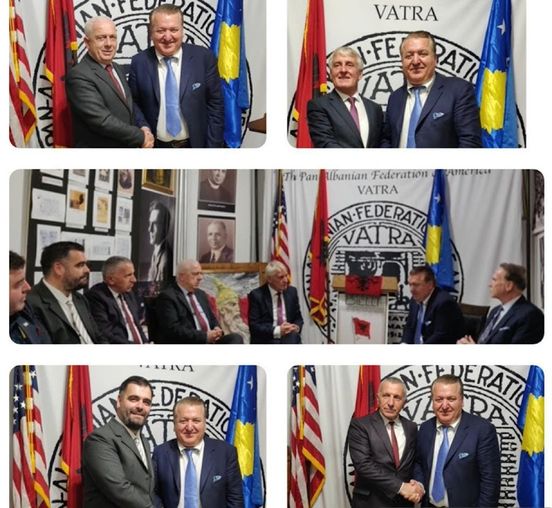
Recognizing the urgency of the moment, Vatra President Elmi Berisha pledged full support and coordination in the framework of a nationwide strategy by the Pan-Albanian Federation of America Vatra.

“Acknowledging that there is momentum with regard to the rights of the Albanian population in the Presheva Valley is not enough now,” said members of the Presheva Valley delegation who were hosted at the headquarters of Vatra, the Pan-Albanian Federation of America, on Monday evening. In a series of meetings last week in Washington DC, the delegation is calling attention to the issue and urging for action.

Vatra President Elmi Berisha, who called the meeting “historic”, vowed that Presheva Valley is an integral part of “Vatra’s national strategy’ that is in full alignment with the US State Department policy as well as the home countries’. He drew comparisons between the current situation of Albanian population in municipalities of Southern Serbia with the campaign of terror by the Serbian state in Kosovo in the 90s.

“It is a matter of stability for the West Balkan region,” said Ragmi Mustafa, Chairman of the Albanian Democratic Party, “given that Presheva Valley sits at the borders of three states: Serbia, Kosovo and Northern Macedonia.” He is one of the four member group composed of: Shaip Kamberi, Member of Serbian Parliament and Chairman of the Party for Democratic Action, Nagip Arifi, Mayor of Bujanoc, Ragmi Mustafi, Chair of the National Albanian Council of the Presheva Valley.

Although they represent different political parties and organizations, at the meetings with the US officials as well as with Vatra leadership on Monday, all of them presented the situation of the Albanian population in the Presheva, Bujanoc and Medvegj municipalities as “very dire”. Ragmi Mustafa indicated that “especially, in the last two decades, these Albanian populated areas are being depleted at an alarming rate.” Due to depopulation campaigns and violations of minority rights by the Serbian state, he said “Albanians of Presheva are not allowed to participate in state-level offices, they get purged in the civil rolls and their records get erased impacting their ID cards, properties, landownership.”

While the issue of respecting the minority rights is included in “three agreements signed by the Serbian authorities as part of its aspirations to join the EU, there is no enforcing mechanism,” said Shaip Kamberi, Member of the Serbian Parliament and Chairman of the Party of Democratic Action. Faced with the reality of escalating violations of their rights by the Serbian government and the Brussels inability to enforce the agreements, the Albanian politicians of Presheva are asking that the issue of their rights be urgently included in the ongoing Kosovo-Serbia dialogue.

Since Kosovo independence in 2008, the EU-led dialogue has been largely unsuccessful with the majority of signed agreements not implemented. Serbia has vowed to never accept mutual recognition while increasing pressure for the Kosovo acceptance of the Association of Serb Municipalities, comprising the Serb-majority municipalities of Kosovo. The position of the Presheva delegation is that, in the same manner, the issue of the Albanian populated municipalities of Serbia should be included in the dialogue.

Faton Bislimi of the Albanian American Civic League, a lobbying arm of Albanians in Washington DC, said that the next couple of months are extremely important. He gave an overview of some high level meetings in the course of the visit following a previous round in June. Bislimi expressed gratitude for the support of Gabriel Escobar, Deputy Assistant Secretary, Bureau of European and Eurasian Affairs, James McGovern, Chair of the Rules Committee and members of the Congressional Albanian Caucus. Emphasizing the urgency and need for coordination, he said “[W]e are working towards a Congressional hearing on the issue,” with the aim of having an institutional basis here.

“The war in Ukraine factors in the current situation,” said Shaip Kamberi, “revealing how Serbia has tried to play the game of benefiting from Europe while doing Putin’s bidding.” The attention on the issue of the Presheva Valley is long overdue. “One way to address it is to bring it to the Kosovo Serbia dialogue,” said Ragmi Mustafi, Chairman of the National Albanian Council of Presheva Valley.

Feeling “hopeful” after the meetings in the US, members of the group see the current administration as the only solution for the plight of the Albanians in the Presheva Valley. Kosovo Bishop Rev. Dode Gjergji, who was a guest of honor at Vatra, placed emphasis “on the unity of minds and hearts.”

Recognizing the urgency of the moment, Vatra President Elmi Berisha pledged full support and coordination in the framework of a nationwide strategy by the Pan-Albanian Federation of America. Agim Rexha, Vatra’s Honorary President, Nazo Veliu, Secretary, Dr. Pashko Camaj, Executive Council member echoed the same message.

Filed Under: Politike

Intervistë me ish-presidenten e Kosovës Atifete Jahjaga për Gratë, Paqen dhe Sigurinë

October 20, 2022 by s p

Kanë kaluar dhjetë vjet që nga viti 2012, kur keni qenë nikoqire e Samitit Ndërkombëtar të Grave “Partneriteti për Ndryshim: Fuqizimi i Grave” dhe e miratimit të Parimeve të Prishtinës, si e shihni të ketë evoluar situata e grave në Kosovë që nga atëherë?

Samiti Ndërkombëtar i Grave “Partneriteti për Ndryshim: Fuqizimi i Grave” u mbajt në Prishtinë, kryeqytetin e kombit të parë në Evropën Juglindore që zgjodhi një grua si Udhëheqëse të Shtetit dhe ofroi një mundësi të madhe për Kosovën që të mbledhë gra lidere nga sektorë të ndryshëm dhe nga e gjithë bota për të diskutuar dhe kërkuar mënyra për të avancuar parimet e përcaktuara në Rezolutën 1325 të OKB-së, duke promovuar rolin e grave në vendimmarrje, ekonomi, siguri, si dhe duke sjellë në pah barazinë gjinore të vonuar prej kohësh, e që është thelbësore për zhvillimin e çdo shoqërie.

Miratimi i Parimeve të Prishtinës ishte një moment i rëndësishëm, pasi vuri në lëvizje një sërë ndryshimesh që kanë ndihmuar në përmirësimin e pjesëmarrjes së grave në jetën publike, jo vetëm në Kosovë. Më bën jashtëzakonisht krenare të di se ky komb i vogël – një komb që shpesh gjykohet ashpër dhe padrejtësisht, ka hapur rrugën dhe ka shërbyer si shembull i mirë për gratë e tjera në rajon dhe më gjerë.

Që nga miratimi i Parimeve të Prishtinës, skenës publike të Kosovës i janë bashkuar më shumë gra; ne kemi zgjedhur një grua tjetër si udhëheqëse të shtetit, kemi pasur një grua Kryetare të Kuvendit, një grua Kryetare të Gjykatës Kushtetuese, dy nga tre zëvendëskryeministrat e vendit janë aktualisht gra, kemi pasur një grua kryetare komune, gjeneral major në Forcën e Sigurisë së Kosovës, dhe e fundit por jo më pak e rëndësishme, kemi tejkaluar kuotën për përfaqësimin e grave në Kuvendin e Kosovës. Gratë kanë qenë më shumë të përfshira edhe në politikën partiake, duke mbajtur pozita të larta brenda shumicës së partive politike në Kosovë, në pozita të ndryshme nga zëvendëskryetare deri te sekretare organizative.

Nga ana ekonomike, më shumë gra janë bërë ndërmarrëse. Më shumë biznese drejtohen apo menaxhohen nga gratë si kurrë më parë në historinë e Kosovës. Dhe kjo është e një rëndësie të veçantë sepse rruga e barazisë kalon së pari përmes pavarësisë financiare.

Në planin arsimor, statistikat tregojnë se më shumë gra se burra po e kryejnë arsimin e lartë, dhe kjo tregon për të ardhmen e ndritur të këtij vendi.

Më e rëndësishmja, ne kemi qenë në gjendje të shtyjmë përpara njohjen ligjore për të mbijetuarit e dhunës seksuale të lidhur me konfliktin gjatë luftës në Kosovë, duke krijuar një komision qeveritar dhe duke vendosur një proces që konsiderohet si rast i mirë nga vendet e tjera në mbarë botën për mënyrën si trajtohen dhe dëmshpërblehen të mbijetuarit. Megjithatë, duhet bërë shumë më tepër në lidhje me qasjen në drejtësi.

Për më tepër, ka ende shumë për t’u bërë, veçanërisht në zonat rurale, ku gratë vazhdojnë të mos gëzojnë liri të plota, në krahasim me ato që jetojnë në zonat urbane. Kjo është arsyeja pse ne nuk duhet të kënaqemi me atë që është arritur deri më tani, kur ende kemi segmente të shoqërisë sonë që nuk mund të gëzojnë mundësi të barabarta dhe ku gratë trajtohen si diçka më e ultë se burrat.

Dhuna në familje dhe ajo seksuale paraqesin një sfidë tjetër – një sfidë që kërkon vëmendjen e menjëhershme të qeverisë qendrore, skenës politike në përgjithësi, institucioneve të zbatimit të ligjit, shoqërisë civile dhe shoqërisë në tërësi. Duhet bërë më shumë në ofrimin e mbrojtjes për të abuzuarit dhe duhen shqiptuar dënime më të rrepta për abuzuesit.

Ne kemi shumë gjëra për të qenë krenarë dhe shumë për të festuar, pasi kemi arritur shumë; por derisa të trajtojmë çështjet e pabarazisë dhe sigurisë fizike për të gjitha gratë në Kosovë nuk duhet të ndalemi në luftën tonë.

Ju keni përfaqësuar Kosovën në mbarë botën në diskutimet për rolin e grave në proceset e paqes dhe demokratizimit. Si mendoni se Kosova ka kontribuar dhe mund të kontribuojë në zbatimin e Agjendës së Grave, Paqes dhe Sigurisë?

Kam pasur nderin jetësor të përfaqësoj Kosovën në faza të ndryshme si udhëheqëse e shtetit duke sjellur shembullin e Kosovës në këto diskutime. Pas luftës, nevoja për të ndërtuar gjithçka nga e para, pavarësisht se ishte e dhimbshme dhe e lodhshme, i ka dhënë Kosovës mundësinë për të ndërtuar institucione më të mira duke mësuar nga praktikat më të mira nga e gjithë bota. Në këtë kuptim, Kosova është mjaft unike. Si rrjedhojë, prania ndërkombëtare na ka ndihmuar të ecim përpara fqinjëve tanë në disa fusha jetike. Përveç kësaj, legjislacioni i miratuar në Kosovë ka qenë modern dhe në pajtueshmëri me Acquis të BE-së.

Prandaj, ky karakter unik i shtetndërtimit tonë i mundëson Kosovës që përmes shembullit të saj të kontribuojë në pjesët e tjera të botës; ku nevojiten reforma dhe ku Agjenda e Grave, Paqes dhe Sigurisë ende duhet të përdoret si platformë për të çuar përpara politikat e përfshirjes që përfaqësojnë çdo grup në shoqërinë tonë.

Fakti që Kosova nuk është anëtare e Kombeve të Bashkuara dhe pavarësia e saj nuk njihet plotësisht në mbarë botën, ndonjëherë paraqet sfidë që fjala jonë të dëgjohet. Megjithatë, përkundër sfidave të tilla, Kosova do të vazhdojë t’u hapë rrugën vendeve të tjera duke udhëhequr përmes shembullit. Veprimet flasin më shumë se fjalët dhe ne duhet të vazhdojmë të bëjmë më të mirën për të zbatuar plotësisht Agjendën dhe për t’u bërë shembull të cilin e ndjekin pjesa tjetër e botës.

Nga lufta në Ukrainë po raportohen akuza shqetësuese për përdorimin e dhunës seksuale ndaj grave si armë lufte. Angazhimi juaj i palodhur në kërkim të drejtësisë për të mbijetuarit e dhunës seksuale gjatë luftës në Kosovë rezultoi në ngritjen e një komisioni të specializuar, i cili edhe sot po zbaton mandatin e tij. A mund të jetë ky komision shembull për Ukrainën dhe vendet e tjera?

Fatkeqësisht, përdorimi i dhunës seksuale si armë lufte mbetet një praktikë që vazhdon të prekë shoqëritë në mbarë botën. Vetëm kohët e fundit kemi dëgjuar për një rrëfim të tmerrshëm të abuzimeve seksuale edhe ndaj fëmijëve në luftën në Ukrainë. Është një praktikë e papranueshme dhe çnjerëzore, prandaj një pjesë të madhe të angazhimit dhe presidencës sime publike ia kam kushtuar vënies së drejtësisë për gratë dhe burrat që përjetuan këtë përvojë të tmerrshme, si dhe parandalimit që gratë, burrat dhe fatkeqësisht fëmijët në pjesë të tjera të botës të kalojnë nëpër përvoja të tilla të tmerrshme.

Ne kemi krijuar Komisionin e specializuar të përbërë nga ekspertë profesionistë duke marrë përvojat më të mira nga e gjithë bota. Ky Komision u krijua me ndihmën dhe përvojën e aleatëve tanë dhe rrethanat fatkeqe në të cilat ndodhet Ukraina, e bëjnë të nevojshme që ata të krijojnë një Komision të tillë sa më shpejt që të jetë e mundur. Unë besoj se në këtë drejtim, Kosova ka për të dhënë kontribut shumë të vlefshëm dhe për të shkëmbyer njohuri solide. Përveç formimit të Komisionit, në Kosovë ka disa organizata të shoqërisë civile, që merren me viktimat e dhunës seksuale si armë lufte, të cilat mund t’i ndihmojnë institucionet dhe shoqërinë civile të Ukrainës në përballje me këtë pjesë mjaft delikate dhe tejet të dhimbshme të luftës.

Efektet e dhunës seksuale gjatë kohës së luftës vazhdojnë shumë më gjatë se data e saktë e përfundimit të luftës. Të mbijetuarit përballen me traumën dhe jetojnë me të çdo ditë. Disa nga kryesit e krimit do të kapen dhe do të ndëshkohen, ndërsa disa mund të mos gjenden apo të dënohen kurrë. Kosova ka vuajtur jashtëzakonisht shumë në këtë drejtim dhe vendi e populli ynë nuk do të dëshironin kurrë të shihnin një përvojë aq traumatike te popujt tjerë në asnjë vend tjetër.

Kur flasim për Gratë, Paqen dhe Sigurinë, nuk mund të mos mendojmë për gratë në uniformë. Para se të bëheshit Presidente, keni shërbyer si Gjeneral Major dhe Zëvendës Drejtoreshë e Përgjithshme e Policisë. Çfarë ju motivoi për t’iu bashkuar policisë? A ishte e vështirë për ju si grua në një institucion të dominuar nga burrat? Si do t’i bindnit të rejat sot se puna në polici apo forcat e sigurisë është një zgjedhje e mirë për një grua në Kosovë?

Shërbimit Policor të Kosovës iu bashkova në një kohë shumë të vështirë, menjëherë pas luftës, në kohën kur kjo forcë ishte duke u themeluar. Populli i Kosovës ka pasur një përvojë mjaft të tmerrshme me policinë, veçanërisht në vitet e 90-ta, kur shkeljet e të drejtave të njeriut janë bërë rregullisht nga personat në uniformë – pikërisht nga ata që kanë për detyrë t’i mbrojnë ato të drejta. Kjo jo vetëm që ishte një veprimtari sistematike e dominuar nga burrat, por ishte edhe e frikshme dhe e urryer.

Megjithatë, kur po formohej SHPK-ja, ne ishim të vendosur që ta ndryshonim këtë perceptim negativ që njerëzit kishin për këtë forcë policore. Dhe një mënyrë për ta bërë këtë ishte të kishim gra në uniformë. Isha ndër gratë e para që iu bashkua SHPK-së, dhe shpejt u ngrita në grada, duke mbajtur disa pozita të rëndësishme fillimisht brenda SHPK-së dhe pas shpalljes së pavarësisë brenda asaj që u riemërtua si Policia e Kosovës. Sigurisht, nuk ishte gjithmonë e lehtë, pasi kishte shumë stigmë dhe paragjykime me të cilat përballeshin gratë. Megjithatë, kishte solidaritet në mesin e vetë grave, shumë mbështetje nga udhëheqja e policisë e dominuar nga burrat si dhe shumë përkrahje nga organizatat ndërkombëtare që bashkëpunuan ngushtë me SHPK-në dhe PK-në.

Kur u largova nga PK, kisha gradën Gjeneral Major dhe siç thatë ju, isha Zëvendës Drejtoreshë e Përgjithshme e PK-së.

Pjesëmarrja e grave në polici dhe në forcat e sigurisë është element thelbësor në luftën për barazi gjinore. Kjo mundëson më shumë besim nga publiku në vetë institucionet e zbatimit të ligjit, dhe në të njëjtën kohë gratë sjellin një perspektivë të rëndësishme për të gjitha çështjet, përfshirë ato që lidhen me dhunën në familje dhe dhunën me bazë gjinore. Kjo është arsyeja pse të paktën një nga pikat e Parimeve të Prishtinës ishte nevoja për pjesëmarrje aktive të grave në çështjet e sigurisë, zbatimit të ligjit dhe zgjidhjen e konflikteve. Rrjedhimisht, në çdo mundësi që më jepet i inkurajoj gratë që t’i bashkohen policisë dhe forcave të sigurisë, pasi jam thellësisht e bindur se shoqëria në tërësi do të përfitojë nga shërbimi i tyre.

Pjesëmarrja dhe përfaqësimi i grave në nivelet e larta politike nuk është qëllimi i vetëm i planit të Grave, Paqes dhe Sigurisë, por është megjithatë një objektiv i rëndësishëm. 20 vjet pas Rezolutës 1325 të KS të OKB-së, përse mendoni se ka ende kaq pak gra në pozita vendimmarrëse, si qeveritarë, si kryenegociatore për paqe?

Ne të gjithë jemi dëshmitarë të ndryshimeve të përditshme që mundësojnë pjesëmarrje më të madhe të grave në jetën publike, megjithatë shpeshherë ne e konsiderojmë këtë ndryshim si jo mjaft të shpejtë. Vendimmarrja politike, qoftë në nivel kombëtar apo ndërkombëtar, kur bëhet fjalë për pjesëmarrjen e grave, mund t’i drejtojë gjërat, megjithatë kërkohet kohë. Kështu që ne duhet t’i vazhdojmë përpjekjet tona dhe të thyejmë të gjitha barrierat e padukshme të mbetura, rendet sociale dhe sfidat strukturore që pengojnë pjesëmarrjen dhe vendin e barabartë të grave dhe vajzave në tryezë. Kjo është arsyeja pse është thelbësore të punohet me fëmijët e vegjël dhe t’u mësohet atyre që nga momenti kur hyjnë në institucionet e tyre arsimore, se ata janë të gjithë të barabartë pavarësisht nga gjinia.

Pritshmëritë nga gratë janë më të larta se ato nga burrat. Dhe kjo u vë një barrë shumë të rëndë të gjitha këtyre grave udhëheqëse.

Kjo është arsyeja pse besoj se është e rëndësishme që ne të mbështesim njëra-tjetrën, përtej kufijve, që të heqim një pjese të kësaj barre që rëndon mbi gratë e të cilën burrat thjesht nuk janë të detyruar ta mbajnë. Në të njëjtën kohë, ne duhet të inkurajojmë gratë që të jenë më pak të prira të shmangen nga rreziku. Edhe kur një grua përmbush të gjitha kriteret për një pozitë pune, statistikisht, ajo dekurajohet për të aplikuar si rezultat i vetëbesimit më të ulët. E kundërta ndodh te burrat, te të cilët vetëbesimi më i lartë i inkurajon të aplikojnë për punë dhe të ndërmarrin rreziqe.

Megjithatë, tani ka më shumë se kurrë gra udhëheqëse në mbarë botën. Kemi më shumë gra udhëheqëse shtetesh, udhëheqëse qeverish, parlamentare etj. Dhe kjo është një shenjë e ndryshimit që po ndodh anembanë shoqërive dhe më jep shpresë të madhe se e ardhmja do të jetë e ndritshme.

Sot ju vazhdoni ta keni në qendër të punës suaj fuqizimin e grave. A mund të na tregoni për Fondacionin Jahjaga? Sa e rëndësishme është pavarësia ekonomike për gratë? Për sa i përket qëllimit të programit të sigurisë së Fondacionit, si punoni për krijimin e kushteve për integrimin e atyre që janë në pozitë të cenueshme?

Fondacioni Jahjaga është një organizatë që e kam themeluar menjëherë pasi kam përfunduar mandatin tim si Presidente e vendit tim. Synimi ishte që organizata të fokusohej në vazhdimin e punës që kisha bërë në avancimin e pozitës së grave dhe grupeve të margjinalizuara të shoqërisë gjatë mandatit si Presidente e vendit.

Vizioni i Fondacionit Jahjaga është konsolidimi i një vendi demokratik dhe gjithëpërfshirës me mundësi të barabarta për çdo qytetar të Kosovës, në harmoni me vendet e rajonit, si parakusht për siguri dhe mirëqenie sociale.

Misioni i Fondacionit Jahjaga është të kontribuojë në procesin e demokratizimit në Kosovë përmes përfshirjes sociale, mbështetjes për grupet e margjinalizuara dhe krijimit të kushteve për paqe në rajon, duke shërbyer si mekanizëm për: a) mbështetjen strategjike për këto çështje, b) mobilizimin dhe fuqizimin e grupeve të margjinalizuara, dhe c) lehtësimin dhe koordinimin e marrëdhënieve ndërmjet organizatave të shoqërisë civile dhe këtyre të fundit me institucionet shtetërore dhe rajonale.

Fondacioni punon me dhe për gratë, të rinjtë dhe komunitetet e margjinalizuara anembanë Kosovës. Së bashku me fondacionin kemi arritur të realizojmë projekte që i kanë fuqizuar këto grupe në nivel arsimor, ekonomik dhe social. Prej këtyre, fuqizimi ekonomik është komponenti më i rëndësishëm, pasi ne e shohim atë si elementin kryesor që të çon në çlirim. Disa projekte në Fondacion i janë kushtuar fuqizimit financiar të grave, ndër të cilat janë:

“Një në Tri” – një nismë për fuqizimin ekonomik përmes një marke veshjesh të prodhuara nga gratë e margjinalizuara. Marka synon gjithashtu të rrisë ndërgjegjësimin për dhunën me bazë gjinore duke përfshirë në emër të markës statistikën globale se një në tri gra përjetojnë dhunë. Fondacioni Jahjaga ka hapur punëtorinë “Një në Tri” ku punojnë 6 gra, duke përfshirë minoritetet etnike dhe të mbijetuarat e dhunës dhe deri më tani ka lansuar tri koleksione.

“Elava” – ka mbështetur tetë gra nga pakicat në Klinë, Kosovë, në hapjen e një biznesi profesional pastrimi dhe ne vazhdojmë t’i mbështesim në forcimin dhe rritjen e iniciativës së tyre. Ato kanë pasur një sërë trajnimesh për tema të ndryshme duke përfshirë zhvillimin e biznesit, metodat e pastrimit profesional, marketingun dhe menaxhimin financiar. Nga marsi 2022, kur është hapur biznesi, vëllimi i punës dhe kërkesat për shërbimet e tyre janë rritur.

Për fund, Forumi për Gratë, Paqen dhe Sigurinë i organizuar me iniciativë nga Presidentja Osmani do të mbahet nga data 21 deri më 23 tetor, çfarë përshtypjesh për Kosovën do të dëshironit që pjesëmarrësit të merrnin me vete kur të shkojnë?

Dëshiroj që të gjithë pjesëmarrësit që vijnë në Kosovë të shohin se përkundër të kaluarës së vështirë, ne arritëm të ndërtojmë një shoqëri moderne dhe gjallëruese dhe se po bëhen përpjekje të vazhdueshme që gratë dhe vajzat të marrin vendin e tyre në tryezë. Shpresoj që ata të shohin se Kosova është burim progresi për rajonin dhe më gjerë, një vend që i ka hapur rrugën mbarë Evropës Juglindore në dhënien e mundësive për gratë.

Ne kemi ende një rrugë të gjatë përpara për të arritur potencialin tonë të plotë si shoqëri – dhe besojmë se kjo mund të arrihet vetëm përmes përfshirjes gjinore dhe barazisë gjinore.

Njëkohësisht, do të doja që pjesëmarrësit të merrnin me vete ndjenjën e solidaritetit feminist mes njëri-tjetrit dhe veçanërisht midis grave. Bashkimi për një qëllim të përbashkët na bën të gjithëve më të fortë dhe më pak të cenueshëm. Rrjedhimisht, unë do të doja të shihja se miqësitë dhe rrjetet e krijuara në këtë Forum të rriten dhe të forcohen përgjatë viteve në vijim. Jam e bindur se zhvillimi i një Forumi tjetër të këtij niveli do të forcojë përkushtimin tonë për të luftuar padrejtësitë dhe pabarazitë sociale.

Filed Under: Politike

The Albanian-American Community of the Detroit Metropolitan Area: An Overview and the Significant Role of their Religious Institutions

October 19, 2022 by s p

By: Franz-Llesh Grishaj

Saturday, 8 October 2022

“Thepeoplingof America is one of the greatest dramas in all of human history. Over the years, a massive stream of humanity – 45 million people – crossed every ocean and continent to reach the United States. They came speaking every language and representing every nationality, race, and religion.”[1] This is how Thomas Sowell, a renowned economist, prolific writer, and one of the great social theorists of our age, describes this phenomena in his classic, Ethnic America: A Historywritten in 1981.

Sowell’s characterization of massive immigration still holds true today and the Albanians are no exception to this drama.  The first Albanian to settle in North America was the Albanian Renaissance patriot-scholar Catholic priest, Fr. PrenkDoci in 1877. The Vatican’s Cardinal Simeoni of Propaganda Fide sent him on a mission to Newfoundland.[2]

In 1886, Kole Kristofer, who later would become an Orthodox priest, was the first Albanian to be part of the opening scene to this continual American drama by immigrating to the United States and settling in Boston. Albanians began to immigrate to the United States near the end of the 19th century. However, not until the first decade of the 20th century did they arrive in large numbers. Almost all of them were Orthodox Christians from southern Albania who settled in New England, Boston in particular, New York, and the industrial Midwestern cities, such as Detroit. These immigrants were mostly peasants fleeing from a war-torn poverty stricken region, the Balkans, with the intent of accumulating enough wealth to return to their homeland and better provide for families.[3]

During the early 1920s, the first wave of Albanian immigrants came to the Detroit Metropolitan Area from Albanian communities in New England and New York.[4]Although the automobile industry initially attracted them to the Detroit area, a substantially large number of them eventually left the factories and began opening up their own restaurants, bars, Balkan-styled coffee-houses (where coffee, liquor, politics and gambling all intertwined), and barber shops. These Albanian owned stores also served as a place of employment for the community. These immigrants were Orthodox Christian and Muslim, with the majority being Orthodox. Together they formed a sister branch of VATRA (The Hearth), the Pan-Albanian Federation of America, and later on published its official organ Dielli(The Sun).[5] This was a nationalist Albanian organization co-founded in 1912 in Boston, which became an official voice around the world for the Albanian Question.[6]As a footnote, VATRA is still defending and promoting the Albanian Cause and DIELLI, accurately coined by the late Prof. ArshiPipa, Ph.D., when he was its chief editor in the early 1990s, “the oldest Albanian Newspaper in existence” continues to be relevant today.

In 1929, with the growing numbers of Albanian Orthodox Christian in metropolitan Detroit, they formed the Albanian Society of Orthodox Christians. Two years later, at the home of Mr. and Mrs. RackeKamenitsa, the St. Thomas Albanian Orthodox Church was established.[7]Father Nicholas Liolin, presently Metropolitan Nikos, who was administrator and spiritual leader of St. Thomas, suggested that the parish consisted of 250 families, “all strong supporters of Metropolitan TheofanNoli.”[8]

Not until 1943, were the parishioners financially capable of purchasing their own church. They bought a building on 14th Street and Antoinette to celebrate their religious services on a regular basis.[9]In 1956, the congregation constructed a new church at the northwest corner of Oakman Boulevard and Joy Road. The cornerstone dedication of the new St. Thomas Church was conducted by Bishop TheofanNoli.[10] In 1978, the parishioners decided once again to relocate. This time, they left the city and began building a new church in Farmington Hills, MI.

For the most part, the first wave of immigrants were united. Besides establishing an active branch of VATRA, they formed The Benevolent Society, which comprised of Christian Orthodox and Muslim members. The Society organized national and cultural functions; Albanian Flag Day (28 November), festivals, picnics, etc. These activities were designed as a means to maintain their cultural heritage and keep the Albanian culture, customs, and traditions alive. These gatherings, like those of other ethnic minorities, also had the desire of having the children socialize among each other, and eventually marry within their own nationality.[11]

After World War II, a new wave of Albanian immigrants arrived in the United States. Unlike their predecessors, who were mostly economic immigrants from southern Albania, they were predominately political refugees from all parts of Communist-ruled Albania and the Albanian populated regions of the former-Yugoslavia (Muslims, Orthodox Christian,and Catholics Christians).[12] It should be noted that these Albanians,under the jurisdiction of Yugoslavia,were actually living on their ancestral lands, but unfortunately annexed by the Great Powers to Montenegro, Serbia, and Macedonia and once again after WWII, incorporated into the Federal Socialist Republic of Yugoslavia.

These Albanian political emigres primarily consisted of anti-Communist resistance fighters, along with prominent and influential anti-Communist leaders, former-Albanian government officials (pre/post Fascist, and Nazi occupied Albania), and intellectuals. In general, their main objective was the liberation and unification of Ethnic Albania from communist-ruled Albania and the former-Yugoslavia.[13]

In November 1945, the Albanian-American Muslim Society of America was established in Detroit. After four years of existence, the society formed sister branches in Ohio (Mansfield, Canton, Massillon and Louisville) and New York (Jamestown).[14]

In 1948, the Albanian Muslim population of the United States was on the rise and in need of an Albanian Islamic clergy to lead the Albanian American Muslim Society of America. A year later, the Very Reverend ImanVehbi Ismail (Albanian patriot, scholar-cleric, and writer), accepted the invitation of the Albanian Muslims to settle in Detroit.[15]

According to the late ImanVehbi Ismail,he was in Egypt at the time preoccupied with his writings and really did not think of relocating anywhere. Yet alone across the Atlantic Ocean and to the United States. He suggests that it was his friends and colleagues who convinced him to go to America because, “it was a great opportunity to fulfill my patriotic and religious duties.”[16]

Upon his arrival on 21 April 1949, the Albanian Muslims held a gathering in his honor. He delivered his first sermon at the International Institute on “Brotherhood and Equality in Islam,” which was well received. He later added that his reason for such a scholarly sermon was because he perceived the Albanians of America were all “people of culture and education.” To his surprise, he later found out that the majority were “simple people who had learned to read Albanian through Dielli, but they were honest, sincere and had integrity.”[17]

Two years later, the Albanian-American Muslim Society purchased an old church at Hamilton Avenue and converted it into the Albanian Mosque. It became the first Albanian Mosque in the United States.

As the factories and Albanian-owned businesses flourished in the Detroit metropolitan area, so too did the number of new Albanian political refugees fleeing to the United States.In 1961, Imam Vehbi and the Mosque’s Pastoral Council decided that in order to meet the needs of the growing congregation, a new site must be purchased for the construction of a mosque. A year later, they bought a suitable lot in Harper Woods, where the Albanian Islamic Center was built at the end of the year.[18]

ImanVehbi made it clear, “that the Albanian Islamic Center was constructed with the support of both the Muslims and the Orthodox of the Albanian-American Community of the United States.” He continued by saying, “that Bishop Noli himself donated $500, and we (referring to Albanian Muslims) have also contributed for the constructions of Albanian Orthodox churches, publications sponsored by VATRA and later on with Albanian Catholic churches.” He concluded with “we are all Albanians and children of the same God.”[19]

In the winter of 1952, the late DervishRexheb, who would eventually be elevated to the rank of Baba, entered the United States. Prior to fleeing Albania as a political refugee, Baba Rexheb was a “distinguished leader of the Albanian nationalist movement of BalliKombetar,” as well a Bektashi scholar-cleric.[20] Baba Rexhebtruly was an Albanian Shi’ite Muslim holy man belonging to pantheist faith called Bektashism. Baba Rexhebloved stressing that Bektashism, “is a mystical-liberal sect of Islam, which inspires the deepest feelings of goodwill and brotherhood among all men.”[21]

After several months of residing with his sister in New York, he accepted a visitation request made by compatriots and headed for Detroit. In 1954, a second Albanian Muslim religious institution was established in Taylor, The First Albanian BektashiTekke (Monastery) in America, under the spiritual guidance of Dervish Rexheb.[22] The building was converted to a Tekke, which is a house situated on a farm with eighteen acres of land. It supported itself by selling fresh eggs, apples and vegetables.[23] During the late 1960s, apartments were built alongside the Tekke as a means to generate revenue. The Tekke has taken on a modern look; the farm that consisted of sheep, chickens, and a barn have now all disappeared. The original building has been renovated and a large addition has been constructed. As a sign of genuine appreciation for Baba Rexheb’s ministry, parishioners have erected a mausoleum on the grounds. Similar to the Albanian Islamic Center, it became the first of its kind in the United States and Canada.

Ironically, for the Albanian Orthodox Christian, it was during this period of growth and development for the Albanian Muslims that they faced some of the darkest days in the United States. Fr. NicholasLiolin, presently Metropolitan Nikos, explained that, “the Communist witch-hunts” of McCarthyism was “very damaging for the Eastern Orthodox Churches of the United States.” The United States government would send authorized officials to “interrogate religious community leaders as possible Communists.” According to Fr. Liolin, his father, Evans Liolin, a highly respected community leader and a noted tailor was interrogated “just because he was the President of St. Nicholas Albanian Orthodox Church of New York.” He concluded by saying, “it was a time when we had to defend who we were and our faith.”[24]

Inevitably, with all three religious groups having their own house of worship in the mid-1950s, the nucleus of the community became the religious institutions. The people would utilize them for religious, cultural and social functions, religious education classes, Albanian grammar school and various holidays.According to the late Victor Chacho, a well-respected member of St. Thomas Albanian Orthodox Church and Albanian activist, “it was only during Albanian Flag Day that a united community-organized events put on by the Benevolent Society. As time went on this changed, due to the political factions that emerged in the communitythe Benevolent Society ceased to exist and the Albanian-American Community of Michigan no longer commemorated Albanian Flag Day as a cohesive ethnic group.”[25]

During the era of the Red Scare, Imam Vehbi explained that in the beginning, “the members of the congregation were not Communist but they were Enverites” (sympathizers of EnverHoxha). He indicated that they did not know the truth about what was going on in Albania. All they knew was that “Albania was independent” and their “love for the fatherland made them susceptible to believe what the delegates of the Albanian Mission of the United Nations would say.” To discourage this misconception, Imam Vehbi would use his religious sermons to illustrate “how a person of God can never be a Communist or support EnverHoxha who brutally persecuted the religious institutions in Albania.” He credited, not his sermons but the political emerges who became members of the Albanian Mosque for “setting the record straight” about Communist-ruled Albania which eradicated any communist propaganda infiltrated into the congregation.[26]

Fr.Liolin agrees that this type of misconception also persisted among the early Albanian Orthodox Christian immigrants concerning EnverHoxha and Albania. He remembers how, as a child, the Albanian representatives of the Albanian Mission to the United Nations would visit the Albanians of New York. He describes how they always came to pay their respects during various holidays. These visitations stopped “once my brother, William, was killed in Korea.” The implication was clear; the Liolin family is not one of us as long as they give their life fighting communism. Father Liolin, also suggests that as the young men of the community had served the United States Armed Forces they were not as easily persuaded about the development in Communist-ruled Albania.[27]

Both Imam Vehbi and Baba Rexheb came to the same conclusion regarding the so-called polarization of the Albanians in Michigan. They stressed, with the exception of the few Communist sympathizers, thatmembers of BalliKombetar [The National Front],LevizjaKombetare e Legalitati [The National Movement of Legality],and Vatrans(members of VATRA) were all faithful members who supported their respective house of worship, attended regularly the religious functions and were truly good Albanians who believed in the Albanian Cause.[28]Fr.Liolin, best summarized it by saying, the “flocks still gathered” around their religious institutions.[29]

In the mid-1950s, the Albanian Catholic Christians from northern Albania began to come to the United States in larger numbers. The late Very Reverend Fr. Andrew Nargaj (O.F.M.) was among these first Catholic political refugees and the first Albanian Catholic cleric to make the United States his permanent home. Not until 1960 did the Albanian Catholic community have an official pastor specifically sent to minister to their spiritual needs.[30] He was the late Monsignor ZefOroshi, Ph.D., a Biblical scholar and Albanian nationalist who resisted the Communist takeover of Albania in the highlands of Northern Albania. In 1970, he founded the first Albanian Catholic Church – Our Lady of Good Counsel in Bronx, New York.[31]

From 1966 to 1980, the Albanian Catholics began to settle en masse in metropolitan Detroit.[32] Thus, the third wave of Albanian immigrants flooded into the city. This inpouring of new immigrants consisted of both Catholic Christians and Sunni Muslims. These new-comers mostly came from Albanian populated lands that were annexed to the former-Yugoslavia. These Albanian Catholics consisted mostly of the highlanders from Malesia mbi Shkoder [The Highlands above Shkodra], Plava, Gucia, and from the surrounding areas of the ancient Albanian port city of Ulqin, all under the jurisdiction of Montenegro; others representing the region of Kosova which at that time was under Serbian rule. In contrast, the majority of the Albanian Muslims were predominately Sunnis from Kosova and Macedonia.

These immigrants basically left their native lands for economic reasons. However, the anti-Albanian policies of the former-Yugoslavia caused economic, social, territorial, and political hardships in the first place. Most Albanians believe that this mass migration was actually encouraged by the Yugoslav Communist authorities as a means of eliminating the ethnic Albanian populate of Montenegro.[33] Therefore, with no evidence of an ethnic-Albanian population in the region, the argument about the annexation of Albanian-populated lands becomes invalid. However, their calculation was totally off. Not only did these Albanians, especially those from Malesia, not forget their homeland but they invested in bringing electricity and running water to their villages, paved roads, renovated churches, constructed homes for themselves and their families and sponsored cultural, literary, musical and Albanian national events.

Before entering the United States, the majority of these Catholic Albanians had been in refugee camps in Italy. There they misrepresented themselves to the authorities as Northern Albanian political refugees fleeing Communist Albania. In reality, as mentioned earlier, their ancestral lands were, and are, part of the highlands of North Albania.

Despite the fact that almost all of them found themselves for the first time in an industrialized urban setting, they quickly adapted to the surroundings. They worked in the automobile factories or in restaurants owned by the early Albanian immigrants. Holding on to several jobs at once and living in extended family structures, they were able to save money and many becoming self-employed. They opened their own fast-food restaurants, bars, beauty shops, and several travel agencies.

On 27 March 1966, in Clarkston, Michigan, the Albanian Catholics of Detroit held their first public event, a remembrance for the Albanian Catholic clergy who became martyrs “faith, and fatherland” at the hands of Communist-ruled Albania. The organizers were the late GjonSinishta (a well-respected journalist, Albanian nationalists, founder and editor of the Albanian Catholic Bulletin and director of the Albanian Catholic Information Center) and the late Very Reverend Fr. Leo Gabriel Neal, O.F.M. (a genuine friend of the Albanians,an important member of the “Albanian Catholic Information Center” and its publication the Albanian Catholic Bulletin). Over 100 Albanians (Christians and Muslims) and non-Albanians attended the gathering. Among the distinguished guest present were Robert Tighe who represented the Mayor of Detroit, ImanVehbiand Fr.NikaStajka (an Albanian Franciscan Missionary to Nicaragua).[34]As a footnote, GjonSinishtawas the first to publish a book, in 1978,detailing the atrocities that the martyred Catholic Church of Albania faced called, The Fulfilled Promised: A Documentary Account of the Persecution of the Catholic Church in Albania. He, unlike any other, kept the plight of what Pope John Paul II, now St. John Paul the Great, called “the heroic Church of Albania upset by a long hard persecuting, but enriched by the testimony of its martyrs” alive.

According to the late PrenkGruda, an Albanian educator, writer and activist, by the end of 1970, the Albanian Catholics of the greater Detroit area needed an Albanian-speaking priest. A committee was formed and the late Very Reverend Fr.PrenkNdervashajwas selected out of a list of potential hopefuls which also included Fr. PjeterStakja, OFM, Fr. Ambroz Martini, OFM, and Fr.MarkuGjonmarkaj.[35]

Fr.Ndervashaj, during the Communist takeover of Albania, was a seminarian in Shkoder who later fled the country and was ordained a Catholic priest in Rome. It is worth mentioning that Fr. Ndervashaj along with Fr.Konrad Gjolaj, OFM, Fr. DedeMalaj, Fr. ZefPlummi, OFM[36]and Fr. Kole P. Berishaj, OFM were all inspired to their first teacher the German missionary priest Fr. Alfons Tracki.[37]  Fr.Tracki and his former student Fr.Malaj, aretwo out of the 38 Albanian martyrs who were beatified on 5 November 2016.[38]

In Italy, Fr. Ndervashajwas very helpful to the Albanian Catholic immigrants who waited to enter the United States. PrenkGruda states that his helpfulness was much appreciated and that was for this reason the committee chose him.[39]

After Fr.Ndervashaj’s arrival in 1971, the Albanian Catholic community was officially established, but no parish name had yet been selected. During this time, the faithful formed an ethnic-Albanian enclave within the Detroit-Hamtramck borders, and used the Polish Catholic Church – Resurrection Church on Miller Street (between Mount Elliott and Conant) for their religious services.

In 1976, PrenkCamaj, an educated young man belonging to the third wave of migration, became the first American-ordained Albanian Catholic priest. The community was jubilant in the idea of having two Albanian Catholic priest. Many believed that the veteran Ndervashaj and the newly ordained Camaj would work together. However, to the disappointment of many that was not the case.

During this time, the Albanians no longer used Resurrection Church for their religious services. Instead, Fr. Ndervashaj celebrated Holy Mass at The Holy Rosary Catholic Church in Detroit. The following year, Fr.Ndervashaj and those who chose to stay with him purchased a building in Birmingham and founded Our Lady of Albanians Catholic Church. The name of the parish was actually picked by Fr.Ndervashaj in honor of The Blessed Virgin Mother Mary who is the patron saint of Albania. It is also noteworthy to add, that his dear teacher, Blessed Fr. Alfons Tracki had a special devotion to Our Lady.

As Our Lady of Albanians continued to grow, in December 1997, Fr.NdueGjergji arrived from Kosovato assist Fr.Ndervashaj and eventually become his successor after he retired in 1998. Fr. Gjergjicontinued to shepherd the flocks just as his predecessor and earned the respect and honor of those who remained loyal to Fr. Ndervashaj since his arrival. The relation between these two clerics has been described by the faithful as, “father and son,” “teacher and pupil,” and “mentor and apprentice.” However, if I may, it signified two brother clerics serving Christ and His One, Holy, Catholic and Apostolic Church for the glory of God.A year later, a beautiful statue of Mother Teresa was erected in front of the main entrance of the church.

Unlike Our Lady of Albanians and the other Albanian houses of worship who enjoyed relative peace throughout the years; unfortunately, that would not be the case for the newly formed Albanian Catholic Community led by Fr. Camaj. For service, they gathered every Sunday at the Polish Catholic Church – Immaculate Conception, located in Poletown, a small neighborhood in Detroit named after the Polish immigrants who originally settled there.

In September of 1977 a suitable 5-acre site was found by the late KolecPikolinion Twelve Mile Road between Ryan and Dequindre in Warren. On the Solemnity of Saints Peter and Paul, the first Holy Mass was celebrated outdoors by Fr. Camaj on the very site where the church would eventually be built.

Prior to the construction of the new church, Fr.Camaj and the parish council met to select an appropriate name for the congregation. Many supported the suggestion that Saint John the Baptist would be most fitting as Camaj stemmed from the leading Mountain of Hot and Saint John is the patronage of all the Hoti clans. However, Father Camaj and the parish council agreed with LleshLuketeGrishaj’sproposal and overwhelmingly chose the name Saint Paul’s Albanian Catholic Church in honor of the great apostle who first introduced the teaching of Christ Jesus to the Albanians (Roman 15:19).

In June of 1981, the construction of St. Paul’s Albanian was completed at a cost of nearly $1 million. It should be noted that the Albanian-American Community of the United States, Sunni and Bektashi Muslims, Orthodox Christians and Catholic Christians also contributed to the construction to these two Catholic churches.

On Saturday 27 July an inaugural dinner was given in the church’s hall. The following day, Archbishop EmundSzoka celebrated the Mass of Dedication. Immediately afterwards a family style festival with food, music, and games ensued until the late evening hours. Another day of celebration continued, thus bringing an end to the three-day joyful atmosphere of jubilee.

Under the leadership of Fr. Camaj, St. Paul’s instantaneously grew in stature as a citadel of Fe e Atdhe. The fiery dynamic priest electrified the congregation with his weekly passionate sermons based on the Sunday readings and intertwined with Albanian patriotic sentiments. Fr. Camaj with Imam Vehbi and Baba Rexheb mobilized the faithful to attend peaceful anti-communist rallies organized by LidhjaKosovare [The League of Kossovar] in Washington, DC, and New York in support of the massive student protests that had broken out in March 1981 at the University of Pristina first, then later spread to towns and villages in Kosova and also to Albanian populated lands in Macedonia.

Immediately after Fr. Camaj handed over his administrative duties to his replacement, Fr. MarkuGjonmarkaj, the communist governments of Yugoslavia and Albania used their atheist exponents to infiltrate the community and prey on misguided, opportunistic, and corrupted individuals who openly became Titoite and Enverite protagonists. Confusion, intimidation, and fear ran rampant as many of the founding families began to leave, thus causing a floodgate of defections. At one point, St. Paul’s was left in the hands of several dozen familiesand a hand few members of the At GjergjFishta Council (first Albanian Knights of Columbus Council in the U.S.), who faithfully and courageously defended the parish.

After Fr. Gjonmarkaj left in shame in 1982, the Archdioceseof Detroit sent temporary pastors who, although did not speak Albanian, did their bestministering to the needs of the parishioners. Among them were Fr. John Schweder, Fr. Robert Keller and Father Terrian until the arrival of Fr. Anton Kcira on 12 October 1989.

Fr. Kcira’s arrival was God-send as it coincided with the beginning of the collapse of Communism in Eastern Europe; specifically the demise of Communist Yugoslavia, and the mass exodus of Albanians fleeing the last Stalinist Bastion, Enverite Albania. This ultimately become another massive wave on immigration to the Detroit-Metro Area and an increase in membership for the respective Albanian religious communities. These Albanians began a serious revitalization for the Albanian house of worship in the Detroit Metropolitan Area.

Simultaneously, the downfall of Communism brought a badge of disgrace for those who openly affiliated with UDBA and SIGURIMI. This reality, and Fr. Kcira’s publicplea for all those families who had abandoned St. Paul’s to come back led most, but not all, to slowly return to St. Paul’s.

With the return of the prodigal families, combined with the newly arrived families from the fourth wave,truly wonderful things occurred for the Albanian-American Community of Michigan.

Furthermore, Fr. Kcira not only distinguished himself as a religious leader with his fire and brimstone sermons, but he also promoted the assistance for the rebuilding of the Albanian Catholic Churches in Albania, Kosova, and Montenegro. Furthermore, he was a cleric willing to fight for the social, political, and economic justice of the Albanians. He, along with the Albanian-American Community of the United States, vigorously campaigned for the independence of Kosova through peaceful rallies, petitions, conferences, and high-level congressional meetings, assisting the displaced Albanians escaping Slobodan Milosevic’s ethnic cleansing campaign, and participated in marches demanding justice and equality for the Albanians living on their ancestral lands in Malesia, the annexed part, under Montenegro jurisdiction. Eventually, Fr. Anton and the faithful restored the reputation that St. Paul’s once held as a citadel of Fe e Atdhe.

During Milosevic’s terror campaign against the Albanians in Kosova (early 1998 – June 1999), the entire Albanian American Community of the United States mobilized around their respective religious institutions. In joint effort with many, if not all, Albanian political organizations joined their efforts with their religious leaders and their respective congregations as a united community and played a vital role throughout this truly Shakespearian dilemma of, “to be, or not to be” for Dardania!

In 1995, Fr. Kcira with the congregation had the foresight to purchase a picturesque 29-acre site in Rochester Hills where a magnificent church and multipurpose center was completed in June 2002. A year later,Fr. Anton with the assistance of then, Mother Superior, Sr. Katrina Dushaj (who also served at St. Paul’s from 2016-2021) recruited our first Franciscans sisters, Gabriella Vulaj, Irena Prenrecaj, and LuljanaMarku belonging to the “MotratFranceskaneteZojes se Paperlyme” [Franciscan Sisters of the Our Immaculate Lady].A statue honoring the Albanian national hero GjergjKastrioti – Skanderbeg was erected in September 2006, and the Mother Teresa statue, generously donated by the late brothers Leka and PashkoGojcaj in August 2010 for the 100th anniversary of the birth of the Albanian saint.

After Fr. Kcira retired in 2011, Fr. Fran Kolajsucceeded as the new parish pastor. Once again, new renovations were done to the interior of the church and banquet hall. Following Fr. Kolaj’s tenure, the Archdiocese chose Fr. Frederik Kalajto replace him in 2015 and assigned Srs. Katrina and Klaudia to St. Paul’s. A year later, Deacon AleksanderStanaj was personally assigned to St. Paul’s by His Excellency Archbishop Allen Vigneronwhere he assisted Fr. Kalaj until March 2020. After five years of service, Sr. Katrina returned to Albania and was replaced by Sr. Gabriella, who was one of the original sisters to arrive at St. Paul’s.

In 2007, Our Lady of Albanians relocated to Southfield after they purchased and remodeled an existing church. A year later, Franciscan sisters KlaudiaDedaj and VitoreRusahj were assigned to the parish. In 2021, they completed the construction of a beautiful building adjacent to the Church which includes an elegant banquet hall, modern kitchen, conference room and several classrooms for religious education.They are also in the process of repaving the entire parking lot.

With the restructuring of parishes within the Archdiocese of Detroit, Our Lady of Albanians and St. Paul’s have become sister churches in the Family of Parishes since 1 July 2022. Fr.Gjergjiwas appointed Moderatorand priests in solidum Fr. Kalaj and newly appointed Fr. GjovanniKokona.

Beside the Catholic community, the Albanian Muslim houses of worshipping have also experienced growth from their existing congregation along with the arrival of the fourth stream of immigration. The Albania-American Bektashi Monasteryunder the spiritual guidance of Baba ElitonPashaj, Ph.D., have completely refurbished the interior and exterior of the Tekke. While, The Albanian Islamic Center with Imam ShuajbGerguri has built an addition to the center.

Throughout the years, the Albanian religious institutions were truly blessed with numerous devout individuals who loyally served their communities. However, among those whose names are synonymous with their house of worship are Victor Chacho of St. Thomas Albanian Orthodox Church, XhevdetHoxha of The Albanian Islamic Center, the late Dervish ArshiBazaj of the First Albanian BektashiTekke in America, Dr. GjekaGjelaj, Ph.D. of Our Lady of Albanians, and the late Albert Degaj of St. Paul’s Albanian Catholic Church.

Recognizing the invaluable contribution that the religious institutionshave done and continue to do in maintaining and fostering Fe e Atdhewith the proposal of the VATRA Chapter of Detroit on 24 September 2013, the President of Albania, the late BujarNishani, personally bestowed the medal “NderiiKombit” [The Nation’s Honor] to St. Paul’s Albanian Catholic Church, Our Lady of Albanians, The First Albanian BektashiTekke in America, and the Albanian Islamic Center respectively.

In conclusion, it is apparent that the Albanian-American community of the Detroit Metropolitan Area is a conglomeration of communities centered on their respective religious institutions. It is also obvious that these houses of worship are, and continue to be, crucial for the very existence to the Albanians as they nourish the spiritual, national, cultural, linguistic and social needs of their faith based community.


[1]Thomas Sowell, Ethnic America: A History (U.S.A.; Basic Books, Inc., 1981), 3

[2]Melhem M. Mobarak, “PrenkDoci (Primus Docci) The First Albanian Resident in North America.” Albanian Catholic Bulletin, 7&8 1986-87, 59.; Father Doci later become the Abbot of the Principality of Mirdita

[3] Federal Writers’, The Albanian Struggle in the Old World and New (Boston: The Writers, Inc., 1939), 4-7; Stephen Thernstorm, ed, “Albanians.” Harvard Encyclopedia of American Ethnic Groups. Cambridge, MA: Harvard University Press, 1980, 24.

[4] St. Thomas Orthodox Church, “Detroit Metropolitan Albanians.” The Albanians, Sons of the Eagle, Oct. 1977, 3.

[5]Federal Writers’, The Albanian Struggle in the Old World and New, 81, 128.

[6] Ibid., 49-59.

[7] The Very Reverend Nicholas Liolin of St. Thomas Orthodox Church (presently Metropolitan Nikos), Interviewed by author, 18 March 1995, Farmington Hills, Michigan.; Bishop Fam Noli, Fiftieth Anniversary Book of the Albanian Orthodox Church in America (Boston: The Albanian Orthodox Church in American, 1960), 224.

[8] Ibid. Metropolitan is a title that is given to every diocesan bishop.

[9]Noli, Fiftieth, 224; St. Thomas Orthodox Church, “St. Thomas Albanian Orthodox Church,” The Albanians, Sons of the Eagle, Oct. 1977, 4.

[10]“St. Thomas Albanian Orthodox Church,” The Albanians, Sons of the Eagle, Oct. 1977, 4.

[11]Victor Chacho, Interview by author, 25 March 1995, Birmingham, Michigan.

[12]Thernstorm, “Albanians,” 24.

[13] The term Ethnic Albaniais used by the Albanians to describe the political boundaries of the Albanian nation-state along with the Albanian speaking populated lands that were annexed by the Great Powers to Montenegro, Serbia, Macedonia and Greece.

[14]ImanVehbi Ismail founder and administrator of the Albanian Islamic Center, Interview by author, 14 March 1995, Harper Woods, Michigan.

[15]Ibid.;Iman is a title given to an Islamic cleric.

[16] Ibid.

[17] Ibid.

[18] Ibid.

[19] Ibid.

[20]Baba Rexheb, founder and spiritual leader of the First Albanian Tekke in America, Interview by author, 27 June 1990, Romulus, Michigan.; XhevatKallajxhi, BektashizmidheTeqejaShqiptare N’Amerike (Romulus; Johnston Smith Graphic, 1964), 67.; Dervish is the clerical title of the second rank in the Bektashi faith. Dervish Rexheb was later elevated to Baba (Father), which officially makes him the spiritual head of the Tekke (Monastery) with the authority to ordain Dervishes. In 1992, Baba Rexheb was ordained Gjyshe (Grandfather). This title is equivalent to Bishop. However, it should be noted that due to his humility is did use the title of Gjyshe. The last rank is that of Kyregjyshe (Head-Grandfather) the highest spiritual title of the order.

[21]Ibid.;Baba Rexhebused this phrase so frequently in public and in private meetings that most of his followers know it by heart.

[22]Kallajxhi, Bektashizmi, 1.

[23]Ibid., 5.

[24]Liolin, interview by author.

[25]Chacho, Interview by author.

[26] Ismail, interview by author.

[27]Liolin, interview by author.

[28]Ismail, interview by author; Rexheb, interview by author.

[29]Liolin, interview by author.

[30] “The Albanian Catholic Parishes in the United States,” Albanian Catholic Bulletin XII 1991, 47.

[31]SeeTomeMrijaj, Monsignor Dr. ZefOroshi, NijeJete e Shkrire per Fe e Atdhe (New York, by author, 2009); ZefPergega, Vigan ne Krisht e Vatan(Lezhe, EntitBotuesPoligrafik “GjergjFishta, 2003). For an in-depth view of the Albanian Communist regime’s surveillance of Monsignor Oroshi in the United States see Tome Mrijaj, NjeJeteiPergjuar: Dosjae e Sigurimit e Mons. Dr. ZefOroshit (BotimetVolaj, Shkodewr, 2020)

[32] “The Albanian Catholic Parishes in the United States,” Albanian Catholic Bulletin, 48.; Albanians are Not Atheist,” Albanian Catholic Bulletin, III 1982, 41.; “Tenth Anniversary of Detroit’s St. Paul’s Albanian Catholic Church,” Albanian Catholic Bulletin, XV 1994, 120.

[33]PrenkGruda, DitareiNjiZemre se Lenueme, 1937-1975(Detroit, by the author, 1985), 745.

[34]GjonSinishta and Bill Graham, eds., “Commemoration of the Martyrdom of the Albanian Catholic Clergy,” Sacrifice for Albania; 1946-1966, 1966.

[35]PrenkGruda, op. cit., 742-3.

[36]Fr. ZefPllumi, OFM, RrnoVetem Per me Tregue, Pjesa e Pare 1944-1951. (Shkoder: “HylliiDrites, 1995), 33.

[37]Fr. Kole P. Berishaj, OFM, Malesia e Madhe: Etnografi, 2. (Tirane: EntiBoutuesPoligtafik “GjergjFishta”, 2002), 124.

[38]For complete history of the Blessed Albanian martyrs see Fr. Leonardo Di Pinto, OFM. ImzotVincencPrennushi me ShokeMartire: ProfilHistorikHagjiografikVellimi I & II(Lezhe, EntinBotues “GjergjFishta”, 2016.

[39] Ibid., 761-2.

Prof. Franz Llesh Grishaj:

– Diplomat, Shkencat Historike dhe Shkencat Politike , from “Wane State University” .

– Anëtar i Vatrës 46 vjet.

– Aktivist i shquar kombëtar dhe mësues i Katikizmit ne Kishen “ Shen Pali “, qe nga viti 1996 e deri ne ditet e sotme.

– Ka hyre ne “Who’s who Among America’s Teachers “ ne vitet , 1998 , 2002, 2003, 2004 , 2005.

– Ka shkruar artikuj ne Shtypin Amerikan si: “The New York Times” and  “Washington Times” dhe shtypin e Michiganit. – Mesimdhenes qe nga viti 1989 dhe në vazhdim.

Filed Under: Politike Tagged With: FRanz Llesh GRISHAJ

ZVICERANËT QË VIZITUAN BURGUN E SPAÇIT. KTHIMI I POEZIVE ATJE KU DOLËN, NË VENDIN E KRIMIT…

October 17, 2022 by s p

– Nga Lajmëtari i së Mirës –

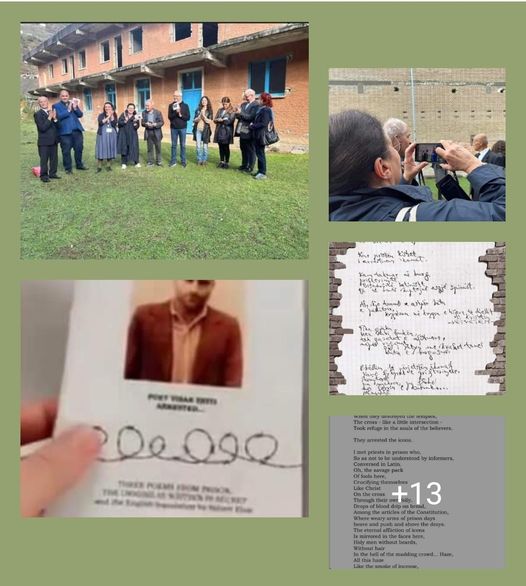
Një grup intelektualësh të shquar zviceranë në kulturë, politikë dhe ekonomi, të organizatës “Helvetas members”, shkuan të vizitonin burgun e largët të Spaçit, nëpërmjet tij donin të njihnin historinë e trishtë të shqiptarëve që kaluan kalvarin e vuajtjeve në ferrin e diktaturës më të egër dhe qëndresën e tyre, atje ku u bënë dhe revoltat e vetme në të gjitha burgjet e perandorisë komuniste.

Kishin ardhur nga Zvicera drejtorët e bordit “Helvetas’ projects”, zotërinjtë Peter Niggli dhe René Holenstein me bashkeshortet e tyre si dhe përfaqësuesi për Shqipërinë, z. Stephan Joss, i shoqëronte Znj. Valbona Karakaci, këshilltare strategjike për Ballkanin Perëndimor.

Dhe ajo na bën me dije se zgjodhi pikërisht poetin Visar Zhiti, të burgosur për poezitë e tij në Spaç, që vazhdoi të shkruante fshehurazi dhe atje, që nëpërmjet tij dhe estetikisht, me estetikën më të zymtë, të preknin Spaçin, të kuptonin të burgosurit shqiptarë që i bënë ballë si njerëz përbindëshit të së keqes.

Thjeshtë dhe bukur u krijua një “Booklet” me tre poezi të Visarit, “Ikonat e arrestuara”, që tregon se cilët ishin të burgosurit, “Vdekja vazhdon” që shpalos gjendjen çnjerëzore të burgut dhe “Faleminderit, ylber”, poezi e shpresës, që kapton telat me gjëmba dhe lidh shpirtërisht njeriun me botën, mistershëm përtej çdo vuajtje.

Triptiku, i shkruar atje, në Spaç, në kushte tmerri të pabesueshëm, iu dha vizitorëve zvicerianë në faksimile të origjinalit të tyre, nxjerrë nga libri “Dorëshkrime të fshehta të burgut” si dhe përkthimi anglisht, marë nga përmbledhja me poezi, botuar në SHBA, “The condemned apple”, përkthyer nga albanalogu më i madh i fundit të shekullit XX dhe fillimeve të shekullit XXI, Dr. Robert Elsie.

Dhe ndalën atje ku lindën këto poezi, në ato shkallë dhe mure, në atë ankth të mbetur në ajër.

Rrëfimet për Spaçin erdhën tronditëse dhe të dhimbshme nga bashkëvuajtësi I Visarit, ish i burgosuri politik, Gjergj Lekaj.

Ekipi në fund recitoi në grup anglisht poezinë më me dritë, atë të metaforës së ylberit, duke përshëndetur dhe autorin Visar Zhiti sikur ai të ishte përtej në një ëndërr.

Në “Librin e Mbresave” zviceranët i drejtonin një letër popullit shqiptar, falenderonin që ndanë histori me ta, akte tmerri dhe heroizëm dhe i luteshin që vuajtjen e tyre t’ia tregonin dhe popujve të tjerë…

Po qeveritarëve shqiptarë, institucioneve, akademive, katedrave, intelektualëve, kujtesës kolektive?

Gjithsesi letra mbaronte me një urim dhe me bekimin si të Shenjtes tonë Nënë Tereza: “God bless you!”

Filed Under: Politike

  • « Previous Page
  • 1
  • …
  • 197
  • 198
  • 199
  • 200
  • 201
  • …
  • 668
  • Next Page »

Artikujt e fundit

  • “Saint Paul in Dyrrach”
  • THEMELIMI I “ALBLIBRIS” – LIBRI SHQIP NË SHTETET E BASHKUARA TË AMERIKËS
  • Dy kryeqytete, një komb
  • Dashamir Gurabardhi: “Arti si zhvillim dhe emancipim kombëtar”
  • SHUMËSIA STILORE-LIGJËRIMORE NË PROZËN DOKUMENTARE TË REXHEP QOSJES
  • Atë Arthur Liolin, kleriku, studiuesi dhe shërbestari i shquar i komunitetit shqiptar në Shtetet e Bashkuara të Amerikës
  • FEDERATA VATRA URON: GËZUAR FITËR BAJRAMIN
  • Gjykata: Mbyllja e “Zërit të Amerikës” e paligjshme, urdhërohet rikthimi i 1,000 punonjësve
  • Experience History: Ambassador William Walker’s inaugural visit to the Saint George Orthodox Cathedral and the Fan Noli Cultural Center
  • 𝑺𝒉𝒆̈𝒏𝒅𝒆𝒕𝒊 𝒊 𝑺𝒊𝒔𝒕𝒆𝒎𝒊𝒕 𝑻𝒓𝒆𝒕𝒆̈𝒔 – 𝑩𝒂𝒔𝒉𝒌𝒆̈𝒃𝒊𝒔𝒆𝒅𝒊𝒎 𝒎𝒆 𝑱𝒖
  • NICOLAE IORGA, HISTORIANI ME I MADH RUMUN DHE ZBULUESI I SHKRIMIT TE PARE NE GJUHEN SHQIPE
  • Doktrina Wilsoniane dhe mbijetesa e shtetit shqiptar – nga shpëtimi i Shqipërisë te e drejta historike e Kosovës për vetëvendosje
  • Zarfi që sfidoi censurën në Shqipërinë komuniste
  • Albanian Night @ Yankee Stadium
  • O SOT, O KURRË! O FLAMUR, O DEKË!

Kategoritë

Arkiv

Tags

albano kolonjari alfons Grishaj Anton Cefa arben llalla asllan Bushati Astrit Lulushi Aurenc Bebja Behlul Jashari Beqir Sina dalip greca Elida Buçpapaj Elmi Berisha Enver Bytyci Ermira Babamusta Eugjen Merlika Fahri Xharra Frank shkreli Fritz radovani Gezim Llojdia Ilir Levonja Interviste Keze Kozeta Zylo Kolec Traboini kosova Kosove Marjana Bulku Murat Gecaj nderroi jete ne Kosove Nene Tereza presidenti Nishani Rafaela Prifti Rafael Floqi Raimonda Moisiu Ramiz Lushaj reshat kripa Sadik Elshani SHBA Shefqet Kercelli shqiperia shqiptaret Sokol Paja Thaci Vatra Visar Zhiti

Log in

This website uses cookies to improve your experience. We'll assume you're ok with this, but you can opt-out if you wish. Cookie settingsACCEPT
Privacy & Cookies Policy

Privacy Overview

This website uses cookies to improve your experience while you navigate through the website. Out of these cookies, the cookies that are categorized as necessary are stored on your browser as they are essential for the working of basic functionalities of the website. We also use third-party cookies that help us analyze and understand how you use this website. These cookies will be stored in your browser only with your consent. You also have the option to opt-out of these cookies. But opting out of some of these cookies may have an effect on your browsing experience.
Necessary
Always Enabled
Necessary cookies are absolutely essential for the website to function properly. This category only includes cookies that ensures basic functionalities and security features of the website. These cookies do not store any personal information.
Non-necessary
Any cookies that may not be particularly necessary for the website to function and is used specifically to collect user personal data via analytics, ads, other embedded contents are termed as non-necessary cookies. It is mandatory to procure user consent prior to running these cookies on your website.
SAVE & ACCEPT