• Home
  • Politics
  • Opinion
  • Culture
  • Sports
  • Economy
  • Interview
  • Reporting
  • Community
  • Vatra

Dielli | The Sun

Albanian American Newspaper Devoted to the Intellectual and Cultural Advancement of the Albanians in America | Since 1909

THE TRANSLATOR

April 27, 2021 by dgreca

By Muç Xhepa/

Translated from the Albanian by Dita Gjuraj/

Winter. The cold in the cell permeated to the bone. They had taken my shoes and my socks were freezing to the wet cement floor. Ice … Then the interrogator entered.

“Hey, tell me why you designed the building that way, so modern? Cubist? In the middle of Tirana?

His voice became … distant. Like it wasn’t being directed at me but at the resident whose apartment I had designed. I had two reconstructed into one, with a real fireplace. I actually built one for him.

“Are you trying to disgrace us?”

I, or the apartment dweller? We’re friends. He writes books. For your master. My head was buzzing.

“I had no bad intentions,” I started mumbling, ”My family is … like yours … from the class …”

He hit me in the face … an open hand? … a fist? … everything went dark.

My old homeroom teacher was on Messenger, talking to me about the talented translator … but I was lost in thought on what architect Velo had undergone in interrogation.

“You aren’t listening!” she said.

“Forgive me. And then … he met with you. He was …”

“Yes, unemployed. Pension … nothing from the translations.”

In her lap teacher Kati was holding a lovely little dog with long, light brown hair. Its ears perked up, also trying to listen.

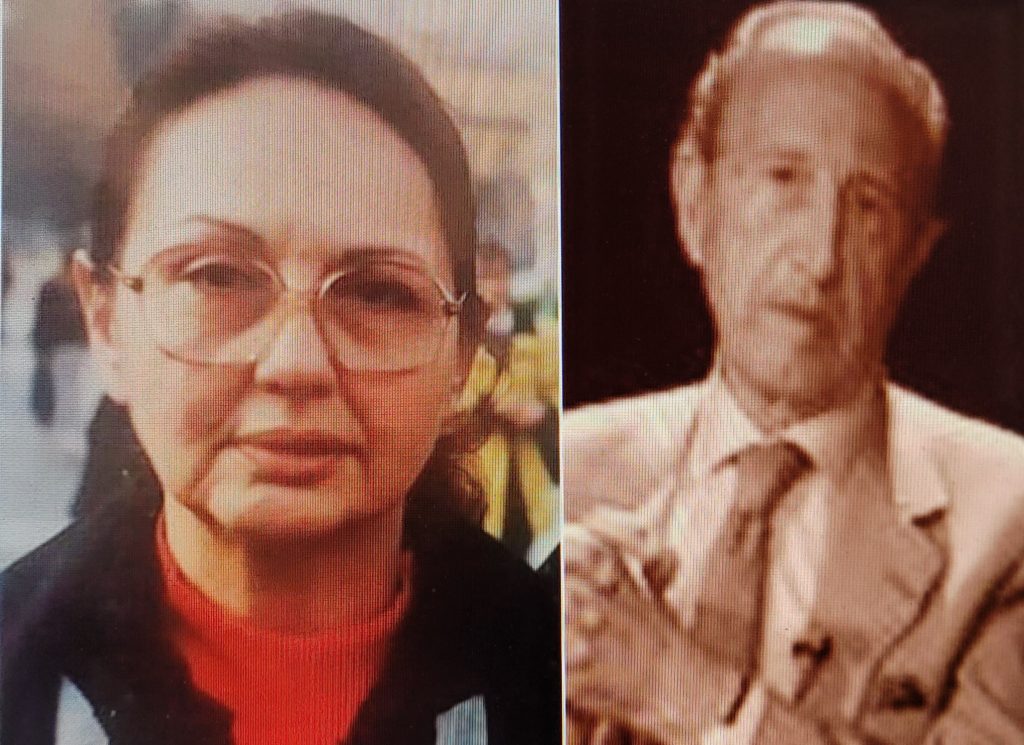
“I got him into the NGO I founded. Member of the board, a recognition he deserved but was not offered by anyone else. We were honored. He worked for several years but when age pressed its full weight on him, he asked to speak to me in private. ‘Kozara, I want to treat you to a coffee. And, there is something I don’t want to take to the grave with me’. What are you saying, Isuf? You’ll be with us for many, many years to come, I said. But, as if he had sensed it, the unfortunate didn’t live long after that.”

“The great translator. His life spent in the shadow …”

“That’s the point. That’s just what I want to talk to you about today. We went to ‘Postiqja’ café. It was a sunny day and we decided to sit outside. The brown suit he was wearing was beginning to fade and it looked loose on him. I got a lump in my throat. It was like seeing my father when he was released from prison, withered and battered by life in hell.”

Teacher Kozara’s words were wet with tears. She stopped talking and pet her best friend. It rose up to her face and licked the tears away.

“We spoke of what he valued the most, human rights. He delicately asked me, ‘Kozara how do you see the work of a translator?’ Isuf Vrioni looked at me with sadness in his eyes. It was clear he wanted to start a difficult conversation, one that was the cause of great inner suffering. The quality of a translator’s effort is the making or the breaking for a work of literature, touched I responded. ‘You are right. It makes the writer well-known’. Yes, it either gives the work life or buries it. You are the ultimate example … you made the author famous. His hand started shaking. He placed the coffee cup on the table and came closer to me. ‘Fine, when we were in the big prison, he was afraid to give me recognition, but after all these years …’ At a loss for words, I bowed my head. My heart hurt for him. We sat in silence … for a long time.”

“One winter day we worked the whole morning. At lunchtime he told me he had to go to a meeting. He returned an hour later, fed, full of energy. He asked me how much longer I would need to consult with him. I hadn’t put anything in my mouth all day long. I was lightheaded. We finished work late in the evening.”

The teacher put down her dog, got up and got a bottle of water to wet her quivering lips.

“We left together after the work was done. A cold wind was blowing outside. Walking past the ‘Palace of Culture’, I shyly said that at this hour it would be difficult to find a bed in a heated hotel. The one in the center of the city was reserved for foreigners. The others in the vicinity … Without letting me finish speaking, he wished me a good night and took off towards his home in the modern, cubist building.”

Teacher Kozara Kati placed her hand on her trembling lips, send a kiss and went off Messenger.
Filed Under: ESSE Tagged With: Dita Gjuraj, Muc Xhepa, THE TRANSLATOR

AN UNUSUAL DAY…

March 19, 2021 by dgreca

By Dita Gjuraj/

As we grow up and age we forget much of our childhood, or rather we file most of it away somewhere in the back room of our memory. But there are some days that are different, somehow more significant and often come to mind during our lives. In my case, I have many such memories, the kind that never recede into the fog of time. I’d like to share one of those with you today.

One day when I was about 6 years old, a man knocked on the door of our little room calling my father’s name:

“Gjuro, they want you to be at the office of Interior Affairs tomorrow morning promptly at 9 O’clock. Promptly!” he said sternly.

“Of course,” said my father opening the door, “would you like to come in friend?”

The man looked embarrassed.

“They sent me. That’s just how it is Gjuro,” he said lowering his eyes.

“Don’t worry, I do understand. That is how it is,” answered my father.

The man turned around and left. My father closed the door and leaned his back against it. He just stood there for a while looking at me sitting on the bed, waiting to hear him tell me what had just happened. He saw I was ready to start crying so he came over and sat next to me, kissed me on the top of my head and said not to be afraid. He said that it was nothing to worry about, just a thing to do tomorrow. That made me even more scared, and I started bawling at the top of my lungs. He hugged me and tried to assure me, but I just couldn’t stop. At some point he took me by the shoulders, shook me lightly and asked me if I was a little kid or his best confidant. Didn’t work. He then asked the ultimate question, are you or are you not an Albanian? That did it, as usual. I stopped crying.

He was not well. That year he spent a lot of time in his sick bed but all in all, he was better than I remembered seeing him in the past. That day the little dank room with the leaky roof and earthen floor, felt even colder than usual. We played cards at the rickety table my grandfather cobbled together from some leftover boards he got from a construction site. At dusk my mother came home from work, tired and probably very hungry. She only took a small piece of old bread and half an onion as lunch when she left at five in the morning. Her work was at the brick factory, transporting unbaked bricks to the kiln and finished ones from the kiln to the loading dock, in a wheel barrel. Men’s work, babi called it, but she had to work there to keep us alive. Whenever she found better work UDBA, the state security police, would order her fired. Another method of applying pressure on my father to work for them. He refused and they made us suffer for it. She always stood firmly behind him no matter the cost. Sometimes I think she hated them even more than he did. So, that day my tired mother came home to my father looking grim, grinding his teeth, and to me crying. Before he could say anything, I ran to her arms and started babbling:

“They are going to take babi away! They came … they said to go tomorrow …”

She wrapped her arms around me and asked my father what had happened. He wanted her to sit down first, which she did as I clung to her like a wild little animal. Then he told her of the man’s visit and the order to appear at the bad place in the morning. She looked calm but a tear ran down her right cheek.

They started discussing the situation and all the possible outcomes the next day could bring. Mama wanted to go with him, but my father rejected the idea. She kept insisting, citing the fact that he had been in political prison, had been tortured, poisoned, that he needed a witness to whatever they intended to do to him the next day. She went on and on until he finally stopped her, told her it was his decision to make, and she was not to come. He said, this had to be handled calmly and smartly and being stubborn and hotheaded could cost us her freedom too. He told her, though he loved her for all that, it wasn’t going to be helpful in case … If things went bad for both of them, what would happen to me? She finally relented.

“You go to work as usual. I won’t give them the satisfaction of seeing us afraid or desperate. We stay strong. I will see if Sefa’s daughter Meri can keep Dita with her till I come back, or you come from work…”

“No!” my mother snapped, “you take Dita with you. They wouldn’t dare … with the child there …”

“Mica, why would you think the child being there would make a difference to such people? You know who and what they are. I don’t want her exposed to … such things, at this age,” said my father stroking my hair.

“I say take her with you, Adem. She has to know, even at this age, who her enemies are and what to expect …,” she paused for a second, “to start learning what her personal and national heritage is, what it costs.”

They argued a while and my mother won. It was decided, I would go with babi to that place. I didn’t really understand what that place was, but I understood it was bad. No one slept that night. Well, I probably did but I am sure neither of them slept. The next day, my mother went to work at daybreak. Babi and I got out of bed a couple of hours later. He boiled some water in the little red pot, poured it into our dented basin, added some cold water to it and helped me wash up. Then he washed up and shaved. He put on his good shirt, the one that had not sewn-up holes in it. It was old but whole, unlike the everyday one with all those stitches. He put a dab of oil on his raggedy shoes, the only pair he owned, to make them look a bit … well, a bit better than they were. I too had a second garment. Besides my everyday dress that had once been the material of mom’s skirt, I had a little lightly used dress that had come in a package sent by babi’s cousin in America. Everything else was sold to pay rent on the room, coal for winter and the bill for bread at the bakery. After we finished dressing babi made our tea, a bit of sugar burned in the little coffee pot with the long handle and doused it with water. He crumbled some old bread into my cup and served it as breakfast. After much begging and crying not to make me eat it, I ate some and we were off to that place. I was terrified but determined to fight them, and the whole world if need be, to protect babi.

Walking to our destination my father exchanged greetings with quite a few people along the way. An old gentleman who knew life before the new era bowed slightly and raised his hat to my father from across the street. My father saluted him in return. In truth, most people in the city liked my father and most, openly or secretly, admired his courage and determination. But yes, there were some hateful rats too.

So, dressed in the best we owned we arrived at the old, gray building sitting smack in the center of town. The City Police occupied the first and second floors, the horrible people had the top two. The basement was a temporary detention facility and God knows what was in the subbasement … We walked up the three steps, entered the lobby and stopped at the reception desk where a uniformed policeman sat. He asked why we were there and my father told him that he was summoned by the “comrades” on the third floor. The man looked at my father and then at me, shook his head in agreement and called upstairs to find out to which office we should go. He spoke for a couple of minutes and then told us to wait till someone comes down to get us. A few minutes later the police officer got up and brought his chair to where we were standing.

“Gjuro, I know you’re sick. Take my chair till they come downstairs. With them who knows when that’ll be. The child can sit on your lap.” Then he added almost whispering, “I am sorry, with all my heart.”

My blood ran cold, and I must have looked like I was about to start crying when my father said, very softly:

“That was about me being sick, not about today. Understand? Anyway, you are my strength, I am depending on you being Albanian today. Don’t ever let them see they can hurt us because if they know that, they will hurt us.” I nodded.

He thanked the policeman, shook his hand and then sat down. After a few minutes of looking and walking around the lobby I climbed onto his lap and he wrapped his arms around me tightly. We waited and waited. The policeman called up again. Same response, wait. I noticed my father breathing heavily and I could feel his heart beating harder and faster. He took out the asthma pump from his pocket and sprayed some medicine into his mouth. I was getting scared again, what if they take him, what if he gets sick and dies … The policeman brought him a little glass of water. Besides a nod from my father nothing was said. A few minutes later he was breathing better. After an eternity of waiting and imagining the worst I could conceive of at my age, something finally happened. A tall, hefty man dressed in a blue suit walked into the lobby laughing and joking with a well-dressed blonde in heels. The policeman hurriedly walked up to him and said something. The man turned around with a big smile:

“Gjuro, man, why are you here today? Something we can do for you?” he said and laughed loudly. My father took me off his lap and stood up slowly.

“I was asked here today by your office Mr. Nikolic,” my father answered, emphasizing the word “asked”.

“Asked here, by us? No man, that can’t be right. If you were sent for, I’d be the one to know. Right? You must have made some kind of mistake, right? Unless you want to talk about something? Could that be it? If it is, I’m at your disposal. What do you say?” he added a laugh here and there as he spoke.

“No, no thank you. No need to waste your time. I can’t think of a single thing to talk to you about. You’re probably right. I must have misunderstood something yesterday. Are we free to leave?”

“Gjuro! What’re you saying, man? Yugoslavia is a free country! You can go anytime. You can, of course, come back here again, and again. And again. You must know by now; we like you here. Don’t tell me you don’t see us as friends?” he didn’t laugh here, just looked at us with those icy blue eyes of his.

“Of course, I do, and particular friends at that, Mr. Director. So, thank you and goodbye,” and we started walking towards the door. I could hear my father exhale in relief. I was puzzled by this exchange. I knew they were anything but friends, so what was all that about? Eventually I learned the meaning of cynicism and defiance. A couple of steps away from daylight, the man loudly called us back. We stopped, turned around and walked towards him. My blood was freezing in my veins. I could only guess what my father was feeling at that moment. As we got to where the man stood, the blond still at his side, he put his hand in his pocket and brought out a few coins. He patted me on the head and offered them to me. Back then it was customary to offer coins to children of relatives and friends as a sign of affection. For candy or ice cream, the adults would say. But a gift from this man! As a child I had a bit of a potty mouth, so I was ready to plaster him with some choice words, but my father squeezed my hand, so I’d look up at hm. He nodded and looked at the man. I understood, took the coins and thanked the monster.

“A well-mannered child, Gjuro. Bravo. We shall make a fine little comrade of her, someday.” He laughed and walked up the stairs. I hated what he said. I looked up at my father’s face. It was stony, dark and he was grinding his teeth so hard I could hear it. We walked outside and I think we both breathed a sigh of relief. But we knew it was fleeting, temporary relief. About fifty feet away from the entrance a woman with a naked baby in her arms was asking for alms. We stopped in front of her, and my father said:

“Dita, I think we should give those coins to the little boy. What do you think?”

Somehow, I understood. I walked up close to the mother, gave her the coins and a big smile. She blessed us and my father blessed her and the baby in return. The giving made me happy but the fact that it was the coins the callous man gave, made me grateful to the lady for taking them. My father looked at me and called me his carbon copy. That was the best gift ever.

Just then a neighbor’s boy on his old, rickety bicycle rode up and started jabbering about his dad’s place on the list to buy a car. The list was yards long, but the government knew giving people something to hope for meant they’d be happy to tow the line. Anyway, my father told him to go to the brick factory, find my mom and say we’d be waiting for her at home. The boy wanted a bribe, an ice cream cone when my father had the money. Bargain struck, he set off on his errand.

On our way home one of my father’s shoes finally gave up the ghost. It split in two right on the street. I thought he would have been embarrassed but it didn’t look like he was. He picked up the sole and holding me by the hand calmly walked to a nearby store, in his sock. He asked the clerk for a bit of string and the man obliged. Then my father placed the sole on top of the string, put his foot with the top part of the shoe still on it onto the sole and tied the two pieces tightly together.

“That should hold till we get home. After that we shall see what God has in store for us.” He smiled at me, but I think he was in all sorts of pain that day. I know for sure; I was.

As we walked slowly towards our little hovel of a home, we saw the old gentleman again. As always, he smiled, bowed slightly and raised his hat to my father. My father reciprocated with a snappy salute.

Filed Under: ESSE Tagged With: AN UNUSUAL DAY, Dita Gjuraj

RRAPINI

February 8, 2021 by dgreca

A hot summer. Those in the Party had settled in resort encampments. Some families which were able to find cabins or tents were at the beach. Others made more modest arrangements, the waters of the river Shkumbini. Our group, under the shade of a pine tree in front of Hotel Skampa. Drinks of boza, a corn malt, and buttermilk, as we brainstormed about finding work. We needed clothes. Our wardrobes: a shirt and a pair of pants. September was approaching, the start our third year in High School. Sixteen-year-olds. But we were looking for work.

“My father said to try tomorrow because these days the sawmill was looking for seasonal workers,” said Namik Shehu lighting a “Partizani” cigarette. He had started smoking at an early age. Of short stature, muscular, strong as iron, but with a heart soft as cotton, generous as no other in our circle of friends. It was decided.

Early the next morning we started out on foot. Not everyone was allowed past the big iron gate of the sawmill. We waited until the last of the shift workers went in. The guard was an acquaintance of Namik’s, and he showed us to the Human Resources office. We decided that Petrit Karabina should go in first. Tall, athletic, serious, he would have it easiest to convince the official to give us work without inquiring about our age. Roseni, the Chief Engineer entered as we were getting our written orders. He looked at us in amazement. He knew Namik.

“Have you come to teach us foreign languages?” He said laughing.  

“No, Chief Engineer! They’ve come to work the last two months of the Summer.” Said the HR official as he handwrote the work assignments.

“They should be at the library, not here.” Laughed the Chief Engineer again slapping Namik’s shoulder.

“We only have work requests from Gatri.” The HR official didn’t understand the meaning of that statement. We cheerfully took the work permissions and left. Petrit and Namik were to work loading freight cars and I, dragging logs. It was Saturday, we would start work Monday. 

Gatri, the most difficult section of the sawmill. Two types of workers were sent there: ex-convicts, sent for re-education, and political opponents, the cream of society, whom the “Sons of Stalin” called the vanquished class. In prisons too they used this sort vileness. Political prisoners were housed together with thieves and criminals. The later were not enemies of the Party and therefore not dangerous to the State. They were appointed to trusted jobs, were used for dirty work. Cell rats. Tactics learned from the Elder Brother, the Soviet Union. In Kolyma, the heart of the Gulag Archipelago, thieves and criminals were used to control the political prisoners who were in far greater numbers. So, there really was no need to employ paid guards.

I passed my first week learning how to use the Capini, the only tool used in handling the logs. 

“It was invented in the Iron Age, when man first thought of tying two elements together, wood and iron. The New Society, with new technology. No kidding. The last word in science. We’re building Socialism with our own means, without the need of machinery.” Mark, with two broken front teeth, would say. He bombarded you with devastating truths. His words came out in lisps. You had to concentrate to understand the word, let alone the sentence. He was brought in for re-education. He served some years in prison, as an ordinary convict. His sentence was spent in a labor camp in the south of the country, in the village of Borshi near Saranda. He was “spoiled” because he worked alongside a political prisoner. 

“They stole my youth for a simple brawl.” Chortled Mark lighting a filter, “D.S.” cigarette, a rare luxury for the time and place.

Capini was sleek and long made of well cured wood, finely planed. It had a great iron hook secured at the top with thick nails. Four modern day slaves thrust the capinis into the giant body cut in the forests of Biza. A friend of mine, a Skoda truck driver, Llambi Leka, almost lost his life descending the heights of Biza as the weight of the logs forced his truck off the road, straight into a ravine. 

We dragged the logs, one worker at each end and two in the middle. With great effort the logs were dragged the length of a field until they ended up at the great saws, which turned them into boards. I met Edmond Trebicka there. He graduated high school as an electrician but could not find work in the trade, so he too worked in Gatri. 

“Here it Is, as it is,” said Edmond, “but it’s unendurable when they post you inside on the night shift.”

“Rrapini is the most challenging, but heroic.” Mark interrupted with great conviction. I didn’t fully understand what he wanted to say, so I asked him to repeat. 

“Rrapini, the Great Saw, as you enter. Stalin’s gift. Standing in the center like a giant OAKTREE …like THAT poem,” laughed Mark. Mark emphasized forcefully the name Stalin. He admired Stalin. He imagined him brave, strong, invincible. He identified. Apparently, the political prisoner who “spoiled” him, corrupted him, hadn’t told him that Stalin the hero at Mark’s age had been an ordinary criminal and bank robber, codename… “KOBA”. 

The second week begun just as Edmond predicted, inside the saw building. I got acquainted with the shift workers. My workplace was where boards were piled for transport out of the building. Hard physical work. There were women also. Some had worked there for years. They had children to feed. At the middle saw, where boards were cut and dressed, worked a beautiful young girl, athlete, with yellow hair down to her shoulders, knit in braids when she worked. Modest, full of light and magic, the Rose of Chameria guarded her honor. Her eyes were as blue as the Bay of Parga. Her ancestors had lived there for centuries. The hordes from the other side of the Mediterranean, who today call themselves “Hellenes” chased them from their land. Her father was imprisoned by another sort of horde, the “Sons of Stalin” they call themselves. In the center, up high by the ceiling, hung the workplace clock. That too was a gift from Stalin.  There, above our heads it hung like an instrument of torture. It moved slowly and the shift never ended. We started at seven in the evening and finished at two after midnight. The great saws worked all night without rest. To one side magnificent Rrapini, the pride of Gatri, the height of science, ripped logs. The engineering staff was proud. It was constructed by brother scientists under the enlightened direction of Stalin. Left of Rrapini, two smaller saws, defective, produced later, split the wood into boards.

            “…. with revisionist behavior.” Mark would say smiling. But Rrapini the great, painted forest green, had something of an aristocrat… 

Second Sunday. We met at midday under the same pine tree, with news from work. Petrit and Namik’s forearms were reddened, as if cut by a knife, in the places where they rested the boards as they loaded the freight cars. Their faces were drawn and tanned by the sun. 

“We look like we were at the beach too,” quipped Petrit.  “We won’t feel bad when we return to school”.

Namik, reserved, pulled on the cigarette slowly, his eyes gazing afar, Shkumbini, beside the lumber yard, where members of his family worked for years.

Midnight. Swirling clouds of sawdust everywhere. Working without masks. A cry was heard.  Calls for help. Running to pull the girl away from the saw. Mark got there first. Her right palm was hanging. I saw them wrap it with a shirt strip, but I didn’t see it happen. I got closer. The Rose of Chameria had fainted. They took her away.  

Third week. Monday. The second shift was not being allowed to go in. Something was being urgently painted by the Rrapini. Mark couldn’t bear it, forced his way in. They were running late.  Finally, the door opened. Chief Engineer Roseni came out first; looked upset. Passed without speaking. Then the State Security Agent walked out staring at us. Mark followed them; grief stricken. He came closer, looking around, the custom remained with him from prison days, when he wanted to convey something of importance.

“Someone scraped the paint!  Rrapini was constructed in 1911!  It was the Tsar’s…!”

Translated from the Albanian by Dita Gjuraj

Filed Under: LETERSI Tagged With: Dita Gjuraj, IN THE DRAWER, Muç Xhepa

Artikujt e fundit

  • NDJESHMËRIA SI STRUKTURË – NGA PËRKORËSIA TE THELLËSIA
  • Si Fan Noli i takoi presidentët Wilson the T. Roosevelt për çështjen shqiptare
  • TRIDIMENSIONALJA NË KRIJIMTARINË E PREҪ ZOGAJT
  • Kosova dhe NATO: Një hap strategjik për stabilitet, siguri dhe legjitimitet ndërkombëtar
  • MEGASPEKTAKLI MË I MADH ARTISTIK PAS LUFTËS GJENOCIDIALE NË KOSOVË!
  • Veprimtaria atdhetare e Isa Boletinit në shërbim të çështjes kombëtare
  • FLAMURI I SKËNDERBEUT
  • Këngët e dasmës dhe rituali i tyre te “Bleta shqiptare” e Thimi Mitkos
  • Trashëgimia shqiptare meriton më shumë se sa emërtimet simbolike të rrugëve në New York
  • “Unbreakable and other short stories”
  • ÇËSHTJA SHQIPTARE NË MAQEDONINË E VERIUT NUK TRAJTOHET SI PARTNERITET KONSTITUIV, POR SI PROBLEM PËR T’U ADMINISTRUAR
  • Dr. Evia Nano hosts Albanian American author, Dearta Logu Fusaro
  • DR IBRAHIM RUGOVA – PRESIDENTI I PARË HISTORIK I DARDANISË
  • Krijohet Albanian American Gastrointestinal Association (AAGA)
  • Prof. Rifat Latifi zgjidhet drejtor i Qendrës për Kërkime, Simulime dhe Trajnime të Avancuara Kirurgjike dhe Mjekësore të Kosovës (QKSTK) në Universitetin e Prishtinës

Kategoritë

Arkiv

Tags

albano kolonjari alfons Grishaj Anton Cefa arben llalla asllan Bushati Astrit Lulushi Aurenc Bebja Behlul Jashari Beqir Sina dalip greca Elida Buçpapaj Elmi Berisha Enver Bytyci Ermira Babamusta Eugjen Merlika Fahri Xharra Frank shkreli Fritz radovani Gezim Llojdia Ilir Levonja Interviste Keze Kozeta Zylo Kolec Traboini kosova Kosove Marjana Bulku Murat Gecaj nderroi jete ne Kosove Nene Tereza presidenti Nishani Rafaela Prifti Rafael Floqi Raimonda Moisiu Ramiz Lushaj reshat kripa Sadik Elshani SHBA Shefqet Kercelli shqiperia shqiptaret Sokol Paja Thaci Vatra Visar Zhiti

Log in

This website uses cookies to improve your experience. We'll assume you're ok with this, but you can opt-out if you wish. Cookie settingsACCEPT
Privacy & Cookies Policy

Privacy Overview

This website uses cookies to improve your experience while you navigate through the website. Out of these cookies, the cookies that are categorized as necessary are stored on your browser as they are essential for the working of basic functionalities of the website. We also use third-party cookies that help us analyze and understand how you use this website. These cookies will be stored in your browser only with your consent. You also have the option to opt-out of these cookies. But opting out of some of these cookies may have an effect on your browsing experience.
Necessary
Always Enabled
Necessary cookies are absolutely essential for the website to function properly. This category only includes cookies that ensures basic functionalities and security features of the website. These cookies do not store any personal information.
Non-necessary
Any cookies that may not be particularly necessary for the website to function and is used specifically to collect user personal data via analytics, ads, other embedded contents are termed as non-necessary cookies. It is mandatory to procure user consent prior to running these cookies on your website.
SAVE & ACCEPT