• Home
  • Politics
  • Opinion
  • Culture
  • Sports
  • Economy
  • Interview
  • Reporting
  • Community
  • Vatra

Dielli | The Sun

Albanian American Newspaper Devoted to the Intellectual and Cultural Advancement of the Albanians in America | Since 1909

JENI TE FTUAR!

April 12, 2020 by dgreca

JENI TE FTUAR!/

nga Ernesto Anderle/

Përgatiti dhe komentoi Rafaela Prifti /

Fjetëm në një botë … dhe u zgjuam në një tjetër.

Papritmas Disney nuk ka më magji, 

Parisi nuk është më romantik, 

Nju Jorku nuk ngrihet dot në këmbë, 

Muri kinez nuk është më fortesë 

dhe Meka nuk ka pelegrinë.

Puthjet e përqafimet papritur bëhen armë gjuetije, 

mosvizitat te prindër e miq kthehen në akt dashurie.

Toka frymon jetën e saj dhe endet bukur fare, 

në kafaz vendos vetëm qëniet njerëzore. 

Mendoj se na sjell një mesazh: Nuk je thelbi. 

Ajri, toka, uji dhe qielli pa ty janë mirë.

Kur të ktheheni kujtohuni që të ftuar jeni, 

Dhe kurrësesi Padronët e mi.

Ernesto Anderle është autor i librave të ilustruar dhe novelave grafike shumë të suksesshme. Ai shquhet për paraqitjen vizuale të muzikës italiane dhe për lirikën grafike të imazheve të dala nga peneli i tij. Kritika e vlerëson talentin dhe stilin e patjetërsueshëm me të cilin Anderle jetëson subjektet që ka përzgjedhur t’i ilustrojë si De Andrè, Guccini, Dalla, De Gregori, Piero, Alberto Angela dhe së fundi Vincent Van Gogh. Pasioni i Ernesto Anderle-s është shprehja vizuale e një gjendje emocionale e shpirtërore që të shtyn të mendosh. Krijimet artistike dhe ilustrimet e tij grafike prekin thellësitë e botës së brendshme të lexuesit sepse ai zotëron mjeshtërinë e komunikimit në formë universale me shpirtin njerëzor.Në kohën e vetëmbylljes kur ekzistenca kolektive bëhet më delikate dhe vetmia individuale dallohet më fort, Ernesto Anderle ‘kap’ mendimet që enden në mendje dhe shpreh ndjenjat që përjetojmë në shpirt. Momentet kur ndihemi të palëkundshëm dhe të pushtetshëm janë kalimtare në mos iluzore, Momentet kur jemi të prekshëm dhe të lëndueshëm zbulojnë më qartë sesa i fuqishëm është universi dhe sa delikat njerëzimi në të.   

Filed Under: LETERSI Tagged With: Ernesto Anderle, Jeni te futur, Rafaela Prifti

COVID-19 WORST CRISIS SINCE WWII SAYS UN AGENCY REPORT

April 7, 2020 by dgreca


by Rafaela Prifti

The International Labour Organization (ILO) has released a report on Tuesday. It states that COVID-19 is the worst global crisis since the Second World War and releases data on the economies and labor markets around the world. The document evaluates “the toll on the world’s economy, with full or partial lockdown measures now affecting the livelihood of almost 2.7 billion people — more than 4 out of 5 workers in the global workforce of 3.3 billion.” The pandemic has delivered “unprecedented shocks to economies and labor markets” while the health care systems have been pushed to the point of collapse.


Pointing out the effects in both developed and developing economies, the UN agency’s Director General Guy said that workers and businesses are facing catastrophe.” “We have to move fast, decisively, and together. The right, urgent, measures could make the difference between survival and collapse.”


In economic terms, the pandemic will be far worse than the most recent recession, the agency says.
According to the report, different income groups will suffer serious wage losses due to a decline in working hours.  

“Huge losses are expected across different income groups but especially in upper-middle income countries,” the agency says, estimating a 7% decline in working hours for that group in the current economic quarter. The report states that such statistics 
far exceed the effects of the 2008-9 financial crisis. 

Filed Under: Kronike Tagged With: Rafaela Prifti

MORE SCIENCE LESS FICTION

March 27, 2020 by dgreca

Selected and Edited by Rafaela Prifti/

Numerous studies show no scientific evidence that the current coronavirus SARS-Co-V-2 was created in a lab. The pathogen appears to have come from wild animals, virologists say, and there are no signs of genetic manipulation in the SARS-CoV-2 genome

Since the early days of the COVID-19 epidemic, theories have circulated about the origin of the novel coronavirus causing the disease, SARS-CoV-2. One prominent rumor is that it first escaped from a lab in Wuhan studying bat coronaviruses and then spread to the public. This theory has evolved into claims that the virus was genetically engineered to be a bioweapon. But scientists say that while there’s not enough information to pinpoint where the virus came from, there is no evidence that it was created in a lab.

The lab-escape theory had been circulating on social media and various blogs for weeks. In an article written in The Scientist by Steven Mosher, a social scientist and the president of the Population Research Institute in Front Royal, Virginia, he summarized why he believes SARS-CoV-2 may have been accidentally spread by China’s National Biosafety Laboratory at the Wuhan Institute of Virology, where researchers have studied bat coronaviruses..

Mosher describes several lines of reasoning, namely, that the lab location is less than 10 miles away from the seafood market where a cluster of COVID-19 cases was first discovered. Secondly, he considers that after the 2003 SARS outbreak, the SARS-CoV virus escaped from virology labs multiple times in China. Thirdly, he describes how Chinese virologist and bioweapons expert Major General Chen Wei went to the Wuhan Institute of Virology with military scientists in January to study the new virus, which Mosher considers to be a form of damage control.

The World Health Organization updated SARS surveillance guidelines in 2004 after the lab-based outbreaks, urging labs to follow proper biosafety procedures, and China replaced the director of its Center for Disease Control and Prevention. One problem leading to a lot of apprehension and speculation about the new coronavirus is that scientists “don’t know what the actual source of the virus was,” Anthony Fehr, a Coronavirus researcher at the University of Kansas, according to The Scientist. Additionally, researchers don’t know if SARS-CoV-2 immediately started to spread in humans after a single transmission from an animal, or if it took multiple zoonotic events between an infected animal population and humans.

Despite the questions surrounding the exact source of the disease, it does appear to have originally come from wildlife, according to a team of international public health scientists who wrote a statement published in The Lancet. An analysis of SARS-CoV-2 by scientists at the Wuhan Institute of Virology suggests that the virus’s genome is 96 percent similar to a coronavirus found in bats.

Mosher agrees that animals were the likely origin. Transmission from an animal, with no lab experiment or genetic manipulation involved, fits best with what scientists know about how other coronaviruses have transferred to humans. In the past, these viruses have spread through wild bats that infect another type of animal—an intermediate host—that then spreads it to humans. For example, SARS-CoV, was transmitted from bats to civets to humans, while camels were an intermediate host in MERS, as stated in Quanta. The civet version of SARS-CoV was 99.8 percent similar to the one found in humans—much more closely related than the bat and human varieties of SARS-CoV-2—so researchers believe the new coronavirus also infected another type of animal on its way from bats to humans. The studies published in Nature show that scientists have not yet found “a candidate”. This ability to move in between different animal hosts is a characteristic feature of coronaviruses, according to Paul McCray, a pulmonologist at the University of Iowa, Carver College of Medicine whose lab studies coronaviruses. “It’s exactly what we’ve learned in studies of SARS in 2002 and 2003, and MERS in 2012. . . He says that for people that work with these viruses, the reoccurrence is completely unsurprising. “We don’t need to come up with farfetched theories when the genome sequences and the characteristics of these viruses support what we’re seeing.”

NO SIGNS OF ENGINEERING IN SARS-CoV-2 GENOME

In addition to the claim that a naturally evolved virus escaped from a lab by mistake, some conspiracy theories have stated that SARS-CoV-2 was genetically engineered. In fact, researchers throughout the world, including in the US and China, have conducted research involving the creation of experimentally engineered hybrid coronaviruses. There is no evidence that SARS-CoV-2 was genetically engineered, says Paraskevis, whose genomic analysis of the new virus was reported as a preprint in January.

RNA viruses, which include coronaviruses, “accumulate mutations at a rate one million times faster than human DNA [does]. . . . It gives them the ability to survive against an immune response,” Paraskevis says. Although the novel coronavirus does have some genetic differences to other known viruses due to mutations, “there’s no evidence that this is the result of a human experiment,” the scientist finds. In addition, the engineered virus would show additional genetic material in its genome. The Chinese researchers published the most important piece of information online. The Scientist article states that the fact that researchers all over the world had access to that genomic sequence made a lot of early studies possible. 

Many unknowns still remain about SARS-CoV-2, and researchers worldwide are trying to uncover as much as they can about the virus. In times of crises, there is a preponderance for conspiracy theories and a tendency for finger pointing. The best defense is to get information from reliable and trusted sources. During pandemics, each one should be responsible in slowing the spread of virus and stopping the private speculation by sharing scientific knowledge publicly. 

Filed Under: Kronike Tagged With: More Science Less, Rafaela Prifti

Koncert Maestroja Nermin Daja Zhabjaku

March 21, 2020 by dgreca

Nga Rafaela Prifti/

 “Artistët shqiptarë brenda dhe jashtë atdheut janë ata që e përcjellin më së miri përvojën e kombit tonë nga një gjeneratë tek tjetra,” thotë Koncert Maestroja Nermin Daja Zhabjaku në bisedën e kërkuar nga Dielli për të shënuar 8 marsin. 

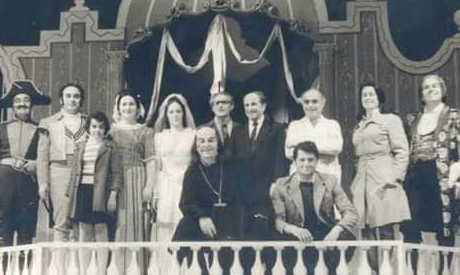
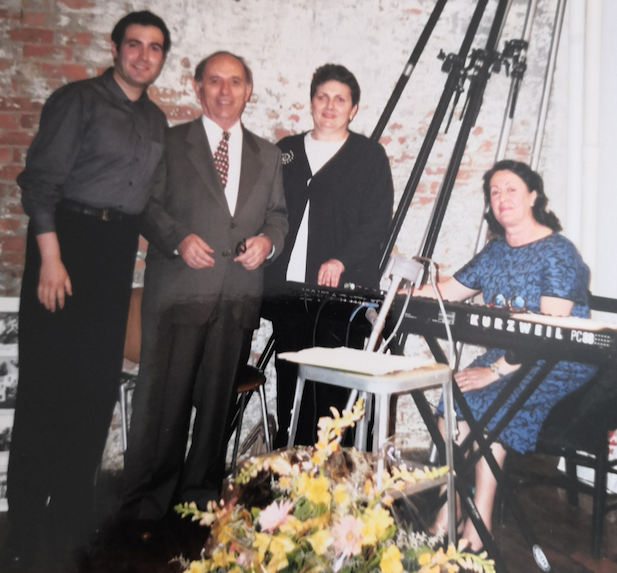
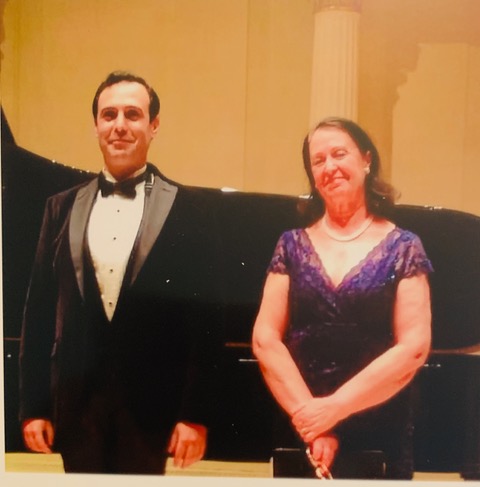
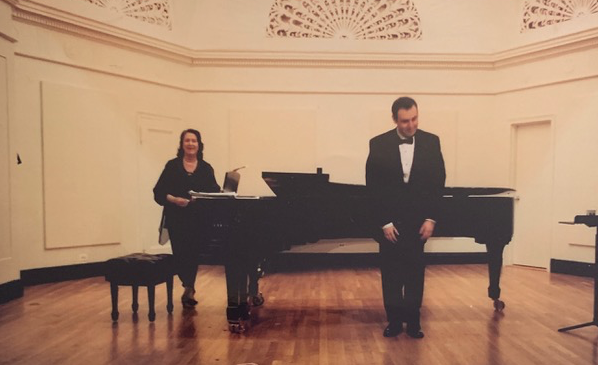
Karriera e saj profesionale përfshin thuajse dyzet vjet në Shqipëri ku ajo ka qenë nga prijëset e para të profesionit të saj si shoqëruese dhe pianiste e zhanrit operistik. Në fund të viteve 90-të, kur ajo bashkë me fëmijët, Azeta dhe Kreshnik Zhabjaku erdhën në Nju Jork, talenti i saj spikati edhe këtu. Në sajë të kualifikimit dhe përvojës së saj, Koncert Maestroja Nermin Daja Zhabjaku u angazhua në Mannes College of Music nga tenori me famë ndërkombëtare z. Dan Marek. Gjatë bisedës me Diellin ajo flet për veçoritë e brezit të artistëve që jetuan dhe krijuan në diktaturën komuniste dhe që patën mundësinë të japin kontribut në Amerikë, tregon disa momente personale sesi u këndua aria ‘gabimisht’në gjuhën italiane, flet për jetën e artistëve në diasporë e të tjera. Ajo ndjen respekt për artistët me të cilët ka bashkëpunuar me vite të tëra, ndërsa ata e kanë vlerësuar atë për profesionalizëm të pashoq. “Pasioni, vullneti, talenti, puna artistike me solistët e bën zonjën Daja Zhabjaku një artiste me plot kuptimin e fjalës,’ shkruan tenori shqiptar, Artisti i Popullit, Gaqo Çako. Si nënë, zonja Daja Zhabjaku është figurë qendrore në jetën e fëmijve. Ajo ndjek me kënaqësi spektaklet e koncertet e Kreshnikut ashtu si edhe simpoziumet e kumtesat e Azetës. 

Ajo është ngjitur në skenë me mijëra herë por kurrë nuk e ka kërkuar dritën e prozhektorëve. Ajo ka shoqëruar qindra zëra por kurrë nuk ka lejuar të kërkojë vendin e parë. Për Ditën Ndërkombëtare të Gruas, Dielli do ndriçojë mbi të për kontributin që i ka dhënë Koncert Maestroja Nermin Daja Zhabjaku artit operistik shqiptar.  

-Ju zonja Daja Zhabjaku i përkisni brezit të artistëve shqiptarë, të cilët një pjesë të konsiderueshme të jetës profesionale e kaluan nën diktaturën komuniste. Çfarë ishte më e rëndësishme për ju në atë kohë? 

Pjesën më të madhe të karrierës sime, plot 30 vjet, e kam përjetuar në diktaturë. Për mua, gjithmonë ka pasur rëndësi parësore integriteti personal e profesional. Jo vetëm përgatitja dhe profesionalizmi, por edhe komunikimi me solistët në çdo kapacitet. Natyra e punës sime kërkonte të isha partnere në të kënduar për duetin/trion e rradhës apo të ndihmoja solistin të formonte artistikisht qasjen individuale ndaj rolit ose aries që po përgatiste. Sot është e lehtë të harrojmë që në atë kohë nuk kishim inçizime (CD) të ndonjë lloji (të rralla ishin rastet me disk apo kaseta magnetofoni) ndërsa platforma si Youtube nuk eksistonin që të krahasonim ose të merrnim ide nga artistë ose teatro të huaj. Në ato kushte, përgjegjësia binte tek mua për të arritur nivelin më të lartë të interpretimit të solistëve të operës sonë kombëtare.

-Nga ajo kohë deri më sot, çfarë nuk duhet të harrojmë të gjithë ne këtu në diasporë dhe në atdhe? 

Këmbënguljen dhe dashurinë e profesionitëve për artin e operas pavarësisht nga vështirësitë e krijuara nga ideologjia dhe konjukturat politike. Një nga periudhat më të rënda ka qenë kopjimi shqiptar i revolucionit kulturor kinez, gjatë viteve ‘70 dhe ’80. Pika absurde ishte ndalimi i të kënduarit të arieve dhe veprave operistike në gjuhën origjinale. Libretet e operave klasike si Traviata apo Rigoletto të Verdit, Madama Butterfly nga Puccini, Dasma e Figaros nga Mozarti e shumë të tjera këndoheshin në shqip. Nuk mund të harroj një episod kur gjatë një koncerti, sopranoja e njohur Shqipe Mingomataj më tha se do ta interpretonte arien e Toskës në gjuhën origjinale. Kur iu turrën se kishte shkelur ‘vijën’ ajo këmbëngulte se e kishte kënduar në shqip dhe se ‘paria politike’ nuk e kishte dëgjuar mirë. Por në Shqipërinë komuniste kufizimet kishin cekur çdo detaj të jetës personale. Veshjet e lejuara në punë dhe në publik, siç ishte ndalimi i mbajtjes së pantallonave për femrat dhe gjatësia e fustaneve deri tek gjuri. Nuk e harroj vëzhgimin e vrazhdë në hyrje të derës së operas ku kontrolloheshim se mos kishim tejkaluar ndopak lyerjen e buzëve apo rimelin te qerpikët. Megjithëse sot edhe unë vetë mund t’i kujtoj me pak humor me shoqet e mia, në atë kohë si pianiste e re ishte jetike t’i përmbaheshe normave të vëna nga drejtoria.

-Si artiste me karrierë në dy kontinente dhe në dy sisteme, si e ke përjetuar veçorinë e një brezi të tërë të artistëve shqiptarë, që kapërcyen vitet ‘90 dhe 2000 duke jetuar dhe krijuar në Amerikë? 

Ky brez i krijuesve shqiptarë është shumë i formuar artistikisht dhe zotëron plot talent dhe shumë zell. Ata kanë gjetur edhe këtu mundësira për të arritur potencialin e tyre profesional.

-Po çfarë gjen dhe çfarë nuk gjen artisti shqiptar në diasporë?  

Për mua personalisht, imagjinoj se çfarë mund të kisha arritur po të isha këtu në moshën 20 vjeç. Në anën tjetër më mungon ngrohtësia që kam pasur me kolegët e mi. 

-Nga kujtimet personale, ju mbaj mend në mbrëmjen e 50 vjetorit të krijimtarisë së babait tim në Nju Jork, ku ju ishit pianistja që shoqëruat baritonin Kreshnik Zhabjaku dhe mezzo sopranon Rajmonda Dabulla. Lista e artistëve që keni shoqëruar dhe me të cilët keni bashkë-interpretuar i përngjan një antologjie të këngëtarëve të operës shqiptare. E njëjta vlen edhe për kompozitorët shqiptarë. Nga më shumë se 1,000 koncerte a mund të ruhen momentet të caktuara në kujtesë?  

Koncertet me artistë të skenës së Teatrit të Operas dhe Baletit janë të panumërueshme. Për afër dyzet vjet kam shoqëruar në piano dhe në kanto shumicën e artistëve, solistëve, tenorë, baritonë, mezzosoprano, bass, si dhe kam interpretuar në koncerte dhe inçizime në Radio Televizionin Shqiptar. Kam qenë shoqëruese në shfaqje në të gjithë Shqipërinë. Dhe deri në kohën që u largova, luaja me dëshirë për studentët e Akademisë së Arteve në saxhot dhe provimin e diplomës.

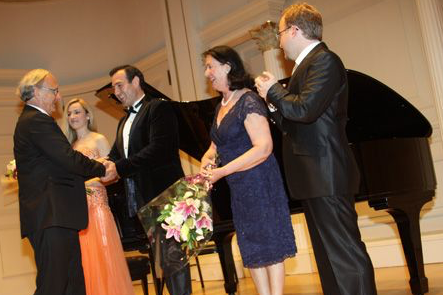
-Nju Jorku është ‘atdheu’ i dytë për familjen tuaj si edhe një nga kryeqendrat e jetës artistike. Ju keni qenë pianiste në koncertin në Carnegie Hall 2014, ku krejt programi ishte ndërtuar me muzikë dhe artistë shqiptarë. Cilat janë përshtypjet tuaja? 

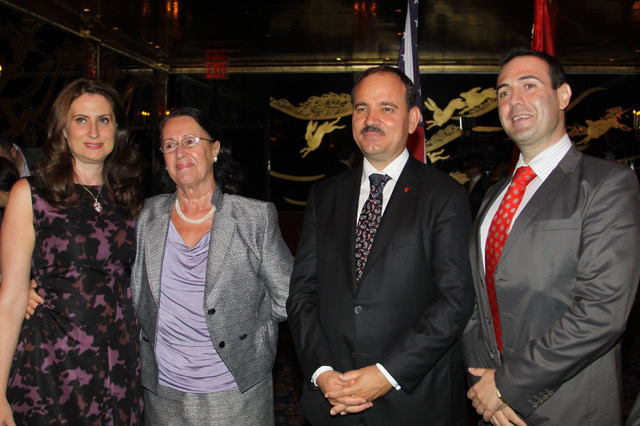
Ishte koncert me nivel të lartë artistik dhe i organizur shumë bukur. Një punë e mrekullueshme e producentit Xhevat Limani dhe Ambasadorit të Shqipërisë pranë Kombeve të Bashkuara në atë kohë, z. Ferit Hoxha. Ka qenë edhe një ndër momentet më të ëmbla si nënë dhe si pianiste profesioniste, pasi bariton në skenë ishte djali im Kreshniku. Më është ngulitur në kujtesë kumbimi i muzikës së mirëfilltë klasike shqiptare në një ndër skenat më të njohura në botë. Mbaj mend shumë përfaqësues të OKB-së dhe artdashës njujorkezë si edhe shqiptarë nga komuniteti ynë që na pritën me duartrokitje dhe ovacione. Ky koncert ishte koncerti im i fundit në karrierën time si pianiste profesioniste.

– Këtë vit festa ndërkombëtare e gruas qëlloi të ishte në periudhën e përhapjes së epidemisë së virusit respirativ me përqendrim të madh në Nju Jork. Cilat janë kujtimet e festimit të 8 marseve të kaluar?

Për mua gjithmonë ka qenë e rëndësishme ta kaloj me familjen time. Kam qenë e lumtur me bashkëshortin tim, regjisorin Ismail Zhabjaku, dhe fëmijët, Azeta dhe Kreshnik. Ka qenë gjithmonë një ditë pranë familjes dhe më të shumtën e rasteve bënin piknik nga liqeni i Tiranës. Mbaj mend lulet që më sillnin fëmijët dhe hartimet që më bënte vajza për 8 Marsin. Momente që kurrë nuk harrohen. 

-Muzika dhe artisët shqiptarë janë të pranishëm në shumë spektakle e koncerte në mbarë botën. Ata kanë arritur njohje masive dhe publicitet global që nuk ishte mbërritur deri tani dhe që vështirë se mund të arrihet me rrugë të tjera. A është pozita e tyre e favorshme për të përçuar një mesazh të bashkuar? 

Patjetër. Zemra dhe shpirti shqiptar ka qenë dhe do të jenë gjithmonë pjesë e artit botëror. Eksperienca e një kombi gjatë shekujve është transmetuar nga gjenerata në gjeneratë. Artistët tanë, brenda dhe jashtë vendit, janë ata që e përcjellin atë më së miri. Mjeshtëria e tyre artistike është e pazëvendësueshme në botë.

BRIEF BIO OF CONCERT MAESTRO NERMIN DAJA ZHABJAKU

Nermin Daja Zhabjaku – a pioneer coach-concertmaster at the Albanian National Opera House whose career spans 36 years. She was born in a loving family in her native city, Albania’s capital, Tirana. Showing her love of music early on, she started piano lessons when she was five years old and was enrolled at the artistic Lyceum “Jordan Misja” in Tirana at the age of 10.  Soon after completing her education, she began coaching at the National Opera House. She is one of the pioneers in her profession, with a long-running career. She retired and moved with her family to New York in 1998.

She has performed alongside excellent Albanian Opera singers: Avni Mula, Gaqo Çako, Nina Mula, Luiza Papa, Ramiz Kovaçi, Haxhi Tafaj, Myzejen Mullai, Stavri Rafael, Mentor Xhemali, Shqipe Mingomataj, Ibrahim Tukiçi, Kristaq Paspali, Xhovana Doku, Shqipe Zani, Vangjo Kosta, Hysen Kurti, Burhan Spahiu, Pëllumb Katroshi, Emine Gjata, Hysen Koçia, Edit Mihali, Ruzhdi Karaj, Gjergj Sulioti, Petrika Rëmbeci, Kaman Aliko, Rajmonda Dabulla, Inva Mula, Marjana Leka, Mirela Tafaj, Ymer Kaca, Lindita Lole, Deshira Ahmeti, Era Hoxha, Adrian Xhema, Kastriot Tusha, Oriana Kurteshi, Elona Çeno, Shirli Polena, etc. Her extensive portfolio includes accompaniments of international performers like Filipo Pino, Gianluca Rizzi, Patrick Daniston. The collaborations with composers and conductors such as Mustafa Krantja, Rifat Teqja, Pjetër Gaci, Ermir Krantja, Nikolla Zoraqi, Çesk Zadeja, Feim Ibrahimi, Vitorio Parisi, Alan Aurelia, Manfred Mayerhoffer, etc are productions of fine quality. She has appeared in countless concerts on the Albanian National Television with Opera House soloist and instrumentalists, such as Fatos Jaho, Igli Tuga etc.

For twenty five years she was employed at The Opera Performance Class at the Academy of Fine Arts in Tirana, Albania, to coach generations of singers who perform internationally to this day. For her many achievements as a musician, Ms. Daja-Zhabjaku was awarded the “Naim Frasheri” Award for Musical Excellence by the Parliament of the Republic of Albania in 1985.-the highest civilian honor bestowed by the Albanian Government at that time. 

She continued her career in the US as a voice and signing coach at Mannes College of Music. For thirteen years, Ms. Nermin Daja Zhabjaku pursued her vocation at the studio of Metropolitan Opera singer Dan Marek, a principal tenor of international stature. An active and reputable performer, she has appeared extensively in shows and productions from Austria, Italy in Europe and throughout the United States.

Throughout her vast professional life, she has received countless honors including prizes and awards from the Artistic Council of the Albanian National Opera. She retired the onstage performance with a milestone concert at Well Recital Hall, Carnegie Hall in 2014 – the first time Albanian classical music was performed at the venue for the full duration of the concert.

She has performed over a thousand concerts and coached hundreds of voices yet never asked to step into the spotlight. On the International Day of Women, we shine a light on the Concert Master Daja Zhabjaku for her pioneer work and her unsurpassed professionalism in Albanian Opera. 

Filed Under: Featured Tagged With: NerminDaja Zhabjaku, Rafaela Prifti

THREE US OFFICES, ONE MESSAGE FOR KOSOVA’S INDEPENDENCE

March 17, 2020 by dgreca

by Rafaela Prifti/

On the twelfth year of Kosova’s Independence, the 17th Day of February 2020 was proclaimed “Independence of Kosova Day in the Bronx”.

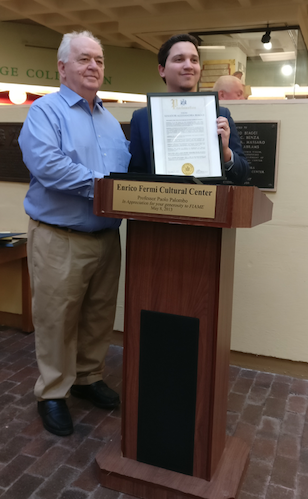
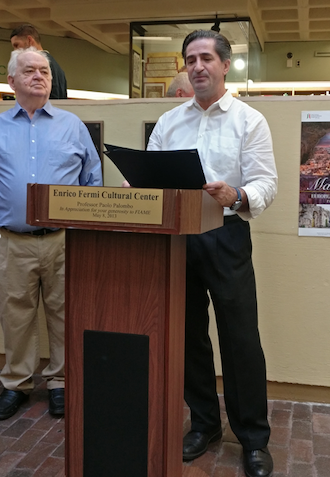
The Albanian-American Society Foundation, Sons and Daughters of Albania in America and the Albanian Community Center at Enrico Farmi Cultural Center of Belmont Library hosted a special commemoration on February 19th. The state and local offices of the legislative and executive branches converged to signal the importance of the day. The New York State Governor’s Office, the New York State Senate and the Bronx Borough President delivered messages of support reinforcing a strong partnership with the community. 

Mr. Esad A. Rizai, President of the Albanian-American Society Foundation and a central figure who is recognized for his hard work to elevate the community, thanked the distinguished guests and participants. Starting with Ms. Sophia Zayas, Bronx Regional Representative from the Office of Governor Andrew M. Cuomo, a senior staff of State Senator Alessandra Biaggi, Mr. Rizai acknowledged the community members who were gathered to mark the day, including Ms. Williams of the Belmont library that provided the venue for the event. Speaking on behalf of Governor Cuomo’s office, Ms. Zayas drew attention to “the special place that Albanians have in the diverse Bronx community.” She read out a letter signed by the New York Governor sending greetings for the commemoration of the 12th anniversary of Kosova’s independence, which is “recognized by more than 100 countries including many in the European Union.” On this occasion, governor Cuomo honored the state of Kosova with a proclamation. His letter stated that what is most special about the “the people who have made our state their home,” and are part of the history of Kosova are individuals who have committed incredible acts of courage, inspired by the ideals of freedom. A posthumous citation for his contribution was awarded to Mr. Alush Smajli (Hoti). The New York Governor dedicated a special tribute posthumously to a man “of such rare quality and character as Ali Rizaj,” for demonstrating the highest level of commitment to these ideals. As documented, at a young age, he joined the forces of liberation against the Italian and German occupation. Mr. Ali Rizaj was imprisoned by communists who seized power in Albania after the WWII. He escaped to Kosova where he was arrested and jailed. Forced to leave behind family members, in 1951, Mr. Rizaj migrated to the US. As an activist of undeterred conviction and a valiant freedom fighter, Mr. Ali Rizaj was awarded the presidential medal for his bravery in service of Albania’s Liberation War. His son, Esad A. Rizaj, accepted the proclamation on behalf of his late father, whom he remembers as a man “who fought for what he believed in and believed in what he fought for.”           

Founder and President of the Albanian-American Society Foundation, Mr. Esad A. Rizai, was also delegated to present the proclamations issued by the Bronx Borough President. Mr. Hajdin Alijaj, Vice-President of the organization that promotes Albanian heritage and values, was one of the honorees. He thanked all who made the event possible. “We,” said Mr. Alijaj “are here to honor the heroes for the sacrifices they made for a free and independent Kosova and give our blessings to the United States and NATO nations for ending the war.” A proclamation was issued to Mr. Ali Haxhaj for his one of a kind contribution in turning his own home into a school facility for Albanians subjected to education bans imposed by the Serb regime. The next honoree, Mulla Zeke Berdyna, was cited as “a distinguished religious leader and activist who gave his life for ethnic Albanians and freedom of Kosova, to preserve his proud heritage despite years of imprisonment.” The proclamation presented to salute and honor the legacy of Mulla Zeke Berdyna, read in part that the President of the Borough of the Bronx, with the largest Albanian community in the US, “celebrates the tremendous contributions to culture and history they have and continue to offer our borough, our city”. On behalf of the Berdyna family in Kosova and in the US, their grandson, Fahri, thanked the officials and the organizers, vowing to work harder to show gratitude to ‘this great country.” In acknowledgement of a KLA legendary founder, Adem Jashari, it was proclaimed that February 17, 2020 would be “Independence of Kosova Day in the Bronx. Regarded as the “father of Kosova Liberation Army”, Adem Jashari, is widely considered a symbol of Kosova’s independence by ethnic Albanians. Fifty eight members of his family perished in the attacks that Serbian forces launched at Jashari’s home in Prekaz in March 1998. He was posthumously awarded with the title “Hero of Kosova”. Mr. Qazim Gashi was invited to accept the recognition. To commemorate Kosova’s Independence, Albanian poet and songwriter Isa Brecani addressed the guests. He presented the view that Kosova’s independence has opened the path towards the unification of all Albanian regions. Then he recited three of his original poems dedicated to three heroes: Commander Adem Jashari, General Tahir Sinani and Vezir Ademaj. A commander in the KLA during the Kosova war, Mr. Tahir Sinani was appointed commander in the Kosova Protection Corps after the war, and went on to join the NLA in the Macedonian Conflict in 2001. In his honor, February 17, 2020 was proclaimed “General Tahir Sinani Day”. Proclamation stated that “his life was tragically cut short but the flame of his heroism will always brightly burn for all Albanians.”

Mr. Esad A. Rizai expressed his gratitude to the Bronx Borough President Ruben Diaz Jr. and his staff for supporting the community organizations for 11 years. Indeed, the partnership have made possible celebrations of events like the independence of Albania by raising the Albanian flag over the Bronx County Building in 2018 for the first time. In August 2009, the borough joined its Albanian community to honor the most beloved Albanian daughter, Mother Theresa, with her very own street in the Bronx.        

To mark the celebration, the New York State Senator Alessandra Biaggi issued a proclamation that was presented by the Deputy Chief of Staff, Mr. Miguel Rondon. It recognized that “in the nation of Kosova, we have an entity worthy of the highest respect and esteem.” A number of distinguished Albanians like Alush Smajl Hoti received recognition by the New York State Senator’s Office.

Following the official part of the ceremony, attendees were invited to say a few words and share their thoughts and messages. Mrs. Mimoza Dajci, Founder and President of Hope and Peace Foundation, is also a family member of Isa Boletini, an Albanian national hero and visionary. She credited the annual celebrations of independence by the Albanian-American Society Foundation under Mr. Rizai’s leadership to the strong bonds with the Borough and the state level government. In order to better support such partnership, Mrs. Dajci called for a more unified community. Remembering the victims of the Kosova war and the survivors, she placed emphasis on demanding justice for the unpunished sexual crimes of the conflict. On behalf of the Smajli family, Mr. Hoti, presented briefly his grandfather’s bio with emphasis on the contribution of Alush (Ali) for the liberation of ethnic Albanians and the opening of his home to be used as a school facility when the Serbian regime outlawed schooling for Albanians. “Such actions spelled severe consequences,” said Mr. Hoti, yet Alush Smajli set an example of patriotism for his successors and all of us. In reference to present day issues, Mr. Hoti urged for a coordinated effort to advocate for Kosova’s rights. The next speaker was the author of this article who briefly referenced the previous celebrations to drive the point that our community is brought together by common values and traditions to be honored and upheld. Attending the event were Mr. Idriz Lamaj, Executive Council member of Pan-Albanian Federation of America Vatra, and guests from organizations with headquarters in Baltimore, Philadelphia etc. To commemorate the day of Kosova’s Independence, Mr. Egidio Sementilli, Chair of the Bronx Italian-American Cultural Association, highlighted the struggles of the Albanian and Italian community. Reaching back to his childhood years, Mr. Sementilli spoke about his experience as a newly arrived immigrant in the “big family” here in the 70s. From that period to the present, he credited the Albanians with ensuring “the community’s survival in the Bronx.” “And thirty years ago,” Mr. Sementilli said, “Mr. Esad Rizai, made sure that the Albanian community was at the table,” paying tribute to the legacy of the Albanian-American Society Foundation.

Esad Rizaj

At the commemoration of Kosova’s Independence, the 17th Day of February 2020 was proclaimed “Independence of Kosova Day in the Bronx” while the state and local government officials reinforced the strong partnership with the Albanian community.   


Filed Under: Histori Tagged With: One Mesasage, Rafaela Prifti

  • « Previous Page
  • 1
  • …
  • 45
  • 46
  • 47
  • 48
  • 49
  • …
  • 52
  • Next Page »

Artikujt e fundit

  • PËR NJË NORMALITET NË MARRËDHËNIET SHQIPËRI-KOSOVË: JO FJALË BOSHE!
  • Ballafaqimi me të kaluarën, detyrë morale dhe parakusht për drejtësi, paqe dhe stabilitet afatgjatë
  • Ditët e fundit të kompozitorit të Himnit të Shqipërisë…
  • Butrinti dhe vija kushtetuese që Shqipëria nuk duhet ta kalojë
  • Universiteti i Tetovës lindi si “dielli pas errësirës”
  • MIRO TËRBAÇJA, SHQIPONJË E HISTORISË
  • Hirësia e Tij Nikodhimi, Peshkopi i Bostonit dhe Kryepeshkopatës Ortodokse Shqiptare në Amerikë kreu vizitë 10-ditore në Shqipëri
  • Shqipëria dhe Kosova në Bordin e Paqes: Nga historia e plagëve drejt arkitekturës së paqes globale
  • PAQE PËRMES FORCËS, DREJTËSI QË GARANTON STABILITET, JO PASIGURI
  • Kosova pays the price as its liberation leaders are persecuted, not prosecuted
  • Çfarë sjell shkretimi shpirtëror në një tjetër shekull zhgënjyes përmes antologjisë së nobelistit Eugenio Montale
  • FAN (1971) / “TË PISH E TË HASH NË SHQIPËRI” — REPORTAZHI EKSKLUZIV BOTËROR I TELEVIZIONIT ZVICERAN
  • Folklori çam, i gjallë edhe në botën moderne!
  • Milan Shuflaj, e vërteta historike dhe martirizimi i lirisë akademike në Evropë
  • Kontributi i Prof. Emeritus Injac Parrinos në shkencat albanologjike

Kategoritë

Arkiv

Tags

albano kolonjari alfons Grishaj Anton Cefa arben llalla asllan Bushati Astrit Lulushi Aurenc Bebja Behlul Jashari Beqir Sina dalip greca Elida Buçpapaj Elmi Berisha Enver Bytyci Ermira Babamusta Eugjen Merlika Fahri Xharra Frank shkreli Fritz radovani Gezim Llojdia Ilir Levonja Interviste Keze Kozeta Zylo Kolec Traboini kosova Kosove Marjana Bulku Murat Gecaj nderroi jete ne Kosove Nene Tereza presidenti Nishani Rafaela Prifti Rafael Floqi Raimonda Moisiu Ramiz Lushaj reshat kripa Sadik Elshani SHBA Shefqet Kercelli shqiperia shqiptaret Sokol Paja Thaci Vatra Visar Zhiti

Log in

This website uses cookies to improve your experience. We'll assume you're ok with this, but you can opt-out if you wish. Cookie settingsACCEPT
Privacy & Cookies Policy

Privacy Overview

This website uses cookies to improve your experience while you navigate through the website. Out of these cookies, the cookies that are categorized as necessary are stored on your browser as they are essential for the working of basic functionalities of the website. We also use third-party cookies that help us analyze and understand how you use this website. These cookies will be stored in your browser only with your consent. You also have the option to opt-out of these cookies. But opting out of some of these cookies may have an effect on your browsing experience.
Necessary
Always Enabled
Necessary cookies are absolutely essential for the website to function properly. This category only includes cookies that ensures basic functionalities and security features of the website. These cookies do not store any personal information.
Non-necessary
Any cookies that may not be particularly necessary for the website to function and is used specifically to collect user personal data via analytics, ads, other embedded contents are termed as non-necessary cookies. It is mandatory to procure user consent prior to running these cookies on your website.
SAVE & ACCEPT