• Home
  • Politics
  • Opinion
  • Culture
  • Sports
  • Economy
  • Interview
  • Reporting
  • Community
  • Vatra

Dielli | The Sun

Albanian American Newspaper Devoted to the Intellectual and Cultural Advancement of the Albanians in America | Since 1909

KOSOVA 15 VJET SHTET, VATRA CHICAGO ORGANIZOI FESTË LETRARE

February 20, 2023 by s p

Mirela Kanini*/

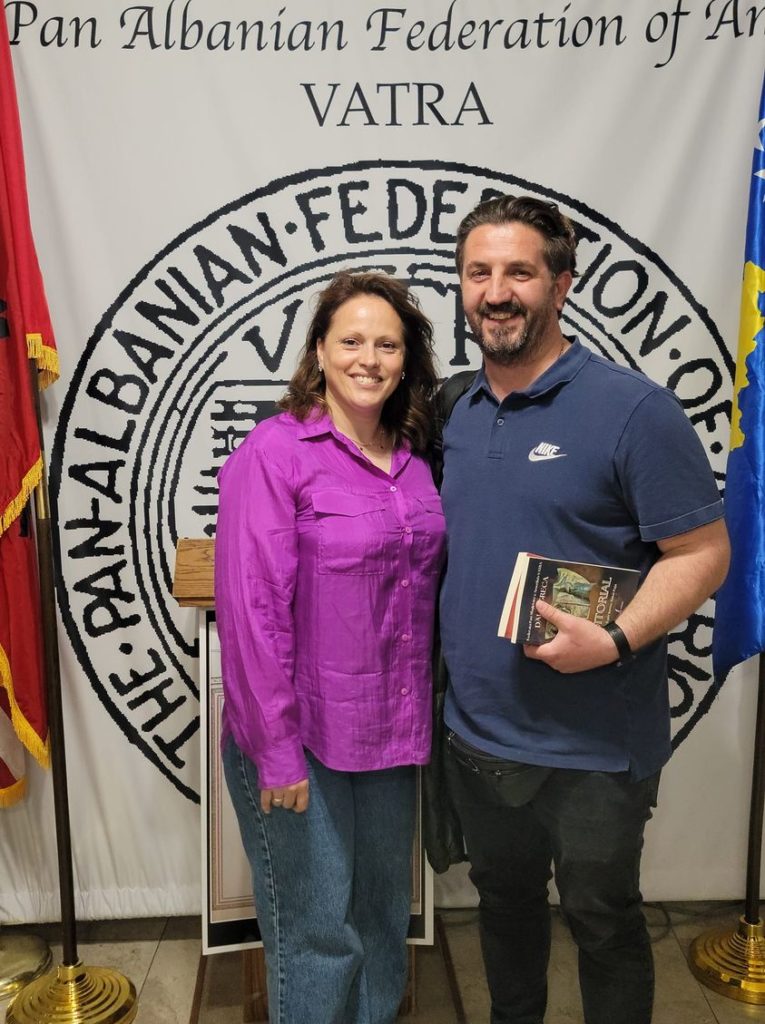
Chicago, 18 Shkurt 2023 – Federata Pan-Shqiptare e Amerikës VATRA, dega Chicago, në nder të 15 vjetorit të pavarësisë së Republikës së Kosovës organizoi një aktivitet të larmishëm letrar. Dita e pavarësisë është dita më e rëndësishme për një popull, një shtet dhe një komb. Pavarësia e Kosovës u organizua si një festë letrare me të ftuarin e nderit z. Skender Karaçica. Ai foli midis të tjerash në ditën e pavarësisë për Kosovën, të kaluarën dhe të ardhmen e saj. Në fjalën e tij ai theksoi se Kosova sot është një vend demokratik me aleatë të mëdhenj si ShBA dhe Perëndimin. Kujtoi figurat e mëdha të Kosovës, Ibrahim Rugovën, Adem Jasharin dhe rolin e UÇK-së. Në takim u diskutuan pasuritë e Kosovës. Të pranishmit i drejtuan pyetje mbi Trepçën dhe z. Karaçica u zbuloi kuriozitetin se ajo sot është në duart e qeverisë së Kosovës. Në kohën e Jugosllavisë së Titos, Trepça ishte kolaterali hipotekor me të cilën merrte kredi Jugosllavia. Në takim u përmend liqeni i Ujmanit që ka digën nga më të mëdhatë në Europë. Sot Kosova ecen drejt integrimit Europian dhe me synimin drejt hyrjes në BE. Pastaj u lexuan poezi të z.Karaçica nga anëtari i kryesisë z. Kastriot Fetahu. I gjithë takimi kaloi në një atmosferë të bukur dhe miqësore duke theksuar se idealet e Fan Nolit dhe Faik Konicës Vatra e Chicagos do i zhvillojë dhe më tej duke i bërë gjithëpërfshirës të gjithë shqiptarët në shtetin e Illinois-it. Tradita e Vatrës filloi me një aktivitet madhor kombëtar sepse dhe vetë qëllimi i saj është ti shërbejë vetëm kombit, çështjes kombëtare, historisë, identitetit dhe gjuhës shqipe. Takimin tonë e bëri të mundur në ambjentet e restorantit të saj “Café Mirage”, pronarja shqiptare Suzan Dadevski të cilës i shpreh mirënjohje dhe respekt. Kjo ditë është historike për degën e Vatrës në Chicago pasi shënojmë aktivitetin e parë si degë dhe shpresojmë të jemi qendër bashkimi, atdhedashurie, patriotizmi e shqiptarie.

*Kryetare e degës së Vatrës në Chicago

Filed Under: Mergata Tagged With: Mirela Kanini

Me shumë meritë: Jim Xhema përjetësohet me emrin e një rruge në Prishtinë

February 15, 2023 by s p

Nga Harry Bajraktari

NEW YORK/

Urime mikut tim Jim Xhema për nderimet e bukura dhe të merituara që iu bënë sot nga Presidentja e Kosovës Vjosa Osmani dhe Kryetari i Komunës së Prishtinës, Përparim Rama.

Jim Xhema pranoi sot Urdhërin Presidencial të Lirisë së Kosovës. Dhe duke filluar që sot, një rrugë e kryeqytetit të Kosovës do të mbajë emrin e aktivistit të shquar shqiptaro-amerikan.

Jim Xhema ka qenë pjesë e pandarë e çdo ngjarjeje apo nisme të madhe që kemi pasur në Washington apo New York në gjysëmshekullin e fundit, në shërbim të kombit shqiptar.

Miqësia e tij me Senatorin e Amerikës Bob Dole ka qenë një nga themelet e mbështetjes dypartiake që shqiptaro-amerikanët ndërtuan në Washington kur Kosova dhe kombi shqiptar kishin më shumë nevojë.

Vendosja e emrit të tij një rruge në Prishtinë nderon jo vetëm patriotin Jim Xhema por edhe gjithë komunitetin shqiptaro-amerikan për ndihmën e madhe dhe kontributin që kanë dhënë për Kosovën.

Urime miku im, Jim Xhema! Faleminderit Presidentja Vjosa Osmani dhe Kryetari Përparim Rama!

Zoti e bekoftë Kosovën e lirë dhe të pavarur.

Filed Under: Mergata Tagged With: harry bajraktari, Jim Xhema

Alexis Zoto Honors the Albanian Cultural Heritage, You Can Do Your Part

February 14, 2023 by s p

Interviewed by Rafaela Prifti/

Alexis Zoto is an Albanian American practicing artist, designer, researcher and writer. Currently, she is Chair of Design, 3D at the University of Southern California, Roski School of Art and Design. She has shown nationally and internationally. Her Albanian ancestral heritage is, at times, literally weaved in her own forms of artistic expressions. Zoto’s designs and ongoing research project on textiles explore aspects of Albanian cultural identity including the symbolism in weaving and in stories ‘told’ by the family heirlooms through which the past and the present connect all of us. Although this is her first interview with Dielli, Alexis family’s connection to Vatra go all the way back to the time of Vatra’s founding. Her grandfather Minella Zoto and his brother helped found St. John Chrysostom Albanian Orthodox Church in its current location in Philadelphia, PA, and relatives in the Kerxhalli and Chekani families helped establish St. Mary’s Albanian Orthodox Church in Worcester, MA. Dielli is both pleased and proud to introduce Alexis Zoto to its readers.

Whether Albanians know it or not, they may have something you are interested in. I am talking, of course, about family heirlooms such as velënxa, qilims (kilims), sixhade (tapestry) etc. Lets start with what they are and what it is that you are looking for.

I am collecting images and information on Albanian domestic textile heirlooms, like: qilima, sixhade, flokia, and velexa. I also am interested in needle work. I am curious to know about people who worked in factories making these items and people who made them at home. I am interested in how people spun and dyed their yarns too. Lastly, I want to know if there is any information on why the colors and motifs were chosen and if there is a meaning attached to those colors and symbols. I would love to know any history or stories too.

In November you gave an interesting presentation during a panel hosted by the Society for Albanian Studies to discuss the Albanian American relations and changing of the diaspora. What were the main points?

I spoke about the velexa, a woven textile made of wool that is then felted. I know them as ‘valenska’ or ‘velenska’ as my cousins do. In my research, I found many different spellings of the word. I also have seen many different kinds: plain one that are one color and others that have elaborate designs and have many colors. Another aspect I mentioned was that even though often we think of them in the home on a bed or a sofa, in St. George’s Albanian Orthodox Cathedral in Boston they adorn sacred spaces. I found this remarkable and a beautiful gesture because when Albanians immigrated to the USA in the 1990’s and 2000’s they saw another part of home in their place of worship. I know some newly arrived Albanians who were not Orthodox came to the Orthodox church just to be among other Albanians. St. George’s has a lovely collection of velexha and kilims given to the church by parish members.

Your Albanian ancestry finds its expression and has a definite presence in your art work and designs. What can you tell us about your Albanian ancestry and how it has shaped who you are?

Yes, it does. My family shaped who I am. Identity is a big part of my artistic practice. My grandparents, Vrisidha and Minella Zoto, came to the USA in 1939 and landed in Philadelphia. I grew up in that diaspora community. I can’t express how grateful I am for my grandparents bravery to come to the USA during wartime and all the sacrifices that were made for me and my family to achieve so much. I am very proud of my family and what they gave back to the Albanian community in Philadelphia and beyond whether its was helping out family or new arrivals from Albania or helping to establish their church. Growing up, I thought Albania was an unreachable, beautiful, and mysterious place. My grandmother’s house was the center of my universe.

Can you take us back to your childhood memories in Philadelphia growing up or being brought up with Albanian customs or cultural traditions such as observing name day (Dita e emrit) or cooking Albanian food and so on? How did that inspire your interest in arts and design?

I lived with my parents outside of Washington DC and would go to my grandparents’ house regularly for holidays. I remember feeling rather exotic because most people I knew in my school didn’t have large extended families or observe the same holidays. I loved being in my grandmother’s kitchen. Each holiday it seemed had a special dish accompanying it whether it was petulla during New Years or kolura during Christmas or different kinds of lakror or byrek depending on the calendar. During name day celebrations, which was a big celebration, I or one of my cousins would be sent to collect coffee cups from the all the men (uncles and great uncles and grown cousins) gathered at a table. One of the women (aunts, great aunts and grown cousins) helping to clean up in the kitchen would flip the cup and ‘read’ the coffee grounds and laugh. My interest in the arts I think came from what I was exposed to growing up which was not museums but the church and my grandmother’s house. The chandeliers, candles, flowers, icons, and iconostasis that adorned church was my first exposure to art.

Do you recall your first encounter with the handmade Albanian kilims? What was it like?

I had seen my grandmother’s crochet and needle work growing up, but she didn’t have traditional kilims or velexha. My cousins in Massachusetts had them. But I really got into investigating these textiles when I saw a beautiful book called Qilima Shqiptare by Rrok Zojzi published in 1968 at a family reunion. Shortly after, a cousin who grew up in Tirana showed me a spectacular kilim that belonged to my great grandmother. I was deeply impressed by the quality of the wool, the craft and skill of the weaving and the beauty of the design.

In reference to velënxa korçare, is that a recognized term in weaving or in design? Each region of

Albania displays its identity in the material culture. What more have your discovered in the

course of your work? What secrets do they hold?

First, your referring to them as velexha korçare is a new name to me. I am intrigued because I know people in Berat had them. The term is not recognized. I have to define and explain what they are. Often in my presentations people are very interested to learn about Albania and its history. It is true, each region I have visited has certain designs and colors associated with the weaving of that region. Kukes has a very distinctive design, color palette, and style of kilims that is completely different from kilims made in Korçe. However, there are certain designs that seem to be made in very region that only differs in color choices. It is interesting to me that certain designs and motifs appear in the kilims of Albania’s neighbors like Bulgaria and Serbia but each culture makes them slightly different. This makes sense to me as they were all in one country during the Ottoman Empire. Like Albania, these countries held on to their languages and therefore this individuality comes though in their respective material cultures.

Lets talk about your own story. As was the case with many pre-war era immigrants from the homeland, your family got eventually separated and its members lived on both sides of the Atlantic. After the end of WWII, Albanians endured extreme isolation under strict communist rules that lasted for about five decades. What was that like for you and your family members?

My family and I were always proud of our heritage, but it was hard for my grandmother being away from her parents and her brothers and her brothers’ families. I remember writing letters and putting together packages of clothes and medicine and vitamins. I also remember from a rather young age the fear and secrecy in the Albanian community around trying to help people get out of Albania. There were whispers of people disappearing or entire families being punished and/or sent to labor camps. It was known that letters were read. When I went to Tirana years later with my my children, I was sure to take them to the House of Leaves Museum to try to explain some of the unexplainable and inexcusable events that occurred in Albania.

No part of life was safe from political indoctrination in communist Albania including textiles as you have found out through your interviews and research in the community. What is the takeaway from this?

Yes. When I began trying to dig up information about kilims and other woven textiles, I reached out to family who arrived in the USA around the 90’s or family still in Albania. In fact, I would not have gotten nearly as much done in Albania or had the access to information and weavers without their help.

One cousin said of course she would help me but couldn’t understand what I saw in these items. She went on to share with me how all folk culture was shoved down her throat. She was so sick of it. Also the two books I found on the subject published in Albania in the 60’s and 70’s left me mystified and curious. Some of the information didn’t make sense to me. I wondered if some of the original meanings had been removed and replaced with the dictator’s dogma.

In talking with people who were either weavers or who had heirlooms I would ask about what the motifs meant or the reason for the colors chosen. I received many different answers. Some said ‘why does a symbol have to have a meaning?’ Or ‘it’s a double headed eagle’. Or’ I don’t know’. Other motifs were identified often from things nature like a flower or a butterfly or a frog. Prof. Aferdita Onuzi shared with me that in the past women would talk about ‘weaving a story’. This idea is my starting point.

In my view, there is still much to learn about how kilims, rugs, and blankets are different in design and color from region to region. For example, I have not seen a kilim or textile from Dibra among other places. I also believe diaspora communities also are an incredible resource in learning more about these textiles. Textiles from all over Albania are part of the Albanian identity and should be studied and preserved. With that said, there are many academics working hard in Albania to document and preserve all kinds of Albanian cultural heritage.

You have pointed out the presence of the stylized mosque motif in kilims and velenxa at the homes of

Orthodox Albanians who logically might have brought these heirlooms here on their journey from the homeland. Can you put into context for us? Why should we care about them today?

The xhami motif goes by different names depending upon what country you are in. I have found most people who use their velenxa keep it on their bed or sofa otherwise it is in storage. I have seen them in the size of approximately the top of a double bed and I have seen them the size of a cradle cover. Some velenxa with mosque motif are only two colors and others that are multicolored. You are correct that these heirlooms are found in Orthodox Albanian homes. Many of these families are second generation from the first wave of immigration from Albania to the United States, approximately late 1800’s to 1940. Some people have told me these velenxa are for good luck or protection and that every bride needed one in her paja (dowry). Some have told me that the mosque motif reflects the deep closeness between the two communities of faith in Albania. Sadly, I was told these velenxa stopped being made in around 1940. Many of the families I talked to about their heirlooms didn’t know much about them. Another noteworthy aspect of this style of velexa is the variety of borders and additional patterns. You can see the weaver’s innovation and creativity. The xhami motif is fascinating to me. In Albanian weaving, it is associated with the southern part of Albania. In the velenxa, the mosque motif is either red, black or dark blue. Where as in kilims, the mosque motif appears in many different colors. The ‘inside’ of the mosque motif there sometimes is another symbol, on the velenxa it usually is a rooster or an ibrik or a what looks like a vase. Unlike the kilims version of the mosque motif can have a wider variety of zoomorphic symbols as well the ibrik, vase, and rooster. This symbol was on my great grandmother’s black and red kilim. When I saw it I wondered why would a women who risked so much to practice her Orthodox fair under Hoxha have a kilim with mosques on it. Albania was then an atheist state. Priests were persecuted, tortured, or worse. I can’t say I found a definitive answer but I did find that it is a window into Albanian culture. The unique harmonious relations between many faiths, and the legacy of many interfaith families is a unique hallmark of Albania – like my own family which has both Orthodox and Bektashi members.

While velënxa is no longer being made in Albania, xhubleta was granted recognition and protection status by UNESCO. You spoke out about it in a post in November 2022.

This is absolutely wonderful news. I am so happy the xhubleta has this status. I remember being in Tirana years ago standing in a shop heartbroken seeing hundreds xhubleta hanging for sale. I know it was challenging to make this happen. I admire people like Aferdita Onuzi, Linda Meniku, Luljeta Dano and others for all the hard work they are doing to preserve the xhubleta. I think heritage Albanian crafts should be valued.

Art is a universal language and artists of all backgrounds communicate through it with people of all nationalities. You highlight your Albanian roots in your work. How do these motifs communicate with the public and other communities here in the US? What do they say to you?

When I have shown my work using motifs, often people will recognize a motif and identify it as something they have seen before. Often people will say something like, ‘Oh that reminds me of the rug in my house!’ Or they might think it is Native American or Turkish or Guatemalan. This mistaken identity is an opportunity to begin a delightful conversation.

You are named a “Cultural Trailblazer” by the Los Angeles Department of Cultural Affairs. What does that entail?

It was an honor to have that distinction. I think my work was recognized as part of the rich diversity of cultures here in Los Angeles, CA.

As a second generation Albanian American, you and your heritage inspired designs are a link of the old generation of Albanians, the Albanian Americans born here and the next generation?

I would be honored to be considered a link and have my art considered a link between generations. But really I want to remind Albanians today not to overlook or neglect their cultural heritage. Please collect stories, recipes, traditions, and knowledge from your elders- it is precious.

Your designs at the LAX airport can be seen by millions who enter and leave the country. Since it’s a public space and also a point of entry for many immigrants, and as a grandchild of Albanian immigrants, did this type of project have a different feel from other shows? What are some of the reactions you have heard?

I love doing projects at the airport. The most recent project I did at LAX was in the Southwest Terminal. It’s an honor and such a great opportunity to do a project for a wider and different audience. When I was developing my project, I thought about the airport workforce who would see this all day everyday. Then I thought about the millions of people passing through the terminal. I wanted to create a mural that would invite people in even at a glance. I also thought about how to combine motifs from different regions in Albania and how to transform them into something new. I wanted to make these symbols and the overall piece relevant and contemporary. Weaving is an ancient craft and art form. I hoped people might connect to the mural by seeing something familiar and pleasurable. Perhaps if they stopped long enough to read about the artwork, they could make a connection between something they have known with what I made at LAX.

Where can we see your current shows or upcoming projects now that we are more familiar with your unique artistry?

I am continuing my research on Albanian textiles. A paper I wrote on the velenxa will soon be published in an academic journal. I hope to visit more diaspora communities in the USA. I also hope to go to Kosovo and visit the national collection there. In May, I will be giving an artist talk, and I have an exhibit pending but no firm details yet.

Although this is your first interview with Dielli, your family’s connection to Vatra go all the way back to Fan Noli and the time of Vatra’s founding in Boston. What more can you tell us about it?

My grandfather and his brother helped found St. John Chrysostom Albanian Orthodox Church in its current location in Philadelphia, PA. Our cousins in the Kerxhalli and Chekani families helped establish St. Mary’s Albanian Orthodox Church in Worcester, MA. They were all active in different ways in the Albanian diaspora community. The Kerxhalli Branch arrived in 1923 before my grandparents who came in 1939.

What does a kilim or velenxa as Albanian textiles say about who we are today as a people and a culture?

Weaving is an ancient craft and art form practiced in one form or another all over the globe. I think the velenxa is a reminder of Albanian identity. It is a handmade object. Someone gathered the wool and dyed it. Someone had to create the design. Someone might have embroidered an initial or their name on the velenxa. It keeps a person warm and adorns the home. I hope Albanians here and abroad can be clear eyed while embracing our past, present, and future.

Thank you for your interest in my work. If your readers have textile heirlooms, qilima, sixhade, flokia and/or velexha I would love to know about them.

Thank you Alexis for the work that you do and for talking to us about it. I am putting the link below for the readers to find you.

www.alexiszoto.com

https://roski.usc.edu/community/faculty/alexis-zoto

Photo courtesy Alexis Zoto: Vrisidha and Minella Zoto with their grandchild Alexis

Albanian heirlooms at St. George’s Albanian Orthodox Church, Boston MA

Filed Under: Mergata Tagged With: Alexis Zoto, Rafaela Prifti

Një kandidate shqiptare në zgjedhjet për Parlamentin Rajonal të Lombardisë

February 8, 2023 by s p

Qendra Shqiptare në Itali/

Qytetarët e Lombardisë, rajoni më i madh dhe ekonomikisht më i zhvilluar i Italisë, do të votojnë në datat 12 dhe 13 Shkurt 2023 për të zgjedhur Parlamentin dhe Presidentin e ri të Rajonit të tyre. Mes kandidatëve për Këshillin (parlamentin) Rajonal të Lombardisë spikat emri i Vasenka Rangu Lekës, eksperte e njohur ligjore në vendin fqinj.

E lindur në Shkodër në një familje me tradita, mbesë e kardinalit të parë shqiptar Mikel Koliqi, znj. Rangu është transferuar në moshë të re në Itali ku ka kryer studimet për drejtësi në Universitetin e Bergamos, duke u specializuar në fushën e të drejtës së emigracionit.

Aktualisht drejtuese e një studjoje ligjore mjaft të njohur e të afirmuar në Milano, ajo ka bashkëpunuar ndër vite me institucione të rëndësishme publike e private në Itali si organizata e madhe ACLI, Bashkia e Milanos, Fondazione Verga, Banka Europjane për Zhvillim, etj.

Vasenka Rangu Leka është gjithashtu themeluese dhe drejtuese e Qendrës Shqiptare në Itali (www.centroalbanese.it), një prej organizatave më aktive të diasporës shqiptare në nivel europjan. Ajo ka marrë pjesë ndër vite në organizimin e qindra veprimtarive dhe projekteve në fushën e diplomacisë publike, me qëllim promovimin e Shqipërisë dhe përhapjen e kulturës shqiptare në Itali. Nisma që janë realizuar shpesh në bashkëpunim me intelektualë e artistë të spikatur bashkëkohorë shqiptarë, si shkrimtaret Anilda Ibrahimi, Elvira Dones e Ornela Vorpsi, autorët Fatos Kongoli, Ylljet Aliçka e Ben Blushi, por edhe Visar Zhiti, Arben Dedja e Gazmend Kapllani, kineastët Dhimitër Anagnosti, Bujar Alimani e Gjergj Xhuvani, artistet e ekranit Roza Anagnosti, Elvira Diamanti e Rajmonda Bulku, e mjaft personalitete të tjera nga shumë fusha të artit e të kulturës.

Aktiviste e angazhuar e bashkësisë së madhe shqiptare në Itali, gjatë vitit 2022 ajo ka koordinuar bashkëpunimet e Qendrës Shqiptare me shtëpitë botuese Einaudi (grupi Mondadori), Feltrinelli dhe DelVecchio Editore për promovimin në Itali të veprave të reja letrare të Anilda Ibrahimit, Lea Ypit dhe Gazmend Kapllanit, si edhe ka organizuar pjesëmarrjen në tre panaire të mëdha si “Panairi Ndërkombëtar i Librit”, panairi i ushqimit “Slow Food – Terra Madre” dhe “Fa La Cosa Giusta”, panairi më i madh italian i zhvillimit të qëndrueshëm.

E parreshtuar më parë politikisht, znj. Rangu është zgjedhur si përfaqësuese e shoqërisë civile të Milanos nga kandidatja për presidencën e Rajonit të Lombardisë Letizia Moratti, një prej figurave publike më të njohura e më të spikatura të Italisë, ish-ministre e arsimit në qeverinë Berluskoni, ish-kryetare e Bashkisë së Milanos dhe pjesëtare e familjes së njohur milaneze, që për shumë vite ka patur në pronësi, ndër të tjera edhe klubin e futbollit Inter.

Filed Under: Mergata

MIRËNJOHJE KOSOVË, FALEMINDERIT Z.FITIM GLLAREVA

February 6, 2023 by s p

Erdhi në Athinë Abetaria e re mbarëkombëtare, e cila është e përpiluar nga dy shtetet tona, Shqipëri – Kosovë.

Abetaria erdhi dhuratë edhe nga Kosova nëpërmjet nismës së z. Fitim Gllareva , Udhëheqës i Selisë së Zyrës së Interesave të Kosovës në Athinë , i cili prezantoi kompletet me tekstet: Abetare, Fletore Pune, Gjuhë Shqipe në Pikën Shkollore të Gjuhës Shqipe në Rendi-Athinë..

Megjithëse bashkëpunimet me z. Fitim Gllareva dhe projektet e tij për nxënësit e mësimit të gjuhës shqipe në Greqi në këto kater vite kanë qënë të shumta e të larmishme ku ka treguar dhe gatishmërinë e tij…

Mësuese ! Ju lutem , sa herë të keni nevojë për ndihmën tonë ne jemi të gatshëm të ndihmojmë fëmijët sipas mundësive që kemi…

Por ku falenderim i veçantë është për nismën e z. Fitim ku bëri të mundur ardhjen nga Kosova në Greqi të Abetares së Përbashkët Shqipëri – Kosovë dhe shpresoj të hyjë në çdo familje shqiptare aty ku dëshira është të flitet , të lexohet dhe të shkruhet shqip.

Z. Fitim asnjëherë nuk i ka ndalë kontaktet me nxënësit e mësimit të gjuhes shqipe në Athinë dhe është kujdesur pët ta .

Sa hyri në klasë të gjithë nxënesit e njohin, të qeshur e përshëndetën dhe filluan të thoshin është nga Kosova…është nga Kosova !

Hyri në klasë ,krahët i kishte mbushur plot me Abetare, me shumë dashamirësi na uroi: MËSIM TË MBARË !!!

Pasi i vendosi tekstet mbi tryezë shkoi nëpër banka duke përkëdhelë kokat dhe supet e nxënësve ,shihte me sy përgezimi çfarë kishin shkruar në fletoret e tyre. Kryefjala e asaj dite mësimi ishte dhe 17 vjetori i amshimit të Presidentit të parë të Kosovës ku nxënësit u njohën me jetën dhe veprimtarinë e Doktor Ibrahim Rugovës.

I entuziasmuar pasi i vlerësoi nxënësit për vullnetin dhe dashurinë që kishin për të mësuar Gjuhën Shqipe, hapi kutitë me tekste dhe duke mbajtur në duar kompletin e Abetares filloi të shprehej duke u drejtua herë nga nxënësit dhe herë nga unë : -Këto Abetare kanë ardhur nga Kosova !

-Me këto Abetare do të mësojnë Gjuhën Shqipe edhe shumë fëmijë të tjerë si ju.

– Kjo Abetare është shenja identitare e kulturës dhe e kombit tonë.

Këto Abetare do të shkojë në ato familje që i ushqejnë fëmijët me ndjenjën e dashurisë për Atdheun tonë, me ndjenjën e përkushtimit dhe dashurisë për Gjuhën Shqipe që është baza mbi të cilën mbështetet identiteti i këtyre fëmijëve….dhe shumë fjalë të tjera tha ku më ngjallën emocione si shtetase shqiptare dhe si mësuese e Gjuhës Shqipe.

E mora në duar Abetaren duke u menduar që të gjeja fjalët më të mira shqip që të falenderoja dhe të përgëzoja për këtë nismë z.Fitim.

E falenderova për vëmëndjen që tregoi Shteti i Kosovës për nxënësit në Greqi duke i shprehur dhe mirënjohjen ku nuk e ka ndalur asnjëherë interesimin e tij për misionin e gjuhen shqipe ; ku krahas detyrave të tij diplomatike ka gjetur kohën dhe mundësinë të jetë vazhdimisht i pranishëm ne cdo fillim te vitit shkollor , midis aktiviteteve shkollore ,festave kombetare , festes se Abetares, konkurseve te nxënësve të gjuhes shqipe .

Duke e falenderuar , me modesti më thotë ; nuk është nevoja të më falenderosh dhe as të shkruash për mua ; është obligim dhe detyrë kombëtare të sjell nga Kosova Abetaret për të ndihmuar mësuesit dhe fëmijët e bashkatdhetareve të mësojnë gjuhën shqipe .

Shumë u lumturova kur pashë Abetaren e re ,e kisha kërkuar shumë e vlerësoja si gjë të shenjtë këtë Abetare simbolike të unitetit tonë

Shqipëri-Kosovë.

Duke e lëmuar me dorë këtë Abetare u ndjeva e përtërirë, kjo Abetare tani është udhëheqëse në arsimin tonë mbarëkombëtar për gjuhën shqipe.

Kjo nismë tregon përgjegjësinë dhe seriozitetin dhe nuk është hera e parë qe z.Fitim është treguar i gatshëm . Para tri vite ka sjellë përsëri 30 Abetare dhe materiale didaktike nga Kosova. Të gjitha këto janë burime ku kanë shërbyer që nxënësit të duan Kosovën dhe te zhvillojnë identitetin e tyre kombëtar, gjithashtu e falenderova për vlerësimin që u bëni gjithë mësuesve të gjuhës shqipe ne Greqi.

Sa e thjeshtë kjo nismë por dhe aq e domosdoshme që nderojnë e vlerësojnë z.Fitim Gllareva kur sheh që ka persona që marrin të tilla iniciativa si dhe vleresoj kujdesi që ka treguar perhere Shteti i Kosovës për shqiptarët e Greqisë.

Le të shpresojmë që të mos mbetet i vetëm por të hapen rrugë nismash në dobi të kurseve të gjuhës shqipe në Greqi.

Nuk mund të besoni sa të bukura mu dukën Abetaret mbi tryezën e punës , sa shkëlqim dhanë klases dhe mua.

Duke shfletuar Abetaren të vijnë para syve shkronjat e Alfabetit Shqip si flutura ngjyra – ngjyra ku mbushin klasën me zërat tinguj : A ; B ; C ;…

Neper faqe lexon emra qytetesh Vlorë, Prizren, Tiranë, Prishtinë, Tetovë, Ulqin, Shkup… Sheh njohuri gramatikore gjuhësore, foto me ilustrime nga festat kombëtare kuq e zi, si dhe kostumet tona popullore qëndisur me ornamente.

Por Abetares së re nuk i mungonin as dy vargjet e këngës më të dashur ku nxënësit i këndojnë me krenari duke bërë me duar shqiponjën mbi gjoksin e tyre të vogël …

XHAMADANI VIJA – VIJA

ËSHTË KOSOVA

O ËSHTË SHQIPËRIA….

Faleminderit dhe shumë urime KOSOVË E DASHUR , ku së shpejti do të festojmë së bashku Jubilenë e

15-të vjetorit të Pavarësisë dhe të Lirisë.

Filed Under: Mergata

  • « Previous Page
  • 1
  • …
  • 32
  • 33
  • 34
  • 35
  • 36
  • …
  • 102
  • Next Page »

Artikujt e fundit

  • HISTORIA E KRYEVEPRES SË NDOC MARTINIT
  • SI LETRAT BRENDA SHISHEVE…
  • Zëri i gjëmimshëm i Andrea Bocellit, si një thirrje për zgjim shpirtëror
  • SI U HOQ BUTRINTI NGA DUART E PUBLIKUT
  • Të arratisurit nga Shqipëria deri më 31 tetor 1990
  • Nga lufta e Kosovës, në Distriktin 14-të në New York
  • Hieroglifet e mallit…
  • Një ftesë për shqiptarët e Amerikës
  • VATRA ORGANIZON SIMPOZIUM SHKENCOR NË 50 VJETORIN E KALIMIT NË PËRJETËSI TË NACIONALISTIT ABAS KUPI
  • Si e ka portretizuar Kosova sportin në pullat e saj postare
  • Balluku nuk është rasti, është testi!
  • DIAMANT HYSENAJ HAP FUSHATËN PËR KONGRESIN AMERIKAN – FJALA E MBAJTUR PARA KOMUNITETIT SHQIPTARO-AMERIKAN
  • Nga Besa në New York: Shoqata Besi organizoi një mbrëmje të veçantë për Festën e Flamurit
  • Në 90 vjetorin e lindjes së poetit Faslli Haliti
  • Dilemat e zgjedhjeve të parakohshme parlamentare në Kosovë

Kategoritë

Arkiv

Tags

albano kolonjari alfons Grishaj Anton Cefa arben llalla asllan Bushati Astrit Lulushi Aurenc Bebja Behlul Jashari Beqir Sina dalip greca Elida Buçpapaj Elmi Berisha Enver Bytyci Ermira Babamusta Eugjen Merlika Fahri Xharra Frank shkreli Fritz radovani Gezim Llojdia Ilir Levonja Interviste Keze Kozeta Zylo Kolec Traboini kosova Kosove Marjana Bulku Murat Gecaj nderroi jete ne Kosove Nene Tereza presidenti Nishani Rafaela Prifti Rafael Floqi Raimonda Moisiu Ramiz Lushaj reshat kripa Sadik Elshani SHBA Shefqet Kercelli shqiperia shqiptaret Sokol Paja Thaci Vatra Visar Zhiti

Log in

This website uses cookies to improve your experience. We'll assume you're ok with this, but you can opt-out if you wish. Cookie settingsACCEPT
Privacy & Cookies Policy

Privacy Overview

This website uses cookies to improve your experience while you navigate through the website. Out of these cookies, the cookies that are categorized as necessary are stored on your browser as they are essential for the working of basic functionalities of the website. We also use third-party cookies that help us analyze and understand how you use this website. These cookies will be stored in your browser only with your consent. You also have the option to opt-out of these cookies. But opting out of some of these cookies may have an effect on your browsing experience.
Necessary
Always Enabled
Necessary cookies are absolutely essential for the website to function properly. This category only includes cookies that ensures basic functionalities and security features of the website. These cookies do not store any personal information.
Non-necessary
Any cookies that may not be particularly necessary for the website to function and is used specifically to collect user personal data via analytics, ads, other embedded contents are termed as non-necessary cookies. It is mandatory to procure user consent prior to running these cookies on your website.
SAVE & ACCEPT