• Home
  • Politics
  • Opinion
  • Culture
  • Sports
  • Economy
  • Interview
  • Reporting
  • Community
  • Vatra

Dielli | The Sun

Albanian American Newspaper Devoted to the Intellectual and Cultural Advancement of the Albanians in America | Since 1909

Changing Kosovo’s Borders Will Merely Reward Serbia’s Bullying

September 6, 2018 by dgreca

A final agreement should be based on devolving power to Serb-majority municipalities – not on territorial swaps that will only create further regional instability./
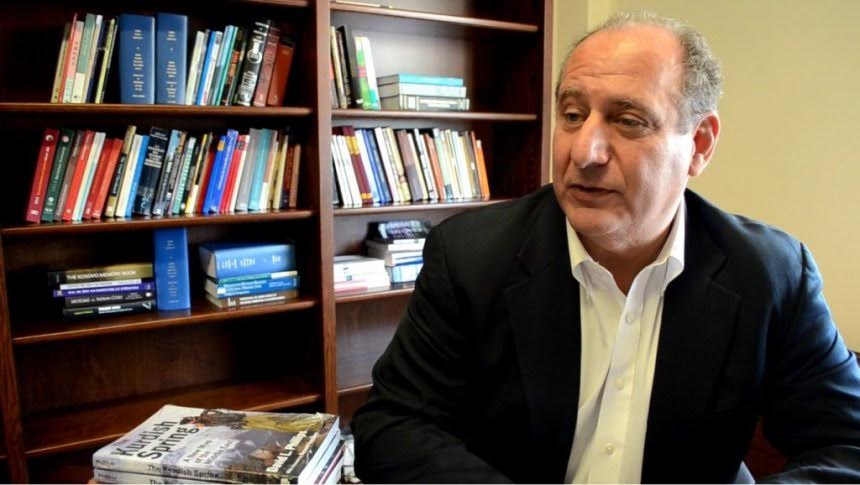
1 David Filips

By David L. Phillips/*
Kosovo and Serbia are rushing to an agreement, adjusting borders as the basis for normalizing relations. There is, however, an alternative to adjusting borders. In exchange for Serbia’s recognition of its sovereignty, Kosovo would address the core concerns of the Kosovo Serbs by devolving power to Serbian municipalities and pro-actively preserving Serbian cultural heritage.
The international community would establish a $1 billion peace-building fund to consolidate the deal.
An agreement to establish the Association of Serb Municipalities, ASM, was reached by Serbia’s President Aleksandar Vucic and Kosovo President Hashim Thaci in 2015. The ASM was envisioned as a self-governing association of Kosovo municipalities where Serbs are the majority. But the ASM was never implemented.
Serbia poisoned the process by failing to address critical concerns of Kosovo, making a mockery of negotiations.
Serbia’s goal all along was to realize Slobodan Milosevic’s project and partition Kosovo. It has used the lack of progress implementing agreements in EU-facilitated talks to justify a new negotiating tactic, focused on partition and territorial swaps.
The government of Kosovo has tried to keep talks going by staking out a middle ground on the ASM. It accepted the principle of decentralization, while rejecting “executive powers” for Serb-controlled local government entities.
Instead of adjusting borders, Kosovo can normalize relations with Serbia, in accordance with its constitution, by devolving powers except for those explicitly retained by the government. Per the 2013 Brussels agreement on police and judiciary, Kosovo would provide local police, while incorporating Serbian-language police officers into the local security.
It would control the local judiciary, while allowing court proceedings and the publication of judicial notices in Serbian.
Environmental issues would be managed by the Kosovo government, with advice from a Serbian-led council. Urban planning would remain a government function.
Cultural heritage is another critical issue. Orthodox monasteries in Kosovo have mythical importance. Serbs believe that the organ at Decani monastery, for example, was forged from the swords of Serbian knights who fell fighting the Ottomans in the 1389 Battle of Kosovo. Decani, Gracanica and Banjska monasteries are integral to the identity of Kosovo Serbs.
Some monasteries are just empty buildings today. However, in accordance with the agreement on Special Protected Zones, the monasteries would be animated when Serbs celebrate Orthodox religious festivals there. Pilgrims should travel to cultural heritage sites without hindrance.
The Kosovo government must recommit itself to the minority rights embodied in the Ahtisaari principles and enshrined in Kosovo’s constitution. Good governance has costs.
Austria, which currently chairs the rotating EU Presidency, should initiate a $1 billion peace-building fund. Assistance would focus on improving Kosovo’s democracy, strengthening Kosovo civil society and independent media.
Funds would also be used for economic connectivity between Kosovo Serbs and other Kosovo citizens, as well as for joint projects involving Kosovars and Serbs from Serbia.
Kosovo is at a fork in the road. Thaci and Vucic can pursue a perilous path by swapping territories, which risks stoking instability and violence not only in Kosovo and Serbia, but in other fragile states of the Western Balkans.
Or they can reach an agreement whereby Serbia recognizes Kosovo as a sovereign and independent state within its current frontiers, with verifiable measures to increase the quality of life for all Kosovars including Kosovo Serbs.
Though the US is not a formal party to the Kosovo-Serbia Dialogue, it still has enormous clout. When US officials meet with Thaci and Vucic at the UN General Assembly in September, they should endorse a package of incentives sufficient to compel an agreement that obviates the messy prospect of partition.
Then, US and European officials would participate in a signing ceremony, echoing calls by Thaci and Vucic for all EU member states to recognize Kosovo and for Russia and China to allow Kosovo to join the UN.
Both Thaci and Vucic would gain a legacy through a deal that safeguards Serbs, preserves Kosovo’s territorial integrity, and fast-tracks the EU integration of both countries.
Negotiations would never have reached this point if Serbia had not obstructed progress towards normalization. After losing Kosovo, Serbia created a frozen conflict and launched campaign to block Kosovo’s integration with the international system.
Twenty years after NATO intervened to prevent the genocide of Kosovo Albanians, it is time for hard choices.
ASM is preferable to adjusting borders, which would reward Serbia’s bullying and risk a renewed spiral of deadly violence.
*David Phillips is Director of the Program on Peace-Building and Rights at Columbia University’s Institute for the Study of Human Rights. He worked as a Senior Adviser to the State Department under Presidents Clinton, Bush, and Obama. He is author of ‘Liberating Kosovo: Coercive Diplomacy and US Intervention’ (The Kennedy School at Harvard University).

Filed Under: Politike Tagged With: Changing, David L Phillips, Kosovo's Borders, Serbia's bullyng

Kosovo’s Partition is a Dangerous Solution

August 8, 2018 by dgreca

Vuciç ThaçiPartition of Kosovo or adjusting borders between Kosovo and Serbia would destabilise the region and potentially spark violence, argues a former adviser to the US State Department./

By David L. Phillips/

Partition would herald the demise of Kosovo as a multi-ethnic society, and mark the failure of the EU-facilitated dialogue between Kosovo and Serbia aimed at mutual recognition within Kosovo’s current frontiers.
Partition is not a new idea. It was first raised in the mid-1990s by writer and politician Dobrica Cosic, the so-called ‘Godfather of Serbian nationalism’, and others at the Serbian Academy of Arts and Sciences.
Germany’s ambassador Wolfgang Ischinger discussed partition in the summer of 2007, when UN-tasked negotiators from the US, EU and Russia, known as the ‘Troika’, tried unsuccessfully to broker a deal between Serbia and Kosovo.
Last year, Serbian Deputy Prime Minister and Foreign Minister Ivica Dacic argued that “everyone needs a lasting solution of the Serbian-Albanian conflict, which can be reached only through an agreement… where everyone will win something and lose something”.
Dacic and Prime Minister Ana Brnabic recently discussed partition with US presidential adviser Jared Kushner. After the meeting, Dacic pronounced: “All cards are on the table.”
Evaluating partition starts with a clear understanding of what Serbia wants.
Dacic proposes that Serbia would give up its claim to all of Kosovo in exchange for lands north of the Ibar River. Serbian enclaves in other parts of Kosovo would have autonomy and exercise executive powers. The Serbian Orthodox monastery of Visoki Decani and other Orthodox monasteries in Kosovo would gain special protected status.
Serbia wants financial compensation for properties it claims in Kosovo, including industrial and energy facilities. Serbia would resettle Serbia refugees currently residing in Serbia proper to lands it gains through partition.
The proposal for partition gives rise to many questions.
Is the ruling Serbian Progressive Party prepared to amend Serbia’s constitution to recognise Kosovo? Will Serbia abandon its efforts to obstruct countries from recognising Kosovo, as well as Kosovo’s membership in multilateral institutions? Is the European Commission prepared to start negotiations with Kosovo over its EU membership?
What actions are foreseen from EU non-recognisers – Spain, Greece, Cyprus, Romania and Slovakia? Would a deal on partition automatically trigger their recognition of Kosovo?
Membership in the UN must also be part of the package. However, acquiescence from Russia or China is far from guaranteed.
Demarcation is a stumbling block. Exchanging lands north of the Ibar River for ethnically Albanian lands in Serbia such as Presevo, Medvedja and Bujanovac is a complicated procedure. Would the swap be symmetrical or based on estimated value of the territories concerned?
Population transfers would be messy. What would happen to ethnic Albanians currently residing north of the Ibar River? Would they remain or would there be a managed process for their migration and compensation?
Would Kosovo Serbs in the south have the option of immigrating to lands north of the Ibar River? What mechanism would be established to manage population flows?
What would happen to the existing agreement for an Association of Serb Municipalities, one of the agreements between Belgrade and Pristina, intended to provide some enhanced powers to Kosovo’s Serbs? Would Belgrade still seek an Association of Serb Municipalities for Serb communities in south Kosovo?
Compensation is also tricky. A Property Compensation Commission would be required to review titles, determine ownership, determine the value of properties, and arrange compensation.
Ownership of the Trepca Mines, an important mining and metallurgical complex in northern Kosovo which both Belgrade and Pristina claim, is another issue. The mines are currently split along ethnic lines, with Serbs running parts that lie in the Serb-controlled north of Kosovo and Pristina running parts in the south.
Are the Trepca Mines rich in gold or largely depleted? Who would own the Trepca Mines? Would Trepca be placed into a trust for Kosovo? Who would be responsible for developing Trepca’s mineral resources, managing the trust, and distributing funds going forward?
Other natural resource issues would have to be addressed, such as the Gazivoda Lake, a large reservoir that supplies water and electricity to central Kosovo.
Partition would open wounds from the war. There are still thousands of missing persons. Victims demand accountability. How would a deal on partition address accountability?
Other ethnic partitions have led to violence and mass migration, for example the division of India into India and Pakistan. Partition could spark a new phase of ethnic conflict in Kosovo and the region, destabilising fragile multi-ethnic states.
Would the Republika Srpska in Bosnia seek to join Serbia? Would ethnic Albanians in Macedonia be next in line to unify Albanian territories?
Many people died to preserve the ideal of democratic, ethnically diverse states in the Western Balkans. Slobodan Milosevic’s goal was always to unify the Serbian nation and establish ‘Greater Serbia’. Partition of Kosovo would achieve at the negotiating table what Milosevic failed to achieve through ethnic cleansing.
Partition requires major symbolic and substantive concessions with political, economic and security ramifications. Transparency is critical. Partition cannot be negotiated behind closed doors.
Partition would be the defining event in Kosovo’s history. It requires debate in political circles and with civil society, as well as guarantees from the international community.

*David L. Phillips is Director of the Program on Peace-building and Rights at Columbia University’s Institute for the Study of Human Rights. He served as a Senior Adviser to the US Department of State under Presidents Clinton, Bush and Obama. Author of ‘Liberating Kosovo: Coercive Diplomacy and US Intervention’, Phillips worked closely with Ambassador Richard C. Holbrooke on Bosnia and Kosovo.

Filed Under: Featured Tagged With: Borders, David L Phillips, Kosove-Serbi

Consolidating a dictatorship, deepening divisions

July 16, 2018 by dgreca

1 David Filips

By David L. Phillips- The Washington Times/

1 Diktatori


The Kurdistan Worker’s Party (PKK) entered into a unilateral ceasefire prior to Turkey’s elections on June 24. Though Turkish armed forces repeatedly attacked the PKK headquarters in the Qandil Mountains of northern Iraq, the PKK refused to take the bait. It understood that renewed conflict would be used by President Recep Tayyip Erdogan to rally his nationalist base and justify an even more intense crackdown.

Kurds in Turkey preferred to show their power at the ballot box. They hoped to deprive Mr. Erdogan of a majority in the election for president, thereby forcing a second round. Furthermore, the pro-Kurdish People’s Democratic Party (HDP) would pass a critical threshold and be seated in parliament if it gained more than 10 percent of the popular vote.

The election was no surprise. Mr. Erdogan won the presidency with 52 percent, while the HDP’s charismatic presidential candidate, Selahattin Demirtas, received less than 9 percent. Though conditions were stacked against the HDP, it still got 12 percent. In a free and fair elections, the HDP would have dome much better.

Mr. Demirtas conducted his campaign from jail, imprisoned on trumped-up terrorism charges. He communicated with voters via his lawyers and social media.

Turkey’s state-controlled media gave Mr. Erdogan 181 hours of coverage during the six weeks prior to elections. Mr. Demirtas received less than one hour.

The government declared a state of emergency, which prevented campaign rallies. Police checked identification cards at polling stations. The presence of armed pro-government paramilitary groups intimidated Kurdish voters. The heavy security presence deterred Kurdish voters.

International election monitors were obstructed from Kurdish areas. More than 300,000 ballots in the mostly Kurdish southeast were invalidated.

Kurdish voters also faced logistical challenges. Ballot boxes were relocated from Kurdish communities, forcing Kurds to travel up to 20 miles from their homes. Hundreds of thousands of Kurdish voters were displaced and ineligible to vote because their homes were destroyed by the Turkish military and they could not register at an address.

The Kurdish leadership was incapacitated. In addition to Mr. Demirtas, the Turkish government jailed 12 Kurdish members of parliament and took direct control of 82 Kurdish municipalities, incarcerating elected mayors. It arrested 5,000 local Kurdish activists.

Elections can either advance national reconciliation, or intensify polarization based on how the election is conducted. Democratic elections allow voters to express dissent, giving them an opportunity to manifest their grievances through a political process. Turkey’s recent elections did not heal wounds. It worsened divisions, serving as a vehicle for Mr. Erdogan to consolidate his dictatorship.

When voters objected, Mr. Erdogan threatened violence targeting dissenters. What’s done is done. Mr. Erdogan was recently inaugurated with great fanfare and is ensconced in the presidency for another five years.

Mr. Erdogan promised a security solution to the Kurdish conflict. He pledged to drain the swamp by targeting Kurdish communities. As evidenced by more than 40 years of conflict, there is no military solution to Kurdish aspirations for greater political and cultural rights. The PKK enjoys broad popular support because its struggle gives dignity to the Kurds.

Kurdish leaders warn that the PKK will renew its insurgency. They have been pushed by Turkey’s bogus election and Mr. Erdogan’s bellicose rhetoric. The resumption of armed conflict will mark a new phase in Turkey’s civil war with regional implications, as armed Kurdish groups in Syria and Iran join the fray to support their Kurdish brethren.

Turkey is at a fork in the road. Mr. Erdogan can intensify his authoritarian rule and intensify Turkey’s war against the Kurds, or he can seek to rule inclusively and solve Turkey’s ethnic strife through negotiations. Stakes are high. If Mr. Erdogan foregoes peace talks with the PKK, the ensuing spiral of deadly violence could consume Turkey itself.

David L. Phillips is director of the Program on Peace-building and Rights at Columbia University’s Institute for the Study of Human Rights. His most recent book is “An Uncertain Ally: Turkey Under Erdogan’s Dictatorship” (Routledge, 2017).

Filed Under: Opinion Tagged With: Consolidating a dictatorship, David L Phillips, deepening divisions

Why Is Trump Appeasing Turkey?

June 21, 2018 by dgreca

There’s little value in turning a blind eye to a dictator’s consolidation of power./

1 Trump Erdogan

By David L. Phillips/ The Trump administration is turning a blind eye as President Tayyip Erdogan consolidates his dictatorship. Appeasing Turkey will backfire. Appeasement will embolden Erdogan’s crackdown on human rights, undermine the U.S.-led fight against ISIS, while pushing Russia and Turkey closer together.

In April 2017, Erdogan rigged Turkey’s constitutional referendum to establish an executive presidency and eliminate checks and balances. Erdogan is likely to prevail in upcoming snap elections for the presidency and parliament on June 24. Elections will be held under a state of emergency. The leading Kurdish candidate for president is in jail. More than 60,000 oppositionists are detained and 150,000 civil servants fired from their jobs. Erdogan loyalists control the media. More journalists are jailed in Turkey than any other country.

U.S. citizens have also been imprisoned. Pastor Andrew Brunson and U.S. consular officials are held hostage as Turkey intensifies demands of the Trump administration to extradite Fethullah Gulen, a Turkish preacher in the Poconos whom Erdogan accuses of masterminding the so-called coup of July 2016.

Erdogan is a wily and manipulative politician. He shrewdly plays Russia off against the United States. Erdogan recently announced the purchase of S-400 surface to air missiles from Russia for $2.5 billion, ignoring the Pentagon’s objections. Buying Russian missiles violates a core NATO principle—the interoperability of weapons systems between members of the Alliance.

Turkey has joined Russia and Iran in the “Astana process,” rogue diplomacy to contain Syria’s conflict that excludes the United States. Moreover, the Astana process undermines U.S.-backed UN talks in Geneva aimed at ending Syria’s civil war and facilitating a political transition. Russia’s motivation is to preserve its bases in Latakia and Tartous. It also seeks to drive a wedge between NATO members and weaken Euro-Atlantic institutions.

Turkey and Washington are also at odds over U.S. support for Syria Kurdish fighters, the People’s Protection Forces (YPG), which have served as America’s boots on-the-ground fighting ISIS. More than 650 Syria Kurds died liberating Raqqa, the self-declared ISIS caliphate. According to a Pentagon spokesman, “[The YPG] fought tenaciously and with courage against an unprincipled enemy.”

Erdogan demands that the U.S. abandon the YPG, whom he calls “terrorists.” Trump is bending over backwards to placate Erdogan. According to a recent White House statement, “US military cooperation with the YPG was a temporary, tactical arrangement aimed entirely at combating ISIS.”

Trump is an unwitting co-conspirator with Turkey and Russia, acceding to their efforts aimed at shaping the battlefield. In January 2018, the Turkish officials visited Moscow to clear the way for Turkish war planes to enter Russian-controlled air space over Afrin, a haven for Kurds and displaced Arabs in northwestern Syria. Turkey’s relentless air strikes killed more than 1,000 YPG members. Hundreds of civilians were also killed and nearly 300,000 people displaced.

The Free Syrian Army (FSA), Turkey’s proxy and an ISIS offshoot, committed war crimes, beheading Kurds, mutilating Kurdish female fighters, and looting Afrin. Since “liberating” Afrin, Turkey has imposed a Taliban-like regime, requiring all women to wear a hijab.

Foreign Minister Mevlut Cavusoglu recently met Secretary of State Mike Pompeo in Washington. Cavusoglu announced a deal to evict YPG fighters from Manbij, a YPG hub and Pentagon training base. Turkey’s demands don’t stop there. It wants the U.S. to sanction a security belt 30 kilometers inside Syrian territory, stretching from Afrin all the way to Syria’s border with Iraq.

YPG fighters are not terrorists. Turkey is the terror state, which provided weapons, money, and logistical support to thousands of jihadis who transited through Turkey to Syria beginning in 2012. Vice President Joe Biden confirmed Turkey’s role. Biden asserted: “ISIS was armed by our friends and allies,” naming Turkey.

The Trump administration is turning a blind eye as President Tayyip Erdogan consolidates his dictatorship. Appeasing Turkey will backfire. Appeasement will embolden Erdogan’s crackdown on human rights, undermine the U.S.-led fight against ISIS, while pushing Russia and Turkey closer together.

In April 2017, Erdogan rigged Turkey’s constitutional referendum to establish an executive presidency and eliminate checks and balances. Erdogan is likely to prevail in upcoming snap elections for the presidency and parliament on June 24. Elections will be held under a state of emergency. The leading Kurdish candidate for president is in jail. More than 60,000 oppositionists are detained and 150,000 civil servants fired from their jobs. Erdogan loyalists control the media. More journalists are jailed in Turkey than any other country.

U.S. citizens have also been imprisoned. Pastor Andrew Brunson and U.S. consular officials are held hostage as Turkey intensifies demands of the Trump administration to extradite Fethullah Gulen, a Turkish preacher in the Poconos whom Erdogan accuses of masterminding the so-called coup of July 2016.

Erdogan is a wily and manipulative politician. He shrewdly plays Russia off against the United States. Erdogan recently announced the purchase of S-400 surface to air missiles from Russia for $2.5 billion, ignoring the Pentagon’s objections. Buying Russian missiles violates a core NATO principle—the interoperability of weapons systems between members of the Alliance.

Turkey has joined Russia and Iran in the “Astana process,” rogue diplomacy to contain Syria’s conflict that excludes the United States. Moreover, the Astana process undermines U.S.-backed UN talks in Geneva aimed at ending Syria’s civil war and facilitating a political transition. Russia’s motivation is to preserve its bases in Latakia and Tartous. It also seeks to drive a wedge between NATO members and weaken Euro-Atlantic institutions.

Turkey and Washington are also at odds over U.S. support for Syria Kurdish fighters, the People’s Protection Forces (YPG), which have served as America’s boots on-the-ground fighting ISIS. More than 650 Syria Kurds died liberating Raqqa, the self-declared ISIS caliphate. According to a Pentagon spokesman, “[The YPG] fought tenaciously and with courage against an unprincipled enemy.”

Erdogan demands that the U.S. abandon the YPG, whom he calls “terrorists.” Trump is bending over backwards to placate Erdogan. According to a recent White House statement, “US military cooperation with the YPG was a temporary, tactical arrangement aimed entirely at combating ISIS.”

Trump is an unwitting co-conspirator with Turkey and Russia, acceding to their efforts aimed at shaping the battlefield. In January 2018, the Turkish officials visited Moscow to clear the way for Turkish war planes to enter Russian-controlled air space over Afrin, a haven for Kurds and displaced Arabs in northwestern Syria. Turkey’s relentless air strikes killed more than 1,000 YPG members. Hundreds of civilians were also killed and nearly 300,000 people displaced.

The Free Syrian Army (FSA), Turkey’s proxy and an ISIS offshoot, committed war crimes, beheading Kurds, mutilating Kurdish female fighters, and looting Afrin. Since “liberating” Afrin, Turkey has imposed a Taliban-like regime, requiring all women to wear a hijab.

Foreign Minister Mevlut Cavusoglu recently met Secretary of State Mike Pompeo in Washington. Cavusoglu announced a deal to evict YPG fighters from Manbij, a YPG hub and Pentagon training base. Turkey’s demands don’t stop there. It wants the U.S. to sanction a security belt 30 kilometers inside Syrian territory, stretching from Afrin all the way to Syria’s border with Iraq.

YPG fighters are not terrorists. Turkey is the terror state, which provided weapons, money, and logistical support to thousands of jihadis who transited through Turkey to Syria beginning in 2012. Vice President Joe Biden confirmed Turkey’s role. Biden asserted: “ISIS was armed by our friends and allies,” naming Turkey.

Willfully ignorant, U.S. officials refuse to acknowledge Erdogan’s cooperation with jihadists or criticize Erdogan’s authoritarianism. Trump and Erdogan are kindred spirits. Trump will be one of the first world leaders to call and congratulate Erdogan for stolen elections on June 24.

Erdogan plays the Russia card to leverage concessions from the United States. Washington’s acquiescence is weakness. Placating Erdogan exacerbates his anti-democratic and anti-American tendencies, undermining NATO and U.S. strategic interests.

David L. Phillips is director of the Program on Peace-building and Rights at Columbia University and a former senior adviser to both the UN Secretariat and the U.S. Department of State.(Alternet)

Filed Under: Politike Tagged With: Appeasing Turkey?, David L Phillips, Why Is Trump

After Syria strikes, time to renew diplomacy

April 16, 2018 by dgreca

By David L. Phillips/

1 siria

Wreckage of the Scientific Studies and Research Centre (SSRC) compound north of Damascus, a target of the missile strikes. Photo: Louai Beshara/AFP/Getty Images/

In response to the recent chlorine bomb attacks in Douma, President Trump ordered missile strikes on three facilities used by Syrian President Bashar al-Assad’s regime to produce and store chemical weapons. Rather than destroy Syria’s extensive chemical weapons infrastructure, Trump sought to demonstrate international resolve and deter future use.

Yes, but: These were limited and surgical strikes at the insistence of cautious Pentagon planners, including Defense Secretary James Mattis. Strikes did not target Assad’s broader war-making capability or seek to advance the goal of regime change. They also avoided Russian and Iranian casualties, which could have escalated the conflict.

What’s next: The U.S. and its allies will hit more targets with greater firepower if Assad uses chemical weapons again, but it is still unclear whether the strikes were an impulsive response or part of a larger strategy to end Syria’s civil war.

The bottom line: The Trump administration should renew its diplomacy, backed by a credible threat of force. Secretary of State designate Mike Pompeo can engage Russia, Iran and Turkey in U.S.–led mediation through a “contact group” of stakeholders that complements UN efforts. Syria’s grinding civil war will continue without greater U.S. engagement.

David L. Phillips is director of the Program on Peace-building and Rights at Columbia University and a former senior adviser to both the UN Secretariat and the U.S. Department of State.


Filed Under: Editorial Tagged With: Aftter Syria strikes, David L Phillips

  • « Previous Page
  • 1
  • 2
  • 3
  • 4
  • 5
  • 6
  • …
  • 10
  • Next Page »

Artikujt e fundit

  • NDJESHMËRIA SI STRUKTURË – NGA PËRKORËSIA TE THELLËSIA
  • Si Fan Noli i takoi presidentët Wilson the T. Roosevelt për çështjen shqiptare
  • TRIDIMENSIONALJA NË KRIJIMTARINË E PREҪ ZOGAJT
  • Kosova dhe NATO: Një hap strategjik për stabilitet, siguri dhe legjitimitet ndërkombëtar
  • MEGASPEKTAKLI MË I MADH ARTISTIK PAS LUFTËS GJENOCIDIALE NË KOSOVË!
  • Veprimtaria atdhetare e Isa Boletinit në shërbim të çështjes kombëtare
  • FLAMURI I SKËNDERBEUT
  • Këngët e dasmës dhe rituali i tyre te “Bleta shqiptare” e Thimi Mitkos
  • Trashëgimia shqiptare meriton më shumë se sa emërtimet simbolike të rrugëve në New York
  • “Unbreakable and other short stories”
  • ÇËSHTJA SHQIPTARE NË MAQEDONINË E VERIUT NUK TRAJTOHET SI PARTNERITET KONSTITUIV, POR SI PROBLEM PËR T’U ADMINISTRUAR
  • Dr. Evia Nano hosts Albanian American author, Dearta Logu Fusaro
  • DR IBRAHIM RUGOVA – PRESIDENTI I PARË HISTORIK I DARDANISË
  • Krijohet Albanian American Gastrointestinal Association (AAGA)
  • Prof. Rifat Latifi zgjidhet drejtor i Qendrës për Kërkime, Simulime dhe Trajnime të Avancuara Kirurgjike dhe Mjekësore të Kosovës (QKSTK) në Universitetin e Prishtinës

Kategoritë

Arkiv

Tags

albano kolonjari alfons Grishaj Anton Cefa arben llalla asllan Bushati Astrit Lulushi Aurenc Bebja Behlul Jashari Beqir Sina dalip greca Elida Buçpapaj Elmi Berisha Enver Bytyci Ermira Babamusta Eugjen Merlika Fahri Xharra Frank shkreli Fritz radovani Gezim Llojdia Ilir Levonja Interviste Keze Kozeta Zylo Kolec Traboini kosova Kosove Marjana Bulku Murat Gecaj nderroi jete ne Kosove Nene Tereza presidenti Nishani Rafaela Prifti Rafael Floqi Raimonda Moisiu Ramiz Lushaj reshat kripa Sadik Elshani SHBA Shefqet Kercelli shqiperia shqiptaret Sokol Paja Thaci Vatra Visar Zhiti

Log in

This website uses cookies to improve your experience. We'll assume you're ok with this, but you can opt-out if you wish. Cookie settingsACCEPT
Privacy & Cookies Policy

Privacy Overview

This website uses cookies to improve your experience while you navigate through the website. Out of these cookies, the cookies that are categorized as necessary are stored on your browser as they are essential for the working of basic functionalities of the website. We also use third-party cookies that help us analyze and understand how you use this website. These cookies will be stored in your browser only with your consent. You also have the option to opt-out of these cookies. But opting out of some of these cookies may have an effect on your browsing experience.
Necessary
Always Enabled
Necessary cookies are absolutely essential for the website to function properly. This category only includes cookies that ensures basic functionalities and security features of the website. These cookies do not store any personal information.
Non-necessary
Any cookies that may not be particularly necessary for the website to function and is used specifically to collect user personal data via analytics, ads, other embedded contents are termed as non-necessary cookies. It is mandatory to procure user consent prior to running these cookies on your website.
SAVE & ACCEPT