
• Home
  • Politics
  • Opinion
  • Culture
  • Sports
  • Economy
  • Interview
  • Reporting
  • Community
  • Vatra

Dielli | The Sun

Albanian American Newspaper Devoted to the Intellectual and Cultural Advancement of the Albanians in America | Since 1909

DR. HOWARD OF BELLEVUE HOSPITAL ON VACCINE TRIALS AND MYTHS

December 18, 2020 by dgreca

Selected and edited by Rafaela Prifti/

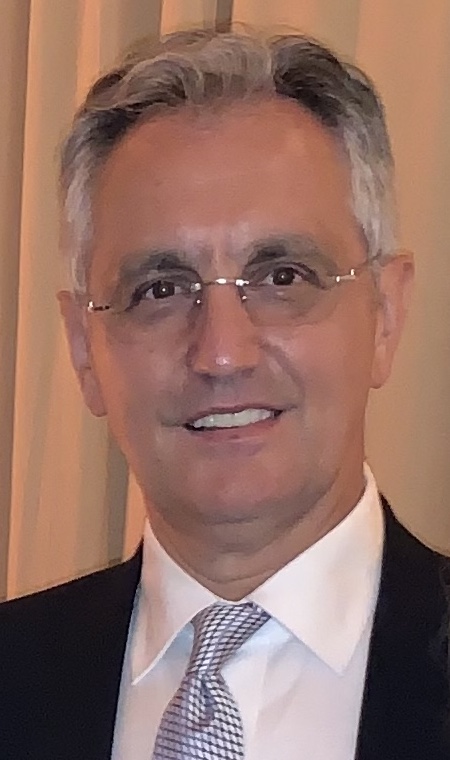
Dr. Jonathan Howard, a Bellevue Hospital neurologist in New York City, who specializes in treating multiple sclerosis. He transitioned to leading a team of healthcare workers tending to COVID-19 patients. Dr. Howard volunteered for the AstraZeneca vaccine trials that are currently in phase 3. He is scheduled to take the second dose of the vaccine tomorrow. While there’s still more to learn about how the vaccines will work when distributed to millions of people, Dr. Howard explains that the COVID-19 vaccines developed this year are based on years of work on the safety and efficacy of the same type of vaccine. He debunks some myths about the vaccine and what people are getting wrong about it. FDA has authorized the Pfizer vaccine last week and is on track to approve Moderna.

When the first wave hit New York City, I planned on staffing Bellevue Hospital’s neurology consult service. Though some patients suffered catastrophic strokes, overall it was relatively quiet from a neurological perspective and there was little for us to do. As others marveled, it seemed like every other disease vanished for a month during the COVID-19 spike. As cases picked up, I transitioned to running on a floor team taking care of COVID-19 patients. All of the regular clinic patients were moved to video visits.

To be honest, there was not a great deal to do for most COVID-19 patients beyond giving them oxygen and hope for the best.

We would do our rounds, offer what we could to make them comfortable, and encourage them to lie in the prone position, as there is some evidence that this can help breathing. I also made sure that no patient on my team received any experimental treatments (such as hydroxychloroquine). Doing “nothing” is often very difficult for doctors, but is preferable to giving out unproven treatments unless patients are clearly dying or in a clinical trial. If patients were getting better, we would discharge them. If they were deteriorating, we would send them to the ICU. Not infrequently, we would return in the morning to learn that a patient had passed during the night.

I was honestly the most stressed just before the pandemic arrived, with frequent nightmares of patients dying in the hallways and streets. I started taking medication to help me sleep for the first time. While such scenes did occur at some hospitals, our emergency room was relatively quiet on most days and the vast majority of our patients were transferred from other hospitals, thus largely avoiding chaos. Still, the hospital intercom was the busiest I’ve ever heard it, with calls for the “airway team” blaring throughout the hospital every five minutes it seemed. I saw patients as young as 23 die alone, with no one by their side.

I was also worried about my own health and the health of my team. It turns out PPE works really well and most healthcare workers who contracted COVID-19 did so at home or from other healthcare workers in workrooms or cafeterias. However, this was not clear during the early stages of the pandemic, and like all healthcare workers, I wondered if I was bringing home a deadly virus to my family.

I’ve had a fascination with vaccines and people who oppose them ever since a former colleague of mine inexplicably turned against vaccines. This motivated me to learn more about vaccines and the myths that surround them. I even authored a chapter on the anti-vaccine movement in a book about pseudoscience The Conspiracy Against Science.

One of the most common myths about vaccines is that they are not properly tested for safety.

Having argued for years that vaccines are properly tested, I jumped at the chance to participate in a vaccine trial myself. I’ve always believed that people who participate in medical research are doing a noble thing. If no one volunteered for such research, medicine would never advance

I received my first shot of the vaccine or placebo at Bellevue Hospital in mid November. Although I work at Bellevue Hospital, I still had to enroll in the study by filling out a general online form for people interested in participating in vaccine trials. I was sent information about the trial and what to expect on the first visit. My experience has been pretty boring so far, which is of course good news. My first visit on November 19 lasted just over an hour. I had a complete medical history and physical exam, which fortunately for me was quite brief. I was tested for COVID-19, given some snacks, and then received the shot. Although I of course don’t know whether I got the real vaccine or a placebo, I am fairly certain I got the real thing. I woke up the next day feeling pretty rotten: I had a sore arm, a low-grade fever, muscle aches, and a headache. This lasted for about 24 hours, except for the sore arm, which lasted for a few days. Considering the horrors I witnessed during New York’s surge, this was a minuscule price to pay for the end goal of developing a COVID-19 vaccine. I’ll get my second dose on December 18. In the meantime, I have to check in weekly via an online questionnaire to see if I have any symptoms. Staff is available to me 24/7 if I have any questions or problems Though I am fairly confident I have some protection against COVID-19, I have not changed my behavior at all. I am not perfectly certain I received the real vaccine and I have yet to get the second dose. Even after this, I will continue to be cautious. No vaccine is perfectly effective, and it is possible that the vaccines will prevent people from getting sick themselves, but not from spreading the disease to others.

The AstraZeneca trial I’m in is a Phase 3 trial, which are the largest trials that determine whether a vaccine is truly safe and effective.

However, even before the vaccine got into my arm, years of work had been done on the safety and efficacy of this type of vaccine. The AstraZeneca vaccine is an adenovirus-based vaccine that uses a harmless, modified cold virus to induce an immune response against SARS-CoV-2, the virus that causes COVID-19. Overall the vaccine appears to be about 70% effective, though unexpectedly, a lower dose of the vaccine appears more effective than a higher dose. It’s unclear why this might be and needs to be confirmed in larger studies. It’s also a relatively inexpensive vaccine and does not need to be stored at extremely low temperatures. Overall research into vaccines for coronaviruses has been going on for years, and a vaccine using the same technology has previously been approved for Ebola. So, scientists were fortunately not starting from scratch in designing these vaccines — another reason progress was so rapid this year. Even when the Phase 3 trials are done, we’ll still have a lot to learn about them. Though they appear very effective in clinical trials so far, we’ll have to see if this holds up in the “real-world.” While the vaccines are highly effective in preventing disease, no one knows if people can remain asymptomatic carriers, spreading the disease to others. No one knows yet if the vaccine will confer lifelong immunity or if boosters may be needed on a periodic basis. Additionally, rare side effects may only be revealed once a vaccine has been given to millions of people, though determining causality is difficult outside of a controlled trial. After all, if we gave 100 million people a cookie, unexpected negative side effects or reactions would likely happen to some of them. We may also learn that the COVID-19 vaccines have unexpected benefits. The measles vaccine, which has been around since the 1960s, was recently shown to confer protection against other infectious diseases. Given these unknowns, anyone who gets a COVID-19 vaccine will be contributing to medical research in some way. And of course, we will certainly be learning about the long-term side effects of COVID-19 itself for many years. Many survivors will have their lives permanently altered by this virus.

Overall, I’m very optimistic about 2021 and that by the summer or fall, we should have a gradual return to normal. The completion of multiple successful trials for a new virus in under a year is undoubtedly one of the greatest scientific achievements in the history of medicine. The hardest part might be getting the vaccine delivered to people around the world and convincing them to take it. Still, I am beyond proud to have played a small role in this project.

Jonathan Howard is an Associate Professor of Neurology and Psychiatry at the NYU Langone School of Medicine and a neurologist at Bellevue Hospital.
Filed Under: Analiza Tagged With: DR. Dr.HOWARD BELLEVUE HOSPITAL, Vaccine

Vaccine, Herd Immunity and Treatment in fight against Covid-19 Pandemic

August 10, 2020 by dgreca

*By: Dr. Pashko R. Camaj, Doctor of Public Health Sciences –

We are entering the seventh months into the coronavirus pandemic. During this time, we have learned many things about the SARS-CoV-2 virus and the disease it causes. With the numbers of infections and fatalities still on the increase, some questions remain difficult to answer: when will the vaccine for Coivi-19 be ready, and will it be safe and effective? The answers to these questions are not easy, and certainly not simple, but from the standpoint of our desire to get back to immediate normalcy, the answer is no. However, from the standpoint of typical vaccine-development timing, yes, it will be ready and here soon.

Vaccine Progress: Developing a new vaccine can take years or even decades. That was true until now! The speed and progress in search for a viable and safe vaccine against Covid-19 have been inspiring. The early positive results can be attributed partly to the number of world-wide research teams working on it around the clock. In addition, relaxed restrictions on moving between stages of vaccine development, and the promise of new vaccine technologies that have been unleashed globally, have also played a role in this unprecedented progress.

Traditionally, vaccines have worked by introducing dead or weakened viruses into the body, which stimulate the body to preemptively produce antibodies that are ready to attack the intruding viruses. While this has been an effective approach, it has also been slow to develop, since there are a lot of safety concerns anytime we introduce a virus, dead or weekend to a human body. More recently, new vaccine approaches utilizing introduction of only a small portion of the virus, called an antigen, which acts almost like show-and-tell. The antigen typically prompts the body to make antibodies, without the safety concerns with introducing the entire virus. Now, in the most novel approach, scientists are working to get our own cells to produce the antigen; our body, in turn, produces the antibody. Vaccines made like this are potentially fast to produce. But this approach is largely untested, with potential many side effects and uncertainty if they will even work.

At the moment, researchers are working on all these approaches, and several are already in the process of testing for safety and efficacy. Some of that trials are well in their last stages and will be finished by the end of the summer. Concerns remain, that even with an approved vaccine, it will still take some time to manufacture and distribute large number of doses. Later in 2020 or early 2021 is probably an optimistic estimate for the first actual vaccines being administered to the larger populations. Logistics of how and where vaccines will go first, and who will get the priority of early vaccination are still to be ironed out. But that is a ‘problem’ we should all be happy to grapple with.

Effectiveness of a Vaccine and ‘Herd’ Immunity: Typically, for a vaccine to be considered a successful it will need to promote immunity in at least 60 percent of people. That is considered a minimum when we talk about achieving “herd” immunity. Some data suggests that we need 70-80 percent effectiveness for this immunity to take hold. There are those that say we should have left the virus run its course and build the immunity that way. But early original modeling estimated that without any changes in our behavior, and allowing the virus to run wild, the virus

may have killed 1 million to 2 million Americans-some estimates even double or triple that number. That was unacceptable! We also know that Sweden, which came the closest to letting the virus “run its course,” had much, much higher death rates than its neighboring countries. So, waiting for herd immunity to take hold, would have resulted in many more deaths, in addition to completely ‘flooding’ our health care system, which could have produced additional concerns, not only related to Covid-19.

Improvements in Health Care: While we look for news on the vaccine front, we have been seeing progress in the treatments for Covid-19. There has been some good news on the treatment front. Remdesivir and a steroid called dexamethasone have both been shown to significantly reduce mortality in seriously ill patients – in some cases by up to a third. In addition, RLF-100 or aviptadil, a synthetic form of a natural peptide that protects the lung has shown some significant progress treating critically ill patients. The therapy has been granted fast-track designation to develop the drug in the United States. Treatments to improve prognosis for patients with milder cases of the infections have been also on a research front-with improved outcomes. One important aspect of improved treatments has been that hospitals and health care providers in general are far better prepared now than earlier in the year. This is a result of increased capacities to treat and care for patients. Also, hospitals are getting better at treating the virus, thanks to a combination of experience and new treatments. A testament to this is relatively low and declining death rate compared to those of a few months ago.

So, the continued virus prevention methods such as good hygiene and social distancing, using face covers and masks will help lower the risk of spreading the virus or becoming infected and keeping us healthy. For those unlucky ones that get infected and require medical care, use of improved medication will be essential. These are the viable options in the fight against this enemy, until a safe and effective vaccine puts us on a path to returning to lives we knew before the Covid-19 shook our world!

**Vice-President of Pan-Albanian Federation of America -VATRA

Filed Under: Politike Tagged With: COVID-19, dr. Pashko Camaj, Vaccine

Vaccine Search Progress gives us Hope

May 16, 2020 by dgreca

By Pashko CAMAJ/

As we move into the warmer spring days of the northern hemisphere, the battle against Covid-19 continues to be main storyline across the globe. Day after day, as we listen, watch, or read these stories, we hope. In ongoing battles against viral infections, as in the case of Covid-19 pandemic, we look for ways to stay healthy, become immune, and defeat this invisible enemy. Immunity to microbial infections occurs in two ways: through natural infection or through vaccination. Naturally, immunity to these microbes can occur when many people become infected, survive, and become immune to the virus. This in epidemiology is known as “herd” immunity and occurs when 60-80% of the population is infected with the virus, which would mean about 200-280 million people, in the United States alone.  As for information, with a “mortality rate” for Covid-19 of about 1%, that would mean more than two million deaths in the United States alone. Can we, as a nation, or any country in the world, hope to defeat Covid-19 through “herd” immunity and through widespread infection? The response is of course, a resounding NO, we cannot rely on “herd” immunity as the principal mechanism of cure for the ‘plague’ of the 21st century. So, we have only one viable option, to find the vaccine and produce it as soon as possible!

Progress in the vaccine research:

As of last week, over 80 candidates for the Covid-19 vaccine are being studied around the world, most of whom are still in the early stages of testing. The good news is that six of them have reached clinical trials and they are being tested in humans. Several vaccines for candidates undergoing clinical testing include two in the United States, one in Britain, one in the EU and four in China. These tests are in relatively early stages (tested on a small number of people) and none have yet reached the third stage, in which the vaccine is tested on many people. This stage of testing will tell us if the vaccine works, and what is most important, whether it is safe to use in humans, without adverse effects on our health. In the US, there is evidence of vaccines being developed at NYU Grossman School of Medicine and Maryland University, Rochester University School of Medicine and Cincinnati Central Hospital. In addition, tests are being conducted by Pfizer Pharmaceuticals and a German biotech company, BioNTech, with 200 participating patients. These studies are generating optimism that a safe and an effective vaccine against Covid-19 may be in use by the end of the year. If these tests prove successful, Pfizer plans to use its three countries, in the US, to mass-produce the vaccine, to produce millions of doses of vaccines in 2020, and hundreds of millions more in 2021.

How the vaccine works:

The vaccine has a simple function: it gives our body instructions on how to make proteins that will trigger reactions to microbes after being exposed to them. It works by ‘training’ our immune system to recognize and fight viruses or bacteria. To do this, small molecules of viruses must be injected into our body to trigger body’s immune response. These tiny protein molecules are called antigens, and they are present in all viruses and bacteria. Injecting these antigens into the body, our immune system learns to recognize them as ‘invading enemies,’ produce antibodies against them, and create a ‘memory’ for the future. If we are expose to these germs again, our immune system will recognize them as enemies, immediately and aggressively attack them before they spread to our body and cause diseases. The U.S. Food and Drug Administration, which oversees the production of vaccines and their overall safety, will have the final say on the safety and effectiveness of the vaccine. They are currently reviewing the scientific process, as well as ethical questions that may need to be addressed during the rapid development of the Covid-19 vaccine.

Light at the end of the long tunnel:

While progress in the vaccine development is promising across the globe, importantly, scientific activities that seek to cure infected patients are also promising. Research on antibodies that can be used as prophylactic treatment for people who have been exposed to Covid-19 is showing promising results. The use of antibodies may prove to be effective and fast in the fight against the corona virus, until the vaccine is produced. Thus, we continue to wait, watch, listen and hope!

Filed Under: Analiza Tagged With: Pashko camaj, Vaccine

Artikujt e fundit

  • NDJESHMËRIA SI STRUKTURË – NGA PËRKORËSIA TE THELLËSIA
  • Si Fan Noli i takoi presidentët Wilson the T. Roosevelt për çështjen shqiptare
  • TRIDIMENSIONALJA NË KRIJIMTARINË E PREҪ ZOGAJT
  • Kosova dhe NATO: Një hap strategjik për stabilitet, siguri dhe legjitimitet ndërkombëtar
  • MEGASPEKTAKLI MË I MADH ARTISTIK PAS LUFTËS GJENOCIDIALE NË KOSOVË!
  • Veprimtaria atdhetare e Isa Boletinit në shërbim të çështjes kombëtare
  • FLAMURI I SKËNDERBEUT
  • Këngët e dasmës dhe rituali i tyre te “Bleta shqiptare” e Thimi Mitkos
  • Trashëgimia shqiptare meriton më shumë se sa emërtimet simbolike të rrugëve në New York
  • “Unbreakable and other short stories”
  • ÇËSHTJA SHQIPTARE NË MAQEDONINË E VERIUT NUK TRAJTOHET SI PARTNERITET KONSTITUIV, POR SI PROBLEM PËR T’U ADMINISTRUAR
  • Dr. Evia Nano hosts Albanian American author, Dearta Logu Fusaro
  • DR IBRAHIM RUGOVA – PRESIDENTI I PARË HISTORIK I DARDANISË
  • Krijohet Albanian American Gastrointestinal Association (AAGA)
  • Prof. Rifat Latifi zgjidhet drejtor i Qendrës për Kërkime, Simulime dhe Trajnime të Avancuara Kirurgjike dhe Mjekësore të Kosovës (QKSTK) në Universitetin e Prishtinës

Kategoritë

Arkiv

Tags

albano kolonjari alfons Grishaj Anton Cefa arben llalla asllan Bushati Astrit Lulushi Aurenc Bebja Behlul Jashari Beqir Sina dalip greca Elida Buçpapaj Elmi Berisha Enver Bytyci Ermira Babamusta Eugjen Merlika Fahri Xharra Frank shkreli Fritz radovani Gezim Llojdia Ilir Levonja Interviste Keze Kozeta Zylo Kolec Traboini kosova Kosove Marjana Bulku Murat Gecaj nderroi jete ne Kosove Nene Tereza presidenti Nishani Rafaela Prifti Rafael Floqi Raimonda Moisiu Ramiz Lushaj reshat kripa Sadik Elshani SHBA Shefqet Kercelli shqiperia shqiptaret Sokol Paja Thaci Vatra Visar Zhiti

Log in

This website uses cookies to improve your experience. We'll assume you're ok with this, but you can opt-out if you wish. Cookie settingsACCEPT
Privacy & Cookies Policy

Privacy Overview

This website uses cookies to improve your experience while you navigate through the website. Out of these cookies, the cookies that are categorized as necessary are stored on your browser as they are essential for the working of basic functionalities of the website. We also use third-party cookies that help us analyze and understand how you use this website. These cookies will be stored in your browser only with your consent. You also have the option to opt-out of these cookies. But opting out of some of these cookies may have an effect on your browsing experience.
Necessary
Always Enabled
Necessary cookies are absolutely essential for the website to function properly. This category only includes cookies that ensures basic functionalities and security features of the website. These cookies do not store any personal information.
Non-necessary
Any cookies that may not be particularly necessary for the website to function and is used specifically to collect user personal data via analytics, ads, other embedded contents are termed as non-necessary cookies. It is mandatory to procure user consent prior to running these cookies on your website.
SAVE & ACCEPT