• Home
  • Politics
  • Opinion
  • Culture
  • Sports
  • Economy
  • Interview
  • Reporting
  • Community
  • Vatra

Dielli | The Sun

Albanian American Newspaper Devoted to the Intellectual and Cultural Advancement of the Albanians in America | Since 1909

Archives for December 2021

TUZI NË KAPERCYEJT E SHEKUJVE

December 13, 2021 by s p

NGA  NDUE  BACAJ  

 Qyteti i Tuzit  që e shohim sot si qëndrën administrative të trojeve shqiptare  të Malesise Madhe  e më gjerë  të mbetura jashtë kufirit politik të  Shqiperisë  të vitit 1913, ka historinë e tij qindra -vjeçare. Kjo histori, ndonse disi e  “mbetur” në kapercyejt e shekujve ka lënë  gjurmet e saj në këtë truall shqiptarie , që “jeton” sot  nën  juridiksionin  e  Malit  të Zi , me statusin e Komunës. 

 TOPONIMI  TUZI …

Megjithse Tuzi në dokumente të shkruara gjindet vetem në vitin 1335 (pra disi i vonë)  , keto troje kanë pasur emer pasi kanë qënë të banuara nga banoret autokton ilir  qindra vite para toponimit Tuzi , Tussis apo ndonjeherë Tushena (Tuscena )… Madje  duke qënë në afersi të qytetit  historik të Diokles (Dukles), e më vonë pjesë e komunes së njohur të Zetës (Superiore), Tuzi ka qënë një qender urbane  mjaft e njohur për kohën. Në dokumentin e Deçanit të vitit 1335 permendet “Katuni Arbanas” kryetari i të cilit  ishte  Llesh Tuzi . Ky ishte fshati Tuz  i kadastres  së Shkodres të vitit 1416 mbi bregun lindor të liqenit të Shkodres me 16 shtepi të vetë tuzeve. Por krejt  fisi i Tuzit ,vendi i të cilit  shkonte prej lumzit të Rrjollit në bregun lindor e deri në Vir (..kullot dimerore), mbi bregun perendimore të liqenit kishte në vitin 1416 , 150 shtepi  e 500 luftëtarë…1.  Me 1485  vellazeria e tuzeve  gjendet e vendosur  në disa fshatra  që ruanin ende emrin e fisit nga rridhnin  si: Damniç-Tuz  , Bgur-Tuz , Kuqik-Tuz , Istulush-Tuz , Petroshan-Tuz  , Pistull-Tuz (i braktisur me 1485), Gjon -Tuz (truallisht) ,  Gradec -Tuz  ,  Shukovik -Tuz , dhe Podol -Tuz . Zgjerimi dhe shtimi i madh i kunoreve  në fisin e Tuzeve duhet të jetë  bërë me kohë  ,perderisa në vitin 1485 banoret e fshatrave  ku u ngulit vellazeria  mbanin kryesisht  mbiemra të ndryshem ,me perjashtim të shumë pakë familjeve që kishin ruajtur mbiemrin Tuz …2.  Në vitin 1582 Tuzi gjindet  në trajten e një emrit  të “shquar” Tuza , ku siç do ta shohim më poshtë popullsia e tij kishte filluar të perqafonte besimin e  pushtuesit  otoman…

BANORET  E  TUZIT …

Trojet e Tuzit ndër shekuj kanë qënë të banuara nga banoret autokton  të fiseve Ilire (kryesisht nga fisi  Labeat ) . Megjithse  gjurmet e ketyre banoreve të hershem  gjinden në trashigimi gojore , dhe ndër dokumente të ndryshme , e deri në libra të studiuesve të huaj e vendas, mjegullnajat e mesjetare  na kanë fshehur shume nga historia e banoreve të asaj kohe të Tuzit (qender urbane apo fshat..). Është pikrisht kjo  “arsye” që ne detyrohemi ta fillojme historinë  e banoreve të Tuzit  vetem në vitet 1416-1417 ,duke u bazuar në regjistrin e kadastres dhe  koncensioneve …të perpiluar ,kryesisht per qelllime taksash  nga (pushtuesit ) venedikas. Nga ky regjister në fleten 42/b  shkruhen emrat e ketyre kryefamiljareve:

Jurko  Tuzi  , krye

Leo      Tuzi

Nikolla  Tuzi , i madhi

Petro     Tuzi

Nikolla  Tuzi , i vogli

Pali       Tuzi , i madhi

Benko   Tuzi

Pali       Tuzi , i vogli

Pando    Tuzi

Tanush  Tuzi

Petan     Tuzi

Vigjec    Tuzi

Nika       Tuzi

Bogosklav  Tuzi , i madhi

Gjergj     Tuzi

Bogosklav   Tuzi , i vogli. 3.  

Siç shihet ketu kemi vetem 16 kryefamiljare e per rrjedhoje 16 shtepia , por në  ketë regjister rikonfirmohet siç shkruam më siper se  me “mbiemrin”e vendbanime  Tuzi  janë rreth 150 shtepi në fshatra të ndryshem të Malesisë  të asaje kohe…Duke ditur se shkruesi i  punsuar nga venediku ,ishte një sllav ,merret me mend edhe deformimi i disa emrave të kryefamiljareve  shqiptar , që  deformohen nga  Lekë në  Leo  , nga Pjeter në Petro ,nga Paulin në Pandi  apo perseri nga Pjeter në Petan e tjer ,gjë që  të bënë të “dyshosh” per emra sllav ,që në fakt janë  në shumicë emra katolik shqiptarë , ketë e verteton më së miri edhe mbiemri i perbashket TUZI. Natyrisht që  me fqinjet kemi marrë e dhënë ,duke perfsire edhe Homonime (emra njerzish)… Nga një deftere regjistrimi  i vitit 1485 (të  bërë kryesisht per grumbullimin e taksave nga pushtuesi i ri Otoman ) mesojmë se :  Fshati Tuz ,varej nga Zhabjaku dhe ishte timari i Hasan  Arnautit .Në  defter janë të shenuar emrat e kryefamiljareve si më poshtë:

1.Dimtri , i biri i Marinit

2.Leka  , i biri i Marinit

3.Leka  ,  i biri  Gjergjit                          

4.Ujku  ,  vellai i tij                                 

5.Gjoni   , i biri i Koles                           

6.Dedri  , i biri i Brankos                        

7.Ilia  ,  i vellai i tij                                 

8.Kola  , i  biri i Dimitrit                         

9.Dimitri  , i  biri i Petrit                         

10.Leka  , i biri i tij                                 

11.Jovani  , i biri i Bores (Bures)            

12.Bojkashi , i biri i Mirashit                  

13.Bardoshi  Siromah                             

14.Deda  , i biri i Palit                             

15.Nika  , i biri i Petrit                            

16.Vladi  , i biri i Tuzit 

17.Deda  , i biri i Maroshit

18.Tuzi  , i biri i Bjeles 

19.Andrija , i biri i Mihalit

20.Petri  , i biri Lazerit 

21.Nuna (Nona) , i biri i Nikes  

22.Deda  , i vellai i tij 

23.Marini  , i biri i Gjergjit

24.Marashi  , i biri i Lazerit 

25.Deda    , i biri i Bojkos 

26.Dosheri (Dusheri) , i biri i Bojkos

27.Tuzashi  , i biri i Nikes

28.Lazari , i biri i Andrijes

29.Pali  , i biri i Lleshit

30.Kola  , i biri i Nikes

Nga  30 kryefamiljarë ,që do të thotë  30 shtepia , gjashtë janë beqarë.4.  

Në defter janë  të shenuara  edhe të ardhurat që vilte shteti nga taksat, e prodhimeve  që  grumbulloheshin në Tuz edhe  nga katundet perreth.. Nga  Produktet  bujqesore  taksoheshin drithrat , perimet, rrushi etj.  Ndersa nga produktet blegtorale taksoheshin leshi ,lekuret ,mishi ,djathi e gjalpi. Gjithshtu ketu shenohen edhe taksat e prodhimeve të dyllit , mjaltes e alkolit…  Nga defteri  mesojmë se të  gjithë kryefamiljaret  ishin te besimit kristian ,me shumicë  të ritit katolik. Gjithashtu në defter shihet qarte se  otomanet nuk e vlersonin mbiemrin, ndaj  thuajse të gjithë kryefamiljaret nuk kane mbiemer real ,dhe per pasoje edhe mbiemri “TUZI” i trashiguar nga viti 1416 tashma nuk ekzistonte. Në regjistrimin e rreth njeqinde viteve më vonë  (1582) Tuzi  shkruhet nën juridiksionin e Potgorices.  Popullsia e Tuzit tregohet mjaft e madhe per kohen , dhe  kishte filluar të islamizohet. Konkretisht  shenohen  16 shtepia muslimane  kundrejt 138 shtepiave Kristiane …5. Mendojmë se  ky numer kaq i madh shtepiash nuk  i perket vetem  Tuzit  si fshat në vehte ,por është e mbartur nga viti 1485 ,ku perfshihen me “mbiemrin” Tuz  dhjetë fshatra të tjer të Malesisë dhe  kishin gjithseit 150 shtepia. Kjo vertetohet  nëse u referohemi  burimeve të tjera  të vitit 1614 ,ku per Tuzin shenohen vetem 30 shtepi me 70 burra të aftë per armë. Edhe në  kronikat e vitit 1671 dhe 1688 numri i shtepiave  është thuajse i njejtë (30 shtepia),por emri del disi i deformuar  nga Tuzi në Tushena ( Tuscena) dhe  shenohet si fshat që i mbeshtetej  Traboinit  të Hotit…6.  Duke qenë se Tuzi  ndodhej në fushe ,pa aleatet natyrore  (malet e kodrat),rezistenca  antiotomane ishte shumë më e veshtirë . Është edhe kjo një aresye qe ky vendbanim  nuk gjeti stabilitet zhvillimi per shumë dekada ,duke mbetur nje fshat i cili braktisej vazhdimisht nga banoret e tij. Një pjese leviznin pasi kishin  pranuar të hynin nën ombrellen joshese të pushtetit ,i cili i dergonte më në “gji” të hyqametit , duke kerkuar keshtu të joshte të tjeret. Ndersa qendrestaret  shpronsoheshin , vriteshin , ose u “qepeshin” maleve dhe kodrave per të shpetuar lekuren…  Deri në shekullin e XIX ,Tuzi  më shumë ishte thuajse  një qender  e ringritur kryesisht per  infrastrukturen shtetrore osmane ,ku binin në sy  vendkomanda , garnizoni  ushtarak , ndonjë vendbanim i administrates dhe hierarkeve ushtarak , magazina e pak shtepi të shqiptareve që kishin “guxuar” të afroheshin me  pushtuesit otoman. Në Tuz u afruan  tregtarë  të mallrave ushqimore dhe veshmbathjeve që furnizonin  strukturat e ushtrrise e administrates , por  krijuan edhe rrjetin e tregtise me zonat e fshatrave perreth…Ta themi hapur deri në fillimet e shekullit XX ,në Tuz nuk banonte thuajse asnjë familje katolike. Është interesant se perkunder ketij kontrolli “fanatik” otoman në Tuz  (sipas dokumenteve) kishin të ndertuar  objektin e kultit musliman vetem në vitin 1907, me emrin xhamia e “Qazim Beut” ,që pavaresisht nga rikonstruktimet e viteve ekziston edhe sot në fillimet e shekullit XXI.  Se si ishte katandisur  Tuzi per shekuj e pershkruan  në korrik te vitit 1918 fetari dhe filozofi  At Anton Harapi  kur shkruante : “ Tuzi qytet ! Po ,as katund  se ma qytet jo se jo ; një grumbull 15 – 20 shtepiash disi më të afrueme se ato ndër male. Shtatë –tetë dugajë, e shumë pijetore ,vetem dy-tri shtepi pak si kush, të ndertueme per zyre ,të tjerat shpernda mbarë e  mbrapshtë pa kurrfarë  lidhnije njera me tjetren. Perball tyre udha e madhe e gjanë për nji log a boulevard, por as ajo krejt e drejtë, veç disi e lakueme  duke ndjek vinë e mullirit ,uji i së ciles  dahet prej Cemit  e hupë që në Stanaj të Grudes  e vjen e del dhe perbri Tuzit ,ku perdoret per me blua ndër mullinjë  e per me ujitë toket. Aty nuk sheh  veç malsorë të Hotit ,Grudes , Trieshit  e të Kojes. Katundarë të fushes ,ndonjë malazez, kokrra kokrra ndonjë shkodranë a podgoriçan ardh aty per tregti,ata pakë zyrtare e mandej ushtarë . Vendi ka një gjysem jete…7.  Sipas trashigimise gojore vellazerite më të vjetra  të cilat u vendosen  në Tuz  janë; Axhoviq ,Kerniq  ,Tuzoviq ,Deceviq ,Dresheviq ,Koqiq ,Pepiq ,Lekiq ,Muleshkoviq ,Paleviq , Nikoviq dhe Peceviq…8.  Siç shihet mbiemrat e ketyre fiseve shqiptare  kanë marrë  prapashtesen sllave “IQ”.. Gjithsesi ne menduam që ketu ti paraqesim fiset  me mbiemrat e tyre shqiptarë , duke i “kthyer” në identitet..të cilet janë : Haxhaj , Dreshaj , Tuzaj , Decaj , Pepaj , Lekaj , Palaj , Nikaj , Pecaj e tj.. Një studiues tjeter malsore shkruan se derisa në Tuz nuk kishin filluar të zbresin  nga rrethi i ketyre aneve , kanë jetuar dhe vazhdojnë të jetojnë  edhe sot keto fise :

1.Palaj   ,bajraktar

2.Skorraq ,Tuzoviq

3.Haxhaj

4.Treshaj ,vojvod

5.Decaj

6.Dakaj

Perveç ketyre fiseve në Tuz jetojne edhe  Peceviqet ,që rrjedhin nga Lulgjurajt , Sukoviqet që rrjedhin nga Pikala–Kalaj ,Kerkanoviqet fis nga Lulgjurajt , Lekiqet nga vellazeria Nikaj të Ksheves, Qetkaj  (Qetkoviq); Puraj te Llaparit (Luhar) (Nga Gruda N.B.), Tuzoviqet janë një gjak me Gojçajt e Skorraqit. Ma të afermen  kanë shtepin e Pjeter Gjonit në Skorraq.  Deri vonë janë thirr Skorraq (Hot) , sipas vendit  prej të cilit janë ulur e pastaj që nga viti 1945 ,Tuzi ( Tuzoviq… Haxhajt jane prej Rapshes Hotit ..Decajt jane fis prej Gurit Zi (Shqiperi) , Dreshajt prej Temalit…Muleshkajt jane vellazen me Lejçajt e Bozhajve të Hotit , Fisi Koqiq janë nga fisi i Ulajve të Kojes ,por i Islamizuar  e tjer ,që janë  me origjinë të pakontestuar  shqiptare ,pavaresisht nga  gjurmet (herë të forta e herë të buta) të sllavizimit ndër mote…9.  Pas luftes Dyte  Botrore  individ  dhe familje nga Tuzi dhe nga lagjet e tij migruan në qytete të ndryshme të Malit Zi  si në  Potgoricë ,Nikshiq , Tivar e tjer…Popullsia e Tuzit  në vitin 1948 shenonte 244 banesa me 1118 banore , në vitin 1953 – 262 banesa  me 1286 banorë  , ne vitin 1961 – 326 banesa me 1609 banorë  , në vitin 1971 – 385 banesa  me 2059 banorë  , në vitin 1981 – 469 banesa me 2720 banorë , në vitin 1991 – 542 banesa me 2722 banorë . Në vitin 1998  Tuzi kishte gjithseit  676 banesa me 3237 banorë , nga të cilat  vete Tuzi (pa lagjet e veta) kishte 494 banesa me 2424 banorë  ,ndersa lagjet : Shipshaniku me  92 banesa dhe 403 banorë  ,  Rraxa e Vulajve me 7 banesa dhe 57 banorë  ,Karabushko Pole ( Fusha e Badrave) , si lagje e re me 69 banesa dhe 305 banorë…. Po në vitin 1998  sipas besimeve në Tuz numroheshin 1735 besimtarë musliman ,  1488 banorë katolik dhe veten 14 banorë ortodoks….10.  Qyteti i Tuzit  regjistron mbi gjashtë-mijë  banorë, ndersa  si komunë urbane ka gjithseit rreth dymbëdhjetë-mijë banorë, ku dhjetë-mijë nga këta janë shqiptare dhe vetëm rreth dymijë janë  jo shqiptare.. Qyteti i Tuzit tre dekadat e fundit ka pasur një zhvillim demografik mjaft të madh , ku kanë ardhur për të jetuar mjaft familje nga trevat  shqiptare të Malesisë së Madhe e më gjerë të mbetura nën Republiken e Malit Zi ..Tuzi është sot vendi ku mund të takosh pjesë të familjeve , fiseve apo të  Maleve të Malesisë ,të cilet janë edhe qytetarët e këtij qyteti të vjeter e të ri…

“SIMBOLE” TË TUZIT: 

-Xhamia e “Qazim Beut” e ndertuar  në vitin 1907…

–Kisha famulli e “Shen Antonit” (Shna Ndout) e ndertuar në vitet 1929- 1930 nga At Marjan Prela, por  edhe me ndihmen  financiare të  grudasve ; Tom Bishi Ivezaj  , Pjeter Pretashi Berishaj , Tom Baci  Prekoçaj e tjer.  Në ketë famulli mbledhen për të parë meshë e per tu lutur  perveç besimtareve katolik të qytetit edhe të fshatrave perreth ,ku të gjithë se bashku  janë  më shumë se 5000 besimtare katolik. Në oborrin e  kishes shendrisin edhe dy shtatore –shenjëtorësh shqiptarë (hyjnorë  e toksorë),ajo e shenjëtores hyjnore Nënë Tereza ,dhe  e shnjëtorit toksorë të shqiptarisë Dedë Gjon  Luli… 

-Mulliri i vjeter , një pjesë e të cilit ende “funksionon” .

-Prroni i Urreles që dikur  me rreshjet e shumta të dimrit  apo vjeshtes  permbyste  pjesë të Tuzit . Disiplinimi i prronit  ka filluar  që në vitin 1914 , ku sot Urrela ka shtratin e vet të sistemuar.

-Ndër shekuj  banoret e Tuzit edhe pse të pakt në numer ,kanë marrë pjesë në shumë ngjarje historike në mbrojtje të trojeve shqiptare.

Edhe në rezistencen ndaj pushtuesve Tuzi është shquar ndër shekuj ,ku si shembull po marrim Venedikun i cili nuk guxonte të merrte  masa të dhunshme ndaj 500 shtepiave të Tuzit (Tuzenit)…11.  

Por ne po veçojme vetem disa nga evenimentet më sinjifikative  që    lidhen me emrin e Tuzit në kohë më të vona si :

-Protesten e dates  2  maj 1880, kunder aneksimit të trojeve shqiptare nga Mali i Zi ,ku  perveç perfaqesuesve të Hotit ,Grudes, Kelmendit  me Bogen marrin pjesë edhe perfaqesuesit e Tuzit..

-Me daten 16 korrik 1880 në Tuz nenshkruhet  deklerata  e vendosmerisë të krerve të Malesisë së Madhe per mbrojtjen e trojeve të tyre  nga sulmet e Malazezeve , pavaresisht nga qendrimi i pushtuesit shekullore otoman  dhe fuqive  të medha të Europes së kohes.. Me 19 shtator 1880  në Tuz u mblodhen kreret e Hotit e tjer  të cilet i rikonfirmojne konsullit austrohungarez, Lipih, qendresen kunder Malit të Zi.12.  

–Çlirimi i perkohshëm i Tuzit nga pushtuesit turko-osman me daten 28 mars 1911, kur  kryengritësit malësorë të udhëhequr nga trimi i urtë i atdhetarisë Dedë Gjon Luli me shokë e tij të shqiptarisë arriten të çlirojnë  “kryeqendren” e Malësisë nga pushtuesit otoman , duke shkaterruar infrastrukturen  ushtarake e civile si ; dy kazermat  , furren e bukes per ushtrinë turke , magazinat dhe  ndertesen  e kajmekamit (nenprefektit) e tjer..

-Deçiqi “kunora” e Tuzit , ku trimat shqiptare ngriten flamurin e Gjergj  Kastriotit Skenderbe me 6 prill 1911. Sot simbolin e Deciqit e mban ekipi i futbollit të Tuzit.. 

-Në vitin 1941 ,Tuzi me dekretin  e  7 gushtit behet qendra e Nenprefektures së  Malesise së Madhe Etnike.Megjithse ky  dekret vinte nga pushtuesi fashist edhe  per qellime propogandistike , ”aroma” e  ribashkimit të trojeve të ndara  ne vitin 1913 , nuk u shua asnjeherë…

-15 dhjetori i vitit 1944 ,”njihet” edhe sot  si dita e çlirimit të Tuzit nga pushtuesit nazi-fashist, por për çdo shqiptarë të vertet ajo është njekohesisht edhe dita e ripushtimit sllavo-komunist…

-Tuzi  pas ripushtimit sllavo-komunist (nën Malin e Zi e ish Jugosllavi) ishte Komunë në vehte deri në vitin 1958… Më pas në çdo lloj organizimi (edhe komunë urbane) ishte e mvarur nga Potgorica deri në zgjedhjet lokale të vitit 2019, kur fitoi statusin e Komunës me të drejta të plota si të gjitha komunat e tjera në Mal të Zi…

-Shkolla e parë  që  është hapur në Tuz  i ka  “rrenjet” në vitet 1907-1912 , në mejtepin 4 vjeçarë ,ku mesohej vetem turqisht. Pas viteve 1913-1916 ketu u mesua vetem në gjuhen serbo-kroate. Në vitet 1916–1918 ,nën pushtimin austrohungarez  u mesua  në gjuhen shqipe. Pas vitit 1918 deri në vitin 1941 u rikthye  mesimi vetem në gjuhen sllave. Shkolla ka funksionuar gjithnjë me sistemin kater vjeçare. Mbas vitit 1945 në Tuze  filloi të ringrihet sistemi arsimore fillore , e deri tek ai 8 vjeçarë ,në dy gjuhë ; serbish dhe shqip. Në vitin 1979-1980 filloi të ndertohet godina e shkolles së mesme  në Tuz  po në dy gjuhë (shqip dhe Serbisht)…

-Në vitin 1978 u hap një sallë leximi e cila dalngadal u transformua në Bibliotekë.

-Pasi renies të regjimit komunist edhe në Tuz kanë “fryrë erërat” e pluralizmit politik, ku spikatë themelimi i disa partive politike shqiptare e më gjërë, nën siglen e të cilave konkurohet si në zgjedhjet parlamentare e ato lokale…Gjithashtu u krijuan disa shoqata  me karakter politik , kulturor, patriotik dhe etnik si shoqatat “Iliricum”,  “Don  Gjon  Buzuku”, “Dedë Gjon Luli”, “Rapsha”, “Gruda”, “Dinosha” e tjerë…

-Në vitin 1998 per herë të parë në historinë e Tuzit  themelohet Radiostacioni  “Mir”-Studio Teuta ..13.  

-Me një maj të vitit 2002 fotografi  profesionist nga Gruda , Shtjefen  Ivezaj (në shtepin e tij ) krijon Muzeun Etnografik (Lekaj-Tuz ). Me matrialin e  sistemuar në dhomat e muzeut  zotri Shtjefni  ka “ndertuar” një histori  autoktonie mbi  2500 vjeçare të ketyre  trojeve etnike shqiptare e më gjërë. 

-Me daten 28 nentor 2001 (në diten e 89 vjetorit  të shpalljes së pavaresisë) së Shqiperisë i paharruari Tom Bojaj  themelon Televizionin “BOIN”, dritaren e hapur për të gjithë shqiptaret e Malesisë e më gjërë, ”dritare” që  shperndan papushim rreze të drites e jetës europerendimore të ketyre trojeve. 

–Tuzi sot , është  qendra e komunes  me të njejtin emer , ku “administrohen” malet,  “fiset”, katundet apo fshatrat e  gjysmës së Malesisë së Madhe Etnike e më gjërë të mbetura nën shtetin e Malit të Zi.  Këtu “takohen” shumica e emrave dhe mbiemrave të trashigimtareve , të fiseve të Grudes, Trieshit, Traboinit, Kojes  e tjer…të cilët mbi të gjitha ruajnë  vlerat më sinjifikative të shqiptarisë, ndonse jo rrallë në një ambient politik – shtetror  të republikes së Malit të Zi, që megjithse jemi në shekullin e XXI  ai shpesh ngjason me shekujt që kemi lënë pas. Tuzi deri në vitin 2019 ka qënë në nivelin e një komune urbane (komunë rrence), me varësi nga Potgorica . gjë që shqiptarëve autokton u kishte ndaluar thuajse krejtesisht flamurin shqiptar , ndersa në vend të tij në Tuz mund të valonte edhe flamuri Kinez , gjë që ne shqiptarëve na kujton kohen e komunizmit tonë që  shqiptaret e Kosoves e viseve të tjera të Shqiperisë Etnike kishim të drejtë, maksimumi ti quanin miq , ndersa kinezet vëllezer… Por sot kohrat kanë ndryshuar edhe për Malit Zi i cili sado te mundohet nuk mundet ta bajnë mbas krahut kohën… Nga viti 2019 Tuzi është komunë me të drejta të plota ligjore si të gjitha komunat e tjera në Malin e Zi, ku ka fituar edhe disa të drejta të promovimit të simboleve të historisë e trashigimisë kombëtare shqiptare…

REFERENCAT: 

1.Milan Shuflaj, Serbet e Shqiptaret ,fq.152…Shtypyr në shtypshkronjën KUMI, Tiranë 2002. 

2. Defteri i Regjistrimit te Sanxhakut te Shkodres  i vitit 1485 , fq.37. 

3.Regjistri i Kadastres dhe koncensioneve…fq.53.  

4.Defteri i  Regjistrimit te Sanxhakut te Shkodres i vitit 1485,fq.397. 

5.Perparime  Huta , Fshati ne  Sanxhakun e Shkodres ne shek.XV-XVI , fq.155. 

6.Giuseppe  Valentini , Il Diritto delle Comunita ,fq.361. Citim nga F.Bolica dhe  Gaspri..Firence 1956.  

 7.Anton  Harapi ,Vale  mbi Vale ,fq.96- 97 .

 8.Zef Kalaj ,Levizja mekanike e popullsisë së Malesisë Madhe 1948-1998, fq.205.

9.Lulash N.Palushaj ,Malesia dhe Fiset e Saj ,fq.359 – 361 ,pjesa e I-re. 

10.Zef Kalaj , po aty , fq.204-206. 

11.Oliver Jens Schmitt ,Arberia Venedike-1392 – 1479 , fq.562.

12.Akte të Rilindjes Kombetare  Shqiptare…1878-1912 ,fq.100-114.

13.Zef  Kalaj ,po aty fq.200.

Filed Under: Histori

Self-Administered Cognition Test Predicts Early Signs of Dementia Sooner

December 13, 2021 by s p

Aleesa Forni 

Source: Ohio State University

More than 6 million Americans have Alzheimer’s disease, and those numbers are expected to rise. Many people experience forgetfulness as they age, but it’s often difficult to tell if these memory issues are a normal part of aging or a sign of something more serious. A new study finds that a simple, self-administered test developed by researchers at The Ohio State University Wexner Medical Center, College of Medicine and Public Health can identify the early, subtle signs of dementia sooner than the most commonly used office-based standard cognitive test.

This earlier detection by the Self-Administered Gerocognitive Examination (SAGE test) is critical to effective treatment, especially as new therapeutics for dementia and Alzheimer’s disease are being developed and approved.

“New disease modifying therapies are available and others are currently being evaluated in clinical trials, and we know that the earlier cognitive impairment is detected, the more treatment choices a patient has and the better the treatments work,” said Dr. Douglas Scharre, director of the Division of Cognitive and Memory Disorders in the Department of Neurology at Ohio State and lead author of the study published in the journal Alzheimer’s Research & Therapy.

While the test does not definitively diagnose problems like Alzheimer’s, it allows doctors to get a baseline of their patients’ cognitive functioning, and repeat testing allows them to follow their memory and thinking abilities over time.

The eight-year study followed 665 consecutive patients in Ohio State’s Center for Cognitive and Memory Disorders. Researchers found that the SAGE test accurately identified patients with mild cognitive impairment who eventually progressed to a dementia diagnosis at least six months earlier than the most commonly used testing method called the Mini-Mental State Examination (MMSE).

Among the 164 patients with baseline mild cognitive impairment, 70 patients converted to dementia. This is a 43% conversion rate over three to four years which is similar to rates from other academic center-based studies, Dr. Scharre said. The distribution of dementia diagnoses included 70% Alzheimer’s disease dementia, 7% Lewy body dementia, and 9% pure or mixed vascular dementia.

The test can be taken anywhere whenever there are cognitive concerns. It takes only about 10-15 minutes to complete, and the four interchangeable forms are designed to reduce learning effects from recurrent testing over time. The cognitive domains tested with the 11-item test include orientation, language, calculations, memory, abstraction, executive function, and constructional abilities. 

“Any time you or your family member notices a change in your brain function or personality you should take this test,” Scharre said. “If that person takes the test every six months and their score drops two or three points over a year and a half, that is a significant difference, and their doctor can use that information to get a jump on identifying the causes of the cognitive loss and to make treatment decisions.”

Scharre has worked closely with BrainTest Inc SEZC to develop a scientifically validated digital version of the SAGE test called BrainTest that can be taken anywhere on a tablet or touch screen computer. This digital version will also be integrated with the Ohio State Wexner Medical Center’s electronic medical records system to better facilitate self-testing, storing and reviewing results for patients and their health care providers.

“Based on cognitive score changes, clinicians and families may decide it is time to act on safety and supervision needs. This might include, for example, medication oversight, financial assistance, driving limitations, setting up durable Powers of Attorney and other legal arrangements/trusts, change in living arrangements, and enhanced caregiving support,” Scharre said.

More than 6 million Americans have Alzheimer’s disease, and those numbers are expected to rise to more than 13 million by 2050. Deaths from Alzheimer’s and other dementias have increased 16% during the COVID-19 pandemic, according to the Alzheimer’s Association.

The image is in the public domain 

Filed Under: Sociale

100 vjetori i Bibliotekës qytetëse të Korçës “Thimi Mitko”

December 13, 2021 by s p

Agron Alibali

FJALA PËRSHËNDETËSE NË EMËR TË FEDERATËS VATRA

Me rastin e 100 vjetorit të Bibliotekës qytetëse të Korçës “Thimi Mitko”.

Korçë, 10 dhjetor 2021

Të nderuar anëtarë, lexues e dashamirës të Bibliotekës “Thimi Mitko” të Korçës

E nderuara Znj. Drejtoreshë,

Të nderuar përfaqësues të institucioneve shtetërore e vendore,

Z. Drejtor i BKSH, 

I nderuar akademik P. Xhufi,

I nderuar Kryetar i Bashkisë, z. Filo,

Zonja dhe zotërinj

Në emër të Federatës Panshqiptare VATRA të Amerikës, të kryesisë dhe antarësisë së saj, të editorit të Gazetës Dielli, kam nderin dhe privilegjin t’ju përcjell përshëndetjet dhe urimet më të ngrohta me rastin e këtij përvjetori historik.

Gjithashtu, kam kënaqësinë e veçantë t’ju uroj edhe në emër të Bibliotekës “Fan S. Noli” në Boston, ose siç e quajmë ndryshe, Biblioteka Noliane, të ngritur nën kujdesin e veçantë të At Artur Liolinit dhe të drejtuar me pasion e përkushtim nga Znj. Neka Doko.

Jam veçanërisht i emocionuar që po marr pjesë personalisht në këtë përvjetor të rrallë, edhe pse i njoftuar në minutën e fundit, duke përfaqësuar kësisoj Vatrën, federatën tonë historike, si ish anëtar i Bordit të saj.

Sikurse e dini, Korça, zemra e shqiptarisë, dërgoi djemtë dhe vajzat në Amerikë, të cilët për asnjë çast nuk pushuan së menduari për mëmëdhenë. “Mot në mëmëdhe”, ishte urimi që shkëmbenin me njëri-tjetrin ngaherë.

Ato djem dhe vajza, trima e punëtorë, gjetën në Amerikë liritë që u mungonin në atdhe; ata, në udhëheqjen e Nolit, themeluan Kishën Ortodokse Shqiptare më 1908, një nga shtyllat e shtetit e kombit shqiptar; ata, nën drejtimin e Fan Nolit, Faik Konicës, Kristo Kirkës, Llambi Çitozit, Kristo Floqit, Paskal Aleksit, Elia Tromaras, Kosta Vasilit, më 1912 ngritën Vatrën; në vitet në vijim ata përfaqësuan me dinjitet e përkushtim Shqipërinë e pushtuar gjatë Luftës I Botërore. Banda e Vatrës, vullnetarët vatranë, më 1919-1920 dhanë kontribut unikal në ruajtjen e integritetit e tërësisë territorial të Shqipërisê.

Në fushën e librave ishte Vatra e Faik Konicës që më 1919 financoi botimin e njërës ndër kryeveprat e Norbert Joklit për gjuhësinë shqipe.  Dhe dy vjet më vonë, ishte përsëri Vatra që nisi dhe organizoi themelimin e Bibliotekës së qytetit të Korçës në 1921, me qëllim që “djemtë e vajzat korçare t’i linin kafenetë dhe t’u drejtoheshin librave”.

Me shumë gjasë ideja për ngritjen e një biblioteke qytetëse në Korçën mëmë u lindi vatranëve të Bostonit nisur nga eksperienca e bukur amerikane e bibliotekave vendore në New England e më gjerë, si vatra të dijes e qendra informacioni, të lira, të ngrohta e të hapura për këdo.

Dhe së fundi, si në çdo ditëlindje, vjen koha edhe e dhuratave. 

Në këtë përvjetor historik, duke ju uruar jetë të gjatë në botën e mrekullueshme të librave, në emër të Vatrës dhe Bibliotekës Joniane më lejoni të paraqes edhe dhuratën e posaçme për këtë 100 vjetor.

Së pari, librin “Faik Konica, Dritëhijet e një diplomati”, që pat fituar Çmimin e Vatrës më 2016, për të cilin, siç mê konfirmoi edhe drejtoresha, nuk gjendet në koleksionin tuaj. Në fakt libri, sa është për Konicën, po aq është edhe për Korçën, për djemtë e vajzat e mbarë këtyre trevave mahnitëse, që erdhën në Amerikë për të bërë histori.

Së dyti, më lejoni t’i referohem fjalës madhore të Nolit me 28 nëntor 1962 në Boston, me rastin e 50 vjetorit të Pavarësisë.  Përmend ai dilemën për zgjidhjen e çështjes shqiptare: me jatagan apo me kalem?.  Thotë Noli i madh: “me kalem natyrisht kuptoj pëndën, kulturën, dijen, shkëncën, logjikën, diplomatinë e paqes, edhe jo kapadaillëkun e jataganit edhe të luftës…”

Kam nderin, pra, t’i dhuroj bibliotekës tuaj edhe “kalemin simbolik të Nolit”, që peshkopi i madh e lidh me gojëtarinë e tij të rrallë, edhe me Shën Kostandinin [ja edhe një lidhje tjetër me Korçën…]. Së fundi, një dhuratë personale. U përmend këtu Miçe Frashëri, Sekretari i degës së Vatrës në Korçë, që u bë nismëtar i Bibliotekës.  Dhe dihet nga të gjithë lidhja e Korçës me Gjergj Kastriot Skëndetbeun. Nëna ime është artiste. Ajo e kishte të pamundur të vinte sot. Ja një poster italian nga filmi “Skënderbeu” sëbashku me aktorin e shquar Naim Frashëri, në një nga skenat më mallëngjenjëse të filmit, si dhuratë e veçantë në këtë 100 vjetor. Me urimet më të mira për shumë e shumë vite e përvjetorë të tjerë plot dritë, dije, shëndet e dashuri, plot me salla të mbushura e libra jetëgjatë…

Filed Under: Opinion

POROSIA E FUNDIT E SENATORIT ROBERT DOLE: KOMPROMISI SI PARIM POLITIK

December 12, 2021 by s p

Nga Frank Shkreli

A person standing at a podium

Description automatically generated with medium confidenceIsh-Senatori republikan, Hero i Luftës së Dytë Botërore, ish-Kongresist, ish-Senator, ish-Kryetar i Partisë Republikane, ish-kandidat për president i kësaj partie dhe ish-udhëheqës i Senatit Amerikan – por mbi të gjitha, njëri prej miqëve më të mëdhej i shqiptarëve në Amerikë, ish-Senatori Bob Dole ndërroi jetë javën që kaloi në moshën 98-vjeçare. Frank Shkreli: Pushofsh në paqe Bob Dole, miku ynë i shtrenjtë përjetësisht në kujtesën tonë! | Gazeta Telegraf.  Ai njihej për dekada si kampion i vërtetë i demokracisë dhe i të drejtave të njeriut për popujt e shtypur, përfshir shqiptarët e Kosovës dhe shqiptarët në përgjithësi, por jo vetëm.  I ndjeri Senator Robert (Bob) Dole njihej, përveç tjerash, edhe si një politikan praktikues dhe promovues i artit të kompromisit parimor në diskursin politik, këtu në Shtetet e Bashkuara.

Në artikullin e fundit botuar në gazetën, USA Today, i cilësuar tani si “mesazhi i fundit publik” para se të ndërronte jetë me 5 Dhjetor, 2021, ish-Senatori Dole thekson rëndësinë e atij që ai e ka quajtur si “kompromis parimor”, Sen. Bob Dole’s final column: ‘Too many of us have sacrificed too much’ (outline.com), në diskursin politik në Washington, por edhe më gjërë.

Në diskursin politik, këtu në Shtetet e Bashkuara, kompromisi politik është praktikuar dhe respektuar si parim, duke filluar nga baballarët e këtij kombi që në fillim të themelimit të Amerikës — që nga Xhejms Madisoni e deri tek Presidenti Ronald Reagan.  Gjatë periudhave të ndryshme të historisë amerikane, mund të gjënden shumë raste, kur në politikë është përdorur parimi i kompromisit për të arritur fitore ndërtuese me rëndësi historike dhe jo si një shenjë dobësie ose dorëzimi para një kundërshtari politik.  Por, me largimin nga skena politike, të personaliteteve të njohura të politikës amerikane, si senatorët Robert Dole dhe Xhon Mëkejn, kompromisi parimor në politikë, përdoret pak ose aspak, midis dy partive kryesore në Kongresin e Shteteve të Bashkuara, madje përdoret shumë pak edhe brenda partive, sikur “ka dalur mode”. I vetdijshëm për këtë realitet politik këtu në Amerikë dhe në botë,  para se të kalonte në atë jetë, Senatori Dole la pas, porosinë e fundit për politikën amerikane në  një artikull të botuar në gazetën kombëtare USA Today duke bërë thirrje që të mos hiqet dorë nga kompromisi parimor në debatet politike, sidomos në Kongresin e Shteteve të Bashkuara.

“Bashkpunimi është sot më i nevojshëm se kurrë në Washington”, ka shkruar Dole, disa ditë para se të ndërronte jetë. “Gjatë viteve që kam shërbyer në Kongresin amerikan në Washington, republikanët dhe demokratët ishin kundërshtarë politikë, por ishin gjithashtu edhe miq e kolegë, me njëri tjetrin.  Mësova heret” — në karrierën time politike, vazhdon Senatori i ndjerë — “se ishte pothuaj e pamundur të arrije gjë ose të realizoja ndonjë fitore politike, nëse nuk bëja kompromis – jo kompromis me parimet e mia, por ishte e nevojshme të bëja kompromis me gatishmërinë time, për të parë anën tjetër të argumentit, argumentit të kundërshtarit. Ata që sugjerojnë se kompromisi është një shënjë dobësie, keqkuptojnë krejtësisht forcën themelore të demokracisë tonë”, ka shkruar Senatori Robert Dole në artikullin e fundit, botuar në gazetën USA Today, pak ditë para se të ndërronte jetë, javën që kaloi.

“Të mbështesim meritat dhe vlerat e demokracisë amerikane, duke provuar se nuk është e nevojshme që të jemi dakort për çdo gjë, për të arritur marrëveshje për disa gjëra”, ka porositur Dole, duke shtuar se, “Historia jonë është plot me debate politike dhe përçarje të thella, por, kolektivisht, ne ndajmë objektivin e përbashkët, për një Amerikë më të mirë” për të gjithë dhe pa dallim, ka nënvijuar ai në kryeartikullin e fundit të jetës së tij. “Ne nuk duhet të lejojmë që ndryshimet politike të pengojnë realizimin dhe sigurimin e të mirës së përbashkët” si objektiv arritjeje, ka theksuar Robert Dole në artikullin për gazëtën USA Today, sikur t’a dinte se ishte amaneti i fundit lënë bashkombasëve të tij.

                    See the source imageDy burra të mëdhej të Amerikës — nga dy parti me parime dhe politika të ndryshme – me kompromis midis tyre dhe me të tjerët — siguruan mbështetjen e Washingtonit zyrtar dhe të aleatëve përendimdorë, që tragjedia e Bosnjës të mos përsëritej në Kosovë, duke autorizuar më në fund bombardimin e Serbisë nga NATO, (1999) për shpëtimin e shqiptarëve të Kosovës nga forcat policoro-ushtarake terrroriste serbe.(Foto- Presidential debate, 1966)
Sot, më shumë se kurrë më parë, jo vetëm Amerika por e mbarë bota e sidomos, shqiptarët, kanë nevojë për burra, por edhe për gra, si Bob Dole — burra të njohur për nder, heroizëm dhe karakter, por edhe të gatëshëm për kompromis në politikë, si një parim i rëndësishëm politik.   Presidenti Joe Biden, i cili ka shërbyer në Senat me Senatorin Dole për 25 vjetë, e cilësoi ish-Senatorin Diole, një patriot të madh, si “në fushtë të betejës ashtu dhe në sallën e Kongresit amerikan.  Bob Dole, tha Presidenti Biden, jetoi tërë jetën e tij, bazuar në një kod nderi. Senatori Dole, shtoi ai, ishte “burrë i fjalës, i cili donte atdheun e tij e të cilit i shërbeu me përkushtim të plotë, terë jetën e tij.”  Z. Biden e cilësoi Senatorin Dole, si një “gjigant të historisë tonë”.

Gjatë gjithë jetës së tij, Senatori Bob Dole ndërtonte ura komunikimi e kompromisi në politikë dhe për të mirën e Amerikës, të cilën e donte aq shumë dhe për të cilën sakrifikoi edhe më shumë, ndërkohë që si individ dhe si politikan shembte muret që ndanin dhe përçanin politikanët amerikanë nga njëri tjetri.  Për Senatorin Ribert Dole, fjala kompromis nuk ishte një fjalë e ndyrë në diskursin politik amerikan, por është diçka që përveç gatishmërisë për të bërë kompromis nevojit edhe cilësitë e Senatorit Dole, si: sinqeriteti, besueshmëria nderi, burrëria dhe karakteri.  Por, që kompromisi të përfundojë në marrëveshje ose sukses, duhet që interlokutorët kundërshtarë, të kenë cilësitë dhe vlerat që posedonte i ndjeri Robert Dole – cilësi dhe vlera që, fatkeqsisht, vështirë të gjënden më, kudo qoftë. Prandaj, bota është në gjëndjen që është sot. 

Falënderojmë të Madhin Zot për nderin dhe privilegjin që në jetën tonë kemi njohur miq të shqiptarëve, burra të fjalës të këtij vendi të madh e të bekuar – Amerikës tonë të dashur. Shqiptarët do të thonin burra të besës, të nderit e burrërisë, por edhe trima e guximtar si Senatori Bob Dole, që na ka dhënë mundësinë, privilegjin dhe nderin ta njihnim. Uroj që mikut tonë të dashur e të nderuar, mos t’i ketë shkuar mundi bosh për të shpëtuar shqiptarët në ditët më të vështira të tyre! Si përfundim i punës dhe kontributit të Senatorit Dole dhe rolit të  politikanëve të tjerë të dalluar amerikanë në mbrojtjen e shqiptarëve nga të huajt, pyetja më e rëndësishme sot është se kush do i shpëtojë shqiptarët nga vet-vetja. Pushofsh në paqën e merituar miku i ynë Bob Dole, promovues i frymës së parimit të artit të kompromisit në politikë, si një mjet për arritje të mëdha. Përgjithmonë në kujtesën tonë!  

Frank Shkreli      

A picture containing person, group, people, standing

Description automatically generated

Sipas patriotit dhe aktivistit të dalluar të çështjes shqiptare në përgjithësi dhe të Kosovës në veçanti, shqiptaro-amerikani, Z. Jim Xhema (i pari majtas), Senatori Dole kundërshtonte fuqimisht ndarjen e Kosovës  LETTER OF APPRECIATION FOR SENATOR BOB DOLE – Dielli | The Sun (gazetadielli.com), duke ndryshuar kufijt dhe duke çkëmbyer territore me Serbinë.

                                 A person in a suit smiling

Description automatically generated with medium confidence                                Presidenti demokrat, Joe Biden e cilësoi Senatorin republikan Bob Dole, një “gjigant të historisë tonë”

A group of people in uniform

Description automatically generated with low confidence

Presidenti i Shteteve të Bashkuara, Z. Joe Biden me bashkshorten Jill Biden para arkivolit të ish-Udhëheqsit të shumicës republikane në Senatin Amerikan, ish-Senatorit të shtetit Kansas dhe mikut të madh të shqiptarëve, Robert DOLE –

PAS ÇIFTIT PRESIDENCIAL BIDEN, DALLOHET AKTIVISTI I ÇËSHTJES SHQIPTARE NË AMERIKË PREJ DEKADASH — SIDOMOS TË ÇESHTJES SË KOSOVËS — SHQIPTARO-AMERIKANI I MADH, (KRENAR TA QUAJ MIK E DASHAMIR), Z. JIM XHEMA, MIKU I NGUSHT I SENATORIT ROBERT DOLE DHE I FAMILJES SË TIJ –PËRFAQSUES I DENJË I KOMUNITETIT SHQITARO-AMERIKAN PËR T’I DHENË LAMTUMIRËN E FUNDIT SENATORIT DOLE, NË EMËR TË GJITHË SHQIPTARËVE KUDO QË JANË

See the source image

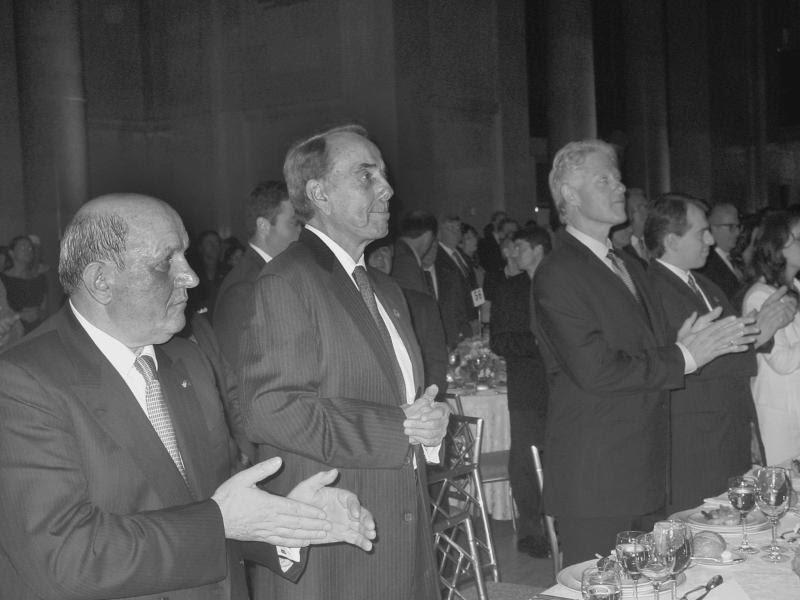
Foto pas debatit me rastin e zgjedhjeve për president të Shteteve të Bashkuara midis kandidatit të Partisë Republikane, Z. Robert Dole dhe kandidatit të Partisë Demokrate, Z. Bill Clinton, 1966 – garë që e fitoi Bill Clinton.  Megjithë ndryshimet e tyre parimore politike mbi shumë çeshtje, ata mbetën miqë të përjetëshëm — një miqësi kjo — midis dy personaliteteve të mëdha të politikës amerikane të shekullit të kaluar – nga e cila përfitojë shumë, jo vetëm politika amerikane, por edhe fati i shqiptarëve mori një drejtim tjetër historik, duke ndryshuar, për më mirë, epokën e shqiptarëve! Kosova, shtet i lirë dhe i pavrur, si përfundim i gatishmërisë së dy politikanëve amerikanë, me pikëpamje të forta dhe shpesh të kundërta, për të bërë kompromis mbi çështje me rëndësi të paqës dhe sigurisë në botë! 

See the source image

Ish-Presidenti republikan, Z. Ronald Reagan me ish-Kryetarin e Dhomës së Përfaqsuesve, demokratin Z. Tip O’Neill – praktikuesë të artit të kompromisit në politikën amerikane për të mirën e përbashkët të atdheut – siç duket në një moment marrëveshje kompromisi midis tyre.  Ish-Presidenti Ronald Reagan dhe Kryetari i Dhomës së Përfaqsuesve të Kongresit, Z. Tip O’Neill – dy amerikano-irlandezë, njëri siç cilësohej si, “ekstremist i djathtë” dhe tjetri “ekstremist i majtë”, sidomos sa u përkiste çeshtjeve të brendshme të Amerikës, njihen si dy politikanë amerikanë – që bënin kompromis për të arritur ndonjë sukses për vendin.  Megjithë pikëpamjet e tyre politike, shpesh krejtësisht të kundërta me njëri tjetrin, ata njiheshin si, “miqë pas orës 6 në mbrëmje”, kur takoheshin për ndonjë gotë “scotch”.

Frank Shkreli

Filed Under: Politike

THE WESTERN VIEWS OF THE BISHOPS OF DARDANIA AND ILLYRICUM

December 12, 2021 by s p

Dr. Etleva LALA

EötvösLorándTudományegyetem (Universiteti ELTE)

ProgramiiAlbanologjisë, Budapest, Hungari

Hormisda papa Caesario episcopo Arelatensi nunciat “episcopos tam Dardanos quam Illyricos pene omnes, nec non Scythas” ad sedis apostolicae communionem rediisse seque legatos in Orientem misisse.[1]/Pope Hormisdas announces to Caesarius, bishop of Arles, that “nearly all bishops, both the Dardanians and the Illyrians, but not the Scythians,” had returned to communion with the Apostolic See, and had sent their legates to the East./

This document dates back toSeptember 515, a time, which was not easy at all for Christianity in general. It was even more difficult for the bishops of Dardania and Illyricum, who happened to be at the crossroads of the various clashes of the time, clashes of various natures: political and organizational, ecclesiastical andspiritual. It was a time, when by trying to be as precise as possible and as right as possible, it was easy to fall into one heresy or another one, without even realizing it. Hence, the difficultyfor the religious and political leaders of the time to figure out who was the real authority and whom to follow, as this paper will try to highlight.

Before we go into the document itself, let us clarify, what Dardanosand Illyricosrepresent in the time when this document was written.The period from the conversion to Christianity of Emperor Constantine the Great in 313 and making it the official religion of the Roman Empire to the year 515as this document is dating can still be called a peaceful time for the inhabitants of the Eastern Adriatic, as Slavs and Huns have not arrived yet.Although according to Florin Curta,[2] a small number of Slavs (Sclaveni and Antes) migrated to the Balkans already in the 6th century, that did not happen before the earthquake of 518.[3]That is why, starting with the document that dates in 515 in order to have a view on the religion of the Illyrians and Dardanians until that period is still a pure history of the local people, that were living in this part of the world, among others also Dardanians and Illyrians as they are called in that time.

Dardania was one of 11 provinces that made the Diocese of Moesia, established by Emperor Diocletian (284-305). During[4] or after[5]Constantine I (306-337), out of parts of Dardania and Thrace, Dacia Mediterranea was also created. The two new dioceses, Moesia and Dacia fell into the prefecture of Illyricum in the second half of the fourth century.[6] The main centers of Dardania were Scupi, Naissus, Ulpiana[7]and alsoTherranda, Vicianum, Vindenis, Velanis, Dardapara, Quemedava and Damastion during the time of Moesia Superior.

            After the death of Constantine in 337,[8] the Roman Empire was divided between his three sons, since the Jewish law of the first-born son was certainly not yet introduced in Europe. This division is what later established the permanent pretorian prefectures: 1. Gaul (Dioceses: Gaul, Viennensis, Hispania and Britain), 2. the central prefectureof Italy, Illyricum and Africa(Dioceses: Italy, Africa, Pannonia, Dacia and Macedonia) and 3. the prefecture of the East (Dioceses: Thrace, Asia, Pontus, Oriens). The prefecture of Illyricum included the dioceses of Pannonia, Dacia and Macedonia in 347-361.

The central Prefecture of Italy, Illyricum and Africa was divided into two prefectures 1. Italy-Africa and 2. Illyricum, when the sons of Constantine the Great were struggling against each-other. One of them, Constans, joined the dioceses of Macedonia, Dacia and Pannonia in 347 into the prefecture of Illyricum.[9]In 375-379, the Diocese of Pannonia was added to Italy, and often is also known as the Diocese of Western Illyricum (Illyricum occidentale). Macedonia and Dacia, which as mentioned above also contained parts of Dardania, made Eastern Illyricum (Illyricum orientale). Eastern Illyricumseparatedfinally from the rest after the death of Theodosius in 395 with Thessaloniki as it capital.

Since in our document, both Dardanos and Illyricos are mentioned, in a time when theoretically Dardanians were already divided between Thrace and Mediterranean Dacia. Since Dacia belonged to Eastern Illyricum, theoreticallythey were already included into Eastern Illyricum, hence the term Illyrians would have administratively applied also to them. Pope Hormisdas, however, is addressing them separately, probably because the Dardanians have a distinguished unity among themselves.

In our document that dates from 515, the Roman pontiff, Hormisdaswas so glad to see that the bishops of Dardania and Illyricum had decided in his favor, rejoining the Apostolic See, after a long battle with many facets. Hesharedthis happiness also with the bishop of Vienna (Viennensis in the prefecture of Gaul): Idem papa Avitum, episcopumViennensem per conversionemprovinciarum id estDardaniae, Illyrici vel Scythiae (al. Thraciae) adcommunionemgaudiiprovocat.[10](The same pope,challenges of sharing the joy withAvitus, the bishop of Vienna, about the conversion of the provinces of Dardania, Illyricum, or Scythia (alias Thracia).

It seems to be self-evident that the Pope, as the good shepherd, should rejoice over every single sheep, that is over everysuccess story, but this is not one of those cases. In order to understand the real reason for the pontifical joy of gaining back the bishoprics of Dardania and Illyricum, in the following I will have to start back to what had happened in these parts of the world, since Christianity was acceptedby Emperor Constantine the Great in 313.

The first document registered in the ActaAlbaniae[11] is the one registered in 344,[12] and which was written in Philippi,[13] nowadays known as Provdiv, in Bulgaria. It is about the half-Aryan bishops who thought of establishing a “real Synod of Sardinia.” Among these half-Arian bishops is also Eulalius, the bishop ofAmantia, who also put his signature on the letter written to the churches of the East and the West.

The second document of the Acta Albaniaedates back to 370-371.[14]Pope Damasus I has condemned the bishop of Milan as heretic, and he informed about this the bishops of Illyricum. In the document of the year 375, in whichthe synod of the bishops of Illyricum sanctioned the divinity of the Holy Spirit, against Macedonians,[15]we may raise our questions, who these Macedonians were, how were they different from Illyrians,  and what views they presented about the Holy Spirit.

In three other documents dating back to 385, 386 and 392, Anysius, the bishop of Thessaloniki is getting more and more power since Pope Siriacuscontinuously gives him the power over irregularities in the nomination of bishops in Illyricum. He orders that no bishop should be ordained without Anysius’permission,[16]since there were cases, when three bishops were ordained in one church.[17]

Starting from the year 412, Rufus, the bishop of Thessaloniki appears to be the main protagonist especially in the correspondence with Pope Innocent I and Boniface I. He seems to be in charge of the all the churches of Illyricum and Macedonia, including Dardania. In order to understand what these terms meant in this letter, here is the list of these churches: Achaia, Thessalia, Ancient Epirus, New Epirus, Crete, Mediterranean Dacia, Ripenian Dacia, Moesia, Dardania and Praevalis.[18] This list seems slightly different from that ofthe year 422 where “Macedonia, Achaia, Thessalia, Epirus Veterus, Epirus Novus, Praevalitan at Dacia” are the only ones mentioned.Macedonia is new in this list. Dacia is only one general and Moesia and Dardaniado not appear again.[19]Do these discrepancies indicate a real change of borders ora different participation of the mentioned or not-mentioned bishops in the correspondence with the pope?

Rufus, the bishop of Thessaloniki, seems to have been claiming too much power over these churches, as Pope Boniface I. warns all the bishops appointed throughout Thessaly to not “strive to separate themselves from the communion and power of the Apostolic See.”He also orders bishop Rufus to respect the rights established by the Fathers and forbade anyone “to presume to ordain bishops through Illyricum on the Rufus’ conscience.”[20]

Pope Boniface I. also forbids Rufus and the other bishops, established in Macedonia, Achaia, Thessaly, the Old Epirus, the New Epirus, and Praevalis, and Dacia, to convoke a synod in order to examine the status of Perigenis, bishop of Corinth, appointed by the Apostolic See. For he writes “it is not lawful to revise the judgment” of the Apostolic See and that
“the greatest churches of the Eastern Churches have always consulted the Roman seat in important matters.” Whether Dardania and Moesia do not appear in this list, because they did not intend to obey Rufus in this point, is difficult to estimate at this point. Here other questions also need attention, like the process of nomination itself. If Rufus, the bishop of Thessaloniki, was nominating and ordaining bishops earlier, why is Pope Boniface now taking that matter in his hands, by nominating the bishop of Corinth?

            In the year 424, Pope Celestine I, wrote to nine bishops named Perigenus, Dynatus, Basilius, Sapius, Paul, Aeternalus, Sabatius, Julian and Senecio, naming them “bishops established throughout Illyricum.”Duchesne[21] has identified five of them through their signatures at the Council of Ephesus, as bishops of Corinth, Nicopolis, Larissa, Shkodra, and Sardika. The four others, he suggested should be the bishops of Crete, Moesia, Dardania and Dacia Ripensis.Thisshould have been Illyricum as it was understood at the time of Pope Celestine.

Under the penalty of excommunication, Pope Celestine orders the bishops of Illyricum to obey Rufus, his vicar, bishop of Thessaloniki. Felix, the bishop of the province of Durrës, is also mentioned in this document, as being released from the works of his insidious enemies.Who were the enemies of the bishop of Durrës?Why did not he order the bishop of the province of Durrësto do the same, namely obey the bishop of Thessaloniki?

During this period, we have to keep in mind that Byzantium is not created yet, that is why it’s not possible to speak about Byzantine Empire as some scholars continue to do. Byzantium was officially created in 476 when Rome handed over to Constantinople the imperial insignia after the last Roman Emperor was deposed and replaced by a king of Germanic descent, who formally acknowledged the overlordship of the Augustus ruling from Constantinople.[22]

The Council of Ephesus and Nestorianism

In the Council of Ephesus, in the following document, Philip is not any more bishop of Durrës: he is the bishop of Apollonia, whereas Eucharius appears to be the bishop of Durrës:

SententiamconciliiEphesini in Nestoriumlatamaliquae acta suochirographoapprobaverunt (inter alios): EuchariusepsicopusDyrrachini (έπίσκoπος Δυρραχίον), DyrrachiniEpiri novae (Δωρακίον ‘Ηπείροννέας), Felix episcopuscivitatisApolloniae[23]) et Bellidis[24] (έπίσκοπος πόλεωυ ‘Απολλωυίας και Βελίδος, Βελλιάδος), Senecio civitatisScodrorum.[25] /The sentence of the council of Ephesus with regard to Nestorius and some acts in his own handwriting were approved (among others) by Eucharius bishop of Dyrrachini (έπίσκίπος Δυρραχιον), Dyrrachini New Epirus (Δωρακιον ‘ Ηπειροννέαζ), Felix bishop of the city of Apollonia) and Bellidis (έπίσκοπος πόλεωυ ‘Απολλωυίας και Βελίδος, Βελλιάδος), Senecius of the city of Scodra./

This document leads us also to the Council of Ephesus and the heresies of this period, which more than out of political claims is in my opinion originating out of an excessive zeal and desire to be as righteous as possible. This was used politically by the Holy See to confirm its rights over the East Illyricum as Duchesne states.[26] In the following, I will present a short overview of the Council of Ephesus and the heresies that were shaping not only the spiritual map of the Eastern Roman Empire after the reception of Christianity as an official religion, but also its political map, which continued to be influential for the centuries to come.

Needless to state, that the Council of Ephesus, held from 22 June to 31 July 431, was a very influential one, not only because it was the Third Ecumenical Council, but because it started to clearly shape the division between East and West. The Roman emperor Theodosius II summoned it on the initiative of Nestor himself, who wanted to prove the truth of his teachings. He certainly never expected it to be condemned by the Council, he was so much looking forward to. As seen in the document above, bishops of the eastern Adriatic coast and its hinterland were also present in it: the bishops of Durrës, Apollonia and Bylis, Shkodra, New Epirus, condemningNestor’s teachings and confirmed the original creed of Nicaea.

Nestor, the Patriarch of Constantinople in 428-431 was obviously unaware of what movement he was creating, when he initiated the summoning of the Council of Ephesus. Nestor’s idea was to correct a wide-spread form of prayer, concerning Virgin Mary. He thought that the Virgin Mary should be called Christotokos, “Christ-bearer,” but not Theodokos “God-bearer,” because she gave birth only to Christ man and not to Christ God. He considered this matter important, after seeing that Christians used expressions such as “mother of God” when praying.

To Nestor, just like to his contemporaries, accuracyof expression,especially in prayers, which was the supreme form of communication, was very important, and bothered by mistakes he found widespread, he tried to convince not only the common people but also the members of the Council of Ephesus, that they should produce exact forms and expressions of prayer so that people would not err out of their ignorance. Hence, he insisted to make clear that Christ should be seen as composed of two natures: one human and the other divine, and both these natures must be treated separately.

Nestorius was blamed with diophysicism (dual nature) for his thoughts and condemned at the Council of Ephesus in 431. No need to say that he was immediately removed from the post of the Patriarch of Constantinople. Nevertheless, he continued to share his philosophy with people and his teachings spread in the Sassanid Empire, in Persia, Iran, Mesopotamia and even China. It can be assumed that Nestor was in those lands in exiled during this time, since his success is more notable there. The school of Edessa embraced these teachings of Nestor and became a strong intellectual and religious center of all the churches where Nestor’s ideas were taught and spread, thus eventually breaking away from the Christian Church.

Monophysicism

The Council of Ephesus became the starting point of many other heretic movements, one of which was also monophysicims or Eutychianism, which was born as an opposition to Nestorianism. Monophysicism (gr. monos = one and physis = nature) is nowadays a Christological doctrine, which declares that Christ is composed of only one nature, which is divine and human united in one. This worldview spread widely during the fifth and sixth centuries in the Eastern Roman Empire, especially in Syria, the Middle East, Egypt and Anatolia, while the Western Church and the Papacy condemned it as heretic at the Ecumenical Council of Chalcedon in 451.

Eutyches (380-456), the archimandrite of one of the most influential monasteries near Constantinople, first appeared as a powerful personality at the Council of Ephesus in 431, where he was noted for his open warfare against Nestor’s teachings, a war which he did not stop even when Nestor was convicted at the Council of Ephesus in 431. He continued fighting against Nestor even after he returned to Constantinople and did not spare Nestor’s former supporters either, including even some who had already made a turn in the Council of Ephesus, such as Cyril of Alexandria. This excessive devotion of him led to excessof zeal and made him a target of accusation for heresy.

To handle the case of Eutyches, a local synod was summoned in Constantinople in 448, but instead of solving the case, it made it even more complicated. The new patriarch of Alexandria, Dioscuri, became a supporter of Eutyches, and Pope Leo I wrote to him explaining that he had erred in insisting on a “single nature” of Christ. A Second Council of Ephesus was summoned again under Dioscuri in 449, in order to fix the issue, and the latter accused both of them: Eutyches and Dioscurifor not being harsh enough against Eutyches.

The Pope of Rome and the Patriarch of Alexandria accused each other of heresy, which led to a schism between the Churches of the East and the West, until the Council of Chalcedon was convened in 451, to finally condemn Eutyches and alsoDioscuri I, also known as Dioscuri the Great. In this Council of Chalcedon, the last word of Christology was proclaimed, what is still valid nowadays, namely: Christ is composed of two natures inseparable from one another.

The Council of Chalcedon, October 8 to November 1, 451, was certainly one of the most important ecumenical councils of the Church. The Acts of the Council of Chalcedon were signed (among others) also by Luke, bishop of the city of Durrës, by the metropolitan of the province of New Epirus, bishop of the metropolis of Durrës, by Evandrus, bishop of the city of Dioclia, and by Eusebius, bishop of the city of Apollonia, in southern Albania as the following document is suggesting:

ActisconciliiChalcedonensissubscripserunt (inter alios) “Lucas episcopusDyrrhachenaecivitatis,” “metropolitanusprovinciae novae Epiri,” “episcopusDyrrhachii metropolis,”[27] “Evandrus[28]episcopuscivitatisDiocliae,” “Eusebius episcopuscivitatisApolloniadis.”[29]

Obviously, the Illyrian bishops were keeping themselves out of the ongoing discussions and supporting the central authority of the Roman popes in all these religious maters. Whether the distance played a role in their approach is difficult to state. Geographically the distance from Durrës to Rome was more or less the same as the distance to Constantinople, if we consider, the good Via Egnatia as a main route to Constantinople. Was it perhaps the glorious reputation of the Roman Empire, which intimidated them and made them decide pro Rome rather than anything local? Probably these bishops did not consider these local heresies seriously as it was typical for them even in later periods.

But the story did not end so simply. In a letter from Pope Leo I, written on April 15, 454, we find complaints that Eutyches was continuing to spread his heresy even in exile. The letter, pope Leo I asks Marcian to transfer Eutyches to an even further remote and lonely place. This is the last time we meet the abandoned old man, but his disciples seem to have followed him, wherever he went. They created a movement, which continued to grow and spread especially in Syria, Egypt and even Constantinople. Many emperors tried to impose the Chalcedonian formula on them, but without success. In the sixth century, the monk and bishop Jakob Baradaeus united all the Eutychians or Monophysites into a single Church, which continues to this day under the name of the Syrian Orthodox Church.

Dioscuri on the other hand, the Patriarch of Alexandria who had condemned Eutychians, but continued to reject also the Council of Chalcedon as a legitime one, initiated a different branch from Eutyches, known today as Oriental Orthodoxy, where Dioscurithe Great is the main patriarch and saint of the Coptic church. This Church recognizes only the first four Ecumenical Councils and rejects the Council of Chalcedon. It is known as the Old Oriental Churches and is more widespread in Armenia and Ethiopia, but is also to be found in Eritrea, Egypt, Sudan, Syria and Kerala and India.

The following document, whichdates back toSept. 1, 457, shows that Eutychians were quite active even after the Council of Chalcedon and the Holy See had time and again to address this issue in their letters, instigating bishops of the Eastern Illyricum to support him in condemning and fighting this heresy.

Leo I. EuxitheumThessalonicensem, JuvenalemHierosolymitanum, PetrumCorinthium, LucamDyrrachenum “a pari” concitatadversusEutychianos, qui interfectoProterio, episcopoAlexandrino, id contendant, ut ad abolendastatutaChalcedoniacogaturconcilium. Sperat fore, ut imperator et patricius (Aspar), si sacerdotum intellexerint concordiam, ecclesiam perturbari ab haereticis non patiantur.[30]/Leo I. incites Euxitheus of Thessalonica, Juvenal of Jerusalem, Peter of Corinth, and Luke of Durrës“a peer” against Eutychians, who, after having killed Proterius, bishop of Alexandria, strive that the council of Chalcedonia should be compelled to abolish the statutes. He hopes that the Emperor and the patrician (Aspar), if the priests understand the concord, will not allow the Church to be disturbed by heretics./

Thessaloniki, Jerusalem, Corinth and Durrës are the destinations of this letter, and their bishops are considered as the important partners to settle down the problems that the Eutychians have caused. The Eutychians were already condemned in the Council of Chalcedon some years earlier in 451, but obviously that condemnation did not stop them from their activity and even aggressivity. Bishops in that period, were certainly not only religious rulers but also powerful political ones, because after the Edict of Thessalonica on 27 February 380, very citizen of the Roman Empire had to belong to a church and to an ecclesiastical community, otherwise he or she would be officially considered as an outlaw and expelled.[31]

If considering the map we may figure out one of thethe reasons why pope Damascus is addressing these bishops. Durrës was located at the head of the Via Egnatia, the Roman street, which was a continuation of Via Apia, connecting Rome with Constantinople. In that geographical position, Durrës was the most important port of the popes for their terrestrial itineraries to Constantinople (present-day Istanbul). Corinth, a very important city and port, was also a key station, when the popes were travelling by ship. Both ways, the terrestrialone through Durrës and the naval one through Corinth, led to Thessaloniki, which was the pre-last station to Constantinople, and further on to Alexandria and Jerusalem.

Thessaloniki was favored with special privileges and responsibilities since the time of popes Damascus, Syriac and Anastasius. Nevertheless,de jure Thessaloniki was raised into a papal vicariate on January 12, 444 by Pope Leon I. In this formal status,Thessaloniki continued to enjoy the same privileges that given earlier by other popes. The bishop of Thessaloniki had the power to ordain both the metropolitans of Illyricum and convene synods, by which the bishops could resolve their disputes. The only legallimitation given to the bishop of Thessaloniki in this formal declaration of the vicariate regarded greater issues, which he (the Roman pope) would be the only authority to solve, keeping thus the sovereignty to Roman popes.

There are certainly also other reasons why the bishop of Durrës is mentioned next to the most important religious personalities of the Eastern Roman Empire in this period, although he was supposed to be under the authority of Vicariate of Thessaloniki.Nevertheless, explaining the details, will be the task of another paper. For the moment, I would like to focus on heresies mentioned in the document above, in order tobetter highlight the worldview of the locals in those days and to keep the political and administrative organization of the region into its most important minimum to understand the context.

To sum up, Pope Hormisdaswho in 515 announced to Caesarius, bishop of Arles, that “nearly all bishops, both the Dardanians and the Illyrians, but not the Scythians,” had returned to communion with the Apostolic See, was aware of what a success story this was. Through some examples, I only gave a taste of what was going on in terms of spiritual movements that influenced political decisions of that time. It was a very dynamic time when freedom of thought and political actions were hand in hand shaping the future of Europe and Middle East, and Illyrian and Dardanian bishops who were dressed also with a lot of authority and responsibility for the people they represented, had difficult decisions to make. Nevertheless, their western views were often dominating, although Constantinople was more and more becoming a stronger political and religious center.


[1]Ludovicus Thallóczy, Constantinus Jireček, and Emilianus Šufflay, Acta et diplomata res albaniae mediae aetatis illustrantia, vol. I (Vienna: Typis Adolphi Holzhausen, 1913). (hence: AAlb.I, 27.)

[2] Florin Curta, The Making of the Slavs: History of Archeology of the Lower Danube Region, c. 500-700(Cambridge: Cambridge University Press, 2006), 75-92.

[3]DejanBulić, „The Fortifications of the Late Antiquity and the Early Byzantine Period on the Later Territory of the South-Slavic Principalities and their Re-Occupation.“The World of the Slavs: Studies of the East, West and South Slavs: Civitas Oppidas, Villas and Archeological Evidence (7th to the 11thcenturies AD). (Belgrade: The Institute of History, 2013): 137-234.

[4]András Mócsy. Pannonia and Upper Moesia: A History of the Middle Danube Provinces of the Roman Empire (New York: Routledge, 2014), 69.

[5] Joseph Roisman and Jan Worthington, A Companion to Ancient Macedonia (John Wilsey and Sons: 2010), 547.

[6]Roisman and Worthington, 547-8.

[7]FanulaPapazoglu, The Central Balkan Tribes in Pre-Roman Times: Tribali, Autariatae, Dardanians, Scordisci and Moesians (Amsterdam: Hakkert, 1978).

[8] Timothy D. Barnes, The New Empire of Diocletian and Constantine (Harvard University Press, 1982), 139.

[9]Timothy D. Barnes, Constantin: Dynasty, Religion and Power in the Later Roman Empire (Willey Blackwell, 2011), 160.

[10] AAlb I, 27; Jaffè, Reg. 778. Cf. Jaffè, Reg. 781.

[11]Ludovicus Thallóczy, Constantinus Jireček, and Emilianus Šufflay, Acta et diplomata res albaniae mediae aetatis illustrantia, vol. I (Vienna: Typis Adolphi Holzhausen, 1913).

[12] AAlb.I, 1. 

[13]For a recent study on Philippi, see Steven J Friesen, Michalis Lychounas and Daniel N. Schowalter, eds., Philippi, From Colonia Augusta to Communitas Christiana, Religion and Society in Transition. Novum Testamentum Supplements 186 (Brill, 2021)

[14] AAlb.I, 2.

[15] AAlb.I, 3.

[16] AAlb.I, 4.

[17] AAlb.I, 5.

[18] AAlb.I, 7.

[19] AAlb. I, 12.

[20]AAlb.I, 11.

[21]Duchesne, “L’Illyricumecclésiastique,” ByzantinischeZeitschrift 1 (1892): 531-550, esp. 543:  “Sur cesneufévêques cinq sout identifies par les signatures du concild’Éphèse (a. 431) avec les métropolitanis de Corinthe, Nicopolis, Larisse, Scodra (Senecio) et Sardique. Il y a bien lieu de croire que les quatre restants sont les métropolitanis de quatre autres provinces Crète, Mesie, Dardanie et Dacie ripuaire.”

[22] For a recent study on this field, see Thomas J. MacMaster and Nicholas S.M. Matheou, eds., Italy and the East Roman World in the Medieval Mediterranean. Empire, Cities and Elites 476-1204 (Routledge, 2021).

[23] In Epiro nova inter Dyrrhachiumadseptemtrionem et Aulonem ad meridiem. See Pauli-Wissowa, Lexikon s. h. v. ‘Αλεξούδης, ΣύντομοςίστοριχήπεριγραφήτήςΑπολλωνίας, Constantipoli, 1896, 108 s.

[24]ΒουλίςΒυλλίς (ager Bullinus, Βυλλιαχή). Γραδίτζιος, Градецеmediiaevi. SeeTomaschek in Pauli-Wissowa, Encycl. II, 1105.

[25]AAlb.I, 14.

[26]Duchesne, “L’Illyricum ecclésiastique,” 539.

[27] Ab ultima sessione abfuisse videtur. Farlati, VII, 344 B.

[28] Cf. Migne. PG, 40, 814, 822; Marković, Dukljansko-barska metropolija, 9.

[29]AAlb.I, 21. Harduin, II, 53, 365, 627. Mansi, VI, 565, 1080 et VII, 420. – V. Farlati, Ill. Sacr. VII, 2, 344, 396. Hefele, II, 423 ss.Leonis M. Opp. I, 1311. (Migne, 54, 1120). Mansi, VI, 315. Bull. Rom. Tomasseti, App. I, 150. – Jaffè, Reg. 525 (302)

[30] AAlb.I, 22: 1 September 457.

[31]Sidney ZdeneckEhler, John B Morrall.Church and State Through the Centuries: A Collection of Historic Documents with Commentaries. (Biblo and Tannen, 1967), 6-7.

Filed Under: Opinion

  • « Previous Page
  • 1
  • …
  • 34
  • 35
  • 36
  • 37
  • 38
  • …
  • 60
  • Next Page »

Artikujt e fundit

  • Dashuria që e kemi dhe s’e kemi
  • “Jo ndërhyrje në punët e brendshme”, dorëheqja e Ismail Qemalit, gjest atdhetarie dhe fletë lavdie
  • Arti dhe kultura në Dardani
  • Gjon Gazulli 1400-1465, letërsia e hershme shqipe, gurthemeli mbi të cilin u ndërtua vetëdija gjuhesore dhe kulturore e shqiptarëve
  • “Albanian BookFest”, festivali i librit shqiptar në diasporë si dëshmi e kapitalit kulturor, shpirtëror dhe intelektual
  • VEPRIMTARI PËRKUJTIMORE SHKENCORE “PETER PRIFTI NË 100 – VJETORIN E LINDJES”
  • 18 dhjetori është Dita Ndërkombëtare e Emigrantëve
  • Kontributi shumëdimensional i Klerit Katolik dhe i Elitave Shqiptare në Pavarësinë e Shqipërisë 
  • Takimi i përvitshëm i Malësorëve të New Yorkut – Mbrëmje fondmbledhëse për Shoqatën “Malësia e Madhe”
  • Edi Rama, Belinda Balluku, SPAK, kur drejtësia troket, pushteti zbulohet!
  • “Strategjia Trump, ShBA më e fortë, Interesat Amerikane mbi gjithçka”
  • Pse leku shqiptar duket i fortë ndërsa ekonomia ndihet e dobët
  • IMAM ISA HOXHA (1918–2001), NJË JETË NË SHËRBIM TË FESË, DIJES, KULTURËS DHE ÇËSHTJES KOMBËTARE SHQIPTARE
  • UGSH ndan çmimet vjetore për gazetarët shqiptarë dhe për fituesit e konkursit “Vangjush Gambeta”
  • Fjala përshëndetëse e kryetarit të Federatës Vatra Dr. Elmi Berisha për Akademinë e Shkencave të Shqipërisë në Seancën Akademike kushtuar 100 vjetorit të lindjes së Peter Priftit

Kategoritë

Arkiv

Tags

albano kolonjari alfons Grishaj Anton Cefa arben llalla asllan Bushati Astrit Lulushi Aurenc Bebja Behlul Jashari Beqir Sina dalip greca Elida Buçpapaj Elmi Berisha Enver Bytyci Ermira Babamusta Eugjen Merlika Fahri Xharra Frank shkreli Fritz radovani Gezim Llojdia Ilir Levonja Interviste Keze Kozeta Zylo Kolec Traboini kosova Kosove Marjana Bulku Murat Gecaj nderroi jete ne Kosove Nene Tereza presidenti Nishani Rafaela Prifti Rafael Floqi Raimonda Moisiu Ramiz Lushaj reshat kripa Sadik Elshani SHBA Shefqet Kercelli shqiperia shqiptaret Sokol Paja Thaci Vatra Visar Zhiti

Log in

This website uses cookies to improve your experience. We'll assume you're ok with this, but you can opt-out if you wish. Cookie settingsACCEPT
Privacy & Cookies Policy

Privacy Overview

This website uses cookies to improve your experience while you navigate through the website. Out of these cookies, the cookies that are categorized as necessary are stored on your browser as they are essential for the working of basic functionalities of the website. We also use third-party cookies that help us analyze and understand how you use this website. These cookies will be stored in your browser only with your consent. You also have the option to opt-out of these cookies. But opting out of some of these cookies may have an effect on your browsing experience.
Necessary
Always Enabled
Necessary cookies are absolutely essential for the website to function properly. This category only includes cookies that ensures basic functionalities and security features of the website. These cookies do not store any personal information.
Non-necessary
Any cookies that may not be particularly necessary for the website to function and is used specifically to collect user personal data via analytics, ads, other embedded contents are termed as non-necessary cookies. It is mandatory to procure user consent prior to running these cookies on your website.
SAVE & ACCEPT