• Home
  • Politics
  • Opinion
  • Culture
  • Sports
  • Economy
  • Interview
  • Reporting
  • Community
  • Vatra

Dielli | The Sun

Albanian American Newspaper Devoted to the Intellectual and Cultural Advancement of the Albanians in America | Since 1909

ELEGJI PËR VËLLA EDUARDIN DHE FALENDERIM PËR MIQTË

March 19, 2021 by dgreca

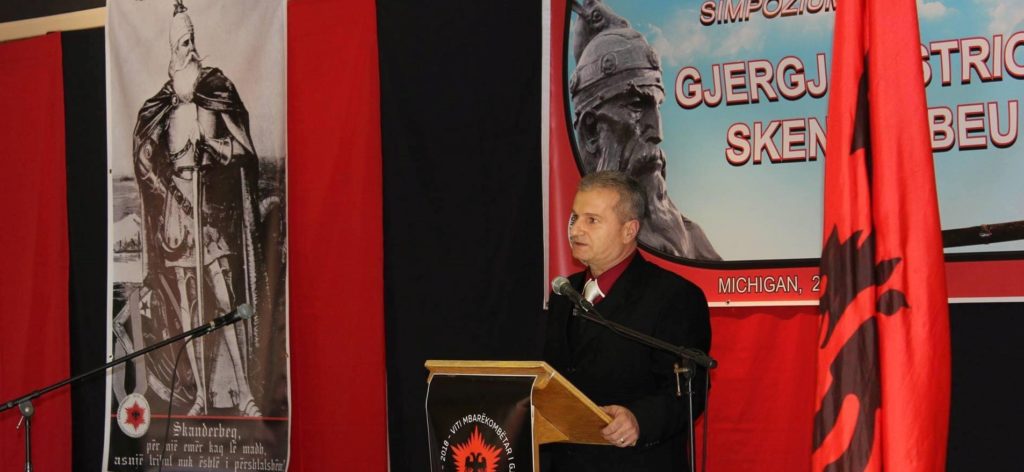
Eduard Grishaj, duke mbajte kumtesen ne Simpoziumin Shkencor ne Michigan kushtuar heroit Kombetar Gjergj Kastrioti Skenderbeu.

Falenderim nga Familja Grishaj/

Pas humbjes së parakohshme  të dashurit tonë , Eduard Grishaj , falenderojmë nga zemra çdo mik e mike që gjatë këtyrë momenteve të vështira të familjes, na u gjendën  pranë me ngushëllime online, telefonata , shkrime dhe opinione për Eduardin. 

Falenderojmë gjithashtu me zemër të gjithë ato miq e shokë që sot e përcollën  trupin e Eduardit për në banesën e korpëve. 

Faleminderit Shkodërloce për përcjelljen dinjitoze që i rezervove birit tonë , djalit tënd !

Për Eduardin ,“Pishtar i Demokracisë”, Poliglot , Erudit , Studiues cilësor i shkencave të historisë dhe letërsisë , u takon specialistëve dhe miqve që në të ardhmen t’a gjykojnë  punën e tij krijuese. 

Me respekt e falenderime për kujdesin e gjithësecilit që  mori pjesë në dhimbjen tonë.

Familja Grishaj

***

Alfons Grishaj

Elegji për Eduard Grishaj

Të falem o Perëndi,

Për çdo vendim që merr!

As urrejte e qesëndi

Dhe në më çofsh në ferr.

Më dhe jetë kur s’kishte…

Më dhe shpresë kur s’kisha,

Kur djalli kuq bitiste

Atdhe, Xhami e Kisha .

Por, kjo qe një tjetër ditë,

Një provë Abrahamike,

Një shuarje  papritë…

Bash si  gjëmë biblike.

Unë mbes , Abdiel i Jot.

Çdo provë që më ke dhënë

Të qofsha falë o Zot !

Do e kaloj këtë gjëmë.

Po!  Të gjithë do “vdesim”,

Por  vdekja s’ do na marrë,

Veç trupin do e  tresim

Nën dhe, n’ errësirën varr.

Atje  shkoi trupi jot…

Vëlla , o shok i mirë,

Prej nga na krijoi Zot

Borxh tek dheu  i lirë.

Se, shpirti shtegëtar

Fluturon plotë jetë,

Tek lë trupin  mëkatar

Të  tretet i qetë.

Në parajsë nuk ka orë…

Si n’ ekpseriment’n tokë!

Do  mblidhemi t’ përkorë

Të dashur , miq e shokë.

Sërish do qeshim paskaj

Papeshën e egërsis’  alem,

Dhimbjeve që sjellin vaj…

So long ! Vëllau  i jem .

Filed Under: Opinion Tagged With: alfons Grishaj, Eduard Grishaj, Elegji per vellain, falenderim

Regjistrimi i popullsisë në Mal të Zi shtyhet për në fund të vitit

March 19, 2021 by dgreca

Ndonëse ishte parashikuar që regjistrimi i popullsisë  të mbahet në muajin prill, bëhet më dije së  për shkaqe financiare dhe në mungesë të ligjit për  regjistrimin e  popullsisë ai do të mbahet në fund të vitit, nga del se pushteti aktual nuk ka pasur mundësi praktike të ballafaqohet me këtë proces me peshë shumëdimensionale shtetërore, që është dëshmi e raportëve  shoqërore në këtë mjedis të pakonsoliduar

Nail  Draga

Nga konstituimi i qeverisë së re nga ish opozita e mehershme, e cila është e dominuar me pjesëtarë nga popullsia serbe, përveç marrjës së pushtetit në sajë të fitorës së zgjedhjeve  me 30 gusht 2020, një ndër çështjet e tyre programore është edhe regjistrimi i popullsisë. Madje ata e cekin haptas se kjo  do të jetë fitorja e dytë e tyre, duke dëshmuar se regjistrimet e më hershme kanë qenë farsë e pushtetit, dhe  diskriminuese, sepse nuk kanë treguar gjendjen reale   në këtë mjedis.

Regjistrimi si proces statistikor e jo politik

Pikërisht, në lidhje me këtë çështje nëse analizojmë të dhënat në regjistrimet e popullsisë në Mal të Zi pas Luftës së Dytë Botërore(1948-1991) për kohën e monizmit, popullsia serbe është paraqitur në mënyrë simbolike, që nuk ka treguar realitetin demografik në aspektin nacional. Por, në këtë aspekt për serbët u bë kthesë e madhe në regjistrimin e vitit 2003 e 2011, duke dëshmuar se  regjistrimet e mëhershme kanë qenë të programuara me qellime të caktuara nga ana e pushtetit. Sepse nuk mund të quhet ndryshe e dhëna se serb në aspektin kombëtar në vitin 1948 janë deklaruar 1.78%, ndërsa malazez 90.67%, ndërsa në vitin 2003, serb janë deklaruar 31.99%, ndërsa malazez   43.16%. Këto të dhëna janë të mjaftueshme për të kuptuar realitetin demografik në Mal të Zi, sepse për këtë periudhë kohore(1948-2003), numri i serbëve është rritur për 30.21%, ndërsa i malazezëve ka rënë për 47.51%, që është dëshmi transparente e manipulimit të pushtetit me strukturën nacionale të popullsisë në këtë mjedis. 

Në këtë aspekt nuk kanë bërë përjashtim as shqiptarët, boshnjakët e kroatët. Andaj në rrethana të reja shoqërore e politike regjistrimin e ardhshëm të popullsisë duhet trajtuar si proces statistikor e jo politik. Vetëm me një qasje të tillë do të kemi një realitet tjetër demografik, duke e paraqitur strukturën reale në këtë mjedis multinacional si nder më të veçantit në regjion.

Eurostat-i nuk do të përcjellë regjistrimin e popullsisë

Bëhet me dije se EUROSTAT-i(Drejtoria gjenerale e Komisionit Evropian për Statistikë) nuk do të përcjellë në terren regjistrimin e ardhshëm të popullsisë në Mal të Zi, edhe pse ky institucion në vitin 2011 ka qenë pjesërisht i kyçur në përcjelljen e regjistrimit në Mal të Zi.

Niveli i kyçjes atëherë ka qenë në formën e monitorimit, përmes të ashtuquajturës “vlerësimi të ekspertëve”, ku ekspertët e angazhuar i ka miratuar EUROSTAT-i, që kanë qenë në terren gjatë regjistrimit. Por, kësaj here, bëhet më dije së nuk është planifikuar që Eurostat-i të mbikëqyr regjistrimin e popullsisë në Mal të Zi(apo në ndonjë vend tjetër) njoftojnë nga ky institucion evropian.

Siç kanë theksuar, kjo nuk do të thotë së Eurostat-i nuk është i kyçur, sepse ata do të japin këshilla vendëve, me kyçje përmes grupit punues për regjistrimin e popullsisë dhe banesave, ku marrin pjesë vendet në procesin e zgjerimit të BE, marrin pjesë si vëzhgues dhe kanë përfitime nga diskutimet dhe këshillimet teknike të paraqitura gjatë takimeve.

Megjithate, Eurostat-i do përcjellë përgatitjet për regjistrim dhe do të vazhdojë të përcjellë zhvillimet aktuale njoftojnë nga ky institucion.

Mos miratimi i buxhetit dhe ligjit për regjistrimin e popullsisë

Sipas informacioneve që disponojmë në Mal të Zi praktikisht është e pamundur të realizohet regjistrimi i popullsisë në muajin prill, sipas paralajmërimit të mëhershëm.  Si shkak  praktik në lidhje mbi këtë çështje është  vendimi për financimin e përkohshëm, sepse buxheti për këtë vit nuk është miratuar. Ndërsa përveç buxhetit, pengesë  tjetër është edhe mos miratimi i ligjit për regjistrimin e popullsisë deri në këtë moment, ndërsa nuk duhet të anashkalohet edhe   gjendja e pavolitshme epidemiologjike nga ana e koronavirusit  në Mal të Zi.

Në Maqedoni të Veriut  mbahët regjistrimi i popullsisë

Në regjion regjistrimi i popullsisë  pas 19 vitëve do të mbahet në Maqedoni nga data 1-21 prill, ku përveç popullsisë rezidente do të regjistrohet edhe ajo në diasporë. Madje në këtë aspekt diaspora është njohtuar se mund të aplikojë në mënyrë elektronike, duke iu mundësuar regjistrimin pa pengesa subjektive.

Pasi kemi të bëjmë me kohën e pandemisë, del qartë se kemi të bëjmë me një regjistrim pandemik, me rrezikshmëri aktive, ku kësaj dukurie duhet shtuar edhe sindromin e besueshmërisë, që është e luhatur vite më radhë. Duke e ditur se regjistrimet e popullsisë në kohën e monizmit në Maqedoni kanë qenë të njëanshme dhe me dyshime sa i përket numrit të shqiptarëve në kuadër të popullsisë së përgjithshme, kësaj here ekziston mundësia e përmirësimit të gabimeve të tilla me regji shtetërore. Sepse numri I shqiptarëve me rreth 25% në popullsinë e përgjithshme nuk është i tillë, por analistët dhe studiuesit e vlerësojnë se ajo është rreth 30-35%. 

Shqiptarët janë 1/3 e popullsisë 

Në favor të një konstatimi të tillë janë edhe  numri i nxënësve shqiptarë si dhe nataliteti i popullsisë shqiptare por edhe disa faktorë të tjerë. Nuk ka dilemë se të  gjithë indikatorët tregojnë se shqiptarët janë më shumë se sa i ka paraqitur statistika  në regjistrimin e fundit, ku regjistrimi i prillit duhet  të eliminojë dilemat e tilla. 

Po ashtu duhet cekur se në këtë numër nuk janë përfshirë shqiptarët etnik të përkatësisë ortodokse në Maqedoni, që minimalisht janë  rreth 70.000 qytetarë. Nëse do të kemi një regjistrim real, do të kemi një paraqitje tjetër në mozaikun nacional në Maqedoni të Veriut, sepse pas Malit të Zi, ky është vendi me strukturë heterogjene multinacionale në regjionin e Evropës Juglindore.  

Nga ana tjetër duke marrë parasysh situatën e pandemisë në Serbi regjistrimi i popullsisë  që është parapa të mbahet në muajin prill,  është shtyrë për në vjeshtë.

Përfundim

Në  Mal të Zi si mjedisi me multinacional në regjion në lidhje me mbajtjën e regjistrimit të popullsisë polarizime të kësaj natyre  ka pasur edhe më parë. Kujtojmë më këtë rast vitin 2001, kur ishte afati të mbahet regjistrimi i rregullt, por u shty dy herë dhe përfundimisht u mbajt në vitin 2003. Por, duke marrë parasysh raportët shoqërore në Mal të Zi në momentin aktual, sidomos pas ndryshimit të pushtetit nga zgjedhjet e 30 gushtit 2020, këtu vazhdon diskursi politik tipik i një mjedisi të pakonsoliduar. Andaj, ndonëse është përcaktuar që regjistrimi i popullsisë të shtyhet për në fund të vitit, nuk do të jetë çudi, që të prolongohet përsëri në sajë të rrethanave politike në vend.

mars  2021

Filed Under: Analiza Tagged With: Nail Draga, te shtyhet

AN UNUSUAL DAY…

March 19, 2021 by dgreca

By Dita Gjuraj/

As we grow up and age we forget much of our childhood, or rather we file most of it away somewhere in the back room of our memory. But there are some days that are different, somehow more significant and often come to mind during our lives. In my case, I have many such memories, the kind that never recede into the fog of time. I’d like to share one of those with you today.

One day when I was about 6 years old, a man knocked on the door of our little room calling my father’s name:

“Gjuro, they want you to be at the office of Interior Affairs tomorrow morning promptly at 9 O’clock. Promptly!” he said sternly.

“Of course,” said my father opening the door, “would you like to come in friend?”

The man looked embarrassed.

“They sent me. That’s just how it is Gjuro,” he said lowering his eyes.

“Don’t worry, I do understand. That is how it is,” answered my father.

The man turned around and left. My father closed the door and leaned his back against it. He just stood there for a while looking at me sitting on the bed, waiting to hear him tell me what had just happened. He saw I was ready to start crying so he came over and sat next to me, kissed me on the top of my head and said not to be afraid. He said that it was nothing to worry about, just a thing to do tomorrow. That made me even more scared, and I started bawling at the top of my lungs. He hugged me and tried to assure me, but I just couldn’t stop. At some point he took me by the shoulders, shook me lightly and asked me if I was a little kid or his best confidant. Didn’t work. He then asked the ultimate question, are you or are you not an Albanian? That did it, as usual. I stopped crying.

He was not well. That year he spent a lot of time in his sick bed but all in all, he was better than I remembered seeing him in the past. That day the little dank room with the leaky roof and earthen floor, felt even colder than usual. We played cards at the rickety table my grandfather cobbled together from some leftover boards he got from a construction site. At dusk my mother came home from work, tired and probably very hungry. She only took a small piece of old bread and half an onion as lunch when she left at five in the morning. Her work was at the brick factory, transporting unbaked bricks to the kiln and finished ones from the kiln to the loading dock, in a wheel barrel. Men’s work, babi called it, but she had to work there to keep us alive. Whenever she found better work UDBA, the state security police, would order her fired. Another method of applying pressure on my father to work for them. He refused and they made us suffer for it. She always stood firmly behind him no matter the cost. Sometimes I think she hated them even more than he did. So, that day my tired mother came home to my father looking grim, grinding his teeth, and to me crying. Before he could say anything, I ran to her arms and started babbling:

“They are going to take babi away! They came … they said to go tomorrow …”

She wrapped her arms around me and asked my father what had happened. He wanted her to sit down first, which she did as I clung to her like a wild little animal. Then he told her of the man’s visit and the order to appear at the bad place in the morning. She looked calm but a tear ran down her right cheek.

They started discussing the situation and all the possible outcomes the next day could bring. Mama wanted to go with him, but my father rejected the idea. She kept insisting, citing the fact that he had been in political prison, had been tortured, poisoned, that he needed a witness to whatever they intended to do to him the next day. She went on and on until he finally stopped her, told her it was his decision to make, and she was not to come. He said, this had to be handled calmly and smartly and being stubborn and hotheaded could cost us her freedom too. He told her, though he loved her for all that, it wasn’t going to be helpful in case … If things went bad for both of them, what would happen to me? She finally relented.

“You go to work as usual. I won’t give them the satisfaction of seeing us afraid or desperate. We stay strong. I will see if Sefa’s daughter Meri can keep Dita with her till I come back, or you come from work…”

“No!” my mother snapped, “you take Dita with you. They wouldn’t dare … with the child there …”

“Mica, why would you think the child being there would make a difference to such people? You know who and what they are. I don’t want her exposed to … such things, at this age,” said my father stroking my hair.

“I say take her with you, Adem. She has to know, even at this age, who her enemies are and what to expect …,” she paused for a second, “to start learning what her personal and national heritage is, what it costs.”

They argued a while and my mother won. It was decided, I would go with babi to that place. I didn’t really understand what that place was, but I understood it was bad. No one slept that night. Well, I probably did but I am sure neither of them slept. The next day, my mother went to work at daybreak. Babi and I got out of bed a couple of hours later. He boiled some water in the little red pot, poured it into our dented basin, added some cold water to it and helped me wash up. Then he washed up and shaved. He put on his good shirt, the one that had not sewn-up holes in it. It was old but whole, unlike the everyday one with all those stitches. He put a dab of oil on his raggedy shoes, the only pair he owned, to make them look a bit … well, a bit better than they were. I too had a second garment. Besides my everyday dress that had once been the material of mom’s skirt, I had a little lightly used dress that had come in a package sent by babi’s cousin in America. Everything else was sold to pay rent on the room, coal for winter and the bill for bread at the bakery. After we finished dressing babi made our tea, a bit of sugar burned in the little coffee pot with the long handle and doused it with water. He crumbled some old bread into my cup and served it as breakfast. After much begging and crying not to make me eat it, I ate some and we were off to that place. I was terrified but determined to fight them, and the whole world if need be, to protect babi.

Walking to our destination my father exchanged greetings with quite a few people along the way. An old gentleman who knew life before the new era bowed slightly and raised his hat to my father from across the street. My father saluted him in return. In truth, most people in the city liked my father and most, openly or secretly, admired his courage and determination. But yes, there were some hateful rats too.

So, dressed in the best we owned we arrived at the old, gray building sitting smack in the center of town. The City Police occupied the first and second floors, the horrible people had the top two. The basement was a temporary detention facility and God knows what was in the subbasement … We walked up the three steps, entered the lobby and stopped at the reception desk where a uniformed policeman sat. He asked why we were there and my father told him that he was summoned by the “comrades” on the third floor. The man looked at my father and then at me, shook his head in agreement and called upstairs to find out to which office we should go. He spoke for a couple of minutes and then told us to wait till someone comes down to get us. A few minutes later the police officer got up and brought his chair to where we were standing.

“Gjuro, I know you’re sick. Take my chair till they come downstairs. With them who knows when that’ll be. The child can sit on your lap.” Then he added almost whispering, “I am sorry, with all my heart.”

My blood ran cold, and I must have looked like I was about to start crying when my father said, very softly:

“That was about me being sick, not about today. Understand? Anyway, you are my strength, I am depending on you being Albanian today. Don’t ever let them see they can hurt us because if they know that, they will hurt us.” I nodded.

He thanked the policeman, shook his hand and then sat down. After a few minutes of looking and walking around the lobby I climbed onto his lap and he wrapped his arms around me tightly. We waited and waited. The policeman called up again. Same response, wait. I noticed my father breathing heavily and I could feel his heart beating harder and faster. He took out the asthma pump from his pocket and sprayed some medicine into his mouth. I was getting scared again, what if they take him, what if he gets sick and dies … The policeman brought him a little glass of water. Besides a nod from my father nothing was said. A few minutes later he was breathing better. After an eternity of waiting and imagining the worst I could conceive of at my age, something finally happened. A tall, hefty man dressed in a blue suit walked into the lobby laughing and joking with a well-dressed blonde in heels. The policeman hurriedly walked up to him and said something. The man turned around with a big smile:

“Gjuro, man, why are you here today? Something we can do for you?” he said and laughed loudly. My father took me off his lap and stood up slowly.

“I was asked here today by your office Mr. Nikolic,” my father answered, emphasizing the word “asked”.

“Asked here, by us? No man, that can’t be right. If you were sent for, I’d be the one to know. Right? You must have made some kind of mistake, right? Unless you want to talk about something? Could that be it? If it is, I’m at your disposal. What do you say?” he added a laugh here and there as he spoke.

“No, no thank you. No need to waste your time. I can’t think of a single thing to talk to you about. You’re probably right. I must have misunderstood something yesterday. Are we free to leave?”

“Gjuro! What’re you saying, man? Yugoslavia is a free country! You can go anytime. You can, of course, come back here again, and again. And again. You must know by now; we like you here. Don’t tell me you don’t see us as friends?” he didn’t laugh here, just looked at us with those icy blue eyes of his.

“Of course, I do, and particular friends at that, Mr. Director. So, thank you and goodbye,” and we started walking towards the door. I could hear my father exhale in relief. I was puzzled by this exchange. I knew they were anything but friends, so what was all that about? Eventually I learned the meaning of cynicism and defiance. A couple of steps away from daylight, the man loudly called us back. We stopped, turned around and walked towards him. My blood was freezing in my veins. I could only guess what my father was feeling at that moment. As we got to where the man stood, the blond still at his side, he put his hand in his pocket and brought out a few coins. He patted me on the head and offered them to me. Back then it was customary to offer coins to children of relatives and friends as a sign of affection. For candy or ice cream, the adults would say. But a gift from this man! As a child I had a bit of a potty mouth, so I was ready to plaster him with some choice words, but my father squeezed my hand, so I’d look up at hm. He nodded and looked at the man. I understood, took the coins and thanked the monster.

“A well-mannered child, Gjuro. Bravo. We shall make a fine little comrade of her, someday.” He laughed and walked up the stairs. I hated what he said. I looked up at my father’s face. It was stony, dark and he was grinding his teeth so hard I could hear it. We walked outside and I think we both breathed a sigh of relief. But we knew it was fleeting, temporary relief. About fifty feet away from the entrance a woman with a naked baby in her arms was asking for alms. We stopped in front of her, and my father said:

“Dita, I think we should give those coins to the little boy. What do you think?”

Somehow, I understood. I walked up close to the mother, gave her the coins and a big smile. She blessed us and my father blessed her and the baby in return. The giving made me happy but the fact that it was the coins the callous man gave, made me grateful to the lady for taking them. My father looked at me and called me his carbon copy. That was the best gift ever.

Just then a neighbor’s boy on his old, rickety bicycle rode up and started jabbering about his dad’s place on the list to buy a car. The list was yards long, but the government knew giving people something to hope for meant they’d be happy to tow the line. Anyway, my father told him to go to the brick factory, find my mom and say we’d be waiting for her at home. The boy wanted a bribe, an ice cream cone when my father had the money. Bargain struck, he set off on his errand.

On our way home one of my father’s shoes finally gave up the ghost. It split in two right on the street. I thought he would have been embarrassed but it didn’t look like he was. He picked up the sole and holding me by the hand calmly walked to a nearby store, in his sock. He asked the clerk for a bit of string and the man obliged. Then my father placed the sole on top of the string, put his foot with the top part of the shoe still on it onto the sole and tied the two pieces tightly together.

“That should hold till we get home. After that we shall see what God has in store for us.” He smiled at me, but I think he was in all sorts of pain that day. I know for sure; I was.

As we walked slowly towards our little hovel of a home, we saw the old gentleman again. As always, he smiled, bowed slightly and raised his hat to my father. My father reciprocated with a snappy salute.

Filed Under: ESSE Tagged With: AN UNUSUAL DAY, Dita Gjuraj

ELEKTORALE- Premtimi banal për ujë 24 orë

March 19, 2021 by dgreca

Nga Ilir Levonja/

Nuk u besova syve kur në një ekran televizioni pashë Edi Ramën tek u premtonte shqiptarëve ujë të rrjedhshëm në 24 orë. Do doja vërtetë t’i kushtoja pak vëmendje pasi 99% e fushatave elektorale në Shqipëri janë fyerje, sherre, grushte, vrasje, një mani palësh për të mundur njëri-tjetrin jo vetëm me votë, por edhe me degjenerim. Premtimet me plane reale a të mundshme, mbi nevojat publike janë thuajse zero. Më shumë kapemi pas shërreve, se sa problemeve dhe nevojave jetike. Shërre që shkojnë deri aty sa të vjen ndohtë kur vëren këtë etje ogurzezë për ta shtrirë e shkelur njëri-tjetrin sikur të kemi përpara murtajën. Janë thjeshtë votime, jo fundi i botës. I jepni prioritet qetësisë, ndryshimit, hapjes së krahut, rrjedhës së domosdoshme të demokracisë. Premtim për ujë 24 orë…? I ngula sytë ekranit se thashë mos është ndonjë montazh nga zgjedhjet e kaluara. Por jo. Edi qe me flokë e mjekërr të bardhë. Atëhere i kishte skiçe të zeza dhe po ashtu të zezë edhe parrojtjen, hobin e tij. Aty për aty mu kujtua viti 2013, kur Edi Rama sulmonte babagjyshin me antiplumb Sali Berishën, i cili në 8 vjet qeverisje nuk kishte bërë asgjë që më në fund Shqipëria, qytetarët e saj, të kishin ujë 24 orë pa ndërprerje. Madje ujë edhe drita… Dhe kishte të drejtë. Çështja e ujit, e rrugëve, dritave përdorej kaq dhunshëm politikisht, duke u bërë strategjia bazë për të mbushur kutitë me vota. Ishte koha kur soletat e shtëpive, pallateve, kaluan kufijtë e imagjinatës për numrin dhe ngjyrat e bolierëve. Nga ana tjetër, në oborre, kopshtije,  apo hyrje pallatesh gumëzhinin pompat e ujit. Çfarë nuk bënte i shkreti njeri për të siguruar ujin 24 orë. Ashtu si qytetarët në vendet fqinje. Asgjë më shumë.  Sali Berisha dhe qeveria e tij, pas plot 8 vitesh nuk ua kishin garantuar ujin shqiptarëve. Mund të kishin arritur shumë gjëra, liberalizim vizash, anëtarësimin në NATO etj., por qytetarëve u mungonte uji. Madje qe krijuar një lloj klime sa ishe me fat të arrije një marrëveshje doras me faturisten. Kuptohet për tarifën, se që do paguaje nuk e luante as topi. Kësisoj Edi Rama kishte të drejtë t’u thoshte shqiptarëve se për 8 vjet Sali Berisha nuk ua solli ujin. Duhet ta pranoj dështimin, të kërkoj falje dhe t’u thotë, më falni, kaq bëra, kaq munda. Janë fjalët e Edi Ramës në 2013-ën, fushatën elektorale të asaj kohe. Dhe po e përsëris, kishte të drejtë.

Bujar Kapexhiu: Blejme vota….te paperdorura….

Ai premtonte se brenda mandatit të parë qytetarët do ta kishin ujin. Sot pas plot 8 vite në qeverisje, ai nuk e ka kurajon t’u thotë shqiptarëve më falni, kaq dija, kaq bëra. Madje ka shpalosur një projekt plan ku 320 ujësjellsa të rinj si një projekt pilot do zhdukin këtë gangrenë të ujit të pijshëm. Nuk e di se si u duket ju, por unë ndjej neveri. Dhe më vjen keq që tema e ujit 24 orë është akoma temë fushate. Shqipëria është një vend me burime ujore me shumicë mbi normalen. Por pikën e ujit se e ka në oborre. Pikën e ujit se e ka në lavamane. Eshtë viti 2021 dhe plot 61 Bashki të Republikës së Shqipërisë, akoma nuk u sigurojnë qytetarëve të tyre ujë në 24 orë, e ti kërkon një mandat të tretë? Kjo ndodh veç tek ne. Çohuni e votoni e i thoni Edi Ramës, i shkofsh pranë Sali Berishës. Se aty i keni lekët, aty krahun e punës. Se siç e shikoni vet Edi Rama nuk kërkon falje. Nuk e kërkon tek vetja atë që ia kërkonte babagjyshit Sali Berisha në 2013-ën. E ka harruar faljen. Dhe a e dini përse? Sepse ju jeni të etur për ujë, ai për pushtet.

Filed Under: Analiza Tagged With: Ilir Levonja

In Latest Award-Winning Kosovo Film, a Coming-of-Age Story

March 19, 2021 by dgreca

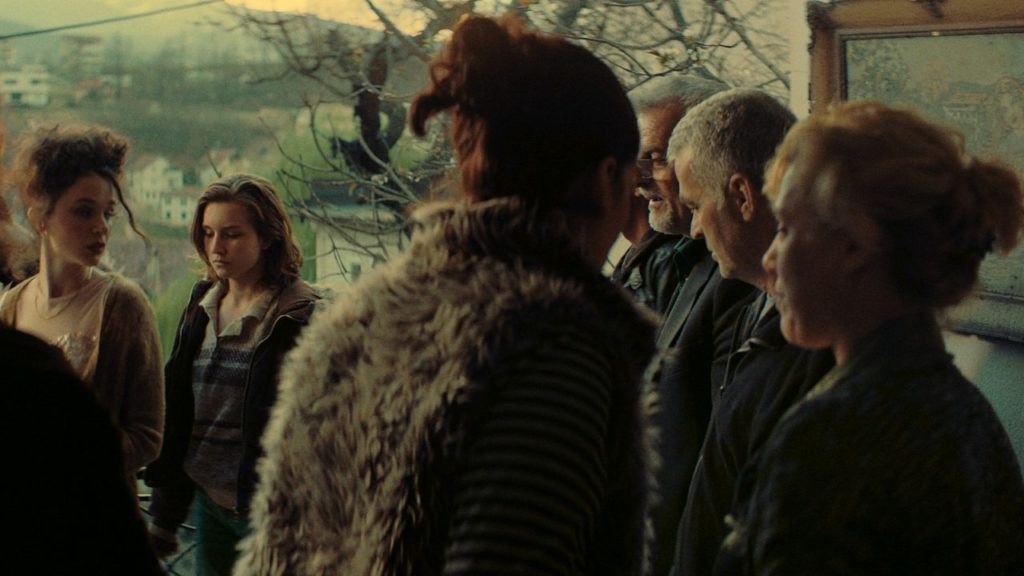
Actors during Looking for Venera shooting. Photo: Courtesy of the Director Norika Sefa./

By Xhorxhina Bami/*

‘Looking for Venera’ explores the relationships between three generations of the same family via a teenage girl’s exploration of life and self.

Norika Sefa traces her passion for making movies to her father’s own habit of capturing family events on film when she was a child in Kosovo. With an old 16 millimetre camera, “he filmed everything that happened at home – events, birthdays, simple things,” she said. When he handed her the raw material, Sefa edited what she calls a “hybrid documentary” that won her a place studying filmmaking in Denmark in 2012, aged 17. Almost a decade later, Sefa has just walked away with the Special Jury Award at the International Film Festival Rotterdam with her debut feature film ‘Looking for Venera’, another coup for Kosovo’s blossoming film industry after Blerta Basholli’s ‘Hive’ won three awards at Sundance Film Festival.

Sefa, like her father, turned her lens on three generations of a Kosovo Albanian family and the spiritual awakening of teenage Venera, chafing against her patriarchal surroundings and lack of privacy in the family’s cramped home in the Kacanik area of southern Kosovo. Meeting Dorina, who is slightly older, helps open her eyes.

“Everything around them feels like stagnation,” Sefa told BIRN. But, “being together, everything around makes so much sense… They enable each other.”

Roles set in stone

Born in the western region of Djakova/Djakovica, Sefa chose to set her film in a village in the southern Kacanik region on the main artery running to neighbouring North Macedonia because of its “special geography.” “It has plains but there are also mountains; it also has a river, so it has very beautiful natural resources,” she said.

But Kacanik in the film is a place where roles are set in stone. Little happens, and young people have few options for how to spend their free time. Venera’s journey of discovery brings little change to her immediate environment, but helps her better understand her family.

“The biggest change happens in how they see each other in the family, within this framework,” said Sefa.

“Venera initially tries to change herself and thus understands her mother more broadly and begins to change the relationship with her mother,” she said. “As the girl grows up, the mother is able to show some nuances of life that Venera could not comprehend. So another kind of movement is formed in the family and the focus is not only on the individual but they give something more to each other.”

By “provoking a desire for change,” Venera takes on a role in which she teaches her parents a new reality.

‘A reality I know’

While Looking for Venera is not autobiographical, it depicts the kind of traditional relationships that Sefa says she has been surrounded by her whole life.

In Denmark, Sefa studied the technical side of filmmaking – “the camera, the shooting, the role of each member of the team, the sound, the hierarchy of a set.”

On returning to Kosovo, Sefa worked on various film projects and documentaries before winning a state scholarship to study directing and screenwriting in Prague, where she lives today.

Looking for Venera, which premiered in Rotterdam in February, has been five years in the making, she said. When it came to casting, Sefa said she cared less about previous experience than whether an actor could depict the intensity of the relationships in the film.

I wanted to find one very observant and one very expressive girl… two very different girls that complement each other at a point where the difference between them is what actually makes them attractive to each other,” Sefa told BIRN. “So it took me a long time.”

Venera is played by Kosovare Krasniqi, also making her debut, and Dorina by Rozafa Cefaj, already an established name in Kosovo film.

“Dorina is more open but otherwise expressive. Venera is wiser or more mature, but she does not know how to express herself, and Dorina enables her,” Sefa said in an interview.

“This duo, Venera and Dorina, is very important because it is the greatest energy that pervades the film. These two take on the greatest burden of the whole drama.”

Venera’s grandmother is played by Sefa’s own grandmother.

“I collaborated with some people with whom I felt a connection,” Sefa said. “My grandma didn’t know what it means to be in a movie. She came on set because I’m very attached to her and she keeps me grounded. Having her there was a means to think about why I wanted to make this film.”

The result, she said, “undoubtedly shows a reality that I know, in the environments that I know, in our autochthonous relations in the hierarchy of how a family works.”

“Some consider it patriarchal and some traditional.”

Sefa said the film was not a metaphor for anything, but that the “symbolism” was up to the audience. “My creative process is more about a curiosity, an elaboration of a topic rather than something that has happened to me in real life.”

*(Courtesy Balkan Insight)

Filed Under: Kulture Tagged With: In Latest Award-Winning, Kosovo film, Xhorxhina Bami

  • « Previous Page
  • 1
  • …
  • 147
  • 148
  • 149
  • 150
  • 151
  • …
  • 5724
  • Next Page »

Artikujt e fundit

  • Dashuria që e kemi dhe s’e kemi
  • “Jo ndërhyrje në punët e brendshme”, dorëheqja e Ismail Qemalit, gjest atdhetarie dhe fletë lavdie
  • Arti dhe kultura në Dardani
  • Gjon Gazulli 1400-1465, letërsia e hershme shqipe, gurthemeli mbi të cilin u ndërtua vetëdija gjuhesore dhe kulturore e shqiptarëve
  • “Albanian BookFest”, festivali i librit shqiptar në diasporë si dëshmi e kapitalit kulturor, shpirtëror dhe intelektual
  • VEPRIMTARI PËRKUJTIMORE SHKENCORE “PETER PRIFTI NË 100 – VJETORIN E LINDJES”
  • 18 dhjetori është Dita Ndërkombëtare e Emigrantëve
  • Kontributi shumëdimensional i Klerit Katolik dhe i Elitave Shqiptare në Pavarësinë e Shqipërisë 
  • Takimi i përvitshëm i Malësorëve të New Yorkut – Mbrëmje fondmbledhëse për Shoqatën “Malësia e Madhe”
  • Edi Rama, Belinda Balluku, SPAK, kur drejtësia troket, pushteti zbulohet!
  • “Strategjia Trump, ShBA më e fortë, Interesat Amerikane mbi gjithçka”
  • Pse leku shqiptar duket i fortë ndërsa ekonomia ndihet e dobët
  • IMAM ISA HOXHA (1918–2001), NJË JETË NË SHËRBIM TË FESË, DIJES, KULTURËS DHE ÇËSHTJES KOMBËTARE SHQIPTARE
  • UGSH ndan çmimet vjetore për gazetarët shqiptarë dhe për fituesit e konkursit “Vangjush Gambeta”
  • Fjala përshëndetëse e kryetarit të Federatës Vatra Dr. Elmi Berisha për Akademinë e Shkencave të Shqipërisë në Seancën Akademike kushtuar 100 vjetorit të lindjes së Peter Priftit

Kategoritë

Arkiv

Tags

albano kolonjari alfons Grishaj Anton Cefa arben llalla asllan Bushati Astrit Lulushi Aurenc Bebja Behlul Jashari Beqir Sina dalip greca Elida Buçpapaj Elmi Berisha Enver Bytyci Ermira Babamusta Eugjen Merlika Fahri Xharra Frank shkreli Fritz radovani Gezim Llojdia Ilir Levonja Interviste Keze Kozeta Zylo Kolec Traboini kosova Kosove Marjana Bulku Murat Gecaj nderroi jete ne Kosove Nene Tereza presidenti Nishani Rafaela Prifti Rafael Floqi Raimonda Moisiu Ramiz Lushaj reshat kripa Sadik Elshani SHBA Shefqet Kercelli shqiperia shqiptaret Sokol Paja Thaci Vatra Visar Zhiti

Log in

This website uses cookies to improve your experience. We'll assume you're ok with this, but you can opt-out if you wish. Cookie settingsACCEPT
Privacy & Cookies Policy

Privacy Overview

This website uses cookies to improve your experience while you navigate through the website. Out of these cookies, the cookies that are categorized as necessary are stored on your browser as they are essential for the working of basic functionalities of the website. We also use third-party cookies that help us analyze and understand how you use this website. These cookies will be stored in your browser only with your consent. You also have the option to opt-out of these cookies. But opting out of some of these cookies may have an effect on your browsing experience.
Necessary
Always Enabled
Necessary cookies are absolutely essential for the website to function properly. This category only includes cookies that ensures basic functionalities and security features of the website. These cookies do not store any personal information.
Non-necessary
Any cookies that may not be particularly necessary for the website to function and is used specifically to collect user personal data via analytics, ads, other embedded contents are termed as non-necessary cookies. It is mandatory to procure user consent prior to running these cookies on your website.
SAVE & ACCEPT