• Home
  • Politics
  • Opinion
  • Culture
  • Sports
  • Economy
  • Interview
  • Reporting
  • Community
  • Vatra

Dielli | The Sun

Albanian American Newspaper Devoted to the Intellectual and Cultural Advancement of the Albanians in America | Since 1909

LAJM I HESHTUR

May 9, 2020 by dgreca

Nga Astrit Lulushi /
Në pjesën e pyllit tragjik, aty ku rrallimi i pemëve ka sjellë ndriçimin dhe i ka liruar vendin barit të shëndetshëm dhe luleve, gjendja duket e heshtur; njerëzit nuk janë të gatshëm në çdo rast për të rrëfyer a dëgjuar se çfarë ka ndodhur në të kaluarën; as të shkolluarit e asaj kohe që janë më të arsyeshëm dhe i shohin me humor marrëzitë e tjetrit, nuk e vënë re mirësinë që përfitojnē nga kjo heshtje, dhe që ka mbytur zgjuarsinë e tyre. Përfitimi në çdo gjë nëpërmjet mashtrimit në gjithëçka, është motoja e lukunisë së zbritur nga e kaluara e zbardhur me borë. Mes tyre, shkrimtarët ndryshojnë; ata kanë mendje më të madhe dhe argumentojnë me aq besim sikur të lexonin pjesë nga ungjilli; citojnë qindra shembuj, megjithëse asnjëri prej tyre nuk i afrohet çështjes; grumbullojnë gjykime, vepra, raporte e paragrafe që në vetvete të ndihen të lehtësuar e të shfajsuar; skllavërinë më të madhe e shohin si të imagjinueshme, si figurë letrare, ose se vetëm ka ekzistuar në kohët romake, jo në periudhën e diktaturës së zhveshur “proletare”; gjithnjë duke llogaritur se lutja më e mirë pakëson më shumë dhimbjet. Këtyre, si të ngjashëm, mund t’u shtohen ish-propagandistët dhe sofistë, që flasin po aq shumë si papagalli, për të heshtur “lajmin e rremë” ose thashethemet ose lajmin e paautorizuar, por jo të heshtin zhurmën që del nga një kullë me pirgje tullash më të larta se ato të rrëmujës; edhe pse zhurma e tyre e papranueshme nuk është faji i saj i vetëm.

Filed Under: Analiza Tagged With: Astrit Lulushi

ANALYSIS: BRIEF HISTORY OF ECONOMIC STIMULUS PACKAGES

May 9, 2020 by dgreca

Compiled and Edited by Rafaela Prifti/

The Coronavirus Aid, Relief, and Economic Security (CARES) Act is a $2 trillion bill that provides direct support to individuals, businesses and local governments affected by the COVID-19 pandemic. CARES Act is the largest stimulus measure in US history. Yet, in times of previous crises the U.S. government has intervened by employing tools of fiscal policy using public spending, corporate bailouts, and direct payments to individuals to stimulate the economy. 

This brief summary of economic stimulus packages helps provide some context for the recent coronavirus relief legislation. According to the Congressional Research Service, there are only four notable precedents in which direct payments were made to individuals to address economic fallout. The first of these modern stimulus packages was issued in 1975, when President Gerald Ford passed legislation that provided tax rebates worth up to $200 to an estimated 55 million Americans during the 1973-1975 recession. Other direct payments were issued following the burst of the dot-com bubble in 2001 and during the Great Recession. These payments have been typically administered through the IRS and often excluded individuals who did not file taxes. While the Coronavirus relief checks are being sent through the IRS, there are currently provisions for those who do not file taxes to receive the stimulus money.

Great Depression

Most Americans are familiar with President Franklin Roosevelt’s New Deal programs following the Great Depression — one of the worst economic downturns in the history of the industrialized world, triggered by the stock market crash in 1929 and made worse by the Dust Bowl. However, it was President Herbert Hoover who made one of the first attempts to respond to the Great Depression, creating a government agency called the Reconstruction Finance Corporation in 1931. Congress gave the fledgling RFC an initial $2 billion and entrusted it with the power to determine which companies it provided with financial support. The RFC was one of the first of many New Deal agencies established to address the unprecedented challenges of the nation’s worst economic downturn through increased federal spending on programs and public works projects. 

1971 Lockheed Martin insolvency crisis

After a series of poor business decisions throughout the 1960s, defense contractor Lockheed Martin was facing bankruptcy by 1971. Lockheed execs appealed to Congress for help, claiming that if the defense contractor went bankrupt, it could hurt national security. Also at stake were 25,000 jobs in the defense industry. A Lockheed insolvency would have had a severe impact on the economy of California. To bail out the nation’s largest defense company, Congress in August 1971 passed the Emergency Loan Guarantee Act that provided financing for large companies in fiscal distress. Lockheed Martin was the first company to receive money as the result of the legislation, getting $250 million.

1973-1975 recession

A distant precedent to the individual stimulus checks sent out under the Coronavirus Aid, Relief and Economic Security Act (CARES) was the Tax Reduction Act of 1975, passed in response to the 1973-1975 recession. The downturn, a result of several factors that included rising oil prices and the collapse of the Bretton Woods system of currency exchange, began in 1973. It wasn’t until 1975 that the Tax Reduction Act was passed. The Act provided taxpayers with a rebate worth 10% of taxes paid in 1974. The legislation provided for a maximum payment of $200 and also sent $50 to retirees and recipients of Social Security who did not file taxes. The Act was one of just two pieces of legislation prior to the coronavirus relief act that provided direct payments to individuals who did not pay taxes. According to one estimate, about 55 million payments worth a total of $8 billion were issued.

New York City 1970s Fiscal Crisis

New York City’s fiscal woes, which had been building all through the 1960s and early 1970s, reached a crisis point in 1975. With the city on the brink of default, the United Federation of Teachers stepped up on Oct. 17 and closed a $150 million shortfall with its pension funds. The immediate crisis was averted, but the city still needed federal aid. President Gerald Ford resisted, saying he would veto any bill that would bail out New York City — this was immortalized in the New York Daily News headline: “Ford to City: Drop Dead.” The president changed course the following month, proposing legislation calling for $2.3 billion in short-term loans that would help New York City avert insolvency. The loans were to extend through June 1978, and the city would pay an interest rate 1 percentage point above the federal rate of 7%. The city had many rough patches following the loan deal, including a blackout in 1977 that led to looting. New York City eventually found its footing, and the economy turned around in the 1980s.

1979 Chrysler Crisis

In the late 1970s the American automobile industry was getting pummeled by foreign car manufacturers. It culminated in the near collapse of the smallest of America’s Big Three carmakers, Chrysler Corporation. In 1979, the company was saved from bankruptcy when Congress approved $1.5 billion in federal loan guarantees that became known as the Chrysler Loan Guarantee Act. In exchange, the company had to find $2 billion in cost savings and provide a detailed, three-year plan outlining the new products in its pipeline. The company survived and turned around under the guidance and leadership of visionary Chairman and CEO Lee Iacocca by reducing labor costs and beginning to produce more fuel-efficient, front-wheel-drive vehicles. It wouldn’t be the first time Chrysler would need federal aid. The car company, along with Ford and GM, received federal funds as part of the Troubled Asset Relief Program in 2008-09.

The Savings and Loan Crisis

Savings and loan institutions were created in the 19th century in Pennsylvania by people who pooled money in order to buy their homes when banks were not making residential mortgages. As loans were repaid, the funds were lent to other members. S&Ls were beset by problems in the 1970s and ’80s. The interest rates paid on deposits were fixed by the federal government, putting them at a competitive disadvantage compared with other banking institutions. Another disadvantage was that S&Ls made long-term, fixed-rate mortgages their main area of business. As interest rates rose, mortgages lost value and lowered the net value of S&Ls. The institutions faced insolvency by the early 1980s. In response, Congress created the Financial Institutions Reform, Recovery and Enforcement Act of 1989 that helped reform the industry. This act created the Resolution Trust Corporation that funded troubled S&Ls while closing 747 other institutions, at a total cost of $124 billion for taxpayers. The crisis led to significant reform and legislation in the financial industry.

Aftermath of 9/11

The terrorist attacks on 9/11 halted the aviation industry. To address this concern, Congress passed the Air Transportation Safety and Stabilization Act, legislation that compensated the airline industry for the forced grounding of airplanes in the wake of the attack. The measure gave carriers $5 billion in direct assistance and $10 billion in loan guarantees to keep the airlines from collapsing. Also contained in the bill was the provision that airlines that accepted the aid would not be allowed to give a raise to executives making more than $300,000 for the next two years from the period starting on Sept. 11, 2001.

Post dot-com Bubble Burst

Passed during the aftermath of the early 2000s dot-com bubble crash, the Economic Growth and Tax Relief Reconciliation Act of 2001 provided U.S. taxpayers with an advanced rebate on a tax cut that took effect that year. The rebate was worth a maximum of $300 for individuals and $600 for married couples filing jointly and was sent out as a check during the months of July, August, and September. The government sent approximately 92 million checks worth a total of $38 billion. While, at the time, approximately 64% of surveyed Americans stated they would spend their rebate check or use it to pay bills, many economists disagree over whether the rebates significantly stimulated consumption.

Subprime Mortgage Crisis

In 2008 the federal government implemented a series of corporate bailouts designed to address the subprime mortgage crisis. The largest of these was the Emergency Economic Stabilization Act, which created the $700 billion Troubled Asset Relief Program. Under TARP, the federal government pumped hundreds of billions of dollars into at-risk banks and automobile companies deemed “too big to fail”. The subprime mortgage crisis led to the Housing and Economic Recovery Act of 2008, which authorized the federal government to essentially take over the assets of government-sponsored mortgage entities Fannie Mae and Freddie Mac through conservatorship. According to the Federal Reserve Bank of New York, the bailout of Fannie Mae and Freddie Mac cost U.S. taxpayers approximately $187.5 billion.

Great Recession

One of the stimulus packages that is most similar to the coronavirus relief act was passed amid the Great Recession. The Economic Stimulus Act of 2008 was a $152 billion stimulus package, which in addition to instituting several tax breaks, provided a $600 advanced rebate check to a majority of individual taxpayers and $1,200 to married couples filing jointly.

One year later, under a new administration, the federal government passed the American Recovery and Reinvestment Act of 2009. While a majority of the $787 billion package went to tax cuts and tax credits for individuals and small businesses, as well as investment in infrastructure, energy, health care, and education, ARRA also provided direct payments of $250 to those receiving Social Security benefits, veterans’ pensions, and Supplemental Security Income benefits.

Coronavirus Recession

The federal government passed a $2 trillion aid package in March titled the Coronavirus Aid, Relief and Economic Security Act to accelerate relief to various areas of the American economy and make payments to individuals impacted by the coronavirus pandemic. About $650 billion of the stimulus money was targeted to individuals in the form of Treasury checks, with the rest targeted to corporations, small businesses, public health, and education.

Individuals earning $75,000 or less annually were to receive a one-time cash payment of $1,200. Married couples earning $150,000 or less would also each get a check for $2,400. The bill also provides an additional $500 for each child claimed as a dependent, and $600 a week for those laid off or furloughed because of the pandemic, on top of what they were receiving in unemployment benefits. The federal government is currently weighing subsequent measures to provide relief for those impacted by the coronavirus crisis.

Filed Under: Histori Tagged With: Brief History, Rafaela Prifti. Analysis

Frustration Looms Over The Western Balkans

May 9, 2020 by dgreca

By Akri Çipa/Dielli/

Millions across the Balkans find their lives turned upside-down by the pandemic. As the coronavirus crisis upends normal life and highlights the fragility of the region’s democracies, the future looks vexed, to say the least.  

A Western Balkans-wide recession seems all but unavoidable in 2020. According to a World Bank report released in late April, the region as a whole is projected to experience negative growth of between three and 5.6 per cent.

Linda Van Gelder, the World Bank’s director for the Western Balkans, was unequivocal in stating that the coronavirus “is wreaking havoc on lives around the region — taxing health care systems, paralysing economic activity and undermining the wellbeing of people”.

The International Monetary Fund — which has also projected economic contraction this year for all the countries of the region — expects an economic rebound in 2021.

IMF experts estimate that economic growth in 2021 will range from 3.5 per cent in Bosnia and Herzegovina to eight per cent in Albania. Yet with all the recent volatility, that might not be enough to provide much reassurance.

Recession will result from a drop in domestic and foreign demand. Without a vaccine, scientists say a second wave of the pandemic is likely. Continued travel restrictions, physical distancing guidelines and other protective measures will continue to hit tourism and services that dominate the economies of the Western Balkans.

Unlike their counterparts in Western Europe, countries here have weak economies plagued by low wages, high poverty and unemployment and weak growth.

The closure of many small and family-owned businesses plus a strain on public budgets and a lack of financing opportunities all pose big challenges for local economies. 

But even as economies suffer, the pandemic has highlighted critical political and democratic deficiencies in the region.

In Serbia, people have expressed their dissatisfaction with the autocratic rule of President Aleksandar Vucic and his ruling Serbian Progressive Party (SNS) by blowing whistles and banging pots and pans from their homes.

Those taking part in the daily protests are angry about so-called state capture by ruling elites, the erosion of democratic institutions and perceptions that Vucic’s rule is increasingly dictatorial.

Protesters also object to the government’s draconian steps to stop the virus spreading, which include weekend-long curfews and measures to limit free speech. They see them as exaggerated and riding roughshod over basic freedoms and rights.

In Kosovo, the recently elected government was ousted during the pandemic thanks to political scheming by entrenched political elites.

In a surreal development, pot-banging protests took place to express support for the outgoing government and urge leaders to refrain from creating an artificial political crisis in the middle of a health crisis.

The government will serve in a caretaker role until the Constitutional Court rules on whether the country needs a fresh election or the formation of a new government is possible without elections.

Albania suffers from the fact that it does not have a real and representative opposition.

Following last year’s unprecedented decision by opposition lawmakers to resign en masse and renounce their parliamentary mandates, experts say there is no effective check on the excesses and abuses of the government.

North Macedonia, meanwhile, is battling the pandemic with a caretaker government and had to postpone snap parliamentary elections scheduled for April 12.

Across the region, the collusion between powerful businessmen and governing elites feeds unfair practices, harms economic competition and discourages investment, analysts say.

The COVID-19 crisis risks serving as an opportunity for companies to engage in anti-competitive practices while there is less scrutiny of government mismanagement and corruption in public procurement.

Not that the pandemic is to blame for stagnant reforms and backsliding on democratic standards. But experts say it has thrown those deficiencies into sharp relief.

Amid draconian measures, secretive decision-making on procurement and selective distribution of resources for groups hit by the virus, local efforts to promote transparency and accountability have morphed into a Sisyphean struggle.

In the meanwhile, even positive news like the EU’s decision to start accession negotiations with Albania and North Macedonia went largely unnoticed.

More than the pandemic itself, the main factors overshadowing the talks are skepticism about the pace of much-needed domestic reforms and doubts about the viability of EU membership in the short-to-medium term.

As countries move towards reopening, analysts predict that the strange mix of economic shock, institutional fragility and frustration with dysfunctional politics will lead to renewed and strengthened calls for change.

The leaders of the region have benefitted in the recent past from migration as a valve to release pent-up frustration. Rather than asking for change at home, those dissatisfied with the economic and political realities mostly went quietly and tried their luck in Western countries.

As the West is itself hit by economic uncertainty, this option will be less available and attractive. Dissatisfaction will have to express itself differently.

Optimists say this period represents a new opportunity to channel the overwhelming desire for change. They say the region needs to forge ahead at last with real reforms that lead to fairer economies, stronger institutions and more prosperity.

But the window of opportunity after the pandemic will not be open for long. If time is squandered, disillusionment risks turning into the region’s defining emotion for years to come.

Filed Under: Politike Tagged With: Akri Çipa, Western Balkans

AMANETI U KRYE

May 9, 2020 by dgreca

MESAZH I AMBASADORES SHQIPTARE NW WASHINGTON FLORETA FABER PWR VIKTIMAT E COVID-19/

  • Pjesa më e madhe e qytetarëve me origjinë shqiptare që humbën jetën me Covid-19 do të prehen në tokën amerikane, që u bë për ta atdheu i dytë. /
  • Ndërsa, më 8 maj, trupat e Doktor Raifit, Gjekës, Agronit dhe Hamdiut kanë arritur në vendlindje dhe u varrosën në tokën shqiptare. Amaneti u krye!/

NGA AMBASADORE FLORETA FABER/

Pavarësisht se Covid-19 ka filluar të humbasë fuqinë vepruese për këtë sezon, për disa anëtarë të komunitetit shqiptaro-amerikan, të cilët Amerikën e kanë parë gjithmonë si tokën e lirisë dhe të ëndrrave, kujtimet e kësaj periudhe do të jenë të dhimbshme. 

Është mbi 50 numri total i bashkëkombasve shqiptarë nga Shqipëria, Kosova, Mali i zi dhe Maqedonia e Veriut që kanë humbur betejën me virusin, duke kaluar edhe numrin total të vdekjeve në Shqipëri. Me këtë rast, i shprehim ngushëllimet e thella dhe të sinqerta të gjithë familjarëve dhe miqve të tyre. Përveç dhimbjes së madhe, në shumë raste ata nuk kanë mundur as t’i thonë lamtumirën e fundit të dashurve të zemrës. 

Ndërmjet tyre, Agron Vraja (51), anëtari i Këshillit Bashkiak në Lezhë dhe Doktor Rauf Krasniqi (77) kanë humbur jetën teksa ishin vizitorë në Nju Jork tek familjarët e tyre. Përveçse u larguan nga kjo jetë dhe askush nga të afërmit nuk mundi t’i qëndronte afër në momentet e vështira të sëmundjes, për shumë arsye, ata nuk mund të varroseshin në Nju Jork. Bashkë me to, edhe dy qytetarë shqiptaro-amerikanë, Ponari (47) dhe Vuktilaj (53) kishin lënë amanet – trupat e tyre duhet të ktheheshin në Shqipëri. 

Disa ditë pas ngjarjes, Ambasada u njoftua se kthimi në Shqipëri i personave që kanë humbur jetën gjatë periudhës së pandemisë nuk po kryhej dot. Deri sa të hapeshin fluturimet normale me Europën kthimet ishin mision i pamundur. 

Procedurat e kthimit të shtetasve, normalisht ndiqen nga familjarët, por këto nuk janë kohë të zakonshme. Ambasada Shqiptare në Uashington DC u angazhua menjëherë për të shfrytëzuar çdo hapsirë të mundshme. Ajo kontaktoi me një sërë institucionesh dhe koordinoi njëkohësisht me familjarët, Qeverinë Shqiptare, Ambasadën Italiane në Uashington DC, Konsullatën italiane në Nju Jork, drejtuesit e kompanisë Alitalia në Romë dhe në SHBA, drejtuesit e Air Albania, shtëpitë funerale në SHBA, Itali dhe Shqipëri, dhe me disa institucione të ndërmjetme që përgatisin dokumentacionin dhe lëshojnë lejet respektive me qëllim transferimin e trupave drejt Shqipërisë.

Pjesa më e madhe e qytetarëve me origjinë shqiptare që humbën jetën me Covid-19 do të prehen në tokën amerikane, që u bë për ta atdheu i dytë. Ndërsa sot, më 8 maj, trupat e Doktor Raifit, Gjekës, Agronit dhe Hamdiut kanë arritur në vendlindje dhe u varrosën në tokën shqiptare. Amaneti u krye!

Unë munda të dërgoj një kurorë me lule në Lezhë, pranë varrit të Agronit. Do doja që këtë kurorë të mund ta çoja tek secili prej shqiptarëve që e humbën betejën me jetën këtë pranverë. 

I përjetshëm kujtimi i tyre!

Filed Under: Komunitet Tagged With: Floreta Faber

150 fasoniste, 8 orë në këmbë Kuçovë-Berat, protestë për pagën e luftës

May 9, 2020 by dgreca

Nga Berati për Diellin – Sulo Gozhina /

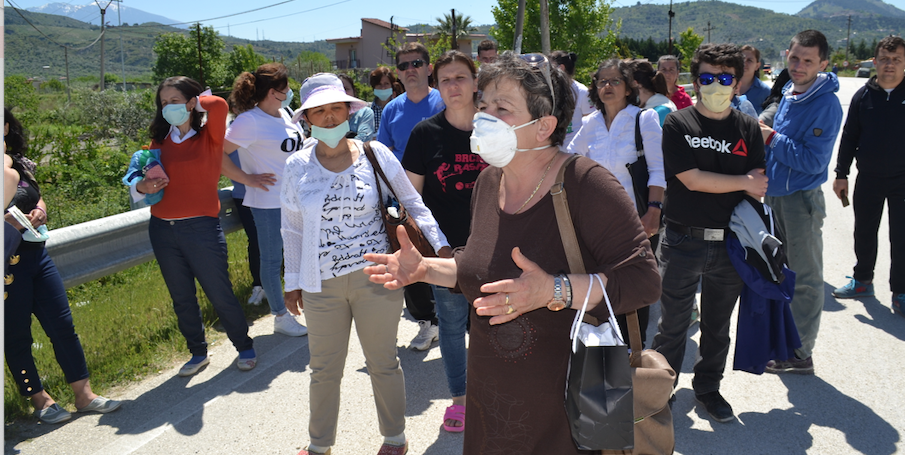
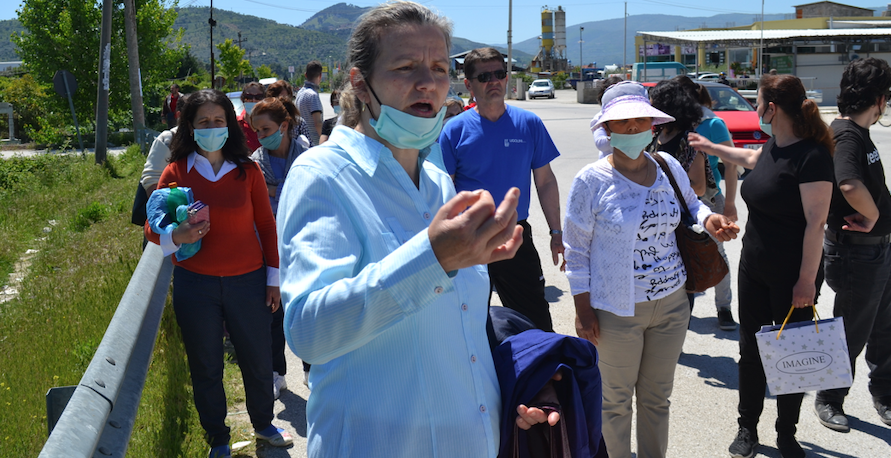
KUÇOVË – 150 puntore të fasonerisë “Edjana”, Kuçovë kanë përshkuar 16 kilometra rrugë në këmbë për të protestuar për pagën e luftës në institucionin e Tatim-Taksave në Berat. Punëtorët kanë bër 16 km rrugë në këmbë vajtje – ardhje, duke nisur udhëtimin e tyre në orët e para të mëngjesit (05.00), nga Kuçova, për të kapur orarin zyrtar të institucionit tatim-taksave që ndodhet në Berat.Duke kaluar rrugë e mbi rrugë në asfalt e në rrugë dytësore edhe në grupe për të mos rënë në sy nga policia puntoret kanë mbritur rreth orës 8.30 minuta në hyrje të lagjes muzeale Mangalem, ku dhe janë ndaluar nga policia Berat me arsyen se kanë shkelur ligjin për grumbullime jashtë lejimit për arsye të Covid-19, si dhe orarin e daljes sepse ora shënonte 8:30 minuta dhe ato nuk kanë mundësin e kthimit në Kuçovë brenda fashës të lejuar. Ndërsa kanë ndaluar në mes të rrugëtimit të tyre punëtorët protestueset kanë pritur orarin për të vijuar drejt zyrave të tatim taksave.

Pas mbritjes në institucionin e tatimmeve, një përfaqësi e tyre janë pritur nga drejtori zëdhënsi i drejtorit Stavri Ceca, i cili i ka sqaruar me detaje se çfarë duhet të ndjekin si procedure, duke i drejtuar për zgjidhjen e këtij problemi në Zyrën e Punës në qytetit ku dhe banojnë. Elidona Kurti përfaqësuesja e punonjëseve tha për median e shkruar dhe atë vizive se fasoneria ku ato janë të punësuara prej 12 vjetësh më 9 mars kanë ndaluar punën edhe për arsye të mungesës të lëndës së pare, që u vjen nga Italia, por se edhe nga kjo diatë sipas tyre është ndalur edhe puna për arsye të covid-19. Ndaj ato kërkojnë për këtë arsye pagën e luftës, sipas saj shumë prej punëtoreve janë kryefamiljare dhe se kanë detyrime jo vetëm për rritjen e fëmijëve por shumica prej tyre kanë detyrime për pagesën e faturave të energjisë, ujit , si dhe shumica këstet e kredisë, pale shërbimit tek prindërit dhe mbajtjen me ushqime familjen e plot problem të tjera. Ndërsa punonjëset nga ana e tyre pohojnë se do të vijojnë protestën pasi kanë dy muaj pa paga dhe se të drejtën do ta kërkojnë e do të protestojnë me të gjitha format e lejuara deri në zgjidhjen e këtij problemi. Pasi deri tani askush nuk po interesohet për ne kemi apo s’kemi bukë për fëmijët tanë, kemi apo skanë, detyrime keto familje, një zot e di si do vej ky halli ynë, se qeverria deri tani asgjë nuk ka bërë për ne puntoret. Punonjëset janë rikthyer sërisht në këmbë për në qytetin ku dhe banojën në Kuçovë, ku një pjesë të rrugës janë shoqëruar edhe nga gazetarët e medias vizive dhe asaj të shkruar.

Filed Under: Kronike Tagged With: Sulo Gozhina

  • « Previous Page
  • 1
  • …
  • 595
  • 596
  • 597
  • 598
  • 599
  • …
  • 5724
  • Next Page »

Artikujt e fundit

  • PREJARDHJA ILIRE DHE AUTOKTONIA E SHQIPTARËVE
  • Fitoi “Gold Winner” në konkursin ndërkombëtar “New York Photography Awards”, Erion Halilaj: “Promovim i talentit shqiptar në një skenë ndërkombëtare”
  • Kur filozofia dhe psikologjia ndërveprojnë për të shpëtuar njerinë
  • BALFIN REAL ESTATE HAP ZYRËN E PARË NË SHBA, NJË MUNDËSI E RE INVESTIMI PËR DIASPORËN SHQIPTARE
  • Konferenca “Diaspora 2025” organizuar nga Federata Kombëtare Shqiptare në Itali ( FNAI)
  • Koncepti i lumturisë dhe Krishtlindjet sot
  • Nxënësit e shkollës shqipe “Gjuha Jonë” në Philadelphia festuan Festat e Fundvitit
  • Vatra Tampa Bay organizoi piknikun tradicional me rastin e festave të fundvitit
  • VATRA URON TË GJITHË SHQIPTARËT: GËZUAR E PËRSHUMËVJET KRISHTLINDJEN
  • SHQIPTARËT DHE CILA ËSHTË DOMOSDOSHMËRIA STRATEGJIKE E MAQEDONISË SË VERIUT?
  • Fondacioni Çamëria “Hasan Tahsini” përkujtoi shkrimtarin Bilal Xhaferi në 90 vjetorin e lindjes
  • SHBA, Ligji për Autorizimin e Mbrojtjes Kombëtare (NDAA) dhe Aleancat në Ballkanin Perëndimor
  • Shqipëria, Kosova dhe Boshti Shqiptar si Gurthemeli i NATO-s dhe i Strategjisë Amerikane
  • MORGENAVISEN (1931) / RRËFIMI I PIKTORIT HUNGAREZ MÁRTON HOSSZÚ : “GJASHTË JAVË NË OBORRIN MBRETËROR TË SHQIPËRISË PËR TË REALIZUAR PORTRETIN E MBRETIT ZOG I…”
  • “Histori e vajzës rebele”

Kategoritë

Arkiv

Tags

albano kolonjari alfons Grishaj Anton Cefa arben llalla asllan Bushati Astrit Lulushi Aurenc Bebja Behlul Jashari Beqir Sina dalip greca Elida Buçpapaj Elmi Berisha Enver Bytyci Ermira Babamusta Eugjen Merlika Fahri Xharra Frank shkreli Fritz radovani Gezim Llojdia Ilir Levonja Interviste Keze Kozeta Zylo Kolec Traboini kosova Kosove Marjana Bulku Murat Gecaj nderroi jete ne Kosove Nene Tereza presidenti Nishani Rafaela Prifti Rafael Floqi Raimonda Moisiu Ramiz Lushaj reshat kripa Sadik Elshani SHBA Shefqet Kercelli shqiperia shqiptaret Sokol Paja Thaci Vatra Visar Zhiti

Log in

This website uses cookies to improve your experience. We'll assume you're ok with this, but you can opt-out if you wish. Cookie settingsACCEPT
Privacy & Cookies Policy

Privacy Overview

This website uses cookies to improve your experience while you navigate through the website. Out of these cookies, the cookies that are categorized as necessary are stored on your browser as they are essential for the working of basic functionalities of the website. We also use third-party cookies that help us analyze and understand how you use this website. These cookies will be stored in your browser only with your consent. You also have the option to opt-out of these cookies. But opting out of some of these cookies may have an effect on your browsing experience.
Necessary
Always Enabled
Necessary cookies are absolutely essential for the website to function properly. This category only includes cookies that ensures basic functionalities and security features of the website. These cookies do not store any personal information.
Non-necessary
Any cookies that may not be particularly necessary for the website to function and is used specifically to collect user personal data via analytics, ads, other embedded contents are termed as non-necessary cookies. It is mandatory to procure user consent prior to running these cookies on your website.
SAVE & ACCEPT