• Home
  • Politics
  • Opinion
  • Culture
  • Sports
  • Economy
  • Interview
  • Reporting
  • Community
  • Vatra

Dielli | The Sun

Albanian American Newspaper Devoted to the Intellectual and Cultural Advancement of the Albanians in America | Since 1909

Vetevendosje Projected to Win Kosova’s Election

February 14, 2021 by dgreca

by Rafaela Prifti/

Despite freezing temperatures and the Covid pandemic, Kosova’s parliamentary election saw citizens go to the polls on Sunday. A series of exit polls predicted Vetevendosje (Self Determination) party to take first place, PDK is projected to finish second and LDK to come in third. NISMA looks set to miss out with polls predicting less than 3 percent of the vote going to the party. Three exit polls released as voting closed in Sunday’s parliamentary election put Vetevendosje in first place with between 42 and 53 percent of the vote. 

Leader of the party Albin Kurti has campaigned on bringing social and legal justice and key issues of reciprocity with Serbia. In terms of foreign policy, he has pledged to dismiss “aspects of the agreements signed by the Hoti government in Washington DC under the auspices of the Trump administration. Vetevendosja’s position is to not commit to all agreements given that Serbia has been violating the terms constantly, as the Serbian officials continually oppose the recognition for Kosovo, despite pledging to halt its de-recognition campaign. “We cannot be overly polite to Serbia, whose aim is to deny the existence of Kosovo statehood,” said Mr. Kurti to the reporters. 

The election was held early pursuant to the Constitutional Court ruling that the last government was formed through an illegitimate vote in parliament. 

An estimate of 1.8 million people were eligible to vote in the election, with an additional 100,000 diaspora Kosovars eligible to vote by mail. Overseas mail ballots are not included in the polls, and the verification process is not expected to start until Monday evening. 

The parliamentary election will determine 120 lawmakers from among more than 1,000 candidates from 28 political groupings. Kosovo’s Serbian minority has 10 seats, and 10 more representatives come from other national minorities.

There have been some reports of irregularities at polling places. The adverse weather conditions made access to the polls difficult for some citizens.

Partial results are expected late Sunday evening.

Filed Under: Politike Tagged With: Albin Kurti, Rafaela Prifti, vetevendosja

URIME PER 70 VJETORIN E LINDJES PROFESORESHE MJAFTIME DUSHALLARI

February 12, 2021 by dgreca

Sikur të mos ishte kërkesa e djalit tuaj për një  fjalim të  shkurtër sot nuk do t’i kishim mësuar shprehjet pikante të Nënë Behares dhe mencurinë e saj. E pranoj se vitet japin një lloj njësije matëse të moshës, por mendoj se ju keni treguesë të tjerë kohorë. Si studente juaja në Fakultetin Filologjik, unë e konsideroj veten një lloj trashëgimtare të veprës suaj. Dhe nëse mund të numërohen studentët dhe nxënësit e disa brezave të edukuar nga ju, mosha juaj është mijëra vjecare dhe e pamatshme me kritere konvencionale. Titulli Profesor nuk e ka bërë askënd të tillë. Nuk janë titujt akademik por zotësia juaj profesionale dhe dhuntia e natyrshme ligjëruese që janë cilësitë tuaja të rralla.

Me mirënjohje të pafund, uroj të gëzoni shumë e shumë përvjetorë të tjerë!

Rafaela Prifti

Mund te lexoni: Gazeta Dielli Dalip Greca Seminari Shkencor Arsimor mbajtur ne Vater maj 2018

VATRA PRITI MESUESIT E SHKOLLAVE SHQIPE

Filed Under: Komunitet Tagged With: 70 vjetori, Prof. Mjaftime Dushollari, Rafaela Prifti, urime

Senate Votes that Trump’s Impeachment Case is Constitutional

February 9, 2021 by dgreca

by Rafaela Prifti/

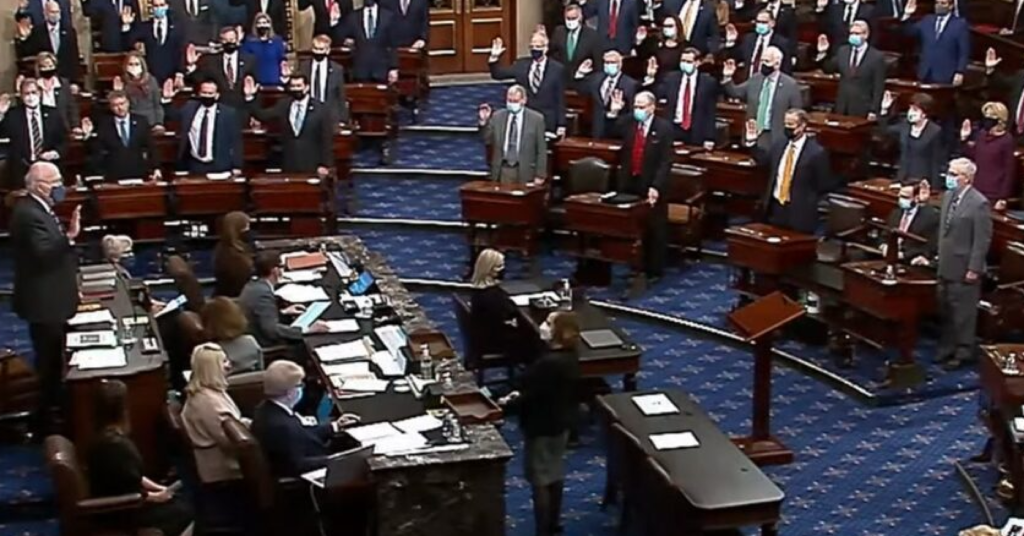
The second impeachment trial of former President Donald Trump began on Tuesday, as House Democrats prosecute their case for “incitement of insurrection.” Last month nine impeachment managers of the Democratic Party brought the article of impeachment to the Senate citing the responsibility of then President Trump in inciting his supporters who broke into the US Capitol and interrupted the certification of the Electoral College Votes on January 6.

The defense for Mr. Trump has argued that the trial is unconstitutional as he is no longer a sitting president. The lawyers claim that Mr. Trump was exercising freedom of speech when he told his supporters to “fight like hell” to overturn his defeat.

Tuesday’s proceedings began with a debate to dismiss the trial on the basis of Trump’s lawyers claim that it is moot now that Trump is out of office, and 45 Senate Republicans have already voted to dismiss the trial on those grounds. Five Republican senators voted with Democrats two weeks ago not to dismiss the trial on constitutional grounds.

The Senate debated on the issue of constitutionality followed by a vote on whether to dismiss the trial on that basis.  Many legal scholars say the trial is valid under the Constitution. The democrats point to an 1876 impeachment trial of a secretary of war who had resigned. They note that Trump was impeached while still serving in office. Trump’s lawyers dismiss that precedent claiming the Constitution is on their side.

In a 56-44 vote the Senate voted that the impeachment of trial of former President Trump is constitutional. Tomorrow the trial will proceed as planned. The House managers will present their arguments Each side will have up to 16 hours, running no more than eight hours per day for two days. Senators will be allowed to question both teams before holding a debate and a vote on calling witnesses.

Election officials across the country, and then-Attorney General William Barr, contradicted Trump’s claims of massive voter fraud, as dozens of legal challenges to the election put forth by Trump lawyers, his campaign and his allies were dismissed.

Filed Under: Kronike Tagged With: Case is Constitutional, Rafaela Prifti, Senate Votes, that Trump’s Impeachment

Martin Luther King Jr. Day – A Day of Reflection

January 18, 2021 by dgreca

by Rafaela Prifti/

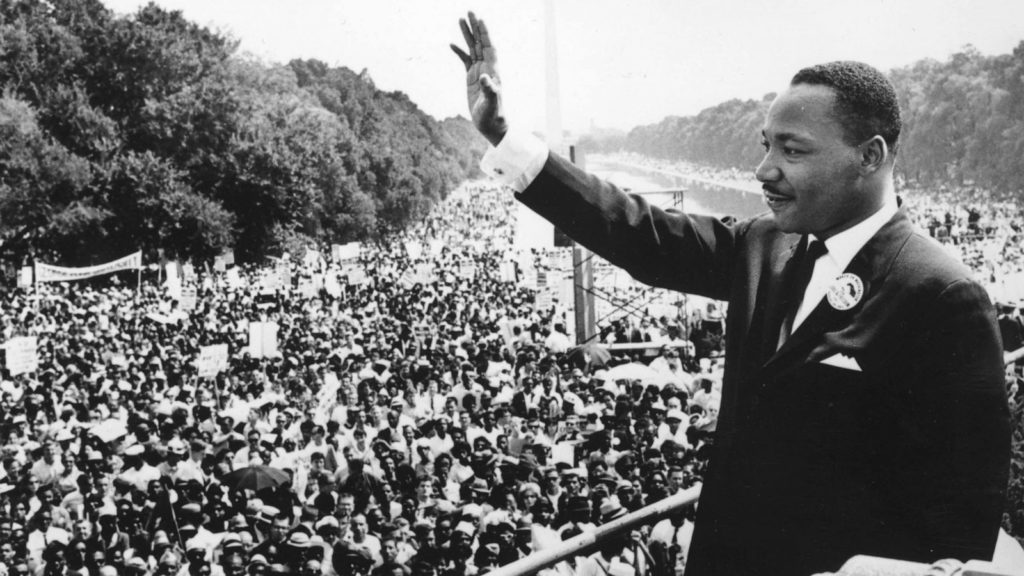
To honor the memory and reflect on the legacy of Martin Luther King Jr. is to appreciate the meaning of service.

On this National Service Day, I like to shine a light on a family friend, a supporter of the Albanian people as well as a self-described student of Albanian language, Barry Farber. The popular talk radio host with nearly a six decade career in broadcasting passed away last year shortly after his 90th birthday. His youngest daughter Bibi posted a commentary today to say that the first person Barry interviewed on the radio on WINS in 1960 was Dr. Martin Luther King Jr.!

“Mr. Farber inaugurated his first solo radio program in 1960 after arriving in New York from North Carolina with journalistic ambitions and remarkable multilingual talents. He went on to interview guests for longer than any other living, continually broadcasting radio host,” the New York Times wrote. “His Southern gentlemanly demeanor on the air also stood in contrast to the bellicosity Mr. Farber, a fervent anti-Communist, later demonstrated when he twice campaigned for office”, in 1970 for a Republican Cogresssional seat and in 1977 race for New York City mayor. Since 2008, he had been broadcasting, on Talk Radio Network and then on CRN Digital Talk Radio, from his Upper West Side apartment while contributing weekly to the World Net Daily website.

Barry Farber was inducted into the Radio Hall of Fame in 2014. “He had arrived in New York in 1957 looking for work in journalism when by chance he struck up a conversation with William Safire”. At the time, Mr. Safire was working for a radio show in town hosted by the husband-wife team of Tex McCrary and Jinx Falkenburg. He was impressed by “a former campus newspaper editor, college wrestling champ and Army translator who had done some world traveling and, perhaps most impressively, could speak nearly two dozen languages.” His first on-air interview was with the Rev. Dr. Martin Luther King Jr. in 1959.

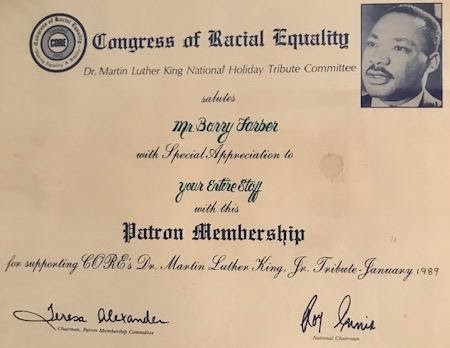
To paraphrase the title of Barry Farber’s first memoir, he could turn every conversation Into a magic moment. As Bibi writes, Barry Farber’s interview with Dr. King did not end there: “Barry had been active and outspoken in the civil rights movement since his youth.” For his support of Congress of Racial Equality, Barry was awarded a patron of membership in 1989.
Honoring the memory of Dr. King and his legacy is tied to appreciating the meaning of serving the community and the country.

Filed Under: Featured Tagged With: A Day of Reflection, Martin Luther King Jr, Rafaela Prifti

COVID AND ITS IMPACT ON MENTAL HEALTH

December 18, 2020 by dgreca

DIELLI EXCLUSIVE INTERVIEW WITH DR. BASHKIM KADRIU

COVID AND ITS IMPACT ON MENTAL HEALTH

Interviewed by Rafaela Prifti

“The impact of COVID-19 pandemic has affected all facets of society. Yet the toll is uneven for vulnerable individuals, those who struggle with chronic conditions, disabilities, and those with severe mental illnesses. My concern is that this impact will continue to be present in our lives in years to come.” 

Bashkim Kadriu MD, FACP, currently holds the position of Director, Clinical Leader, Neuroscience Experimental Medicine (Neuroscience Therapeutic Area) at Janssen Research & Development, La Jolla, California. Previously he has served as Acting Deputy Director at the Office of Clinical Research, and Clinical Fellow and Neuroscientist at the Experimental Therapeutics and Pathophysiology Branch, National Institute of Mental Health, NIH, Bethesda, being the first Albanian Physician-Scientist at the prestigious research institute.

After completing your medical school training at the University of Prishtina, Kosova, you relocated to Chicago. For nine years, you worked as research postdoc and scientist at Chicago’s University of Illinois and later at Albert Einstein College of Medicine, New York City where you completed your Psychiatry Residency training. You received a Fellowship at the National Institute of Mental Health, Bethesda. What were some of your previous interests? 

My work at the University of Illinois in Chicago focused on studying the epigenetic regulation of risk genes in diseases such as schizophrenia and mood disorders, while my later work at the National Institute of Health consisted on the neurological correlations on treatment-resistant mood disorders with an emphasis on discovering biosignatures that guide novel fast-acting therapies that help individuals suffering from depression and mood disorders. I was fortunate to work with some of the best leaders who mentored me through the years and guided me into publishing my work at high-impact reputable journals. I have published over 55 peer-reviewed journal articles, several book chapters and presented work at prestigious scientific journals and conferences in the field. 

You are certified by the American Board of Psychiatry and Neurology and have received numerous awards for exceptional clinical care and professional accolades including a recent NIMH Dr. Richard J. Wyatt Award for Translational Research and NARSAD Investigator Award from Brain and Behavioral Research Foundation. You were granted US citizenship through the path of exceptional accomplishments in science. Recently you relocated to the West Coast where you have accepted a new position. What was the adjustment like for you under the circumstances? What has been the focus of your work recently?

Yes, indeed I moved to Southern California in the last 2 months and I have been adjusting slowly but no without challenges. I recently moved to industry where I landed a job and my work currently focuses on early drug discovery in relation to mood disorders. This has been a tough time for everyone, especially at the height of an ongoing world pandemic. Personally, the biggest challenge of my moving to the West Coast was leaving my patients, although I still continue to provide care for some of them through the telemedicine platforms, which took off during this pandemic. Coming from academia to the industry takes some adjustment but the overall transition here has been smooth. It is my hope to continue the research of developing new and better treatments for patients who suffer from severe mental illnesses. 

Due to social restrictions and isolation regime imposed by the CDC guidelines, groups of individuals such as seniors and special needs are especially vulnerable. Particularly individuals with a compromised mental health are in a precarious situation. One tragic element is the number of suicides. According to studies done in the past on suicide prevention, you have stated that in the last 20 years there has been a 30% increase in the number of suicides in the US. What are some other findings of the study?

Unfortunately despite the research and advances in suicide prevention, the rates of suicide have seen an increase in the US over the years. Based on previous assessments, a large portion (~90%) of individuals who commit suicide have an ongoing mental illness. Aside from the devastating loss of life, the impact of mental health illnesses in America comes with a high economic cost of around 1 trillion dollars as a consequence of missing workdays, lower productivity and the expenses incurred by hospitalization and the treatment of such conditions. 

Self-isolation and the limiting of social interactions continue to have major impact on the mental health of the population. Have there been studies that focus on the topic? 

As a rule, major crisis have an enormous impact on the public health. Some of the examples is the financial collapse of 2008 or other critical disruptions of daily lives cause or are associated with a significant increase in mental disorders. Among the most exposed groups are the front line health workers, who deal with the pressures of increased workload in the number of patients that need medical care and attention but also the daunting levels of stress and exhaustion, physical, emotional and mental. Studies conducted in Asia, Europe and most recently in the US have shown that front line workers, the medical staff in charge of COVID patients have experienced and exhibited symptoms of serious depression, anxiety and sleep disorders. Some studies published in Lancet found that 50% of the patients that underwent ICU treatment due to Coronavirus experienced PTSD, amplified by the social isolation or quarantining before and after hospitalization. When it comes to general population, the health pandemic has impacted all facets of society. Yet the toll is uneven for the vulnerable population such as individual who suffer with struggle with chronic conditions, disabilities and those with severe mental illnesses.

What is your concern with respect to that particular segment of the population?

My concern is that the impact will continue to be present for years to come. We are already seeing the impact of loneliness, social isolation, disruption of daily routines and the lives caused by the pandemic. The latest numbers issued by CDC and NIMH show a staggering increase in rates of depression, anxiety, and suicide cases here in the US and elsewhere. I fear that these trends will continue to rise in months ahead as the pandemic effects continue to be present in our lives. 

You have stated that the symptoms experienced at this extraordinary time are not unlike the signs manifested by post-war societies in the post-conflict period. Drawing a parallel with the home countries like Kosova and Albania, you have shared your personal experience during the Kosova conflict and the isolation from the outside world. 

Even though there has been two decades since the days of the NATO bombings, the enormous impact of that experience is long lasting in the psychological and mental context. I made the analogy with the current situation in the sense of the repercussions and influence on the population. One positive outcome out of this situation is the lowering of the stigma associated with mental health as more and more people find themselves in similar circumstances and in need of dealing with post-traumatic stress disorders caused by a global pandemic. For medical personnel this could mean finding better ways to help those who are in need of treatment, without fear of being stigmatized. 

Can you elaborate on your analogy with the Kosova war in relation to mental health and well-being?

Well, although the two experiences are completely different, as someone who endured a long pre-war conflict and experienced 78 days of NATO air strikes in Kosovo, I drew a parallel with the pandemic-related isolation as well as the associated element of fear of uncertainty and ‘the fatigue’ people experience over time. As tough as it is, we are gradually adapting to the new normal, learning to deal with the unpredictability of our daily routine and inability to plan our future. The new vaccine in the horizon offers hope that we are seeing the beginning of the end of this pandemic that devastated many lives and ravaged many families. 

You have underscored the importance of being aware of one’s state of mind and emotions. What’s your advice to minimize the effects on mental health in terms of recognizing depression symptoms and take mitigating steps?

Some signs or indications of depression include increased anxiety, sleep disorders, fatigue and loss of interest or motivation. It is very important to set a goal and follow through with it. Under the current circumstances, when daily routines are disrupted, it is very helpful to have an activity that helps you stay energized which gives a sense of purpose and motivation for your general well-being. 

A study conducted by the University of Oxford found that 1 in 5 diagnosed with COVID have a subsequent psychiatric diagnosis in the following 14 to 90 days. The research compared patients recovering from COVID with those recovering from other medical events such as the flu. Can you explain the study for our readers?

I read that study, and the findings there seems staggering from many angles. This study measures the incidence and hazard ratios for psychiatric disorders, dementia, and insomnia, during the first 14 to 90 days after a diagnosis of COVID-19. Individuals affected and recovering from COVID compared to those of influenza (common flu) report significant increased rates of physical and mental fatigue, memory/concentration issues, headache, pain, insomnia, as well as higher rates of anxiety and depression. While these findings are worrisome in many aspects, controlled longitudinal designs studies are needed in the future to see if these findings hold for longer period of time and how they may affect our mental and physical health. 

The same study found that the relationship between mental illness and COVID-19 is actually bidirectional, people with psychiatric diagnosis were about 65% more likely to be diagnosed with COVID-19 than people without. What have you seen in your line of work?

In my line of research and expertise as specialized clinician, we do notice that individuals with severe mental illnesses have weakened immune system and increased rates of medical comorbidities such is obesity, hypertension, diabetes etc. There is also finding indicating that in a subset of patients who suffer from depression or bipolar disorder, there is an immune based  etiology triggering their individual symptoms. Thus, it is not surprising that individuals struggling from psychiatric illnesses have higher rates of COVID-19 incidence.

While most of us may experience fatigue or some sense of anxiety during the time of the pandemic, the study is talking about a diagnosis. Can you explain the difference?

Feeling some sense of anxiety, stress and being preoccupied with the future is often just a normal response, in fact it is the reason why we wake-up every day and get going to carry out our routines. This pandemic has taken a heavy toll on all our lives. So, experiencing heightened-level of stress and anxiety is normal. However, anxiety becomes pathological when it is excessive and disproportional to the situation, when it occurs most of the days and lasts over weeks to months. Generalized anxiety impacts personal health, daily routine, social interactions and other domains of daily life circumstances such as sleep, ability to focus and concentrate, feeling nervous or restless and even panic symptoms at times. If anyone experiences these symptoms, please pay attention to it and seek medical help to a local provider, therapist or psychiatrist.

And what is your message to the community?

To the Albanian community here in US and beyond, I say to focus on helping each-other and, being there for our loved ones, family, friends, and fellow countrymen. More than ever, we really need to raise awareness in our community about the detrimental impact that untreated mental illnesses may cause to our families and daily lives.

Thank you for the work that you do and for the interview!

Filed Under: Interviste Tagged With: Dr. Bashkim Kadriu, Interviste, Rafaela Prifti

  • « Previous Page
  • 1
  • …
  • 33
  • 34
  • 35
  • 36
  • 37
  • …
  • 52
  • Next Page »

Artikujt e fundit

  • PËR NJË NORMALITET NË MARRËDHËNIET SHQIPËRI-KOSOVË: JO FJALË BOSHE!
  • Ballafaqimi me të kaluarën, detyrë morale dhe parakusht për drejtësi, paqe dhe stabilitet afatgjatë
  • Ditët e fundit të kompozitorit të Himnit të Shqipërisë…
  • Butrinti dhe vija kushtetuese që Shqipëria nuk duhet ta kalojë
  • Universiteti i Tetovës lindi si “dielli pas errësirës”
  • MIRO TËRBAÇJA, SHQIPONJË E HISTORISË
  • Hirësia e Tij Nikodhimi, Peshkopi i Bostonit dhe Kryepeshkopatës Ortodokse Shqiptare në Amerikë kreu vizitë 10-ditore në Shqipëri
  • Shqipëria dhe Kosova në Bordin e Paqes: Nga historia e plagëve drejt arkitekturës së paqes globale
  • PAQE PËRMES FORCËS, DREJTËSI QË GARANTON STABILITET, JO PASIGURI
  • Kosova pays the price as its liberation leaders are persecuted, not prosecuted
  • Çfarë sjell shkretimi shpirtëror në një tjetër shekull zhgënjyes përmes antologjisë së nobelistit Eugenio Montale
  • FAN (1971) / “TË PISH E TË HASH NË SHQIPËRI” — REPORTAZHI EKSKLUZIV BOTËROR I TELEVIZIONIT ZVICERAN
  • Folklori çam, i gjallë edhe në botën moderne!
  • Milan Shuflaj, e vërteta historike dhe martirizimi i lirisë akademike në Evropë
  • Kontributi i Prof. Emeritus Injac Parrinos në shkencat albanologjike

Kategoritë

Arkiv

Tags

albano kolonjari alfons Grishaj Anton Cefa arben llalla asllan Bushati Astrit Lulushi Aurenc Bebja Behlul Jashari Beqir Sina dalip greca Elida Buçpapaj Elmi Berisha Enver Bytyci Ermira Babamusta Eugjen Merlika Fahri Xharra Frank shkreli Fritz radovani Gezim Llojdia Ilir Levonja Interviste Keze Kozeta Zylo Kolec Traboini kosova Kosove Marjana Bulku Murat Gecaj nderroi jete ne Kosove Nene Tereza presidenti Nishani Rafaela Prifti Rafael Floqi Raimonda Moisiu Ramiz Lushaj reshat kripa Sadik Elshani SHBA Shefqet Kercelli shqiperia shqiptaret Sokol Paja Thaci Vatra Visar Zhiti

Log in

This website uses cookies to improve your experience. We'll assume you're ok with this, but you can opt-out if you wish. Cookie settingsACCEPT
Privacy & Cookies Policy

Privacy Overview

This website uses cookies to improve your experience while you navigate through the website. Out of these cookies, the cookies that are categorized as necessary are stored on your browser as they are essential for the working of basic functionalities of the website. We also use third-party cookies that help us analyze and understand how you use this website. These cookies will be stored in your browser only with your consent. You also have the option to opt-out of these cookies. But opting out of some of these cookies may have an effect on your browsing experience.
Necessary
Always Enabled
Necessary cookies are absolutely essential for the website to function properly. This category only includes cookies that ensures basic functionalities and security features of the website. These cookies do not store any personal information.
Non-necessary
Any cookies that may not be particularly necessary for the website to function and is used specifically to collect user personal data via analytics, ads, other embedded contents are termed as non-necessary cookies. It is mandatory to procure user consent prior to running these cookies on your website.
SAVE & ACCEPT