• Home
  • Politics
  • Opinion
  • Culture
  • Sports
  • Economy
  • Interview
  • Reporting
  • Community
  • Vatra

Dielli | The Sun

Albanian American Newspaper Devoted to the Intellectual and Cultural Advancement of the Albanians in America | Since 1909

ILIR IKONOMI RETIRES FROM VOA – TIPS HAT TO TRUTH TELLING IN JOURNALISM

June 1, 2021 by dgreca

by Rafaela Prifti/

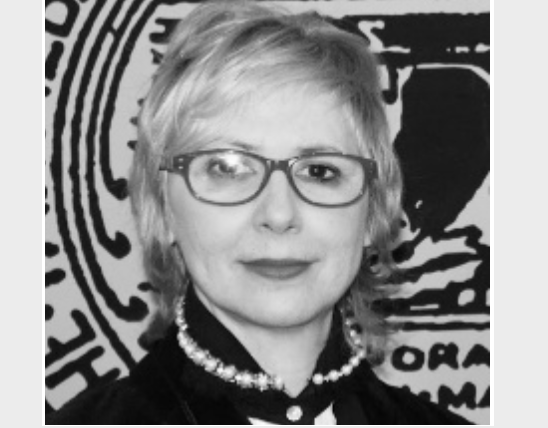
The lasting impact of the Albanian-American journalist with a-three-decade-career at VOA, author of books on history and Albania’s national figures and a special contributor to Dielli, Ilir Ikonomi

After nearly a thirty-years-professional-career at the Albanian Language Service of Voice of America, Ilir Ikonomi announced his retirement from the anchor’s chair of Ditari broadcast on Friday. He joined the Washington DC-based media organization funded by the U.S. Congress in 1992 and has reported or covered important events in the United States, Albania, Kosova, Northern Macedonia and other locations for the Albanian speaking community. Last Friday, at the end of the show, Ikonomi announced that he is retiring from VOA and will go on to pursue other projects. 

The Albanian-American journalist said he felt privileged to have been part of a respectable media establishment known for standing up for the truth. He expressed gratitude to the audience for being part of the journey with him, and, as any seasoned journalist would, Ilir took them back to a once-in-a-lifetime-event he covered in 1999. It was the NATO troops deployed in Kosova following the airstrikes and bombing campaign against Serbian forces. “On June 12, 1999 I entered Kosova with the NATO troops and reported via a satellite telephone for Voice of America,” he proudly recalled on his last show. He paid homage to “truth-telling”, which he says sits at the very foundation of the Voice of America, ever since its founding 80 years ago. Ilir Ikonomi remarked: “Reporting the truth is no easy task. It requires courage and hard work. I believe that the VOA journalists, who do their work free from government interference, are deserving of that attribute.” The Albanian-American journalist said he considers it an honor to have been part of this effort.

History and Literary Contribution

At 66, Ilir Ikonomi is a well-respected author of several books focusing on Albania’s history and national figures. Ikonomi’s work, “Pavarësia – Udhëtimi i paharruar i Ismail Qemalit” (Independence – The Unforgettable Journey of Ismail Qemali) was published in 2012. A year earlier, he debuted with “Faik Konica: Jeta në Uashington” (Faik Konitza: Life in Washington), a biography in the Albanian language, critically acclaimed for its depth with regard to the life of Albania’s prominent writer and diplomat. In May 2014, Ikonomi published “Pushtimi,” (The Invasion) that centers on the 1939 occupation of Albania by fascist Italy, as narrated by the U.S. Envoy in Tirana at the time, Hugh G. Grant. Two years later, the author released “Essad Pasha Toptani: The Man, the War, the Power”, which won praise as an impartial biography of the one of the most controversial figures of Albania’s history. 

Personal Experience

I have worked with Ilir at Voice of America and on several State Department Interpreting assignments. For me, the impact of our teamwork along with my respect for his professionalism and humility endures far beyond the years we worked together. In April 2018, as the English Editor of Dielli I was preparing a tribute dedicated to the passing of Agim Karagjozi, Vatra’s President for nearly two decades. I reached out to Ilir, asking him to share his memories and he willingly provided a segment of his 2002 video interview with Karagjozi. It showed at one point the Chairman smoking and Ilir interrupting him to remark that appearing with a cigarette in hand would send the wrong message to the young people. “Without any hesitation, Mr. Karagjozi puts out the cigarette with a guilty smile. “Why didn’t you say that earlier?” he asked. “Mr. Karagjozi’s humanity was admirable, it was perhaps one of his most precious qualities,” Ilir noted in an email.

Faik Konica’s 1930 Original Article titled Albania unearthed by Ilir Ikonomi appears in Dielli in 2018

In March 2018, Dielli was marking the birth anniversary of Faik Konica. Naturally, I reached out to the author of a historic monograph on Konica. Again, Ilir responded promptly by sending a story he had uncovered in an old collection preserved by the The Mayflower, the famous Washington D.C. hotel where Konica spent most of his years in the capital as King Zog’s envoy. The Mayflower was then “the second-best address in Washington D.C. after the White House” and records show that Konica had rented a suite there. Here is an excerpt from Ikonomi’s story written with such elegance and style that in my opinion, would have pleased Konica. “Konica’s suite which also served as the Legation of Albania, was located on the second floor of the building, facing Desales Street and had the plaque Albanian Republic on the door. Sadly, over the years, this part of the hotel has been completely transformed and the original suite does not exist anymore. Just like Konica, a number of Senators, administration officials and other celebrities had made The Mayflower their primary residence, for it was the meeting place of the rich and famous. The hotel was aptly nicknamed the Grande Dame of Washington.” Ikonomi writes about his excitement when he found out the existence of a monthly magazine with notes on celebrity guests and other hotel visitors. He said: “The historian of The Mayflower guided me through the many issues of The Washingtonian and there I was able to find quite a few things: In the February 1929 issue of the magazine, a writer named Margaret B. Downing had a few notes about the Albanian minister. At that time, Konica had just returned from a trip to Albania, during which King Zog had promised to promote him to prime minister, as I later learned with great surprise. For reasons hard to explain, Konica never went back to fill the post.” Ikonomi went on to say: “In the September 1930 issue, I discovered a long article written in English by Faik Konica, which was subsequently translated into Albanian by Gjon Mili, an Albanian-American photographer best known for his work published in Life magazine. The Albanian translation was printed in Dielli of October 14, 1930. As it happened the Albanian translation is widely known, whereas the English original was considered lost. I believe the English text in The Washingtonian is precisely the original I had been looking for.” So, one of the best-known pieces written by Konica in 1930 in English, was finally discovered thanks to Ilir Ikonomi. Dielli was able to reprint it exactly eighty-eight years later after Mili’s translation.

Ilir Ikonomi’s Presentation at Dielli 110th Anniversary – the Only Known Recording of Konica’s Voice

On April 6th 2019 at the morning panel of Dielli’s 110th anniversary event in New York, Ilir Ikonomi was scheduled to be the fourth presenter. He was unable to attend the conference, yet he made available for the event -and later donated to Vatra- an NBC Radio interview with Faik Konica dated April 8, 1939, almost 90 years ago to the day of the commemoration. The interview was conducted by Hilmar Baukhage, a veteran State Department reporter and NBC’s Washington commentator. This is believed to be the only known recording in existence of Konica’s voice. Reporter Baukhage asks about Italy’s seizure of Albania and introduces Faik Konica as the Minister of Albania in Washington. In the interview, Konica condemns the Italian aggression stating that after 20 years of friendly relations Italy attacked Albania “for no apparent reason at all”. Only a small portion of the interview had been previously made available by the Library of Congress. The voice of one of Vatra forefathers is a precious gift for which Ilir Ikonomi deserves credit and has our gratitude.

Congratulations to Ilir on a splendid career! Much success in his future endeavors. 

In ending, my thoughts go back to his comments about Agim Karagjozi. Ilir Ikonomi recognizes and appreciates humility in others because he too is known for his modesty. Although the veteran journalist and author has helped Dielli shine a little brighter by enriching its records and archives, I doubt he will feel at ease about my putting the spotlight on him.   

Filed Under: Emigracion Tagged With: Ilir Ikonomi, Rafaela Prifti, RETIRES FROM VOA

Take A Break From Your Taxes

May 14, 2021 by dgreca

A condensed history of the origins of the personal income tax from the Civil War to the Economic Depression of 1893 to the disruption caused by the pandemic of 2020 

This year the IRS has postponed the federal income tax day to May 17.  In 2020, the deadline was extended from April 15 to mid July due to the pandemic. The tax preparers believe that this year you may need that extra time more than ever, given the new and potentially thorny issues including unemployment insurance claims, stimulus check income and pandemic-driven changes in residence, which impact your taxes. Yet, if you need to take a break before or after filing your taxes these days, you might be interested in a condensed history of the origins of the personal income taxes in the United States, including a brief description of how taxes are calculated, how refunds are decided, and even a glimpse at some excuses people have tried in order to avoid paying taxes. 

Individual income taxes have been the primary source of revenue for the U.S. federal government starting from the year 1950. The American Taxation History goes back to the Civil War. President Abraham Lincoln signed into law the first tax on personal income. In 1909 President Taft came up with an ingenious solution—combining tariff reduction legislation with a Constitutional amendment authorizing the federal government to collect income tax. In late 2018, President Donald Trump signed the Tax Cuts and Jobs Act, which represented the most significant change to the tax code in more than 30 years. The references of this compilation come from Records of Congress, Tax History Project and History.com.  

During the Civil War President Abraham Lincoln signed into law the first tax on personal income to help pay for the Union war effort. In 1861, Lincoln convinced Congress to pass the Revenue Act and impose a temporary 3 percent tax on incomes over $800, as an emergency measure to help finance the massive military expenditures required by the Civil War. That measure was allowed to expire in 1872. 

The idea of a federal income tax resurfaced after the Panic of 1893, an economic downturn so severe that it caused a quarter of the nation’s labor force to lose their jobs. 

After it was repealed a decade later, Congress tried again in 1894, enacting a flat rate federal income tax. But the following year the U.S. Supreme Court ruled the tax unconstitutional because it didn’t take into account the population of each state.  

In 1894, Congress Democrats joined forces with progressive Republicans to pass legislation that created a 2 percent tax on incomes over $4,000, along with reduced tariffs. But that tax didn’t last long. In an 1895 case, Pollock v. Farmers’ Loan and Trust Company, the Supreme Court found that directly taxing Americans’ income was unconstitutional. William Taft succeeded Theodore Roosevelt as president in 1909. He was a progressive Republican with moderate instincts and also an institutionalist, especially with regard to the Supreme Court. Taft faced a dilemma. A debate raged anew in Congress, with Democrats and progressive Republicans rallying to back a new income tax, while GOP leaders in both the House and Senate remained strongly against the idea. 

President Taft saw a personal income tax as a political move that would help him to get Congress to pass the law to get the tax on businesses that he needed to replace tariff revenue. His goals were tariff and corporate tax reform. He came up with an ingenious solution—combining tariff reduction legislation with a Constitutional amendment authorizing the federal government to collect income tax, which the court wouldn’t be able to overturn. 

In July 1909, Congress passed the 16th Amendment to the Constitution allowing the federal government to tax individual personal income regardless of state population.. To the shock of conservatives, the amendment was approved by enough state legislatures so by 1913, Congress enacted a federal income tax and ever since then Americans have been required to pay federal income taxes. Since 1950, individual income taxes have been the primary source of revenue for the U.S. federal government. Together with payroll taxes (used to fund social programs like Social Security and Medicare), income taxes amount to roughly 80 percent of all federal revenue, and are the essential fuel on which our government runs.

When is the Federal Tax Day?

Initially, in 1913 the official due date for paying taxes was March 1, but in 1918, Congress changed the federal tax day to March 15. In 1955, another tax overhaul pushed back the deadline an entire month, to April 15, giving the government more time to hold on to tax dollars before paying any refunds it might owe. In the case that April 15 falls on a Saturday, Sunday or holiday, Tax Day becomes the first succeeding business day after that date.

In 1955, Congress moved it back another month, to April 15. 

Who Pays Taxes?
By law, any American whose gross income is over $10,000 (or $25,000 for married couples filing jointly) or who earned more than $400 from self-employment must file a federal income tax return. There are also a number of other circumstances that might require you to file, including selling your home or owing taxes on money you withdrew from your retirement account. 

How are Taxes Calculated?
The federal income tax system is designed to be progressive, which means the more taxable income you make, the higher the tax rate. Taxpayers can often reduce the amount of tax they owe by using various tax credits, deductions and exclusions (or loopholes).

Tax rates have varied widely over the years, especially for the nation’s highest earners, ranging from an initial low of around 7 percent in 1913 to a top rate of 91 percent in the early 1960s. In 2016, taxpayers in the top tax bracket (income level) paid a tax rate of 39.6 percent, according to the Tax Policy Center, they included some 860,000, or 0.5 percent of the total number of U.S. households. Nearly 80 percent of U.S. households were in the 15 percent bracket or lower, including those Americans with no taxable income and those who don’t file tax returns.

Because the United States has a marginal tax rate system, not all of an individual’s income may be taxed at the same rate. When you earn enough income to put you into a higher tax bracket, only the extra income in that bracket is taxed at the higher rate, not all of your income. For individuals in the highest tax bracket, their first dollars of income are taxed in the lowest bracket, and they go up from there.

How are Refunds Decided?
Most Americans pay their taxes as they go through the year, rather than in one lump sum on Tax Day. Employees often have their income tax deducted from each paycheck and sent directly to the IRS while self-employed workers are required to pay estimated taxes quarterly. At the end of the year, if you’ve paid more than what you owe, the federal government will issue you a tax refund. The IRS typically sends out refunds within 21 days of receiving tax returns, but in some cases it can take as long as eight weeks.

What Has Changed in the Recent Tax Law?
In late 2018, President Donald Trump signed the Tax Cuts and Jobs Act, which represented the most significant change to the tax code in more than 30 years. The bill lowered tax rates in five out of the seven tax brackets, starting in 2018 and going through 2025. While it increased the standard deduction for both individuals and married couples filing jointly, the new law eliminated the personal exemption, which every individual had been entitled to claim on their tax return (provided they weren’t dependent of someone else).

Among various other changes, the new tax law raised amounts that workers can contribute to retirement savings accounts, doubled the existing Child Tax Credit to $2,000 for every child in a household under 17 and expanded the use of funds in specialized college savings accounts (called 529s) to include other levels of education, like private K-12 schooling. In a benefit that applies only to a small percentage of wealthy Americans, the new law also doubled the estate tax exemption to $11.2 million per individual and $22.4 million per couple, greatly reducing the amount of families subject to the estate tax. 

Some of the fascinating statements people have made to avoid paying taxes range from “taxes are actually voluntary” to claims that the IRS isn’t a real government agency, and even arguments that “my kind of income isn’t taxable”. The IRS addresses this and other tax evasion schemes in a report called The Truth About Frivolous Tax Arguments. According to the report, the word “voluntary” in that decision “refers to our system of allowing taxpayers initially to determine the correct amount of tax.” In other words, you do get to volunteer how much tax you think you owe instead of having the government tell you. But you don’t get to volunteer whether to pay any taxes at all. 

Filed Under: Opinion Tagged With: From Your Taxes, Rafaela Prifti, Take A Break

CDC Updates Guidance On Airborne Threat

May 11, 2021 by dgreca

The coronavirus spreads through the air, says the updated guidance posted by The Centers for Disease Control. Infections through inhalation at distances greater than six feet from an infectious source are less likely than at closer distances, but can occur. The science brief put out on the agency’s official website reflects current knowledge about SARS-CoV-2 transmission. The CDC previous public health guidance said the virus spreads “mainly through close contact from person to person.” The statement summarized below asserts that although the understanding of how transmission occurs has shifted, “the ways to prevent infection with this virus have not” reaffirming that the measures that CDC recommends remain effective for these forms of transmission.

SARS-CoV-2 is Transmitted by Exposure to Infectious Respiratory Fluids

The principal mode by which people are infected with SARS-CoV-2 (the virus that causes COVID-19) is through exposure to respiratory fluids carrying infectious virus. Exposure occurs in three principal ways: (1) inhalation of very fine respiratory droplets and aerosol particles, (2) deposition of respiratory droplets and particles on exposed mucous membranes in the mouth, nose, or eye by direct splashes and sprays, and (3) touching mucous membranes with hands that have been soiled either directly by virus-containing respiratory fluids or indirectly by touching surfaces with virus on them. The brief lays out how exposure to respiratory fluids (carried through largest droplets within seconds to minutes or smallest fine droplets or air sol particles that may remain suspended for minutes to hours) that cause Covid-19 occurs in three principal ways: 

  1. Inhalation of air carrying very small fine droplets and aerosol particles that contain infectious virus. Risk of transmission is greatest within three to six feet of an infectious source where the concentration of these very fine droplets and particles is greatest. 
  2. Deposition of virus carried in exhaled droplets and particles onto exposed mucous membranes (i.e., “splashes and sprays”, such as being coughed on). Risk of transmission is likewise greatest close to an infectious source where the concentration of these exhaled droplets and particles is greatest. 
  3. Touching mucous membranes with hands soiled by exhaled respiratory fluids containing virus or from touching inanimate surfaces contaminated with virus. 

The Risk of Infection Varies According To The Amount Of virus To Which a Person Is Exposed

Once infectious droplets and particles are exhaled, they move outward from the source. The risk for infection decreases with increasing distance from the source and increasing time after exhalation. Two principal processes determine the amount of virus to which a person is exposed in the air or by touching a surface contaminated by virus: decreasing concentration of virus in the air, progressive loss of viral viability and infectiousness over time influenced by environmental factors such as temperature, humidity, and ultraviolet radiation (e.g., sunlight). 

Transmission of SARS-CoV-2 From Inhalation of Virus In the Air Farther than Six Feet From An Infectious Source Can Occur

Infections through inhalation at distances greater than six feet from an infectious source are less likely than at closer distances, but can occur. These transmission events have involved the presence of an infectious person exhaling virus indoors for an extended time (more than 15 minutes and in some cases hours) leading to virus concentrations in the air space sufficient to transmit infections to people more than 6 feet away, and in some cases to people who have passed through that space soon after the infectious person left. Per published reports, factors that increase the risk of SARS-CoV-2 infection under these circumstances include:

  • Enclosed spaces with inadequate ventilation or air handling within which the concentration of exhaled respiratory fluids, especially very fine droplets and aerosol particles, can build-up in the air space. 
  • Increased exhalation of respiratory fluids if the infectious person is engaged in physical exertion or raises their voice (e.g., exercising, shouting, singing). 
  • Prolonged exposure to these conditions, typically more than 15 minutes. 

Prevention of COVID-19 Transmission

The infectious dose of SARS-CoV-2 needed to transmit infection has not been established. Current evidence strongly suggests transmission from contaminated surfaces does not contribute substantially to new infections. Despite these knowledge gaps, the available evidence continues to demonstrate that existing recommendations to prevent SARS-CoV-2 transmission remain effective. These include physical distancing, community use of well-fitting masks (e.g., barrier face coverings, procedure/surgical masks), adequate ventilation, and avoidance of crowded indoor spaces. These methods will reduce transmission both from inhalation of virus and deposition of virus on exposed mucous membranes.

Filed Under: Analiza Tagged With: CDC Updates, Guidance On Airborne Threat, Rafaela Prifti

ARDIAN ZIKA – MEMBER OF FLORIDA STATE HOUSE OF REPRESENTATIVES, -A KOSOVAR ALBANIAN AMERICAN

May 6, 2021 by dgreca

By Rafaela Prifti/

Ardian Zika was elected to represent District 37 of Pasco in the Florida State House in 2018 when he began his first term in the legislative body. Dielli was pleased to communicate with the Florida House representative and the first Kosovar Albanian American to be in that seat. 

His first campaign video, posted online, narrates briefly his personal story to convey the idea that America is the country where “your place of beginning does not determine your place of becoming.” Representative Zika is a husband, father of five, business owner, banker, conservative, who appreciates the honor of serving in the Florida House of Representatives while being the first Kosovar-Albanian American to do so. His career and personal story exemplify the importance of hard work and dedication to family and strong beliefs. He says that “as an American, who began my journey as an immigrant from Kosovo, I am a product of American exceptionalism.” 

At the time of our phone conversation, the Florida State House was engaged in intense legislative sessions. We communicated in English and there were some interjections in Albanian, which in my opinion, he speaks fluently. That is especially noteworthy since he was born in Bar former Yugoslavia, came to United States at a very young age, received his education before moving to Florida in 2005. He ran for office and in 2018 Ardian Zika began his first term as an elected representative in the Florida State House. 

Representative Zika was gracious, convivial and forthcoming. To my surprise, he said that I was the first Albanian reporter to contact him. I explained that Dielli is the publication of Vatra, the Pan-Albanian Federation of America, an over-a-century old reputable organization dedicated to protecting the rights of Albanians. Although Vatra’s headquarters are located in New York, there are local offices around the country including Tampa Bay, Clearwater, Jacksonville, Fort Lauderdale. An informal invitation to visit Vatra was conveyed in support of his work now and in the future to safeguard the rights of Albanians. Representative Zika spoke with enthusiasm about the prospects of a trip to Kosova and Albania next year. We had previously agreed that part of our brief conversation would be conducted via email. I sent some questions about his service and official positions and receive the answers as follows:  

Dielli; You have the distinction of being an elected official at the state level and a Kosovar Albanian blazing a trail in the Albanian American community. What does public service mean to you?

Representative Zika: It’s a great honor to serve in the Florida House of Representatives as the first Kosovar-Albanian American. Public service is important in the community. I will continue to work tirelessly in the Florida House of Representatives so that no Floridian is left behind as they embark on their journey toward the American Dream. I will continue to support public policy so everyone has an opportunity to reach the American Dream through upward economic mobility. As an American, who began my American journey as an immigrant from Kosova, I’m a product of American exceptionalism. I am forever grateful to America for blessing me with the gift of a lifetime – the gift of Life, Liberty and the Pursuit of Happiness.

Dielli: You are a husband, father, a business owner, a member of the Florida House of Representatives. How do personal and public components of your life come together?  

Representative Zika: It’s a great honor to serve the community in the Florida House of Representatives. My wife and I are blessed with five beautiful children. We are active in our local church and our community.

Dielli: What are the positions you hold at the Florida House of Representatives currently? 

I presently serve as the Vice Chairman of the House Ways & Means Committee and the House Alternating Chairman of the Joint Legislative Auditing Committee. I’m also a member of the following House Committees & Subcommittees: Pandemics & Public Emergencies Committee, State Affairs Committee, Government Operations Subcommittee, Higher Education Appropriations Subcommittee and Insurance & Banking Subcommittee. 

Dielli is proud to bring to its readers an introductory conversation with Ardian Zika, Florida State House Representative with a unique background as Kosovar-Albanian American. A quote on his first campaign video epitomizes what Representative Zika calls a tribute to the land that he loves, “America is still the light piercing the darkness. A beacon leading the world to freedom’s shores.”

Filed Under: Politike Tagged With: Member of Florida, Rafaela Prifti, State House of Representatives

OF POLITICS AND SCIENCE

April 7, 2021 by dgreca

by Rafaela Prifti/

The collision of medical science, political beliefs and public health policy – to the extent that one exists – is not a new topic. Politics and science often have been at odds. The confrontation resurfaced in a pronounced form in the pandemic era concerning various issues related to health and scientific data. The interplay between politics and science is a hotly debated issue and will likely get more heated in the US and around the world. It might lighten the mood to remember an anecdote about a member of Congress who told a scientist that was testifying at a hearing: “You got your science, I have mine!”

I write this because, in its essence, the recurring battle between politics and science may not be about either one of them but rather a mere manifestation of a deeply rooted human desire for power.  

History of science is riddled with denial and opposition that vary in nature and outcome but mostly fall in one or more categories associated with ideological, political, religious or scientific domains. Discoveries from evolution to gravity and so on have been initially objected to and objected by fellow scientists and science community before being embraced by society. The rise of policy reports issued by ideologically based think tanks and more scientific advancement coming on the horizon are bound to raise political questions with severe social implications. I asked Sulejman Rushiti, University Lecturer at State University of Tetova and former Minister of Education, Northern Republic of Macedonia, to explain how the public narrative of the issue takes shape. “In general, politics is regarded as sinister whereas science as inherently virtuous, therefore politicians are often viewed as malicious in contrast with a benign nature of scientists. Yet history offers plenty of exemptions in both categories,” he said. In his view, in the past as in the present, certain conditions meet at one point to fuel an extreme kind of polarization. “The Middle Ages is the best illustration of state and church opposition towards science. Fast forward to the present, when scientific advancement and political ambition clash in societies that have seen the rise of troubled personalities and inept individuals.” Mr. Rushiti argued that the politicization of science, particularly medical, has been particularly present in times of war. “One example is the notorious case of the Nazi doctors who performed horrible medical experiments violating ethics and human rights in the name of science and its advancement. They went a step further in justifying these atrocities based on some cultural constructs and man-made beliefs about race and social systems.” The convergence comes to surface once it is realized that the pursuit of knowledge in turn provides power. In politics, the love of power is a very strong motive. One of the best analysis of power as “the singular most powerful motive among human desires” is Bertrand Russell’s Nobel Prize acceptance speech in 1950. A British philosopher, mathematician, social critic, and political activist, Russell is considered to be one of the founders of analytic philosophy and one of the most important logicians in the 20th century. “Economic facts, population statistics, constitutional organization, and so on, are set forth minutely. If politics is to become scientific, and if the event is not to be constantly surprising, it is imperative that our political thinking should examine the springs of human action. What is the influence of hunger upon slogans? If one man offers you democracy and another offers you a bag of grain, at what stage of starvation will you prefer the grain to the vote?” asks Russell before setting out to give a presentation that should be, in my opinion, a recommended reading in school curricula.

Bertrand Russell argues that all human activity is prompted by desire. He decries the theory advanced by moralists purporting that it is possible to resist desire in the name of duty and principle. He does not deny that man actions stem from a sense of duty yet he looks further into it. His main theses is that “If you wish to know what men will do, you must know not only, or principally, their material circumstances, but rather the whole system of their desires with their relative strengths.”

To look at the comparison between scientists and politicians, Mr. Rushiti opined that “they are driven by their ambition, and capabilities, just as they are conditioned by their personal upbringing and education, yet they may rise above them.” Since he is a prolific theater director, he offered a literature reference that is both recognizable and influential. “Lets take the Faust legend as an example of the scientist driven by political ambitions who cuts a deal with Mephisto to drive away the passions of personal pleasures. Mephisto is the metaphor for a social system, patterns of behavior and collective norms that cultivate personal drive and individual success. On the other hand, Thomas Jefferson, is the case of a statesman with a mind of a scientist.”

Powered by a strong motive and shaped by their own capacities, strengths and shortcomings, scientists and politicians are led to actions which may be useful or pernicious. “In a manner of speaking,” Mr. Rushiti argued, “a politician and a scientist carry out experiments that have a direct impact on our lives or quality of life. So it is important to adhere to an ethical society based on accepted humane values as a premise for individuals that believe in something bigger than themselves. In the flip side, history provides plenty of examples of personalities whose mission has been to restrict freedom and object science.”

Across the world, the response of countries and leaders to the pandemic offered more evidence of the troubling relationship between politics and science. The controversies surrounding each one are likely to increase as pursuits in either field are fueled by powerful motives and actors. A reformer or a despot may be led to actions motivated by power, yet the nature of their actions depends upon the social system, their abilities and ethics.

Filed Under: Politike Tagged With: OF POLITICS AND SCIENCE, Rafaela Prifti

  • « Previous Page
  • 1
  • …
  • 31
  • 32
  • 33
  • 34
  • 35
  • …
  • 52
  • Next Page »

Artikujt e fundit

  • “Gjeneral-Ambasador i ShBA në TR, besim dhe përgjegjësi e shtuar për RSh”
  • Norwegians and foreigners from other countries who greatly helped make peace in Kosova
  • Fan Noli dhe Faik Konica, arkitektët e diplomacisë shqiptaro-amerikane që shpëtuan Shqipërinë nga copëtimi
  • Eliot Engel, in memoriam…
  • 21 prill 1921, ditë e madhe e shtetit shqiptar. U hap në Tiranë mbledhja e parë, e parlamentit të parë, i dalë nga zgjedhjet e para. Historitë e deputetëve Ali Këlcyra dhe Ali Koprëncka
  • KOMITETI “MBROJTJA KOMBËTARE E KOSOVËS” NË  FONDET ARKIVORE TË ARKIVIT TË SHTETIT SHQIPTAR
  • The Architecture of Alignment
  • Kujtojmë me nderim arkeologun dhe studiuesin e shquar Skënder Anamali
  • Një moment në historinë kombëtare…
  • ELIOT ENGEL – NJË MIK I PAHARRUAR I SHQIPTARËVE DHE ZË I LIRISË DHE DREJTËSISË PËR KOSOVËN
  • REALIZIMI I TË DREJTAVE GJUHËSORE SHQIPTARE (1924–2026): ARTIKULIMI QYTETAR DHE DIPLOMACIA
  • BOOKFEST NË CHICAGO
  • “Brenga”, trinomi filozofik nga rrëfimi historik tek drama morale
  • Vatra Boston mbështet ekspozitën e kostumeve tradicionale shqiptare
  • Në kujtim të 160 civilëve shqiptarë – viktima të gjenocidit shtetëror të Serbisë fashsite!

Kategoritë

Arkiv

Tags

albano kolonjari alfons Grishaj Anton Cefa arben llalla asllan Bushati Astrit Lulushi Aurenc Bebja Behlul Jashari Beqir Sina dalip greca Elida Buçpapaj Elmi Berisha Enver Bytyci Ermira Babamusta Eugjen Merlika Fahri Xharra Frank shkreli Fritz radovani Gezim Llojdia Ilir Levonja Interviste Keze Kozeta Zylo Kolec Traboini kosova Kosove Marjana Bulku Murat Gecaj nderroi jete ne Kosove Nene Tereza presidenti Nishani Rafaela Prifti Rafael Floqi Raimonda Moisiu Ramiz Lushaj reshat kripa Sadik Elshani SHBA Shefqet Kercelli shqiperia shqiptaret Sokol Paja Thaci Vatra Visar Zhiti

Log in

This website uses cookies to improve your experience. We'll assume you're ok with this, but you can opt-out if you wish. Cookie settingsACCEPT
Privacy & Cookies Policy

Privacy Overview

This website uses cookies to improve your experience while you navigate through the website. Out of these cookies, the cookies that are categorized as necessary are stored on your browser as they are essential for the working of basic functionalities of the website. We also use third-party cookies that help us analyze and understand how you use this website. These cookies will be stored in your browser only with your consent. You also have the option to opt-out of these cookies. But opting out of some of these cookies may have an effect on your browsing experience.
Necessary
Always Enabled
Necessary cookies are absolutely essential for the website to function properly. This category only includes cookies that ensures basic functionalities and security features of the website. These cookies do not store any personal information.
Non-necessary
Any cookies that may not be particularly necessary for the website to function and is used specifically to collect user personal data via analytics, ads, other embedded contents are termed as non-necessary cookies. It is mandatory to procure user consent prior to running these cookies on your website.
SAVE & ACCEPT