• Home
  • Politics
  • Opinion
  • Culture
  • Sports
  • Economy
  • Interview
  • Reporting
  • Community
  • Vatra

Dielli | The Sun

Albanian American Newspaper Devoted to the Intellectual and Cultural Advancement of the Albanians in America | Since 1909

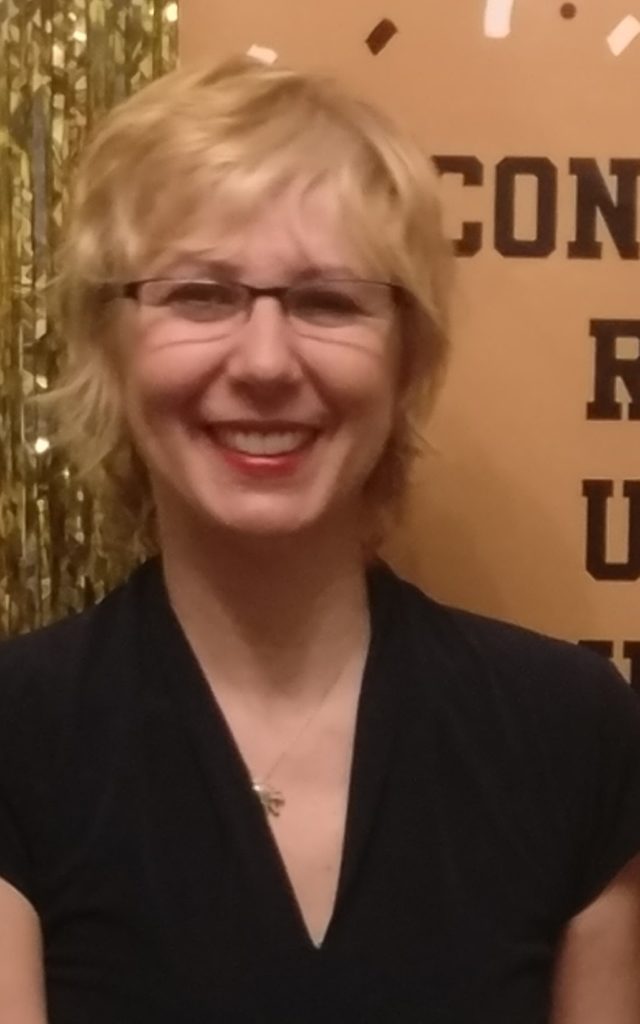
CONVERSATION WITH VATRA PRESIDENT ELMI BERISHA

October 19, 2020 by dgreca

by Rafaela Prifti-

In these difficult times it is encouraging to uphold the founders’ goals for Vatra as “a national organization” in America that has stepped up to champion national interests and to preserve our cultural heritage,” said Vatra President Elmi Berisha, who recently returned from a short visit to Kosova and Albania. He stated that the best assest for the advancement of our nation are our human resources. To the critics of his meetings with the Chairman of Albania’s Legislatures, Mr. Berisha responded by saying that the Executive Council and Board members of Vatra have been on board with the program he presented at Vatra’s Convention last January. “I continue to follow through the initiatives of the same agenda supported by Vatra leadership. Despite the lockdown restrictions and challenges due to the pandemic, Vatra’s performance during these months has been unparalleled in its activism,” said Mr. Elmi Berisha. 

The takeaways:

In line with the US and Western diplomacy, Vatra respects the institutions of Kosova and Albania that have been elected by the Albanian people.

Over a century ago, the Pan-Albanian Federation of America Vatra was founded and organized with a focus on the national program to promote the spirit of helping one another and to strengthen the bond of friendship between Americans and Albanians. Vatra is a 108 year-old respected institution in the community that is now well poised to advocate for pan-Albanian interests in the 21th century.

Here is the summary of the conversation:

The round of meetings in Tirana and Prishtina were successful in advancing Vatra’s activism and in promoting Albanian interests in the region and beyond. Representatives across the political spectrum in Kosova and Albania have displayed willingness for future cooperation while being respectful of the program of Pan-Albanian Federation of America Vatra.  While the global pandemic has hindered all aspects of life, Vatra has continued its efforts to meet its mission and further the national agenda outlined by the leadership of the Federation aligned with the Albanian-American community.  Vatra has answered the call to commit to  the national interest. VATRA HAS MET THE MOMENT while being aware of the long road ahead. Vatra’s message is to stand united on the Albanian national issues, to encourage inter-state cooperation and bolster the support from all political sides, institutions and personalities to carry out the reforms that bring Albania and Kosova a step closer to the integration processes.  
Our unified stand on national issues is the path to the development of the countries.  An across the board cooperation backed by all political factors and institutions is the right national approach. Building a strong economy and standing firmly against corruption and anything that slows down the integration process go hand in hand with a national diplomatic stance on talks with Serbia and the advancement of our European integration. So far the steps to join the Euro-Atlantic structures  have been slow paced.  It is an area where advocacy in Washington and the Western countries can play a bigger role. One of Vatra’s resources is the expertise and experience of Vatra members, with some well-respected personalities and many who have received their education in the US. It is evident that the authorities in our homelands have their work cut out for them. Vatra is aware of the task at hand and recognizes how important her role is at this time.      
When considering Vatra ‘s contribution in diplomacy, I am proud of Vatra’s involvement in advocacy and negotiations in Washington DC in early September. It is advantageous to our nation to be able to assist and contribute to the efforts that present a consolidated Albanian factor to the United States capital and the whole world. Vatra is not just present in Washington DC, it is actively advocating on behalf of Albania and Kosova. Leading up to the signing of the September 4th agreement at the White House, Vatra’s position to the Kosova delegation was to stand as ONE. Vatra stands firmly on the issue of Kosova’s borders and its territorial integrity as non-negotiable items.  It is important to understand the round of visits in Prishtina and Tirana in the context of Vatra’s mission for the new century. The signing of the Memorandum of Understanding  between the Republic of Kosova’s  Ministry of Foregin Affairs and Diaspora and Vatra entails a coordinated platform of a pan-Albanian cooperation strategy. As Minister Meliza Haradinaj-Stublla said: “The Memorandum is an expression of our shared willingness to promote the values and legitimate interests of Albanians.” 
These are difficult times but it is encouraging to uphold the founders goals for Vatra as “a national organization” in America that has stepped up to champion national interests and preserve our cultural heritage. Our human resources are our greatest asset in the advancement of our nation. The Executive Council and Board of Vatra have been on board with the program I presented at the Convention in January. I continue to follow through the initiatives of the agenda supported by Vatra leadership. Despite the lockdown restrictions and challenges due to the pandemic, Vatra’s performance has been unparalleled. Given the unusual circumstances, I traveled by myself rather than with respectable representatives of Vatra as I would not jeopardize anyone’s health.  The message of my visits in Prishtina and Tirana has been in compliance with Vatra’s guidelines and in accordance with its leadership goals.
Over a century ago, the Pan-Albanian Federation of America Vatra was founded and organized with the national program to promote the spirit of helping one another and to strengthen the bond of friendship between Americans and Albanians, through the spread of education. The intention and purpose of my recent round of visits in Kosova and Albania was in line with the national agenda and advocacy that has been laid out in the by-laws of the Federation. I am thankful for the enthusiastic support and pledges of cooperation by the Albanian officials for what promises to be a great national platform that would advance our countries into the future.  
From the start of my presidency at Vatra, I have invited, received and visited with officials and elected representatives of the Albanian people. In the course of my recent visit in Prishtina and Tirana, I did respect the institutions of the Albanian people in my official meetings with political party heads, members of the parliament, government representatives, legislatures and dignitaries. The frustration voiced by some Vatra members is directed at the fact that the people of Albania must have more say in the election of their office holders and representatives. Moreover, these are authorities that are acknowledged by the United States government and the Western countries.  I have 30 years of experience in diplomacy and communications. I firmly believe that Vatra is a 108 year old respected institution in the community that is now well poised to advocate for Albania’s interests in the 21th century. I am aware of the painful past of our people: communism in Albania and the repression resulting in war in Kosova. Having said that, I am convinced that we need to move forward with our national approach.  In line with the US and Western diplomacy, Vatra is respected and respects the institutions of Kosova and Albania that have been elected by the Albanian people. I am particularly proud to have signed on a commissioned five volume publication on the history and contribution of Vatra to the national Albanian movement to be put together by a team of members of Academia led by Professor Doctor Beqir Meta. I am thankful to the donors and friends who raised $20,000 for this unique project many years in the making. The purpose of the recent round of visits is in line with the national agenda and in compliance with the advocacy role that the Vatra Federation has championed in the past and can proudly take on for the future.  

Filed Under: Opinion Tagged With: conversation, Elmi Berisha, Rafaela Prifti, WITH VATRA PRESIDENT

FORMER PM PETITIONS AUSTRALIA’S PARLIAMENT TO END MURDOCH’S MEDIA DOMINANCE

October 16, 2020 by dgreca

The former prime minister of Australia, Kevin Rudd, has emerged as one of the fiercest critics of the Murdoch family’s media company, News Corp, which he says has the power to sway public opinion to protect its own agenda and to damage its political enemies.
Mr. Rudd created a petition to establish a royal commission to ensure the strength and diversity of Australian news media. The effort to look into the media concentration and its effects on democracy has captured public sentiment. On October 10, the petition for Murdoch Royal Commission was posted online and attracted 247,693 signatures. So many Australians rushed to sign it that the Parliamentary website crashed. On the one hand, News Corp owns more Australian newspapers than any other company. On the other hand, in an era where there are more local and international online sources of news and many consumers get their news via Google and Facebook, the question remains as to the power of a traditional media company to shape public opinion to the extent that News Corp’s critics believe.
Rupert Murdoch is one of the world’s most successful media proprietors and his conservative views on politics and business are well known. His son Lachlan, who is co-chair of News Corp and runs the family’s other US-focused business, Fox Corp, is said to share a similar world view. Media mogul’s younger son, James Murdoch had reportedly left the family’s company because he was concerned its newspapers were disguising facts and endorsing disinformation. Rupert Murdoch has been living in the United States since 1973. Over a decade later, the Australian-born publishing magnate, became a U.S. citizen to remove an obstacle to his acquisition of a network of then-independent American television stations. Today Rupert Murdoch is one of the most influential people in the media industry globally, with business interests that span television broadcasting and entertainment content to newspapers and book publishing. The two empires that he built over the last six decades—News Corp (NWS) and Fox Corporation (FOX)—own well-established media properties that operate in five continents including The Wall Street Journal, Fox News, HarperCollins, and the New York Post.
Petition Reason
Our democracy depends on diverse sources of reliable, accurate and independent news. But media ownership is becoming more concentrated alongside new business models that encourage deliberately polarising and politically manipulated news. We are especially concerned that Australia’s print media is overwhelmingly controlled by News Corporation, founded by Fox News billionaire Rupert Murdoch, with around two-thirds of daily newspaper readership. This power is routinely used to attack opponents in business and politics by blending editorial opinion with news reporting. Australians who hold contrary views have felt intimidated into silence. These facts chill free speech and undermine public debate. Powerful monopolies are also emerging online, including Facebook and Google. We are deeply concerned by: mass-sackings of news journalists; digital platforms impacting on media diversity and viability; Nine Entertainment’s takeover of the Melbourne Age and Sydney Morning Herald; News Corp’s acquisition (and then closure) of more than 200 smaller newspapers, undermining regional and local news; attempts to replace AAP Newswire with News Corp’s alternative; and relentless attacks on the ABC’s independence and funding. Professional journalists further have legitimate concerns around unjust searches, potential prosecution, whistle-blower protection, official secrecy and dispute resolution that should be comprehensively addressed. Only a Royal Commission would have the powers and independence to investigate threats to media diversity, and recommend policies to ensure optimal diversity across all platforms to help guarantee our nation’s democratic future.
Petition Request
We therefore ask the House to support the establishment of such a Royal Commission to ensure the strength and diversity of Australian news media.

Filed Under: Analiza Tagged With: Rafaela Prifti

SENATOR BOB DOLE TELLS DIELLI HE HOLDS A SPECIAL PLACE IN HIS HEART FOR THE PEOPLE OF KOSOVA

October 15, 2020 by dgreca

SENATOR BOB DOLE TELLS DIELLI HE HOLDS A SPECIAL PLACE IN HIS HEART FOR THE PEOPLE OF KOSOVA–

By Rafaela Prifti/

Dielli was granted access to Senator Bob Dole. The topics of our communication covered the dedication ceremony in Prishtina, the impact of the first visit and his confidence in the future of Kosova. The Albanian community leaders have commended his decades-long commitment to Albanian people. With regards to Senator Bob Dole’s visit to Prishtina 30 years ago, many believe it paved the way towards the liberation of Kosova and eventually the creation of a new independent state in Southeast Europe.

When I asked him to share some memories from three decades ago, Senator Dole said:
“The people of Kosova have not had an easy road to independence, and their struggle was especially apparent when I visited Pristina 30 years ago.  As our bus came into the city, I witnessed first-hand the plight of the Albanian people under a Milosevic regime.”  Reaffirming that he is proud to support the people of Kosova, Senator Dole added: “In terms of impact, I’ll never forget that visit.  I couldn’t ignore what was happening to the people of Pristina.”
I noted that he is admired by Americans and Albanians alike. And has received some of nations’ highest honors such as the Golden Medal of Freedom from Kosova’s President and in 2018 the Congressional Gold Medal for your service to the nation “as a soldier, a legislator and a statesman,” from the Trump administration. Then I asked about the statue ceremony in Prishtina and what it meant to him. “The dedication of a statue in my honor by the citizens of Pristina is obviously a tremendous and humbling event.  But more than that, it’s a deeply personal symbol of a friendship and alliance we’ve maintained over many decades,” said Senator Bob Dole to Dielli.

I asked him “What would you like the Albanian people in Kosova, the Albanian community in the US and all over the world to know about you and your legacy?”  
Senator Dole’s answer was: “I am proud of the ongoing determination and hope of the Albanian people of Kosova and the Albanian community around the world.  While I may have made a small impact on the evolution of Kosova’s independence, ultimately the credit belongs to the people of Kosova and their perseverance in the face of extreme adversity.  I will always hold a special place in my heart for the people of Kosova, and I have great confidence in their future as a free and democratic nation.”
Thank you for your enduring commitment to the Albanian people, Senator Dole!

Filed Under: Opinion Tagged With: Bobe Dole, Rafaela Prifti

WOMEN JUSTICES AND A SUMMARY OF JUDGE BARRETT’S NOTABLE OPINIONS

October 14, 2020 by dgreca

Compiled and Edited by Rafaela Prifti-

“Established by the United States Constitution, the Supreme Court began to take shape with the passage of the Judiciary Act of 1789 and has enjoyed a rich history since its first assembly in 1790. The Supreme Court is deeply tied to its traditions. Of the federal government’s three branches, the Court bears the closest resemblance to its original form – a 225 year old legacy.” (Supreme Court of the United States Website)

The first woman Supreme Court Justice was appointed by President Ronald Reagan. Justice Sandra Day O’Connor served from 1981 until 2006. Ruth Bader Ginsburg became the second female justice of the U.S. Supreme Court. Named to the U.S. Supreme Court in 1993 by President Bill Clinton. After serving for 27 years, Justice Ginsberg died last month due to complications from metastatic pancreas cancer. In 2009, President Barack Obama nominated Sonia Sotomayor to the Supreme Court following the retirement of Justice David Souter. Justice Sotomayor is the first Hispanic and Latina member of the Court. Elena Kagan is the fourth woman to become a member of the Court. To fill the vacancy arising by the retirement of Justice John Paul Stevens, Kagan was nominated by President Obama in 2010. In the 230-year history of the Supreme Court, four women have served as Justices. As an additional trivia, out of four women Justices, three of them, Ruth Ginsberg, Sonya Sotomayor and Elena Kagan were born in New York.President Donald Trump’s first woman nominee for the Supreme Court, Judge Amy Coney Barrett, has written roughly 100 opinions in more than three years on the 7th U.S. Circuit Court of Appeals. At the ongoing Senate confirmation hearing which began early this week, Judge Barrett refused to discuss her views on the Constitution invoking “Ginsburg’s rule”.  “It’s become a standard response by Republican high court nominees to recite Ginsburg’s words from her own confirmation hearing,” wrote Associated Press yesterday.  Her opinions include cases on immigration,  voting rights, guns, sexual assault on campus, employment discrimination, as well as sign-ons to opinions on abortion.

IMMIGRATION
In June Judge Barrett was in dissent when her two colleagues on a 7th Circuit panel put on hold the Trump administration policy that could jeopardize permanent resident status for immigrants who use food stamps, Medicaid and housing vouchers. Under the new policy, immigration officials can deny green cards to legal immigrants over their use of public benefits. She wrote that existing immigration law and a Clinton-era welfare overhaul had already limited public assistance to noncitizens. The administration was just using leeway those laws had given it, Barrett wrote. The objections of immigrants and their advocates “reflect disagreement with this policy choice and even the statutory exclusion itself. Litigation is not the vehicle for resolving policy disputes,” she wrote.

VOTING RIGHTS

In the same opinion on gun rights, Barrett dipped into constitutional history to note that states did more to protect the rights of people to own guns than their right to vote. In some states, people who were convicted of crimes lost the right to vote, but not the right to legally have a gun, she wrote. The right to keep and bear arms conveyed by the Second Amendment, by contrast, protects “an individual’s right to protect himself — not in his right to serve in a well-regulated militia,” Barrett wrote, citing Justice Antonin Scalia’s 2008 opinion for the court in a major gun rights case.

GUNS
In a dissent in the 2019 gun-rights case of Kanter v. Barr, Judge Barrett argued that a conviction for a nonviolent felony — in this case, mail fraud — shouldn’t automatically disqualify someone from owning a gun. The two judges in the majority agreed with Trump administration arguments that the defendant, Rickey Kanter, could not own a gun under federal or Wisconsin law because of his criminal conviction. Barrett used most of her 37-page dissent to lay out the history of gun rules for convicted criminals in the 18th and 19th centuries, consistent with her embrace of interpreting laws and the Constitution according to the meaning they had when they were adopted. Barrett wrote that “while both Wisconsin and the United States have an unquestionably strong interest in protecting the public from gun violence, they have failed to show, by either logic or data that disarming Kanter substantially advances that interest.” She said that her colleagues were treating the Second Amendment as a “second-class right, subject to an entirely different body of rules than the other Bill of Rights guarantees.” Barrett quoted from a 2010 opinion by Justice Samuel Alito that extended gun rights, but the phrase also has been used more recently by Justice Clarence Thomas and other conservatives to complain that the Supreme Court has shied away from recognizing gun rights.

ABORTION

Barrett has twice joined dissenting opinions asking for decisions blocking laws enacted by abortion opponents to be thrown out and reheard by the full appeals court. Last year, after a three-judge panel blocked an Indiana law that would make it harder for a minor to have an abortion without her parents being notified, Barrett voted to have the case reheard by the full court. In July, the Supreme Court threw out the panel’s ruling and ordered a new look at the case. In 2018, a three-judge panel ruled that Indiana laws requiring that funerals be held for fetal remains after an abortion or miscarriage and banning abortions because of the sex, race or developmental disability of a fetus were unconstitutional. Supreme Court abortion decisions “hold that, until a fetus is viable, a woman is entitled to decide whether to bear a child. But there is a difference between ‘I don’t want a child’ and ‘I want a child, but only a male’ or ‘I want only children whose genes predict success in life,’” Judge Frank Easterbrook wrote for the dissenting judges. Last year, the Supreme Court reinstated the fetal remains law, but not the ban on abortions for race, sex and developmental disabilities.

CAMPUS SEXUAL ASSAULT
Barrett wrote a unanimous three-judge panel decision in 2019 making it easier for men alleged to have committed sexual assaults on campus to challenge the proceedings against them. The case involved allegations by a female student at Purdue University that her boyfriend had sexually assaulted her. The students were identified in court documents as John and Jane Doe. Barrett concluded Purdue’s process was unfair and allowed his lawsuit to continue. The judge criticized the university official who ended up siding with the female student.


RACE DISCRIMINATION IN THE WORKPLACE
In Smith v. Illinois Department of Transportation, Judge Barrett argued that the utterance of the n-word is not enough for the plaintiff Smith to win the case and that the use of the n-word changed his subjective experience of the workplace.  A possible colleague of Barrett’s took a different view on racial slurs in 2013. Justice Brett Kavanaugh, then serving as a federal appeals court judge in Washington, D.C, said one utterance was enough. “But, in my view, being called the n-word by a supervisor … suffices by itself to establish a racially hostile work environment. That epithet has been labeled, variously, a term that ‘sums up . . . all the bitter years of insult and struggle in America,’ ‘pure anathema to African-Americans,’ and ’probably the most offensive word in English,” Kavanaugh wrote. “No other word in the English language so powerfully or instantly calls to mind our country’s long and brutal struggle to overcome racism and discrimination against African-Americans. In short, the case law demonstrates that a single, sufficiently severe incident may create a hostile work environment actionable” under federal anti-discrimination laws.

Filed Under: Politike Tagged With: Rafaela Prifti, WOMEN JUSTICES

DIGITAL SEGREGATION IMPACTS REMOTE LEARNING

October 12, 2020 by dgreca

“An enlightened nation is always most tenacious of its rights,” Samuel Harrison Smith, 1797-

By Rafaela Prifti-Community leaders and their state and federal partners need to address the situation of digital segregation that persists across metropolitan America. For most, the divide between urban and rural parts of the country is an indicative of disparity. Yet, the Census Bureau’s American Community Survey (ACS) data indicates that: “The majority of digitally disconnected households live in metropolitan areas, and the gaps are especially large when comparing neighborhoods within the same place. Effectively, some residents live in digital poverty even as their neighbors thrive.”
School districts across the country were caught unprepared when lockdown rules went into effect in the spring of 2020. When remote learning began, there were variations of hours of live online instructions which were reduced to a few hours for each of the main subjects a week. Soon it became clear that even with districts providing free devices to students of low income families, this form of schooling wasn’t going to work for them.  Today’s digital economy is out of reach for far too many people who live in neighborhoods with no access to internet connection and  free WiFi. Students are required to log on to their daily class or complete the assignments on Google Classroom account.  The satellite connection is slow and comes with such a low data cap that it quickly exceeds within a week or two. They can’t afford to buy more data. With the shift to remote instructions, the haphazard internet access and poor service mean that if the links for the class change at the last moment and when students don’t receive the message, they sit in their virtual space and miss the class. Society’s attention to the students of low income households has always been spotty, but now they have become invisible behind closed doors, while we stay home to flatten the curve, according to research.
The United States was a pioneer in universal education. Free of the British upper-class’ fear that educating the working class endangered their rule, education was seen as a means to alleviate poverty in growing cities across the new nation.  In the early decades of the 19th century, “district schools” mixed children of all ages. History records show that “coastal cities had a few “charity schools” for the urban poor, supported by churches and philanthropists aiming to break the generational cycle of poverty. State and local governments in the North and the Midwest began authorizing taxation to pay for public schools. For the reformers, creating a school system that would be used by all children was the best argument in support of taxes,” while the South lagged behind in building public schools. Time and time again history shows the consequences of failing to provide that basic good. In 1954, The Supreme Court in Brown v. Board of Education ruled against school segregation and districts across the South threatened to close public schools to avoid integrating them.
In 2020, public health advisers, who supported lockdowns to slow the spread of the coronavirus in the spring, noted that the American Academy of Pediatrics favored school reopening based on the infection rates of children. CDC guidelines provided a framework with recommendations for wearing masks. Counties and districts across the board listed steps to reduce transmission risk at schools such as improve air quality through ventilation or increase air circulation from outdoors, installing air purifiers. The hybrid model of teaching was introduced to combine in-person with online classes. The declaration of President Trump and Secretary of Education Betsy DeVos to pressure the governors to open schools added a political element. The push for decisions to be made locally had a negative impact. Teachers’s Unions reacted by noting concerns about lack of funding for protective gear and testing. Studies published data collected from other countries showing that children were at high risk of contracting the virus, other data showed that the virus had far less effect on younger children. Nationwide, the pandemic has had a disproportionate effect on Black and Hispanic communities. The decision was not driven only by data. “Across the country, some 35 of the 50 largest districts opted for a fully remote opening, as did most large cities, with the notable exception of New York, which announced a hybrid approach and a delayed start. A study by the Brookings Institution found that school districts’ opening decisions correlated much more strongly with levels of support for Trump in the 2016 election than with local coronavirus case levels.“
Schools were opening all across Europe, and many parts of the US despite the fact that their test-positivity rates were higher than the places that kept the schools closed. In Georgia, Florida and Texas many schools had been open since mid-August, despite reports of school outbreaks as COVID-19 case numbers and hospitalization rates generally continued to decline from their summer highs.
The gap between public and private education widened in the time of the pandemic.Prompted by lack of trusted information, elite private schools hired extra teachers to shrink class sizes, set up tents for outdoor instruction and installed expensive audio-­visual systems in classrooms to allow teachers to simultaneously teach students in class and at home. Unconvinced that young kids would sit through hours of online instruction, parents removed them from the public ­school system. The case of the New York City district is watched closely by the school system ready to apply the mix model. For the disadvantaged children and students of low income families, schools provide a safe environment. In addition to digital segregation in urban community households, remote and online classes are no substitute for in-person teaching and social interaction.

Filed Under: Sociale Tagged With: DIGITAL SEGREGATION, IMPACTS REMOTE, Rafaela Prifti

  • « Previous Page
  • 1
  • …
  • 35
  • 36
  • 37
  • 38
  • 39
  • …
  • 52
  • Next Page »

Artikujt e fundit

  • NDAA i SHBA-së dhe pozicioni i Kosovës në arkitekturën e sigurisë
  • Alis Kallaçi do të çojë zërin dhe dhimbjen e “Nân”-s shqiptare në Eurovision Song
  • Garë për pushtet…
  • Njëqind vjet vetmi!
  • “Shënime për historinë antike të shqiptarëve”*
  • Si funksionon sistemi juridik në Shqipëri dhe pse ai ka nevojë për korrigjim?
  • Emisionet postare festive të fundvitit në Kosovë
  • JAKOBSTADS TIDNING (1939) / MBRETI ZOG, SHUMË BUJAR ME BAKSHISHE. — EMRI I TIJ NUK DO TË HARROHET KAQ SHPEJT NGA PRONARËT DHE PERSONELI I HOTELEVE NË VARSHAVË.
  • HAFIZ SHERIF LANGU, DELEGATI I PAVARËSISË TË CILIT IU MOHUA KONTRIBUTI PËR 50 VJET ME RRADHË, KLERIKU DHE VEPRIMTARI I SHQUAR I ÇËSHTJES KOMBËTARE
  • RIPUSHTIMI I KOSOVËS – KUVENDI I PRIZRENIT 1945
  • Nikola Tesla, gjeniu që u fiksua pas pëllumbave dhe u dashurua me njërin prej tyre
  • Bahamas njeh Kosovën!
  • Legjenda e portës shkodrane, Paulin Ndoja (19 dhjetor 1945 – 16 prill 2025) do të mbushte sot 80 vjeç
  • “Roli dhe kontributi i diplomacisë shqiptare në Maqedoninë e Veriut nga pavarësia deri sot”
  • Marie Shllaku, kur një jetë e re u shndërrua në përjetësi kombëtare

Kategoritë

Arkiv

Tags

albano kolonjari alfons Grishaj Anton Cefa arben llalla asllan Bushati Astrit Lulushi Aurenc Bebja Behlul Jashari Beqir Sina dalip greca Elida Buçpapaj Elmi Berisha Enver Bytyci Ermira Babamusta Eugjen Merlika Fahri Xharra Frank shkreli Fritz radovani Gezim Llojdia Ilir Levonja Interviste Keze Kozeta Zylo Kolec Traboini kosova Kosove Marjana Bulku Murat Gecaj nderroi jete ne Kosove Nene Tereza presidenti Nishani Rafaela Prifti Rafael Floqi Raimonda Moisiu Ramiz Lushaj reshat kripa Sadik Elshani SHBA Shefqet Kercelli shqiperia shqiptaret Sokol Paja Thaci Vatra Visar Zhiti

Log in

This website uses cookies to improve your experience. We'll assume you're ok with this, but you can opt-out if you wish. Cookie settingsACCEPT
Privacy & Cookies Policy

Privacy Overview

This website uses cookies to improve your experience while you navigate through the website. Out of these cookies, the cookies that are categorized as necessary are stored on your browser as they are essential for the working of basic functionalities of the website. We also use third-party cookies that help us analyze and understand how you use this website. These cookies will be stored in your browser only with your consent. You also have the option to opt-out of these cookies. But opting out of some of these cookies may have an effect on your browsing experience.
Necessary
Always Enabled
Necessary cookies are absolutely essential for the website to function properly. This category only includes cookies that ensures basic functionalities and security features of the website. These cookies do not store any personal information.
Non-necessary
Any cookies that may not be particularly necessary for the website to function and is used specifically to collect user personal data via analytics, ads, other embedded contents are termed as non-necessary cookies. It is mandatory to procure user consent prior to running these cookies on your website.
SAVE & ACCEPT