• Home
  • Politics
  • Opinion
  • Culture
  • Sports
  • Economy
  • Interview
  • Reporting
  • Community
  • Vatra

Dielli | The Sun

Albanian American Newspaper Devoted to the Intellectual and Cultural Advancement of the Albanians in America | Since 1909

Archives for October 2021

Një ditë në qëndrën kulturore në Clearuatër, Florida

October 19, 2021 by s p

Reportazh nga FADIL SHEHU/

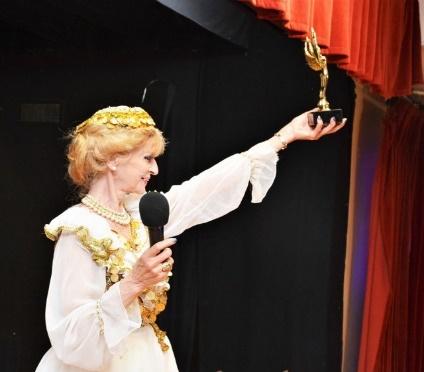
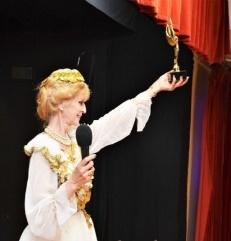
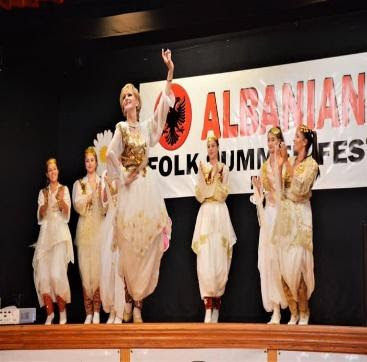
Shkuam këto dite vjeshte në qëndrën kulturore në qytetin Clearuatër ,Florida. Aty ku salla plot ajër e dritë gumëzhin përherë nga zërat gazmor të fëmijëve të moshave të ndryshme, të komunitetit shqiptar të disa qyteteve, në shtetin e Floridas. Ishin në punë e sipër të provave për koncertin që do të shfaqet në prag të festave të Nëntorit, organizuar si gjithmonë nga dega Vatra Tampa Bay. Banorë të komunitetit shqiptar të qyteteve Largo, Clearuatër, Saint Petërsburg, Sarasota, Dunide, Kandrysaj, sjellin në këtë folezë arti, fëmijët e tyre, për të mësuar këngën dhe vallen e bukur Shqiptare. Një pjesë e tyre vitet e fundit kanë çuar fëmijët në shkollën shqipe hapur në qytetin Clearuatër, nga dega Vatra dhe vatranët e tjerë. Disa metra më tej, në “barkun” e stërmadh të sallës, shohim këngëtarin, aktorin, “Mjeshtër i Madh” Frederik Ndoci, i cili u mëson fëmijëve intrumentat që ata kanë për zemër. Por këtë herë në këtë reportazh do të nxjerim në pah vlerat që mbart  trupa e ansamblit të këngës dhe valles shqipe,“Shqiponjat ”. Nën tingujt e muzikës popullore, çdo njeri prej fëmijëve kërkon të harmonizojë këtë me lëvizjet plot finesë që ofrojnë vallet e bukura Shqiptare. Të drejtuar nga balerina Milena Kullaj, e cila udhëheq reshtin e valltareve kërkohet përqëndrim, harmonizim i lëvizjeve me ritmin e muzikës në sfond, ku përballë tyre ndodhen mjaftë shikues, pjesa më e madhe janë prindër  të  fëmijëve artistë. Fare mirë mund ti etiketojmë si spektatorë të momentit. Ata vijnë këtu nga qytete të ndryshme floridiane, duke sjellë fëmijët të cilët shpalosin me shumë dashuri vlerat që ata mbartin. Njeri prej tyre është Genci Kullaj, i cili së bashku me bashkëshorten e tij Ana, që më parë ka drejtuar shkollën shqipe, hapur nga Dega Vatra, Tampa Bay dhe vatranë të tjerë në qytetin Clearwatër. Genci njihet nga komuniteti i qyteteve të sipër përmëndura si “doktor” i  makinave. Ashtu si vite më parë në Tiranë dhe këtu në shtetin e Floridas, ai ka hapur pikën e servisit të tij. Klientë  të  tij nuk janë vetëm shqiptarë të ardhur nga Shqipëria, Kosova, Maqedonia , Mali i Zi, madje dhe nga kombe të tjera. Ata shprehen se: “Tek Genci shkojmë me dëshirë, pasi profesionalizmi i tij si mekanik na bënë të besojmë për rregullimin e defektit që ka makina. Gjithashtu çmimet ai nuk i ka të “kripura” si në servise të tjerë”. Jo pak herë ai është i pranishëm, në këtë qendër jo vetëm si prind i balerinës dhe drejtueses së ansamblit, Milenës, por edhe si njeri aktivist i Vatrës, me vlera humane e shpirt të madh. Edhe  sot kur fëmijët artistë vazhdojnë provat e valleve dhe  këngëve, ai u ka ofruar drekë, me financimet e veta. Në pushim gjejmë kohën e bisedojmë  nga afër me Minelën, e cila prej më se pesë vitesh njihet si valltare e talentuar e Ansamblit “Shqiponjat”. Flet thjeshtë, pa bujë për vlerat e reja interpretuese që ka fituar tashmë ky ansambël, duke u bazuar jo vetëm në vallet  ekzistuese perla shqiptare, por duke i pasuruar motivet e reja të krijuara enkas sipas zonave e krahinave shqiptare. Eshtë pikërisht ky ansambël, të cilin dy vite më parë e kemi parë direkt në festivalin e valleve mbarë shqiptare, me pjesëmarrjen e ansambleve nga mjaftë shtete këtu në Amerikë, dhe dy  ansamble ardhur nga Kanadaja. Ishte ky një event i rëndësishëm artistik, një festival mbresëlënës, ku urimet dhe falenderimet ia kushtonin në veçanti organizatorit, drejtuesit të festivalit Ardian Kraja. Por si një “qershizë mbi tortë”, mbrëmjet e këtij festivali i zbukuroi më shumë prania e mbretëreshës së valles shqiptare, “Nder i Kombit” Liliana Cingu, e cila surprizoi  spektatorët me interpretimet e valleve shqipe. Krahas vlerësimeve që u bënë për ansamblet pjesëmarrëse, valltarë dhe koreograf të veçantë, në fund festivali juria nderoi këtë artiste të madhe me trofeun “Shqiponja e Artë e Festivalit”. Milena i ka ende të freskët në kujtesë arritjet e këtij ansambli. Ajo kujton me nostalgji vitet kur u ngjit për herë të parë në skenë. Ishte vetëm shtatë vjeç. Ende dhe sot ajo punon me pasion në motive të reja valle duke i përvetësuar dhe më mirë në shtëpi nën shoqërimin e pianos, këtë instrument që e ka shoqëruar në vite Milenën si artiste.  Ndonëse vazhdon kolegjin në qytetin Clearwatër, ajo sërish gjen kohën për vete dhe Ansamblin, për të përvetësuar sa me mjeshtëri motivet burimore të valles shqipe, duke ia transmentuar me shumë pasion artistëve të vegjël. Nëse do ktheheshim pak në retrospektivën e viteve të ecurisë së këtij ansambli të sukseshëm, të kujton dhe vlerësimet e  bëra ndaj tij në festivale të ndryshme, ku më të përhershmit janë Festivali Ballkanik me pjesëmarrjen e Ansambleve nga Kroacia, Bullgaria, Rumania, Kososva, Mali i Zi, Maqedonia, Serbia dhe Greqia, i cili  zhvillohet për çdo stinë Pranvere në qyetin e bukur, qerpik oqeani Saint Petërsburg, në Florida. Një tjetër festival me vlera botërore është dhe Festivali Botëror i valles me pjesëmarrje të vendeve si Spanja, Italia, Kosova, Indonezia, Meksika, Porto Riko, Vietnami, Irlanda etj, festival që zhvillohet në qytetin Xhenksovil po këtu në Florida. Kurrësesi nuk mund të harrosh arkitektët që krijuan dhe lartësuan vlerat e këtij ansambli, ku do veconim punën e palodhur disa vjecare të koreografes Rovena Kafilaj dhe valltareve me përvojë, dhe më pas drejtuese të tij si Greata Kraja, Anisa Papadhima, Fanika Janku. Po kështu portretin simpatik të këtij ansambli e zbukuron prania e çiftit balerinë veteran tashmë në skenë Gëzim dhe Ardiana Radani. Madje Gëzimi është njëkohësisht Kryetarë i lidhjes së krijuesve dhe artistëve në Florida. Gjithçka ka bërë në ecurinë dhe sukseset që mbart ky ansambël duke arritur me meritë në këtë lartësi ku ndodhet aktualisht, çdo njeri prej pjestarëve dhe dashamirësve të tij shprehet me fjalë respekti e mirënjohje për ndihmën e pakursyer, në drejtim të sponsorizimit për drejtuesit e Fondacionit Shqiptar në Tampa Bye, Ardian Kraja, Eri Pasko, Imelda Pojani. Një tjetër emblemë mbresëlnëse që shfaqet çdo çast në ecurinë e këtij ansambli qëndrojneA person holding a microphone

Description automatically generated with low confidence

 sakrifica, përkushtimi i prindërve të fëmijëve në veçanti të nënave të tyre, të cilat vijnë me fëmijët dhe largohen kur përfundojnë provat. Të tilla janë Violeta Marku nga Shkodra me tre fëmijët e saj, Ermelinda Thanasi nga Berati me dy fëmijët e saj, po kështu Lola Bako nga Pogradeci me dy vajzat e saj, Resida Troqe nga Vlora me vajzën e saj, Brixhilda Gjekaj nga Malësi e Madhe…Ndërkohë provat vazhdojnë sipas programit. Janë momente gërshetimi lëvizjesh midis ritmit të muzikës dhe lëvizjeve në vallet e Tropojës, Librazhdit, Tiranës, Mirditës, Myzeqesë, Dropullit etj. Eshtë ky program të cilin trupa e ansamblit do manifestojë në koncertin e festive të Nëntorit, i cili për çdo vit organizohet nga dega Vatra me qëndër në Tampa Bay, me kryetar Isuf Spahiaj. Eshtë ky event i mirëpritur nga vatranët dhe mbarë komuniteti Floridian.Tashmë drejtuesit e Ansamblit “Shqiponjat” kujdesen që pjestarëve të tij, të mos  u mungojë as”maja e gjelpërës”,pasi do të jetë ky ansambël që do të përfaqësoj artin shqiptar ne Fetivalin Ballkanik, në prag pranvere në qytetin Sain Petërsburg, dhe në Festivalin Botëror të valles, që do të zhvillohet në Xheksonvill. gjatë stinës së pranverës. Ndërkohë një tjetër eveniment i rëndësishëm mendohet të zhvillohet për herë të dytë në stinën e Verës, Festivali Mbarëshqiptarë, në qytetin Clearwatër me pjesëmarrjen e ansambleve shqiptare nga disa shtete këtu në Amerikë dhe Kanadaja, ku padyshim midis pjesëtarëve të jurisë do të jetë “Nder i Kombit” Liliana Cingu, e cila aktualisht jeton në Toronto Kanada. Në epilogun e udhëtimit të reportazhit tonë doja të citoja fjalë të thëna nga gjigandi i valles Shqiptare, pjesë e intervistës që unë zhvillova pak muaj më parë se i madhi “Nder i Kombit” Besim Zekthi të ikte nga jeta. (Botuar në librin tim të pestë me tiull PIEDESTAL  me 360 faqe, botuar në muajin Korrik të këtij viti.) Ja çfarë thotë Ai për të bukurën vallen shqipe,:”…Të kultivojmë të rruajmë si sytë e ballit, vallen e bukur shqiptare, sepse është piedestali i kulturës së kombit tonë. Meqë e kemi këtë piedestal, të jepet shansi, fati ta ruash dhe verselitësh këtë pasuri të pashtershme. Arti është i bukur…është JETA.                      C:\Users\Alberto\Downloads\Desktop\10603365_709775285726196_3728555226941939267_n[1].jpg

                                                                 FADIL SHEHU.    FLORIDA .                    

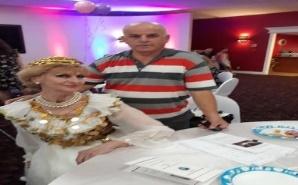
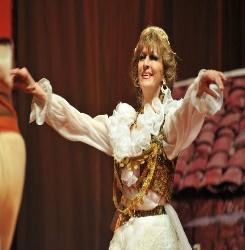
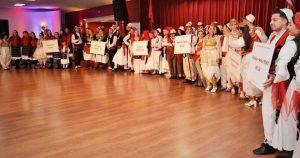
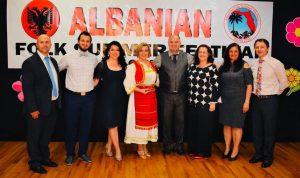
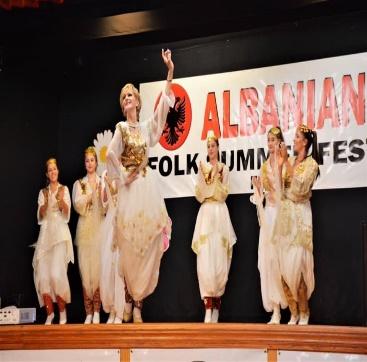
                    ( 9 fotot jane pjese e festivalit ne Clearuater )                                                            A group of women sitting on a staircase

Description automatically generated with medium confidenceA group of people posing for a photo

Description automatically generatedA person and person sitting at a table

Description automatically generated with medium confidenceA person in a white dress dancing

Description automatically generated with low confidenceA picture containing text, book

Description automatically generatedA picture containing floor, indoor, person, dancer

Description automatically generatedA group of people posing for a photo

Description automatically generatedA group of women in white dresses

Description automatically generated with low confidenceA person holding a microphone

Description automatically generated with low confidence

Filed Under: Komunitet

AT GJERGJ FISHTA, PATRIOTI I MADH PENDARTË I KOMBIT SHQIPTAR

October 19, 2021 by s p

Nga Marash GILAJ */

Të shkruash një monografi për një kolos si At Gjergj Fishta është një sipërmarrje sa e guximshme aq edhe patriotike e vlerësuese. Kjo do të thotë të bësh një studim shkencor të gjërë, të hollësishëm deri në detaje. Është gjithë jeta e një njeriu të përkushtuar ndaj kombit dhe fesë. Kësaj ia ka arritur me sukses historiani dhe publicisti i mirënjohur i Malësisë së Madhe, Z. Ndue Bacaj. Me thjeshtësinë që e karakterizon autorin, ai pohon se ndihet i vogël para kësaj figure madhështore, prandaj, veprimtarí të tilla duan guxim, vullnet, durim, kohë dhe punë të madhe për të gërmuar e mbledhur gjithë materialin e nevojshëm. Këto karakteristika nuk i mungojnë autorit të kësaj vepre dhe këtë e tregon më së miri libri i tij i gjashtë që do të lexoni. Më tej autori i librit thotë se këtij patrioti, mendimtari e veprimtari të shquar i kemi një borxh të madh që rëndon “si guri i pendesës” mbi ndërgjegjën tonë. Dhe se ky borxh duhet paguar.

Që nga tituli i librit, “At Gjergj Fishta, patriot i madh, pendartë i kombit shqiptar” tregon se autori i ka dhënë vlerësimin e parë shumë të merituar. 

Duke lexuar librim do të mësojmë se At Gjergj Fishta e donte shumë kombin dhe fenë. Për këtë flasin veprat e tij në shumë fusha. 

Lahuta e Malcisë, si vepra më e madhe e shkruar në vargje, është krahasuar me Iliadën e Homerit, shoqërohet edhe me shumë vepra të tjera në poezi, që së bashku me veprën kryesore shkojnë në rreth 50 000 vargje. Ai na ka lënë edhe 700 faqe të shkruara në prozë, thotë autori. Gjergj Fishta nuk ishte vetëm poet, ai njihet si publicist, diplomat, filozof, psikolog, dijetar e fetar. Ai ishte poliglot, njihte dhe fliste 5 gjuhë të huaja. Në moshën 16 vjeç shkruan vjershat e para. Kur u bë 23 vjeç, celebron meshën e parë. Nga monografia mësojmë se ai kryesoi Kongresin e Manastirit, më 1908, kur u vendos për alfabetin që do të përdorte Shqipëria. 

Ai njihet si symbol i binomit Fe e Atdhe, na thotë autori i librit. 

Ka themeluar e botuar revista si: “Hylli I Dritës” apo “Posta Shqipëtare. Ka qënë bashkëthemelues i gazetës “Ora e Maleve.” Lufta e tij në mbrojtje të kufinjve të atdheut, e gjen pjesëmarrës në Konferencēn e Paqës në Paris më 1919. 

Është interesante, kur mëson se Fishta ishte edhe arkitekt i marrëdhënieve diplomatike Shqipëri – SHBA, pjesëmarrës në Konferencën e Bukureshtit për sheshimin e mosmarrëveshjeve ballkanike. Këto veprimtari dhe të tjera tregojnë gjithanshmërinë e tij në shërbim të kombit. 

Pa dashur të futem në hollësi të librit dhe të shuaj kureshtjen e lexuesve po vazhdoj të përmend shkurtimisht vetëm disa gjëra kryesore. Duke lexuar librin më në thellësi, mësojmë se Fishta ishte edhe piktor apo themelues teatri.

Edhe pse i ndaluar e i mohuar nga regjimi, malësorët, sado të pashkollë që ishin, dinin përmendësh qindra vargje të Lahutës së Malcisë. At Gjergj Fishta, siç na thotë autori, ka marrë shumë vlerësime, medalje, bile është propozuar edhe për çmimin “Nobël.”

Sidoqoftë, po t’i referohemi një thënie të A. Ajnshtajnit, i cili thotë: “Vlera e njeriut duhet të matet me ato që jep dhe jo me ato që merr”, del se At Gjergji dha shumë, por mori pak dhe për këtë, vlera e tij rritet edhe më shumë, nëse duam dhe dimë ta vlerësojmë.

Shumë studiues, historianë e shkrimtarë vendas apo të huaj kanë dhënë vlerësimet e tyre për këtë figurë që na bën krenar të gjithëve. Nuk mungon midis 40 vlerësuesve, që rreshton autori, as mohuesi i veprës së tij, Ismail Kadare, i cili e shpërfill dhe e denigron. 

Me të drejtë, autori ankohet dhe bën thirrje që kjo figurë kaq e madhe, kaq patriote, me një aktivitet dhe prodhimtari letrare për t’u admiruar e pasur zili, por e kritikuar dhe e lënë në heshtje nga regjimi hoxhist, duhet rivlerësuar, me të gjitha meritat që i takojnë, duke e përjetësuar emrin e tij tek ndonjë shesh, rrugë apo shkollë në Malësi të Madhe, në tabanin ku “mbështeti” Lahutë… E pse jo, edhe busti i tij, nuk duhet të mungojë. Pse duhet të tregohemi kaq mosmirënjohës ndaj një figure si At Gjergj Fishta? A nuk na mbush me krenari vepra e tij? Të mos dish historinë e kombit tend, do të thotë të mbetesh përherë fëmijë. Kur historia harrohet ajo përsëritet, kanë thënë njerëzit e urtë. Siç duket, ne shqipëtarët, (sunduesit tanë, më saktë) pasi e mohuam këtë figurë madhështore për gati 50 vjet, ende nuk e kemi vënë në piedestalin që meriton. Këtë e kanë bërë sunduesit tonë që punuan si Judë për vendin e tyre. Fjalët dhe veprat e Fishtës janë dhe mbeten aktuale edhe për ditët që jetojmë sot. Figura e Gjergj Fishtës i bën nder kombit, ia lartëson vlerat jo vetëm në sy të shqipëtarëve, por edhe të botës. Njerëz si ai lindin rrallë.  Duke përfunduar mendimet e mia shkurtimisht për këtë vepër dhe personazhin e saj, dua t’i uroj Z. Ndue Bacaj që pena e tij të mos pushojë së shkruari për patriotë të ngjashëm me Fishtën e madh dhe probleme të tjera që shqetësojnë kombin. Falemnderit që ma dhatë këtë mundësi. 

Libri është botim i një cilësie shumë të lartë nga Shtepia Botuese FIORENTIA -Shkodër dhe është sponsorizua nga Shoqata Atdhetare “Malësia e Madhe” Michigan-SHBA. 

*Redaktor i librit 

Shkodër, me 18 tetor 2021

Filed Under: LETERSI Tagged With: Marash Gilaj, Ndue Bacaj

PËRSE DY LIBRA PËR FISHTËN BRENDA NJË VITI AKADEMIK?

October 19, 2021 by s p

Dr. Tonin Çobani/

Unë kam shtruar këtë pyetje para vetes sime dhe sot po kërkoj ta ndaj atë me ju, paraprakisht duke ju falënderuar për organizimin e promovimit të dy librave që kanë bashkautorësinë time me Don Ndue Ballbanin. Por unë nuk do të ndalem te bashkëpunime me Don Ndoun që ka nisur këtu në Zagrep me librin “Frang Bardhi dhe relacionet e tij” (2006)…

  1.  

Dhe pyetja më e zgjeruar do të ishte: Mos vallë dy libra brenda një viti akademik janë sa për të përkujtuar 80-vjetorin që ka qenë vjet dhe 150-vjetorin e Lindjes së Gjergj Fishtës që i takon të jetë viti 2021?

Vite më parë kur po punonim për botimin e veprës së Fishtës (Gjergj Fishta, Vepra letrare në 10 vëllime), unë u ngarkova me dy prej tyre (Drama 1, Drama 2), vëllimet 5, 6. Dhe mbeta i kënaqur me punën time, sepse bëra bashkë veprat dramatike të Fishtës që kishin mbërritur si botime të shpërndarë andej këndej dhe bëra një pasthënie të thukët me titull “Fishta dramaturg”, që u përfshi si pjesë fundore e të dy vëllimeve. Kisha marrë si postulat, thënien e Faik Konicës për Fishtën, se “shkroi poezi, drama, komedi… dhe në të gjitha ka qenë i suksesshëm.”   

Por shumë shpejt e kuptova se mungonte një diçka thelbësore në punimin tim. Mungonte teatri i Fishtës, se aktorët gjendeshin: humoristë të mprehtë dhe aktorë të pasionuar ka pasur gjithmonë në Shkodër. Duheshin regjisorë, skenografë, me pak fjalë, specialistë dhe organizatorë të shfaqjeve e pikësëpari një tekst dramatik, që është shumëçka për artin e skenës. Dhe Fishta poet-dramaturg e kuptonte mirë këtë. Ndërkohë që studionte tragjeditë e Shekspirit dhe përshtaste mjeshtërisht për mjedisin shkodran (dhe shqiptar) komeditë e Molierit, duhej të gjente ose të bënte vetë punën e regjisorit dhe të skenografit deri atë të organizatorit të shfaqjes. 

Kështu, pra, tekstet dramatikë të Fishtës duhet të kalonin provën e skenës dhe të ballafaqimit me publikun si dhe të kritikës së artit, ndoshta, duke filluar me recensionet e Fishtës vetë në revistën “Hylli i Dritës” dhe në gazetën “Posta e Shqipërisë”, të drejtuara prej tij. 

Ajo që unë do të deja të  theksoj me këtë rast është se edhe sot e kësaj dite prova e skenës dhe ballafaqimi me publikun mungon fare ose është i papërfillshëm për tekstet dramtike të Poetit Tonë. Me përjashtim të ndonjë shfaqjeje (“I ligu për mend, sipas Molierit”), vënë në skenë nga TK i Prishtinës (2017) dhe nga Teatri Migjeni i Shkodrës (Gomari i Babatasit – 2018), si dhe një tjetër, (Shfaqja G) e Teatrit Shqiptar të Shkupit (2017), asnjë pjesë tjetër dramatike, shkruar nga Fishta, nuk është ngjitur në skenë gjatë këtyre 30 vjetëve. Numërojmë disa që mund të ngjiteshin në skenë me sukses edhe në ditët tona: Juda Makabe, Jerina, Ifigjenia, Odisea,  Vllaznia, Barinjtë e Betlehemit, Luigji Gonzaga, Shqiptari dhe Shqiptarja e qytetrueme… Teatri i Gjergj Fishtës numëron gjithsej rreth 40 pjesë teatrore, duke vënë kështu themelet e teatrit në gjuhën shqipe, që nuk janë gjë tjetër, veçse themelet e Teatrit Kombëtar të shqiptarëve. Por me keqardhje konstatojmë se shumë prej pjesëve teatrore të Fishtës nuk janë ruajtur. Dhe ato që janë ruajtur mund të pohojmë me plotgojë se janë shpërfillur prej kompanive teatrove amatore e profesioniste, prej teatrove kombëtare të Tiranës dhe Prishtinës.  Kaq për librin e parë “Teatri i Gjergj Fishtës”. Për librin e dytë: “At Gjegj Fishta: Vende-Vite-Vepra” do të lexoj për ju një ese: “Fishta ynë”.

II. 

Sot, kur emri i Gjergj Fishtës, Fishta ynë, ka zënë vendin e merituar në Panteonin e Shkrimtarëve tanë, shtrohet çështja: kur themi “Fishta ynë”, a është njësoj sikundër themi “Naimi ynë”, “Migjeni ynë”, “Lasgushi ynë”, apo nënkuptojmë diçka tjetër? Dhe çfarë do të ishte kjo diçka tjetër?

1.

Diçka tjetër do të ishte ta artikulonim këtë “Fishta ynë”, si do të donin disa: “Fishta i jonë”. Kjo do të thoshte që Fishta të ishte vetëm i gegërishtfolësve; do të thoshte të mbetej i paintegruar meritueshëm në programet shkollore; do të thoshte, më në fund, të përdorej emri dhe vepra e tij për të mbajtur ndezur një debat tanimë të vjetruar midis gjuhës së toskëve dhe të gegëve, çfarë do t’i binte ndesh thelbit programatik të veprës fishtjane që është skalitur në 2-vargshin:  

“Bini, toskë, ju, bini gegë!\ Si dy rrufe, që shkojnë tue djegë!”.

2. 

Diçka tjetër do të ishte ta artikulonim këtë “Fishta ynë”, si do të bënin disa: “Pader Gjergji i jonë”. Kjo do të thoshte që Fishta të konsiderohej vetëm i shqiptarëve katolikë apo, më pak, vetëm i Provincës Françeskane Shqiptare. Këtu dua të sqarohem, sepse për shkak të këtij formulimi kam pasur shumë përballje hapurazi dhe kulisave (apo me pseudonime). Asnjëherë nuk më ka shkuar ndërmend t’ia zhvesh Fishtës zhgunin e fratit, asnjëherë nuk më ka shkuar ndërmend t’ia shkul Fishtën Provincës Françeskane apo Kishës Katolike dhe kulturës që përfaqëson ajo në Shqipëri. Por kur themi “Fishta ynë”, nënkuptojmë se ai nuk mund të jetë vetëm i një province, por i të gjithë shqiptarëve, brenda dhe jashtë kufijve të sotëm të Shqipërisë dhe pavarësisht nga religjioni. Përndryshe do t’i binim ndesh thelbit të shqiptarizmës së Fishtës që ka gjetur kuptim në thënien e tij proverbiale: 

“Besë, nder e burrni shqiptare\ E mos na lashtë Zoti pa myslimanë”. 

Dhe kjo është formuluar në Konferencën e Paqes në Paris, kur disa diplomatë ia kishin me hile trojeve shqiptare kur propozonin një Shqipërizë edhe më të vogël se sa është sot, një Shqipërizë që të përfshinte vetëm trojet e populluara prej shqiptarëve katolikë.

3. 

Por edhe kur disa thonë “Fishta ynë” dhe nënkuptojnë “Fishta i tyre” ia kanë me hilera Fishtës dhe thelbit përmbajtësor të veprës së tij: 

Një i huaj, që nuk ka mundur ta shijojë veprën e Fishtës në origjinal, mund të ketë një mendësi të tillë; 

Një intelektual i sotëm, që nuk është ulur për të lexuar qoftë edhe një prej veprave të Fishtës pa qenë i paragjykuar për vlerat e saj, mund të këtë një mendësi të tillë; 

Një qytetar çfarëdo, që për shkak të propagandës 50-vjeçare antifishtjane nuk ka mundur të krijojë një kontakt të vetin me veprën e Fishtës, mund të ketë mendësi të tillë. 

Gjithsesi, mund të kenë mendësi të tilla individë me shije të ndryshme leximi, por jo institucionet akademike e shtetërore, shkollat publike të të gjitha niveleve dhe përgjithësisht media. 

Këta institucione të tranzicionit, asgjë mangut nuk i lënë viteve të diktaturës kur mohohej krejtësisht vlera e një poeti, një thelb i së cilës shpërthente me vargun e tij blasfemik: 

“O Perëndi, a ndjeve? Tradhtarët na lanë pa atdhe… ”.

4. 

Por edhe kur disa të tjerë  thonë “Fishta ynë” dhe me të kuptojnë një pronë të vetën, të cilën mund ta përdorin për kredibilitet të ideve të tyre kinse bashkëkohore, sigurisht që jo vetëm Fishta dhe kultura shqiptare janë të tradhtuara, por të gjithë ata që e quajnë veten sadopak shqiptarë duhet të vënë duart në kokë me kuje.

5.

Diçka tjetër e pranueshme do të ishte ta artikulonim këtë “Fishta ynë” dhe të mendonim thjesht: “Kultura jonë”, sikundër mendojnë të gjithë popujt e qytetëruar për shkrimtarët e tyre, të cilët për një periudhë kohe, sado të shkurtër, kanë qenë pjesë e jetës intelektuale të vendit, ndoshta, ashtu siç e konsiderojnë serbë e malazez Njegoshin, poetin e vet kombëtar, pavarësisht se ç’mund të mendojë një kushdo tjetër për vlerat ideo-artistike të veprës së tij letrare.  

Filed Under: Opinion Tagged With: Tonin Cobani

Albanians and the Illyrian-Pelazgian thesis

October 19, 2021 by s p

Bajram Doka/

Epigraphy developed as the art of reading and interpreting ancient writings found on the walls of monuments and inscribed on objects of worship or in tombs, which have prevailed since antiquity.

Theologians and monks were the first to initiate this art as they tried to read the ancient writings found in the countries and areas where they were preaching and teaching their beliefs. Later the art was introduced to departments of the humanities in universities, where it is now treated as a science with the rigor required for a scientific discipline.

Epigraphy is now a science that studies and researches ancient writings preserved in the scripts located in temples and other monuments of worship. These are inscribed on ceramic, pottery and clay objects, which may or may not have been baked, on wooden items, and on other solid objects.

Researchers and scholars in the field of epigraphy are also enriching the fields of history and linguistics as they study past civilizations and bring new understanding and knowledge to these fields.

The originator of this science was August Boeckh, born on the 24 November 1785 in Karlsruhe, Germany. He was a member of the Academy of Sciences in Prussia and researched and studied thousands of objects bearing ancient writings and unearthed by archaeologists. From his findings and observations he went on to found the Philological Corpus of this Academy. He may rightly be called the founder of scientific investigation into the inscriptive culture of the ancient Greeks.

Johann Erich Thunmann, of Swedish origin (born Aug. 23, 1746, died Dec. 17, 1778), Professor of Philosophy and Rhetoric at the University of Halle, Germany, wrote that the Albanians and Vlachians are descendants from the Illyrian heritage. He was the first philologist to claim that the name “Shqiptar” is the ethnic name of the Albanians, although he writes the name in the form “Shipatar”. For this reason, he should be called the first Albanolog [Thunmann 1774, p. 243].

Thunmann was liberal in his approach and did not consider the creation of the state-nation. Research into the origins of the Albanians was continued by Jakob Philipp Fallmerayer (Dec. 10, 1790– April 26, 1861) who wrote about his travels in Greece and established a basis for the study of Albanology (Fallmerayer 1857).

Johan Georg Hahn (July 11, 1811 to September 23, 1939) went further in establishing Albanology as a science through his studies on ethnoculture and the history of the Albanians (Hahn). 

Von Georg Stadtmüler (March 17, 1909 – November 1, 1985) further developed this field through his research into the Albanian linguistic heritage and philosophy.  

Eqrem Çabej (August 6, 1908 –August 13, 1980) also contributed to the field with his studies aimed at identifying Albanian origins as being from the Illyrians.

The following scholars are among the many who have made valuable contributions to the study of Albanology: D’Angely 1893–1961; Demiraj 1920–2014; Gatti; Gottfried ; Jereček 1854–1918; Kretschmer 1866–1956; Lambertz 1862–1963; Stipčević 1930–2015; and Šufflay 1879–1931. 

The Albanians are the oldest nation to have originated in the Illyrian peninsula from Illyrian-Pelazgian descent. They form the foundation for all dynasties of later civilizations in ancient European history (Davidson 1859: 9; Greene 1916: 25; Levine 1919:6; Montain 1998: 7). Without the participation of the Albanians and without research into their history regarding the epic-legendary Illyrian-Pelazgian ethos (Greene 1916), nothing could be written about the true scientific history of human kind from the early civilizations that flourished in the ancient Mediterranean basin and in the three continents bordering it. 

The Dardan people (Greek: Δάρδανοι) lived on the Danube plains, while the Bryges or Briggs (Greek: Βρύγοι) and Albans originated from central Albania and are recorded as the indigenous inhabitants of the Illyrian peninsula. By crossing over the Straits of Dardanelles into Samothrace they founded in Ilium the dynasty of Troy and Phrygia in Asia Minor (Nowak 2012: 73-81). In this way they extended their influence to the areas around the Caspian, into Thrace in the Colchis and Bacchus lands, and into Albania of the Caucasus (Boardman, Griffin & Murray 1986:2 24). 

Aeneas Dardanidi left the ruins of burned Troy carrying his father Anchises in his arms, and with his son Îlli, made a journey to establish a tower in Rome (Davidson, 1895:9, 18). 

Aeneas arrived in Epirus and raised the magnificent walls of the ancient city of Butrint (Buthrotus) and north of it founded a town, which he called Achismos in honor of his father. That city is today named Saranda (Forlong & Roche 1906: 99,100; McKay, 1895: 70- 75). 

Further north, in Chaonia (Greek Χαονία or Χάων), Aeneas built towers to equal those he had seen in Ilium in Asia Minor. These were built on the banks of the Vjosë river (Aoös) located in the Furiu region (egër), where the “Anchises Portes” began, followed by the region called the “Veneris Furiu of Aeneadis.” All these lands were administered by the Trojans (see map: “Navigation of Aeneas”). 

The prophet Scamander, or Helenus, was the youngest son of King Priam and the heir to the Dardanian Dynasty. He reigned in the Epirus region under the scepter of Pyrrhus, son of Aeacus, King of Myrmidons (Aegina and the Saronic Gulf). Later the Kaonian territories were brought under his control. These had previously been possessed by Chaon, his former brother, who was accidentally killed. In this way, the Trojans obtained all the territories that made up so-called ancient Greece. Helenus was buried in Argos (Zimmerer 1896: 221- 222). 

When Helenus was notified about the arrival of Aeneas he built the Alban Pergamum castle to welcome his Dardanian heirs. This was a New Troy, identical to the one in Ilium, near to the Acro-Keraunos mountains [map: Troy- ngjase = Tragjas në Vlorë]. 

Aeneas and the Trojans, following the prophecies of Anchises, Priam’s brother, departed for Lavinium from a port nearby on the banks of the Vjosë River. Here the fleet joined the sacred Lapides (Baldi 2002 :115,116; McKay, 1895 :71-73, 160; Nowak 2012: 246; Forlong & Roche 1906 :304, 305,) and the Lachinians. Sailing together from Campania, they arrived at Alba Longa and the province of Lirinates in Latium where they married their offspring of blue blood to the Roman Emperors and bred the kings of future European kingdoms.

With his son Ïllis, Aeneas established a second “Ilium”, or a second Troy, in Aceste, in Italy, and another city further north in Padua, near the Venetians and Raetians who inhabited the regions of the Julian Alps (Forlong & Roche 1906: 304).

From there, came Ilia, a strong woman, called the “Mountain Wolf” the breast-feeder of the twins Remus and Romulus [see map] who were related to Numitor, the King of Alba Longa, of the lineage of Ïllis, Aeneas’ son (McKay 1896 :166).

In Rome, Italy, in the Alban Mountains, an inscription was found (tagged as PH 141183) the text of which was in the Albanian language and was dedicated to the god of Acro Keraunos as: Διὶ Κεραυνί ωι “Dio Keraunioi.” Another inscription found in the region of Campania (tagged as PH 143016) also has text in the Albanian language. This text is dedicated to Ïll as “Ill- ash”, or “Star is” in English. These inscriptions are supported by several more from regions in Sicily, and among them one (IGXIV 11b 20405) bears the same text: Îll ash. 

Astyanax, or Franc, was the only son of Hector and Andromache, and after the Trojan War he replaced Remus. He became king of the Gauls over the Gallic and Celtic people (Bell J. 1790: 102]

After Hector died, Andromache returned to Toskëri as Epirus was called, and built a memorial to her husband, Hector. During the reign of Helenus, she became Queen of Epirus or Lower Albania.

Our Albanian forefathers left traces of their language in many places on the continent of Europe, written on stones, or in toponyms and providing evidence of the Alban descent from antiquity. Brutus, Albanactus, and Kamber are the founders of Britain, Scotland and Wales. Illyrians, living in the Scandinavian Peninsula left their written messages in the Kongsberg inscriptions, in toponyms throughout the peninsula, and in Lapland in Norway, in Sweden, and in Finland (Forlong & Roche 1906: 436, 441) and in the Vineland of North America.

In ethnography, the dress the “Fustanella” is preserved and is called the “kilt” or  “Tartan” (Greene 1916:b 25). Etymologically, this name comes from the Dardans and its origin is eponymously determined as originating from people of Dardania.

Albanians shouldn’t wait for others to write up their history and heritage, but increasingly should investigate it for themselves; they should wake up from the liturgical passivity of the past. They need to shine a light into the darkness and wipe off the dust that is covering the heritage of their ancestors from the ancient past. By illuminating their heritage, the youth of today and future generations will be able to be proud of their origins and their lineage.

History teaches us that whoever does not know the past cannot project the future.

You must ask about the roots of your nation; researching heritage and culture is not nationalism, and it does not interfere with an acceptance of globalization. It is the obligation and calling of every Albanian to recognize his origins, language, and history, as do all other developed and civilized nations throughout the world. These nations are constantly exploring and searching for the roots of their national heritage.

This task becomes even more imperative when neighbors compete with each other and without shame, constantly distorting and changing history, especially that from the epoch of the Illyrian- Pelazgian civilization and our legendary forefathers.

Our neighbors don’t want Albanians to claim that they originate from the Illyrian-Pelazgian ethnos, and for that purpose they have invented the label of a “pre-Greek” civilization to lay claim to the Illyrian-Pelazgian civilization. However the birth-date of the Greek ethnos contradicts the Greek historical era because the Greek civilization didn’t even exist then.

Greek civilization as known today was born several thousand years later from immigrants who came to the Illyricum peninsula from the south into the north, arriving in a land where the Illyrian-Pelazgian civilization was already flourishing long before they arrived there. 

After fall of Troy in 1185-1184 BC, more immigrants followed the traces and coordinates of Danaē and Erechteus to arrive in “barbarian” lands. 

The name Greece, geographically, does not fulfill the conditions generally considered as an “ethnos” because that name now includes many nations that were conquered during the invasions of Alexander the Great. Greece at that time included regions from the Adriatic to India, and extended into Egypt, Ethiopia, and Libya. These areas were inhabited by different peoples including the Illyrian-Thracians, the Phrygians, the Persians, the Assyrians, the Arabs and the Egyptians.

The “Greek” eponym cannot meet the conditions needed to inherit the culture of the past in that great geographical stretch, neither in the Illyricum Peninsula nor in regions around it, because the Greek ethnos represents only a small proportion of the residents who lived in the past in the South West Peninsula, mainly along the Peloponnese region.

The same is true of the Illyrian-Pelazgian inheritance acquired by other immigrants who appeared in the region in the years 575 and 625 AD (Thunmann 1774: 64-65: Jenkins, RJH (ed.) 1962; 113). These were the Avars and South Slavs who stemmed from the Caucasus and Ural regions, and came during the rule of Emperor Heraclius in Bizatinium. He was of Armenian origin.

Inscriptions that have been unearthed in the Illyrian Peninsula, in Asia Minor, in the Caucasus, the Valley of the Danube, in Italy, and in the countries of Northern Europe are all written in the Albanian tongue, and when the Greek or Hellenic language is applied to them, they cannot be understood. It is therefore wrong to label that culture as “Greek” or even “Para Greek”.

Another inscription has been found in Galla Narbonensis-Marseille [PH 143267]. This is not dated, but its text is also in the Albanian language. 

In this context, it should be mentioned that a significant numbers of the inscriptions were written earlier than the fourth and third centuries BC, and that the Greek language cannot be applied because they are written in another language, which is the Albanian tongue.

After this period, from the third century BC toward the new era, inscriptions are found formulated in either one language or in two, as a result of new immigrants bringing their languages with them as they came into the Illyricum Peninsula.

The Albanian language was first written down 9000 years ago, and an ancient inscription was discovered in Ilina Gora, Osinchan, about 13 km north east of Skopje, Macedonia. Later, another one was found in the Sitovos Cave about 25 km west of the Silistras province of the south Dobrunja region in Bulgaria, or as it was called in ancient times, Thrace.

Results gathered from analyses conducted with the decomposition of the atom (C14) have provided the following: The Osinchani Inscription is estimated at an age of over 9000 years, while the Sitovos inscription is around 6000–6500 years old.

These inscriptions are among the oldest ones that have been found in archaeological excavations in the countries around the Mediterranean region, and they are older than scripts found in Assyria, Egypt, Phoenicia, Greece, or in the ancient Hittite and Sumerian cultures.

Texts in both those two inscriptions are dedicated to the “Îll” that stands as the ethonym for “Ille”, or “Ylle”.

The scientifically established dating of the above inscriptions shows that the Albanian language was written in very early times, over 9,000 years ago. The Kreshniks are the earlier residents recorded so far in history to have lived in the Balkan Peninsula side by side with the Thracians and Dardans, and they are recorded in the history of Herodotus as the “Crestionians” (Rawlinson 1859: 543).

In the Albanian legends, their names are recorded as epic heroes, but they have been archived in UNESCO under “Creshnik Cycles.”

Hellenic civilization in the Illyricum Peninsula developed relatively late, in about 1206 BC (Greswel 1762: 50). Researchers suggest that the name Hellene arose after the establishment of the institution of the Pan-Athenaeum, by Perseus.

Perseus was not a Hellene by birth; he was originally from Assyria (Rawlinson 1859). When he flew from Libya he took with him the venom of the African serpents (Apollonius of Rhodes, 1959) into the land of the Pelazgians.

The Egyptian-Phoenician emigrants came to Attica in 1350 BC with Danaët, Aegypt and Erichthonius and there formed a colony they named Athens (Greswell 1862: 43, -46; Forlong, J & Roche, G 1904, 1906: 36-37) 

Later, after 1800 years, in 575 and 625–640 AD, more immigrants arrived in the Illyricum Peninsula, Avars and the South-Slavic countries (Fallmerayer 1857, II 32; Thunmann 1774: 65), coming from the Carpathians, and the Caspian regions, mainly during the rule of the Emperor Heraclius. When they first arrived in the peninsula, the locals were living in the Byzantine era, so the Slavic claim that they are Illyrians is inappropriate and ambitious, with the aim of distorting history thru speculations with the intention to take the attributions of a civilization that they never existed in that region at that time of it.

Can they therefore be called Illyrians?

Researching into the culture and civilization of the Illyrian-Pelazgian ethnos is not an easy task because, at every step, thousands of onlookers will be following as you move forward and you feel as though you are walking in a field filled with fiery embers. They will call your work anachronistic, nationalist and anti-Semitic.

According to them, you must either select the Hellenic culture or take the opposite position as you study and research into the issue of the Illyrian-Pelazgian civilization.

After the 18th century, research into this matter was intentionally put aside as a result of a policy by the major powers to create new nations in Europe. This geo-political project was to the disadvantage and weighted heavily against the existence of the Albanian nation as the only heir of Illyrian-Pelazgian (Greene 1916: 25, Levine 1919: 69,Thunmann 1774: 242, 243) civilization.

As a result of this project, the Greek state was created that the locals call Elas, but foreigners translating it, call it Greece.

The Hellenes woke up in 1821 (Fallmerayer 1857: 26), and with support of England, France and Russia, formed their own state in 1832, made up of a heterogeneous mixture of people consisting of the Arvanits, Thraks, Romoi (Romaioi), Slavs, Assyrians and Egyptians.

From this time on, in publications and scientific studies, the name Hellene was favored as an ethnonym, as the eponym Greece was considered unjustifiably pretentious as it included the whole burden of the epic-legendary Illyrian-Pelazgian (Fallmerayer 1857: 27) ancient civilization.

Young Greeks were not born into those epochs of the golden history of antiquity, but from the moment the Hellenic state was born and called the Greek state, they began to aspire to the eponym and started to exploit the attributes of the Illyrian-Pelazgian civilization, labeling this inheritance inappropriately as “Greek Civilization”. This included the issue of Epirus from Casavetes, and the work of Nikokles, who pretended that the Albanians had migrated to Illyricum in the fourth century AD (Fallmerayer 1857: 27, 44, 45; Greene 1919: 25; Levine 1916: 66, 69). 

From the time of the assassination of Agustin Joan Kapodistrias (the former president of Greece) on 9 October 1831 until the arrival of King Otto on 6 February 1833, the country was led by Nicholas Rumyantsev, the former foreign minister of the Russian Empire, who capped the movements of Phanariot fraternization with Pravo sllavizem and directed the policy of Hellenism so that the head of state would be guided in shadow by the rituals of the Greek Church (Fallmerayer 1861).

This movement was blessed by England, France, and Russia, and during the period following the Ottoman Empire until late into the Balkan wars, they were in a race to gain as much territory as possible from the disintegrating empire, and those territories were mainly the Albanian lands. 

In implementing this ambition, the neighbors began violently expelling the Albanians from their indigenous lands or exterminating them, and into the empty areas created they brought evacuated residents who were orthodox ritual attendees, and who originated from the eastern regions of the former empire.

These population exchanges took place on the basis of a wrong principle of oneness, that “religion = nation”, and this resulted in highly tense mass evacuations of thousands of Albanians toward Asia Minor under the jingoistic principle that Albanians are “Turkish Europeans” with Muslim rites.

This hemorrhage of Albanians was stopped at the insistence of American President, Woodrow Wilson in the League of Nations, based on the principle of the “self-determination of nations” that supported Albanian independence and banned the further fragmentation of the Albanian territories by its neighbors.

“Albanians are blessed by God and saved by America”. 

Albanians were discriminated against during the rule of the Ottoman Empire, as indicated through a law signed on 31 May 1779 by Sultan Hamid in which use of the Albanian language was outlawed while the Greek and Serbian languages were supported (“Thessaloniki” newspaper 14 July, 1999). 

After Greek independence,  Filiki Eteria, the Phanariot young Greek organization from Russia, with blessing the Orthodox Brotherhood under Russian scrutiny sprang chauvinism in neighbors territories and from their greediness didn’t spare not only the Muslims but even the people of Roman Christian faith, who also were decided in an unprecedented terror, where priest were dismantle from their divine objects and servants of Catholic rite were in intention of a later assimilation, especially should mentioned those in dioceses of Albania, Kosovo, Montenegro, Croatia and Greece” (Jerecek 1916, 236, 257-258). 

The ambition of the South Slavs for the Albanian lands is supported in the strategy of Nacertanije to Ilija Garašanin and the expulsion plan of Albania from ‘Vaso Çubriloviç”. After the fall of Constantinople their neighbors in the south of the peninsula acted on the doctrine of Hellenization that proposed the “Megali Idea” as an intention to create a Great Greece. Greece would be one, as in the ancient times of Alexander the Great, with the motto: “Who regard the practice of the Christian Greek rite, must be Greek.” This doctrine was fulfilled by bands of Horafillakes, who operate with the same intensity today, just as in the first days after their birth (Radio Athena N.Y).

The legend of the Dardanian flood was used to erase from the historical memory of the Alban-Pelazgian civilization their past and to leave room for the newly created civilizations that emerged during the time of Egypt’s supremacy in the Mediterranean regions. It was the idea of the Hellenes that once it had been created, everything must be done again as if it were from the beginning (Rawlinson 1859; Greene 1916; Levine 1919; Jerecek, TL 1916).

When the Hellenes first came to the Illyricum peninsula, they found people living there, who had been speaking and writing in their own tongue for 10000 years, and who had constructed pyramids to the Sun in Visoko Bosnia, and those antediluvians in Buzau Tuturdui and Sona in Brasov, Romania.

Herodotus called the Phoenician-Egyptian emigrants by the name “Helen” (Rawlinson 1859). These people stemmed from the “Kemet” empire, and were led by Danaë and Aegypt four years before Erektetheus came from Saïs in Attica (old Athens), in 1350 BC (Groswell 1862; Nowak 2012).

Throughout history, the Hellenes did not live as a single united community; they maintained their separate existence based on the particular powers of the region, at one time sited in a superior power and at another time overpowered by their neighbors. For example, in patriarchal Sparta and progressive Athens which constantly challenged each other for supremacy in the Helladic Cape of Athens.

In one of these wars, Erektheus and Theseus occupied Attica and there formed the first colony of residents who had fled from Egypt during the time when Lake Moeris or Triton was formed, located near the Ethiopian border (George 1954; Groswell 1862).

Erektheus or Eriktonius was the first king and also the first religious monk in Attica who came with the immigrants and established the first Egyptian colony in Athens.

Their arrival from Saïs in Athens was made possible by the loyalty and support given them by the Dorians (Greek: Δωριεῖς) and their King Perseus who had settled earlier to the north of Athens, in a camp based in the Peloponnesus.

Herodotus considers that the Dorians and Perseus originated from Egypt as Perseus helped to create the Egyptian colony in Athens (Rawlinson 1859).

Perseus was not Greek: he was of Assyrian descent and was born in a tower belonging to Danaë’s family who had come from Egypt.

In reality, the Dorians of Lacedaemonian originate from Egypt and they created a safe place for the founding of Egyptian rule in Ellada (Greek: Ελλάδα), or Greece.

The locals, the Pelazgian population, suffered under this pressure and were expelled and start to migrate eastward, settling in the region of Jonia in Asia Minor. They named that place Ionia (Greek: Ἰωνίη) as a reminder of their origins and whence they came (Greswell 1862). 

Another group of Pelazgians voyaged westward, toward Italy, settling in regions of Magna Greacia, and in Tuscany and Tarentum as Etruscans (Forlong & Roche 1906; Anandale & Spofford 1892).

In mythology, Athens is sometime represented as a god (m) and sometimes as a goddess (f); however, in both forms, Athens represents Egypt in Attica.

He or she is known by three names: Pallas (Greek: Παλλὰς), Athena and Tritogeneia (Greek: Τριτογένεια), while in Egypt he/she is called Saïs (Greek: Σάϊς). That name was also used of an Egyptian city (Greswell 1862). But, by the name Aten in Egyptian mythology is identified the God Sun. 

The eponym Amon or Nahum began to emerge in legends of Hellenic Culture and originated from Thebes (Greek: Θῆβαι) who is anthroponymus. He was running the Egyptian colony in Libya, North Africa. Young colonists used this eponymy for appealing to Jupiter, or to the Pelazgian Zeus, and turned it into a theonim, calling Pelazgian Zeus, the “Zeus of Amon” (Greswell 1862). 

The statue of Athena portrays her standing up on a crocodile’s body and covered with a thin cloak, and a traditional dress of silk or cotton. This type of clothing was not in the tradition of local Illyrian residents who used woolen textiles. 

The crocodile on which the statue of Athena stands is also not included in the inventory of fauna of the Illyrian Peninsula as this reptile lives in the warm waters of the river Nile.

The name Hellenes (Greek: Ἕλληνες) appears only after the establishment of the institution of Athens (16 May 1342 BC), but could have occurred in the establishment of the institution of a Pan Athens on 20 July 1206 BC by Perseus (Greswell 1862).

In the Iliad, Homer in 8.th or 7.th century BC mentions only three tribes: the Achaeans, Athenians and Myrmidons, but the name Hellenes, does not appear in his writing.

 This eponomy emerges later in this region with the arrival of Solon as king of Athens in 559 BC (Groswell 1862; Nowak 2012). Later it is mentioned by Aristotle who also calls the Athenians, Hellenes. 

The Pan-Athenaeum was re-instituted in 566 BC, and this time it correlates with the return in 592 BC of the lawgiver Solon from Egypt to be king of the Egyptian colony in Attica (Greek: Αττική) in Athens.

Researchers into numismatics also favor the thesis that Athenians are of Egyptian origin and both Egypt and Athens appear at the same time on the silver coins, the tetradrachm. Experts in numismatics have evaluated these coins as being identical to one another.

At the 9th world congress on numismatics, in an abstract of an article by Dr. Buttery, still unpublished and entitled: “Seldom what they seem—the case of the Athenian tetradrachm” he comments that coins found in Athens are identical to those found in Egypt, having the same weight, the same shape, and the same size. In both cases, he observed, the silver metal used for these currencies has the same chemical structural and the coins bear the same symbols. On one side of the coins is stamped an owl (Forlong & Roche 1906), while on the other side, is stamped the head of the goddess Athena. Subsequent to the conquest of Egypt by Alexander the Great, these coins were produced only in Athens.

The name “Greek” is eponymous and defines the residents who lived in the north and northwest of Attica, while the rest, the residents who lived in the east and northeast, were called Leleges (Greek: Λέλεγες), later called the Romoi or Romaikoi.

The Egyptians called the people of Peloponnesus, the Pelazgians, by the name Greaikoi or Graikoi. In the Latin language, this name is derived from Greakoi in Greci, and the place was called Greacia. As can be seen, this eponymy does not represent all the different people living in that region and therefore cannot carry the attribution of an “ethnos.”

The eponym “Greek” was used by the Hellenes to identify the locals, and the surviving Pelazgians, who called themselves Arvanits.

The Albans, Arbans, Arbanast, Arberesches, Arnauts and Arvanits are the same people, they are the only truly indigenous people to have survived in the Balkans Peninsula, and today they are preserved as the Albanians. Foreigners, based on their ethnonym Alban, call them Albanian’s, Albaner, Albanesi, Arbanas, Arbereschi, Arvanites or Arnauts!

The thesis that the Arvanits are immigrants in Ellas (Greece), having migrated there only after the death of Gjergj Kastrioti Skanderbeg (1405-1468), has no foundation. There is no cause, no basic or scientific evidence to support this thesis. Because the entire peninsula is controlled by the same people, and the Arbërs people or the Albans cannot find freedom in a land that is ruled by the same occupier.

There is no document that mentions any massive emigration of Arban people into Epirus, Peloponnesus or Athens. All the Epirus region is called Lower Albania and the inhabitants living there are called the Arvanits (Büsching & Murdoch 1762).

The Arvanits in Ellas (Greek: Greek: Ελλάς, Ελλάδα) are the indigenous residents of Illyrian-Pelazgian stock, such as the Arbërs and Albans in Albania, the Albans in Albany of the Caucasus region, the Arbanas in the South Slavic countries, and the Arnauts in the eastern Illyricum peninsula and in Western Asia (Laurent 1822; Hobhouse 1817; Büsching & Murdoch 1762; Greene 1916).

The Chames (Albanian: Çamët) and the Arvanits are the same people, of the same stock and belonging to the same ethnos, they are the indigenous heirs to the Illyrian-Pelazgians, whose forefathers inhabited Greece from the dawn of history as the only indigenous inhabitants, and thereby they preserve that ancient civilization.

The toponym “Epirus” includes the administrative territories of Molosia, Chameria, South Toskeria, and downward to the Peloponnesus and is called “Lower Albania” (Thunmann 1774; Fallmerayer 1857).

The exclusion of the name “Molosia” as toponymus to name that region, which  now is  called   “Epirus” is a clever maneuver, with the purpose and intention of Hellenizing all that region, and later, all other Toscerian territories in Albanian, as Southern Albania is called.

Greece, during the 18th to 20th centuries, applied mass Hellenization to all residents living there, as a result, the Arvanits, an indigenous people, were not allowed to learn in their ethnic tongue in school, but were forced to learn the “Hellenika gloss.” In rituals and institutions, including public schools, only the “Koine” (common or shared) or Hermenia language is practiced (Nowak 2012: 89). 

To learn in the Albanian language or the “Arvanitika” dialect is prohibited, and it is considered an evil language in the churches.

In region of Epirus and in the province of Chameria, residents who resisted the Hellenization were faced with a major expulsion during the years 1830–1930, and this process lasted until the end of the Second World War. That was followed by a genocide activated by collaborators and the troops of general Napoleon Zervas. This received the blessing of his associates dressed in black cassocks.

The Chames, the non-Christians residents living in their autochthonous province of Chameria, were expelled from their homes and from their ancestral lands by bloody violence and through the implementation of a project of disappearance and expulsion. This was implemented through a process of genocide and ethnic cleansing although they were a foundation element of the country and had fought for the independence of the Hellenic state from Turkey.

The Albanian language found in inscriptions throughout the Illyrian Peninsula and West Asia, show that the Albanian tongue continued to act as the main language there, which include the regions of Greece and Athens, through all historical epochs until the new era.

Arbanites (Arvanites) wrote their “Arberisht” language on many ancient monuments in Athens and the surrounding areas until the modern era, as is proven by the inscriptions, one of which is archived by the tag number # PH194772 (Evre-os).

Those scripts were found in Akreipoli, in Attica, and Athens, and were inscribed over many years. One is from 350 BC, and is labeled as # SEG 38:234. The text of these inscriptions is in Albanian. One of them says: “Dio me don.” Another script, found in Eleusinian, Ellis-Olympia dated 510–475 BC is labeled, # PH214908 and contains the text: “Të dios jemi.” These prove that the Hellenic language was not being used by the locals living there, neither in commercial or administrative relations, because their spoken, written, communicated and administrative language was only “Shqipërisht.” If Greeks wish to understand these written messages they must use a dictionary of Albanian-Greek, and not the other way around. The texts in the inscriptions cannot be understood by those speaking the Hellenic language and that proves that the Hellenic gloss was not the local tongue of the Greek inhabitants. 

Naturally, the question arises: Why did the Hellenes in Ellas (Greece) not write their messages in their own language, that is, in “Elenika” or Greek? The fact is that they wrote in the Arberisht tongue of the Arbanits dialect, because that language was in use there and the Hellenes were, at best, a minority group living in the area.

The scripts that were transcribed in the Albanian language stand as an irrevocable proof of the geographic latitude of the Illyrian- Pelazgian heritage, stemming not only from Greece, but from all over the entire area in which they originated.

The Arbanites were an indigenous people living in their autochthonous homes in Greece long before the Egyptian emigrants arrived there, and this fact refutes all hesitation concerning the origins of the Shqiptars, the Albanians, of Illyrian-Pelazgian stock.

Another text in the inscriptions, tagged as # 10048-IGII (2) 1672, was inscribed in the third century BC, and in the stone is carved the word “Shqipe.” This is an Albanian ethnos symbol attributed to the Albanians as the “Eagle” people, and in third row it says: “You laying down, you are King Shipe”. The elegy in that script is dedicated to King Pyrrhic of Epirus, after his death, symbolizing him as the Eagle of Epirus, and as a “Shqipe”. The name “Shqipe” or Eagle in English, doesn’t exist in the Hellenic Language, and neither is this a Hellenic symbol in Greek mythology. In Greek mythology, the Owl (Athena noctua) traditionally represents Athena, or embodies Minerva in Roman mythology. The owl is a bird that can see at night, a bird of darkness that represents the opposite of the Eagle. A’etos is a Hellenic translation in the “Koine language” (Greek) of the name “Shqipe” in the Arvanits tongue. 

So the Hellenes translated the name Shqipe into A’etos and used that as an eponym, so the locals, the Arvanits would call their land A’etos (a toponym). This too served as a trick, an attempt to wipe from their memories their Ethnos name of Shqipe in the process of dismissing their legacy as successors of the Pelazgian heritage.

In line with Hellenization, Greece used this toponym to eliminate the name “Shqipe” and to identify a small part of the region were the Arvanits had lived throughout history, by calling it “Aetolia” as consistent with Hellenization tactics (Jerecek TL 1916: 257-258,Thunmann 1774). 

The doctrine of “Hellenisms” from birth” has called the locals barbarians and is still in effect through the support of Greek state and the church. 

The Greek state still holds “de jure” the War Law No. 2636/1940, as well as other laws related to it, such as No. 4506/1966 and 1664/1998. These state that the government still hold “de Jure” as an open policy waiting for a good time to implement it when needed, and this is supported by propaganda saying that Albanians and Macedonians should be Hellenized, (Marileti) as the belief is propagated that the Hellenic gloss is God’s own tongue.

Filed Under: LETERSI Tagged With: Bajram Doka

“Gjergj Fishta si një ndër themeluesit e shkencave sociale e humane”

October 19, 2021 by s p

Prof. Dr. Leke SOKOLI

Drejtor themelues i Institutit Shqiptar të Sociologjisë 

E-mail: lsokoli53@gmail.com 

Gjergj Fishta vazhdon t’i bëjë bashkë shqiptarët dhe miqtë e tyre, siç po ndodh me aktivitetet e gjithanshme që po zhvillohen në Shqipëri, Kosovë, Maqedoninë e Veriut, Kroaci e kudo ku ka shqiptarë, në 150 vjetorin e lindjes së tij. 

Kush është, me një paragraf, Gjergj Fishta? Fishta është personalitet i shquar kulturor e shkencor, sovran  i letrave shqipe, është poeti kombëtar i shqiptarëve, është dijetar dhe  erudit i gjithanshëm (publicist, polemist, dramaturg e përkthyes, deri piktor, arkitekt), është deputet e politikan, i ngarkuar shpesh edhe me misione diplomatike, është zani i ndërgjegjes së kombit shqiptar. 

Në regjimin totalitar Fishta ishte i ndaluar. Por nuk ishte vetëm Fishta. Nga 30-35 personalitete të kulturës dhe mendimit shqiptar, vetëm 3-4 prej tyre ishin të lejuar, apo pjesërisht të lejuar. Ndër ta kishte klerikë e laikë. Por Fishta ishte më i mallkuari ndër të ndaluarit. Kërkohej me këmbëngulje që as emri të mos i përmendej. Më i keqi ndalim është pikërisht ky, konsiderimi si i paqenë. Sa shqiptarë kanë shkruan e botuan libra për letërsinë apo kulturën kombëtare të gjysmës së parë të viteve ‘1900, por pa përmendur atë që ishte në majë, Fishtën (!)

Fishta ishte më i mallkuari ndër të ndaluarit. Pse? Ndër të tjera kjo lidhet me faktin se Fishta ishte idhull – një figurë që adhurohej gati-gati si hyjni. Por regjimi kishte vendosur (ndryshe nga gjithë bota komuniste) shembjen e idhujve (ky është titulli i një filmi shqiptar të vitit 1977). Pra regjimi vendosi zhdukjen e universit fetar nga universi shqiptar dhe krijimin e të vetmit shtet ateist në botë. 

Fishta ishte i pari ndër të ndaluarit. U ndalua kur Ismail Kadare ishte vetëm nëntë vjeç. Po përmend Kadarenë sepse edhe sot vazhdon të ketë spekulime mbi ndalimin e Fishtës. Shkruhet, për shembull, se u krijua një komision me tre vetë: Ramiz Alia, Nexhmie Hoxha dhe Ismail Kadare, i cili vendosi ndalimin e Fishtës. Ky është thjesht abuzim, një ndër shumë abuzime që vijojnë edhe tani që është krijuar mundësia për të shkuar te e vërteta, thuajse për gjithçka ka të bëjë me jetën dhe veprën e Fishtës. 

Sidoqoftë, regjimi kërkonte gjithnjë të realizonte atë që quhet transferim i krimit. Jo ne, shkrimtarët, studiuesit, akademikët, akademia…! Nëse do të kishte vendosur një komision i tillë, do fajësohej vetëm Kadareja, se dy të tjerët ishin politikanë. Kështu është përdorur Akademia e Shkencave, si në rastin e “Fjalori Enciklopedik Shqiptar” të vitit 1985, i cili përfaqëson një mashtrim ‘shkencor’ dhe kolektiv për Fishtën (sikurse për shumëçka). Për Enciklopedinë u angazhuan rreth dymijë njerëz, ‘ajka e shkencës’ dhe në të është shkruar, në fakt, ajo se çfarë nuk është Fishta.

Instituti Shqiptar i Sociologjisë e ka shpallur vitin 2021 si “Vit i Gjergj Fishtës” si një akt vetëdije morale dhe intelektuale. Duke përdorur çdo formë, për të shkundur pluhurin dhe paqartësitë. Por, a është e justifikuar gjithë ky investim kulturor, mediatik, por edhe shkencor-akademik i një institucioni të sociologjisë? 

Po, së pari, sepse vepra e Fishtës dhe Sociologjia patën, për shumë dekada, një fat të përbashkët historik: sociologjia mbeti e ndaluar, e konsideruar shkencë borgjeze, më pas edhe revizioniste. Askush nuk i referohej sociologjisë si shkencë/disiplinë akademike. Krejt njësoj, askush nuk i referohej veprës së Fishtës, madje as për kritikë, derisa të harrohej….

Më tej, kemi arsye të mjaftueshme të themi se vepra e Fishtës është pjesë edhe e fondit të shkencës së sociologjisë e të shkencave sociale e humane. Pse? Fishta është një intelektual universal, një personalitet profetik i kulturës shqiptare, si shkrimtar, si kritik, si historian i letërsisë, si estet, por edhe si studiues social. Ai është filozof, besojmë edhe themelues i një shkolle filozofike shqiptare, me të cilën duhet të merren filozofët tanë. Sepse krijimtaria e tij, pavarësisht formës, ngarkohet me peshë filozofike. Për të edhe krijimi, edhe kritika është filozofi. Fishta krijues e kritik bëhet edhe filozof i veprës, edhe filolog i saj, edhe historian, edhe psikolog, edhe etnolog, edhe sociolog i saj.

Por filozofia e Fishtës është filozofi sociale (krejt e afërt me sociologjinë). Ai i referohet një realiteti social: vëzhgoi ngjarjet e kohës së tij, i pasqyroi ato në krijimtarinë e tij, reagoi e mbajti qëndrim si intelektual model. Dhe, çfarë ngjarjesh? Fishta lindi në vitin e Komunës së Parisit (që turbulloi dynjanë) dhe u nda nga jeta në mesin e Luftës së Dytë Botërore. Kjo është konsideruar si periudha më e ngarkuar me ngjarje e gjithë historisë. U vendos fati i kombeve, edhe i kombit shqiptar. 

Më tej akoma. Fishta është i madh sepse krijuesi i ‘Lahuta e Malcis” – abetarja e identitetit kombëtar shqiptar. Sikur asgjë tjetër të mos kishte shkruar. Por shkëlqimi i jashtëzakonshëm i “Lahutës…” la disi në hije një tjetër kryevepër të Fishtës, tanimë një revistë me emrin “Hylli i Dritës?” 

Në parantezë mund të themi se kjo që ndodhi me Fishtën, ku njëra vepër ‘eklipson’ një tjetër, ka ndodhur edhe gjetkë, me autorë të mëdhenj. Në Itali (fillimi i viteve 1500) Makiaveli – mendimtari i parë i racionalizmit – ka më shumë se një vepër. Por shkëlqimi i “Princi” la në hije veprat e tjera të tij. Në Francë, kjo ka ndodhur me Montesjkenë (mesi i viteve 1700). “Shpirti i ligjeve” – një vepër që frymëzoi etërit themelues të Amerikës dhe Kushtetutën Amerikane, la në hije veprën tjetër të tij, madje më shkencore se e para, mbi shkaqet e madhështisë dhe rënies së perandorive, ku ai zbuloi determinizmin – si parim themelor edhe i shkencave sociale dhe humane. Në Angli, kjo ka ndodhur me Adam Smithin (gjysma e dytë e viteve 1700), vepra e të cilit “Pasuria e kombeve” – e konsideruar si “bibla e ekonomistëve” la në hije një vepër tërësish shkencore, madje më shkencore se e para, që është “Teoria e ndjenjave morale” 

Kjo ka ndodhur edhe me themeluesin e mendimit shqiptar (sipas meje) Marin Barletin, njëherësh përfaqësues i shquar i humanizmit evropian. Shkëlqimi i jashtëzakonshëm i “Histori e Skënderbeut”, në të cilën janë bazuar rreth njëmijë vepra për Skënderbeun dhe epokën skënderbejane, la në hije “Rrethimi i Shkodrës” që është modeli i një kryevepre.

 “Hylli i Dritës” përbën aktin e parë për zhvillimin e mendimit shqiptar, tanimë përmes një periodiku shumë autorësh. Le të bëjmë një krahasim. Lindja, zhvillimi dhe institucionalizimi i sociologjisë në Francë – atdheu zyrtar i saj – zgjati rreth tre shekull dhe u konsiderua i realizuar kur Durkheim themeloi revistën “Viti Sociologjik”

Me “Hylli i dritës” (1913) Fishta hodhi themelet e institucionalizimit të mendimit shqiptar. Pra “Viti sociologjik shqiptar” është viti 1913. Por, ndryshe nga Durkheim dhe Franca, ai nuk shënoi institucionalizimin e saj. Kjo për faktin e thjeshtë se për këtë do të duheshin katedrat, programet e studimit, universitet. Nga numri i parë i “Hylli i Dritës” deri te universiteti i parë shqiptar do të duheshin 44 vjet (1913-1957).

 “Hylli i Dritës” u shndërrua në tribunë e mendimit fishtjan e mendimit shqiptar. Daniel Gjeçi, besoj biografi më serioz i Fishtës, shkruan: “Po qe se Fishta është i madh për “Lahutën e Malcisë”, i madh dhe ma i madh është për “Hylli i Dritës”. Në të Fishta shkroi artikuj magjistralë sociologjikë, politikë, kronologjikë, polemikë, pa lënë pas dore recensione e kritika letrare…”.

Edhe një fakt (sociologjik): Një komision i përbërë nga Harapi, Kurti, Shllaku etj. (të gjithë personalitete) përzgjodhi prozën fishtjane për ta botuar si Opera omnioa, duke e klasifikuar lëndën në: Sociologji, Polemikë, Ligjërata dhe Miscelena (të ndryshme). Pra, në prozën fishtjane kemi një sociologji ‘të pastër’, siç kemi një mendim sociologjik “andej-këndej” në polemikat, ligjëratat apo shkrimet e tjera të Fishtës. 

Referuar pikërisht rubrikave të “Hylli i Dritës”, biografët e tij pohojnë se Fishta diferencohet si mësues i mprehtë sociologjie dhe se punimet e tij përbëjnë më të lartën  katedër të sociologjisë kombëtare.

Për tu theksuar është fakti se, në kohën e Fishtës, po kristalizohej mendimi se sociologjia është shkenca më e nevojshme për çdo reformë shoqërore, siç shkruante Branko Merxhani, në vitin 1929. Pra, sociologjia konsiderohej si instrument për reformimin e shoqërisë.

Jemi në një çast reflektimi, lidhur me veprën e Fishtës. Ndoshta reflektimin më spektakolar e bën Ismail Kadare. Në vëllimin e 20-të, që është i fundit i veprave të tij, ai pranon gjykimin e padrejtë për Fishtën dhe shkruan: ”Gjykimi im i padrejtë për Fishtën nuk ka lidhje vetëm më komunizmin. Kam pasur ftohtësi dhe paragjykime sidomos për veprat që quheshin monumentale si “Histori e Skënderbeut” dhe “Lahuta e Malcisë”. Do të kalonte shumë kohë për të kuptuar se vlerësimi im për ta ka qenë i gabuar. Naimi dhe Fishta kanë qenë dhe mbeten dy poetët kombëtarë të Shqipërisë: të vetmit, të fundmit, të papërsëritshmit dhe më të domosdoshmit (Vëll. 20, fq. 411-12).

Së fundi, për Fishtën ka më shumë vepra se për çdo autor tjetër të botës shqiptare. “Fishtologjia” mund të konsiderohet tanimë një nëndisiplinë e shkencave sociale e humane. Fondit të saj iu shtuan dy botime të reja, të autorëve Tonin Çobani e Ndue Ballabani. 

I pari është një libër tërësor për Fishtën: At Gjergj Fishta Vende-Vite-Vepra”. Pra kemi itinerarin fishtjan, kronologjinë e jetës e, së fundi, veprën e tij. 

I dyti është disi më i veçantë: “Teatri i Gjergj Fishtës”. Nga shqyrtimi i tij rezulton se Fishta është ndër etërit themelues të teatrit shqiptar. Gjuha e teatrit të Fishtës, ishte gjuha shqipe e futur (që në vitin 1902) në shkollat që ai drejtoi dhe në aktiviteteve shkollore apo jashtëshkollore (publike). Ky është një heroizëm më vete sepse, (1) shkrimi e shkollimi shqip ishin të ndaluara, (2) nuk kishte tekste në gjuhën shqipe dhe (3) Shkodra ‘aristokrate’ e kishte vështirë të pranonte shkollimin e fëmijëve në shqip sepse, nga pikëpamja e karrierës, shkollimi shqip nuk të çonte gjëkundi. 

Subjektet dhe personazhet Fishta i mori nga jeta e përditshme e shqiptarëve, nga mitologjia klasike e biblike, por sidomos nga folklori dhe mitologjia shqiptare. Kjo është përpjekja e parë në letërsinë shqiptare për të krijuar dhe popullarizuar panteonin e Mitologjisë Kombëtare Shqiptare. 

Së fundi, “Teatri i Fishtës” ishte një teatër didaktik, por edhe një mjet (instrument) për qytetërimin e shqiptarëve të më se një shekulli më parë. Ai ishte pjesë e një projekti tërësor, i cili ishte projekti i Fishtës, projekti i Shoqërisë “Bashkimi”, projekti i vetë Rilindjes Kombëtare Shqiptare: (1) për gjuhën shqipe, (2) për alfabetin shqip, (3) për arsimin shqip, (4) për kulturën kombëtare shqiptare, (5) për identitetin kombëtar dhe, së fundi (6) për Shqipërinë që ishte duke lindur (deri në vitin 1912) apo që sapo kishte lindur (pas Pavarësisë) e që duhej mbrojtur e qytetëruar.

Pra, për nga vendi që zë në letërsinë shqipe, në zhvillimin e mendimit shqiptar dhe në ndërgjegjësimin e të qenit shqiptar (në periudhën më delikate të historisë së tyre), Fishta rezulton të jetë i papërsëritshëm dhe i pa krahasueshëm. Por edhe i domosdoshëm. Madje, në këtë fillim problematik të shekullit XXI, Fishta është ndoshta më i nevojshëm se kurrë.

Filed Under: Kulture Tagged With: Gjergj Fishta, Leke Sokoli

  • « Previous Page
  • 1
  • …
  • 19
  • 20
  • 21
  • 22
  • 23
  • …
  • 55
  • Next Page »

Artikujt e fundit

  • Dashuria që e kemi dhe s’e kemi
  • “Jo ndërhyrje në punët e brendshme”, dorëheqja e Ismail Qemalit, gjest atdhetarie dhe fletë lavdie
  • Arti dhe kultura në Dardani
  • Gjon Gazulli 1400-1465, letërsia e hershme shqipe, gurthemeli mbi të cilin u ndërtua vetëdija gjuhesore dhe kulturore e shqiptarëve
  • “Albanian BookFest”, festivali i librit shqiptar në diasporë si dëshmi e kapitalit kulturor, shpirtëror dhe intelektual
  • VEPRIMTARI PËRKUJTIMORE SHKENCORE “PETER PRIFTI NË 100 – VJETORIN E LINDJES”
  • 18 dhjetori është Dita Ndërkombëtare e Emigrantëve
  • Kontributi shumëdimensional i Klerit Katolik dhe i Elitave Shqiptare në Pavarësinë e Shqipërisë 
  • Takimi i përvitshëm i Malësorëve të New Yorkut – Mbrëmje fondmbledhëse për Shoqatën “Malësia e Madhe”
  • Edi Rama, Belinda Balluku, SPAK, kur drejtësia troket, pushteti zbulohet!
  • “Strategjia Trump, ShBA më e fortë, Interesat Amerikane mbi gjithçka”
  • Pse leku shqiptar duket i fortë ndërsa ekonomia ndihet e dobët
  • IMAM ISA HOXHA (1918–2001), NJË JETË NË SHËRBIM TË FESË, DIJES, KULTURËS DHE ÇËSHTJES KOMBËTARE SHQIPTARE
  • UGSH ndan çmimet vjetore për gazetarët shqiptarë dhe për fituesit e konkursit “Vangjush Gambeta”
  • Fjala përshëndetëse e kryetarit të Federatës Vatra Dr. Elmi Berisha për Akademinë e Shkencave të Shqipërisë në Seancën Akademike kushtuar 100 vjetorit të lindjes së Peter Priftit

Kategoritë

Arkiv

Tags

albano kolonjari alfons Grishaj Anton Cefa arben llalla asllan Bushati Astrit Lulushi Aurenc Bebja Behlul Jashari Beqir Sina dalip greca Elida Buçpapaj Elmi Berisha Enver Bytyci Ermira Babamusta Eugjen Merlika Fahri Xharra Frank shkreli Fritz radovani Gezim Llojdia Ilir Levonja Interviste Keze Kozeta Zylo Kolec Traboini kosova Kosove Marjana Bulku Murat Gecaj nderroi jete ne Kosove Nene Tereza presidenti Nishani Rafaela Prifti Rafael Floqi Raimonda Moisiu Ramiz Lushaj reshat kripa Sadik Elshani SHBA Shefqet Kercelli shqiperia shqiptaret Sokol Paja Thaci Vatra Visar Zhiti

Log in

This website uses cookies to improve your experience. We'll assume you're ok with this, but you can opt-out if you wish. Cookie settingsACCEPT
Privacy & Cookies Policy

Privacy Overview

This website uses cookies to improve your experience while you navigate through the website. Out of these cookies, the cookies that are categorized as necessary are stored on your browser as they are essential for the working of basic functionalities of the website. We also use third-party cookies that help us analyze and understand how you use this website. These cookies will be stored in your browser only with your consent. You also have the option to opt-out of these cookies. But opting out of some of these cookies may have an effect on your browsing experience.
Necessary
Always Enabled
Necessary cookies are absolutely essential for the website to function properly. This category only includes cookies that ensures basic functionalities and security features of the website. These cookies do not store any personal information.
Non-necessary
Any cookies that may not be particularly necessary for the website to function and is used specifically to collect user personal data via analytics, ads, other embedded contents are termed as non-necessary cookies. It is mandatory to procure user consent prior to running these cookies on your website.
SAVE & ACCEPT