• Home
  • Politics
  • Opinion
  • Culture
  • Sports
  • Economy
  • Interview
  • Reporting
  • Community
  • Vatra

Dielli | The Sun

Albanian American Newspaper Devoted to the Intellectual and Cultural Advancement of the Albanians in America | Since 1909

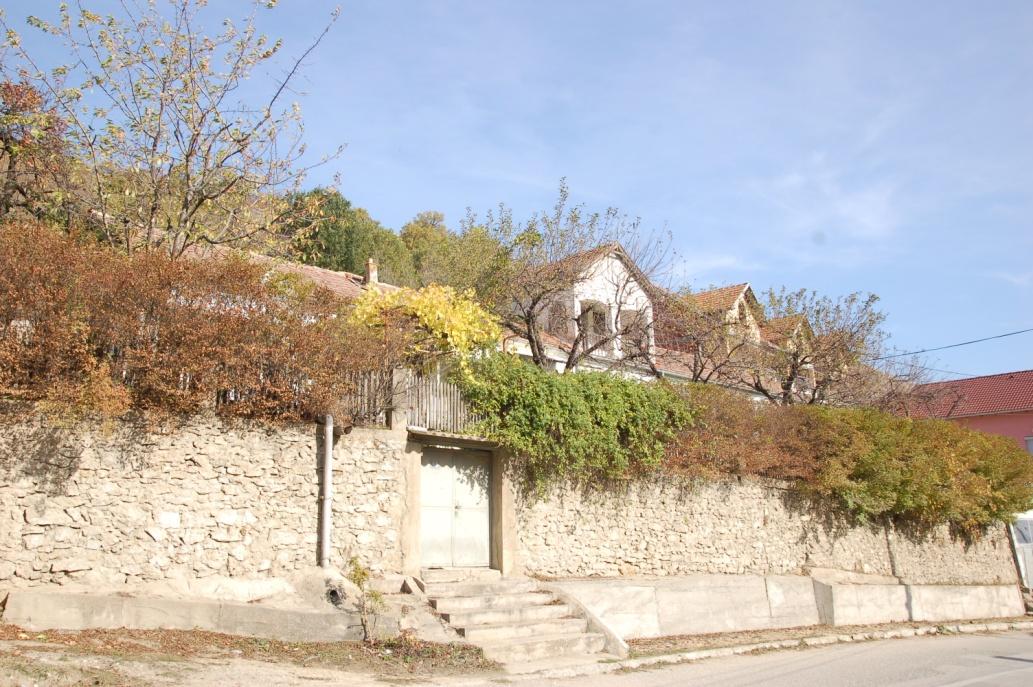
SHTËPIA E KOMITETIT TË KOSOVËS NË SHKODËR , PARA REZIKUT TË SHEMBJES

October 27, 2021 by s p

Shkëputja e shiritit të kujtesës, duke e rrezikuar statutusin e historik e kulturor të kësaj shtëpie, po ndodhë para syve tanë dhe askush, asnjë institucion, asnjë shoqatë, asnjë personalitet me ndikim, nuk po reagon që ta pengojë shembjen e kësaj godine, sepse ajo nuk simbolizon vetëm një pjesë të historisë sonë nacionale, por simbolizon një vetëdije më të thellë kombëtare. 

Nga Emin AZEMI/

Në Shkodër ndodhet një shtëpi e cila në vitin 1981 shteti shqiptar e kishte vënë në listë si “monument kulture”, por për ta gjetur atë nevojitet të bredhësh shumë dhe të pyesësh shumë njerëz, sepse pak kush e di se në atë shtëpi, në vitin 1918,  ka qenë i vendosur “Komiteti Mbrojtja Kombëtare e Kosovës”, një organizatë kjo politike gjithëkombëtare, që kishte luftuar për mbrojtjen e trojeve shqiptare dhe të interesave të mbarë popullit shqiptar. Në pamundësi që ta ketë përfaqësuesin e vet në paqen e Versajës, detyrën e përfaqësimit Komiteti ua beson atdhetarëve Atë Gjergj Fishta dhe Mithat Frashëri. Ky Komitet bënte thirrje që t’i tregohej “botës se Kombi Shqiptar, pa ndërlikim fejet e besimesh, ka një zemër e një dëshirë me e përngreh shtetin me lirina të plota. Kush të dojë me nderue vendin, shpin e atdheun le të përpiqët pa bjerrë asnjë dekikë rreth e qark dëshirës kombëtare”, thuhej në deklaratat e kryesisë së komitetit dhe të vet kryetarit të saj Hoxhë Kadriut.

Fati i kësaj shtëpie është shumë i pasigurt, dhe tepër i rrezikuar sepse ditën që e vizituam, hasëm në një rrethojë llamarine, që tregonte se pas një kohe aty mund të mbijë ndonjë përbindësh në formë pallati gjikant. Gjendja e shtëpisë ishte e degraduar deri në mjerim dhe askush nuk e ka të qartë se si është e mundur që një “monument kulture” të përfundojë deri në atë derexhe. 

Objekti në pronësi private daton rreth shekullit XIX (1897‐1900) dhe ndodhet në qendër të qytetit të Shkodrës, pranë rrugës “Komiteti i Kosovës”. Më 1992 ajo do t’i rikthehej pronarit të saj të ligjshëm – një familjeje e vjetër shkodrane.

Bashkia e Shkodrës deri më tani nuk ka dhënë kurrfarë sqarimi lidhur me thashethemet se mbi rrënojat e kësaj godine historike do të ngrihet një pallat shumëkatësh, por as Drejtoria Rajonale e Trashëgimisë Kulturore Shkodër (DRTK) – institucion ky në varësi të Ministrisë së Kulturës – nuk ka dhënë ndonjë përgjigje për këto spekulime dhe as nëse planifikon ndonjë projekt për restaurimin e saj.

Shkëputja e shiritit të kujtesës, duke e rrezikuar statutusin e historik e kulturor të kësaj shtëpie, po ndodhë para syve tanë dhe askush, asnjë institucion, asnjë shoqatë, asnjë personalitet me ndikim, nuk po reagon që ta pengojë shembjen e kësaj godine, sepse ajo nuk simbolizon vetëm një pjesë të historisë sonë nacionale, por simbolizon një vetëdije më të thellë kombëtare. 

Nëse trashëgimia jonë historike e kulturore vazhdon të zhbëhet, duke injektuar një realitet bizar urbanistik, atëherë e kemi vështirë të mbajmë në këmbë shtyllat e mbamendjes sonë kolektive. Godina e “Komiteti Mbrojtja Kombëtare e Kosovës” mund të restaurohet dhe pronarët të kompenzohen nga shteti, por do të ishte  e pafalshme që në vend të kësaj godine të ngrihet një pallat shumëkatësh, i cili gjatë gjithë kohës do t’i bënte hije historisë sonë të lavdishme.

Komiteti “Mbrojtja Kombëtare e Kosovës” u themelua në ilegalitet të plotë më 1 maj 1918 dhe më 7 nëntor 1918 u vendos përfundimisht në Shkodër nga figurat të shquara atdhetare si: Bajram Curri, Hoxha Kadri Prishtina, Sali Nivica, Hasan Prishtina, Bedri Pejani, Qamil Bala, Sali Rama, Hafiz Ismet Dibra etj. Për të ndezur dritat e alarmit në mbrojtje të kësaj shtëpie historike, së shpejti nga Shkupi dhe Prishtina do të nisen disa peticione në adresë të institucioneve shtetërore relevante të Shipërisë, në funksion të pengimit të zhbërjes së kujtesës sonë kombëtare.

Filed Under: Histori

HUNGARIAN FOREIGN POLICY AND WARS OF THE 1990S IN FORMER YUGOSLAVIA

October 25, 2021 by s p

Only limited attention has been paid in the international academic literature to Hungary’s foreign policy on the disintegration of and the wars in Yugoslavia — as Hungary did not play a crucial role in the wars—and the issue has not even been covered in the Hungarian literature in a comprehensive way. However, Hungary was also affected by the wars of the 1990s due to its geographical neighbourhood, the Hungarian minority living in Yugoslavia, and its NATO membership (since 1999). The present study aims to contribute to filling the literature gaps by providing an overview of Hungarian foreign policy toward Yugoslavia at that time, relying mainly on Hungarian sources. The study demonstrates the involvement of Hungary and summarises the activities of three Hungarian governments of the 1990s — the Antall government, the Horn government and the first Orbán government — in relation to the South Slavic wars and international peace missions, focusing on the most important events.

Prof. Dr.JózsefJUHÁSZ[1]

The foreign policy doctrine of the Antall government[2] elected in the first free elections held in Hungary in March and April 1990 had three priorities. Accordingly, it set three objectives pursued by the then and successive governments: the integration of Hungary into Euro-Atlantic institutions, improving relations with its neighbouring countries, and supporting Hungarian minorities outside Hungary.[3] One of the Hungarian minority communities beyond the border was the Hungarian minority living in Yugoslavia, consisting of more than 400,000 people.[4] Starting from these premises, the Antall government sought to improve relations with Yugoslavia and expected Yugoslavia to survive in some form (and, of course, to be democratised) up until summer 1991. It was considered the most likely and best-case scenario both for Hungary and for Hungarians living in Vojvodina. However, ideologically, the right-wing coalition government sympathised with the Democratic Opposition of Slovenia (DEMOS) and the Croatian Democratic Union (HDZ) that won the Slovenian and Croatian elections held in April and May 1990. The foreign policy duality — i.e. rational pragmatism and ideological bias — was discernible even before the Antall government took office, when GézaJeszenszky, the nominee for the post of Minister of Foreign Affairs, said (crying criticism coming from the opposition) at his hearing before Parliament that the new government expected to have ‘friendly’ relations with Croatia and Slovenia but only ‘fair’ relations with Serbia.[5] Making such distinction was not the best diplomatic statement, which, in addition, led to ill-judged moves in autumn 1990.

The Kalashnikov affair

The Serbian daily newspaper PolitikaEkspres reported on 10 January 1991 on secret arms sale from Hungary to Croatia, then Belgrade television showed Hungarian trucks laden with arms — as it was stated, with at least 36,000 Kalashnikov assault rifles and other weapons — crossing the border in October 1990.

            The public disclosure of the arms deliveries created a domestic political storm in Hungary, deteriorated the country’s international appraisal and provoked strong objection from Belgrade. The opposition — the Socialist Party, the Alliance of Free Democrats, and the Fidesz — criticised the government for being nationalist, dilettante and irresponsible and required parliamentary scrutiny,[6] the Western press criticised the Hungarian government,[7] and the literature on the break-up of Yugoslavia also covers the affair, mostly taking a relatively critical tone.[8]

            Budapest first denied the arms deliveries to Croatia, then attempted to trivialise and to present them as a non-political business deal (this argument was also unfortunate, as it suggested that Hungary was willing to sell weapons for money to any countries in a neighbouring conflict region). According to official explanations given on the affair after the first reflexive denials, a state-owned company, ‘Technika’ (TKV) authorized to sell weapons, indeed transited and supplied, under an order from a third country, small arms — ten thousand old Kalashnikov assault rifles from the stockpiles of the disbanded Worker’s Militia (the militia organisation of the former communist party of Hungary) — to the company ‘Astra’ in Zagreb in October 1990. The deal was legal in accordance with normal conditions for international arms trade, and it could not be considered as major arms delivery due to the nature and quantity of the arms supplied. Further, the Hungarian government acknowledged that the arms had been bought by Croatia but continued to declare the deal as a matter of strict business and as being insignificant.[9]

            Belgrade was not of the same opinion, and not only Serbian politicians and communist generals of the YPA (Yugoslav People’s Army),who regarded what happened in Croatia as counter-revolution[10], but also the federal government led by Ante Marković, Croatian reformist politician, who was a darling of the West (even though the affair was not discussed on Marković’s visit to Budapest in December 1990[11]). As a result, statements of objections were addressed to the Hungarian government, such as the diplomatic note of the federal government of Yugoslavia from 4 February, in which it appreciated the recognition made by the Hungarian government in its declaration made on 2 February and the steps taken to investigate the matter but underlined that the arms supply infringed international law and warned against interference in internal affairs of Yugoslavia.[12]

            The data on the size of arms consignment is contradictory. The then Minister of Foreign Affairs, GézaJeszenszky, wrote a decade and a half later about ten thousand assault rifles, essentially reiterating the number of arms declared by the government in early February 1991. As he writes in his study aiming at presenting JózsefAntall’s political portrait: ‘In September 1990, Hungary received a request from the Croatian government to sell thirty thousand machine guns for the police force of Zagreb. The request was not discussed at the government level, but JózsefAntall, Minister of Defence Lajos Für and I were of the opinion that refusal would have scuttled our plans for settling the tensions between the two nations dating back to 1848 and re-establishing the close friendship between the Croatian and Hungarian nations that had been living in a common state for eight hundred years. The quantity and quality of those arms ruled out any possibility that they could facilitate an armed conflict, and their significance could primarily be of a psychological nature to the new Croatian government with democratic legitimacy that was conducting a political debate with Belgrade. Then the Hungarian parties treated the deal merely as a commercial matter. In accordance with legislation, a relevant inter-ministerial committee approved the request, along with other arms trade agreements. However, after the first consignment of ten thousand rifles had been delivered in October, Minister of Defence of Yugoslavia, Veljko Kadijević, sent a trenchant letter to his Hungarian counterpart, stating that the federal government did not authorize any weapons sales to Zagreb and demanding an explanation for what had happened. The Ministry of Defence of Hungary then stopped the further delivery of any types of arms to Yugoslavia.’[13]

            The description given by GézaJeszenszky is more or less in agreement with Hungarian sources. The then Minister of Defence, Lajos Für, described what had happened as GézaJeszenszky did, and the investigation mounted against the managing director of TKV, Tibor Miklós, in 1999 was also based on this data. Lajos Für goes into the subject in depth in his book outlining the last days of the Warsaw Pact. As he writes, the Croatians first raised the issue of their intention to buy weapons on the visit of State Secretary for Foreign Affairs ImreSzokai to Zagreb in September 1990, and, with high-level political endorsement (Prime Minister JózsefAntall’s verbal approval and the decision taken by the National Security Council), the relevant committee authorized the sale of forty thousand Kalashnikov-type rifles and ammunition (180 pieces of ammunition per rifle) on 10 October. Ten thousand assault rifles and 1.8 million pieces of ammunition were delivered until the Belgrade statement of harsh objection (that prompted the suspension of arms deliveries) was received on 30 October.[14] At the trial of Tibor Miklós, the Hungarian Public Prosecutors’ Office also alleged that TKV had indeed delivered ten thousand assault rifles and ammunition amounting to USD 1,892,000 (namely at an approximate unit price of USD 190).[15]

            Other sources, however, suggest much larger scale of arms delivery. The then Croatian Minister of Defence, Martin Špegelj, stated that Hungary had delivered 24,000 Kalashnikov machine pistols, 2100 machine guns, 400 RPG-7 anti-tank weapons, 40 Strela-2 air defence missile launchers and their related ammunition worth USD 11 million, which had made Hungary one of the main sources of weapon imports for Croatia before 1991.[16] These amounts of weapons are closer to those alleged by Belgrade, but very different from those mentioned in the defence raised by the Hungarian government, as well as to ErnőRaffay’s claims. ErnőRaffay, State Secretary of Defence in the Antall government, claimed, reflecting on the loss of the alleged chance of territorial revision (e.g. by creating an anti-Serbian Hungarian-Croatian alliance) in the 1990s, without providing concrete numbers, that the Hungarian government supplied ‘good-quality weapons and many million pieces of ammunition’ to Croatia in 1990.[17]If this data is true, it refutes the recurrent argument advanced by the Hungarian government to the effect that ‘the quantity and qualiti of the arms [sold to Croatia] ruled out any possibility that they could facilitate an armed conflict’ (see citation from Jeszenszky above). It is patently obvious what Kadijević’s opinion was on the matter. The export of Kalashnikov-type rifles was the main argument brought forward by Federal Secretary of People’s Defence of Yugoslavia (Minister of Defence) demonstrating that ‘Hungary played a double game. It in general publicly supported the unity of Yugoslavia but in reality supported the policy of destruction of Yugoslavia, including the illegal arming of the secessionist Croatia and Slovenia.’[18]

            But the delaying the disclosure of the Kalashnikov affair was part of the political games played in Belgrade. It was obviously not by chance that the disclosure of an arms delivery in October — of which Belgrade had already had knowledge in October — was postponed to January, and the question also arises as to why specifically the Hungarian arms deliveries of arms imports from various sources received so much publicity. For at that time Veljko Kadijević and President of Serbia Slobodan Milošević sought to achieve significant progress in the disarmament of the so-called paramilitary forces (new republican armies that were being raised). The federal presidency of Yugoslavia ordered weapons collection on 9 January, exactly at the time when the world was watching and cared about the preparations for the first Gulf War, and the Soviet Armed Forces were heading into Lithuania to ‘bring order to the country’. It seemed to be a good moment for Belgrade to attempt to reverse the process in the spirit of the rather die-hard order given by the Yugoslav People’s Army on 24 January (calling for protecting Yugoslavia and socialism against ‘subversive activities’ of the West, most of which were taking place via Hungary).

            Nevertheless, irrespective of the political games in Belgrade and the actual scale of the deliveries, it can be concluded that the arms deal was wrong-headed. The only positive that resulted from the affair was the fact that it improved the image of Hungary in the eyes of the people of Croatia. The Hungarian administration misjudged the political risks and acted very imprudently. The arms export was contrary to the then strategy of the Hungarian government on Yugoslavia: as mentioned above, Budapest expected up until summer 1991 Yugoslavia to survive in some form. Moreover, the arms had been exported behind the back of the central government of Yugoslavia nine months before the war broke out — and there is not a single government in the world that would tolerate arms delivery to its country without its knowledge.[19]

            At the same time, the importance and role of the Hungarian export of arms in the outbreak of the war should also not be overstated. The deliveries of Kalashnikov-type rifles only represented a minor part of the total imports of arms to Croatia, and the Antall government (or the subsequent governments) did not make the same mistake again. Hungary respected the relevant United Nations (UN) resolutions, including the Resolution adopted by the UN Security Council on 25 September 1991 imposing general arms embargo. The Kalashnikov affair did not irreparably damage relations between Hungary and Serbia. After Hungary acknowledged the arms deliveries, expressed its regret and confirmed that it did not wish to interfere in internal affairs of other countries, the conflict ceased by spring. The whole affair was rather due to the inexperience and uncertainty of the new Hungarian government composed of political novices than due to ‘Hungary’s participation, knowingly and intentionally,’ in the break-up of Yugoslavia as early as in 1990.

Challenges posed by the wars of 1991-1995 for Hungary

The wars of 1991-1995 posed security policy risk and had an economic cost for Hungary, while Hungarians living in Yugoslavia were directly affected by the wars. Although Hungary was, in fact, in no immediate danger of drifting to war (as opposed to the situation with regard to the air war in 1999), several airspace violations and border incidents took place and occurred. There were several incidents in which the aircrafts of the Air Force of the YPA started their attack manoeuvres against Croatia and opening fire at targets on the other side of the border in the airspace over Hungary, and, moreover, a Yugoslav MIG-21 dropped cluster bombs on the outskirts of Barcs, a village along the Croatian border, on 27 October 1991, but minor Croatian units also crossed the Hungarian border from time to time to get behind their enemies. Around fifty thousand refugees fled to the country, the large majority, but not all of them were Hungarians. Several person from the Hungarian minority fell victim to the wars as well.[20] Economic losses due to the weakening of bilateral economic relations, adverse effects on transit traffic, hesitation among certain foreign investors and compliance with sanctions imposed by the UN could be estimated at USD three billion.[21]

However, the Kalashnikov affairs initially made it difficult for the Hungarian government to react to the events, as the negative media resonance of the arms deliveries made Hungary’s policy toward Yugoslavia passive. Finally, Hungarian foreign policy adopted a cautious and Western-oriented attitude. However, the fact that the Hungarian attitude toward the countries of South-Eastern Europe was definitely ambivalent in the years after the regime change also played a part in its cautious and reasonable position. Budapest was indeed interested in developing relations with countries in this region, while it sought to openly distance itself from the Balkans or South-East Europe. Since Hungary wished to be integrated into Euro-Atlantic institutions, i.e. to become a NATO and European Union member, as soon as possible, it thus wanted to show itself as stable and westernised (as being part of Central Europe with close links with the West) and did not want the West to regard it as a country belonging to a least-developed conflict region. Hungary’s policy toward the Balkan region was characterised by this duality in the 1990s. For example, Hungary, as well as Slovenia and Croatia, initially refused to become a member of the Southeast European Cooperative Initiative (SECI, the first international umbrella organisation established in 1996 for dealing with the consequences of the wars) and became a member state of the SECI only at the USA’s express request.

It was not easy to bring together its different South Slavic relations. It required Hungary to reconcile its foreign policy toward Croatia and Bosnia and Herzegovina with its relations with Serbia and to take the different interests of the three groups of Hungarians living in Yugoslavia (Hungarians living in Slovenia, Croatia and Serbia, i.e.Voivodina) into account. Since Hungarians living in Vojvodina (80% of Hungarians living in Yugoslavia) only sympathised with democratisation endeavours and did not support the efforts to break up Yugoslavia, as they were concerned that after the break-up — which actually occurred shortly afterwards — they would be trapped in the nationalist Serbia.[22]

The ambivalent and lukewarm attitude of Hungary is underlined by the fact that the Hungarian mission to the UN received hardly any instructions on the South Slavic crisis from Budapest in 1992 and 1993, when Hungary was a non-permanent member of the United Nations Security Council. Ambassador André Erdős, Head of Mission, recalled that the mission had almost been completely left to itself with regard to taking a position on matters relating to the South Slavic crisis. As he writes: ‘But Budapest simply failed to realise the significance and outstanding opportunities of the Hungarian membership of the UNSC at a time of crisis, the South Slavic crisis, and, with hindsight, it can be said that although the mission endeavoured to inform the people back home as fully as possible about what was going on in the UNSC, the relationship between the centre in Budapest and the Hungarian mission to the UN in New York was, with a few rare exceptions, one-sided. Given the geopolitical situation, history, geography and historical background of Hungary, besides international meetings, consultations and speeches related to the matter at other levels, it should have reaped further benefits from the unique situation that offered opportunities, due to our entitlement as a member of the body, for greater involvement in operational decisions, namely to present our national position, make proposals and, if necessary, rectifications in the UNSC. […] The awareness of the Hungarian political elite and the Ministry of Foreign Affairs should therefore have been raised as regards the opportunity afforded to Hungarian foreign policy by the UN. Many hardly knew anything about the activity. A sentence from a telegram sent from a colleague of mine working in another station of major importance in Europe to me towards the end of our two-year membership in the UNSC — which provides that they had no idea what we were doing in the UNSC in New York — came as a shock to our UN mission.’[23]

However, the cautious and Western-oriented attitude meant neither inactivity nor neutrality. This is illustrated by what Prime Minister JózsefAntall said in an interview with the Austrian Der Standard on 3 July 1991 (namely that he advocated the sovereignty and the right of the republics to self-determination, and the confederation of Yugoslavia) or by the declaration of the Hungarian and Polish Prime Ministers issued in October 1991, following the termination of the moratorium created by the Brioni Agreement on postponing the declaration of independence of Slovenia and Croatia by three months (in which the Prime Ministers agreed that there was aggression against Croatia, which must have been curbed by deploying international peacekeeping force).[24] What this means is that Budapest already took the ‘Slovenian-Croatian’ and ‘German’ view — that the conflict not to be considered as an civil war but a fight of aggressors and victims, where the Serbs (and the Yugoslav People’s Army with orthodox communist views) were the aggressors — in international disputes relating to the wars in early summer 1991. This was also its interpretation on the Bosnian war that broke out in April 1992.

Hungary thus adopted and applied international sanctions imposed against the Federal Republic of Yugoslavia constructed by the republics of Serbia and Montenegro. It also respected the economic embargo introduced by the UNSC on 29 May 1992 and allowed on 30 October 1992 NATO’s AWACS aircrafts (unarmed aircrafts for airspace surveillance) to patrol in the airspace over Hungary for the purposes of monitoring compliance of the UNSC ban on flights over Bosnia. However, it refrained from providing Slovenia, Croatia and Bosnia and Herzegovina with any assistance capable of being regarded as military beyond diplomatic support provided in international fora, contributing to humanitarian assistance (e.g. reception of refugees), and building bilateral relations. This starting point can be judged as right. Since military assistance, in addition to the fact it would not have been of great help to Croatia and Bosnia, would have put Hungary and the Hungarian community living in Voivodina in imminent danger and would not have been consistent with the then policy of Western powers (regardless of disputes between them).

In addition, Budapest made substantial efforts, again rightly, to ‘have left the door open’ for Belgrade. Each Hungarian government had the wisdom to adopt a pragmatic attitude towards the Milošević government, if only because of Hungarians living in Vojvodina appearing in a hostage situation. Therefore, Hungary only to the internationally compulsory limit minimized inter-state contacts and economic ties and counterbalanced this by ensuring for Serbia important transit to the West via Hungary and maintaining civil relations (in this spirit, small-scale border-traffic smuggling was also tolerated).

Hungarian foreign policy also aligned itself with the position of Germany and the Slovenian and Croatian expectations at the time of the secession of states, in 1991 and 1992. Hungary therefore recognised the independence of Slovenia and Croatia a day after the member states of the European Community did so, on 16 January 1992, and of Bosnia and Herzegovina on 9 April.[25] However, in line with the common position of the international community in this regard, it did not show willingness to recognise the secession of any territory within the republics (Republic of Serbian Krajina, Republika Srpska, Croatian Republic of Herzeg-Bosnia, and secession declaration of Kosovo in September 1991). It did not show willingness either to recognise the claim of the Federal Republic of Yugoslavia proclaimed on 27 April 1992 to be the exclusive successor of Tito’s former Socialist Federal Republic of Yugoslavia. Budapest had therefore maintained diplomatic relations with Belgrade, but at a low level, and the relations were only elevated to ambassador level after the Dayton Agreement that put an end to the war in Bosnia, after 15 August 1996 (but its relations with Serbia were temporarily decreased again to chargé d’affaires level due to the NATO bombing campaign in 1999).

However, the wars in Yugoslavia between 1991 and 1999 (i. e. including the NATO bombing of Serbia in 1999) not only presented challenges, burdens and disadvantages but also brought indirect benefits in political terms for Hungary. The growth of the importance of Hungary was significant in the eyes of the Western powers due to the wars. The peaceful regime change in Hungary took on particular importance to provide a model for other countries, and the West needed reliable partners in the neighbourhood of the conflict region to be able to stabilise the area rapidly and in a cost-effective way. Hungary managed to meet this expectations after 1991.

Hungary’s participation in NATO’s air war against Serbia of 1999

The Kosovo crisis renewed in 1998 created new challenges for Hungary. Milošević’s‘resolution’ to the Albanian-Serbian conflict, the re-initiation of ethnic cleansing resembling the Bosnian war was not acceptable to, inter alia, Hungary, even if taking into account the fact that the Kosovo Liberation Army (UÇK), the Albanian separatist organisation using terrorist means, had directly ignited the Serbian-Albanian war of 1998-1999 with its secessionist insurgency. Milošević’s response was not acceptable, either in terms of the common political values upheld by the Hungarian state or loyalty considered to be very important as a new NATO ally (Hungary joined the North Atlantic Treaty Organisation on 12 March 1999) or the endangerment of Hungarians living in Vojvodina.

            However, these theoretical starting points sparked internal political debates and lively discourses among intellectuals, despite the fact that the Hungarian political elite, opinion-shaping intellectuals and the general public almost fully accepted them. Since these starting points could not give clear and practical answers to the questions as to how the international community and NATO should have responded to the actions of the Milošević government and which responses Hungary could support. Which responses could be effective in stopping the ethnic cleansing but otherwise were in line with international law? How far could NATO go, without a mandate from the UN Security Council, in coercing a sovereign state that was authoritarian and built its minority policy on repression but unquestionably protected its internationally recognised borders? Whether the aims (border changes) of and means (the semi-terrorist guerrilla warfare of the shadowy UÇK, and its war-related actions included the intimidation of the Serb population, the killings of ‘collaborationist Albanians’, and the clear provocation of the Serbian authorities in anticipation of NATO action) frequently used by Albanians who indeed were in need of protection from the humanitarian point of view and in terms of human and minority rights were acceptable? What other interests motivated the NATO intervention, apart from the legitimate objectives of easing and localising the Serbian-Albanian conflict? In addition to issues of principle relating to the effect of the air war on the future of the international order, as well as to debates on the involvement of Hungary, the question as to whether it was realistic to create a link between the NATO intervention and Hungarian aspects, such as the issues of the autonomy of Hungarians living in Voivodina or of aiming at the role of ‘base-state’ in reconstruction programmes, also provoked a rich debate.[26]

            In these circumstances, the air war put Hungary in a difficult situation, which was not a belligerent but was indirectly involved in the war as a NATO member and by permitting the use of its airspace and aviation infrastructure. Since Hungary was the only member state of NATO that was bordered by and had large national minority living in the Federal Republic of Yugoslavia under attack. Involvement going beyond political and logistical support would therefore have been risky for Hungary.

            Budapest already expressed its support for NATO’s intention to prepare for a military action against Yugoslavia in October 1998, when the option of external military intervention in the Kosovo conflict was first raised seriously. The Parliament decided, by an overwhelming majority, on 14 October to allow the unlimited free use of airspace over Hungary by NATO; although Prime Minister Viktor Orbán later claimed that there had been no area populated by Hungarians among the ground targets of planned airstrikes back then. However, the threat of a military confrontation was averted in October 1998 thanks to the Holbrooke-Milošević Agreement, and it seemed that a political solution would be found to the Kosovo crisis. The Hungarian administration confirmed its support to the mediation and conciliation attempts of the International Contact Group (representatives of the USA, Russia, Germany, France, England and Italy), such as the Rambouillet conference. But the attempts to find a political solution failed. The Hungarian government therefore reaffirmed its solidarity with NATO on the day of the initiation of NATO’s bombing campaign, 24 March 1999 (but it limited its involvement, i.e. specified that Hungary would not be involved in fighting activities and Hungarian soldiers would not enter the territory of Yugoslavia). The Parliament also reaffirmed its former decision of October concerning the unlimited use of airspace and airports by NATO by a further resolution on 24 March.[27] The practical involvement of Hungary in NATO action was based on that policy, namely it authorised NATO to use its air infrastructure and was engaged in the political and economic isolation of Serbia[28] (it temporarily withheld a Russian-Belarusian aid shipment on 11 and 12 April and acceded to the Regulation adopted by the European Union on 23 April imposing an oil embargo and the Regulation on exit bans of Serb leaders) but did not directly participate in bombing.

            However, the result expected by NATO within weeks, i.e.Milošević’s retreat, was yet to come, and, moreover, the mass displacement of the Albanian population was commenced in Kosovo. It prompted questions about the need to widen the scope of intervention by intensifying air attacks and/or ground intervention. Hungarian Prime Minister Viktor Orbán supported the decisions taken in the 1999 NATO Summit held in Washington DC on 23-25 April, then the Hungarian government agreed that NATO aircrafts would also carry out combat missions from Hungarian airports. Thus, 24 American F-18 Hornet fighter-bombers used one of the bases of the Hungarian Air Force (Taszár Air Base) and 20 KC-135 Stratotankers, military aerial refuelling aircrafts, used Terminal 1 at Ferihegy Airport (now Ferenc Liszt Airport) as a base from early May. Hungary therefore was not only a logistical and fly-over zone but was also used as a base for air attacks in the last weeks of the bombing campaign. It also emerged from discussions on ground military intervention and media speculation that NATO was likely to use the territory of Hungary in case of a possible intervention, and the Hungarian government would not have had the luxury to refuse the NATO request (the Hungarian government supported the intensification of air attacks precisely in order to avoid ground intervention).[29] The situation was very similar to that in April 1941, when the force of Nazi Germany had marched through, inter alia, Hungary (before the intervention of the Hungarian army) to attack Yugoslavia.

            The imminent risk of Hungary’s drift to war differentiated public opinion and political forces. The majority of public continued to support NATO action but was opposed to ground intervention,[30] the largest opposition party, the Hungarian Socialist Party (MSZP), put forward the possibility of the revision of the parliamentary authorisation granted in March, i.e. of the withdrawal of the authorisation for the unlimited use of airspace and airports, and an intellectual peace initiative, Movement for the Peace of the Balkan, was also established. The events of the next few weeks made further disputes meaningless. The Belgrade leadership back-pedalled by early June, the issue of ground intervention and the risk of Hungary’s drift to war thus fell off the agenda.

            Dilemmas concerning the air war also included the issue of Voivodina. Several, especially right-wing politicians indicated that needed the acceptance of the so-called “threefold autonomy concept”: restauration of the provincial autonomy, establisment of the cultural self-government for whole Hungarian population and regional autonomy of the North Backa (region in Voivodina with Hungarian majority). The far-right Hungarian Justice and Life Party (MIÉP) actually wanted to put the issue of border changes on the agenda.[31]However, linking the issues of Kosovo and Voivodina was not realistic, and none of the Hungarian parties joined the extremist platform of MIÉP.

            The last act in Hungarian reactions to the war in Kosovo was the reception of the declaration of independence (on 17 February 2008).[32] The Gyurcsány government[33] had already adopted the position of the Western powers at the time of the Kosovo status talks led by MarttiAhtisaari that the future of Kosovo could not be based on either ‘permanent temporariness’, i.e. the permanent maintenance of international presence, or solutions unacceptable for Albanians making up the overwhelming majority of the local population (i.e. the reintegration of Kosovo into Serbia despite the fall of the Milošević regime in October 2000). Budapest also considered likely that the Western powers would recognise the independence of Kosovo. Therefore, Hungary also had to make its position on this matter and its interests clear. A general consideration and a specific aspect were elements of the Hungarian position. One was that Hungary had an interest in the stability and consolidation — to lay the foundations of its capacity to develop — of the region as a whole from a security, neighbourhood, foreign trade policy perspective and in terms of investment; and the other consideration was that the recognition by Hungary would not lead to atrocities against Hungarians living in Vojvodina. Hungary’s position — that Kosovo should have been recognised, as deciding status issues was essential to achieve lasting stability in the region, while Hungary did not want to openly call for secession or be among the first states to recognise the independence of Kosovo — was based on these considerations. Furthermore, Budapest explicitly sought to make gestures towards Serbia, i.e. to link the recognition of Kosovo with the importance of protection of the Serbian minority and the intensive support of Serbia’s European integration ambitions, in order to overcome the conflict to be expected with Belgrade. Indeed, recognition by Hungary did not lead to the significant and lasting worsening of bilateral relationship between Hungary and Serbia, and Hungarian Minister of Foreign Affairs Kinga Göncz’s visit to Belgrade in September 2008 put an end to the differences over the issue.

            Although there was consensus among the parliamentary parties on the policy of ‘deferred recognition’, they did not agree on the timing of recognition. The initial position of the government on the choice on timing was that Hungary should have expressed its recognition with the European Union or a little later. It became apparent, however, after 17 February that the recognition process was slower and more diffuse than it had been previously assumed, and there would be no common EU position. A domestic political conflict, the so-called social policy referendum on doctor visit fees and tuition fees, attracted public attention in Hungary in early March. The Hungarian government finally announced the recognition of the independence of Kosovo on 19 March, jointly with Croatia and Bulgaria, waiting for the undisturbed conducting of the celebratory events in Voivodina relating to the Hungarian national holiday of 15 March, and was the eighteenth member state of the European Union to do so.[34]

Hungary’s involvement in peacekeeping and initial reconstruction programmes

Within its means and capabilities, Hungary participated in international missions in Kosovo and Bosnia and Herzegovina after December 1995 and June 1999. It, as a donor state of the peace process in Bosnia, became a member of the Peace Implementation Council monitoring the implementation of the Dayton Agreement and later of the International Steering Group formed to monitor the independence process of Kosovo and the observance of the obligations contained in the Ahtisaari Plan. An important commitment was its contribution to military peacekeeping. Hungary did not participate in the mission of the United Nations Protection Force (UNPROFOR, 1992-1995), as it would not have been advisable for Hungary as a neighbouring country in wartime and was not requested by the UN. However, it has participated in the missions of the Implementation Force (IFOR, 1995-1996) in Bosnia and Herzegovina, which was replaced by the Stabilisation Force (SFOR, 1996-2004), of the European Union Force (EUFOR, since 2004) and of the national security forces (Kosovo Force, KFOR) from the outset.[35]

            Hungary provided logistical support for the free passage and, later, supplying of peacekeepers, which meant that it allowed the use of the airspace over Hungary, ensured free movement on road and rail, and made the airbase in Taszár available to US forces until the end of the SFOR mission in 2004. Another important part of the Hungarian contribution was the Hungarian Engineer Contingent deployed in Okučani (1996-2002, initially peaking at 462 people), which participated primarily in the reconstruction of transport infrastructure (bridges, roads and railways). This unit raised the remains of the Old Bridge of Mostar destroyed by the Croatian Defence Council (HVO) on 9 November 1993 from the riverbed of Neretva in September-November 1997. A rifle company is currently serving with the EUFOR Multinational Battalion (MNBN) in Bosnia and Herzegovina. The most important Hungarian contribution to KFOR was the Hungarian Guard and Security Battalion deployed in Priština (1999-2005, initially peaking at 324 people), and its main mission was the surveillance of the KFOR Headquarters. A contingent comprised two companies is currently serving with the KFOR Tactical Reserve Battalion (KTRBN).[36]

            Hungary could not participate in economic reconstruction by providing substantial donor assistance due to its limited resources but endeavoured to contribute to political reorganisation as a member of the Stability Pact for South-Eastern Europe established in 1999. It included the so-called Szeged Process (conferences and courses to accelerate the process of democratisation, the development of municipal self-governments and the strengthening of the role of the Serbian opposition), and several Hungarian diplomats recognised as experts on the region (who had gained experience e.g. as ambassadors in the region) played a significant part in international mediation and advisory councils.[37] Overall, apart from the initial refusal of the SECI membership, Hungary made a positive contribution to post-war consolidation and has sought to develop bilateral relations with each state of the region since 2000.[38]

Summary

The consequences of the wars in Yugoslavia were two-fold for Hungary. On the one hand, the wars posed security policy risk, caused economic losses, directly affected Hungarians living in Yugoslavia, and, all the more, Hungary indirectly became belligerent by giving support to NATO’s air war against Serbia in 1999. These challenges and burdens were counterbalanced by the fact that the country became more important to the West, as the Western powers needed a reliable partner in the neighbourhood of the conflict region.

            In general, Hungarian foreign policy adopted a cautious and Western-oriented attitude in relation to its reactions to the crisis in Tito’s Yugoslavia and to the subsequent wars. However, it also took mistaken steps, such as the arms delivery to Croatia in October 1990 (the so-called Kalashnikov affair). Moreover, some right-wing nationalist politicians brought up the matter of revision of Serbian-Hungarian border again. However, apart from some examples of ‘fishing in troubled waters’, Hungary behaved in a responsible manner and proved to be a cooperative partner in crisis management and peacekeeping missions.

            The broadly cautious attitude did not mean its inactivity and neutrality. Hungary took the ‘Slovenian-Croatian’ and ‘German’ view relating to the crisis by early summer 1991 and regarded Germany as a beacon throughout the period of war. In this regard, although there were differences in foreign policy between the governments of the 1990s, but they shared the same strategic priorities. In this spirit, Hungary provided diplomatic support to Slovenia, Croatia and Bosnia and Herzegovina in international fora, supported NATO’s intervention of 1999 by allowing the use of the airspace over Hungary and its airports, and applied international political and economic sanctions against the Federal Republic of Yugoslavia. At the same time, Hungary adopted a pragmatic attitude towards the Milošević government and sought to maintain –  within the limits of the international sanctions – an ‘open-door policy’ towards Serbia and the best relations with it.


[1]Professor of Institute of History at the EötvösLoránd University, Budapest, Hungary.

[2]    Mostly the Right was in power in Hungary during the wars in Yugoslavia. The coalition, led by Chairman of MDF JózsefAntall (and by PéterBoross in the last half-year owing to the death of JózsefAntall), governing between 1990 and 1994 was comprised of the Hungarian Democratic Forum (MDF), the Christian Democratic People’s Party (KDNP) and the Independent Smallholders, Agrarian Workers and Civic Party (FKgP, the latter only until 1991). The Hungarian Civic Alliance (Fidesz), the FkgP and the MDF formed the coalition, led by Chairman of Fidesz Viktor Orbán, governing between 1998 and 2002. The centre-left coalition of the Hungarian Socialist Party (MSZP) and the liberal Alliance of Free Democrats (SZDSZ) led by Chairman of MSZP Gyula Horn was in power between the two right-wing governments, from 1994 to 1998. There were differences in foreign South-Slavic policy between the three governments, but they shared the same strategic priorities. The Ministers of Foreign Affairs were GézaJeszenszky (1990-1994), László Kovács (1994-1998), and JánosMartonyi (1998-2002).

[3]       The new foreign policy doctrine of Hungary was comprehensively outlined relatively late. As a matter of fact, the first attempt in this direction was the External Relations Strategy adopted in 2008, although the above-mentioned principles had been included, from the outset, in some form in certain government programmes and several parliamentary resolutions, inter alia, in Parliamentary Resolution 11/1993 on basic principles on the security policy of the Republic of Hungary (https://mkogy.jogtar.hu/jogszabaly?docid=993H0011.OGY) and Parliamentary Resolution 94/1998 on basic principles on the security and defence policy of the Republic of Hungary (https://mkogy.jogtar.hu/jogszabaly?docid=998H0094.OGY, accessed 11 November 2019).

[4]       According to the population census in 1991, 427,000 Hungarians lived in Yugoslavia, accounting for 1.9% of the total population. The overwhelming majority of Hungarians lived in Vojvodina (339,000 people, accounting to 79% of Hungarians living in Yugoslavia), where they represented 16.9% of the population of the province.

[5]    Szilágyi I., A magyarkülpolitikaés a délszlávtérség 1990 után (The Hungarian Foreign Policy and the Southern Slav Region after 1990), KülügyiSzemle, III/1-2 (2004), 4-26, 4.

[6]    On domestic political reactions see Lenkei G., A Kalasnyikov-ügy (The Kalashnikov Affair), in Gerő A. (ed.), Skandalum. Magyar közéletibotrányok 1843-1991 (Scandal: Hungarian Public Scandals, 1843-1991), Budapest, 1993, 234-250.

[7]       On international reactions see “A fegyvereladásvisszhangjakülföldön” (Foreign Media Reactions to Sale of Arms), Magyar Hírlap(Budapest), 1991. II. 8, 4-5. (A selection of comments on the arms deal in the West’s media.)

[8]    Ch. Bennett, Yugoslavia’s Bloody Collapse: Causes, Course and Consequences, London, 1995, 144; S. L. Woodward, Balkan Tragedy: Chaos and Dissolution After the Cold War, Washington, 1995, 219, 479; L. Silber and A. Little, Jugoszláviahalála(Yugoslavia: Death of a Nation), Budapest, 1996, 150. The arms deal is also mentioned in the memoirs of the two Ministers of Defence (of Yugoslavia and Croatia) concerned; Veljko Kadijević negatively (Moje viđenjeraspada. Vojska bez države, Beograd, 1993, 14, https://www.scribd.com/document/60133441/Veljko-Kadijevic-Moje-Vidjenje-Raspada, accessed May 2016) but Martin Špegelj positively write about it, stressing that it was the first significant arms procurement by Croatia (Sećanjavojnika. Zagreb, 2001, 104., https://www.scribd.com/document/37201893/Martin-Spegelj-Sjecanja-Vojnika, accessed May 2016).

[9]       On the most important statements of the government and the Ministry of Foreign Affairs made in relation to the affair in January and February 1991 see Magyar KülpolitikaiÉvkönyv 1991 (Hungarian Foreign Affairs Yearbook, 1991), Budapest, 1991, 141-143. Tamás Katona, State Secretary for Foreign Affairs, personally visited Belgrade on 11 February to ‘repair the damage’. (The series of Hungarian Foreign Affairs Yearbooks is available at https://library.hungaricana.hu/hu/collection/magyar_kulugyminiszterium_kiadvanyai_magyar_kulpolitikai_evkonyv/.)

[10]    The top military leaders of the YPA and the Ministry of Defence were of different ethnicities on the eve of the Yugoslav crisis (Bennett, Yugoslavia’s Bloody Collapse, 131-132; M. Hadžić, JNA: JugoslovenskaNarodnaAgonija, Beograd, 2004, 107, 240). The Minister of Defence, Veljko Kadijević, came from a mixed Serbian-Croatian marriage, the Deputy Minister of  Defence, StaneBrovet was a Slovene, the Chief of the General Staff, BlagojeAdžić was a Bosnian Serb. The Commanders of the Air Force and Air Defence, Anton Tus (to May 1991 – from September 1991 the first Chief of the General Staff of the Croatian Armed Forces) and ZvonkoJurjević were Croats. They were members of the League of Communists of Yugoslavia and their views were motivated more by their ideological commitment rather than their ethnicity.

[11]    The supplies of arms were terminated to the objection raised by Yugoslavia at the end of October (see below), and the scandal seemed to fade away. Although Veljko Kadijević, Federal Secretary of People’s Defence of Yugoslavia (Minister of Defence), did not reply in the following weeks to any invitations to meetings received from Lajos Für (the Hungarian Minister of Defence also initiated meetings with the Ministers of Defence of other neighbouring states), the arms supply had not entailed any other political consequences until its disclosure, at least according to Hungarian sources. Ante Marković did also not make any reference to the affair on his visit to Budapest (on the evaluation of his visit see ‘Közlemény Ante Markovićjugoszlávszövetségikormányfő 1990. december 6-i látogatásáról [Communication on the visit of Prime Minister of Yugoslavia Ante Marković on 6 December 1990]’, Magyar KülpolitikaiÉvkönyv 1990, 340-341).

[12]    “Bekérették a belgrádimagyarkövettanácsost” (Hungarian Deputy Chief of Mission to Yugoslavia Summoned), Magyar Hírlap (Budapest), 1991. II. 8, 3.

[13]  Jeszenszky G., AntallJózsef, a külpolitikus (JózsefAntall and Foreign Policy), Valóság, 12/46 (2003), 57-75. 59.

[14]  Für L., A VarsóiSzerződésvégnapjai, magyarszemmel(The Last Days of the Warsaw Pact as Seen from Hungary), Budapest, 2003, 272-273, 276-279.

[15]    “Kalasnyikov-ügy: jogerősenvége” (Kalashnikov Affair: Finally Closed), Népszabadság (Budapest), 2003. II. 5, 5. Tibor Miklós was accused of embezzlement of USD 985,000 pre-paid by the Croatians for the third — non-delivered — consignment. He was eventually acquitted in 2003 on the basis that the offshore companies of Astra were unidentifiable, the management of Technika had therefore acted legally when putting this money into the capital of TKV. The Croatian party had brought the action, reducing the positive impact of the arms deal on the appraisal of Hungary in the eyes of the Croatians in the early 1990s.

[16]    “A Kalasnyikov-ügyelsőkézből” (First-Hand Information about Kalashnikov Affair), Népszabadság (Budapest), 1995. IX. 28, 5. (Interview conducted by Đ. Zelmanović with M. Špegelj.)

[17]  “The historic process started in 1989 and lasted until the early 2000s created at least half a dozen serious historic opportunities for any Hungarian government, namely the Antall, Horn or Orbán government, to intervene either by diplomatic means or through use of military force (since Hungary had an army back then, in the 1990s). I firmly state that Hungary, in alliance with Croatia, could have regained the Hungarian territories that had been detached and added to Serbia. […] I can now tell you with hindsight that I took part in the so-calledKalashnikov affair. We supplied Croatia with good-quality weapons and many million pieces of ammunition in 1990, thus supporting the Croatian war of independence against Greater Serbia.” Drucza A., Harmadik Trianon előtt (Heading Towards a Third Trianon), Nagy Magyarország, 1/2009, (interview with ErnőRaffay), http://tortenelemportal.hu/2009/08/harmadik-trianon-elott/ (accessed September 2019).

[18]    “Mađarska je igraladvoličnuulogu. Javno, uglavnom, podržavala je jedinstvoJugoslavije, a stvarnopodržavalapolitikurazbijanjaJugoslavijeuključujućiiilegalnonaoružavanjevojskisecesionističkihrepublikaHrvatskeiSlovenije.”Kadijević, Vojska bez države, 14 (pdf version). BorisavJović, Serbian member (and chairman in 1990-1991) of the SFRJ Presidency, had a similar opinion. In his view, Hungary was a tool in the hands of the United States against Yugoslavia. „Jednojavnopricajuidrugotajnoradei to ne samo SAD, negoiNemačkaiMađarska,  prekokojih SAD ostvarujepolitikurazbijanjaJugoslavijeradisvojihideoloskihistrategijskihinteresa.” B. Jović, Poslednjihdani SFRJ: izvodiizdnevnika, Beograd, 1995, 229.

[19]    It was also mentioned as Croatia’s argument — and the Hungarian party also argued — that the arms delivery could not be considered as illegal import of arms from Croatia’s point of view. Since the legislation of Yugoslavia in force at that time permitted for the republics to import a certain quantity of arms under some specific circumstances, e.g. when federal authorities were unable to fulfil the so-called ‘legitimate’ needs of the federal socialist republics (Špegelj: Sećanjavojnika, 104 [pdf version]). The federal, Serbian and Croatian governments conducted a fierce debate on it. However, it does not justify Hungary’s position, as it was not for the Hungarian government, or any other foreign government, to decide a purely internal dispute of Yugoslavia.

[20]  AngélaSzabó’s book contains data of 64 Hungarian officers and soldiers of the YPA and AFY, who died between 1991 and 1999 (Szabó A., Holtszezon /Dead season/, Novi Sad, 2005). There are only estimates about other losses (civilian victims, Hungarian soldiers of the Croatian armed forces).

[21]  The most comprehensive study of the wars between 1991 and 1995 in Hungarian literature: Juhász J., Magyar I., TálasP. and Valki L., Kinek a békéje? Háborúésbéke a volt Jugoszláviában(Whose Peace? War and Peace in the former Yugoslavia), Budapest, 2003. On Hungarian aspects see in particular: 43-44.

[22]    Szilágyi I., A magyarkülpolitikaés a délszlávtérség 1990 után, 8.

[23]  Erdős A., Adalékok a magyardiplomáciatörténetéhez a rendszerváltozáskorában (Data about the History of Hungarian Diplomacy in the Era of Regime Change), KülügyiSzemle, VIII/1 (2009), 186-211, 194.

[24]    Joint declaration of the Prime Ministers of Hungary and Poland on 8 October 1991, Magyar KülpolitikaiÉvkönyv 1991, 331. Hungarian Prime Minister JózsefAntall argued in the interview with the Der Standard (as the Népszabadság newspaper reported in an article entitled ‘Antall: A Vajdaságügye is megoldásravár [Antall: “The matter of Voivodina still remains unresolved”]’ on 4 July 1991) that the status of Voivodina should also have been reviewed, as it had been added to the Kingdom of Serbs, Croats and Slovenes, and not to Serbia, under the Treaty of Trianon in 1920. The statement could be interpreted as a proposal for the restoration of the autonomy of Voivodina but also as calling in question the territorial belonging of the province. His ambiguous claim might have had the object of testing the waters in relation to the possible opportunities opened by the break-up of Yugoslavia. However, there was no response to his statement from the West. Including the issue of Voivodine on the agenda was not compatible with the state recognition policy of the Western powers after the break-up of socialist federations. Since, on the ground of the legal interpretation of the so-called Badinter Commission, the right of secession was only accepted and recognised for territorial units with republic status of the Soviet, Yugoslav and Czechoslovak federation members to keep disintegration under control.

[25]    Hungarian-Macedonian diplomatic relations were only established on 29 August 1994 due to name dispute between Macedonia and Greece. Hungary took a neutral position on the naming dispute. It took note of the use of the name ‘FYROM (Former Yugoslav Republic of Macedonia)’ but used the name ‘Republic of Macedonia’ in bilateral context. Diplomatic relations with the country were also established using this name (Magyar KülpolitikaiÉvkönyv 1994, 116.

[26]    For further details on Hungarian dilemmas concerning the NATO intervention, see Juhász J., Magyar I., TálasP. and Valki L., Koszovó. Egyválságanatómiája(Kosovo: Anatomy of a Conflict), Budapest, 2000, 296-300, 330-333.

[27]    Parliamentary Resolution 59/1998 (15 October) on the contribution of the Republic of Hungary to NATO action aimed at resolving the Kosovo crisis (https://mkogy.jogtar.hu/jogszabaly?docid=998H0059.OGY); Parliamentary Resolution 20/1999 (24 March) passed as an amendment of Parliamentary Resolution 59/1998 (October 15) on the contribution of the Republic of Hungary to NATO action aimed at resolving the Kosovo crisis (https://mkogy.jogtar.hu/jogszabaly?docid=999H0020.OGY, accessed October 2019).

[28]    Like many other states, Hungary also distinguished between Serbia and Montenegro. The political leadership in Podgorica actually took a neutral position on the matter of the Kosovo war escalated into a tripartite (Serbian-Albanian-NATO) conflict, therefore, while most international sanctions were officially aimed at the Federal Republic of Yugoslavia as a whole, the international community sought to apply real pressure solely on Serbia. Hungary also followed this approach.

[29]    According to preliminary plans, entry into Kosovo from Albania, its nearest neighbouring country, was preferred, but intrusion from Bosnia, Bulgaria or Hungary was also considered (Juhász et al., Koszovó, 346-349).

[30]    According to the surveys carried out by the Medián (one of the leading public opinion research institute in Hungary) on 23-26 April, 54% of the Hungarian population supported the NATO intervention. However, only 34% of the population agreed that ground attack should have been initiated in the event that such air attacks had proved ineffective, and only 11% agreed that Hungarian troops should have participated in the intervention. ‘Tartósbizonytalanságérzet (Long-Lasting Sense of Insecurity)’, HVG (Budapest), 1999. V. 1, 22.

[31]    Chairman and parliamentary group leader of MIÉP IstvánCsurka required to delineate the new Hungarian-Serbian border along the Sombor-Srbobran-Kikinda line (Origo, 2 June 1999, https://www.origo.hu/itthon/19990602amiep.html, accessed October 2019).

[32]    Hungarian foreign policy did not encounter any difficulty in recognising the independence of Montenegro. Since the State Union of Serbia and Montenegro (2003-2006), reconstituted from the Federal Republic of Yugoslavia, was partitioned by amicable agreement and under a scenario accepted by Serbia, Hungary could establish and develop relations in parallel with both republics. This is reflected by the fact that Hungary already opened a representative office – but not yet an embassy, just as a satellite office of the Hungarian Embassy in Belgrade accredited to the Stae Union – in Podgorica on 17 November 2005.

[33]    In 2008 Hungary was again led by the centre-left coalition government of the Hungarian Socialist Party and the Alliance of Free Democrats under Prime Minister Ferenc Gyurcsány.

[34]    An in-depth overview of the processes leading to the recognition of the independence of Kosovo by Hungary is provided in L. Márkusz, Hungarian View on the Independence of Kosovo, in K. Csaplár-Degovics (ed.), These were hard times for Skanderbeg, but he had an ally, the Hungarian Hunyadi. Episodes in Albanian-Hungarian Historical Contacts, Budapest, 2019, 231-254.

[35]    The most important relevant parliamentary resolutions authorising participation are the following: Parliamentary Resolution 114/1995 (12 December) on the participation of the restricted Hungarian Engineer Contingent serving under forces ensuring the implementation of a peaceful solution to the South Slavic crisis (IFOR), (https://mkogy.jogtar.hu/jogszabaly?docid=995H0114.OGY). Parliamentary Resolution 55/1999 (16 June) on the participation of the Hungarian contingent serving under international forces participating in peacekeeping in Kosovo (KFOR), https://mkogy.jogtar.hu/jogszabaly?docid=999H0055.OGY (accessed October 2019).

[36]    On the history of the mission of the Hungarian Defence Forces (MH) in the Western Balkans see Kiss Z. L., Magyarok a békefenntartásban(Hungarians in Peacekeeping), Budapest, 2011, 106-124. On the current Hungarian participation see the relevant pages of the EUFOR and KFOR websites: http://www.euforbih.org/eufor/index.php/eufor-elements/multinational-battalion, https://jfcnaples.nato.int/kfor/about-us/units/ktm, accessed October 2019).

[37]    Former Ambassador to Bosnia and Herzegovina Kálmán Kocsis (former head of the Hungarian civil intelligence, Information Office) led the international monitoring commission of the creation of OSA-OBA BiH (intelligence-security agency of Bosnia and Herzegovina) in 2003-2004. Former Ambassador to Federal Repulic of Yugoslavia JózsefPandur was a member of the EU working group, led by Miroslav Lajčák, set up to mediate in the matter of the independence of Montenegro in 2006 and was Political Chief Advisor to international High Representative for Bosnia and Herzegovina (also Miroslav Lajčák) in 2007-2009. The current Head of the Office of the High Representative in Banja Luka is also a Hungarian diplomat, Marianne Berecz.

[38]  As this study is related to the views and activities of the Hungarian diplomacy and Government on the Yugoslav crisis, it primarily leans on Hungarian sources and publications. (Also, these materials are less known internationally.) Of course the Yugoslav crisis does have great literature. Besides the ones already cited, for example: S. Mesić, KakosmosrušiliJugoslaviju, Zagreb, 1992; L. J. Cohen, Broken Bonds: Yugoslavia’s Disintegration and Balkan Politics in Transition. Boulder, 1995²; S. Avramov, Postherojski rat ZapadaprotivJugoslavije, Beograd, 1997; J. Gow, Triumph of the Lack of Will: International Diplomacy and the Yugoslav War, London, 1997; NATO Aggression Against the Federal Republic of Yugoslavia. Documents Part One, Two, Belgrade, 1999; J. Guskova: Istorijajugoslovenskekrize 1990-2000, I-II. Beograd, 2003; S. P. Ramet, Thinking about Yugoslavia: Scholarly Debates about the Yugoslav Breakup and the Wars in Bosnia and Kosovo, Cambridge, 2005; D. N. Gibbs, First Do No Harm: Humanitarian Intervention and the Destruction of Yugoslavia, Nashville, 2009; R. M. Hayden, From Yugoslavia to the Western Balkans. Studies of a European Disunion 1991-2011, Leiden, 2013.

Filed Under: Histori Tagged With: Prof. Dr.JózsefJUHÁSZ

Para çerek shekulli forcat serbe më ndaluan në kufi edhe gazetat e Shqipërisë

October 20, 2021 by s p

-Në ditën e zgjedhjeve lokale në Shqipëri në 20 Tetor 1996, para çerek shekulli,  derisa kthehesha nga Kukësi në Prishtinë, i dërguar special i gazetës së rezistencës “Bujku”, që sfidonte ndalimin e dhunëshëm nga pushteti  okupues serb të gazetës tradicionale të vetme në gjuhën shqipe në Kosovë Rilindja, forcat serbe më ndaluan në kufi edhe gazetat e Tiranës/

Gazeta DIELLI nga korrespondenti në Kosovë Behlul Jashari

PRISHTINË, 20 Tetor 2021/ Para çerek shekulli, në 20 Tetor 1996,  raportoja nga Kukësi – zgjedhjet lokale në Shqipëri, si reporter special i gazetës së rezistencës “Bujku”, të vetmes të përditshme shqipe në Kosovë, kryeredaktor i parë -themelues i së cilës isha,  e që sfidonte ndalimin e dhunëshëm nga pushteti  okupues serb të gazetës tradicionale  të vetme në gjuhën shqipe në Kosovë Rilindja. 

Edhe gazetat e Shqipërisë forcat serbe mi ndaluan e konfiskuan në vendkalimin kufitar Vërmicë-Morin derisa kthehesha nga Kukësi në Prishtinë.

Me mbititull “Raport nga zgjedhjet lokale në  rrethin e Kukësit” e me titull “Vota vizionit të zhvillimit më të shpejtë” në ballinë të gazetës “Bujku” mes tjerash shkruaja:

Shqipëria sot ishte e veshur në të gjitha ngjyrat e spektrit politik shqiptar, kishte ditën e zgjedhjeve lokale nëpër bashki, qytete, komuna e rrethe, me pjesëmarrjen e të gjitha partive politike dhe me një përqindje të lartë të daljes  së qytetarëve me të drejtë vote nëpër të gjitha qendrat e votimit, të hapura që nga ora shtatë e mëngjesit. Dalja në zgjedhjet e lira e demokratike ishte një moment solemn për tërë vendin dhe popullin që dha votën lirisht për të zgjedhurit e vet, për reprezentuesit e vet për udhëheqjen e pushtetit lokal në Shqipëri.

Në krahinën e Lumës në veri të Shqipërisë sot kishte edhe shumë dasma, dhe dasmat lumjane plot kolorit, këngë, valle e gjallëri, e bënin edhe më të bukuar këtë ditë të zgjedhjeve lokale në rrethin e Kukësit…

Raportimi, në kuadër të cilit ishte edhe intervista me titull “Kukësi – Bashki moderne”, vazhdonte gjerësisht në faqen e parë e të dytë të gazetës me mestitujt “Emra të shquar intelektualësh në konkurrencën politike” e “Raportet dëshmojnë për mbarësi të zgjedhjeve”, përfundonte kështu: 

Të gjithë bashkëbiseduesit në Kukës kishin thuaja të njëjtin opinion për zgjedhjet e sotme lokale: janë këto zgjedhje të lira, korrekte, të drejta, që mund të krahasohen me normat dhe nivelet evropiane… 

Në orët e pasditës, derisa shtohej vazhdimisht numri i njerëzve nëpër rrugë që shkonin në qendrat e votimit, largohemi nga Kukësi për të arritur më kohë ky raport në redaksinë e “Rilindjes” në Prishtinë. Në kufi, në anën e kontrolluar nga forcat serbe, na thonë prerazi se nuk na lejojnë të sjellim në Kosovë gazetat nga Shqipëria, të cilat, pa përjashtim, të gjitha, ishin tematike dhe iu përkushtoheshin zgjedhjeve të sotme lokale. Secila nga gazetat kishte mesazhin, pikëvështrimin e pritjet e veta për zgjedhjet…

Gazetat mbesin në rrugë, në kufi – ndalohen.

Po, edhe në Kosovë na shoqëron Kukësi, radioja e këtij qyteti, programi i tij që gjatë tërë ditës është në frymen e zgjedhjeve, dhe sjell raporte për zgjedhjet edhe nga rrethi i Krumës, nga Peshkopia, Tropoja, komunat Bicaj, Shtiqeni…Edhe informacionet nga të gjitha mjediset, në pritje të rezultateve, flasin për ritme të shtuara të pjesëmarrjes së elektoratit, për mbarësi e korrektësi në zgjedhjet e lira e demokratike lokale të Shqipërisë…

Fotot: 

Gazeta “Bujku” 21 Tetor 1996 faqe 1 e 2  (foto nga arkivi i gazetës) dhe gazetari Behlul Jashari në kohë lufte në Kosovë i ndaluar nga forcat serbe në Prishtinë – kontrollohet (pamje nga një xhirim televiziv i asaj kohe)

Filed Under: Histori Tagged With: Behlul Jashari

VRANINA, VENDI KU GJENDEN GJURMET E NJË “TROJE” SHQIPTARE…

October 20, 2021 by s p

Nga  Ndue  BACAJ

“Pamje e kullës së Vranines sot”

Hyrje

Per  Vraninen  nuk ka banor të Malesisë , Shqiperisë, Malit Zi e më gjërë që të mos kenë dëgjuar të pakten diçka historike e legjendare , me të cilen jemi  krenuar e krenohemi… Edhe pse shpesh  kjo trashigimi vërtitet në mes  gojdhenave  dhe  shkrimeve… Me ketë “gjurmim” të vogel historik  nuk marrë përsiper  të  bëj  historinë absolute të  “ishullit” së Vranines ,veçse mundohem të mbledhë e rendisë atë  histori shumeshekullore  që kemi pasur mundesi ta degjojmë e “takojmë” ndër trevat tona Etnike e politike , që fal Zotit  kanë ruajtur  kujtesen nga njeri brez në tjetrin , por edhe duke marrur në kosiderate ato çfar kanë shkruar ; albanolog , historian ,studiues ( e pse jo edhe shkrimtarë) të  huaj e shqiptar…Si dhe duke medituar  nga  trashigimia “arkeologjike”  dhe rrenojat që shohim sot  në ketë vend, që  per ne  shqiptaret i ngjanë (në miniatur) një Troje të shekullit XIX, por me fatë disi më të mirë , pasi per ketë  nuk  kerkohen shekuj  për të zbuluar vendodhjen , por “thjesht” kerkohet vemendje e kujtesë historike per të mos u harruar nga brezat që do të vijnë… 

Sa  e  Vjeter  është Vranina…

Per hershmerinë e Vranines si vendbanim i rendesishem qarkullojnë mjaft gojdhena të cilat tregojnë se ky “ishull” ka qenë i banuar  të pakten që 2300 vite më parë. Trashigimitë gojore thonë  se  ketu  ekzistonin   DY  tempuj ; ku njeri i kushtohej mbretereshes Ilire Teutes (dhe njihej me ketë emer) , ndersa tjetri  quhej  “Rrasa e Yllit Bardhë”. Tmpujt ndodheshin në dy  kreshta  të Vranines , dhe në çdo Pranverë  banoret vendas (Iliret)  festonin  ardhjen e  kesaj stine që “paralajmronte” ringjalljen e jetes , duke  bërë kurbane…  Keto rite siç dihet  ishin  thjeshtë Pagane. Një tjeter gojedhenë  tregon se  në majat e kreshtave ku ishin dy faltoret e  sipercituara ngjiteshin  jo vetem banorët e Vranines , por edhe të rrethinave e deri ata të Shkodres  dhe festonin jo vetem ardhjen e Pranveres , por dhe të Veres , ku  në keto festime kishin si simbol  perveç ferlikut  edhe Veren  e Vranines  që prodhohej nga  rrushi që kultivohej në ishull ,dhe thuhej se  ishte shumë i ëmbel. Banoret  vendas   ishin vendosur ketu shumë heret , sa nuk mbahej mend. Shtepiat e tyre ishin të ndertuara prej guri , por edhe prej druri…1.   Keto gojdhena fitojnë dimensione të verteta  historike  edhe nga studiues e historian si Konstandin Jirecek , i cili ndër të tjera shkruante se : “Mbi ketë ishull janë  Dy maja  shkembi  të  larta 330 m , me një pamje të gjërë rreth e rrotull  permbi Liqen  e rrethsinë e tij…” 2.  Ndersa  studiuesi e albanologu  Johan Georg  von  Hahn  (në shek.XIX), thotë se : “ Vranina gjindet perpara  grykes së Moraçes  dhe vetem një kanal  i ngushtë e ndan prej toket . Rrethi i saj është nja  një orë e gjysem (me levizë në kembë ,N.B.). Gjysma Veriperendimore ka toka të mira , që prodhojnë nga  200 barrë  miser në vit  , pjesa e Jugut  është mal  dhe joprodhuese…”.3.   Siç  shihet keto dy  autor tregojnë edhe  lartesitë e kreshtave ku ishin vendosur tempujt  , dhe  token  prodhuese , në të cilen kultivohej miser dhe dikur edhe hardhi  e tjer..

Emri i “Ishullit”…deri tek  Vranina e sotme

Në lashtesi  (që në kohen Ilire)  ky ishull quhej “Syni i Liqenit”. Emertimi  mendohet se  i pergjigjej plotesisht edhe  pozicionit  të rendesishem e strategjik që  zinte ishulli.  Këtu dimeroheshin blegtoria , perpunohej  peshku i zënë , ku shquhej tharja e putarges . Nga ky vend behej gjuetia e shpendeve të ujrave e tjer. Gjithashtu ishulli ishte  një vend i mrekullueshem vrojtimi , nga ku mund të kontrollohej levizja e varkave (apo anijeve të vogla të kohes), që qarkullonin nga Shkodra , Malesia  e më gjërë…Pra ky ishull ishte një “SY” i vertet që shihte gjithshka levizte neper  ujrat e Liqenit.  Kur filloi zbritja e fiseve barbare në Ballkan (me siguri sllaveve nga Uralet gjatë shekujve VII-IX…), ky ishull thuhet se  mori  emrin “Syni i Gjakut”.  Nga vetë emri kuptohet se  ky ishull u la në gjak nga luftrat  grabitqare  të  jabanxhijeve , madje  kjo kohë gjaku e mjerimi nuk ishte vetem brenda ishullit “SY” , por edhe   në rrethinat , që “Syri”- ishull i kishte parë  dhe larë me lot gjaku… Sa  vazhdoi ky emer mbi ketë ishull  nuk dihet me saktesi , por studiuesi  Ermanno Armao shkruan se : “…Ishulli i Vranines  është i njohur  që në shekullin e XIII…”.4.   Harta është e shekullit XVII.  Emrin apo toponimi Vraninë , thuhet se e ka marrur ishull dalngadal  pas  luftrave mbrojtese që  zhvilluan vendalit  shekull pas shekulli  dhe masakrave  që shkaktuan  jabanxhinjet  që luftonin per zotrimin e ketij vendi strategjik. Gjatë ketyre kohrave  vriteshin shumë  njerzë , duke e kthyer ketë  ishull në një gijotin të perhershme ku shuheshin pa meshirë  jetë njerzore.  Si rezultat i kesaj historie ishulli filloj të thirrej  “Vendi ky vriteshin Njerz”. Historia ndër shekuj  bëri “bashkimin “ e  fjaleve Vra –     -Njerz , dhe nga ky bashkim dalngadal “lindi”  emri apo toponimi  VRANINË…, toponim që e kemi edhe sot  në shekullin e XXI.  Per hirë të vrtetes duhet thenë se ka edhe një gojedhenë e cila   toponimin Vraninë  e “spjegon” me pozicionin e vrojtimit të ishullit ,nga i cili  vihej re  gjithshka perreth , e per ketë mendohet se “fjalet” Vu – Re  duke u bashkuar dalngadal kanë dhënë  toponimin  disi të sllavizuar Vraninë…

Gjurmë qytetrimi , zhvillimi  e besimi në  Vraninë 

 Si në shumicen e trojeve  të banuara  nga të paret tonë Iliret , edhe në Vraninë  kishte të  ndertuar një qender banimi e qytetrimi mjaft të zhvilluar per kohen, por që  baticat e zbaticat e shekujve shpesh u treguan të pameshirshem per ketë qytetrim e zhvillim.  Është interesant se edhe sot mund të gjinden gojedhena  që thonë se  në Vraninë kishin  një rezidencë të perkoheshme  edhe prinderit e  perandorit  Romak me origjinë Ilire, Valer Dioklecianit , i cili  udhehoqi ketë perandori ne vitet 284-305, si dhe i nipit të tij  Shen Kajit , që u bë Papë dhe ishte në krye të selisë  së shenjte  per trembedhjet  vite. Kjo gojedhenë edhe sot mund të “gjejnë” mbeshtetje  tek dy autore  (në librat e tyre  historik per Shqiperinë)  : Se pari , Edvin Zhak  i cili per  perandorin  Diokleciani shkruan ; se ishte me origjinë Ilire dhe kishte lindur në fshatin Dokleas në pellgun e Liqenit të Shkodres. 5.  Së dyti , Zhan Klod Faveirial i cili thotë se Shen Kaji (apo Shen Gaji) ishte nipi i perandorit Diokleciani  dhe qendroi  në  krye të fronit të Shen Pjetrit  në  vitet 283-296..6.  Është interesant të  cilsohet se albanologu Xhuzepe (Giuseppe) Valentini kur shkruan per Marshejin (dikur edhe qytet-kala) “nenvizon” se  manastiri i Vranines ju është dhuruar  kryeparëve të  Marshenjit ; Ili Marsenit  në vitin 1288 , dhe Gjergj (Georgius) Marsen-it në vitet 1322 – 1329…7.  Ndonse per shekuj  Vranina ka qenë edhe një qendër e banuar , në regjistrimin e kadastres dhe koncensioneve …(1416-1417) të perpiluar nga Venedikasit  nuk ka  asgjë të shenuar per numrin apo emrat e banoreve. Ndersa defteri  i regjistrimit të sanxhakut të Shkodres  i vitit 1485 (perpiluar nga Osmanet) na jep keto të dhena  ;  Fshati Vranina ,varet nga Zhabjaku , është timar i  Hasan Marinit , dhe ka të regjistruar  vetem emrat e dy kryefamiljareve (dy shtepiave)  që jane : Gjuro i biri i Vukashit  dhe  Nika   i biri  i Dimitrit…8.  Pra siç shihet edhe  emrat e ketyre dy kryefamiljareve tingellojne si emra  ortodoks – sllave , gjë që ka mundesi të jenë e vertet , pasi  banoret autokton kristian (katolik) , pasi  kishin luftuar gjatë me pushtuesit otoman , ose ishin  vrarë , ose ishin detyruar të largohen nga vendbanimet e tyre per ti shpetuar  valës së parë të egersisë së pushtuesit. Ndersa  sllavet siç dihet  jo vetem u nënshtruan “paqë” në  ketë  kohe ,por shpesh ishin bërë  edhe aleat të pushtuesve osmanë…

 Një studiues i njohur i dinastisë  shqiptare të Balshajve , Xhuzepe  Xhelcik (Giusepe  Gelcich )  përpara më shumë se një shekulli do të  shkruante se : “…Shqiptari i zgjuar nga natyra dhe i paisur  me një shije  të jashtezakonshme , i kishte stolisur  qytetet e veta  me monumente artistike  shumë të çmuara  ,të cilat u zevendesuan  pa shenjë e pa nishan  nga kulla  ciklopike zetjane  dhe nga ledhet mbrojtese  venedikase , shto ketu edhe goditjen e pameshirë  që i  shkaktuan shpatat dhe zjarret perpise  të çdo gjëje  , që i shpartalluan ato qytete (apo qendra  urbane të zhvilluara N.B.) fatkeqe , që keshtu heshten pergjithmon ….” .9.  Është  kjo aresyeja që edhe  në ishullin e  Vranines  albanologet ,studiuesit e historianet  konstatojne fare pakë  monumente  qytetrimi , zhvillimi e besimi  Iliro-shqiptare…  Konstandin Jireçek  shkruan se mbi ishujt e  Liqenit (Shkodres) kanë qenë  pesë manastire  të vogla… Më  i madhi ishte manastiri i Shen Nikollit në ishull të Vranines… Manastiri ka qenë i paisur me dhuntira të shumta , si prej anës së  Nemajevet  ashtu edhe  prej  Balshajve  e më vonë (1572) prej  Skenderbeg Cernojeviqit. Një kohë të gjatë  ka qenë i lidhur  me manastirin serb të Shen Mehillit , dhe atë të Shen Gabrielit në Jeruzalem , të cilit  ia kishte dhanë  cari Stefan Dushani.. (atëhere  kur  ky despot  kishte pushtuar trojet shqiptare si shumë troje të tjera të Ballkanit .N.B.). Po ky autor (Jireëek-u)  shkruan se edhe  në ishullin  Moraçnik (afer Vranines) ka qenë  një  manastir i vogel i Shen Merisë-Nënë që ishte “pronë” e Balshes III…10.  Ndersa  Milan Shuflaj “tregon” se sikur mund të shihet prej shkresave , manastiri (mungadia) e Shënkollit të Vranines gjendej atje që në shekullin e XIII…11. Po ky autor  në një studim tjeter të tij e “saktëson”  se manastiri i Shenkollit ishte themeluar  rreth vitit 1232 nga peshkopi i Zetës… i cili u braktis  që në vitin 1843 , por që u ripertri  në vitin 1886..12.  Është interesant se  ka gojdhena që thonë se në Vraninë  ekzistonte  manastiri apo kisha kushtuar të shenjëtores  Marie , Nënës së Jezu Krishtit, dhe një  Kala mjaft  e hershme . Jireçeku kur shkruan per Vraninen nuk e permend  ketë kala të hershme , por  thotë se e ndertuan turqit  mbas vitit 1843 , ndersa për  manastirin e Zojes Shën Mri shkruan se gjindej  në ishullin e afert  Kom , dhe ndër muret e tija gjindej varri i Llesh Gjurasheviqit  (Cernojeviq), kryekomandantit  të despotit Stefan , me një mbishkrim. Më tej  është Starceva Gorica ; një manastir dikur i njohur  me një nga dorshkrimet e vjetra.Tash është krejt  i shkretë. Ketu  ka qënë varrosë  Bozhidar Vukoviqi (1540) që shtypte libra kishet serbisht në Venedik. Në ishullin Beshka Gorica kanë qënë dy kisha ; një e Shen Gjergjit  e tjetra  e Shen Mërisë nanë. Ndër germadhat  e kesaj të fundit  gjindej varri i Lenes , bijes së princ- Lazarit serb , e cila ma parë  ka qënë  e shoqja e Gjergj Strazimir Balshes (shqiptare N.B.) e mbas tij e  vojvodes  madh të Bosnjes  Sandal-it (1442)…13.  Siç shihet  ky autor shkruan edhe per ishuj të tjer me të vegjel të liqenit të Shkodres ,që natyrisht  kishin lidhje , por  edhe  mvaresi  nga ishulli  i madh i Vranines… 

Pershkrime  me vlera  gjeografike e historike

Studiuesi francez Hyacinthe  Hecquard i cili ka qënë edhe konsull në Shkoder (në shekullin e XIX), kur pershkruan Ishullin e Vranines e lidhë atë  me derdhjen e lumit të Moraçës ,dhe thotë se në atë kohë ndahet nga toka  vetem prej një kanali  të vogel ; ai dallohet që larg prej dy maleve  majemprehta  që ngrihen në pjesen jugore të tij. Në perendim të ketij ishulli ndodhet  ishulli , apo me saktë shkembi i Lesandres…14.  Ndersa Ermanno Armao  shkruan  : “…Nese  niveli i liqenit  do të kishte  qënë më i ultë se i sotmi (vitit 1930..N.B.) Vranina  do të kishte  qënë  asokohe  e lidhur me fushen  e Moraçes  dhe nuk do të ishte ishull…”.15.   Albanologu Milan  Shuflaj  në studimet e tija shkencore na “kujton” se ishulli i Vranines  ka qënë  edhe një vend  strategjik ku mblidheshin perfaqesuesit  e  zonave perreth (shqiptare e fqinje ,malazez e  më gjërë) , per të bërë aleanca e marrë vendime me interesë të perbashket . Një ndër  keto momente historike është fiksuar në vitin 1455  kur perfaqesuesit  e 51  fshatrave të Zetes  së Siperme  ( ateherë trevë e komunë me shumicë shqiptare ,por edhe me pak banor  malazez,  nënshkruan në ishullin e Vranines  se bashkoheshin  me  Venedikasit me anë të një konvente  per të luftuar  kunder  invazioneve   Osmane që perbenin një  rrezik të perhershem…16.  Ndersa i Studiuesi  i  koheve tona  Oliver Jens Schmitt, shkruan se  takimi i vitit 1455  është bërë në muajin shtator  në ishullin e Vranines (Vranjina…) të  Liqenit të Shkodres  në mes fiseve luftarake  të Zetes së Eperme , nën udheheqjen e Stefan Cernojeviqit (aleat i prijesit legjendare të  Arberisë , Gjergj Kastriotit Skenderbeu..N.B.).  Perfaqesuesit e fiseve  premtuan se do të  marrin pjesë  në luftimet  në të gjithë Arberinë …17.  Po ky autor  thotë se marrveshja e Vranines ….e vitit 1455 mbeshtetej mbi patronazhin e kulluar dhe aleancen kunder Osmaneve.. 18. Studiuesi  Georg Hahn ( shekulli  XIX) tregon per  ishullin  e Lesendres  që ishte  shkemb  dhe ndahej  nga një kanal i ngushtë  prej  bregut perendimore të Vranines , që nuk është më shumë se 100 kembë  i gjërë . Ishulli në fjalë  është një milje e gjysem deti larg  bregut malazez … Ishulli i Vranines  ka qenë gjithmon i “Turqisë”, (domethenë i Shqiperisë  , pasi  në ato  kohë ishim të pushtuar nga  kjo perandori dhe identifikoheshim me emrin e ketij pushtuesi..N.B.). Edhe tokat e ishullit  ishin të agallareve (shqiptar  të Zhabjakut).  Shkaku  që Vranina u shkeput nga Turqia ( d.m.th. nga Shqiperia ) ka qënë  ky: me 4 nentor 1832 tetë  vranjot shkuan në Shkoder  gjoja per të blerë krypë ,por ketu u kapen si spiun të malazezeve .  Me urdher të  vezirit të madh Reshit Pashes  , që ateherë ndodhi në Shkoder  u futen  në burg  . Njeri prej tyre  shpetoi ,ndersa shtatë të tjeret  u varen. Vranjotet kur e moren  vesht ketë derguan një delegacion të Vladika  dhe  iu  luten që ishullin e  tyre  ta pranonte brenda tokes malazeze.  Lutja e tyre u   pranua  me gëzim dhe  Vladika dergoi shpejt në ketë ishull një garnizon ushtaresh dhe Lesendren e siguroi duke ndertuar një kullë të fortë. Në ketë menyrë malazezet fituan sundimin  mbi pjesen  veriore të liqenit dhe u bënë të vetmit pronar të plloçave të mira të atjeshme…19.  Është me vlera të theksohet se  grabitja e  ishullit  shqiptar të Vranines   që ishte edhe një pikë strategjike që kontrollonte  edhe qarkullimin e tregtinë që zhvillohej  nepermjet Liqenit të Shkodres  (në  mes dy brigjeve  e me tej) , ka ndodhur  pikrisht në vitin 1832 , kur edhe  kishte rënë  dinastia famemadhe shqiptare e Bushatlinjeve të Shkodres ,ndersa incidenti me  banoret me besim ortodoks të Vranines  ishte thjeshtë  shkaku që inskenuan fqinjet tanë të vonë sllav, per të grabitur ketë   “Sy” Magjik e  Historik të liqenit të shqiptareve …Në dokumentet  osmane  gjindet  një urdher i kryevezirit turko-osman  i datës  10 prill 1839  i cili ndalon perkohësisht  ndeshkimin e banorëve (raja) të ishullit të Vranines, të cilet prej vitesh ishin bashkuar  me kryengritesit malazez. Ndeshkimi thuhet në urdher do të behet më vonë, meqense Vladika i Malit Zi pergatitej per luftë. Gjithashtu ndeshkimi thuhet se do të bëhet më vonë , pa zhurmë , me anë  të një fisi që quhen malësor… Fisi malësor në fjalë është zotuar per një fillim të mirë…20.  Në këtë urdhër nuk njoftohet emri i fisit malësor… Nën presionin e shqiptareve  në vitin 1843  Osman Pasha  vendosi me  Çlirua  ishullin nga pushtuesit malazez. Pasha urdheroi  me zgjerua  fortifikatat  e Lesendros dhe me ndertua  një kullë ….Vladika  me  shpenzime të medha  transportoi disa topa të rendë deri në breg  dhe me këto bombardoi fortifikatat e Lesendros , por pa as me të voglin sukses ,dhe sulmi i  300 malazezeve kundra Vranines  u terhoq i detyruar  prej garnizonit të shqiptareve  që  i shkaktuan humbje të medha armikut . Prej asaj kohe të  dy ishujt (Vraninan e Lesendra ) u  bënë pronë  e Turqise (dmth ju rikthyen shqiptareve  me 1843)…..Ndersa pjesa më  e madhe  e banoreve të vjeter të Vranines  u kthye perseri në trojet e veta…21.  Për fortifikimet e “reja” në ishull,  Hekardi  thotë se në vitin 1843 , Osman Pasha  ndertoi edhe dy kulla në Vraninë dhe në  Kramazur , që Hahni  e shkruan  në trajten Gurmeshur..22.  

Vranina , ose  pak nga historia  e një  Troje  shqiptare të shekullit XIX… 

Si çdo pllembë truall i Shqiperise Etnike ,edhe Vranina ka historinë e saj shumeshekullore  të luftrave ,qendreses  e shpesh mbijeteses. Por simboli  më sinjifikativ që e bënë  Vraninen ti ngjasoi  (në miniatur) Trojes  historike  të më shumë se tridhjet shekujve më parë  , është  Lufta mbrojtese e qershorit  të vitit 1862  kur trimat shqiptar , me në krye – kryetrimin Oso Kuka,  bënë që  një kullë baroti në Vraninë të gjëmoi më shumë se një kala , gjëma  e të ciles u degjua  jo vetem tek Krali malazez në Cetin , por deri në kryeqytetet e Europes Plakë… Lufta per mbrojtjen e Vranines kishte qënë e pabarabart , pasi shqiptaret jo vetem nuk perkraheshin  në  mbrojtje të teritoreve të tyre nga  Stambolli (pushtues), por shpesh edhe pengoheshin , ndersa forcat pushtuese malazeze  kishin një ndihme të pakursyer jo vetem nga “motra” Serbi , por edhe  nga Europa plakë e veçanarisht nga  dadoja e  sllaveve , Rusia…  Kur  kësaj lufte të pabarabart i kishte ardhur  fundi  tragjik  dhe forcat mbrojtese shqiptare po flijoheshin një e nga një ,                       Oso Kuka  me trimat që  u printe vendosen të terheqin sa më shumë forca malazeze  rreth kulles . Pikrisht kur u “mendua” se momenti kulmore kishte ardhur, dhe qindra ushtarë  e oficerë  malazez po “festonin” fitoren rreth kulles ,  Oso Kuka me miratimin e shokeve të tij trima (që kishin mbetur rreth 30 vetë) , vendosen me vdekë  heroikisht , duke  shlyer vehten disa herë.  Per ketë i dhanë zjarr kullës së barotit  e cila gjemoi nga një shperthim trondites që mbuloi me flakë  e shtellunga  tymit  krejt ishullin  ku gjeten vdekjen pa lavdi  rreth 200 malazezve shoven , por edhe u flijuan me lavdi  e nderë në shekuj rreth  30  deshmor  shqiptar , heroizemi i të cileve  edhe sot këndohet e kujtohet me krenari , duke bërë që edhe Vranina ti ngjasojne  një Troje  shqiptare  të shekullit XIX… 

Pas vitit 1945 kur në (ish)  Jugosllavi dhe në Mal të Zi sunduan komunistet, Vraninen  ata  e  kthyen në një burg  të tmerrshëm per kundershtaret e tyre politik .  Siç thuhet  nga ky ferr i komunisteve jugosllav kishte shpetuar i gjallë vetem një i burgosur  i cili kishte arritur të arratiset duke perdorur deren e burgut  (prej dërrease), per të lundruar drejt tokes.. Më vonë  kur Vranina  e kishte humbur  funksionin si burg  muret e mbetura  të kalasë  apo  kullës  së  “Oso Kukes”  demtohen edhe nga një termet… Sot kulla e “Oso  Kukes” është  lënë në meshiren e “moteve”  që dalngadal  po e “rrafshojnë”.. Por  megjithse sot Vranina  është e ndarë me kufij nga Shqiperia “londineze”,  ajo është e pandarë perjetsisht nga historia e Shqiperisë Etnike…   

Referencat:

1.Keto gojdhena  i gjejmë të shkruara edhe  në romanin historik të Sulejman 

Krasniqit  me titull “Oso  Kuka “,fq.22-23.  

2.Konstantin Jirecek , Vezhgime Iliro-Shqiptare , fq.111. 

3Johan Georg  Hahn , Studime  Shqiptare ,fq.161. 

4.Ermanno Armao Vende, kisha , lumenj ,male  e toponime  të ndryshme të një  harte të lashtë të Shqiperisë ,fq.179. 

5.Edwin    Zhak ; SHQIPTARET.. fq.151.  

6. Zhan Klod Faveirial ; HISTORIA ,më e vjeter e Shqiperisë ,fq.90.  

7.Giuseppe  Valentini , Il Diritto Delle  Comunnita…fq.311.

8.Defteri Sanxhakut Shkodres…fq.370-  -371.   

9.Giusepe  Gelcich  , Zeta dhe Dinastia e Balshajve ,fq.366. 

10.Konstantin Jirecek ; Vezhgime Iliro-Shqiptare… ,fq.111.  

11.Milan Shuflaj  ,serbet e shqiptaret ,fq.220

12.Milan Shuflaj ,Situata të Kishës në Shqiperinë Paraturke ,fq.87-88 , perkthyer e perg. per botim Dr. phil. MA  Edmond Malaj, botime franceskane ,Shkoder 2013.  

13.Konstantin Jirecek,po aty..fq.111. 

14.Historia dhe pershkrimi i Shqiperisë së Eperme ose i Gegerisë ,fq.95.

15.Ermanno Armao Vende ,kisha , lumenj , male  e toponime  të ndryshme të një harte  të lashtë të Shqiperisë Veriore ,fq.179. 

16.Milan  Shuflaj ; Serbet e Shqiptaret..fq.154.  

17.Oliver Jens Schmitt Arberia  Venedike 1392-1479,fq.307. 

18.Oliver Jens Schmitt , po aty…fq.497. 

19.George  Hahn ,Studime Shqiptare …fq.161-162. 

20.Akademia e Shkencave  të RPS të Shqiperisë , Instituti i Historisë, Kryengritjet popullore  në vitet 30 të shek. XIX ,dok.261 ,fq.389 ,Tiranë 1978.   

21.Goerg Hahn ..po aty .fq.162 . 

22. Hyacinthe Hecquard  ; Historia dhe Pershkrimi i Shqiperisë  Eperme ose Gegerisë ,fq.96. 

Filed Under: Histori

Rreth pasionit shqiptar të një polaku

October 17, 2021 by s p

Haxhi Dulla/

Jarosław Rosochacki, historian, etnograf, përkthyes ligjor i gjuhës shqipe, Konsulli i Përgjithshëm e Nderi i Republikës së Shqipërisë në Poloni, i vuri vetes një detyrë të vështirë: të ndryshonte për të mirë mendimim e polakëve për Shqipërinë dhe shqiptarët. Pse e vështirë? Sepse Polonia është një vend i madh i banuar nga 38 milionë njerëz, shumica e të cilëve nuk dinin gjë ose pothuajse asgjë për Shqipërinë.  Dhe nëse dikush kishte dëgjuar diçka për shqiptarët, nuk ishte ky lajmë i  mirë.  Kur ekonomia ishte e keqe në Poloni, gazetarët thonin se  në atë kohë më keq ishte vetëm në Shqipëri.  Fatkeqësisht, ata kishin të drejtë, sepse pas Luftës së Dytë Botërore, Enver Hoxha prezantoi një diktaturë të ashpër komuniste.  Kur njerëzve u hiqet liria për të menduar, ekonomia shembet dhe varfëria rrënon mendjet.  Krahasuar me Shqipërinë, nuk ishte aq keq në Poloninë socialiste.  Historia e Polonisë dhe Shqipërisë dëshmon se kur bien doktrinat, vendi ringjallet, njerëzit fillojnë të organizojnë jetën e tyre.  Polonia filloi të ndryshojë në vitet 90. Shqipëria gjithashtu, por e kishte më përpjetë.  Në Mars 1991, u zhvilluan zgjedhjet e para demokratike.  Por kishte një varfëri të madhe në vend.  Kishte një kolaps të ekonomisë bazuar në teknologjitë e vjetruara, papunësia ishte e përhapur.  Në mesin e viteve ’90, të ashtuquajtura  piramidat financiare që falimentuan në 1997, duke zhytur mijëra njerëz në varfëri, duke çuar në përplasje të përgjakshme.  Shqiptarët, pavarësisht fatit të tyre të keq, po rindërtojnë me zell jetën e tyre dhe vendet e tyre.  Shpesh duke shkaktuar koston e lartë për të qenë emigrant dhe për të fituar para jashtë vendit për të investuar në vendin e tyre.  Dhe në lidhje me këto ndryshime, me shumë pasion dhe përkushtim, Jaroslav Rosochacki prej vitesh përpiqet të informojë polakët dhe t’i bindë ata se Shqipëria dhe Kosova janë vende që ia vlen të njihen dhe të pëlqehen. Polakët ishin  të parët nga Europa si turistë që zbuluan bukuritë turistike të Shqipërisë ,e këto vitet e fundit si një vend që ia vlen të kalosh pushimet është edhe merita e tij e madhe. Jarekun, sepse e njohë që nga viti 1995 dhe i them Bacë, për herë të parë e takova në Varshavë, kur isha i ftuar në ambasadën shqiptare, me ftesë të ambasadorit  tashmë të ndjerë Enver Faja.  Motra e tij Marika ishte me të.  U gëzova që mund të flisja shqip.  Ai menjëherë më ofroi ndihmën e tij në zyrat polake – atëherë unë aplikova për strehim politik i përndjekur nga serbët, u detyrova të largohesha nga Kosova.Herën tjetër që e takova në 1998, gjatë premierës në Varshavë të filmit “Kolonel Bunker” – historia e një shqiptari Muro Meto, i cili ra në dashuri me një studente polake Anna gjatë studimeve të tij ushtarake në Varshavë. Jarekun fillova ta takoja më shpesh në vitin 1999. Ishte luftë në Kosovë, dhe polakët pranuan refugjatët  kosovar dhe i vendosën në disa qendra.  Meqenëse atherë  shqiptarët që jetonin në Poloni, njohës të gjuhës polake ishin relativisht të rrallë, unë shkova në këto qendra për të ndihmuar bashkatdhetarët e mi. Jarek gjithashtu ishte aty çdo ditë duke mbështetur kosovarët pa interes, duke përfshirë ndër të tjera edhe sjelljen e librave nga biblioteka e tij  shtëpiake në gjuhën shqipe.  Kosovarët i shijuan bibliotekën e tij të huazuar. Pothuajse të gjithë bashkatdhetarët e mi u kthyen në atdheun e tyre dhe ato libra, Jarekut iu kthyen përmes meje. Unë u gëzova kur dëgjova se në vitin 2002 në Poznań, u hap Konsullata e Nderit e Shqipërisë dhe Jarosław Rosochacki u emërua konsull.  Konsulli më i mirë që Shqipëria mund të ketë në Poloni.  Ai ka dhuntinë për të tërhequr vëmendjen dhe për shkak se ka një gjuhë magjepse,  ka njohuri të jashtëzakonshme për Shqipërinë dhe Kosovën dhe gërsheton historitë e tij me anekdota familjare.  Ai i ndan ato gjatë takimeve dhe ekspeditave në Shqipëri e Kosovë , të cilat ai tashmë i ka organizuar mbi njëzetë!  Ekspeditat janë nën patronazhin e Shoqatës Poloni-Shqipëri, ndihmuar me atë Poloni-Kosovë, nënkryetar i së cilës ai është.  Ato janë të natyrës promovuese, as ai dhe as shoqatat nuk fitojnë para për organizim, sepse Jarek dëshiron që polakët me xhepa të ndryshëm të shohin me sytë e tyre se si duken të dy vendet dhe të shohin se ata janë larg nocioneve stereotipike – Shqipëria si e varfër dhe plot vrima në rrugë, dhe  Kosova e cila përjetoi luftën e vazhdueshme.  Për udhëtimet e tij të para, ai kujton, se arriti të bindte vetëm familjen e tij dhe miqtë e ngushtë.  Vit pas viti po bëhej më mirë.  Informacioni i përhapur përmes të ashtuquajturës gojë më gojë se gjithçka që thotë konsulli, duke e inkurajuar atë të largohet, është e vërtetë: shqiptarët janë jashtëzakonisht mikpritës, të hapur dhe të gatshëm të përfshihen në biseda, gjë që është e lehtë sepse i dinë gjuhët, të moshuarit kënaqen shumë respekt, dhe nuk do të shihni njerëz të dehur, natyra është e bukur, dhe monumentet janë të shumtë dhe interesantë, moti është i favorshëm për larje, dielli, Adriatiku dhe deti Jon janë të ngrohtë.  Për shembull, pjesëmarrësit e ekspeditave kanë mundësinë të dëgjojnë pse rakija e famshme, e cila pihet nga burrat shqiptarë nga mëngjesi në mbrëmje, duhet të pihet ngadalë, dhe të mos pihet si në Poloni, në një gllënjkë, dhe si ai vetë dhe me çfarë rezultati mësoi për të. Nga ngjarjet e udhëtimit në Kosovë ai tregon se kur autobusi me turistë polak kishte nevojë për intervenim tek automekaniku, mjeshtri kosovar  kur mësoi se ishin turistë polak nuk pranoi të merrte para për riparim tregonte Jareku një nga shumë rrëfimet e tij. Vizitorët  polak që së bashku me Jarekun vizitojnë Shqipërinë  dhe Kosovën e kanë më të lehtë të kujtojnë historinë e të dy vendeve, sepse ai u tregonë  atyre për fatin e familjes së tij, historinë e martesës së prindërve të tij (nëna shqiptare nga Elbasani, babai Polak).  Ai kujton rregullat mbi të cilat ishte e mundur të vizitonte familjen e tij në Shqipëri çdo dy vjet.
 Kosova nuk ka as ambasadë dhe as konsullatë në Poloni.  Për më tepër, atdheu im duhet t’i jetë mirënjohës Jarosław Rosochackit për promovimin e njohurive për kosovarët, kulturën zakonet dhe traditat. Falë përpjekjes së madhe organizative, koleksioni i ekspozitave nga Muzeu Etnografik, dega e Muzeut Kombëtar në Poznań dhe Muzeu Etnografik i  Seweryn Udziela në Krakov dhe Muzeu Etnografik Shtetëror në Varshavë, në bashkëpunim me shkencëtarë dhe ekspertë të shquar në Ballkan, në vitet 2011-2014 u prezantua ekspozita e parë e këtij lloji në Evropë: ” Gjurmëve të Kanunit. Kultura Shqiptare në Kosovën Multietnike”e cila fillimisht u shfaq në Poznań, pastaj në Gdańsk dhe Katowice.  Eksponate, disa prej të cilave Jarek i bleu me paratë e tij gjatë udhëtimeve të tij, janë me vlerë unike.  Si etnograf, Jarek ishte dhe është edhe më tej veçanërisht i interesuar dhe për veshjet popullore shqiptare nga të gjitha trevat.Se si ai arriti t’i marrë ato janë histori të ndara, pasionante që ai tregon me dëshirë. Më pëlqen, w respektoj dhe e vlerësoj shumë Jarosław Rosochackin. Unë kam përshkruar këtu vetëm një pjesë të vogël të kësaj, dhe gjithashtu duhet të përmend aktivitetet e tij për bashkëpunim ekonomik dhe turistik, për faktin se ai udhëton nëpër qytete në të gjithë Poloninë për të folur me pasion për gjithçka që është shqiptare.  Duke e ditur që ai ka një shkallë krahasuese, e pyeta kohët e fundit se çfarë mendonte se kishte ndryshuar më shumë në Shqipëri.  Ai u përgjigj se kishte pasur një kërcim mendor të barabartë me 100 vjet.  Duke mbajtur shumë nga traditat në të njëjtën kohë, shqiptarët janë bërë shumë evropianë dhe botërorë, sepse e kanë parë këtë botë dhe po përshtaten me të.  Ai u befasua nga ritmi i ndryshimit, çdo vit ka kaq shumë vende që ai nuk mund t’i njohë.  Shqipëria nuk është më vendi i Mercedesit, makinat e të gjitha markave hasen në rrugët e qyteteve ku vetëm biçikletat janë përdorur jo shumë kohë më parë. Ftesa për Polakët sugjeron: A doni të njihni Shqipërinë dhe Kosovën? Askush nuk do t’ju tregojë më mirë në Poloni për kulturën shqiptare se sa Konsulli i Nderit Jarosław Rosochacki, nga ai edhe unë kam mësuar shumë.

Filed Under: Histori

  • « Previous Page
  • 1
  • …
  • 197
  • 198
  • 199
  • 200
  • 201
  • …
  • 693
  • Next Page »

Artikujt e fundit

  • Dashuria që e kemi dhe s’e kemi
  • “Jo ndërhyrje në punët e brendshme”, dorëheqja e Ismail Qemalit, gjest atdhetarie dhe fletë lavdie
  • Arti dhe kultura në Dardani
  • Gjon Gazulli 1400-1465, letërsia e hershme shqipe, gurthemeli mbi të cilin u ndërtua vetëdija gjuhesore dhe kulturore e shqiptarëve
  • “Albanian BookFest”, festivali i librit shqiptar në diasporë si dëshmi e kapitalit kulturor, shpirtëror dhe intelektual
  • VEPRIMTARI PËRKUJTIMORE SHKENCORE “PETER PRIFTI NË 100 – VJETORIN E LINDJES”
  • 18 dhjetori është Dita Ndërkombëtare e Emigrantëve
  • Kontributi shumëdimensional i Klerit Katolik dhe i Elitave Shqiptare në Pavarësinë e Shqipërisë 
  • Takimi i përvitshëm i Malësorëve të New Yorkut – Mbrëmje fondmbledhëse për Shoqatën “Malësia e Madhe”
  • Edi Rama, Belinda Balluku, SPAK, kur drejtësia troket, pushteti zbulohet!
  • “Strategjia Trump, ShBA më e fortë, Interesat Amerikane mbi gjithçka”
  • Pse leku shqiptar duket i fortë ndërsa ekonomia ndihet e dobët
  • IMAM ISA HOXHA (1918–2001), NJË JETË NË SHËRBIM TË FESË, DIJES, KULTURËS DHE ÇËSHTJES KOMBËTARE SHQIPTARE
  • UGSH ndan çmimet vjetore për gazetarët shqiptarë dhe për fituesit e konkursit “Vangjush Gambeta”
  • Fjala përshëndetëse e kryetarit të Federatës Vatra Dr. Elmi Berisha për Akademinë e Shkencave të Shqipërisë në Seancën Akademike kushtuar 100 vjetorit të lindjes së Peter Priftit

Kategoritë

Arkiv

Tags

albano kolonjari alfons Grishaj Anton Cefa arben llalla asllan Bushati Astrit Lulushi Aurenc Bebja Behlul Jashari Beqir Sina dalip greca Elida Buçpapaj Elmi Berisha Enver Bytyci Ermira Babamusta Eugjen Merlika Fahri Xharra Frank shkreli Fritz radovani Gezim Llojdia Ilir Levonja Interviste Keze Kozeta Zylo Kolec Traboini kosova Kosove Marjana Bulku Murat Gecaj nderroi jete ne Kosove Nene Tereza presidenti Nishani Rafaela Prifti Rafael Floqi Raimonda Moisiu Ramiz Lushaj reshat kripa Sadik Elshani SHBA Shefqet Kercelli shqiperia shqiptaret Sokol Paja Thaci Vatra Visar Zhiti

Log in

This website uses cookies to improve your experience. We'll assume you're ok with this, but you can opt-out if you wish. Cookie settingsACCEPT
Privacy & Cookies Policy

Privacy Overview

This website uses cookies to improve your experience while you navigate through the website. Out of these cookies, the cookies that are categorized as necessary are stored on your browser as they are essential for the working of basic functionalities of the website. We also use third-party cookies that help us analyze and understand how you use this website. These cookies will be stored in your browser only with your consent. You also have the option to opt-out of these cookies. But opting out of some of these cookies may have an effect on your browsing experience.
Necessary
Always Enabled
Necessary cookies are absolutely essential for the website to function properly. This category only includes cookies that ensures basic functionalities and security features of the website. These cookies do not store any personal information.
Non-necessary
Any cookies that may not be particularly necessary for the website to function and is used specifically to collect user personal data via analytics, ads, other embedded contents are termed as non-necessary cookies. It is mandatory to procure user consent prior to running these cookies on your website.
SAVE & ACCEPT