• Home
  • Politics
  • Opinion
  • Culture
  • Sports
  • Economy
  • Interview
  • Reporting
  • Community
  • Vatra

Dielli | The Sun

Albanian American Newspaper Devoted to the Intellectual and Cultural Advancement of the Albanians in America | Since 1909

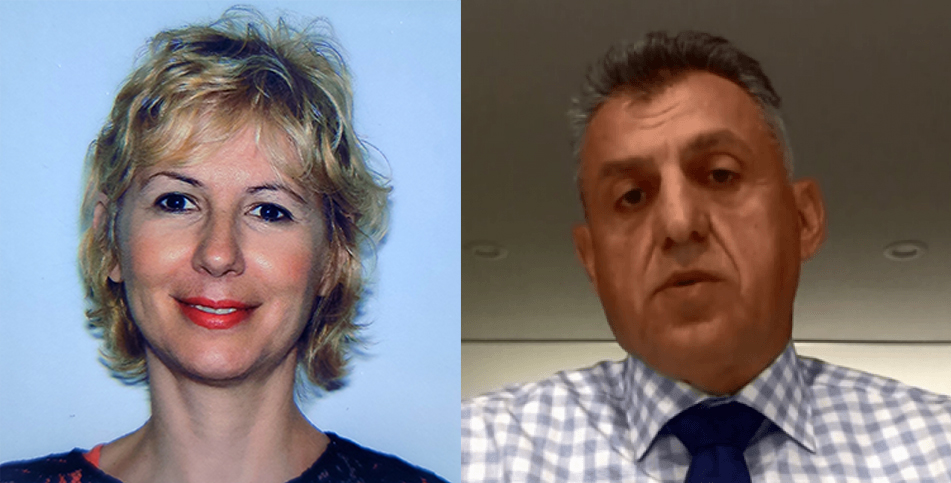
BISEDE ME Z. MARTIN VULAJ, ISH-DREJTOR I KKSHA

July 10, 2020 by dgreca

Vulaj: Europa e ka manifestuar tendencën pro serbe si në të kaluarën ashtu edhe në të tashmen. Tërheqja e amerikanëve nga njëra anë dhe arsyetimi me aktakuzat ndaj UÇK-së në anën tjetër, mund t’i shërbejnë europianëve si mbulesë për t’i mundësuar Serbisë hyrjen drejt Evropës…

Nga Rafaela Prifti/

-Shkrimin tuaj të publikuar para pak kohe me titull “Rreziqet Përpara”, ju e hapni me fjalët: Kosovës po i kanoset një ciklon i vërtetë politik. A mund ta përshkruani këtë ciklon si e shikoni ju? A e kemi përjetuar diçka të tillë më parë në historinë tonë?

-Kushtet e këtij cikloni konsistojnë në tërheqjen e Shteteve të Bashkuara të
acaruara nga mbarëvajtja e procesit dhe rrëshqitjen e Kosovës në duart e një Europe tradicionalisht pro serbe, këto të dyja të kombinuara me ngritjen e aktakuzave ndaj UÇK-së çka iu dhuron europianëve edhe një mbulesë morale.
Europa e ka manifestuar tendencën pro serbe si në të kaluarën ashtu edhe në të tashmen. Tërheqja e amerikanëve nga njëra anë dhe arsyetimi me aktakuzat ndaj UÇK-së në anën tjetër, mund t’i shërbejnë europianëve si mbulesë për t’i mundësuar Serbisë hyrjen drejt Evropës dhe njëherit shansin për t’u arsyetuar përse po i pengojnë shqiptarët të ecin përpara. Në këtë rast ata e lënë Kosovën në një geto politike dhe i përdorin shqiptarët për të amortizuar influencën e Turqisë në Evropë. Unë nuk pretendoj se kjo do të ngjasë por në këto momente, shqiptarët duhet të jenë të vetëdijshëm dhe të përqiqen ta parandalojnë këtë variant që është realisht krejt i mundshëm. Për sa i takon rasteve të ngjashme në histori, mund të
përmend konferencën e Berlinit kur Serbia, Mali i Zi dhe Greqia ngritën
pretendime territoriale ndaj Shqipërisë, dhe pa pjesëmarrje të njëmendtë nga pala shqiptare, gjysma e trojeve u copëtuan. Sot aktakuzat kundër UÇK-së dhe luftërat e brendshme politike midis shqiptarëve e kanë dobësuar procesin negociator nga niveli ku duhej të ishte dhe kanë amplifikuar mundësinë që fati i Kosovës të vendoset nga Fuqitë e Mëdha pa pjesëmarrjen e plotë të shqiptarëve.

-Duke dhënë përshkrimin e ciklonit apo shtrëngatës, a keni synuar të jepni një sinjal alarmi të cilin nuk e kanë ndjerë sa duhet politikanët, apo diaspora? Apo të dyja këto bashkë?

– Po!  Kemi arritur në një pikë kritike, ku duhet të sigurojmë pjesëmarrjen e
vazhdueshme të Shteteve të Bashkuara si edhe hartimin e një strategjie të
njësuar kombëtare. Përndyshe rrezikojmë që çështja e Kosovës të lihet pas dore pafundësisht në rastin më të mirë ose të ketë pasoja të padëshirueshme në rastin më të keq.

-Pak ditë përpara takimit midis Ambasadorit Grenell dhe disa përfaqësuesve të komunitetit në fund të muajit qershor, ju ripublikuat një artikull shkruar nga ju për rolin e diasporës, i botuar për herë të parë në 2013. Aty shtuat një koment se duhet të jesh pjesëtar në proces që të arrish të ndikosh mbi procesin. Kur unë ju pyeta nëse diaspora duhet të jetë pjesëtare në bisedimet që do të mbaheshin në Uashington në fund të qershorit, ju thatë se “deri tani nuk ka luajtur rol konstruktiv.” A jeni i këtij mendimi sot?
 
– Diaspora ka dhënë kontribut gjatë gjithë historisë por tradicionalisht ka mbajtur qëndrim konservativ ose ekstrem. Kështu ndodhi edhe para pak kohe me kritikën e ashpër ndaj procesit negociator dhe administratës. Shumë individë janë pozicionuar madje pa pasur asnjë komunikim me administratën dhe pa pasur njohuri për vetë procesin. Nuk mendoj se kjo ka sjell dobi. Megjithatë, dëshiroj që diaspora të jetë pjesëtare në proces qoftë edhe për ta kuptuar më mirë realitetin e procesit dhe prej andej t’ia transmetoj këtë mbarë diasporës sonë. Për këtë, diaspora do duhej të informohet më mirë dhe ta vendosë pozicionin e vet nisur nga ky informacion dhe jo nga paniku dhe manipulimet.

-A ka pasur reagime për shkrimin tuaj? Çfarë ju kanë thënë politikanët, aktivitstët e bashkësisë?  
– Reagimet kanë qenë pozitive dhe këndvështrimi im i paraqitur aty është
vlerësuar. Kam biseduar me disa politikanë jashtë për ta përforcuar pikën
kryesore. Koncepti ka fituar përkrahje por druaj se interesat partiake do
vazhdojnë të dominojnë mbi ato kombëtare.
-Qeveria e Kosovës krijoi Këshillin e Ekspertëve muajin e kaluar për të cilin
kriktikët thonë se është një shtesë tjetër burokratike. A e shihni se mund të
angazhohet në proces? Për bisedimet Kosovë Serbi, një nga rekomandime tuaja është krijimi i një Ekipi Unik Negociator? Si do të dukej ky ekip?

– Këshilli i Ekspertëve kryen funksione konsultuese dhe u krijua nga zyra e
Kryeministrit për t’i dhënë mundësi të përftojë nga përvoja dhe ekspertiza në fusha të ndryshme. Ky organizëm nuk ka kompetenca vendim-marrje. Unë sugjerova krijimin e një ekipi negociator që përfaqëson partitë e mëdha shqiptare në parlament, dhe ku secili përfaqësues është pjesëmarrës në vendim- marrje. Krijimi i këtij organizmi sjell stabilitet politik pa zgjerim të qeverisë.
Në këtë moment maxhoranca qeveritare (61 nga 120 vota) është e brishtë dhe delikate ndaj presioneve. Pjesëmarrja e partive politike në ekipin negociator efektvisht e zgjeron qeverinë duke shangur makinacionet politike për ta rrëzuar atë, dekretimin e VV si fituese e zgjedhjeve të fundit për të krijuar qeverinë e re, pritjen për tu përmbushur afatin kohor sipas Kushtetutës dhe kalimi i kompetencave tek partia tjetër për të krijuar qeverinë. Shumë humbje kohe kur nuk kemi kohë për të humbur, Përfshirja e opozitës me të drejtë vendim-marrje në ekipin negociator krijon stabilitetin e nevojshëm politik për të çuar përpara dhe njëherit rrit besimin dhe kredibilitetin e procesit në sytë e popullit.

-Ambasadori amerikan Frank Wisner, ish emisari i bisedimeve për statusin e Kosovës, e ka cilësuar situatën e krijuar si krizë politike dhe kushtetuese? Cili është komenti juaj?

– Mendoj se është krizë politike dhe jo konstitucionale. Deklarata shokuese
nga ana e Prokurorit Special praktikisht e ka lënë anash Presidentin dhe më së paku është bërë pengesë për bisedimet. Megjithëse nuk janë paraqitur formalisht aktakuzat, nuk ka shumë gjasa që bashkësia ndërkombëtare të ulet në bisedime me Presidentin derisa çështja të qartësohet dhe ndërsa maxhoranca e qeverisë është shumë e pakët. E gjitha kjo krijon paqëndrueshmëri politike që duhet të tejkalohet për t’i hapur rrugën Kosovës të ecë përpara. Gjithsesi, nuk është krizë kushtetuese.

-Ambasadorët amerikanë Frank Wisner and Nicholas Burns kanë shprehur
kundërshti për sa i takon mbajtjes së bisedimeve në Shtetet e Bashkuara duke argumentuar se kjo e thellon ndarjen midis Europës dhe Amerikës. Si mendoni ju?

– Z. Wisner and z. Burns janë diplomatë me shumë përvojë dhe besoj se e shikojnë këtë çështje nga një këndvështrim tradicional diplomatik. Faktet kane tregua” se midis Evropës dhe Amerikës ekziston ndarje e thellë për procesin e paqes në Kosovë. Shpallja e Prokurorit Special (i cili e pranoi se synonte të ndikonte tek bisedimet) mund të shihet si manifestim i dallimeve mes tyre. E vërteta është se Evropa e ka pasur në dorë këtë çështje qysh nga mbarimi i luftës në 1999.
Pas 8 viteve pa rezultat, ishte Amerika që doli përpara dhe e shpalli Kosovën të pavarur. Përsëri Evropa kryesonte në procesin e “dialogut” që nga viti 2011 pa hapa të dukshme përparimi. Edhe pasi Kosova i përmbushi të gjitha kushtet për liberalizimin e vizave, Evropa nuk e mbajti fjalën as për atë. Në mënyrë konsistente Evropa është treguar e pazonja kur vjen fjala te zgjidhja e çështjes së Kosovës dhe për ta mundësuar atë të ecë përpara drejt të ardhmes evropiane, Prandaj, pa pasur Amerika vendin drejtues ky proces nuk shkon askund.

-Z. Harry Bajraktari ka bërë thirrje për ta shpërndarë Gjykatën Speciale të Kosovës duke e quajtur humje kohe, burimesh dhe për ndërhyrje në procesin politik? Ç’mendim keni ju?
 
– Harry Bajraktari është aktivist, protagonist dhe investues në Kosovë. Ai
është një nga njerëzit më të rëndësishëm të bashkësisë sonë për çështjen e
Kosovës dhe shumë të tjera. Thirrja e tij është shfaqje e acarimit me
mënyrën sesi e ka trajtuar bashkësia ndërkombëtare çështjen e Kosovës dhe reflektim i padrejtësisë së papranueshme me të cilën shihet dhe trajtohet Kosova. Mendo për një moment se kur të paraqiten aktakuzat nga Gjykata Speciale, numri i kosovarëve të akuzuar për krime lufte është shumë më i madh sesa i serbëve. Kjo është e paimagjinueshme dhe e paarsyetueshme!
Shqiptarët duhet të bëhen bashkë dhe të hartojnë një strategji kombëtare për këtë situatë dhe për të dalë prej saj. Evropa gjthmonë i ka favorizuar serbët ndërsa i ka parë shqiptarët me skepticizëm. Ne mund të gjendemi në një situatë ku europianët e kanë gjetur justifikimin për tu dhënë dorën serbëve dhe shqiptarët t’i lënë në një geto politike për t’i pasur si mburojë ndaj influences së Turqisë në Evropë. Prandaj mendoj se shqiptarët duhet t’i mbajnë parasysh të gjitha variantet e mundshme por mos të nguten.
Shqiptarët duhet t’i kuptojnë mirë pasojat që mund të sjellë çdo hap që hedhin përpara se të marrin një vendim dhe mbi të gjitha, të mos e rrezikojnë marrëdhënien me Amerikën. Nëse ka një rrugëzgjidhje, ajo kalon nga Uashingtoni.

-Përfaqësuesit e Prishtinës dhe Beogradit do mbajnë takim të kryesuar nga Presidenti i Francës Emmanuel Macron dhe Kancelarja gjermane Angela Merkel. Ambasadori Grenell ka publikuar këtë deklaratë: Jemi të kënaqur që Evropianët do organizojne takim me 10 korrik per bisedime te metejshme me Kosoven dhe Serbine. Çfare prisni ju nga takimi zoti Vulaj?

– Fakti qe takimi po mbahet ne nivelin e Makronit dhe Markel eshte diçka pozitive por historia e Evropes me Kosoven me ben te ndihem skeptik. Besoj se per te rikthyer besimin tek procesi dhe per te arritur sukses, duhen realizuar kater pika:

1. Miratimi i liberalizimit te vizave. Çeshtja e vizave nuk eshte e lidhur me dialogun por do jepte nje sinjal te qarte se Evropa ka marre drejtim serioz dhe te koordinuar.

2. Nderrimi i synimit te dialogut nga “normalizimi i marredhenieve” ne “njohje dypaleshe”. Kjo do harmonizonte pozitat e Evropes dhe Amerikes ashtu si paraqitet ne dy letrat e Presidentit Trump drejtuar presidenteve te Kosoves dhe Serbise. Me kete sigurohet edhe mundesia qe Kosova te arrije shtetesine e vet dhe te mund te integrohet ne NATO dhe OKB dhe eventualisht ne BE. Me formatin e tanishem kjo nuk eshte e qarte. Ne fakt, ka mundesi qe formati aktual te mundesoje Serbine qe te plotesoje artikullin 35 te kerkesave te BE dhe t’i jape dore Serbise te ece perpara dhe potencialisht te lere Kosoven aty ku eshte sot.

3. Evropa duhet të kerkoje nga 5 vendet anetare te BE-se qe nuk e njohin Kosoven qe t’i japin siguri se ato do ta njohin ose, se, te pakten, do te abstenojne nga procesi, qe te mos te behen pengese siç kane qene deri me sot edhe per çeshtjen e vizave.

4. BE duhet te jape nje program per bisedimet, ku paraqiten çfare pritet nga takimet ne momentin kur fillojne dhe te shmangen sorrollatjet e panumerta qe kane ndodhur me proceset e kaluara europiane.

Mendoj se te kater pikat jane shume te realizueshme dhe do te siguronin jo vetem besim tek procesi por edhe suksesin e tij. Pa u ndermarre keto veprime, kam ndjenjen se do hyjme edhe nje here ne rruge pa drejtim ku nuk ka as rezultate te qarta dhe as afate kohore. 
Filed Under: Interviste Tagged With: Martin Vulaj, Rafaela Prifti

CONVERSATION SERIES WITH MARTIN VULAJ, FORMER DIRECTOR OF NAAC

July 9, 2020 by dgreca

By Rafaela Prifti

 “Albanians must come together and devise a national strategy,” says Martin Vulaj on Kosova-Serbia negotiations. “They need to consider all of the consequences of each action before making decisions and, above all, they must never threaten their relationship with the United States.”  At the end of our conversation, he suggests four items for the upcoming summit led by Europeans.

Dielli: Recently you wrote The Dangerous Road Ahead, which you open with these words: “Kosova is facing a perfect political storm on the immediate horizon.” Can you describe the political storm as you see it? Have we ever been “in a perfect storm” before? Is there a historical precedence to be considered? 

Mr. Vulaj -The storm that could line up perfectly consists of the U.S. walking away from the talks out of frustration and leaving Kosova back in the hands of a traditionally pro Serbian Europe combined with the KLA indictments providing a thin moral cover to Europe. Europe has demonstrated their pro Serb bias not only historically but also recently and, with the US out and KLA indictments as cover, my concern is that they could use this cover as an excuse to enable Serbia to move forward towards Europe while justifying why they are keeping the Albanians back.  They could leave Kosova in a political ghetto and use the Albanians as a buffer against Turkey’s influence in Europe. I am not saying that this is the likely outcome but this is now a clear possibility with which the Albanians must be aware and actively working to prevent.

In terms of historical precedents, the only one I could think of that is somewhat similar is the time of the Berlin conference when Serbia, Montenegro and Greece made claims on Albanian lands and, without meaningful Albanian participation, half of those lands were ceded to those claims.  The KLA indictments and the political infighting amongst Albanians make participation in the current processes less meaningful then it otherwise could be and increases the likelihood that Kosova’s fate will be decided by the great powers without full participation by the Albanians.

Dielli: By making a statement about a perfect political storm, do you wish to impress a sense of urgency that you feel is not being recognized by politicians, or by the diaspora? All of the above? 

Mr. Vulaj -Yes!  We are at a critical juncture.  We must ensure the continued participation of the United States and the Albanians must come up with a united national strategy or risk letting the Kosova issue endlessly drift without resolution at best or an unfavorable outcome at worst.

Dielli: Prior to organizing the Zoom meeting of Ambassador Grenell with community representative at the end of June, you reposted an article on the role of the diaspora from 2013 along with the comment about being or taking part in the process to influence the process. I asked you if diaspora should sit at the talks and you said that it has not been constructive so far. What are your thoughts today? 

Mr. Vulaj – The diaspora has consistently been helpful throughout history but, traditionally, they always take a more conservative or extreme position.  That has been the case recently as well with the heavy criticism of the process and the Administration.  Many have taken these positions without any interaction with the Administration and without actually knowing much about the process.  I don’t think this has been helpful.

However, I would like to see the diaspora as part of the process if only so we could better understand the realities of the process and so this reality can then be communicated to the greater diaspora.  In this manner, the diaspora could be better informed and form positions based on information rather than fears and manipulations

Dielli: Any feedback on your Opinion piece? Have you heard from politicians, community activists?  

Mr. Vulaj: The feedback has been quite positive and my perspective has been valued.  I have had several conversations with politicians overseas to reinforce my message.  The concept has been supported but I am concerned that party interests will continue to dominate national ones.

Dielli: Last month, Kosova Government has put in place a Council of Experts. Some critics see it as an additional bureaucratic body. Would it be part of the process? With regards to negotiations of Kosova and Serbia, you suggested A Unity Team? How do you see it?

Mr. Vulaj – The Council of Experts is an advisory body that the PM has created to enable him to draw on the experience and know-how of experts from various fields.  They have no decision making capacity.

What I proposed is the creation of a negotiating team that represents all of the major Albanian parliamentary parties whereby each representative would fully take part in the decision making process.  By creating this organ, you create political stability without the need for the expansion of the government.  The government currently has a scant majority (61 out of 120 votes), is fragile and vulnerable to pressure.  With the full participation of the political parties in the Negotiating team you effectively expand the government without the need to go through the political machinations of bringing the current one down, decreeing VV (as winner of last elections) to create new government, waiting for their constitutionally allotted time to expire, and then moving on to the next party to create the government.  It is a lot of wasted time when we have little to spare.  The inclusion of the opposition in a decision making capacity, into the negotiating team creates the political stability required to go forward and brings more faith and credibility to the process from the people’s perspective.

Dielli: Ambassador Frank Wisner, former US envoy ofKosova peace talks, has characterized the present situation as a political and a constitutional crises? What is your comment?

Mr. Vulaj – I do think it is a political crisis but not a constitutional one.  The shocking announcement of the Special Prosecutor has effectively sidelined the President and, at the very least, disrupted the talks.  Although there is no formal indictment, it is unlikely that the international community will interact with the President until the matter is cleared up and the government has a very thin majority.  All of this creates political instability which must be overcome for Kosova to move forward.  However, there is no constitutional crisis.

Dielli: Ambassador Wisner and Ambassador Burns have stated their opposition with respect to holding the summit in the US. Their argument is that it would deepen the divide between Europe and US. What do you say to that?

Mr. Vulaj – Mr. Wisner and Mr. Burns are very experienced diplomats and, I believe, they are looking at this issue from a very traditional diplomatic viewpoint.  The fact is however that there already is great division between the US and Europe on the Kosova peace process.  In fact, the announcement of the Special Prosecutor (which by his admission was aimed at impacting these talks) may very well be a manifestation of that division.  The truth is that Europe has had this matter in their hands since the end of the War in 1999.  After 8 years of futility, it was the US who stepped forward and declared Kosova independent.  Europe again has had the “dialogue” process since 2011 with no signs of significant progress.  Even after Kosova fulfilled all of the necessary conditions for the liberation of visas, the EU could not even keep their promise to do even that.  Europe has consistently failed when it comes to resolving Kosova’s issues and enabling her to move forward into her European future.  Therefore, unless we have US leadership this simply will not happen.

Dielli: Mr. Harry Bajraktari has called for disbanding Kosova Special Court, on the grounds of it being “a waste of time, resources and interfering with the political process”. What are your thoughts? 

Mr, Vulaj -Harry Bajraktari has long been an activist, protagonist and investor in Kosova.  He is amongst the most important members of our community when it comes to the Kosova issue and more.  His call is a manifestation of frustration with how the international community has handled Kosova and a reflection of a fundamental unfairness with which Kosova is being viewed and treated.  Just think for a second that when these indictments come down by the Special Court, there will have been far more Kosovars indicted for war crimes than Serbs!   That is unthinkable and unjustifiable.

Albanians must come together and devise a national strategy for dealing with and emerging from this situation.  Europe has always viewed Serbia favorably and Albanians with great skepticism.  We could find ourselves where Europe has the excuse they need to enable Serbia to move forward and keep the Albanians in a political ghetto as a buffer against the influence of Turkey in Europe.  Therefore, I believe that the Albanians must look at all options that they have but they also must not be rash.  They need to consider all of the consequences of each action before making decisions and, this above all, they must never threaten their relationship with the United States.  If we have a way out, it is through Washington.

Dielli: Tomorrow the representatives of Prishtina and Belgrade will attend a summit led by France President Emmanuel Macron and Germany Chancellor Angela Merkel. Ambassador Grenell has issued the following statement: “We are pleased to see the Europeans will convene a meeting on July 10thfor further discussions with Kosovo and Serbia. We offer our total support and are grateful for their leadership”. What are your expectations if any Mr. Vulaj?

Mr. Vulaj – The fact that the process is being hosted at the level of Macron and Merkel is a positive sign but Europe’s history with the Kosova issue still leaves me skeptical.   I believe that in order to restore faith to the process and have a successful outcome, four things should be done:

1. Approve the liberalization of visas. The visa issue is not tied to the process but it would be a small clear sign that Europe is increasingly serious and increasingly coordinated.

2. Change the goal of the dialogue from “normalization of relations”to“mutual recognition”. This would harmonize the EU position with that of the United States as reflected in the two letters from President Trump to the presidents of Kosovo and Serbia. It would also ensure that Kosova would be able to complete her statehood and be enabled to be integrated into NATO and the UN and eventually the EU. Under the current format that isn’t necessarily the case. In fact, it is possible that the current format would enable Serbia to fulfill her chapter 35 requirements of the EU and enable Serbia to move forward while potentially leaving Kosovo where it currently is.

3. Europe most work with the 5EU members that do not recognize Kosovo to secure that recognition or, at the very least, abstain from the process so that they are not an impediment as they have been even with the visa issue

4. The EU should provide a roadmap for the talks. This would set expectations from the start and prevent the aimless drift that have defined past European processes.

I think that all four points above are very doable and would ensure both faith in the process and its success. In the absence of such action, I am concerned that once again we will enter into the aimless drift with no certain outcomes and no timeline

Filed Under: Featured Tagged With: conversation, Former Director of NAAC, Martin Vulaj, Rafaela Prifti

INTERVIEW WITH MS. SOPHIA ZAYAS, BRONX REGIONAL REPRESENTATIVE AT THE NY GOVERNOR OFFICE

July 3, 2020 by dgreca

BY RAFAELA PRIFTI/

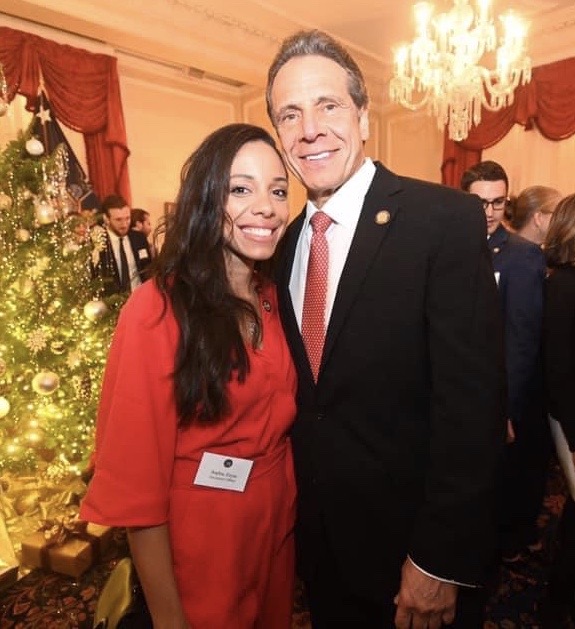
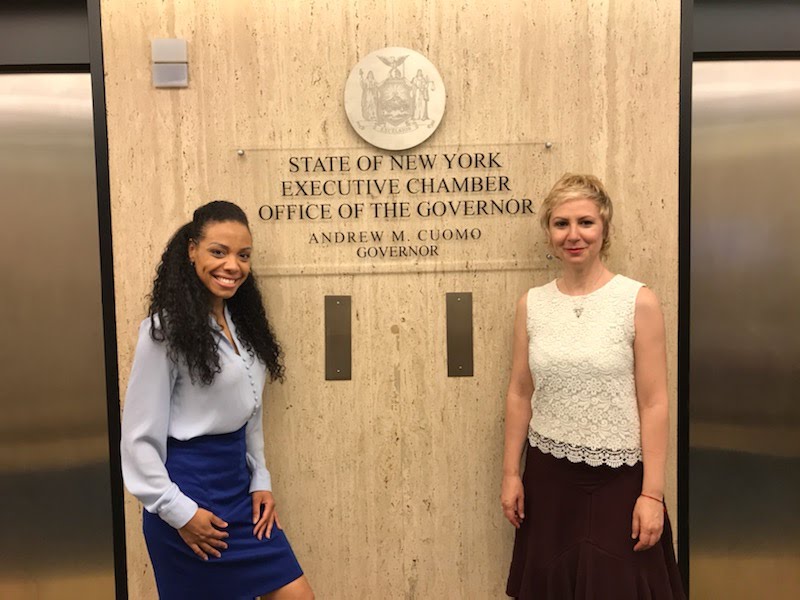
Ms. Sophia Zayas, Bronx Representative at the Governor Cuomo’s Office of Regional Affairs, talked to the English Editor of Dielli (The Sun) about the dramatic impact of the pandemic to the community she serves and the strength of cultivating relationships that unite us. Her immigrant roots make her feel at home in the densely populated and diverse neighborhoods of the Bronx including a large Albanian-American community. She has attended Albania’s and Kosovo’s Independence Day along with Albanian representatives, officials, families and guests, who remember Ms. Zayas hand-signing of the eagle and saying in perfect Albanian, “Hej Shqipe!” a common greeting among fellow Albanians. All those memories became more endearing in the months of the pandemic that started in March followed by lockdown orders in New York, which was suddently the epicenter of a major health crisis. In those days most New Yorkers, overwhelmed and anxious, watched Governor Cuomo’s daily briefings to stay informed and learn how to manage or practice a new kind of living in the time of Coronavirus.

I conducted my interview with Sophia Zayas in two parts, starting at the end of May. At the time, some areas in the Bronx were more affected compared to other boroughs. The Regional Representative worked on the front lines with community leaders, advocates and residents. I asked her to describe the response specifically to those 5 zip codes, where at least one has a large Albanian population. “I communicated on a daily basis with local electeds, community representatives and related the feedback to Albany and to the Governor. One contributing factor of the situation was the large influx of impoverished people that highlighted health disparities. I was able to communicate the need of the significantly affected areas to the Governor, who responded by bringing more testing to the South Bronx. A good step in our response to the unfolding heath crisis was the antibody testing. It was the outcome of effective communication with churches and members of the community. At the same time, the response in Zip codes that were less affected focused on providing more PPE, more hand sanitizer from the state, and equipment to protect themselves,” said the Governor’s Bronx Representative. When I addressed a shared concern about testing capacity in New York, Ms. Zayas recalled the “rough patch between the Governor and the Federal Government to address the need to increase testing”. She added: “As a result of those efforts, COVID diagnostic testing and antibody testing are available to urgent care centers, pharmacies, churches and grocery stores, in order to get employees tested. In addition, antibody testing was brought to supermarkets, although it wasn’t promoted, it was only for random sampling. It has a great success rate and the community response was immediate. They appreciated seeing that the Governor’s Office and Department of Health were out there and concerned about their needs.” Talking about NAICHA – Housing Authority – which is overrun with cases, Sophia noted that the need came to the regional representatives and it was addressed by the Governor. “They developed a program,” said Ms. Zayas, “consisting of ready responders such as paramedics and practitioners who are currently on-site at the housing facilities. Residents can call the ready responders to their doors for their health needs.” In my next question I brought up the preparations for a possible second wave, that was much talked about in the media. She indicated that while trying to be optimistic about getting through the worst time, this is no time to put the guard down. Experts have stated that a second wave is probable. “As we go into Phase One of the reopening,” the Bronx Borough Gubernatorial official said, “Pelham Gardens which has a significant number of Albanians, has a dramatically higher Infection rates compared to the city. My job as the Regional Rep. as we’re going into phase one is to listen and console people who are in quarantine and under lockdown orders, but also to encourage mask-wearing and take preventive measures. People have been distracted because of the tragedies, looting and rioting. I’m trying to put the focus on putting a mask and social distancing and to be careful. I think we’re at a good place in terms of the COVID cases as a state. The Bronx has to be mindful of how we go about moving forward.” 

She paused briefly to make a point about the protest and the health risks: “There was an uproar in our state and country. The protesters, marchers, looters and rioters on the street, are not practicing the safety measures which could mean a possible risk of an increase in infection cases. The Governor fears that if we start feeling overconfident with the low numbers now, we may become less vigilant in facing the virus. Often when people don’t read or hear about it, they start thinking the virus must be gone. That is not the case.”  She believes that under the strong leadership of the Governor the community stepped up to meet the challenge of an incredible magnitude and impact. From it, she acknowledges the valuable lessons of managing a health crisis and battling a pandemic. With regard to the economic impact, I asked her to share how the community felt about the first phase of reopening, which was on June 8th while protests had erupted, violent at times, and were continuing for days in our neighborhoods. “In light of protests, we have to pay close attention to what is happening in the region. COVID-19 is still in focus, while we have to stay alert to keep people from destroying properties and businesses that communities had worked hard to build for years. Reopening of construction and manufacturing companies and certain businesses who sell food is good for the economy and the community, as we they continue to practice social distancing and common sense,” said Sophia.

We continued the second part of the interview, when 100 days of the pandemic had passed from the date the first case was identified. Bronx had been a hotspot that experienced a significant rise of COVID-19 cases, a respiratory disease caused by a highly contagious virus. In the fourth month of the global health crises, the threat of the virus has not diminished. In one of the press briefings I attended, Governor Cuomo said that there is another virus in the society, “the virus of racism”. As protesters took to the streets to demand racial equality, the riots again impacted some boroughs like Brooklyn, Manhattan and the Bronx more significantly. There were sections in the Bronx like Fordham, Grand Concourse, Burnside, that saw a lot of devastation. The excitement of the phase one of the reopening was affected by a lot of destruction of small businesses, the looting and rioting in the streets and in our own community. 
“Albanian businesses were not affected by the looters and the rioters,” remarked Sophia. “Areas with Albanian businesses such as Morris Park were ready. They kept united and they didn’t allow for looters to come in their neighborhoods, whereas some Latino and Black-owned businesses were torn apart. Burnside, Grand Concourse and Fordham have minority owned businesses. Sadly, the looters ended up hurting their own community. I visited these areas with the President of The Bronx Overall Economic Development Corporation, Marlene Cintron, to assess the damage and assist through the Department of Financial Services, and loan programs.”

Ms. Sophia Zayas, who holds a College Degree in Business Law, is the first woman in her family to hold a state-level office position. I asked her to take me through her work day. Sophia answered: “The day of a Regional Rep is pretty unpredictable. I have been a Rep for 2 years. A pre-pandemic workday would include a range of things: such as setting out an agenda,  working on regional reports, expense reports to brief the Governor, emails from Albany, scheduling maybe a conference or planning events for the Governor whether it’s visits, scoping out places, speaking to people in the community, speaking to elected officials. One of the rep’s tasks is planning a program. who do we want to see in the audience, who do we invite, what is the topic, what will the Governor address. It is very challenging and overwhelming. We are molded for perfection as the governor is a perfectionist. Staying informed about the regional issues and its needs and also communicating effectively with the elected officials is of primary importance. I ask them what issues need to be addressed or if there’s anything I could do for them. I reach out to advocates or they could reach out to me. The advocates are non-profit organizations. Community residents can reach out about housing. We do constituency work.  If they’re not a part of my region I can refer them to a colleague or agency that can help them. There’s always action going on. The Reps know each other on a familial level and we work endless hours together. Our job is stressful but it comes with rewards. There are times where I’ve been upset and stressed out because something doesn’t turn out the way I want.”

I asked if she could share a moment that had made her proud.

Ms. Zayas said that the Sheridan Expressway was a huge transportation project that is still going on now. “The Governor wanted to come to the Bronx to announce it. They gave me 18 hours to build an event for the Expressway. I didn’t know how I was going to get 400 people in a room in less than 18 hours. I made calls and sent emails, reached out to people and the school we were close to. We ended up with 500 people in the auditorium. The Governor was very pleased and congratulated me so I felt accomplished in my job as a Rep,” For Sophia, part of that event comes with cultivating relationships in the community.” It was a great segue to my last question about her connections with the Albanian community and who was the first Albanian she had met in the Bronx. “The first Albanian I met was Esad Rizai. I introduced myself as the new Bronx Regional Representative. In observance of the Albanian independence. I brought the proclamation on behalf of the Governor and presented it to the Albanian-American Society Foundation. We became great friends. Albanians are very welcoming and accepting. I feel that my network of Albanians is wide, I’ve been able to cultivate relationships with the Albanian community. This past year at the Kosovo Independence event I  presented the proclamation to honor posthumously Ali Rizai, Esad’s father, and the work he’s done. I brought Lieutenant Governor Kathy Hochul to honor Albania and Kosovo Independence at the Borough Hall at the Bronx Borough President Office. The Lieutenant Governor presented a proclamation on behalf of Governor Cuomo to the whole Albanian community and organizations. I value the good relationships of its members with Governor Cuomo. Whatever their needs might be, I try my best to provide services to keep them united.”

Filed Under: Featured Tagged With: Interview, Rafaela Prifti, Sophia Zayas

US Special Envoy Urges Kosovo Politicians to Move Forward with Talks

June 30, 2020 by dgreca

By Rafaela Prifti/

Dielli reported on the Zoom meeting of the US Presidential Envoy on Kosovo Serbia dialogue with community representatives on Friday.  

A Special Prosecutor in the Hague announced formally existing charges against Kosovo President Thaci, while he and Prime Minister Hoti were on their way to Washington for a round of talks with Serbia’s leader at the White House. On his Tweeter account on June 25th Ambassador Grenell acknowledged the decision of Mr. Thaci and then Mr. Hoti to return to Kosovo, while asserting that “we look forward to rescheduling the meeting soon”. 

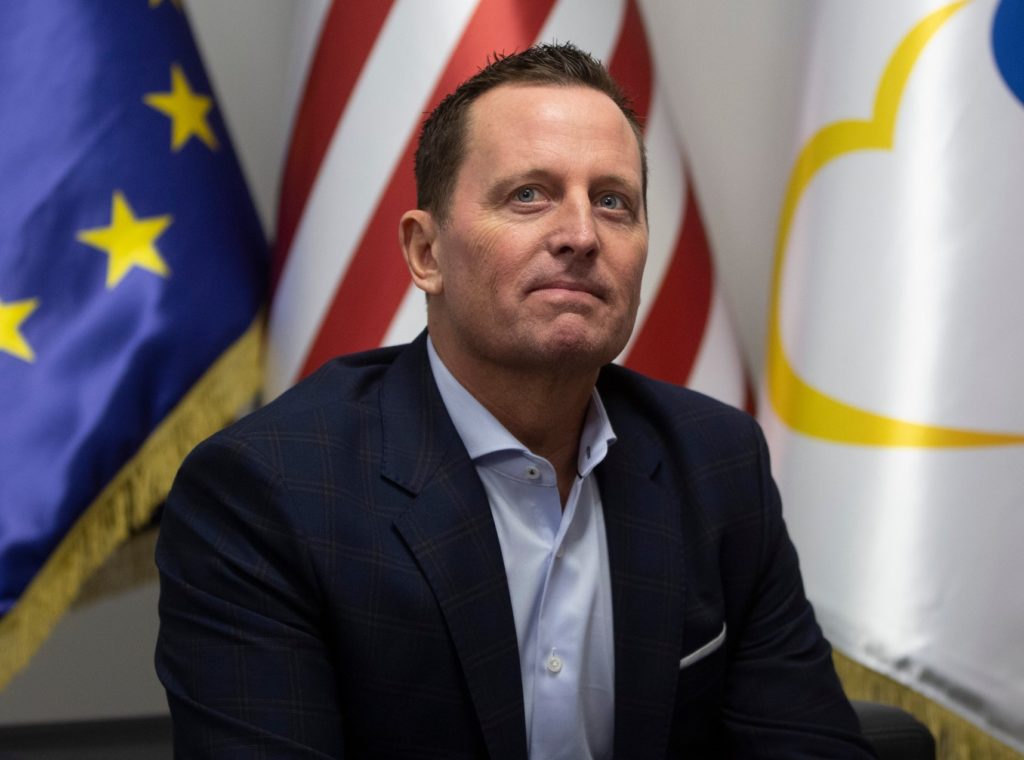
The cancelled talks led by US prompted a call with the Albanian-American community. Leading up to it, Ambassador Grenell had a briefing with President Trump, according to press reporting and the organizer of the call, Martin Vulaj. 

On Friday, Ambassador Grenell met online Elmi Berisha, President of Pan-Albanian Federation of America VATRA, Martin Vulaj, former Executive Director of NAAC, Ana Cenaj, Representative of Albanian Cultural Center of Dallas Community and Uk Lushi of the Atlantic Battalion. During the call, Special Envoy on Kosovo Serbia Dialogue indicated that having the approval of the President for the dialogue resumption is of particular importance now, said Mr. Vulaj. The stated concern was that the President may have concluded that the parties are simply not ready for the deal and may well have the envoy assigned to other tasks. Reportedly, Ambassador Grenell did secure the green light to restart the dialogue under his auspices. On behalf of VATRA, its President Elmi Berisha expressed full confidence in President’s Trump administration. In the call, the American diplomat is reported to have said that Kosovo politicians have to organize and express their intentions with respect to restarting the dialogue. Mr. Grenell’s hope is to continue the process with rescheduling a meeting in about a month’s time, said Mr. Vulaj, who set up the call. According to him, Ambassador Richard Grenell indicated that the process consists of two phases: the first one is the economic normalization which he is working on and, the second is the political agreement phase where the engagement of Europeans comes in as the US Envoy views it as primarily their responsibility. The participants on the call were assured that there never was a secret deal or plan for a fast deal and also land swaps and such were not only never on the table but never discussed at all in Mr. Grenell’s presence. He reiterated his position and strong belief in improving economic relations as the economic growth that creates jobs and stabilizes migration can create an environment where political agreements are possible. Former Head of NAAC said that Ambassador Grenell was critical of Europeans’ narrow focus on political issues and expressed frustration with the Europeans’ failure to approve the liberalization of visas for Kosovo. “The takeaway,” said Mr. Vulaj was that “Ambassador Grenell stressed the urgency for the Kosovars to get organized and determine who will be sitting at those two seats at the table in the talks led by the US.” 

Filed Under: Opinion Tagged With: Grenell, Rafaela Prifti, US Special Envoy Urges Kosovo Politicians to Move Forward with Talks

TALKS CANCELED- INDICTED PRESIDENT THACI REACTS TO CHARGES

June 27, 2020 by dgreca

By Rafaela Prifti

“Nobody can rewrite the history of Kosovo,” said President Thaci in his first reaction to the charges brought against him by the Special Kosovo Court in the Hague on Wednesday. He accused the international justice of “rewriting history” after he was charged with war crimes linked to the 1990s conflict with Serbia.

Three days before talks between top level officials of Kosovo and Serbia were on track to start at the White House, the Hague based Specialist Prosecutor’s Office released a Press Statement. The EU-backed body announced the filing of a ten-count indictment with the Kosovo Specialist Chamber, charging Kosovo President and nine others with a range of crimes against humanity and war crimes. The prosecutors said the charges were laid in April before being publicly unveiled on Wednesday. “The Indictment is only an accusation. It is the result of a lengthy investigation and reflects the SPO’s determination that it can prove all of the charges beyond a reasonable doubt,” the statement read.A Specialist Chambers Pre-Trial Judge has six months to review the indictment to decide on whether to confirm the charges. The assessment by a judge at the Kosovo Specialist Chambers will determine if the case goes to trial. According to the press release, the Specialist Prosecutor deemed it necessary to issue this public notice because of repeated efforts by Mr. Thaci and another of the accused, former head of Kosovo’s parliament,Kadri Veseli, to obstruct and undermine the work of the SPO. Mr. Thaci, who had accepted the invitation to attend the planned talks with Serbia’s leadership and was expected in Washington on Saturday, has cancelled the trip.Kosovo’s new Prime Minister, Abdullah Hoti, who was supposed to lead Kosovo’s delegation, cited the draft indictment as the reason for not attending the meeting at the White House: “I have informed Ambassador Grenell that I could not attend the June 27th meeting at the White House”, the Prime Minister said on Twitter. The US Envoy for the Balkans and broker of the talks, Ambassador Richard Grenell,announced via his Tweeter page that the event was rescheduled.

Last week, shortly after Ambassador Grenell had confirmed the revival of the negotiations led by US, the EU’s newly appointed envoy for peace talks, Miroslav Lajcak, flew to Belgrade and Prishtinain what appeared to be the EU reacting to being sidelined. International observers viewed “the Washington summit” as the key step in resolving the conflicts between Kosovo and Serbia.Some maintain that the recent spat between the US and Europe over the Balkan talks gives an opening for the European Union to preside over the negotiations. EU-mediated talks between the Balkan neighbors stalled in 2018. Although the impact of the indictment is unclear, the manner of the court’s announcement has raised a few questions. Kosovo Specialist Chamber was set up to examine allegations laid against Mr. Thaci in a 2011 report by the Council of Europe.

Back in March 2020, Kosovo’s President Hashim Thaçiand his Serbian counterpart were at the White House on their respective visits to the United States. They met with Secretary of State Mike Pompeo, as well as US Deputy Assistant Secretary of State and US Special Envoy for the Western Balkans, Matthew Palmer.

Today Mr. Thaci is on his way back to Kosovo from Albania. He said on his Facebook Page that he will address his compatriots on Sunday.

Filed Under: Opinion Tagged With: Indicted President Thaci, Rafaela Prifti, Reacts to Charges, Talks Canceled

  • « Previous Page
  • 1
  • …
  • 40
  • 41
  • 42
  • 43
  • 44
  • …
  • 52
  • Next Page »

Artikujt e fundit

  • PËR NJË NORMALITET NË MARRËDHËNIET SHQIPËRI-KOSOVË: JO FJALË BOSHE!
  • Ballafaqimi me të kaluarën, detyrë morale dhe parakusht për drejtësi, paqe dhe stabilitet afatgjatë
  • Ditët e fundit të kompozitorit të Himnit të Shqipërisë…
  • Butrinti dhe vija kushtetuese që Shqipëria nuk duhet ta kalojë
  • Universiteti i Tetovës lindi si “dielli pas errësirës”
  • MIRO TËRBAÇJA, SHQIPONJË E HISTORISË
  • Hirësia e Tij Nikodhimi, Peshkopi i Bostonit dhe Kryepeshkopatës Ortodokse Shqiptare në Amerikë kreu vizitë 10-ditore në Shqipëri
  • Shqipëria dhe Kosova në Bordin e Paqes: Nga historia e plagëve drejt arkitekturës së paqes globale
  • PAQE PËRMES FORCËS, DREJTËSI QË GARANTON STABILITET, JO PASIGURI
  • Kosova pays the price as its liberation leaders are persecuted, not prosecuted
  • Çfarë sjell shkretimi shpirtëror në një tjetër shekull zhgënjyes përmes antologjisë së nobelistit Eugenio Montale
  • FAN (1971) / “TË PISH E TË HASH NË SHQIPËRI” — REPORTAZHI EKSKLUZIV BOTËROR I TELEVIZIONIT ZVICERAN
  • Folklori çam, i gjallë edhe në botën moderne!
  • Milan Shuflaj, e vërteta historike dhe martirizimi i lirisë akademike në Evropë
  • Kontributi i Prof. Emeritus Injac Parrinos në shkencat albanologjike

Kategoritë

Arkiv

Tags

albano kolonjari alfons Grishaj Anton Cefa arben llalla asllan Bushati Astrit Lulushi Aurenc Bebja Behlul Jashari Beqir Sina dalip greca Elida Buçpapaj Elmi Berisha Enver Bytyci Ermira Babamusta Eugjen Merlika Fahri Xharra Frank shkreli Fritz radovani Gezim Llojdia Ilir Levonja Interviste Keze Kozeta Zylo Kolec Traboini kosova Kosove Marjana Bulku Murat Gecaj nderroi jete ne Kosove Nene Tereza presidenti Nishani Rafaela Prifti Rafael Floqi Raimonda Moisiu Ramiz Lushaj reshat kripa Sadik Elshani SHBA Shefqet Kercelli shqiperia shqiptaret Sokol Paja Thaci Vatra Visar Zhiti

Log in

This website uses cookies to improve your experience. We'll assume you're ok with this, but you can opt-out if you wish. Cookie settingsACCEPT
Privacy & Cookies Policy

Privacy Overview

This website uses cookies to improve your experience while you navigate through the website. Out of these cookies, the cookies that are categorized as necessary are stored on your browser as they are essential for the working of basic functionalities of the website. We also use third-party cookies that help us analyze and understand how you use this website. These cookies will be stored in your browser only with your consent. You also have the option to opt-out of these cookies. But opting out of some of these cookies may have an effect on your browsing experience.
Necessary
Always Enabled
Necessary cookies are absolutely essential for the website to function properly. This category only includes cookies that ensures basic functionalities and security features of the website. These cookies do not store any personal information.
Non-necessary
Any cookies that may not be particularly necessary for the website to function and is used specifically to collect user personal data via analytics, ads, other embedded contents are termed as non-necessary cookies. It is mandatory to procure user consent prior to running these cookies on your website.
SAVE & ACCEPT