• Home
  • Politics
  • Opinion
  • Culture
  • Sports
  • Economy
  • Interview
  • Reporting
  • Community
  • Vatra

Dielli | The Sun

Albanian American Newspaper Devoted to the Intellectual and Cultural Advancement of the Albanians in America | Since 1909

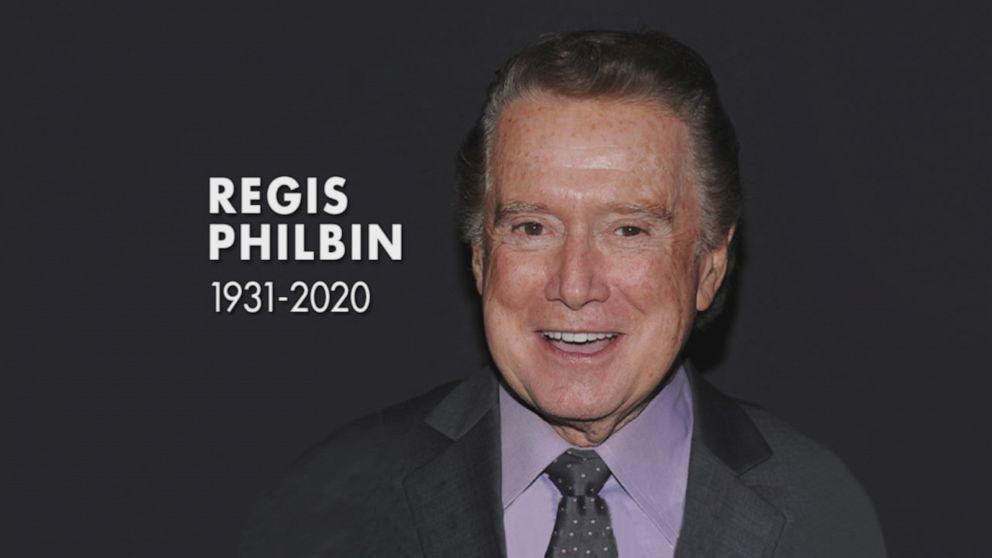
HOW WE HONOR REGIS PHILBIN

August 3, 2020 by dgreca

By Rafaela Prifti-

“Regis Philbin was class act who brought warmth, humor and wit to audiences for decades, and was a fine representation of both The Bronx residents and the Albanian community.” Bronx Borough President Ruben Diaz Jr. for DIELLI.

Regis Philbin, American TV personality and icon passed away from natural causes at 88. Quickly after, the family made the announcement, a spokesperson expressed gratitude for the outpouring of love they have received and invited people to make donations to help the needy in his beloved New York.

In paying tribute to him, it behooves our community to honor the Albanian ancestry of Regis Philbin, as the son of Filomena Boscia, and grandson of Nicolamaria Boscia going all the way back to Francesco Boscia born in 1761 in Greci, Avellino, Campania, Italy.

In this article, I have reproduced his mother’s side of the family tree.  

Born on August 25, 1931, in the Bronx, Regis Francis Xavier Philbin, attended local schools and graduated from Cardinal Hayes High School. After receiving a sociology major from Notre Dame, Philbin joined the US Navy. In the 50s, Regis started working at local TV stations in California first as a stagehand then a news writer and years later a news anchor in San Diego, before gaining national exposure as a TV host. He moved to New York as a star of local morning television. In 1988 Regis teamed up with co-host Kathy Lee to have a national broadcast of the show. In 2001, Kelly Ripa was announced as the official replacement and went on to co-host the high-ranking program for another decade. Ripa paid tribute to her mentor Regis Philbin on the show by remembering Joy, his wife of 50 years and daughters J.J. and Joanna. His former wife Catherine Faylen, daughter Amy and son Daniel, who died in 2014. The crew also honored Regis as a “national treasure”. As a TV personality, Regis lived a good amount of his life in front of the camera. He was endowed with a gift of a charming storyteller. Philbin shared so much of his experiences, encounters and family stories with worldwide audiences. Most of his guests and people in his circle were aware of his Irish father roots. In fact, he was named after his father’s alma mater, Manhattan’s Regis High School.

Though Philbin had mentioned his Albanian ancestry from his mother’s side, and even pronounced a few Albanian words he learned from her as a child, he brought a complete family genealogy on the set of the show in 2010. His mother, Filomena was born in Manhattan whereas his grandmother Nicolamaria came from Greci, Italy and died in the Bronx in 1934. Holding a family tree poster on the set, an exited Regis Philbin, revealed that his mother’s side were forced to leave the home country, Albania, centuries ago and cross the Adriatic to settle in Italy in a small village called Greci. Through numerous records going back hundreds of years, it has been established that Greci was one of the settlements of the Arberesh community, early Albanian population that was forced out of Albania beginning in the last century of the Ottoman Empire. It is believed that a considerable number of the Arberesh community who have crossed the ocean and numerous families who live in the New York area originate from the same village. One documented example is the family of the former Congressman Joe DioGuardi. In fact, Philbin acknowledged the relation when he presented the genealogy diagram to his guest on the show, Kara DioGuardi, daughter of JoeDioguardi, whom he referred to as “distant cousin”. I was able to reproduce the family origins of Regis Philbin for the readers. *

Regis Philbin had a long and successful careers for decades leaving an indelieable imprint on American culture. He reached the hearts and minds of millions of Americans as host of Morning Shows and “Who Wants to Be a Millionaire”. He has been honored with Emmy awards and acknowledged by his peers, and received his Hall of Fame induction in 2006. 

It is upon us to honor Regis Philbin and his Albanian ancestry.

Regis Philbin – Walk of Fame in the Home Borough of the Bronx
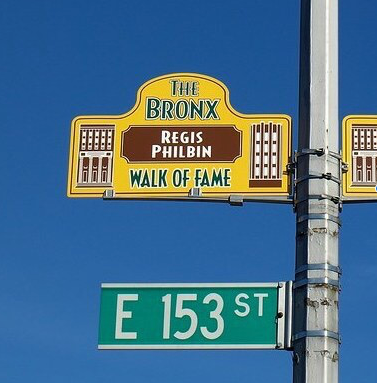
The Bronx Borough President, Ruben Diaz Jr., who has hosted Albania Independence Day last November and has persistently honored the Albanian-American community as well as our historical and cultural personalities at varous events, frequently refers to the Bronx native, Regis Philbin.

“Regis Philbin was not only one the most recognizable media personalities of our time, but he never forgot his roots and was in the first class of inductees honored on the Bronx Walk of Fame in 1997,” said Bronx Borough President Ruben Diaz Jr. for DIELLI. “Regis Philbin was class act who brought warmth, humor and wit to audiences for decades, and was a fine representation of both The Bronx residents and the Albanian community.”

Regis Philbin Walk of Fame sign is located on the corner of 153st and Grand Concourse, right by his alma mater Cardinal Hayes High School in his home borough of the Bronx.
Filed Under: Opinion Tagged With: Rafaela Prifti, REGIS PHILBI

DIELLI EXCLUSIVE INTERVIEW WITH DEPARTING AMBASSADOR TEUTA SAHATQIJA, HEAD AT THE CONSULATE GENERAL OF KOSOVO IN NEW YORK

July 28, 2020 by dgreca

By Rafaela Prifti-

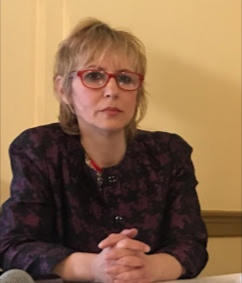
I am grateful that we are able to have this conversation prior to your departure from your post as Head at the Consulate General of Republic of Kosovo in New York. This evening The Pan-Albanian Federation of America VATRA hosted a farewell event at its Headquarters. What is your message to VATRA as the oldest organization in the US diaspora and its leadership?


Ambassador Teuta Sahatqija:  Four years ago, I began my tenure as the Head of Kosovo Mission to New York by visiting VATRA’s offices. It was an emotional visit, not unlike walking in a sacred historical site, full of history, glory, stories, and patriots who did so much for Albanians all over the world. VATRA is the organization that has synchronized the Albanian voice in the United States. I think that carries a special importance. VATRA can bring even more coherence in the Albanian diaspora, and coordinate efforts to strengthen the Albanian position in America and thus helping the Albanian cause in Albania, Kosova and around the world.

DIELLI: During the war, you and your family were forced out of your home. Your plight is described in the issue of The Diplomat Washington of March 1, 2019, as follows: “on April 5, 1999, Sahatqija fled her home in the village of Gjakova with her husband and their four children — ranging in age from 4 to 10 — as neighbors’ houses were burning and corpses littered the streets. “I found myself in the middle of the road with all the kids, not knowing where to go,” she said. “Without food or security, we were forced to flee through the mountains, and ended up in Albania — first in Krumë, a town near the border, then to Tirana.” Then the article characterizes you as a seasoned diplomat stating: “Sahatqija’s objective: to get as many nations as possible to establish diplomatic relations with Kosovo, and have her small, struggling country admitted to the U.N. — and eventually NATO and the European Union as well.” How do you feel you have met the challenges?

Ambassador Teuta Sahatqija: As Kosovo’s UN envoy, it is particularly challenging since Kosova is still not a UN member and there are some countries that very “diligently” strive to prevent Kosovo from being present and from participating in events and in meetings. In fact, I have several Protest Notes from Serbia and Russia for such participations.

DIELLI: It has been one month from the cancelation of talks between Kosova and Serbia in Washington in late June and the publication of the allegations by the Special Prosecutors Office. How would you describe the present situation?


Ambassador Teuta Sahatqija: The dialogue between Kosova and Serbia has started. It is very important that it continues and even more important that it finishes with mutual recognition. It will help Kosova to remove obstacles in its way toward full recognition in world political, diplomatic and professional stage. It will enable the country to join the UN, EU and other international organizations as well as allow Kosovo to focus on economic development. I believe that the interest for this dialogue between US and Europe is increased as the guarantors of proper comprehensive agreement.

As for the Special Prosecutors Chambers, there is no court in the world that can change the history and glorious fight of Kosovo Liberation Army for freedom. Our fight was the right one and justice will prevail.  

DIELLI: Recalling the previous visit last February at Vatra’s Headquarters of Kosovo President Thaci, Her Excellency Ambassador Vlora Citaku and you. How do you remember it? What difference did six months make?


Ambassador Teuta Sahatqija: As always VATRA’s doors are open to all, high government officials and state dignitaries. It was welcoming and informative with regard to the developments and efforts in the United States by the community leaders. I do remember that some of the questions gave them a hard time. For me, I felt as a member in the Kosovo delegation and at the same time as part of the host diaspora delegation.

DIELLI: You are a diplomat representative of a non-member state of the United Nations and that is a challenging job. How have you managed to serve your country in the UN headquarters and under the circumstances that you have? In one instance, I recall the event in early 2019 held at the UN commemorating the contribution of the Albanian people in rescuing the Jews in World War II when you were not giving the floor. What can you tell us now about the episode?


Ambassasor Teuta Sahatqija: The task of the UN envoy of Kosovo which is not a member is particularly challenging. I have been involved and have participated in various events and commemorations. I remember the event honoring the selfless acts of Albanians who helped to rescue Jews during the WWII, in Albania, Kosova, Montenegro, South of Serbia or Macedonia. Helping the one in need is deeply ingrained in Albanian nation’s culture and tradition regardless of the country’s borders or rules of governments. The commemoration at the UN Conference Hall is an unfortunate event where I was not allowed to take the floor. Not being a UN member entails a number of obstacles for Kosova, but at least friendly UN members try to compensate that lack of presence by invitation to discussions and other ways of participation.

DIELLI: What are your most cherished memories from the time you served in New York? With your experience in political life of Kosova, what did you bring to the position as Head of the Consulate of Kosovo in New York? And what do you want your predecessor to know about the task that they have to carry?


Ambassador Teuta Sahatqija: One of my main tasks in New York was communication with UN Missions. I was Kosovo’s Envoy to the UN. I aimed to make Kosovo present within UN community, receiving and delivering diplomatic messages to my counterparts, participating in countless activities at the UN. It was a formidable and stimulating task since Kosova is still not a UN member and there are countries that work “diligently” to prevent Kosovo from being present and active on the world stage. I have several Protest Notes from Serbia and Russia for such participations.

I have been blessed with many friends among Ambassadors who invited me to conferences, asked me to deliver remarks, arranged meetings with Ambassadors of non-recognizing countries through lunches or dinners or invited me to receptions where I could network on behalf of Kosova. Those friendly Ambassadors helped reduce the frequency of UNMIK reporting to Security Council about Kosova from four times down to two times a year. They helped block some efforts of Serbia for de-recognitions and much more.  


I would like to say to my successor to be aware that the Mission in New York could probably be the most difficult diplomatic mission of Republic of Kosova in the world. But it is also an honor to serve your country. I would like to tell my successor to make as many friends as possible and to never give up. 

DIELLI: You have been a very outspoken advocate of the rights of survivors of sexual assault of the Kosova war. In January 2020 you co-organized an event at National Committee on American Foreign Policy titled: Silent No More: Perspectives on Combating Sexual Violence in Conflict. Your presentation laid out important campaign goals for survivors. There have been numerous events and rallies where you have championed the cause for justice on behalf of survivors. Are you proud of advancing the voice of the women that still feel stigmatized in Kosovo’s society?  What can you tell us about the mission as you move forward?

Ambassador Teuta Sahatqija:  The topic of sexual violence during the war has been one of my priorities. In Kosovo, as Member of Parliament, I worked with the survivors through several women organizations. I worked on the legislature to recognize the survivors and also provide them with the economic tools to empower themselves. In New York, I advocated to seek justice for them, to try to include Kosova in the annual report of Secretary General of UN for Sexual Violence during the conflict. I have continued to speak up with UN diplomats, through different organizations as NCAFP in NYU, speeches at Harvard, CUNY, Baruch and elsewhere. I am dedicated to stand with the survivors as I serve in my new position as Deputy Minister and shall do so throughout my career.

DIELLI: What are some of the most enduring memories during your mandate? And do you have any regrets as you take your next post?

Ambassador Teuta Sahatqija: I am going back to Kosova after four years with very fond memories, with a lot of new friends, a lot of achievements and pride. Could I have done more? Probably! I shall continue to serve with dedication in my new position as Deputy Minister of Foreign Affairs and Diaspora. I will serve my country, work the best I can and live the post in better condition than I found it. 

DIELLI: You have prioritized issues of social justice, gender equality and women’s rights while being a staunch supporter of the arts and culture including the culinary heritage of Albanians. As the Head of the Kosovo Consulate General in New York, you have hosted numerous art exhibits and the office space has accommodated shows and has been transformed into an art gallery with intense frequency. There must be a record number of shows, exhibits, book promotions, culinary festivals, movie-screenings launched and hosted by you in New York and around the country. You clearly value the impact of the art and culture. Can you please share your thoughts?

Ambassador Teuta Sahatqija: I am proud to have accommodated art shows at the Kosova Consulate. We have hosted six artists’ exhibitions in a span of two years, and numerous classical, jazz, popular music concerts that provided opportunities to young artists to perform for the community. We hosted or co-hosted numerous film premieres and plays. The moment Kosovo produced wine was placed at the Security Council table by Japan Ambassador, I knew we needed to organize wine tasting events. We had four such popular editions and it became an attractive event for the UN diplomats who joined with anticipation.

Also, seminars for Albanian language and culture were held in VATRA’s offices and on premises at the Kosovo Consulate. I send books to Albanian schools in New York and all over the country. We have launched book promotions and signings, business gatherings for Kosovo and American businesses and investors. We have had performances by Albanian school children. Every time Kosovo Consulate’s offices invited the Albanian diaspora, I always welcomed them with the same words: “Welcome home!”- “Mire se erdhet ne shtepine tuaj”!

DIELLI: Thanks to concerted efforts, Kosovo has gained international exposure through the education and business initiatives such as the orientation of RIT Kosovo (AUK) presentation last winter, and your keynote speech at a Convention in the US on telemedicine industry which has been set up in Kosova in 2002.   

Ambassador Teuta Sahatqija: The telemedicine industry connects the needs of the healthcare system and the technological advancements to better serve the people in Kosovo. I have received the President of the RIT Kosovo –AUK and supported the fundraising events, as well as donated to KAEF to benefit its scholarship program.   

DIELLI: You are the Head of Consulate General of the Republic of Kosovo in New York, a diplomat and very savvy in Public Relations. You are also a wife, a mother, sister, daughter. How have you been able to balance all of it?

Ambassador Teuta Sahatqija: I take every job very seriously and dedicate myself to do it well. I dedicate 100% of my energy and time and I do it with a lot of love and passion. My family is so supportive in all my efforts. I try to leave my post in better condition than I found it. I think that is my recipe.  

DIELLI: You have a great record in terms of relations with the community and the media. In recognition of such rapports, Kosovo General Consulate has awarded recommendations for members of the community and members of the press. Vatra and Dielli have been consistently acknowledged by the office and the government institutions of Kosova. To what do you attribute your good relations with the community?

Ambassador Teuta Sahatqija: Albanian community in America deserves eternal gratitude from Albanians in Albania, Kosova and wherever Albanian live. Albania and Kosova effectively became countries thanks to enormous efforts, the dedication and diligence manifested in the diplomatic and financial aspects. The least I could do was to show gratitude for all the work done in the past and present. Vatra and Dielli are the strong pillars, the beacons of Albanian presence in America, guardians of the glorious history that makes every Albanian proud regardless of where we live. The very first visit I made when I started my mission four years ago was at VATRA. I do close my mission in New York by visiting VATRA among friends I made during my tenure.

I have a lot of respect for the Albanian diaspora and I have committed to make them an important part of my work. My last event on the occasion of Kosovo Independence Day was co-organized with Albanian Diaspora organization and I am so proud of it.


I would like to wholeheartedly thank the journalists, media and Albanian press in New York and America who covered the events, reported the meetings and informed the diaspora and the people back home of the work of the team of diplomats in New York. Thanks a lot!

DIELLI: Thank you for the interview! Good luck!

Filed Under: Interviste Tagged With: Ambassador Teuta Sahatqija, INTERVIEW WITH DEPARTING AMBASSADOR TEUTA SAHATQIJA, Rafaela Prifti

EDUCATION IS A FORCE MULTIPLIER, SAYS KEN BIBERAJ, SPOKESPERSON OF BIBERAJ FOUNDATION

July 24, 2020 by dgreca

By Rafaela Prifti*-

-The Biberaj Foundation started in 2017 and announced its first project of co-funding the Albanian-American Development Foundation Master’s Degree Fellowship Program in July 2018. It was a support of $2.5 million dedicated to Albanian Professionals in pursuit of graduate studies in the US. How did the partnership go? 

Our family was excited to create the Biberaj Foundation in 2017. From our first partnership with AADF to the scholarship program with RIT Kosovo (AUK), we announced this week, we have sought to give back through increased access to educational opportunity. 

-Yes, the recent announcement of the Biberaj Foundation of a $1.1 million Scholarship Program at RIT Kosovo (AUK) starting in 2021 through 2024 is a first time partnership. Can you share what attracted you to this particular institution? 

It is always important to have the right partner when implementing a program like this, and we are grateful to RIT Kosovo (AUK) for their support in creativity in developing this program. 

-The 2021-2024 Scholarship Program puts emphasis on women and minorities. Can you talk about that? 

This scholarship aims to ensure that between 50-75% of recipients are women, something that we take great pride in emphasizing. The goal is to cast a wide net and reach as many young people as possible, from various regions and demographics.

-How does your Foundation measure the success of the program? How do you weigh the risks?  

It will be important to reach as many applicants as possible, provide them with the resources to pursue higher education, give back to their communities, prioritize learning in science, technology, engineering, mathematics and journalism. Hopefully this initiative will encourage other donors from around the world to also support similar efforts. 

-I am a recipient of a US government scholarship for graduate studies and I can say from first-hand experience that it has changed my life. What are some of the stories you hear from the Biberaj Foundation recipients? 

Our family is in a position to provide this scholarship because of the incredible opportunities we received by being in the United States. That is why we are so excited to not only support this scholarship for enhanced access to educational opportunity, but to also tie it to a requirement that recipients also spend time studying in the United States. Education is a force multiplier, and when these young people return home, they will have the experience and background to truly give back to their community.

*PS. Also read my full interview with Visar Jasiqi of RIT Kosovo (AUK) in the upcoming July issue of Dielli.

Filed Under: Featured Tagged With: ken biberaj, Rafaela Prifti, SPOKESPERSON OF BIBERAJ FOUNDATION

DIELLI INTERVIEW WITH MS. SOPHIA ZAYAS, BRONX REGIONAL REPRESENTATIVE AT THE NY GOVERNOR OFFICE

July 21, 2020 by dgreca

by Rafaela Prifti

Ms. Sophia Zayas, Bronx Representative at the Governor Cuomo’s Office of Regional Affairs, talked to the English Editor of Dielli (The Sun) about the impact of the pandemic to the community she serves and the strength of cultivating relationships that unite us. She holds a College Degree in Business Law and is the first woman in her family to hold a state-level office position. Ms. Zayas’ roots make her feel at home in the densely populated and diverse neighborhoods of the Bronx including a large Albanian-American community. She has attended Albania’s and Kosovo’s Independence Day alongside Albanian representatives, officials, families and guests. They remember Ms. Zayas hand-signing the eagle and saying in perfect Albanian “Hej Shqipe!” a common greeting among fellow Albanians. All those memories became more endearing during the lockdown months in New York, which was the epicenter of the coronavirus pandemic. Overwhelmed and anxious New Yorkers watched Governor Cuomo’s daily briefings to stay informed and do their part to manage or practice a new kind of living in the time of Coronavirus.

I conducted my interview with Sophia Zayas in two parts, starting in end of May. At the time, some areas in the Bronx were more affected compared to other boroughs. The Regional Representative worked on the front lines with community leaders, advocates and residents.
I asked her to describe the response specifically to those 5 zip codes, where at least one has a large Albanian population. “I communicated on a daily basis with local electeds, community representatives and related the feedback to Albany and to the Governor. One contributing factor of the situation was the large influx of impoverished people that highlighted health disparities. I was able to communicate the need of the significantly affected areas to the Governor, who responded by bringing more testing to the South Bronx. A good step in our response to the unfolding heath crisis was the antibody testing. It was the outcome of effective communication with churches and members of the community. At the same time, the response in Zip codes that were less affected focused on providing more PPE, more hand sanitizer from the state, and equipment to protect themselves,” said the Governor’s Bronx Representative.

To my question about testing capacity in New York, Ms. Zayas recalled the “rough patch between the Governor and the Federal Government to address the need to increase testing”. She added: “As a result of those efforts, COVID diagnostic testing and antibody testing are available to urgent care centers, pharmacies, churches and grocery stores, in order to get employees tested. In addition, antibody testing was brought to supermarkets, although it wasn’t promoted, it was only for random sampling. It has a great success rate and the community response was immediate. They appreciated seeing that the Governor’s Office and Department of Health were out there and concerned about their needs.” Talking about NAICHA – Housing Authority – which is overrun with cases, Sophia noted that the need came to the regional representatives and it was addressed by the Governor. “They developed a program,” said Ms. Zayas, “consisting of ready responders such as paramedics and practitioners who are currently on-site at the housing facilities. Residents can call the ready responders to their doors for their health needs.”

In my next question I brought up the preparations for a possible second wave that was much talked about in the media. She indicated that while trying to be optimistic about getting through the worst time, this is no time to put the guard down. Experts have stated that a second wave is probable. “As we go into Phase One of the reopening,” the Bronx Borough Gubernatorial official said, “Pelham Gardens which has a significant number of Albanians, has a dramatically higher Infection rates compared to the city. My job as the Regional Rep. as we’re going into phase one is to listen and console people who are in quarantine and under lockdown orders, but also to encourage mask-wearing and take preventive measures. People have been distracted because of the tragedies, looting and rioting. I’m trying to put the focus on putting a mask and social distancing and to be careful. I think we’re at a good place in terms of the COVID cases as a state. The Bronx has to be mindful of how we go about moving forward.”  She paused briefly to make a point about the protest and the health risks: “There was an uproar in our state and country. The protesters, marchers, looters and rioters on the street, are not practicing the safety measures which could mean a possible risk of an increase in infection cases. The Governor fears that if we start feeling overconfident with the low numbers now, we may become less vigilant in facing the virus. Often when people don’t read or hear about it, they start thinking the virus must be gone. That is not the case.”  She believes that under the strong leadership of the Governor the community stepped up to meet the challenge of an incredible magnitude and impact. From it, she acknowledges the valuable lessons of managing a health crisis and battling a pandemic.

With regard to the economic impact, I asked her to share how the community felt about the first phase of reopening, which was on June 8th while protests had erupted, violent at times, and were continuing for days in our neighborhoods. “In light of protests, we have to pay close attention to what is happening in the region. COVID-19 is still in focus, while we have to stay alert to keep people from destroying properties and businesses that communities had worked hard to build for years. Reopening of construction and manufacturing companies and certain businesses who sell food is good for the economy and the community, as we they continue to practice social distancing and common sense,” said Sophia.

We continued the second part of the interview, when 100 days of the pandemic had passed from the date the first case was identified. Bronx had been a hotspot that experienced a significant rise of COVID-19 cases, a respiratory disease caused by a highly contagious virus. In the fourth month of the global health crises, the threat of the virus has not diminished. In one of the press briefings I attended, Governor Cuomo said that there is another virus in the society, “the virus of racism”. As protesters took to the streets to demand racial equality, the riots again impacted some boroughs like Brooklyn, Manhattan and the Bronx more significantly. There were sections in the Bronx like Fordham, Grand Concourse, and Burnside that saw a lot of devastation. The excitement of the phase one of the reopening was affected by a lot of destruction of small businesses, the looting and rioting in the streets and in our own community.
 
”Albanian businesses were not affected by the looters and the rioters,” remarked Sophia. “Areas with Albanian businesses such as Morris Park were ready. They kept united and they didn’t allow for looters to come in their neighborhoods, whereas some Latino and Black-owned businesses were torn apart. Burnside, Grand Concourse and Fordham have minority owned businesses. Sadly, the looters ended up hurting their own community. I visited these areas with the President of The Bronx Overall Economic Development Corporation, Marlene Cintron, to assess the damage and assist through the Department of Financial Services, and loan programs.”

Ms. Sophia Zayas, who holds a College Degree in Business Law, is the first woman in her family to hold a state-level office position. I asked her to take me through her work day.
Sophia answered: “The day of a Regional Rep is pretty unpredictable. I have been a Rep for 2 years. A pre-pandemic workday would include a range of things: such as setting out an agenda,  working on regional reports, expense reports to brief the Governor, emails from Albany, scheduling maybe a conference or planning events for the Governor whether it’s visits, scoping out places, speaking to people in the community, speaking to elected officials. One of the rep’s tasks is planning a program, who do we want to see in the audience, who do we invite, what is the topic, what will the Governor address. It is very challenging and overwhelming. We are molded for perfection as the governor is a perfectionist. Staying informed about the regional issues and its needs and also communicating effectively with the elected officials is of primary importance. I ask them what issues need to be addressed or if there’s anything I could do for them. I reach out to advocates or they could reach out to me. The advocates are non-profit organizations. Community residents can reach out about housing. We do constituency work.  If they’re not a part of my region I can refer them to a colleague or agency that can help them. There’s always action going on. The Reps know each other on a familial level and we work endless hours together. Our job is stressful but it comes with rewards. There are times where I’ve been upset and stressed out because something doesn’t turn out the way I want.”

I asked if she could share a moment that had made her proud.

Ms. Zayas said that the Sheridan Expressway was a huge transportation project that is still going on now. “The Governor wanted to come to the Bronx to announce it. They gave me 18 hours to build an event for the Expressway. I didn’t know how I was going to get 400 people in a room in less than 18 hours. I made calls and sent emails, reached out to people and the school we were close to. We ended up with 500 people in the auditorium. The Governor was very pleased and congratulated me so I felt accomplished in my job as a Rep,” For Sophia, part of that event comes with cultivating relationships in the community.” It was a great segue to my last question about her connections with the Albanian community and who was the first Albanian she had met in the Bronx. “The first Albanian I met was Esad Rizai. I introduced myself as the new Bronx Regional Representative. In observance of the Albanian independence. I brought the proclamation on behalf of the Governor and presented it to the Albanian-American Society Foundation. We became great friends. Albanians are very welcoming and accepting. I feel that my network of Albanians is wide, I’ve been able to cultivate relationships with the Albanian community. This past year at the Kosovo Independence event I presented the proclamation to honor posthumously Ali Rizai, Esad’s father, and the work he’s done. I brought Lieutenant Governor Kathy Hochul to honor Albania and Kosovo Independence at the Borough Hall at the Bronx Borough President Office. The Lieutenant Governor presented a proclamation on behalf of Governor Cuomo to the whole Albanian community and organizations. I value the good relationships of its members with Governor Cuomo. Whatever their needs might be, I try my best to provide services to keep them united.”

Filed Under: Interviste Tagged With: INTERVIEW WITH MS. SOPHIA ZAYAS, Rafaela Prifti

IS OUTDOOR LEARNING A FEASEABLE OPTION AMID THE PANDEMIC?

July 21, 2020 by dgreca

By Rafaela Prifti-

The Centers for Disease Control and Prevention will not release the guidelines on how to reopen to students after coronavirus shutdowns. A spokesperson said that the full set will be published before the end of July. President Trump has repeated that he wants to see schools reopen classrooms in the fall. But he complained on Twitter about the CDC’s guidance of preventive measures in schools for being ‘too tough”. The school systems nationwide are grappling with whether and how to open this fall amid the public-health crisis.

In New York, the nation’s largest school system, Governor Andrew Cuomo has laid out “the formula to be used to reopen schools across the state”. The requirements, based on data, are: the region must be in Phase 4 and the daily infection rate must remain below 5% using a 14-day average for schools to reopen. Schools will be closed if the infection level rises to 9% or greater before the day school opens. Governor Cuomo put the emphasis on safely reopening schools following state guidelines such as face masks, social distancing, regular cleaning of classrooms, COVID-19 screenings and contact tracing. Decisions on school reopening will be made in the first week of August. New York City Mayor Bill de Blasio and Schools Chancellor Richard Carranza have announced a plan of Blended Learning for the city’s 1.1 million school children. Across the state and around the country, a number of schools have developed and devised structures such as open tents for in-person classroom teaching. There have been reports of lowered risks of contracting the coronavirus outside. As the city has done for restaurants and fast-food industry, it could cordon off streets and sidewalks for schools.

Curiously, outdoor classes were the solution during the pandemic more than a century ago when tuberculosis was a global pandemic. In 1907, two Rhode Island doctors, Mary Packard and Ellen Stone, followed the models in Germany to lower the risk of infection transmission among children. Doctors Packard and Stone implemented the concept by converting a brick building into a public health conscious structure. They proposed the creation of an open-air schoolroom by installing large windows on each side and keeping them open all day. In the harsh winter season children stayed warm in wearable blankets called “Eskimo sitting bags”. Images from Library of Congress show the children with heated soapstone placed at their feet. There were no reported cases of sick students. Within two years 65 open-air schools around the country either set up along the lines of the Providence model of Rhode Island or were held outside. In New York, the classes at private school Horace Mann were taught on the roof.

There is growing body of evidence suggesting ways that outdoor leaning benefits students, younger ones in particular. Some have talked about using vacant office or retail space for schools. Some public school teachers have proposed that all kindergarten, first- and second-grade classes could be held outside, with the natural environment deployed as a resource for math and science lessons. Alternatively, there are plans that schools could use as much accessible outdoor space as possible to reduce the number of students in a building at any given time, thus allowing for proper social distancing. Instead of rotating between live school and remote learning, children could rotate between indoor and outdoor work during the course of the day. Media reports that while inequity has meant that schools in more affluent neighborhoods are situated closer to parks than those in poorer parts of the city, infrastructure for outdoor learning is already in place, even in many low-income neighborhoods. Between 2007 and 2013, in conjunction with the Trust for Public Land, the city converted more than 250 schoolyards to green space for student and community use. Although a promising idea, transitioning to the outdoor learning comes with new challenges from liability claims to curriculum requirements.

Filed Under: Featured Tagged With: A feaseable, Is Outdoor Leaarning, Option, Rafaela Prifti

  • « Previous Page
  • 1
  • …
  • 42
  • 43
  • 44
  • 45
  • 46
  • …
  • 56
  • Next Page »

Artikujt e fundit

  • Koha për debat serioz, reflektim dhe zgjidhje
  • MJEKU KURON, NATYRA SHËRON…
  • Vitet parisiane të Hasan Tahsinit…
  • KONSULLATA SHQIPTARE NË MICHIGAN – NJË KËRKESË E VJETËR E DIASPORËS QË TANI PRET TË BËHET REALITET
  • Ansambli Kombëtar i Këngëve dhe Valleve Popullore të Tiranës në skenën e Teatrit “Marcello Mascherini” në Azzano Decimo
  • Ky vend është sakat sepse humbi shtyllën morale!
  • AARC 2026 Gala – “An organized and engaged community means our voice carries over,” Martin Vulaj
  • Shqiptarët në Philadelphia e ngritën zërin për drejtësi për ish-krerët e UÇK-së
  • “The Journalist’s Mission”, filmi i mirënjohjes ndaj SHBA-së dhe NATO-s, premierë në Manhattan
  • Ah, ky telefoni! Dashuri apo tradhti?
  • Deklaratë e Unionit të Gazetarëve Shqiptarë
  • Guximi për të qenë vetvetja
  • Gjuha shqipe në pasqyrën e poliglotisë evropiane: Dëshmia e “Lutjes së Zotit” te Lorenzo Hervás y Panduro
  • “Mes shkencës dhe dritës” – një roman për njeriun modern
  • KOSOVA NË SESIONIN E 81-TË

Kategoritë

Arkiv

Tags

albano kolonjari alfons Grishaj Anton Cefa arben llalla asllan Bushati Astrit Lulushi Aurenc Bebja Behlul Jashari Beqir Sina dalip greca Elida Buçpapaj Elmi Berisha Enver Bytyci Ermira Babamusta Eugjen Merlika Fahri Xharra Frank shkreli Fritz radovani Gezim Llojdia Ilir Levonja Interviste Keze Kozeta Zylo Kolec Traboini kosova Kosove Marjana Bulku Murat Gecaj nderroi jete ne Kosove Nene Tereza presidenti Nishani Rafaela Prifti Rafael Floqi Raimonda Moisiu Ramiz Lushaj reshat kripa Sadik Elshani SHBA Shefqet Kercelli shqiperia shqiptaret Sokol Paja Thaci Vatra Visar Zhiti

Log in

This website uses cookies to improve your experience. We'll assume you're ok with this, but you can opt-out if you wish. Cookie settingsACCEPT
Privacy & Cookies Policy

Privacy Overview

This website uses cookies to improve your experience while you navigate through the website. Out of these cookies, the cookies that are categorized as necessary are stored on your browser as they are essential for the working of basic functionalities of the website. We also use third-party cookies that help us analyze and understand how you use this website. These cookies will be stored in your browser only with your consent. You also have the option to opt-out of these cookies. But opting out of some of these cookies may have an effect on your browsing experience.
Necessary
Always Enabled
Necessary cookies are absolutely essential for the website to function properly. This category only includes cookies that ensures basic functionalities and security features of the website. These cookies do not store any personal information.
Non-necessary
Any cookies that may not be particularly necessary for the website to function and is used specifically to collect user personal data via analytics, ads, other embedded contents are termed as non-necessary cookies. It is mandatory to procure user consent prior to running these cookies on your website.
SAVE & ACCEPT