• Home
  • Politics
  • Opinion
  • Culture
  • Sports
  • Economy
  • Interview
  • Reporting
  • Community
  • Vatra

Dielli | The Sun

Albanian American Newspaper Devoted to the Intellectual and Cultural Advancement of the Albanians in America | Since 1909

NJOFTIM

September 7, 2018 by dgreca

NË TIRANË DO TË PROMOVOHET “DEMOKRACIA NUK PRET”-1-2-3 I FRNAK SHKRELIT/1 Fran 3 vell

Ditën e martë, 11 Shtator, Ora 11.00 paradite në Hotel Rogner, Salla Antigonea, Tirane, organizohet promovimi i vëllimeve 1-2-3 të gazetarit Frank Shkreli, ish drejtor i Divizionit të Euro-Azsë në Zërin e Amerikës.

Të interesuarit mund të bëhen pjesë e veprimtarisë.

Filed Under: Kronike Tagged With: "DEMOKRACIA NUK PRET", villimi 1-2-3

LITERARY VALUES AND MAIN THEMES IN FRANK GJETO SHKRELI’S WORK

July 11, 2018 by dgreca

Thanas-Gjika

by Thanas L. Gjika/

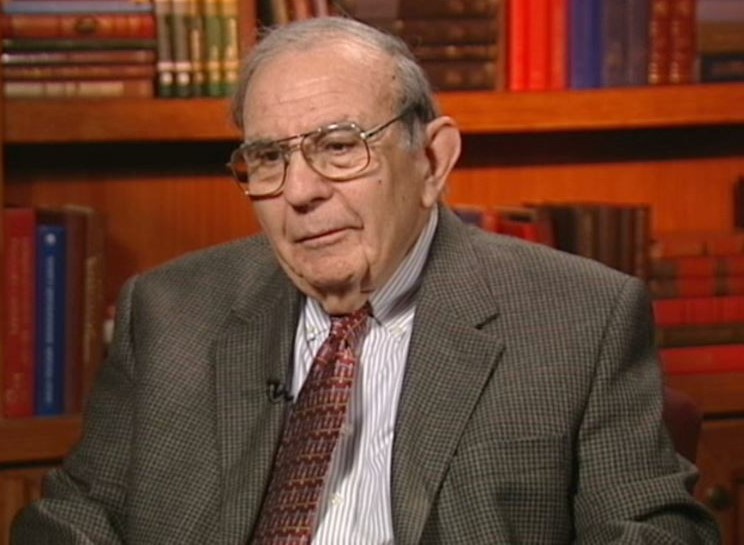
In the years when Albania did not have diplomatic relations with the US, “Radio Zëri i Amerikës”, played the role of the US Embassy in helping to keep the Albanian people informed about the main events. The credit for carrying out this mission goes to a number of Albanians such as Jozef Paskali, Talat Karagjozi, Xhevat Kallajxhi, Ilia (Louis) Priest, Lulu Vrioni (niece of Mit’hat Frashëri), Ruzhdi Daca, Gasper Kiçi, Bardhyl Pogoni, Dr. Elez Biberaj, Idriz Lamaj and Frank Gjeto Shkreli.

The work of journalist Frank Shkreli as shown in various newspapers of diaspora, Albania and Kosovo, along with his new book “Democracy does not wait” (Morava Publications, Tirana 2016, 476 pp.) is a veritable mine of political, scientific and cultural values. This author’s main stylistic feature is his forthright interpretations of Albanian politics, American-Albanian relations and Balkan issues, which directly or indirectly concern the Albanian world, Russia’s and Turkey’s foreign policy toward Western Balkans and the domestic policies of neighboring states that continue to violate the rights of their respective Albanian populations.

Hope shall overcome despair

As a political scientist, Frank Shkreli is a critical thinker when it comes to the causes that hinder Albania’s progress towards joining the European Union. Yet he does not lack the optimistic orientation for the future. Reflecting on the favorable US and EU geopolitics toward Albania, he has formulated the positive idea that “hope will overcome despair” (Democracy Does Not Wait, page 30). Shkreli’s objective optimism is backed by the events of the last 27 years, including the collapse of the communist dictatorship in Europe and Albania, the liberation of Kosovo and the increased efforts of Albanians living in Macedonia, Montenegro and Serbia to gain more political and civic rights.

The Freedom of the Press violations and other abuses

Shkreli denounces the violations of the Press Freedom in the Republic of Turkey and in the Republic of Albania. After explaining how the international organizations criticized the Turkish government for the difficult situation concerning its country journalists in the article “The press under pressure in Turkey and Albania” (pp. 16-21), Shkreli presents the case of Mr. Gjiknuri’s verbal assault directed at Tirana-based independent newspaper “Telegraf”. The author concludes that Mr. Gjiknuri’s attitude warrants concern of other human rights violations, on account of a fragile Albanian democracy…

The Catholic Church and Her Pastors

As a member of the Albanian Catholic community, Frank Shkreli is fully aware of the devastation brought upon the faith from the communist regime. He feels the spiritual duty to recall from time to time the lasting consequences of the havoc that communism caused to the church and religion. On that note, he notices that in the post-dictatorship Albania there is no appreciation for Father Gjergj Fishta. -”…due to the country’s Ministry of Culture’s lack of patriotism” ….

Nostalgia for the dictator Hoxha – A Serious Obstacle for Albania

A disturbing issue in Shkreli’s analysis is the nostalgia for Enver Hoxha during the transition years. In his view, this phenomenon is similar to Russia’s nostalgia for Joseph Stalin. The starting point is the celebration of Martyrs’ Day on May 5, 2014, where photos of the dictator where circulating among the school children who were visiting the National Cemetery in Tirana. Shkreli describes this act as “despicable and unforgivable” particularly in the context of Albania’s membership in NATO and aspirations to join the European Union. The honoring of the dictator by the key members of the party, the government and the Albanian Parliament, who were present at the ceremony, indicates that “They … live entirely outside the Albanian and international reality … that they are unable to present to the Albanian people new ideas for solving the many problems they face, by telling the world that they are always proud of being part of a regime with a lost history “(pp. 459-460).

In this context, Shkreli strongly criticizes the Minister of Culture, Ms. Mirela Kumbaro, who has suggested that the statues of Lenin and Stalin should no longer be held in the backyard of the Art Gallery but rather placed in the halls of the Ministry of Culture. Shkreli condemns not only this minister but also the political forces of the position and the opposition, the intellectuals and the people, who stay silent when hearing such suggestions. Instead of the failed ideologists of communism, it should be the statues of Father Gjergj Fishta and the deserving Albanian patriots that must be placed in the office spaces of the Ministry of Culture.

The Secret FILES!

In December 2014 and April 2015 several German institutions and foundations helped to open an exhibition on Europe’s history during the twentieth century. The main purpose was to draw lessons from the life of the peoples of this continent under their dictatorship regimes and how are they now living in democracy. The lessons learned from the German people in this respect were not followed by the Albanian people. After the system changed, no measures were taken to prevent former communists and former state security members from taking part in the ruling coalition. Understandably the former communist and the secret security members who continue to rule the country’s politics are not interested in opening up any debate on the crimes of the communist dictatorship. Precisely the failure to punish the crimes of the dictatorship has stagnated the Albanian politics. The author of the article, aware of the 25 year long rhetoric on this subject, along with the commissions and the draft laws, points out that this process “is unlikely to be completed, it will be hovering continually, neither successful nor unsuccessful “(p. 148).

The Western Balkans, the US Russia and Turkey

Albania and the Western Balkans are at the center of attention of countries like the United States, Russia and Turkey. In contrast with the United States’ efforts to make the people aware of their independent path towards democracy, Russia and Turkey, each have tried to stop the process of democratization of these countries and disrupt their membership into international organizations such as NATO and the EU. Russia and Turkey strive to extend their influence to these countries as part of the re-creation of old empires in new forms, specifically as powerful economic empire ruled by autocratic regimes.

The US needs to be supported in its mission “to help these states to take their own independent decision with respect to their Euro-Atlantic future … as well as the efforts to root out corruption that is wearing down the societies” (p. 135).

The Turkish government has long been working to revitalize a l spirit among the Albanian people in Albania, Kosovo and Macedonia, a phenomenon that Shkreli criticizes without hesitation. In April 2015 countries around the world were commemorating the 100th anniversary of the Turkish genocide against the Armenian population. The Turkish diplomats in Macedonia encouraged many Muslim Albanians, as well as members of the Turkish and Bosnian minorities to take part in a protest in front of Murat Pasha’s mosque to counter the historical truth, namely the killing of one million Armenians who were seeking union with the motherland. Shkreli is revolted by this fact and condemns the demonstration. He goes on to denounce regressive policies such as the revision of the history of the Albanian people as claimed by the Turkish, Greek, and Serbian governors, who aim to alter and eventually eradicate the Albanian identity in the lands where Albanians have always been autochthonous. The author of the article insists that the main culprit is the Albanian government that does not protest openly but submits to such absurd anti-national demands. This silence urges Shkreli to voice his criticism by quoting Faik Konica: “The greatest enemy of Albanians have been and still are the Albanians themselves” (p.146).

Democratic ideas do not fade away, they illuminate the people’s path to the future

In his review of Ndiçim Kulla’s “Anthological Encyclopaedia of Albanian Thought, 1807 – 1957 vol. 1-3 ” which includes the writings of 75 Albanian intellectuals of the right-wing outlook, Shkreli asks rhetorically: “Where would Albania and Albanians be today, if the thinkers with Western views had prevailed in the last century?” (409). This optimistic scholar and sociologist suggests that the democratic ideas of prominent intellectuals who were thwarted by Albania’s Communist Party remain a valuable ideology in the present time. To illustrate, the author reminisces to a meeting with Ernest Koliqi in Rome in 1968. While honoring the 500th anniversary of George Castriot Scanderbeg’s death, Koliqi had told Frank that after the passing of the National Hero Albania was invaded by the Ottomans, yet the light of his work and ideas revived the nation and ultimately led it to freedom. Shkreli believes in the power of progressive ideas, …the progressive thinking of 20th-century Albanian intellectuals will help our people find their own path of revival…

The High Price of Bickering

With his solid knowledge of history and character of the Albanian people, Shkreli appreciates the positive attributes as generosity, hospitality, bravery, faith, etc. but does not hesitate to point out the disagreeing disposition that has hindered our progress as a society and as a nation. In the reviews of the book “The Suicide of a Nation” by Kol Bib Mirakaj and Albert Lulushi’s “Operation Valuable Fiend” (in English), Shkreli supports the idea articulated by both authors that Albanian anti-communists forces (independent supporters or members of Balli, Zogu and pro-government in 1941-1944) or subversives within these groups who were sent back into Albania with the help of CIA in 1948-1953 were defeated by the Communist Party on account of internal bickering and lack of a common program.

Diaspora – a Wealth of Scientific, Literary and Cultural Assets

As a scholar on the patriotic spirit of the Albanian diaspora of America, the author writes articles and full feature stories on distinguished figures such as Xhevat Kallajxhiu, whom he calls the Dean of Democratic Albanian journalism, Professor Arshi Pipa writer, scholar, literary critic and lecturer of Italian Literature at the University of Minnesota; Professor Sami Repishti, one of the leaders of Albanian intellectuals of our diaspora in the United States as a prominent human rights activist; Dr. Elez Biberaj, Head of the Euro-Asian Department at VOA and author of several books on Albania and the Albanian people in the transition years; Idriz Lamaj, a “Voice of America” journalist and author of several works including “Vatra dhe Vatranët”, etc.

The courage, clarity of thoughts and critical analysis of the non-democratic actions of the Balkan states as well as the United States are prominent traits of Shkreli’s journalistic writings all the way up to date.

.

Filed Under: Politike Tagged With: "DEMOKRACIA NUK PRET", Frank shkreli, Thanas Gjika

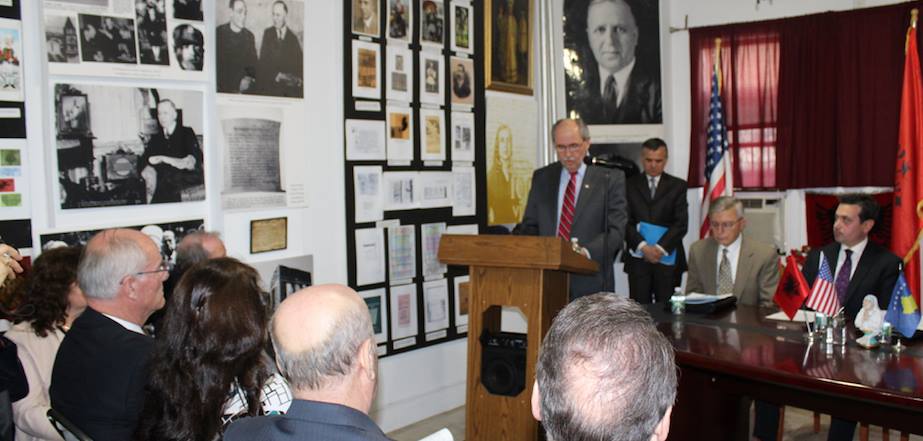
REMARKS AT THE BOOK PROMOTION “DEMOKRACIA NUK PRET” BY FRANK SHKRELI!

July 11, 2018 by dgreca

4 Elez Biberaj

By Dr. Elez Biberaj/

It is my honor and privilege to participate in the book promotion of my friend and colleague, Fran Shkreli, who has given and continues to give a valuable contribution in the Albanian journalistic landscape, in general, and the advancement of Albanian issues, in particular.

I am very happy to be here at our VATRA and in the company of well-known personalities, friends and colleagues. I would like to express my gratitude to VATRA for the care that it has always shown and continues to show in promoting the works of the members of our community.

Before talking about Fran’s book, I would like to acknowledge the close ties that have historically existed between Voice of America and VATRA, going back to the difficult years of the Cold War years to this day. Voice of America has always aimed to cover the activities and services of the Albanian-American organizations and associations, especially those of VATRA.

The Voice of America archives contain a number of broadcast recordings of events, meetings, and high-profile personalities of our community. The collection includes Fan Noli’s speeches, which, through VATRA, were donated to the National Library in Tirana. Prominent journalists of Voice of America have played an important role in VATRA and Dielli – Xhevat Kallajxhiu, Idriz Lamaj, Gjek Gjonlekaj, and others. Some of us, including me, have published our first stories in the newspaper Dielli.

Frank Shkreli has a long, outstanding and fulfilling career. Throughout his work, he has been a staunch defender of free speech and freedom of the press, human rights, and an advocate for the Albanian issue.

Frank Shkreli’s media related career extends nearly five decades. It began shortly after his immigration to the United States and the college years. Initially, he focused his attention on Albanian topics – the challenges facing our Albanian-American community as well as Albanians in their homeland.

Having distinguished himself in this field, Frank broadens his scope to include regional and global issues of importance. He acquired extensive knowledge on international relations, in general, and the former communist bloc, in particular. Frank is equipped with comprehensive political awareness and has vast insights into the US foreign policy including the politics of Washington.

Frank has the ability to examine and analyze current regional and international issues. After retirement, he made a 360-degree turn to go back where he started his activity, focusing once again on issues and developments concerning Albanians.

This is reflected in his comprehensive campaign to raise awareness in the United States on the situation, the demands and aspirations of Albanians, the establishment of democracy in the Albanian territories, and the development of inclusive democratic societies.

The outcome of his work is the book presented here, Demokracia Nuk Pret! In his writings, especially the ones featured in this publication, Frank examines issues, events and subjects of a wide variety with honesty and objectivity. He covers themes from our past – the positive and negative aspects, the pains and joys – as well as contemporary issues. He analyzes it all critically yet always draws a constructive conclusion that could benefit the Albanian decision-makers in confronting the current strategic and diplomatic challenges. In his articles, he makes a strong case for Albanians to consolidate their Western orientation.

What is the importance of Fran Shkreli’s writings? What does he offer to the reader at a time when the Albanian media landscape has expanded and changed dramatically?

As a professional journalist and analyst, his greatest asset is the high level of credibility that the reader has assigned to him thanks to his ability to be objective and balanced. Frank is aware that while journalists today have abundant opportunities and sophisticated tools, the mission of news reporting is always to tell the truth even when it is bitter. He has always been in search of the truth.

With respect to the readers, Frank’s point of view is that of a well-known Albanian-American media professional who is deeply invested in consolidating Albanian democracy and solidifying the strategic partnership between Albanians and the United States. He reminds Albanians that these relations should be continually fostered and a stronger partnership depends on the Albanians’ embracing of democratic values: respect for human rights, the rule of law, a strong and accountable governance.

In this regard, I believe Frank reflects the views and hopes of our community for a more righteous and democratic society in the Albanian territories.

Demokracia Nuk Pret is an important reference for journalists, students, scholars and politicians. Frank Shkreli’s book offers an important insight into the Albanian political and media debate. The tone and content of his writings are unique in the Albanian media landscape.

The timing of the publication is appropriate and relevant.

Albanians, in Albania, Kosovo, Macedonia, and elsewhere, should rightfully be proud of their accomplishments in the last quarter century. This week, Albania received very good news from Brussels, the recommendation for launching membership talks in the European Union.

However, as Frank points out in his book, Albanians cannot be content with the current political, economic, and social status.

While Brussels’ recommendation is hopeful, it presents a crucial point for the governing elites, not only in Albania, but also in Kosovo and Macedonia, to reflect on what I would call golden opportunities that Albanians have missed over the last years and even decades, which have slowed down their pace towards a stronger democracy. The accession talks in the European Union should have started years ago. It should be acknowledged that this chance and other golden possibilities for Albania and Kosovo are largely lost as a result of the flagrant lack of leadership by the Albanian decision-makers.

Today, Albanians face significant challenges: economic problems; high unemployment and poverty; corruption at all levels of government and society; illegal practices and the absence of the rule of law; weak institutions; irresponsible politicians who tolerate and attract corruption and use undemocratic practices to secure and retain power.

These domestic challenges are exacerbated by issues in the international arena: the erosion of democracy regionally and globally; the empowerment of authoritarian alternatives in Turkey and in Russia; and the shifting of the Balkan and European political landscape.

Meanwhile, the major Western players are showing signs of fatigue with the Albanians, who continue to generate crises, which require attention and resources. These negative international trends can undermine the positions of Albanians and cause a deterioration in their political and economic progress.

Today there is no talk of a dynamic or certainty of reforms in Albanian territories. Instead, there is stagnation, sluggishness, general decline, loss of hope, and extreme political polarization, with dangerous consequences for the future.

If something does not change soon, these negative trends will hamper the efforts of Albanians to position themselves decidedly in the family of Western democratic countries and societies.

In order to disrupt this general downturn, Albanians must undertake radical changes that would result not only in taking a new direction but would bring about a serious transformation of the Albanian society.

In order to achieve these goals, it is imperative that:

  • The current style of governance changes fundamentally and focuses on principal national interests rather than the intentions of political parties or short-term political objectives.
  • The main political forces agree on a vision for the future of the country and on the compilation and implementation of major policies that will lead towards this vision.
  • The establishment and promotion of truly independent institutions that are capable of establishing the rule of law and driving out corruption.
  • The freedom of media from the pressure of political and financial interests.
  • The decision-making process on key issues to be inclusive, thus ensuring the participation of main actors, interest groups, civil society, and experts.
  • And finally, the whole society needs to undergo a total transformation in the ways it thinks and acts. Albanians should be more demanding and hold their politicians liable by seeking greater accountability, transparency and responsibility.

These are very challenging objectives which require political will and time.

Albanians in general, not just their leaders and politicians, face a historic test: to accept the current situation or to wake up from stagnation, seize the moment and take the necessary steps towards the fulfillment of their democratic potential.

Filed Under: Opinion Tagged With: "DEMOKRACIA NUK PRET", Dr. Elez Biberaj, Frank shkreli

Demokracia nuk pret

April 24, 2018 by dgreca

1 Nikolla Pano

By Prof. Nick Pano/*

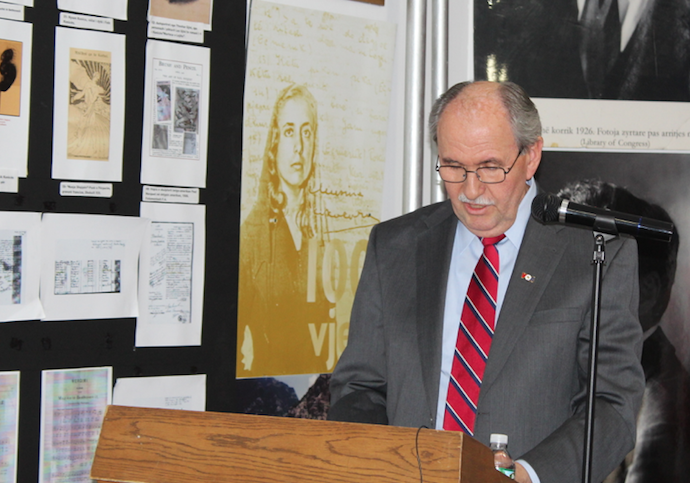
The panel discussion “Demokracia nuk pret” is both timely and relevant as Albania finds itself at another critical juncture in its post-communist transition. This program is being held in the immediate aftermath of the issuance of the 2018 Freedom House Report on Albania and the 2018 European Commission Progress Report on Albania. The observations and conclusions reported in these documents have aroused both positive and negative reactions from the various segments of the Albanian political elite as well the country’s extensive commentariat….

1 RafaelaWith the exception of the generally positive reception of the EC recommendation that the European Union begin accession negotiations with Albania, the responses to both these reports have been largely colored by the partisan and ideological perspectives of their authors. Given the highly charged and polarized Albanian political environment in which the discussions of these recent evaluations of the status of  the country’s transition have occurred, today’s program provides a valuable opportunity for a more detached and sober analysis of the multi-faceted aspects of Albania’s transition and the challenges the country must overcome to succeed in its quest for political democracy, a free market economy, greater socio-economic equality, the rule of law, human rights and the  mitigation of crime and corruption.
The realization of this agenda may prove to be an even more daunting challenge than in the past, given the growth of political polarization in mature democracies such as the United States and several countries in Western Europe and the emergence of authoritarian nationalist parties and regimes in Central and Eastern Europe. This latter development has been well received by some elements of the Albanian political right. And, in Albania, the implementation of the democratic agenda is further complicated by what appears to be the ingrained undemocratic instincts of key members of the leaderships of the major political parties. Additionally, there appears to be a deepening resentment on the part of some Albanians to the ongoing role and influence of external actors and interests in the affairs of their homeland.

The panelists for this program are uniquely qualified to provide informed and authoritative perspectives regarding Albania’s transition experiences and future prospects. All have served with distinction as members of the Albanian Service of the Voice of America. Frank Shkreli is the retired director of the VOA’s Eurasian Service and Elez Biberaj serves in that capacity today. Idriz Lamaj was a long time VOA broadcast journalist and is the author of a number of studies on Albanian affairs. The panelists have followed, reported on and participated in in major events in the evolution of post-communist Albania from the collapse of the communist regime to the present. All have published books, articles and have made numerous presentations regarding Albania’s history, politics, society and international relations that have been well received. Indeed, the first volume of Frank’s Demokracia nuk pret , comprises the initial installment of his approximately 1,000 articles on various aspects of Albanian life published in the Albanian press in the homeland and the diaspora. And this book provides both the inspiration and title for today’s program.

My greetings to the panelists and conference participants. And, my best wishes and congratulations to those VATRA officers and members involved in the planning and hosting of this event.

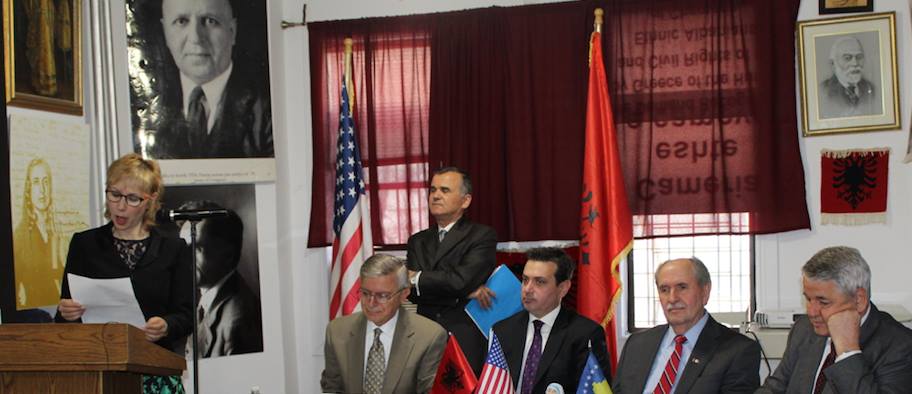
  • U lexua ne promovimin e Librit “Demokracia nuk Pret” te Frank Shkrelit, nga Editorja e sec te anglishtes te gazetes Dielli, Rafaela Prifti

Filed Under: Analiza Tagged With: "DEMOKRACIA NUK PRET", Prof. Nick Pano

SHQIPTARET PARA NJE PROVE HISTORIKE

April 22, 2018 by dgreca

– TE PAJTOHEN ME GJENDJEN E TANISHME OSE TE ZGJOHEN NGA AMULLIA ….të kapin momentin dhe të ndërmarrin hapat e nevojshëm për të realizuar potencialin e tyre të plotë demokratik.Siç thekson Frank Shkreli, Demokracia nuk pret!./
1 elezi 1

Dr. Elez Biberaj/

Drejtor i Drejtorisë së Euroazisë- Zëri i Amerikës/

Fjala ne Promovimin e Librit te Frank Shkrelit, Demokracia nuk pret!

VATRA, New York

21 prill 2018

Ju falenderoj përzemërsisht për ftesën për të marrë pjesë në këtë takim. Është nder dhe privilegj për mua që të marrë pjesë në promovim të libirt të mikut dhe kolegut tim, Fran Shkreli.

Frani ka dhënë dhe vazhdon të japë një ndihmesë të çmuar në publicistikën shqiptarë, në përgjithësi, dhe në avancimin e çështjeve shqiptare, në veçanti.

Jam shumë i lumtur që ndodhem këtu ne VATAREN tone dhe në shoqërinë e personaliteteve të njohura dhe të miqve e kolegëve.

Deshiroj te shpreh mirenjohje per VATREN, per kujdesin qe gjithmone ka treguar dhe vazhdon te tregoje per promovimin e veprave te anetareve te bashkesise sone.

Para se te flase per librin e Franit, do te kisha deshire te theksoj lidhjet e ngushta qe kane ekzistuar historikisht midis Zerit te Amerikes dhe VATRES – qe nga vitet e veshtira te Luftes se Ftohte e deri ne ditet tona. Zeri i Amerikes gjithmone eshte perpjekur te pasqyroje veprimtarine dhe angazhimin e organizatave dhe shoqatave shqiptaro-amerikane, veçanerisht ato te VATRES.

Arkivi i Zerit te Amerikes permban regjistrime te shumta te ngjareve, takimeve, dhe personaliteteve me te rendesishme te bashkesise sone.  Ketu perfshihen fjalimet e Fan Nolit, te cilat nepermjet VATRES iu dhuruan Bibliotekes Kombetare ne Tirane.

Gazetare te shquar te Zerit te Amerikes kane luajtur rol te rendesishem ne mbarevajtjen e VATRES dhe te Diellit–  Xhevat Kallajxhiu, Idriz Lamaj, Gjek Gjonlekaj, e te tjere.  Disa prej nesh, perfshire edhe mua, shkrimet e para i kemi botuar ne gazeten Dielli.

Frank Shkreli ka nje kariere te gjate, te shquar e te pasur.  Gjate gjithe veprimtarise se tij, ai e ka deshmuar vehten si mbrojtes i flaket i lirise se fjales e te shtypit, i te drejtave te njriut, dhe si avokat i çeshtjes shqitare.

Veprimtaria publicistike e Frank Shkreli shtrihet ne gati pese dekada. Karieren e tij ai e ka filluar menjehere pas imigrimit ne Shtetet e Bashkuara dhe gjate studimeve universitare.  Fillimish, ai u perqendrua ne çeshtjet shqiptare – sfidat e ndryshme me te cilat ballafaqohej bashkesia jone shqiptaro-amerikane si dhe shqiptaret ne vendlindje.

Pasi e dallon veten ne kete fushe, Frani zgjeron horizontin e tij dhe fillon te merret me ceshtje rajonale e globale – me çeshtje me madhore. Ai zhvillon njohuri te gjere per marredheniet nderkombetare, ne pergjithesi, dhe ish-blokun komunist, ne veçanti.

Frani ka nje ndergjegjesim te larte politik dhe njohuri te jashtezakonshme mbi politiken e jashtme amerikane dhe funksionimin e Uashingtonit.

Frani ka aftesi te analizoje dhe te shkruaj mbi çeshtje aktuale rajonale dhe nderkombetare. Por pas daljes ne pension, ai ben nje kthese 360 gradesh, duke u kthyer aty ku e kishte filluar veprimtarine e tij publistike: Ai vendos t’ia kushtoje vemendjen kryesore çeshtjeve dhe zhvillimeve shqiptare.

Kjo pasqyrohet ne angazhimin e tij te gjithaneshem per ndergjegjesimin e Shteteve te Bashkuara mbi gjendjen, kerkesat dhe aspiratat e shqiptareve, vendosjen e demoracise ne trevat shqitare, dhe krijimin e shoqerive demokratike e gjitheperfshirese.

Fruti i kesaj veprimtarie eshte libri qe kemi perpara, Demokracia nuk pret! Ne shkrimet e tij, dhe veçanerisht ne ato qe jane perfshire ne kete liber, Frani trajton çeshtje, ngjarje dhe tema nga me te ndryshme dhe e ben kete ne menyre te besueshme dhe objektive. Ai trajton te kaluaren tone – anet positive, ato negative, dhimbjet, gezimet – si dhe problemet bashkekohore. Frani i analizon te gjitha keto me nje sy kritik, por gjithmone duke arritur perfundime te rendesishme qe mund t’u hyjne ne pune vendim-marresve shqiptare ne perballimin e sfidave te dukshme strategjike dhe diplomatike me te cilat ballafaqohen.

Ne artikujt e tij, Frani thekson me force domosdoshmerine qe shqiptaret te konsolidojne orientimin e tyre perendimor.

Shtrohet pyetja: pse jane shkrimet dhe pikepamjet e Fran Shkreli te rendesishme?  Çka u ofron ai lexueseve ne nje kohe kur peisazhi mediatik shqiptar eshte zgjeruar dhe ndryshuar ne menyre dramatike?

Fran Shkreli eshte gazetar dhe analist profesionist. Pasuria e tij me e madhe eshte niveli i larte i besueshmerise qe ai ka arritur te krijoje tek lexuesit e tij. Kete besueshmeri ai e ka siguruar fale aftesise per te qene objektiv dhe duke anashkalluar qendrime te njeaneshme.

Frani eshte i vetdijshem se ndersa sot gazetaret kane mundesi te jashtezakonshme dhe mjete te sofistikuara, misioni i gazetarit vazhdon te jete po ai qe ka qene gjithmone – qe te tregohet e verteta, edhe kur ajo eshte e hidhur. Ai ka qene gjithmone ne kerkim te se vertetes.

Frani bashkebisedon me lexuesit e tij nga nje kendveshtrim i veçante – nga kendveshtrimi i nje publicisti te njohur shqiptaro-amerikan, i cili eshte thellesisht i interesuar ne konsolidimin e demokracise ne trevat shqiptare dhe ne thellimin e partneritetit strategjik midis shqiptareve dhe Shteteve te Bashkuara.

Ai u kujton shqiptareve se keto marredhenie duhet kultivuar ne vazhdimesi dhe se thellimi i tyre varet nga perfaqesimi, nga ana e shqiptareve, te vlerave demokratike – respektimi i te drejtave te njeriut, vendosja e sundimit te ligjit dhe qeverisja e mire dhe llogaridhenese.

Ne kete drejtim, besoj se Frani pasqyron pikepamjet dhe deshirat e bashkesise sone per krijimin e nje shoqerie me te drejte dhe me demokratike ne trevat shqiptare.

Libri i Franit, Demokracia nuk pret, eshte nje burim i rendesishem per gazetaret, studentet, dijetaret dhe politikanet.  Me kete veper, Fran Shkreli ka dhene nje nidhmese te rendesishme ne debatin politik dhe mediatik shqiptar.  Toni dhe substanca e shkrimeve te tij jane te veçanta ne peisazhin mediatik shqiptar.

Libri i Franit eshte botuar ne kohen e duhur dhe eshte shume aktual.

Shqiptaret – kudo qe ndodhen, ne Shqiperi, Kosove, Maqedoni, dhe vende te tjera – kane te drejte te ndihen krenare per arritjet e gjithaneshme ne krahasim me gjendjen e tyre para nje çerek shekulli.  Dhe kete jave, Shqiperia mori nje lajm shume te mire nga Brukseli – rekomandimin per fillimin e bisedimeve per anetaresim ne Bashkimin Evropian.

Por, siç ve ne dukje Frani ne librin e tij, shqiptaret kurresesi nuk mund te te jene te kenaqur me stadin e tanishem politik, ekonomik, dhe shoqeror.

Ndersa rekomandimi i Brukselit eshte shpresedhenes, ai paraqet nje moment te volitshem qe elitat qeverisese, jo vetem ne Shqiperi, por edhe ne Kosove e ne Maqedoni, te reflektojne mbi ato qe do ti quaja raste te artaqe shqiptaret kane humbur gjate viteve dhe dekadave te fundit dhe qe kane ngadalesuar rrugen e tyre per konsolidimin e demokracise. Bisedimet per anetaresim ne Bashkimin Evropian duhet te kishin filluar vite me pare. Duhet pranuar se ky dhe raste te tjera te artaper Shqiperine dhe per Kosoven, jane humbur kryesisht si rrjedhim i i mangesive te theksuara udheheqese te vendim-marresve shqiptare.

Sot, shqiptaret perballen me sfida te dukshme:  problemet ekonomike; papunesia e larte dhe varferia; korrupcioni qe ka depertuar ne te gjitha nivelet e qeverisjes dhe te shoqerise; paligjshmeria dhe mungesa e shtetit ligjor; institucionet e dobeta; dhe politikane te papergjegjshem qe tolerojne e nxisin korrupcionin dhe perdorin praktika jodemokratike per te siguaruar dhe mbajtur pushtetin.

Ketyre sfidave te brendshme tani u shtohen edhe disa probleme te jashtme: prirja rajonale dhe globale e rreshqitjes se demokracise; forcimi i alternatives autoritare, si ne Turqi dhe Rusi; dhe ndryshimi i peisazhit politik balkanik dhe evropian.

Nderkohe, aktoret kryesore perendimore po tregojne shenja lodhjeje me shqiptaret – te cilet vazhdojne te prodhojne kriza, qe pastaj kerkojne vemendje dhe burime te medha. Keto prirje negative nderkombetare mund te minojne pozitat e shqiptareve dhe te shkaktojne nje perkeqesim ne ecurine e tyre politike dhe ekonomike.

Sot nuk flitet me per nje dinamizem ose ritem te sigurt reformash ne trevat shqiptare.  Perkundrazi, ndihet nje ngecje, zvarritje, renie e pergjithshme, humbje shprese, dhe polarizim i skajshem politik, qe mund te kene pasoja te rrezikshme per te ardhmen.

Ne qofte se nuk ndryshohen se shpejti, keto prirje negative do te veshtiresojne perpjekjet e shqiptareve per t’u ankoruar qartesisht ne familjen e vendeve dhe shoqerive demokratike perendimore.

Qe te nderpritet kjo renie e pergjithshme, shqiptaret duhet te ndermarrin ndryshime radikale, qe do te rezultonin jo vetem ne nje kurs te ri drejtimi por do te transformonin rrjenjesisht shoqerine shqiptare.

Per te arritur keto objektiva, eshte e domosdoshme qe,


  • Stili i tanishem i qeverisjes te ndryshoje me themel dhe te perqendrohet tek interesat themelore kombetare e jo tek ato partiake ose tek objektivat politike afat-shkurtera.
  • Forcat kryesore politike te bien ne ujdi mbi vizionin per te ardhmen e vendit dhe mbi perpilimin dhe zbatimin e politikave madhore qe do te çonin ne realizimin e ketij vizioni.
  • Te krijohen dhe te fuqizohen institucione me te vertete te pavarura dhe te afeta per vendosjen e shtetit ligjor dhe çrrenjosjen e korrupsionit.
  • Media te çlirohet nga trysnia dhe interesat politike dhe financiare.
  • Procesi i vendimmarrjes per çeshtje te rendesishme te jete gjitheperfshires, me pjesemarrjen e aktoreve kryesore, grupeve te interesit, te shoqerise civile, dhe eksperteve.
  • Dhe se fundi, e gjithe shoqeria duhet te ndryshoje thellesisht – menyra si mendon dhe si vepron ajo. Shqiptaret duhet te jene me kerkues dhe ndeshkues ndaj politikaneve te tyre dhe te kerkojne llogaridhenie, transparence dhe pergjegjshmeri me te madhe.


Keto jane objektiva shume te veshtira dhe duhet vullnet politik dhe kohe qe ato te arrihen.

Por shqiptarët në përgjithësi, e jo vetëm udhëheqësit dhe politikanët e tyre, ndodhen para një prove historike: të pajtohen me gjendjen e tanishme ose të zgjohen nga amullia, të kapin momentin dhe të ndërmarrin hapat e nevojshëm për të realizuar potencialin e tyre të plotë demokratik.

Siç thekson Frank Shkreli, Demokracia nuk pret!


Filed Under: Featured Tagged With: "DEMOKRACIA NUK PRET", Dr. Elez Biberaj, NJE PROVE HISTORIKE, SHQIPTARET PARA

  • « Previous Page
  • 1
  • 2
  • 3
  • Next Page »

Artikujt e fundit

  • NDJESHMËRIA SI STRUKTURË – NGA PËRKORËSIA TE THELLËSIA
  • Si Fan Noli i takoi presidentët Wilson the T. Roosevelt për çështjen shqiptare
  • TRIDIMENSIONALJA NË KRIJIMTARINË E PREҪ ZOGAJT
  • Kosova dhe NATO: Një hap strategjik për stabilitet, siguri dhe legjitimitet ndërkombëtar
  • MEGASPEKTAKLI MË I MADH ARTISTIK PAS LUFTËS GJENOCIDIALE NË KOSOVË!
  • Veprimtaria atdhetare e Isa Boletinit në shërbim të çështjes kombëtare
  • FLAMURI I SKËNDERBEUT
  • Këngët e dasmës dhe rituali i tyre te “Bleta shqiptare” e Thimi Mitkos
  • Trashëgimia shqiptare meriton më shumë se sa emërtimet simbolike të rrugëve në New York
  • “Unbreakable and other short stories”
  • ÇËSHTJA SHQIPTARE NË MAQEDONINË E VERIUT NUK TRAJTOHET SI PARTNERITET KONSTITUIV, POR SI PROBLEM PËR T’U ADMINISTRUAR
  • Dr. Evia Nano hosts Albanian American author, Dearta Logu Fusaro
  • DR IBRAHIM RUGOVA – PRESIDENTI I PARË HISTORIK I DARDANISË
  • Krijohet Albanian American Gastrointestinal Association (AAGA)
  • Prof. Rifat Latifi zgjidhet drejtor i Qendrës për Kërkime, Simulime dhe Trajnime të Avancuara Kirurgjike dhe Mjekësore të Kosovës (QKSTK) në Universitetin e Prishtinës

Kategoritë

Arkiv

Tags

albano kolonjari alfons Grishaj Anton Cefa arben llalla asllan Bushati Astrit Lulushi Aurenc Bebja Behlul Jashari Beqir Sina dalip greca Elida Buçpapaj Elmi Berisha Enver Bytyci Ermira Babamusta Eugjen Merlika Fahri Xharra Frank shkreli Fritz radovani Gezim Llojdia Ilir Levonja Interviste Keze Kozeta Zylo Kolec Traboini kosova Kosove Marjana Bulku Murat Gecaj nderroi jete ne Kosove Nene Tereza presidenti Nishani Rafaela Prifti Rafael Floqi Raimonda Moisiu Ramiz Lushaj reshat kripa Sadik Elshani SHBA Shefqet Kercelli shqiperia shqiptaret Sokol Paja Thaci Vatra Visar Zhiti

Log in

This website uses cookies to improve your experience. We'll assume you're ok with this, but you can opt-out if you wish. Cookie settingsACCEPT
Privacy & Cookies Policy

Privacy Overview

This website uses cookies to improve your experience while you navigate through the website. Out of these cookies, the cookies that are categorized as necessary are stored on your browser as they are essential for the working of basic functionalities of the website. We also use third-party cookies that help us analyze and understand how you use this website. These cookies will be stored in your browser only with your consent. You also have the option to opt-out of these cookies. But opting out of some of these cookies may have an effect on your browsing experience.
Necessary
Always Enabled
Necessary cookies are absolutely essential for the website to function properly. This category only includes cookies that ensures basic functionalities and security features of the website. These cookies do not store any personal information.
Non-necessary
Any cookies that may not be particularly necessary for the website to function and is used specifically to collect user personal data via analytics, ads, other embedded contents are termed as non-necessary cookies. It is mandatory to procure user consent prior to running these cookies on your website.
SAVE & ACCEPT