• Home
  • Politics
  • Opinion
  • Culture
  • Sports
  • Economy
  • Interview
  • Reporting
  • Community
  • Vatra

Dielli | The Sun

Albanian American Newspaper Devoted to the Intellectual and Cultural Advancement of the Albanians in America | Since 1909

IT’S NOVEMBER 28TH

January 27, 2023 by s p

Muci Xhepa/

There’s an echo of heavy soled boots coming from the fifth floor. Moving from room to room, our upstairs neighbor is getting ready to go out. It’s the only day in the year he dresses in the very best clothes he owns. In reality, they were the only things left him after the theft of his possessions by the “Liberators”. The boot-falls continue over the threshold, out the door of the apartment, down the stairs and mingle with the laughter of children who live on the second floor. Lots of children. The Ulloria couple, their parents, work night and day just to provide for them.

Whenever Hysni, their father, is asked how many kids he has, he jokingly answers:

“I have a whole soccer team!”

“Uncle Petrit, your boots shine like mirrors” says the youngest Ulloria to the neighbor.

The second youngest also approaches and runs his hand over the patent leather. Petrit reaches into a pocket of his overcoat and produces a small bag of candy. It falls to the youngest child to hand it out to his siblings. The oldest of the brothers wears prescription glasses and has the look of a fine student in the making.

“Why should we offer felicitations to uncle Petrit today” he asks squinting behind the lenses.

They all scamper down the stairs and out of the building buzzing around Petrit like a swarm of bees around a hive. Laughing with joy, Petrit responds loudly enough for the adults in the vicinity to hear:

“It’s the 28th of November. It’s OUR holiday!”

The smartest of the Ulloria kids, the fifth grader, steps in front of him:

“Teacher told us our holiday is tomorrow.”

Petrit pats the boy on the head and turns to his mother, who’s talking with the bakery saleslady, and says:

“Riku, your mom can explain it to you better.”

Head held high, black fedora on, Petrit crosses the building’s courtyard and walks down the street towards the center of the city. Bound with a wide shiny black silk ribbon, slightly tilted to the left with the front of the rim gently shading his eye, the sides and back gently curved up, the hat is visible from afar. He wears a long white scarf which peeks just a bit along the lapels of his midcalf length, black as midnight, overcoat. Well-cut of fine cloth, double-breasted, it looks good on his slightly paunchy body. Two rows of big shiny buttons, one on each side of the open coat, make the garment even more beautiful. With each step the unbuttoned coat flares open showing a pair of black pants made of a different kind of heavy, shiny black, material. They’re tucked loosely into the knee-high elegant leather boots, which resound with every step on the cracked and dirty sidewalk. The image evokes memories of famous actors from golden days long past in our country.

Seated at some tables across the street from the local branch of the post office, some war veterans, wearing Chinese caps and plastic shoes produced by “NISH Goma, Durrës”, are playing dominos. They stop the game and resentfully watch their neighbor, the only man celebrating Flag Day, walk proudly down the street.

I got to know Petrit Guranjaku from the stories my grandfather told me. They were imprisoned in Elbasan prison at the same time. Later they were both sent to “The Swamp of Death”, the forced labor camp in Maliq. Petrit showed exceptional moral clarity. He came from a family which had high hopes the “Liberators” would make come true centuries old national dreams. Instead of dreams, the son of intellectuals would taste German chains, not at the hands of occupiers but at the hands of the Communist “Liberators”.

Grandfather said, “They took Petrit to the underground cell where they tortured us around midnight and brought him back at six in the morning, the time the sergeant would come to let us go to the privy.”

After they demolished our house, they sent us to the “Banesat” neighborhood on the outskirts of town. There we found out Petrit would be our upstairs neighbor…

“His face was swollen, and his mouth was bleeding profusely. They were accusing him of denouncing the surrender of Kosova to Yugoslavia.”

“Ceni, they hit… I kept… ‘You surrendered it to the Slav enemy’…”

Petrit once worked outside the borders of Albania created by the London Agreements. It was at a time when most of Albania’s long severed lands had been freed and reintegrated.

“I was being tortured by Thanas Caku, who was after the money my family had earned honestly and saved over generations.” Grandfather’s hands shook as if throttling the thieving criminal right then and there.

“They wouldn’t let us go to the privy. It was the time of day when Caku tortured me. I was in such pain! My kidneys felt like they would burst. I asked to be permitted to go urinate, but the sergeant pretended not to hear me. Petrit grabbed my hand and said, ‘Pee right here, in the corner!’ I did it in my shoes, my only shoes. It was icy cold, and they didn’t dry out for days…”

Petrit and my grandfather were later sent to Maliq together, to the “Swamp of Death”. They were assigned to the same forced labor brigade and were given sleeping space next to each other. In that place, heavy workload and very little food quickly changed men into blind skeletons.

“We couldn’t see. We couldn’t find our way to the work let alone do the work of digging ditches…”

Grandfather fell into a coma after the sergeant who was after our family money struck him in the abdomen, in the liver area, with an iron rod. Petrit took care of him and saved his life.

“Petrit saved my eyesight too. Prison administration brought a truckload of onions and had it unloaded at the center of the camp. Skeletons threw themselves upon the onions like hungry animals. There was little chance of getting my hands on a single onion but Petrit, strong man that he was, got a few and we ate them dirt and all. Little by little, our vision began to return…”

Many years later, after his return from “The Swamp of Death”, Sali Myzyri, a man from the neighborhood, asked my grandfather for help fixing his leaky roof. The work took many days. Feeling penitent, the man said to my grandfather:

“If I wanted it that way, you wouldn’t have suffered even a prick in your foot.”

His words left my grandfather speechless.

Petrit was retired and spent a good part of each day up on the roof where he kept a flock of pigeons. He had the door leading up under lock and key. For Petrit, the birds were like balloons soaring high into the sky and disappearing from sight, flying wherever and for as long as they wanted. To him, those birds symbolized freedom. During the years I was forbidden from continuing higher education, I made it a point to walk upstairs to the roof to hear the stories he would tell about his and my grandfather’s lives. Petrit was a great intellectual but above all, he was a great Albanian.

“November 28th found me in the city of Gjirokastra, for an inspection. It was beautifully adorned for the celebration. An old school chum of mine, now the ranking officer in the Royal Gendarmerie, and I were getting out of a vehicle at the “Bazaar Square.”

Petrit hated the Communist system and he hated “Nero” even more. Judging from his origins one wouldn’t think he would have a reason. Some of his family members had fallen in the Civil War on the Communist side. “Nero” called them national heroes. Heroes, while Nero needed them to be, but as half a century of terror evolved, they too would join the huge segment of the population already declared enemies of the people. He denigrated their families, sent them to forced labor camps, elimination and more…

“Two young men, well dressed for the holiday, were walking towards us but on the other side of the street. The taller fellow, obviously effeminate, wore a black beret cocked over one eye. He was animated, his hands moving as he spoke to his companion. When they got close to where we were standing, he offered a greeting with a servile smile. ‘He’s one of the Hoxha’s. He’s got… an undesirable moral disposition but, we have use for him. He serves our needs.’ My friend offered.”

Not even blinking an eye, Petrit spoke of “Nero” as if just of a neighborhood bum. He was a very brave man indeed.

“In the ‘Swamp of Death’, two or three people died every day. The family brought your grandfather Cen, a small wooden cask of cheese, which he couldn’t keep himself because the sergeant was always looking for something to use as a reason to torture him some more. He entrusted it to a peasant who slept next to us, and we all shared it equally, eating it with the stone-hard bread we were given. When the cheese was all gone, we stuck our fingers in the cask and wiped them on the hard bread just for the scent…”

Petrit was being enticed by “The Liberators”. He was being invited to return to the fold. Offers were being made. Positions of great responsibility would be entrusted to him if…

“For the first celebration of November 28th. after the takeover by the ‘Liberators’, I put on the best clothes I owned, these you see on me today, loaded a truck with more things I bought over the years and headed for Elbasan. At ‘Qafë-Thana’, I was intercepted by three soldiers and a civilian. I recognized the civilian as being an Elbasan and I stepped towards them offering my hand in greeting.

‘What have you done to us Petrit? You wanted to make us, and our Yugoslav brothers become enemies? If you weren’t of the last name that you are, only a bullet for you today!’ Even before Jorgji Shuteriqi finished speaking, all three of them threw themselves at me and forced me into the truck which was parked on the side of the road.”

Jorgji Shuteriqi’s brother, Haqim Shuteriqi, lived two floors below Petrit’s apartment. He was a graduate of a religious school. That culture had made him into a better human being. However, for Petrit, he was a Shuteriqi and that was enough for him never to speak a word to the man.

“You are young. You will live a long time and will get to witness what’ll be said of the degenerate”.

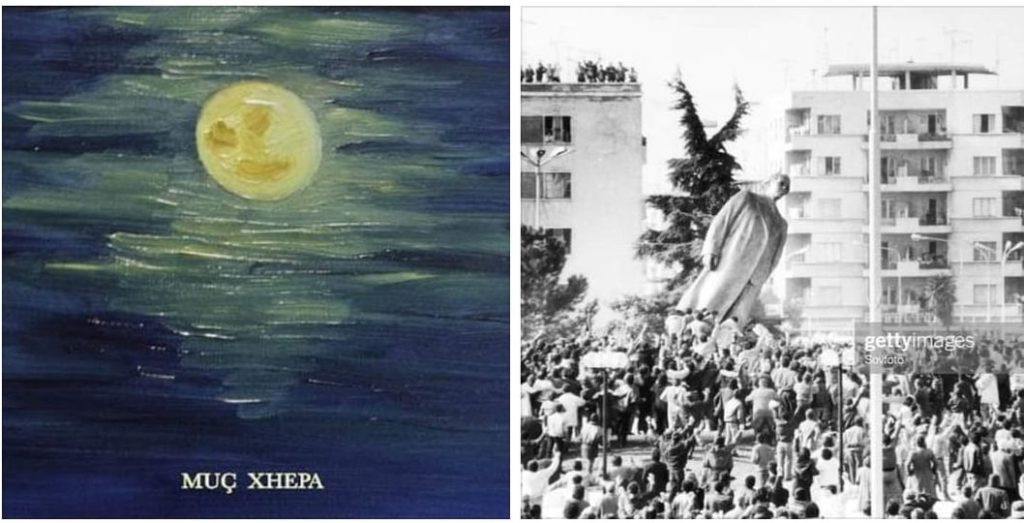
When “Nero’s” statue was toppled, my friend Petrit Guranjaku threw a Banquet!

With a glass of wine in his hand, he said: “If I were to die today, I wouldn’t feel a bit sorry for myself because I lived to see them drag the monster down”.

I was in the United States when Petrit passed away. I felt deeply touched and honored when my father informed me of the final request my dear, anti-Communist, friend had made of his son.

“You are to receive condolence visits at the home of Muç Xhepa!”

It was done as he wished and with deep respect, Elbasan bid farewell to the great Albanian.

Translated from the Albanian by Dita Gjuraj
Filed Under: Kulture

Një arritje për shqiptarët në Michigan

January 27, 2023 by s p

Jehona e Malësisë/

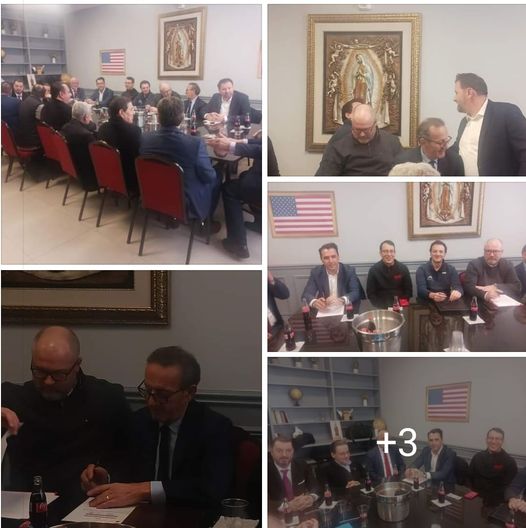
Në ambientet e bukura të sallës Nënë Tereza pranë Kishës “Zoja Pajtore“ në Southfield-MI, u nënshkrua marrëveshja ndërmjet Shoqates Komuniteti Shqiptar në Michigan, kjo shoqatë e përbërë nga perfaqësuesë të shoqatave “KOSOVA” dhe “JEHONA E MALËSISË” me kompaninë më të madhe në botë për pije freskuese – Coca Cola, dhe me kompaninë më të madhe të pijeve freskuese për shtetin e Michigan-it – Leonard’s Syrups.

Në emër të Shoqatës Komuniteti Shqiptar në Michigan kontratën e nënshkruajti kryetari i shoqates, z. Gjevalin Gegaj, nga kompania Coca-Cola, z. Joshua Bennett, ndërsa në emër të kompanisë Leonard’s Syrups , z. Lucas Iskra.

Me ketë marrëveshje përfitojnë pronarët e restoranteve duke blerë produktet nga këto kompani me çmimin më të ulët në treg dhe duke marr sherbimin ma te mirë, e në të njëjtën kohë një perqindje e konsiderueshme nga çmimi në fjalë shkon në fondin e Shoqatës me qëllim që të grumbullohen mjetet për ndertimin e Qendres Kulturore Shqiptare në Michigan.

Komuniteti Shqiptar në Michigan është i regjistruar si shoqatë joprofitabile me status të veçantë ( 501c3) që lejon kontribuesit zbritje taksash bazuar në kontribut.

Pjesëmarrësit në ceremoninë e nenshkrimit të kësaj marrëveshjeje vlerësuan se kjo marrëveshje është arritja më e madhe në historinë e komunitetit tone në këtë shekull.

Filed Under: Komunitet

MË 4 SHKURT 2023 DO THEMELOHET DEGA E VATRËS NË CHICAGO

January 27, 2023 by s p

Më 4 Shkurt 2023 do të themelohet dega më e re e Vatrës në Chicago. Patriotë, veprimtarë, shkrimtarë, aktivistë, biznesmenë, profesionistë të ndryshëm e studentë do të bashkohen për ti dhënë një frymë edhe më të fuqishme përpjekjes shqiptare në mërgatën e Amerikës. Takimi i themelimit do të zhvillohet në datën 4 Shkurt 2023, ora 4 PM- 6 PM, Adresa: La Mirage Restaurant, 9845 Lawrence Ave Shiller Park Illinois. Çdo patriot shqiptar që ka dëshirë të kontribuojë për komunitetin dhe çështjen kombëtare është i mirëpritur në këtë bashkësi vlerash dhe energjish pozitive për të mirën e komunitetit dhe kombit shqiptar. Për çdo informacion dhe kontakt për t’u bashkuar me Vatrën e Chicagos jeni të lutur të kontaktoni me kryetaren e grupit të punës për themelimin e degës, shkrimtaren Mirela Kanini cel: 847 834 1749.

Filed Under: Vatra

Bibla e parë

January 27, 2023 by s p

Astrit Lulushi/

Bibla, e shkruar në lëkurën e dhisë në gjuhën e hershme etiopiane Geez, është gjithashtu Bibla e parë e ilustruar në botë. Dhe në mendje vjen Mbretëresha Victoria e Anglisë. Ajo i dhuroi perandorit etiopian një Bibël Gutenberg (produkt i shekullit të 16-të) Perandori, ia ktheu gjestin. Dhe i dhuroi mbretëreshës një Bibël të ilustruar të shekullit të 5-të.

Mbretëresha gjithashtu shkëmbeu me të diçka unike; një mesazh audio të regjistruar. Fatkeqësisht, regjistrimi i saj erdhi me udhëzime që duhej të shkatërrohej pas dëgjimit, gjë që u bë. Regjistrimi nga perandori etiopian megjithatë u ruajt.

A do të ishte e saktë të supozohej se krishterimi erdhi në Etiopi përpara se në Evropë?

Krishterimi duket se gjeti një cep në Etiopi. Ekziston një cep tjetër ku krishterimi mbijetoi në zonat malore në Egjipt.

Krishterimi filloi të përhapej në Etiopi ndoshta në të njëjtën kohë si për të gjithë Perandorinë Romake, gjatë shekujve 1-3, megjithëse prania e tij ishte mjaft minimale, nëse jo pothuajse inekzistente. Por tekstet e hershme të krishtera e përmendin atë si vend ungjillizimi, duke lënë të kuptohet realiteti i mundshëm i predikimit të krishterë në jug të Egjiptit.

Është “Pagëzimi i Eunukut”, pikturë nga Rembrandt më 1626, që u frymëzia në një nga rastet e para të konvertimeve në Veprat e Apostujve (të shkruara rreth viteve 80–90). Piktura tregon pagëzimin nga dhjaku të një eunuku etiopian në rrugën midis Jerusalemit dhe Gazës. Etiopiani është simbol i vullnetit për të përhapur Ungjillin në të gjithë botën, si emri i përgjithësuar për popujt afrikanë që jetojnë në jug të Egjiptit dhe Saharasë.

Për Eunukun etiopian tregohet gjithashtu mes hebrenjve, duke u konsideruar ndoshta një çifut etiopian që po kthehej nga adhurimi në Jersualem dhe lexonte nga Dhiata e vjetër hebraike, duke mos e kuptuar atë, për johebrenjtë – grekët politeistë dhe Romakët. E vërteta që qëndron pas kësaj anekdote është se përpjekjet për ungjillëzimin e etiopianëve, së pari ndaj atyre që ishin të pranishëm në provincat romake të Egjiptit, Judesë dhe Sirisë për arsye të ndryshme, sigurisht filluan që në fund të shekullit të parë pas Krishtit.

Piktura “Martirizimi i Shën Mateut” e Caravaggios, rreth vitit 1599, frymëzohet nga një grumbull shkrimesh të shekullit VI, që u përdorën më vonë si burime në Légende Doré nga Jacques de Voragine në shekullin XIII, Apostulli Mateu shkoi në Etiopi me Eunukun e pagëzuar. Atje, Mateu ringjalli princin Euphranor, i cili sapo kishte vdekur nga sëmundja, dhe me këtë mrekulli ktheu në besimin e krishterë gjithë familjen mbretërore. Por shpejt, një princ pagan pushtoi Fronin. I zemëruar kur Mateu refuzoi ta lejonte të bënte një martesë që do të legjitimonte sundimin e tij, apostulli u vra nga ushtarët e mbretit ndërsa po jepte meshën. Kjo ndodhi në vitet 80 të erës sonë.

Çështja është se, ndërsa dëshmitë arkeologjike janë shumë të pakta, dhe burimet letrare dhe hagiografike të dyshimta në rastin më të mirë, ekziston një probabilitet që predikuesi i krishterë të ketë rënë në kontakt me popullin etiopian dhe ndoshta edhe të ketë ardhur në Etiopi nëpërmjet rrugëve tregtare të detit të Kuq. Ndonëse nuk ishin vërtet të suksesshëm në përhapjen e besimit të krishterë në rajon për tre shekujt e parë të epokës.

Krishterimi filloi të bëhej i rëndësishëm si fe në rajon vetëm gjatë shekullit të IV, në një krishterim afër monofizitizmit egjiptian (greqisht monos, “vetëm, i vetmuar”) dhe physis, një fjalë që ka shumë kuptime, “natyrë” në këtë kontekst, një doktrinë që përcakton natyrën e Jezu Krishtit si vetëm hyjnore.

Pavarësisht nga rëndësia e Krishterimit dhe Islamit në Etiopi për shekujt e ardhshëm, besimet pagane mbetën shumë të forta në popullatat e ndryshme etiopiane pasi Etiopia nuk do të strukturohej kurrë në mënyrë efikase.

Konvertimi i dy krahinave, Ezanë dhe Axum, e bëri Etiopinë mbretërinë e dytë që pranoi krishterimin si fenë e saj shtetërore. Armenia ishte e para, me Triditatin që e shpalli besim zyrtar në vitin 301, në humbjen e politeizmit dhe zoroastrianizmit armen.

Perandoria Romake, nga ana e saj, doli e treta. Për të gjitha politikat kryesisht pro-kristiane të konstantinianëve, Perandoria u bë zyrtarisht e krishterë vetëm në vitin 380 me Ediktin e Selanikut nga Theodosius I, që shpalli krishterimin niceas si “katolik”, çka do të thotë “universal” – dhe duke dënuar lëvizjet e tjera të krishtera si herezi dhe duke ndaluar zyrtarisht kultet tradicionale nga jeta publike.

Gjithsesi, ky krishterim shërbeu edhe si një shtytësë për pavarësinë dhe zgjerimin e mbretërisë etiopiane. Tregtari bizantin i shekullit të VI, Cosmas Indicopleustes, i cili po bënte një ndalesë në qytetin port të Adulis, u caktua për të kopjuar mbishkrimet greke të dy punimeve të mëdha prej guri në këtë qytet etiopean, për të shërbyer si frymëzim, për një monument fitoreje për të festuar një pushtim të ardhshëm të Himyarit.

Njëri ishte një pllakë që datonte nga sundimi i faraonit Ptoleme III (246 – 222 pes), i cili bëri një fushatë në Etiopi për të rikthyer elefantët e luftës dhe ngriti një monument për të dekurajuar rebelimin kundër Egjiptit. Tjetri ishte një fron i shekullit 2-3 të e.s., ndërtuar nga mbretër axumitë si monument kushtuar fitoreve dhe sundimit të tyre ushtarak.

Kopja e skicës që Kozmai e mbajti për vete dhe ajo që ka arritur, tregon për inatin e gjatë që ekzistonte midis Axumitëve dhe Himiaritëve. Një mbret aksumit i shekullit 2-3 të e.s., emri i të cilit humbi në Histori, zgjeroi mbretërinë e tij në veri dhe në lindje në të dy brigjet e Detit të Kuq, duke hapur një tregti të drejtpërdrejtë tokësore me Egjiptin romak. Megjithatë, rreth viteve 290–300 të erës sonë, Axumitët u ndoqën nga Arabia Jugore nga fiset lokale, duke përfshirë himaritët që u bënë fuqia dominuese në rajon.

Himarotët politeistë, kryesisht besnikë ndaj perëndisë së diellit, kishin një numër të konsiderueshëm komunitetesh hebreje dhe disa të krishtera që jetonin pranë tyre. Rreth vitit 390, mbreti Al-Kamil, u shërua nga një plagë e rëndë që kishte marë në mbrojtje të qytetit Jethribit – Madina e ardhshme – dhe u bë mbreti i parë jemenas që pranoi judaizmin si fenë e tij. Menjëherë, elitat himarite përdorën besimin e tyre monoteist të sapogjetur për të riafirmuar autoritetin e tyre qendror. Nga fillimi i shekullit të V të e.s., mbishkrimet mbretërore nuk u referoheshin më perëndive të vjetra, por të Vetmit Zot. Hebraishtja gjithashtu filloi të bëhej gjithnjë e më e zakonshme dhe sundimtarët himaritë gjithashtu erdhën ta quanin veten si popull i Izraelit. Meqenëse krishterimi ishte adoptuar nga rivalët e tyre të vjetër aksumitë, konvertimi i Himiarit në Judaizëm ishte pothuajse një reagim për të pohuar pavarësinë e tyre dhe shërbeu si shkas për persekutime aktive kundër subjekteve të tyre të krishterë.

Një mëkëmbës u emërua në mesin e Himiaritëve për të qeverisur në vitin 531 me tensione të përtëritura midis sundimtarëve të krishterë dhe shumicës lokale hebreje. Megjithatë, fuqia e tyre u zgjerua duke u shtrirë deri në Mekë, për të luftuar me fisin pagan Kurejsh. Ky dominim do të zgjaste deri në vitin 630, datë e ardhjes së Islamit në rajon.

Por…historia paraislamike e Etiopisë nuk është aq e njohur sa ajo e Perandorisë Romake, Greqisë apo Egjiptit. Pra, është gjithmonë interesante të mësosh pak.

Filed Under: ESSE Tagged With: Astrit Lulushi

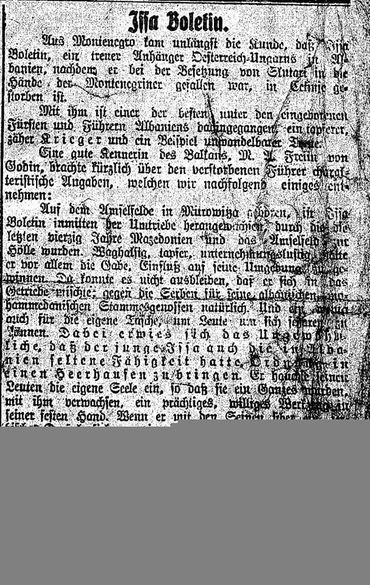
Portretizimi i Isa Boletinit sipas gazetës “Fremdenblatt”(1916)

January 27, 2023 by s p

Kur filloj lufta ballkanike, edhe Isa, nga Komiteti Qendror Shqiptar e kuptoi shpejtë kërcënimin e një pushtimi të Shqipërisë nga Serbët dhe Malazezët, dhe ai telegrafoi Konstandinopojë për armë dhe municion, dhe do të ishte i gatshëm deri në ardhjen e trupave të rregullta me 10.000 trupa të mbronte territorin kundër depërtimit të serbëve dhe malazezëve.”

Sylë UKSHINI

Fillimi i shekullit 19 për krejt Evropën, sidomos për botën shqiptare, është një epokë e kthesave dhe e transformimeve të mëdha. Po shembej Perandoria Osmane me me këtë edhe një rend që kishte mbizotëruar për 500 vjet në këto anë. Në territoret shqiptare po shtoheshin kryengritjet shqiptare për autonomi. Në mesin e shumë prijësve shqiptarë në rol të veçantë luajti Isa Boletini, i cili, megjithatë kufizimet e tij, mbetet një luftëtar i madh që bëri emër edhe jashtë krahinave shqiptare, një njeri i guximshëm që luftoi sa kundër xhonturqve, pastaj kundër pushtuesve serb, aq edhe duke iu gjetur pranë Ismail Qemailit, pricit gjerman të Shqipërisë, Wilhelm Widit, dhe duke shpresuar se një ditë kauza e tij do të triumfojë, pa e ditur kurrë se ky rrugëtim do të jetë i gjatë, me plotë sakrifica të shumë brezave, gati një shekull, periudhë kjo kur emri dhe karizma e tij u bë forcë mobilizuese.

Isa Boletini si luftëtar i rryer, i cili kërkonte që të gjente interesin më të përshtatshëm midis balancave të Fuqive të Mëdha dhe atyre ballkanike, ku ai llogariste se një aleancë e mundshme midis shqiptarëve dhe austro-hungarezëve për ta hequr qafe pushtimin serb e malazias. Në të kaluarën, veçanërisht gjatë luftërave ballkanike, ai bëri aleancë edhe me serbët, duke shpresuar se kjo ishte edhe interes të dy popujve fqinj dhe në funksion të ruajtjes së status quosë politike në Ballkan dhe me këtë edhe të Perandorisë Osmane. Mirëpo, më në fund, pas shpërthimit luftëtarëve ballkanike dhe pushtimit serb të Kosovës, do ta kuptojë se Serbia mbështetej tek shqiptarët vetëm kur duhej të luftonte për interesat e veta në raport me Perandorinë Osmane dhe Austro-Hungarisë. Kjo do të bëjë që Isa Boletini përfundimisht të bëhet rival i përjetshëm i Serbisë dhe Malit të Zi dhe në të njëjtën kohë bie në krahët e Austro-Hungarisë, tek mbështetja e së cilës ai shihte të vetmin vendin aleat për të fituar lirinë personale dhe të atdheut të tij.

See Insights and Ads

Boost post

Like

Comment

Share

Filed Under: Histori Tagged With: syle ukshini

  • « Previous Page
  • 1
  • …
  • 1865
  • 1866
  • 1867
  • 1868
  • 1869
  • …
  • 2787
  • Next Page »

Artikujt e fundit

  • FOTO – STUDIO VENETIKU dhe fotografja e parë shqiptare që vdiq në burgjet e diktaturës
  • KLINIKA E POEZISË, VISARI NË UNIVERSITETIN ILLINOIS, SHBA…
  • Dialogu dhe politika e jashtme e Kosovës, katër vitet vendimtare për shtetin
  • KRISHTLINDJET…
  • Enedio Metushi: “Për ruajtjen e gjuhës dhe kulturës sonë shqiptare”
  • Shoqata “Rrënjët Shqiptare” festuan festat e fundvitit
  • KOLONJËN E BËJNË EMËRMADHE RILINDASIT E SAJ TË SHQUAR
  • Kosovo Between Political Noise and the Need for Civic Clarity
  • TË FALËSH, TË MOS HARROJSH!
  • PREJARDHJA ILIRE DHE AUTOKTONIA E SHQIPTARËVE
  • Fitoi “Gold Winner” në konkursin ndërkombëtar “New York Photography Awards”, Erion Halilaj: “Promovim i talentit shqiptar në një skenë ndërkombëtare”
  • Kur filozofia dhe psikologjia ndërveprojnë për të shpëtuar njerinë
  • BALFIN REAL ESTATE HAP ZYRËN E PARË NË SHBA, NJË MUNDËSI E RE INVESTIMI PËR DIASPORËN SHQIPTARE
  • Konferenca “Diaspora 2025” organizuar nga Federata Kombëtare Shqiptare në Itali ( FNAI)
  • Koncepti i lumturisë dhe Krishtlindjet sot

Kategoritë

Arkiv

Tags

albano kolonjari alfons Grishaj Anton Cefa arben llalla asllan Bushati Astrit Lulushi Aurenc Bebja Behlul Jashari Beqir Sina dalip greca Elida Buçpapaj Elmi Berisha Enver Bytyci Ermira Babamusta Eugjen Merlika Fahri Xharra Frank shkreli Fritz radovani Gezim Llojdia Ilir Levonja Interviste Keze Kozeta Zylo Kolec Traboini kosova Kosove Marjana Bulku Murat Gecaj nderroi jete ne Kosove Nene Tereza presidenti Nishani Rafaela Prifti Rafael Floqi Raimonda Moisiu Ramiz Lushaj reshat kripa Sadik Elshani SHBA Shefqet Kercelli shqiperia shqiptaret Sokol Paja Thaci Vatra Visar Zhiti

Log in

This website uses cookies to improve your experience. We'll assume you're ok with this, but you can opt-out if you wish. Cookie settingsACCEPT
Privacy & Cookies Policy

Privacy Overview

This website uses cookies to improve your experience while you navigate through the website. Out of these cookies, the cookies that are categorized as necessary are stored on your browser as they are essential for the working of basic functionalities of the website. We also use third-party cookies that help us analyze and understand how you use this website. These cookies will be stored in your browser only with your consent. You also have the option to opt-out of these cookies. But opting out of some of these cookies may have an effect on your browsing experience.
Necessary
Always Enabled
Necessary cookies are absolutely essential for the website to function properly. This category only includes cookies that ensures basic functionalities and security features of the website. These cookies do not store any personal information.
Non-necessary
Any cookies that may not be particularly necessary for the website to function and is used specifically to collect user personal data via analytics, ads, other embedded contents are termed as non-necessary cookies. It is mandatory to procure user consent prior to running these cookies on your website.
SAVE & ACCEPT