• Home
  • Politics
  • Opinion
  • Culture
  • Sports
  • Economy
  • Interview
  • Reporting
  • Community
  • Vatra

Dielli | The Sun

Albanian American Newspaper Devoted to the Intellectual and Cultural Advancement of the Albanians in America | Since 1909

Archives for July 2018

VATRA IS ABOVE POLITICS

July 11, 2018 by dgreca

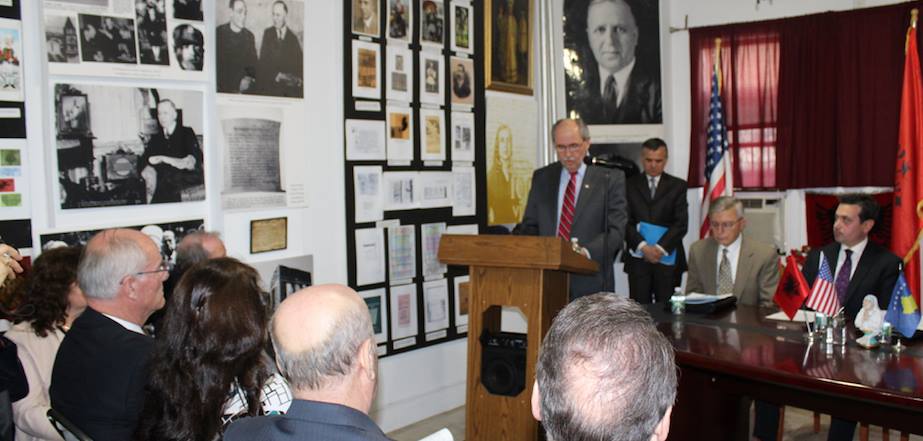
CHAIRMAN DRITAN MISHTO’S ADDRESS AT THE 106th ANNIVERSARY GALA OF THE PAN-ALBANIAN FEDERATION OF AMERICA VATRA/
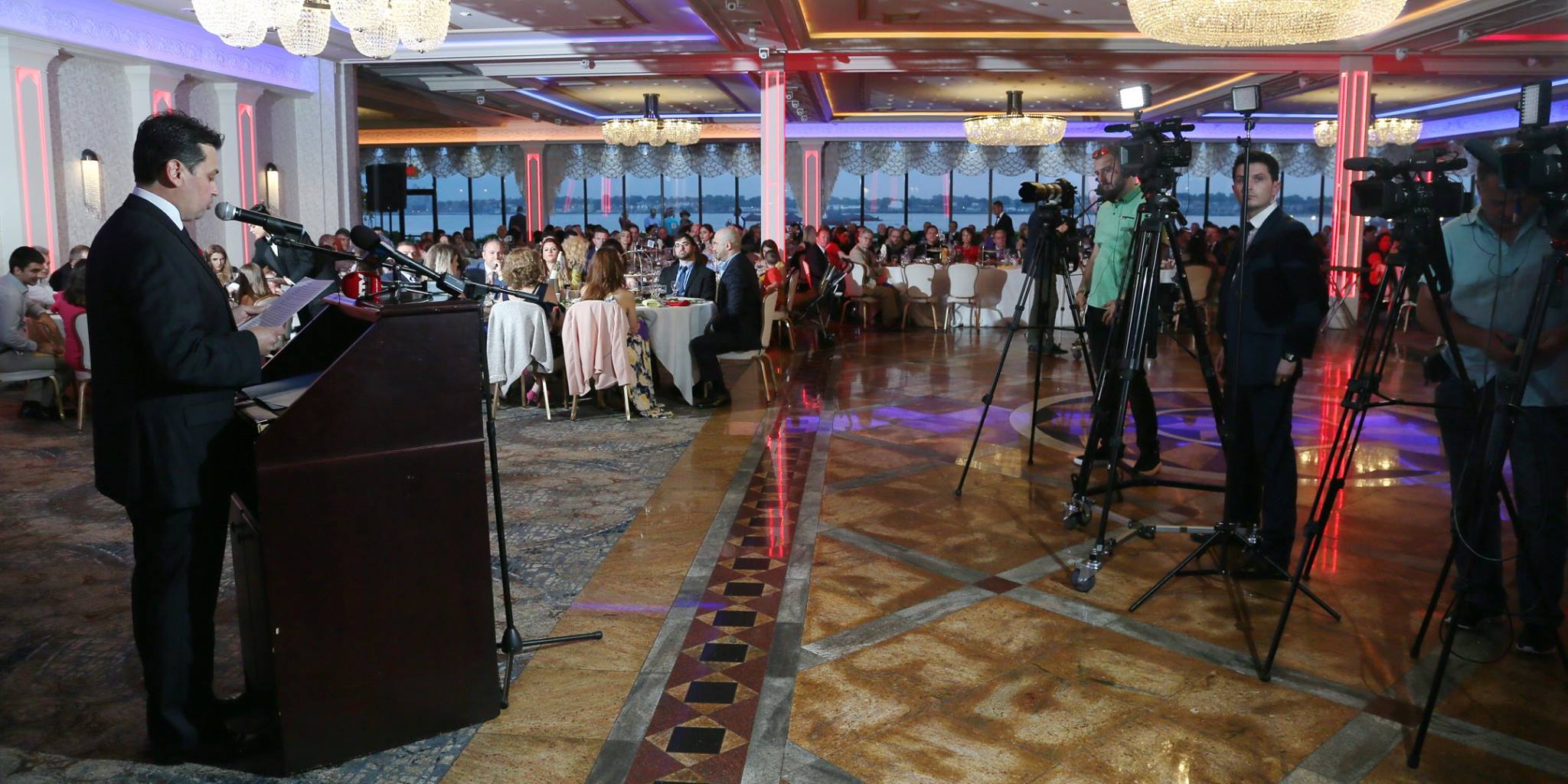
3 a Dritan Kryetari

Dear Vatra Members,/

Honorable Ladies and Gentlemen,/

Honorable Clerics,/

Honorable Representatives of the Community Organizations,/

Fellow Albanians all over the globe who join us today,/

I have the distinctive honor and the great privilege to say to each one of you “Happy Birthday, Vatra!”/

After 106 years of hard work, we are gathered here today, on this unique occasion to celebrate the longevity of our Federation and be more proud than ever.

There is no area of life and activity throughout the Albanian nation where the presence of Vatra Federation is not evident: in the arts and photography, diplomacy, government and state leadership, contributing to the establishment and strengthening of religious communities and harmony, in education, literature and culture, journalism, music and science. The forefathers of our Federation, Konica and Noli, as well as all the forerunner officials and leaders of Vatra have passed onto us a rich legacy which gains new dimensions as the time goes by. Today we bow down with respect for all that has been accomplished by our Federation and express our gratitude and reverence to the known and the unknown members who have empowered Vatra into becoming a driving force with positive and valuable impact for the nation in the most crucial moments of our history.

Fellow Vatra Members,

Vatra’s history and its glorious past do not serve as the main motivation of our current mandate. Each one of us feels the responsibility to be involved wherever possible, with credited or uncredited roles in our support for Vatra today. We shall not rest on our laurels from the past glory days. The present is calling upon us to, once more, lead the path of the good deeds for the nation. Vatra does not deal with politics and is not a political organization. Indeed Vatra is above politics.

Certainly Vatra has all the historical and moral rights to be concerned with the issues that face our compatriots wherever they live.

It is painful to witness the severity of the social situation in Albania. Albanians live without hope, a fundamental factor for progress and advancement. The ongoing immigration, the constant erosion of democratic standards, and the domestic chaos in Albania sadden us immensely. The recent reports of the State Department, by the policy-setting and policy-executing institutions are unfortunately regrettable on account of the country’s cannabis pandemic, unemployment among young people, and the widespread corruption at every level of the administration.

Even more concerning and worrisome is the breach in the relations between Albania and the United States of America. Only in the last five years there have been several flagrant cases of violating these relations by the Albanian Government, which has even positioned itself contrary to the official stand of the American Government. The Federation of Vatra has reacted forcefully and has made its attitude known to the US authorities that we, Vatra members, our supporters and sympathizers around the world favor wholeheartedly the strengthening of the Albanian – American relations. We distance ourselves from any attempt by the current government to weaken these historic ties while increasing the relations with non-Western states that exhibit dictatorial tendencies. Albanians have suffered long enough from their communist dictatorship, with consequences that still devastate our people; thus we fully support President Trump’s policy to increase the authority of the United States on the world arena, particularly the intensifying of US efforts to crack down on dictatorial governments. With regard to its strategy on foreign policy, Vatra is determined to openly advocate and impress upon Albanians all over the world that Albania and Albanians in the Balkans have but only one strategic ally for the ages, the United States of America. On your behalf, I thank the United States Government and President Trump for the attentiveness and the commitment they have shown and will continue to show Albanians.

Honorable Ladies and Gentlemen,

Vatra, The Pan-Albanian Federation of America is well respected by the Albanian community in the US and around the world, today more than ever. Excellent relations with religious institutions, cultural and educational organizations, regional and professional associations are in great standing and will continue to stay strong moving forward. We are helping in strengthening the education of the diaspora’s children, enriching the cultural life of the community and increasing our presence thanks to the wisdom, maturity, experience and influence of Vatra.

We respect all the structures of the Albanian diaspora around the world, we sympathize and urge them to increase their authority and prestige, and we do appreciate the respect and admiration of the Albanian community for Vatra.

Dear Vatra members,

The 106th anniversary is an important year for our Federation on account of the ongoing reforms that aim to revitalize it. We have tapped into capacities with national and international recognition which have opened up new horizons for our beloved Vatras.

We are aware of the importance of Vatra’s economic empowerment and we will soon appeal to entrepreneurs, businessmen and individuals who are keen to revive Vatra economically.

I am grateful to all the members and supporters for sending their wishes from New York, New Jersey, Connecticut, Michigan, Washington DC, Virginia, Maryland, Jacksonville, Fort Lauderdale, Tampa, Orlando, California, Canada, Boston, Worcester, California, Texas, Arizona, Maine, North Carolina, Ohio, Pennsylvania, Rhode Island, and from across the ocean: Albania, Kosovo, Montenegro and Macedonia, Italy, Greece, Germany, Belgium, United Kingdom, Australia, France, as well as every place where they work hard to maintain their culture, tradition and the Albanian values. To all the base and the supporters: I thank you for your dedication; you are all good citizens and we will do great work together.

We have the blessing of all honest Albanians around the world and these prayers and blessings make us strong and invincible.

We do not work for the history books, yet history assigns each of one their rightful place, and I believe that all Vatra members will stand on the golden pedestal of Albanianism. Be proud of being a member of VATRA!

Dear friends,

Our strength lies in our faith for the future!

Allow me to make an announcement in front of you today, the Pan-Albanian Federation of America Vatra will continue to intensify its efforts and further its initiatives in the service of Albanians.

VATRA’s mission is to SERVE THE NATION!

We will face hardship but we will succeed because time is on our side and time is the greatest power. Time will summon Vatra to tackle the most pressing issues, and Vatra will always be there, at the front and confronting any force that attempts to delay the time for Albanians to march into history.

VATRA will go ahead lighting the path as the Pole Star of Albanians around the globe.

Long Live the Pan-Albanian Federation of America VATRA;

Long Live Albanians,

God Bless the United States of America!

Filed Under: Featured Tagged With: dritan Mishto, IS ABOVE POLITICS, Vatra

LITERARY VALUES AND MAIN THEMES IN FRANK GJETO SHKRELI’S WORK

July 11, 2018 by dgreca

Thanas-Gjika

by Thanas L. Gjika/

In the years when Albania did not have diplomatic relations with the US, “Radio Zëri i Amerikës”, played the role of the US Embassy in helping to keep the Albanian people informed about the main events. The credit for carrying out this mission goes to a number of Albanians such as Jozef Paskali, Talat Karagjozi, Xhevat Kallajxhi, Ilia (Louis) Priest, Lulu Vrioni (niece of Mit’hat Frashëri), Ruzhdi Daca, Gasper Kiçi, Bardhyl Pogoni, Dr. Elez Biberaj, Idriz Lamaj and Frank Gjeto Shkreli.

The work of journalist Frank Shkreli as shown in various newspapers of diaspora, Albania and Kosovo, along with his new book “Democracy does not wait” (Morava Publications, Tirana 2016, 476 pp.) is a veritable mine of political, scientific and cultural values. This author’s main stylistic feature is his forthright interpretations of Albanian politics, American-Albanian relations and Balkan issues, which directly or indirectly concern the Albanian world, Russia’s and Turkey’s foreign policy toward Western Balkans and the domestic policies of neighboring states that continue to violate the rights of their respective Albanian populations.

Hope shall overcome despair

As a political scientist, Frank Shkreli is a critical thinker when it comes to the causes that hinder Albania’s progress towards joining the European Union. Yet he does not lack the optimistic orientation for the future. Reflecting on the favorable US and EU geopolitics toward Albania, he has formulated the positive idea that “hope will overcome despair” (Democracy Does Not Wait, page 30). Shkreli’s objective optimism is backed by the events of the last 27 years, including the collapse of the communist dictatorship in Europe and Albania, the liberation of Kosovo and the increased efforts of Albanians living in Macedonia, Montenegro and Serbia to gain more political and civic rights.

The Freedom of the Press violations and other abuses

Shkreli denounces the violations of the Press Freedom in the Republic of Turkey and in the Republic of Albania. After explaining how the international organizations criticized the Turkish government for the difficult situation concerning its country journalists in the article “The press under pressure in Turkey and Albania” (pp. 16-21), Shkreli presents the case of Mr. Gjiknuri’s verbal assault directed at Tirana-based independent newspaper “Telegraf”. The author concludes that Mr. Gjiknuri’s attitude warrants concern of other human rights violations, on account of a fragile Albanian democracy…

The Catholic Church and Her Pastors

As a member of the Albanian Catholic community, Frank Shkreli is fully aware of the devastation brought upon the faith from the communist regime. He feels the spiritual duty to recall from time to time the lasting consequences of the havoc that communism caused to the church and religion. On that note, he notices that in the post-dictatorship Albania there is no appreciation for Father Gjergj Fishta. -”…due to the country’s Ministry of Culture’s lack of patriotism” ….

Nostalgia for the dictator Hoxha – A Serious Obstacle for Albania

A disturbing issue in Shkreli’s analysis is the nostalgia for Enver Hoxha during the transition years. In his view, this phenomenon is similar to Russia’s nostalgia for Joseph Stalin. The starting point is the celebration of Martyrs’ Day on May 5, 2014, where photos of the dictator where circulating among the school children who were visiting the National Cemetery in Tirana. Shkreli describes this act as “despicable and unforgivable” particularly in the context of Albania’s membership in NATO and aspirations to join the European Union. The honoring of the dictator by the key members of the party, the government and the Albanian Parliament, who were present at the ceremony, indicates that “They … live entirely outside the Albanian and international reality … that they are unable to present to the Albanian people new ideas for solving the many problems they face, by telling the world that they are always proud of being part of a regime with a lost history “(pp. 459-460).

In this context, Shkreli strongly criticizes the Minister of Culture, Ms. Mirela Kumbaro, who has suggested that the statues of Lenin and Stalin should no longer be held in the backyard of the Art Gallery but rather placed in the halls of the Ministry of Culture. Shkreli condemns not only this minister but also the political forces of the position and the opposition, the intellectuals and the people, who stay silent when hearing such suggestions. Instead of the failed ideologists of communism, it should be the statues of Father Gjergj Fishta and the deserving Albanian patriots that must be placed in the office spaces of the Ministry of Culture.

The Secret FILES!

In December 2014 and April 2015 several German institutions and foundations helped to open an exhibition on Europe’s history during the twentieth century. The main purpose was to draw lessons from the life of the peoples of this continent under their dictatorship regimes and how are they now living in democracy. The lessons learned from the German people in this respect were not followed by the Albanian people. After the system changed, no measures were taken to prevent former communists and former state security members from taking part in the ruling coalition. Understandably the former communist and the secret security members who continue to rule the country’s politics are not interested in opening up any debate on the crimes of the communist dictatorship. Precisely the failure to punish the crimes of the dictatorship has stagnated the Albanian politics. The author of the article, aware of the 25 year long rhetoric on this subject, along with the commissions and the draft laws, points out that this process “is unlikely to be completed, it will be hovering continually, neither successful nor unsuccessful “(p. 148).

The Western Balkans, the US Russia and Turkey

Albania and the Western Balkans are at the center of attention of countries like the United States, Russia and Turkey. In contrast with the United States’ efforts to make the people aware of their independent path towards democracy, Russia and Turkey, each have tried to stop the process of democratization of these countries and disrupt their membership into international organizations such as NATO and the EU. Russia and Turkey strive to extend their influence to these countries as part of the re-creation of old empires in new forms, specifically as powerful economic empire ruled by autocratic regimes.

The US needs to be supported in its mission “to help these states to take their own independent decision with respect to their Euro-Atlantic future … as well as the efforts to root out corruption that is wearing down the societies” (p. 135).

The Turkish government has long been working to revitalize a l spirit among the Albanian people in Albania, Kosovo and Macedonia, a phenomenon that Shkreli criticizes without hesitation. In April 2015 countries around the world were commemorating the 100th anniversary of the Turkish genocide against the Armenian population. The Turkish diplomats in Macedonia encouraged many Muslim Albanians, as well as members of the Turkish and Bosnian minorities to take part in a protest in front of Murat Pasha’s mosque to counter the historical truth, namely the killing of one million Armenians who were seeking union with the motherland. Shkreli is revolted by this fact and condemns the demonstration. He goes on to denounce regressive policies such as the revision of the history of the Albanian people as claimed by the Turkish, Greek, and Serbian governors, who aim to alter and eventually eradicate the Albanian identity in the lands where Albanians have always been autochthonous. The author of the article insists that the main culprit is the Albanian government that does not protest openly but submits to such absurd anti-national demands. This silence urges Shkreli to voice his criticism by quoting Faik Konica: “The greatest enemy of Albanians have been and still are the Albanians themselves” (p.146).

Democratic ideas do not fade away, they illuminate the people’s path to the future

In his review of Ndiçim Kulla’s “Anthological Encyclopaedia of Albanian Thought, 1807 – 1957 vol. 1-3 ” which includes the writings of 75 Albanian intellectuals of the right-wing outlook, Shkreli asks rhetorically: “Where would Albania and Albanians be today, if the thinkers with Western views had prevailed in the last century?” (409). This optimistic scholar and sociologist suggests that the democratic ideas of prominent intellectuals who were thwarted by Albania’s Communist Party remain a valuable ideology in the present time. To illustrate, the author reminisces to a meeting with Ernest Koliqi in Rome in 1968. While honoring the 500th anniversary of George Castriot Scanderbeg’s death, Koliqi had told Frank that after the passing of the National Hero Albania was invaded by the Ottomans, yet the light of his work and ideas revived the nation and ultimately led it to freedom. Shkreli believes in the power of progressive ideas, …the progressive thinking of 20th-century Albanian intellectuals will help our people find their own path of revival…

The High Price of Bickering

With his solid knowledge of history and character of the Albanian people, Shkreli appreciates the positive attributes as generosity, hospitality, bravery, faith, etc. but does not hesitate to point out the disagreeing disposition that has hindered our progress as a society and as a nation. In the reviews of the book “The Suicide of a Nation” by Kol Bib Mirakaj and Albert Lulushi’s “Operation Valuable Fiend” (in English), Shkreli supports the idea articulated by both authors that Albanian anti-communists forces (independent supporters or members of Balli, Zogu and pro-government in 1941-1944) or subversives within these groups who were sent back into Albania with the help of CIA in 1948-1953 were defeated by the Communist Party on account of internal bickering and lack of a common program.

Diaspora – a Wealth of Scientific, Literary and Cultural Assets

As a scholar on the patriotic spirit of the Albanian diaspora of America, the author writes articles and full feature stories on distinguished figures such as Xhevat Kallajxhiu, whom he calls the Dean of Democratic Albanian journalism, Professor Arshi Pipa writer, scholar, literary critic and lecturer of Italian Literature at the University of Minnesota; Professor Sami Repishti, one of the leaders of Albanian intellectuals of our diaspora in the United States as a prominent human rights activist; Dr. Elez Biberaj, Head of the Euro-Asian Department at VOA and author of several books on Albania and the Albanian people in the transition years; Idriz Lamaj, a “Voice of America” journalist and author of several works including “Vatra dhe Vatranët”, etc.

The courage, clarity of thoughts and critical analysis of the non-democratic actions of the Balkan states as well as the United States are prominent traits of Shkreli’s journalistic writings all the way up to date.

.

Filed Under: Politike Tagged With: "DEMOKRACIA NUK PRET", Frank shkreli, Thanas Gjika

REMARKS AT THE BOOK PROMOTION “DEMOKRACIA NUK PRET” BY FRANK SHKRELI!

July 11, 2018 by dgreca

4 Elez Biberaj

By Dr. Elez Biberaj/

It is my honor and privilege to participate in the book promotion of my friend and colleague, Fran Shkreli, who has given and continues to give a valuable contribution in the Albanian journalistic landscape, in general, and the advancement of Albanian issues, in particular.

I am very happy to be here at our VATRA and in the company of well-known personalities, friends and colleagues. I would like to express my gratitude to VATRA for the care that it has always shown and continues to show in promoting the works of the members of our community.

Before talking about Fran’s book, I would like to acknowledge the close ties that have historically existed between Voice of America and VATRA, going back to the difficult years of the Cold War years to this day. Voice of America has always aimed to cover the activities and services of the Albanian-American organizations and associations, especially those of VATRA.

The Voice of America archives contain a number of broadcast recordings of events, meetings, and high-profile personalities of our community. The collection includes Fan Noli’s speeches, which, through VATRA, were donated to the National Library in Tirana. Prominent journalists of Voice of America have played an important role in VATRA and Dielli – Xhevat Kallajxhiu, Idriz Lamaj, Gjek Gjonlekaj, and others. Some of us, including me, have published our first stories in the newspaper Dielli.

Frank Shkreli has a long, outstanding and fulfilling career. Throughout his work, he has been a staunch defender of free speech and freedom of the press, human rights, and an advocate for the Albanian issue.

Frank Shkreli’s media related career extends nearly five decades. It began shortly after his immigration to the United States and the college years. Initially, he focused his attention on Albanian topics – the challenges facing our Albanian-American community as well as Albanians in their homeland.

Having distinguished himself in this field, Frank broadens his scope to include regional and global issues of importance. He acquired extensive knowledge on international relations, in general, and the former communist bloc, in particular. Frank is equipped with comprehensive political awareness and has vast insights into the US foreign policy including the politics of Washington.

Frank has the ability to examine and analyze current regional and international issues. After retirement, he made a 360-degree turn to go back where he started his activity, focusing once again on issues and developments concerning Albanians.

This is reflected in his comprehensive campaign to raise awareness in the United States on the situation, the demands and aspirations of Albanians, the establishment of democracy in the Albanian territories, and the development of inclusive democratic societies.

The outcome of his work is the book presented here, Demokracia Nuk Pret! In his writings, especially the ones featured in this publication, Frank examines issues, events and subjects of a wide variety with honesty and objectivity. He covers themes from our past – the positive and negative aspects, the pains and joys – as well as contemporary issues. He analyzes it all critically yet always draws a constructive conclusion that could benefit the Albanian decision-makers in confronting the current strategic and diplomatic challenges. In his articles, he makes a strong case for Albanians to consolidate their Western orientation.

What is the importance of Fran Shkreli’s writings? What does he offer to the reader at a time when the Albanian media landscape has expanded and changed dramatically?

As a professional journalist and analyst, his greatest asset is the high level of credibility that the reader has assigned to him thanks to his ability to be objective and balanced. Frank is aware that while journalists today have abundant opportunities and sophisticated tools, the mission of news reporting is always to tell the truth even when it is bitter. He has always been in search of the truth.

With respect to the readers, Frank’s point of view is that of a well-known Albanian-American media professional who is deeply invested in consolidating Albanian democracy and solidifying the strategic partnership between Albanians and the United States. He reminds Albanians that these relations should be continually fostered and a stronger partnership depends on the Albanians’ embracing of democratic values: respect for human rights, the rule of law, a strong and accountable governance.

In this regard, I believe Frank reflects the views and hopes of our community for a more righteous and democratic society in the Albanian territories.

Demokracia Nuk Pret is an important reference for journalists, students, scholars and politicians. Frank Shkreli’s book offers an important insight into the Albanian political and media debate. The tone and content of his writings are unique in the Albanian media landscape.

The timing of the publication is appropriate and relevant.

Albanians, in Albania, Kosovo, Macedonia, and elsewhere, should rightfully be proud of their accomplishments in the last quarter century. This week, Albania received very good news from Brussels, the recommendation for launching membership talks in the European Union.

However, as Frank points out in his book, Albanians cannot be content with the current political, economic, and social status.

While Brussels’ recommendation is hopeful, it presents a crucial point for the governing elites, not only in Albania, but also in Kosovo and Macedonia, to reflect on what I would call golden opportunities that Albanians have missed over the last years and even decades, which have slowed down their pace towards a stronger democracy. The accession talks in the European Union should have started years ago. It should be acknowledged that this chance and other golden possibilities for Albania and Kosovo are largely lost as a result of the flagrant lack of leadership by the Albanian decision-makers.

Today, Albanians face significant challenges: economic problems; high unemployment and poverty; corruption at all levels of government and society; illegal practices and the absence of the rule of law; weak institutions; irresponsible politicians who tolerate and attract corruption and use undemocratic practices to secure and retain power.

These domestic challenges are exacerbated by issues in the international arena: the erosion of democracy regionally and globally; the empowerment of authoritarian alternatives in Turkey and in Russia; and the shifting of the Balkan and European political landscape.

Meanwhile, the major Western players are showing signs of fatigue with the Albanians, who continue to generate crises, which require attention and resources. These negative international trends can undermine the positions of Albanians and cause a deterioration in their political and economic progress.

Today there is no talk of a dynamic or certainty of reforms in Albanian territories. Instead, there is stagnation, sluggishness, general decline, loss of hope, and extreme political polarization, with dangerous consequences for the future.

If something does not change soon, these negative trends will hamper the efforts of Albanians to position themselves decidedly in the family of Western democratic countries and societies.

In order to disrupt this general downturn, Albanians must undertake radical changes that would result not only in taking a new direction but would bring about a serious transformation of the Albanian society.

In order to achieve these goals, it is imperative that:

  • The current style of governance changes fundamentally and focuses on principal national interests rather than the intentions of political parties or short-term political objectives.
  • The main political forces agree on a vision for the future of the country and on the compilation and implementation of major policies that will lead towards this vision.
  • The establishment and promotion of truly independent institutions that are capable of establishing the rule of law and driving out corruption.
  • The freedom of media from the pressure of political and financial interests.
  • The decision-making process on key issues to be inclusive, thus ensuring the participation of main actors, interest groups, civil society, and experts.
  • And finally, the whole society needs to undergo a total transformation in the ways it thinks and acts. Albanians should be more demanding and hold their politicians liable by seeking greater accountability, transparency and responsibility.

These are very challenging objectives which require political will and time.

Albanians in general, not just their leaders and politicians, face a historic test: to accept the current situation or to wake up from stagnation, seize the moment and take the necessary steps towards the fulfillment of their democratic potential.

Filed Under: Opinion Tagged With: "DEMOKRACIA NUK PRET", Dr. Elez Biberaj, Frank shkreli

MOS HARRO- Njëzetetre vjet nga Masakra e Srebrenicës

July 11, 2018 by dgreca

Njëzetetre vjet nga Masakra e Srebrenicës/

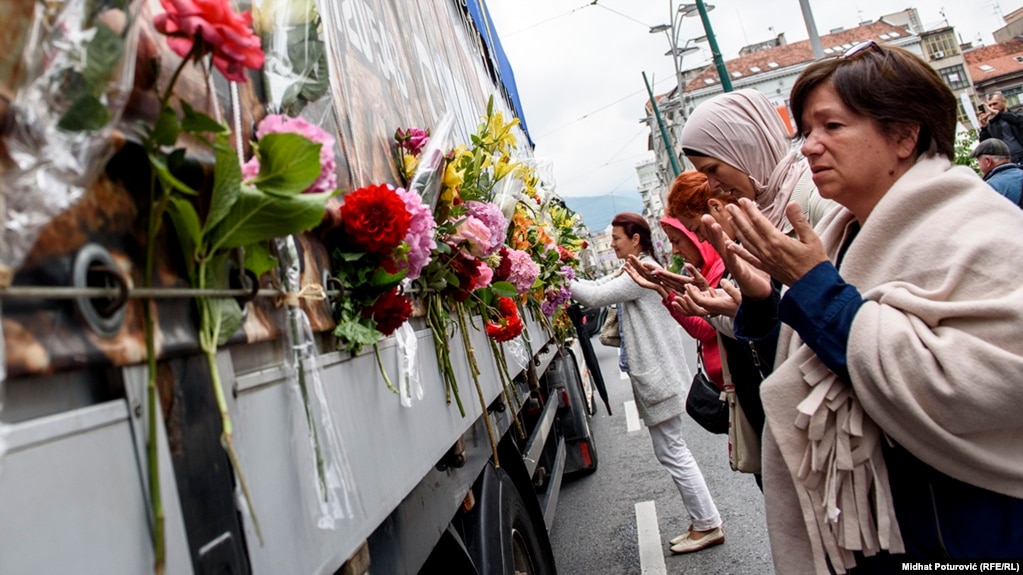
11 korrik, 2018- Në Bosnje dhe Hercegovinë shënohet sot 23-vjetori i Masakrës së Srebrenicës. Në këtë qytet, më 1995, forcat serbe vranë mbi 8,000 burra dhe djem myslimanë. Masakra u cilësua si akti më i keq i gjenocidit në Evropë që nga Lufta e Dytë Botërore. Srebrenica ishte shpallur zonë e sigurt nga Kombet e Bashkuara, por ruhej vetëm nga një numër i vogël i paqeruajtësve holandezë, që nuk qenë në gjendje t’i mbrojnë civilët e strehuar atje.
Trego më shumë

Një kamion bart mbetjet e 35 viktimave të Masakrës së Srebrenicës, që do të rivarrosen më 11 korrik, në 23-vjetorin e gjenocidit, në qendrën memoriale në Potoçari.
1 Një kamion bart mbetjet e 35 viktimave të Masakrës së Srebrenicës, që do të rivarrosen më 11 korrik, në 23-vjetorin e gjenocidit, në qendrën memoriale në Potoçari.
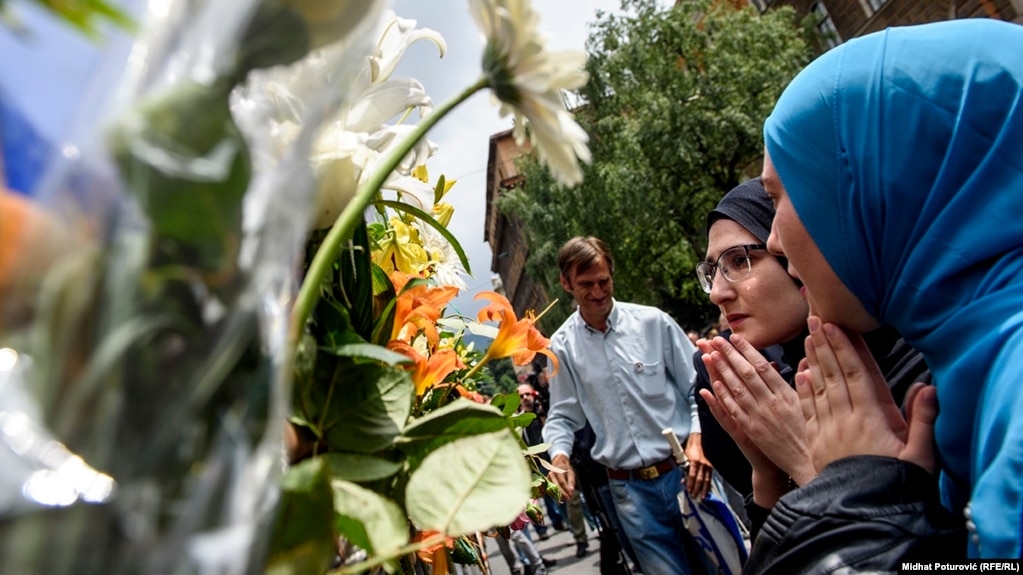
Qytetarët nderojnë viktimat e Srebrenicës.
2 Qytetarët nderojnë viktimat e Srebrenicës.
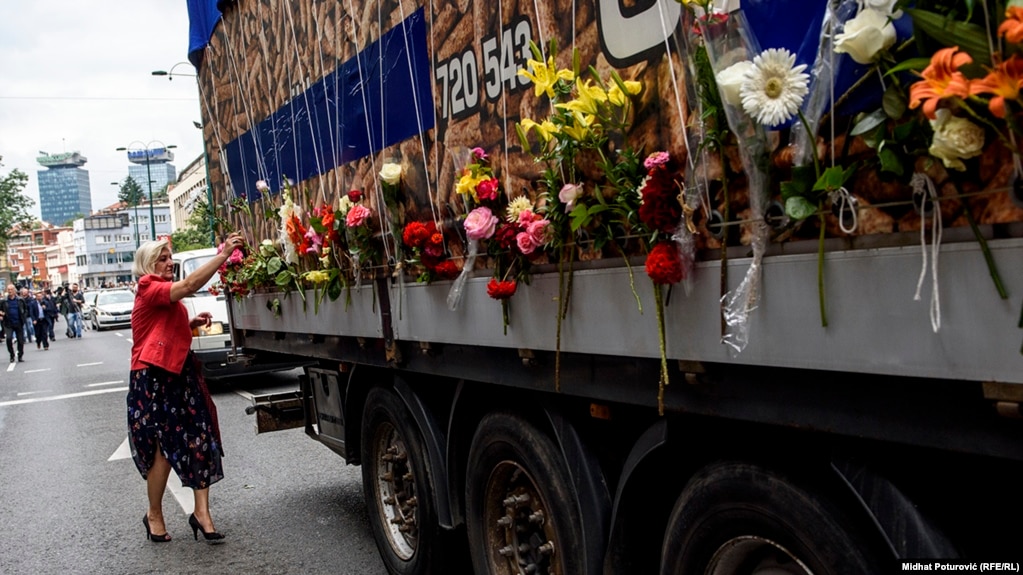
Një grua vë lule në kamionin që bart mbetjet e viktimave.
3 Një grua vë lule në kamionin që bart mbetjet e viktimave.
Edhe një burrë vë lule në kamion...
4 Edhe një burrë vë lule në kamion…

Filed Under: Kronike Tagged With: 23 vjet nga Srebenica, MOS HARRO

Samiti i NATO-s: Trumpi sulmon Merkelin

July 11, 2018 by dgreca

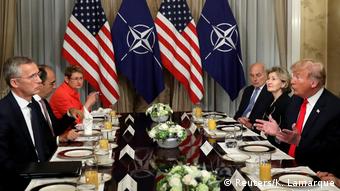
1 Trump NATO.JPG

Që në fillim të samitit të NATO-s u bë e qartë se presidenti Trump është i gatshëm për grindje. Në veçanti sulmoi Gjermaninë dhe kancelaren Merkel. Por edhe Merkel u përgjigj shpejtë./

Madje edhe vet mëngjesi me sekretarin e përgjithshëm të NATO-s Jens Stoltenberg, në fillim të samitit të aleancës, ishte një katastrofë më vehte. “Gjermania është nën kontrollin e plotë të Rusisë, sepse 60-70 % e energjisë së këtij vendi vjen nga Rusia”, deklaroi presidenti i SHBA Donald Trump. “Ajo është robe e Rusisë”, ndërkohë që SHBA po e mbron Gjermaninë, tha ai duke shtuar se “kjo nuk është aspak e drejtë”. Vetëm pak më vonë u përgjigj edhe kancelarja Angela Merkel, duke thënë se “Gjermania bën një politikë të pavarur”.

Sidofoqtë, që në fillim të samtit ishte e qartë se takimi do të zhvillohet në një atmosferë të tensionuar. Ndonëse është e qartë që politika energjetike nuk është një temë e NATO-s, Trumpi bëri të qartë se nuk është i kënaqur me rolin e NATO-s dhe se në shënjetër të tij në veçanti do të jetë Angela Merkel.

Ashpërsimi i grindjeve

Belgien Nato-Gipfel (Reuters/K. Lamarque)

Nuk duket fare që presidenti Trump do të zbusë tonin në grindjet për mjetet financiare që vendet e NATO-s duhet të ndajnë për mbrojtje. Përkundrazi, ai në një Tweet i futi në një thes grindjet tregtare dhe mjetet financiare që duhet të ndahen për mbrojtje, duke i quajtur ato “jo korrekte”, sepse SHBA paguan më së shumti dhe i mbron vendet e tjera. Ndërkohë që, sipas tij, evropianët duan tani të vendosin edhe dogana ndëshkuese ndaj SHBA.

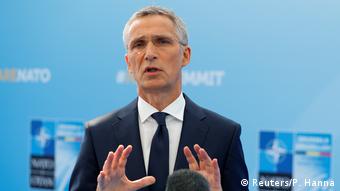
Mund të ndodhë që kumtesa e përgatitur me shumë kujdes për këtë samit të NATO-s të elektrizojë edhe më shumë Trumpin, sepse qëllimi i tij është që të gjitha vendet të paguajnë të paktën 2% të prodhimit bruto për qëllimet e mbrojtjes. Stoltenberg tha se ai pret një debat të hapur për të gjitha çështjet, që në gjuhën diplomatike do të thotë se ai pret një “grindje të ashpër”. Jens Stoltenberg e pranon hapur se ka dallime mes partnerëve në NATO. Ai po përpiqet që të gjejë ndonjë zgjidhje për këtë çështje, që do të thotë se

Belgien Nato-Gipfel (Reuters/P. Hanna) Stoltenberg

vendet anëtare do të duhej që gradualisht të  rrisin kontributet për mbrojtje. Por Stoltenberg nënvizon se pas dekadave të tëra uljesh të kontributeve për mbrojtje, kohët e fundit buxhetet janë rritur. Në këtë mënyrë ai po përpiqet të relativizojë kërkesat e Trumpit. Ndërkohë që shumë vende sjellin me vete edhe elemente të tjera për mbrojtje, siç janë infrastruktura dhe kapacitete të tjera.

2-përqindëshi dhe grindjet rreth tij

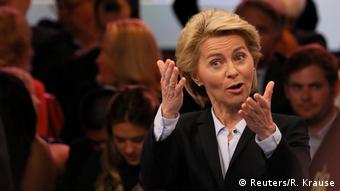
Ministrja gjermane e Mbrojtjes Ursula von der Leyen thotë: “Ai (Trumpi) duhet të shikojë edhe gjërat e tjera dhe jo vetëm shifrat”. Dikush mund të ndajë 2% për ushtrinë e vet, por pa ndonjë dobi për NATO-n. Me këtë ajo sugjeron se SHBA ve në dispozicion 3,5 % të porodhimit bruto për mbrojtje, por vetëm një pjesë e tyre shkon për NATO-n në Evropë, ndërsa pjesa më e madhe në Azi,  Lindjen e Mesme, apo rajone të tjera.

Von der Leyen thotë se Gjermania ka dërguar në Afganistan kontigjentin e dytë më të madh ushtarak. Berlini është i vendosur që deri në vitin 2025 shpenzimet për mbrojtjen do të shtohen me 80%. Por Gjermania e ka të qartë se Bundeswehri nuk është në gjendje që brenda një kohe të shkurtër të absorbojë miliarda të reja për pajisje dhe sisteme ushtarake.

Belgien Nato-Gipfel (Reuters/R. Krause) Ursula von der Leyen

Fakti që SHBA është e interesuar për shitjen e arsenave të saj të armëve dëshmohet edhe nga kritikat amerikane ndaj Turqisë, për shkak se ajo ka blerë sisteme raketore ruse për mbrojtje ajërrore S 400.  Ministri turk i Mbrojtjes Mehmet Cavusolgu tha, se ata duhet  të kujdesen për mbrojtjen e hapësirës së tyre ajërore.

Kontestohet uniteti i NATO-s

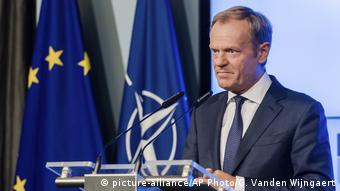
Grindjet brenda NATO-s kanë ekzistuar edhe më parë. Por kurrë më parë si tani nuk është kontestuar vet ekzistenca e aleancës. Të gjitha vendet e tjera, përveç Trumpit, theksojnë domosdoshmërinë e unitetit. “NATO e fuqishme është me rëndësi për Evropën, por edhe për SHBA, sepse kjo aleancë i mundëson SHBA-së të jetë një fuqi globale”, theksoi Stoltenberg. Për “mirëbesimin” mes aleatëve flasin edhe von der Leyen dhe Donald Tusk. “SHBA nuk kanë dhe nuk do të gjejnë asnjë partner më të mirë se BE. Ne shpenzojmë për mbrojtjen më shumë se Rusia dhe po aq sa Kina”, shkruan Tusk.

Belgien EU NATO Donald Tusk (picture-alliance/AP Photo/G. Vanden Wijngaert) Donald Tusk

Një gjë është e qartë: Trumpi në veçanti ka vënë në shënjestër Angela Merkelin, gjë që ka të bëjë edhe me raportet jo aq të mira personale mes tyre. Në qarqet diplomatike amerikane citohet presidenti Trump të ketë thënë, se Merkel angazhohet për të gjitha gjërat që ai i urren. Megjithatë në Bruksel do të ketë edhe një takim bilateral Merkel-Trump, ku gjërat do të thuhen sy më sy. “Unë pres debate kundërthënëse dhe e di që kemi pozicione të ndryshme. Por Gjermania ofron shumë për NATO-n. Ne jemi vendi me kontigjentin e dytë më të madh të trupave në Afganistan dhe atje jemi duke mbrojtur interesat amerikane”, thotë Merkel. “Unë e kam përjetuar vet kohën e sundimit sovjetik në një pjesë të Gjermanisë dhe tani jam e lumtur që Gjermania mund të bëjë politikën e vet të pavarur”.

Gjatë Luftës së Ftohtë Gjermania ka shpenzuar për mbrojtjen rreth 3% të prodhimit bruto, e më pas mjetet janë zvogluar. “Ne jemi të gatshëm që të dhënat për mbrojtje t’i rrisim sërish, sipas marrëveshjes së arritur në Uells.”

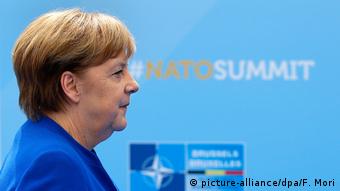
Brüssel Nato-Gipfel - Merkel (picture-alliance/dpa/F. Mori) Angela Merkel

Stoltenberg thotë se vendet anëtare duhet të angazhohen vet në qoftë se duan që NATO të mbijetojë. “Askund nuk është e shkruar që NATO duhet të ekzistojë patjetër, ky nuk është ndonjë ligj natyror”, thotë ai duke shtuar se aleanca duhet të angazhohet vet nëse do të që ajo të ekzistojë.(DW)


Filed Under: Analiza Tagged With: Samiti i NATO-s, Trump sulmon Merkel

  • « Previous Page
  • 1
  • …
  • 26
  • 27
  • 28
  • 29
  • 30
  • …
  • 44
  • Next Page »

Artikujt e fundit

  • Dashuria që e kemi dhe s’e kemi
  • “Jo ndërhyrje në punët e brendshme”, dorëheqja e Ismail Qemalit, gjest atdhetarie dhe fletë lavdie
  • Arti dhe kultura në Dardani
  • Gjon Gazulli 1400-1465, letërsia e hershme shqipe, gurthemeli mbi të cilin u ndërtua vetëdija gjuhesore dhe kulturore e shqiptarëve
  • “Albanian BookFest”, festivali i librit shqiptar në diasporë si dëshmi e kapitalit kulturor, shpirtëror dhe intelektual
  • VEPRIMTARI PËRKUJTIMORE SHKENCORE “PETER PRIFTI NË 100 – VJETORIN E LINDJES”
  • 18 dhjetori është Dita Ndërkombëtare e Emigrantëve
  • Kontributi shumëdimensional i Klerit Katolik dhe i Elitave Shqiptare në Pavarësinë e Shqipërisë 
  • Takimi i përvitshëm i Malësorëve të New Yorkut – Mbrëmje fondmbledhëse për Shoqatën “Malësia e Madhe”
  • Edi Rama, Belinda Balluku, SPAK, kur drejtësia troket, pushteti zbulohet!
  • “Strategjia Trump, ShBA më e fortë, Interesat Amerikane mbi gjithçka”
  • Pse leku shqiptar duket i fortë ndërsa ekonomia ndihet e dobët
  • IMAM ISA HOXHA (1918–2001), NJË JETË NË SHËRBIM TË FESË, DIJES, KULTURËS DHE ÇËSHTJES KOMBËTARE SHQIPTARE
  • UGSH ndan çmimet vjetore për gazetarët shqiptarë dhe për fituesit e konkursit “Vangjush Gambeta”
  • Fjala përshëndetëse e kryetarit të Federatës Vatra Dr. Elmi Berisha për Akademinë e Shkencave të Shqipërisë në Seancën Akademike kushtuar 100 vjetorit të lindjes së Peter Priftit

Kategoritë

Arkiv

Tags

albano kolonjari alfons Grishaj Anton Cefa arben llalla asllan Bushati Astrit Lulushi Aurenc Bebja Behlul Jashari Beqir Sina dalip greca Elida Buçpapaj Elmi Berisha Enver Bytyci Ermira Babamusta Eugjen Merlika Fahri Xharra Frank shkreli Fritz radovani Gezim Llojdia Ilir Levonja Interviste Keze Kozeta Zylo Kolec Traboini kosova Kosove Marjana Bulku Murat Gecaj nderroi jete ne Kosove Nene Tereza presidenti Nishani Rafaela Prifti Rafael Floqi Raimonda Moisiu Ramiz Lushaj reshat kripa Sadik Elshani SHBA Shefqet Kercelli shqiperia shqiptaret Sokol Paja Thaci Vatra Visar Zhiti

Log in

This website uses cookies to improve your experience. We'll assume you're ok with this, but you can opt-out if you wish. Cookie settingsACCEPT
Privacy & Cookies Policy

Privacy Overview

This website uses cookies to improve your experience while you navigate through the website. Out of these cookies, the cookies that are categorized as necessary are stored on your browser as they are essential for the working of basic functionalities of the website. We also use third-party cookies that help us analyze and understand how you use this website. These cookies will be stored in your browser only with your consent. You also have the option to opt-out of these cookies. But opting out of some of these cookies may have an effect on your browsing experience.
Necessary
Always Enabled
Necessary cookies are absolutely essential for the website to function properly. This category only includes cookies that ensures basic functionalities and security features of the website. These cookies do not store any personal information.
Non-necessary
Any cookies that may not be particularly necessary for the website to function and is used specifically to collect user personal data via analytics, ads, other embedded contents are termed as non-necessary cookies. It is mandatory to procure user consent prior to running these cookies on your website.
SAVE & ACCEPT