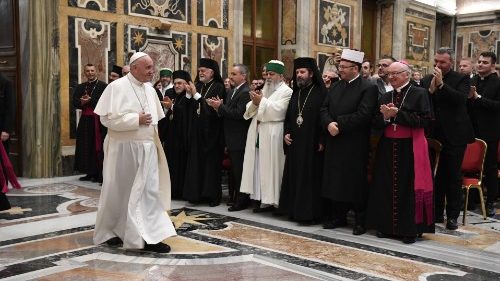
Pope Francis receives a group of Albanian pilgrims, who are in Rome during the commemoration of the 550th anniversary of the death of national hero George Castriot – known to history as Skanderbeg./
By Christopher Wells/
In his prepared remarks to Albanian pilgrims, Pope Francis took the opportunity to greet all Albanians “in the name of the ancient bond of friendship and habitual relations” with the See of Peter.
An ancient and glorious history
Pope Francis noted the “ancient and glorious history” of Albania, remarking that the country is an integral part of Europe, with its own unique culture. “Today,” he said, “we remember and celebrate George Castriot Skanderbeg, an heroic son of a strong and generous people, who defended spiritual values and the Christian name with courage.” Skanderbeg, he continued, “forged the Albanian cultural identity with his deeds, becoming an undisputed symbol of cohesion and national unity.”The Holy Father also spoke of the emigration of many Christians after the death of Skanderbeg, and the subsequent invasion of Albania, and welcomed the presence of Italo-Albanians among the pilgrims.
Renewed commitment to development
“I sincerely hope that this anniversary will not be limited to the celebration of the glory of past deeds,” the Pope said, “but will also be a good opportunity for a renewed commitment of all, institutions and citizens, in favour of an authentic and balanced development, so that the younger generations” will not be forced to migrate.
From coexistence to collaboration and brotherhood
The example of Skanderbeg, Pope Francis said, “has validly expressed the Albanian character.” In particular, he pointed out the “climate of mutual respect and trust” between Catholics, Orthodox, and Muslims. This, he said, shows that the peaceful coexistence of citizens belonging to different religions is a concretely viable path that produces harmony, and frees the best forces and the creativity of an entire people, transforming simple coexistence into true collaboration and brotherhood.”


 Vrasja e shtetasit grek, Kostandinos Kacifas, nga fshati Bularat i nënprefekturës së Gjirokastrës, i cili kreu një akt terrorist në territorin e Republikës së Shqipërisë, ka ndezur debate në të dy shtetet fqinje, duke nxitur shpesh herë dhe qarqet nacionaliste ekstremiste. Zhvillimet rreth kësaj çështje janë të pakuptimta. Kacifas, me veprimin që kreu, duhej të konsiderohej terrorist, sepse ishte i tillë. Kush përdor forcën e armës për qëllime politike, apo për të terrorizuar qytetarët, është terrorist. Ky është ligj ndërkombëtar. Nëse Athina zyrtare do të mbështeste aktin e tij kriminal, pas shpalljes nga pala shqiptare të Kacifas si “terrorist”, nënkuptohej se terrorizmi mbështetej me qëllime të mbrapshta politike. Nëse Greqia përfaqëson një shtet normal, me dëshirë për të patur marrëdhënie të mira fqinjësore, qeveria e saj duhej të vihej në mbështetje të Tiranës zyrtare, pasi terrorizmi luftohet vetëm në mënyrë të organizuar dhe të bashkuar. Mirëpo ngjarjet nuk ecën në rrjedhën e vet. Qeveria shqiptare nuk e cilësoi veprimin e Kacifas “Sjellje terroriste”, edhe pse ishte i tillë. Policia shqiptare u sulmua me armë zjarri nga një person i veshur me uniformë ushtarake, madje u dëmtua automjeti i policies, ndonëse për fat nuk pati policë të vrarë. Në rrethanat e krijuara, policia shqiptare ka vepruar derjt dhe, në këtë mënyrë, ka bërë vetëm detyrën.


