Why Changing Congress May Not Change a System That Increasingly Serves the Few.
By Cafo Boga, M.A. in Diplomacy — November 5, 2026
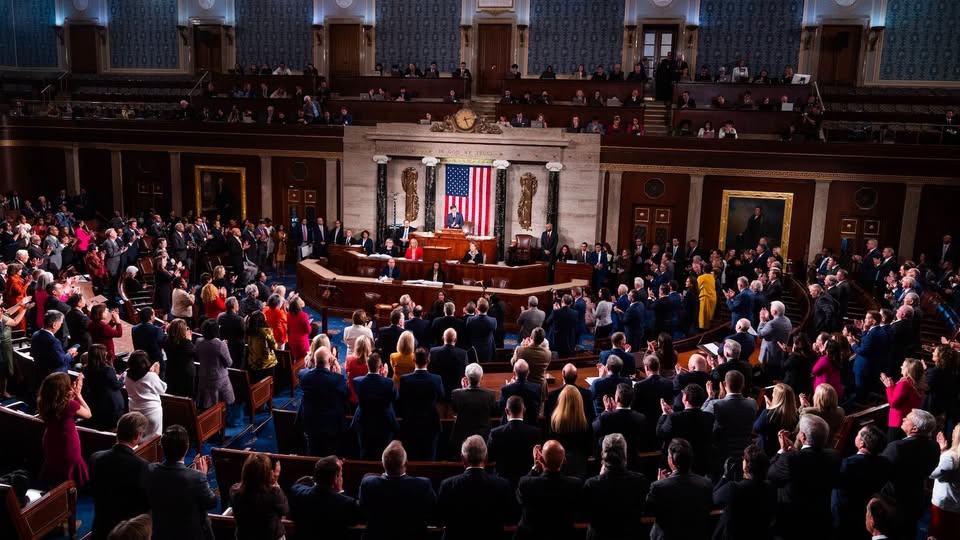
The Democrats have won. In the November 3 midterm elections, voters handed them control of both houses of Congress and delivered a sharp rebuke to President Donald Trump and the Republican Party. For millions of Americans, the result offers hope. But before the celebrations go too far, a warning: Don’t expect miracles.
When the new Congress takes office in January, Democrats will have greater power to investigate, challenge, and restrain the administration. Yet they will inherit something no election has managed to dislodge: a political system in which concentrated wealth and organized interests exercise influence far beyond the ballot box.
This is not an indictment of one party. Democrats and Republicans alike have helped preserve that system. For a century, elections have returned to familiar promises—better jobs, affordable housing, healthcare, education, security, and opportunity. America has made extraordinary progress, but many families still struggle with those same questions. Perhaps the problem is no longer merely who wins elections, but what elections can change.
Democracy and the Power of Money
Democracy began in ancient Athens as rule by the people. Eligible citizens participated directly in public decisions; many offices were assigned by lottery, partly limiting the advantages of wealth and prominence. Athens excluded women, enslaved people, and foreigners, so it was hardly a model of universal equality. But it established a principle worth remembering: political authority should belong to citizens.
Representative government became necessary as nations grew. America’s founders understood that property and power could become dangerously intertwined. In Federalist No. 10, James Madison identified the unequal distribution of property as a durable source of political factions. What would he make of elections in which enormous sums are spent to shape public opinion and candidates must court major donors to remain competitive?
We repeat the democratic promise of “one person, one vote.” The votes are equal. The influence surrounding them is not.
Federal Reserve figures show that the wealthiest 1% of American households own roughly one-third of the nation’s wealth, while the richest 10% hold more than two-thirds. Wealth alone does not invalidate democracy. But when fortunes can finance political advertising, lobbying, and independent expenditure campaigns, economic inequality becomes a political problem.
Not every donor seeks a favor, and not every elected official is compromised. Yet it is naive to pretend that enormous political spending has no bearing on access or influence. The system gives the wealthy opportunities unavailable to ordinary citizens, and much of that influence operates legally and openly. We need no conspiracy theory about a “Deep State” to see the revolving door between government and industry, opaque funding networks, and privileged access to policymakers.
We should say plainly what reform requires. Corporate treasury spending to influence elections, unlimited independent expenditures, and arrangements that conceal political financiers should be prohibited or sharply curtailed wherever constitutional law permits. Where the Constitution prevents meaningful reform, constitutional change should be debated—not treated as unthinkable. Free speech must be protected; buying disproportionate political reach should not be confused with having an equal civic voice.
Why not rely chiefly on modest individual contributions, supplemented by public campaign financing? Give qualified candidates fair access to independently moderated televised debates, local forums, and transparent policy comparisons. Let voters judge competence, character, and ideas rather than fundraising prowess. And impose enforceable conflict-of-interest and lobbying safeguards after the election, when many of the most consequential decisions are made.
Globalization: Who Paid the Price?
For decades, leaders of both parties championed globalization as a route to prosperity. Trade expanded markets, lowered some consumer prices, and helped lift living standards in developing economies. But benefits were uneven. American industrial communities lost factories, well-paid jobs, and the tax base that sustained local life. The United States still manufactures vast quantities of goods; what disappeared in many places was the reliable employment that once supported families.
The question is not whether America should trade with the world. It should. The question is why governments celebrated aggregate economic gains while leaving displaced workers and communities to absorb so much of the damage. A policy that rewards shareholders while abandoning workers cannot automatically be called a national success.
What Happened to the American Dream?
I have lived in America for more than fifty years and have witnessed this transformation firsthand. There was a time when many middle-class households could live reasonably well on one income. A family could often buy a modest house and car, raise children, and look forward to retirement. In many households one parent—usually the mother—could stay home, although that opportunity was never universal. Employer health coverage and traditional pensions helped provide security beyond the paycheck.
Today, in many communities, two incomes barely cover housing, childcare, education, insurance, and everyday expenses. Young families may earn more dollars yet find homeownership further out of reach. The American Dream has not vanished, but the price of admission has risen sharply.
Employer-sponsored health insurance has not disappeared. What has changed is its affordability. Employees often pay substantial premiums, deductibles, copayments, and other out-of-pocket costs in a healthcare system that has become extraordinarily expensive and complex. Even an insured family may face serious financial strain when illness strikes. Meanwhile, traditional employer-funded pensions have given way to retirement accounts that shift more investment risk and responsibility onto workers.
These changes do not mean every corporation prospered at workers’ expense or that all households were better off fifty years ago. They do mean that many costs and risks once shared more broadly have moved onto families, while corporate profits, executive compensation, and investment returns have soared in important sectors.
Yes, Americans enjoy technology and conveniences earlier generations could scarcely imagine. But a smartphone is not a substitute for a secure home, affordable medical care, or a dependable retirement. The measure of middle-class progress should not be how many products people own, but whether honest work still offers independence and peace of mind.
Wars and the Public Treasury
President Dwight Eisenhower warned in 1961 about the military-industrial complex. He was not opposed to national defense; he understood that defense contractors and permanent security institutions could accumulate excessive influence without vigilant oversight.
Wars have varied causes, and it would be irresponsible to attribute them all to profit. Nevertheless, military spending creates powerful beneficiaries, while prolonged interventions impose costs on taxpayers and future generations. Every major commitment abroad deserves a clear national purpose, public scrutiny, and an honest accounting of what it leaves unfunded at home. Unnecessary interventions should be rejected. Patriotism requires defending the country—not giving any industry a blank check.
Artificial Intelligence: Another Windfall for the Few?
Globalization disrupted manufacturing. Artificial intelligence may reach much further, affecting not only factory workers but accountants, attorneys, engineers, administrators, and other professionals. AI can improve medicine, education, research, and productivity. Its promise is real. So is the danger that the gains will flow primarily to those who own the technology while workers bear the cost of displacement.
New jobs will emerge, but there is no guarantee they will appear where old jobs disappear, pay comparable wages, or arrive quickly enough to protect families. The central question is political, not technological: Who will share in the wealth created when machines perform more human work?
Governments should not wait for widespread dislocation. Competition policy, worker profit-sharing, broader access to ownership, retraining, and fair taxation of economic gains deserve attention now. AI should expand human opportunity, not produce an economy in which a few own the machines and everyone else competes for what remains.
Reform Capitalism to Preserve Democracy
Karl Marx warned in Das Kapital about conflict between owners of capital and those who sell their labor, and about the concentration of economic power. His prediction of capitalism’s inevitable collapse was not vindicated, and authoritarian systems established in his name are no model for free societies. But the questions he raised about who captures the rewards of production cannot simply be dismissed.
Franklin D. Roosevelt offered a more useful American response: reform capitalism rather than abolish it. Financial regulation, labor protections, Social Security, and public investment helped restore confidence that the economy could serve more than its wealthiest participants. Our generation may need a comparable determination to reform institutions before distrust hardens into rejection of the system itself.
Economic inequality does not automatically cause violence. But when insecurity combines with polarization and the belief that voting changes little, democratic legitimacy erodes. I do not predict another civil war. I do warn against complacency when citizens begin to see government as an instrument of interests they cannot influence.
The Election Is Over. The Test Begins.
The Democrats have won an election. Their victory matters: voters can still change who holds political power. But congressional majorities alone cannot reverse decades of concentrated economic influence, precarious middle-class finances, and public distrust. Nor will reform come from one party while the other remains exempt from scrutiny.
The new Congress should be judged not only by how vigorously it challenges President Trump, but by whether it tackles campaign finance, hidden political influence, healthcare costs, retirement insecurity, the distribution of technological gains, and the accountability of government itself. Some arrangements must be repaired. Others, particularly those that convert money into privileged political access, must end.
America does not need another generation of politicians promising to solve the same problems while protecting the structures that perpetuate them. It needs the courage to change those structures.
The Democrats won. Whether democracy—and the American people—have won anything more lasting remains to be seen.
Democracy does not need to be replaced. It needs to be reclaimed.