RESURFACED OLD FALSEHOODS ABOUT KOSOVO CHRISTIANS DEBUNKED/ In reference to the recent claims made by Arnaud Gouillon, the newly appointed Minister of the Serbian government, sounds every bit as false and outdated as any member of Serbian cabinet before him. On January 15, 2021, the new Minister just recycled the same lies about the Christian Serb communities in Kosovo to the National Catholic Register. Indeed the only new and true item about Mr. Gouillon’s interview is its date. Dielli has decided not to give space to the false claims of Mr. Guillon. And in response to the lies published by the National Catholic Register in The silent persecution of Christians in Kosovo”, we bring The Truth about Christians in Kosovo by Albert Bikaj, published in Catholic Arena website.
A Political Scientist and MA student at the University of Zagreb, Albert Bikaj addressed each of Gouillon’s claims and debunked the falsehoods fueled by the Serb propaganda. Here is a summary:
There’s a Catholic and Protestant Albanian community in Kosovo. The Medieval Albanian national hero Scanderbeg, (Gjergj Kastrioti) who was a Catholic. St. Mother Teresa, who was Albanian and raised in Kosovo. The Catholic Cathedral of Prishtina, which is the largest of the region, is dedicated to her.
Kosovo was always inhabited by Albanians long before Slavs, predecessors of the Serbs arrived there. Albanians are The ancestors of Albanians who were already evangelized and baptized by St. Paul himself, read Rom. 15:18–19. And a Church Father, St. Jeremy (Hieronymus) was of Illyrian heritage, just like the two Roman emperors Constantine the Great and Justinian the Great.
After World War II, in Tito’s Yugoslavia, who stopped the Serbian colonization of Kosovo. the Albanian community, just as the Albanian Catholic priests were often persecuted, two of them were killed by the Serbian nationalists.
After Tito’s death, Serbian nationalism rose. Kosovo lost autonomy, the Albanian schools and media were closed by Serbia. Rev. Anton Kqira, a Catholic priest/pastor of the Albanian community in Detroit (USA), was among the most vocal advocates of Kosovo’s independence. He, with the help of the Catholic Albanian Congressman Joe DioGuardi, organized protests and even met with the US President Bill Clinton and other US officials in order to seek support for Kosovo.
During the Kosovo war, Albanian Catholics were among the most persecuted, not by Albanian Muslims, but by the Serbian army. One incident, the massacre of Meja was committed by Serbia in the predominantly Catholic Albanian village of Gjakova. Being Catholic meant nothing, because they were Albanians; Kosovo War was an ethnic conflict not religious. It started in the 19th century and then culminated during the Balkans War in the 20th century.
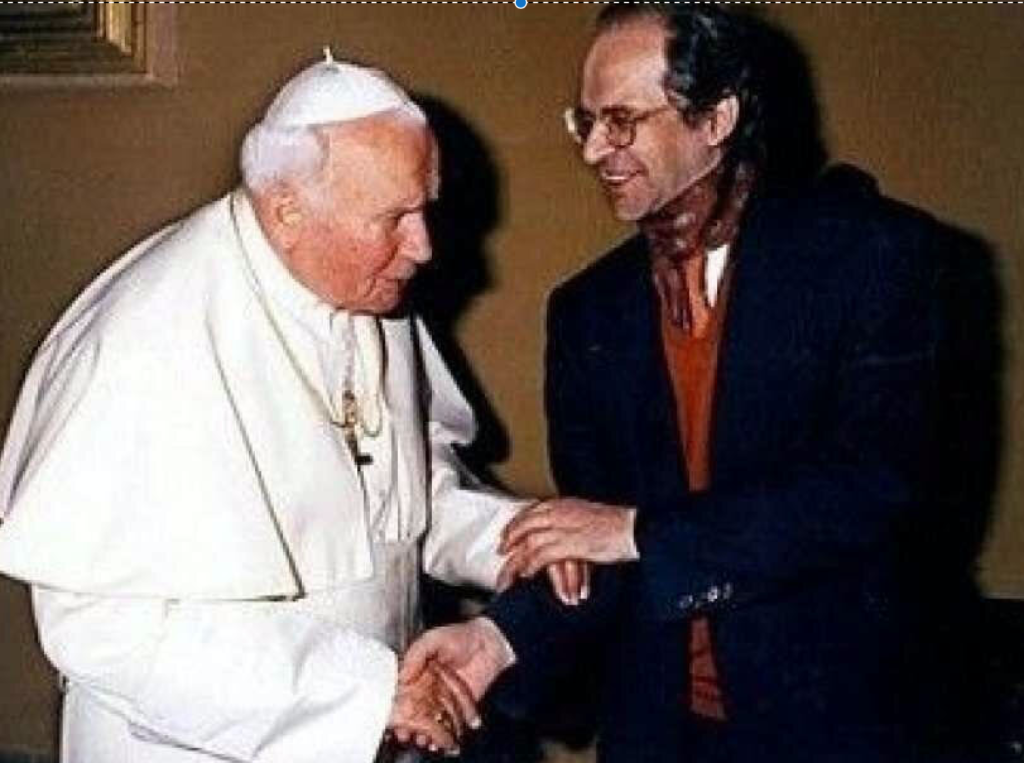
The Serbian government, as the new Minister, has mentioned a few of Orthodox Churches which were desecrated, some even demolished, by a bunch of extremists. The shameful act was condemned, and the vandalists were convicted during the era of President Ibrahim Rugova. It’s worth mentioning that during the War, Kosovo’s pacifist President I. Rugova, known for his pro-Western views, fled to Rome, and was received in a private audience by the Pope St. John Paul II. The Polish Pontiff showed compassion and support for the Kosovo Albanian’s case. One more fact of the baseless religious argument, during the ‘90s, Serbia went to war with Croatia, a predominantly Catholic country. Just like in Kosovo, the Serbian army didn’t spare the Catholic Church, clergy, nor civilians in Croatia.
The Serbian government, and the new Minister, have mentioned a few of Orthodox Churches which were desecrated, some even demolished, by a bunch of extremists. The shameful act was condemned, and the vandalists were convicted during the era of President Ibrahim Rugova.
The accusation that the Kosovo Albanians are Islamist radicals who persecute Christians, especially Serbian Orthodox, is baseless and untrue. During the war, hundreds of mosques were demolished by the Serbian Army, as well a dozen of the Catholic Churches.
There is testimony of the Kosovo Albanian Catholic clergy (Bishop Mark Sopi, Rev. Lush Gjergji) before the American Congress. They asked for the USA’s help and support for Kosovo’s independence, and assured them that there’s no religious danger in Kosovo.
The claims for religious discrimination of Christians are false. The Catholic Albanian community is not discriminated against, it is rather an integral part of the nation and Kosovo.
Serbs, just like the Serbian government, refuse to accept Kosovo’s independence. Likewise, the Serbian Orthodox Church refuses to recognize Kosovo’s independence.
The Kosovo Albanians, especially the Catholic Albanian community of Kosovo feel offended by the publication of Mr. Gouillon’s article. The war has caused an unbelievable pain, therefore such claims hurt and offend not only us, but the families of the war victims.
READ THE TRUTH ABOUT CHRISTIANS IN KOSOVO…
****.
THE TRUTH ABOUT CHRISTIANS IN KOSOVO
By Albert Bikaj/Political Scientist and MA Student, University of Zagreb/
I’m writing this regarding the article “The silent persecution of Christians in Kosovo” which the National Catholic Register has posted. As an Albanian Catholic, born in Yugoslavia and raised during the horrific war, reading the aforementioned article upset and offended me deeply. As an historian, I can say that it is a baseless nationalist propaganda piece of the Serbian government. Or simply said, Fake News.
Mr. Arnaud Gouillon and his claims
Let me begin with the gentleman who has shared the information with you. Arnaud Gouillon, is a French political activist, often described by the media as member of the French far-right parties and organisations. As well as this, he is a supporter of the Irish Loyalist Protestants, historically known for being anti-Catholic. He married a Serbian woman, and converted to Serbian Orthodox. Recently, he was appointed as a Minister in the Serbian government. Now, he is spreading one-sided stories, propaganda, distorted historical facts, and this by using the holy name of Christ and Church. What the Serbian government and Mr. Gouillon are doing is a shame, and theologically speaking blasphemous. For information on Mr. Arnaud: https://balkaninsight.com/2019/11/19/young-patriots-serbias-role-in-the-european-far-right/
He is known as a “far-right” activist in the French Medias as well: https://t.co/9DTS8Q8Wjt?amp=1
Mr. Gouillon claims that the war was religious and aimed to eradicate Christianity. But it’s a well-known fact that the war of Kosovo had an ethnic character, not a religious one. I will explain why.
Besides Greeks, Albanians, as the only indigenous nation of the Balkans, belong to the two main religions, Christianity and Islam. Christianity is very distinctive, with Catholics in the North and Orthodox Christians in the South. Regardless of religious plurality, the Albanian national identity, and even the Albanian nationalism, is secular and promotes Western values. The claim that Kosovo is eradicating Christianity is false. Why? Because there’s a Catholic and Protestant Albanian community in Kosovo. Albanians, regardless of religion celebrate the Medieval Albanian national hero Scanderbeg, (Gjergj Kastrioti) who was a Catholic, and who not only defended Albanian kingdom, but the whole of Christendom from the Ottoman invasion. His statue is located in the square of the capital city of Kosovo. Another celebrated Catholic figure is the Catholic Albanian Bishop, theologian and poet, Pjeter Bogdani, who worked hard for the oppressed Albanian Catholic community during the 17th century. The Public Library of Kosovo bears his name.
And of course, St. Mother Teresa, who was Albanian and raised in Kosovo. The Catholic Cathedral of Prishtina, which is the largest of the region, is dedicated to her.
Is Kosovo the “cradle of Serbia”?
Another claim of his is that “Kosovo is the cradle of Serbia”, is simply a Serbian nationalists myth, refuted by the contemporary historians. Slavs, which are the ancestors of Serbs, have settled in the Balkans during the 7th century, meanwhile Albanians, as descends of Illyrians lived in the Balkans. The ancestors of Albanians were already evangelized and baptized by St. Paul himself, read Rom. 15:18–19. And a Church Father, St. Jeremy (Hieronymus) was of Illyrian heritage, just like the two Roman emperors Constantine the Great and Justinian the Great. Professor of Cambridge, at the Trinity College, Sir Noel Malcolm has debunked the Serbian nationalist myths of Kosovo in his book: “Kosovo: A short history” (Harper Perennial, 1999).
As I said, Kosovo was always inhabited by Albanians, after the 7th century Slavs migrated to Balkans but not yet to Kosovo. After the Schism, most of Albanians remained loyal to the Pope, meanwhile the Slavs practiced the Greek, later the Slavic rite, embraced the Eastern Church. It was the 13th and 14th century when Serbia conquered Kosovo. During the mid 14th century, Tsar Dušan “the Mighty, who had conquered and ruled most of the Balkans, banned Catholicism by considering it as a “Latin heresy” and even labeled it as “Arbanaška vera” which in translation means “the Albanian’s religion”. During that time, Catholics were persecuted, many churches were demolished, and even forced to convert to Orthodoxy. Three decades later, the invaders from the East were heading towards Kosovo. Back then it was defended by Albanians and Serbs before being conquered in 1389 by the Ottoman Empire. The Ottoman rule lasted for 5 centuries, and during that time thousands of Catholics churches were either demolished or converted to mosques; Catholicism in the Ottoman Empire was illegal for many centuries, meanwhile the Orthodox Church enjoyed juridically a privileged and better status – unlike the Catholic community.
During the centuries, a high percentage of Albanians were forced to abandon their religion because the Ottomans imposed high taxation, which was unbearable for them. Therefore, the religious demographics changed, Serbs were not replaced. After many centuries under the Ottoman bondages, Kosovo was liberated from the Ottoman empire by the Albanians nationalist movement, but unfortunately, the Great Powers handed it to Serbia, this against the Albanians will – afterward the Serbian government committed massacres on the Albanian community, which made the majority. The myth of Kosovo as the “cradle of Serbia” was born. As a consequence, there was a plan to organize ethnic cleansing. Albanophobia was being promoted by the highest officials, including the Serbian PM Vladan Djordjević who wrote a book (Arnauti i velike sile) in which he claimed that Albanians were subhumans, uncivilized, Turks, etc. Many times, Albanians were deported. In the late ‘30s, there was a plan to organize an ethnic cleansing in Kosovo.
Even the notable Serbian writer, winner of the Nobel Prize for literature, Ivo Andrić supported and proposed such plans to be implemented. The government helped colonizing and populating Kosovo with Serbs. WW2, was another tragic episode of revenge from the both sides, but in the end, once again Kosovo was handed to Tito’s Yugoslavia, who stopped the Serbian colonization of Kosovo. Nonetheless, many Albanians regardless of religion, were jailed and even killed during his regime.
The Albanian community, just as the Albanian Catholic priests were often persecuted, two of them were killed by the Serbian nationalists. Among the killed priests was Fr. Luigj Palaj, who was beatified recently by Pope Francis. In the ‘30s, three Albanian Catholic priests protested against the regime, and send a documented letter as evidence to the League of Nations. In the ‘50s, the only Catholic Albanian Church of Prishtina was demolished by the Yugoslav Communists.
The war of Kosovo
Now, I’ll focus on the ‘90s War. After Tito’s death, Serbian nationalism rose. Kosovo lost autonomy, the Albanian schools and media were closed by Serbia. Albanian Intellectuals who protested were abducted and killed. The protests began, and later when Kosovo Albanians became surrounded by the Serbian Police and Army, decided to organize a Liberation Army, called Kosovan Liberation Army. Formed and lead by Albanians of all religions, including Catholics who had high ranking positions. (For example: Commander Anton Çuni, Kolë Mirdita, etc.)
The Albanian Christian Democratic Party of Kosovo, founded during the ‘90s, has continuously supported the KLA, President Rugova, and Kosovo’s independence. Rev. Anton Kqira, a Catholic priest/pastor of the Albanian community in Detroit (USA), was among the most vocal advocate of Kosovo’s independence. He, with the help of the Catholic Albanian Congressman Joe DioGuardi, organized protests and even met with the US President Bill Clinton and other US officials in order to seek support for Kosovo.
Albanian Catholics were among the most persecuted during the Kosovo’s war, not by Albanian Muslims, but by the Serbian army. The Serbian-French Minister mentions the Serbian victims, I will mention one incident involving Albanians amongst many, the massacre of Meja. This was committed by Serbia in the predominantly Catholic Albanian village of Gjakova. Being Catholic meant nothing, because they were Albanians; the war itself was an ethnic conflict and the conflict between the two nations was not new carrying with it the resentments and prejudices of past generations. It started from the 19th century and then culminated during the Balkans War in the 20th century.
During the Kosovo’s war, around 800.000 Kosovo Albanians were forced by the Serbian Army to flee. More than 10.000 Albanian civilians were murdered by the Serbian army. Circa 20,000 Albanian women were raped. Corpses of many victims are still missing.
The aforementioned ethnic cleansing and the massacres are still denied by the former and current Serbian government. The attempts to make this a religious conflict is baseless, unacceptable and deeply offensive for every Albanian, especially for the Catholic Albanian community which has suffered for centuries. It’s worth mentioning that during the War, Kosovo’s pacifist President I. Rugova, known for being pro-Western, fled to Rome, and was received in a private audience by the Pope St. John Paul II. The Polish Pontiff showed compassion and support for the Kosovo Albanian’s case.
The Serbian government, just like the aforementioned Minister have mentioned a few of Orthodox Churches which were desecrated, some even demolished, by a bunch of extremists. The shameful act was condemned, and the vandalists were convicted during the era of President Ibrahim Rugova.
The accusation that the Kosovo Albanians are Islamist radicals who persecute Christians, especially Serbian Orthodox, is baseless and untrue. During the war, hundreds of mosques were demolished by the Serbian Army, as well a dozen of the Catholic Churches.
It’s worth mentioning that Serbia, during the ‘90s, had a war with Croatia, a predominantly Catholic country. Just like in Kosovo, the Serbian army didn’t spare the Catholic Church, clergy, nor civilians. The war and collapse in the former Yugoslavia, was ethnic rather than religious. This is an undisputed fact for the locals, as well for the historians of Balkans.
There is testimony of the Kosovo Albanian Catholic clergy (Bishop Mark Sopi, Rev. Lush Gjergji) before the American Congress. They asked for the USA’s help and support for Kosovo’s independence, and assured them that there’s no religious danger in Kosovo.
Therefore, the claims for religious discrimination of Christians are false. The Catholic Albanian community is not discriminated, rather is integral part of the nation and Kosovo.
The Serbian minority enjoys all the human rights, and have 10 guaranteed seats in the Parliament, as well as being part of the Government. The Serbian language is recognized as an official one and it is used by the government alongside the Albanian language. Regardless, the majority of the Kosovo Serbs, just like the Serbian government, refuses to accept Kosovo’s independence. Likewise, the Serbian Orthodox Church refuses to recognize Kosovo’s independence. And unfortunately, certain groups within the Serbian community in Kosovo often celebrate the war-criminals and far-right politics, calling for ethnic cleansing, and “getting Kosovo back.” Refusing to recognize Kosovo’s independence, the vast majority of Serbs have decided to live separately, in Mitrovica.
The war was a painful experience for the both communities, both had victims, even though, the highest number of victims was Albanian. Because, Albanians were the government’s target; it was an attempt for ethnic cleansing. Anyways, I mourn for every innocent victim, regardless their ethnicity and religion.
Reading such an article from a well known Catholic website was offensive and shocking, but I believe that the EWTN journalist was unaware of the situation and reality of Kosovo. The Kosovo Albanians, especially the Catholic Albanian community of Kosovo feel offended by the publication of this article. The war has caused an unbelievable pain, therefore such claims hurt and offend not only us, but the families of the war victims.
I’m addressing to this in bona fide, as an Albanian Catholic, who prays for peace, justice and reconciliation. And above all, as someone who desires to say the truth.
Albert Bikaj
Political Scientist and MA Student, University of Zagreb