• Home
  • Politics
  • Opinion
  • Culture
  • Sports
  • Economy
  • Interview
  • Reporting
  • Community
  • Vatra

Dielli | The Sun

Albanian American Newspaper Devoted to the Intellectual and Cultural Advancement of the Albanians in America | Since 1909

THE TRUTH ABOUT CHRISTIANS IN KOSOVO

January 22, 2021 by dgreca

RESURFACED OLD FALSEHOODS ABOUT KOSOVO CHRISTIANS DEBUNKED/ In reference to the recent claims made by Arnaud Gouillon, the newly appointed Minister of the Serbian government, sounds every bit as false and outdated as any member of Serbian cabinet before him. On January 15, 2021, the new Minister just recycled the same lies about the Christian Serb communities in Kosovo to the National Catholic Register. Indeed the only new and true item about Mr. Gouillon’s interview is its date. Dielli has decided not to give space to the false claims of Mr. Guillon. And in response to the lies published by the National Catholic Register in The silent persecution of Christians in Kosovo”, we bring The Truth about Christians in Kosovo by Albert Bikaj, published in Catholic Arena website. 

A Political Scientist and MA student at the University of Zagreb, Albert Bikaj addressed each of Gouillon’s claims and debunked the falsehoods fueled by the Serb propaganda. Here is a summary: 

There’s a Catholic and Protestant Albanian community in Kosovo. The Medieval Albanian national hero Scanderbeg, (Gjergj Kastrioti) who was a Catholic. St. Mother Teresa, who was Albanian and raised in Kosovo. The Catholic Cathedral of Prishtina, which is the largest of the region, is dedicated to her.

Kosovo was always inhabited by Albanians long before Slavs, predecessors of the Serbs arrived there. Albanians are The ancestors of Albanians who were already evangelized and baptized by St. Paul himself, read Rom. 15:18–19. And a Church Father, St. Jeremy (Hieronymus) was of Illyrian heritage, just like the two Roman emperors Constantine the Great and Justinian the Great.

After World War II, in Tito’s Yugoslavia, who stopped the Serbian colonization of Kosovo. the Albanian community, just as the Albanian Catholic priests were often persecuted, two of them were killed by the Serbian nationalists.

After Tito’s death, Serbian nationalism rose. Kosovo lost autonomy, the Albanian schools and media were closed by Serbia. Rev. Anton Kqira, a Catholic priest/pastor of the Albanian community in Detroit (USA), was among the most vocal advocates of Kosovo’s independence. He, with the help of the Catholic Albanian Congressman Joe DioGuardi, organized protests and even met with the US President Bill Clinton and other US officials in order to seek support for Kosovo.

During the Kosovo war, Albanian Catholics were among the most persecuted, not by Albanian Muslims, but by the Serbian army. One incident, the massacre of Meja was committed by Serbia in the predominantly Catholic Albanian village of Gjakova. Being Catholic meant nothing, because they were Albanians; Kosovo War was an ethnic conflict not religious. It started in the 19th century and then culminated during the Balkans War in the 20th century.

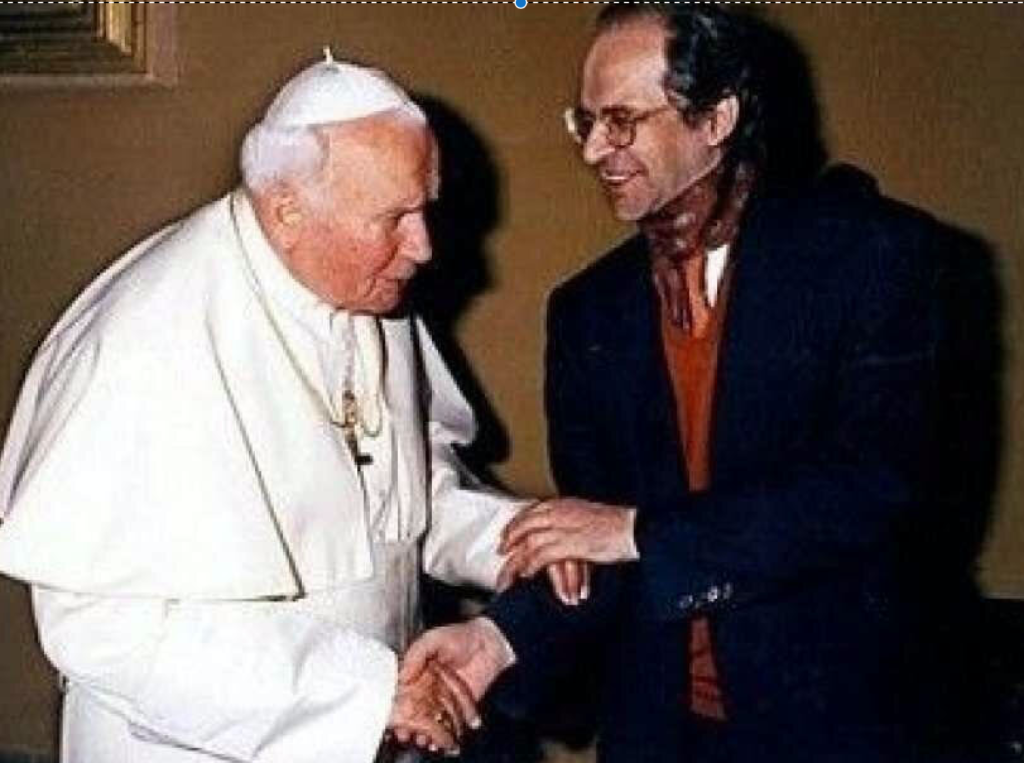
The Serbian government, as the new Minister, has mentioned a few of Orthodox Churches which were desecrated, some even demolished, by a bunch of extremists. The shameful act was condemned, and the vandalists were convicted during the era of President Ibrahim Rugova. It’s worth mentioning that during the War, Kosovo’s pacifist President I. Rugova, known for his pro-Western views, fled to Rome, and was received in a private audience by the Pope St. John Paul II. The Polish Pontiff showed compassion and support for the Kosovo Albanian’s case. One more fact of the baseless religious argument, during the ‘90s, Serbia went to war with Croatia, a predominantly Catholic country. Just like in Kosovo, the Serbian army didn’t spare the Catholic Church, clergy, nor civilians in Croatia. 

The Serbian government, and the new Minister, have mentioned a few of Orthodox Churches which were desecrated, some even demolished, by a bunch of extremists. The shameful act was condemned, and the vandalists were convicted during the era of President Ibrahim Rugova.

The accusation that the Kosovo Albanians are Islamist radicals who persecute Christians, especially Serbian Orthodox, is baseless and untrue. During the war, hundreds of mosques were demolished by the Serbian Army, as well a dozen of the Catholic Churches.

There is testimony of the Kosovo Albanian Catholic clergy (Bishop Mark Sopi, Rev. Lush Gjergji) before the American Congress. They asked for the USA’s help and support for Kosovo’s independence, and assured them that there’s no religious danger in Kosovo. 

The claims for religious discrimination of Christians are false. The Catholic Albanian community is not discriminated against, it is rather an integral part of the nation and Kosovo.

Serbs, just like the Serbian government, refuse to accept Kosovo’s independence. Likewise, the Serbian Orthodox Church refuses to recognize Kosovo’s independence.

The Kosovo Albanians, especially the Catholic Albanian community of Kosovo feel offended by the publication of Mr. Gouillon’s article. The war has caused an unbelievable pain, therefore such claims hurt and offend not only us, but the families of the war victims.

READ THE TRUTH ABOUT CHRISTIANS IN KOSOVO…

****.

THE TRUTH ABOUT CHRISTIANS IN KOSOVO

By Albert Bikaj/Political Scientist and MA Student, University of Zagreb/
I’m writing this regarding the article “The silent persecution of Christians in Kosovo” which the National Catholic Register has posted. As an Albanian Catholic, born in Yugoslavia and raised during the horrific war, reading the aforementioned article upset and offended me deeply. As an historian, I can say that it is a baseless nationalist propaganda piece of the Serbian government. Or simply said, Fake News.

Mr. Arnaud Gouillon and his claims

Let me begin with the gentleman who has shared the information with you. Arnaud Gouillon, is a French political activist, often described by the media as member of the French far-right parties and organisations. As well as this, he is a supporter of the Irish Loyalist Protestants, historically known for being anti-Catholic. He married a Serbian woman, and converted to Serbian Orthodox. Recently, he was appointed as a Minister in the Serbian government. Now, he is spreading one-sided stories, propaganda, distorted historical facts, and this by using the holy name of Christ and Church. What the Serbian government and Mr. Gouillon are doing is a shame, and theologically speaking blasphemous. For information on Mr. Arnaud: https://balkaninsight.com/2019/11/19/young-patriots-serbias-role-in-the-european-far-right/

He is known as a “far-right” activist in the French Medias as well: https://t.co/9DTS8Q8Wjt?amp=1

https://blogs.mediapart.fr/edition/trans-europe-extremes/article/240511/arnaud-gouillon-extreme-droite-pur-porc

Mr. Gouillon claims that the war was religious and aimed to eradicate Christianity. But it’s a well-known fact that the war of Kosovo had an ethnic character, not a religious one. I will explain why. 

Besides Greeks, Albanians, as the only indigenous nation of the Balkans, belong to the two main religions, Christianity and Islam. Christianity is very distinctive, with Catholics in the North and Orthodox Christians in the South. Regardless of religious plurality, the Albanian national identity, and even the Albanian nationalism, is secular and promotes Western values. The claim that Kosovo is eradicating Christianity is false. Why? Because there’s a Catholic and Protestant Albanian community in Kosovo. Albanians, regardless of religion celebrate the Medieval Albanian national hero Scanderbeg, (Gjergj Kastrioti) who was a Catholic, and who not only defended Albanian kingdom, but the whole of Christendom from the Ottoman invasion. His statue is located in the square of the capital city of Kosovo. Another celebrated Catholic figure is the Catholic Albanian Bishop, theologian and poet, Pjeter Bogdani, who worked hard for the oppressed Albanian Catholic community during the 17th century. The Public Library of Kosovo bears his name.

And of course, St. Mother Teresa, who was Albanian and raised in Kosovo. The Catholic Cathedral of Prishtina, which is the largest of the region, is dedicated to her.

Is Kosovo the “cradle of Serbia”?

Another claim of his is that “Kosovo is the cradle of Serbia”, is simply a Serbian nationalists myth, refuted by the contemporary historians. Slavs, which are the ancestors of Serbs, have settled in the Balkans during the 7th century, meanwhile Albanians, as descends of Illyrians lived in the Balkans. The ancestors of Albanians were already evangelized and baptized by St. Paul himself, read Rom. 15:18–19. And a Church Father, St. Jeremy (Hieronymus) was of Illyrian heritage, just like the two Roman emperors Constantine the Great and Justinian the Great. Professor of Cambridge, at the Trinity College, Sir Noel Malcolm has debunked the Serbian nationalist myths of Kosovo in his book: “Kosovo: A short history” (Harper Perennial, 1999). 

As I said, Kosovo was always inhabited by Albanians, after the 7th century Slavs migrated to Balkans but not yet to Kosovo. After the Schism, most of Albanians remained loyal to the Pope, meanwhile the Slavs practiced the Greek, later the Slavic rite, embraced the Eastern Church. It was the 13th and 14th century when Serbia conquered Kosovo. During the mid 14th century, Tsar Dušan “the Mighty, who had conquered and ruled most of the Balkans, banned Catholicism by considering it as a “Latin heresy” and even labeled it as “Arbanaška vera” which in translation means “the Albanian’s religion”. During that time, Catholics were persecuted, many churches were demolished, and even forced to convert to Orthodoxy. Three decades later, the invaders from the East were heading towards Kosovo. Back then it was defended by Albanians and Serbs before being conquered in 1389 by the Ottoman Empire. The Ottoman rule lasted for 5 centuries, and during that time thousands of Catholics churches were either demolished or converted to mosques; Catholicism in the Ottoman Empire was illegal for many centuries, meanwhile the Orthodox Church enjoyed juridically a privileged and better status – unlike the Catholic community.

During the centuries, a high percentage of Albanians were forced to abandon their religion because the Ottomans imposed high taxation, which was unbearable for them. Therefore, the religious demographics changed, Serbs were not replaced. After many centuries under the Ottoman bondages, Kosovo was liberated from the Ottoman empire by the Albanians nationalist movement, but unfortunately, the Great Powers handed it to Serbia, this against the Albanians will – afterward the Serbian government committed massacres on the Albanian community, which made the majority. The myth of Kosovo as the “cradle of Serbia” was born. As a consequence, there was a plan to organize ethnic cleansing. Albanophobia was being promoted by the highest officials, including the Serbian PM Vladan Djordjević who wrote a book (Arnauti i velike sile) in which he claimed that Albanians were subhumans, uncivilized, Turks, etc. Many times, Albanians were deported. In the late ‘30s, there was a plan to organize an ethnic cleansing in Kosovo.

Even the notable Serbian writer, winner of the Nobel Prize for literature, Ivo Andrić supported and proposed such plans to be implemented. The government helped colonizing and populating Kosovo with Serbs. WW2, was another tragic episode of revenge from the both sides, but in the end, once again Kosovo was handed to Tito’s Yugoslavia, who stopped the Serbian colonization of Kosovo. Nonetheless, many Albanians regardless of religion, were jailed and even killed during his regime. 

The Albanian community, just as the Albanian Catholic priests were often persecuted, two of them were killed by the Serbian nationalists. Among the killed priests was Fr. Luigj Palaj, who was beatified recently by Pope Francis. In the ‘30s, three Albanian Catholic priests protested against the regime, and send a documented letter as evidence to the League of Nations. In the ‘50s, the only Catholic Albanian Church of Prishtina was demolished by the Yugoslav Communists.

The war of Kosovo

Now, I’ll focus on the ‘90s War. After Tito’s death, Serbian nationalism rose. Kosovo lost autonomy, the Albanian schools and media were closed by Serbia. Albanian Intellectuals who protested were abducted and killed. The protests began, and later when Kosovo Albanians became surrounded by the Serbian Police and Army, decided to organize a Liberation Army, called Kosovan Liberation Army. Formed and lead by Albanians of all religions, including Catholics who had high ranking positions. (For example: Commander Anton Çuni, Kolë Mirdita, etc.)

The Albanian Christian Democratic Party of Kosovo, founded during the ‘90s, has continuously supported the KLA, President Rugova, and Kosovo’s independence. Rev. Anton Kqira, a Catholic priest/pastor of the Albanian community in Detroit (USA), was among the most vocal advocate of Kosovo’s independence. He, with the help of the Catholic Albanian Congressman Joe DioGuardi, organized protests and even met with the US President Bill Clinton and other US officials in order to seek support for Kosovo.

Albanian Catholics were among the most persecuted during the Kosovo’s war, not by Albanian Muslims, but by the Serbian army. The Serbian-French Minister mentions the Serbian victims, I will mention one incident involving Albanians amongst many, the massacre of Meja. This was committed by Serbia in the predominantly Catholic Albanian village of Gjakova. Being Catholic meant nothing, because they were Albanians; the war itself was an ethnic conflict and the conflict between the two nations was not new carrying with it the resentments and prejudices of past generations. It started from the 19th century and then culminated during the Balkans War in the 20th century.

During the Kosovo’s war, around 800.000 Kosovo Albanians were forced by the Serbian Army to flee. More than 10.000 Albanian civilians were murdered by the Serbian army. Circa 20,000 Albanian women were raped. Corpses of many victims are still missing.

The aforementioned ethnic cleansing and the massacres are still denied by the former and current Serbian government. The attempts to make this a religious conflict is baseless, unacceptable and deeply offensive for every Albanian, especially for the Catholic Albanian community which has suffered for centuries. It’s worth mentioning that during the War, Kosovo’s pacifist President I. Rugova, known for being pro-Western, fled to Rome, and was received in a private audience by the Pope St. John Paul II. The Polish Pontiff showed compassion and support for the Kosovo Albanian’s case.

The Serbian government, just like the aforementioned Minister have mentioned a few of Orthodox Churches which were desecrated, some even demolished, by a bunch of extremists. The shameful act was condemned, and the vandalists were convicted during the era of President Ibrahim Rugova.

The accusation that the Kosovo Albanians are Islamist radicals who persecute Christians, especially Serbian Orthodox, is baseless and untrue. During the war, hundreds of mosques were demolished by the Serbian Army, as well a dozen of the Catholic Churches.

It’s worth mentioning that Serbia, during the ‘90s, had a war with Croatia, a predominantly Catholic country. Just like in Kosovo, the Serbian army didn’t spare the Catholic Church, clergy, nor civilians. The war and collapse in the former Yugoslavia, was ethnic rather than religious. This is an undisputed fact for the locals, as well for the historians of Balkans.

There is testimony of the Kosovo Albanian Catholic clergy (Bishop Mark Sopi, Rev. Lush Gjergji) before the American Congress. They asked for the USA’s help and support for Kosovo’s independence, and assured them that there’s no religious danger in Kosovo.

Therefore, the claims for religious discrimination of Christians are false. The Catholic Albanian community is not discriminated, rather is integral part of the nation and Kosovo.

The Serbian minority enjoys all the human rights, and have 10 guaranteed seats in the Parliament, as well as being part of the Government. The Serbian language is recognized as an official one and it is used by the government alongside the Albanian language. Regardless, the majority of the Kosovo Serbs, just like the Serbian government, refuses to accept Kosovo’s independence. Likewise, the Serbian Orthodox Church refuses to recognize Kosovo’s independence. And unfortunately, certain groups within the Serbian community in Kosovo often celebrate the war-criminals and far-right politics, calling for ethnic cleansing, and “getting Kosovo back.” Refusing to recognize Kosovo’s independence, the vast majority of Serbs have decided to live separately, in Mitrovica.

The war was a painful experience for the both communities, both had victims, even though, the highest number of victims was Albanian. Because, Albanians were the government’s target; it was an attempt for ethnic cleansing. Anyways, I mourn for every innocent victim, regardless their ethnicity and religion.

Reading such an article from a well known Catholic website was offensive and shocking, but I believe that the EWTN journalist was unaware of the situation and reality of Kosovo. The Kosovo Albanians, especially the Catholic Albanian community of Kosovo feel offended by the publication of this article. The war has caused an unbelievable pain, therefore such claims hurt and offend not only us, but the families of the war victims.

I’m addressing to this in bona fide, as an Albanian Catholic, who prays for peace, justice and reconciliation. And above all, as someone who desires to say the truth.

Albert Bikaj

Political Scientist and MA Student, University of Zagreb
Filed Under: Politike Tagged With: ABOUT CHRISTIANS, Albert Bija, in Kosovo, The truth

A Growing Split Between Islamic, Secular Identities In Kosovo

August 10, 2016 by dgreca

By Frud Bezhan*/

PRISTINA — The rain beats down as the muezzin’s call for Friday prayers rings out from the main mosque in Pristina.Hundreds of men and young boys stream into the 15th-century Sultan Mehmet Fatih mosque in the Kosovar capital’s old quarter. Outside the packed mosque, scores of worshippers spread plastic sheets across the garden and kneel in the rain. Others spill out onto the surrounding pavements because of a lack of space.

The scene at the Ottoman-era mosque, the biggest in the city, is becoming the norm in Kosovo — a traditionally secular state with a liberal Muslim population, where conservative Islam is taking root.
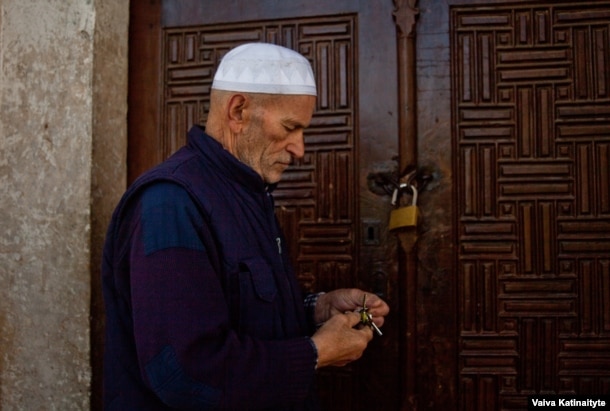
“More people, especially the young generation, are coming to pray,” says Hakif Sikirocha, the caretaker of the Sultan Mehmet Fatih mosque. The weary-looking 70-year-old, who is sporting an Islamic cap, has worked at the mosque for the past 14 years. “More and more” Kosovars are turning to Islam, he says.

Mosque caretaker Hakif Sikirocha says more and more people are turning to Islam in his country.

Mosque caretaker Hakif Sikirocha says more and more people are turning to Islam in his country.

Kosovo, where 96 percent of its 2 million inhabitants are Muslim, is still a Western and largely pro-American country where bars are located on the same streets as mosques. Many of Pristina’s streets pay tribute to former U.S. presidents, owing to NATO’s 1999 bombing campaign in the former Yugoslavia that ended the Kosovo War and also Washington’s support for Kosovo’s independence.

But there are growing signs that conservative Islam is taking a foothold in society. There were about 200 mosques after the war in 1999. Today, there are more than 800. A new mosque is built every month.

Religious Resurgence

In the streets of Pristina, more and more women walk covered in black, fully covered Islamic dressing. It is more common to see men with untrimmed beards and calf-length trousers, a hallmark of Muslim conservatives.

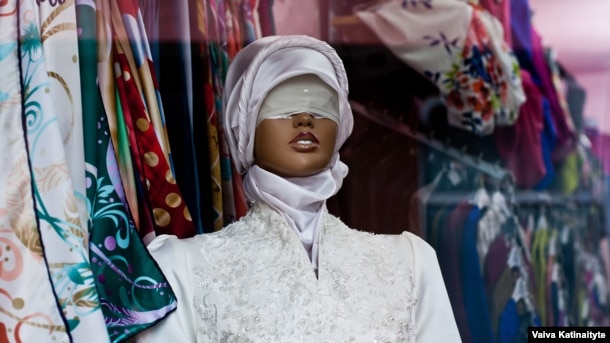
Dozens of shops in Pristina have sprung up to cater for the devout. One of them — Al Jilbab — has faceless mannequins erected at the front of the shop. Inside, the bearded owner says he sells Korans as well as CDs and DVDs that teach you how to pray. In the back of the brightly lit shop, there are black, blue, and grey hijabs, conservative Islamic dress for women. At the opposite end, there are Islamic beads, prayer mats, and long, baggy pants for men.

Shops have sprung up all over Pristina to cater for devout Muslims.

Shops have sprung up all over Pristina to cater for devout Muslims.

“There is an element of society and certain parts of Kosovo that are becoming more religious,” says Naim Rashiti, an analyst at the Balkan Policy Research Group, a Pristina-based think-tank. “[People are becoming] more religious than we have ever been at least for the last 60 or 70 years. This is a new experience for us.”

As an autonomous province in post-World War II communist Yugoslavia, Kosovo was traditionally secular. For decades, Yugoslav authorities stamped out religious identities and ethnic affiliations. It was after the collapse of the former Yugoslavia that Kosovo’s religious resurgence gathered steam.

“[There’s been an] expansion of practicing more robust religion, women covering their heads, and the youth going to the mosque,” says Rashiti. One of the main reasons conservative religious ideas have spread, he says, is Kosovo’s weak institutions. He adds that Islamic charities have tried to fill the vacuum in communities neglected by the government.

Identity Crisis

It is only eight years since Kosovo unilaterally declared independence from Serbia. It remains a fragile, postwar country, which is still in limbo with regard to its identity.

Many Kosovar Albanians are not emotionally attached to the blue-and-yellow Kosovo flag — which is remarkably similar to the European Union flag. In Pristina, even in government buildings, the Albanian red flag with a black, double-headed eagle is widely used.

Many here see themselves as Albanians — and wish to be reunited with their ethnic brethren — but also feel separate from Albanians in Albania.

For many Kosovars, Islam has filled that identity gap and offered a clear sense of belonging. One of them is Gentiana Sadiku, who studied at a madrasah, or religious school, and then joined the Faculty of Islamic Studies, an independent institution that has the only religious studies course in Kosovo.

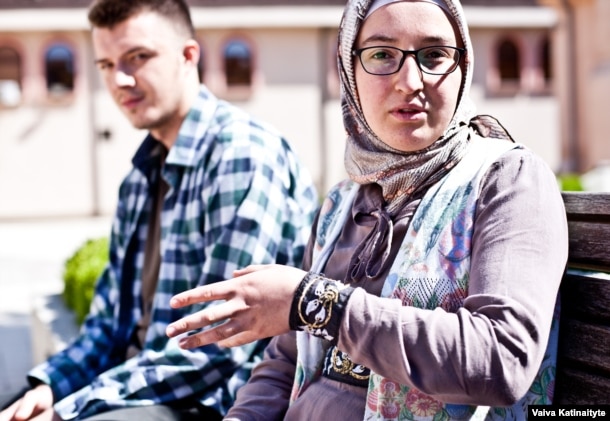
Gentiana Sadiku attends classes at the Faculty of Islamic Studies at the University of Pristina

Gentiana Sadiku attends classes at the Faculty of Islamic Studies at the University of Pristina

“Islam has given me purpose and motivation,” says 21-year-old Sadiku, who is covered in a white hijab and has henna painted on her hands. “I have found inner peace through Islam.”

Sadiku, a third-year student in Islamic studies, says the government is “unfriendly” toward devout Muslims like her. “The university is the only place where I can freely express my beliefs,” she says. “Women cannot get a job if they wear a hijab,” she claims, adding that devout Muslim women are looked down upon as “narrow-minded” and “uneducated.” Sitting on a bench in the empty courtyard of the faculty, she says she currently cannot exercise her “rights” as a Muslim woman.

Radical Influence

The Islamic Community of Kosovo, an independent institution that oversees Islamic affairs in the country through an appointed mufti, or religious leader, has tried to keep tight control over Islamic activities. But the institution has been accused by critics of being lax about the registration of official mosques, and allowing unregistered religious schools and informal mosques to flourish throughout the country.

Of particular concern for the Kosovar authorities has been what they perceive as the radicalizing influence of foreign donors. In late 2014, Kosovar officials closed 14 Middle Eastern-funded charities, which were suspected of having ties to Islamic extremist groups. In addition to Saudi-funded organizations, Turkish and Iranian charities have also been closed in the past two years.

The growing religious conservatism in Kosovo is particularly visible in rural towns like Kacanik and Gjilan, where Gulf-funded Islamic charities have radicalized poor communities The charities have penetrated communities that have been neglected by the government and where unemployment is around 50 percent, making young men easy targets for indoctrination.

Under a new law, Kosovo can jail citizens for up to 15 years if they participate in foreign wars. More than 300 people from Kosovo have gone to fight for extremist groups in the Middle East, making it the biggest contributor per capita in Europe. Kosovo authorities say around 50 homegrown jihadists have been killed in fighting in Syria and Iraq, and around 120 have returned to Kosovo. More than 100 people in Kosovo have been arrested or are under investigation for recruiting or fighting abroad on behalf of the Islamic State extremist group.

In 2009, Kosovo’s government banned religious garb in primary and high schools, prompting protests by devout Muslims. The government defended the decision, saying that it was in line with the country’s secular constitution. Some Kosovars agree, saying that women covering their heads in public is against the country’s secular traditions.

“There is some radical influence because you can see people on the street with long beards, long pants, and girls totally covered from their heads to their toes,” says Nora Bezera, a 28-year-old translator in Pristina. “Kosovo always had a majority-Muslim population, but in the last few years radical Islam has been increasing. As a young, Western-oriented woman, I am concerned about this influence.

‘Imaginary Equality’

There is concern among many Kosovars that outwards signs of Islam represent a radical influence.

“Because of recent terrorist attacks in Paris, Brussels, and Istanbul and the fact that a considerable number of the youth from Kosovo joined the war in Syria, people began to worry about this new phenomenon,” says Majlinda Aliu, a journalist at Radio Television of Kosovo. “Moreover, the number of people who are becoming conservative is constantly rising and many other traditional believers are afraid that these people can easily become radicalized.”

Down the street from the Sultan Mehmet Fatih mosque is Baristas Coffee, a bustling cafe teeming with suited government workers, young bearded men, and headscarf-clad women from the neighborhood.

Hisen Krasniqi, a grinning young man with a blonde ponytail, owns the cafe. In between barking orders at his staff, he says his cafe does not serve alcohol, a recent policy change.

“We don’t want to take sides,” says Krasniqi, referring to the growing religious-secular split he sees in society. “Out of respect we only serve coffee,” he says.

The huge Cathedral Of Blessed Mother Teresa makes a dent in Pristina’s skyline. One of the tallest buildings in the city, the church was built in 2010 for the estimated 4 percent of Kosovar Albanians who are Catholics.

Many Kosovar Muslims do not oppose the church, but some such as Faruk, who only wants to gives his first name, bemoan that while a huge cathedral has been built for the country’s tiny Catholic population, Muslim worshippers are forced to spill out from the city’s mosques onto the streets.

“The church is a political move; it’s done to please America and Europe,” says Faruk, adding that Pristina allowed the Roman Catholic Church to build the cathedral to illustrate its “European values” in the hope of joining the European Union and NATO.

But the 27-year-old says there is only “imaginary equality” in Kosovo. He says Kosovo faces an “important choice” over whether to permit religious expression or stick with its secular values. “That will define our identity,” he says.

Photo:Conservative Islam is fast taking root in Kosovo, and this is particularly apparent among the younger generation.

Filed Under: Analiza Tagged With: A Growing Split Between Islamic, in Kosovo, Secular Identities

European judo champion Majlinda Kelmendi awarded first European of the Year in Kosovo

May 13, 2016 by dgreca

As part of Europe Day 2016 celebrations, the EU in Kosovo presented for the first time the annual EUROPEAN OF THE YEAR award, to acknowledge an individual/institution for the promotion of the European idea in Kosovo. The award was presented by Samuel Žbogar, Head of EU Office in Kosovo/EU Special Representative, and Bekim Çollaku, Minister of European Integration of Kosovo. The first European of the Year was awarded to the European judo champion Majlinda Kelmendi. “I am happy to see that true Europeans come from all layers of the society: the institutions as well as from civil society; we find them in sports halls and among local communities. They selflessly walk that extra mile because they believe that they are doing the right thing. They work hard. They make us proud. They motivate us. Those are our Europeans”, said Žbogar.

The nominees for the first European of the Year award were Majlinda Kelmendi, the Institution of Ombudsperson of Kosovo; Danijela Zubac, member of the Development Fund Board; “Let’s do it Kosova – Clean Up Kosovo” initiative; the Group for Legal and Political Studies; and Krenare Gashi, Head of the Kosovo Youth Centres’ Network.

The ceremony was followed by a presentation of the publication “SAA for Everyone”, which outlines the main points of the Stabilisation and Association Agreement (SAA) in a way understandable to all. The SAA between the European Union and Kosovo entered into force on 1 April 2016. The Agreement is the first comprehensive contract between the EU and Kosovo and a milestone for Kosovo-EU relations.

Filed Under: Sport Tagged With: European judo champion Majlinda Kelmendi awarded, first European, in Kosovo, of the Year

Countering Islamic Radicalization and Violent Extremism in Kosovo

March 15, 2016 by dgreca

By David L. Phillips and Florian Qehaja/

This article considers the rise of Islamic radicalization and violent extremism in Kosovo. It proposes strategies for de-radicalization by Kosovo state structures, civil society, religious figures, as well as the international community. The article draws from the “Report inquiring into the causes and consequences of Kosovo citizens’ involvement as foreign fighters in Iraq and Syria (Kosovar Center for Security Studies, April 2015).

 Findings

 The Kosovo Government confirms 232 cases of Kosovars who have joined militant organizations in Syria and Iraq (as of January 2015). The actual figure may be considerably higher. Per capita, Kosovo has the highest number of jihadis of any country. About 60 Kosovars are known to have been killed in Syria or Iraq.

In the 1980-90s, Kosovars were motivated by a nationalist ideology. However, Islamism has been is on the rise since NATO’s intervention in 1999.  Radicalized Kosovars often adopt a “takfir” ideology, which distorts teachings of Islam and condones violence.

ISIS recruits usually come from poorer, rural families in Kosovo. Close to 40 percent of Kosovars who went to Syria and Iraq have criminal records in Kosovo.

As of August 2014, 80 Kosovars have been arrested upon return from ISIS controlled territories or for recruiting Kosovars to the ISIS cause. Of these, 60 percent were released. Some are under house arrest or monitored by the authorities. The rest are unrestricted in their activities. While the police response has recently improved, the lack of involvement by other state institutions contributes to radicalization.

The Islamic Community of Kosovo (BIK) is weak and ineffective. It fails to propagate religious knowledge and scholarship that could have a moderating effect. It also downplays the potential for violent extremism among youth, contributing to radicalization.

The Internet and social media are sources of radicalization. Kosovo has a high Internet penetration rate. 76.62 percent of Kosovars use the Internet. Of these, 53.66 percent are below age 30. Hate speech and reference to conservative Islam are widespread in social media.

Causes

Economic conditions contribute to radicalization.  Kosovo is one of the poorest countries in Europe. Overall unemployment is about 40 percent. Youth are hardest hit by Kosovo’s stagnant economy. They lack jobs and hope for the future.

Kosovo’s weak education system and high-drop-out rate also contribute to radicalization. Per capita spending on education is dramatically lower than any other country in the region.

Takfir imams radicalize youth through their sermons. Both mosques and private facilities are used to disseminate radical ideology and for recruitment. Disillusionment results from Kosovo’s failure to gain greater global recognition as a member of the international community. To date, only 112 countries have recognized Kosovo as an independent state.

Youth are isolated. The EU’s failure to enact visa liberalization for Kosovo compounds their sense of isolation.

Kosovo state structures are weak due to political instability, corruption, incompetence. Serbia’s political obstructionism exacerbates frustrations. Many Kosovo youth disapprove of the agreement between Kosovo and Serbia (19 April 2013), and have engaged in emotional protests against the agreement and ruling elites.

Remedies

Kosovo needs a holistic approach to counter violent extremism. The holistic approach encompasses (i) prevention, (ii) de-radicalization, and (iii) reintegration. Countering violent extremism requires measures addressing its root causes (e.g. jobs, education and community-based outreach). A range of stakeholders — state institutions, civil society, imams, and international donors – can help remedy radicalization.

The following actions are proposed:

Education

  • Invest in the education sector to promote critical and analytic thinking. Critical and analytic thinking is a bulwark against extremism.
  • Improve the education system by emphasizing pedagogic and skills training.
  • Expand rigorous inspection of religious teaching at mosques.
  • Imams
  • Emphasize a religious curriculum that highlights peace and social harmony teachings in the Qur’an and hadiths.
  • Encourage a role for imams so devotees do not fall prey to radicalization.
  • Monitor unacceptable incendiary language in sermons, and make imams accountable for what they say.
  • Take punitive actions against imams whose teachings incite extremism.
  • Prevent radical imams from gaining celebrity status that may lead to a cult following.

Outreach

  • Engage imams in a grass-roots dialogue with their congregants about Islam as a religion of peace.
  • Foster dialogue with civil society via religious charity organizations.
  • Organize workshops and other civil society forums on Islam.
  • Mobilize professors, teachers, community leaders, and credible imams as spokespersons.

       Grass-roots solutions

  • Adopt a community based approach.
  • Emphasize local faces and local efforts for outreach and advocacy.
  • Instruct families not to alienate family members who become devoted to Islam.
  •  

Media

  • Create a Web-based platform addressing questions that youth have about Islam.
  • Produce short videos addressing key existential and philosophical questions about Islamic teachings.
  • Monitor and disable web sites that contribute to radicalization.

   Security strategies

  • Implement a screening process of those who return from ISIS controlled territories.
  • Distinguish rehabilitation activities from police work.
  • Make sure arrests do not create religious martyrs.
  • Monitor prison conditions to guard against the formation of a radicalized community in detention facilities.
  • Emphasize intelligence based policing.
  • Consider a role for imams in gathering information, which can be used by law enforcement.

Build national capacity

  • Register BIK as a legal entity.
  • Centralize BIK’s financing and enhance scrutiny of its accounts by central authorities.
  • Adopt a standardized curriculum for mosques, which is subject to BIK review and approval.
  • Expand BIK’s role preventing individual financing for building mosques.

Internationalization

  • Monitor and regulate activities of the Turkish Development Agency (TIKA), in order to limit its financing of religious schools, mosque construction, and reconstruction of Ottoman structures.
  • Take a regional approach by involving stakeholders in Albania and Macedonia, who are also working to counter violent extremism.
  • Expand the exposure of Kosovaars to European society and European values through EU visa liberalization.
  • Encourage greater involvement by the United States in Kosovo. Americans and Albanians have a strong kinship, which can help shape attitudes in Kosovo.
  • Avoid a conspicuous role for foreign donors, while welcoming their financing for rehabilitation and reintegration activities.

Prevention, de-radicalization, and reintegration require pro-active measures. U.S. Special Forces recently gained possession of ISIS registration forms, which include 22,000 names, information on places of origin, and language capability. This intelligence asset can be used to determine which ISIS members come from Kosovo and to develop a strategy for outreach to them, their families, and communities.

*Mr. Phillips is Director of the Program on Peace-building and Rights at Columbia University’s Institute for the Study of Human Rights. Mr. Qehaja is Executive Director of Kosovar Centre for Security Studies. He is currently at Columbia University as a Fulbright Visiting Scholar with Saltzman Institute of War and Peace Studies.

*The Huffington Post

March 14, 2016

*Send for our Newspaper:Sumeyra Tuzuner- Research Assistant, Program on Peace-building and Rights Institute for the Study of Human Rights Columbia University

Filed Under: Analiza Tagged With: and Violent Extremism, Countering Islamic Radicalization, David L. Phillips and Florian Qehaja, in Kosovo

SACEUR VISITS NATO HEADQUARTERS IN KOSOVO

February 4, 2016 by dgreca

PRISTINA, 4 FEB 2016. During a two day visit to NATO Headquarters in Pristina, General Philip M. Breedlove, the Supreme Allied Commander Europe, met with Kosovo Force troops highlighting NATO’s continued commitment to the stability of Kosovo’s future.
General Breedlove was briefed by Major General Luigi Guglielmo Miglietta, KFOR Commander and the international HQ Staff on the latest developments in the current security situation in Kosovo and in the Balkans region.
“It’s very encouraging to see how KFOR’s contribution to the stability of the security situation here has provided the time and space needed for so much progress. Certainly there is still plenty left to be done but the progress has been notable,” stated Breedlove.
General Breedlove had two very informative and useful meetings with several ambassadors of contributing Nations to KFOR mission, as well as the Representatives of the International Community: EU, UNMIK, OSCE and EULEX.
“As Kosovo steps forward and embraces its own future, NATO will remain committed to doing its part to contribute to stability here,” added Breedlove. “We will retain a flexible, deterrent presence and will make changes only when the security situation allows.”
Later in the afternoon, General Breedlove met with the President of Kosovo and the Prime Minister. They expressed appreciation to General Breedlove for the significant contribution made by KFOR’ soldiers in maintaining security and stability in Kosovo.
“KFOR continues to contribute towards maintaining a safe and secure environment in Kosovo and freedom of movement for all,” said Breedlove.
On completion of the tour General Breedlove took the opportunity to have breakfast with troops and leaders.
“I want to thank each and everyone one of your for all the hard work you are doing here, we would not be successful without your dedication and effort,” said Breedlove.

Filed Under: Kronike Tagged With: HEADQUARTERS, in Kosovo, SACEUR VISITS NATO

  • 1
  • 2
  • Next Page »

Artikujt e fundit

  • “Zbardhja e së vërtetës është virtyt”
  • NË MAGJINË E KËNGËS DHE VALLES SHQIPE NË ITALI
  • Piktorja shqiptare Linda Lupi prezanton veprat e saj në ‘Gracie Mansion’, selinë historike të Kryetarisë së Bashkisë së Nju Jorkut
  • Eugen O’Neill, nobelisti i parë amerikan që lindi dhe vdiq në një dhomë hoteli
  • Yllësia e Musine Kokalarit në dritën e Uran Butkës
  • Liza Laska, artistja që nuk kërkoi estetikë, por ngjethje…
  • Pasqyra e trashëgimisë arkeologjike në filatelinë e Kosovës
  • “DËSHMITARI I RREMË”- NJË MONUMENT ARTISTIK PËR SHERIF MERDANIN
  • LIRIA NUK GJYKOHET — DREJTËSIA NUK DUHET TË NDËSHKOJË ÇLIRIMIN E KOSOVËS
  • Pamflet: Premtimet me lugë floriri: Zohran Mamdani dhe kriza e arsyes politike”
  • Musine Kokalari – një yllësi- studim i Uran Butkës për jetën, veprimtarinë dhe veprën e Musine Kokalarit
  • Kush ka të drejtë ta tregojë historinë?
  • Republika e Absurdísë vulosur nga Marash Mirashi
  • LIBRI NË DORËN E STATUJËS DHE SHKOPI…
  • Liria dhe Jeta –Sinonime për Doktorin Dëshmor Fahredin Hoti – Promovimi i Monografisë në Konsullatën e Kosovës në Nju Jork

Kategoritë

Arkiv

Tags

albano kolonjari alfons Grishaj Anton Cefa arben llalla asllan Bushati Astrit Lulushi Aurenc Bebja Behlul Jashari Beqir Sina dalip greca Elida Buçpapaj Elmi Berisha Enver Bytyci Ermira Babamusta Eugjen Merlika Fahri Xharra Frank shkreli Fritz radovani Gezim Llojdia Ilir Levonja Interviste Keze Kozeta Zylo Kolec Traboini kosova Kosove Marjana Bulku Murat Gecaj nderroi jete ne Kosove Nene Tereza presidenti Nishani Rafaela Prifti Rafael Floqi Raimonda Moisiu Ramiz Lushaj reshat kripa Sadik Elshani SHBA Shefqet Kercelli shqiperia shqiptaret Sokol Paja Thaci Vatra Visar Zhiti

Log in

This website uses cookies to improve your experience. We'll assume you're ok with this, but you can opt-out if you wish. Cookie settingsACCEPT
Privacy & Cookies Policy

Privacy Overview

This website uses cookies to improve your experience while you navigate through the website. Out of these cookies, the cookies that are categorized as necessary are stored on your browser as they are essential for the working of basic functionalities of the website. We also use third-party cookies that help us analyze and understand how you use this website. These cookies will be stored in your browser only with your consent. You also have the option to opt-out of these cookies. But opting out of some of these cookies may have an effect on your browsing experience.
Necessary
Always Enabled
Necessary cookies are absolutely essential for the website to function properly. This category only includes cookies that ensures basic functionalities and security features of the website. These cookies do not store any personal information.
Non-necessary
Any cookies that may not be particularly necessary for the website to function and is used specifically to collect user personal data via analytics, ads, other embedded contents are termed as non-necessary cookies. It is mandatory to procure user consent prior to running these cookies on your website.
SAVE & ACCEPT